

TheNewsCrypto
19.1k Posts

TheNewsCrypto
Report
Block User
TheNewsCrypto is an online crypto media publication that helps to educate readers about news, exchanges, and markets in the crypto and blockchain industry.
14 Following
84.5K+ Followers
349.3K+ Liked
Posts
Article
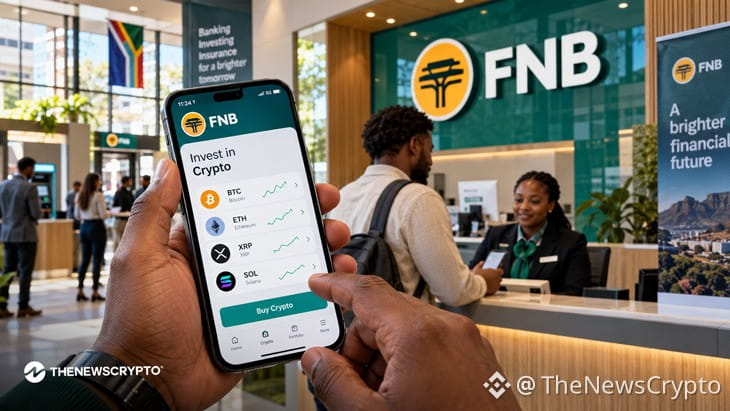
FNB Steps Into Crypto As Demand for Digital Assets Grows in South AfricaFNB customers can now trade BTC, ETH, XRP, SOL, and USDT directly through the bank’s existing share-trading platform.
The service starts from just R10 and operates 24/7, reflecting growing demand for crypto and alternative investment options.
First National Bank, part of South Africa’s second-largest banking group by assets, has launched a crypto investing service for its customers in partnership with licensed local exchange VALR. The move puts BTC, ETH, XRP, SOL, and USDT directly inside FNB’s existing share-trading platform, available around the clock from as little as R10.
In addition, FNB serves close to 9 million customers, and the launch responds to what the bank describes as consistent and growing demand for alternative investment options.
Why FNB Moved Now?
Crypto assets under custody at major South African platforms, Luno, VALR, and Ovex, topped R25 billion by late 2025. More than 6 million South Africans hold a crypto asset, with the country recording one of the largest Bitcoin uptake rates in the world.
Sizwe Nxedlana, CEO of FNB and RMB Private Banking and Wealth Management, framed the launch directly as a response to customer feedback, not a speculative bet on the asset class. Bheki Mkhize, CEO of FNB Wealth and Asset Management, added that clients have been showing significant interest in cryptocurrency and that FNB’s role is to give them a trusted platform to access it alongside the tools to manage their risk.
The Restriction You Need to Know About
There is one important limitation. Crypto assets cannot be transferred into or out of the FNB system. That makes this offering different from a standalone exchange account: customers get investment exposure within the bank’s environment, not unrestricted access to move coins wherever they choose.
Moreover, South African exchange-control regulations govern how value moves across borders, and the restriction also serves as a security measure; keeping assets within a controlled environment reduces exposure to scam wallets and fraudulent platforms.
FNB Is Not the First, But the Scale Is Different
Discovery Bank struck a similar arrangement with Luno in November 2025, allowing clients to link their Luno accounts to buy, hold, and sell crypto through the Discovery Bank app.
Also, FNB entering the space through VALR, with a broader customer base and deeper retail banking reach, takes the mainstream adoption story in South Africa to a different level entirely.
FNB has also signalled this is just the beginning, with plans to broaden the crypto offering and add educational content as the service develops. Significantly, when a bank opens a regulated, familiar gateway to Bitcoin and Ethereum, the barrier to first-time crypto ownership drops notably.
Crypto Market Highlights
Bitcoin (BTC) Support Band Moves Up as Price Faces a Crucial Retest
FNB Steps Into Crypto As Demand for Digital Assets Grows in South Africa
FNB customers can now trade BTC, ETH, XRP, SOL, and USDT directly through the bank’s existing share-trading platform.
The service starts from just R10 and operates 24/7, reflecting growing demand for crypto and alternative investment options.
First National Bank, part of South Africa’s second-largest banking group by assets, has launched a crypto investing service for its customers in partnership with licensed local exchange VALR. The move puts BTC, ETH, XRP, SOL, and USDT directly inside FNB’s existing share-trading platform, available around the clock from as little as R10.
In addition, FNB serves close to 9 million customers, and the launch responds to what the bank describes as consistent and growing demand for alternative investment options.
Why FNB Moved Now?
Crypto assets under custody at major South African platforms, Luno, VALR, and Ovex, topped R25 billion by late 2025. More than 6 million South Africans hold a crypto asset, with the country recording one of the largest Bitcoin uptake rates in the world.
Sizwe Nxedlana, CEO of FNB and RMB Private Banking and Wealth Management, framed the launch directly as a response to customer feedback, not a speculative bet on the asset class. Bheki Mkhize, CEO of FNB Wealth and Asset Management, added that clients have been showing significant interest in cryptocurrency and that FNB’s role is to give them a trusted platform to access it alongside the tools to manage their risk.
The Restriction You Need to Know About
There is one important limitation. Crypto assets cannot be transferred into or out of the FNB system. That makes this offering different from a standalone exchange account: customers get investment exposure within the bank’s environment, not unrestricted access to move coins wherever they choose.
Moreover, South African exchange-control regulations govern how value moves across borders, and the restriction also serves as a security measure; keeping assets within a controlled environment reduces exposure to scam wallets and fraudulent platforms.
FNB Is Not the First, But the Scale Is Different
Discovery Bank struck a similar arrangement with Luno in November 2025, allowing clients to link their Luno accounts to buy, hold, and sell crypto through the Discovery Bank app.
Also, FNB entering the space through VALR, with a broader customer base and deeper retail banking reach, takes the mainstream adoption story in South Africa to a different level entirely.
FNB has also signalled this is just the beginning, with plans to broaden the crypto offering and add educational content as the service develops. Significantly, when a bank opens a regulated, familiar gateway to Bitcoin and Ethereum, the barrier to first-time crypto ownership drops notably.
Crypto Market Highlights
Bitcoin (BTC) Support Band Moves Up as Price Faces a Crucial Retest
The service starts from just R10 and operates 24/7, reflecting growing demand for crypto and alternative investment options.
First National Bank, part of South Africa’s second-largest banking group by assets, has launched a crypto investing service for its customers in partnership with licensed local exchange VALR. The move puts BTC, ETH, XRP, SOL, and USDT directly inside FNB’s existing share-trading platform, available around the clock from as little as R10.
In addition, FNB serves close to 9 million customers, and the launch responds to what the bank describes as consistent and growing demand for alternative investment options.
Why FNB Moved Now?
Crypto assets under custody at major South African platforms, Luno, VALR, and Ovex, topped R25 billion by late 2025. More than 6 million South Africans hold a crypto asset, with the country recording one of the largest Bitcoin uptake rates in the world.
Sizwe Nxedlana, CEO of FNB and RMB Private Banking and Wealth Management, framed the launch directly as a response to customer feedback, not a speculative bet on the asset class. Bheki Mkhize, CEO of FNB Wealth and Asset Management, added that clients have been showing significant interest in cryptocurrency and that FNB’s role is to give them a trusted platform to access it alongside the tools to manage their risk.
The Restriction You Need to Know About
There is one important limitation. Crypto assets cannot be transferred into or out of the FNB system. That makes this offering different from a standalone exchange account: customers get investment exposure within the bank’s environment, not unrestricted access to move coins wherever they choose.
Moreover, South African exchange-control regulations govern how value moves across borders, and the restriction also serves as a security measure; keeping assets within a controlled environment reduces exposure to scam wallets and fraudulent platforms.
FNB Is Not the First, But the Scale Is Different
Discovery Bank struck a similar arrangement with Luno in November 2025, allowing clients to link their Luno accounts to buy, hold, and sell crypto through the Discovery Bank app.
Also, FNB entering the space through VALR, with a broader customer base and deeper retail banking reach, takes the mainstream adoption story in South Africa to a different level entirely.
FNB has also signalled this is just the beginning, with plans to broaden the crypto offering and add educational content as the service develops. Significantly, when a bank opens a regulated, familiar gateway to Bitcoin and Ethereum, the barrier to first-time crypto ownership drops notably.
Crypto Market Highlights
Bitcoin (BTC) Support Band Moves Up as Price Faces a Crucial Retest
369
Article
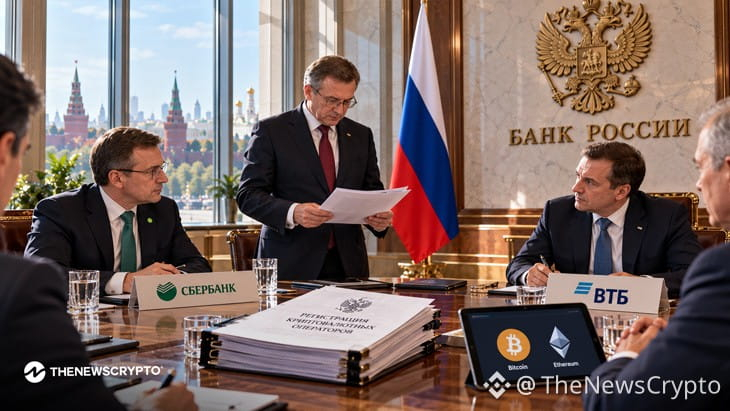
Russia Registers First Crypto Trading and Custody Firms Under New RulesKey Takeaways
Russia registered its first five digital depositories and four crypto exchange operators under its new digital asset framework.
Sberbank and VTB are among the registered firms, with VTB listed as both a digital depository and crypto exchange operator.
Russia has registered its first cryptocurrency exchange operators and digital depositories under the country’s new legal framework for digital currencies and digital rights.
The Bank of Russia added four cryptocurrency exchange operators and five digital depositories to its official registers on October 6, marking the first registrations under the new framework. The law governing digital currencies and digital rights came into force on September 1, 2026.
The five digital depositories are Russia’s largest lender, Sberbank, VTB Bank, Voltari, Cloud Infrastructure and Atomyze. The four registered cryptocurrency exchange operators are VTB Bank, Zefir, Sistema Crypto and T-Invest Lab. VTB is therefore listed in both registers.
Under the rules, digital depositories can provide services for recording and transferring digital currencies and digital rights. They can also give clients access to identifier addresses where those assets are recorded.
Cryptocurrency exchange operators, meanwhile, can buy and sell digital currencies in their own name and at their own expense outside organized trading venues.
Sberbank and VTB Prepare Crypto Services
The registrations come shortly after the Bank of Russia established the procedure for admitting digital depositories, cryptocurrency exchanges and other digital-asset infrastructure providers to the market. That procedure took effect on October 5.
Following that, Sberbank has said it plans to launch its first cryptocurrency products on December 1, subject to regulatory requirements and the readiness of the necessary rules. Its initial offering is expected to include Bitcoin, Ether and USDT.
Meanwhile, VTB is also preparing retail cryptocurrency services. The bank expects to offer digital-currency trading through VTB My Investments in November and through its own cryptocurrency exchange in December 2026, according to VTB Deputy CEO Vitaly Sergeichuk.
The registered firms must comply with transaction and accounting requirements from the date they enter the registers. They have until September 1, 2027, to bring their activities fully into line with the new digital-currency and digital-rights legislation.
The framework does not make cryptocurrency a general payment method for goods and services. Instead, it establishes regulated channels for cryptocurrency trading and the recording and transfer of digital assets through registered market participants.
Russia Registers First Crypto Trading and Custody Firms Under New Rules
Key Takeaways
Russia registered its first five digital depositories and four crypto exchange operators under its new digital asset framework.
Sberbank and VTB are among the registered firms, with VTB listed as both a digital depository and crypto exchange operator.
Russia has registered its first cryptocurrency exchange operators and digital depositories under the country’s new legal framework for digital currencies and digital rights.
The Bank of Russia added four cryptocurrency exchange operators and five digital depositories to its official registers on October 6, marking the first registrations under the new framework. The law governing digital currencies and digital rights came into force on September 1, 2026.
The five digital depositories are Russia’s largest lender, Sberbank, VTB Bank, Voltari, Cloud Infrastructure and Atomyze. The four registered cryptocurrency exchange operators are VTB Bank, Zefir, Sistema Crypto and T-Invest Lab. VTB is therefore listed in both registers.
Under the rules, digital depositories can provide services for recording and transferring digital currencies and digital rights. They can also give clients access to identifier addresses where those assets are recorded.
Cryptocurrency exchange operators, meanwhile, can buy and sell digital currencies in their own name and at their own expense outside organized trading venues.
Sberbank and VTB Prepare Crypto Services
The registrations come shortly after the Bank of Russia established the procedure for admitting digital depositories, cryptocurrency exchanges and other digital-asset infrastructure providers to the market. That procedure took effect on October 5.
Following that, Sberbank has said it plans to launch its first cryptocurrency products on December 1, subject to regulatory requirements and the readiness of the necessary rules. Its initial offering is expected to include Bitcoin, Ether and USDT.
Meanwhile, VTB is also preparing retail cryptocurrency services. The bank expects to offer digital-currency trading through VTB My Investments in November and through its own cryptocurrency exchange in December 2026, according to VTB Deputy CEO Vitaly Sergeichuk.
The registered firms must comply with transaction and accounting requirements from the date they enter the registers. They have until September 1, 2027, to bring their activities fully into line with the new digital-currency and digital-rights legislation.
The framework does not make cryptocurrency a general payment method for goods and services. Instead, it establishes regulated channels for cryptocurrency trading and the recording and transfer of digital assets through registered market participants.
Russia registered its first five digital depositories and four crypto exchange operators under its new digital asset framework.
Sberbank and VTB are among the registered firms, with VTB listed as both a digital depository and crypto exchange operator.
Russia has registered its first cryptocurrency exchange operators and digital depositories under the country’s new legal framework for digital currencies and digital rights.
The Bank of Russia added four cryptocurrency exchange operators and five digital depositories to its official registers on October 6, marking the first registrations under the new framework. The law governing digital currencies and digital rights came into force on September 1, 2026.
The five digital depositories are Russia’s largest lender, Sberbank, VTB Bank, Voltari, Cloud Infrastructure and Atomyze. The four registered cryptocurrency exchange operators are VTB Bank, Zefir, Sistema Crypto and T-Invest Lab. VTB is therefore listed in both registers.
Under the rules, digital depositories can provide services for recording and transferring digital currencies and digital rights. They can also give clients access to identifier addresses where those assets are recorded.
Cryptocurrency exchange operators, meanwhile, can buy and sell digital currencies in their own name and at their own expense outside organized trading venues.
Sberbank and VTB Prepare Crypto Services
The registrations come shortly after the Bank of Russia established the procedure for admitting digital depositories, cryptocurrency exchanges and other digital-asset infrastructure providers to the market. That procedure took effect on October 5.
Following that, Sberbank has said it plans to launch its first cryptocurrency products on December 1, subject to regulatory requirements and the readiness of the necessary rules. Its initial offering is expected to include Bitcoin, Ether and USDT.
Meanwhile, VTB is also preparing retail cryptocurrency services. The bank expects to offer digital-currency trading through VTB My Investments in November and through its own cryptocurrency exchange in December 2026, according to VTB Deputy CEO Vitaly Sergeichuk.
The registered firms must comply with transaction and accounting requirements from the date they enter the registers. They have until September 1, 2027, to bring their activities fully into line with the new digital-currency and digital-rights legislation.
The framework does not make cryptocurrency a general payment method for goods and services. Instead, it establishes regulated channels for cryptocurrency trading and the recording and transfer of digital assets through registered market participants.
45

Article
Bitcoin (BTC) Support Band Moves Up As Price Faces a Crucial RetestBitcoin (BTC) fell around 2% to $84,035, slipping below the key $85K level as the momentum weakened.
The bull market support band is climbing with price, but a retest could be a crucial test for the broader uptrend.
The largest and dominant asset, Bitcoin (BTC), is entering a critical phase after slipping below the $85,000 mark and losing roughly 2% over the past 24 hours. The token is currently trading at around $84,035, with its daily trading volume settled at $32.867 billion.
In the past 24 hours, Bitcoin traded between $83,647 and $86,648, showing a wide intraday range. Over the past seven days, BTC has moved between $83,022 and $87,085, with the broader consolidation zone and key levels traders are watching.
The decline came as late long positions were flushed from the market, with around $500 million in long positions liquidated. However, some of that capital appears to have moved back into the market, keeping leverage elevated.
Bitcoin’s recent price action is unfolding inside a tight triangle, with the latest move bouncing from the lower trendline. A sustained hold of this structure could still leave room for a breakout toward higher levels.
Another factor is Bitcoin’s bull market support band. As the band rises alongside price during a bull cycle, BTC has historically tended to revisit it. Such retests can trigger bearish sentiment. They can also become important areas for buyers if the broader uptrend remains intact.
For bulls, reclaiming $85,000 would help restore short-term momentum. If BTC fails to recover the level and selling pressure persists, the lower end of the recent range could come back into focus.
Bitcoin’s Key Support and Resistance Levels
If the bearish grip intensifies, the BTC price could fall to the nearest support range at $83.9K. Assuming the sellers continue to dominate, additional downside pressure is applied, and it is likely to trigger the death cross to emerge and gradually send the price down, below $83,821.
On the other hand, with Bitcoin’s market trend taking a bullish turn, the price could rise to the resistance level at $84.1K. As the upside trajectory gains more traction, potential bulls would initiate the formation of the golden cross, and the price may gradually climb above $84,269.
BTC Momentum Weakens: More Losses Ahead?
The four-hour technical analysis shows that the Moving Average Convergence Divergence (MACD) line is positioned below the zero line. Also, the signal line remains above zero; it shows mixed momentum in the Bitcoin market.
The broader trend still has some positive strength, but the short-term momentum is weakening. Traders may watch for a move back above the signal line for signs of a recovery, or fall further below zero if selling pressure builds.
(Source: TradingView)
Besides, the daily Relative Strength Index (RSI) reading resting at 35.32 shows that Bitcoin is facing weak buying momentum. Moreover, it is getting closer to the oversold territory within the market.
Notably, the asset is not technically oversold yet, as that is generally considered below 30, but the value indicates that the sellers currently have the upper hand.
Crypto Market Highlights
Hyperliquid and MAS Clash Over Singapore’s Regulatory Reach
Bitcoin (BTC) Support Band Moves Up As Price Faces a Crucial Retest
Bitcoin (BTC) fell around 2% to $84,035, slipping below the key $85K level as the momentum weakened.
The bull market support band is climbing with price, but a retest could be a crucial test for the broader uptrend.
The largest and dominant asset, Bitcoin (BTC), is entering a critical phase after slipping below the $85,000 mark and losing roughly 2% over the past 24 hours. The token is currently trading at around $84,035, with its daily trading volume settled at $32.867 billion.
In the past 24 hours, Bitcoin traded between $83,647 and $86,648, showing a wide intraday range. Over the past seven days, BTC has moved between $83,022 and $87,085, with the broader consolidation zone and key levels traders are watching.
The decline came as late long positions were flushed from the market, with around $500 million in long positions liquidated. However, some of that capital appears to have moved back into the market, keeping leverage elevated.
Bitcoin’s recent price action is unfolding inside a tight triangle, with the latest move bouncing from the lower trendline. A sustained hold of this structure could still leave room for a breakout toward higher levels.
Another factor is Bitcoin’s bull market support band. As the band rises alongside price during a bull cycle, BTC has historically tended to revisit it. Such retests can trigger bearish sentiment. They can also become important areas for buyers if the broader uptrend remains intact.
For bulls, reclaiming $85,000 would help restore short-term momentum. If BTC fails to recover the level and selling pressure persists, the lower end of the recent range could come back into focus.
Bitcoin’s Key Support and Resistance Levels
If the bearish grip intensifies, the BTC price could fall to the nearest support range at $83.9K. Assuming the sellers continue to dominate, additional downside pressure is applied, and it is likely to trigger the death cross to emerge and gradually send the price down, below $83,821.
On the other hand, with Bitcoin’s market trend taking a bullish turn, the price could rise to the resistance level at $84.1K. As the upside trajectory gains more traction, potential bulls would initiate the formation of the golden cross, and the price may gradually climb above $84,269.
BTC Momentum Weakens: More Losses Ahead?
The four-hour technical analysis shows that the Moving Average Convergence Divergence (MACD) line is positioned below the zero line. Also, the signal line remains above zero; it shows mixed momentum in the Bitcoin market.
The broader trend still has some positive strength, but the short-term momentum is weakening. Traders may watch for a move back above the signal line for signs of a recovery, or fall further below zero if selling pressure builds.
(Source: TradingView)
Besides, the daily Relative Strength Index (RSI) reading resting at 35.32 shows that Bitcoin is facing weak buying momentum. Moreover, it is getting closer to the oversold territory within the market.
Notably, the asset is not technically oversold yet, as that is generally considered below 30, but the value indicates that the sellers currently have the upper hand.
Crypto Market Highlights
Hyperliquid and MAS Clash Over Singapore’s Regulatory Reach
The bull market support band is climbing with price, but a retest could be a crucial test for the broader uptrend.
The largest and dominant asset, Bitcoin (BTC), is entering a critical phase after slipping below the $85,000 mark and losing roughly 2% over the past 24 hours. The token is currently trading at around $84,035, with its daily trading volume settled at $32.867 billion.
In the past 24 hours, Bitcoin traded between $83,647 and $86,648, showing a wide intraday range. Over the past seven days, BTC has moved between $83,022 and $87,085, with the broader consolidation zone and key levels traders are watching.
The decline came as late long positions were flushed from the market, with around $500 million in long positions liquidated. However, some of that capital appears to have moved back into the market, keeping leverage elevated.
Bitcoin’s recent price action is unfolding inside a tight triangle, with the latest move bouncing from the lower trendline. A sustained hold of this structure could still leave room for a breakout toward higher levels.
Another factor is Bitcoin’s bull market support band. As the band rises alongside price during a bull cycle, BTC has historically tended to revisit it. Such retests can trigger bearish sentiment. They can also become important areas for buyers if the broader uptrend remains intact.
For bulls, reclaiming $85,000 would help restore short-term momentum. If BTC fails to recover the level and selling pressure persists, the lower end of the recent range could come back into focus.
Bitcoin’s Key Support and Resistance Levels
If the bearish grip intensifies, the BTC price could fall to the nearest support range at $83.9K. Assuming the sellers continue to dominate, additional downside pressure is applied, and it is likely to trigger the death cross to emerge and gradually send the price down, below $83,821.
On the other hand, with Bitcoin’s market trend taking a bullish turn, the price could rise to the resistance level at $84.1K. As the upside trajectory gains more traction, potential bulls would initiate the formation of the golden cross, and the price may gradually climb above $84,269.
BTC Momentum Weakens: More Losses Ahead?
The four-hour technical analysis shows that the Moving Average Convergence Divergence (MACD) line is positioned below the zero line. Also, the signal line remains above zero; it shows mixed momentum in the Bitcoin market.
The broader trend still has some positive strength, but the short-term momentum is weakening. Traders may watch for a move back above the signal line for signs of a recovery, or fall further below zero if selling pressure builds.
(Source: TradingView)
Besides, the daily Relative Strength Index (RSI) reading resting at 35.32 shows that Bitcoin is facing weak buying momentum. Moreover, it is getting closer to the oversold territory within the market.
Notably, the asset is not technically oversold yet, as that is generally considered below 30, but the value indicates that the sellers currently have the upper hand.
Crypto Market Highlights
Hyperliquid and MAS Clash Over Singapore’s Regulatory Reach
245
Article
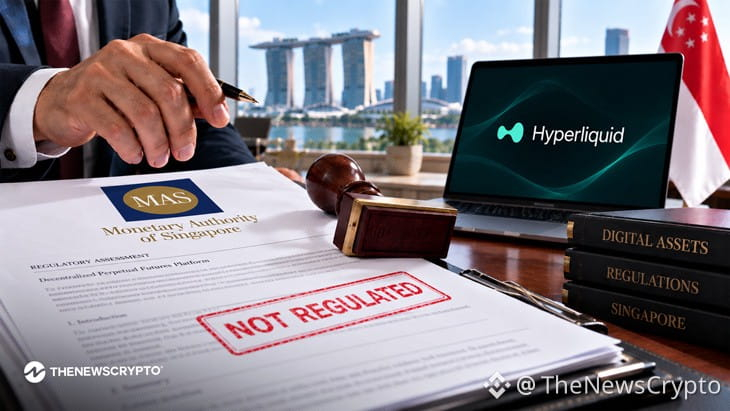
Hyperliquid and MAS Clash Over Singapore’s Regulatory ReachHyperliquid Labs is registered in Singapore, with corporate documents and job postings citing the city-state as its headquarters and office location.
MAS does not consider Hyperliquid to be based in Singapore due to its decentralised nature, while the company confirmed it has never received or claimed MAS licensing or authorisation.
Hyperliquid Labs has confirmed that it is based in Singapore. Corporate documents reviewed by the FT list Singapore as its registered headquarters. Job postings cite the city-state as its office location. By every paper measure, this is a Singapore company. The Monetary Authority of Singapore disagrees, and that disagreement is now one of the more interesting regulatory standoffs in crypto.
MAS said it does not view Hyperliquid as being based in Singapore because of its decentralised nature. As a result, the regulator does not consider the platform within its jurisdiction. In June, MAS added Hyperliquid to Singapore’s crypto warning list. It is a public flag that alerts investors that the platform is not regulated by MAS. Significantly, assumptions about oversight should not be made.
The company confirmed it has never received a license or authorisation from MAS and has never claimed otherwise. It describes itself as permissionless infrastructure where users keep control of their own funds through on-chain settlements. Furthermore, it remains committed to engaging constructively with regulators.
What Hyperliquid Actually Does?
Hyperliquid is best known for perpetual futures, crypto-based derivatives that let traders take leveraged positions on assets including cryptocurrencies, stocks, and oil without taking delivery of the underlying asset. Perps don’t expire and use a funding rate mechanism designed to keep prices aligned with spot markets.
Consumer advocates have described perps as the most dangerous product in crypto because of their highly leveraged and open-ended structure. Moreover, the format has been gaining wider visibility as traders use them to place off-hours bets during volatile periods, including during the Iran conflict earlier this year.
The Jurisdiction Problem Nobody Has Solved
In addition, this situation sits at the centre of a question the entire crypto industry is still working through. How do you determine the true regulatory home of a platform that presents itself as decentralised?
Even with Singapore listed as its registered headquarters, MAS has effectively concluded that legal registration alone is not enough to establish jurisdiction when the operating structure is decentralised. That position has precedent, but it creates a gap. Here, a platform with billions in trading volume sits outside the reach of any major regulator.
MAS already set a June 30, 2025 deadline for local firms serving overseas clients to get licensed or stop operating. This signalled it would generally not grant those licences. Also, Hyperliquid‘s timing could not be more pointed; its founder, Jeff Yan, is set to speak at Token2049 in Singapore this Wednesday.
On the other hand, regulatory uncertainty around one of the most active perp platforms in crypto adds friction for institutional participants who need clear jurisdictional lines before committing capital.
Crypto Market Highlights
OKX Targets the Mass Market With New Stablecoin-Focused Money App
Hyperliquid and MAS Clash Over Singapore’s Regulatory Reach
Hyperliquid Labs is registered in Singapore, with corporate documents and job postings citing the city-state as its headquarters and office location.
MAS does not consider Hyperliquid to be based in Singapore due to its decentralised nature, while the company confirmed it has never received or claimed MAS licensing or authorisation.
Hyperliquid Labs has confirmed that it is based in Singapore. Corporate documents reviewed by the FT list Singapore as its registered headquarters. Job postings cite the city-state as its office location. By every paper measure, this is a Singapore company. The Monetary Authority of Singapore disagrees, and that disagreement is now one of the more interesting regulatory standoffs in crypto.
MAS said it does not view Hyperliquid as being based in Singapore because of its decentralised nature. As a result, the regulator does not consider the platform within its jurisdiction. In June, MAS added Hyperliquid to Singapore’s crypto warning list. It is a public flag that alerts investors that the platform is not regulated by MAS. Significantly, assumptions about oversight should not be made.
The company confirmed it has never received a license or authorisation from MAS and has never claimed otherwise. It describes itself as permissionless infrastructure where users keep control of their own funds through on-chain settlements. Furthermore, it remains committed to engaging constructively with regulators.
What Hyperliquid Actually Does?
Hyperliquid is best known for perpetual futures, crypto-based derivatives that let traders take leveraged positions on assets including cryptocurrencies, stocks, and oil without taking delivery of the underlying asset. Perps don’t expire and use a funding rate mechanism designed to keep prices aligned with spot markets.
Consumer advocates have described perps as the most dangerous product in crypto because of their highly leveraged and open-ended structure. Moreover, the format has been gaining wider visibility as traders use them to place off-hours bets during volatile periods, including during the Iran conflict earlier this year.
The Jurisdiction Problem Nobody Has Solved
In addition, this situation sits at the centre of a question the entire crypto industry is still working through. How do you determine the true regulatory home of a platform that presents itself as decentralised?
Even with Singapore listed as its registered headquarters, MAS has effectively concluded that legal registration alone is not enough to establish jurisdiction when the operating structure is decentralised. That position has precedent, but it creates a gap. Here, a platform with billions in trading volume sits outside the reach of any major regulator.
MAS already set a June 30, 2025 deadline for local firms serving overseas clients to get licensed or stop operating. This signalled it would generally not grant those licences. Also, Hyperliquid‘s timing could not be more pointed; its founder, Jeff Yan, is set to speak at Token2049 in Singapore this Wednesday.
On the other hand, regulatory uncertainty around one of the most active perp platforms in crypto adds friction for institutional participants who need clear jurisdictional lines before committing capital.
Crypto Market Highlights
OKX Targets the Mass Market With New Stablecoin-Focused Money App
MAS does not consider Hyperliquid to be based in Singapore due to its decentralised nature, while the company confirmed it has never received or claimed MAS licensing or authorisation.
Hyperliquid Labs has confirmed that it is based in Singapore. Corporate documents reviewed by the FT list Singapore as its registered headquarters. Job postings cite the city-state as its office location. By every paper measure, this is a Singapore company. The Monetary Authority of Singapore disagrees, and that disagreement is now one of the more interesting regulatory standoffs in crypto.
MAS said it does not view Hyperliquid as being based in Singapore because of its decentralised nature. As a result, the regulator does not consider the platform within its jurisdiction. In June, MAS added Hyperliquid to Singapore’s crypto warning list. It is a public flag that alerts investors that the platform is not regulated by MAS. Significantly, assumptions about oversight should not be made.
The company confirmed it has never received a license or authorisation from MAS and has never claimed otherwise. It describes itself as permissionless infrastructure where users keep control of their own funds through on-chain settlements. Furthermore, it remains committed to engaging constructively with regulators.
What Hyperliquid Actually Does?
Hyperliquid is best known for perpetual futures, crypto-based derivatives that let traders take leveraged positions on assets including cryptocurrencies, stocks, and oil without taking delivery of the underlying asset. Perps don’t expire and use a funding rate mechanism designed to keep prices aligned with spot markets.
Consumer advocates have described perps as the most dangerous product in crypto because of their highly leveraged and open-ended structure. Moreover, the format has been gaining wider visibility as traders use them to place off-hours bets during volatile periods, including during the Iran conflict earlier this year.
The Jurisdiction Problem Nobody Has Solved
In addition, this situation sits at the centre of a question the entire crypto industry is still working through. How do you determine the true regulatory home of a platform that presents itself as decentralised?
Even with Singapore listed as its registered headquarters, MAS has effectively concluded that legal registration alone is not enough to establish jurisdiction when the operating structure is decentralised. That position has precedent, but it creates a gap. Here, a platform with billions in trading volume sits outside the reach of any major regulator.
MAS already set a June 30, 2025 deadline for local firms serving overseas clients to get licensed or stop operating. This signalled it would generally not grant those licences. Also, Hyperliquid‘s timing could not be more pointed; its founder, Jeff Yan, is set to speak at Token2049 in Singapore this Wednesday.
On the other hand, regulatory uncertainty around one of the most active perp platforms in crypto adds friction for institutional participants who need clear jurisdictional lines before committing capital.
Crypto Market Highlights
OKX Targets the Mass Market With New Stablecoin-Focused Money App
1
250
Article
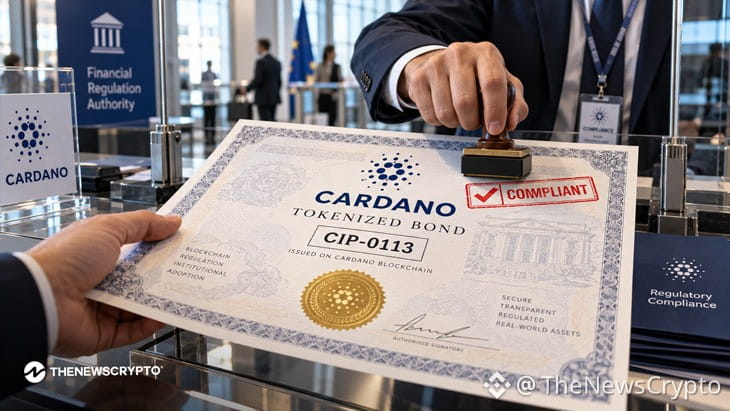
Cardano Launches CIP-0113 for Compliant Tokenized Assets Cardano launched the CIP-0113 programmable token standard on mainnet with ledger-enforced compliance.
The standard allows issuers to add compliance rules to tokenized and regulated assets, including KYC/AML and transfer restrictions.
The Cardano Foundation has launched its programmable token standard, CIP-0113, on the Cardano mainnet, giving issuers a way to build compliance rules directly into tokens designed for regulated assets.
Announced on October 7 at TOKEN2049, the standard allows issuers of stablecoins, tokenized funds, bonds and other regulated assets to add rules covering KYC and AML checks, sanctions screening, transfer restrictions, and freeze-and-seize controls. The Cardano ledger enforces those rules during token transfers, minting, or burning.
Cardano’s programmable token standard, CIP-0113, is live on mainnet. Issuers of stablecoins and other regulated assets can now build compliance rules directly into native Cardano tokens. Enforced by the network itself. No hard fork required. https://t.co/J6WKo1G6bI
— Cardano Foundation (@Cardano_CF) October 7, 2026
CIP-0113 is built on Cardano’s extended UTXO model and does not require a hard fork. Tokens created under the standard remain native Cardano assets rather than being wrapped versions of existing assets. Issuers can select from modular rule sets or create their own compliance logic, with the ability to update those rules as regulatory requirements change.
The Foundation said the standard developed with Cardano community contributors and reached mainnet after multiple independent security audits. Ecosystem support at launch includes Eternl, GeroWallet, CardanoScan and BloxBean.
CIP-0113 Gains Recognition From Swiss Market Association
Alongside the mainnet launch, the Cardano Foundation and the Swiss Capital Markets and Technology Association (CMTA) announced recognition of CIP-0113 Programmable Asset Tokens as a smart-contract equivalent to CMTAT for CMTA’s certification scheme.
The Foundation said CIP-0113 includes the mandatory functions specified under the CMTAT framework. So, it may help certify compliance for ledger-based equity securities under CMTA standards. The recognition aims to support Swiss ledger-based securities, reduce due-diligence requirements, and maintain a chain-agnostic approach.
The Foundation also plans to continue working with projects and institutions using the standard, including further development of a securities module for regulated financial instruments.
The launch does not mean every token on Cardano will automatically have compliance controls. The rules apply to assets issued using the CIP-0113 standard, allowing individual issuers to determine the controls attached to their tokens.
Cardano Launches CIP-0113 for Compliant Tokenized Assets
Cardano launched the CIP-0113 programmable token standard on mainnet with ledger-enforced compliance.
The standard allows issuers to add compliance rules to tokenized and regulated assets, including KYC/AML and transfer restrictions.
The Cardano Foundation has launched its programmable token standard, CIP-0113, on the Cardano mainnet, giving issuers a way to build compliance rules directly into tokens designed for regulated assets.
Announced on October 7 at TOKEN2049, the standard allows issuers of stablecoins, tokenized funds, bonds and other regulated assets to add rules covering KYC and AML checks, sanctions screening, transfer restrictions, and freeze-and-seize controls. The Cardano ledger enforces those rules during token transfers, minting, or burning.
Cardano’s programmable token standard, CIP-0113, is live on mainnet. Issuers of stablecoins and other regulated assets can now build compliance rules directly into native Cardano tokens. Enforced by the network itself. No hard fork required. https://t.co/J6WKo1G6bI
— Cardano Foundation (@Cardano_CF) October 7, 2026
CIP-0113 is built on Cardano’s extended UTXO model and does not require a hard fork. Tokens created under the standard remain native Cardano assets rather than being wrapped versions of existing assets. Issuers can select from modular rule sets or create their own compliance logic, with the ability to update those rules as regulatory requirements change.
The Foundation said the standard developed with Cardano community contributors and reached mainnet after multiple independent security audits. Ecosystem support at launch includes Eternl, GeroWallet, CardanoScan and BloxBean.
CIP-0113 Gains Recognition From Swiss Market Association
Alongside the mainnet launch, the Cardano Foundation and the Swiss Capital Markets and Technology Association (CMTA) announced recognition of CIP-0113 Programmable Asset Tokens as a smart-contract equivalent to CMTAT for CMTA’s certification scheme.
The Foundation said CIP-0113 includes the mandatory functions specified under the CMTAT framework. So, it may help certify compliance for ledger-based equity securities under CMTA standards. The recognition aims to support Swiss ledger-based securities, reduce due-diligence requirements, and maintain a chain-agnostic approach.
The Foundation also plans to continue working with projects and institutions using the standard, including further development of a securities module for regulated financial instruments.
The launch does not mean every token on Cardano will automatically have compliance controls. The rules apply to assets issued using the CIP-0113 standard, allowing individual issuers to determine the controls attached to their tokens.
The standard allows issuers to add compliance rules to tokenized and regulated assets, including KYC/AML and transfer restrictions.
The Cardano Foundation has launched its programmable token standard, CIP-0113, on the Cardano mainnet, giving issuers a way to build compliance rules directly into tokens designed for regulated assets.
Announced on October 7 at TOKEN2049, the standard allows issuers of stablecoins, tokenized funds, bonds and other regulated assets to add rules covering KYC and AML checks, sanctions screening, transfer restrictions, and freeze-and-seize controls. The Cardano ledger enforces those rules during token transfers, minting, or burning.
Cardano’s programmable token standard, CIP-0113, is live on mainnet. Issuers of stablecoins and other regulated assets can now build compliance rules directly into native Cardano tokens. Enforced by the network itself. No hard fork required. https://t.co/J6WKo1G6bI
— Cardano Foundation (@Cardano_CF) October 7, 2026
CIP-0113 is built on Cardano’s extended UTXO model and does not require a hard fork. Tokens created under the standard remain native Cardano assets rather than being wrapped versions of existing assets. Issuers can select from modular rule sets or create their own compliance logic, with the ability to update those rules as regulatory requirements change.
The Foundation said the standard developed with Cardano community contributors and reached mainnet after multiple independent security audits. Ecosystem support at launch includes Eternl, GeroWallet, CardanoScan and BloxBean.
CIP-0113 Gains Recognition From Swiss Market Association
Alongside the mainnet launch, the Cardano Foundation and the Swiss Capital Markets and Technology Association (CMTA) announced recognition of CIP-0113 Programmable Asset Tokens as a smart-contract equivalent to CMTAT for CMTA’s certification scheme.
The Foundation said CIP-0113 includes the mandatory functions specified under the CMTAT framework. So, it may help certify compliance for ledger-based equity securities under CMTA standards. The recognition aims to support Swiss ledger-based securities, reduce due-diligence requirements, and maintain a chain-agnostic approach.
The Foundation also plans to continue working with projects and institutions using the standard, including further development of a securities module for regulated financial instruments.
The launch does not mean every token on Cardano will automatically have compliance controls. The rules apply to assets issued using the CIP-0113 standard, allowing individual issuers to determine the controls attached to their tokens.
260

Article
New Generation of Crypto Miners Released By ASICIDHong Kong, Hong Kong, October 6th, 2026, Chainwire
ASICID Inc. has released its IDMINER Series, a new lineup of cryptocurrency mining systems designed for Bitcoin, Litecoin, and Dogecoin mining.
The series includes the IDMINER HomeRack, IDMINER 2 and IDMINER 1, with configurations ranging from 1,150 TH/s to 9,600 TH/s of Bitcoin hashrate and from 350 GH/s to 3,200 GH/s of Litecoin and Dogecoin hashrate.
The three models are designed for different mining setups, from individual and home miners to professional and larger-scale operators.
IDMINER Series Specifications
IDMINER HomeRack
Bitcoin hashrate: 9,600 TH/s
Litecoin/Dogecoin hashrate: 3,200 GH/s
Power configuration: 4 × 1,300W
Estimated monthly mining revenue: up to $25,590*
IDMINER 2
Bitcoin hashrate: 2,400 TH/s
Litecoin/Dogecoin hashrate: 800 GH/s
Power consumption: 1,300W
Estimated monthly mining revenue: up to $6,390*
IDMINER 1
Bitcoin hashrate: 1,150 TH/s
Litecoin/Dogecoin hashrate: 350 GH/s
Power consumption: 700W
Estimated monthly mining revenue: up to $2,790*
*The revenue figures are estimates based on network conditions, cryptocurrency prices, and mining difficulty at the time of publication.
Designed for Simpler Deployment
The IDMINER systems are delivered pre-configured and tested before shipment. Users can connect the miner to power, connect via WiFi or Ethernet, enter their preferred mining pool information, and begin mining.
The systems support major mining pools and also provide access to ASICID’s Zero-Fee Mining Pool option.
Other features include thermal management and hardware testing before shipment.
Built for Bitcoin, Litecoin and Dogecoin Mining
ASICID develops and manufactures its mining hardware through an integrated production process that includes research and development, hardware engineering, assembly, thermal testing, and quality assurance.
The company is headquartered in Hong Kong with additional operations in the United States and serves individual miners, professional mining businesses, and institutional operators.
With the IDMINER Series, ASICID is targeting miners looking for high-hashrate hardware with straightforward deployment and power requirements suited to ongoing mining operations.
For more information about the IDMINER Series, users can visit www.asicid.com.
Contact
Peter Lammedia@asicid.com
New Generation of Crypto Miners Released By ASICID
Hong Kong, Hong Kong, October 6th, 2026, Chainwire
ASICID Inc. has released its IDMINER Series, a new lineup of cryptocurrency mining systems designed for Bitcoin, Litecoin, and Dogecoin mining.
The series includes the IDMINER HomeRack, IDMINER 2 and IDMINER 1, with configurations ranging from 1,150 TH/s to 9,600 TH/s of Bitcoin hashrate and from 350 GH/s to 3,200 GH/s of Litecoin and Dogecoin hashrate.
The three models are designed for different mining setups, from individual and home miners to professional and larger-scale operators.
IDMINER Series Specifications
IDMINER HomeRack
Bitcoin hashrate: 9,600 TH/s
Litecoin/Dogecoin hashrate: 3,200 GH/s
Power configuration: 4 × 1,300W
Estimated monthly mining revenue: up to $25,590*
IDMINER 2
Bitcoin hashrate: 2,400 TH/s
Litecoin/Dogecoin hashrate: 800 GH/s
Power consumption: 1,300W
Estimated monthly mining revenue: up to $6,390*
IDMINER 1
Bitcoin hashrate: 1,150 TH/s
Litecoin/Dogecoin hashrate: 350 GH/s
Power consumption: 700W
Estimated monthly mining revenue: up to $2,790*
*The revenue figures are estimates based on network conditions, cryptocurrency prices, and mining difficulty at the time of publication.
Designed for Simpler Deployment
The IDMINER systems are delivered pre-configured and tested before shipment. Users can connect the miner to power, connect via WiFi or Ethernet, enter their preferred mining pool information, and begin mining.
The systems support major mining pools and also provide access to ASICID’s Zero-Fee Mining Pool option.
Other features include thermal management and hardware testing before shipment.
Built for Bitcoin, Litecoin and Dogecoin Mining
ASICID develops and manufactures its mining hardware through an integrated production process that includes research and development, hardware engineering, assembly, thermal testing, and quality assurance.
The company is headquartered in Hong Kong with additional operations in the United States and serves individual miners, professional mining businesses, and institutional operators.
With the IDMINER Series, ASICID is targeting miners looking for high-hashrate hardware with straightforward deployment and power requirements suited to ongoing mining operations.
For more information about the IDMINER Series, users can visit www.asicid.com.
Contact
Peter Lammedia@asicid.com
ASICID Inc. has released its IDMINER Series, a new lineup of cryptocurrency mining systems designed for Bitcoin, Litecoin, and Dogecoin mining.
The series includes the IDMINER HomeRack, IDMINER 2 and IDMINER 1, with configurations ranging from 1,150 TH/s to 9,600 TH/s of Bitcoin hashrate and from 350 GH/s to 3,200 GH/s of Litecoin and Dogecoin hashrate.
The three models are designed for different mining setups, from individual and home miners to professional and larger-scale operators.
IDMINER Series Specifications
IDMINER HomeRack
Bitcoin hashrate: 9,600 TH/s
Litecoin/Dogecoin hashrate: 3,200 GH/s
Power configuration: 4 × 1,300W
Estimated monthly mining revenue: up to $25,590*
IDMINER 2
Bitcoin hashrate: 2,400 TH/s
Litecoin/Dogecoin hashrate: 800 GH/s
Power consumption: 1,300W
Estimated monthly mining revenue: up to $6,390*
IDMINER 1
Bitcoin hashrate: 1,150 TH/s
Litecoin/Dogecoin hashrate: 350 GH/s
Power consumption: 700W
Estimated monthly mining revenue: up to $2,790*
*The revenue figures are estimates based on network conditions, cryptocurrency prices, and mining difficulty at the time of publication.
Designed for Simpler Deployment
The IDMINER systems are delivered pre-configured and tested before shipment. Users can connect the miner to power, connect via WiFi or Ethernet, enter their preferred mining pool information, and begin mining.
The systems support major mining pools and also provide access to ASICID’s Zero-Fee Mining Pool option.
Other features include thermal management and hardware testing before shipment.
Built for Bitcoin, Litecoin and Dogecoin Mining
ASICID develops and manufactures its mining hardware through an integrated production process that includes research and development, hardware engineering, assembly, thermal testing, and quality assurance.
The company is headquartered in Hong Kong with additional operations in the United States and serves individual miners, professional mining businesses, and institutional operators.
With the IDMINER Series, ASICID is targeting miners looking for high-hashrate hardware with straightforward deployment and power requirements suited to ongoing mining operations.
For more information about the IDMINER Series, users can visit www.asicid.com.
Contact
Peter Lammedia@asicid.com
155
Article
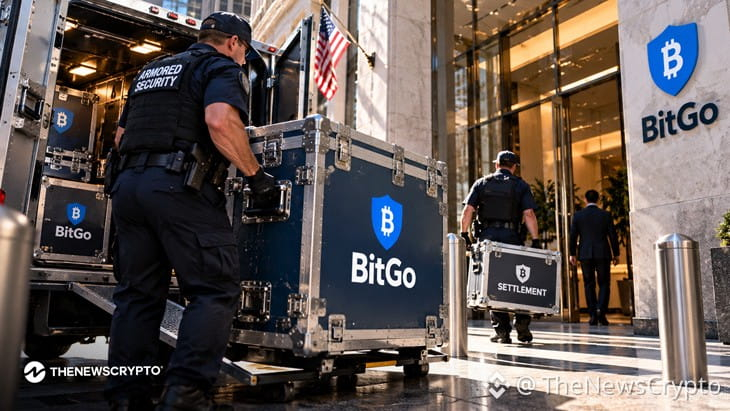
BitGo and HashKey Cloud Sign Strategic Agreement Across Trading, Staking and CustodyBitGo and HashKey Cloud signed a strategic agreement covering staking, trading, custody and RWA tokenization.
BitGo CEO Mike Belshe wants prime brokerage to become the company’s core business, expanding its trading, lending and settlement services.
BitGo and HashKey Cloud have signed a strategic partnership agreement covering staking, institutional trading, custody and real-world asset (RWA) tokenization as the two companies expand their work with institutional clients in Asia.
The agreement was signed in Singapore during TOKEN2049 week and expands a staking collaboration the companies began in July. Under the new partnership, HashKey Cloud will become a validator partner on the BitGo platform, initially supporting Ethereum and Solana staking for BitGo’s eligible institutional clients.
The companies will also work together on institutional trading flows. BitGo will provide custody solutions to HashKey Capital and its associated funds, subject to onboarding and applicable agreements. In addition, BitGo will serve as a custody partner for HashKey’s RWA tokenization initiatives, giving the partnership coverage across several parts of the digital asset market.
The agreement was signed by Abel Seow, Managing Director and Head of APAC Sales at BitGo, and Leo Li, CEO of HashKey OnChain BG. Both companies said the services will be available only to eligible clients and where permitted under local regulations.
BitGo Targets Prime Brokerage for Growth
The partnership comes while BitGo CEO Mike Belshe outlines a broader shift in the company’s business strategy. In an interview with Bloomberg in Singapore on Oct. 6, Belshe said BitGo wants prime brokerage to become the main engine of its business as the company expands trading, lending and settlement services.
Belshe said he would “ultimately like prime brokerage to account for 100% of BitGo’s revenue,” arguing that the company can create more value by helping clients trade and finance digital assets rather than relying mainly on custody fees.
BitGo has already been building that infrastructure. Its BitGo Prime platform combines trading, financing and collateral management, while its custody and settlement businesses remain part of the broader institutional offering. The company also launched BitGo Link in August to help institutions manage capital across BitGo and connected exchanges for trading and financing workflows.
The HashKey agreement therefore adds another institutional relationship to BitGo’s expanding network, while Belshe’s comments show where the company wants its business to go next.
BitGo and HashKey Cloud Sign Strategic Agreement Across Trading, Staking and Custody
BitGo and HashKey Cloud signed a strategic agreement covering staking, trading, custody and RWA tokenization.
BitGo CEO Mike Belshe wants prime brokerage to become the company’s core business, expanding its trading, lending and settlement services.
BitGo and HashKey Cloud have signed a strategic partnership agreement covering staking, institutional trading, custody and real-world asset (RWA) tokenization as the two companies expand their work with institutional clients in Asia.
The agreement was signed in Singapore during TOKEN2049 week and expands a staking collaboration the companies began in July. Under the new partnership, HashKey Cloud will become a validator partner on the BitGo platform, initially supporting Ethereum and Solana staking for BitGo’s eligible institutional clients.
The companies will also work together on institutional trading flows. BitGo will provide custody solutions to HashKey Capital and its associated funds, subject to onboarding and applicable agreements. In addition, BitGo will serve as a custody partner for HashKey’s RWA tokenization initiatives, giving the partnership coverage across several parts of the digital asset market.
The agreement was signed by Abel Seow, Managing Director and Head of APAC Sales at BitGo, and Leo Li, CEO of HashKey OnChain BG. Both companies said the services will be available only to eligible clients and where permitted under local regulations.
BitGo Targets Prime Brokerage for Growth
The partnership comes while BitGo CEO Mike Belshe outlines a broader shift in the company’s business strategy. In an interview with Bloomberg in Singapore on Oct. 6, Belshe said BitGo wants prime brokerage to become the main engine of its business as the company expands trading, lending and settlement services.
Belshe said he would “ultimately like prime brokerage to account for 100% of BitGo’s revenue,” arguing that the company can create more value by helping clients trade and finance digital assets rather than relying mainly on custody fees.
BitGo has already been building that infrastructure. Its BitGo Prime platform combines trading, financing and collateral management, while its custody and settlement businesses remain part of the broader institutional offering. The company also launched BitGo Link in August to help institutions manage capital across BitGo and connected exchanges for trading and financing workflows.
The HashKey agreement therefore adds another institutional relationship to BitGo’s expanding network, while Belshe’s comments show where the company wants its business to go next.
BitGo CEO Mike Belshe wants prime brokerage to become the company’s core business, expanding its trading, lending and settlement services.
BitGo and HashKey Cloud have signed a strategic partnership agreement covering staking, institutional trading, custody and real-world asset (RWA) tokenization as the two companies expand their work with institutional clients in Asia.
The agreement was signed in Singapore during TOKEN2049 week and expands a staking collaboration the companies began in July. Under the new partnership, HashKey Cloud will become a validator partner on the BitGo platform, initially supporting Ethereum and Solana staking for BitGo’s eligible institutional clients.
The companies will also work together on institutional trading flows. BitGo will provide custody solutions to HashKey Capital and its associated funds, subject to onboarding and applicable agreements. In addition, BitGo will serve as a custody partner for HashKey’s RWA tokenization initiatives, giving the partnership coverage across several parts of the digital asset market.
The agreement was signed by Abel Seow, Managing Director and Head of APAC Sales at BitGo, and Leo Li, CEO of HashKey OnChain BG. Both companies said the services will be available only to eligible clients and where permitted under local regulations.
BitGo Targets Prime Brokerage for Growth
The partnership comes while BitGo CEO Mike Belshe outlines a broader shift in the company’s business strategy. In an interview with Bloomberg in Singapore on Oct. 6, Belshe said BitGo wants prime brokerage to become the main engine of its business as the company expands trading, lending and settlement services.
Belshe said he would “ultimately like prime brokerage to account for 100% of BitGo’s revenue,” arguing that the company can create more value by helping clients trade and finance digital assets rather than relying mainly on custody fees.
BitGo has already been building that infrastructure. Its BitGo Prime platform combines trading, financing and collateral management, while its custody and settlement businesses remain part of the broader institutional offering. The company also launched BitGo Link in August to help institutions manage capital across BitGo and connected exchanges for trading and financing workflows.
The HashKey agreement therefore adds another institutional relationship to BitGo’s expanding network, while Belshe’s comments show where the company wants its business to go next.
1
132
Article
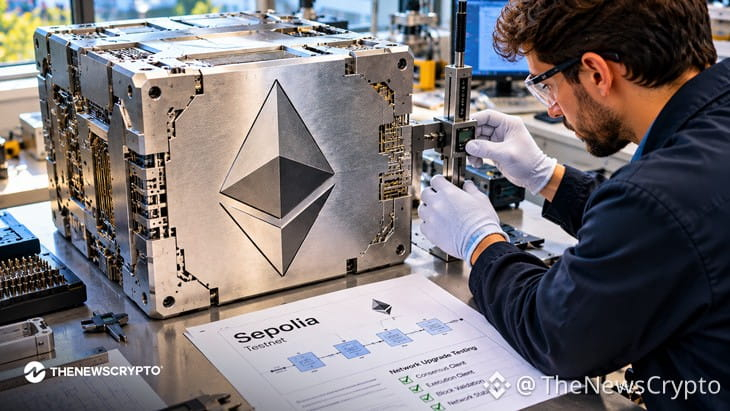
Ethereum Prepares Sepolia for Glamsterdam With 200M Gas Limit TestEthereum is set to activate Glamsterdam on Sepolia today with a 200M gas-limit test.
Glamsterdam introduces enshrined proposer-builder separation and block-level access lists to improve Ethereum’s block production and validation.
Ethereum is preparing to test a 200 million gas limit on the Sepolia testnet as the Glamsterdam upgrade moves to its next testing stage today. The latest change comes from Prysm v7.2.1, released by Offchain Labs on October 5, which adds the Sepolia gas-limit schedule and makes 200 million the default gas limit for validators after the Gloas fork.
The new Prysm release also changes how data columns are handled, enabling partial data columns by default. Under the change, nodes can gossip individual cells instead of entire data columns. Prysm also added configuration options for Gloas builders, including builder URLs, minimum bids and builder bid timeouts.
The 200 million gas setting is more than three times Sepolia’s previous 60 million gas configuration. Prysm’s latest release says the new schedule takes effect at epoch 353,024, matching the Sepolia configuration published for the Gloas fork. Validators using Prysm v7.2.1 do not need to manually set the 200 million limit, although operators can choose another limit through proposer settings or the keymanager API.
Glamsterdam Reaches Sepolia Today
Ethereum’s Glamsterdam upgrade is scheduled to activate on Sepolia at 13:53:36 UTC on October 6, corresponding to epoch 353,024 and slot 11,296,768. The upgrade combines the Amsterdam execution-layer changes with the Gloas consensus-layer changes.
Among its main changes are enshrined proposer-builder separation (ePBS) and Block-Level Access Lists (BALs). BALs are designed to record the accounts and storage locations accessed during a block, allowing clients to perform more state reads and transaction validation work in parallel. Glamsterdam also changes gas accounting for state creation, state access, calldata and access lists.
The 200 million gas test is limited to Sepolia and does not set a new gas limit for Ethereum mainnet. The Ethereum Foundation has not yet announced activation dates for Hoodi or mainnet.
Meanwhile, ETH is trading around $2,714, according to CoinMarketCap, with a market cap of about $331 billion and 24-hour trading volume above $10.2 billion. ETH is down about 0.8% over the past 24 hours.
ETH closed at $2,710.42 on October 5, after reaching a recent September high of $2,785 on September 23, according to historical data.
From a short-term price perspective, $2,700 is the immediate level to watch, while recent market analysis places resistance around $2,780-2,800. A move above $2,800 would clear the recent resistance area, while a drop below $2,650 could bring the $2,570-$2,470 zone into focus.
Ethereum Prepares Sepolia for Glamsterdam With 200M Gas Limit Test
Ethereum is set to activate Glamsterdam on Sepolia today with a 200M gas-limit test.
Glamsterdam introduces enshrined proposer-builder separation and block-level access lists to improve Ethereum’s block production and validation.
Ethereum is preparing to test a 200 million gas limit on the Sepolia testnet as the Glamsterdam upgrade moves to its next testing stage today. The latest change comes from Prysm v7.2.1, released by Offchain Labs on October 5, which adds the Sepolia gas-limit schedule and makes 200 million the default gas limit for validators after the Gloas fork.
The new Prysm release also changes how data columns are handled, enabling partial data columns by default. Under the change, nodes can gossip individual cells instead of entire data columns. Prysm also added configuration options for Gloas builders, including builder URLs, minimum bids and builder bid timeouts.
The 200 million gas setting is more than three times Sepolia’s previous 60 million gas configuration. Prysm’s latest release says the new schedule takes effect at epoch 353,024, matching the Sepolia configuration published for the Gloas fork. Validators using Prysm v7.2.1 do not need to manually set the 200 million limit, although operators can choose another limit through proposer settings or the keymanager API.
Glamsterdam Reaches Sepolia Today
Ethereum’s Glamsterdam upgrade is scheduled to activate on Sepolia at 13:53:36 UTC on October 6, corresponding to epoch 353,024 and slot 11,296,768. The upgrade combines the Amsterdam execution-layer changes with the Gloas consensus-layer changes.
Among its main changes are enshrined proposer-builder separation (ePBS) and Block-Level Access Lists (BALs). BALs are designed to record the accounts and storage locations accessed during a block, allowing clients to perform more state reads and transaction validation work in parallel. Glamsterdam also changes gas accounting for state creation, state access, calldata and access lists.
The 200 million gas test is limited to Sepolia and does not set a new gas limit for Ethereum mainnet. The Ethereum Foundation has not yet announced activation dates for Hoodi or mainnet.
Meanwhile, ETH is trading around $2,714, according to CoinMarketCap, with a market cap of about $331 billion and 24-hour trading volume above $10.2 billion. ETH is down about 0.8% over the past 24 hours.
ETH closed at $2,710.42 on October 5, after reaching a recent September high of $2,785 on September 23, according to historical data.
From a short-term price perspective, $2,700 is the immediate level to watch, while recent market analysis places resistance around $2,780-2,800. A move above $2,800 would clear the recent resistance area, while a drop below $2,650 could bring the $2,570-$2,470 zone into focus.
Glamsterdam introduces enshrined proposer-builder separation and block-level access lists to improve Ethereum’s block production and validation.
Ethereum is preparing to test a 200 million gas limit on the Sepolia testnet as the Glamsterdam upgrade moves to its next testing stage today. The latest change comes from Prysm v7.2.1, released by Offchain Labs on October 5, which adds the Sepolia gas-limit schedule and makes 200 million the default gas limit for validators after the Gloas fork.
The new Prysm release also changes how data columns are handled, enabling partial data columns by default. Under the change, nodes can gossip individual cells instead of entire data columns. Prysm also added configuration options for Gloas builders, including builder URLs, minimum bids and builder bid timeouts.
The 200 million gas setting is more than three times Sepolia’s previous 60 million gas configuration. Prysm’s latest release says the new schedule takes effect at epoch 353,024, matching the Sepolia configuration published for the Gloas fork. Validators using Prysm v7.2.1 do not need to manually set the 200 million limit, although operators can choose another limit through proposer settings or the keymanager API.
Glamsterdam Reaches Sepolia Today
Ethereum’s Glamsterdam upgrade is scheduled to activate on Sepolia at 13:53:36 UTC on October 6, corresponding to epoch 353,024 and slot 11,296,768. The upgrade combines the Amsterdam execution-layer changes with the Gloas consensus-layer changes.
Among its main changes are enshrined proposer-builder separation (ePBS) and Block-Level Access Lists (BALs). BALs are designed to record the accounts and storage locations accessed during a block, allowing clients to perform more state reads and transaction validation work in parallel. Glamsterdam also changes gas accounting for state creation, state access, calldata and access lists.
The 200 million gas test is limited to Sepolia and does not set a new gas limit for Ethereum mainnet. The Ethereum Foundation has not yet announced activation dates for Hoodi or mainnet.
Meanwhile, ETH is trading around $2,714, according to CoinMarketCap, with a market cap of about $331 billion and 24-hour trading volume above $10.2 billion. ETH is down about 0.8% over the past 24 hours.
ETH closed at $2,710.42 on October 5, after reaching a recent September high of $2,785 on September 23, according to historical data.
From a short-term price perspective, $2,700 is the immediate level to watch, while recent market analysis places resistance around $2,780-2,800. A move above $2,800 would clear the recent resistance area, while a drop below $2,650 could bring the $2,570-$2,470 zone into focus.
256
Article
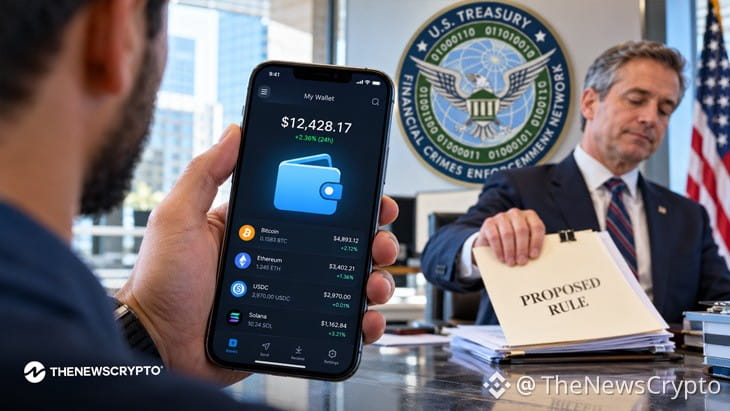
FinCEN Drops Long-Standing Crypto Wallet Rule, Easing Regulatory PressureFinCEN has dropped its 2020 proposal that would have introduced additional reporting and recordkeeping requirements for transactions involving unhosted crypto wallets.
A second proposal targeting crypto mixers was also withdrawn, removing plans to classify convertible virtual currency mixing as a primary money laundering concern.
The U.S. Treasury’s Financial Crimes Enforcement Network has withdrawn a 2020 proposed rule that would have imposed significant reporting and recordkeeping requirements on transactions involving unhosted crypto wallets. FinCEN confirmed it will take no further action on the proposal. It effectively ended a rule that had been hanging over the crypto industry for nearly five years.
A second proposal has also been pulled. That one would have designated convertible virtual currency mixing as a class of transactions of primary money laundering concern. Significantly, that classification would have triggered a special measure under the Bank Secrecy Act.
In addition, both withdrawals were announced as part of the Trump administration’s deregulatory agenda. It is a stated goal to ensure digital asset regulations are fit for purpose.
What the Original Rule Would Have Done?
The 2020 proposal, published on December 23 of that year, would have required banks and money services businesses to file reports with FinCEN on any customer transaction exceeding $10,000 involving an unhosted wallet, or multiple transactions aggregating above that threshold within 24 hours. Identity verification of the customer would have been mandatory in those cases.
Transactions above $3,000 would have triggered a separate recordkeeping requirement, again tied to counterparty use of an unhosted wallet. The rule also extended to wallets held at financial institutions located in foreign jurisdictions. On the other hand, it is identified by FinCEN as non-compliant with the Bank Secrecy Act.
An unhosted wallet under the proposal was defined as one where a financial institution is not required to conduct transactions from the wallet. Moreover, it covers the self-custody tools that a large portion of the crypto community relies on daily.
Why It Was Pulled?
FinCEN cited public comments received in response to both proposals and the broader deregulatory direction set by Executive Order 14178, “Strengthening American Leadership in Digital Financial Technology,” issued by President Trump. The President’s Working Group on Digital Asset Markets specifically flagged both proposals as candidates for withdrawal as part of the effort to align crypto regulation with practical market realities.
Also, the crypto mixing proposal, which would have treated mixing services as a primary money laundering concern. This imposed special measures on financial institutions handling such transactions, has been dropped entirely alongside the wallet rule.
Furthermore, the unhosted wallet rule had drawn sustained opposition from across the crypto industry since its publication. Critics argue it would have imposed compliance burdens on ordinary users and businesses without meaningfully addressing illicit finance.
Crypto Market Highlights
Binance Users in Brazil Face New Transfer Requirements Under Central Bank Rules
FinCEN Drops Long-Standing Crypto Wallet Rule, Easing Regulatory Pressure
FinCEN has dropped its 2020 proposal that would have introduced additional reporting and recordkeeping requirements for transactions involving unhosted crypto wallets.
A second proposal targeting crypto mixers was also withdrawn, removing plans to classify convertible virtual currency mixing as a primary money laundering concern.
The U.S. Treasury’s Financial Crimes Enforcement Network has withdrawn a 2020 proposed rule that would have imposed significant reporting and recordkeeping requirements on transactions involving unhosted crypto wallets. FinCEN confirmed it will take no further action on the proposal. It effectively ended a rule that had been hanging over the crypto industry for nearly five years.
A second proposal has also been pulled. That one would have designated convertible virtual currency mixing as a class of transactions of primary money laundering concern. Significantly, that classification would have triggered a special measure under the Bank Secrecy Act.
In addition, both withdrawals were announced as part of the Trump administration’s deregulatory agenda. It is a stated goal to ensure digital asset regulations are fit for purpose.
What the Original Rule Would Have Done?
The 2020 proposal, published on December 23 of that year, would have required banks and money services businesses to file reports with FinCEN on any customer transaction exceeding $10,000 involving an unhosted wallet, or multiple transactions aggregating above that threshold within 24 hours. Identity verification of the customer would have been mandatory in those cases.
Transactions above $3,000 would have triggered a separate recordkeeping requirement, again tied to counterparty use of an unhosted wallet. The rule also extended to wallets held at financial institutions located in foreign jurisdictions. On the other hand, it is identified by FinCEN as non-compliant with the Bank Secrecy Act.
An unhosted wallet under the proposal was defined as one where a financial institution is not required to conduct transactions from the wallet. Moreover, it covers the self-custody tools that a large portion of the crypto community relies on daily.
Why It Was Pulled?
FinCEN cited public comments received in response to both proposals and the broader deregulatory direction set by Executive Order 14178, “Strengthening American Leadership in Digital Financial Technology,” issued by President Trump. The President’s Working Group on Digital Asset Markets specifically flagged both proposals as candidates for withdrawal as part of the effort to align crypto regulation with practical market realities.
Also, the crypto mixing proposal, which would have treated mixing services as a primary money laundering concern. This imposed special measures on financial institutions handling such transactions, has been dropped entirely alongside the wallet rule.
Furthermore, the unhosted wallet rule had drawn sustained opposition from across the crypto industry since its publication. Critics argue it would have imposed compliance burdens on ordinary users and businesses without meaningfully addressing illicit finance.
Crypto Market Highlights
Binance Users in Brazil Face New Transfer Requirements Under Central Bank Rules
A second proposal targeting crypto mixers was also withdrawn, removing plans to classify convertible virtual currency mixing as a primary money laundering concern.
The U.S. Treasury’s Financial Crimes Enforcement Network has withdrawn a 2020 proposed rule that would have imposed significant reporting and recordkeeping requirements on transactions involving unhosted crypto wallets. FinCEN confirmed it will take no further action on the proposal. It effectively ended a rule that had been hanging over the crypto industry for nearly five years.
A second proposal has also been pulled. That one would have designated convertible virtual currency mixing as a class of transactions of primary money laundering concern. Significantly, that classification would have triggered a special measure under the Bank Secrecy Act.
In addition, both withdrawals were announced as part of the Trump administration’s deregulatory agenda. It is a stated goal to ensure digital asset regulations are fit for purpose.
What the Original Rule Would Have Done?
The 2020 proposal, published on December 23 of that year, would have required banks and money services businesses to file reports with FinCEN on any customer transaction exceeding $10,000 involving an unhosted wallet, or multiple transactions aggregating above that threshold within 24 hours. Identity verification of the customer would have been mandatory in those cases.
Transactions above $3,000 would have triggered a separate recordkeeping requirement, again tied to counterparty use of an unhosted wallet. The rule also extended to wallets held at financial institutions located in foreign jurisdictions. On the other hand, it is identified by FinCEN as non-compliant with the Bank Secrecy Act.
An unhosted wallet under the proposal was defined as one where a financial institution is not required to conduct transactions from the wallet. Moreover, it covers the self-custody tools that a large portion of the crypto community relies on daily.
Why It Was Pulled?
FinCEN cited public comments received in response to both proposals and the broader deregulatory direction set by Executive Order 14178, “Strengthening American Leadership in Digital Financial Technology,” issued by President Trump. The President’s Working Group on Digital Asset Markets specifically flagged both proposals as candidates for withdrawal as part of the effort to align crypto regulation with practical market realities.
Also, the crypto mixing proposal, which would have treated mixing services as a primary money laundering concern. This imposed special measures on financial institutions handling such transactions, has been dropped entirely alongside the wallet rule.
Furthermore, the unhosted wallet rule had drawn sustained opposition from across the crypto industry since its publication. Critics argue it would have imposed compliance burdens on ordinary users and businesses without meaningfully addressing illicit finance.
Crypto Market Highlights
Binance Users in Brazil Face New Transfer Requirements Under Central Bank Rules
138
Article
Solana Foundation Launches DvP Settlement Program With J.P. Morgan InputSolana Foundation launched an open-source DvP program for financial institutions.
J.P. Morgan provided input on institutional settlement practices and requirements.
The Solana Foundation has launched Solana DvP, an open-source settlement program designed to help financial institutions settle tokenized assets and payments on the Solana blockchain. The Foundation announced the program on October 6, 2026, describing it as a “reusable” standard for delivery-versus-payment settlement.
Solana DvP is built around atomic settlement, meaning the asset and payment sides of a transaction settle together. If the conditions for both sides are not met, the transaction does not complete. The Foundation said this can provide finality in seconds instead of the one to two days often associated with traditional settlement processes involving clearinghouses, depositories and custodians.
The program is released under the MIT open-source license and uses isolated escrow accounts with settlement deadlines. Solana said institutional trades conducted on-chain have typically relied on individual, custom-built smart contracts. DvP is intended to provide one standard settlement rail instead.
Solana DvP Supports Institutional Tokenized Assets
The program supports both SPL Token and Token-2022, including token features such as permanent delegates, pausable tokens and transfer hooks. Two counterparties can use Solana DvP with a settlement agent such as a bank, custodian or exchange.
J.P. Morgan contributed input on institutional settlement practices and requirements during the program’s development. Rhodel D’souza, the bank’s Head of Markets Digital Assets, said the bank contributed its settlement expertise. The announcement confirms that J.P. Morgan did not develop or operate Solana DvP.
Meanwhile, Solana DvP has undergone external security audits and is available for use with real funds. The blockchain also plans to add privacy features so institutional settlement transactions can be made private and confidential. The Foundation is currently seeking design partners and early participants ahead of the production release.
This is nothing new. The launch follows J.P. Morgan’s earlier activity on Solana. In December 2025, the bank arranged a $50 million U.S. commercial paper issuance for Galaxy Digital on the blockchain and facilitated delivery-versus-payment settlement for the transaction.
Solana Foundation Launches DvP Settlement Program With J.P. Morgan Input
Solana Foundation launched an open-source DvP program for financial institutions.
J.P. Morgan provided input on institutional settlement practices and requirements.
The Solana Foundation has launched Solana DvP, an open-source settlement program designed to help financial institutions settle tokenized assets and payments on the Solana blockchain. The Foundation announced the program on October 6, 2026, describing it as a “reusable” standard for delivery-versus-payment settlement.
Solana DvP is built around atomic settlement, meaning the asset and payment sides of a transaction settle together. If the conditions for both sides are not met, the transaction does not complete. The Foundation said this can provide finality in seconds instead of the one to two days often associated with traditional settlement processes involving clearinghouses, depositories and custodians.
The program is released under the MIT open-source license and uses isolated escrow accounts with settlement deadlines. Solana said institutional trades conducted on-chain have typically relied on individual, custom-built smart contracts. DvP is intended to provide one standard settlement rail instead.
Solana DvP Supports Institutional Tokenized Assets
The program supports both SPL Token and Token-2022, including token features such as permanent delegates, pausable tokens and transfer hooks. Two counterparties can use Solana DvP with a settlement agent such as a bank, custodian or exchange.
J.P. Morgan contributed input on institutional settlement practices and requirements during the program’s development. Rhodel D’souza, the bank’s Head of Markets Digital Assets, said the bank contributed its settlement expertise. The announcement confirms that J.P. Morgan did not develop or operate Solana DvP.
Meanwhile, Solana DvP has undergone external security audits and is available for use with real funds. The blockchain also plans to add privacy features so institutional settlement transactions can be made private and confidential. The Foundation is currently seeking design partners and early participants ahead of the production release.
This is nothing new. The launch follows J.P. Morgan’s earlier activity on Solana. In December 2025, the bank arranged a $50 million U.S. commercial paper issuance for Galaxy Digital on the blockchain and facilitated delivery-versus-payment settlement for the transaction.
J.P. Morgan provided input on institutional settlement practices and requirements.
The Solana Foundation has launched Solana DvP, an open-source settlement program designed to help financial institutions settle tokenized assets and payments on the Solana blockchain. The Foundation announced the program on October 6, 2026, describing it as a “reusable” standard for delivery-versus-payment settlement.
Solana DvP is built around atomic settlement, meaning the asset and payment sides of a transaction settle together. If the conditions for both sides are not met, the transaction does not complete. The Foundation said this can provide finality in seconds instead of the one to two days often associated with traditional settlement processes involving clearinghouses, depositories and custodians.
The program is released under the MIT open-source license and uses isolated escrow accounts with settlement deadlines. Solana said institutional trades conducted on-chain have typically relied on individual, custom-built smart contracts. DvP is intended to provide one standard settlement rail instead.
Solana DvP Supports Institutional Tokenized Assets
The program supports both SPL Token and Token-2022, including token features such as permanent delegates, pausable tokens and transfer hooks. Two counterparties can use Solana DvP with a settlement agent such as a bank, custodian or exchange.
J.P. Morgan contributed input on institutional settlement practices and requirements during the program’s development. Rhodel D’souza, the bank’s Head of Markets Digital Assets, said the bank contributed its settlement expertise. The announcement confirms that J.P. Morgan did not develop or operate Solana DvP.
Meanwhile, Solana DvP has undergone external security audits and is available for use with real funds. The blockchain also plans to add privacy features so institutional settlement transactions can be made private and confidential. The Foundation is currently seeking design partners and early participants ahead of the production release.
This is nothing new. The launch follows J.P. Morgan’s earlier activity on Solana. In December 2025, the bank arranged a $50 million U.S. commercial paper issuance for Galaxy Digital on the blockchain and facilitated delivery-versus-payment settlement for the transaction.
1
235
Article
Changer+ Launches Stablecoin-First Self-Custodial Wallet to Make Stablecoins Easier to UseSingapore, Singapore, October 6th, 2026, Chainwire
Multi-chain stablecoin wallet combines simpler transfers, flexible gas-fee options, security features, and practical use cases with one ambition: to become the world’s easiest stablecoin wallet.
Changer+ today announced the launch of its self-custodial stablecoin wallet, built to make holding, moving and using stablecoins simpler.
Changer+ supports major stablecoins including USDT and USDC across Ethereum, TRON, BNB Chain and Solana, with more networks and stablecoins planned.
To celebrate its launch, Changer+ is offering new users three free transactions per device on each chain – Ethereum, Solana, and BNB Chain from October 6 to November 6, 2026.
Changer+ is built around a simple belief: people should not need to understand every blockchain, gas token, or transaction mechanic just to use the stablecoins they already have.
Stablecoins Should Just Work
Using stablecoins can still mean figuring out which network a token is on, choosing the right transfer route, sourcing a separate gas token, and navigating unfamiliar transaction steps. Changer+ is designed to move more of that complexity into the background.
“People should not have to become blockchain experts just to use stablecoins,” said Leon Gao, CEO of Changer+, with over a decade of experience in product development in the fintech and payment industry
“The technology underneath can stay sophisticated. What users see should feel simple, clear and dependable.”
Simplicity Without Giving Up Control
Making stablecoins easier to use should not mean taking control away from the user.
Changer+ is self-custodial, meaning users retain control of their private keys and authorize their own transactions.
For Yun Han Wong, CGO of Changer+, who has spent years working in Web3, preserving that principle is fundamental to trust.
“Trust is everything in Web3,” Yun Han said. “The early crypto idea of ‘being your own bank’ was really about ownership — having control over your own assets instead of simply handing that control to another intermediary.”
“We want to preserve that ethos while making stablecoins much easier to use. Convenience should not mean giving up control.”
Technology and Security Built around the User
Changer+ is designed to remove common friction from everyday stablecoin use.
On supported transactions, Changer+ lets users cover network-related transaction costs without first having to acquire the blockchain’s native gas token.
For example, a user holding stablecoins does not necessarily need to separately acquire ETH, TRX, BNB, or SOL before completing a supported transaction.
Changer+ has also completed an independent security audit, vulnerability assessment, and penetration testing (VAPT) conducted by Echo Pulse, a CREST-accredited and Singapore-licensed cybersecurity service provider.
These capabilities are led by Zack Chen, CTO of Changer+, an NUS-trained technopreneur with years of software development experience overseeing Changer+’s multi-chain architecture and security development.
“Good engineering should reduce the complexity users have to manage while keeping the experience clear and reliable,” Zack said.
Making Stablecoins More Useful
Changer+ goes beyond holding and transferring stablecoins by giving users more ways to put them to practical use.
Current capabilities include global eSIM data plans, a lifestyle ticket marketplace, and security risk signals that help users identify suspicious activity and potentially unsafe addresses, with more use cases planned.
“Our ambition is not to build another wallet people download and forget,” Leon said. “We want to make the whole stablecoin experience easier — from holding and transferring to actually using them.”
As stablecoins increasingly move beyond crypto trading into payments, remittances and everyday digital commerce, the experience of using them remains fragmented across networks and wallets.
Changer+ was built to close that usability gap.
Backed by a private family office, Changer+ is taking a long-term approach to building the product. Rather than centering the platform around a project token or speculative rewards, the company is focused on usability, self-custody, security, and practical stablecoin utility.
“Stablecoins should just work,” Yun Han added. “Fewer unnecessary crypto steps, more useful things you can do with them, and the user stays in control.”
Changer+ is available on iOS and Android.
Download IOS app:https://apps.apple.com/us/app/changer-stablecoin-wallet/id6744874111
Download Android app:https://play.google.com/store/apps/details?id=plus.changer.app&hl=en
Learn more: www.changer.plus
Join communities: https://linktr.ee/ChangerPlus
Contact: pr@changer.plus
Launch Special
Enjoy three free transactions on each chain – Ethereum, Solana, and BNB Chain from October 6 to November 6, 2026.*
Available only to new users who install the Changer+ app and register during the campaign period. Network fees are covered for three eligible transactions per device. Terms and conditions apply. Changer+ reserves the right to amend or withdraw the offer.
About Changer+
Changer+ is a Singapore-incorporated, self-custodial stablecoin wallet built to make stablecoins easier to use.
With multi-chain stablecoin support across major blockchain networks, including Ethereum, Solana, BNB Chain and TRON, Changer+ brings together simpler transfers, flexible gas-fee options, security risk signals and practical use cases — while users remain in control of their private keys.
Backed by a private family office, Changer+ combines payments experience, Web3 expertise and security-led engineering with one ambition: to become the world’s easiest stablecoin wallet.
Contact
Changer+pr@changer.plus
Changer+ Launches Stablecoin-First Self-Custodial Wallet to Make Stablecoins Easier to Use
Singapore, Singapore, October 6th, 2026, Chainwire
Multi-chain stablecoin wallet combines simpler transfers, flexible gas-fee options, security features, and practical use cases with one ambition: to become the world’s easiest stablecoin wallet.
Changer+ today announced the launch of its self-custodial stablecoin wallet, built to make holding, moving and using stablecoins simpler.
Changer+ supports major stablecoins including USDT and USDC across Ethereum, TRON, BNB Chain and Solana, with more networks and stablecoins planned.
To celebrate its launch, Changer+ is offering new users three free transactions per device on each chain – Ethereum, Solana, and BNB Chain from October 6 to November 6, 2026.
Changer+ is built around a simple belief: people should not need to understand every blockchain, gas token, or transaction mechanic just to use the stablecoins they already have.
Stablecoins Should Just Work
Using stablecoins can still mean figuring out which network a token is on, choosing the right transfer route, sourcing a separate gas token, and navigating unfamiliar transaction steps. Changer+ is designed to move more of that complexity into the background.
“People should not have to become blockchain experts just to use stablecoins,” said Leon Gao, CEO of Changer+, with over a decade of experience in product development in the fintech and payment industry
“The technology underneath can stay sophisticated. What users see should feel simple, clear and dependable.”
Simplicity Without Giving Up Control
Making stablecoins easier to use should not mean taking control away from the user.
Changer+ is self-custodial, meaning users retain control of their private keys and authorize their own transactions.
For Yun Han Wong, CGO of Changer+, who has spent years working in Web3, preserving that principle is fundamental to trust.
“Trust is everything in Web3,” Yun Han said. “The early crypto idea of ‘being your own bank’ was really about ownership — having control over your own assets instead of simply handing that control to another intermediary.”
“We want to preserve that ethos while making stablecoins much easier to use. Convenience should not mean giving up control.”
Technology and Security Built around the User
Changer+ is designed to remove common friction from everyday stablecoin use.
On supported transactions, Changer+ lets users cover network-related transaction costs without first having to acquire the blockchain’s native gas token.
For example, a user holding stablecoins does not necessarily need to separately acquire ETH, TRX, BNB, or SOL before completing a supported transaction.
Changer+ has also completed an independent security audit, vulnerability assessment, and penetration testing (VAPT) conducted by Echo Pulse, a CREST-accredited and Singapore-licensed cybersecurity service provider.
These capabilities are led by Zack Chen, CTO of Changer+, an NUS-trained technopreneur with years of software development experience overseeing Changer+’s multi-chain architecture and security development.
“Good engineering should reduce the complexity users have to manage while keeping the experience clear and reliable,” Zack said.
Making Stablecoins More Useful
Changer+ goes beyond holding and transferring stablecoins by giving users more ways to put them to practical use.
Current capabilities include global eSIM data plans, a lifestyle ticket marketplace, and security risk signals that help users identify suspicious activity and potentially unsafe addresses, with more use cases planned.
“Our ambition is not to build another wallet people download and forget,” Leon said. “We want to make the whole stablecoin experience easier — from holding and transferring to actually using them.”
As stablecoins increasingly move beyond crypto trading into payments, remittances and everyday digital commerce, the experience of using them remains fragmented across networks and wallets.
Changer+ was built to close that usability gap.
Backed by a private family office, Changer+ is taking a long-term approach to building the product. Rather than centering the platform around a project token or speculative rewards, the company is focused on usability, self-custody, security, and practical stablecoin utility.
“Stablecoins should just work,” Yun Han added. “Fewer unnecessary crypto steps, more useful things you can do with them, and the user stays in control.”
Changer+ is available on iOS and Android.
Download IOS app:https://apps.apple.com/us/app/changer-stablecoin-wallet/id6744874111
Download Android app:https://play.google.com/store/apps/details?id=plus.changer.app&hl=en
Learn more: www.changer.plus
Join communities: https://linktr.ee/ChangerPlus
Contact: pr@changer.plus
Launch Special
Enjoy three free transactions on each chain – Ethereum, Solana, and BNB Chain from October 6 to November 6, 2026.*
Available only to new users who install the Changer+ app and register during the campaign period. Network fees are covered for three eligible transactions per device. Terms and conditions apply. Changer+ reserves the right to amend or withdraw the offer.
About Changer+
Changer+ is a Singapore-incorporated, self-custodial stablecoin wallet built to make stablecoins easier to use.
With multi-chain stablecoin support across major blockchain networks, including Ethereum, Solana, BNB Chain and TRON, Changer+ brings together simpler transfers, flexible gas-fee options, security risk signals and practical use cases — while users remain in control of their private keys.
Backed by a private family office, Changer+ combines payments experience, Web3 expertise and security-led engineering with one ambition: to become the world’s easiest stablecoin wallet.
Contact
Changer+pr@changer.plus
Multi-chain stablecoin wallet combines simpler transfers, flexible gas-fee options, security features, and practical use cases with one ambition: to become the world’s easiest stablecoin wallet.
Changer+ today announced the launch of its self-custodial stablecoin wallet, built to make holding, moving and using stablecoins simpler.
Changer+ supports major stablecoins including USDT and USDC across Ethereum, TRON, BNB Chain and Solana, with more networks and stablecoins planned.
To celebrate its launch, Changer+ is offering new users three free transactions per device on each chain – Ethereum, Solana, and BNB Chain from October 6 to November 6, 2026.
Changer+ is built around a simple belief: people should not need to understand every blockchain, gas token, or transaction mechanic just to use the stablecoins they already have.
Stablecoins Should Just Work
Using stablecoins can still mean figuring out which network a token is on, choosing the right transfer route, sourcing a separate gas token, and navigating unfamiliar transaction steps. Changer+ is designed to move more of that complexity into the background.
“People should not have to become blockchain experts just to use stablecoins,” said Leon Gao, CEO of Changer+, with over a decade of experience in product development in the fintech and payment industry
“The technology underneath can stay sophisticated. What users see should feel simple, clear and dependable.”
Simplicity Without Giving Up Control
Making stablecoins easier to use should not mean taking control away from the user.
Changer+ is self-custodial, meaning users retain control of their private keys and authorize their own transactions.
For Yun Han Wong, CGO of Changer+, who has spent years working in Web3, preserving that principle is fundamental to trust.
“Trust is everything in Web3,” Yun Han said. “The early crypto idea of ‘being your own bank’ was really about ownership — having control over your own assets instead of simply handing that control to another intermediary.”
“We want to preserve that ethos while making stablecoins much easier to use. Convenience should not mean giving up control.”
Technology and Security Built around the User
Changer+ is designed to remove common friction from everyday stablecoin use.
On supported transactions, Changer+ lets users cover network-related transaction costs without first having to acquire the blockchain’s native gas token.
For example, a user holding stablecoins does not necessarily need to separately acquire ETH, TRX, BNB, or SOL before completing a supported transaction.
Changer+ has also completed an independent security audit, vulnerability assessment, and penetration testing (VAPT) conducted by Echo Pulse, a CREST-accredited and Singapore-licensed cybersecurity service provider.
These capabilities are led by Zack Chen, CTO of Changer+, an NUS-trained technopreneur with years of software development experience overseeing Changer+’s multi-chain architecture and security development.
“Good engineering should reduce the complexity users have to manage while keeping the experience clear and reliable,” Zack said.
Making Stablecoins More Useful
Changer+ goes beyond holding and transferring stablecoins by giving users more ways to put them to practical use.
Current capabilities include global eSIM data plans, a lifestyle ticket marketplace, and security risk signals that help users identify suspicious activity and potentially unsafe addresses, with more use cases planned.
“Our ambition is not to build another wallet people download and forget,” Leon said. “We want to make the whole stablecoin experience easier — from holding and transferring to actually using them.”
As stablecoins increasingly move beyond crypto trading into payments, remittances and everyday digital commerce, the experience of using them remains fragmented across networks and wallets.
Changer+ was built to close that usability gap.
Backed by a private family office, Changer+ is taking a long-term approach to building the product. Rather than centering the platform around a project token or speculative rewards, the company is focused on usability, self-custody, security, and practical stablecoin utility.
“Stablecoins should just work,” Yun Han added. “Fewer unnecessary crypto steps, more useful things you can do with them, and the user stays in control.”
Changer+ is available on iOS and Android.
Download IOS app:https://apps.apple.com/us/app/changer-stablecoin-wallet/id6744874111
Download Android app:https://play.google.com/store/apps/details?id=plus.changer.app&hl=en
Learn more: www.changer.plus
Join communities: https://linktr.ee/ChangerPlus
Contact: pr@changer.plus
Launch Special
Enjoy three free transactions on each chain – Ethereum, Solana, and BNB Chain from October 6 to November 6, 2026.*
Available only to new users who install the Changer+ app and register during the campaign period. Network fees are covered for three eligible transactions per device. Terms and conditions apply. Changer+ reserves the right to amend or withdraw the offer.
About Changer+
Changer+ is a Singapore-incorporated, self-custodial stablecoin wallet built to make stablecoins easier to use.
With multi-chain stablecoin support across major blockchain networks, including Ethereum, Solana, BNB Chain and TRON, Changer+ brings together simpler transfers, flexible gas-fee options, security risk signals and practical use cases — while users remain in control of their private keys.
Backed by a private family office, Changer+ combines payments experience, Web3 expertise and security-led engineering with one ambition: to become the world’s easiest stablecoin wallet.
Contact
Changer+pr@changer.plus
81
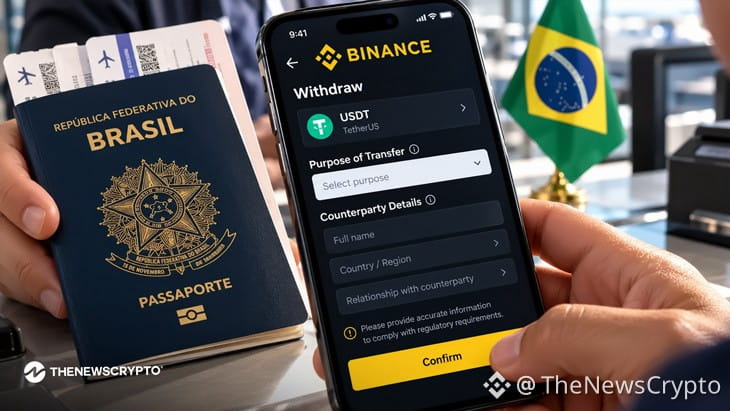
Article
Binance Users in Brazil Face New Transfer Requirements Under Central Bank RulesBinance users in Brazil must provide the transfer purpose and confirm counterparty details before cross-border crypto transactions can be processed from November 1, 2026.
The changes align Binance with Brazil’s Resolution BCB No. 521/2025, which brings international virtual asset transfers under the country’s formal foreign exchange framework.
Starting November 1, 2026, Binance users in Brazil will need to provide the purpose of their transfer and confirm counterparty details before any cross-border crypto transaction can be processed. The change comes as Binance adapts to Resolution BCB No. 521/2025, Brazil’s Central Bank framework. It brings international virtual asset transfers under the country’s formal foreign exchange rules.
The rule is: if someone is sending crypto to or receiving crypto from anyone outside Brazil on Binance, there is a need to declare why. Also, to confirm who the other party is. Binance will then report these transactions monthly to Brazil’s Central Bank.
In addition, transfers between Brazilian residents are entirely unaffected. If moving crypto to a Brazilian exchange or another person based in Brazil, nothing changes.
The withdrawals simply will not go through until the required information is completed; there’s no bypass. Deposits may sit pending or, in some cases, be returned if the counterparty details are missing.
How the Classification Works
For transfers up to $50,000, users select from a list of 10 purpose categories. Above that threshold, the complete list of 96 classifications applies, and there’s no generic other option available for larger transfers. A search field and help texts are provided to assist with the selection.
One additional limit to note: transfers to counterparties not authorised in Brazil‘s foreign exchange market are capped at $100,000 per transaction under current Central Bank rules. This limit may be raised to $500,000 in the near future.
Two Special Cases
Sending to someone’s own account on a foreign exchange is handled cleanly: select that sending to yourself, the purpose comes pre-filled as transfer between accounts of the same person, and the counterparty information fills in automatically. There is only a need to confirm and accept the declaration.
Transfers to one’s own self-hosted wallet are treated differently again; no purpose declaration is required, but you must confirm wallet ownership. These are still reported to the Central Bank under a separate category.
The Travel Rule, a separate compliance requirement, is being implemented on its own timeline. It has phased rollouts for domestic and international transactions in 2027 and 2028, respectively. The November 1 changes apply exclusively to the Central Bank’s foreign exchange rules for virtual assets.
Crypto Market Highlights
OKXICE Targets U.S. Tokenised Securities Market With SEC Innovation Exemption Filing
Binance Users in Brazil Face New Transfer Requirements Under Central Bank Rules
Binance users in Brazil must provide the transfer purpose and confirm counterparty details before cross-border crypto transactions can be processed from November 1, 2026.
The changes align Binance with Brazil’s Resolution BCB No. 521/2025, which brings international virtual asset transfers under the country’s formal foreign exchange framework.
Starting November 1, 2026, Binance users in Brazil will need to provide the purpose of their transfer and confirm counterparty details before any cross-border crypto transaction can be processed. The change comes as Binance adapts to Resolution BCB No. 521/2025, Brazil’s Central Bank framework. It brings international virtual asset transfers under the country’s formal foreign exchange rules.
The rule is: if someone is sending crypto to or receiving crypto from anyone outside Brazil on Binance, there is a need to declare why. Also, to confirm who the other party is. Binance will then report these transactions monthly to Brazil’s Central Bank.
In addition, transfers between Brazilian residents are entirely unaffected. If moving crypto to a Brazilian exchange or another person based in Brazil, nothing changes.
The withdrawals simply will not go through until the required information is completed; there’s no bypass. Deposits may sit pending or, in some cases, be returned if the counterparty details are missing.
How the Classification Works
For transfers up to $50,000, users select from a list of 10 purpose categories. Above that threshold, the complete list of 96 classifications applies, and there’s no generic other option available for larger transfers. A search field and help texts are provided to assist with the selection.
One additional limit to note: transfers to counterparties not authorised in Brazil‘s foreign exchange market are capped at $100,000 per transaction under current Central Bank rules. This limit may be raised to $500,000 in the near future.
Two Special Cases
Sending to someone’s own account on a foreign exchange is handled cleanly: select that sending to yourself, the purpose comes pre-filled as transfer between accounts of the same person, and the counterparty information fills in automatically. There is only a need to confirm and accept the declaration.
Transfers to one’s own self-hosted wallet are treated differently again; no purpose declaration is required, but you must confirm wallet ownership. These are still reported to the Central Bank under a separate category.
The Travel Rule, a separate compliance requirement, is being implemented on its own timeline. It has phased rollouts for domestic and international transactions in 2027 and 2028, respectively. The November 1 changes apply exclusively to the Central Bank’s foreign exchange rules for virtual assets.
Crypto Market Highlights
OKXICE Targets U.S. Tokenised Securities Market With SEC Innovation Exemption Filing
The changes align Binance with Brazil’s Resolution BCB No. 521/2025, which brings international virtual asset transfers under the country’s formal foreign exchange framework.
Starting November 1, 2026, Binance users in Brazil will need to provide the purpose of their transfer and confirm counterparty details before any cross-border crypto transaction can be processed. The change comes as Binance adapts to Resolution BCB No. 521/2025, Brazil’s Central Bank framework. It brings international virtual asset transfers under the country’s formal foreign exchange rules.
The rule is: if someone is sending crypto to or receiving crypto from anyone outside Brazil on Binance, there is a need to declare why. Also, to confirm who the other party is. Binance will then report these transactions monthly to Brazil’s Central Bank.
In addition, transfers between Brazilian residents are entirely unaffected. If moving crypto to a Brazilian exchange or another person based in Brazil, nothing changes.
The withdrawals simply will not go through until the required information is completed; there’s no bypass. Deposits may sit pending or, in some cases, be returned if the counterparty details are missing.
How the Classification Works
For transfers up to $50,000, users select from a list of 10 purpose categories. Above that threshold, the complete list of 96 classifications applies, and there’s no generic other option available for larger transfers. A search field and help texts are provided to assist with the selection.
One additional limit to note: transfers to counterparties not authorised in Brazil‘s foreign exchange market are capped at $100,000 per transaction under current Central Bank rules. This limit may be raised to $500,000 in the near future.
Two Special Cases
Sending to someone’s own account on a foreign exchange is handled cleanly: select that sending to yourself, the purpose comes pre-filled as transfer between accounts of the same person, and the counterparty information fills in automatically. There is only a need to confirm and accept the declaration.
Transfers to one’s own self-hosted wallet are treated differently again; no purpose declaration is required, but you must confirm wallet ownership. These are still reported to the Central Bank under a separate category.
The Travel Rule, a separate compliance requirement, is being implemented on its own timeline. It has phased rollouts for domestic and international transactions in 2027 and 2028, respectively. The November 1 changes apply exclusively to the Central Bank’s foreign exchange rules for virtual assets.
Crypto Market Highlights
OKXICE Targets U.S. Tokenised Securities Market With SEC Innovation Exemption Filing
498
Article
Zcash NU7 Goes Live on Testnet As ZEC Trades Near $1,300Zcash activated NU7 on testnet at block 4,465,026.
NU7 cuts target block times from 75 seconds to 25 seconds.
Zcash has activated its NU7 network upgrade on public testnet, moving the protocol closer to a planned mainnet rollout in November. The upgrade went live at block 4,465,026 on October 4, ahead of the previously expected October 6 activation.
(Source: ZecBlock)
NU7 reduces Zcash’s target block time from 75 seconds to 25 seconds. The change is designed to cut the average wait for a first confirmation to about 25 seconds, while the amount of ZEC issued each day remains unchanged. The per-block reward is adjusted to preserve the existing issuance schedule and halving timetable.
(Source: ZecBlock)
The upgrade also introduces the Network Sustainability Mechanism (NSM). Under the new system, 60% of transaction fees are placed into a reserve, while miners receive the remaining 40%. Part of the reserve can later be reissued as block rewards. The 21 million ZEC supply cap remains unchanged.
NU7 Changes Shielded Transactions as ZEC Recovers
NU7 also introduces limits on shielded activity to manage network and wallet workloads as blocks become more frequent. It sets limits of 330 Orchard or Ironwood actions and 300 Sapling inputs and outputs, alongside a shared 330-action budget.
The upgrade also makes version 4 transactions invalid. Because the older Sprout privacy system relies on version 4 transactions, ZEC remaining in the Sprout pool after NU7 reaches mainnet would become unspendable unless moved beforehand. Version 5 and version 6 transactions remain valid.
Zcash developers are expected to review the testnet results on October 20 before setting the mainnet activation height. The current target for NU7 mainnet activation is November 5, subject to that review.
Meanwhile, following the NU7 testnet activation, ZEC is trading around $1,335, up about 2.9% over 24 hours, with roughly $625 million in 24-hour trading volume and a market cap of about $22.48 billion. Still, ZEC remains down about 15.6% over the past seven days. Its current 24-hour range is approximately $1,308 to $1,362.
The price action puts $1,350-1,462 near-term resistance on the chart, while $1,284 is the immediate downside level from the current 24-hour range.
Zcash NU7 Goes Live on Testnet As ZEC Trades Near $1,300
Zcash activated NU7 on testnet at block 4,465,026.
NU7 cuts target block times from 75 seconds to 25 seconds.
Zcash has activated its NU7 network upgrade on public testnet, moving the protocol closer to a planned mainnet rollout in November. The upgrade went live at block 4,465,026 on October 4, ahead of the previously expected October 6 activation.
(Source: ZecBlock)
NU7 reduces Zcash’s target block time from 75 seconds to 25 seconds. The change is designed to cut the average wait for a first confirmation to about 25 seconds, while the amount of ZEC issued each day remains unchanged. The per-block reward is adjusted to preserve the existing issuance schedule and halving timetable.
(Source: ZecBlock)
The upgrade also introduces the Network Sustainability Mechanism (NSM). Under the new system, 60% of transaction fees are placed into a reserve, while miners receive the remaining 40%. Part of the reserve can later be reissued as block rewards. The 21 million ZEC supply cap remains unchanged.
NU7 Changes Shielded Transactions as ZEC Recovers
NU7 also introduces limits on shielded activity to manage network and wallet workloads as blocks become more frequent. It sets limits of 330 Orchard or Ironwood actions and 300 Sapling inputs and outputs, alongside a shared 330-action budget.
The upgrade also makes version 4 transactions invalid. Because the older Sprout privacy system relies on version 4 transactions, ZEC remaining in the Sprout pool after NU7 reaches mainnet would become unspendable unless moved beforehand. Version 5 and version 6 transactions remain valid.
Zcash developers are expected to review the testnet results on October 20 before setting the mainnet activation height. The current target for NU7 mainnet activation is November 5, subject to that review.
Meanwhile, following the NU7 testnet activation, ZEC is trading around $1,335, up about 2.9% over 24 hours, with roughly $625 million in 24-hour trading volume and a market cap of about $22.48 billion. Still, ZEC remains down about 15.6% over the past seven days. Its current 24-hour range is approximately $1,308 to $1,362.
The price action puts $1,350-1,462 near-term resistance on the chart, while $1,284 is the immediate downside level from the current 24-hour range.
NU7 cuts target block times from 75 seconds to 25 seconds.
Zcash has activated its NU7 network upgrade on public testnet, moving the protocol closer to a planned mainnet rollout in November. The upgrade went live at block 4,465,026 on October 4, ahead of the previously expected October 6 activation.
(Source: ZecBlock)
NU7 reduces Zcash’s target block time from 75 seconds to 25 seconds. The change is designed to cut the average wait for a first confirmation to about 25 seconds, while the amount of ZEC issued each day remains unchanged. The per-block reward is adjusted to preserve the existing issuance schedule and halving timetable.
(Source: ZecBlock)
The upgrade also introduces the Network Sustainability Mechanism (NSM). Under the new system, 60% of transaction fees are placed into a reserve, while miners receive the remaining 40%. Part of the reserve can later be reissued as block rewards. The 21 million ZEC supply cap remains unchanged.
NU7 Changes Shielded Transactions as ZEC Recovers
NU7 also introduces limits on shielded activity to manage network and wallet workloads as blocks become more frequent. It sets limits of 330 Orchard or Ironwood actions and 300 Sapling inputs and outputs, alongside a shared 330-action budget.
The upgrade also makes version 4 transactions invalid. Because the older Sprout privacy system relies on version 4 transactions, ZEC remaining in the Sprout pool after NU7 reaches mainnet would become unspendable unless moved beforehand. Version 5 and version 6 transactions remain valid.
Zcash developers are expected to review the testnet results on October 20 before setting the mainnet activation height. The current target for NU7 mainnet activation is November 5, subject to that review.
Meanwhile, following the NU7 testnet activation, ZEC is trading around $1,335, up about 2.9% over 24 hours, with roughly $625 million in 24-hour trading volume and a market cap of about $22.48 billion. Still, ZEC remains down about 15.6% over the past seven days. Its current 24-hour range is approximately $1,308 to $1,362.
The price action puts $1,350-1,462 near-term resistance on the chart, while $1,284 is the immediate downside level from the current 24-hour range.
1
400
Article
OKXICE Targets U.S. Tokenised Securities Market With SEC Innovation Exemption FilingOKXICE has filed with the SEC under the agency’s new Innovation Exemption to launch a Tokenised Securities Venue in the United States.
The filing puts OKXICE among the first firms to formally seek approval under the exemption.
OKXICE LLC, a joint venture between crypto exchange OKX and Intercontinental Exchange, the parent company of the New York Stock Exchange, filed with the SEC under the agency’s new Innovation Exemption to launch a Tokenised Securities Venue in the United States.
The filing makes OKXICE one of the first firms to formally pursue approval under the exemption, which the SEC introduced after comprehensive crypto legislation backed by President Trump failed to advance in the Senate. The exemption clears the way for blockchain-based securities to trade on U.S. crypto venues under specific conditions.
Moreover, ICE took a stake in OKX in March in a deal that valued the crypto firm at $25 billion. Former New York Governor Andrew Cuomo, co-chair of OKXICE, announced the filing on X, describing it as a landmark step toward a genuinely global, 24/7 Wall Street.
What the Filing Actually Covers?
The initial lineup targets tokenised shares of 63 NYSE-listed companies, with issuers given 30 days to opt out before trading in their stock can begin. The platform is designed for round-the-clock trading and faster on-chain settlement, with dividend and voting rights preserved, a requirement under the SEC’s new framework. Also, no shareholder benefits are stripped in the process.
Furthermore, the timing of the platform’s launch depends on completing that opt-out period and meeting remaining regulatory requirements.
The Shifting Competitive Landscape
Global exchanges including the NYSE, Nasdaq, and the London Stock Exchange are all preparing to launch round-the-clock trading in the coming months. Prediction markets have also been pushing into U.S. stock trading, a move that has already drawn regulatory scrutiny.
The SEC’s Innovation Exemption has effectively fired a starting gun. Different models are now competing for market share, with some firms working directly with public companies to bring tokenised shares to crypto markets, and others offering tokens created by third parties without issuer involvement. OKXICE sits firmly in the first camp, with NYSE‘s own parent company as a partner.
For traditional exchanges, this represents a structural challenge, not just a new product category. In addition, the crypto venue offering 24/7 access to U.S. equities with on-chain settlement directly competes with the operating hours and settlement timelines that have defined Wall Street for decades.
Tokenised U.S. stocks trading on crypto infrastructure around the clock reframes what an exchange can be. The first venues to go live under this exemption gain a first-mover position in a market that traditional finance is only beginning to enter.
Crypto Market Highlights
SEC Approves 3x Bitcoin and Ether ETFs in Major Expansion of Crypto Market Access
OKXICE Targets U.S. Tokenised Securities Market With SEC Innovation Exemption Filing
OKXICE has filed with the SEC under the agency’s new Innovation Exemption to launch a Tokenised Securities Venue in the United States.
The filing puts OKXICE among the first firms to formally seek approval under the exemption.
OKXICE LLC, a joint venture between crypto exchange OKX and Intercontinental Exchange, the parent company of the New York Stock Exchange, filed with the SEC under the agency’s new Innovation Exemption to launch a Tokenised Securities Venue in the United States.
The filing makes OKXICE one of the first firms to formally pursue approval under the exemption, which the SEC introduced after comprehensive crypto legislation backed by President Trump failed to advance in the Senate. The exemption clears the way for blockchain-based securities to trade on U.S. crypto venues under specific conditions.
Moreover, ICE took a stake in OKX in March in a deal that valued the crypto firm at $25 billion. Former New York Governor Andrew Cuomo, co-chair of OKXICE, announced the filing on X, describing it as a landmark step toward a genuinely global, 24/7 Wall Street.
What the Filing Actually Covers?
The initial lineup targets tokenised shares of 63 NYSE-listed companies, with issuers given 30 days to opt out before trading in their stock can begin. The platform is designed for round-the-clock trading and faster on-chain settlement, with dividend and voting rights preserved, a requirement under the SEC’s new framework. Also, no shareholder benefits are stripped in the process.
Furthermore, the timing of the platform’s launch depends on completing that opt-out period and meeting remaining regulatory requirements.
The Shifting Competitive Landscape
Global exchanges including the NYSE, Nasdaq, and the London Stock Exchange are all preparing to launch round-the-clock trading in the coming months. Prediction markets have also been pushing into U.S. stock trading, a move that has already drawn regulatory scrutiny.
The SEC’s Innovation Exemption has effectively fired a starting gun. Different models are now competing for market share, with some firms working directly with public companies to bring tokenised shares to crypto markets, and others offering tokens created by third parties without issuer involvement. OKXICE sits firmly in the first camp, with NYSE‘s own parent company as a partner.
For traditional exchanges, this represents a structural challenge, not just a new product category. In addition, the crypto venue offering 24/7 access to U.S. equities with on-chain settlement directly competes with the operating hours and settlement timelines that have defined Wall Street for decades.
Tokenised U.S. stocks trading on crypto infrastructure around the clock reframes what an exchange can be. The first venues to go live under this exemption gain a first-mover position in a market that traditional finance is only beginning to enter.
Crypto Market Highlights
SEC Approves 3x Bitcoin and Ether ETFs in Major Expansion of Crypto Market Access
The filing puts OKXICE among the first firms to formally seek approval under the exemption.
OKXICE LLC, a joint venture between crypto exchange OKX and Intercontinental Exchange, the parent company of the New York Stock Exchange, filed with the SEC under the agency’s new Innovation Exemption to launch a Tokenised Securities Venue in the United States.
The filing makes OKXICE one of the first firms to formally pursue approval under the exemption, which the SEC introduced after comprehensive crypto legislation backed by President Trump failed to advance in the Senate. The exemption clears the way for blockchain-based securities to trade on U.S. crypto venues under specific conditions.
Moreover, ICE took a stake in OKX in March in a deal that valued the crypto firm at $25 billion. Former New York Governor Andrew Cuomo, co-chair of OKXICE, announced the filing on X, describing it as a landmark step toward a genuinely global, 24/7 Wall Street.
What the Filing Actually Covers?
The initial lineup targets tokenised shares of 63 NYSE-listed companies, with issuers given 30 days to opt out before trading in their stock can begin. The platform is designed for round-the-clock trading and faster on-chain settlement, with dividend and voting rights preserved, a requirement under the SEC’s new framework. Also, no shareholder benefits are stripped in the process.
Furthermore, the timing of the platform’s launch depends on completing that opt-out period and meeting remaining regulatory requirements.
The Shifting Competitive Landscape
Global exchanges including the NYSE, Nasdaq, and the London Stock Exchange are all preparing to launch round-the-clock trading in the coming months. Prediction markets have also been pushing into U.S. stock trading, a move that has already drawn regulatory scrutiny.
The SEC’s Innovation Exemption has effectively fired a starting gun. Different models are now competing for market share, with some firms working directly with public companies to bring tokenised shares to crypto markets, and others offering tokens created by third parties without issuer involvement. OKXICE sits firmly in the first camp, with NYSE‘s own parent company as a partner.
For traditional exchanges, this represents a structural challenge, not just a new product category. In addition, the crypto venue offering 24/7 access to U.S. equities with on-chain settlement directly competes with the operating hours and settlement timelines that have defined Wall Street for decades.
Tokenised U.S. stocks trading on crypto infrastructure around the clock reframes what an exchange can be. The first venues to go live under this exemption gain a first-mover position in a market that traditional finance is only beginning to enter.
Crypto Market Highlights
SEC Approves 3x Bitcoin and Ether ETFs in Major Expansion of Crypto Market Access
67
Article
Payward Partners With Singapore Gulf Bank to Enable 24/7 SettlementPayward and SGB launched 24/7 settlement for institutional digital asset markets.
The service initially supports USD transactions for select clients.
Payward, the financial infrastructure company behind Kraken, has partnered with Singapore Gulf Bank (SGB) to provide 24/7 settlement for institutional digital asset markets, according to an announcement on October 5, 2026.
Under the partnership, Payward has integrated SGB Net, SGB’s real-time, multi-currency clearing network. The tie allows eligible institutional clients of both companies to settle transactions instantly, 24 hours a day, seven days a week.
Markets run 24/7. Settlement should too. Payward has integrated SGB Net from @SGB_app, a real-time clearing network, so institutional clients can settle instantly, 24/7. Read the full announcement: https://t.co/pFPBOwqtEf
— Payward (@Payward) October 5, 2026
The initial service covers U.S. dollar transactions and is available to a select number of institutional clients in supported jurisdictions across Asia and the Gulf region. Payward and SGB said they plan to extend the service to additional clients and currencies over time, although no specific time was given.
The arrangement allows an SGB client to deposit funds with Payward and make those funds available for use immediately, including outside traditional banking hours. This addresses the timing difference between digital asset markets, which operate continuously, and conventional banking systems that often rely on fixed processing windows.
SGB Adds Kraken Prime for Digital Asset Liquidity
The partnership also includes Kraken Prime, Payward’s institutional prime brokerage platform. SGB will use Kraken Prime as an additional source of digital asset liquidity and plans to draw on Payward’s markets to price trades for its customers in the coming months.
SGB launched SGB Net in 2025 to provide real-time clearing for businesses operating in digital assets and says the network now processes more than $20 billion in fiat transactions each month. The bank is backed by Bahrain’s sovereign wealth fund, Mumtalakat, and Singapore-based Whampoa Group.
SGB is licensed and regulated by the Central Bank of Bahrain. The bank provides multi-currency accounts, international payments and digital asset services to eligible businesses and individuals.
For Payward, the agreement forms part of its broader Payward Banking infrastructure, which covers cash movement across deposits, payments, cards, custody and lending. The company has also expanded its banking relationships this year, including a September partnership with SoFi for 24/7 U.S. dollar settlement.
Payward Partners With Singapore Gulf Bank to Enable 24/7 Settlement
Payward and SGB launched 24/7 settlement for institutional digital asset markets.
The service initially supports USD transactions for select clients.
Payward, the financial infrastructure company behind Kraken, has partnered with Singapore Gulf Bank (SGB) to provide 24/7 settlement for institutional digital asset markets, according to an announcement on October 5, 2026.
Under the partnership, Payward has integrated SGB Net, SGB’s real-time, multi-currency clearing network. The tie allows eligible institutional clients of both companies to settle transactions instantly, 24 hours a day, seven days a week.
Markets run 24/7. Settlement should too. Payward has integrated SGB Net from @SGB_app, a real-time clearing network, so institutional clients can settle instantly, 24/7. Read the full announcement: https://t.co/pFPBOwqtEf
— Payward (@Payward) October 5, 2026
The initial service covers U.S. dollar transactions and is available to a select number of institutional clients in supported jurisdictions across Asia and the Gulf region. Payward and SGB said they plan to extend the service to additional clients and currencies over time, although no specific time was given.
The arrangement allows an SGB client to deposit funds with Payward and make those funds available for use immediately, including outside traditional banking hours. This addresses the timing difference between digital asset markets, which operate continuously, and conventional banking systems that often rely on fixed processing windows.
SGB Adds Kraken Prime for Digital Asset Liquidity
The partnership also includes Kraken Prime, Payward’s institutional prime brokerage platform. SGB will use Kraken Prime as an additional source of digital asset liquidity and plans to draw on Payward’s markets to price trades for its customers in the coming months.
SGB launched SGB Net in 2025 to provide real-time clearing for businesses operating in digital assets and says the network now processes more than $20 billion in fiat transactions each month. The bank is backed by Bahrain’s sovereign wealth fund, Mumtalakat, and Singapore-based Whampoa Group.
SGB is licensed and regulated by the Central Bank of Bahrain. The bank provides multi-currency accounts, international payments and digital asset services to eligible businesses and individuals.
For Payward, the agreement forms part of its broader Payward Banking infrastructure, which covers cash movement across deposits, payments, cards, custody and lending. The company has also expanded its banking relationships this year, including a September partnership with SoFi for 24/7 U.S. dollar settlement.
The service initially supports USD transactions for select clients.
Payward, the financial infrastructure company behind Kraken, has partnered with Singapore Gulf Bank (SGB) to provide 24/7 settlement for institutional digital asset markets, according to an announcement on October 5, 2026.
Under the partnership, Payward has integrated SGB Net, SGB’s real-time, multi-currency clearing network. The tie allows eligible institutional clients of both companies to settle transactions instantly, 24 hours a day, seven days a week.
Markets run 24/7. Settlement should too. Payward has integrated SGB Net from @SGB_app, a real-time clearing network, so institutional clients can settle instantly, 24/7. Read the full announcement: https://t.co/pFPBOwqtEf
— Payward (@Payward) October 5, 2026
The initial service covers U.S. dollar transactions and is available to a select number of institutional clients in supported jurisdictions across Asia and the Gulf region. Payward and SGB said they plan to extend the service to additional clients and currencies over time, although no specific time was given.
The arrangement allows an SGB client to deposit funds with Payward and make those funds available for use immediately, including outside traditional banking hours. This addresses the timing difference between digital asset markets, which operate continuously, and conventional banking systems that often rely on fixed processing windows.
SGB Adds Kraken Prime for Digital Asset Liquidity
The partnership also includes Kraken Prime, Payward’s institutional prime brokerage platform. SGB will use Kraken Prime as an additional source of digital asset liquidity and plans to draw on Payward’s markets to price trades for its customers in the coming months.
SGB launched SGB Net in 2025 to provide real-time clearing for businesses operating in digital assets and says the network now processes more than $20 billion in fiat transactions each month. The bank is backed by Bahrain’s sovereign wealth fund, Mumtalakat, and Singapore-based Whampoa Group.
SGB is licensed and regulated by the Central Bank of Bahrain. The bank provides multi-currency accounts, international payments and digital asset services to eligible businesses and individuals.
For Payward, the agreement forms part of its broader Payward Banking infrastructure, which covers cash movement across deposits, payments, cards, custody and lending. The company has also expanded its banking relationships this year, including a September partnership with SoFi for 24/7 U.S. dollar settlement.
299
Article
Community Banks Sue OCC Over Crypto Trust Bank ChartersCommunity Banks sued the OCC over national trust bank charters for crypto firms, arguing the regulator exceeded its authority under the National Bank Act.
The lawsuit challenges the OCC’s March 2026 rule and Protego’s charter.
The Independent Community Bankers of America (ICBA) has sued the U.S. Office of the Comptroller of the Currency (OCC) over its decision to allow cryptocurrency companies to obtain national trust bank charters.
The banking group filed the lawsuit on October 2 in the U.S. District Court for the District of Columbia. ICBA is challenging an OCC rule issued in March 2026, along with Interpretive Letter No. 1176, arguing that the regulator exceeded the authority granted to it under the National Bank Act.
Source: Source: ICBA
The dispute centers on national trust banks that do not take traditional deposits but can provide services such as digital-asset custody and payment settlement. Unlike insured banks, these institutions are not subject to FDIC insurance requirements, and they do not operate under the same capital, liquidity and Community Reinvestment Act requirements that apply to insured depository institutions.
The OCC, however, said in its February 2026 final rule that it was clarifying the existing authority of national banks limited to trust-company operations to conduct non-fiduciary activities. The agency said the rule does not expand or reduce its statutory authority to charter national banks. The rule became effective on April 1.
ICBA Challenges Crypto Trust Bank Approvals
ICBA argues that the expanded use of national trust charters creates a regulatory difference between crypto firms and traditional community banks. The group said consumers could also assume that assets held with a federally chartered crypto trust company receive the same federal protections as deposits at an insured bank.
The lawsuit specifically asks the court to invalidate the OCC’s rule and related guidance. It also seeks to overturn the conditional approval of a national trust bank charter for Protego Holdings Corp., a digital-asset company.
The OCC has granted or conditionally approved several national trust bank applications involving digital-asset companies. In December 2025, the agency announced conditional approvals for firms including Ripple National Trust Bank, First National Digital Currency Bank, BitGo Bank & Trust, Fidelity Digital Assets and Paxos Trust Company.
The OCC declined to comment on the new lawsuit, according to Reuters.
Community Banks Sue OCC Over Crypto Trust Bank Charters
Community Banks sued the OCC over national trust bank charters for crypto firms, arguing the regulator exceeded its authority under the National Bank Act.
The lawsuit challenges the OCC’s March 2026 rule and Protego’s charter.
The Independent Community Bankers of America (ICBA) has sued the U.S. Office of the Comptroller of the Currency (OCC) over its decision to allow cryptocurrency companies to obtain national trust bank charters.
The banking group filed the lawsuit on October 2 in the U.S. District Court for the District of Columbia. ICBA is challenging an OCC rule issued in March 2026, along with Interpretive Letter No. 1176, arguing that the regulator exceeded the authority granted to it under the National Bank Act.
Source: Source: ICBA
The dispute centers on national trust banks that do not take traditional deposits but can provide services such as digital-asset custody and payment settlement. Unlike insured banks, these institutions are not subject to FDIC insurance requirements, and they do not operate under the same capital, liquidity and Community Reinvestment Act requirements that apply to insured depository institutions.
The OCC, however, said in its February 2026 final rule that it was clarifying the existing authority of national banks limited to trust-company operations to conduct non-fiduciary activities. The agency said the rule does not expand or reduce its statutory authority to charter national banks. The rule became effective on April 1.
ICBA Challenges Crypto Trust Bank Approvals
ICBA argues that the expanded use of national trust charters creates a regulatory difference between crypto firms and traditional community banks. The group said consumers could also assume that assets held with a federally chartered crypto trust company receive the same federal protections as deposits at an insured bank.
The lawsuit specifically asks the court to invalidate the OCC’s rule and related guidance. It also seeks to overturn the conditional approval of a national trust bank charter for Protego Holdings Corp., a digital-asset company.
The OCC has granted or conditionally approved several national trust bank applications involving digital-asset companies. In December 2025, the agency announced conditional approvals for firms including Ripple National Trust Bank, First National Digital Currency Bank, BitGo Bank & Trust, Fidelity Digital Assets and Paxos Trust Company.
The OCC declined to comment on the new lawsuit, according to Reuters.
The lawsuit challenges the OCC’s March 2026 rule and Protego’s charter.
The Independent Community Bankers of America (ICBA) has sued the U.S. Office of the Comptroller of the Currency (OCC) over its decision to allow cryptocurrency companies to obtain national trust bank charters.
The banking group filed the lawsuit on October 2 in the U.S. District Court for the District of Columbia. ICBA is challenging an OCC rule issued in March 2026, along with Interpretive Letter No. 1176, arguing that the regulator exceeded the authority granted to it under the National Bank Act.
Source: Source: ICBA
The dispute centers on national trust banks that do not take traditional deposits but can provide services such as digital-asset custody and payment settlement. Unlike insured banks, these institutions are not subject to FDIC insurance requirements, and they do not operate under the same capital, liquidity and Community Reinvestment Act requirements that apply to insured depository institutions.
The OCC, however, said in its February 2026 final rule that it was clarifying the existing authority of national banks limited to trust-company operations to conduct non-fiduciary activities. The agency said the rule does not expand or reduce its statutory authority to charter national banks. The rule became effective on April 1.
ICBA Challenges Crypto Trust Bank Approvals
ICBA argues that the expanded use of national trust charters creates a regulatory difference between crypto firms and traditional community banks. The group said consumers could also assume that assets held with a federally chartered crypto trust company receive the same federal protections as deposits at an insured bank.
The lawsuit specifically asks the court to invalidate the OCC’s rule and related guidance. It also seeks to overturn the conditional approval of a national trust bank charter for Protego Holdings Corp., a digital-asset company.
The OCC has granted or conditionally approved several national trust bank applications involving digital-asset companies. In December 2025, the agency announced conditional approvals for firms including Ripple National Trust Bank, First National Digital Currency Bank, BitGo Bank & Trust, Fidelity Digital Assets and Paxos Trust Company.
The OCC declined to comment on the new lawsuit, according to Reuters.
2
865
Article
Bitpanda Co-CEO Says European Crypto Users Have More Faith in Regulated Firms Under MiCABitpanda co-CEO Christian Trummer says European users have more faith in MiCA-regulated crypto firms.
EU regulators are tightening enforcement against firms serving European customers without MiCA authorization.
European crypto users are showing greater trust in regulated platforms following the rollout of the European Union’s Markets in Crypto-Assets (MiCA) framework, according to Bitpanda co-CEO Christian Trummer.
Speaking on Cointelegraph’s Chain Reaction, Trummer said users now have “more faith” in regulated market participants. He also argued that the wider crypto market can look different from the community often seen on Crypto Twitter, where self-custody remains a major focus.
Trummer said ordinary users are generally more comfortable using regulated providers rather than managing private keys themselves. However, his comments are based on his observations and were not accompanied by a specific survey or percentage measuring a rise in consumer trust.
MiCA has also moved into a stricter enforcement phase across the bloc. Under the regulation’s transitional rules, existing crypto-asset service providers could continue operating until July 1, 2026 at the latest, or until their authorization was granted or refused. ESMA said firms without a MiCA license after the transition period must stop providing crypto-asset services to EU clients.
MiCA Enforcement Puts Unlicensed Firms Under Pressure
Trummer also called for stronger enforcement against companies that continue serving European customers without the required authorization. His comments come as EU regulators are examining Binance’s continued services in the region and its reliance on MiCA’s “reverse solicitation” exemption. ESMA has said the exemption is narrowly defined and should not be used to bypass the licensing requirements.
Bitpanda itself is operating under the European regulatory framework, while Trummer became co-CEO in September alongside Lukas Enzersdorfer-Konrad, who is expected to step down in the first quarter of 2027.
The comments come as MiCA moves from its transition period into a phase where regulators are increasingly focused on whether crypto firms serving European customers are properly authorized.
Bitpanda Co-CEO Says European Crypto Users Have More Faith in Regulated Firms Under MiCA
Bitpanda co-CEO Christian Trummer says European users have more faith in MiCA-regulated crypto firms.
EU regulators are tightening enforcement against firms serving European customers without MiCA authorization.
European crypto users are showing greater trust in regulated platforms following the rollout of the European Union’s Markets in Crypto-Assets (MiCA) framework, according to Bitpanda co-CEO Christian Trummer.
Speaking on Cointelegraph’s Chain Reaction, Trummer said users now have “more faith” in regulated market participants. He also argued that the wider crypto market can look different from the community often seen on Crypto Twitter, where self-custody remains a major focus.
Trummer said ordinary users are generally more comfortable using regulated providers rather than managing private keys themselves. However, his comments are based on his observations and were not accompanied by a specific survey or percentage measuring a rise in consumer trust.
MiCA has also moved into a stricter enforcement phase across the bloc. Under the regulation’s transitional rules, existing crypto-asset service providers could continue operating until July 1, 2026 at the latest, or until their authorization was granted or refused. ESMA said firms without a MiCA license after the transition period must stop providing crypto-asset services to EU clients.
MiCA Enforcement Puts Unlicensed Firms Under Pressure
Trummer also called for stronger enforcement against companies that continue serving European customers without the required authorization. His comments come as EU regulators are examining Binance’s continued services in the region and its reliance on MiCA’s “reverse solicitation” exemption. ESMA has said the exemption is narrowly defined and should not be used to bypass the licensing requirements.
Bitpanda itself is operating under the European regulatory framework, while Trummer became co-CEO in September alongside Lukas Enzersdorfer-Konrad, who is expected to step down in the first quarter of 2027.
The comments come as MiCA moves from its transition period into a phase where regulators are increasingly focused on whether crypto firms serving European customers are properly authorized.
EU regulators are tightening enforcement against firms serving European customers without MiCA authorization.
European crypto users are showing greater trust in regulated platforms following the rollout of the European Union’s Markets in Crypto-Assets (MiCA) framework, according to Bitpanda co-CEO Christian Trummer.
Speaking on Cointelegraph’s Chain Reaction, Trummer said users now have “more faith” in regulated market participants. He also argued that the wider crypto market can look different from the community often seen on Crypto Twitter, where self-custody remains a major focus.
Trummer said ordinary users are generally more comfortable using regulated providers rather than managing private keys themselves. However, his comments are based on his observations and were not accompanied by a specific survey or percentage measuring a rise in consumer trust.
MiCA has also moved into a stricter enforcement phase across the bloc. Under the regulation’s transitional rules, existing crypto-asset service providers could continue operating until July 1, 2026 at the latest, or until their authorization was granted or refused. ESMA said firms without a MiCA license after the transition period must stop providing crypto-asset services to EU clients.
MiCA Enforcement Puts Unlicensed Firms Under Pressure
Trummer also called for stronger enforcement against companies that continue serving European customers without the required authorization. His comments come as EU regulators are examining Binance’s continued services in the region and its reliance on MiCA’s “reverse solicitation” exemption. ESMA has said the exemption is narrowly defined and should not be used to bypass the licensing requirements.
Bitpanda itself is operating under the European regulatory framework, while Trummer became co-CEO in September alongside Lukas Enzersdorfer-Konrad, who is expected to step down in the first quarter of 2027.
The comments come as MiCA moves from its transition period into a phase where regulators are increasingly focused on whether crypto firms serving European customers are properly authorized.
342
Article
SEC Approves 3x Bitcoin and Ether ETFs in Major Expansion of Crypto Market AccessThe SEC approved the listing and trading of the 3x Bitcoin ETF and 3x Ether ETF, alongside four other 3x commodity-linked products under the VS Trust.
The approval expands access to leveraged crypto exposure through US-listed ETFs.
The U.S. Securities and Exchange Commission (SEC) has approved the first-ever 3x leveraged Bitcoin and Ethereum ETFs for listing and trading in the United States, a decision that marks one of the most significant shifts in crypto regulatory history since the spot Bitcoin ETF approval in January 2024.
The approval covers six products under the VS Trust managed by Volatility Shares: the 3x Bitcoin ETF, 3x Ether ETF, 3x Gold ETF, 3x Silver ETF, 3x Crude Oil ETF, and 3x Natural Gas ETF. Cboe BZX Exchange filed the proposed rule change on August 10, 2026; the SEC published it in the Federal Register on August 19 for public comment, and the order granting approval followed shortly after.
Also, Bloomberg ETF analyst Eric Balchunas called it a big win for Volatility Shares. ETF Store President Nate Geraci noted the speed of the shift; under three years ago, the SEC was still litigating against Grayscale over a plain-vanilla spot Bitcoin ETF. Now it has approved products that deliver three times the daily performance of the underlying assets.
How Do These Products Actually Work?
The Bitcoin and Ether ETFs use CME futures contracts and other instruments to seek returns equal to three times the daily performance of their respective indexes, before fees and expenses. That structure requires issuers to rebalance positions every single day, creating predictable buying and selling pressure that can amplify intraday price movements in both spot and futures markets.
That daily rebalancing also introduces a structural complexity that matters. In volatile, range-bound markets, returns can erode even when traders correctly anticipate the underlying asset’s direction. Moreover, it makes these products better suited to short-term tactical trading than long-term holding.
What This Means for BTC, ETH, and the Broader Market?
The leveraged ETPs targeting crypto assets bring a new class of traders and institutions into the market. In addition, those with shorter time horizons and higher risk tolerance who previously had no regulated vehicle for this kind of exposure.
For BTC and ETH specifically, daily rebalancing from these products will create consistent and predictable buying pressure on up days and selling pressure on down days, amplifying intraday moves in both directions. Volatility is likely to increase around market open and close as issuers adjust positions.
The approval also signals something larger: the SEC’s posture toward complex crypto investment vehicles has fundamentally shifted. Furthermore, spot ETFs were the first step, and the leveraged ETFs are the next. The regulatory door that once seemed permanently closed is now opening faster than expected.
Crypto Market Highlights
Binance Faces Fresh EU Scrutiny Over MiCA Reverse Solicitation
SEC Approves 3x Bitcoin and Ether ETFs in Major Expansion of Crypto Market Access
The SEC approved the listing and trading of the 3x Bitcoin ETF and 3x Ether ETF, alongside four other 3x commodity-linked products under the VS Trust.
The approval expands access to leveraged crypto exposure through US-listed ETFs.
The U.S. Securities and Exchange Commission (SEC) has approved the first-ever 3x leveraged Bitcoin and Ethereum ETFs for listing and trading in the United States, a decision that marks one of the most significant shifts in crypto regulatory history since the spot Bitcoin ETF approval in January 2024.
The approval covers six products under the VS Trust managed by Volatility Shares: the 3x Bitcoin ETF, 3x Ether ETF, 3x Gold ETF, 3x Silver ETF, 3x Crude Oil ETF, and 3x Natural Gas ETF. Cboe BZX Exchange filed the proposed rule change on August 10, 2026; the SEC published it in the Federal Register on August 19 for public comment, and the order granting approval followed shortly after.
Also, Bloomberg ETF analyst Eric Balchunas called it a big win for Volatility Shares. ETF Store President Nate Geraci noted the speed of the shift; under three years ago, the SEC was still litigating against Grayscale over a plain-vanilla spot Bitcoin ETF. Now it has approved products that deliver three times the daily performance of the underlying assets.
How Do These Products Actually Work?
The Bitcoin and Ether ETFs use CME futures contracts and other instruments to seek returns equal to three times the daily performance of their respective indexes, before fees and expenses. That structure requires issuers to rebalance positions every single day, creating predictable buying and selling pressure that can amplify intraday price movements in both spot and futures markets.
That daily rebalancing also introduces a structural complexity that matters. In volatile, range-bound markets, returns can erode even when traders correctly anticipate the underlying asset’s direction. Moreover, it makes these products better suited to short-term tactical trading than long-term holding.
What This Means for BTC, ETH, and the Broader Market?
The leveraged ETPs targeting crypto assets bring a new class of traders and institutions into the market. In addition, those with shorter time horizons and higher risk tolerance who previously had no regulated vehicle for this kind of exposure.
For BTC and ETH specifically, daily rebalancing from these products will create consistent and predictable buying pressure on up days and selling pressure on down days, amplifying intraday moves in both directions. Volatility is likely to increase around market open and close as issuers adjust positions.
The approval also signals something larger: the SEC’s posture toward complex crypto investment vehicles has fundamentally shifted. Furthermore, spot ETFs were the first step, and the leveraged ETFs are the next. The regulatory door that once seemed permanently closed is now opening faster than expected.
Crypto Market Highlights
Binance Faces Fresh EU Scrutiny Over MiCA Reverse Solicitation
The approval expands access to leveraged crypto exposure through US-listed ETFs.
The U.S. Securities and Exchange Commission (SEC) has approved the first-ever 3x leveraged Bitcoin and Ethereum ETFs for listing and trading in the United States, a decision that marks one of the most significant shifts in crypto regulatory history since the spot Bitcoin ETF approval in January 2024.
The approval covers six products under the VS Trust managed by Volatility Shares: the 3x Bitcoin ETF, 3x Ether ETF, 3x Gold ETF, 3x Silver ETF, 3x Crude Oil ETF, and 3x Natural Gas ETF. Cboe BZX Exchange filed the proposed rule change on August 10, 2026; the SEC published it in the Federal Register on August 19 for public comment, and the order granting approval followed shortly after.
Also, Bloomberg ETF analyst Eric Balchunas called it a big win for Volatility Shares. ETF Store President Nate Geraci noted the speed of the shift; under three years ago, the SEC was still litigating against Grayscale over a plain-vanilla spot Bitcoin ETF. Now it has approved products that deliver three times the daily performance of the underlying assets.
How Do These Products Actually Work?
The Bitcoin and Ether ETFs use CME futures contracts and other instruments to seek returns equal to three times the daily performance of their respective indexes, before fees and expenses. That structure requires issuers to rebalance positions every single day, creating predictable buying and selling pressure that can amplify intraday price movements in both spot and futures markets.
That daily rebalancing also introduces a structural complexity that matters. In volatile, range-bound markets, returns can erode even when traders correctly anticipate the underlying asset’s direction. Moreover, it makes these products better suited to short-term tactical trading than long-term holding.
What This Means for BTC, ETH, and the Broader Market?
The leveraged ETPs targeting crypto assets bring a new class of traders and institutions into the market. In addition, those with shorter time horizons and higher risk tolerance who previously had no regulated vehicle for this kind of exposure.
For BTC and ETH specifically, daily rebalancing from these products will create consistent and predictable buying pressure on up days and selling pressure on down days, amplifying intraday moves in both directions. Volatility is likely to increase around market open and close as issuers adjust positions.
The approval also signals something larger: the SEC’s posture toward complex crypto investment vehicles has fundamentally shifted. Furthermore, spot ETFs were the first step, and the leveraged ETFs are the next. The regulatory door that once seemed permanently closed is now opening faster than expected.
Crypto Market Highlights
Binance Faces Fresh EU Scrutiny Over MiCA Reverse Solicitation
1.1k
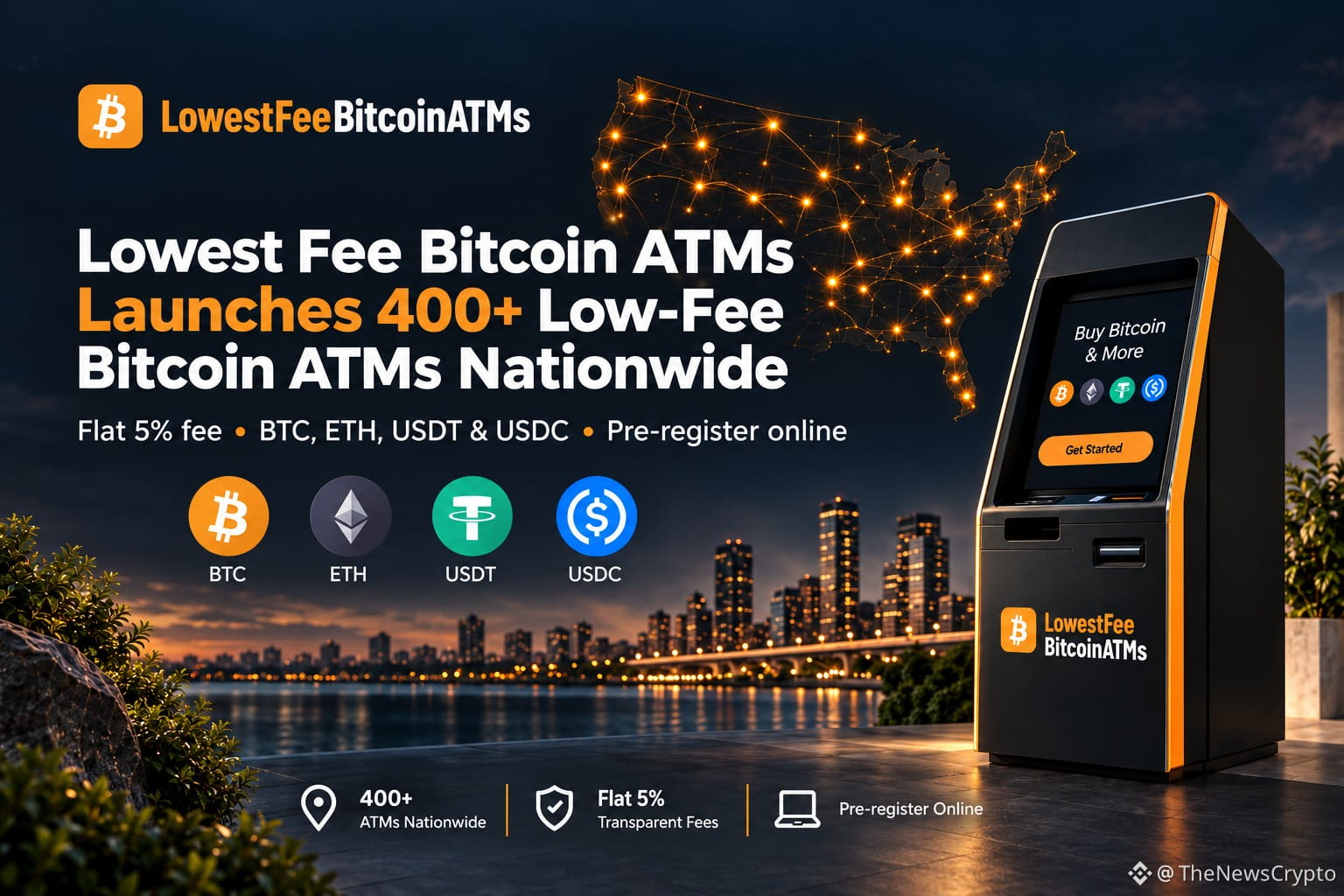
Article
Lowest Fee Bitcoin ATMs Announces Launch of More Than 400 ATMs NationwideLas Vegas, NV, October 1st, 2026, Chainwire
Lowest Fee Bitcoin ATMs announced the launch of more than 400 cryptocurrency ATMs across the United States. The machines allow customers to purchase Bitcoin, Ethereum, USDT and USDC with cash at a stated flat 5% fee. Customers can also pre-register online before visiting an ATM.
Lowest Fee Bitcoin ATMs, a new nationwide low-fee Bitcoin ATM operator, launched today with an initial rollout of more than 400 Bitcoin ATMs across the United States, a footprint that places it amongst the largest Bitcoin ATM operators in the country on its first day. It also launched with a name that does most of the marketing department’s job for it. The brand charges a flat 5% Bitcoin ATM fee to buy Bitcoin, Ethereum, USDT or USDC with cash, displays the fee and exchange rate on screen before the customer confirms, and, as of today, lets first-time customers register online in about two minutes so they can skip onboarding at the machine entirely.
400+ Bitcoin ATM locations on day one
Most Bitcoin ATM operators in the U.S. run a few dozen machines. Lowest Fee Bitcoin ATMs opens with more than 400 Bitcoin ATM locations in the convenience stores, gas stations and shopping centers people already visit, with machines in Florida, California, Arizona and Texas among other states, as the first phase of a larger rollout.
“Four hundred machines is not a pilot. It’s a network,” said Quincy Mathis, Operations Manager at Lowest Fee Bitcoin ATMs. “We wanted to be one of the biggest Bitcoin ATM operators in the country on the day we opened, because a low fee only matters if there’s a machine near you. This is phase one.”
Buy Bitcoin, Ethereum, USDT and USDC with cash: coins, limits and one fee
Every Lowest Fee Bitcoin ATM sells Bitcoin (BTC), Ethereum (ETH), Tether (USDT) and USD Coin (USDC) for cash, all at the same 5% fee, all sent directly to the customer’s own wallet. No bank account or credit card is needed. The machines are non-custodial: the company never holds customer funds.
Bitcoin ATM daily limits are set by verification tier:
Tier 1, phone number only: up to $2,000 per day
Tier 2, government ID and Tax ID: up to $50,000 per day
Bitcoin ATM fees compared: what $1,000 buys
The typical Bitcoin ATM in the United States charges roughly 12% to 15% to buy, and some of the largest national brands charge 20% or more. Here is what that looks like when a customer walks up with $1,000 in cash:
Illustrative, based on posted percentage fees only and before exchange rate. Many operators add an exchange-rate markup on top of the posted fee; Lowest Fee Bitcoin ATMs shows both the fee and the rate on screen before a transaction is confirmed. Industry figures reflect publicly reported U.S. Bitcoin ATM fee ranges. See how the Bitcoin ATM fees compare.
At a 20% machine, one dollar in every five never becomes crypto. At Lowest Fee Bitcoin ATMs, it’s one in twenty. The name is not subtle; neither is a 20% fee.
“We wanted a rate people can look at on the receipt and feel good about, not one they have to make peace with,” said Quincy Mathis. “Five percent, shown up front, with the exchange rate right next to it. That’s the whole pitch.”
Stablecoin ATMs are becoming the way people send money overseas
A growing share of customers are using the machines as USDT and USDC ATMs, buying dollar pegged stable coins to send money to family and friends overseas and to pay suppliers and contractors abroad. A customer inserts cash, the stable coins arrive in the recipient’s wallet within minutes, and the recipient holds dollars they can keep or cash out locally. No wire counter, no multi-day wait, and no bank account needed to send.
That makes the fee gap matter more, not less. Someone sending $1,000 home once a month pays about $600 a year in fees at a 5% machine, $1,440 to $1,800 at a typical machine, and $2,400 at a 20% machine. The difference is real money to the people who can least afford to lose it, which is why low fees matter most to remittance customers.
“The people using stable coins to support family abroad are exactly the people who shouldn’t be paying 20% for the privilege,” said Quincy Mathis.
How to use a Bitcoin ATM: four steps, under two minutes, now with online pre-registration
New with today’s launch is online Bitcoin ATM pre-registration. First-time customers can pre-register online before they ever visit a machine, so the first visit is as fast as the tenth. At any of the 400+ machines, they simply enter their phone number.
Register online, once. About two minutes on a phone.
Walk up and enter your phone number. The machine recognizes you. No paperwork at the kiosk.
Pick a coin, scan your wallet, insert cash. Scan your wallet’s QR code and feed in the bills.
Check the screen and confirm. The fee and exchange rate are displayed before you press anything. Crypto lands in your wallet within minutes.
Customers who would rather register at the machine still can. It just takes a little longer, and the company would like to gently point out that it no longer has to. A full walkthrough of how a Bitcoin ATM works is on the company’s website.
Compliance, briefly
Lowest Fee Bitcoin ATMs is a FinCEN-registered money services business, and every machine operates in compliance with federal and state regulations. Customer data is encrypted, and transactions are non-custodial and irreversible. No government agency, bank, utility or tech-support line will ever ask anyone to pay them at a Bitcoin ATM; if someone does, it is a scam. Common questions are answered in the company’s Bitcoin ATM FAQ.
Find a low-fee Bitcoin ATM near you
Lowest Fee Bitcoin ATMs are live now at 400+ locations across the United States, with further phases of the rollout to follow. Customers can find a Bitcoin ATM near them and pre-register at lowestfeebitcoinatms.com. New customers can use code LOWEST at the machine for 20% off the transaction fee, which brings the fee on that $1,000 transaction down to $40.
About Lowest Fee Bitcoin ATMs
Lowest Fee Bitcoin ATMs is a nationwide low-fee Bitcoin ATM operator whose initial network of more than 400 machines ranks among the largest in the United States. Customers can buy Bitcoin, Ethereum, USDT and USDC with cash for a flat 5% fee, with the fee and exchange rate displayed on screen before every transaction. The company is a FinCEN-registered money services business. Users can learn more at lowestfeebitcoinatms.com.
Contact
Marketing DirectorBrian S. SmithLowest Fee Bitcoin ATMssupport@lowestfeebitcoinatms.com
Lowest Fee Bitcoin ATMs Announces Launch of More Than 400 ATMs Nationwide
Las Vegas, NV, October 1st, 2026, Chainwire
Lowest Fee Bitcoin ATMs announced the launch of more than 400 cryptocurrency ATMs across the United States. The machines allow customers to purchase Bitcoin, Ethereum, USDT and USDC with cash at a stated flat 5% fee. Customers can also pre-register online before visiting an ATM.
Lowest Fee Bitcoin ATMs, a new nationwide low-fee Bitcoin ATM operator, launched today with an initial rollout of more than 400 Bitcoin ATMs across the United States, a footprint that places it amongst the largest Bitcoin ATM operators in the country on its first day. It also launched with a name that does most of the marketing department’s job for it. The brand charges a flat 5% Bitcoin ATM fee to buy Bitcoin, Ethereum, USDT or USDC with cash, displays the fee and exchange rate on screen before the customer confirms, and, as of today, lets first-time customers register online in about two minutes so they can skip onboarding at the machine entirely.
400+ Bitcoin ATM locations on day one
Most Bitcoin ATM operators in the U.S. run a few dozen machines. Lowest Fee Bitcoin ATMs opens with more than 400 Bitcoin ATM locations in the convenience stores, gas stations and shopping centers people already visit, with machines in Florida, California, Arizona and Texas among other states, as the first phase of a larger rollout.
“Four hundred machines is not a pilot. It’s a network,” said Quincy Mathis, Operations Manager at Lowest Fee Bitcoin ATMs. “We wanted to be one of the biggest Bitcoin ATM operators in the country on the day we opened, because a low fee only matters if there’s a machine near you. This is phase one.”
Buy Bitcoin, Ethereum, USDT and USDC with cash: coins, limits and one fee
Every Lowest Fee Bitcoin ATM sells Bitcoin (BTC), Ethereum (ETH), Tether (USDT) and USD Coin (USDC) for cash, all at the same 5% fee, all sent directly to the customer’s own wallet. No bank account or credit card is needed. The machines are non-custodial: the company never holds customer funds.
Bitcoin ATM daily limits are set by verification tier:
Tier 1, phone number only: up to $2,000 per day
Tier 2, government ID and Tax ID: up to $50,000 per day
Bitcoin ATM fees compared: what $1,000 buys
The typical Bitcoin ATM in the United States charges roughly 12% to 15% to buy, and some of the largest national brands charge 20% or more. Here is what that looks like when a customer walks up with $1,000 in cash:
Illustrative, based on posted percentage fees only and before exchange rate. Many operators add an exchange-rate markup on top of the posted fee; Lowest Fee Bitcoin ATMs shows both the fee and the rate on screen before a transaction is confirmed. Industry figures reflect publicly reported U.S. Bitcoin ATM fee ranges. See how the Bitcoin ATM fees compare.
At a 20% machine, one dollar in every five never becomes crypto. At Lowest Fee Bitcoin ATMs, it’s one in twenty. The name is not subtle; neither is a 20% fee.
“We wanted a rate people can look at on the receipt and feel good about, not one they have to make peace with,” said Quincy Mathis. “Five percent, shown up front, with the exchange rate right next to it. That’s the whole pitch.”
Stablecoin ATMs are becoming the way people send money overseas
A growing share of customers are using the machines as USDT and USDC ATMs, buying dollar pegged stable coins to send money to family and friends overseas and to pay suppliers and contractors abroad. A customer inserts cash, the stable coins arrive in the recipient’s wallet within minutes, and the recipient holds dollars they can keep or cash out locally. No wire counter, no multi-day wait, and no bank account needed to send.
That makes the fee gap matter more, not less. Someone sending $1,000 home once a month pays about $600 a year in fees at a 5% machine, $1,440 to $1,800 at a typical machine, and $2,400 at a 20% machine. The difference is real money to the people who can least afford to lose it, which is why low fees matter most to remittance customers.
“The people using stable coins to support family abroad are exactly the people who shouldn’t be paying 20% for the privilege,” said Quincy Mathis.
How to use a Bitcoin ATM: four steps, under two minutes, now with online pre-registration
New with today’s launch is online Bitcoin ATM pre-registration. First-time customers can pre-register online before they ever visit a machine, so the first visit is as fast as the tenth. At any of the 400+ machines, they simply enter their phone number.
Register online, once. About two minutes on a phone.
Walk up and enter your phone number. The machine recognizes you. No paperwork at the kiosk.
Pick a coin, scan your wallet, insert cash. Scan your wallet’s QR code and feed in the bills.
Check the screen and confirm. The fee and exchange rate are displayed before you press anything. Crypto lands in your wallet within minutes.
Customers who would rather register at the machine still can. It just takes a little longer, and the company would like to gently point out that it no longer has to. A full walkthrough of how a Bitcoin ATM works is on the company’s website.
Compliance, briefly
Lowest Fee Bitcoin ATMs is a FinCEN-registered money services business, and every machine operates in compliance with federal and state regulations. Customer data is encrypted, and transactions are non-custodial and irreversible. No government agency, bank, utility or tech-support line will ever ask anyone to pay them at a Bitcoin ATM; if someone does, it is a scam. Common questions are answered in the company’s Bitcoin ATM FAQ.
Find a low-fee Bitcoin ATM near you
Lowest Fee Bitcoin ATMs are live now at 400+ locations across the United States, with further phases of the rollout to follow. Customers can find a Bitcoin ATM near them and pre-register at lowestfeebitcoinatms.com. New customers can use code LOWEST at the machine for 20% off the transaction fee, which brings the fee on that $1,000 transaction down to $40.
About Lowest Fee Bitcoin ATMs
Lowest Fee Bitcoin ATMs is a nationwide low-fee Bitcoin ATM operator whose initial network of more than 400 machines ranks among the largest in the United States. Customers can buy Bitcoin, Ethereum, USDT and USDC with cash for a flat 5% fee, with the fee and exchange rate displayed on screen before every transaction. The company is a FinCEN-registered money services business. Users can learn more at lowestfeebitcoinatms.com.
Contact
Marketing DirectorBrian S. SmithLowest Fee Bitcoin ATMssupport@lowestfeebitcoinatms.com
Lowest Fee Bitcoin ATMs announced the launch of more than 400 cryptocurrency ATMs across the United States. The machines allow customers to purchase Bitcoin, Ethereum, USDT and USDC with cash at a stated flat 5% fee. Customers can also pre-register online before visiting an ATM.
Lowest Fee Bitcoin ATMs, a new nationwide low-fee Bitcoin ATM operator, launched today with an initial rollout of more than 400 Bitcoin ATMs across the United States, a footprint that places it amongst the largest Bitcoin ATM operators in the country on its first day. It also launched with a name that does most of the marketing department’s job for it. The brand charges a flat 5% Bitcoin ATM fee to buy Bitcoin, Ethereum, USDT or USDC with cash, displays the fee and exchange rate on screen before the customer confirms, and, as of today, lets first-time customers register online in about two minutes so they can skip onboarding at the machine entirely.
400+ Bitcoin ATM locations on day one
Most Bitcoin ATM operators in the U.S. run a few dozen machines. Lowest Fee Bitcoin ATMs opens with more than 400 Bitcoin ATM locations in the convenience stores, gas stations and shopping centers people already visit, with machines in Florida, California, Arizona and Texas among other states, as the first phase of a larger rollout.
“Four hundred machines is not a pilot. It’s a network,” said Quincy Mathis, Operations Manager at Lowest Fee Bitcoin ATMs. “We wanted to be one of the biggest Bitcoin ATM operators in the country on the day we opened, because a low fee only matters if there’s a machine near you. This is phase one.”
Buy Bitcoin, Ethereum, USDT and USDC with cash: coins, limits and one fee
Every Lowest Fee Bitcoin ATM sells Bitcoin (BTC), Ethereum (ETH), Tether (USDT) and USD Coin (USDC) for cash, all at the same 5% fee, all sent directly to the customer’s own wallet. No bank account or credit card is needed. The machines are non-custodial: the company never holds customer funds.
Bitcoin ATM daily limits are set by verification tier:
Tier 1, phone number only: up to $2,000 per day
Tier 2, government ID and Tax ID: up to $50,000 per day
Bitcoin ATM fees compared: what $1,000 buys
The typical Bitcoin ATM in the United States charges roughly 12% to 15% to buy, and some of the largest national brands charge 20% or more. Here is what that looks like when a customer walks up with $1,000 in cash:
Illustrative, based on posted percentage fees only and before exchange rate. Many operators add an exchange-rate markup on top of the posted fee; Lowest Fee Bitcoin ATMs shows both the fee and the rate on screen before a transaction is confirmed. Industry figures reflect publicly reported U.S. Bitcoin ATM fee ranges. See how the Bitcoin ATM fees compare.
At a 20% machine, one dollar in every five never becomes crypto. At Lowest Fee Bitcoin ATMs, it’s one in twenty. The name is not subtle; neither is a 20% fee.
“We wanted a rate people can look at on the receipt and feel good about, not one they have to make peace with,” said Quincy Mathis. “Five percent, shown up front, with the exchange rate right next to it. That’s the whole pitch.”
Stablecoin ATMs are becoming the way people send money overseas
A growing share of customers are using the machines as USDT and USDC ATMs, buying dollar pegged stable coins to send money to family and friends overseas and to pay suppliers and contractors abroad. A customer inserts cash, the stable coins arrive in the recipient’s wallet within minutes, and the recipient holds dollars they can keep or cash out locally. No wire counter, no multi-day wait, and no bank account needed to send.
That makes the fee gap matter more, not less. Someone sending $1,000 home once a month pays about $600 a year in fees at a 5% machine, $1,440 to $1,800 at a typical machine, and $2,400 at a 20% machine. The difference is real money to the people who can least afford to lose it, which is why low fees matter most to remittance customers.
“The people using stable coins to support family abroad are exactly the people who shouldn’t be paying 20% for the privilege,” said Quincy Mathis.
How to use a Bitcoin ATM: four steps, under two minutes, now with online pre-registration
New with today’s launch is online Bitcoin ATM pre-registration. First-time customers can pre-register online before they ever visit a machine, so the first visit is as fast as the tenth. At any of the 400+ machines, they simply enter their phone number.
Register online, once. About two minutes on a phone.
Walk up and enter your phone number. The machine recognizes you. No paperwork at the kiosk.
Pick a coin, scan your wallet, insert cash. Scan your wallet’s QR code and feed in the bills.
Check the screen and confirm. The fee and exchange rate are displayed before you press anything. Crypto lands in your wallet within minutes.
Customers who would rather register at the machine still can. It just takes a little longer, and the company would like to gently point out that it no longer has to. A full walkthrough of how a Bitcoin ATM works is on the company’s website.
Compliance, briefly
Lowest Fee Bitcoin ATMs is a FinCEN-registered money services business, and every machine operates in compliance with federal and state regulations. Customer data is encrypted, and transactions are non-custodial and irreversible. No government agency, bank, utility or tech-support line will ever ask anyone to pay them at a Bitcoin ATM; if someone does, it is a scam. Common questions are answered in the company’s Bitcoin ATM FAQ.
Find a low-fee Bitcoin ATM near you
Lowest Fee Bitcoin ATMs are live now at 400+ locations across the United States, with further phases of the rollout to follow. Customers can find a Bitcoin ATM near them and pre-register at lowestfeebitcoinatms.com. New customers can use code LOWEST at the machine for 20% off the transaction fee, which brings the fee on that $1,000 transaction down to $40.
About Lowest Fee Bitcoin ATMs
Lowest Fee Bitcoin ATMs is a nationwide low-fee Bitcoin ATM operator whose initial network of more than 400 machines ranks among the largest in the United States. Customers can buy Bitcoin, Ethereum, USDT and USDC with cash for a flat 5% fee, with the fee and exchange rate displayed on screen before every transaction. The company is a FinCEN-registered money services business. Users can learn more at lowestfeebitcoinatms.com.
Contact
Marketing DirectorBrian S. SmithLowest Fee Bitcoin ATMssupport@lowestfeebitcoinatms.com
219
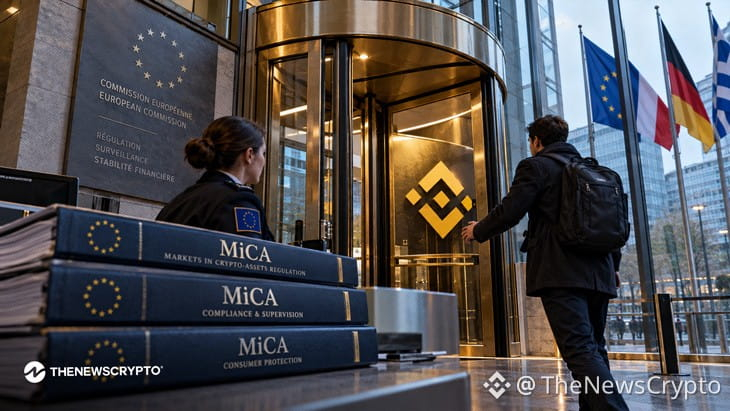
Article
Binance Faces Fresh EU Scrutiny Over MiCA Reverse SolicitationEU regulators are examining Binance’s use of MiCA’s reverse solicitation exemption to determine whether its current approach complies with the framework.
The review follows Binance’s failure to secure a MiCA license, raising questions over its continued EU operations after the July 1 transition deadline.
Binance is facing regulatory scrutiny across Europe over its use of MiCA’s reverse solicitation exemption, a legal provision that allows non-EU companies to serve European clients, but only when those clients independently seek out the relationship without any solicitation or marketing from the firm.
The European Securities and Markets Authority, alongside national regulators in France, Germany, and Greece, is now examining whether Binance’s current service model genuinely meets those conditions.
Significantly, the review follows Binance’s failure to secure a MiCA license this summer. A setback that should have required the exchange to wind down its EU operations from July 1. It limits the activity to help existing customers transfer or sell their holdings.
What Reverse Solicitation Actually Means, and Why It Matters
Reverse solicitation became prominent in Europe after Brexit, when UK-based firms tried to use it to continue serving EU clients without separate licensing. The provision is narrow by design. ESMA said the exemption should be regarded as the exception and not be used to circumvent MiCA requirements. Moreover, crypto firms cannot simply claim it; clear requirements and guidelines must be met.
Binance’s position is that it operates under reverse solicitation in EU countries where it holds no local licence, with customers onboarding of their own volition. Its Abu Dhabi-regulated entity, active since December 2025, serves traders outside countries where local licences previously existed.
Local licences in France, Spain, and Poland have since lapsed under the MiCA regime. In addition, Binance said it complies with applicable regulatory requirements and is actively working toward MiCA authorisation. That process is still ongoing.
What Enforcement Could Look Like?
If regulators conclude that Binance’s use of the exemption doesn’t hold up, enforcement action, including fines, could result. Binance is not the only firm under review; smaller platforms are also being examined.
This is not Binance’s first significant regulatory confrontation. The exchange paid a record $4.3 billion fine in the US in 2023. Also pleaded guilty to criminal charges related to money laundering and breaching international financial sanctions.
For the broader crypto market, this probe adds another layer of regulatory uncertainty in one of the world’s largest trading regions. If enforcement action follows and Binance faces restrictions on EU operations, liquidity and trading volume across European markets could take a meaningful hit. Particularly for retail traders who rely on Binance as their primary platform.
Crypto Market Highlights
MetaMask Staking Begins Lido Validator Exit After Security Incident
Binance Faces Fresh EU Scrutiny Over MiCA Reverse Solicitation
EU regulators are examining Binance’s use of MiCA’s reverse solicitation exemption to determine whether its current approach complies with the framework.
The review follows Binance’s failure to secure a MiCA license, raising questions over its continued EU operations after the July 1 transition deadline.
Binance is facing regulatory scrutiny across Europe over its use of MiCA’s reverse solicitation exemption, a legal provision that allows non-EU companies to serve European clients, but only when those clients independently seek out the relationship without any solicitation or marketing from the firm.
The European Securities and Markets Authority, alongside national regulators in France, Germany, and Greece, is now examining whether Binance’s current service model genuinely meets those conditions.
Significantly, the review follows Binance’s failure to secure a MiCA license this summer. A setback that should have required the exchange to wind down its EU operations from July 1. It limits the activity to help existing customers transfer or sell their holdings.
What Reverse Solicitation Actually Means, and Why It Matters
Reverse solicitation became prominent in Europe after Brexit, when UK-based firms tried to use it to continue serving EU clients without separate licensing. The provision is narrow by design. ESMA said the exemption should be regarded as the exception and not be used to circumvent MiCA requirements. Moreover, crypto firms cannot simply claim it; clear requirements and guidelines must be met.
Binance’s position is that it operates under reverse solicitation in EU countries where it holds no local licence, with customers onboarding of their own volition. Its Abu Dhabi-regulated entity, active since December 2025, serves traders outside countries where local licences previously existed.
Local licences in France, Spain, and Poland have since lapsed under the MiCA regime. In addition, Binance said it complies with applicable regulatory requirements and is actively working toward MiCA authorisation. That process is still ongoing.
What Enforcement Could Look Like?
If regulators conclude that Binance’s use of the exemption doesn’t hold up, enforcement action, including fines, could result. Binance is not the only firm under review; smaller platforms are also being examined.
This is not Binance’s first significant regulatory confrontation. The exchange paid a record $4.3 billion fine in the US in 2023. Also pleaded guilty to criminal charges related to money laundering and breaching international financial sanctions.
For the broader crypto market, this probe adds another layer of regulatory uncertainty in one of the world’s largest trading regions. If enforcement action follows and Binance faces restrictions on EU operations, liquidity and trading volume across European markets could take a meaningful hit. Particularly for retail traders who rely on Binance as their primary platform.
Crypto Market Highlights
MetaMask Staking Begins Lido Validator Exit After Security Incident
The review follows Binance’s failure to secure a MiCA license, raising questions over its continued EU operations after the July 1 transition deadline.
Binance is facing regulatory scrutiny across Europe over its use of MiCA’s reverse solicitation exemption, a legal provision that allows non-EU companies to serve European clients, but only when those clients independently seek out the relationship without any solicitation or marketing from the firm.
The European Securities and Markets Authority, alongside national regulators in France, Germany, and Greece, is now examining whether Binance’s current service model genuinely meets those conditions.
Significantly, the review follows Binance’s failure to secure a MiCA license this summer. A setback that should have required the exchange to wind down its EU operations from July 1. It limits the activity to help existing customers transfer or sell their holdings.
What Reverse Solicitation Actually Means, and Why It Matters
Reverse solicitation became prominent in Europe after Brexit, when UK-based firms tried to use it to continue serving EU clients without separate licensing. The provision is narrow by design. ESMA said the exemption should be regarded as the exception and not be used to circumvent MiCA requirements. Moreover, crypto firms cannot simply claim it; clear requirements and guidelines must be met.
Binance’s position is that it operates under reverse solicitation in EU countries where it holds no local licence, with customers onboarding of their own volition. Its Abu Dhabi-regulated entity, active since December 2025, serves traders outside countries where local licences previously existed.
Local licences in France, Spain, and Poland have since lapsed under the MiCA regime. In addition, Binance said it complies with applicable regulatory requirements and is actively working toward MiCA authorisation. That process is still ongoing.
What Enforcement Could Look Like?
If regulators conclude that Binance’s use of the exemption doesn’t hold up, enforcement action, including fines, could result. Binance is not the only firm under review; smaller platforms are also being examined.
This is not Binance’s first significant regulatory confrontation. The exchange paid a record $4.3 billion fine in the US in 2023. Also pleaded guilty to criminal charges related to money laundering and breaching international financial sanctions.
For the broader crypto market, this probe adds another layer of regulatory uncertainty in one of the world’s largest trading regions. If enforcement action follows and Binance faces restrictions on EU operations, liquidity and trading volume across European markets could take a meaningful hit. Particularly for retail traders who rely on Binance as their primary platform.
Crypto Market Highlights
MetaMask Staking Begins Lido Validator Exit After Security Incident
1
99
Log in to explore more content
Join global crypto users on Binance Square
⚡️ Get latest and useful information about crypto.
💬 Trusted by the world’s largest crypto exchange.
👍 Discover real insights from verified creators.
Email / Phone number
Trending Topics
FedMinutesFocusOnOctoberPause
182,686 views
1,338 Discussing
🚨 HIGH ALERT ‼️ PLEASE DON’T TRADE BLINDLY FOR THE NEXT HOUR 🚨
Guys, we have FOMC Minutes coming in less than 1 hour.
And after the kind of volatility we already saw today, I really don’t want anyone opening random high-leverage positions just before this release.
The biggest reaction I’m watching will be in Gold (XAU), Silver (XAG), BTC and ETH. Then coins like SOL and other highly leveraged mid/low-cap alts can exaggerate whatever move BTC makes.
Gold and Silver are especially sensitive tonight because the market is already reacting to the US dollar + Treasury yields, and both metals have been under heavy pressure ahead of the Fed minutes.
Briefly speaking
📉Hawkish Fed Minutes → Dollar/yields can push higher → pressure on BTC, crypto, Gold & silver
📈Dovish Fed Minutes → Dollar/yields can cool → BTC, Gold, Silver and risk assets can bounce hard.
And please remember the first candle can be a trap. We can get a pump, immediate dump, liquidations on both sides, and then the real direction.
So for now, protect your positions, reduce unnecessary leverage and don’t FOMO into the first move.
Tonight I’m watching $XAU , $XAG and $BTC first. These will tell us very quickly how the market is reading the Fed.
I will Update you guys on time
Follow @Panda Traders and Turn on Your notifications right now
#FedMinutesFocusOnOctoberPause
Panda Traders
·19 Likes
·4k views
BinanceLaunchesBinanceIntelligence
1.1M views
6,544 Discussing
EvernorthDelaysNasdaqDebutToOct12
15,439 views
307 Discussing