
thaksbuddy
1.8k Posts

thaksbuddy
Report
Block User
Trust arises from your willingness to embrace risk, not from seeking absolute safety or certainty.
Open Trade

SOL Holder
Frequent Trader
3.4 Years
18 Following
22.7K+ Followers
22.4K+ Liked
Posts
Portfolio
All
Quotes
Videos
Live
PINNED
·
--
Honestly, not every crypto project needs to promise that it's going to change the entire world.
Sometimes, solving one important problem is enough.
Think about AI and DeFi for a moment. Both depend heavily on data, but how do we know that the data we're using is actually reliable?
That's the interesting part of what Space and Time is working on. Verifiable data could make a real difference here.
Definitely a project worth keeping an eye on.
$SXT @SpaceandTimeDB #sxt
Honestly, not every crypto project needs to promise that it's going to change the entire world.
Sometimes, solving one important problem is enough.
Think about AI and DeFi for a moment. Both depend heavily on data, but how do we know that the data we're using is actually reliable?
That's the interesting part of what Space and Time is working on. Verifiable data could make a real difference here.
Definitely a project worth keeping an eye on.
$SXT @SpaceandTime #sxt
11
2
45
81.2k
·
--
The next stage of Web3 won't be defined by how many protocols we launch. It'll also depend on how much we can actually trust the information behind them.
AI applications, tokenized assets and DeFi systems all need dependable data.
Space and Time is approaching this problem through verifiable data infrastructure. It's an important area that deserves more attention than it usually gets.
Infrastructure isn't always the most exciting part of crypto, but it's often what makes everything else possible.
$SXT @SpaceandTimeDB #SXT
The next stage of Web3 won't be defined by how many protocols we launch. It'll also depend on how much we can actually trust the information behind them.
AI applications, tokenized assets and DeFi systems all need dependable data.
Space and Time is approaching this problem through verifiable data infrastructure. It's an important area that deserves more attention than it usually gets.
Infrastructure isn't always the most exciting part of crypto, but it's often what makes everything else possible.
$SXT @SpaceandTime #SXT
2
2.5k
·
--
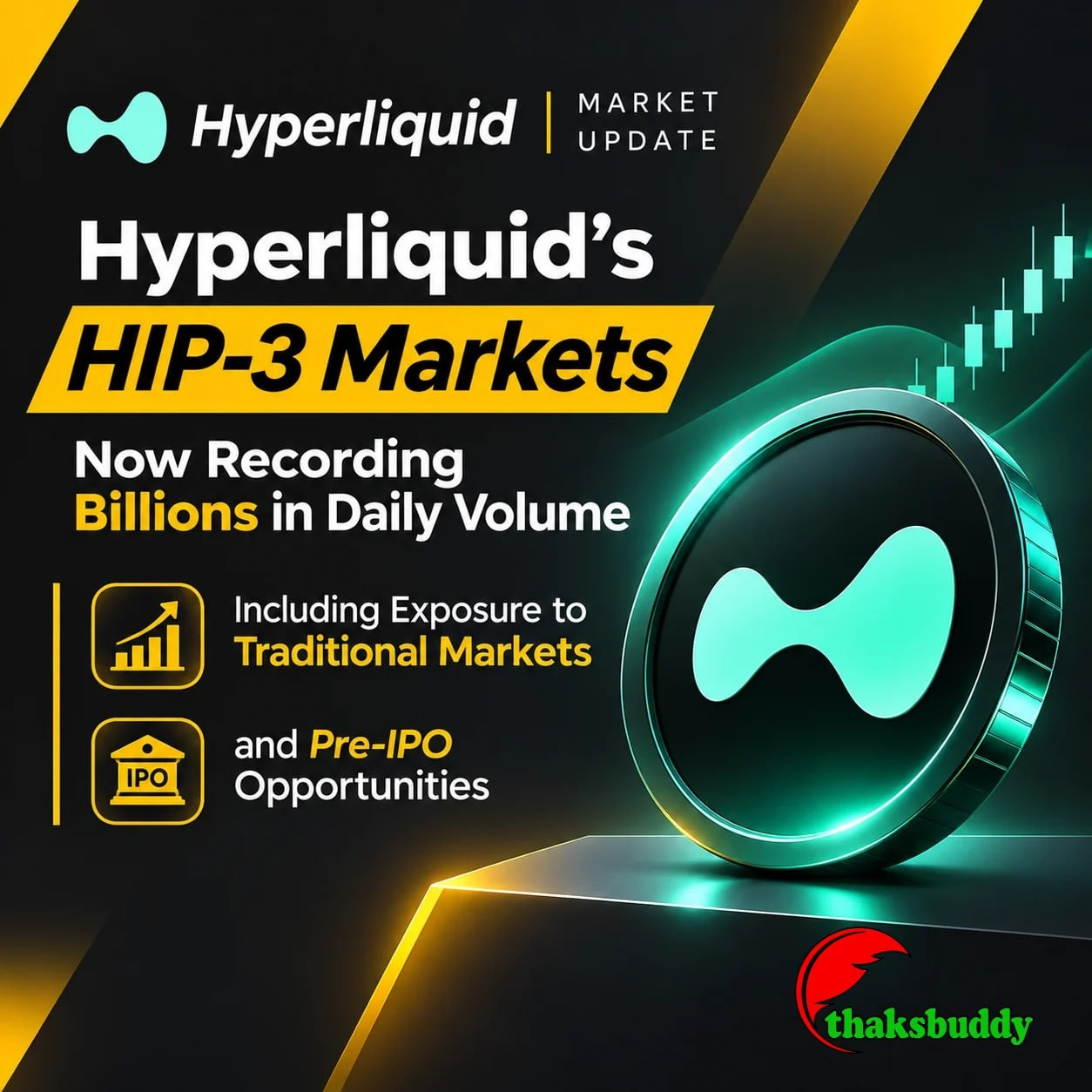
Hyperliquid is showing that onchain trading can be much bigger than crypto perpetuals.
Its HIP-3 markets are now recording billions in daily volume, including exposure to traditional and pre-IPO markets.
The Anthropic pre-IPO trading activity is a good example of the kind of markets people are experimenting with onchain.
But there's one thing I'm watching closely: whether this activity translates into sustainable revenue and demand for HYPE.
Volume looks impressive. Long-term value capture matters more.
HYPE stays on my watchlist.
Not financial advice. Research carefully and manage your risk. $HYPE
{spot}(HYPEUSDT)
Hyperliquid is showing that onchain trading can be much bigger than crypto perpetuals.
Its HIP-3 markets are now recording billions in daily volume, including exposure to traditional and pre-IPO markets.
The Anthropic pre-IPO trading activity is a good example of the kind of markets people are experimenting with onchain.
But there's one thing I'm watching closely: whether this activity translates into sustainable revenue and demand for HYPE.
Volume looks impressive. Long-term value capture matters more.
HYPE stays on my watchlist.
Not financial advice. Research carefully and manage your risk. $HYPE
177
·
--
Verified
SEI gets a staking ETF. Will anyone buy it?
SEI has something interesting coming up.
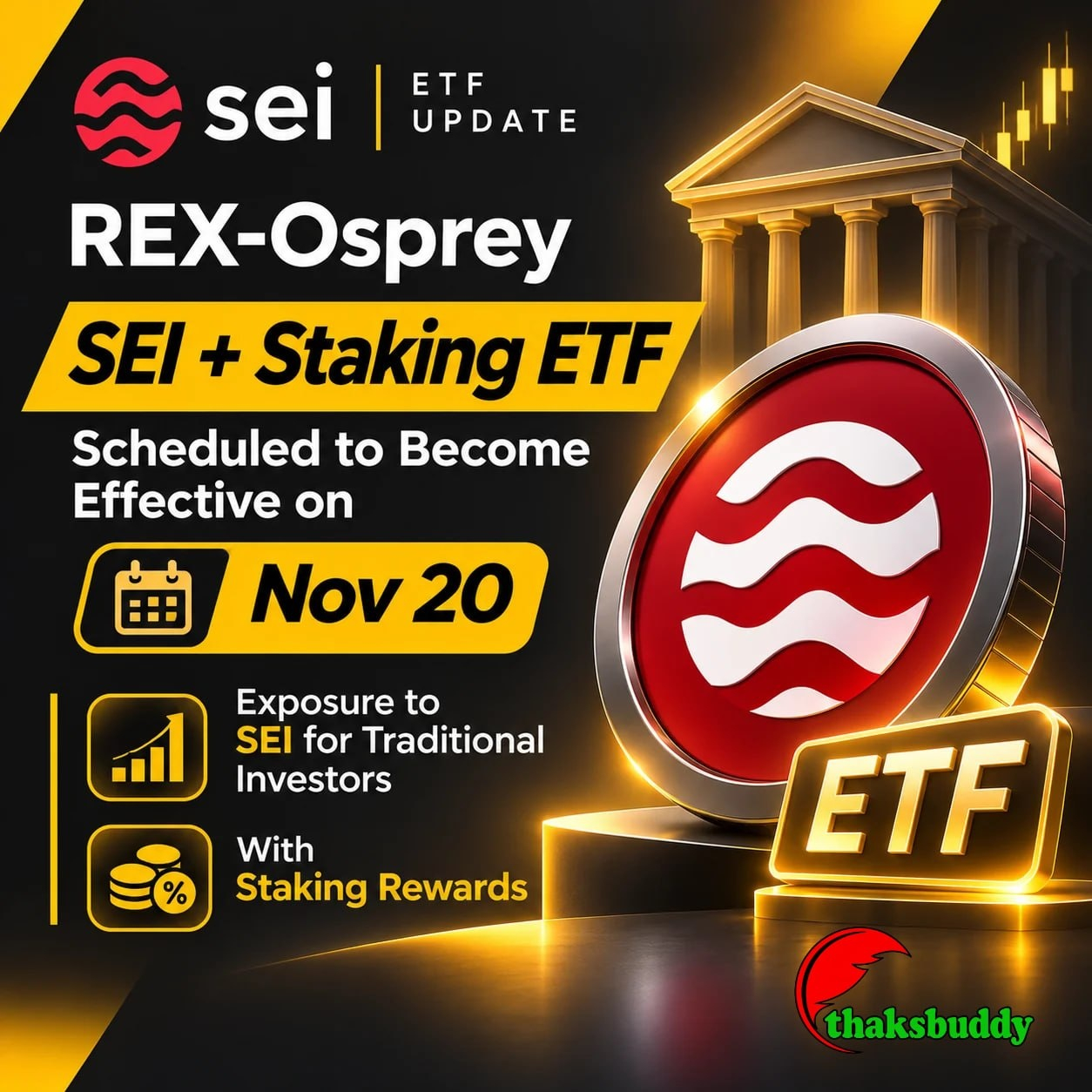
The REX-Osprey SEI + Staking ETF is scheduled to become effective on November 20.
It would give traditional brokerage investors exposure to SEI alongside staking rewards.
I think this is worth watching, especially during a market where altcoin sentiment is still weak.
But an ETF filing becoming effective doesn't guarantee immediate trading or strong demand.
Let's see what actually happens next.
Not financial advice. Do your own research and manage your risk. $SEI
{spot}(SEIUSDT)
SEI gets a staking ETF. Will anyone buy it?
SEI has something interesting coming up.
The REX-Osprey SEI + Staking ETF is scheduled to become effective on November 20.
It would give traditional brokerage investors exposure to SEI alongside staking rewards.
I think this is worth watching, especially during a market where altcoin sentiment is still weak.
But an ETF filing becoming effective doesn't guarantee immediate trading or strong demand.
Let's see what actually happens next.
Not financial advice. Do your own research and manage your risk. $SEI
7
1.1k
·
--
Verified
Polygon seems to be thinking bigger than just being another scaling network.
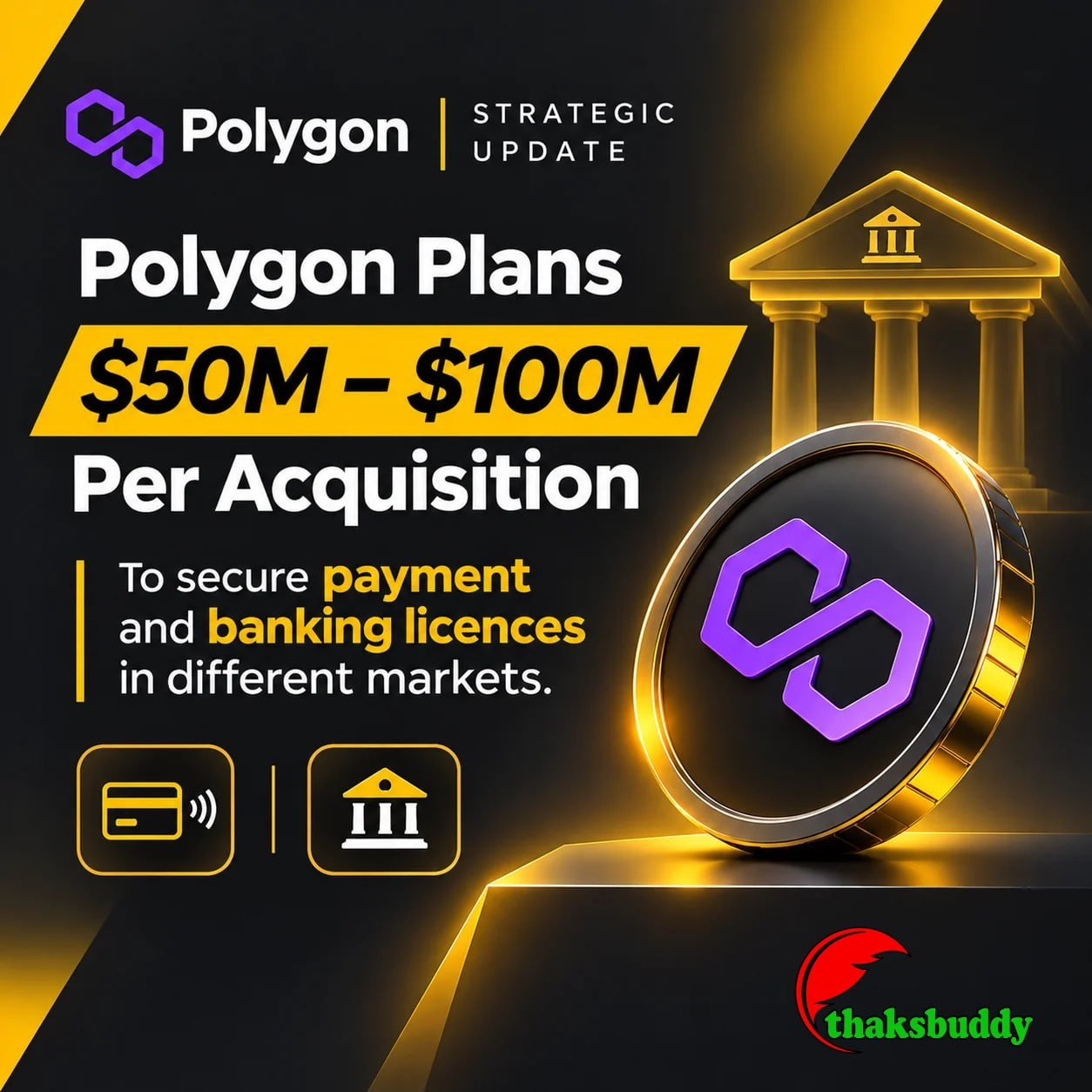
The company is reportedly planning to spend $50M-$100M per acquisition to secure payment and banking licences in different markets.
That's a pretty significant strategic shift.
I find the move interesting because crypto adoption won't happen through DeFi alone. Payments and financial infrastructure matter too.
The question is how much of this expansion eventually creates value for POL holders.
That's what I'll be watching.
For educational purposes only. Always do your own research. $POL
{spot}(POLUSDT)
Polygon seems to be thinking bigger than just being another scaling network.
The company is reportedly planning to spend $50M-$100M per acquisition to secure payment and banking licences in different markets.
That's a pretty significant strategic shift.
I find the move interesting because crypto adoption won't happen through DeFi alone. Payments and financial infrastructure matter too.
The question is how much of this expansion eventually creates value for POL holders.
That's what I'll be watching.
For educational purposes only. Always do your own research. $POL
5
705
·
--
Verified
HBAR upgraded. Is the token still dead?
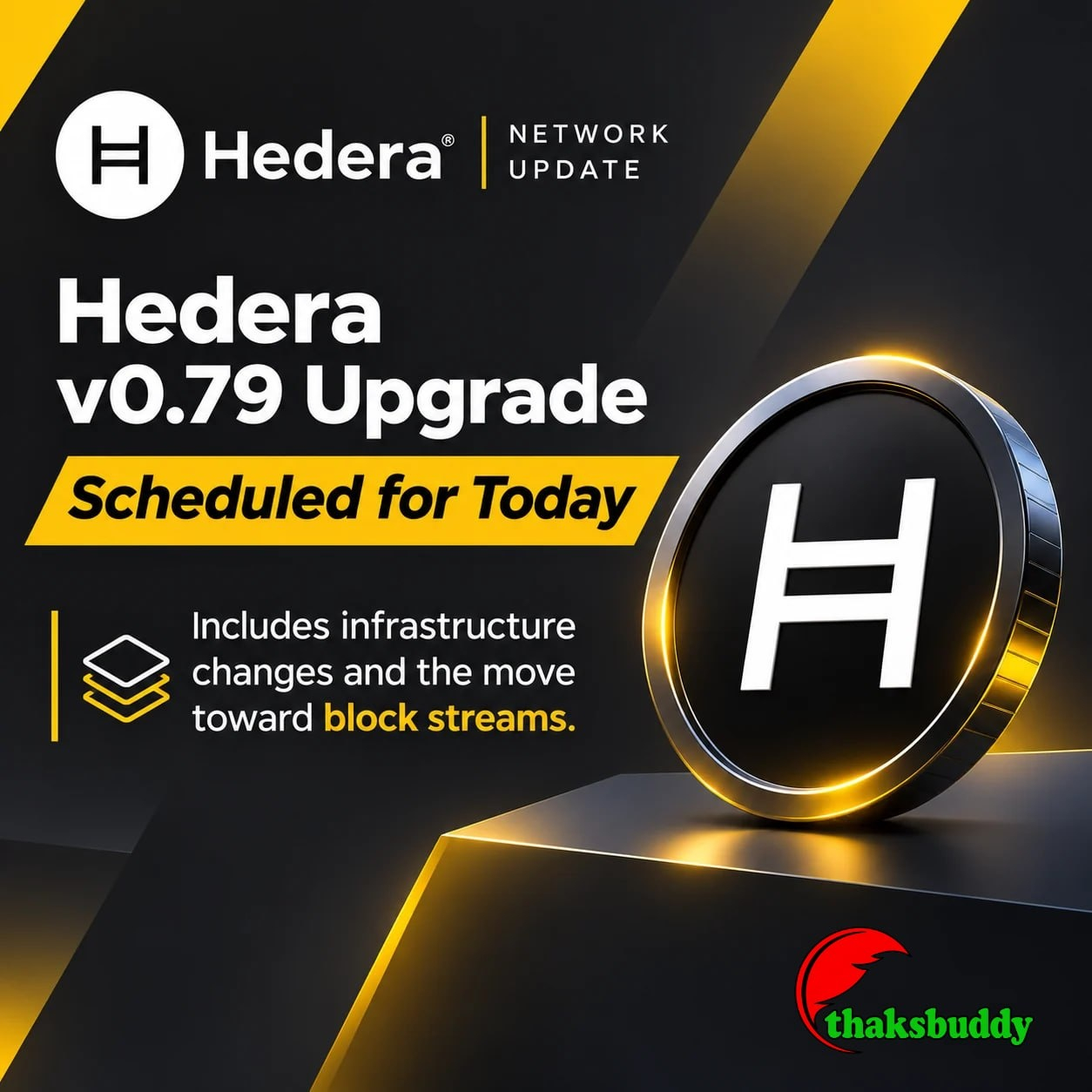
Hedera has another network upgrade scheduled for today.
The v0.79 upgrade introduces changes to its infrastructure, including the move toward block streams.
It's not the kind of news that guarantees a price rally, and I don't think every technical upgrade needs to be treated as bullish.
But networks need to keep improving if they want long-term adoption.
For HBAR, I'll be watching whether these improvements translate into more actual usage.
Not financial advice. Do your own research and manage your risk. $HBAR
{spot}(HBARUSDT)
HBAR upgraded. Is the token still dead?
Hedera has another network upgrade scheduled for today.
The v0.79 upgrade introduces changes to its infrastructure, including the move toward block streams.
It's not the kind of news that guarantees a price rally, and I don't think every technical upgrade needs to be treated as bullish.
But networks need to keep improving if they want long-term adoption.
For HBAR, I'll be watching whether these improvements translate into more actual usage.
Not financial advice. Do your own research and manage your risk. $HBAR
10
7k
·
--
Partly True
Ondo just hit $4B. Is the token useless?
Ondo is one project I'm keeping an eye on.
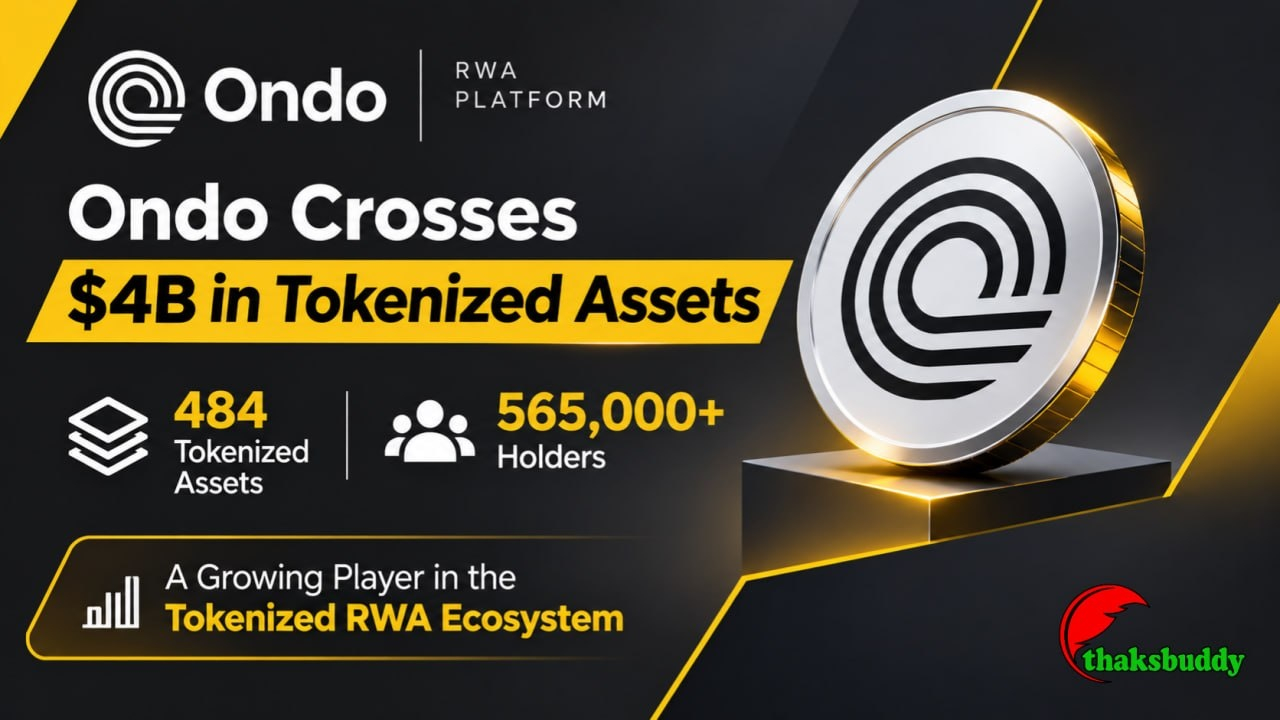
Its tokenized asset platform reportedly crossed $4B in tokenized assets, with more than 565,000 holders.
That's interesting because RWA isn't just about putting traditional assets on a blockchain. It's about whether people actually use them.
Still, platform growth doesn't automatically mean ONDO holders benefit.
I want to see how much real demand this creates over time.
ONDO is staying on my watchlist. $ONDO
{spot}(ONDOUSDT)
Not financial advice. Always do your own research.
Ondo just hit $4B. Is the token useless?
Ondo is one project I'm keeping an eye on.
Its tokenized asset platform reportedly crossed $4B in tokenized assets, with more than 565,000 holders.
That's interesting because RWA isn't just about putting traditional assets on a blockchain. It's about whether people actually use them.
Still, platform growth doesn't automatically mean ONDO holders benefit.
I want to see how much real demand this creates over time.
ONDO is staying on my watchlist. $ONDO
Not financial advice. Always do your own research.
2
653
·
--
Verified
Still Hating Solana? Wall Street Isn't
Solana is interesting to watch right now, especially when the market isn't giving altcoins much room to breathe.
SOL is trading around $75, but the bigger story isn't today's price movement.
October was a pretty significant month for the network.
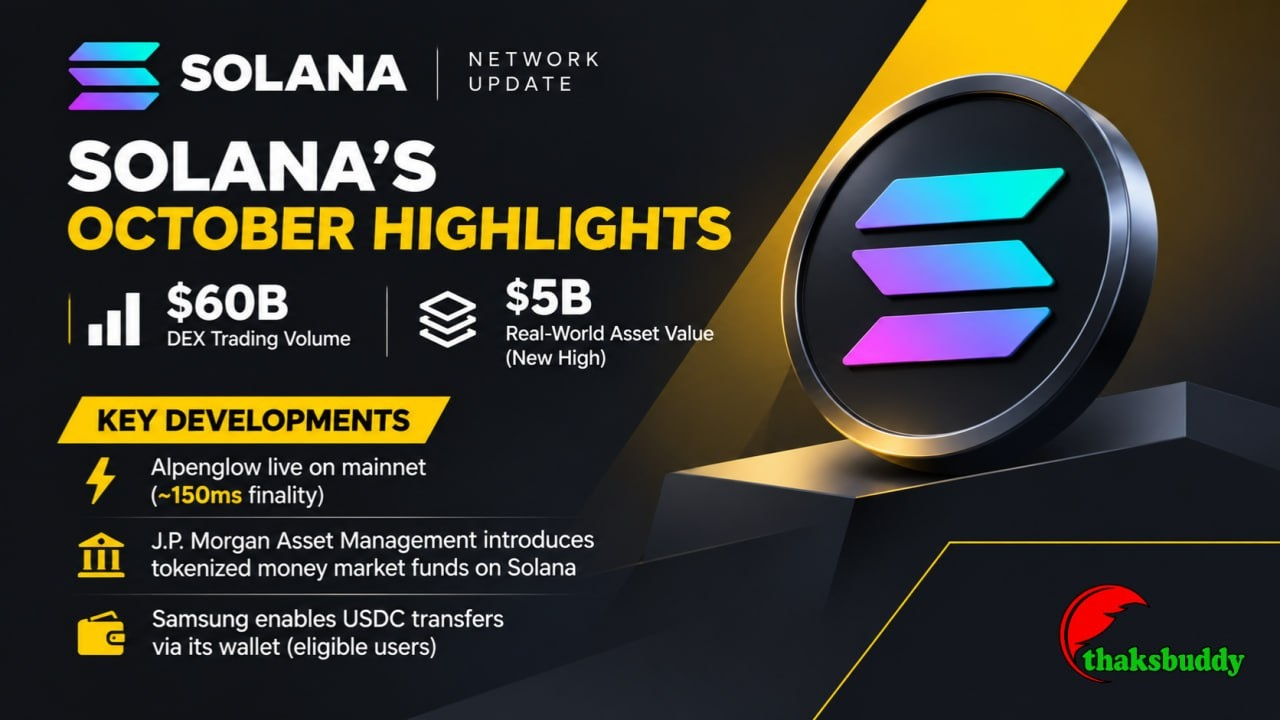
Solana's ecosystem recorded around $60B in DEX trading volume, while real-world asset value reached a new high of $5B.
There were also some developments worth paying attention to.
Alpenglow went live on mainnet, targeting transaction finality of roughly 150 milliseconds. Meanwhile, traditional financial players are starting to bring more activity onto the network.
J.P. Morgan Asset Management introduced tokenized money market funds on Solana, and Samsung announced USDC transfers through its wallet for eligible users.
That's a lot more interesting to me than another short-lived price rally.
The real question now is whether Solana can turn all this infrastructure and institutional interest into sustainable demand.
I'll be watching SOL closely. $SOL
Not financial advice. These are my observations, so always do your own research and manage your risk.
1
668
·
--
Verified
One project I think deserves more attention during this market downturn is Chainlink.
Most people still associate LINK with price feeds and oracle services.
But its role in tokenized finance is becoming much more interesting.
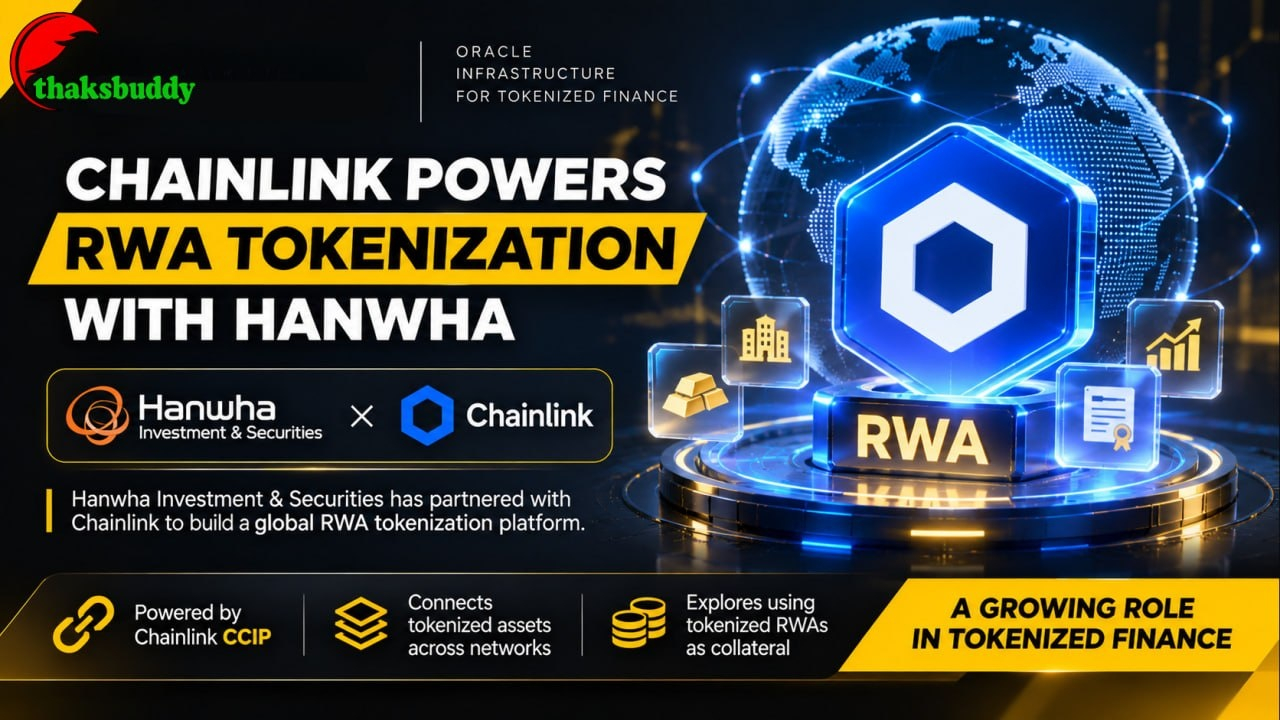
On October 29, Hanwha Investment & Securities announced a partnership with Chainlink to build a global RWA tokenization platform.
The interesting part is that Chainlink isn't just providing data.
Its infrastructure, including CCIP, will help connect tokenized assets across different networks and support their use in onchain financial markets.
The partnership also includes exploring how tokenized real-world assets could be used as collateral.
That's an important piece of the bigger RWA picture.
Of course, a partnership doesn't automatically create demand for LINK. The actual usage, revenue and value captured by the token are what I want to follow.
Still, I like the direction Chainlink is moving.
Infrastructure doesn't always get the most attention during a bull market, but it can become very important when the industry starts maturing.
LINK stays on my watchlist. $LINK
{spot}(LINKUSDT)
For educational purposes only. This isn't financial advice, so do your own research before making any decisions.
One project I think deserves more attention during this market downturn is Chainlink.
Most people still associate LINK with price feeds and oracle services.
But its role in tokenized finance is becoming much more interesting.
On October 29, Hanwha Investment & Securities announced a partnership with Chainlink to build a global RWA tokenization platform.
The interesting part is that Chainlink isn't just providing data.
Its infrastructure, including CCIP, will help connect tokenized assets across different networks and support their use in onchain financial markets.
The partnership also includes exploring how tokenized real-world assets could be used as collateral.
That's an important piece of the bigger RWA picture.
Of course, a partnership doesn't automatically create demand for LINK. The actual usage, revenue and value captured by the token are what I want to follow.
Still, I like the direction Chainlink is moving.
Infrastructure doesn't always get the most attention during a bull market, but it can become very important when the industry starts maturing.
LINK stays on my watchlist. $LINK
For educational purposes only. This isn't financial advice, so do your own research before making any decisions.
1
646
·
--
Verified
I've been following Solana's developments this week, and honestly, the amount of traditional finance activity around this network is getting difficult to ignore.
Look at what's happening.
Zelle selected Solana for cross-border stablecoin payments and even demonstrated a $1.25M confidential transfer.
ICE, the parent company of the NYSE, says its trading systems are technically ready to accept tokens issued on Solana.
And Alpenglow is already live on mainnet, targeting around 150ms transaction finality.
That's a lot more than another DeFi announcement.
But here's my concern.
SOL is still around $72, down roughly 13% over the past week. The market clearly isn't rewarding every positive development right now.
I think Solana has a compelling long-term infrastructure story. The real test is whether all this institutional interest turns into consistent network activity and actual demand.
I'd rather accumulate conviction from real adoption than get carried away by conference headlines.
Not financial advice. DYOR. $SOL
1
3
456
·
--
The next stage of Web3 won't be defined by how many protocols we launch. It'll also depend on how much we can actually trust the information behind them.
AI applications, tokenized assets and DeFi systems all need dependable data.
Space and Time is approaching this problem through verifiable data infrastructure. It's an important area that deserves more attention than it usually gets.
Infrastructure isn't always the most exciting part of crypto, but it's often what makes everything else possible.
$SXT @SpaceandTimeDB #sxt
The next stage of Web3 won't be defined by how many protocols we launch. It'll also depend on how much we can actually trust the information behind them.
AI applications, tokenized assets and DeFi systems all need dependable data.
Space and Time is approaching this problem through verifiable data infrastructure. It's an important area that deserves more attention than it usually gets.
Infrastructure isn't always the most exciting part of crypto, but it's often what makes everything else possible.
$SXT @SpaceandTime #sxt
1
1
3.8k
·
--
There's always a new blockchain getting attention, but I prefer looking at what a project is actually trying to build.
Sui has been interesting to watch because of its focus on scalability, fast transactions and developer-friendly infrastructure.
A growing ecosystem is encouraging, but long-term success depends on real users, useful applications and sustainable activity.
I'm curious to see how Sui develops from here.
Disclaimer: Not financial advice. DYOR before investing. $SUI
{spot}(SUIUSDT)
There's always a new blockchain getting attention, but I prefer looking at what a project is actually trying to build.
Sui has been interesting to watch because of its focus on scalability, fast transactions and developer-friendly infrastructure.
A growing ecosystem is encouraging, but long-term success depends on real users, useful applications and sustainable activity.
I'm curious to see how Sui develops from here.
Disclaimer: Not financial advice. DYOR before investing. $SUI
1
318
·
--
One thing I find interesting about the future of AI is that we're spending so much time talking about what AI can do, but not enough time talking about where its data comes from.
That's a problem worth solving.
This is where Space and Time caught my attention. Building a layer for verifiable data could become genuinely important as AI, tokenization and DeFi continue to grow.
Technology needs more than speed. It needs trust.
Curious to see how far this goes. $SXT #SXT @SpaceandTimeDB #sxt
One thing I find interesting about the future of AI is that we're spending so much time talking about what AI can do, but not enough time talking about where its data comes from.
That's a problem worth solving.
This is where Space and Time caught my attention. Building a layer for verifiable data could become genuinely important as AI, tokenization and DeFi continue to grow.
Technology needs more than speed. It needs trust.
Curious to see how far this goes. $SXT #SXT @SpaceandTime #sxt
11
1
9
21.7k
·
--
Something I find interesting about Internet Computer is its approach to what blockchain technology can actually do.
Most people immediately think about tokens, trading and DeFi when they hear crypto. But ICP explores a different direction, bringing web services and application infrastructure into the blockchain environment.
It's an ambitious idea, and execution will be the real test.
Definitely an ecosystem worth exploring beyond its price chart. $ICP
Disclaimer: Not financial advice. DYOR before investing.
{spot}(ICPUSDT)
Something I find interesting about Internet Computer is its approach to what blockchain technology can actually do.
Most people immediately think about tokens, trading and DeFi when they hear crypto. But ICP explores a different direction, bringing web services and application infrastructure into the blockchain environment.
It's an ambitious idea, and execution will be the real test.
Definitely an ecosystem worth exploring beyond its price chart. $ICP
Disclaimer: Not financial advice. DYOR before investing.
362
·
--
Here's something people don't discuss enough: having access to a huge amount of data doesn't automatically mean that the data is correct.
And when AI starts influencing more decisions, or financial applications handle more complex operations, that distinction becomes even more important.
I think that's why the idea behind Space and Time is worth discussing. Making data verifiable for AI, tokenization and DeFi addresses a real challenge, not just another trending narrative.
Execution will ultimately matter more than promises. Let's see how the project delivers.
$SXT @SpaceandTimeDB #sxt
Here's something people don't discuss enough: having access to a huge amount of data doesn't automatically mean that the data is correct.
And when AI starts influencing more decisions, or financial applications handle more complex operations, that distinction becomes even more important.
I think that's why the idea behind Space and Time is worth discussing. Making data verifiable for AI, tokenization and DeFi addresses a real challenge, not just another trending narrative.
Execution will ultimately matter more than promises. Let's see how the project delivers.
$SXT @SpaceandTime #sxt
123
·
--
Here's something people don't discuss enough: having access to a huge amount of data doesn't automatically mean that the data is correct.
And when AI starts influencing more decisions, or financial applications handle more complex operations, that distinction becomes even more important.
I think that's why the idea behind Space and Time is worth discussing. Making data verifiable for AI, tokenization and DeFi addresses a real challenge, not just another trending narrative.
Execution will ultimately matter more than promises. Let's see how the project delivers.
$SXT @SpaceandTimeDB #sxt
Here's something people don't discuss enough: having access to a huge amount of data doesn't automatically mean that the data is correct.
And when AI starts influencing more decisions, or financial applications handle more complex operations, that distinction becomes even more important.
I think that's why the idea behind Space and Time is worth discussing. Making data verifiable for AI, tokenization and DeFi addresses a real challenge, not just another trending narrative.
Execution will ultimately matter more than promises. Let's see how the project delivers.
$SXT @SpaceandTime #sxt
And when AI starts influencing more decisions, or financial applications handle more complex operations, that distinction becomes even more important.
I think that's why the idea behind Space and Time is worth discussing. Making data verifiable for AI, tokenization and DeFi addresses a real challenge, not just another trending narrative.
Execution will ultimately matter more than promises. Let's see how the project delivers.
$SXT @SpaceandTime #sxt
801
·
--
Privacy is one of those things people don't always appreciate until they actually need it.
Most crypto conversations revolve around speed, price and adoption. But financial privacy deserves attention too.
That's what makes Zcash interesting to me. Its focus on privacy through zero-knowledge technology gives it a different place in the crypto ecosystem.
I think this narrative deserves more attention. $ZEC
Disclaimer: Not financial advice. DYOR before investing.
{spot}(ZECUSDT)
Privacy is one of those things people don't always appreciate until they actually need it.
Most crypto conversations revolve around speed, price and adoption. But financial privacy deserves attention too.
That's what makes Zcash interesting to me. Its focus on privacy through zero-knowledge technology gives it a different place in the crypto ecosystem.
I think this narrative deserves more attention. $ZEC
Disclaimer: Not financial advice. DYOR before investing.
2
397
·
--
Holding $SOL 83 USDT
Solana is one of those projects that keeps finding its way into conversations, and honestly, I can understand why.
What interests me isn't just the price movement. It's the ecosystem, the activity and how many developers and users continue to build around it.
Of course, competition in this space is real, and nothing is guaranteed. But Solana still has an interesting position in the market.
Let's see what comes next. $SOL
Disclaimer: Not financial advice. DYOR before investing.
1
231
·
--
We often talk about the future of AI, the growth of DeFi and how tokenization might change the way we use digital assets.
But there's one thing connecting all three: data.
If the information behind these technologies can't be trusted or verified, growth alone won't be enough.
That's what makes Space and Time an interesting project to follow. Its focus on verifiable data could play an important role in making these technologies more dependable.
I'm interested in seeing what the team builds next.
What's your take on the importance of data verification in Web3?
#sxt $SXT @SpaceandTimeDB
We often talk about the future of AI, the growth of DeFi and how tokenization might change the way we use digital assets.
But there's one thing connecting all three: data.
If the information behind these technologies can't be trusted or verified, growth alone won't be enough.
That's what makes Space and Time an interesting project to follow. Its focus on verifiable data could play an important role in making these technologies more dependable.
I'm interested in seeing what the team builds next.
What's your take on the importance of data verification in Web3?
#sxt $SXT @SpaceandTime
1
4
2.2k
Log in to explore more content
Join global crypto users on Binance Square
⚡️ Get latest and useful information about crypto.
💬 Trusted by the world’s largest crypto exchange.
👍 Discover real insights from verified creators.
Email / Phone number
Trending Topics
CanBTCReboundAfterFallingBelow60K?
317,836 views
1,365 Discussing
Bitcoin News | Bitcoin Falls Below $60,000 for the First Time Since July as IBIT Posts Record $541 Million Outflow
Binance News
·49 Likes
·95.6k views
GlobalStocksFaceLongestLosingStreakSince2023
104,257 views
972 Discussing
BlackRockIBITPostsRecord$541MSingleDayOutflow
15 views
5 Discussing