
Steven_Research
842 Posts

Steven_Research
Long-term investor
Founder SR INVEST, holder $BNB
Top 14 independent Researcher at @Binance The Blockchain 100 | 2025

Level 1 Creator
20 Following
17.0K+ Followers
2.6K+ Liked
3 Badges
Posts
All
Quotes
Videos
Live
PINNED
Thank you @Binance Square Official and the title independent Researcher 2025
Thank you to the bosses @CZ @Yi He @Richard Teng
Thank you to the bosses @Daniel Zou (DZ) 🔶 and Francis, and @Nyan 7
It has been a memorable year 2025 with many emotions related to crypto and Binance!
Made many new friends, effective investments, gained more insights into the industry, and found reliable partners and colleagues!
Let's look forward to 2026 with new forecasts! We will be even more dynamic! Very bullish on Binance! 😍
Happy new year 2026!
Thank you to the bosses @CZ @Yi He @Richard Teng
Thank you to the bosses @Daniel Zou (DZ) 🔶 and Francis, and @Nyan 7
It has been a memorable year 2025 with many emotions related to crypto and Binance!
Made many new friends, effective investments, gained more insights into the industry, and found reliable partners and colleagues!
Let's look forward to 2026 with new forecasts! We will be even more dynamic! Very bullish on Binance! 😍
Happy new year 2026!



WHAT HAPPENED IN CRYPTO THIS WEEK?
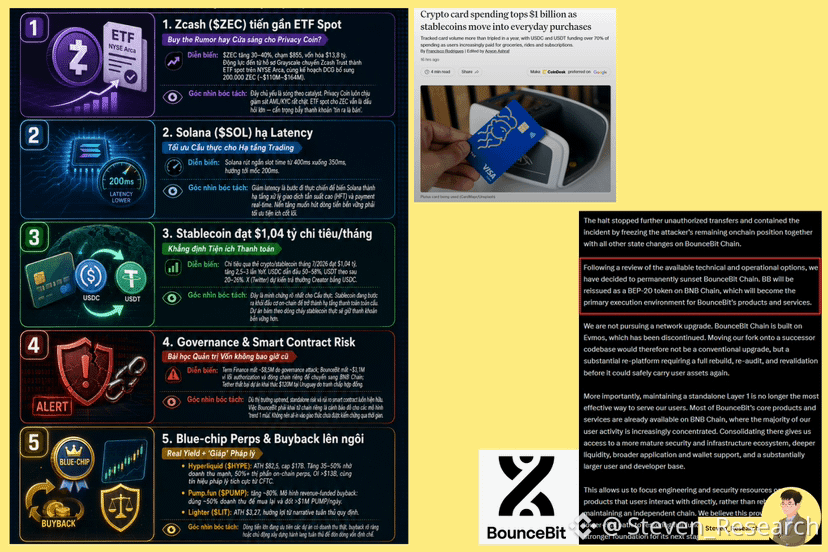
1. Zcash $ZEC nears the Spot ETF—will it “Sell the news”?
- ZEC rose 30–40%, hitting the $855 mark, bringing its market cap up to $13.8 billion.
- The catalyst is Grayscale filing to convert the Zcash Trust into a spot ETF on NYSE Arca, alongside DCG’s plan to add 200,000 ZEC (~$110M–$164M).
=> This is purely a rumor-driven push (Catalyst-driven). SEC approval for a ZEC spot ETF is still a big question—right now only filing has been submitted, not approved.
2. Solana $SOL reduces latency to optimize trading infrastructure
- Solana successfully shortened slot time from 400ms to 350ms, targeting the 200ms milestone. Reducing latency is a hands-on move to turn Solana into high-frequency trading (HFT) and real-time payment infrastructure.
3. Stablecoins hit the $1.04 billion monthly spend milestone
- Spending volume via crypto/stablecoin cards in July 2026 reached $1.04 billion (up 2.5–3x YoY). USDC dominates outright (50–58%), followed by USDT (20–26%). X also plans to pay Creator rewards in USDC.
4. Term Finance and BounceBit were hacked
- Term Finance lost about $8.5M due to a governance attack.
- BounceBit suffered an authorization issue worth about $3.1M, forcing it to permanently shut down its own chain and migrate to BNB Chain.
- Tether failed to extract a $120M project in Uruguay due to contract disputes.
5. Growth of Blue-chip Perps & Buyback
- Hyperliquid $HYPE - ATH $82.5 (Cap $17B): Up 35–50%. President Trump confirmed that the CFTC is supporting Hyperliquid in accessing the U.S. market legally.
- Pumpfun ($PUMP) - Up ~80% thanks to a revenue-funded buyback model. Uses ~50% of platform base revenue to buy back and burn => $1M PUMP/day.
- Lighter ($LIT) - ATH $3.27: Accelerated growth thanks to the CEO serving on the CFTC Innovation Advisory Committee, benefiting from compliance/regulatory keys.
1. Zcash $ZEC nears the Spot ETF—will it “Sell the news”?
- ZEC rose 30–40%, hitting the $855 mark, bringing its market cap up to $13.8 billion.
- The catalyst is Grayscale filing to convert the Zcash Trust into a spot ETF on NYSE Arca, alongside DCG’s plan to add 200,000 ZEC (~$110M–$164M).
=> This is purely a rumor-driven push (Catalyst-driven). SEC approval for a ZEC spot ETF is still a big question—right now only filing has been submitted, not approved.
2. Solana $SOL reduces latency to optimize trading infrastructure
- Solana successfully shortened slot time from 400ms to 350ms, targeting the 200ms milestone. Reducing latency is a hands-on move to turn Solana into high-frequency trading (HFT) and real-time payment infrastructure.
3. Stablecoins hit the $1.04 billion monthly spend milestone
- Spending volume via crypto/stablecoin cards in July 2026 reached $1.04 billion (up 2.5–3x YoY). USDC dominates outright (50–58%), followed by USDT (20–26%). X also plans to pay Creator rewards in USDC.
4. Term Finance and BounceBit were hacked
- Term Finance lost about $8.5M due to a governance attack.
- BounceBit suffered an authorization issue worth about $3.1M, forcing it to permanently shut down its own chain and migrate to BNB Chain.
- Tether failed to extract a $120M project in Uruguay due to contract disputes.
5. Growth of Blue-chip Perps & Buyback
- Hyperliquid $HYPE - ATH $82.5 (Cap $17B): Up 35–50%. President Trump confirmed that the CFTC is supporting Hyperliquid in accessing the U.S. market legally.
- Pumpfun ($PUMP) - Up ~80% thanks to a revenue-funded buyback model. Uses ~50% of platform base revenue to buy back and burn => $1M PUMP/day.
- Lighter ($LIT) - ATH $3.27: Accelerated growth thanks to the CEO serving on the CFTC Innovation Advisory Committee, benefiting from compliance/regulatory keys.
Verified
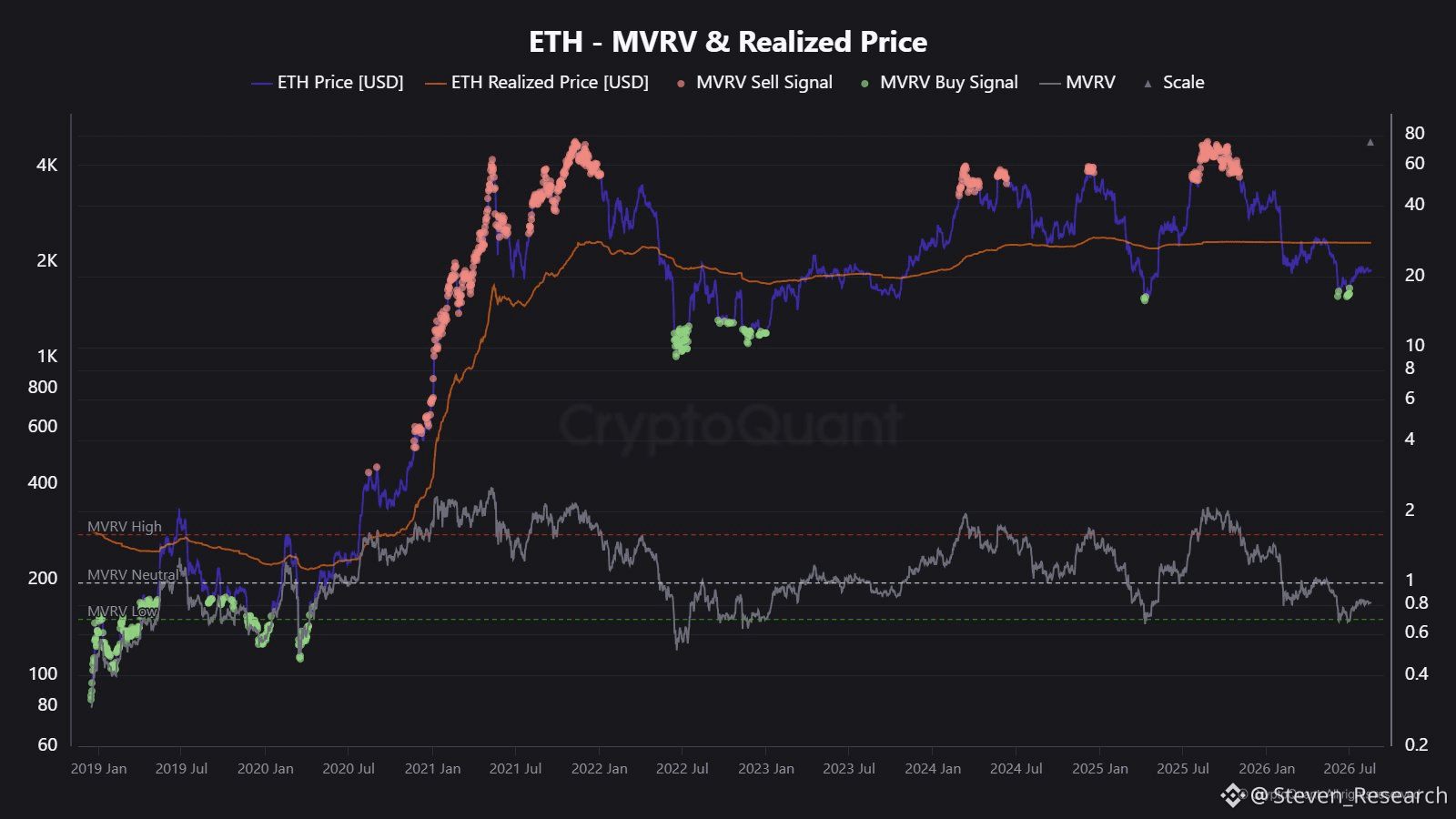
Buy when bored, sell when tempted $ETH - quick overview of the whole picture
- In July–August 2026, Ethereum’s development direction will continue to be expanded through Vitalik Buterin’s Strawmap/Lean Ethereum.
- The next major upgrade is Glamsterdam, which is currently targeted for Q4/2026 after the H1 plan was postponed. This is considered one of the most important forks since The Merge.
- About 34% of the $ETH supply, equivalent to roughly 41.9–42 million ETH, has already been staked; the staking yield is currently only about 2.6%. The proposed EIP-8361 – Tapered Issuance Burn is controversial.
=> From a technical infrastructure standpoint, ETH is still searching for its path forward. Ethereum is creating a lot of infrastructure, but it hasn’t captured all the economic value that infrastructure generates. The Foundation’s staff reductions and its focus on the protocol can also be seen as a restructuring step.
=> If Ethereum successfully executes Lean Ethereum—privacy, native rollups, scaling, and the post-quantum roadmap—then the network could support use cases that currently don’t exist.
- DeFi TVL on the Ethereum mainnet is around $41 billion, representing about 55% of the market’s total TVL.
- Ethereum also continues to lead the RWA/tokenization segment, with more than $15 billion in RWA assets, accounting for over 56% of the market based on current statistics.
=> At present, the role of ETH cannot yet be replaced; in the future, more will need to be monitored.
- In July–August 2026, Ethereum’s development direction will continue to be expanded through Vitalik Buterin’s Strawmap/Lean Ethereum.
- The next major upgrade is Glamsterdam, which is currently targeted for Q4/2026 after the H1 plan was postponed. This is considered one of the most important forks since The Merge.
- About 34% of the $ETH supply, equivalent to roughly 41.9–42 million ETH, has already been staked; the staking yield is currently only about 2.6%. The proposed EIP-8361 – Tapered Issuance Burn is controversial.
=> From a technical infrastructure standpoint, ETH is still searching for its path forward. Ethereum is creating a lot of infrastructure, but it hasn’t captured all the economic value that infrastructure generates. The Foundation’s staff reductions and its focus on the protocol can also be seen as a restructuring step.
=> If Ethereum successfully executes Lean Ethereum—privacy, native rollups, scaling, and the post-quantum roadmap—then the network could support use cases that currently don’t exist.
- DeFi TVL on the Ethereum mainnet is around $41 billion, representing about 55% of the market’s total TVL.
- Ethereum also continues to lead the RWA/tokenization segment, with more than $15 billion in RWA assets, accounting for over 56% of the market based on current statistics.
=> At present, the role of ETH cannot yet be replaced; in the future, more will need to be monitored.
Verified
HYPERLIQUID AQAv2: $HYPE CÓ THỂ CÓ THÊM MỘT LƯỢNG LỚN DOANH THU VÀ BUYBACK TOKEN
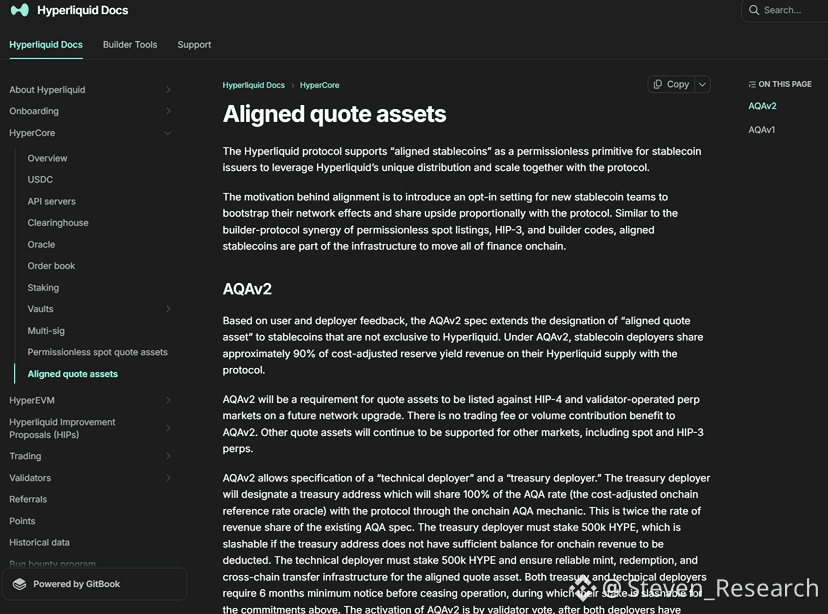
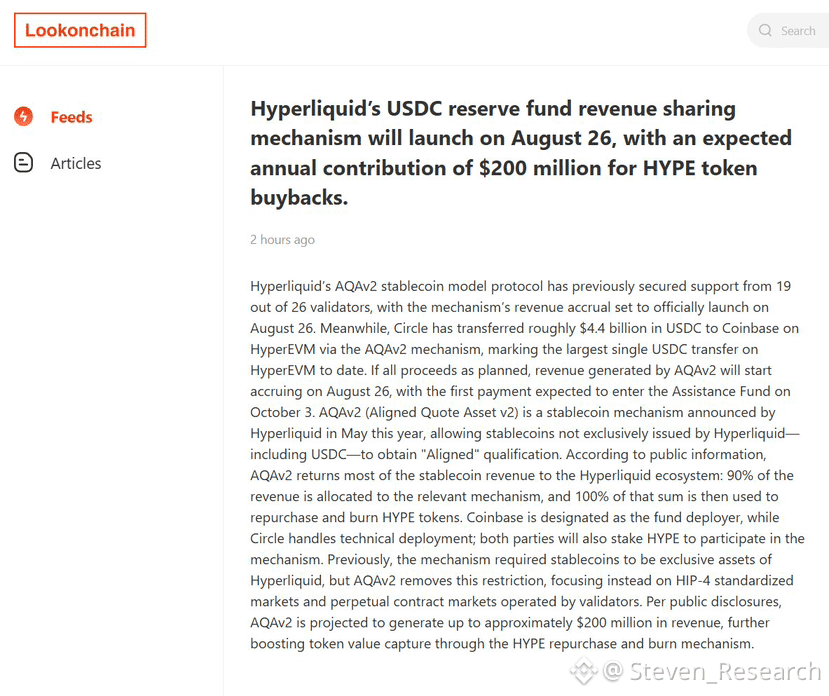
Hyperliquid is putting AQAv2 (Aligned Quote Asset v2) into operation, turning the USDC currently held on Hyperliquid into a new source of revenue for $HYPE . The mechanism starts accumulating yield from 26/8/2026, with the first payment to the Assistance Fund expected on 3/10/2026.
*Put simply, an Aligned Asset is a stablecoin that is placed into Hyperliquid’s reserve management mechanism to both meet liquidity/trading needs and generate yield from the reserves.
- A major difference in AQAv2 is that Hyperliquid no longer limits this mechanism to only the ecosystem’s own stablecoin, USDH. Circle’s USDC is used as the aligned quote asset, with cb handling treasury deployment and Circle supporting the technical side.
- There is currently about 5–6 billion USD worth of USDC on Hyperliquid. These reserves are put to work earning yield; currently, it’s around 3.5–4% per year.
=> Under AQAv2, about 90% of the cost-adjusted reserve yield is shared back with Hyperliquid. At the current scale, the estimated figure is roughly 140–160 million USD per year; some more optimistic estimates put it as high as 200 million USD per year if USDC and interest rates remain favorable.
- The generated yield is transferred into the Assistance Fund, and then the Fund uses the money to buy HYPE in the market and burn it permanently. If we take 140–160 million USD per year, AQAv2 could create an additional 11.7–13.3 million USD in buybacks per month, not counting any extra increase if the amount of USDC on Hyperliquid continues to grow.
=> Previously, buyback of HYPE depended mainly on trading volume. With AQAv2, Hyperliquid has an additional revenue stream coming from the USDC reserve yield. The more USDC there is, or the higher the interest rate, the larger the cash flow available for buybacks.
Hyperliquid is putting AQAv2 (Aligned Quote Asset v2) into operation, turning the USDC currently held on Hyperliquid into a new source of revenue for $HYPE . The mechanism starts accumulating yield from 26/8/2026, with the first payment to the Assistance Fund expected on 3/10/2026.
*Put simply, an Aligned Asset is a stablecoin that is placed into Hyperliquid’s reserve management mechanism to both meet liquidity/trading needs and generate yield from the reserves.
- A major difference in AQAv2 is that Hyperliquid no longer limits this mechanism to only the ecosystem’s own stablecoin, USDH. Circle’s USDC is used as the aligned quote asset, with cb handling treasury deployment and Circle supporting the technical side.
- There is currently about 5–6 billion USD worth of USDC on Hyperliquid. These reserves are put to work earning yield; currently, it’s around 3.5–4% per year.
=> Under AQAv2, about 90% of the cost-adjusted reserve yield is shared back with Hyperliquid. At the current scale, the estimated figure is roughly 140–160 million USD per year; some more optimistic estimates put it as high as 200 million USD per year if USDC and interest rates remain favorable.
- The generated yield is transferred into the Assistance Fund, and then the Fund uses the money to buy HYPE in the market and burn it permanently. If we take 140–160 million USD per year, AQAv2 could create an additional 11.7–13.3 million USD in buybacks per month, not counting any extra increase if the amount of USDC on Hyperliquid continues to grow.
=> Previously, buyback of HYPE depended mainly on trading volume. With AQAv2, Hyperliquid has an additional revenue stream coming from the USDC reserve yield. The more USDC there is, or the higher the interest rate, the larger the cash flow available for buybacks.


AVAVUS-1.40%
ONDSUS-0.13%
KTOSUS-0.31%
BITCOIN IS THE CHEAPEST IN HISTORY COMPARED WITH GOLD AND NASDAQ
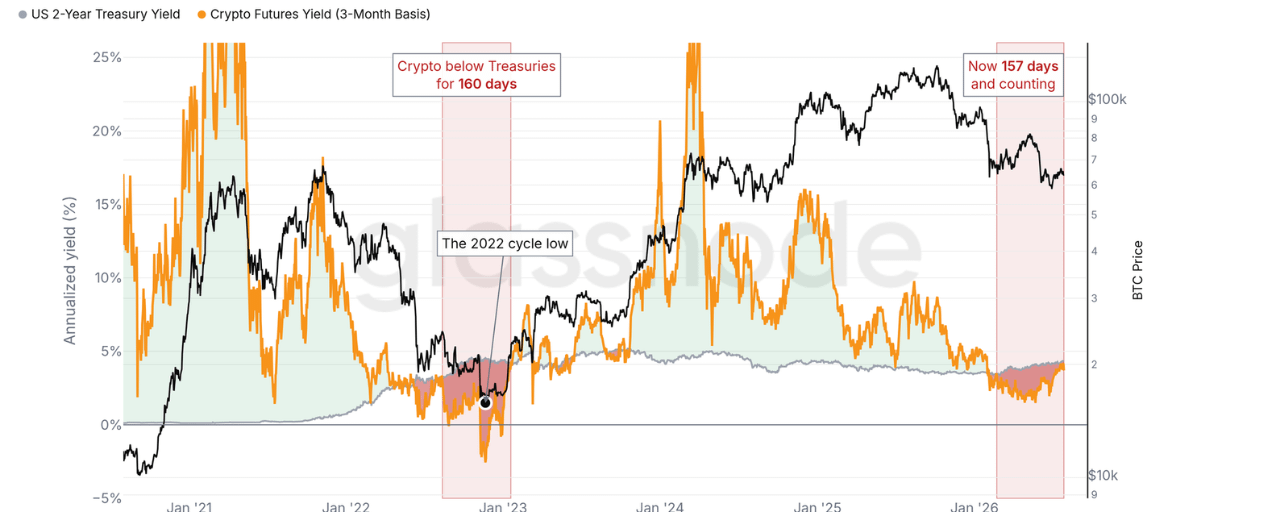
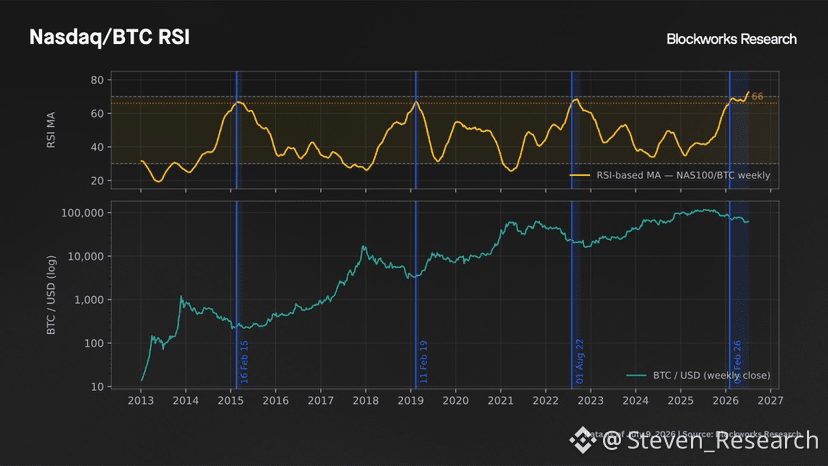
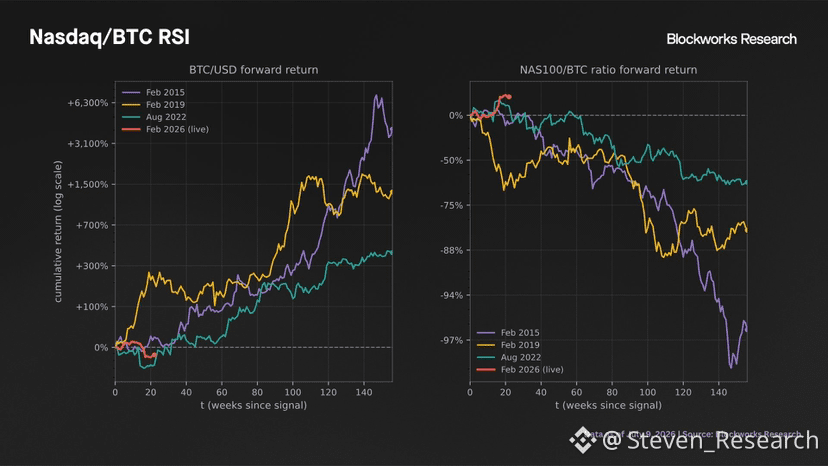
Blockworks Research has released a report suggesting that $BTC is moving closer to the bottom area, having dropped for up to 40 weeks, and that its valuation versus Nasdaq or Gold is both at historically low levels.
1. BTC is the cheapest in history compared with Nasdaq
- The report uses the Nasdaq 100 / BTC ratio combined with the RSI on the weekly timeframe. The results show that BTC is currently recording the strongest oversold level ever seen versus Nasdaq across all historical data.
=> In previous cycles (2015, 2019, and 2022), similar signals appeared near Bitcoin’s bottom zone. However, the advantage of this indicator mainly shows up on the 1–3 year horizon, rather than over the next few months.
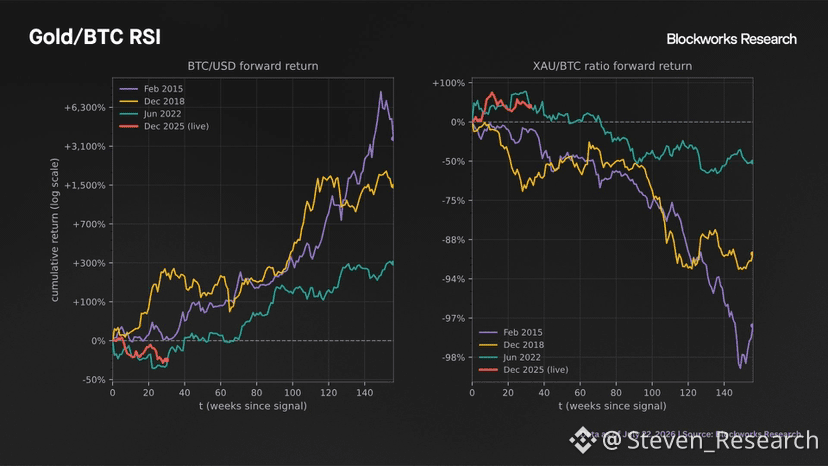
2. BTC is also the cheapest in history compared with gold
- A similar signal is applied using the Gold / BTC ratio. According to the report, February 2026 marks the time when gold is priced highest relative to Bitcoin in the history of this asset pair.
=> In the past, whenever this signal appears, Bitcoin tends to outperform gold in the following years.
3. Even so, these data still need time to prove themselves
- The data is based on only 3–4 cycles, so the sample size is still quite small. The indicators are not fully independent and all reflect the fact that Bitcoin has fallen significantly over a long period.
- The current cycle is notably different due to the appearance of Bitcoin ETFs, institutional flows, corporate treasuries, and a derivatives market that is far more developed.
- If historical models continue to perform effectively, the period from now through the end of 2026 could be among the most attractive accumulation zones of the current cycle. Conversely, if this cycle plays out differently from previous cycles, this will also be a test
Blockworks Research has released a report suggesting that $BTC is moving closer to the bottom area, having dropped for up to 40 weeks, and that its valuation versus Nasdaq or Gold is both at historically low levels.
1. BTC is the cheapest in history compared with Nasdaq
- The report uses the Nasdaq 100 / BTC ratio combined with the RSI on the weekly timeframe. The results show that BTC is currently recording the strongest oversold level ever seen versus Nasdaq across all historical data.
=> In previous cycles (2015, 2019, and 2022), similar signals appeared near Bitcoin’s bottom zone. However, the advantage of this indicator mainly shows up on the 1–3 year horizon, rather than over the next few months.
2. BTC is also the cheapest in history compared with gold
- A similar signal is applied using the Gold / BTC ratio. According to the report, February 2026 marks the time when gold is priced highest relative to Bitcoin in the history of this asset pair.
=> In the past, whenever this signal appears, Bitcoin tends to outperform gold in the following years.
3. Even so, these data still need time to prove themselves
- The data is based on only 3–4 cycles, so the sample size is still quite small. The indicators are not fully independent and all reflect the fact that Bitcoin has fallen significantly over a long period.
- The current cycle is notably different due to the appearance of Bitcoin ETFs, institutional flows, corporate treasuries, and a derivatives market that is far more developed.
- If historical models continue to perform effectively, the period from now through the end of 2026 could be among the most attractive accumulation zones of the current cycle. Conversely, if this cycle plays out differently from previous cycles, this will also be a test
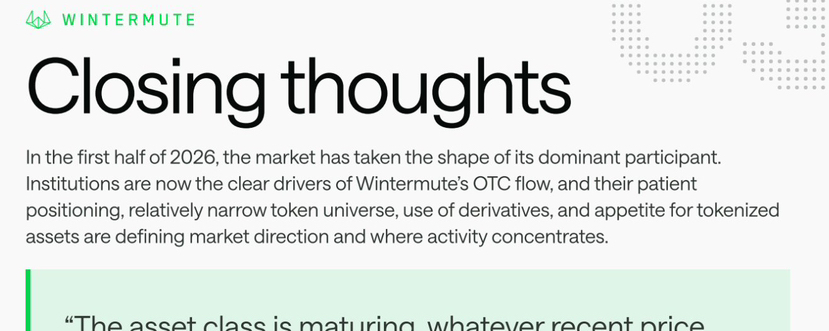
Q2/2026 CONTINUES TO BE A DIFFICULT QUARTER FOR THE CRYPTO MARKET – A BRIGHT SPOT IN PREDICTION & TOKENIZED COLLECTIBLES
CoinGecko has just released its Q2/2026 report with several notable highlights:
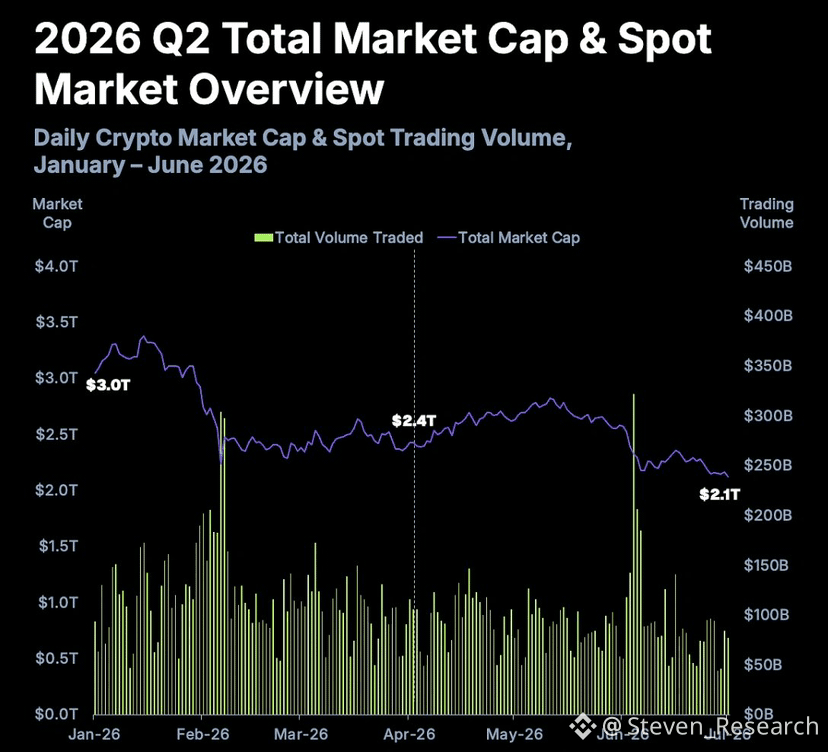
- Total crypto market capitalization fell 12.6%, to $2.1 trillion, marking the third consecutive declining quarter. Liquidity also weakened as trading volume dropped by nearly 21%.
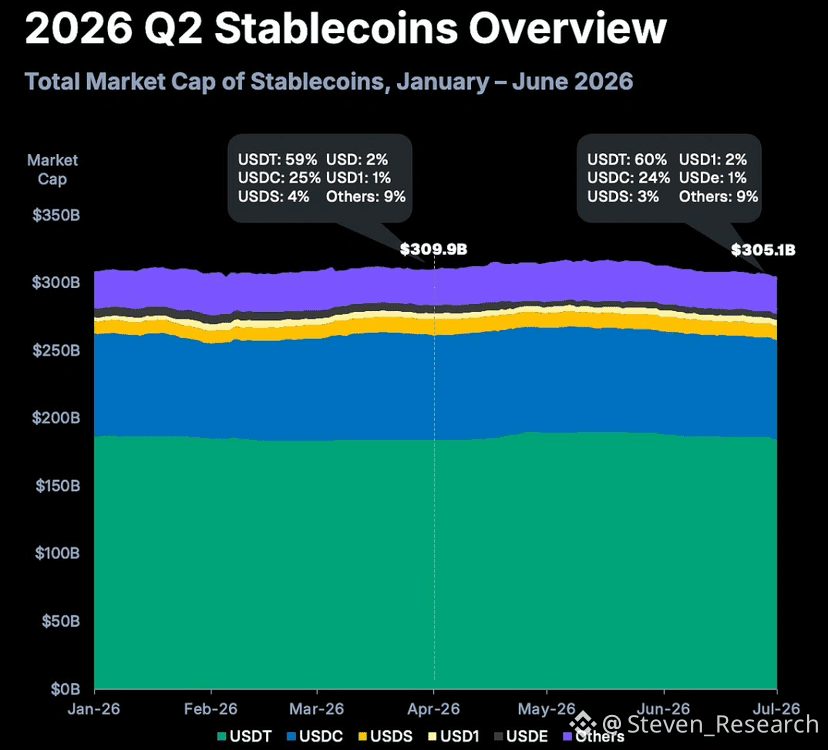
- Stablecoin supply contracted for the first time since Q3/2023; market capitalization fell to $305 billion, reflecting capital flowing out of the market.
- Spot CEX saw a sharp decline, with trading volume down nearly 28%, while Perpetual Futures fell by only about 10%, indicating that demand for leverage is still present.
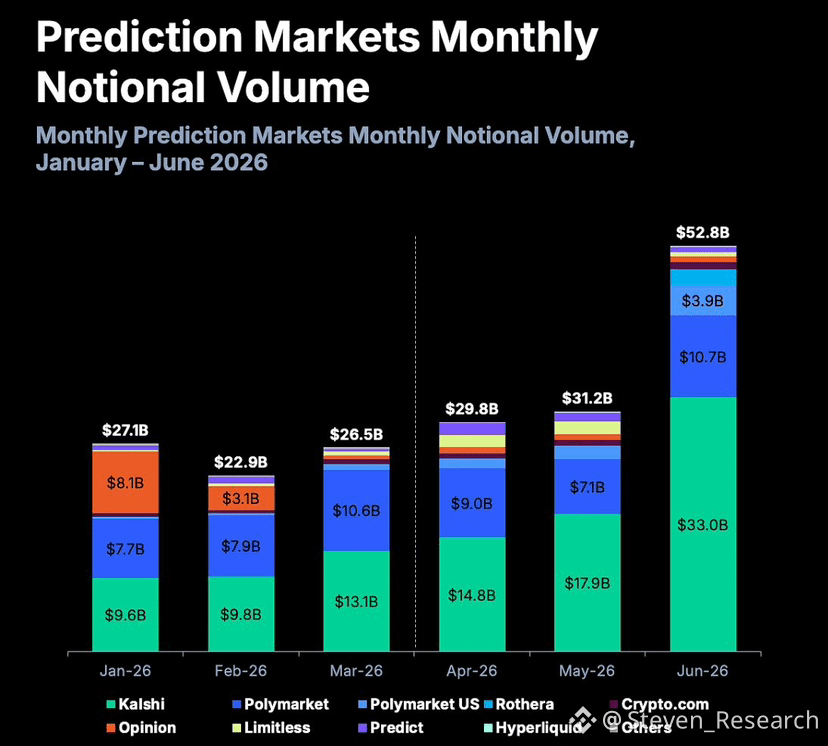
- Prediction Markets were the quarter’s standout, with trading volume increasing by nearly 49%, reaching a new record high in June.
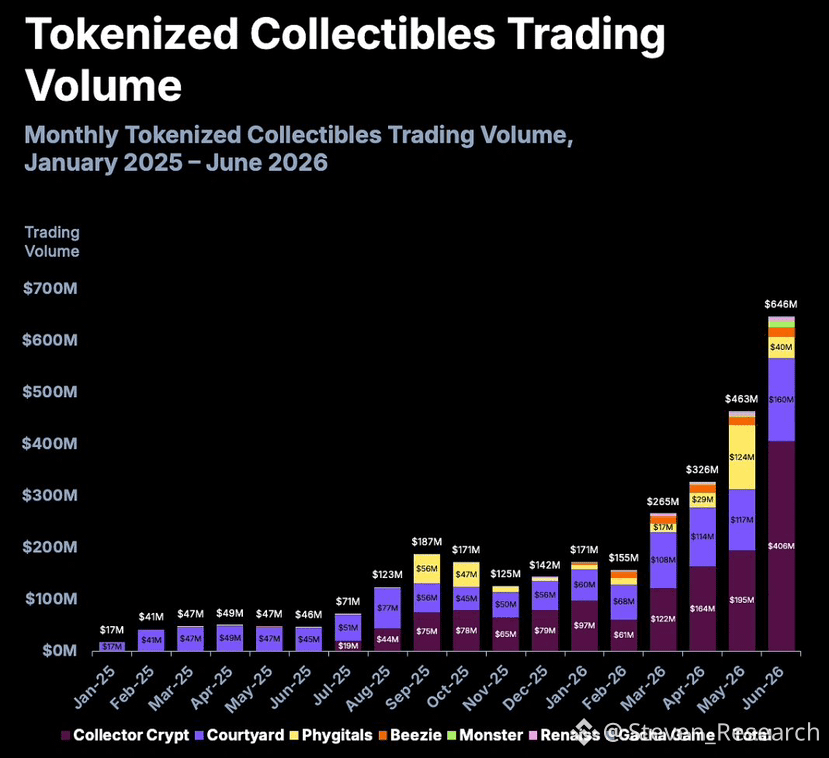
- Tokenized Collectibles continued strong growth and became one of the market’s prominent narratives.
*Summary:
- Q2 shows the market is still in a phase of liquidity withdrawal and fragmentation.
- Capital has not disappeared; it is shifting to segments with clearly defined growth stories—such as Prediction Markets, Tokenized Collectibles, and certain individual altcoins—rather than spreading across the whole market.
CoinGecko has just released its Q2/2026 report with several notable highlights:
- Total crypto market capitalization fell 12.6%, to $2.1 trillion, marking the third consecutive declining quarter. Liquidity also weakened as trading volume dropped by nearly 21%.
- Stablecoin supply contracted for the first time since Q3/2023; market capitalization fell to $305 billion, reflecting capital flowing out of the market.
- Spot CEX saw a sharp decline, with trading volume down nearly 28%, while Perpetual Futures fell by only about 10%, indicating that demand for leverage is still present.
- Prediction Markets were the quarter’s standout, with trading volume increasing by nearly 49%, reaching a new record high in June.
- Tokenized Collectibles continued strong growth and became one of the market’s prominent narratives.
*Summary:
- Q2 shows the market is still in a phase of liquidity withdrawal and fragmentation.
- Capital has not disappeared; it is shifting to segments with clearly defined growth stories—such as Prediction Markets, Tokenized Collectibles, and certain individual altcoins—rather than spreading across the whole market.
Partly True
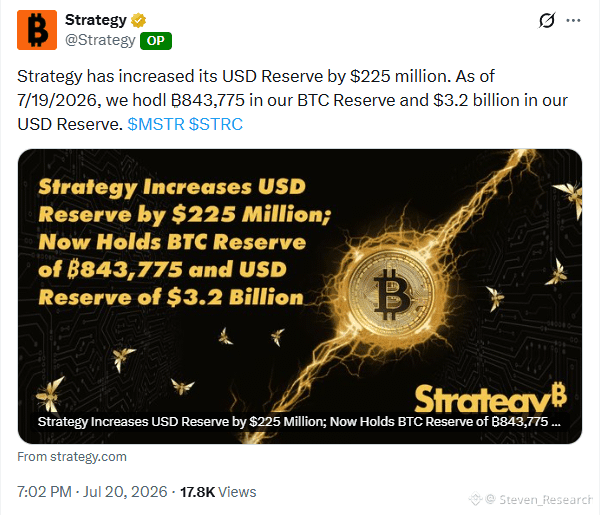
Strategy has increased its USD reserves to 225 million USD. Since 19/7/2026, they have held ₿843.775 in reserves of $BTC and 3.2 billion USD in USD reserves
This is the fourth consecutive week that Strategy has not bought any additional BTC. And they have not sold any additional BTC either
This is the fourth consecutive week that Strategy has not bought any additional BTC. And they have not sold any additional BTC either
Verified
OFFICIAL STATEMENT: ABANDON SOCIAL TO FOCUS ON BUILDING FINANCIAL INFRASTRUCTURE
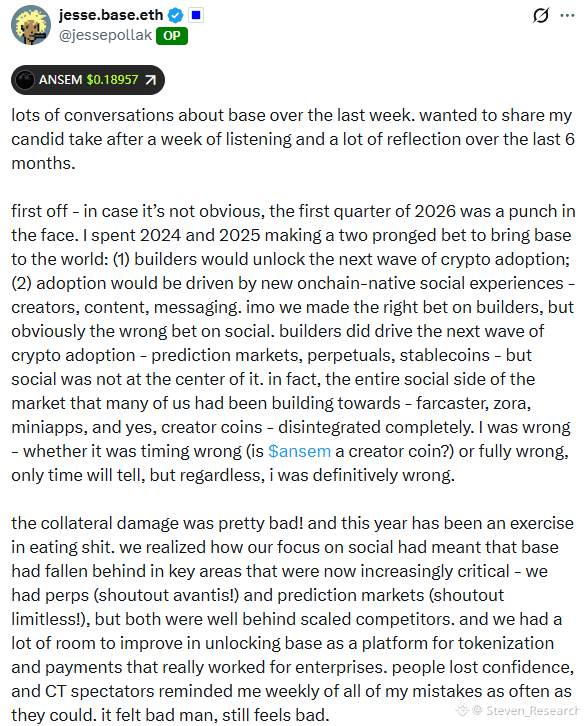
Jesse Pollak (Founder of Base) has just admitted that the strategy of developing social products and content coins was a wrong decision, causing Base to waste a lot of time and miss important market trends.
Here are the key points:
1. Jesse Pollak admits a mistake
by focusing too heavily on social and the creator economy, while segments like Perpetuals, Prediction Markets, Tokenization, and Stablecoin Payments have been growing strongly.
2. Base App is handed back
to Coinbase, with Cobie (Founder of Echo) taking responsibility for product development going forward.
3. Jesse will no longer focus
on the app, and will instead devote all resources to building the Base blockchain to become infrastructure for global finance.
*Base’s 3 major priorities for 2026:
- Expand Trading (including tokenized stocks, app coins...).
- Develop stablecoin-based payments at a global scale.
- Build infrastructure for AI Agents using crypto-native payments.
=> In fact, this is the final announcement step in the redirection that has already taken place since the beginning of the year:
- January 2026:
Base shifts from social-first to trading-first.
- February 2026:
Jesse admits he went too far with the creator economy.
- Later, he also confirms that content coins failed and decided to stop the Creator Rewards program.
=> To date, Base has officially abandoned the social direction and is focusing entirely on financial infrastructure.
=> Jesse says Base’s long-term goal is to compete with platforms like Stripe, and to become the blockchain where global money flows are paid and circulated in the future.
Jesse Pollak (Founder of Base) has just admitted that the strategy of developing social products and content coins was a wrong decision, causing Base to waste a lot of time and miss important market trends.
Here are the key points:
1. Jesse Pollak admits a mistake
by focusing too heavily on social and the creator economy, while segments like Perpetuals, Prediction Markets, Tokenization, and Stablecoin Payments have been growing strongly.
2. Base App is handed back
to Coinbase, with Cobie (Founder of Echo) taking responsibility for product development going forward.
3. Jesse will no longer focus
on the app, and will instead devote all resources to building the Base blockchain to become infrastructure for global finance.
*Base’s 3 major priorities for 2026:
- Expand Trading (including tokenized stocks, app coins...).
- Develop stablecoin-based payments at a global scale.
- Build infrastructure for AI Agents using crypto-native payments.
=> In fact, this is the final announcement step in the redirection that has already taken place since the beginning of the year:
- January 2026:
Base shifts from social-first to trading-first.
- February 2026:
Jesse admits he went too far with the creator economy.
- Later, he also confirms that content coins failed and decided to stop the Creator Rewards program.
=> To date, Base has officially abandoned the social direction and is focusing entirely on financial infrastructure.
=> Jesse says Base’s long-term goal is to compete with platforms like Stripe, and to become the blockchain where global money flows are paid and circulated in the future.

COIN-0.28%
COINUS-3.93%
Partly True
Log in to explore more content