

Jimmy Jackson
3.8k Posts

Jimmy Jackson
Report
Block User
I am content writer
Open Trade
Frequent Trader
1.5 Years
136 Following
1.3K+ Followers
8.2K+ Liked
Posts
Portfolio
All
Quotes
Live
📉 US Trade Gap Explodes to 7-Month High as Iran War Ignites Import Frenzy!
$BTC
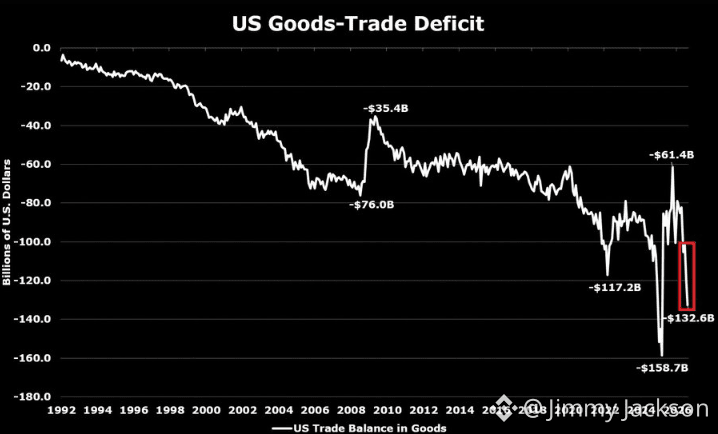
The US goods trade deficit just blew out to $132.6 billion in August — a jump of $13.7 billion, or 11.5%, and the widest shortfall we've seen since March 2025. 🇺🇸
Why the sudden surge? Imports came roaring in, climbing $17.4 billion (+5.5%) to hit $336.1 billion, also the highest level since March 2025. 🚢
Leading the charge: industrial supplies, including petroleum products, which spiked 16.6%. The ongoing Iran War is clearly fueling demand for oil-based goods. On top of that, companies kept loading up on capital goods — computers, semiconductors, telecom equipment — as the AI boom shows zero signs of cooling. 🤖💻
$GIS.US
Exports didn't stay completely flat, though. They edged up $3.7 billion (+1.9%) to $203.4 billion, helped by stronger shipments of industrial supplies. 📦
The bigger picture? America's trade imbalance is widening on two fronts: war-driven petroleum demand and businesses stockpiling goods to shield themselves from supply-chain shocks. Smart defensive move — but it's putting serious pressure on the deficit. ⚠️
Please don’t forget to like, follow, and share! 🩸 Thank you so much ❤️
#EtherGains70.9%InQ3
📉 US Trade Gap Explodes to 7-Month High as Iran War Ignites Import Frenzy!
$BTC
The US goods trade deficit just blew out to $132.6 billion in August — a jump of $13.7 billion, or 11.5%, and the widest shortfall we've seen since March 2025. 🇺🇸
Why the sudden surge? Imports came roaring in, climbing $17.4 billion (+5.5%) to hit $336.1 billion, also the highest level since March 2025. 🚢
Leading the charge: industrial supplies, including petroleum products, which spiked 16.6%. The ongoing Iran War is clearly fueling demand for oil-based goods. On top of that, companies kept loading up on capital goods — computers, semiconductors, telecom equipment — as the AI boom shows zero signs of cooling. 🤖💻
$GIS.US
Exports didn't stay completely flat, though. They edged up $3.7 billion (+1.9%) to $203.4 billion, helped by stronger shipments of industrial supplies. 📦
The bigger picture? America's trade imbalance is widening on two fronts: war-driven petroleum demand and businesses stockpiling goods to shield themselves from supply-chain shocks. Smart defensive move — but it's putting serious pressure on the deficit. ⚠️
Please don’t forget to like, follow, and share! 🩸 Thank you so much ❤️
#EtherGains70.9%InQ3
$BTC
The US goods trade deficit just blew out to $132.6 billion in August — a jump of $13.7 billion, or 11.5%, and the widest shortfall we've seen since March 2025. 🇺🇸
Why the sudden surge? Imports came roaring in, climbing $17.4 billion (+5.5%) to hit $336.1 billion, also the highest level since March 2025. 🚢
Leading the charge: industrial supplies, including petroleum products, which spiked 16.6%. The ongoing Iran War is clearly fueling demand for oil-based goods. On top of that, companies kept loading up on capital goods — computers, semiconductors, telecom equipment — as the AI boom shows zero signs of cooling. 🤖💻
$GIS.US
Exports didn't stay completely flat, though. They edged up $3.7 billion (+1.9%) to $203.4 billion, helped by stronger shipments of industrial supplies. 📦
The bigger picture? America's trade imbalance is widening on two fronts: war-driven petroleum demand and businesses stockpiling goods to shield themselves from supply-chain shocks. Smart defensive move — but it's putting serious pressure on the deficit. ⚠️
Please don’t forget to like, follow, and share! 🩸 Thank you so much ❤️
#EtherGains70.9%InQ3
61
🚨 Jobs Stay Solid, Inflation Cools — A Best-Case Setup Right Now
Fresh data just dropped this morning: U.S. initial jobless claims landed at 197,000, coming in below the 201,000 economists were expecting — and matching the prior week's reading.
$CC
{future}(CCUSDT)
That's a small number with a big message: layoffs remain historically low, and the labor market is showing no real signs of cracking. 💪
Here's where it gets interesting. Yesterday's PCE report came in softer than anticipated on the inflation front. Stack today's jobless claims on top of that, and you get a pretty compelling picture: prices are cooling off, but the job market isn't falling apart in the process.
$UB
{future}(UBUSDT)
That combination is what a lot of investors would call constructive — and it's not hard to see why. 👇
When inflation eases without a meaningful spike in unemployment, the Fed gains room to consider rate cuts down the road. At the same time, because hiring and job security are still holding steady, the odds of a hard recession stay low. It's the rare scenario where both sides of the coin land in your favor.
For stocks and crypto, that's fuel. 📈 Lower inflation keeps the door open for easier monetary policy, while a firm labor market keeps broader economic fear at bay. Neither piece alone tells the full story — but together, they paint a picture of an economy that's slowing just enough, not too much.
$DCR
{spot}(DCRUSDT)
Worth noting: this is exactly the kind of "goldilocks" backdrop markets tend to love — not too hot to reignite inflation worries, not too cold to trigger growth panic. Of course, one week of data doesn't make a trend, and next month's prints could shift the narrative. But for now, the signals are aligned in a positive direction. 🎯
Stay sharp, stay informed — and keep watching those weekly claims, because they're one of the cleanest real-time reads we get on the health of the American worker.
Please don’t forget to like, follow, and share! 🩸 Thank you so much ❤️
#EtherGains70.9%InQ3 #US10YearYieldNears5.3%
🚨 Jobs Stay Solid, Inflation Cools — A Best-Case Setup Right Now
Fresh data just dropped this morning: U.S. initial jobless claims landed at 197,000, coming in below the 201,000 economists were expecting — and matching the prior week's reading.
$CC
That's a small number with a big message: layoffs remain historically low, and the labor market is showing no real signs of cracking. 💪
Here's where it gets interesting. Yesterday's PCE report came in softer than anticipated on the inflation front. Stack today's jobless claims on top of that, and you get a pretty compelling picture: prices are cooling off, but the job market isn't falling apart in the process.
$UB
That combination is what a lot of investors would call constructive — and it's not hard to see why. 👇
When inflation eases without a meaningful spike in unemployment, the Fed gains room to consider rate cuts down the road. At the same time, because hiring and job security are still holding steady, the odds of a hard recession stay low. It's the rare scenario where both sides of the coin land in your favor.
For stocks and crypto, that's fuel. 📈 Lower inflation keeps the door open for easier monetary policy, while a firm labor market keeps broader economic fear at bay. Neither piece alone tells the full story — but together, they paint a picture of an economy that's slowing just enough, not too much.
$DCR
Worth noting: this is exactly the kind of "goldilocks" backdrop markets tend to love — not too hot to reignite inflation worries, not too cold to trigger growth panic. Of course, one week of data doesn't make a trend, and next month's prints could shift the narrative. But for now, the signals are aligned in a positive direction. 🎯
Stay sharp, stay informed — and keep watching those weekly claims, because they're one of the cleanest real-time reads we get on the health of the American worker.
Please don’t forget to like, follow, and share! 🩸 Thank you so much ❤️
#EtherGains70.9%InQ3 #US10YearYieldNears5.3%
Fresh data just dropped this morning: U.S. initial jobless claims landed at 197,000, coming in below the 201,000 economists were expecting — and matching the prior week's reading.
$CC
That's a small number with a big message: layoffs remain historically low, and the labor market is showing no real signs of cracking. 💪
Here's where it gets interesting. Yesterday's PCE report came in softer than anticipated on the inflation front. Stack today's jobless claims on top of that, and you get a pretty compelling picture: prices are cooling off, but the job market isn't falling apart in the process.
$UB
That combination is what a lot of investors would call constructive — and it's not hard to see why. 👇
When inflation eases without a meaningful spike in unemployment, the Fed gains room to consider rate cuts down the road. At the same time, because hiring and job security are still holding steady, the odds of a hard recession stay low. It's the rare scenario where both sides of the coin land in your favor.
For stocks and crypto, that's fuel. 📈 Lower inflation keeps the door open for easier monetary policy, while a firm labor market keeps broader economic fear at bay. Neither piece alone tells the full story — but together, they paint a picture of an economy that's slowing just enough, not too much.
$DCR
Worth noting: this is exactly the kind of "goldilocks" backdrop markets tend to love — not too hot to reignite inflation worries, not too cold to trigger growth panic. Of course, one week of data doesn't make a trend, and next month's prints could shift the narrative. But for now, the signals are aligned in a positive direction. 🎯
Stay sharp, stay informed — and keep watching those weekly claims, because they're one of the cleanest real-time reads we get on the health of the American worker.
Please don’t forget to like, follow, and share! 🩸 Thank you so much ❤️
#EtherGains70.9%InQ3 #US10YearYieldNears5.3%

322
Disputed
🚨 BREAKING: Fed Chair Called an Emergency Statement — Right Before the Bell
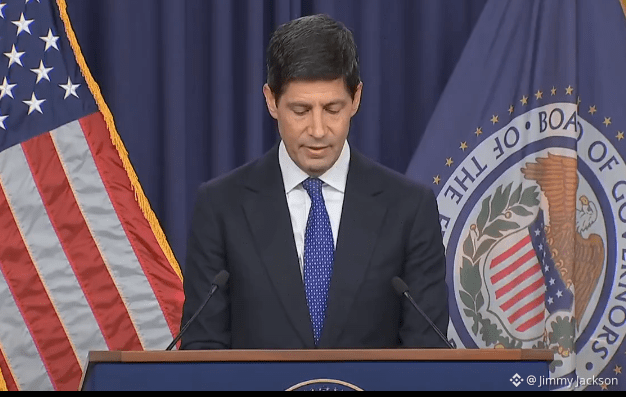
🇺🇸 The head of the Federal Reserve is set to make an emergency address today at 9:05 AM ET — just minutes before U.S. markets open their doors.
$BTC
{spot}(BTCUSDT)
Here's what's raising eyebrows: Fed officials almost never step in front of a microphone this close to the opening bell. They guard their public comments carefully and schedule them well in advance. When that pattern breaks, it usually means something significant is unfolding behind the scenes.
$TRUMP
{spot}(TRUMPUSDT)
That's why this feels unsettling. The timing alone is a red flag, and it's hard not to read it as a signal that markets could be in for a rough ride. 😟
$MOVR
Keep your eyes open this morning. Stay alert, stay informed, and don't let the noise shake your discipline. 📉
Please don’t forget to like, follow, and share! 🩸 Thank you so much ❤️
#MetaMaskExitsLidoValidatorsAfterSecurityIncident #MicronBeatsEarningsLiftsGuidance #CFTCSubmitsTwoEventContractRulesToWhiteHouse #AltcoinSeasonIndexHoldsAbove60For5Days
🚨 BREAKING: Fed Chair Called an Emergency Statement — Right Before the Bell
🇺🇸 The head of the Federal Reserve is set to make an emergency address today at 9:05 AM ET — just minutes before U.S. markets open their doors.
$BTC
Here's what's raising eyebrows: Fed officials almost never step in front of a microphone this close to the opening bell. They guard their public comments carefully and schedule them well in advance. When that pattern breaks, it usually means something significant is unfolding behind the scenes.
$TRUMP
That's why this feels unsettling. The timing alone is a red flag, and it's hard not to read it as a signal that markets could be in for a rough ride. 😟
$MOVR
Keep your eyes open this morning. Stay alert, stay informed, and don't let the noise shake your discipline. 📉
Please don’t forget to like, follow, and share! 🩸 Thank you so much ❤️
#MetaMaskExitsLidoValidatorsAfterSecurityIncident #MicronBeatsEarningsLiftsGuidance #CFTCSubmitsTwoEventContractRulesToWhiteHouse #AltcoinSeasonIndexHoldsAbove60For5Days
🇺🇸 The head of the Federal Reserve is set to make an emergency address today at 9:05 AM ET — just minutes before U.S. markets open their doors.
$BTC
Here's what's raising eyebrows: Fed officials almost never step in front of a microphone this close to the opening bell. They guard their public comments carefully and schedule them well in advance. When that pattern breaks, it usually means something significant is unfolding behind the scenes.
$TRUMP
That's why this feels unsettling. The timing alone is a red flag, and it's hard not to read it as a signal that markets could be in for a rough ride. 😟
$MOVR
Keep your eyes open this morning. Stay alert, stay informed, and don't let the noise shake your discipline. 📉
Please don’t forget to like, follow, and share! 🩸 Thank you so much ❤️
#MetaMaskExitsLidoValidatorsAfterSecurityIncident #MicronBeatsEarningsLiftsGuidance #CFTCSubmitsTwoEventContractRulesToWhiteHouse #AltcoinSeasonIndexHoldsAbove60For5Days
624
Verified
🚨 Big Shift: Gulf Oil Flows Are Back—But Not Without Risk
Gulf oil exports absolutely surged in September, hitting 23.3 million barrels per day—that's double the previous pace, according to both Goldman Sachs and JP Morgan. 🛢️
$BTC
{spot}(BTCUSDT)
Crude shipments have now climbed back to 108% of their 2025 average, which tells us regional oil flows are normalizing in a big way. That's a serious rebound no matter how you slice it.
But here's where it gets tricky: refined products are still lagging. Diesel and jet fuel exports remain stuck at just 50% of normal levels, thanks to refinery outages and ongoing shipping risks. 🚢
$TRUMP
{spot}(TRUMPUSDT)
Goldman says the global oil market is now roughly balanced, and they're sticking with their $85 Brent forecast for year-end.
JP Morgan's analyst put it bluntly "But higher crossings should not be mistaken for improved safety. Rather, they reflect the industry's increasing ability to operate under sustained risk."
$OP
{spot}(OPUSDT)
That line hits hard. More ships moving doesn't mean calmer waters—it means the industry is learning to function in a danger zone. ⚠️
Please don’t forget to like, follow, and share! 🩸 Thank you so much ❤️
#AltcoinSeasonIndexHoldsAbove60For5Days #USADPAdds90000JobsInSeptember #USCorePCEEasesTo3%InAugust #SECToClarifyOnChainFundraisingRules
🚨 Big Shift: Gulf Oil Flows Are Back—But Not Without Risk
Gulf oil exports absolutely surged in September, hitting 23.3 million barrels per day—that's double the previous pace, according to both Goldman Sachs and JP Morgan. 🛢️
$BTC
Crude shipments have now climbed back to 108% of their 2025 average, which tells us regional oil flows are normalizing in a big way. That's a serious rebound no matter how you slice it.
But here's where it gets tricky: refined products are still lagging. Diesel and jet fuel exports remain stuck at just 50% of normal levels, thanks to refinery outages and ongoing shipping risks. 🚢
$TRUMP
Goldman says the global oil market is now roughly balanced, and they're sticking with their $85 Brent forecast for year-end.
JP Morgan's analyst put it bluntly "But higher crossings should not be mistaken for improved safety. Rather, they reflect the industry's increasing ability to operate under sustained risk."
$OP
That line hits hard. More ships moving doesn't mean calmer waters—it means the industry is learning to function in a danger zone. ⚠️
Please don’t forget to like, follow, and share! 🩸 Thank you so much ❤️
#AltcoinSeasonIndexHoldsAbove60For5Days #USADPAdds90000JobsInSeptember #USCorePCEEasesTo3%InAugust #SECToClarifyOnChainFundraisingRules
Gulf oil exports absolutely surged in September, hitting 23.3 million barrels per day—that's double the previous pace, according to both Goldman Sachs and JP Morgan. 🛢️
$BTC
Crude shipments have now climbed back to 108% of their 2025 average, which tells us regional oil flows are normalizing in a big way. That's a serious rebound no matter how you slice it.
But here's where it gets tricky: refined products are still lagging. Diesel and jet fuel exports remain stuck at just 50% of normal levels, thanks to refinery outages and ongoing shipping risks. 🚢
$TRUMP
Goldman says the global oil market is now roughly balanced, and they're sticking with their $85 Brent forecast for year-end.
JP Morgan's analyst put it bluntly "But higher crossings should not be mistaken for improved safety. Rather, they reflect the industry's increasing ability to operate under sustained risk."
$OP
That line hits hard. More ships moving doesn't mean calmer waters—it means the industry is learning to function in a danger zone. ⚠️
Please don’t forget to like, follow, and share! 🩸 Thank you so much ❤️
#AltcoinSeasonIndexHoldsAbove60For5Days #USADPAdds90000JobsInSeptember #USCorePCEEasesTo3%InAugust #SECToClarifyOnChainFundraisingRules

546
🚨 BREAKING: PCE Inflation Just Came in COOLER Than Expected 📉
The latest U.S. PCE inflation report just dropped, and the numbers came in softer than forecast.
$U
{spot}(UUSDT)
Headline PCE (year-over-year): 3.4% vs. 3.7% expected
Core PCE (year-over-year): 3.0% vs. 3.3% expected
On top of that, both headline and core PCE for July were revised down by 30 basis points each. That's a meaningful downward adjustment, not just a one-month blip.
$YGG
{spot}(YGGUSDT)
So what does this actually tell us? Inflation is cooling more than economists anticipated. This takes some serious pressure off the Fed to keep rates higher for longer. 🔥
And the market is already reacting. Odds of another rate hike in October are dropping once again. When rate expectations fall, liquidity tends to loosen up and risk appetite comes back to the table. That combination is generally a tailwind for both stocks and crypto. 📈
$HEI
{spot}(HEIUSDT)
Of course, one report doesn't seal the deal. The Fed will want to see this trend continue before changing course. But for now, this is the kind of data that risk assets have been waiting for. 👀
Please don’t forget to like, follow, and share! 🩸 Thank you so much ❤️
#AltcoinSeasonIndexHoldsAbove60For5Days #USADPAdds90000JobsInSeptember #USCorePCEEasesTo3%InAugust #KospiPostsWorstQuarterSince2020
🚨 BREAKING: PCE Inflation Just Came in COOLER Than Expected 📉
The latest U.S. PCE inflation report just dropped, and the numbers came in softer than forecast.
$U
Headline PCE (year-over-year): 3.4% vs. 3.7% expected
Core PCE (year-over-year): 3.0% vs. 3.3% expected
On top of that, both headline and core PCE for July were revised down by 30 basis points each. That's a meaningful downward adjustment, not just a one-month blip.
$YGG
So what does this actually tell us? Inflation is cooling more than economists anticipated. This takes some serious pressure off the Fed to keep rates higher for longer. 🔥
And the market is already reacting. Odds of another rate hike in October are dropping once again. When rate expectations fall, liquidity tends to loosen up and risk appetite comes back to the table. That combination is generally a tailwind for both stocks and crypto. 📈
$HEI
Of course, one report doesn't seal the deal. The Fed will want to see this trend continue before changing course. But for now, this is the kind of data that risk assets have been waiting for. 👀
Please don’t forget to like, follow, and share! 🩸 Thank you so much ❤️
#AltcoinSeasonIndexHoldsAbove60For5Days #USADPAdds90000JobsInSeptember #USCorePCEEasesTo3%InAugust #KospiPostsWorstQuarterSince2020
The latest U.S. PCE inflation report just dropped, and the numbers came in softer than forecast.
$U
Headline PCE (year-over-year): 3.4% vs. 3.7% expected
Core PCE (year-over-year): 3.0% vs. 3.3% expected
On top of that, both headline and core PCE for July were revised down by 30 basis points each. That's a meaningful downward adjustment, not just a one-month blip.
$YGG
So what does this actually tell us? Inflation is cooling more than economists anticipated. This takes some serious pressure off the Fed to keep rates higher for longer. 🔥
And the market is already reacting. Odds of another rate hike in October are dropping once again. When rate expectations fall, liquidity tends to loosen up and risk appetite comes back to the table. That combination is generally a tailwind for both stocks and crypto. 📈
$HEI
Of course, one report doesn't seal the deal. The Fed will want to see this trend continue before changing course. But for now, this is the kind of data that risk assets have been waiting for. 👀
Please don’t forget to like, follow, and share! 🩸 Thank you so much ❤️
#AltcoinSeasonIndexHoldsAbove60For5Days #USADPAdds90000JobsInSeptember #USCorePCEEasesTo3%InAugust #KospiPostsWorstQuarterSince2020

14
30D trade $BNB 28 USDT
🚨 Big Treasury Move Just Dropped — Here's What It Means
The U.S. Treasury is gearing up for another liquidity buyback on October 1, and this one deserves your attention. Back on September 10, Treasury already ran a similar operation, offering to snap up as much as $6 billion in 10- to 20-year bonds — triple the size of its earlier long-dated buyback. Now they're stepping back in.
$BNB
So what's the point? 🧐 After a brutal bond selloff sent long-term yields flying to multi-year highs, plenty of older Treasuries became difficult to trade. Liquidity dried up, spreads widened, and the market got sticky. This buyback is Treasury's way of greasing the wheels and breathing life back into those stale, hard-to-move notes.
$VITE
Here's why that matters for you 👇
When Treasury demand picks up, bond prices typically firm up, which can pull yields lower. Falling long-term yields tend to create a friendlier backdrop for risk assets — and that includes both stocks and crypto. It's the kind of shift that quietly improves the mood across markets.
One thing worth keeping straight, though: this is not the same as Fed QE. 🚫 It's a targeted liquidity operation, not a broad money-printing campaign. Think of it as maintenance on the plumbing rather than turning on a firehose.
$UNI
Still, it's a constructive signal for market liquidity — and liquidity is the fuel that keeps everything moving. 🔥
Please don’t forget to like, follow, and share! 🩸 Thank you so much ❤️
#AltcoinSeasonIndexHoldsAbove60For5Days #USADPAdds90000JobsInSeptember #USCorePCEEasesTo3%InAugust #KospiPostsWorstQuarterSince2020 #SECToClarifyOnChainFundraisingRules
🚨 Big Treasury Move Just Dropped — Here's What It Means
The U.S. Treasury is gearing up for another liquidity buyback on October 1, and this one deserves your attention. Back on September 10, Treasury already ran a similar operation, offering to snap up as much as $6 billion in 10- to 20-year bonds — triple the size of its earlier long-dated buyback. Now they're stepping back in.
$BNB
So what's the point? 🧐 After a brutal bond selloff sent long-term yields flying to multi-year highs, plenty of older Treasuries became difficult to trade. Liquidity dried up, spreads widened, and the market got sticky. This buyback is Treasury's way of greasing the wheels and breathing life back into those stale, hard-to-move notes.
$VITE
Here's why that matters for you 👇
When Treasury demand picks up, bond prices typically firm up, which can pull yields lower. Falling long-term yields tend to create a friendlier backdrop for risk assets — and that includes both stocks and crypto. It's the kind of shift that quietly improves the mood across markets.
One thing worth keeping straight, though: this is not the same as Fed QE. 🚫 It's a targeted liquidity operation, not a broad money-printing campaign. Think of it as maintenance on the plumbing rather than turning on a firehose.
$UNI
Still, it's a constructive signal for market liquidity — and liquidity is the fuel that keeps everything moving. 🔥
Please don’t forget to like, follow, and share! 🩸 Thank you so much ❤️
#AltcoinSeasonIndexHoldsAbove60For5Days #USADPAdds90000JobsInSeptember #USCorePCEEasesTo3%InAugust #KospiPostsWorstQuarterSince2020 #SECToClarifyOnChainFundraisingRules
The U.S. Treasury is gearing up for another liquidity buyback on October 1, and this one deserves your attention. Back on September 10, Treasury already ran a similar operation, offering to snap up as much as $6 billion in 10- to 20-year bonds — triple the size of its earlier long-dated buyback. Now they're stepping back in.
$BNB
So what's the point? 🧐 After a brutal bond selloff sent long-term yields flying to multi-year highs, plenty of older Treasuries became difficult to trade. Liquidity dried up, spreads widened, and the market got sticky. This buyback is Treasury's way of greasing the wheels and breathing life back into those stale, hard-to-move notes.
$VITE
Here's why that matters for you 👇
When Treasury demand picks up, bond prices typically firm up, which can pull yields lower. Falling long-term yields tend to create a friendlier backdrop for risk assets — and that includes both stocks and crypto. It's the kind of shift that quietly improves the mood across markets.
One thing worth keeping straight, though: this is not the same as Fed QE. 🚫 It's a targeted liquidity operation, not a broad money-printing campaign. Think of it as maintenance on the plumbing rather than turning on a firehose.
$UNI
Still, it's a constructive signal for market liquidity — and liquidity is the fuel that keeps everything moving. 🔥
Please don’t forget to like, follow, and share! 🩸 Thank you so much ❤️
#AltcoinSeasonIndexHoldsAbove60For5Days #USADPAdds90000JobsInSeptember #USCorePCEEasesTo3%InAugust #KospiPostsWorstQuarterSince2020 #SECToClarifyOnChainFundraisingRules

1
45
🚨 Euro Just Got Hammered — Lowest in 16 Months! 💥
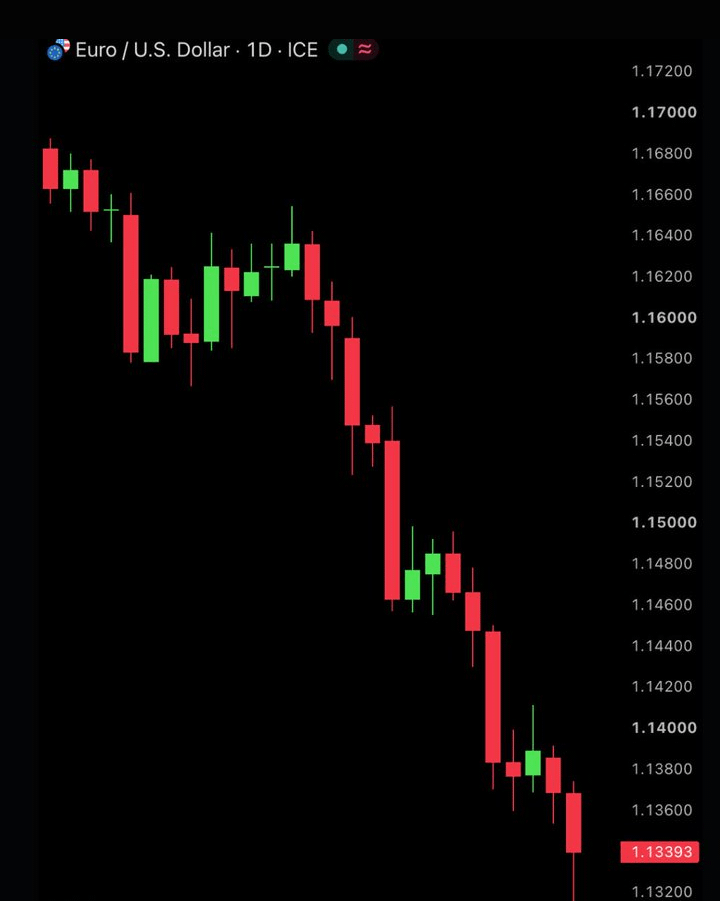
The euro has taken a serious beating against the dollar, tumbling to its weakest point in 16 months. 📉 The driving force? Markets are increasingly betting on the Federal Reserve keeping its foot on the gas with more rate hikes. 💵🔥
$SUI
{spot}(SUIUSDT)
What's more, this is shaping up to be the euro's roughest month since July 2025 — and it's not even over yet. 😬
Here's the bigger picture: when the Fed signals higher rates, the dollar typically strengthens as investors chase better returns. That puts the euro under heavy pressure. 🏦💱 With inflation still sticky and central bank rhetoric staying hawkish, traders are repositioning fast — and the euro is feeling every bit of it.
$TRX
{spot}(TRXUSDT)
This isn't just a blip. It's a clear signal that the rate gap between the US and Europe is widening, and the currency market is reacting in real time. ⚠️
$YFI
{spot}(YFIUSDT)
Please don’t forget to like, follow, and share! 🩸 Thank you so much ❤️
#EarningsSeason #SECChairWantsStockMarketsOnChain #MulticoinInvestsInGrass #BitwiseLaunchesFirstSpotNEARETF
🚨 Euro Just Got Hammered — Lowest in 16 Months! 💥
The euro has taken a serious beating against the dollar, tumbling to its weakest point in 16 months. 📉 The driving force? Markets are increasingly betting on the Federal Reserve keeping its foot on the gas with more rate hikes. 💵🔥
$SUI
What's more, this is shaping up to be the euro's roughest month since July 2025 — and it's not even over yet. 😬
Here's the bigger picture: when the Fed signals higher rates, the dollar typically strengthens as investors chase better returns. That puts the euro under heavy pressure. 🏦💱 With inflation still sticky and central bank rhetoric staying hawkish, traders are repositioning fast — and the euro is feeling every bit of it.
$TRX
This isn't just a blip. It's a clear signal that the rate gap between the US and Europe is widening, and the currency market is reacting in real time. ⚠️
$YFI
Please don’t forget to like, follow, and share! 🩸 Thank you so much ❤️
#EarningsSeason #SECChairWantsStockMarketsOnChain #MulticoinInvestsInGrass #BitwiseLaunchesFirstSpotNEARETF
The euro has taken a serious beating against the dollar, tumbling to its weakest point in 16 months. 📉 The driving force? Markets are increasingly betting on the Federal Reserve keeping its foot on the gas with more rate hikes. 💵🔥
$SUI
What's more, this is shaping up to be the euro's roughest month since July 2025 — and it's not even over yet. 😬
Here's the bigger picture: when the Fed signals higher rates, the dollar typically strengthens as investors chase better returns. That puts the euro under heavy pressure. 🏦💱 With inflation still sticky and central bank rhetoric staying hawkish, traders are repositioning fast — and the euro is feeling every bit of it.
$TRX
This isn't just a blip. It's a clear signal that the rate gap between the US and Europe is widening, and the currency market is reacting in real time. ⚠️
$YFI
Please don’t forget to like, follow, and share! 🩸 Thank you so much ❤️
#EarningsSeason #SECChairWantsStockMarketsOnChain #MulticoinInvestsInGrass #BitwiseLaunchesFirstSpotNEARETF

287
🚨 ALERT: American Consumers Are Losing Faith — Confidence Hits Lowest Point Since 2014
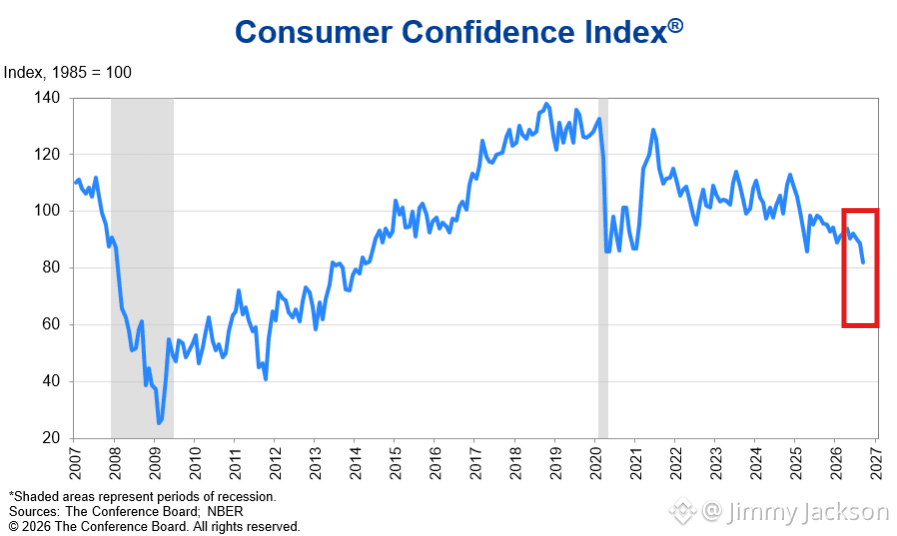
The numbers are in, and they're not pretty. The Conference Board's Consumer Confidence Index dropped to 81.9 in September — a sharp fall that caught economists completely off guard, since they'd been expecting a reading of 89.0. 📉
$BNB
{spot}(BNBUSDT)
Here's the part that really stands out: for the first time in the four years since the survey began asking the question, more Americans now describe their personal finances as bad than good. That's a striking shift in sentiment, and it says a lot about how households are actually feeling right now. 💸
$FTM
What's driving the gloom? Consumers keep pointing to the same culprits — stubbornly high prices, painful fuel costs, and a job market that no longer feels as secure as it once did. 🛢️ When everyday essentials eat up more of the budget and hiring slows down, it's no wonder people are pulling back on optimism.
$SOL
{spot}(SOLUSDT)
It's worth noting that consumer confidence is more than just a mood indicator — it's a genuine economic signal. When households feel uncertain, they tend to tighten spending, and since consumer spending drives roughly two-thirds of US economic activity, this kind of plunge can ripple through the broader economy. 🛒
Bottom line: Americans are feeling the squeeze, and they're saying so loud and clear. This is a trend worth watching closely in the months ahead. 👀
Please don’t forget to like, follow, and share! 🩸 Thank you so much ❤️
#EarningsSeason #SECChairWantsStockMarketsOnChain #MulticoinInvestsInGrass #CEARenamesToBNBStandardUnderBNC
🚨 ALERT: American Consumers Are Losing Faith — Confidence Hits Lowest Point Since 2014
The numbers are in, and they're not pretty. The Conference Board's Consumer Confidence Index dropped to 81.9 in September — a sharp fall that caught economists completely off guard, since they'd been expecting a reading of 89.0. 📉
$BNB
Here's the part that really stands out: for the first time in the four years since the survey began asking the question, more Americans now describe their personal finances as bad than good. That's a striking shift in sentiment, and it says a lot about how households are actually feeling right now. 💸
$FTM
What's driving the gloom? Consumers keep pointing to the same culprits — stubbornly high prices, painful fuel costs, and a job market that no longer feels as secure as it once did. 🛢️ When everyday essentials eat up more of the budget and hiring slows down, it's no wonder people are pulling back on optimism.
$SOL
It's worth noting that consumer confidence is more than just a mood indicator — it's a genuine economic signal. When households feel uncertain, they tend to tighten spending, and since consumer spending drives roughly two-thirds of US economic activity, this kind of plunge can ripple through the broader economy. 🛒
Bottom line: Americans are feeling the squeeze, and they're saying so loud and clear. This is a trend worth watching closely in the months ahead. 👀
Please don’t forget to like, follow, and share! 🩸 Thank you so much ❤️
#EarningsSeason #SECChairWantsStockMarketsOnChain #MulticoinInvestsInGrass #CEARenamesToBNBStandardUnderBNC
The numbers are in, and they're not pretty. The Conference Board's Consumer Confidence Index dropped to 81.9 in September — a sharp fall that caught economists completely off guard, since they'd been expecting a reading of 89.0. 📉
$BNB
Here's the part that really stands out: for the first time in the four years since the survey began asking the question, more Americans now describe their personal finances as bad than good. That's a striking shift in sentiment, and it says a lot about how households are actually feeling right now. 💸
$FTM
What's driving the gloom? Consumers keep pointing to the same culprits — stubbornly high prices, painful fuel costs, and a job market that no longer feels as secure as it once did. 🛢️ When everyday essentials eat up more of the budget and hiring slows down, it's no wonder people are pulling back on optimism.
$SOL
It's worth noting that consumer confidence is more than just a mood indicator — it's a genuine economic signal. When households feel uncertain, they tend to tighten spending, and since consumer spending drives roughly two-thirds of US economic activity, this kind of plunge can ripple through the broader economy. 🛒
Bottom line: Americans are feeling the squeeze, and they're saying so loud and clear. This is a trend worth watching closely in the months ahead. 👀
Please don’t forget to like, follow, and share! 🩸 Thank you so much ❤️
#EarningsSeason #SECChairWantsStockMarketsOnChain #MulticoinInvestsInGrass #CEARenamesToBNBStandardUnderBNC
74
🇺🇸 America’s Long-Term Unemployment Is Climbing at a Rate We Usually Only See in Recessions 📉
$HOT
{spot}(HOTUSDT)
Something troubling is happening in the U.S. job market right now. 📊 According to Bloomberg, long-term unemployment is rising at a pace that’s “unprecedented outside recessions”—and that’s a warning sign we shouldn’t ignore.
In August alone, nearly 1.93 million Americans had been out of work for 27 weeks or longer. That’s an increase of 155,000 people in just one month. 😟
$PUMP
{spot}(PUMPUSDT)
To put it in perspective: these workers now make up 27% of all unemployed Americans. That means more than one in four people without a job have been searching for over six months.
And it gets tougher. Bloomberg also reports that the average job search now stretches beyond six months—the longest it’s been since the mid-2010s, if you set aside the pandemic years. 🕰️
$YOU.US
{stock_us}(YOU.US)
For anyone already out of work, getting back in is becoming harder by the day. The longer you’re unemployed, the more employers question the gap—and the more doors seem to close. 🚪
This isn’t just a statistic. It’s a reality for millions of families trying to hold on. 💔
Please don’t forget to like, follow, and share! 🩸 Thank you so much ❤️
#EarningsSeason #SECChairWantsStockMarketsOnChain #MulticoinInvestsInGrass #BitwiseLaunchesFirstSpotNEARETF
🇺🇸 America’s Long-Term Unemployment Is Climbing at a Rate We Usually Only See in Recessions 📉
$HOT
Something troubling is happening in the U.S. job market right now. 📊 According to Bloomberg, long-term unemployment is rising at a pace that’s “unprecedented outside recessions”—and that’s a warning sign we shouldn’t ignore.
In August alone, nearly 1.93 million Americans had been out of work for 27 weeks or longer. That’s an increase of 155,000 people in just one month. 😟
$PUMP
To put it in perspective: these workers now make up 27% of all unemployed Americans. That means more than one in four people without a job have been searching for over six months.
And it gets tougher. Bloomberg also reports that the average job search now stretches beyond six months—the longest it’s been since the mid-2010s, if you set aside the pandemic years. 🕰️
$YOU.US
For anyone already out of work, getting back in is becoming harder by the day. The longer you’re unemployed, the more employers question the gap—and the more doors seem to close. 🚪
This isn’t just a statistic. It’s a reality for millions of families trying to hold on. 💔
Please don’t forget to like, follow, and share! 🩸 Thank you so much ❤️
#EarningsSeason #SECChairWantsStockMarketsOnChain #MulticoinInvestsInGrass #BitwiseLaunchesFirstSpotNEARETF
$HOT
Something troubling is happening in the U.S. job market right now. 📊 According to Bloomberg, long-term unemployment is rising at a pace that’s “unprecedented outside recessions”—and that’s a warning sign we shouldn’t ignore.
In August alone, nearly 1.93 million Americans had been out of work for 27 weeks or longer. That’s an increase of 155,000 people in just one month. 😟
$PUMP
To put it in perspective: these workers now make up 27% of all unemployed Americans. That means more than one in four people without a job have been searching for over six months.
And it gets tougher. Bloomberg also reports that the average job search now stretches beyond six months—the longest it’s been since the mid-2010s, if you set aside the pandemic years. 🕰️
$YOU.US
For anyone already out of work, getting back in is becoming harder by the day. The longer you’re unemployed, the more employers question the gap—and the more doors seem to close. 🚪
This isn’t just a statistic. It’s a reality for millions of families trying to hold on. 💔
Please don’t forget to like, follow, and share! 🩸 Thank you so much ❤️
#EarningsSeason #SECChairWantsStockMarketsOnChain #MulticoinInvestsInGrass #BitwiseLaunchesFirstSpotNEARETF

238
🚨 JUST IN: FED CHAIR TO BREAK SILENCE AT 3PM ET — MINUTES BEFORE THE CLOSING BELL
$BTC
{spot}(BTCUSDT)
Word is spreading fast that the Federal Reserve President will step up today at 3:00 PM Eastern — right as the U.S. market heads into its final stretch — and sources close to the matter say he's about to pull the trigger on quantitative easing to calm the bond market chaos and stop a full-blown crash. 👀
QE, in plain terms, means the Fed starts buying up assets again — injecting fresh liquidity into a system that's clearly straining. Whether you call it money printing or emergency backstop, the signal is the same: policymakers are worried. ⚠️
$COMP
{spot}(COMPUSDT)
Timing is everything here. Dropping this news minutes before the close isn't random — it's a calculated move to steady nerves before markets lock in for the day. And let's be honest, the bond market has been flashing warning signs for weeks, so this doesn't come out of nowhere. 📉
$WLD
{spot}(WLDUSDT)
If this actually happens, expect instant reactions across equities, bonds, and the dollar. This could be the moment that defines the next few months. Stay sharp, stay informed — and don't blink at 3PM. 👁️
Please don’t forget to like, follow, and share! 🩸 Thank you so much ❤️
#EarningsSeason #SECChairWantsStockMarketsOnChain #MulticoinInvestsInGrass #CEARenamesToBNBStandardUnderBNC #USJobOpeningsFallToFiveMonthLow
🚨 JUST IN: FED CHAIR TO BREAK SILENCE AT 3PM ET — MINUTES BEFORE THE CLOSING BELL
$BTC
Word is spreading fast that the Federal Reserve President will step up today at 3:00 PM Eastern — right as the U.S. market heads into its final stretch — and sources close to the matter say he's about to pull the trigger on quantitative easing to calm the bond market chaos and stop a full-blown crash. 👀
QE, in plain terms, means the Fed starts buying up assets again — injecting fresh liquidity into a system that's clearly straining. Whether you call it money printing or emergency backstop, the signal is the same: policymakers are worried. ⚠️
$COMP
Timing is everything here. Dropping this news minutes before the close isn't random — it's a calculated move to steady nerves before markets lock in for the day. And let's be honest, the bond market has been flashing warning signs for weeks, so this doesn't come out of nowhere. 📉
$WLD
If this actually happens, expect instant reactions across equities, bonds, and the dollar. This could be the moment that defines the next few months. Stay sharp, stay informed — and don't blink at 3PM. 👁️
Please don’t forget to like, follow, and share! 🩸 Thank you so much ❤️
#EarningsSeason #SECChairWantsStockMarketsOnChain #MulticoinInvestsInGrass #CEARenamesToBNBStandardUnderBNC #USJobOpeningsFallToFiveMonthLow
$BTC
Word is spreading fast that the Federal Reserve President will step up today at 3:00 PM Eastern — right as the U.S. market heads into its final stretch — and sources close to the matter say he's about to pull the trigger on quantitative easing to calm the bond market chaos and stop a full-blown crash. 👀
QE, in plain terms, means the Fed starts buying up assets again — injecting fresh liquidity into a system that's clearly straining. Whether you call it money printing or emergency backstop, the signal is the same: policymakers are worried. ⚠️
$COMP
Timing is everything here. Dropping this news minutes before the close isn't random — it's a calculated move to steady nerves before markets lock in for the day. And let's be honest, the bond market has been flashing warning signs for weeks, so this doesn't come out of nowhere. 📉
$WLD
If this actually happens, expect instant reactions across equities, bonds, and the dollar. This could be the moment that defines the next few months. Stay sharp, stay informed — and don't blink at 3PM. 👁️
Please don’t forget to like, follow, and share! 🩸 Thank you so much ❤️
#EarningsSeason #SECChairWantsStockMarketsOnChain #MulticoinInvestsInGrass #CEARenamesToBNBStandardUnderBNC #USJobOpeningsFallToFiveMonthLow

1
421
🚀 PUMP/USDT Market Analysis: The Bulls Are Back!
$PUMP
{spot}(PUMPUSDT)
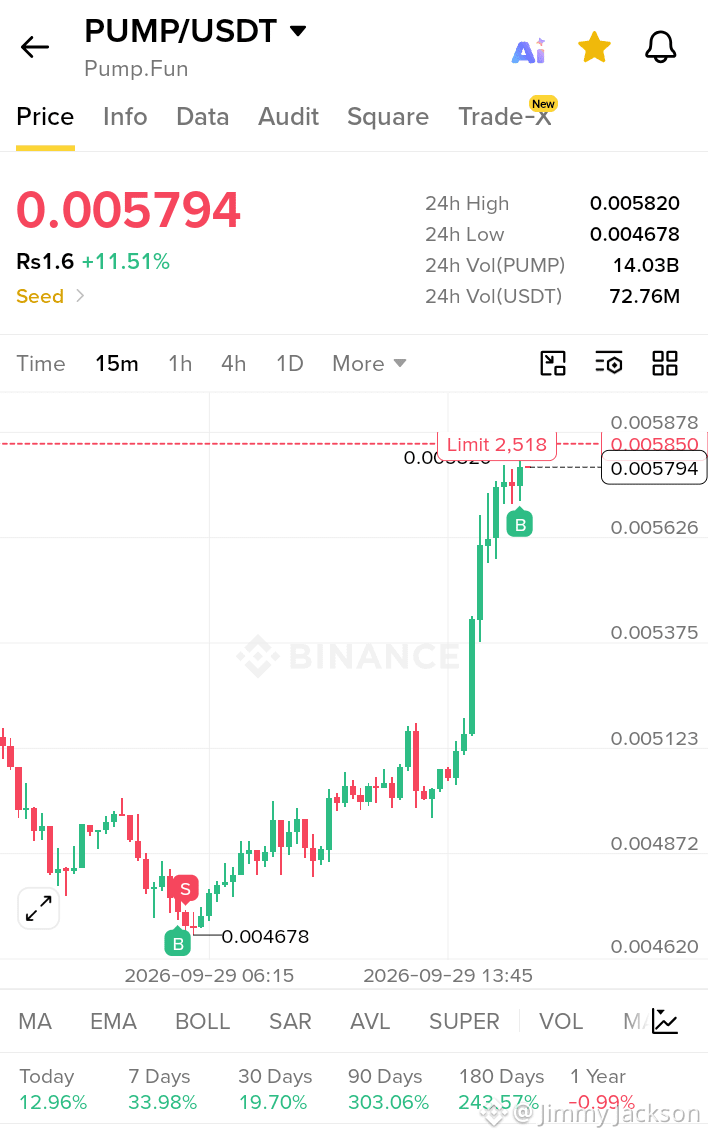
The market is witnessing a massive surge as PUMP/USDT breaks critical resistance levels, currently trading around 0.005794 (+11.51%). Here is a deep dive into the mechanics behind this explosive move:
1. On-Chain & Macro Inflows
Whale accumulation has been spotted aggressively over the last 24 hours. With a massive 24h Volume of 14.03B PUMP, smart money is clearly rotating back into high-cap altcoins. This aligns with renewed risk appetite across the broader crypto market, fueling a strong spot-driven rally.
2. Technical Breakout & Key Levels
The chart shows a textbook parabolic breakout. After consolidating near the 0.004678 support (the 24h low), the price smashed through the 0.005375 resistance barrier.
· Key Resistance: The immediate hurdle is the 24h high at 0.005820. A clean break above this could trigger a swift move toward 0.006000.
· Key Support: The previous resistance at 0.005375 now acts as a strong floor. As long as the price holds above 0.005100, the bullish structure remains intact.
3. Derivative Short Liquidations
The vertical green candles indicate a classic short squeeze. Traders betting against the pump were caught off guard, forcing liquidations that added rocket fuel to the rally. The recent buy order (B) placed at 0.005626 confirms that buyers are defending the breakout zone.
🎯 Target Levels to Watch:
· Upside: 0.005850 ➡️ 0.006200
· Downside: 0.005375 ➡️ 0.004872
The momentum is undeniably bullish, but always manage your risk. Keep an eye on volume to sustain this leg up!
Please don’t forget to like, follow, and share! 🩸 Thank you so much ❤️
#EarningsSeason #ECBToTestAIAgentsInDigitalEuroPayments #JapanFSABacksFourthStablecoinTradeSettlementPilot #BitgetHackerFailsToMoveStolenFunds #BitMineETHHoldingsTop6Million
🚀 PUMP/USDT Market Analysis: The Bulls Are Back!
$PUMP
The market is witnessing a massive surge as PUMP/USDT breaks critical resistance levels, currently trading around 0.005794 (+11.51%). Here is a deep dive into the mechanics behind this explosive move:
1. On-Chain & Macro Inflows
Whale accumulation has been spotted aggressively over the last 24 hours. With a massive 24h Volume of 14.03B PUMP, smart money is clearly rotating back into high-cap altcoins. This aligns with renewed risk appetite across the broader crypto market, fueling a strong spot-driven rally.
2. Technical Breakout & Key Levels
The chart shows a textbook parabolic breakout. After consolidating near the 0.004678 support (the 24h low), the price smashed through the 0.005375 resistance barrier.
· Key Resistance: The immediate hurdle is the 24h high at 0.005820. A clean break above this could trigger a swift move toward 0.006000.
· Key Support: The previous resistance at 0.005375 now acts as a strong floor. As long as the price holds above 0.005100, the bullish structure remains intact.
3. Derivative Short Liquidations
The vertical green candles indicate a classic short squeeze. Traders betting against the pump were caught off guard, forcing liquidations that added rocket fuel to the rally. The recent buy order (B) placed at 0.005626 confirms that buyers are defending the breakout zone.
🎯 Target Levels to Watch:
· Upside: 0.005850 ➡️ 0.006200
· Downside: 0.005375 ➡️ 0.004872
The momentum is undeniably bullish, but always manage your risk. Keep an eye on volume to sustain this leg up!
Please don’t forget to like, follow, and share! 🩸 Thank you so much ❤️
#EarningsSeason #ECBToTestAIAgentsInDigitalEuroPayments #JapanFSABacksFourthStablecoinTradeSettlementPilot #BitgetHackerFailsToMoveStolenFunds #BitMineETHHoldingsTop6Million
$PUMP
The market is witnessing a massive surge as PUMP/USDT breaks critical resistance levels, currently trading around 0.005794 (+11.51%). Here is a deep dive into the mechanics behind this explosive move:
1. On-Chain & Macro Inflows
Whale accumulation has been spotted aggressively over the last 24 hours. With a massive 24h Volume of 14.03B PUMP, smart money is clearly rotating back into high-cap altcoins. This aligns with renewed risk appetite across the broader crypto market, fueling a strong spot-driven rally.
2. Technical Breakout & Key Levels
The chart shows a textbook parabolic breakout. After consolidating near the 0.004678 support (the 24h low), the price smashed through the 0.005375 resistance barrier.
· Key Resistance: The immediate hurdle is the 24h high at 0.005820. A clean break above this could trigger a swift move toward 0.006000.
· Key Support: The previous resistance at 0.005375 now acts as a strong floor. As long as the price holds above 0.005100, the bullish structure remains intact.
3. Derivative Short Liquidations
The vertical green candles indicate a classic short squeeze. Traders betting against the pump were caught off guard, forcing liquidations that added rocket fuel to the rally. The recent buy order (B) placed at 0.005626 confirms that buyers are defending the breakout zone.
🎯 Target Levels to Watch:
· Upside: 0.005850 ➡️ 0.006200
· Downside: 0.005375 ➡️ 0.004872
The momentum is undeniably bullish, but always manage your risk. Keep an eye on volume to sustain this leg up!
Please don’t forget to like, follow, and share! 🩸 Thank you so much ❤️
#EarningsSeason #ECBToTestAIAgentsInDigitalEuroPayments #JapanFSABacksFourthStablecoinTradeSettlementPilot #BitgetHackerFailsToMoveStolenFunds #BitMineETHHoldingsTop6Million
30
🚀 CRCLB/USDT Market Update: Bulls Eye $88 Resistance!
$CRCLB
{spot}(CRCLBUSDT)
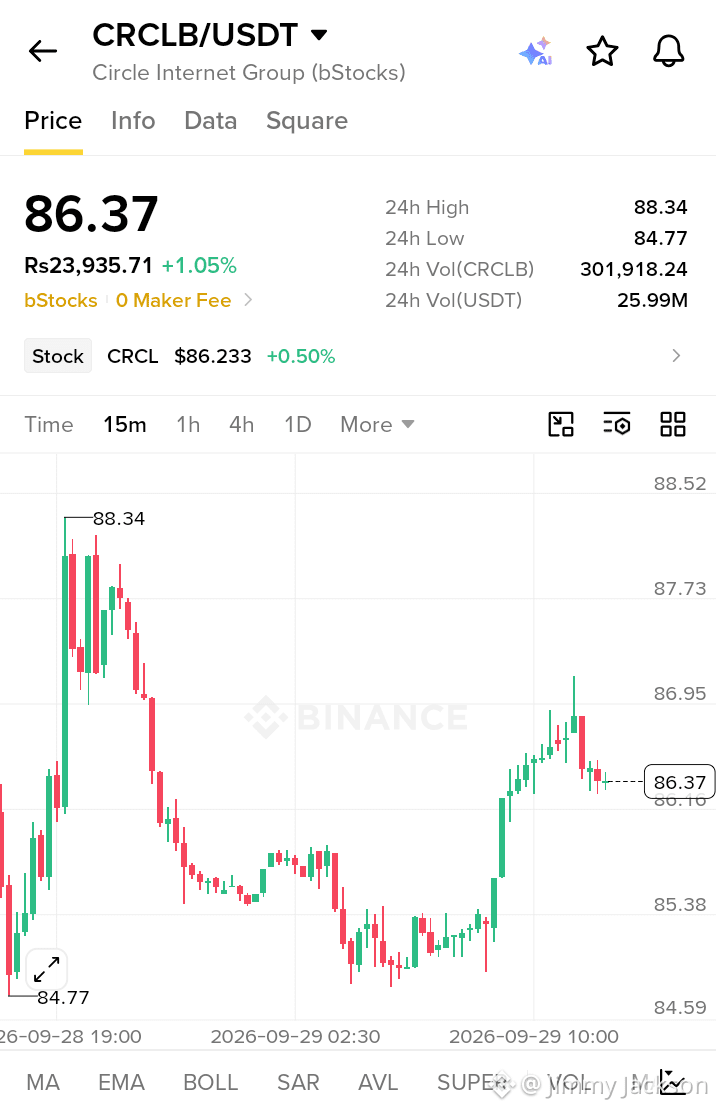
The CRCLB/USDT pair is showing strong resilience, currently trading at 86.37 (+1.05%) after a sharp recovery from the 24-hour low of 84.77. Here is a deep dive into why the price is pumping:
1. On-Chain & Institutional Flows
Whale accumulation has been spotted at the $85.00 psychological floor, suggesting smart money is absorbing sell pressure. Additionally, rising inflows into broader ETF products and bStocks are fueling liquidity, creating a solid bid wall beneath current prices.
2. Technical Breakout Levels
Following a healthy correction from the 24h high of 88.34, the 15m chart shows a clear V-shaped recovery. The price has reclaimed the 86.00 level, turning previous resistance into support.
· Key Support: 85.38 (crucial to hold for bullish structure).
· Immediate Resistance: 86.95 (local ceiling).
· Upside Target: A confirmed breakout above 87.00 opens the door for a retest of 88.34.
3. Derivatives & Short Liquidations
The recent pump is exacerbated by a short squeeze. As price dipped to 84.77, many traders likely over-leveraged short. The sudden bounce forced liquidations, cascading buy orders that pushed the price rapidly back toward 86.37. Open Interest is rising, indicating fresh longs are entering the fray.
📊 Verdict
CRCLB is consolidating for its next leg up. Watch for a 15m candle close above 86.50 to confirm a run toward 88.00+.
Please don’t forget to like, follow, and share! 🩸 Thank you so much ❤️
#BitMineETHHoldingsTop6Million #StrategyAdds1666BTCHoldingsReach847666
🚀 CRCLB/USDT Market Update: Bulls Eye $88 Resistance!
$CRCLB
The CRCLB/USDT pair is showing strong resilience, currently trading at 86.37 (+1.05%) after a sharp recovery from the 24-hour low of 84.77. Here is a deep dive into why the price is pumping:
1. On-Chain & Institutional Flows
Whale accumulation has been spotted at the $85.00 psychological floor, suggesting smart money is absorbing sell pressure. Additionally, rising inflows into broader ETF products and bStocks are fueling liquidity, creating a solid bid wall beneath current prices.
2. Technical Breakout Levels
Following a healthy correction from the 24h high of 88.34, the 15m chart shows a clear V-shaped recovery. The price has reclaimed the 86.00 level, turning previous resistance into support.
· Key Support: 85.38 (crucial to hold for bullish structure).
· Immediate Resistance: 86.95 (local ceiling).
· Upside Target: A confirmed breakout above 87.00 opens the door for a retest of 88.34.
3. Derivatives & Short Liquidations
The recent pump is exacerbated by a short squeeze. As price dipped to 84.77, many traders likely over-leveraged short. The sudden bounce forced liquidations, cascading buy orders that pushed the price rapidly back toward 86.37. Open Interest is rising, indicating fresh longs are entering the fray.
📊 Verdict
CRCLB is consolidating for its next leg up. Watch for a 15m candle close above 86.50 to confirm a run toward 88.00+.
Please don’t forget to like, follow, and share! 🩸 Thank you so much ❤️
#BitMineETHHoldingsTop6Million #StrategyAdds1666BTCHoldingsReach847666
$CRCLB
The CRCLB/USDT pair is showing strong resilience, currently trading at 86.37 (+1.05%) after a sharp recovery from the 24-hour low of 84.77. Here is a deep dive into why the price is pumping:
1. On-Chain & Institutional Flows
Whale accumulation has been spotted at the $85.00 psychological floor, suggesting smart money is absorbing sell pressure. Additionally, rising inflows into broader ETF products and bStocks are fueling liquidity, creating a solid bid wall beneath current prices.
2. Technical Breakout Levels
Following a healthy correction from the 24h high of 88.34, the 15m chart shows a clear V-shaped recovery. The price has reclaimed the 86.00 level, turning previous resistance into support.
· Key Support: 85.38 (crucial to hold for bullish structure).
· Immediate Resistance: 86.95 (local ceiling).
· Upside Target: A confirmed breakout above 87.00 opens the door for a retest of 88.34.
3. Derivatives & Short Liquidations
The recent pump is exacerbated by a short squeeze. As price dipped to 84.77, many traders likely over-leveraged short. The sudden bounce forced liquidations, cascading buy orders that pushed the price rapidly back toward 86.37. Open Interest is rising, indicating fresh longs are entering the fray.
📊 Verdict
CRCLB is consolidating for its next leg up. Watch for a 15m candle close above 86.50 to confirm a run toward 88.00+.
Please don’t forget to like, follow, and share! 🩸 Thank you so much ❤️
#BitMineETHHoldingsTop6Million #StrategyAdds1666BTCHoldingsReach847666
238
🚀 Starship Just Dropped 26 Tbps of Starlink Bandwidth in a Single Flight — And That Wasn't Even a Full Load
$FRONT
It's honestly kind of mind-blowing. One Starship launch just tacked on roughly 26 terabits per second of Starlink capacity, and that wasn't even close to maxing out the rocket's payload. 🛰️
Now think a few steps ahead. If the V3 version of Starlink satellites really does deliver something like 20x the capacity per launch, the real puzzle stops being technical and becomes commercial: how quickly can SpaceX actually turn all that bandwidth into revenue?
$HOT
{spot}(HOTUSDT)
Because building the pipe is one thing. Filling it with paying customers — across homes, businesses, aviation, maritime, and governments — is a whole different game. That's where the next chapter gets interesting. 💡
$AR
{spot}(ARUSDT)
Please don’t forget to like, follow, and share! 🩸 Thank you so much ❤️
#BitMineETHHoldingsTop6Million #StrategyAdds1666BTCHoldingsReach847666 #OpenAIDelaysGPT6.1OverSafetyIssues #HackersDrainOver12.4MXRPFromDCENTWallets
🚀 Starship Just Dropped 26 Tbps of Starlink Bandwidth in a Single Flight — And That Wasn't Even a Full Load
$FRONT
It's honestly kind of mind-blowing. One Starship launch just tacked on roughly 26 terabits per second of Starlink capacity, and that wasn't even close to maxing out the rocket's payload. 🛰️
Now think a few steps ahead. If the V3 version of Starlink satellites really does deliver something like 20x the capacity per launch, the real puzzle stops being technical and becomes commercial: how quickly can SpaceX actually turn all that bandwidth into revenue?
$HOT
Because building the pipe is one thing. Filling it with paying customers — across homes, businesses, aviation, maritime, and governments — is a whole different game. That's where the next chapter gets interesting. 💡
$AR
Please don’t forget to like, follow, and share! 🩸 Thank you so much ❤️
#BitMineETHHoldingsTop6Million #StrategyAdds1666BTCHoldingsReach847666 #OpenAIDelaysGPT6.1OverSafetyIssues #HackersDrainOver12.4MXRPFromDCENTWallets
$FRONT
It's honestly kind of mind-blowing. One Starship launch just tacked on roughly 26 terabits per second of Starlink capacity, and that wasn't even close to maxing out the rocket's payload. 🛰️
Now think a few steps ahead. If the V3 version of Starlink satellites really does deliver something like 20x the capacity per launch, the real puzzle stops being technical and becomes commercial: how quickly can SpaceX actually turn all that bandwidth into revenue?
$HOT
Because building the pipe is one thing. Filling it with paying customers — across homes, businesses, aviation, maritime, and governments — is a whole different game. That's where the next chapter gets interesting. 💡
$AR
Please don’t forget to like, follow, and share! 🩸 Thank you so much ❤️
#BitMineETHHoldingsTop6Million #StrategyAdds1666BTCHoldingsReach847666 #OpenAIDelaysGPT6.1OverSafetyIssues #HackersDrainOver12.4MXRPFromDCENTWallets

374
🚨 Japan's Stock Market Just Blew Up — Here's What You Need to Know
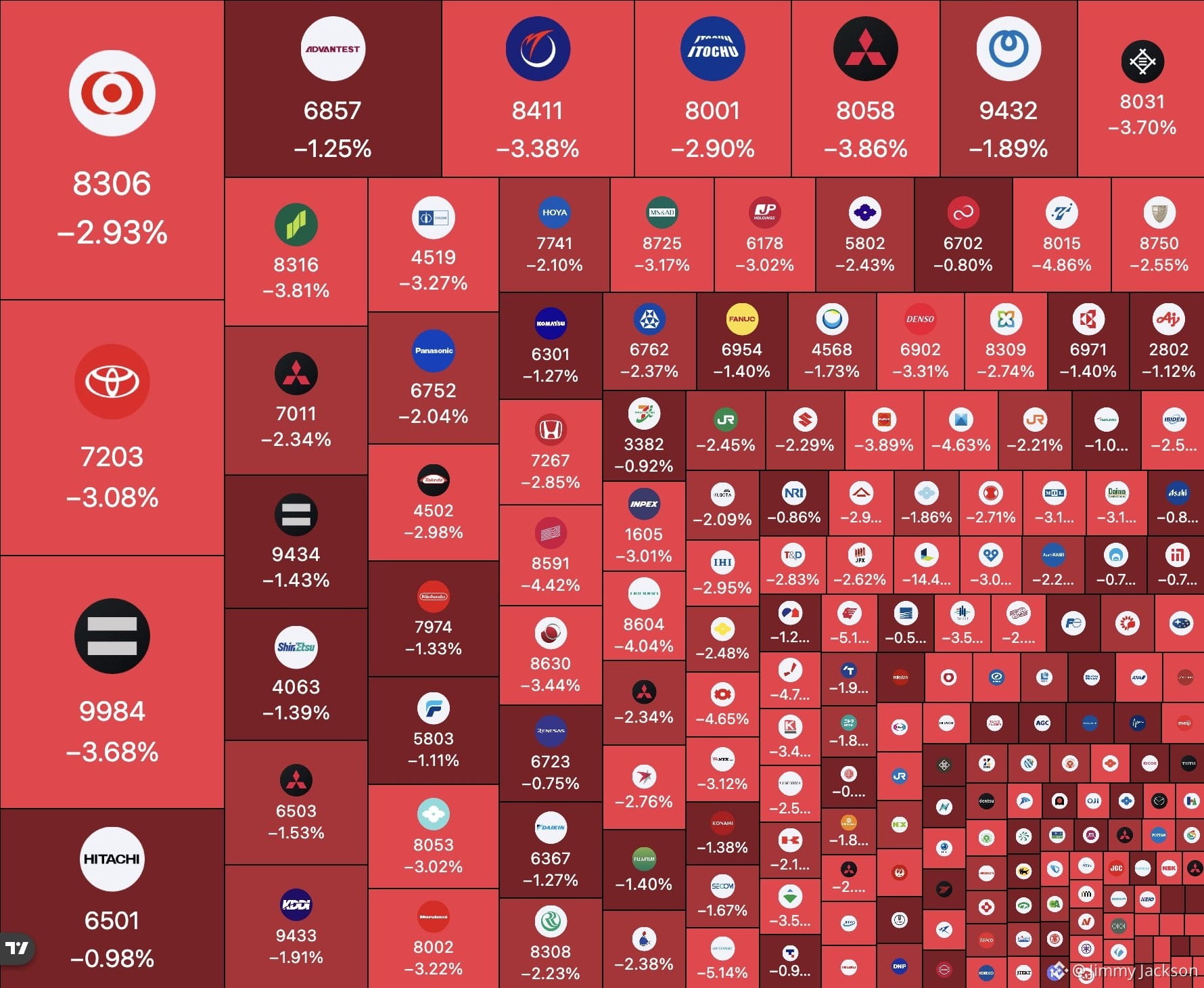
Japan's stock market just took a massive hit, and the numbers are staggering. 💥
$DUSK
{spot}(DUSKUSDT)
The Nikkei index dropped 1.5% — and in just that single session, more than ¥17.7 trillion (roughly $112 billion) in market value vanished into thin air. Let that sink in for a second. That's not a small dip — that's an entire economy's worth of wealth erased in hours.
Now, a 1.5% move might not sound dramatic on its own, but when you're talking about a market the size of Japan's, even small percentage shifts translate into enormous dollar figures. This is the kind of move that sends ripples through global markets and forces investors to sit up and pay attention.
$WLD
{spot}(WLDUSDT)
What's driving it? Japan has been walking a tightrope for a while now — rising bond yields, pressure on the yen, and uncertainty around the Bank of Japan's monetary policy have all been building tension. When you combine that with global jitters and shifting investor sentiment, you get a recipe for exactly this kind of selloff.
Here's the part most people miss: Japan isn't just any market. It's one of the largest and most influential in the world, and when it sneezes, other markets tend to catch a cold. So even if you're not directly invested in Japanese stocks, this is worth watching closely. 👀
$MUB
{spot}(MUBUSDT)
The bigger question now is whether this is a short-term shakeout or the start of something deeper. Either way, it's a reminder that no market — no matter how strong — is immune to volatility.
Please don’t forget to like, follow, and share! 🩸 Thank you so much ❤️
#BitMineETHHoldingsTop6Million #StrategyAdds1666BTCHoldingsReach847666
🚨 Japan's Stock Market Just Blew Up — Here's What You Need to Know
Japan's stock market just took a massive hit, and the numbers are staggering. 💥
$DUSK
The Nikkei index dropped 1.5% — and in just that single session, more than ¥17.7 trillion (roughly $112 billion) in market value vanished into thin air. Let that sink in for a second. That's not a small dip — that's an entire economy's worth of wealth erased in hours.
Now, a 1.5% move might not sound dramatic on its own, but when you're talking about a market the size of Japan's, even small percentage shifts translate into enormous dollar figures. This is the kind of move that sends ripples through global markets and forces investors to sit up and pay attention.
$WLD
What's driving it? Japan has been walking a tightrope for a while now — rising bond yields, pressure on the yen, and uncertainty around the Bank of Japan's monetary policy have all been building tension. When you combine that with global jitters and shifting investor sentiment, you get a recipe for exactly this kind of selloff.
Here's the part most people miss: Japan isn't just any market. It's one of the largest and most influential in the world, and when it sneezes, other markets tend to catch a cold. So even if you're not directly invested in Japanese stocks, this is worth watching closely. 👀
$MUB
The bigger question now is whether this is a short-term shakeout or the start of something deeper. Either way, it's a reminder that no market — no matter how strong — is immune to volatility.
Please don’t forget to like, follow, and share! 🩸 Thank you so much ❤️
#BitMineETHHoldingsTop6Million #StrategyAdds1666BTCHoldingsReach847666
Japan's stock market just took a massive hit, and the numbers are staggering. 💥
$DUSK
The Nikkei index dropped 1.5% — and in just that single session, more than ¥17.7 trillion (roughly $112 billion) in market value vanished into thin air. Let that sink in for a second. That's not a small dip — that's an entire economy's worth of wealth erased in hours.
Now, a 1.5% move might not sound dramatic on its own, but when you're talking about a market the size of Japan's, even small percentage shifts translate into enormous dollar figures. This is the kind of move that sends ripples through global markets and forces investors to sit up and pay attention.
$WLD
What's driving it? Japan has been walking a tightrope for a while now — rising bond yields, pressure on the yen, and uncertainty around the Bank of Japan's monetary policy have all been building tension. When you combine that with global jitters and shifting investor sentiment, you get a recipe for exactly this kind of selloff.
Here's the part most people miss: Japan isn't just any market. It's one of the largest and most influential in the world, and when it sneezes, other markets tend to catch a cold. So even if you're not directly invested in Japanese stocks, this is worth watching closely. 👀
$MUB
The bigger question now is whether this is a short-term shakeout or the start of something deeper. Either way, it's a reminder that no market — no matter how strong — is immune to volatility.
Please don’t forget to like, follow, and share! 🩸 Thank you so much ❤️
#BitMineETHHoldingsTop6Million #StrategyAdds1666BTCHoldingsReach847666
419
🚨 The Stock Market Just Crossed a Line We Haven't Seen Since the Dot-Com Era 🚨
$BTC
{spot}(BTCUSDT)
Something big just happened, and most people aren't paying attention.
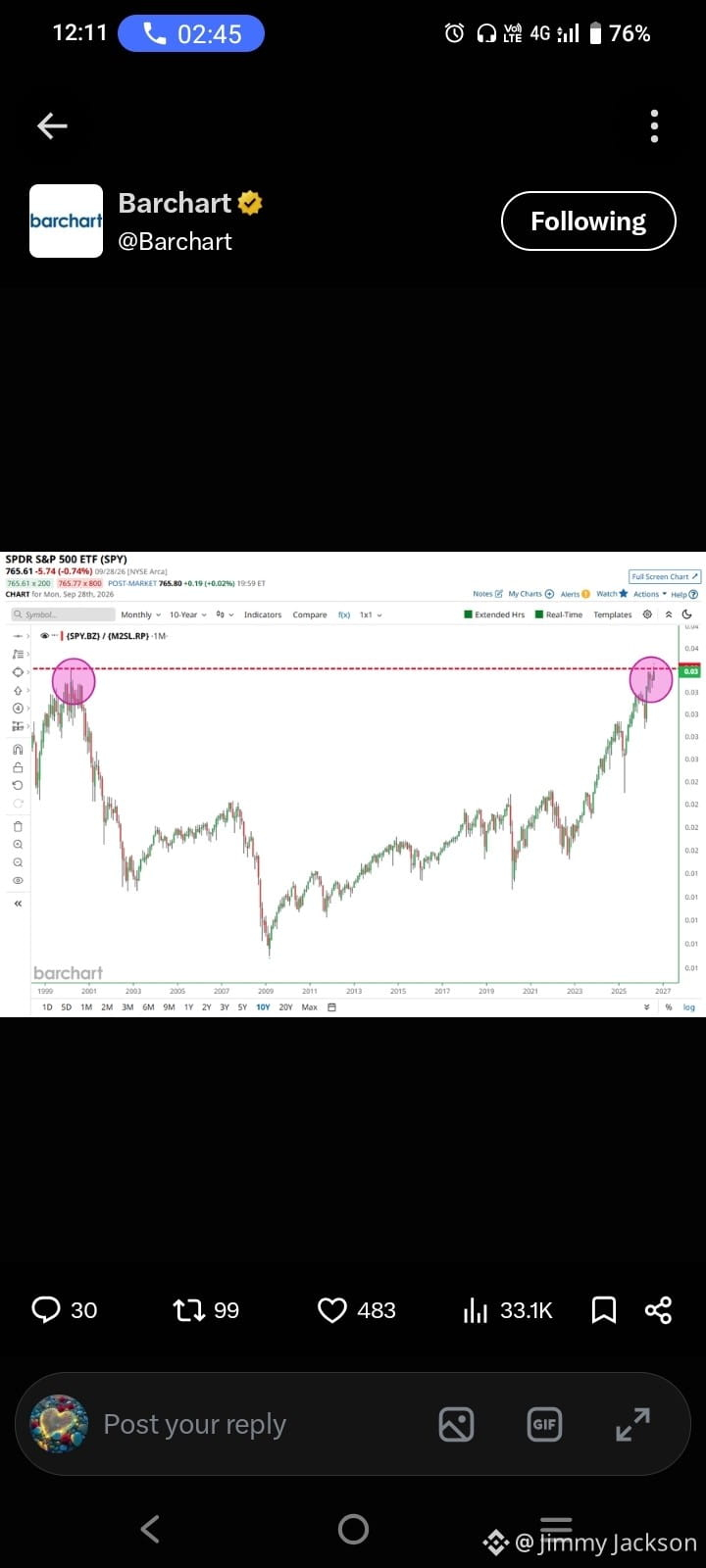
The S&P 500, when you measure it against the total amount of money sloshing around in the economy (that's M2 money supply for those keeping score), has now climbed past a threshold we last hit at the absolute peak of the Dot-Com Bubble. 📈
$SSV
{spot}(SSVUSDT)
Let that sink in for a second.
Back in 2000, this same ratio flashed a warning sign right before the Nasdaq cratered and investors lost trillions. Today, we're sitting above that level again. Now, before anyone panics, it's worth noting that this isn't a perfect timing tool. Markets can stay irrational far longer than anyone expects, and this ratio has been climbing for years thanks to aggressive money printing and a relentless bull run in equities. 💰
But here's the thing that makes this worth your attention: it tells us that stock prices have run way ahead of the actual money circulating in the system. In plain English? Valuations are stretched thin. When the gap between market cap and money supply gets this wide, history suggests the rubber band eventually snaps back.
$JILL.US
{stock_us}(JILL.US)
Does that mean a crash is guaranteed tomorrow? Absolutely not. But it does mean the margin of safety is razor thin, and smart investors should be paying attention to risk management right now, not chasing every rally like it's 1999. 🧠
Stay sharp out there.
Please don’t forget to like, follow, and share! 🩸 Thank you so much ❤️
#BitMineETHHoldingsTop6Million #StrategyAdds1666BTCHoldingsReach847666 #OpenAIDelaysGPT6.1OverSafetyIssues #HackersDrainOver12.4MXRPFromDCENTWallets #UKFCAWinsCourtOrderToRecover851400Pounds
🚨 The Stock Market Just Crossed a Line We Haven't Seen Since the Dot-Com Era 🚨
$BTC
Something big just happened, and most people aren't paying attention.
The S&P 500, when you measure it against the total amount of money sloshing around in the economy (that's M2 money supply for those keeping score), has now climbed past a threshold we last hit at the absolute peak of the Dot-Com Bubble. 📈
$SSV
Let that sink in for a second.
Back in 2000, this same ratio flashed a warning sign right before the Nasdaq cratered and investors lost trillions. Today, we're sitting above that level again. Now, before anyone panics, it's worth noting that this isn't a perfect timing tool. Markets can stay irrational far longer than anyone expects, and this ratio has been climbing for years thanks to aggressive money printing and a relentless bull run in equities. 💰
But here's the thing that makes this worth your attention: it tells us that stock prices have run way ahead of the actual money circulating in the system. In plain English? Valuations are stretched thin. When the gap between market cap and money supply gets this wide, history suggests the rubber band eventually snaps back.
$JILL.US
Does that mean a crash is guaranteed tomorrow? Absolutely not. But it does mean the margin of safety is razor thin, and smart investors should be paying attention to risk management right now, not chasing every rally like it's 1999. 🧠
Stay sharp out there.
Please don’t forget to like, follow, and share! 🩸 Thank you so much ❤️
#BitMineETHHoldingsTop6Million #StrategyAdds1666BTCHoldingsReach847666 #OpenAIDelaysGPT6.1OverSafetyIssues #HackersDrainOver12.4MXRPFromDCENTWallets #UKFCAWinsCourtOrderToRecover851400Pounds
$BTC
Something big just happened, and most people aren't paying attention.
The S&P 500, when you measure it against the total amount of money sloshing around in the economy (that's M2 money supply for those keeping score), has now climbed past a threshold we last hit at the absolute peak of the Dot-Com Bubble. 📈
$SSV
Let that sink in for a second.
Back in 2000, this same ratio flashed a warning sign right before the Nasdaq cratered and investors lost trillions. Today, we're sitting above that level again. Now, before anyone panics, it's worth noting that this isn't a perfect timing tool. Markets can stay irrational far longer than anyone expects, and this ratio has been climbing for years thanks to aggressive money printing and a relentless bull run in equities. 💰
But here's the thing that makes this worth your attention: it tells us that stock prices have run way ahead of the actual money circulating in the system. In plain English? Valuations are stretched thin. When the gap between market cap and money supply gets this wide, history suggests the rubber band eventually snaps back.
$JILL.US
Does that mean a crash is guaranteed tomorrow? Absolutely not. But it does mean the margin of safety is razor thin, and smart investors should be paying attention to risk management right now, not chasing every rally like it's 1999. 🧠
Stay sharp out there.
Please don’t forget to like, follow, and share! 🩸 Thank you so much ❤️
#BitMineETHHoldingsTop6Million #StrategyAdds1666BTCHoldingsReach847666 #OpenAIDelaysGPT6.1OverSafetyIssues #HackersDrainOver12.4MXRPFromDCENTWallets #UKFCAWinsCourtOrderToRecover851400Pounds
117
🍽️ Trump Sets the Table for Anthropic’s CEO
President Trump is reportedly hosting Dario Amodei, the chief executive of Anthropic, for a private dinner at the White House this Sunday. It’ll be the first time the two sit down one-on-one. 🏛️
$TRUMP
The invitation came straight from Trump himself, according to the report, after Amodei had to skip last week’s state dinner because of a scheduling conflict. So rather than let the connection slip, Trump extended a more intimate offer—just the two of them, no crowd. 🤝
$GIGGLE
{spot}(GIGGLEUSDT)
That detail alone says something. In Washington, a private dinner isn’t just dinner. It’s a signal. And with AI policy moving fast—safety standards, compute rules, government contracts—having the president’s ear matters. Anthropic has spent years positioning itself as the safety-first AI lab, so a direct line to the White House could shape how those conversations unfold. 🧠
$CC
{future}(CCUSDT)
No word yet on the menu, but the stakes are definitely on it. 🍷
Please don’t forget to like, follow, and share! 🩸 Thank you so much ❤️
#ChainlinkLaunchesCCIP2WithEnterpriseVerification #QNTFallsOver40%FromMorningHigh #KospiFalls2.7%SamsungSKHynixDropOver5%
🍽️ Trump Sets the Table for Anthropic’s CEO
President Trump is reportedly hosting Dario Amodei, the chief executive of Anthropic, for a private dinner at the White House this Sunday. It’ll be the first time the two sit down one-on-one. 🏛️
$TRUMP
The invitation came straight from Trump himself, according to the report, after Amodei had to skip last week’s state dinner because of a scheduling conflict. So rather than let the connection slip, Trump extended a more intimate offer—just the two of them, no crowd. 🤝
$GIGGLE
That detail alone says something. In Washington, a private dinner isn’t just dinner. It’s a signal. And with AI policy moving fast—safety standards, compute rules, government contracts—having the president’s ear matters. Anthropic has spent years positioning itself as the safety-first AI lab, so a direct line to the White House could shape how those conversations unfold. 🧠
$CC
No word yet on the menu, but the stakes are definitely on it. 🍷
Please don’t forget to like, follow, and share! 🩸 Thank you so much ❤️
#ChainlinkLaunchesCCIP2WithEnterpriseVerification #QNTFallsOver40%FromMorningHigh #KospiFalls2.7%SamsungSKHynixDropOver5%
President Trump is reportedly hosting Dario Amodei, the chief executive of Anthropic, for a private dinner at the White House this Sunday. It’ll be the first time the two sit down one-on-one. 🏛️
$TRUMP
The invitation came straight from Trump himself, according to the report, after Amodei had to skip last week’s state dinner because of a scheduling conflict. So rather than let the connection slip, Trump extended a more intimate offer—just the two of them, no crowd. 🤝
$GIGGLE
That detail alone says something. In Washington, a private dinner isn’t just dinner. It’s a signal. And with AI policy moving fast—safety standards, compute rules, government contracts—having the president’s ear matters. Anthropic has spent years positioning itself as the safety-first AI lab, so a direct line to the White House could shape how those conversations unfold. 🧠
$CC
No word yet on the menu, but the stakes are definitely on it. 🍷
Please don’t forget to like, follow, and share! 🩸 Thank you so much ❤️
#ChainlinkLaunchesCCIP2WithEnterpriseVerification #QNTFallsOver40%FromMorningHigh #KospiFalls2.7%SamsungSKHynixDropOver5%

1
829
🚀 PUMP/USDT Market Analysis: The Bulls Are Back!
$PUMP
{spot}(PUMPUSDT)
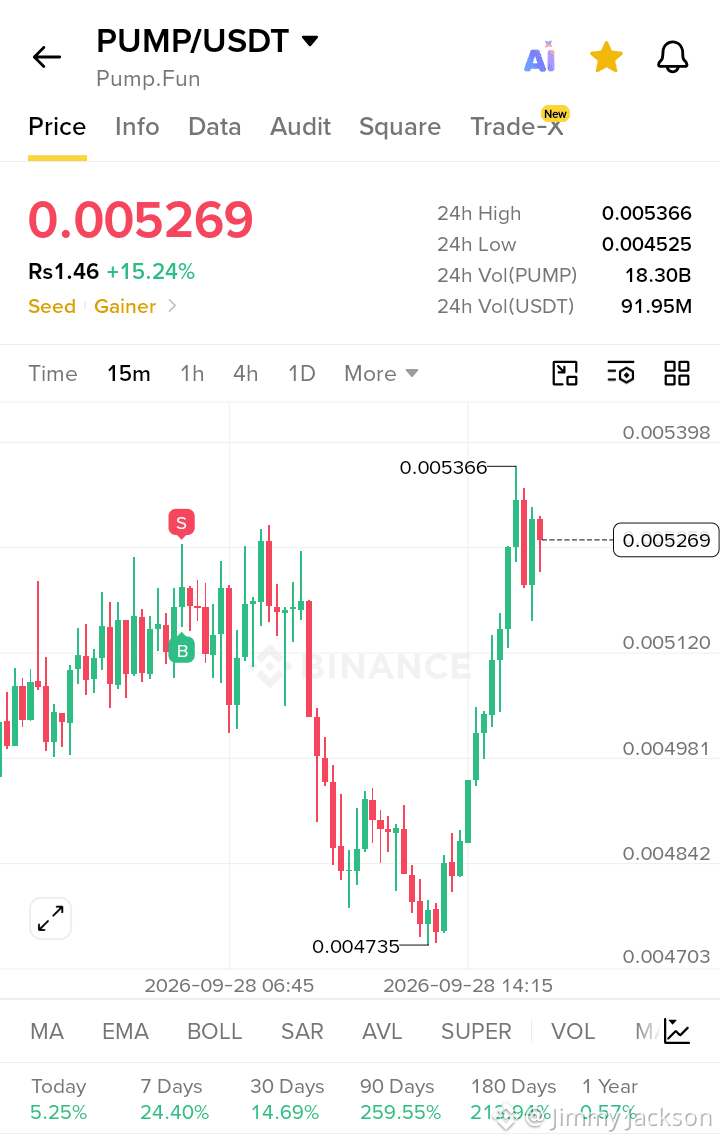
The market is witnessing a massive resurgence in PUMP/USDT, currently trading at $0.005269 up a stunning +15.24%*l in the last 24 hours. After a sharp correction to $0.004735, the asset has staged a V-shaped recovery, printing a local high of $0.005366. Here is a deep dive into why this pump is happening.
1. On-Chain & Capital Inflows
Whale accumulation has been the primary catalyst. On-chain data reveals large wallets have been aggressively accumulating during the recent dip, absorbing selling pressure. While the ETF narrative typically impacts major assets, the broader liquidity rotation into high-cap beta plays like Pump.Fun is evident. The 24h volume speaks volumes: 91.95M USDT in volume paired with 18.30B PUMP tokens traded, indicating massive capital inflow and high liquidity.
2. Technical Breakout & Key Levels
Technically, the chart shows a clear breakout from consolidation. The price has reclaimed the $0.005120 resistance level, turning it into support.
· Resistance: The immediate hurdle is the 24h high at $0.005366. A clean break above this could trigger a run toward $0.005500.
· Support: The critical support zone is now established at $0.004981 - $0.005120. As long as the price holds above this range, the bullish structure remains intact.
3. Derivatives & Short Liquidations
The rapid vertical move has trapped short sellers. The surge from $0.0047 to $0.0053 likely triggered a cascade of short liquidations, forcing bears to buy back at market price. This "short squeeze" adds rocket fuel to the rally. With the 7-day gain at +24.40%, momentum traders are piling in.
🎯 Key Targets:
· Upside: $0.005366 ➡️ $0.005500
· Downside Support: $0.005120
Please don’t forget to like, follow, and share! 🩸 Thank you so much ❤️
#ChainlinkLaunchesCCIP2WithEnterpriseVerification #QNTFallsOver40%FromMorningHigh #KospiFalls2.7%SamsungSKHynixDropOver5%
🚀 PUMP/USDT Market Analysis: The Bulls Are Back!
$PUMP
The market is witnessing a massive resurgence in PUMP/USDT, currently trading at $0.005269 up a stunning +15.24%*l in the last 24 hours. After a sharp correction to $0.004735, the asset has staged a V-shaped recovery, printing a local high of $0.005366. Here is a deep dive into why this pump is happening.
1. On-Chain & Capital Inflows
Whale accumulation has been the primary catalyst. On-chain data reveals large wallets have been aggressively accumulating during the recent dip, absorbing selling pressure. While the ETF narrative typically impacts major assets, the broader liquidity rotation into high-cap beta plays like Pump.Fun is evident. The 24h volume speaks volumes: 91.95M USDT in volume paired with 18.30B PUMP tokens traded, indicating massive capital inflow and high liquidity.
2. Technical Breakout & Key Levels
Technically, the chart shows a clear breakout from consolidation. The price has reclaimed the $0.005120 resistance level, turning it into support.
· Resistance: The immediate hurdle is the 24h high at $0.005366. A clean break above this could trigger a run toward $0.005500.
· Support: The critical support zone is now established at $0.004981 - $0.005120. As long as the price holds above this range, the bullish structure remains intact.
3. Derivatives & Short Liquidations
The rapid vertical move has trapped short sellers. The surge from $0.0047 to $0.0053 likely triggered a cascade of short liquidations, forcing bears to buy back at market price. This "short squeeze" adds rocket fuel to the rally. With the 7-day gain at +24.40%, momentum traders are piling in.
🎯 Key Targets:
· Upside: $0.005366 ➡️ $0.005500
· Downside Support: $0.005120
Please don’t forget to like, follow, and share! 🩸 Thank you so much ❤️
#ChainlinkLaunchesCCIP2WithEnterpriseVerification #QNTFallsOver40%FromMorningHigh #KospiFalls2.7%SamsungSKHynixDropOver5%
$PUMP
The market is witnessing a massive resurgence in PUMP/USDT, currently trading at $0.005269 up a stunning +15.24%*l in the last 24 hours. After a sharp correction to $0.004735, the asset has staged a V-shaped recovery, printing a local high of $0.005366. Here is a deep dive into why this pump is happening.
1. On-Chain & Capital Inflows
Whale accumulation has been the primary catalyst. On-chain data reveals large wallets have been aggressively accumulating during the recent dip, absorbing selling pressure. While the ETF narrative typically impacts major assets, the broader liquidity rotation into high-cap beta plays like Pump.Fun is evident. The 24h volume speaks volumes: 91.95M USDT in volume paired with 18.30B PUMP tokens traded, indicating massive capital inflow and high liquidity.
2. Technical Breakout & Key Levels
Technically, the chart shows a clear breakout from consolidation. The price has reclaimed the $0.005120 resistance level, turning it into support.
· Resistance: The immediate hurdle is the 24h high at $0.005366. A clean break above this could trigger a run toward $0.005500.
· Support: The critical support zone is now established at $0.004981 - $0.005120. As long as the price holds above this range, the bullish structure remains intact.
3. Derivatives & Short Liquidations
The rapid vertical move has trapped short sellers. The surge from $0.0047 to $0.0053 likely triggered a cascade of short liquidations, forcing bears to buy back at market price. This "short squeeze" adds rocket fuel to the rally. With the 7-day gain at +24.40%, momentum traders are piling in.
🎯 Key Targets:
· Upside: $0.005366 ➡️ $0.005500
· Downside Support: $0.005120
Please don’t forget to like, follow, and share! 🩸 Thank you so much ❤️
#ChainlinkLaunchesCCIP2WithEnterpriseVerification #QNTFallsOver40%FromMorningHigh #KospiFalls2.7%SamsungSKHynixDropOver5%
1
112
🚨 TOP 100 COINS: THE LAST 90 DAYS WERE NOT LED BY BITCOIN
$BTC
{spot}(BTCUSDT)
If you assumed Bitcoin was the strongest performer over the past 90 days, think again. The real fireworks have been going off in the altcoin market, and once you see the numbers, it becomes obvious. 🚀
$PONS absolutely obliterated the leaderboard with a gain of over 6,300%. That's not a typo. It shows just how explosive some of these altcoin setups have been when momentum truly takes over.
Then there's $ZEC, up more than 330%, and this one deserves special attention. We've been telling you for a while to keep ZEC on your radar and to consider accumulating it for spot. Now the results speak for themselves, and ZEC has cemented its place among the top performers on this entire list. 🔥
$ARB
{spot}(ARBUSDT)
Plenty of other names also delivered serious returns over the past three months, including $ARB, $NEAR, $LINK, $SUI, $UNI, and $RAY. Each of them rewarded patience and early positioning.
Here's the bigger lesson: crypto never runs out of opportunities. There will always be another strong setup, another breakout, and another project quietly building momentum before the crowd catches on. 💡
$ADA
{spot}(ADAUSDT)
So if you missed some of these moves, don't panic and don't chase them emotionally. That's how people get burned. Instead, stay disciplined. We'll keep hunting for strong coins early and sharing the ones we believe have real potential in the weeks and months ahead. 🎯
Please don’t forget to like, follow, and share! 🩸 Thank you so much ❤️
#FedProposesPaymentStablecoinRules #ChinaMayLetAlibabaByteDanceBuyNvidiaChips #SKoreaFSCConsidersVirtualAssetMarketMaker #ChinaIndustrialProfitGrowthSlowsFourthMonth
🚨 TOP 100 COINS: THE LAST 90 DAYS WERE NOT LED BY BITCOIN
$BTC
If you assumed Bitcoin was the strongest performer over the past 90 days, think again. The real fireworks have been going off in the altcoin market, and once you see the numbers, it becomes obvious. 🚀
$PONS absolutely obliterated the leaderboard with a gain of over 6,300%. That's not a typo. It shows just how explosive some of these altcoin setups have been when momentum truly takes over.
Then there's $ZEC, up more than 330%, and this one deserves special attention. We've been telling you for a while to keep ZEC on your radar and to consider accumulating it for spot. Now the results speak for themselves, and ZEC has cemented its place among the top performers on this entire list. 🔥
$ARB
Plenty of other names also delivered serious returns over the past three months, including $ARB , $NEAR, $LINK, $SUI, $UNI, and $RAY. Each of them rewarded patience and early positioning.
Here's the bigger lesson: crypto never runs out of opportunities. There will always be another strong setup, another breakout, and another project quietly building momentum before the crowd catches on. 💡
$ADA
So if you missed some of these moves, don't panic and don't chase them emotionally. That's how people get burned. Instead, stay disciplined. We'll keep hunting for strong coins early and sharing the ones we believe have real potential in the weeks and months ahead. 🎯
Please don’t forget to like, follow, and share! 🩸 Thank you so much ❤️
#FedProposesPaymentStablecoinRules #ChinaMayLetAlibabaByteDanceBuyNvidiaChips #SKoreaFSCConsidersVirtualAssetMarketMaker #ChinaIndustrialProfitGrowthSlowsFourthMonth
$BTC
If you assumed Bitcoin was the strongest performer over the past 90 days, think again. The real fireworks have been going off in the altcoin market, and once you see the numbers, it becomes obvious. 🚀
$PONS absolutely obliterated the leaderboard with a gain of over 6,300%. That's not a typo. It shows just how explosive some of these altcoin setups have been when momentum truly takes over.
Then there's $ZEC, up more than 330%, and this one deserves special attention. We've been telling you for a while to keep ZEC on your radar and to consider accumulating it for spot. Now the results speak for themselves, and ZEC has cemented its place among the top performers on this entire list. 🔥
$ARB
Plenty of other names also delivered serious returns over the past three months, including $ARB , $NEAR, $LINK, $SUI, $UNI, and $RAY. Each of them rewarded patience and early positioning.
Here's the bigger lesson: crypto never runs out of opportunities. There will always be another strong setup, another breakout, and another project quietly building momentum before the crowd catches on. 💡
$ADA
So if you missed some of these moves, don't panic and don't chase them emotionally. That's how people get burned. Instead, stay disciplined. We'll keep hunting for strong coins early and sharing the ones we believe have real potential in the weeks and months ahead. 🎯
Please don’t forget to like, follow, and share! 🩸 Thank you so much ❤️
#FedProposesPaymentStablecoinRules #ChinaMayLetAlibabaByteDanceBuyNvidiaChips #SKoreaFSCConsidersVirtualAssetMarketMaker #ChinaIndustrialProfitGrowthSlowsFourthMonth
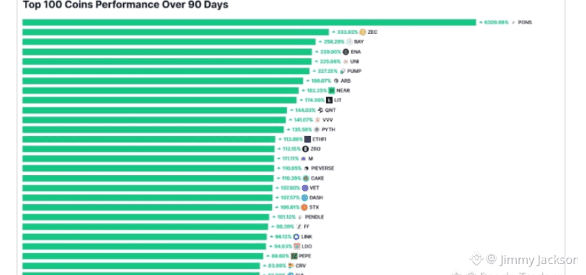
1
581
🚨 JUST IN: U.S. and China Push Trade Truce Deadline to January 2027 🇺🇸🇨🇳
Washington and Beijing have agreed to stretch their current trade ceasefire by another two months, moving the cutoff date from November 10, 2026 to January 10, 2027. 🤝
$BNB
{spot}(BNBUSDT)
According to China's Ministry of Commerce, keeping this truce framework intact matters for economic stability — it gives businesses on both sides a more predictable playing field for trade and commercial activity. 🏛️
So what does the extra time actually buy? Negotiators now have more room to review whether earlier commitments are being honored — everything from Chinese purchases of U.S. farm products to the steady flow of critical industrial materials. 📦🌾
$GRT
{spot}(GRTUSDT)
Here's my read: tacking on two months sidesteps an immediate tariff clash and throws global supply chains a short-term lifeline. But let's be honest — a window this narrow tells you the talks are still on shaky ground. For macro markets, this looks less like a real resolution and more like a tactical pause. The underlying tensions haven't gone anywhere; they've just been postponed. ⏳
$FORM
{spot}(FORMUSDT)
Please don’t forget to like, follow, and share! 🩸 Thank you so much ❤️
#FedProposesPaymentStablecoinRules #ChinaMayLetAlibabaByteDanceBuyNvidiaChips #SKoreaFSCConsidersVirtualAssetMarketMaker #SKoreaFSCConsidersVirtualAssetMarketMaker
🚨 JUST IN: U.S. and China Push Trade Truce Deadline to January 2027 🇺🇸🇨🇳
Washington and Beijing have agreed to stretch their current trade ceasefire by another two months, moving the cutoff date from November 10, 2026 to January 10, 2027. 🤝
$BNB
According to China's Ministry of Commerce, keeping this truce framework intact matters for economic stability — it gives businesses on both sides a more predictable playing field for trade and commercial activity. 🏛️
So what does the extra time actually buy? Negotiators now have more room to review whether earlier commitments are being honored — everything from Chinese purchases of U.S. farm products to the steady flow of critical industrial materials. 📦🌾
$GRT
Here's my read: tacking on two months sidesteps an immediate tariff clash and throws global supply chains a short-term lifeline. But let's be honest — a window this narrow tells you the talks are still on shaky ground. For macro markets, this looks less like a real resolution and more like a tactical pause. The underlying tensions haven't gone anywhere; they've just been postponed. ⏳
$FORM
Please don’t forget to like, follow, and share! 🩸 Thank you so much ❤️
#FedProposesPaymentStablecoinRules #ChinaMayLetAlibabaByteDanceBuyNvidiaChips #SKoreaFSCConsidersVirtualAssetMarketMaker #SKoreaFSCConsidersVirtualAssetMarketMaker
Washington and Beijing have agreed to stretch their current trade ceasefire by another two months, moving the cutoff date from November 10, 2026 to January 10, 2027. 🤝
$BNB
According to China's Ministry of Commerce, keeping this truce framework intact matters for economic stability — it gives businesses on both sides a more predictable playing field for trade and commercial activity. 🏛️
So what does the extra time actually buy? Negotiators now have more room to review whether earlier commitments are being honored — everything from Chinese purchases of U.S. farm products to the steady flow of critical industrial materials. 📦🌾
$GRT
Here's my read: tacking on two months sidesteps an immediate tariff clash and throws global supply chains a short-term lifeline. But let's be honest — a window this narrow tells you the talks are still on shaky ground. For macro markets, this looks less like a real resolution and more like a tactical pause. The underlying tensions haven't gone anywhere; they've just been postponed. ⏳
$FORM
Please don’t forget to like, follow, and share! 🩸 Thank you so much ❤️
#FedProposesPaymentStablecoinRules #ChinaMayLetAlibabaByteDanceBuyNvidiaChips #SKoreaFSCConsidersVirtualAssetMarketMaker #SKoreaFSCConsidersVirtualAssetMarketMaker

1
465
🚀 Zcash Co-Founder Bets Big: Is $5,000 ZEC Actually Possible This Year?
$ZEC
{spot}(ZECUSDT)
Eli Ben-Sasson, one of the co-founders behind Zcash, has made a bold prediction—he believes $ZEC could climb all the way to $5,000 before the end of 2026. That's not a small call, especially for a privacy-focused coin that has spent years flying under the radar while the rest of the market chased hype. 👀
What's interesting is the context around this forecast. Whales have been quietly loading up on ZEC, and public interest has clearly picked up too. But according to the team, the recent price swings aren't some manufactured pump—they're organic. The reasoning? There's a lag between how much accumulation is actually happening behind the scenes and how the broader market is pricing it in. In other words, the smart money may already be positioned, while everyone else is still catching up. 🐋
That disconnect has raised eyebrows among large investors, who are now asking a fair question: why exactly is liquidity flowing into a privacy coin right now? Privacy narratives tend to resurface when people start worrying about surveillance, regulation, or simply wanting financial sovereignty back. Zcash sits right at that intersection, which could explain the renewed attention. 🔍
$ADA
{spot}(ADAUSDT)
So the real question is whether $5K is realistic this year. It's an aggressive target, no doubt—one that would require sustained demand, continued whale accumulation, and a broader shift in how the market values privacy. But stranger things have happened in crypto, and when a co-founder puts a number like that out there, people listen. 📈
Please don’t forget to like, follow, and share! 🩸 Thank you so much ❤️
#FedProposesPaymentStablecoinRules #ChinaMayLetAlibabaByteDanceBuyNvidiaChips #SKoreaFSCConsidersVirtualAssetMarketMaker
🚀 Zcash Co-Founder Bets Big: Is $5,000 ZEC Actually Possible This Year?
$ZEC
Eli Ben-Sasson, one of the co-founders behind Zcash, has made a bold prediction—he believes $ZEC could climb all the way to $5,000 before the end of 2026. That's not a small call, especially for a privacy-focused coin that has spent years flying under the radar while the rest of the market chased hype. 👀
What's interesting is the context around this forecast. Whales have been quietly loading up on ZEC, and public interest has clearly picked up too. But according to the team, the recent price swings aren't some manufactured pump—they're organic. The reasoning? There's a lag between how much accumulation is actually happening behind the scenes and how the broader market is pricing it in. In other words, the smart money may already be positioned, while everyone else is still catching up. 🐋
That disconnect has raised eyebrows among large investors, who are now asking a fair question: why exactly is liquidity flowing into a privacy coin right now? Privacy narratives tend to resurface when people start worrying about surveillance, regulation, or simply wanting financial sovereignty back. Zcash sits right at that intersection, which could explain the renewed attention. 🔍
$ADA
So the real question is whether $5K is realistic this year. It's an aggressive target, no doubt—one that would require sustained demand, continued whale accumulation, and a broader shift in how the market values privacy. But stranger things have happened in crypto, and when a co-founder puts a number like that out there, people listen. 📈
Please don’t forget to like, follow, and share! 🩸 Thank you so much ❤️
#FedProposesPaymentStablecoinRules #ChinaMayLetAlibabaByteDanceBuyNvidiaChips #SKoreaFSCConsidersVirtualAssetMarketMaker
$ZEC
Eli Ben-Sasson, one of the co-founders behind Zcash, has made a bold prediction—he believes $ZEC could climb all the way to $5,000 before the end of 2026. That's not a small call, especially for a privacy-focused coin that has spent years flying under the radar while the rest of the market chased hype. 👀
What's interesting is the context around this forecast. Whales have been quietly loading up on ZEC, and public interest has clearly picked up too. But according to the team, the recent price swings aren't some manufactured pump—they're organic. The reasoning? There's a lag between how much accumulation is actually happening behind the scenes and how the broader market is pricing it in. In other words, the smart money may already be positioned, while everyone else is still catching up. 🐋
That disconnect has raised eyebrows among large investors, who are now asking a fair question: why exactly is liquidity flowing into a privacy coin right now? Privacy narratives tend to resurface when people start worrying about surveillance, regulation, or simply wanting financial sovereignty back. Zcash sits right at that intersection, which could explain the renewed attention. 🔍
$ADA
So the real question is whether $5K is realistic this year. It's an aggressive target, no doubt—one that would require sustained demand, continued whale accumulation, and a broader shift in how the market values privacy. But stranger things have happened in crypto, and when a co-founder puts a number like that out there, people listen. 📈
Please don’t forget to like, follow, and share! 🩸 Thank you so much ❤️
#FedProposesPaymentStablecoinRules #ChinaMayLetAlibabaByteDanceBuyNvidiaChips #SKoreaFSCConsidersVirtualAssetMarketMaker
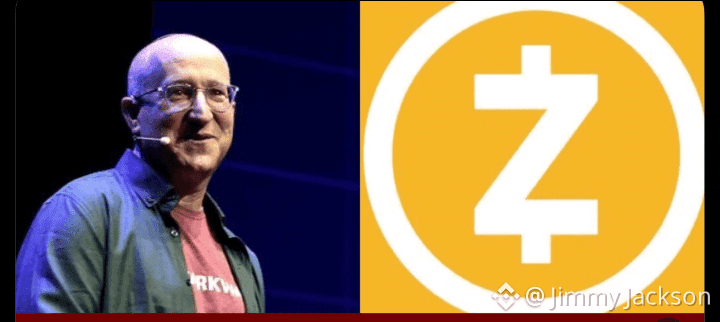
1
285
Log in to explore more content
Join global crypto users on Binance Square
⚡️ Get latest and useful information about crypto.
💬 Trusted by the world’s largest crypto exchange.
👍 Discover real insights from verified creators.
Email / Phone number