

暴富暴富2028
79 Posts

暴富暴富2028
Report
Block User
有生之年,比特币破100万刀
5 Following
23 Followers
51 Liked
Posts
·
--
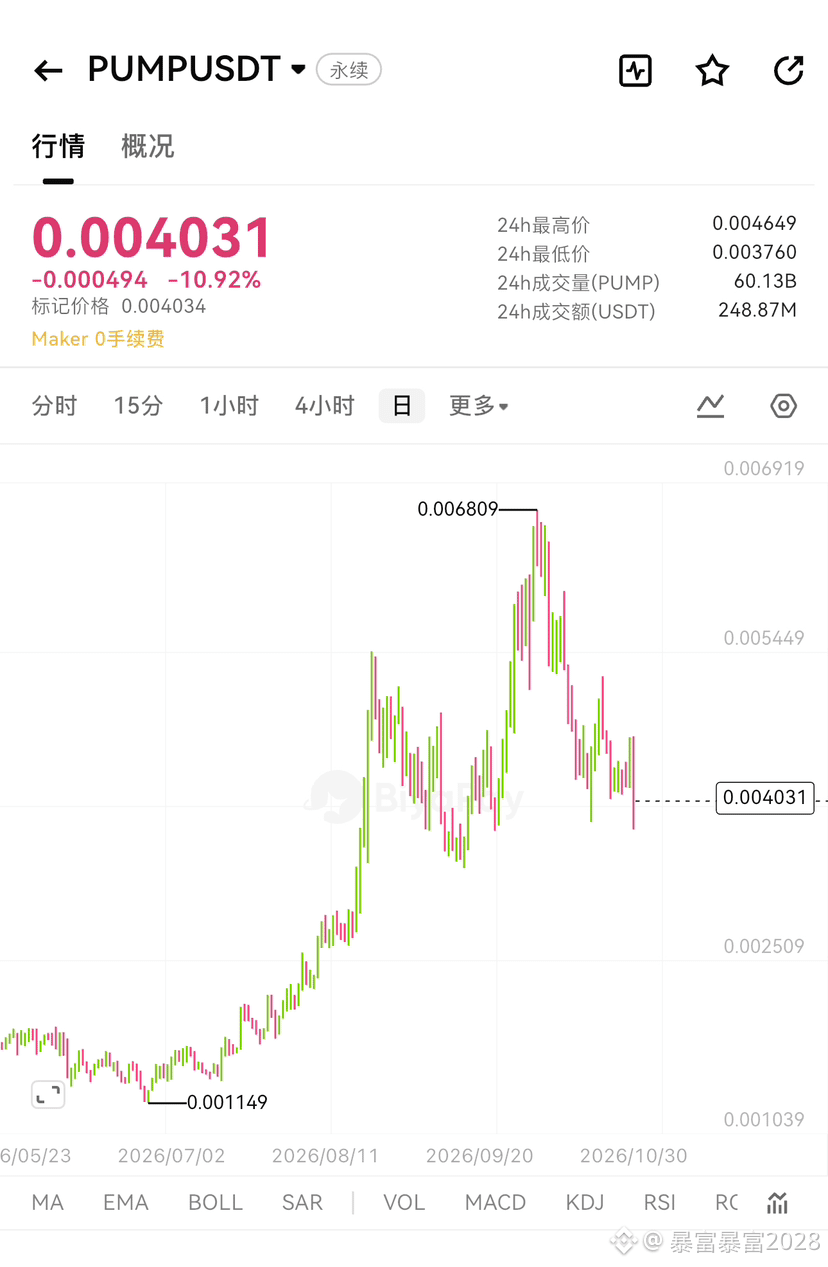
PUMP is a high-volatility small-cap example: pump.fun’s model relies on “revenue-funded buybacks and burns.” The cumulative burn share is not low, but daily buyback funds have recently shrunk significantly and platform daily revenue has fallen. Combined with expectations that 825 billion tokens will be unlocked and shift to linear releases, its valuation anchor is unstable. On Binance event days, high-beta small coins take the hardest wicks.
Structural view:
-Support: previous low / key weekly zone / previous high-volume area
-Resistance: rebound into breakdown zone / short-term EMA / lower edge of previous consolidation
-Volume: high-volume declines and low-volume rebounds = a double whammy from leverage and unlock expectations
-Relative strength: PUMP/SOL making new lows = platform tokens losing favor; PUMP green while BTC is red = retail speculation
PUMP traders love “buying the dip on the buyback narrative,” but bottoms are identified, not guessed. Don’t just keep PUMP/USDT open when watching the market. You can put PUMP, SOL, WIF, and DOGE side by side. For a cross-market view, check the latest cryptocurrency prices on BiyaPay, invest in global assets using USDT, and buy products such as U.S. and Hong Kong stocks and forex. Compare memes and platform tokens on one screen to see which stabilizes first.
Strategy:
-If already holding: reduce on a rebound if price fails to reclaim resistance; don’t stubbornly hold through the unlock period
-If flat: don’t catch a falling knife; wait for declining volume near the previous low, a lower wick, and relative strength to stop falling
-If the previous low breaks on high volume: don’t average down; small coins are especially dangerous to keep buying as they fall
-Position size: keep PUMP below 5%
For the medium term, PUMP depends on platform revenue and buyback execution, but today is an event-driven cooldown day. Cash beats PUMP. #BiyaPay #Crypto leveraged positions: $1.5 billion liquidated in 24 hours
1
371
·
--
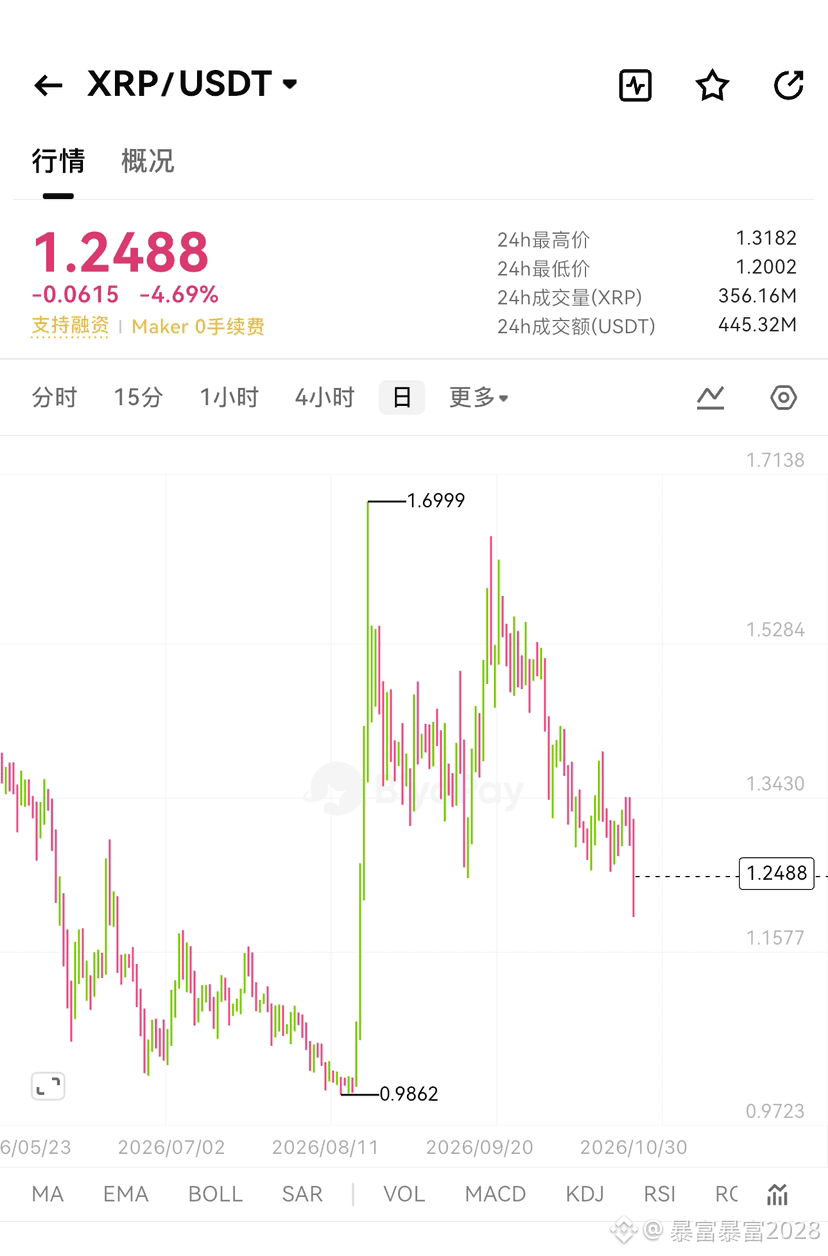
XRP bulls and bears are locked in a tug-of-war: price at 1.20–1.28. Binance is seeing outflows across multiple chains, including XRP-chain assets, adding short-term selling pressure and weighing on sentiment. But as a payment coin, XRP is relatively resilient amid a “strong dollar + cross-border settlement” backdrop, though it has less upside volatility than ETH/SOL.
Structure:
-Support: 1.20 (psychological) / 1.11 (breakdown zone) / 1.00
-Resistance: 1.30 (psychological) / 1.38 / 1.43
-Larger timeframe: Payments + custody + institutional adoption are slow-moving factors
-Shorter timeframe: If Bitcoin can’t get past 80.4k, XRP is unlikely to rally on its own; holding 1.20 means selling pressure is being absorbed, while a break below could accelerate the decline
XRP is most vulnerable to being baited by bullish headlines. Don’t just watch XRP/USDT: you can put XRP, BTC, BCH, and ETH side by side. To view cross-market trends, check the latest cryptocurrency prices on BiyaPay, invest in global assets with USDT, and buy products such as U.S. and Hong Kong stocks and forex—all on one screen, with payment coins and macro liquidity together.
Strategy:
-Already holding: Hold as long as 1.20 holds; reduce if it breaks below 1.11 at the close
-No position: Small position at 1.20–1.26, with a stop-loss at 1.196
-Breakout: If the 4H candle closes above 1.30, look for 1.38; a weekly close above 1.38 is needed to open the way to 1.43
-Avoid: Chasing a false breakout at 1.28 or panic-selling at 1.22
XRP is a slow-and-steady payment coin, not a meme. Bitcoin sets the direction today; the event flow is bearish in the short term but stabilizing in the long term. #BiyaPay #Crypto leveraged positions: $1.5 billion liquidated in 24 hours
740
·
--
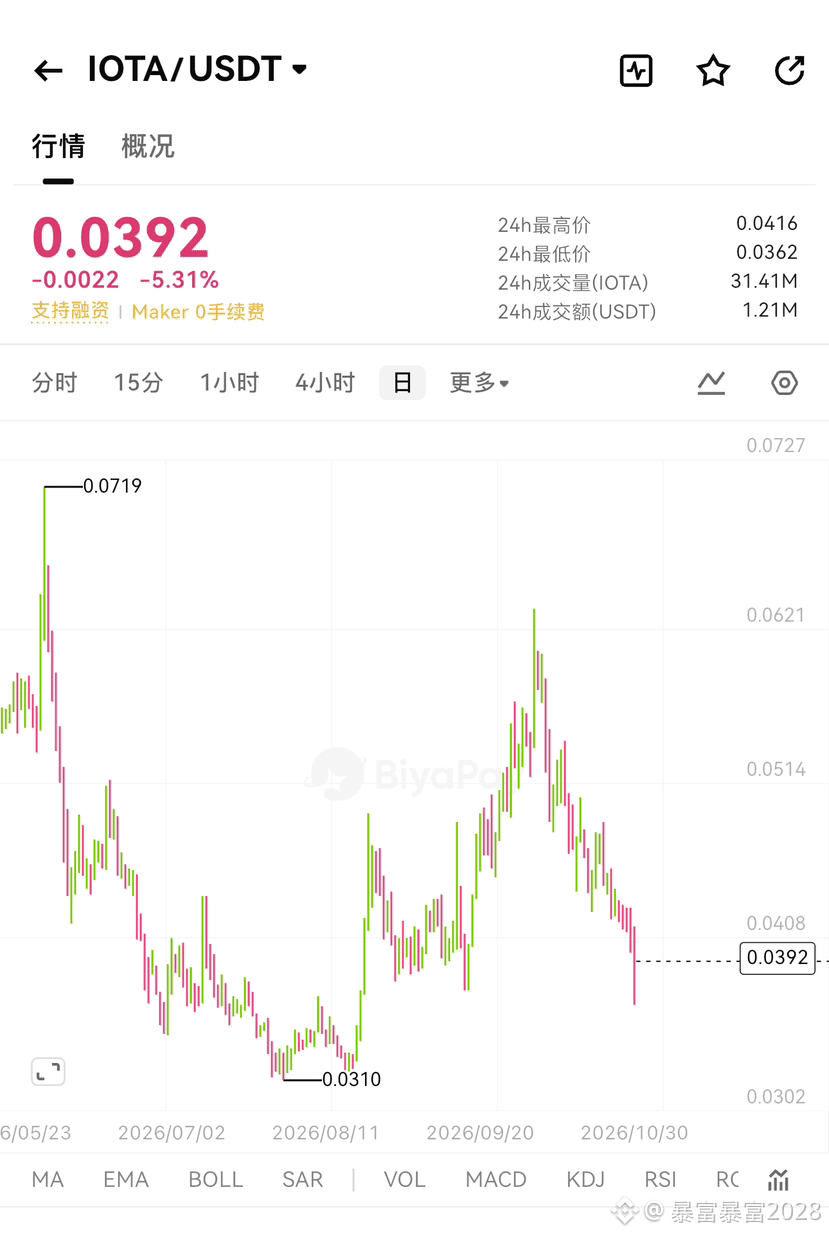
A veteran small-cap public-chain example: IOTA’s Tangle/DAG + IoT narrative remains intact in the medium term. The Rebased upgrade introduces Move + EVM compatibility, but the short-term price range is 0.045–0.05, trading volume is thin, and buying interest depends on BTC sentiment. On Binance event days, low-liquidity coins get hit hardest by sharp wicks.
Structural outlook:
-Support: 0.043 (previous low zone) / 0.040 / 0.038
-Resistance: 0.052 (short-term moving average) / 0.055 / 0.058
-Volume: high-volume declines and low-volume rebounds = liquidity drying up
-Relative strength: IOTA/BTC making new lows = small caps losing momentum; IOTA rising alone while BTC is down = retail speculation
IOTA traders love “buying the dip on the IoT narrative,” but bottoms are identified, not guessed. Don’t just watch IOTA/USDT. You can put IOTA, SOL, DOGE, and BTC together; for a cross-market view, check the latest cryptocurrency prices on BiyaPay, invest in global assets with USDT, and even buy products like US and Hong Kong stocks and forex. Compare small caps and major coins side by side to see which stabilizes first.
Strategy:
-If holding: if the rebound fails to reclaim 0.052, reduce your position first; don’t stubbornly hold through low liquidity
-If on the sidelines: don’t catch a falling knife; wait for declining volume near the previous low, a lower wick, and relative strength to stop falling
-If the previous low breaks on high volume: don’t average down; small coins are especially risky to keep buying as they fall
-Position sizing: keep IOTA below 3%
The medium-term outlook for IOTA depends on IoT adoption and the rollout of Rebased, but today is simply a day of fading sentiment. Cash is better than IOTA. #BiyaPay #Crypto leveraged positions: $1.5 billion liquidated in 24 hours
352
·
--
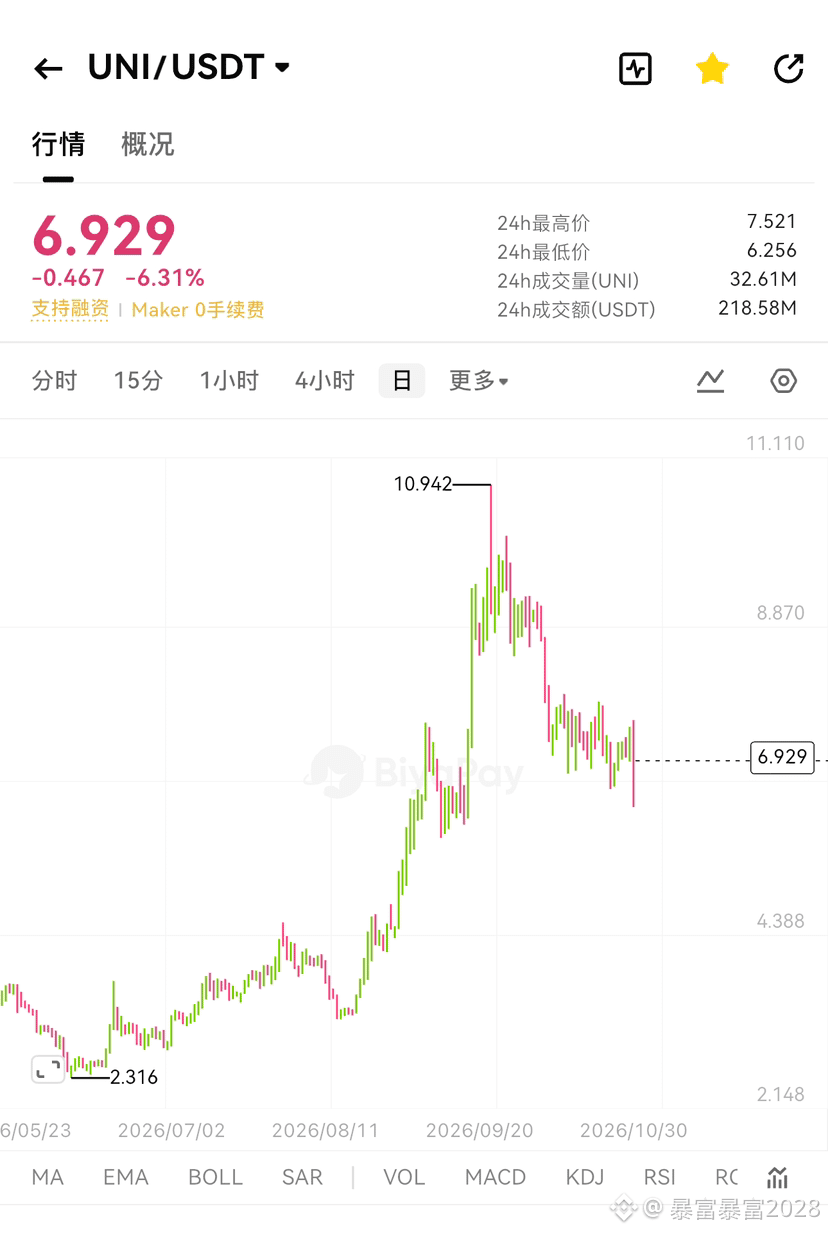
Uniswap is bleeding in the short term, but has a long-term narrative: Bitcoin fell below $77,000 and ETH below $2,230, while UNI failed to show any outperformance. But after the Binance hot wallet incident, Standard Chartered analysts explicitly said it could “accelerate the shift to DEXs and benefit UNI,” and the $100 target for 2030 may be too low.
Key levels:
-Support: 6.8 (psychological) / 6.5 / 6.2
-Resistance: 7.31 (previous close) / 7.6 / 8.0
-Structure: Price is below the short-term EMA; UNI/ETH not making new lows = DeFi is relatively resilient
-Catalyst: CEX trust crisis → self-custody and DEX trading volumes could benefit in the medium to long term, but first UNI has to weather short-term liquidations
Many people look at UNI only through UNI/USDT and assume that after a big drop, a rebound is inevitable. You should look at both UNI/BTC and UNI/ETH. For a fuller picture, check the latest crypto prices on BiyaPay, invest in global assets with USDT, and buy products like US and Hong Kong stocks and forex. Add UNI, ETH, AAVE, and SOL to your watchlist to compare side by side which stabilizes first: DeFi or L1s.
Strategy:
-If holding: Don’t sell everything unless 6.8 breaks; reduce your position if it closes below 6.5
-If out of the market: Take a small position at 6.8–7.0, with a stop-loss at 6.78
-Bulls: If it reclaims 7.31 on the 4-hour chart and volume returns, watch 7.6
-Avoid: Chasing at 7.2 or panic-selling at 6.9
For the medium-term outlook on UNI, watch DEX trading volumes and the fee switch; for today, focus on surviving—the narrative can be priced in later. #BiyaPay #Crypto leveraged positions: $1.5 billion liquidated in 24 hours
403
·
--
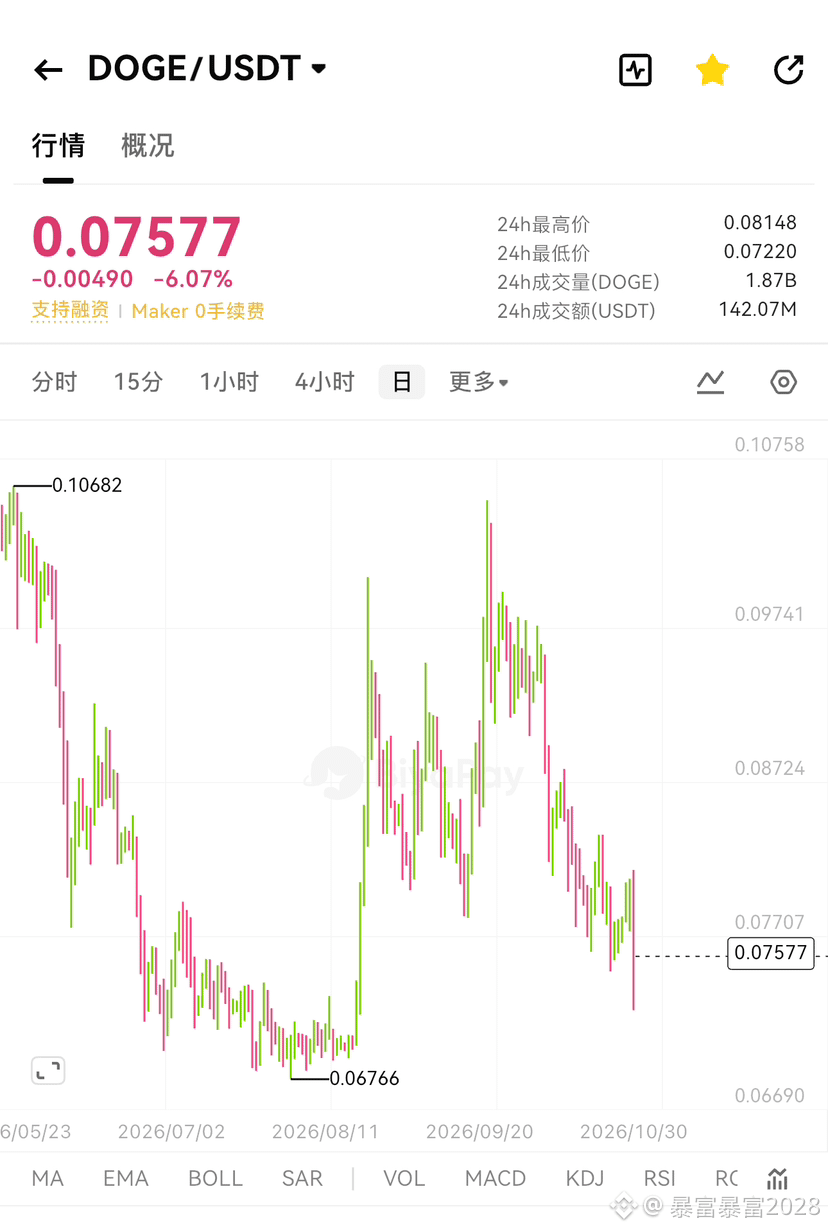
Dogecoin’s typical meme trade is fading: price 0.075–0.078, with no new fundamental catalysts; it’s purely driven by “BTC + US stocks + social media sentiment.” The Binance event triggered deleveraging across the market, with high-volatility assets getting flushed out first.
Structure:
-Support: 0.073 (previous low) / 0.070 / 0.066
-Resistance: 0.081 / 0.084 / 0.086
-Volume: high volume on the drop, low volume on the rebound = leverage fading
-Relative performance: DOGE/BTC making a new low = the meme sector is fading; DOGE in the green while BTC is in the red = retail traders cheering themselves on
Trading DOGE = sentiment × quote speed. Many people only track DOGE/USDT and can’t see moves across the meme sector as a whole. To get the full picture, you can check the latest cryptocurrency prices on BiyaPay and invest in global assets with USDT. You can also buy US and Hong Kong stocks, forex, and other products. Add DOGE, PEPE, WIF, SOL, and Nasdaq futures to your watchlist to compare sector strength on one screen.
Strategy:
-Don’t chase the upper wick at 0.080; if it pulls back to 0.075–0.077 and shows a lower wick, enter with a small position and set a stop-loss at 0.0725
-If it closes below 0.070: exit; don’t average down on meme coins
-Bulls: only look for 0.084 if it breaks above 0.081 on strong 15-minute volume
-Position size: keep DOGE below 5%
Don’t talk about DOGE’s long-term value; focus only on sentiment and the order book. Protect yourself first while the event is still unfolding. #BiyaPay #Crypto leveraged positions: $1.5 billion liquidated in 24 hours
241
·
--
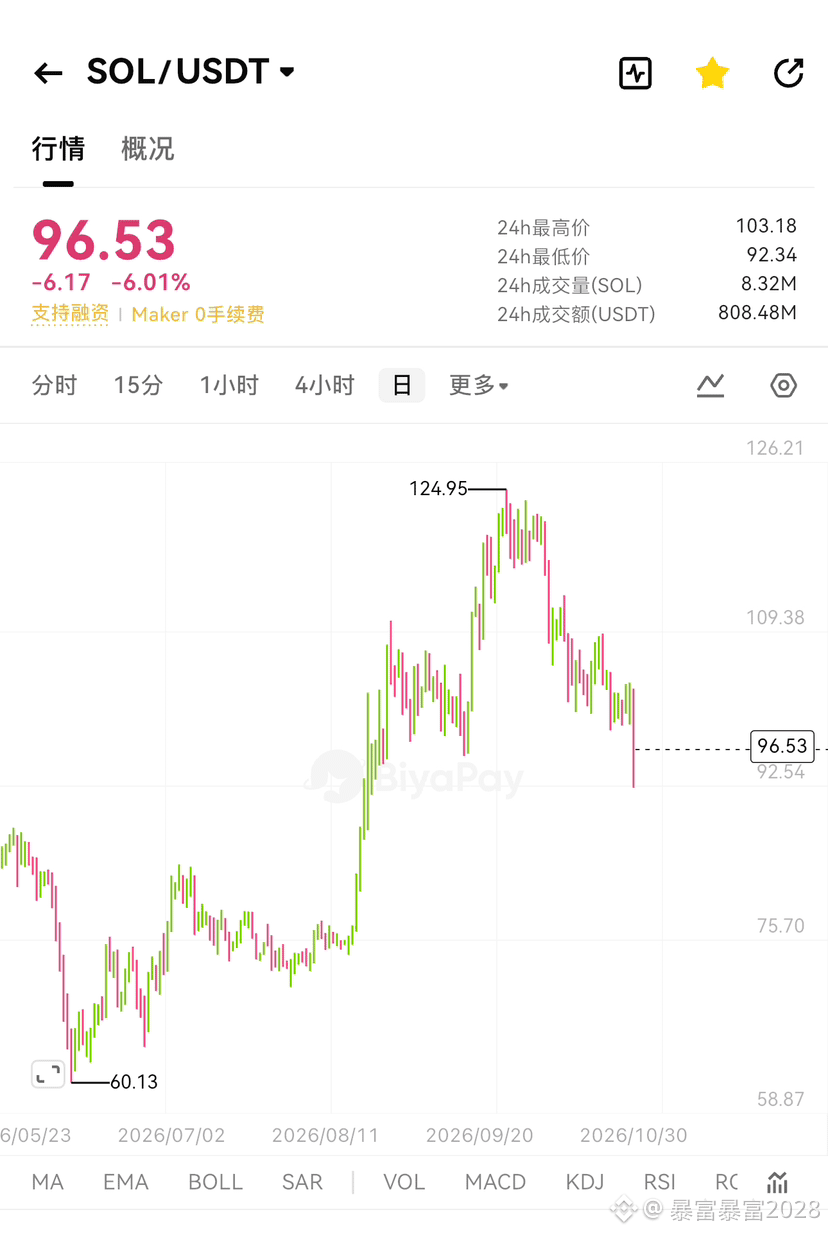
Solana’s typical high-beta selloff: down over 4% intraday, with the price back below 100; Binance’s multichain outflows include Solana assets, raising concerns about cross-chain liquidity erosion. The ecosystem, payments, and AI infrastructure remain intact in the medium term, but short-term price action is under pressure from both “events + macro.”
Structure:
-Support: 95 (psychological level) / 92 / 88
-Resistance: 104.7 (pivot) / 106.7 / 109.2
-Drivers: If BTC can’t hold 77k, SOL will test 95 first; only if BTC recovers to 80.4k should SOL target 104.7
-Pace: Any rebound depends on sentiment recovering, not independent capital flows
SOL’s biggest risk is “going all-in today because the weekly chart looks bullish.” Watch relative strength: if SOL/BTC doesn’t make a new low, capital is still flowing into public blockchains; if SOL is the only one in the green while BTC is down, liquidity is insufficient. You can track the latest cryptocurrency prices on BiyaPay alongside the broader market, invest in global assets using USDT, and buy products such as U.S. and Hong Kong stocks and forex. Putting SOL, NVDA, BTC, and DOGE side by side makes the AI + high-beta resonance clearest.
Strategy:
-Don’t chase a wick above 104; follow only if 15m volume expands and price holds above 104.7
-If it pulls back to 95–97 and forms a lower wick, enter with a small position; stop loss at 94.2
-If it closes below 92, exit long positions and wait for 88
-Position size ≤10%; don’t treat SOL like BTC
SOL’s medium-term story isn’t over, but today, follow the news rather than betting on a run to 110.#BiyaPay #Amazon down about 7% premarket
235
·
--
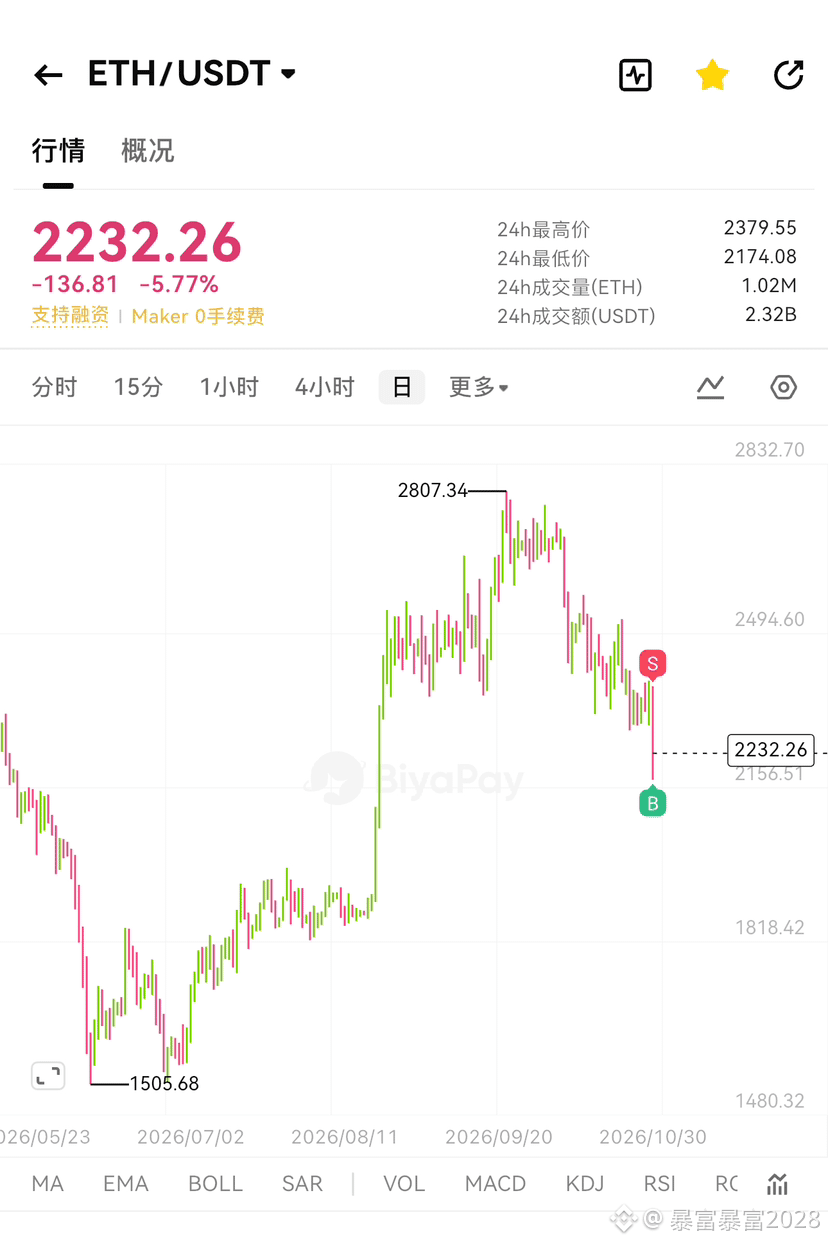
Ethereum is falling in the wake of an event-driven sell-off today: price 2233–2272, down 3.69%–nearly 6% over 24h, with the 50-day moving average far above. Binance hot wallets saw outflows of around 167,000 ETH (about 380–390 million), while SOL, XRP, UNI and others also saw transfers out, amplifying market panic.
Key levels:
-Support: 2,230 (today’s low) / 2,150 (psychological) / 2,080
-Resistance: 2,379 (intraday high and resistance) / 2,426 / 2,476
-Structure: ETH/BTC hasn’t turned around; capital is favoring BTC. The medium-term L2/stablecoin narrative remains intact, but there’s little buying support in the short term.
-The real issue: It’s not that on-chain activity is dead; it’s the trust discount on CEXs and leverage getting wiped out first.
The biggest mistake when watching ETH is buying just because it has fallen a lot. For real signals, watch ETH/BTC, Gas, the staking queue, and ETF net flows. For a broader view, check the latest cryptocurrency prices on BiyaPay, invest in global assets with USDT, and buy products such as U.S. and Hong Kong stocks and forex. View the market caps of ETH, BTC, the Nasdaq, and stablecoins on one screen, and quickly see which DeFi/L1 assets are holding up best.
Strategy:
-If already holding: Don’t sell everything unless 2230 breaks; reduce further if it closes below 2150.
-If sitting out: Small position at 2240–2270, stop-loss at 2225.
-Bullish confirmation: 4H close above 2379 with volume recovering; watch 2426.
-Avoid: Chasing at 2340 or panic-selling at 2240.
ETH isn’t dead in the medium term, but it’s not the main character today. If Bitcoin can’t hold 77k, ETH may get stuck at 2230 first. #BiyaPay #KOSPI falls 3.53%, back below 6000 points
364
·
--
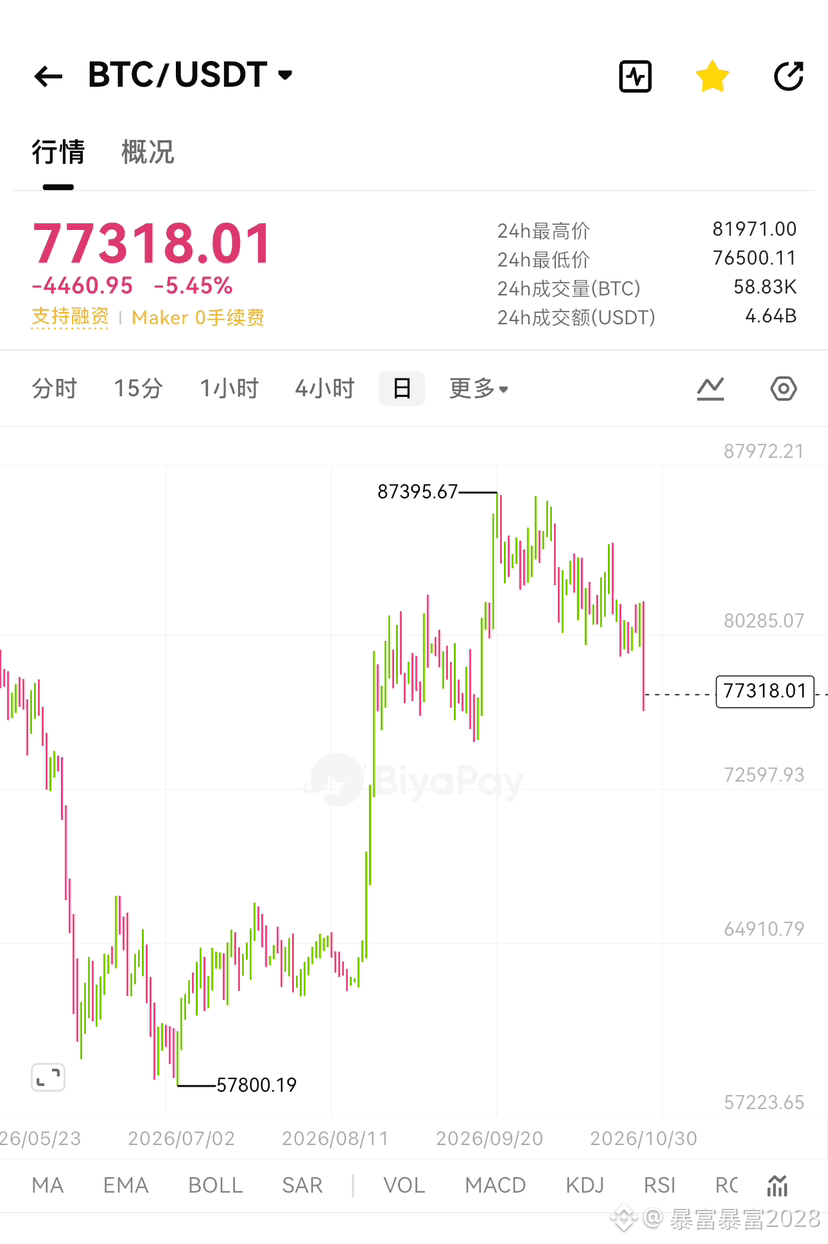
Bitcoin had a day of “exchange trust crisis + macro double whammy”: In the early hours, abnormal outflows from Binance’s multi-chain hot wallets were reported, with the estimated amount at $3–6 billion. Withdrawals were suspended and some USDT/USDC was frozen. BTC dipped to the 76k range before rebounding to 77.4k during the European session. Over the past 24 hours, liquidations across the crypto market totaled about $1.546 billion, including more than $940 million in long positions.
Technical framework:
-Support: 76,000 (panic-zone low) / 74,000 / 72,000
-Resistance: 80,400 (resistance at the previous low) / 83,300 (previous high) / 86,000
-Structure: The 4H rebound came on low volume, indicating a recovery after leveraged positions were flushed out; until the hacking incident is fully resolved, the CEX liquidity discount is likely to persist.
-Capital flows: This is not a fundamentals-driven collapse, but a trust discount plus a long-position stampede. Binance has pledged to cover the losses, but restoring confidence will take time.
Many people panic-sell after seeing just one BTC/USDT wick. For everyday market monitoring, you can check the latest crypto prices on BiyaPay, invest in global assets using USDT, and buy products such as US and Hong Kong stocks and forex. Put BTC, Brent crude, Nasdaq futures, and 10-year US Treasuries side by side, and you can tell whether it’s “crypto imploding” or “global risk retreating.”
Trading approach:
-Conservative: Look for a lower wick in the 76–77k range and take a small position; stop-loss at 75.8k, targets at 79–80.4k.
-Aggressive: Go long if the 15m chart breaks above 79k on strong volume; target 80.4k. Exit on a false breakout.
-Risk: Volatility will increase until withdrawals resume. If the daily close breaks below 74k, watch for 72k.
-Avoid: Chasing at 78.5k or panic-selling at 76.2k.
BTC has not broken its long-term trend, but in the short term it first needs to get through a “trust recovery day.” Unless it clears 84k, it remains in a range. #BiyaPay #Crypto leveraged positions see $1.5 billion in liquidations over 24 hours
1
4.1k
·
--
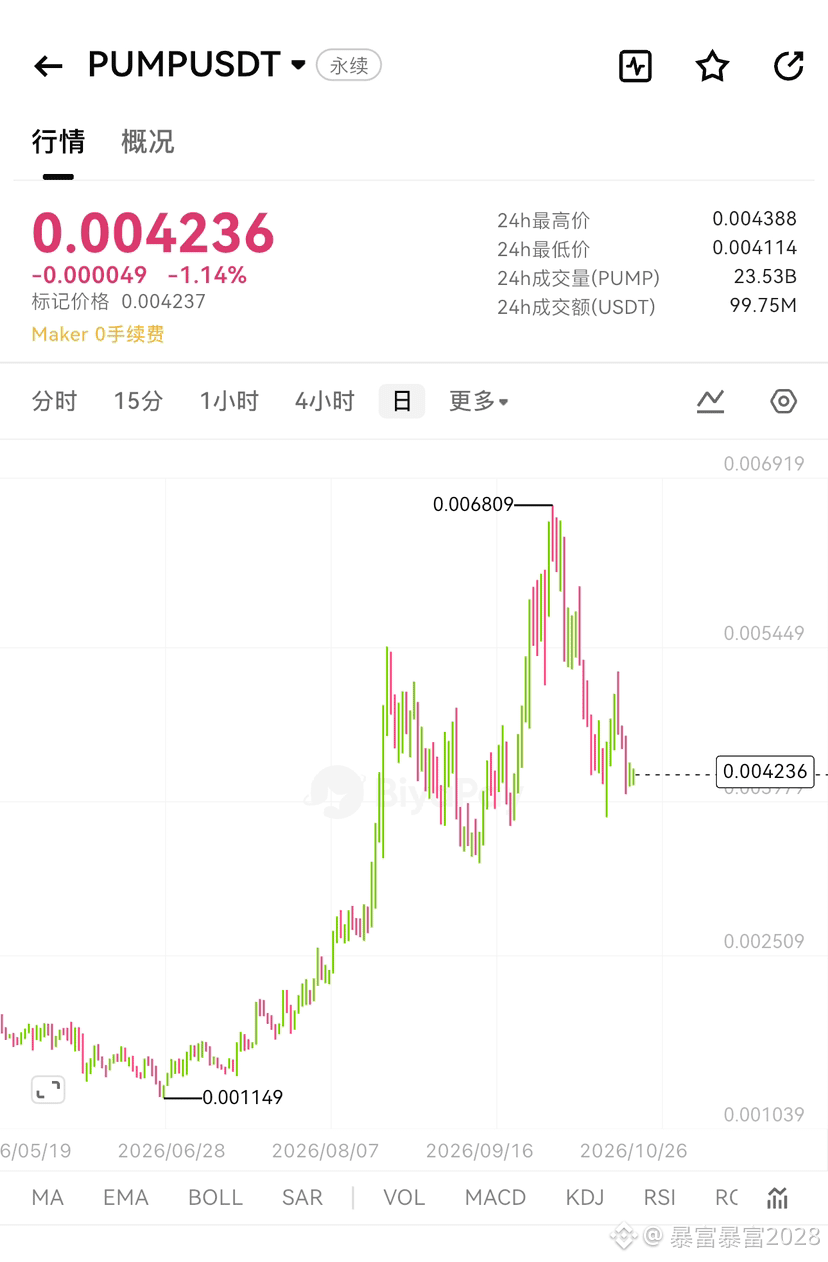
PUMP is a small-cap, high-volatility asset. The pump.fun thesis relies on “revenue-funded buybacks and burns,” but 825 billion tokens are shifting to a linear unlock schedule through 2029. Q2 revenue fell 36% quarter over quarter, and a lawsuit alleging unlicensed operations adds to the uncertainty—leaving its valuation anchor shaky. When Bitcoin breaks below $80,000, high-beta small caps like PUMP tend to take the hardest hits, and their rebounds are often the weakest.
Structural levels to watch:
- Support: previous-low base / key weekly zone / prior high-volume area
- Resistance: rebound into the breakdown zone / short-term EMAs / lower edge of the previous consolidation range
- Volume: high volume on the way down and low volume on the rebound = a double hit from leverage and unlock expectations
- Relative strength: PUMP/SOL making new lows = platform tokens losing momentum; PUMP rising while BTC is down = retail speculation
PUMP traders love to “buy the dip on the buyback narrative,” but bottoms are identified—not guessed. Don’t just keep PUMP/USDT open. You can put PUMP, SOL, WIF, and DOGE side by side. For a cross-market view, you can check the latest crypto prices on BiyaPay, invest in global assets with USDT, and buy products like US and Hong Kong stocks and forex. Compare meme coins and platform tokens side by side to see which stabilizes first.
Strategy:
- If you’re already holding: trim if a rebound fails to reclaim resistance; don’t stubbornly hold through the unlock period
- If you’re flat: don’t catch a falling knife. Wait for the previous low to hold, with declining volume, a lower wick, and relative strength stabilizing
- If it breaks the previous low on heavy volume: don’t average down—small caps are especially dangerous to keep buying as they fall
- Position size: keep PUMP below 5%
For the medium term, PUMP depends on platform revenue and execution of buybacks—but today is a day of fading sentiment. Cash beats PUMP. #BiyaPay #StockEarningsSeason
127
·
--
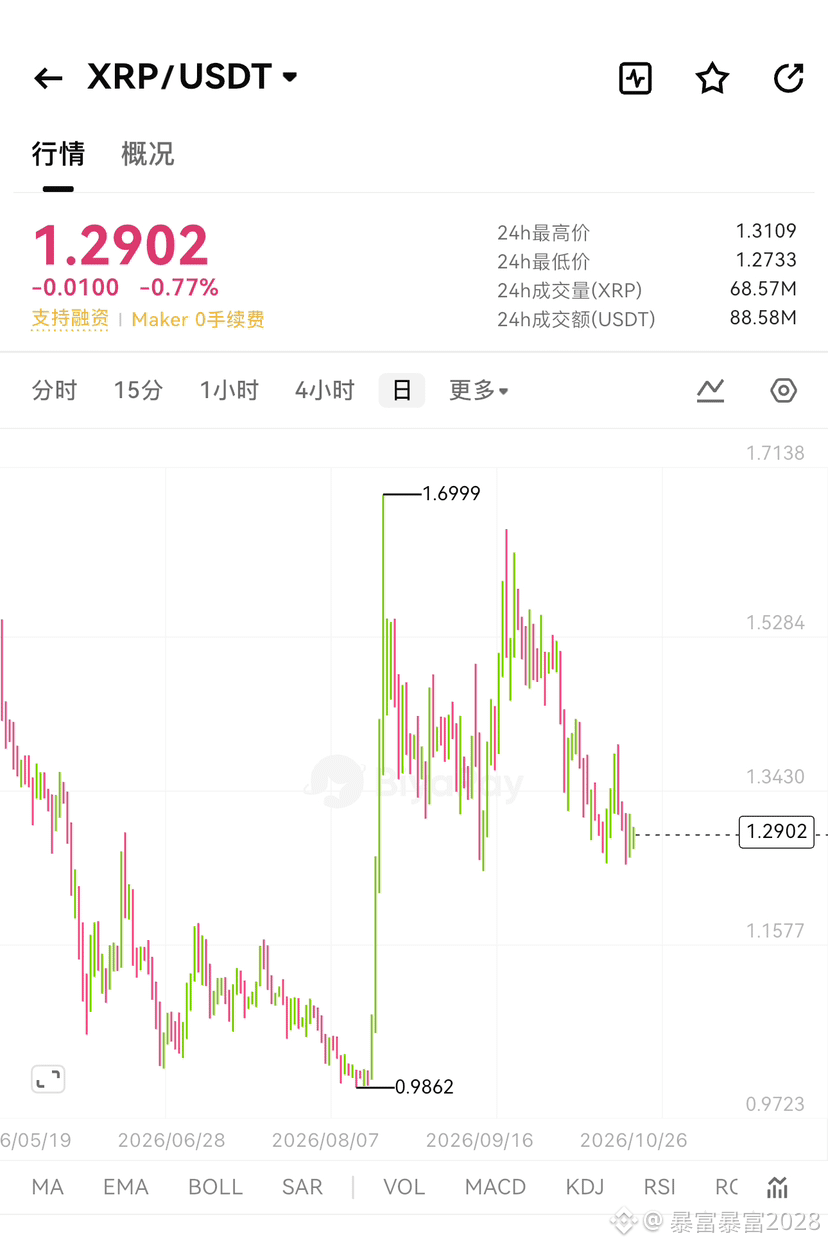
XRP bulls and bears are locked in a tug-of-war: price at 1.28–1.30, whales are selling systematically, and exchange balances have hit a recent high of 11.05 billion tokens. 1.26 is the lower edge of the ascending channel that began in August. XRP liquidations were relatively light on the 22nd, but on-chain selling pressure is building.
Structure:
- Support: 1.26 (lower channel edge) / 1.20 / 1.11–0.98 (breakdown target)
- Resistance: 1.30 (psychological level) / 1.38 / 1.43
- Longer-term: Payments + custody + institutional adoption are slow-moving drivers
- Shorter-term: If Bitcoin can’t get past 83.3k, XRP is unlikely to rally on its own; holding 1.26 means selling pressure is being absorbed, while a break below it could accelerate the decline
XRP is especially vulnerable to getting baited by bullish headlines. Don’t just keep XRP/USDT open—track XRP, BTC, BCH, and ETH together. For a cross-market view, you can check the latest cryptocurrency prices on BiyaPay, invest in global assets with USDT, and buy products such as U.S. and Hong Kong stocks and forex. Keep payment tokens and macro liquidity in view on the same screen.
Strategy:
- If already holding: Hold as long as 1.26 holds; reduce if a candle closes below 1.26
- If flat: Small position in the 1.26–1.29 range, stop-loss at 1.246
- Breakout: If the 4H candle closes above 1.30, watch for 1.38; only a weekly close above 1.38 opens the way to 1.43
- Avoid: Chasing a false breakout at 1.30 or panic-selling at 1.27
XRP is a slow-moving payment coin, not a meme coin. Bitcoin sets the direction today; whale flows are short-term bearish but long-term stable. #BiyaPay #StockEarningsSeason
318
·
--
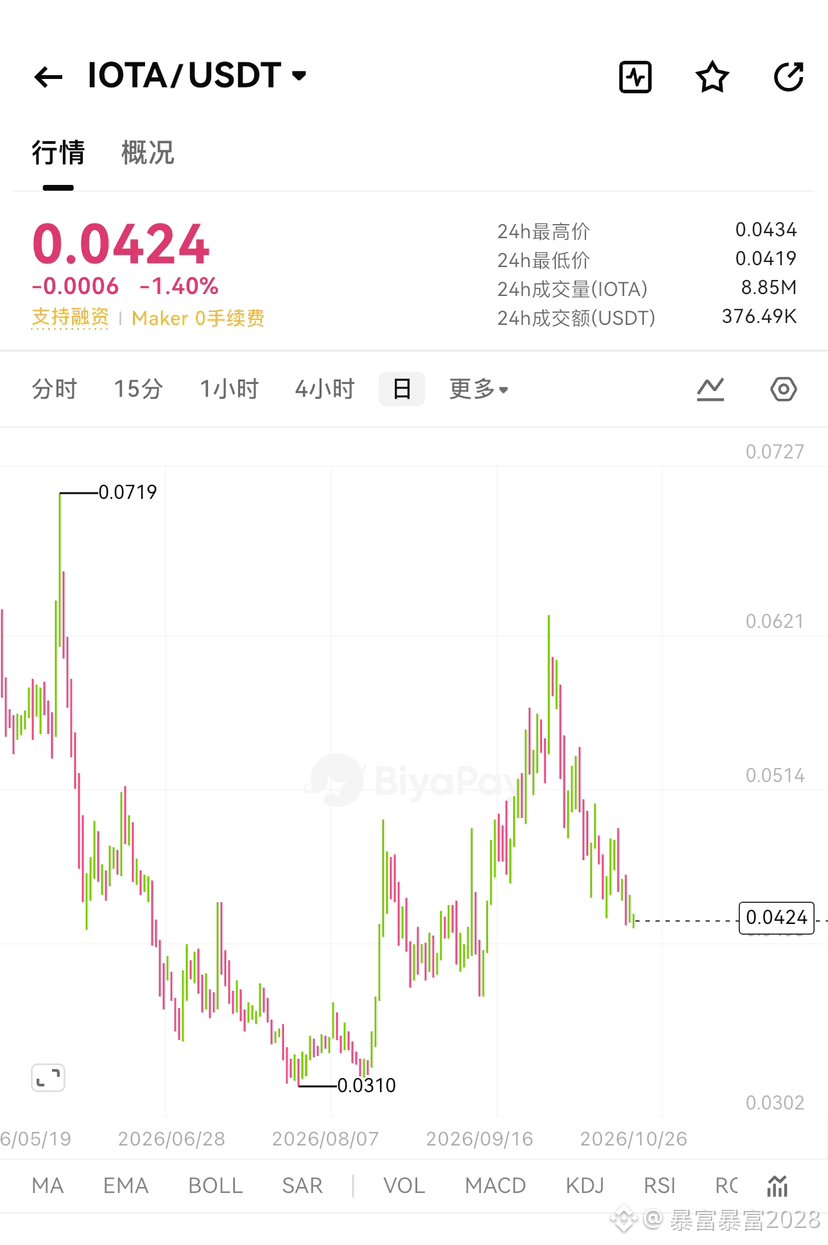
IOTA is a small-cap, established public-chain example: its Tangle/DAG + IoT narrative remains intact in the medium term, and the Rebased upgrade introduces Move + EVM compatibility. But in the short term, the price is around 0.05, trading volume is thin, and buying interest depends on BTC sentiment. When the broader market falls below 80,000, low-liquidity coins tend to suffer the sharpest wicks.
Structural outlook:
-Support: previous low/base / 0.048 / 0.045
-Resistance: 0.052 (short-term moving average) / 0.055 / 0.058
-Volume: high-volume decline, low-volume rebound = liquidity drying up
-Relative strength: IOTA/BTC making new lows = small caps losing momentum; IOTA rising alone while BTC is down = retail speculation
IOTA traders love to “buy the dip on the IoT narrative,” but bottoms are identified, not guessed. Don’t just keep IOTA/USDT open on your chart. Put IOTA, SOL, DOGE, and BTC side by side. To compare markets, you can check the latest crypto prices on BiyaPay, invest in global assets with USDT, and buy products such as US and Hong Kong stocks and forex. Compare small caps and major coins on the same screen to see which stabilizes first.
Strategy:
-If you’re holding: if the rebound fails to reclaim 0.052, trim your position; don’t stubbornly hold a low-liquidity coin
-If you’re flat: don’t catch a falling knife; wait for the previous low to hold, with declining volume, a lower wick, and relative strength stabilizing
-If it breaks below the previous low on high volume: don’t average down; small coins are especially risky to keep buying as they fall
-Position size: keep IOTA below 3%
The medium-term outlook for IOTA depends on IoT adoption and the rollout of Rebased, but today is a sentiment-driven selloff. Cash looks better than IOTA. #BiyaPay #StocksEarningsSeason
235
·
--
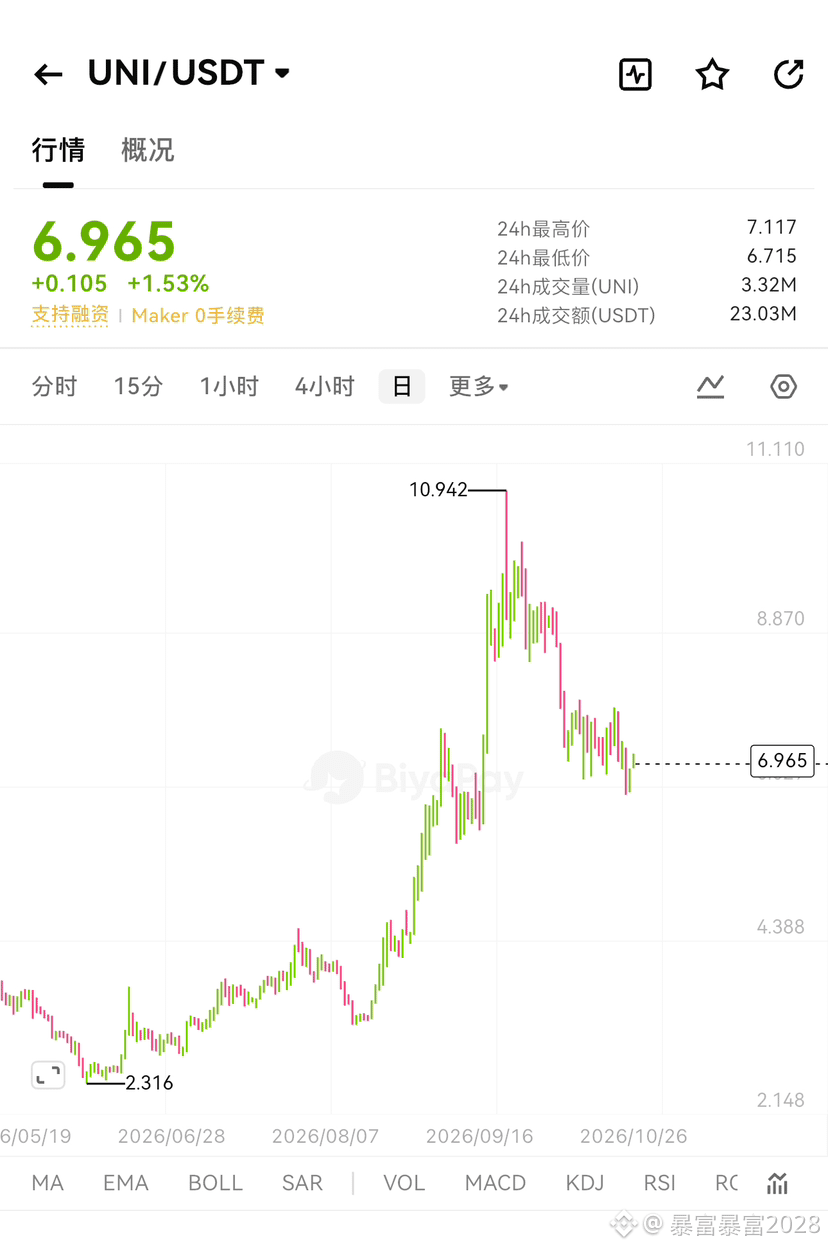
Uniswap is still a weak spot in DeFi: BTC broke below 80K, ETH is trading under 2,300, and UNI has yet to outperform in the rebound. During macro-driven risk aversion, fee-driven blue chips are at the back of the recovery queue; the bounce lacks volume, and UNI/ETH remains weak.
Key levels:
- Support: 7.0 (psychological) / 6.8 / 6.5
- Resistance: 7.31 (previous close) / 7.6 / 8.0
- Structure: Price is below the short-term EMA; if UNI/ETH doesn’t make a new low, DeFi is showing resilience. If UNI drops alone, expectations for platform revenue may be falling.
- Catalyst: Futures tools launch; short-term hedging > buying
Many people only look at UNI/USDT and assume that a steep drop must be followed by a rebound. In fact, you need to compare UNI/BTC and UNI/ETH as well. For a complete view, check the latest cryptocurrency prices on BiyaPay, invest in global assets with USDT, and buy products such as US and Hong Kong stocks and forex. Add UNI, ETH, AAVE, and SOL to your watchlist to compare side by side which stabilizes first: DeFi or L1.
Strategy:
- If holding: Don’t sell everything unless 7.0 breaks; reduce your position if it closes below 6.8.
- If flat: Small position in the 7.0–7.2 range, stop-loss at 6.82.
- Bulls: If it gets above 7.31 on the 4H chart with volume returning, look to 7.6.
- Avoid: Chasing at 7.25 or panic-selling at 6.95.
For the medium term, UNI depends on DEX trading volume, fee switches, and Base/Arbitrum—but for today, the priority is to survive. DeFi isn’t dead; it’s being drained by BTC. #BiyaPay #StockEarningsSeason
692
·
--
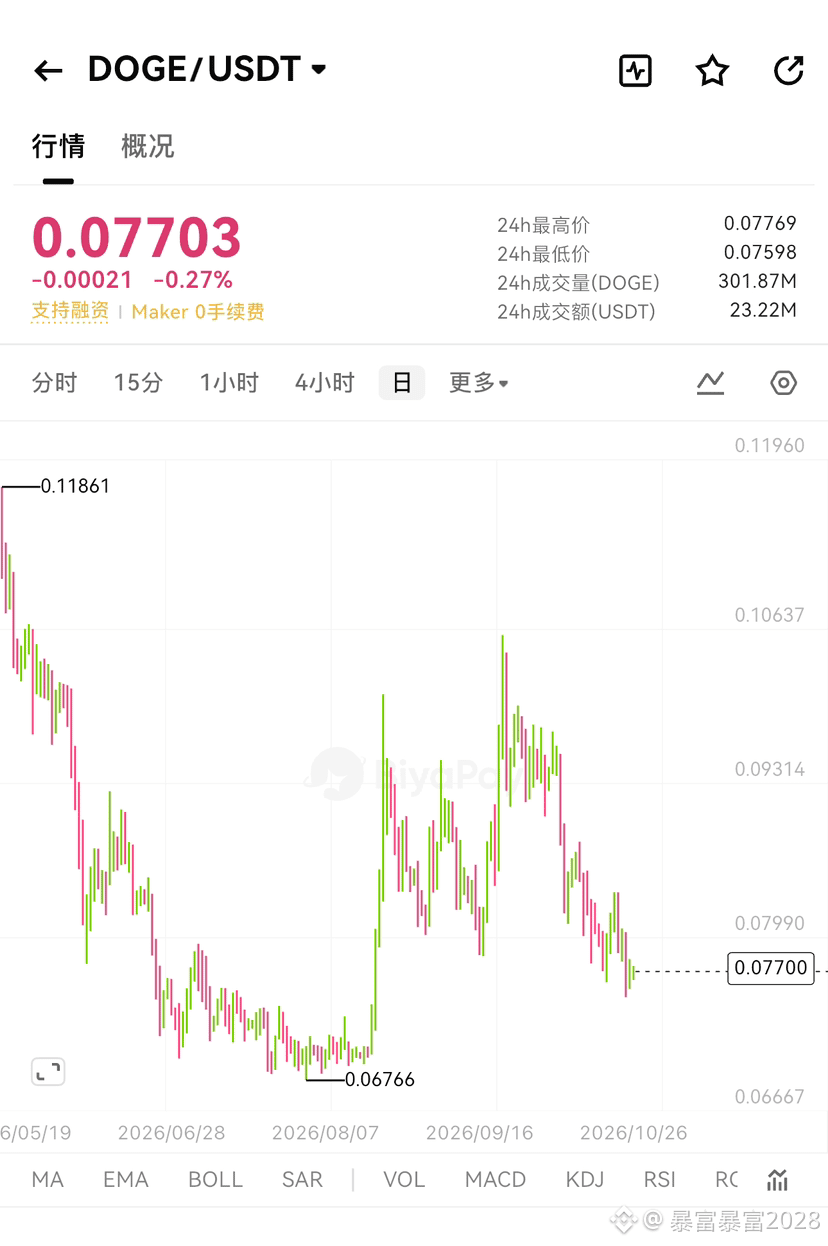
Dogecoin’s typical meme momentum is fading: price at 0.078–0.081, down 1–2% over 24h, with no new fundamental catalyst. It’s purely a play on “BTC + U.S. stocks + social sentiment.” BTC has broken below 80K and AI stocks are selling off, so risk capital is pulling out of high-volatility assets first.
Structure:
- Support: 0.0769 (previous low) / 0.075 / 0.070
- Resistance: 0.084 / 0.086 / 0.090
- Volume: high-volume declines, low-volume rebounds = leverage unwinding
- Relative strength: DOGE/BTC making new lows = meme sector cooling; DOGE green while BTC is red = retail traders cheering themselves on
Trading DOGE = sentiment × quote speed. Many people only watch DOGE/USDT and miss moves across the meme sector as a whole. To see the bigger picture, check the latest crypto prices on BiyaPay, invest in global assets with USDT, and buy products such as U.S. and Hong Kong stocks and forex. Add DOGE, PEPE, WIF, SOL, and Nasdaq futures to your watchlist to compare sector strength, capital rotation, and intraday moves on one screen.
How to trade:
- Don’t chase the upper wick at 0.083. If it pulls back to 0.0785–0.0805 and forms a lower wick, enter with a small position; stop-loss at 0.0755.
- If it closes below 0.075, exit; don’t average down on meme coins.
- Bullish scenario: only look for 0.086 if a 15-minute candle holds above 0.084 on rising volume.
- Position size: keep DOGE below 5–8%; avoid leverage.
Don’t talk about DOGE’s long-term value; focus only on sentiment and the order book. Before the rate decision, protect your capital first—talk about Musk later. #BiyaPay #StockEarningsSeason
229
·
--
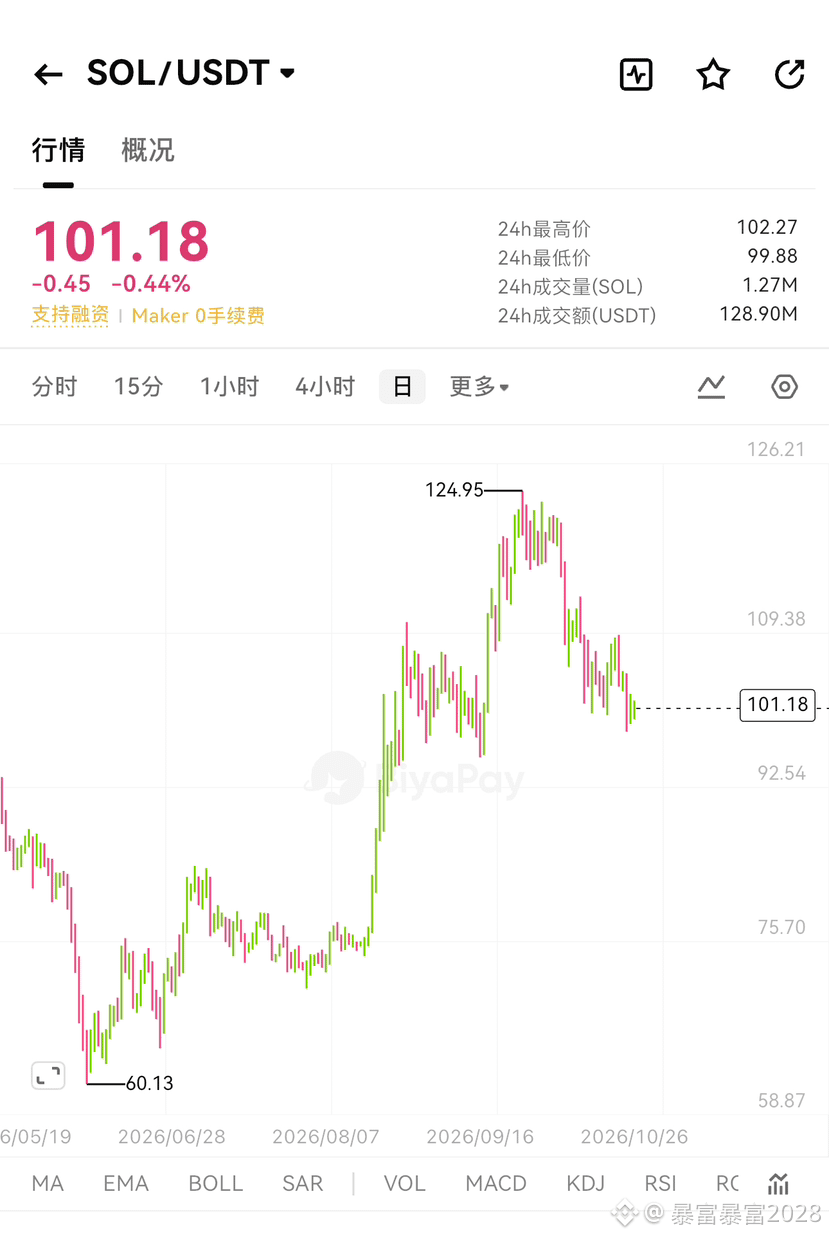
Solana is showing standard high-beta bleeding: price at 101, with AI earnings concerns and weakness in the Nasdaq the previous day weighing on it; SOL fell 2% in sympathy. SOL ETFs have seen outflows for three consecutive weeks, totaling more than $70 million over the past month. The medium-term ecosystem remains intact, but in the short term it faces a double pressure from “macro risk aversion + unlock expectations.”
Structure:
-Support: 100 (psychological level) / 97.5 / 94
-Resistance: 104.7 (pivot) / 106.7 / 109.2 (50-day moving average)
-Drivers: If BTC can't hold 80k, SOL will test 100 first; if BTC returns to 83.3k, then SOL can target 106.7
-Pace: Any rebound depends on sentiment recovering, not independent capital flows
SOL's biggest risk is weekly-chart bulls going all-in today. Watch relative strength: if SOL/BTC doesn't make a new low, funds are still flowing into layer-1s; if SOL is green while BTC is red, liquidity is insufficient. You can track the latest crypto prices on BiyaPay alongside the broader market, invest in global assets with USDT, and buy products such as US and Hong Kong stocks and forex. Put SOL, NVDA, BTC, and DOGE side by side—the AI + high-beta resonance is clearest that way.
Trading plan:
-Don't chase a wick above 104; follow only if 15m volume expands and price holds above 104.7
-If it pulls back to 100–101 and prints a lower wick, take a small position; stop-loss at 99.2
-If it closes below 100, exit long positions and wait for 97.5
-Position size ≤12%; don't treat SOL like BTC
The medium-term outlook for SOL isn't over, but today it follows macro conditions first—this isn't a run to 110 today. #BiyaPay #StockEarningsSeason
208
·
--
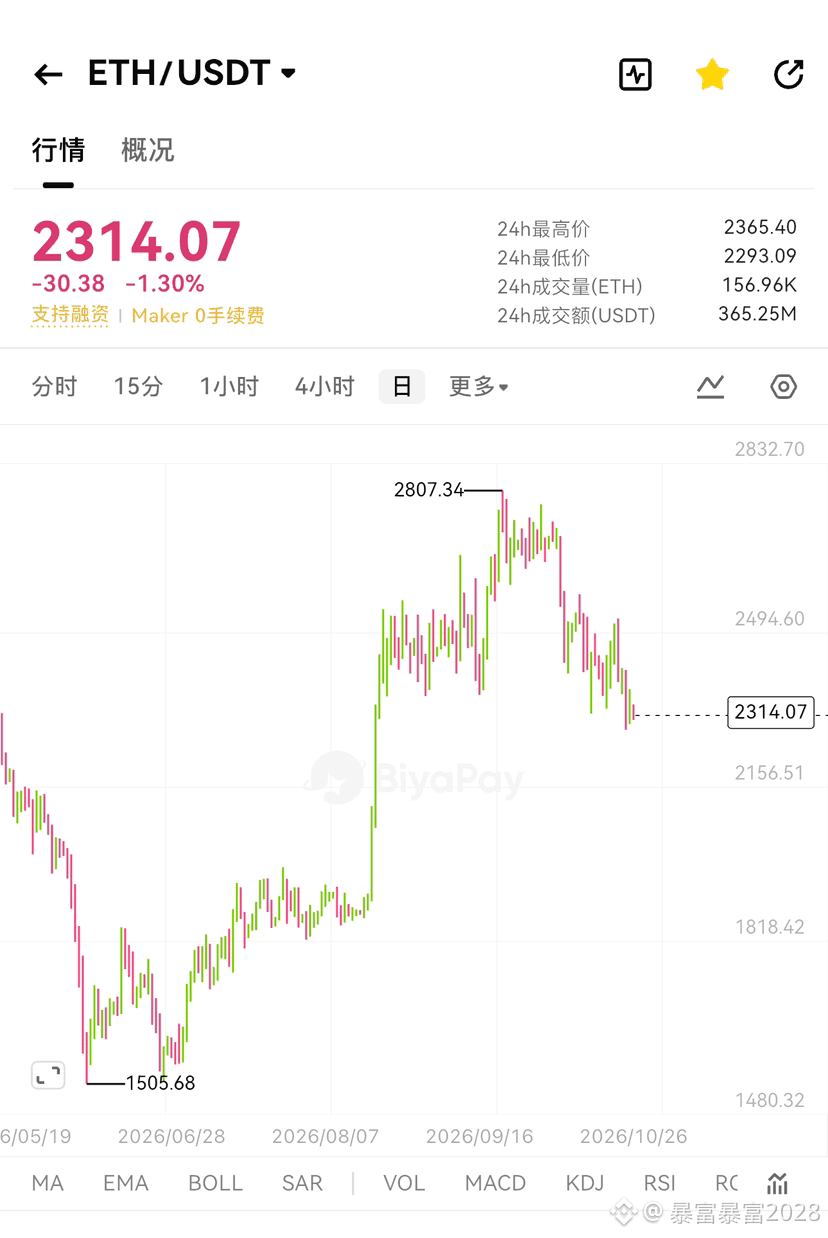
Ethereum is following Bitcoin down, not leading a rally: price at 2,300–2,323, down 1.65%–3% over 24h. The 50-day moving average is overhead at 2,556; RSI is oversold, but volume hasn’t recovered. ETH ETFs have seen net outflows for four consecutive weeks, including $221 million in a single week. Buying is being driven by Bitcoin, not a return of flows to ETH itself.
Key levels:
- Support: 2,300 (psychological) / 2,280 / 2,150 (QCP key level)
- Resistance: 2,426 (pivot R1) / 2,476 / 2,500 (QCP resistance)
- Structure: ETH/BTC hasn’t turned around; capital is favoring BTC. The medium-term L2/stablecoin narrative remains intact, but there’s no short-term catalyst
- The real issue: it’s not that on-chain activity is dead; leverage got wiped out first, while institutions are accumulating slowly
The biggest mistake with ETH is buying just because it’s fallen a lot. Watch ETH/BTC, gas, the staking queue, and ETF net flows for real signals. For a complete picture, check the latest cryptocurrency prices on BiyaPay, invest in global assets with USDT, and buy products such as US and Hong Kong stocks and forex. Put ETH, BTC, the Nasdaq, and stablecoin market caps on one screen to see at a glance which DeFi/L1 assets are holding up best.
Strategy:
- If already holding: don’t sell everything unless 2,300 breaks; reduce further if it closes below 2,280
- If flat: take a small position at 2,300–2,320, with a stop-loss at 2,278
- Bullish confirmation: a 4H close above 2,426 with volume returning; watch 2,476–2,500
- Avoid: chasing at 2,340 or panic-selling at 2,290
ETH isn’t dead in the medium term, but it’s not the main character today. If Bitcoin can’t hold 80k, ETH will first be tested at 2,300. #BiyaPay #StockEarningsSeason
545
·
--
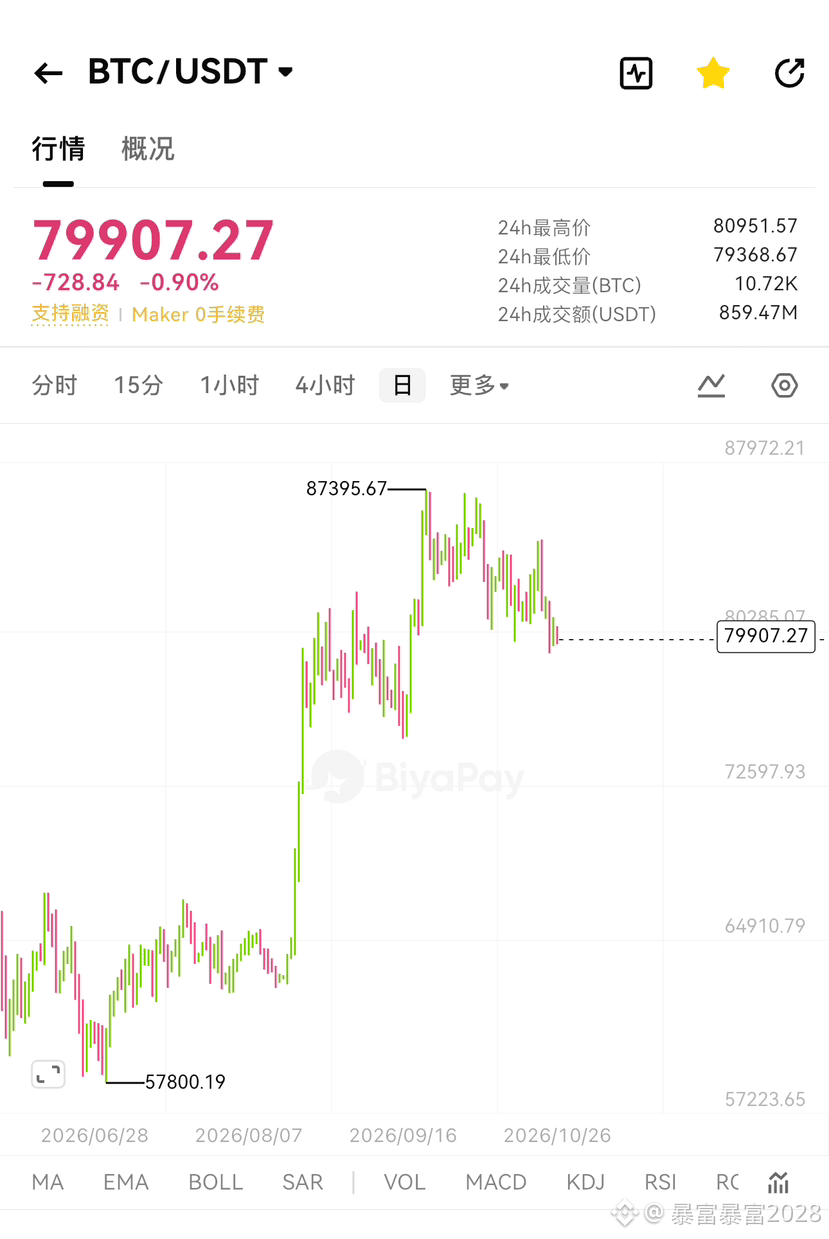
Bitcoin is stress-testing the $80K level: early this morning, it was hit by a triple whammy of AI stock sell-offs, Middle East oil prices, and expectations of a hawkish Fed. It dipped as low as 79,330 before recovering to around 80,320 during the European session. It’s down more than 3% over the past week, the Coinbase premium has been negative for 33 straight days, and U.S. buying remains weak. QCP puts key support at 78K and resistance at 86K; the 4H bounce came on low volume and is essentially a recovery after leveraged long liquidations.
Technical outlook:
-Support: 78,000 (QCP key level) / 80,400 (previous low zone) / 79,200
-Resistance: 81,500 (15m rebound zone) / 83,300 (overhead resistance at the previous high) / 86,000
-Flows: BTC ETF outflows totaled 772 million on Thursday and Friday, but there was still a small net inflow for the week overall—institutions haven’t fully exited
-Macro: The Fed decision is due in the early hours of 10/29. Markets are pricing in no change, but are watching for signals about a December rate hike; the 10-year U.S. Treasury yield is at 4.96%
Many people only watch a single BTC/USDT candle and panic when they see a wick. For day-to-day market monitoring, you can check the latest cryptocurrency prices on BiyaPay and use USDT to invest in global assets. You can also buy U.S. and Hong Kong stocks, forex, and other products. Put BTC, Brent crude, Nasdaq futures, and the U.S. Dollar Index side by side to see whether it’s “crypto crashing” or “global risk appetite fading.”
Trading plan:
-Conservative: Look to buy the lower wick in the 80.0–80.5k range, stop-loss at 79.2k, targets at 81.5–82.8k
-Aggressive: Go long if price breaks above 81.5k on strong 15m volume, target 83.3k; exit on a false breakout
-Risk: Volatility may pick up ahead of the Fed decision. If the 78k level breaks on a closing basis, watch 76.5k
-Avoid: Chasing at 81k or panic-selling at 79.5k
BTC hasn’t broken down, but unless it gets past 84k, it’s still range-bound. Hold 80k first; talk about a reversal later. #BiyaPay #据报韩国考虑第四次推迟加密税 #Electrum钱包漏洞致资金被盗
372
·
--
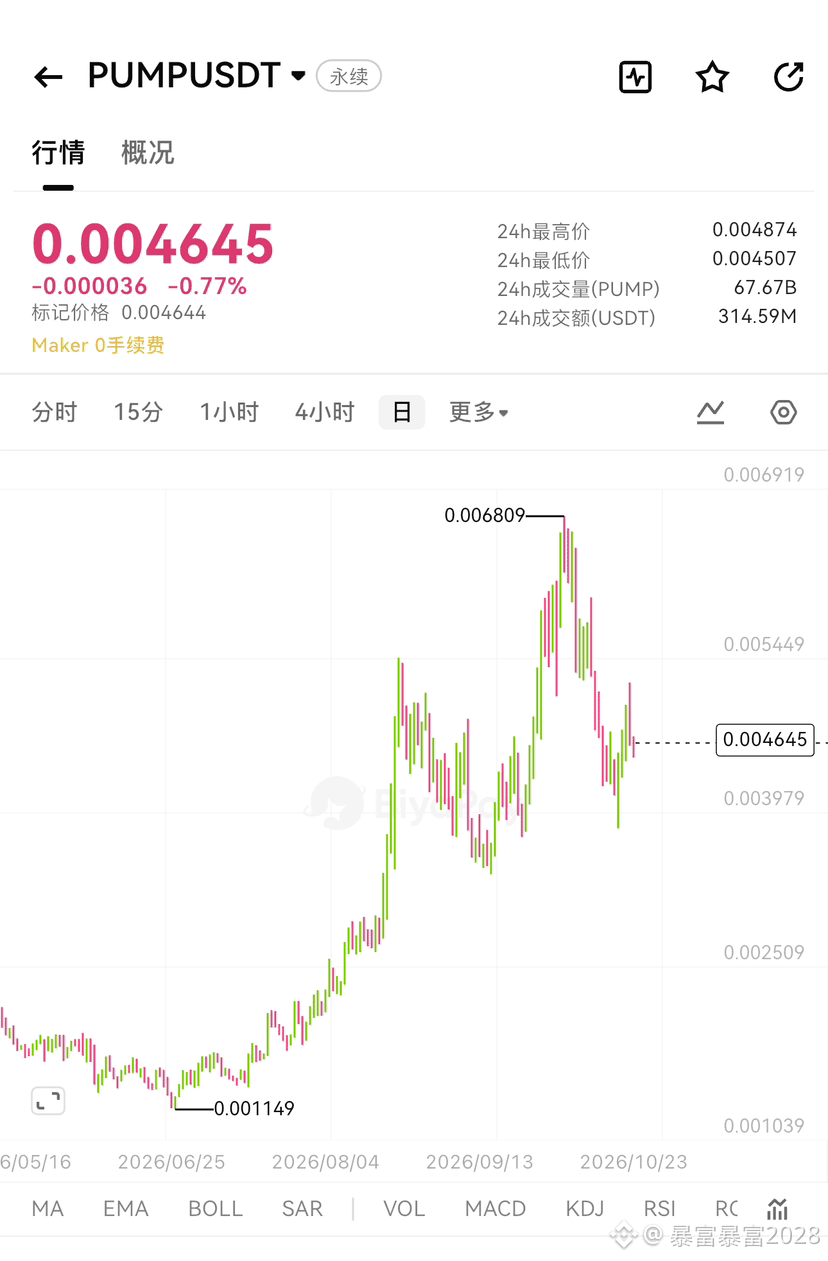
PUMP is a small-cap, high-volatility asset: the pump.fun platform token’s thesis relies on “buybacks and burns funded by fees,” but competition from RobinhoodChain and expectations of token unlocks are weighing on its valuation. When BTC breaks below $81,000, high-beta small caps like PUMP tend to take the hardest wicks—and their rebounds are often the weakest.
Technical framework:
- Support: previous lows and consolidation zones / key weekly levels / areas of high volume in the prior cycle
- Resistance: rebounds into breakdown zones / short-term EMAs / the lower edge of previous consolidations
- Volume: high volume on the way down, low volume on the rebound = a double hit from leverage and unlock expectations
- Relative strength: PUMP/SOL making new lows = platform tokens falling out of favor; PUMP rising while BTC is down = retail speculation
PUMP traders love “buying the dip on the buyback narrative,” but bottoms are identified, not guessed. Don’t just keep PUMP/USDT open. You can put PUMP, SOL, WIF, and DOGE side by side. To track multiple markets, you can check the latest crypto prices on BiyaPay and invest in global assets with USDT, as well as buy products like U.S. and Hong Kong stocks and forex. Compare memes and platform tokens on the same screen to see which stabilizes first.
Strategy:
- If you’re already holding: trim if a rebound fails to reclaim resistance; don’t stubbornly hold through the unlock period
- If you’re on the sidelines: don’t catch a falling knife; wait for selling volume to dry up near the previous low, a lower wick to form, and relative strength to stop falling
- If it breaks below the previous low on high volume: don’t average down—small caps are most dangerous when you keep buying as they fall
- Position size: keep PUMP below 5%
For the medium term, PUMP depends on platform revenue and buyback execution. But today is a day of fading risk appetite. Cash beats PUMP.
1
226
·
--
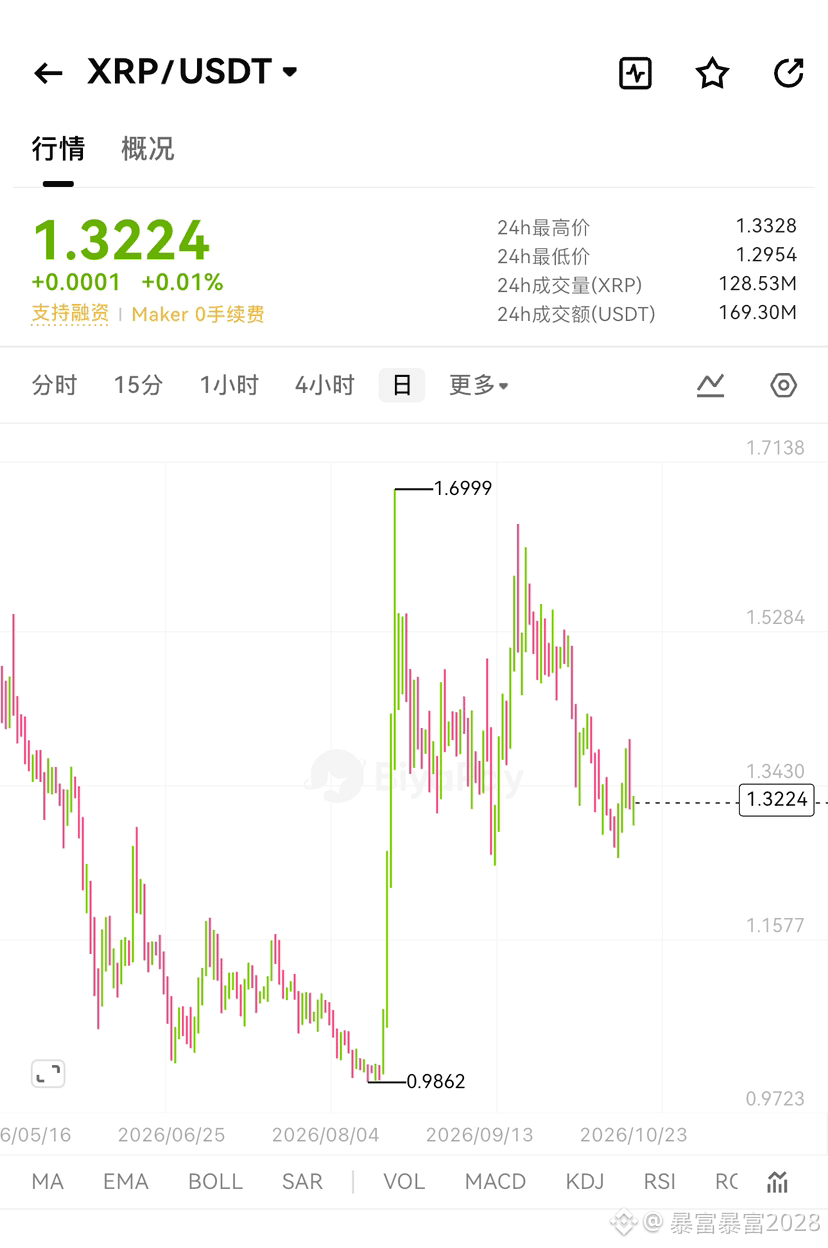
XRP bulls and bears are locked in a tug-of-war: price at 1.33; whale inflows hit 112.4 million, a 7-month high and a short-term sell-pressure signal. But inflows have since eased, XRP is up 30% since August, and the 4H chart is testing descending resistance. On the 22nd, XRP liquidations totaled 7.47 million, less than BTC and ETH.
Structure:
- Support: 1.30 (psychological) / 1.26 (previous low) / 1.20
- Resistance: 1.38–1.40 (breakout zone) / 1.45 / 1.50
- Higher timeframe: Payments + custody + institutional adoption are slow-moving drivers
- Shorter timeframe: If BTC can’t get past 83.3k, XRP is unlikely to rally on its own; holding 1.33 means selling pressure is being absorbed, while a break below 1.30 points to a return to 1.26
XRP is especially vulnerable to getting fooled by bullish headlines. Don’t just keep an XRP/USDT chart open. You can track XRP, BTC, BCH, and ETH together. For a cross-market view, check the latest crypto prices on BiyaPay, invest in global assets using USDT, and buy products like US and Hong Kong stocks and forex—all while keeping payment coins and macro liquidity in view on one screen.
10/23 strategy:
- If already holding: Hold as long as 1.30 holds; reduce if it breaks 1.26 on a close
- If flat: Enter with a small position at 1.30–1.33; stop-loss at 1.286
- Breakout: If the 4H chart holds above 1.38, look for 1.45; a weekly close at 1.40 is needed to open the way to 1.50
- Avoid: Chasing a false breakout at 1.38 or panic-selling at 1.30
XRP is a slow-burn payments coin, not a meme coin. BTC sets the direction today; whale flows are bearish short term but supportive longer term.
272
·
--
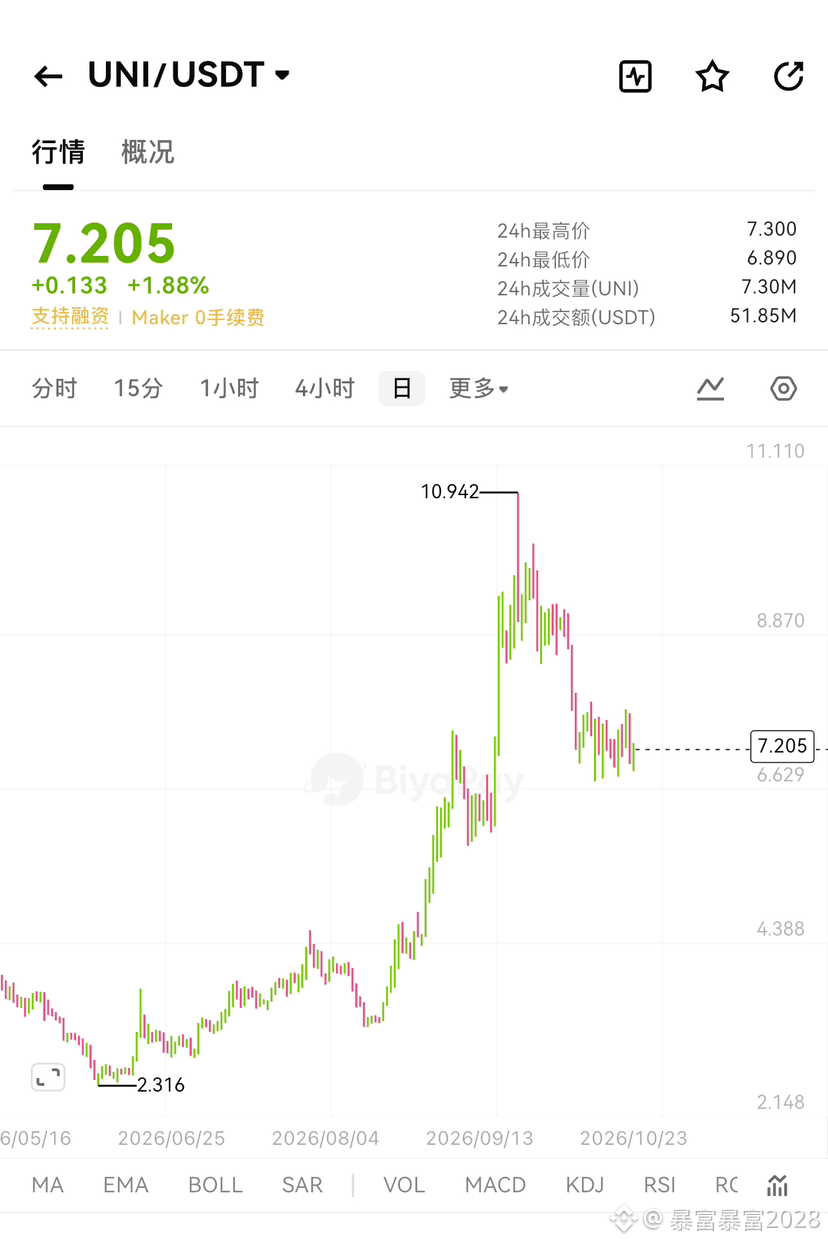
Uniswap is still a weak spot in DeFi: Bitcoin back at 81.6k, ETH below 2,400, and UNI hasn’t bounced more than the market. When macro uncertainty drives risk aversion, blue chips whose value is fee-driven tend to lag. The rebound lacks volume, and UNI/ETH remains weak.
Key levels:
- Support: 7.0 (psychological) / 6.8 / 6.5
- Resistance: 7.31 (previous close) / 7.6 / 8.0
- Structure: Price is below the short-term EMA; if UNI/ETH holds above its low, DeFi is showing resilience. If UNI falls on its own, expectations for revenue are being revised down.
- Catalyst: Futures hedging tools have launched, and short-term hedging demand exceeds buying demand.
Many people only look at UNI/USDT and assume that after a big drop, a rebound is inevitable. You need to compare both UNI/BTC and UNI/ETH. For a complete view, check the latest crypto market prices on BiyaPay, invest in global assets with USDT, and buy products such as U.S. and Hong Kong stocks and forex. Add UNI, ETH, AAVE, and SOL to your watchlist to compare DeFi and L1 side by side and see which stabilizes first.
10/23 strategy:
- If already holding: Don’t sell everything unless 7.0 breaks; reduce your position if it closes below 6.8.
- If flat: Small position in the 7.0–7.2 range, with a stop-loss at 6.82.
- For bulls: If it gets above 7.31 on the 4H chart with volume returning, look for 7.6.
- Avoid: Chasing at 7.25 or panic-selling at 6.95.
For the medium term, UNI depends on DEX volume and Base/Arbitrum, but today the priority is simply to survive. DeFi isn’t dead—it’s being drained by BTC.
256
·
--
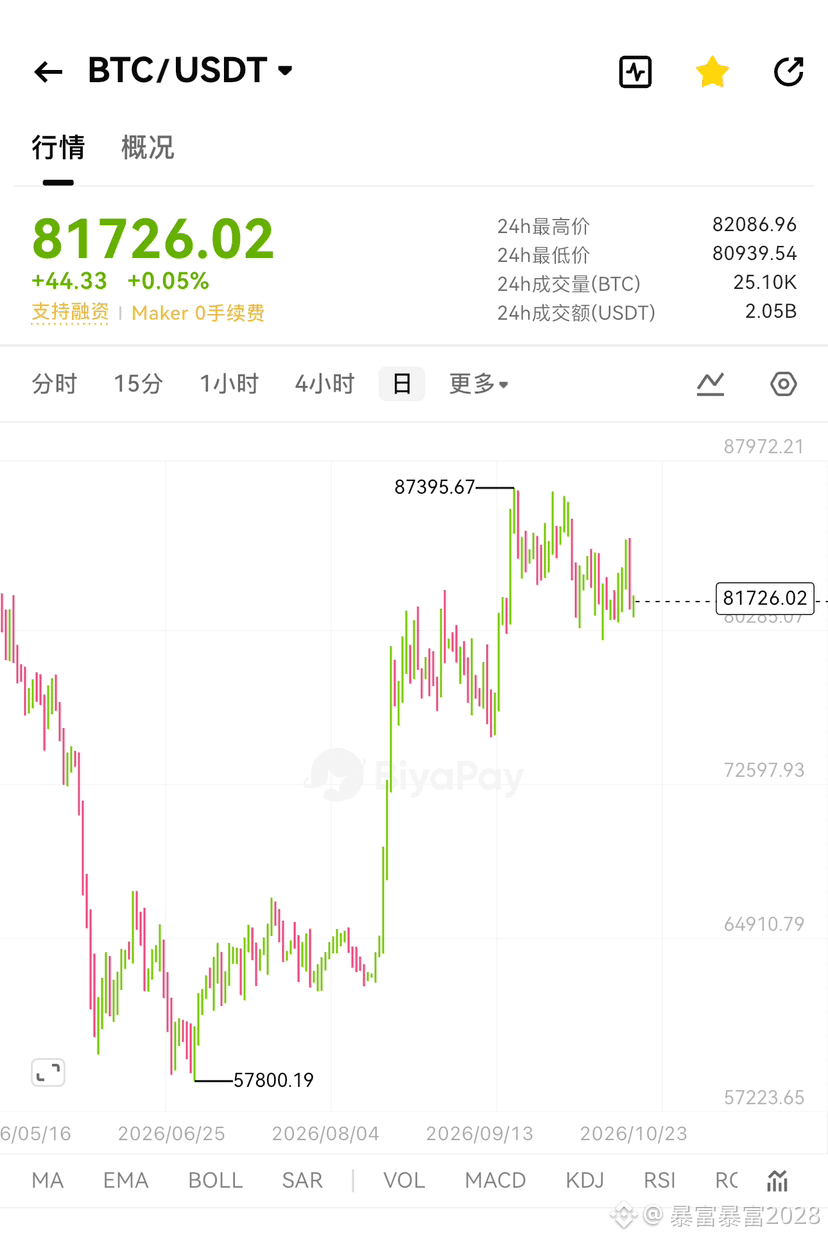
Bitcoin is being pinned down by macro forces: Brent crude broke above 113 overnight, WTI neared 99, and news of attacks in the Middle East plus the Nasdaq’s 2.6% drop the previous day sent risk assets retreating across the board. BTC hit a low of 81,018 before recovering to 81,656 during the European session. On the 22nd, liquidations across the market totaled $458 million, including $418 million in long positions; BTC long liquidations came to $140 million.
Technical outlook:
- Support: 81,000 (today’s low area) / 80,400 / 79,200
- Resistance: 83,300 (resistance at the previous high) / 83,963 / 84,500
- Structure: Price is below the short-term pivot, and the 4H rebound lacks volume. However, spot BTC ETFs saw net inflows of $528.4 million on 10/21: institutions are adding to core holdings while retail leverage gets wiped out.
- Bottom line: This is a recovery after panic-driven long liquidations, not the start of a new major rally.
Many people look only at a single BTC/USDT candlestick and panic when they see a wick. For day-to-day monitoring, you can check the latest cryptocurrency prices on BiyaPay and use USDT to invest in global assets. You can also buy products such as US and Hong Kong stocks and forex. Putting BTC, Brent crude, Nasdaq futures, and the US Dollar Index side by side helps you tell whether it’s “crypto crashing” or “global risk appetite fading.”
Strategy for 10/23:
- Conservative: Look to buy on a lower wick around 81.0–81.3k; stop-loss at 80.6k; target 82.8k.
- Aggressive: Go long if it breaks above 83.3k on strong 15m volume; target 84.0k. Exit on a false breakout.
- Risk: If oil keeps climbing and US stocks are weak before the open, watch 79.2k if 80.4k fails to hold.
- Avoid: Chasing at 82.5k or panic-selling at 80.9k.
BTC hasn’t broken down, but unless it clears 84k, it’s still range-bound. Hold 81k first; talk about a reversal later.
799
Log in to explore more content
Join global crypto users on Binance Square
⚡️ Get latest and useful information about crypto.
💬 Trusted by the world’s largest crypto exchange.
👍 Discover real insights from verified creators.
Email / Phone number
Trending Topics
SuspectedNorthKoreaAttacksAccountForNearly89%OfCryptoHackLosses
145 views
5 Discussing
🚨 THE EXPLOIT EQUATION: 89% Dominance 🚨
Crypto With Faisal
·0 Likes
·74 views
OpenAICutsFundraisingTargetBy$10B
60 views
23 Discussing
ASICHasReceivedNoPredictionMarketApplications
4,370 views
161 Discussing