
风生水起qd
7 Posts

风生水起qd
Open Trade

ASTER Holder
High-Frequency Trader
2.9 Months
7 Following
2 Followers
0 Liked
Posts
Portfolio
All
Quotes
@管我财:$Noah Holdings (NOAH) $ was once a very popular U.S. stock in the Chinese concept space. Years later, there’s finally an opportunity to buy in. Since the reorganization, the company’s core business has shifted from selling corporate bonds and trusts to selling private funds and insurance. I know the company’s performance this year likely won’t be too good, especially with new regulations for overseas funds and new insurance regulations—both will inevitably have an impact. Motivated by the company’s good dividend payouts and ongoing share buybacks, I’m buying a 1% position for now. Its Hong Kong-listed shares are slightly more expensive than its U.S.-listed shares, so friends who are interested can join and do some research together.
#NOAH
#NOAH
@Black Bread thought about it and feels it really is worth paying attention to. After the announcement, most of the gains were basically erased. The core should be: 1) In the next year, they won’t repurchase before the spinoff; 2) Management said the spinoff is not prepared for Strategic Deals. The second point should be BS.
Brian isn’t an idiot. He should know clearly what price the old friend/opponent of his, $Warner Bros. Discovery (WBD)$ , was sold for—so I don’t believe he’s not envious. $Comcast (CMCSA)$ ’s Universal Studios has very high strategic value, even better strategic value than WBD. For example, for $Netflix (NFLX)$ , an acquisition would mean owning Universal Studios—creating a closed loop where it can take its IP from online to offline experiences. Many of its IPs could also have potential synergy. And the cable segment could be attempted to integrate with Charter Communications, because once fixed-wireless is in place, antitrust is no longer a big issue, while the synergies are obvious.
If it were me, during the spinoff I’d keep most of the debt at the cable parent so Universal film & TV can move light and compete for the best offer; then find a strategic acquirer for the Universal film & TV business—ideally set up a bidding war. After selling at a high price, use the cash to pay down debt and merge with Charter Communications, protect the balance sheet, and, per Malone’s advice, make repurchases mainly take the form of dividends. Doing this should be able to create substantial shareholder value.
Brian isn’t an idiot. He should know clearly what price the old friend/opponent of his, $Warner Bros. Discovery (WBD)$ , was sold for—so I don’t believe he’s not envious. $Comcast (CMCSA)$ ’s Universal Studios has very high strategic value, even better strategic value than WBD. For example, for $Netflix (NFLX)$ , an acquisition would mean owning Universal Studios—creating a closed loop where it can take its IP from online to offline experiences. Many of its IPs could also have potential synergy. And the cable segment could be attempted to integrate with Charter Communications, because once fixed-wireless is in place, antitrust is no longer a big issue, while the synergies are obvious.
If it were me, during the spinoff I’d keep most of the debt at the cable parent so Universal film & TV can move light and compete for the best offer; then find a strategic acquirer for the Universal film & TV business—ideally set up a bidding war. After selling at a high price, use the cash to pay down debt and merge with Charter Communications, protect the balance sheet, and, per Malone’s advice, make repurchases mainly take the form of dividends. Doing this should be able to create substantial shareholder value.
mark

M麦麦
·
--
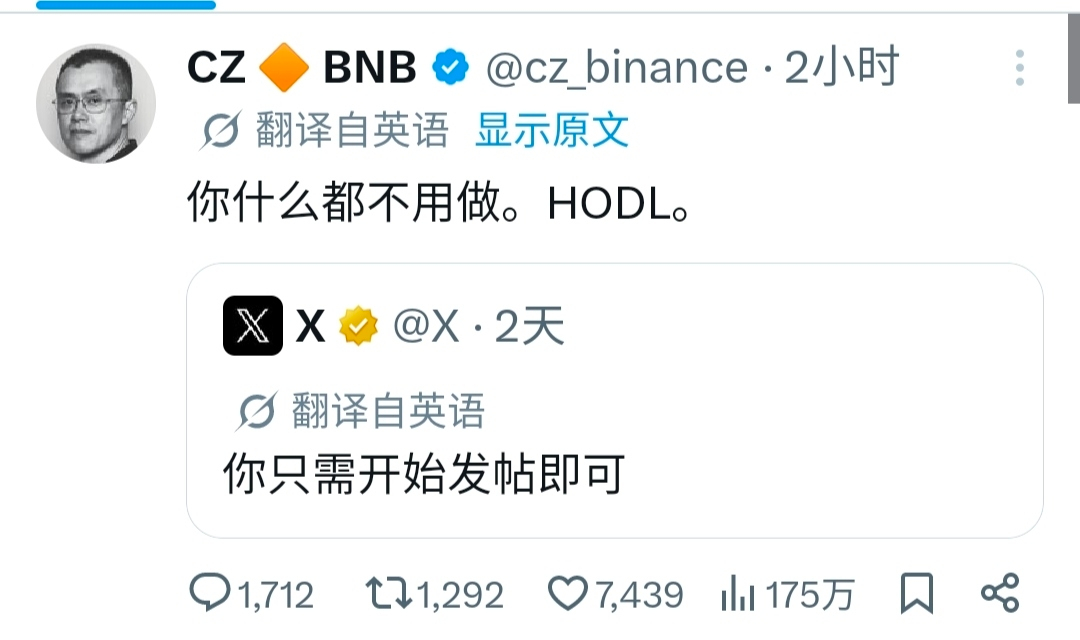
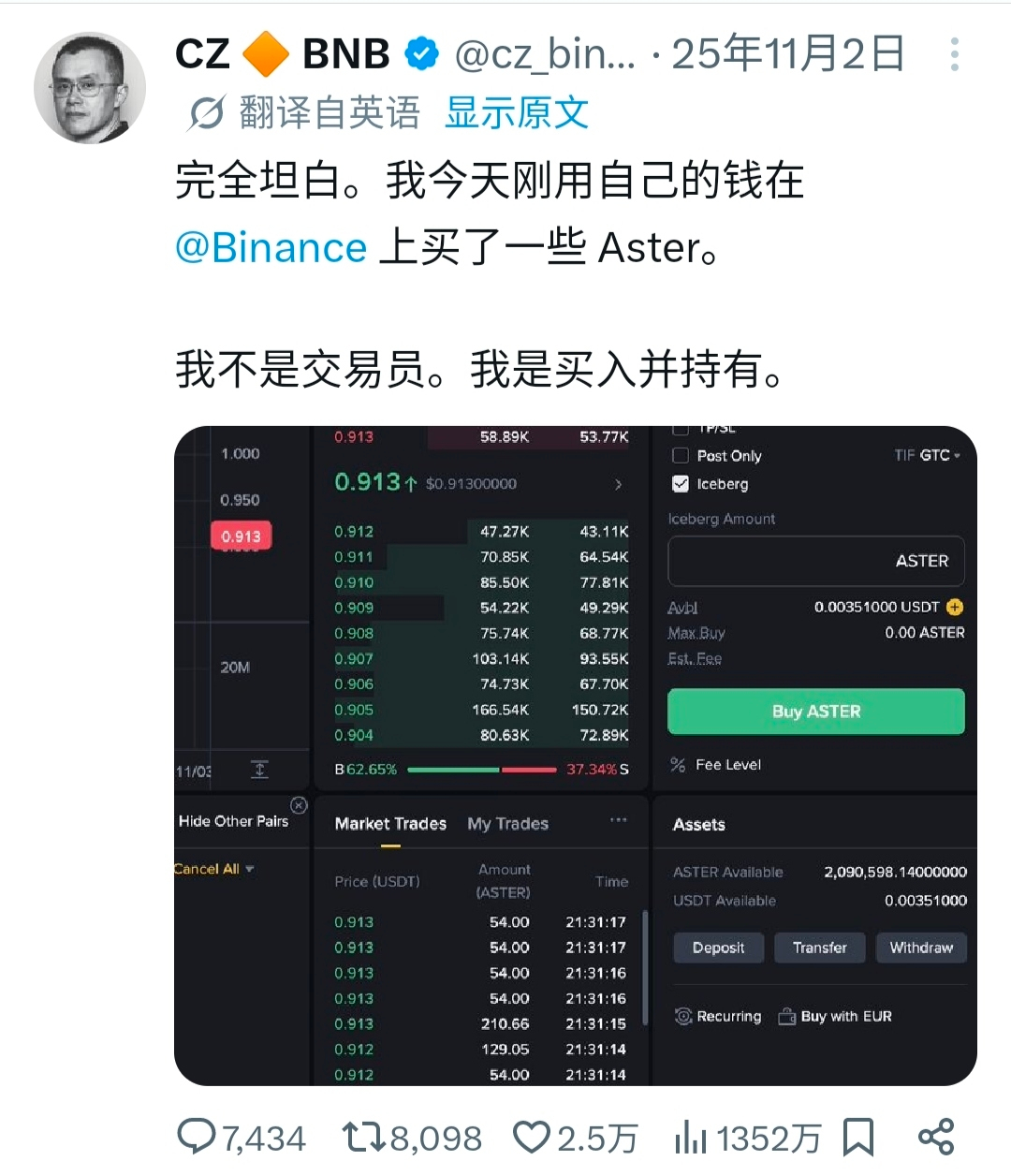
Seeing CZ say this, I've decided to DCA into ASTER every month, stacking and holding.
$ASTER
$ASTER
Log in to explore more content