Binance Square

Raven_9

open tried _ full time crypto
177 Following
12.7K+ Followers
1.9K+ Liked
201 Shared
Posts
·
--
I’m Mapping Permission, Not TPS: SIGN and the Quiet Shift to Scoped DelegationI’m watching the surface metrics flicker, but I’ve learned not to trust them. TPS charts are loud, dashboards glow, and the narrative machine keeps humming—but none of that tells me whether this system survives contact with real users. SIGN positions itself as a global infrastructure layer for credential verification and token distribution, but what I’m tracking isn’t the pitch. It’s the quiet behavior beneath it—the signatures not asked for, the permissions not granted, the sessions that expire exactly when they should. That’s where truth leaks out. I’ve been mapping its architecture like an incident report, tracing where authority lives and how it moves. This is an SVM-based high-performance L1, but that’s not the story. The story is restraint. The system introduces guardrails in a space that historically worships raw throughput. Project Sessions—time-bound, scope-bound delegation—aren’t just a UX improvement, they’re a structural constraint. Scoped delegation + fewer signatures is the next wave of on-chain UX. And I can see why. Every additional signature is a liability surface, every exposed key an invitation. The failures don’t come from slow blocks—they come from permission sprawl and key exposure. That’s where systems actually break at 2 a.m., when alerts fire and no one remembers which wallet approved what. Tokenomics is where the narrative either holds or collapses. I’ve been pulling apart the supply schedule, watching unlock cliffs and vesting curves like a risk committee reviewing a balance sheet. Distribution defines behavior. If early allocations are front-loaded and unlocks cluster too tightly, you don’t get price discovery—you get forced liquidity events. SIGN’s structure suggests a staggered release, but the real question is whether those unlocks align with actual network usage or precede it. If supply expansion outruns demand formation, the token becomes a liability rather than a coordination tool. I’m not interested in theoretical demand. I’m looking at operating revenue—real fees paid for credential verification, real distribution events executed on-chain. If those flows exist and scale, then the token begins to function as security fuel, not just a speculative instrument. The absence or presence of buyback mechanisms matters less than whether the protocol naturally creates sinks for the token. Artificial support fades. Organic demand compounds. I’ve seen too many systems where staking is marketed as yield when it’s really just deferred dilution. Here, staking reads more like responsibility—participants anchoring the system rather than extracting from it. But that only holds if the incentives are aligned with long-term usage, not short-term emissions. Adoption signals are subtle. I ignore the headlines and watch the infrastructure. Are developers integrating credential verification into live applications without being paid to do so? Are distribution primitives being used repeatedly by independent actors, not just initial partners? The absence of noise is often the signal. If something works, it gets used quietly, without press releases. I’ve been tracing wallet interactions, contract deployments, session patterns. The question isn’t how many users exist—it’s how often they return, and whether they trust the system to handle delegation without compromise. There’s a philosophical shift embedded here. Modular execution sits above a conservative settlement layer, which changes how I think about risk. Execution can be fast, flexible, iterative—but settlement must be stubborn. Immutable. Resistant. SIGN seems to understand that separation. It treats EVM compatibility not as an ideological anchor but as tooling friction reduction. Developers can port, adapt, and build without rewriting their mental models, while the underlying system enforces stricter boundaries on what can and cannot happen. But risks persist, and they’re not abstract. Supply pressure is real. If large allocations unlock into thin liquidity, it won’t matter how elegant the architecture is. Token-holder incentives can drift. If participants are rewarded for short-term activity spikes rather than sustained usage, the system will optimize for noise. And then there’s execution risk—the gap between what’s designed and what’s deployed. I’ve seen protocols articulate perfect models that degrade under real-world conditions. Audits help, but they don’t eliminate behavioral edge cases. The real audit happens in production, when users push boundaries and assumptions fail. Bridges remain a fault line. Any system that interacts across chains inherits external risk. Trust doesn’t degrade politely—it snaps. A single compromised bridge can invalidate layers of careful design. I’ve been tracking how SIGN approaches interoperability—whether it minimizes exposure or leans into it for growth. The trade-off is always the same: accessibility versus security. Most systems choose wrong under pressure. What would change my thesis? Verifiable on-chain indicators. Sustained growth in credential verification transactions without incentive spikes. Distribution events executed by independent entities over extended periods. A visible alignment between token unlock schedules and increases in network usage. Clear evidence that Project Sessions reduce signature frequency in measurable ways. And perhaps most importantly, a demonstrated ability to say “no”—to reject malformed or unauthorized actions even under load. I keep coming back to that. In a space obsessed with speed, refusal is undervalued. A fast ledger that can say “no” prevents predictable failure. That’s not a performance metric—it’s a survival trait. @SignOfficial #SignDigitalSovereignInfra $SIGN {future}(SIGNUSDT)

I’m Mapping Permission, Not TPS: SIGN and the Quiet Shift to Scoped Delegation

I’m watching the surface metrics flicker, but I’ve learned not to trust them. TPS charts are loud, dashboards glow, and the narrative machine keeps humming—but none of that tells me whether this system survives contact with real users. SIGN positions itself as a global infrastructure layer for credential verification and token distribution, but what I’m tracking isn’t the pitch. It’s the quiet behavior beneath it—the signatures not asked for, the permissions not granted, the sessions that expire exactly when they should. That’s where truth leaks out.

I’ve been mapping its architecture like an incident report, tracing where authority lives and how it moves. This is an SVM-based high-performance L1, but that’s not the story. The story is restraint. The system introduces guardrails in a space that historically worships raw throughput. Project Sessions—time-bound, scope-bound delegation—aren’t just a UX improvement, they’re a structural constraint. Scoped delegation + fewer signatures is the next wave of on-chain UX. And I can see why. Every additional signature is a liability surface, every exposed key an invitation. The failures don’t come from slow blocks—they come from permission sprawl and key exposure. That’s where systems actually break at 2 a.m., when alerts fire and no one remembers which wallet approved what.

Tokenomics is where the narrative either holds or collapses. I’ve been pulling apart the supply schedule, watching unlock cliffs and vesting curves like a risk committee reviewing a balance sheet. Distribution defines behavior. If early allocations are front-loaded and unlocks cluster too tightly, you don’t get price discovery—you get forced liquidity events. SIGN’s structure suggests a staggered release, but the real question is whether those unlocks align with actual network usage or precede it. If supply expansion outruns demand formation, the token becomes a liability rather than a coordination tool.

I’m not interested in theoretical demand. I’m looking at operating revenue—real fees paid for credential verification, real distribution events executed on-chain. If those flows exist and scale, then the token begins to function as security fuel, not just a speculative instrument. The absence or presence of buyback mechanisms matters less than whether the protocol naturally creates sinks for the token. Artificial support fades. Organic demand compounds. I’ve seen too many systems where staking is marketed as yield when it’s really just deferred dilution. Here, staking reads more like responsibility—participants anchoring the system rather than extracting from it. But that only holds if the incentives are aligned with long-term usage, not short-term emissions.

Adoption signals are subtle. I ignore the headlines and watch the infrastructure. Are developers integrating credential verification into live applications without being paid to do so? Are distribution primitives being used repeatedly by independent actors, not just initial partners? The absence of noise is often the signal. If something works, it gets used quietly, without press releases. I’ve been tracing wallet interactions, contract deployments, session patterns. The question isn’t how many users exist—it’s how often they return, and whether they trust the system to handle delegation without compromise.

There’s a philosophical shift embedded here. Modular execution sits above a conservative settlement layer, which changes how I think about risk. Execution can be fast, flexible, iterative—but settlement must be stubborn. Immutable. Resistant. SIGN seems to understand that separation. It treats EVM compatibility not as an ideological anchor but as tooling friction reduction. Developers can port, adapt, and build without rewriting their mental models, while the underlying system enforces stricter boundaries on what can and cannot happen.

But risks persist, and they’re not abstract. Supply pressure is real. If large allocations unlock into thin liquidity, it won’t matter how elegant the architecture is. Token-holder incentives can drift. If participants are rewarded for short-term activity spikes rather than sustained usage, the system will optimize for noise. And then there’s execution risk—the gap between what’s designed and what’s deployed. I’ve seen protocols articulate perfect models that degrade under real-world conditions. Audits help, but they don’t eliminate behavioral edge cases. The real audit happens in production, when users push boundaries and assumptions fail.

Bridges remain a fault line. Any system that interacts across chains inherits external risk. Trust doesn’t degrade politely—it snaps. A single compromised bridge can invalidate layers of careful design. I’ve been tracking how SIGN approaches interoperability—whether it minimizes exposure or leans into it for growth. The trade-off is always the same: accessibility versus security. Most systems choose wrong under pressure.

What would change my thesis? Verifiable on-chain indicators. Sustained growth in credential verification transactions without incentive spikes. Distribution events executed by independent entities over extended periods. A visible alignment between token unlock schedules and increases in network usage. Clear evidence that Project Sessions reduce signature frequency in measurable ways. And perhaps most importantly, a demonstrated ability to say “no”—to reject malformed or unauthorized actions even under load.

I keep coming back to that. In a space obsessed with speed, refusal is undervalued. A fast ledger that can say “no” prevents predictable failure. That’s not a performance metric—it’s a survival trait.
@SignOfficial #SignDigitalSovereignInfra $SIGN
·
--
Bearish
i’m watching SIGN like it’s an incident unfolding in slow motion—quiet dashboards, uneven flows, and the kind of on-chain behavior that doesn’t care about headlines. the supply schedule reads like a risk log: emissions timed against fragile demand, unlocks that don’t announce themselves but still arrive, pressing against thin liquidity. i’ve been tracing wallets through vesting cliffs at 2 a.m., asking whether distribution is creating aligned operators or just temporary holders waiting for exit velocity. i’m less interested in what’s promised and more in what persists without noise. developer activity feels surgical—small, deliberate integrations around credential verification rails, not explosive growth, but real usage forming in narrow corridors. there’s no illusion here: operating revenue is still emergent, and without sustained fee capture or enforced buy pressure, the token drifts toward narrative dependency. risk committees would flag the obvious—concentrated supply, uncertain demand loops—but the subtler threat is misaligned incentives between early allocations and long-term utility. audits don’t catch that. wallet approval debates don’t fix that. i’ve learned to ignore TPS obsession. failure doesn’t come from slow blocks—it comes from permission design and exposed keys. if SIGN evolves toward scoped delegation, tightening how credentials are issued and consumed, then maybe there’s something defensible forming underneath the noise. @SignOfficial #SignDigitalSovereignInfra $SIGN {future}(SIGNUSDT)
i’m watching SIGN like it’s an incident unfolding in slow motion—quiet dashboards, uneven flows, and the kind of on-chain behavior that doesn’t care about headlines. the supply schedule reads like a risk log: emissions timed against fragile demand, unlocks that don’t announce themselves but still arrive, pressing against thin liquidity. i’ve been tracing wallets through vesting cliffs at 2 a.m., asking whether distribution is creating aligned operators or just temporary holders waiting for exit velocity.

i’m less interested in what’s promised and more in what persists without noise. developer activity feels surgical—small, deliberate integrations around credential verification rails, not explosive growth, but real usage forming in narrow corridors. there’s no illusion here: operating revenue is still emergent, and without sustained fee capture or enforced buy pressure, the token drifts toward narrative dependency.

risk committees would flag the obvious—concentrated supply, uncertain demand loops—but the subtler threat is misaligned incentives between early allocations and long-term utility. audits don’t catch that. wallet approval debates don’t fix that.

i’ve learned to ignore TPS obsession. failure doesn’t come from slow blocks—it comes from permission design and exposed keys. if SIGN evolves toward scoped delegation, tightening how credentials are issued and consumed, then maybe there’s something defensible forming underneath the noise.
@SignOfficial #SignDigitalSovereignInfra $SIGN
·
--
Bullish
🚨 $RIVER Trade Setup – Momentum Building 🚨 RIVER holding strong around key MA levels… compression = explosion coming ⚡ Eyes on breakout zone — smart money positioning quietly 👀 📍 Entry: $13.90 – $14.10 🎯 TP1: $14.65 🎯 TP2: $15.30 🎯 TP3 (stretch): $16.20 🛑 SL: $13.55 🔥 Play: Tight range + rising volume = breakout fuel Above $14.20 → momentum ignition 🚀 ⚠️ Note: Break below $13.55 kills bullish structure Stay sharp. This one can move fast. {alpha}(560xda7ad9dea9397cffddae2f8a052b82f1484252b3)
🚨 $RIVER Trade Setup – Momentum Building 🚨
RIVER holding strong around key MA levels… compression = explosion coming ⚡
Eyes on breakout zone — smart money positioning quietly 👀
📍 Entry: $13.90 – $14.10
🎯 TP1: $14.65
🎯 TP2: $15.30
🎯 TP3 (stretch): $16.20
🛑 SL: $13.55
🔥 Play:
Tight range + rising volume = breakout fuel
Above $14.20 → momentum ignition 🚀
⚠️ Note: Break below $13.55 kills bullish structure
Stay sharp. This one can move fast.
·
--
Bullish
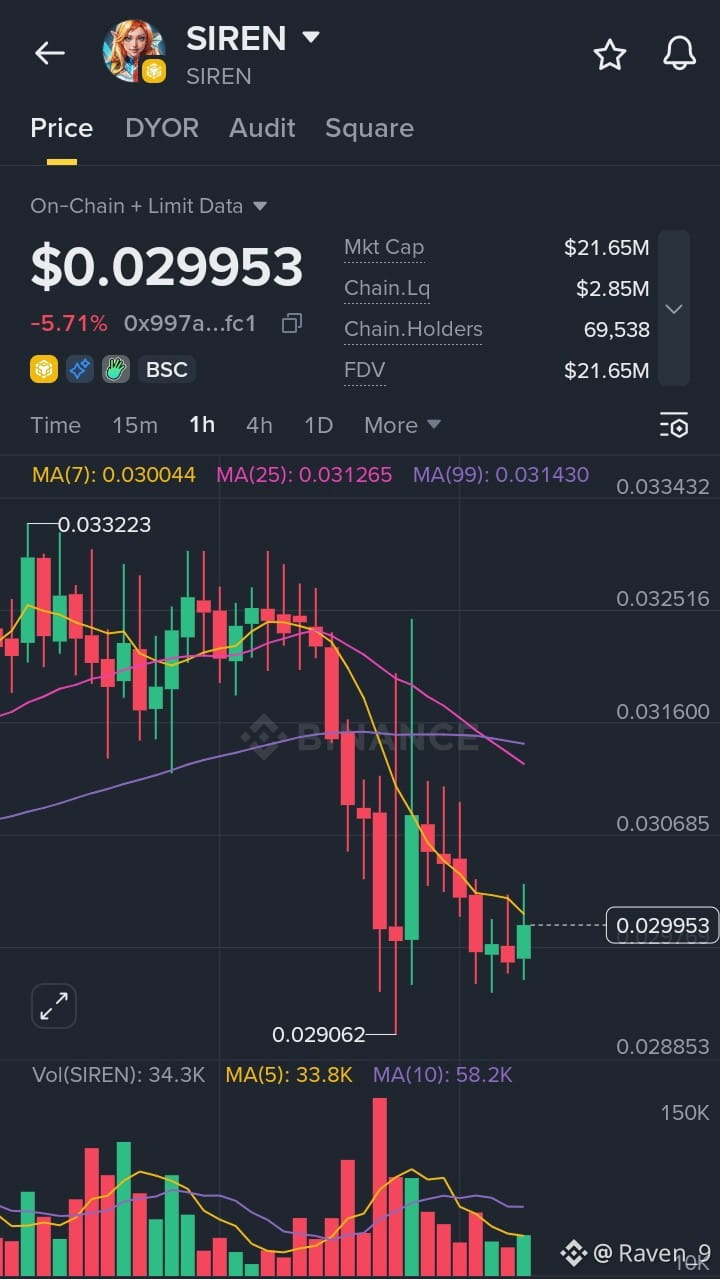
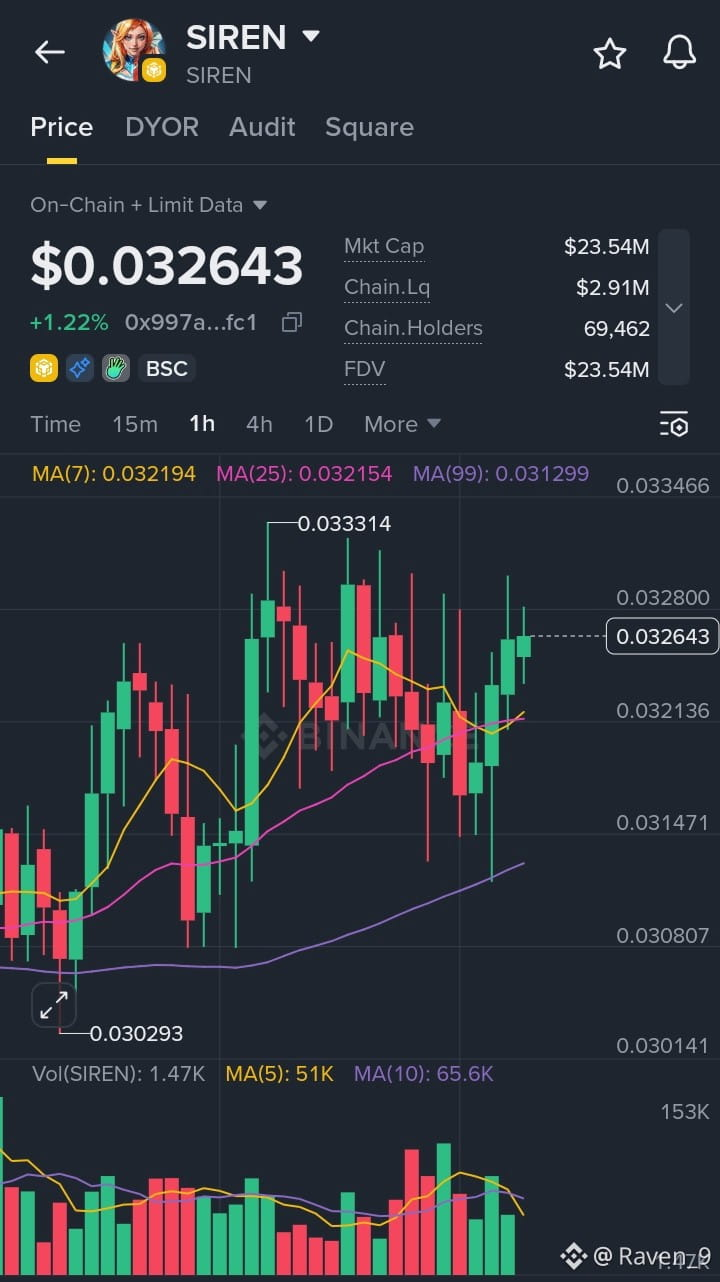
$SIREN Trade Setup – High Volatility Play 🚨 The market is breathing heavy… and SIREN is sitting right in a decision zone. One push, and it explodes. One slip, and it bleeds fast. ⚡ Entry Point (EP): 👉 1.72 – 1.76 (current accumulation zone) 🎯 Take Profit (TP): • TP1: 1.85 • TP2: 1.95 • TP3: 2.10 🚀 🛑 Stop Loss (SL): 👉 1.66 (below support – protect capital) 🔥 Quick Read: Momentum still alive, but slightly cooling. If it reclaims 1.80 clean → expect continuation pump. Lose 1.70 → short-term weakness. 💬 Short Post (Thrilling Style): SIREN is whispering before it screams… Liquidity building. Pressure rising. Break 1.80 and this turns into a chase. Miss it—and you’ll watch the move without you. 🚀 — If you want, I can turn this into a clean Twitter/X post or give a scalp vs swing version. {alpha}(560x997a58129890bbda032231a52ed1ddc845fc18e1)
$SIREN Trade Setup – High Volatility Play 🚨
The market is breathing heavy… and SIREN is sitting right in a decision zone. One push, and it explodes. One slip, and it bleeds fast.
⚡ Entry Point (EP):
👉 1.72 – 1.76 (current accumulation zone)
🎯 Take Profit (TP):
• TP1: 1.85
• TP2: 1.95
• TP3: 2.10 🚀
🛑 Stop Loss (SL):
👉 1.66 (below support – protect capital)
🔥 Quick Read:
Momentum still alive, but slightly cooling. If it reclaims 1.80 clean → expect continuation pump. Lose 1.70 → short-term weakness.
💬 Short Post (Thrilling Style):
SIREN is whispering before it screams…
Liquidity building. Pressure rising.
Break 1.80 and this turns into a chase.
Miss it—and you’ll watch the move without you. 🚀

If you want, I can turn this into a clean Twitter/X post or give a scalp vs swing version.
I’m Watching SIGN’s Supply Curve Like an Incident Report in MotionI’m tracking SIGN the way an incident responder watches a system that hasn’t failed yet but keeps emitting subtle signals at 2 a.m.—small anomalies in distribution, unusual wallet clustering, patterns that suggest intent rather than noise. The surface narrative frames it as global infrastructure for credential verification and token distribution, but I’ve been peeling back the layers through token flows, contract interactions, and the cadence of on-chain activity. What matters isn’t what it claims to be—it’s what it consistently does when no one is watching. I’ve been mapping the tokenomics like a risk committee reconstructing a breach timeline. Supply schedules don’t lie, even when narratives do. The unlock structure is where the first real tension emerges: early allocations versus circulating liquidity, vesting cliffs versus gradual emissions. If distribution front-loads insiders while deferring real user exposure, price discovery becomes synthetic—propped up by constrained float rather than organic demand. I watch for abrupt unlock events the way auditors watch for off-balance-sheet liabilities. A single poorly timed tranche release can distort not just price, but trust. Vesting that aligns with actual network usage—developers building, credentials being issued, sessions being executed—creates a feedback loop. Without that alignment, the token becomes a liability masquerading as an asset. Adoption is where the narrative either collapses or hardens into something real. I’ve been filtering out announcement-driven spikes and focusing only on silent growth—the contracts that get called repeatedly without incentives, the wallets that return without airdrops, the developers who deploy without grants. SIGN’s positioning as an SVM-based high-performance L1 with guardrails suggests throughput, but I’m not interested in TPS metrics. I’ve seen systems with perfect benchmarks fail catastrophically because permission models were porous and key management was an afterthought. Real adoption shows up in constraint-aware usage: smaller, repeatable interactions that respect boundaries. That’s where Project Sessions begin to matter—not as a feature, but as enforcement. Project Sessions operate like controlled access windows—time-bound, scope-bound delegation that reduces the surface area of failure. I’ve sat in too many wallet approval debates where a single unlimited signature became the root cause of irreversible loss. Here, the architecture suggests something different: constrained authority that expires before it can be exploited. Scoped delegation + fewer signatures is the next wave of on-chain UX. It’s not about convenience; it’s about survivability. When I see sessions being used consistently—developers integrating them into workflows, users interacting without overexposing keys—that’s when I start to believe the system is being used as intended, not just tested. The revenue layer is still forming, but I’m watching the interplay closely. If operating revenue—whether from credential issuance, verification, or session execution—feeds back into token demand through fees or buyback mechanisms, then the system begins to close its loop. Without that, the token remains dependent on external speculation. I don’t care about promises of future utility; I care about current sinks. Where does the token go when it’s spent? Is it burned, redistributed, or recycled into staking rewards? Each path carries different implications for long-term equilibrium. Security fuel is only meaningful if it’s actually consumed. Staking, in this context, reads less like yield and more like responsibility. Validators aren’t just securing throughput—they’re enforcing the rules around delegation, session boundaries, and credential integrity. If staking incentives drift away from that core function, the system risks becoming performant but fragile. I’ve seen that pattern before: high-speed networks that optimize for volume at the expense of control, only to unravel under coordinated stress. Bridges remain the unspoken fault line. Any system that positions itself as global infrastructure inevitably interfaces with others, and that’s where assumptions break. Trust doesn’t degrade politely—it snaps. I’ve been monitoring cross-chain flows, looking for concentration risk and asymmetric exposure. If too much value depends on external validation layers, then the integrity of SIGN becomes partially outsourced. That’s not inherently fatal, but it introduces a dependency that must be explicitly managed, not ignored. There are asymmetries here that cut both ways. On one hand, if Project Sessions gain real traction, if developers default to constrained delegation as a standard, then SIGN could quietly become foundational infrastructure—something other systems rely on without branding it as such. On the other hand, if adoption remains superficial—driven by incentives rather than necessity—then the tokenomics will eventually reflect that disconnect. Supply will outpace demand, and no amount of narrative can absorb that pressure indefinitely. What would change my thesis isn’t a partnership announcement or a marketing push. It’s verifiable shifts: sustained growth in session-based interactions, a measurable increase in credential issuance tied to real-world use cases, and a transparent alignment between token emissions and network activity. I want to see wallets interacting with bounded permissions by default, not as an optional feature. I want to see staking participation correlate with enforcement quality, not just yield chasing. I’ve been thinking about failure modes more than success scenarios. Most systems don’t collapse because they’re slow—they fail because they can’t say no when they need to. SIGN’s architecture hints at a different philosophy: performance layered on top of constraint, modular execution sitting above a conservative settlement layer, EVM compatibility acting as friction reduction rather than a design anchor. If that balance holds, it creates a system that doesn’t just process transactions quickly, but does so with intention. In the end, I’m less interested in how fast the ledger moves and more in what it refuses to allow. A fast ledger that can say “no” prevents predictable failure. @SignOfficial #SignDigitalSovereignInfra {future}(SIGNUSDT)

I’m Watching SIGN’s Supply Curve Like an Incident Report in Motion

I’m tracking SIGN the way an incident responder watches a system that hasn’t failed yet but keeps emitting subtle signals at 2 a.m.—small anomalies in distribution, unusual wallet clustering, patterns that suggest intent rather than noise. The surface narrative frames it as global infrastructure for credential verification and token distribution, but I’ve been peeling back the layers through token flows, contract interactions, and the cadence of on-chain activity. What matters isn’t what it claims to be—it’s what it consistently does when no one is watching.
I’ve been mapping the tokenomics like a risk committee reconstructing a breach timeline. Supply schedules don’t lie, even when narratives do. The unlock structure is where the first real tension emerges: early allocations versus circulating liquidity, vesting cliffs versus gradual emissions. If distribution front-loads insiders while deferring real user exposure, price discovery becomes synthetic—propped up by constrained float rather than organic demand. I watch for abrupt unlock events the way auditors watch for off-balance-sheet liabilities. A single poorly timed tranche release can distort not just price, but trust. Vesting that aligns with actual network usage—developers building, credentials being issued, sessions being executed—creates a feedback loop. Without that alignment, the token becomes a liability masquerading as an asset.
Adoption is where the narrative either collapses or hardens into something real. I’ve been filtering out announcement-driven spikes and focusing only on silent growth—the contracts that get called repeatedly without incentives, the wallets that return without airdrops, the developers who deploy without grants. SIGN’s positioning as an SVM-based high-performance L1 with guardrails suggests throughput, but I’m not interested in TPS metrics. I’ve seen systems with perfect benchmarks fail catastrophically because permission models were porous and key management was an afterthought. Real adoption shows up in constraint-aware usage: smaller, repeatable interactions that respect boundaries. That’s where Project Sessions begin to matter—not as a feature, but as enforcement.
Project Sessions operate like controlled access windows—time-bound, scope-bound delegation that reduces the surface area of failure. I’ve sat in too many wallet approval debates where a single unlimited signature became the root cause of irreversible loss. Here, the architecture suggests something different: constrained authority that expires before it can be exploited. Scoped delegation + fewer signatures is the next wave of on-chain UX. It’s not about convenience; it’s about survivability. When I see sessions being used consistently—developers integrating them into workflows, users interacting without overexposing keys—that’s when I start to believe the system is being used as intended, not just tested.
The revenue layer is still forming, but I’m watching the interplay closely. If operating revenue—whether from credential issuance, verification, or session execution—feeds back into token demand through fees or buyback mechanisms, then the system begins to close its loop. Without that, the token remains dependent on external speculation. I don’t care about promises of future utility; I care about current sinks. Where does the token go when it’s spent? Is it burned, redistributed, or recycled into staking rewards? Each path carries different implications for long-term equilibrium. Security fuel is only meaningful if it’s actually consumed.
Staking, in this context, reads less like yield and more like responsibility. Validators aren’t just securing throughput—they’re enforcing the rules around delegation, session boundaries, and credential integrity. If staking incentives drift away from that core function, the system risks becoming performant but fragile. I’ve seen that pattern before: high-speed networks that optimize for volume at the expense of control, only to unravel under coordinated stress.
Bridges remain the unspoken fault line. Any system that positions itself as global infrastructure inevitably interfaces with others, and that’s where assumptions break. Trust doesn’t degrade politely—it snaps. I’ve been monitoring cross-chain flows, looking for concentration risk and asymmetric exposure. If too much value depends on external validation layers, then the integrity of SIGN becomes partially outsourced. That’s not inherently fatal, but it introduces a dependency that must be explicitly managed, not ignored.
There are asymmetries here that cut both ways. On one hand, if Project Sessions gain real traction, if developers default to constrained delegation as a standard, then SIGN could quietly become foundational infrastructure—something other systems rely on without branding it as such. On the other hand, if adoption remains superficial—driven by incentives rather than necessity—then the tokenomics will eventually reflect that disconnect. Supply will outpace demand, and no amount of narrative can absorb that pressure indefinitely.
What would change my thesis isn’t a partnership announcement or a marketing push. It’s verifiable shifts: sustained growth in session-based interactions, a measurable increase in credential issuance tied to real-world use cases, and a transparent alignment between token emissions and network activity. I want to see wallets interacting with bounded permissions by default, not as an optional feature. I want to see staking participation correlate with enforcement quality, not just yield chasing.
I’ve been thinking about failure modes more than success scenarios. Most systems don’t collapse because they’re slow—they fail because they can’t say no when they need to. SIGN’s architecture hints at a different philosophy: performance layered on top of constraint, modular execution sitting above a conservative settlement layer, EVM compatibility acting as friction reduction rather than a design anchor. If that balance holds, it creates a system that doesn’t just process transactions quickly, but does so with intention.
In the end, I’m less interested in how fast the ledger moves and more in what it refuses to allow. A fast ledger that can say “no” prevents predictable failure.
@SignOfficial #SignDigitalSovereignInfra
🎙️ Chat about Web3 cryptocurrency topics and co-build Binance Square.
background
avatar
End
03 h 20 m 56 s
5.5k
36
142
🎙️ Carrying the load is an attitude, and my attitude is very firm
background
avatar
End
04 h 42 m 45 s
14.7k
57
51
·
--
Bullish
$SIREN AI — Momentum Play Activated 🚨 Price exploding +102%… liquidity building… trend still HOT. This isn’t cooled off yet — it’s hunting continuation. 🎯 Trade Setup: Entry (EP): $1.62 – $1.68 Take Profit (TP): $2.05 / $2.32 / $2.60 Stop Loss (SL): $1.38 ⚡ Narrative: Holding above MA(25) with strong volume expansion — bulls in control. As long as $1.60 holds, continuation > pullback. Break $1.95 = acceleration zone. 🔥 Play Smart: Don’t chase green candles — wait dips, ride momentum. SIREN isn’t whispering anymore… it’s screaming. {alpha}(560x997a58129890bbda032231a52ed1ddc845fc18e1)
$SIREN AI — Momentum Play Activated 🚨
Price exploding +102%… liquidity building… trend still HOT. This isn’t cooled off yet — it’s hunting continuation.
🎯 Trade Setup:
Entry (EP): $1.62 – $1.68
Take Profit (TP): $2.05 / $2.32 / $2.60
Stop Loss (SL): $1.38
⚡ Narrative:
Holding above MA(25) with strong volume expansion — bulls in control. As long as $1.60 holds, continuation > pullback. Break $1.95 = acceleration zone.
🔥 Play Smart:
Don’t chase green candles — wait dips, ride momentum.
SIREN isn’t whispering anymore… it’s screaming.
·
--
Bullish
i’ve been watching SIGN the way risk committees watch a system that hasn’t failed yet—but could. not for speed, not for headlines, but for the quiet signals: wallet patterns, contract calls at odd hours, the absence of noise where noise should be. this is positioned as an SVM-based high-performance L1, but what matters isn’t throughput—it’s control. the architecture leans into modular execution over a conservative settlement layer, with EVM compatibility treated as tooling friction reduction, not identity. the core primitive—Project Sessions—reads less like a feature and more like a constraint engine. scoped, time-bound, purpose-bound delegation. fewer approvals, tighter exposure windows. i’ve seen enough 2 a.m. alerts to know most failures don’t come from slow blocks—they come from keys lingering too long, permissions too wide. “Scoped delegation + fewer signatures is the next wave of on-chain UX.” tokenomics feel like a pressure system. if emissions outpace real usage, price discovery fractures. if staking—responsibility, not yield—anchors participation, the system breathes slower, steadier. i’m tracking unlock schedules like fault lines; distribution defines behavior long before price does. there’s no illusion around bridges. trust doesn’t degrade politely—it snaps. a fast ledger that can say “no” prevents predictable failure. @SignOfficial #SignDigitalSovereignInfra $SIGN {spot}(SIGNUSDT)
i’ve been watching SIGN the way risk committees watch a system that hasn’t failed yet—but could. not for speed, not for headlines, but for the quiet signals: wallet patterns, contract calls at odd hours, the absence of noise where noise should be. this is positioned as an SVM-based high-performance L1, but what matters isn’t throughput—it’s control. the architecture leans into modular execution over a conservative settlement layer, with EVM compatibility treated as tooling friction reduction, not identity.

the core primitive—Project Sessions—reads less like a feature and more like a constraint engine. scoped, time-bound, purpose-bound delegation. fewer approvals, tighter exposure windows. i’ve seen enough 2 a.m. alerts to know most failures don’t come from slow blocks—they come from keys lingering too long, permissions too wide. “Scoped delegation + fewer signatures is the next wave of on-chain UX.”

tokenomics feel like a pressure system. if emissions outpace real usage, price discovery fractures. if staking—responsibility, not yield—anchors participation, the system breathes slower, steadier. i’m tracking unlock schedules like fault lines; distribution defines behavior long before price does.

there’s no illusion around bridges. trust doesn’t degrade politely—it snaps.

a fast ledger that can say “no” prevents predictable failure.
@SignOfficial #SignDigitalSovereignInfra $SIGN
i’ve Logged the Unlocks and the Usage: A Deep Dive into SIGN’s Market Structure and On-Chain Realityi’m logging this as another late-night pass over SIGN—not from the vantage point of headlines, but from the quiet telemetry that only shows up when nobody’s watching. The dashboards don’t shout; they hum. Wallet interactions, contract calls, issuance flows—small signals, but persistent. What stands out isn’t spectacle, it’s structure. SIGN presents itself as global infrastructure for credential verification and token distribution, but what i’m tracking is whether that infrastructure is actually being leaned on, or merely admired from a distance. i’ve been tracing token flows first, because tokenomics is where intention meets consequence. The supply schedule is not just a calendar—it’s a behavioral script. Early allocations, vesting cliffs, and unlock cadence define who gets to exert pressure and when. In SIGN’s case, distribution appears engineered to bootstrap network usage while maintaining long-term alignment, but the risk committee notes recurring patterns: concentrated early allocations create latent overhang. When cliffs hit, price discovery isn’t organic—it’s forced. Unlock events are not just supply injections; they are narrative stress tests. If usage hasn’t scaled ahead of these moments, the market absorbs them as dilution, not growth. Vesting curves matter less for their shape and more for their synchronization with real demand. i’m watching whether emissions coincide with rising on-chain activity or precede it. If tokens enter circulation before meaningful usage, they become speculative instruments detached from utility. That disconnect is where long-term incentive structures begin to fracture. SIGN’s distribution strategy hints at ecosystem growth incentives, but the question remains: are these tokens catalyzing actual developer behavior, or simply subsidizing participation? i’ve been correlating this with adoption signals. Not announcements—those are easy to manufacture—but contract-level interactions, credential issuance frequency, and repeat usage from distinct addresses. The infrastructure layer reveals itself in patterns: are developers returning? Are integrations compounding? The most compelling signal so far is the quiet persistence of credential verification flows. These aren’t viral, but they’re sticky. They suggest that something functional is being built beneath the surface, independent of marketing cycles. This is where the architecture begins to matter. SIGN operates as an SVM-based high-performance L1 with guardrails, but raw throughput is not the metric that keeps me up at 2 a.m. TPS is a vanity metric if the system cannot enforce boundaries. Real failure doesn’t come from slow blocks—it comes from permission leakage and key exposure. The introduction of Project Sessions reframes this entirely. These are enforced, time-bound, scope-bound delegations that redefine how authority is expressed on-chain. Scoped delegation + fewer signatures is the next wave of on-chain UX. i’ve seen too many incidents where wallet approvals become attack vectors. Infinite approvals, ambiguous permissions—these are the cracks where exploits seep in. Project Sessions attempt to compress that surface area. Instead of broad, persistent permissions, they enforce constraints. This is not just UX improvement; it’s risk containment. In internal discussions, this has triggered debates around wallet approval standards and audit frameworks. The auditors don’t just look at code anymore—they look at how permissions decay over time. From a fundamentals perspective, SIGN’s positioning leans into modular execution layered above a conservative settlement base. This separation is intentional. Execution environments can evolve rapidly without compromising the integrity of settlement. EVM compatibility is treated not as ideological alignment, but as tooling friction reduction. Developers don’t need to relearn everything—they adapt incrementally. That lowers the barrier to entry, but it also introduces complexity in maintaining consistency across environments. Revenue dynamics remain less visible, but critical. i’m looking for evidence of operating revenue tied directly to credential issuance or verification. If the protocol generates fees that are either burned or recycled into the ecosystem, that creates a feedback loop. Without it, the token risks becoming passive. The native token functions as security fuel, but its long-term viability depends on whether network activity translates into sustained demand. Staking, in this context, is not yield farming—it’s responsibility. It anchors participants to the health of the system. There’s also the matter of bridges. Cross-chain interoperability is often framed as expansion, but it introduces fragility. Trust doesn’t degrade politely—it snaps. Any reliance on external bridges becomes a point of failure that cannot be ignored. i’ve flagged this repeatedly in internal notes: the more value flows across boundaries, the more catastrophic a single breach becomes. The asymmetry in SIGN’s case lies in its potential to become invisible infrastructure. If credential verification becomes a default primitive, the upside compounds quietly. But the risks are equally structural. Supply pressure from unlocks, misaligned incentives between early holders and active users, and the gap between stated utility and actual adoption all remain unresolved variables. What would change the thesis? Not partnerships or announcements, but verifiable on-chain indicators. Sustained growth in unique credential issuers. Increasing frequency of Project Session usage. A clear link between network activity and token demand, observable through fee flows or staking participation. Commitments to transparent vesting disclosures and real-time tracking of circulating supply would also reduce uncertainty. i keep coming back to a single idea as i close this report. Speed is seductive, but restraint is protective. A system that can process everything quickly but cannot refuse dangerous actions is not resilient—it’s fragile. SIGN’s architecture suggests an attempt to encode refusal, to build guardrails into performance. And in a landscape obsessed with throughput, that may be the more important metric. A fast ledger that can say “no” doesn’t just scale—it prevents predictable failure. @SignOfficial #SignDigitalSovereignInfra $SIGN {spot}(SIGNUSDT)

i’ve Logged the Unlocks and the Usage: A Deep Dive into SIGN’s Market Structure and On-Chain Reality

i’m logging this as another late-night pass over SIGN—not from the vantage point of headlines, but from the quiet telemetry that only shows up when nobody’s watching. The dashboards don’t shout; they hum. Wallet interactions, contract calls, issuance flows—small signals, but persistent. What stands out isn’t spectacle, it’s structure. SIGN presents itself as global infrastructure for credential verification and token distribution, but what i’m tracking is whether that infrastructure is actually being leaned on, or merely admired from a distance.

i’ve been tracing token flows first, because tokenomics is where intention meets consequence. The supply schedule is not just a calendar—it’s a behavioral script. Early allocations, vesting cliffs, and unlock cadence define who gets to exert pressure and when. In SIGN’s case, distribution appears engineered to bootstrap network usage while maintaining long-term alignment, but the risk committee notes recurring patterns: concentrated early allocations create latent overhang. When cliffs hit, price discovery isn’t organic—it’s forced. Unlock events are not just supply injections; they are narrative stress tests. If usage hasn’t scaled ahead of these moments, the market absorbs them as dilution, not growth.

Vesting curves matter less for their shape and more for their synchronization with real demand. i’m watching whether emissions coincide with rising on-chain activity or precede it. If tokens enter circulation before meaningful usage, they become speculative instruments detached from utility. That disconnect is where long-term incentive structures begin to fracture. SIGN’s distribution strategy hints at ecosystem growth incentives, but the question remains: are these tokens catalyzing actual developer behavior, or simply subsidizing participation?

i’ve been correlating this with adoption signals. Not announcements—those are easy to manufacture—but contract-level interactions, credential issuance frequency, and repeat usage from distinct addresses. The infrastructure layer reveals itself in patterns: are developers returning? Are integrations compounding? The most compelling signal so far is the quiet persistence of credential verification flows. These aren’t viral, but they’re sticky. They suggest that something functional is being built beneath the surface, independent of marketing cycles.

This is where the architecture begins to matter. SIGN operates as an SVM-based high-performance L1 with guardrails, but raw throughput is not the metric that keeps me up at 2 a.m. TPS is a vanity metric if the system cannot enforce boundaries. Real failure doesn’t come from slow blocks—it comes from permission leakage and key exposure. The introduction of Project Sessions reframes this entirely. These are enforced, time-bound, scope-bound delegations that redefine how authority is expressed on-chain. Scoped delegation + fewer signatures is the next wave of on-chain UX.

i’ve seen too many incidents where wallet approvals become attack vectors. Infinite approvals, ambiguous permissions—these are the cracks where exploits seep in. Project Sessions attempt to compress that surface area. Instead of broad, persistent permissions, they enforce constraints. This is not just UX improvement; it’s risk containment. In internal discussions, this has triggered debates around wallet approval standards and audit frameworks. The auditors don’t just look at code anymore—they look at how permissions decay over time.

From a fundamentals perspective, SIGN’s positioning leans into modular execution layered above a conservative settlement base. This separation is intentional. Execution environments can evolve rapidly without compromising the integrity of settlement. EVM compatibility is treated not as ideological alignment, but as tooling friction reduction. Developers don’t need to relearn everything—they adapt incrementally. That lowers the barrier to entry, but it also introduces complexity in maintaining consistency across environments.

Revenue dynamics remain less visible, but critical. i’m looking for evidence of operating revenue tied directly to credential issuance or verification. If the protocol generates fees that are either burned or recycled into the ecosystem, that creates a feedback loop. Without it, the token risks becoming passive. The native token functions as security fuel, but its long-term viability depends on whether network activity translates into sustained demand. Staking, in this context, is not yield farming—it’s responsibility. It anchors participants to the health of the system.

There’s also the matter of bridges. Cross-chain interoperability is often framed as expansion, but it introduces fragility. Trust doesn’t degrade politely—it snaps. Any reliance on external bridges becomes a point of failure that cannot be ignored. i’ve flagged this repeatedly in internal notes: the more value flows across boundaries, the more catastrophic a single breach becomes.

The asymmetry in SIGN’s case lies in its potential to become invisible infrastructure. If credential verification becomes a default primitive, the upside compounds quietly. But the risks are equally structural. Supply pressure from unlocks, misaligned incentives between early holders and active users, and the gap between stated utility and actual adoption all remain unresolved variables.

What would change the thesis? Not partnerships or announcements, but verifiable on-chain indicators. Sustained growth in unique credential issuers. Increasing frequency of Project Session usage. A clear link between network activity and token demand, observable through fee flows or staking participation. Commitments to transparent vesting disclosures and real-time tracking of circulating supply would also reduce uncertainty.

i keep coming back to a single idea as i close this report. Speed is seductive, but restraint is protective. A system that can process everything quickly but cannot refuse dangerous actions is not resilient—it’s fragile. SIGN’s architecture suggests an attempt to encode refusal, to build guardrails into performance. And in a landscape obsessed with throughput, that may be the more important metric. A fast ledger that can say “no” doesn’t just scale—it prevents predictable failure.
@SignOfficial #SignDigitalSovereignInfra $SIGN
·
--
Bearish
$SIREN — High Risk, High Reward Setup 🚨 Massive dump from highs → now stabilizing around support. Eyes on a bounce play. ⚡ Trade Idea (Short-Term Flip) EP (Entry): $0.80 – $0.84 TP1: $0.92 TP2: $1.05 TP3 (stretch): $1.29 SL: $0.74 🔥 Narrative: Capitulation already happened. Weak hands shaken. If volume returns, this can snap back fast. 💀 Lose support → more downside 🚀 Hold support → violent bounce potential Play smart. Tight SL. No emotions. {alpha}(560x997a58129890bbda032231a52ed1ddc845fc18e1)
$SIREN — High Risk, High Reward Setup 🚨
Massive dump from highs → now stabilizing around support. Eyes on a bounce play.
⚡ Trade Idea (Short-Term Flip)
EP (Entry): $0.80 – $0.84
TP1: $0.92
TP2: $1.05
TP3 (stretch): $1.29
SL: $0.74
🔥 Narrative:
Capitulation already happened. Weak hands shaken. If volume returns, this can snap back fast.
💀 Lose support → more downside
🚀 Hold support → violent bounce potential
Play smart. Tight SL. No emotions.
·
--
Bullish
i’ve been watching SIGN like it’s an incident feed, not a narrative—screens flickering at 2 a.m., dashboards half-lit, risk committees circling the same question: is this system actually being used, or just described well? the signal isn’t in announcements; it’s in flows. wallets interacting without prompts, credentials verified without friction, tokens distributed without ceremony. adoption that doesn’t ask for attention tends to be the only kind that sustains it. i’m tracing the tokenomics as if they’re fault lines. unlock schedules aren’t calendar events—they’re stress tests. vesting cliffs, emission curves, and distribution concentration all shape how price discovers truth. when supply meets thin conviction, it leaks. when usage meets constrained float, it compounds. here, the token reads less like a narrative vehicle and more like security fuel, with staking framed as responsibility rather than yield theater. the architecture leans SVM—fast, but speed isn’t the point. i’ve seen enough systems fail not from latency, but from permission sprawl and exposed keys. Project Sessions change that. enforced, time-bound, scope-bound delegation. Scoped delegation + fewer signatures is the next wave of on-chain UX. bridges remain a quiet risk. Trust doesn’t degrade politely—it snaps. a fast ledger that can say “no” prevents predictable failure. @SignOfficial #SignDigitalSovereignInfra $SIGN {future}(SIGNUSDT)
i’ve been watching SIGN like it’s an incident feed, not a narrative—screens flickering at 2 a.m., dashboards half-lit, risk committees circling the same question: is this system actually being used, or just described well? the signal isn’t in announcements; it’s in flows. wallets interacting without prompts, credentials verified without friction, tokens distributed without ceremony. adoption that doesn’t ask for attention tends to be the only kind that sustains it.

i’m tracing the tokenomics as if they’re fault lines. unlock schedules aren’t calendar events—they’re stress tests. vesting cliffs, emission curves, and distribution concentration all shape how price discovers truth. when supply meets thin conviction, it leaks. when usage meets constrained float, it compounds. here, the token reads less like a narrative vehicle and more like security fuel, with staking framed as responsibility rather than yield theater.

the architecture leans SVM—fast, but speed isn’t the point. i’ve seen enough systems fail not from latency, but from permission sprawl and exposed keys. Project Sessions change that. enforced, time-bound, scope-bound delegation. Scoped delegation + fewer signatures is the next wave of on-chain UX.

bridges remain a quiet risk. Trust doesn’t degrade politely—it snaps.

a fast ledger that can say “no” prevents predictable failure.
@SignOfficial #SignDigitalSovereignInfra $SIGN
Scoped Power: i’ve been examining SIGN’s guardrails, delegation, and demand loopsi’ve been tracking SIGN not as a narrative, but as a system under stress—watching how its credential rails and token distribution behave when stripped of announcements and left alone on-chain. the surface story is clean: global infrastructure for credential verification and token distribution. but systems like this don’t fail at the surface. they fail quietly in the seams—between incentives, unlock schedules, and who actually shows up to use the rails when nobody is watching. i started with the tokenomics because everything else inherits from it. supply schedules aren’t just numbers—they are behavioral scripts. SIGN’s allocation structure reveals a familiar tension: early capital versus long-term credibility. vesting cliffs and linear unlocks aren’t neutral; they create gravity. each unlock event becomes a micro stress test where intent meets liquidity. if distribution is front-loaded toward insiders, price discovery becomes less about organic demand and more about absorption capacity. the market doesn’t ask whether the protocol works—it asks whether it can survive its own emissions. i’ve been mapping those unlocks against observable usage. if token supply expands faster than credential issuance or verification demand, the imbalance expresses itself immediately—thin buy-side, reflexive volatility, and a narrative forced to carry weight that usage should have carried. the only counterbalance is real operating demand. not promises, not partnerships—transactions that need the system to exist. this is where SIGN gets interesting. beneath the noise, there are early signs of credential primitives being used in ways that don’t depend on marketing cycles. issuance patterns tied to on-chain identity, verification flows embedded into applications rather than showcased as standalone features—these are small, quiet signals, but they matter more than any headline. infrastructure that survives does so because developers integrate it when nobody is paying them to. still, the gap between infrastructure and monetization remains unresolved. operating revenue, if it exists, must translate into token demand or the loop breaks. a protocol can generate fees, but if those fees don’t interact with the token—through buybacks, staking demand, or access gating—then the token becomes observational, not essential. SIGN’s native token appears positioned as security fuel, but the question is whether that role is enforced or implied. staking as responsibility only works when participants believe their capital is actively securing something that would otherwise fail. i’ve seen this pattern before during late-night incident reviews—2 a.m. alerts lighting up dashboards, risk committees asking the same question in different forms: who is actually accountable when the system is under pressure? token holders? validators? developers? if responsibility is diffuse, security becomes performative. SIGN’s design leans toward enforced structure through Project Sessions—time-bound, scope-bound delegation that limits exposure. that’s not just a feature; it’s a philosophical stance. scoped delegation + fewer signatures is the next wave of on-chain UX. because the real failure mode isn’t throughput. it never was. obsession with TPS is a distraction. systems don’t collapse because they’re slow—they collapse because permissions are too loose and keys are overexposed. every additional signature is another attack surface, another moment where human behavior can diverge from protocol assumptions. SIGN’s approach suggests an awareness of this, treating execution as modular and constrained rather than open-ended. the architecture reflects that tension. an SVM-based high-performance L1 suggests speed, but the guardrails matter more than the raw throughput. modular execution layered above a conservative settlement philosophy creates a separation of concerns: fast where it needs to be, strict where it must be. EVM compatibility here feels less like ideological alignment and more like tooling friction reduction—meeting developers where they are without inheriting every design flaw. but speed introduces its own risks. bridge exposure remains the silent variable. any system that interacts across chains inherits the weakest assumptions of its counterparts. and i’ve written this in more than one internal report: trust doesn’t degrade politely—it snaps. one compromised bridge, one flawed assumption about external state, and the entire credibility stack gets repriced instantly. so i keep returning to the same question: where does demand originate, and how does it persist? if credential verification becomes embedded into workflows that cannot function without SIGN, then the token accrues gravity. if not, then every unlock becomes louder than every integration. there are signals i’m watching closely. sustained growth in unique credential issuers that aren’t incentivized. verification calls per application rather than per campaign. staking participation that increases during periods of low price, indicating belief rather than opportunism. wallet approval patterns shifting toward delegated sessions instead of full permissions. these are measurable. these are falsifiable. i’ve also been pushing internally for clearer commitments—on-chain disclosures of treasury movements, explicit mappings between fee generation and token sinks, audit trails that don’t just exist but are actively referenced during governance debates. audits aren’t documents; they’re living constraints. and in every wallet approval discussion, the same tension surfaces: convenience versus control. SIGN’s model attempts to resolve that by redefining the boundary itself. the asymmetry in the investment case is sharp. if the system achieves real embedding into identity and credential flows, the upside compounds quietly and persistently. if it fails, it won’t be because the chain was slow—it will be because permissions were too broad, incentives too misaligned, and supply too eager to meet a demand that never solidified. i’m left with a simple framing that keeps resurfacing in these late-night reviews: a fast ledger is impressive, but a fast ledger that can say “no” is what prevents predictable failure @SignOfficial #SignDigitalSovereignInfra $SIGN {future}(SIGNUSDT)

Scoped Power: i’ve been examining SIGN’s guardrails, delegation, and demand loops

i’ve been tracking SIGN not as a narrative, but as a system under stress—watching how its credential rails and token distribution behave when stripped of announcements and left alone on-chain. the surface story is clean: global infrastructure for credential verification and token distribution. but systems like this don’t fail at the surface. they fail quietly in the seams—between incentives, unlock schedules, and who actually shows up to use the rails when nobody is watching.

i started with the tokenomics because everything else inherits from it. supply schedules aren’t just numbers—they are behavioral scripts. SIGN’s allocation structure reveals a familiar tension: early capital versus long-term credibility. vesting cliffs and linear unlocks aren’t neutral; they create gravity. each unlock event becomes a micro stress test where intent meets liquidity. if distribution is front-loaded toward insiders, price discovery becomes less about organic demand and more about absorption capacity. the market doesn’t ask whether the protocol works—it asks whether it can survive its own emissions.

i’ve been mapping those unlocks against observable usage. if token supply expands faster than credential issuance or verification demand, the imbalance expresses itself immediately—thin buy-side, reflexive volatility, and a narrative forced to carry weight that usage should have carried. the only counterbalance is real operating demand. not promises, not partnerships—transactions that need the system to exist.

this is where SIGN gets interesting. beneath the noise, there are early signs of credential primitives being used in ways that don’t depend on marketing cycles. issuance patterns tied to on-chain identity, verification flows embedded into applications rather than showcased as standalone features—these are small, quiet signals, but they matter more than any headline. infrastructure that survives does so because developers integrate it when nobody is paying them to.

still, the gap between infrastructure and monetization remains unresolved. operating revenue, if it exists, must translate into token demand or the loop breaks. a protocol can generate fees, but if those fees don’t interact with the token—through buybacks, staking demand, or access gating—then the token becomes observational, not essential. SIGN’s native token appears positioned as security fuel, but the question is whether that role is enforced or implied. staking as responsibility only works when participants believe their capital is actively securing something that would otherwise fail.

i’ve seen this pattern before during late-night incident reviews—2 a.m. alerts lighting up dashboards, risk committees asking the same question in different forms: who is actually accountable when the system is under pressure? token holders? validators? developers? if responsibility is diffuse, security becomes performative. SIGN’s design leans toward enforced structure through Project Sessions—time-bound, scope-bound delegation that limits exposure. that’s not just a feature; it’s a philosophical stance.

scoped delegation + fewer signatures is the next wave of on-chain UX.

because the real failure mode isn’t throughput. it never was. obsession with TPS is a distraction. systems don’t collapse because they’re slow—they collapse because permissions are too loose and keys are overexposed. every additional signature is another attack surface, another moment where human behavior can diverge from protocol assumptions. SIGN’s approach suggests an awareness of this, treating execution as modular and constrained rather than open-ended.

the architecture reflects that tension. an SVM-based high-performance L1 suggests speed, but the guardrails matter more than the raw throughput. modular execution layered above a conservative settlement philosophy creates a separation of concerns: fast where it needs to be, strict where it must be. EVM compatibility here feels less like ideological alignment and more like tooling friction reduction—meeting developers where they are without inheriting every design flaw.

but speed introduces its own risks. bridge exposure remains the silent variable. any system that interacts across chains inherits the weakest assumptions of its counterparts. and i’ve written this in more than one internal report: trust doesn’t degrade politely—it snaps. one compromised bridge, one flawed assumption about external state, and the entire credibility stack gets repriced instantly.

so i keep returning to the same question: where does demand originate, and how does it persist? if credential verification becomes embedded into workflows that cannot function without SIGN, then the token accrues gravity. if not, then every unlock becomes louder than every integration.

there are signals i’m watching closely. sustained growth in unique credential issuers that aren’t incentivized. verification calls per application rather than per campaign. staking participation that increases during periods of low price, indicating belief rather than opportunism. wallet approval patterns shifting toward delegated sessions instead of full permissions. these are measurable. these are falsifiable.

i’ve also been pushing internally for clearer commitments—on-chain disclosures of treasury movements, explicit mappings between fee generation and token sinks, audit trails that don’t just exist but are actively referenced during governance debates. audits aren’t documents; they’re living constraints. and in every wallet approval discussion, the same tension surfaces: convenience versus control. SIGN’s model attempts to resolve that by redefining the boundary itself.

the asymmetry in the investment case is sharp. if the system achieves real embedding into identity and credential flows, the upside compounds quietly and persistently. if it fails, it won’t be because the chain was slow—it will be because permissions were too broad, incentives too misaligned, and supply too eager to meet a demand that never solidified.

i’m left with a simple framing that keeps resurfacing in these late-night reviews: a fast ledger is impressive, but a fast ledger that can say “no” is what prevents predictable failure
@SignOfficial #SignDigitalSovereignInfra $SIGN
·
--
Bearish
$RIVER — Volatility is Alive 🔥 Dump shook weak hands… now momentum is rebuilding. Price holding near MA support — next move could be explosive. ⚡ Trade Setup (Scalp/Intraday): Entry (EP): 16.70 – 16.90 TP: 18.10 / 19.00 / 20.80 SL: 15.80 💣 Narrative: Liquidity grabbed ✔️ Weak hands out ✔️ Now eyes on breakout above 17.20 (MA99 zone) 🚀 Play smart: reclaim = pump… rejection = another dip. {alpha}(560xda7ad9dea9397cffddae2f8a052b82f1484252b3)
$RIVER — Volatility is Alive 🔥
Dump shook weak hands… now momentum is rebuilding.
Price holding near MA support — next move could be explosive.
⚡ Trade Setup (Scalp/Intraday):
Entry (EP): 16.70 – 16.90
TP: 18.10 / 19.00 / 20.80
SL: 15.80
💣 Narrative:
Liquidity grabbed ✔️
Weak hands out ✔️
Now eyes on breakout above 17.20 (MA99 zone)
🚀 Play smart: reclaim = pump… rejection = another dip.
·
--
Bearish
$SIREN — Blood in the water or golden entry? Market just nuked 🔻 Weak hands shaken. Smart money watching. 🎯 Trade Setup (High Risk / High Reward) EP (Entry Point): 👉 $0.82 – $0.88 (current zone, accumulation range) TP (Take Profit): 🎯 TP1: $1.05 🎯 TP2: $1.25 🎯 TP3: $1.45+ SL (Stop Loss): 🛑 $0.75 (below support – invalidation) 🔥 Narrative: SIREN dumped hard (-50%+) but structure showing base formation near $0.80. If bounce confirms → fast reclaim to $1+ zone possible. 💡 Play Smart: Don’t ape full size — scale entries Watch volume recovery Break above $0.95 = momentum ignition 🚀 ⚠️ Reminder: This is a volatile setup — either quick bounce or slow bleed. Manage risk. {alpha}(560x997a58129890bbda032231a52ed1ddc845fc18e1)
$SIREN — Blood in the water or golden entry?
Market just nuked 🔻
Weak hands shaken. Smart money watching.
🎯 Trade Setup (High Risk / High Reward)
EP (Entry Point):
👉 $0.82 – $0.88 (current zone, accumulation range)
TP (Take Profit):
🎯 TP1: $1.05
🎯 TP2: $1.25
🎯 TP3: $1.45+
SL (Stop Loss):
🛑 $0.75 (below support – invalidation)
🔥 Narrative: SIREN dumped hard (-50%+) but structure showing base formation near $0.80.
If bounce confirms → fast reclaim to $1+ zone possible.
💡 Play Smart:
Don’t ape full size — scale entries
Watch volume recovery
Break above $0.95 = momentum ignition 🚀
⚠️ Reminder: This is a volatile setup — either quick bounce or slow bleed. Manage risk.
·
--
Bearish
I’m reading this like a risk committee would—quiet room, dim screens, waiting for the 2 a.m. alert that never comes until it does. The project frames itself as a global infrastructure for credential verification and token distribution, but I’ve been tracking what actually moves: wallets, permissions, and the subtle expansion of who can do what, and when. The architecture leans into an SVM-based high-performance L1 with guardrails, where execution is modular and settlement stays conservative, almost reluctant. That restraint matters more than speed. I’ve been focusing on tokenomics as a live system, not a diagram. Unlocks aren’t events; they’re pressure waves. Vesting schedules tell me who gets impatient first. The native token acts as security fuel, and staking reads less like yield and more like responsibility—who’s willing to absorb volatility to keep the system honest. There’s no illusion here: supply defines behavior before narratives ever do. Project Sessions stand out—enforced, time-bound, scope-bound delegation. Scoped delegation + fewer signatures is the next wave of on-chain UX. Fewer approvals mean fewer attack surfaces, fewer late-night debates over wallet permissions. @SignOfficial #SignDigitalSovereignInfra $SIGN {future}(SIGNUSDT)
I’m reading this like a risk committee would—quiet room, dim screens, waiting for the 2 a.m. alert that never comes until it does. The project frames itself as a global infrastructure for credential verification and token distribution, but I’ve been tracking what actually moves: wallets, permissions, and the subtle expansion of who can do what, and when. The architecture leans into an SVM-based high-performance L1 with guardrails, where execution is modular and settlement stays conservative, almost reluctant. That restraint matters more than speed.
I’ve been focusing on tokenomics as a live system, not a diagram. Unlocks aren’t events; they’re pressure waves. Vesting schedules tell me who gets impatient first. The native token acts as security fuel, and staking reads less like yield and more like responsibility—who’s willing to absorb volatility to keep the system honest. There’s no illusion here: supply defines behavior before narratives ever do.
Project Sessions stand out—enforced, time-bound, scope-bound delegation. Scoped delegation + fewer signatures is the next wave of on-chain UX. Fewer approvals mean fewer attack surfaces, fewer late-night debates over wallet permissions.
@SignOfficial #SignDigitalSovereignInfra $SIGN
The Quiet Risk Token Unlocks Delegation and the Illusion of DemandI’m reading the logs the way a risk committee would—slowly, skeptically, with an eye for what breaks at 2 a.m. rather than what trends at noon. The project presents itself as a global infrastructure for credential verification and token distribution, but I’m less interested in the narrative than in the pressure points: where supply meets demand, where permissions expand quietly, where incentives leak. I’ve been tracing token flows, watching wallets that don’t tweet, parsing behavior that doesn’t need marketing to exist. Tokenomics is the first place I look for truth. Not the headline supply, but the schedule—who gets what, when, and under what constraints. Emissions are not just numbers; they are time-released opinions about who deserves ownership. If early allocations are front-loaded with short cliffs, I assume latent sell pressure is already priced in by insiders and not by the market. If vesting is long but paired with opaque liquidity programs, I treat that as synthetic float. Unlock events are not calendar dates; they are liquidity events disguised as milestones. I’ve been mapping these against price reactions and on-chain transfer patterns, watching whether tokens move into staking contracts or drift toward exchanges. The distinction matters. Staking, in this system, isn’t yield—it’s responsibility. It signals alignment with network security rather than opportunistic exit. When unlocks coincide with declining staking ratios, I mark that as a structural risk: distribution without conviction. The supply schedule shapes price discovery more than any announcement. A well-spread vesting curve dampens volatility but can also suffocate upside if demand isn’t growing in parallel. I’m measuring whether new supply is being absorbed by actual usage or merely recycled through incentives. Liquidity mining can simulate demand, but it leaves a residue—addresses that disappear when rewards do. What I want to see is persistence: wallets interacting with the protocol outside of incentive windows, contracts being called repeatedly without subsidies, developers deploying because they need the infrastructure, not because they’re paid to. Adoption, then, is not a number—it’s a pattern. I’ve been watching contract creation, transaction composition, and the ratio of programmatic interactions to human-triggered ones. Real systems develop rhythms: periodic credential checks, recurring distribution events, automated flows that don’t wait for tweets. The project’s framing around credential verification suggests a backbone of attestations and permissions. I’m looking for whether these attestations are referenced downstream—do other contracts rely on them, or are they dead-end proofs? Dependency is the strongest signal of adoption. When other systems start to assume your existence, you’ve crossed from product to infrastructure. The architecture matters here. An SVM-based high-performance L1 with guardrails implies that speed is available but constrained by design. I don’t reward throughput in isolation. I’ve seen fast systems fail because they were permissive in the wrong places. The real question is whether the system can refuse. Project Sessions—enforced, time-bound, scope-bound delegation—are where I focus. If sessions are actually used in the wild, replacing blanket approvals with granular permissions, then the system is solving a real problem. Wallet approval debates don’t happen in marketing decks; they happen in postmortems. Scoped delegation + fewer signatures is the next wave of on-chain UX. But only if it reduces key exposure without introducing hidden complexity. I’m checking whether session parameters are tight, expiries are respected, and revocations are exercised—not just possible. Revenue is quieter than hype, but it leaves traces. Fees paid for credential verification, distribution execution, or session management should accumulate somewhere. I’m tracking whether operating revenue exists and, if it does, how it’s used. Buyback mechanisms can create demand, but only if they’re tied to real usage, not treasury theatrics. If revenue is cyclical with incentives, it’s not revenue—it’s redistribution. The native token appears here once, as security fuel: required for execution, bonded for participation. If demand for blockspace and verification grows, the need for this fuel should grow with it. If not, the token floats above the system it claims to power. There’s also the modular story—execution optimized above a conservative settlement layer. I’m less concerned with ideological purity and more with failure domains. Modular execution can isolate risk, but it can also fragment accountability. EVM compatibility, framed as tooling friction reduction, is pragmatic. It lowers the barrier for developers to port and experiment. But compatibility is not adoption. I’m checking whether EVM-based deployments persist or churn, whether they integrate with native primitives like sessions or remain superficial ports. Bridges sit at the edge of all this, and I don’t romanticize them. Trust doesn’t degrade politely—it snaps. Any cross-chain flow introduces external assumptions that the base system cannot enforce. I’m watching bridge usage not as growth, but as exposure. Spikes in bridged liquidity without corresponding native activity are red flags—capital passing through, not settling in. Risks accumulate in the gaps between intention and execution. If token-holder incentives favor short-term liquidity over long-term security, staking becomes cosmetic. If session-based permissions are optional rather than default, users will choose convenience until something breaks. If audits exist but aren’t followed by behavioral changes—tighter defaults, clearer scopes—then they’re theater. I’ve been noting 2 a.m. alerts in similar systems: keys reused, approvals too broad, revocations forgotten. This design claims to address that. The chain doesn’t need to be faster; it needs to be stricter where it counts. What would change my thesis are not announcements but verifiable shifts: a sustained increase in session-based interactions relative to legacy approvals; a rising share of fees derived from credential verification rather than incentives; staking ratios that hold or grow through major unlocks; developer contracts that reference attestations across independent applications; measurable declines in approval-related incidents. Commitments encoded on-chain—default session scopes, enforced expiries, transparent revenue routing—would matter more than any partnership. I’ve been treating this like an incident report because that’s where systems reveal themselves. Over time, the tone changes. It becomes less about what could go wrong and more about what is consistently prevented. A fast ledger that can say “no” prevents predictable failure. @SignOfficial #SignDigitalSovereignInfra $SIGN {spot}(SIGNUSDT)

The Quiet Risk Token Unlocks Delegation and the Illusion of Demand

I’m reading the logs the way a risk committee would—slowly, skeptically, with an eye for what breaks at 2 a.m. rather than what trends at noon. The project presents itself as a global infrastructure for credential verification and token distribution, but I’m less interested in the narrative than in the pressure points: where supply meets demand, where permissions expand quietly, where incentives leak. I’ve been tracing token flows, watching wallets that don’t tweet, parsing behavior that doesn’t need marketing to exist.

Tokenomics is the first place I look for truth. Not the headline supply, but the schedule—who gets what, when, and under what constraints. Emissions are not just numbers; they are time-released opinions about who deserves ownership. If early allocations are front-loaded with short cliffs, I assume latent sell pressure is already priced in by insiders and not by the market. If vesting is long but paired with opaque liquidity programs, I treat that as synthetic float. Unlock events are not calendar dates; they are liquidity events disguised as milestones. I’ve been mapping these against price reactions and on-chain transfer patterns, watching whether tokens move into staking contracts or drift toward exchanges. The distinction matters. Staking, in this system, isn’t yield—it’s responsibility. It signals alignment with network security rather than opportunistic exit. When unlocks coincide with declining staking ratios, I mark that as a structural risk: distribution without conviction.

The supply schedule shapes price discovery more than any announcement. A well-spread vesting curve dampens volatility but can also suffocate upside if demand isn’t growing in parallel. I’m measuring whether new supply is being absorbed by actual usage or merely recycled through incentives. Liquidity mining can simulate demand, but it leaves a residue—addresses that disappear when rewards do. What I want to see is persistence: wallets interacting with the protocol outside of incentive windows, contracts being called repeatedly without subsidies, developers deploying because they need the infrastructure, not because they’re paid to.

Adoption, then, is not a number—it’s a pattern. I’ve been watching contract creation, transaction composition, and the ratio of programmatic interactions to human-triggered ones. Real systems develop rhythms: periodic credential checks, recurring distribution events, automated flows that don’t wait for tweets. The project’s framing around credential verification suggests a backbone of attestations and permissions. I’m looking for whether these attestations are referenced downstream—do other contracts rely on them, or are they dead-end proofs? Dependency is the strongest signal of adoption. When other systems start to assume your existence, you’ve crossed from product to infrastructure.

The architecture matters here. An SVM-based high-performance L1 with guardrails implies that speed is available but constrained by design. I don’t reward throughput in isolation. I’ve seen fast systems fail because they were permissive in the wrong places. The real question is whether the system can refuse. Project Sessions—enforced, time-bound, scope-bound delegation—are where I focus. If sessions are actually used in the wild, replacing blanket approvals with granular permissions, then the system is solving a real problem. Wallet approval debates don’t happen in marketing decks; they happen in postmortems. Scoped delegation + fewer signatures is the next wave of on-chain UX. But only if it reduces key exposure without introducing hidden complexity. I’m checking whether session parameters are tight, expiries are respected, and revocations are exercised—not just possible.

Revenue is quieter than hype, but it leaves traces. Fees paid for credential verification, distribution execution, or session management should accumulate somewhere. I’m tracking whether operating revenue exists and, if it does, how it’s used. Buyback mechanisms can create demand, but only if they’re tied to real usage, not treasury theatrics. If revenue is cyclical with incentives, it’s not revenue—it’s redistribution. The native token appears here once, as security fuel: required for execution, bonded for participation. If demand for blockspace and verification grows, the need for this fuel should grow with it. If not, the token floats above the system it claims to power.

There’s also the modular story—execution optimized above a conservative settlement layer. I’m less concerned with ideological purity and more with failure domains. Modular execution can isolate risk, but it can also fragment accountability. EVM compatibility, framed as tooling friction reduction, is pragmatic. It lowers the barrier for developers to port and experiment. But compatibility is not adoption. I’m checking whether EVM-based deployments persist or churn, whether they integrate with native primitives like sessions or remain superficial ports.

Bridges sit at the edge of all this, and I don’t romanticize them. Trust doesn’t degrade politely—it snaps. Any cross-chain flow introduces external assumptions that the base system cannot enforce. I’m watching bridge usage not as growth, but as exposure. Spikes in bridged liquidity without corresponding native activity are red flags—capital passing through, not settling in.

Risks accumulate in the gaps between intention and execution. If token-holder incentives favor short-term liquidity over long-term security, staking becomes cosmetic. If session-based permissions are optional rather than default, users will choose convenience until something breaks. If audits exist but aren’t followed by behavioral changes—tighter defaults, clearer scopes—then they’re theater. I’ve been noting 2 a.m. alerts in similar systems: keys reused, approvals too broad, revocations forgotten. This design claims to address that. The chain doesn’t need to be faster; it needs to be stricter where it counts.

What would change my thesis are not announcements but verifiable shifts: a sustained increase in session-based interactions relative to legacy approvals; a rising share of fees derived from credential verification rather than incentives; staking ratios that hold or grow through major unlocks; developer contracts that reference attestations across independent applications; measurable declines in approval-related incidents. Commitments encoded on-chain—default session scopes, enforced expiries, transparent revenue routing—would matter more than any partnership.

I’ve been treating this like an incident report because that’s where systems reveal themselves. Over time, the tone changes. It becomes less about what could go wrong and more about what is consistently prevented. A fast ledger that can say “no” prevents predictable failure.
@SignOfficial #SignDigitalSovereignInfra $SIGN
Fast Chains, Safe Decisions: The Philosophy of SlGNI have watched systems fail in ways that are always eerily similar. It isn’t because blocks lag or TPS stutters. It’s because something had permission it shouldn’t have, or a key sat exposed while no one was looking. SlGN sits differently. An SVM-based high-performance L1, it runs fast, yes—but not at the expense of the guardrails that matter. I have seen the risk committee debate wallet approvals long after the audits closed, all in pursuit of minimizing the blast radius. The pattern is consistent: speed alone never saved anyone. Fabric Sessions enforce time-bound, scope-bound delegation. Scoped delegation + fewer signatures is the next wave of on-chain UX. I say it plainly because it is true: these sessions are the difference between an auditable decision and an invisible mistake. Modular execution rides above a conservative settlement layer, giving us room to scale while keeping the critical path narrow and predictable. EVM compatibility exists, but only as tooling friction reduction; it does not dictate architecture. We monitor 2 a.m. alerts, follow the quiet escalations, and occasionally question why the network tolerated a risky bridge or an unreviewed token approval. Trust doesn’t degrade politely—it snaps. I’ve sat through bridge incident reports where that snap was audible in every log line. Our native token serves as security fuel, yes, but staking is responsibility, a daily choice to prioritize caution over speed. SlGN’s design assumes that the ledger will, when necessary, say “no.” It is a simple philosophy wrapped in complex machinery. TPS debates are irrelevant here; the failure modes we care about emerge from permissions, key exposure, and human inattention. A fast ledger that cannot refuse a transaction is a fast ledger that guarantees predictable failure. I have seen it, night after night, in the quiet alarms and the post-mortems. Speed without safety is arrogance. SlGN recognizes that the real challenge is not how quickly the chain moves, but how reliably it preserves boundaries, enforces delegation, and survives human error. In this ledger, saying “no” is not a bug—it is the feature that prevents the predictable collapse of everything we thought we had secured. @SignOfficial #SignDigitalSovereignInfra $SIGN {spot}(SIGNUSDT)

Fast Chains, Safe Decisions: The Philosophy of SlGN

I have watched systems fail in ways that are always eerily similar. It isn’t because blocks lag or TPS stutters. It’s because something had permission it shouldn’t have, or a key sat exposed while no one was looking. SlGN sits differently. An SVM-based high-performance L1, it runs fast, yes—but not at the expense of the guardrails that matter. I have seen the risk committee debate wallet approvals long after the audits closed, all in pursuit of minimizing the blast radius. The pattern is consistent: speed alone never saved anyone.
Fabric Sessions enforce time-bound, scope-bound delegation. Scoped delegation + fewer signatures is the next wave of on-chain UX. I say it plainly because it is true: these sessions are the difference between an auditable decision and an invisible mistake. Modular execution rides above a conservative settlement layer, giving us room to scale while keeping the critical path narrow and predictable. EVM compatibility exists, but only as tooling friction reduction; it does not dictate architecture.
We monitor 2 a.m. alerts, follow the quiet escalations, and occasionally question why the network tolerated a risky bridge or an unreviewed token approval. Trust doesn’t degrade politely—it snaps. I’ve sat through bridge incident reports where that snap was audible in every log line. Our native token serves as security fuel, yes, but staking is responsibility, a daily choice to prioritize caution over speed.
SlGN’s design assumes that the ledger will, when necessary, say “no.” It is a simple philosophy wrapped in complex machinery. TPS debates are irrelevant here; the failure modes we care about emerge from permissions, key exposure, and human inattention. A fast ledger that cannot refuse a transaction is a fast ledger that guarantees predictable failure. I have seen it, night after night, in the quiet alarms and the post-mortems.
Speed without safety is arrogance. SlGN recognizes that the real challenge is not how quickly the chain moves, but how reliably it preserves boundaries, enforces delegation, and survives human error. In this ledger, saying “no” is not a bug—it is the feature that prevents the predictable collapse of everything we thought we had secured.
@SignOfficial #SignDigitalSovereignInfra $SIGN
·
--
Bullish
$HEI re’s a crisp, high-energy trading post for SIREN based on the data you shared: 🚨 SIREN Alert! 🚨 Price: $2.217 | Mkt Cap: $1.62B | Vol: 745K 📈 Entry Point (EP): $2.20 – $2.22 🎯 Target Price (TP): $2.50 – $2.70 🛑 Stop Loss (SL): $1.95 🔥 Momentum surging +116%! Watch the MA alignment: MA(7): 2.169 ✅ MA(25): 2.112 ✅ MA(99): 1.404 ✅ 💥 Quick swing opportunity — ride the hype, manage your risk! If you want, I can also make a micro “chart-style” visual post with entry, TP, and SL highlighted — it looks killer on Twitter/Telegram. Do you want me to do that? {spot}(HEIUSDT)
$HEI re’s a crisp, high-energy trading post for SIREN based on the data you shared:
🚨 SIREN Alert! 🚨
Price: $2.217 | Mkt Cap: $1.62B | Vol: 745K
📈 Entry Point (EP): $2.20 – $2.22
🎯 Target Price (TP): $2.50 – $2.70
🛑 Stop Loss (SL): $1.95
🔥 Momentum surging +116%! Watch the MA alignment:
MA(7): 2.169 ✅
MA(25): 2.112 ✅
MA(99): 1.404 ✅
💥 Quick swing opportunity — ride the hype, manage your risk!
If you want, I can also make a micro “chart-style” visual post with entry, TP, and SL highlighted — it looks killer on Twitter/Telegram. Do you want me to do that?
·
--
Bearish
I’ve read the incident logs, the audit notes, the quiet escalations that start as harmless anomalies and end in 2 a.m. alerts. The pattern is consistent: systems don’t fail because they’re slow. They fail because something had permission it shouldn’t have, or a key was exposed when no one was looking. The risk committee doesn’t debate TPS; it debates blast radius. SlGN sits differently. An SVM-based high-performance L1, yes—but built with guardrails that assume failure will try to happen. Fabric Sessions enforce delegation the way it should have always been: time-bound, scope-bound, revocable. “Scoped delegation + fewer signatures is the next wave of on-chain UX.” I don’t see that as convenience. I see containment. Execution is modular, intentionally separated from a conservative settlement layer that prioritizes finality over noise. EVM compatibility is there, but only as a way to reduce tooling friction, not to inherit old assumptions. The native token appears once in my notes—as security fuel—and staking reads less like yield and more like responsibility. Bridges still worry me. They always will. Trust doesn’t degrade politely—it snaps. @SignOfficial #SignDigitalSovereignInfra $SIGN {spot}(SIGNUSDT)
I’ve read the incident logs, the audit notes, the quiet escalations that start as harmless anomalies and end in 2 a.m. alerts. The pattern is consistent: systems don’t fail because they’re slow. They fail because something had permission it shouldn’t have, or a key was exposed when no one was looking. The risk committee doesn’t debate TPS; it debates blast radius.
SlGN sits differently. An SVM-based high-performance L1, yes—but built with guardrails that assume failure will try to happen. Fabric Sessions enforce delegation the way it should have always been: time-bound, scope-bound, revocable. “Scoped delegation + fewer signatures is the next wave of on-chain UX.” I don’t see that as convenience. I see containment.
Execution is modular, intentionally separated from a conservative settlement layer that prioritizes finality over noise. EVM compatibility is there, but only as a way to reduce tooling friction, not to inherit old assumptions. The native token appears once in my notes—as security fuel—and staking reads less like yield and more like responsibility.
Bridges still worry me. They always will. Trust doesn’t degrade politely—it snaps.
@SignOfficial #SignDigitalSovereignInfra $SIGN
Login to explore more contents
Explore the latest crypto news
⚡️ Be a part of the latests discussions in crypto
💬 Interact with your favorite creators
👍 Enjoy content that interests you
Email / Phone number
Sitemap
Cookie Preferences
Platform T&Cs