
JOON _RAMBO
7.8k Posts

JOON _RAMBO
Report
Block User
Trading Binance markets with precision and discipline.
Open Trade
Frequent Trader
11.7 Months
1.9K+ Following
14.7K+ Followers
4.1K+ Liked
Posts
Portfolio
All
Quotes
Live
·
--
Bullish
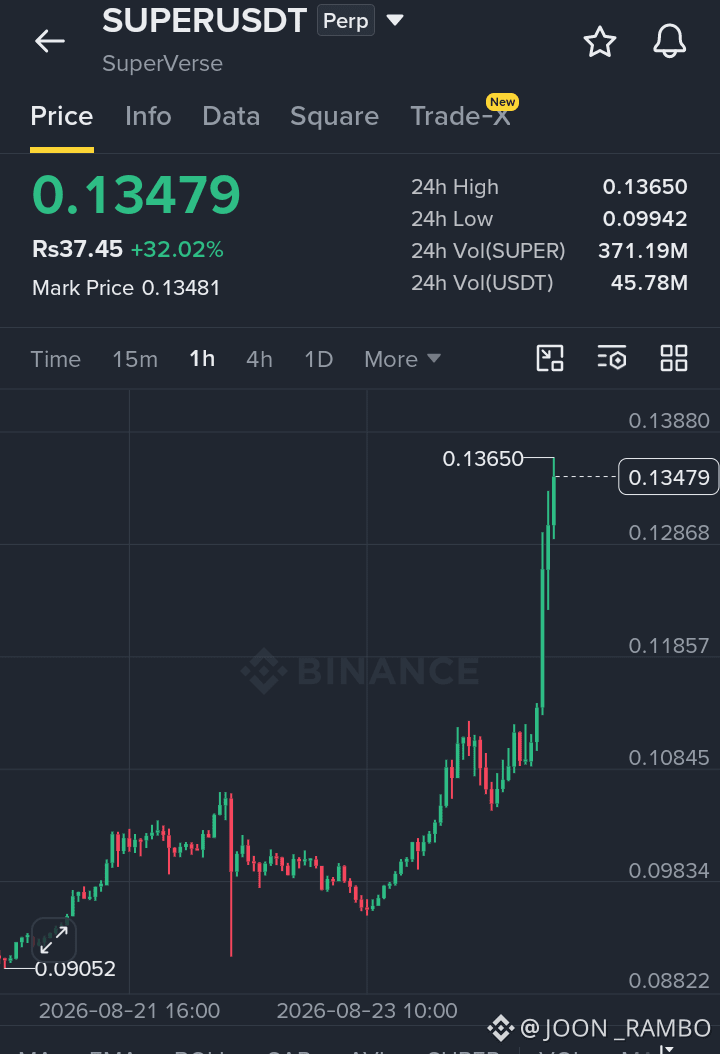
$SUPER just went vertical 😈 $SUPER
Price: 0.13479
Short Entry: 0.1350–0.1365
TP1: 0.1320
TP2: 0.1287
TP3: 0.1240
SL: 0.1388
+32% already… chasing here is asking for a lesson. 🎯#BitcoinRises23.6%Weekly #BrentDrops1.87% #BitcoinOpenInterestFallsToTwoMonthLow
$SUPER just went vertical 😈 $SUPER
Price: 0.13479
Short Entry: 0.1350–0.1365
TP1: 0.1320
TP2: 0.1287
TP3: 0.1240
SL: 0.1388
+32% already… chasing here is asking for a lesson. 🎯#BitcoinRises23.6%Weekly #BrentDrops1.87% #BitcoinOpenInterestFallsToTwoMonthLow
Price: 0.13479
Short Entry: 0.1350–0.1365
TP1: 0.1320
TP2: 0.1287
TP3: 0.1240
SL: 0.1388
+32% already… chasing here is asking for a lesson. 🎯#BitcoinRises23.6%Weekly #BrentDrops1.87% #BitcoinOpenInterestFallsToTwoMonthLow
96
·
--
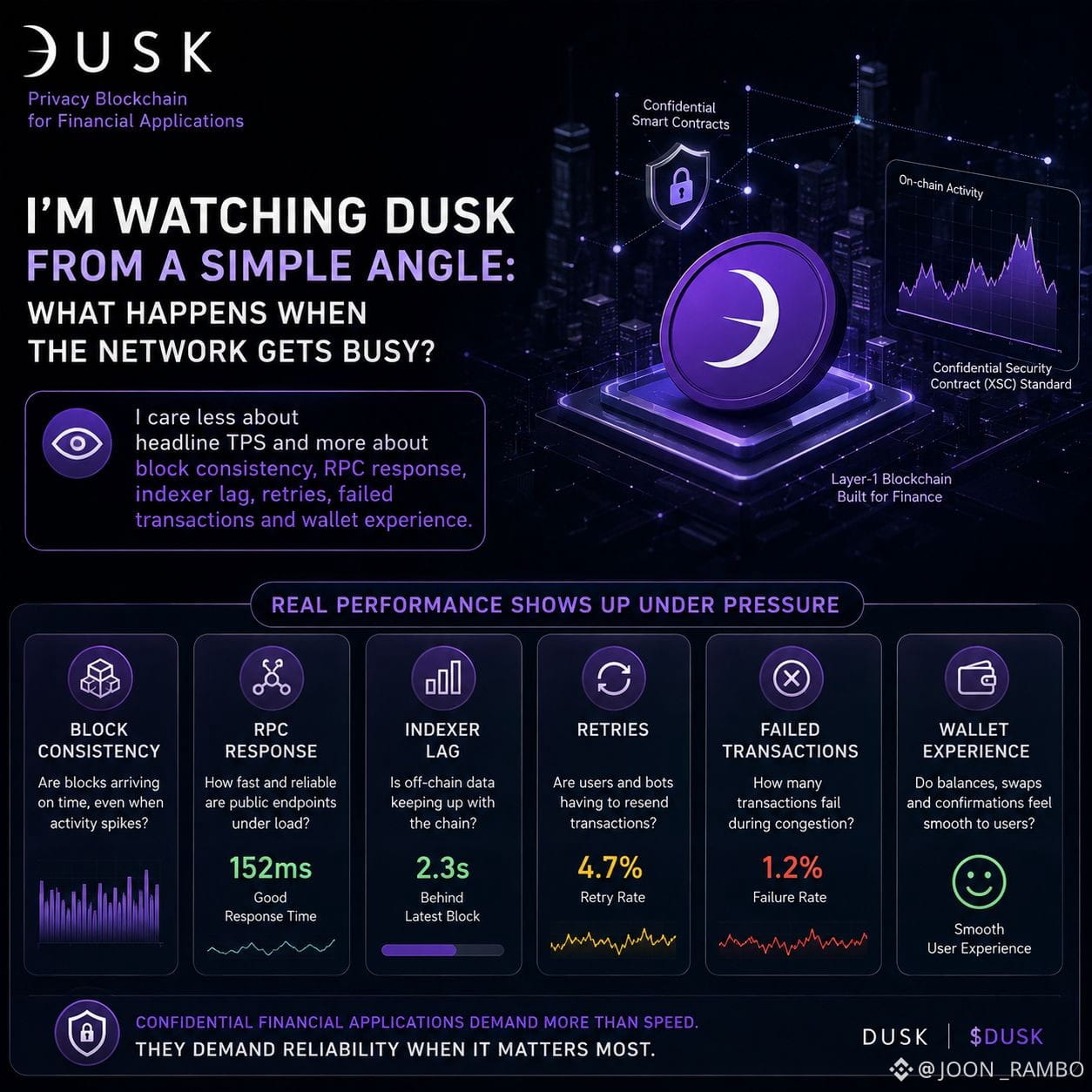
#dusk $DUSK @Dusk_Foundation I’m watching Dusk from a simple angle: what happens when the network gets busy?
I care less about headline TPS and more about block consistency, RPC response, indexer lag, retries, failed transactions and wallet experience.
With confidential financial applications, real performance shows up under pressure—not when everything is quiet.
@Dusk_Foundation $DUSK #dusk
#dusk $DUSK @Dusk I’m watching Dusk from a simple angle: what happens when the network gets busy?
I care less about headline TPS and more about block consistency, RPC response, indexer lag, retries, failed transactions and wallet experience.
With confidential financial applications, real performance shows up under pressure—not when everything is quiet.
@Dusk $DUSK #dusk
I care less about headline TPS and more about block consistency, RPC response, indexer lag, retries, failed transactions and wallet experience.
With confidential financial applications, real performance shows up under pressure—not when everything is quiet.
@Dusk $DUSK #dusk
149
·
--
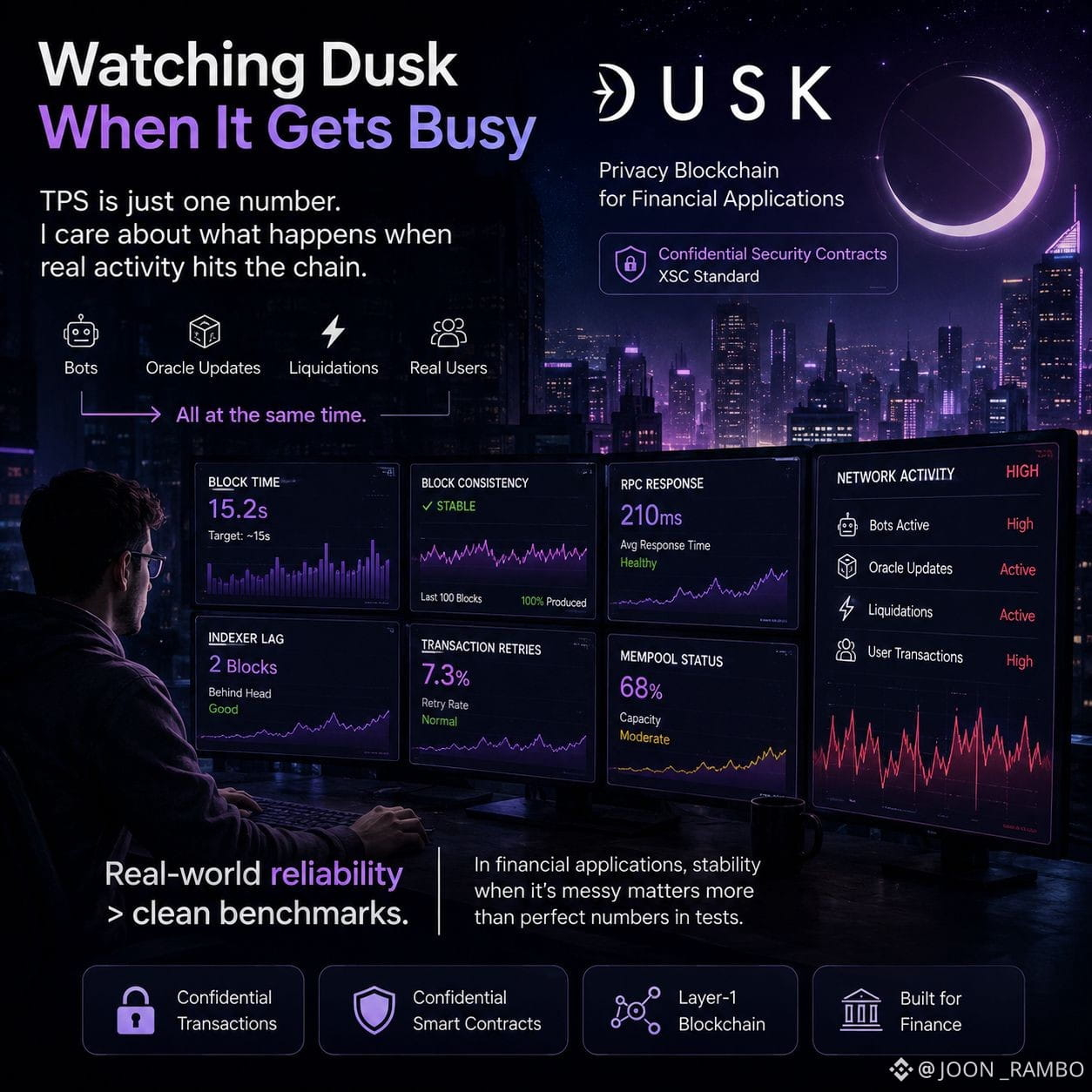
#dusk $DUSK @Dusk_Foundation I’ve been watching Dusk from a simple angle: what happens when the network gets busy?
TPS is only one part of the story. I’m more interested in block consistency, RPC response, indexer lag, transaction retries and what happens when bots, oracle updates and liquidations all hit at once.
Dusk is building around confidential financial applications, so real-world reliability matters more to me than a clean benchmark.
@Dusk_Foundation $DUSK #dusk
#dusk $DUSK @Dusk I’ve been watching Dusk from a simple angle: what happens when the network gets busy?
TPS is only one part of the story. I’m more interested in block consistency, RPC response, indexer lag, transaction retries and what happens when bots, oracle updates and liquidations all hit at once.
Dusk is building around confidential financial applications, so real-world reliability matters more to me than a clean benchmark.
@Dusk $DUSK #dusk
TPS is only one part of the story. I’m more interested in block consistency, RPC response, indexer lag, transaction retries and what happens when bots, oracle updates and liquidations all hit at once.
Dusk is building around confidential financial applications, so real-world reliability matters more to me than a clean benchmark.
@Dusk $DUSK #dusk
95
·
--
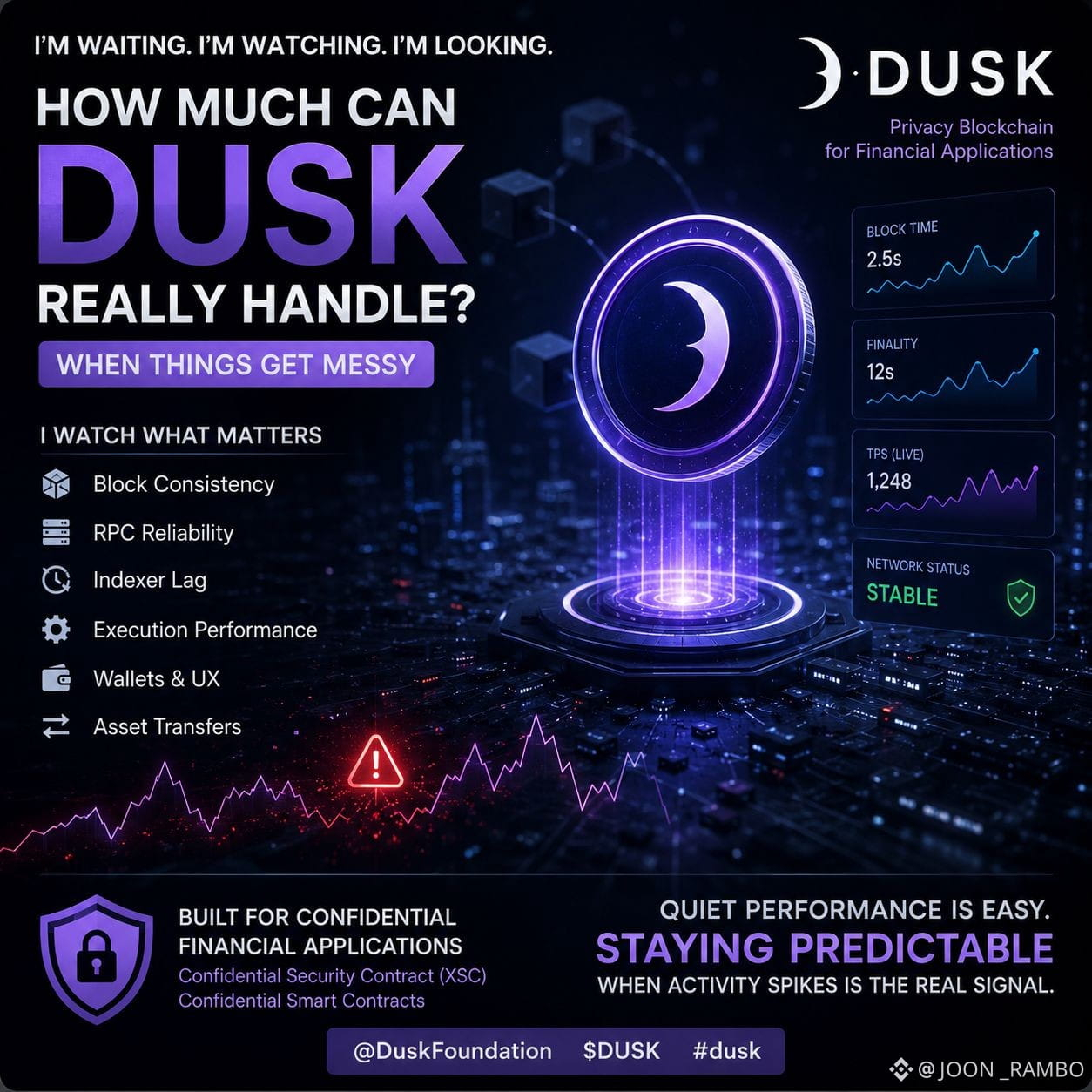
#dusk $DUSK @Dusk_Foundation I’m waiting. I’m watching. I’m looking. I keep coming back to the same question: how much can Dusk really handle when things get messy?
I care less about headline TPS and more about what happens under pressure: block consistency, RPC reliability, indexer lag, execution, wallets and asset transfers.
Dusk is built for confidential financial applications, so that’s the environment I want to see tested. Quiet performance is easy. Staying predictable when activity spikes is the real signal.
@Dusk_Foundation
#dusk $DUSK
#dusk $DUSK @Dusk I’m waiting. I’m watching. I’m looking. I keep coming back to the same question: how much can Dusk really handle when things get messy?
I care less about headline TPS and more about what happens under pressure: block consistency, RPC reliability, indexer lag, execution, wallets and asset transfers.
Dusk is built for confidential financial applications, so that’s the environment I want to see tested. Quiet performance is easy. Staying predictable when activity spikes is the real signal.
@Dusk
#dusk $DUSK
I care less about headline TPS and more about what happens under pressure: block consistency, RPC reliability, indexer lag, execution, wallets and asset transfers.
Dusk is built for confidential financial applications, so that’s the environment I want to see tested. Quiet performance is easy. Staying predictable when activity spikes is the real signal.
@Dusk
#dusk $DUSK
88
·
--
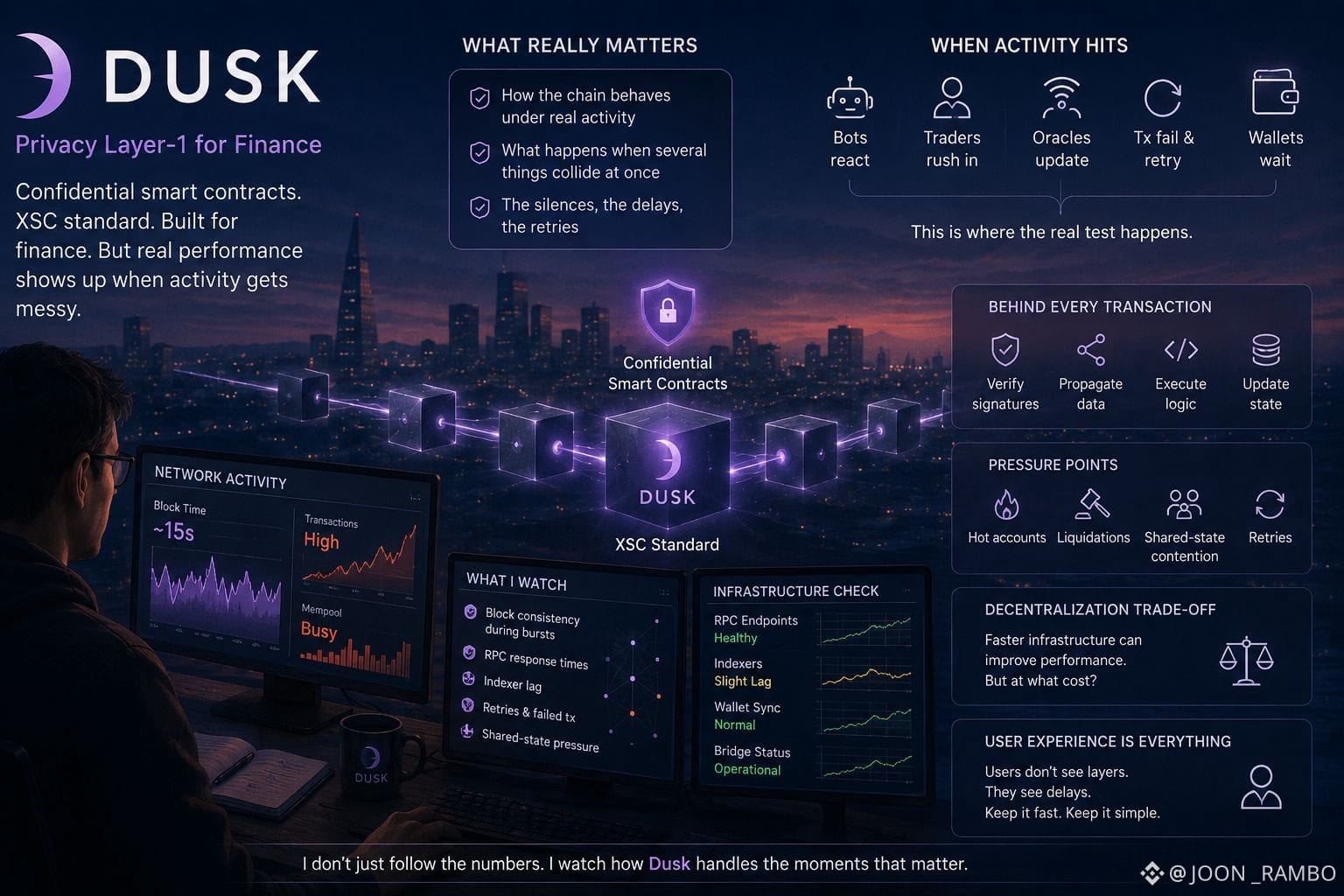
#dusk $DUSK @Dusk_Foundation I’ve been looking at Dusk from that angle lately. The headline is easy: a privacy-focused Layer 1 built with financial applications in mind. What interests me more is what happens underneath when the network has to deal with actual activity. Dusk is built around confidential smart contracts and the XSC standard, but none of that tells me how the chain feels when several things happen at once.
@Dusk_Foundation #dusk $DUSK
#dusk $DUSK @Dusk I’ve been looking at Dusk from that angle lately. The headline is easy: a privacy-focused Layer 1 built with financial applications in mind. What interests me more is what happens underneath when the network has to deal with actual activity. Dusk is built around confidential smart contracts and the XSC standard, but none of that tells me how the chain feels when several things happen at once.
@Dusk #dusk $DUSK
@Dusk #dusk $DUSK
93
·
--
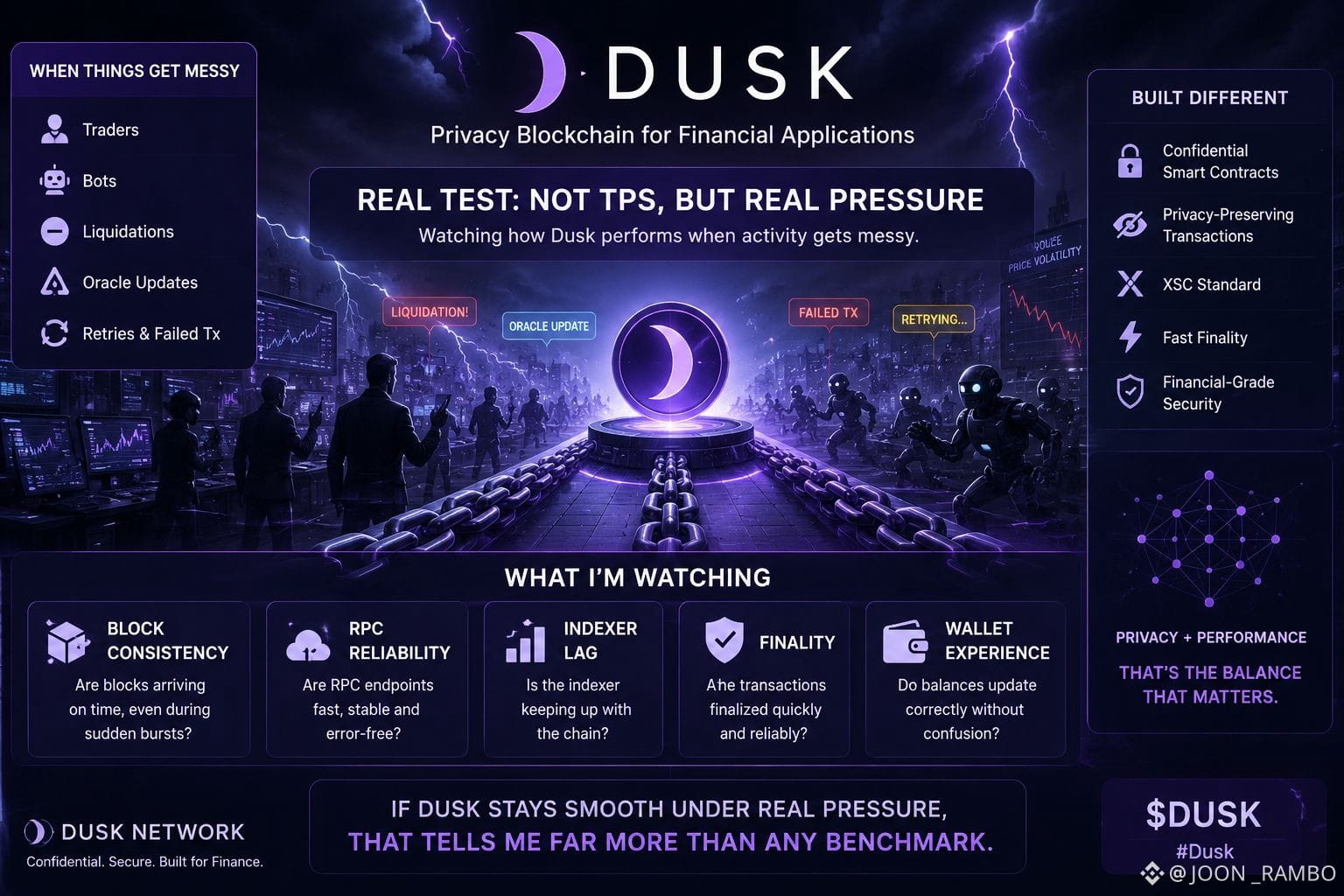
#dusk $DUSK @Dusk_Foundation I’m watching Dusk from a practical angle. The real test isn’t a big TPS number, it’s how the network behaves when activity gets messy—traders, bots, liquidations, oracle updates and retries all hitting at once. I’m looking at block consistency, RPC reliability, indexer lag, finality and wallet experience. If Dusk stays smooth under real pressure, that tells me far more than any benchmark. $DUSK #dusk
#dusk $DUSK @Dusk I’m watching Dusk from a practical angle. The real test isn’t a big TPS number, it’s how the network behaves when activity gets messy—traders, bots, liquidations, oracle updates and retries all hitting at once. I’m looking at block consistency, RPC reliability, indexer lag, finality and wallet experience. If Dusk stays smooth under real pressure, that tells me far more than any benchmark. $DUSK #dusk
1
1
118
·
--
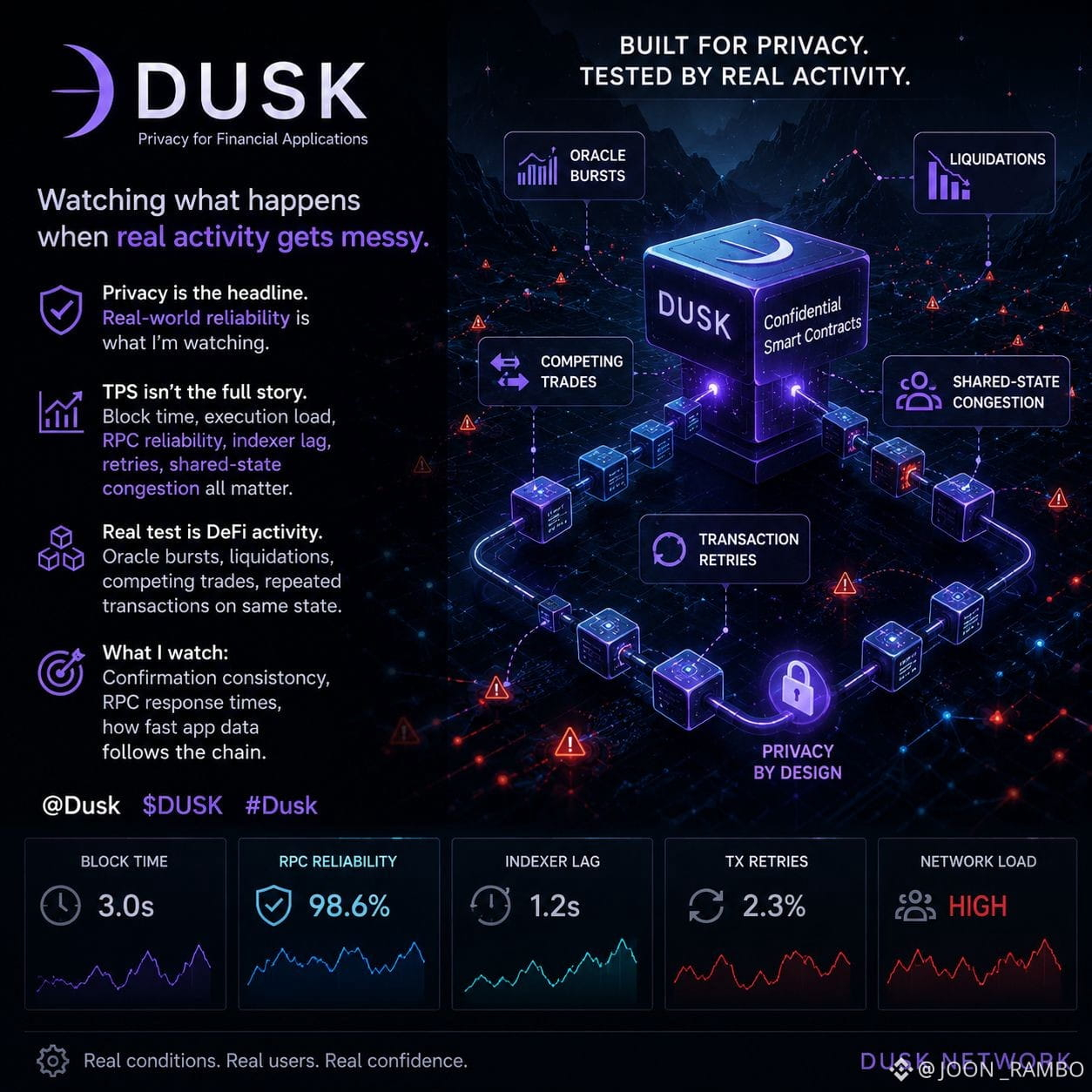
#dusk $DUSK @Dusk_Foundation I’m watching Dusk from a simple angle: what happens when real activity gets messy?$DUSK is built around privacy-focused financial applications, but the part I find more interesting is how the network behaves under pressure. TPS alone doesn’t tell the full story. Block time, execution load, RPC reliability, indexer lag, transaction retries and shared-state congestion all matter when users and bots start hitting the chain together.
For me, the real test is DeFi activity: oracle bursts, liquidations, competing trades and repeated transactions touching the same state. That’s where clean benchmarks meet real network conditions.
I’ll be watching confirmation consistency, RPC response times and how quickly application data follows the chain. If Dusk can stay predictable during those stressful periods, that tells me much more than a headline throughput number.
Privacy is the headline. Real-world reliability is what I’m watching.
@Dusk_Foundation $DUSK #dusk
#dusk $DUSK @Dusk I’m watching Dusk from a simple angle: what happens when real activity gets messy?$DUSK is built around privacy-focused financial applications, but the part I find more interesting is how the network behaves under pressure. TPS alone doesn’t tell the full story. Block time, execution load, RPC reliability, indexer lag, transaction retries and shared-state congestion all matter when users and bots start hitting the chain together.
For me, the real test is DeFi activity: oracle bursts, liquidations, competing trades and repeated transactions touching the same state. That’s where clean benchmarks meet real network conditions.
I’ll be watching confirmation consistency, RPC response times and how quickly application data follows the chain. If Dusk can stay predictable during those stressful periods, that tells me much more than a headline throughput number.
Privacy is the headline. Real-world reliability is what I’m watching.
@Dusk $DUSK #dusk
For me, the real test is DeFi activity: oracle bursts, liquidations, competing trades and repeated transactions touching the same state. That’s where clean benchmarks meet real network conditions.
I’ll be watching confirmation consistency, RPC response times and how quickly application data follows the chain. If Dusk can stay predictable during those stressful periods, that tells me much more than a headline throughput number.
Privacy is the headline. Real-world reliability is what I’m watching.
@Dusk $DUSK #dusk
64
·
--
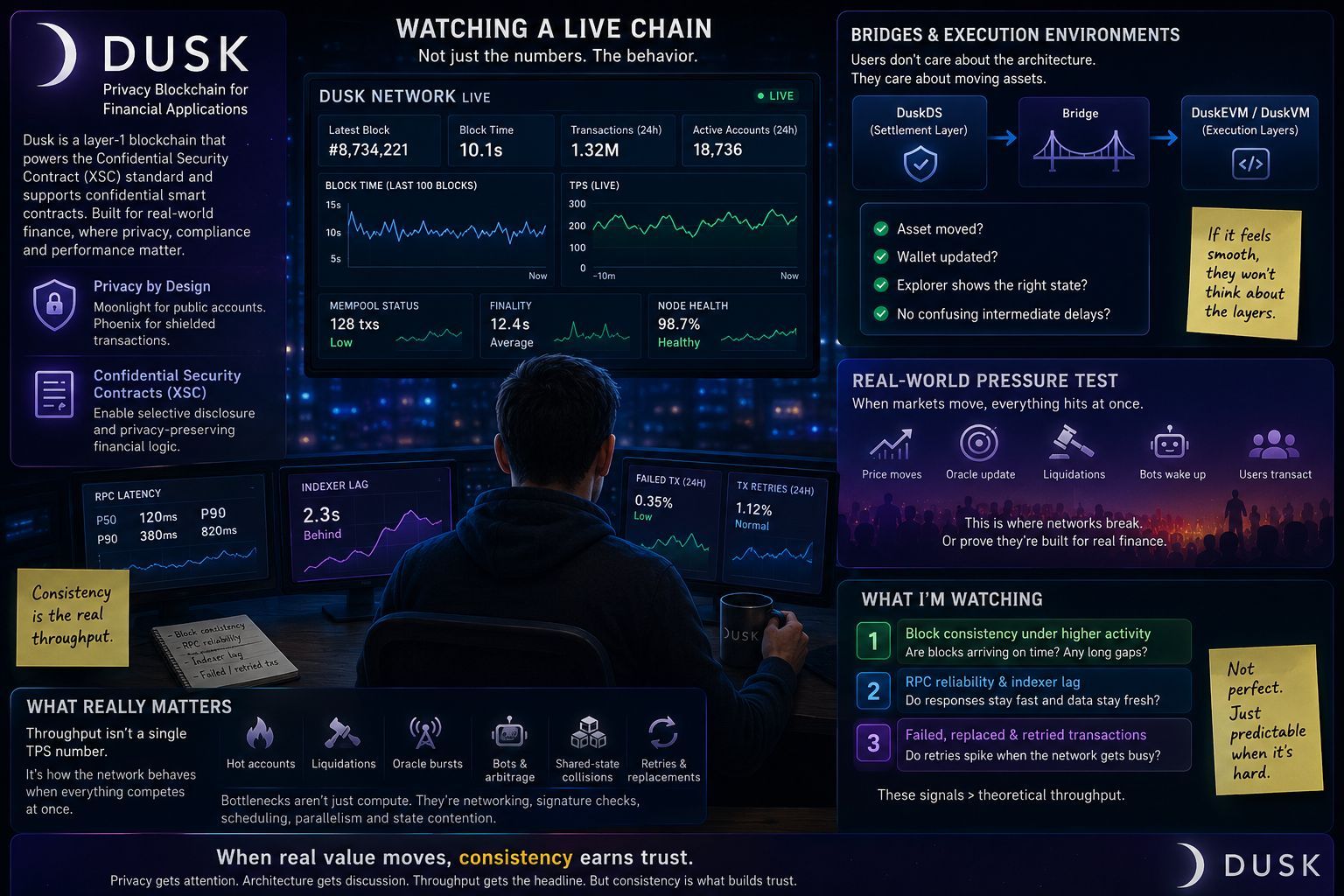
#dusk $DUSK @Dusk_Foundation also wouldn't ignore bridges and movement between different execution environments. Architecture can look clean on a diagram, but users don't interact with diagrams. They move assets. They connect wallets. They wait for balances to update. They check explorers.
If that process is smooth, most people won't even think about the architecture underneath it.
That's exactly how I think good infrastructure should feel.
For now, the things I'd actually watch are pretty simple. First, block consistency when activity increases. Second, RPC reliability and indexer lag. Third, failed, replaced and retried transactions when the network gets hit by a sudden burst.
Those signals would tell me much more than another theoretical throughput figure.
If Dusk can go through a genuinely busy period, with traders, bots, applications and market activity all competing for resources, while blocks remain steady and users continue getting clear and timely transaction results, I'd take that seriously.
Not because it would prove Dusk is perfect. No network is.
It would simply show me that the system can stay predictable when things stop being easy.
And for a blockchain aimed at financial applications, that's probably the part I care about most. Privacy gets the attention, architecture gets the discussion, and throughput gets the headline.
But when real users are moving real value, consistency is what I end up watching.#dus @Dusk_Foundation $DUSK
#dusk $DUSK @Dusk also wouldn't ignore bridges and movement between different execution environments. Architecture can look clean on a diagram, but users don't interact with diagrams. They move assets. They connect wallets. They wait for balances to update. They check explorers.
If that process is smooth, most people won't even think about the architecture underneath it.
That's exactly how I think good infrastructure should feel.
For now, the things I'd actually watch are pretty simple. First, block consistency when activity increases. Second, RPC reliability and indexer lag. Third, failed, replaced and retried transactions when the network gets hit by a sudden burst.
Those signals would tell me much more than another theoretical throughput figure.
If Dusk can go through a genuinely busy period, with traders, bots, applications and market activity all competing for resources, while blocks remain steady and users continue getting clear and timely transaction results, I'd take that seriously.
Not because it would prove Dusk is perfect. No network is.
It would simply show me that the system can stay predictable when things stop being easy.
And for a blockchain aimed at financial applications, that's probably the part I care about most. Privacy gets the attention, architecture gets the discussion, and throughput gets the headline.
But when real users are moving real value, consistency is what I end up watching.#dus @Dusk $DUSK
If that process is smooth, most people won't even think about the architecture underneath it.
That's exactly how I think good infrastructure should feel.
For now, the things I'd actually watch are pretty simple. First, block consistency when activity increases. Second, RPC reliability and indexer lag. Third, failed, replaced and retried transactions when the network gets hit by a sudden burst.
Those signals would tell me much more than another theoretical throughput figure.
If Dusk can go through a genuinely busy period, with traders, bots, applications and market activity all competing for resources, while blocks remain steady and users continue getting clear and timely transaction results, I'd take that seriously.
Not because it would prove Dusk is perfect. No network is.
It would simply show me that the system can stay predictable when things stop being easy.
And for a blockchain aimed at financial applications, that's probably the part I care about most. Privacy gets the attention, architecture gets the discussion, and throughput gets the headline.
But when real users are moving real value, consistency is what I end up watching.#dus @Dusk $DUSK
12
·
--
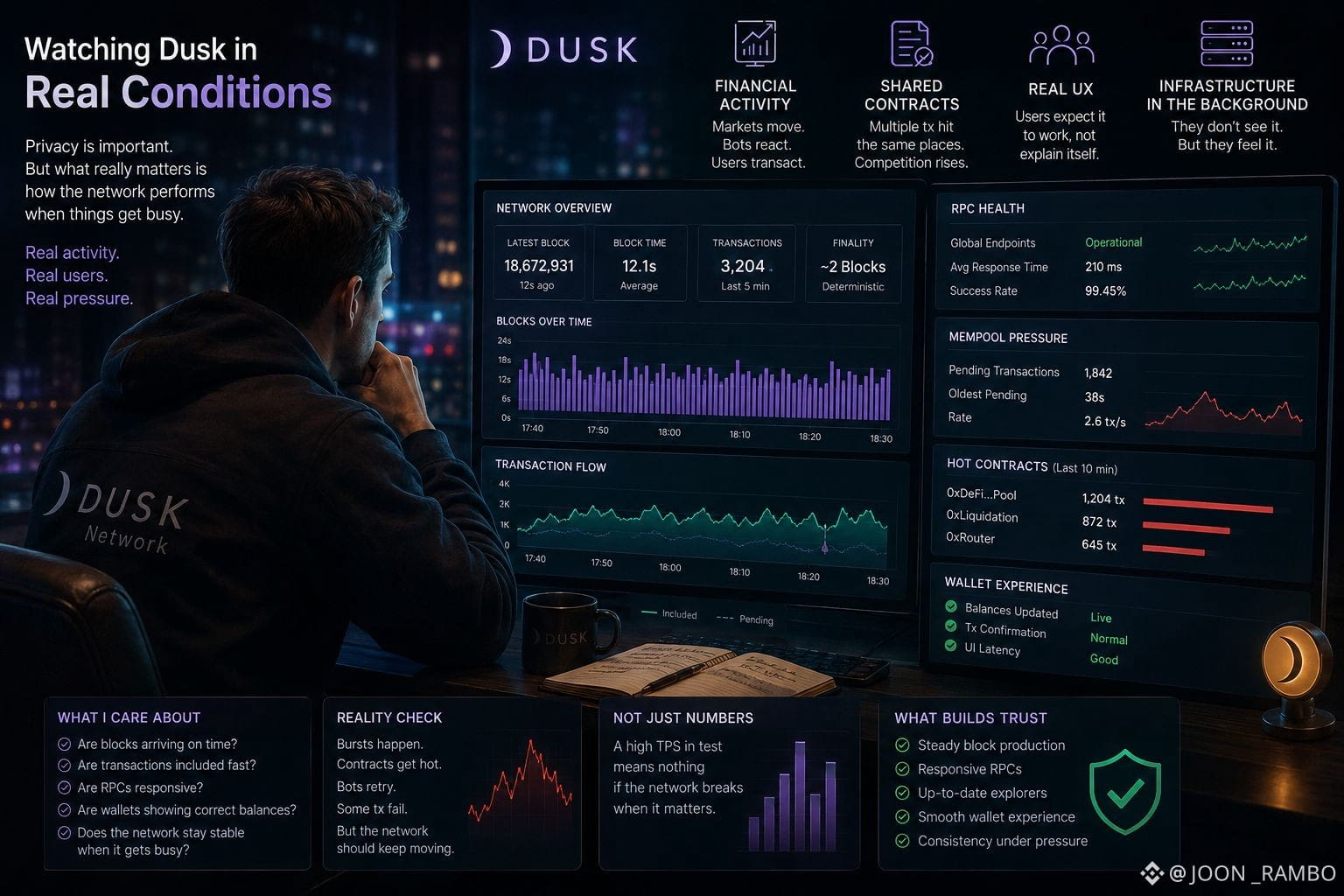
#dusk $DUSK @Dusk_Foundation I’ve been watching Dusk because the privacy side is interesting, but that alone isn’t enough for me. A blockchain can have a good idea and still struggle once real users start putting pressure on it. With Dusk, I’m more interested in what happens when financial activity picks up, bots start reacting, several transactions compete for the same contracts, and users simply expect everything to work without thinking about what is happening underneath.
I don’t put much weight on one big TPS number. It can look impressive in a controlled test and still say very little about everyday usage. What matters to me is how the network behaves when activity stays elevated for a while. Are transactions getting included without noticeable delays? Do blocks keep coming normally? Do RPCs remain responsive? Do wallets and explorers keep showing accurate balances and transactions? Those small details are where I usually find the real picture.#dusk$DUSK @Square-Creator-59ab1d063798c
#dusk $DUSK @Dusk I’ve been watching Dusk because the privacy side is interesting, but that alone isn’t enough for me. A blockchain can have a good idea and still struggle once real users start putting pressure on it. With Dusk, I’m more interested in what happens when financial activity picks up, bots start reacting, several transactions compete for the same contracts, and users simply expect everything to work without thinking about what is happening underneath.
I don’t put much weight on one big TPS number. It can look impressive in a controlled test and still say very little about everyday usage. What matters to me is how the network behaves when activity stays elevated for a while. Are transactions getting included without noticeable delays? Do blocks keep coming normally? Do RPCs remain responsive? Do wallets and explorers keep showing accurate balances and transactions? Those small details are where I usually find the real picture.#dusk$DUSK @Dusk line
I don’t put much weight on one big TPS number. It can look impressive in a controlled test and still say very little about everyday usage. What matters to me is how the network behaves when activity stays elevated for a while. Are transactions getting included without noticeable delays? Do blocks keep coming normally? Do RPCs remain responsive? Do wallets and explorers keep showing accurate balances and transactions? Those small details are where I usually find the real picture.#dusk$DUSK @Dusk line
2
1
101
·
--
Bullish
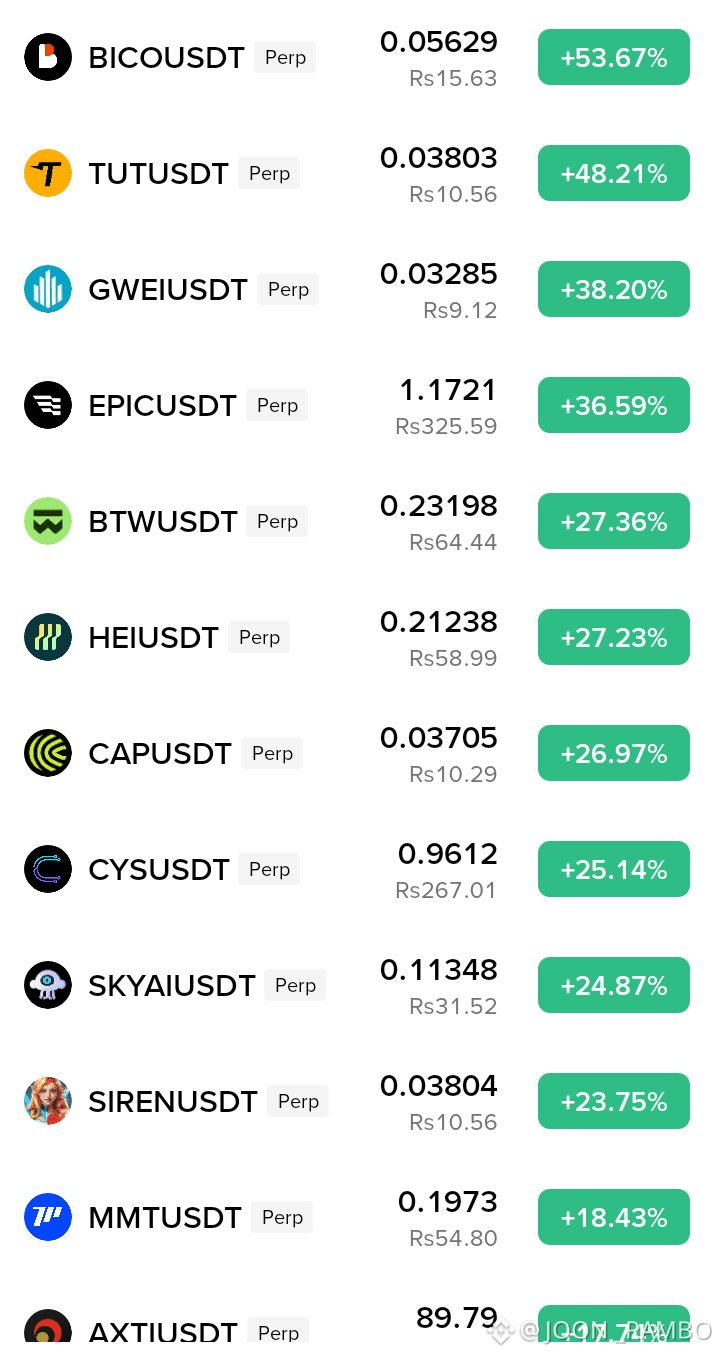
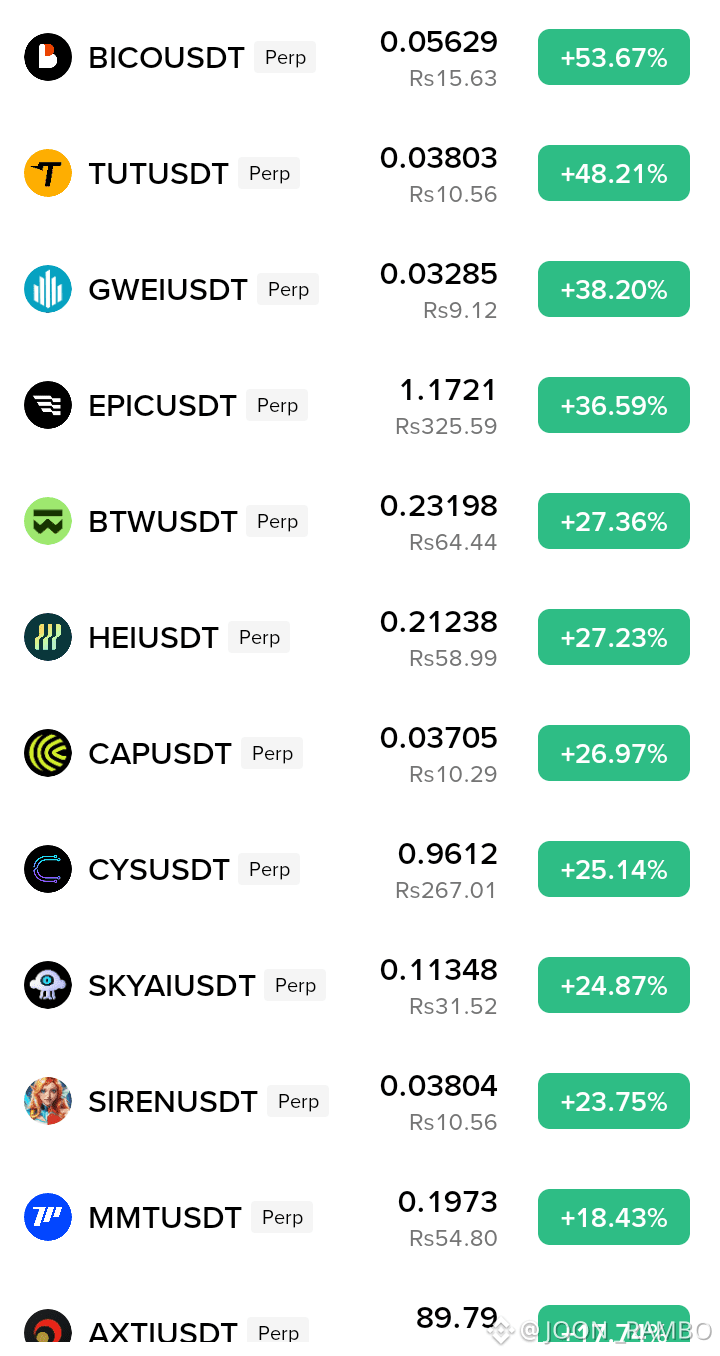
$BICO just pumped +53.67% and the chart is acting like gravity got liquidated 😂. I’m not chasing this green candle blindly. Trade setup: Entry 0.0560–0.0568, TP1 0.0595, TP2 0.0625, TP3 0.0660, SL 0.0530. If price loses the entry zone, I’m out. Momentum is strong, but after a 53% move, a pullback can arrive faster than comments. Manage risk and don’t FOMO.#DollarSetForBestDayInTwoWeeks #GoldBreaksOutFromJanuaryDowntrend #USJulyJobsUnexpectedlyFall
{spot}(BICOUSDT)
$BICO just pumped +53.67% and the chart is acting like gravity got liquidated 😂. I’m not chasing this green candle blindly. Trade setup: Entry 0.0560–0.0568, TP1 0.0595, TP2 0.0625, TP3 0.0660, SL 0.0530. If price loses the entry zone, I’m out. Momentum is strong, but after a 53% move, a pullback can arrive faster than comments. Manage risk and don’t FOMO.#DollarSetForBestDayInTwoWeeks #GoldBreaksOutFromJanuaryDowntrend #USJulyJobsUnexpectedlyFall
1
177
·
--
Bullish
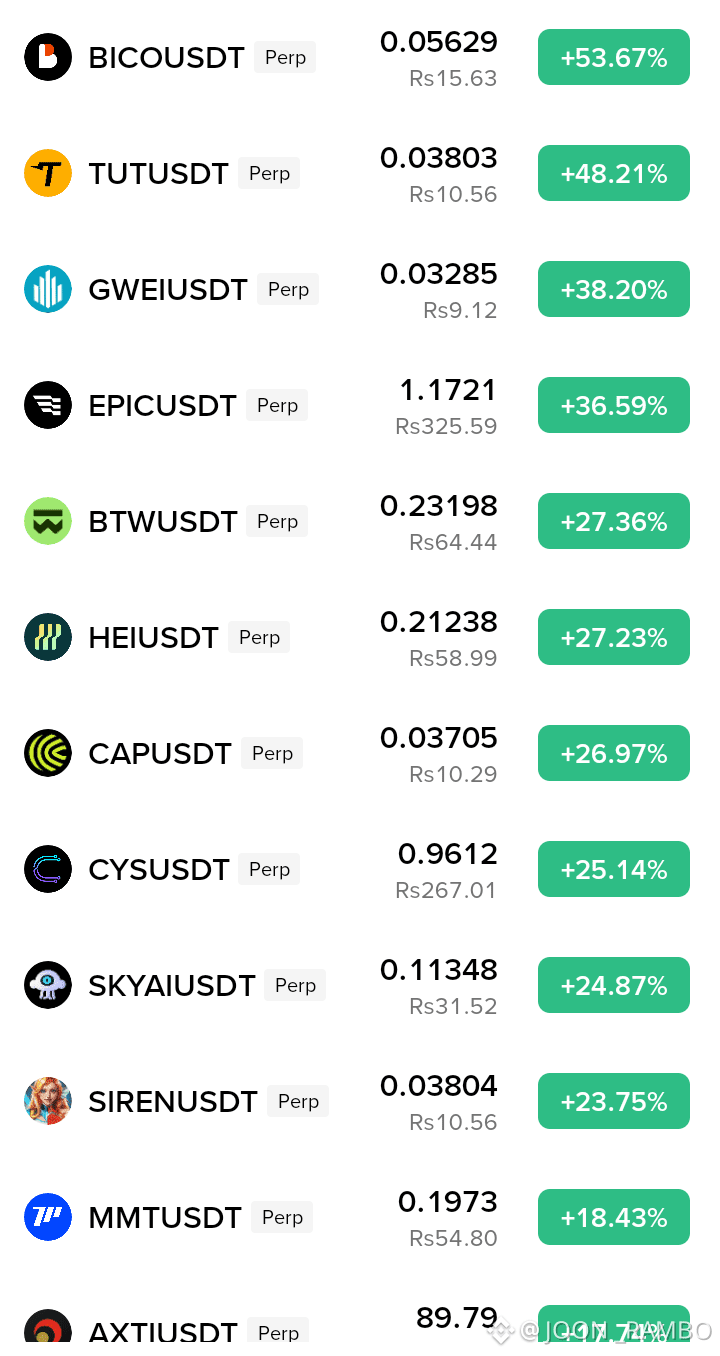
$TUT is up +48.21% and apparently decided sleep is optional 😂. I’m watching the breakout, but I won’t chase a vertical candle. Trade setup: Entry 0.0377–0.0383, TP1 0.0400, TP2 0.0425, TP3 0.0450, SL 0.0360. If the entry zone holds, momentum can continue. If it breaks, I’m stepping aside. +48% already means volatility is serious, so position size matters more than ego here.#TSEPlansReReviewForMajorBusinessChanges #SpaceXMayCompleteCursorDealAsEarlyAsNextWeekend #USJulyJobsUnexpectedlyFall
$TUT is up +48.21% and apparently decided sleep is optional 😂. I’m watching the breakout, but I won’t chase a vertical candle. Trade setup: Entry 0.0377–0.0383, TP1 0.0400, TP2 0.0425, TP3 0.0450, SL 0.0360. If the entry zone holds, momentum can continue. If it breaks, I’m stepping aside. +48% already means volatility is serious, so position size matters more than ego here.#TSEPlansReReviewForMajorBusinessChanges #SpaceXMayCompleteCursorDealAsEarlyAsNextWeekend #USJulyJobsUnexpectedlyFall
1
432
·
--
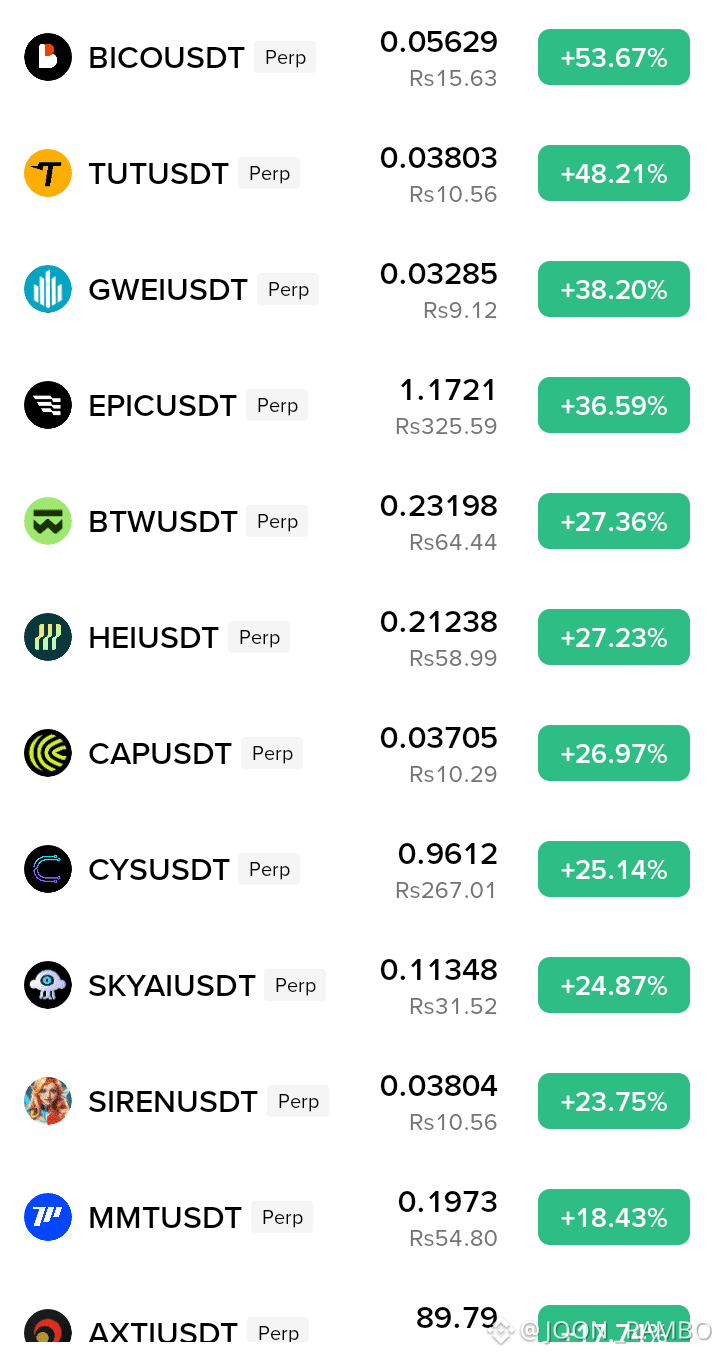
$GWEI just printed +38.20% and the chart looks like it missed the elevator 😂. I’m interested, but chasing after a big move is how traders become exit liquidity. Trade setup: Entry 0.0324–0.0330, TP1 0.0348, TP2 0.0370, TP3 0.0400, SL 0.0310. Holding above entry keeps the setup alive. Losing support cancels it. Momentum is impressive, but I’m keeping risk tight because #TSEPlansReReviewForMajorBusinessChanges #USJulyJobsUnexpectedlyFall #DollarSetForBestDayInTwoWeeks
$GWEI just printed +38.20% and the chart looks like it missed the elevator 😂. I’m interested, but chasing after a big move is how traders become exit liquidity. Trade setup: Entry 0.0324–0.0330, TP1 0.0348, TP2 0.0370, TP3 0.0400, SL 0.0310. Holding above entry keeps the setup alive. Losing support cancels it. Momentum is impressive, but I’m keeping risk tight because #TSEPlansReReviewForMajorBusinessChanges #USJulyJobsUnexpectedlyFall #DollarSetForBestDayInTwoWeeks
1
204
·
--
Bullish
$EPIC is up +36.59% and apparently chose violence against the bears 😂. I’m not buying the top just because the screen is green. Trade setup: Entry 1.155–1.180, TP1 1.215, TP2 1.250, TP3 1.300, SL 1.115. If price consolidates and holds the entry zone, I’ll watch for continuation. Lose it, and I’m gone. After a 36% move, protecting capital matters more than catching every last candle#TSEPlansReReviewForMajorBusinessChanges #USJulyJobsUnexpectedlyFall #SpaceXMayCompleteCursorDealAsEarlyAsNextWeekend
$EPIC is up +36.59% and apparently chose violence against the bears 😂. I’m not buying the top just because the screen is green. Trade setup: Entry 1.155–1.180, TP1 1.215, TP2 1.250, TP3 1.300, SL 1.115. If price consolidates and holds the entry zone, I’ll watch for continuation. Lose it, and I’m gone. After a 36% move, protecting capital matters more than catching every last candle#TSEPlansReReviewForMajorBusinessChanges #USJulyJobsUnexpectedlyFall #SpaceXMayCompleteCursorDealAsEarlyAsNextWeekend
1
218
·
--
$BTW is up +27.36% and the ticker is basically saying “by the way, I’m flying” 😂. I’m watching for a clean continuation, not a FOMO entry. Trade setup: Entry 0.229–0.233, TP1 0.242, TP2 0.250, TP3 0.260, SL 0.220. If the zone holds, bulls remain interesting. If it breaks, setup is invalid. A 27% pump can punish late buyers, so I’d rather miss a move than chase bad risk.#SKHynixToInvest19.1TWonInM17Plant #SpaceXMayCompleteCursorDealAsEarlyAsNextWeekend #GoldBreaksOutFromJanuaryDowntrend
$BTW is up +27.36% and the ticker is basically saying “by the way, I’m flying” 😂. I’m watching for a clean continuation, not a FOMO entry. Trade setup: Entry 0.229–0.233, TP1 0.242, TP2 0.250, TP3 0.260, SL 0.220. If the zone holds, bulls remain interesting. If it breaks, setup is invalid. A 27% pump can punish late buyers, so I’d rather miss a move than chase bad risk.#SKHynixToInvest19.1TWonInM17Plant #SpaceXMayCompleteCursorDealAsEarlyAsNextWeekend #GoldBreaksOutFromJanuaryDowntrend
1
445
·
--
#baby $BABY I'm watching Babylon because self-custodial BTC staking only proves itself when real network activity increases. Quiet days don't tell me much. I pay more attention to consistent RPC responses, smooth wallet performance, reliable staking, and infrastructure that stays predictable under pressure. If @babylonlabs_io keeps delivering the same stable experience as more users participate and more PoS chains rely on Bitcoin-backed security, that's the kind of progress I'll trust over time—not hype, just steady execution. $BABY
#bab @babylonlabs_io
#baby $BABY I'm watching Babylon because self-custodial BTC staking only proves itself when real network activity increases. Quiet days don't tell me much. I pay more attention to consistent RPC responses, smooth wallet performance, reliable staking, and infrastructure that stays predictable under pressure. If @BabylonLabs_io keeps delivering the same stable experience as more users participate and more PoS chains rely on Bitcoin-backed security, that's the kind of progress I'll trust over time—not hype, just steady execution. $BABY
#bab @BabylonLabs_io
#bab @BabylonLabs_io
1
1
81
·
--
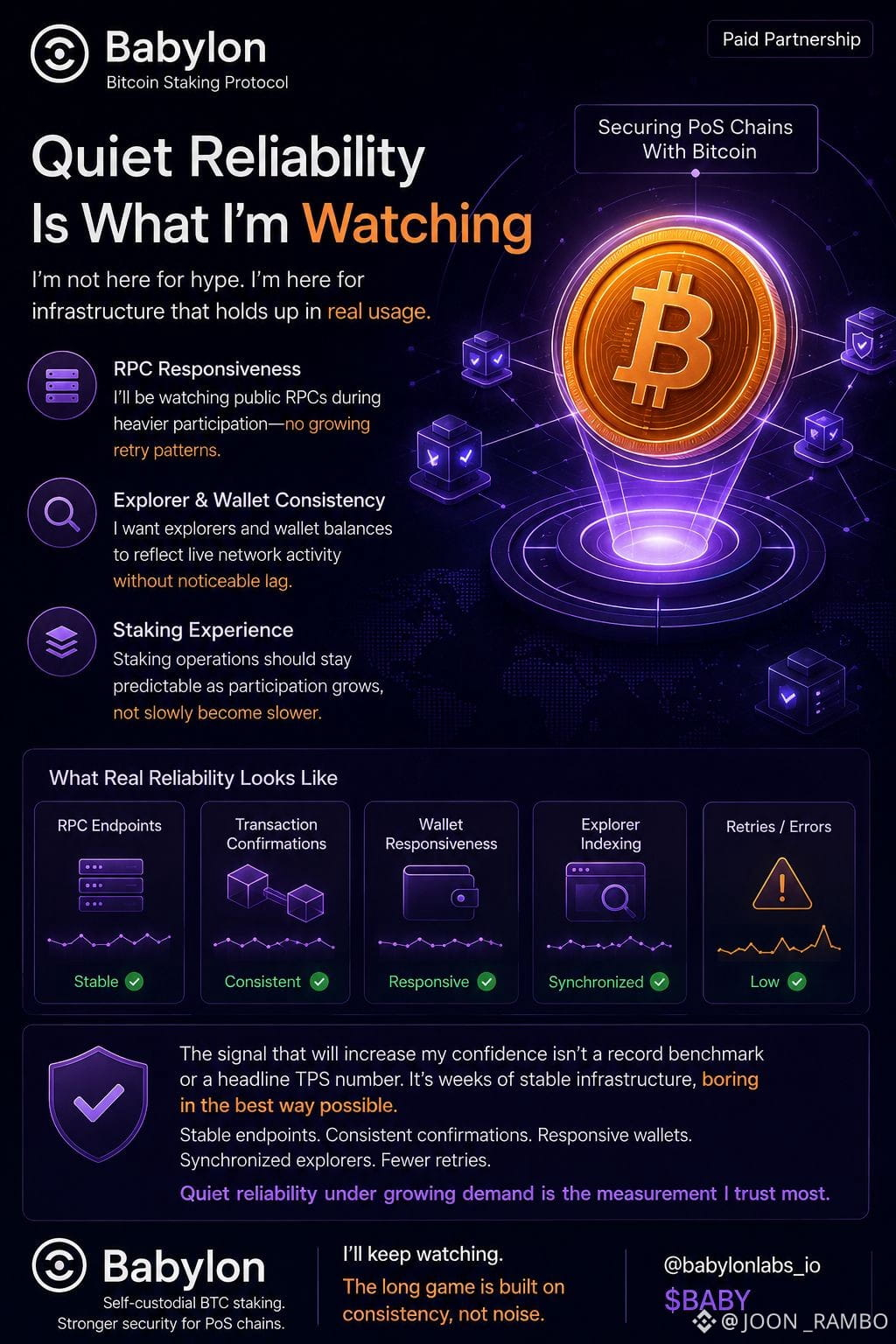
#baby $BABY Over the next several weeks I will be watching whether public RPC responsiveness remains consistent during periods of heavier participation instead of showing growing retry patterns beneath the surface. I will also watch whether explorer indexing and wallet balances continue reflecting network activity without noticeable lag when connected ecosystems become busier. Finally, I want to see whether staking-related operations maintain the same predictable experience as participation increases rather than gradually introducing delays that users simply begin accepting as normal.
The signal that would genuinely increase my confidence is not a record benchmark or a headline throughput claim. It would be several consecutive weeks where those ordinary pieces of infrastructure remain boring despite higher activity. Stable endpoints, consistent transaction confirmation behavior, responsive wallets, synchronized explorers, and the absence of widespread retries tell me far more than impressive theoretical capacity ever could. Quiet reliability under growing demand is still the measurement I trust most, and that is what I will keep watching.#BAB @babylonlabs_io $BABY
#baby $BABY Over the next several weeks I will be watching whether public RPC responsiveness remains consistent during periods of heavier participation instead of showing growing retry patterns beneath the surface. I will also watch whether explorer indexing and wallet balances continue reflecting network activity without noticeable lag when connected ecosystems become busier. Finally, I want to see whether staking-related operations maintain the same predictable experience as participation increases rather than gradually introducing delays that users simply begin accepting as normal.
The signal that would genuinely increase my confidence is not a record benchmark or a headline throughput claim. It would be several consecutive weeks where those ordinary pieces of infrastructure remain boring despite higher activity. Stable endpoints, consistent transaction confirmation behavior, responsive wallets, synchronized explorers, and the absence of widespread retries tell me far more than impressive theoretical capacity ever could. Quiet reliability under growing demand is still the measurement I trust most, and that is what I will keep watching.#BAB @BabylonLabs_io $BABY
The signal that would genuinely increase my confidence is not a record benchmark or a headline throughput claim. It would be several consecutive weeks where those ordinary pieces of infrastructure remain boring despite higher activity. Stable endpoints, consistent transaction confirmation behavior, responsive wallets, synchronized explorers, and the absence of widespread retries tell me far more than impressive theoretical capacity ever could. Quiet reliability under growing demand is still the measurement I trust most, and that is what I will keep watching.#BAB @BabylonLabs_io $BABY
108
·
--
#baby $BABY I'm watching Babylon because self-custodial BTC staking only matters if it stays dependable when real activity increases. I'm paying attention to staking responsiveness, wallet reliability, transaction consistency, and how smoothly Bitcoin-backed security scales across connected PoS chains. Quiet days prove very little. Busy days reveal everything. If @babylonlabs_io keeps delivering stable performance instead of just impressive metrics, that's the signal I'll trust. $BABY #Babylon @babylonlabs_io
#baby $BABY I'm watching Babylon because self-custodial BTC staking only matters if it stays dependable when real activity increases. I'm paying attention to staking responsiveness, wallet reliability, transaction consistency, and how smoothly Bitcoin-backed security scales across connected PoS chains. Quiet days prove very little. Busy days reveal everything. If @BabylonLabs_io keeps delivering stable performance instead of just impressive metrics, that's the signal I'll trust. $BABY #Babylon @BabylonLabs_io

4
2
85
·
--
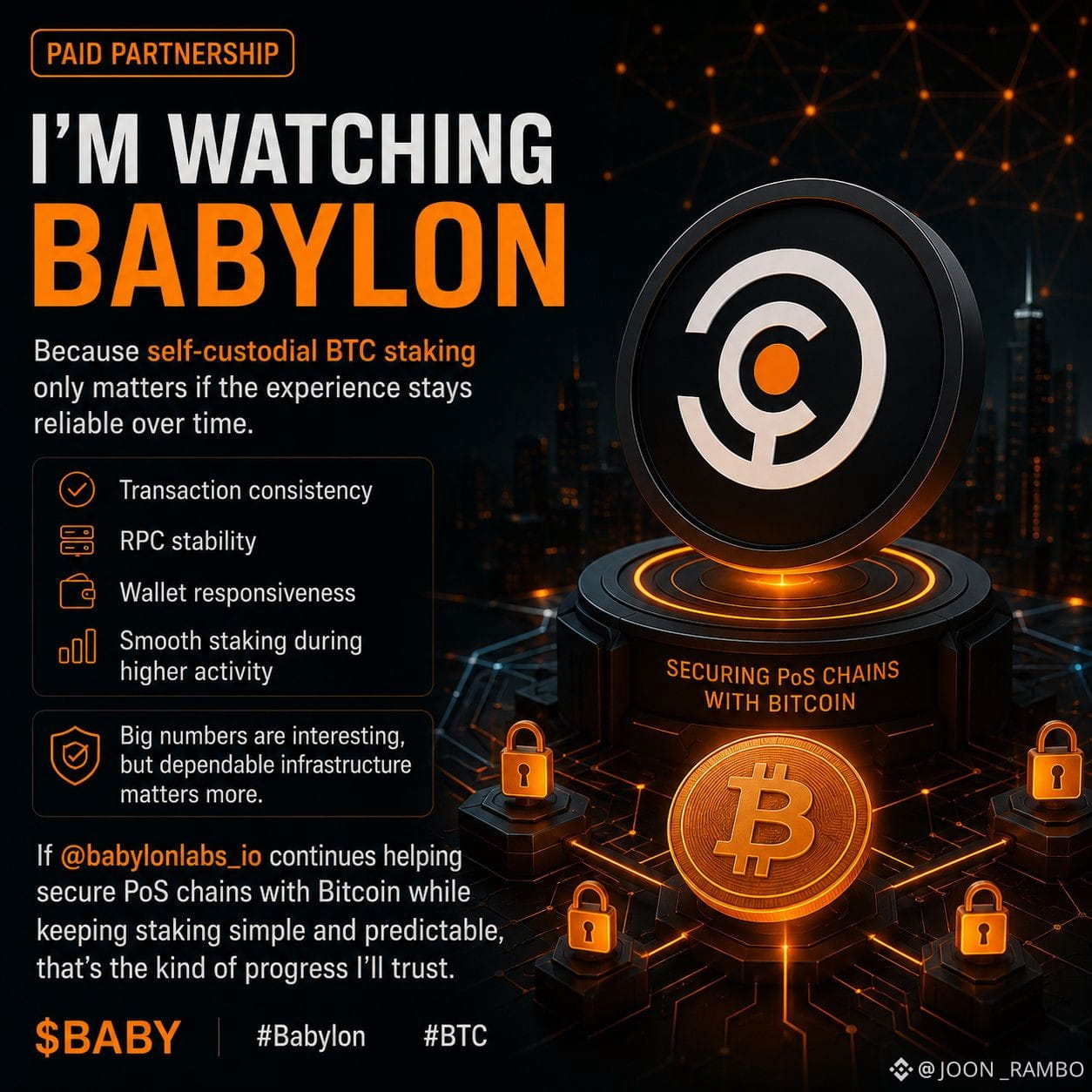
#baby $BABY I'm watching Babylon because self-custodial BTC staking only matters if the experience stays reliable over time. I'm paying attention to transaction consistency, RPC stability, wallet responsiveness, and how smoothly staking works during periods of higher activity. Big numbers are interesting, but dependable infrastructure matters more. If @babylonlabs_io continues helping secure PoS chains with Bitcoin while keeping staking simple and predictable, that's the kind of progress I'll trust. $BABY #Babylon #BTC @babylonlabs_io
#baby $BABY I'm watching Babylon because self-custodial BTC staking only matters if the experience stays reliable over time. I'm paying attention to transaction consistency, RPC stability, wallet responsiveness, and how smoothly staking works during periods of higher activity. Big numbers are interesting, but dependable infrastructure matters more. If @BabylonLabs_io continues helping secure PoS chains with Bitcoin while keeping staking simple and predictable, that's the kind of progress I'll trust. $BABY #Babylon #BTC @BabylonLabs_io
1
1
107
·
--
Bullish
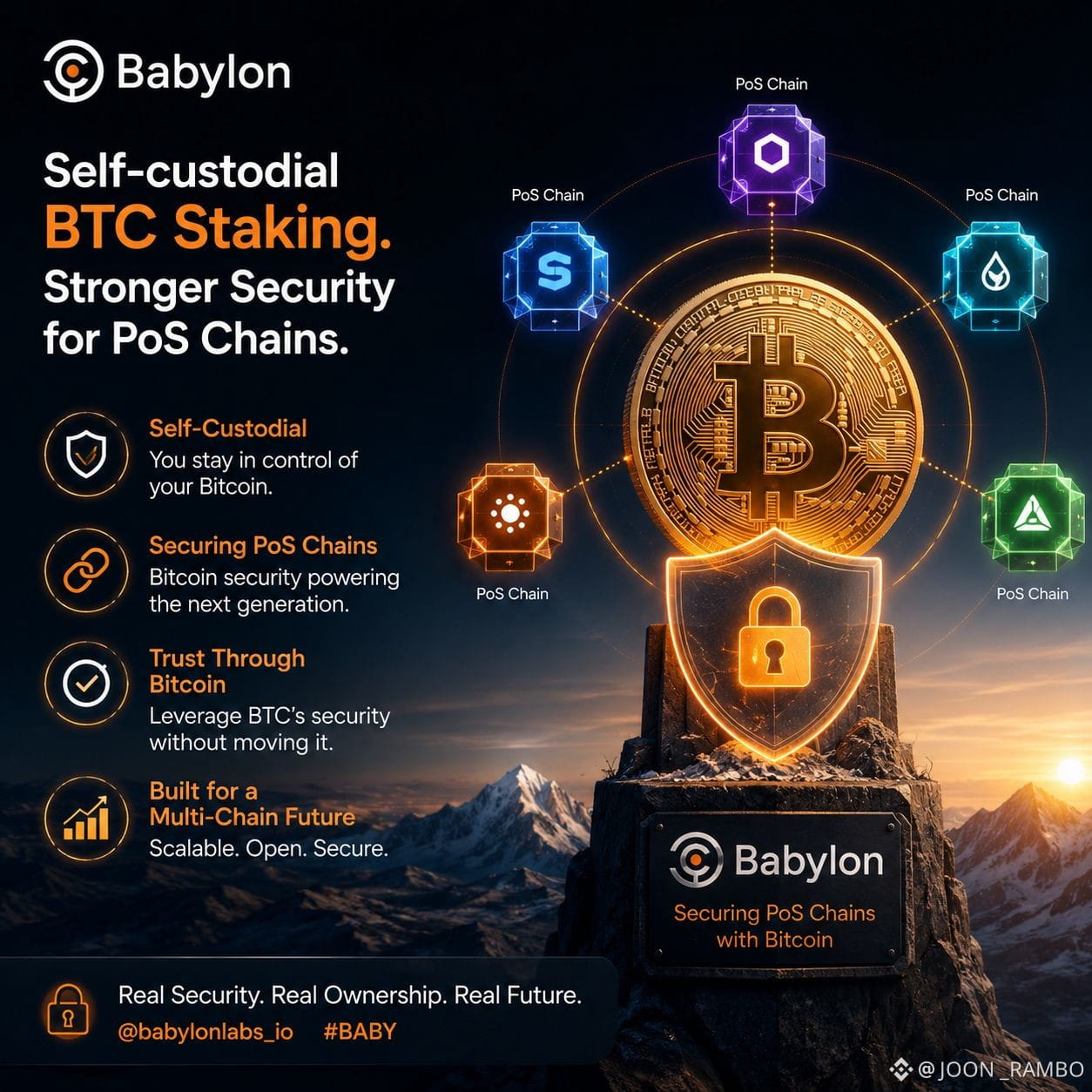
#baby $BABY I'm watching Babylon because self-custodial BTC staking is only valuable if the experience stays reliable over time. $BUI'm paying attention to transaction consistency, $RPC.US stability, wallet responsiveness, and how smoothly staking works during higher network activity. Big numbers are interesting, but dependable infrastructure matters more. If Babylon continues helping secure PoS chains with Bitcoin while keeping staking simple and predictable, that will build real confidence. I'll keep following real network behavior instead of short-term hype and see how the ecosystem matures. @babylonlabs_io #baby $BABY
#baby $BABY I'm watching Babylon because self-custodial BTC staking is only valuable if the experience stays reliable over time. $BUI'm paying attention to transaction consistency, $RPC.US stability, wallet responsiveness, and how smoothly staking works during higher network activity. Big numbers are interesting, but dependable infrastructure matters more. If Babylon continues helping secure PoS chains with Bitcoin while keeping staking simple and predictable, that will build real confidence. I'll keep following real network behavior instead of short-term hype and see how the ecosystem matures. @BabylonLabs_io #baby $BABY
1
138
·
--
#baby
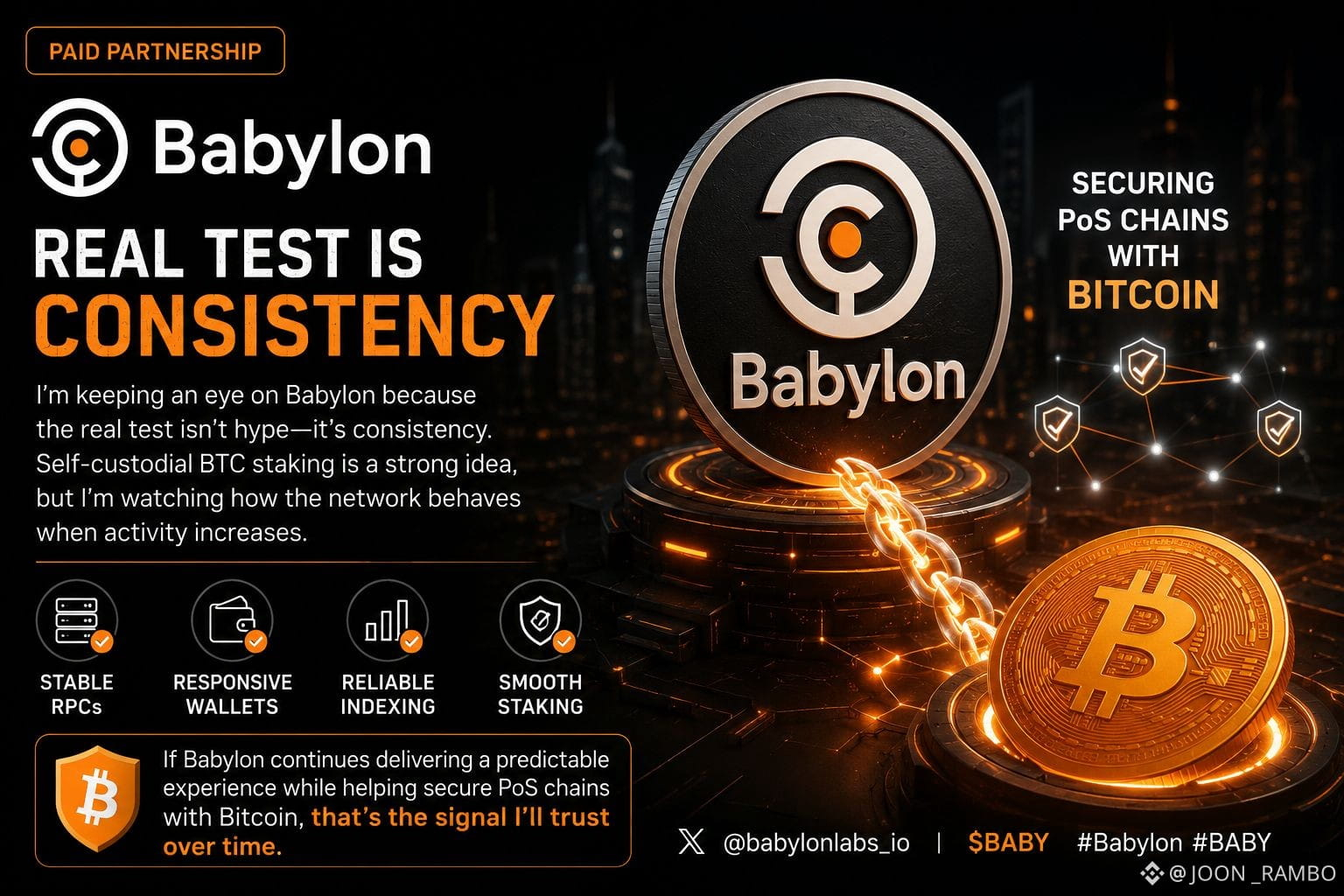
I'm keeping an eye on Babylon because the real test isn't hypeit's consistency. Self-custodial BTC staking is a strong idea, but I'm watching how the network behaves when activity increases. Stable RPCs, responsive wallets, reliable indexing, and smooth staking matter more to me than impressive numbers. If Babylon continues delivering a predictable experience while helping secure PoS chains with Bitcoin, that's the signal I'll trust over time.
@babylonlabs_io $BABY #Babylon #baby
#baby
I'm keeping an eye on Babylon because the real test isn't hypeit's consistency. Self-custodial BTC staking is a strong idea, but I'm watching how the network behaves when activity increases. Stable RPCs, responsive wallets, reliable indexing, and smooth staking matter more to me than impressive numbers. If Babylon continues delivering a predictable experience while helping secure PoS chains with Bitcoin, that's the signal I'll trust over time.
@BabylonLabs_io $BABY #Babylon #baby
I'm keeping an eye on Babylon because the real test isn't hypeit's consistency. Self-custodial BTC staking is a strong idea, but I'm watching how the network behaves when activity increases. Stable RPCs, responsive wallets, reliable indexing, and smooth staking matter more to me than impressive numbers. If Babylon continues delivering a predictable experience while helping secure PoS chains with Bitcoin, that's the signal I'll trust over time.
@BabylonLabs_io $BABY #Babylon #baby
5
3
138
Log in to explore more content
Join global crypto users on Binance Square
⚡️ Get latest and useful information about crypto.
💬 Trusted by the world’s largest crypto exchange.
👍 Discover real insights from verified creators.
Email / Phone number
Trending Topics
AppleDebutsFoldablePhone
12,518 views
288 Discussing
#appledebutsfoldablephone I Got My Hands on the iPhone Duo, Apple’s First Foldable Phone. Here’s What Stands Out
The palm-size phone is Apple's boldest handset in years, with a 5.4-inch cover screen and a 7.6-inch main display. I spent some time with the Duo before its October launch.It’s finally here: Apple on Wednesday unveiled its first foldable iPhone, called the iPhone Duo.
iPhone Duo design and build
The iPhone Duo is compact, with a passport-size design. It has a 7.6-inch display on the inside and a 5.4-inch outer display. It fits squarely in my palm, with dimensions similar to Samsung’s Galaxy Z Fold 8, which has a 7.6-inch inner display and a 5.5-inch cover display.
Apple says the Duo is the thinnest iPhone ever when open, measuring 5.2mm. It’s 11.3mm thick when closed. A titanium frame keeps it lightweight at 254 grams.
One of the key differences in feel between Apple’s and Samsung’s phones is that the iPhone Duo has a matte, nano-textured finish on the inner display, which reduces the phone’s crease while also curbing reflections. It has a satisfying feel and really makes the crease virtually disappear when the screen is on. I find it even harder to notice than the Z Fold 8’s, which also has an anti-reflective display.$ONG $IMX $TAC
Isabella-I
·4 Likes
·997 views
EUExtendsCentralContactPointToCASPs
773 views
65 Discussing
US10YTreasuryYieldHitsHighestSinceNov2023
15,584 views
284 Discussing