
rjmi74
530 Posts

rjmi74
Report
Block User
sin riesgo no hay gloria
1.3K+ Following
891 Followers
1.0K+ Liked
Posts
All
Quotes
Videos
·
--
Bullish
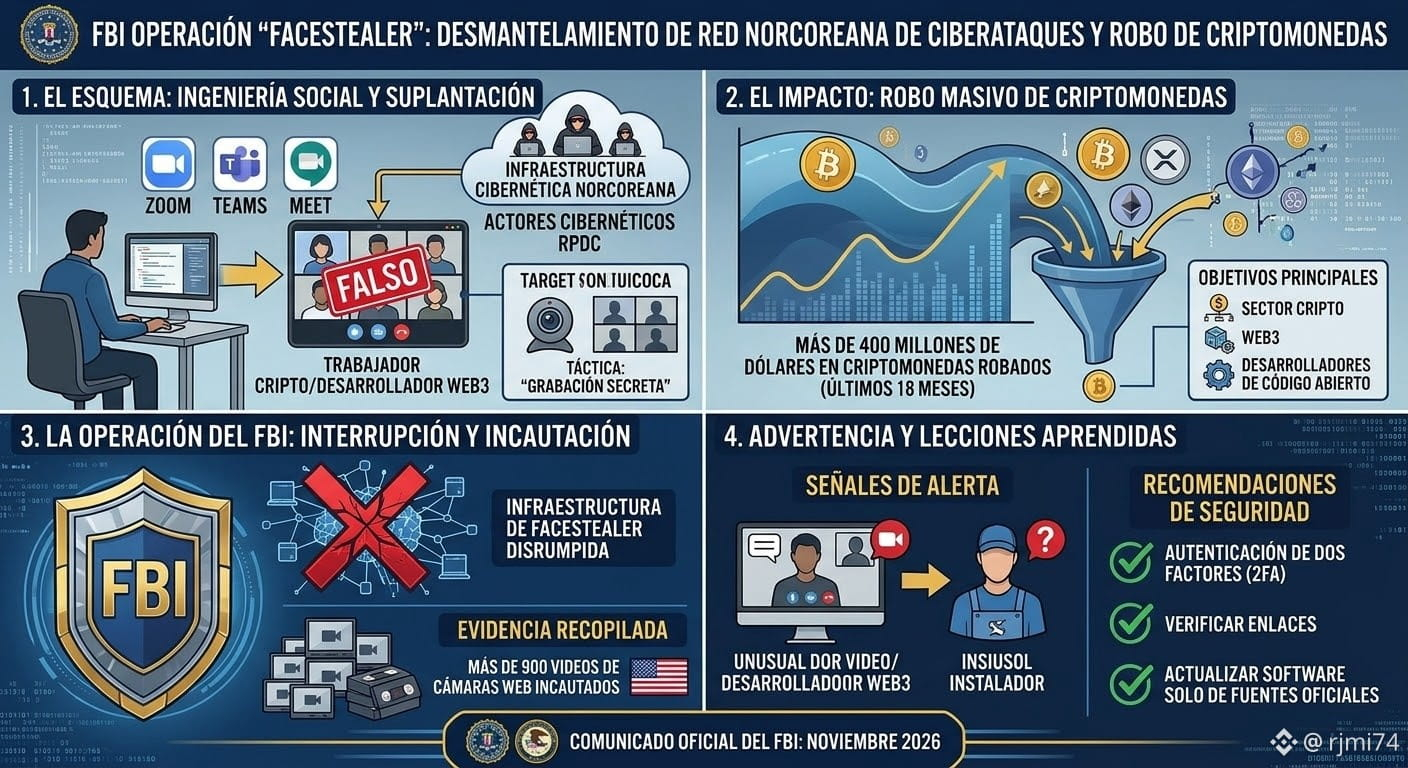
UNITED STATES | FBI DISMANTLES NORTH KOREAN CYBERATTACK NETWORK THAT STOLE MORE THAN $400 MILLION IN CRYPTOCURRENCY
The FBI announced the disruption of infrastructure used by FaceStealer, a social engineering scheme attributed to North Korean cyber actors who impersonated videoconferencing platforms and secretly recorded their victims to steal cryptocurrency and compromise software projects. The operation led to the seizure of more than 900 webcam videos of victims in various countries.
According to the FBI, this operation is believed to have caused losses of more than $400 million over the past 18 months. The agency warns that workers in the crypto and Web3 sectors, as well as open-source software developers, were among the main targets.
$BTC
118
·
--
Bullish
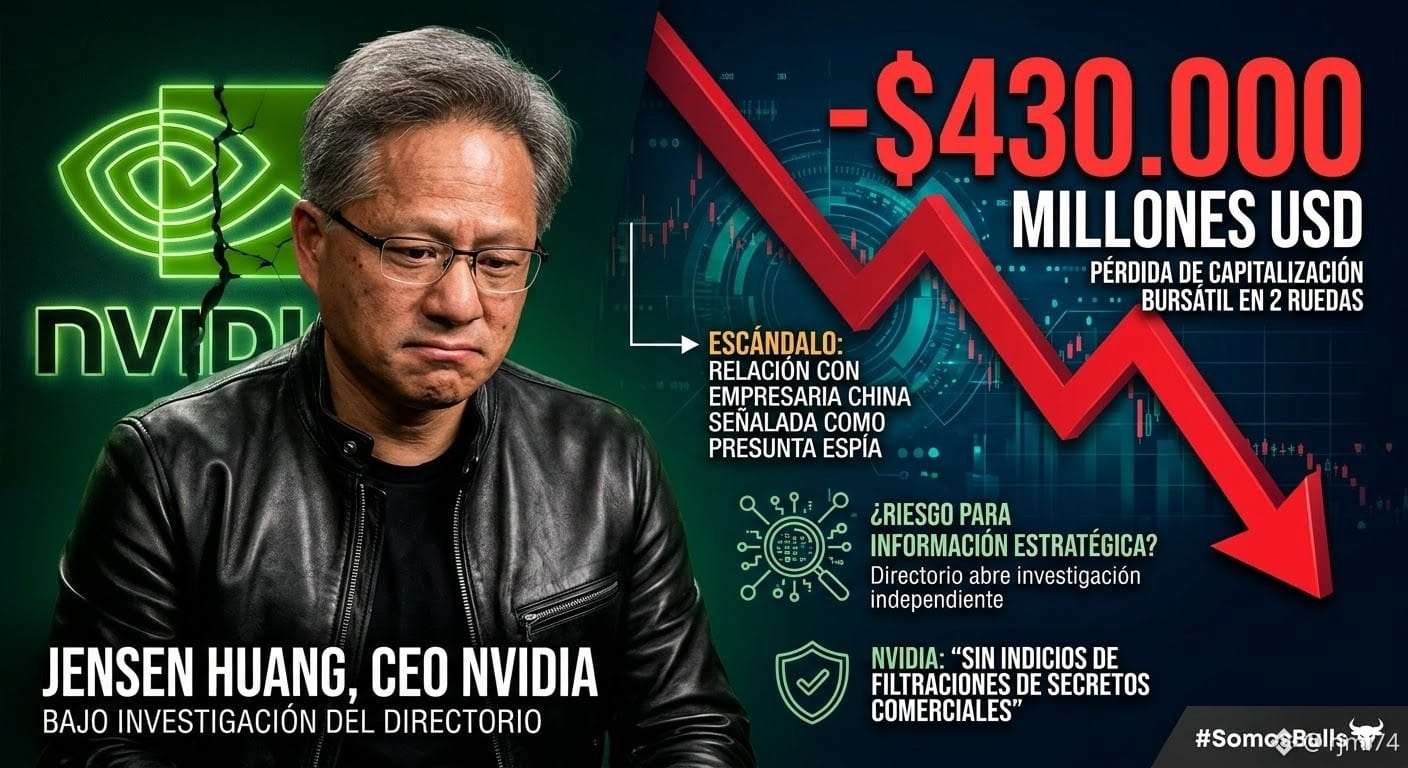
🚨 Nvidia loses USD 430 billion after CEO scandal
📉 Jensen Huang acknowledged having an extramarital relationship with a Chinese businesswoman identified by U.S. officials as a suspected spy.
🕵️ What is being investigated?
The board launched an independent investigation to determine whether Huang was targeted in an intelligence operation and whether strategic information was put at risk.
⚠️ Was there a leak?
Nvidia says it has no indication that trade secrets or sensitive information were compromised.
💰 Stock market impact
The company lost nearly USD 430 billion in market capitalization over two trading sessions, according to iProfesional. This is not money withdrawn from its accounts: it reflects the decline in the value of its shares.
💡 The key point: the case adds geopolitical risk and raises questions about corporate governance at an AI giant
$NVDAB
37
·
--
Bullish
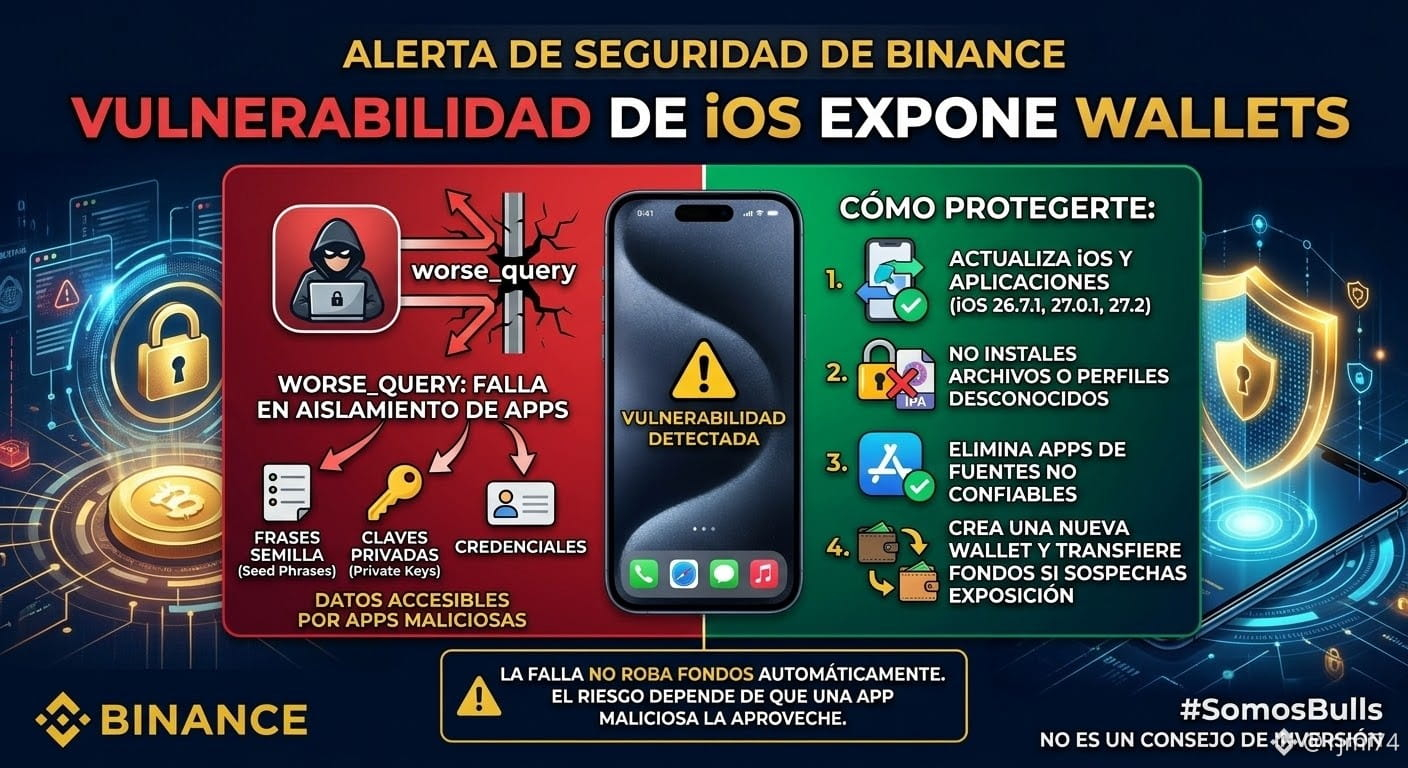
🚨 Binance warns of an iOS vulnerability that could expose wallets
🔐 The flaw, called "worse_query," partially breaks isolation between apps and could allow a malicious app to access other apps’ files.
⚠️ What’s at risk?
Seed phrases, private keys, and credentials, if stored locally without sufficient protection.
📱 Who is affected?
Binance mentions iOS 26.7.1, 27.0.1, and 27.2. The code published as a proof of concept describes a broader scope across iOS 26 and 27.
🛡️ How to protect yourself:
• Remove apps installed from untrusted sources.
• Don’t install unknown profiles or IPA files.
• Keep iOS and your apps up to date.
• If you suspect your wallet has been exposed, create a new one on a clean device and transfer the funds.
💡 The key point: the flaw doesn’t steal funds automatically. The danger depends on a malicious app exploiting it and finding accessible sensitive data.
$BTC
121
·
--
Bullish
⚠️⚠️ ATTENTION, THE BUNKER: U.S. TREASURY STRIKES MEXC ⚠️⚠️
Good morning, everyone. We’ve just received some major news from the global teams:
🚨 FinCEN (the U.S. agency that combats financial crimes) issued a direct order to cut MEXC Global off from the U.S. financial system.
The official reason? Money laundering and transactions with blocked entities. The report’s figures are serious:
🔴 More than USD 16 billion moved between 2021 and 2026, linked to cybercrimes and illicit activities.
🔴 USD 1.5 billion to evade Russian sanctions.
🔴 USD 232 million in direct transactions with entities blocked by the U.S., the EU, and the United Kingdom.
Basically, the U.S. has just labeled MEXC a “primary money laundering concern.”
A heads-up to anyone trading or holding liquidity there. Keep an eye on the market’s reaction and the exchange’s announcements. We’ll keep you informed of any updates. 🛡️📉
🔗 Official source: Treasury.gov
$BTC

182
·
--
Bullish
#BinanceVietnamSquare
#Binance
Binance, the world's largest cryptocurrency exchange, announced this Saturday that its chief financial officer, Kaiser Ng, is leaving the company and will be replaced by Justin Yek.
The change comes just a week and a half after a cyberattack in which, according to reports, hackers stole $6.3 billion in cryptocurrency.
Binance co-CEO Yi He said in a statement that Ng had decided to pursue a new venture after more than five years with the company, and that the handover is part of a transition plan implemented over the past six months. In other words, the company maintains that the decision predates the hack.
Ng had held the position since January 2022 and previously worked at rival platform Kraken.
According to Binance, the security breach occurred on October 29 and began with malware hidden in software downloads and fake job offers targeting engineers.$BNB
At a press conference on November 3, the company explained that the attack began with a fake job interview and that the attackers compromised the devices of two engineers.
Binance says it will cover the losses with its own funds and has already replenished nearly 98% of the affected assets, so customers will not bear the impact. Withdrawals had resumed, and the company said it would hire independent experts to review what happened.
The case has also had political ramifications. North Korea denied any involvement in the hack and criticized the FBI's investigation.
1
2.6k
·
--
Bullish
🚨 THIS IS HOW THEY’RE TRYING TO LAUNDER THE $6.3 BILLION STOLEN FROM BINANCE.
What’s happening behind this hack is absolutely insane.
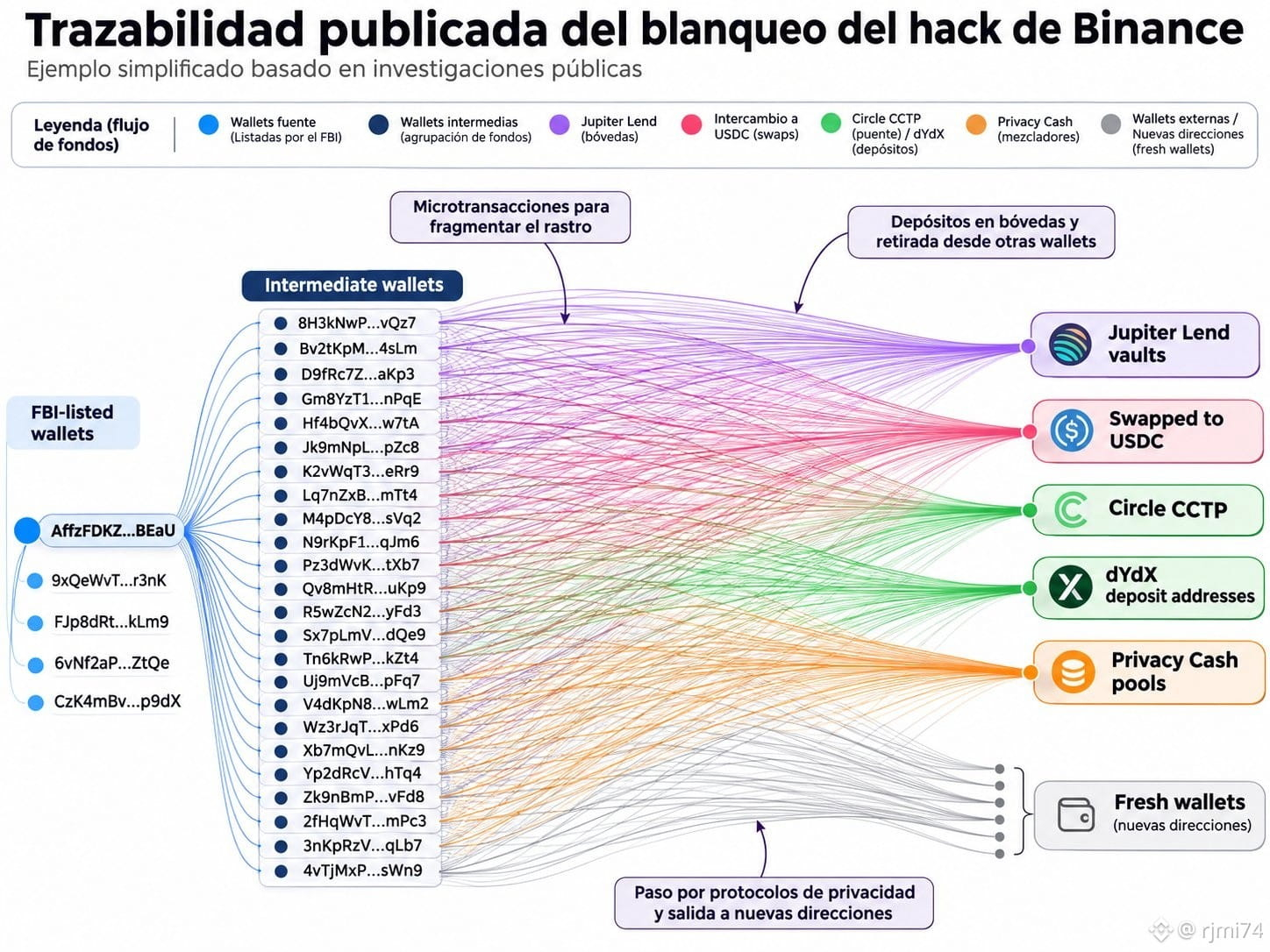
The hackers, whom the FBI has attributed to North Korea, are using an automated system of transactions to make the money harder to trace.
In just three and a half days, around 12,000 wallets and more than 40,000 transactions have been detected.
So how are they doing it?
🔹 They split up the funds and distribute them across thousands of addresses.
🔹 They use protocols like Jupiter Lend, depositing funds into vaults and transferring withdrawal rights to other wallets, thereby breaking the direct trail.
🔹 They constantly switch blockchains and assets using bridges and decentralized exchanges.
🔹 They’ve even used Privacy Cash, a protocol designed to provide privacy and make it harder to link deposits to withdrawals.
And here’s the interesting part.
Privacy Cash has just temporarily suspended deposits after detecting funds linked to the theft.
Meanwhile, the FBI has published hundreds of addresses linked to the attackers and asked DeFi operators, exchanges, and blockchain infrastructure providers to block transactions coming from these wallets.
We’re seeing a race between investigators tracking the money and hackers trying to hide where it came from.
And although they’ve managed to freeze around $2.85 billion, billions are still outside that freeze.
Stealing $6.3 billion was only the beginning. Now the attackers’ real challenge is figuring out how to use it without being detected.$AAPLB
4
18
31.9k
·
--

Article
There is a high probability that the attack on Binance involved the collusion of programThere is a high probability that the attack on Binance involved the collusion of senior programmers within the exchange. They were all fooled like children by North Korean hackers. 🤔
According to Binance, several engineers on its programming team took the hackers’ bait—not once, but twice and even more times. Here’s how, according to Binance, the hackers infiltrated the company. I’ll use fictional names for the story:
It all started in June 2026 with Pedro, a programmer on the wallets team. Pedro searched online for a well-known artificial intelligence tool for programming and downloaded it. The problem was that it wasn’t the real tool; it was a fake version containing a virus. The security team noticed, replaced his computer, and changed all his passwords. It seemed like the problem had been solved, but the attackers already knew who Pedro was and who his teammates were. They already had a map of whom to target next.
There is a high probability that the attack on Binance involved the collusion of program
There is a high probability that the attack on Binance involved the collusion of senior programmers within the exchange. They were all fooled like children by North Korean hackers. 🤔
According to Binance, several engineers on its programming team took the hackers’ bait—not once, but twice and even more times. Here’s how, according to Binance, the hackers infiltrated the company. I’ll use fictional names for the story:
It all started in June 2026 with Pedro, a programmer on the wallets team. Pedro searched online for a well-known artificial intelligence tool for programming and downloaded it. The problem was that it wasn’t the real tool; it was a fake version containing a virus. The security team noticed, replaced his computer, and changed all his passwords. It seemed like the problem had been solved, but the attackers already knew who Pedro was and who his teammates were. They already had a map of whom to target next.
1
33
·
--
Bullish
The hacking issue involving @Polymarket
has had several significant recent developments:
$POLY1-The ongoing exploit of the UMA CTF contract (May 2026)
An active attack on the Polygon network is being reported right now. Blockchain investigator ZachXBT detected that an attacker managed to exploit Polymarke's UMA CTF Adapter smart contract. Estimated losses exceed $660,000, and the funds continue to move as the vulnerability is being analyzed.2- The alleged leak of user data (April 2026)
A few weeks ago, a hacker using the pseudonym "xorcat" posted on dark web forums that they had breached the platform and stolen more than 300,000 user records (including names, profile photos, and addresses).Polymarket's response: The company categorically denied suffering a security breach or an internal hack, calling the hacker's claims "complete nonsense"
$BTC

216
·
--
Bullish
Binance has begun recovering the affected assets for users and continues to work with authorities, issuers, blockchain intelligence firms, and industry partners to track, freeze, and recover additional funds.
The company has already publicly committed, in the previous announcement, to covering the losses with corporate funds.
Binance has already set aside more than USD 6.34 billion in company funds to cover this incident. Of that total, USD 5 billion is already held in the same tokenized assets that were affected. We are completing the purchase of the remaining amount by acquiring tokenized assets through market channels and OTC transactions. We are doing this to match the composition of the remaining assets and cover any shortfall. This process may take longer, as some tokens may have low liquidity and OTC settlement also takes time. We will share further updates as soon as we can.
These figures do not include frozen or safeguarded assets, which remain subject to ongoing recovery and verification processes. To date, USD 3 billion has been frozen, thanks to the support of our industry partners. We continue to work with our partners and authorities to recover those frozen assets. We will continue to use company resources to cover any confirmed shortfall and provide further verified updates as recovery efforts progress. Ultimately, all user funds will be publicly verified through our Proof of Reserves.
We will get through this situation. Thank you for your support.
$AMZNB
1
141
·
--
Bullish
$NVDAB 🚨 ZachXBT suspects Lazarus is behind Binance hack
Binance reportedly suffered an outflow of $5.875 billion in assets, with ZachXBT suspecting North Korea's Lazarus Group was involved. There is no official confirmation yet.
CZ says the actual net loss is slightly over $1 billion, and Binance will cover the full amount. Around half of the assets have reportedly been recovered.
#Binance�

13
1
41
49.2k
·
--
Article
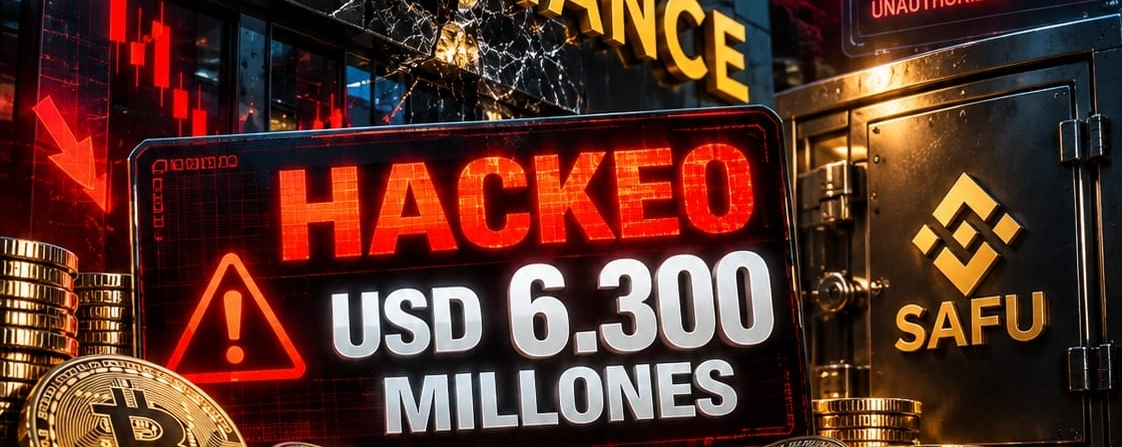
Binance HackWe now have the full picture of the Binance hack. And it’s much worse than what was reported last night: $6.3 billion. The biggest theft in the history of cryptocurrency. Four times the size of Bybit’s.
Let me explain what happened, because it’s like something out of a movie.
They didn’t crack any private keys. They hacked the laptop of a BINANCE engineer. From that laptop, they accessed an internal system container and started signing withdrawals as if they were Binance itself. A single transaction targeting one of the hot wallets had 50 signed approvals. The attacker didn’t break into the vault: they sat in the chair of the employee who had the key.
Binance Hack
We now have the full picture of the Binance hack. And it’s much worse than what was reported last night: $6.3 billion. The biggest theft in the history of cryptocurrency. Four times the size of Bybit’s.
Let me explain what happened, because it’s like something out of a movie.
They didn’t crack any private keys. They hacked the laptop of a BINANCE engineer. From that laptop, they accessed an internal system container and started signing withdrawals as if they were Binance itself. A single transaction targeting one of the hot wallets had 50 signed approvals. The attacker didn’t break into the vault: they sat in the chair of the employee who had the key.
1
2
3.9k
·
--
Bullish
The Binance hack has a tricky aspect.
Tether froze $1.57B in USDT, and Circle froze more than $800M in USDC.
But the hacker made a pretty clever move: they used $60M in USDT as collateral on Aave and borrowed nearly 20,000 ETH.
You can freeze the USDT, but not the ETH they’ve already taken.
And here’s the interesting part: if they don’t repay the loan and the collateral is frozen, who takes the losses?
The risk didn’t disappear—it was passed on to DeFi. 👀
318
·
--
⚠️ATTENTION⚠️
SUMMARY OF THE #BINANCE� HACK
What happened⁉️
🚨 In just 40 minutes, more than $5.6B left Binance’s hot wallets (the ones it uses for day-to-day operations).
🚨 ETH, USDT, USDC, and more than 60 other tokens were stolen. The attacker’s wallet was funded through Tornado Cash, a tool used to hide the origin of funds.
🎯 It surpasses the 2025 Bybit hack ($1.5 billion) and becomes the largest in history.
What did CZ say?
🗣️ "Users’ funds are safe."
🗣️ He clarified that he no longer runs Binance, but as a shareholder, he expects all users’ funds to be covered 100%.
👉 Binance confirmed it is investigating and reiterated that users’ funds are completely safe.
🧨 The fastest response came from stablecoins:
▪️ Tether froze more than $1.5 billion in USDT.
▪️ Circle froze about $823 million in USDC.
▪️ In total, nearly $2.4 billion was blocked within minutes. The hacker has it, but can’t move it.
▪️ What can’t be frozen: about 195,000 ETH and about 16,700 BTC that also left the wallets.
👉 The market impact: Bitcoin fell below $78,500, BNB dropped as much as 6%, and about $450 million in long positions were liquidated.
📍 In 2022, when FTX collapsed, users lost everything. Today, the world’s largest exchange says it will cover 100%, and nearly half of the loot was frozen within minutes.
Do you keep your crypto on an exchange or in your own wallet⁉️
140
·
--
Bullish
🚨❗️ URGENT: BINANCE IS SUSPECTED OF HAVING BEEN HACKED
I've been warning for years that they would try to take down Binance.
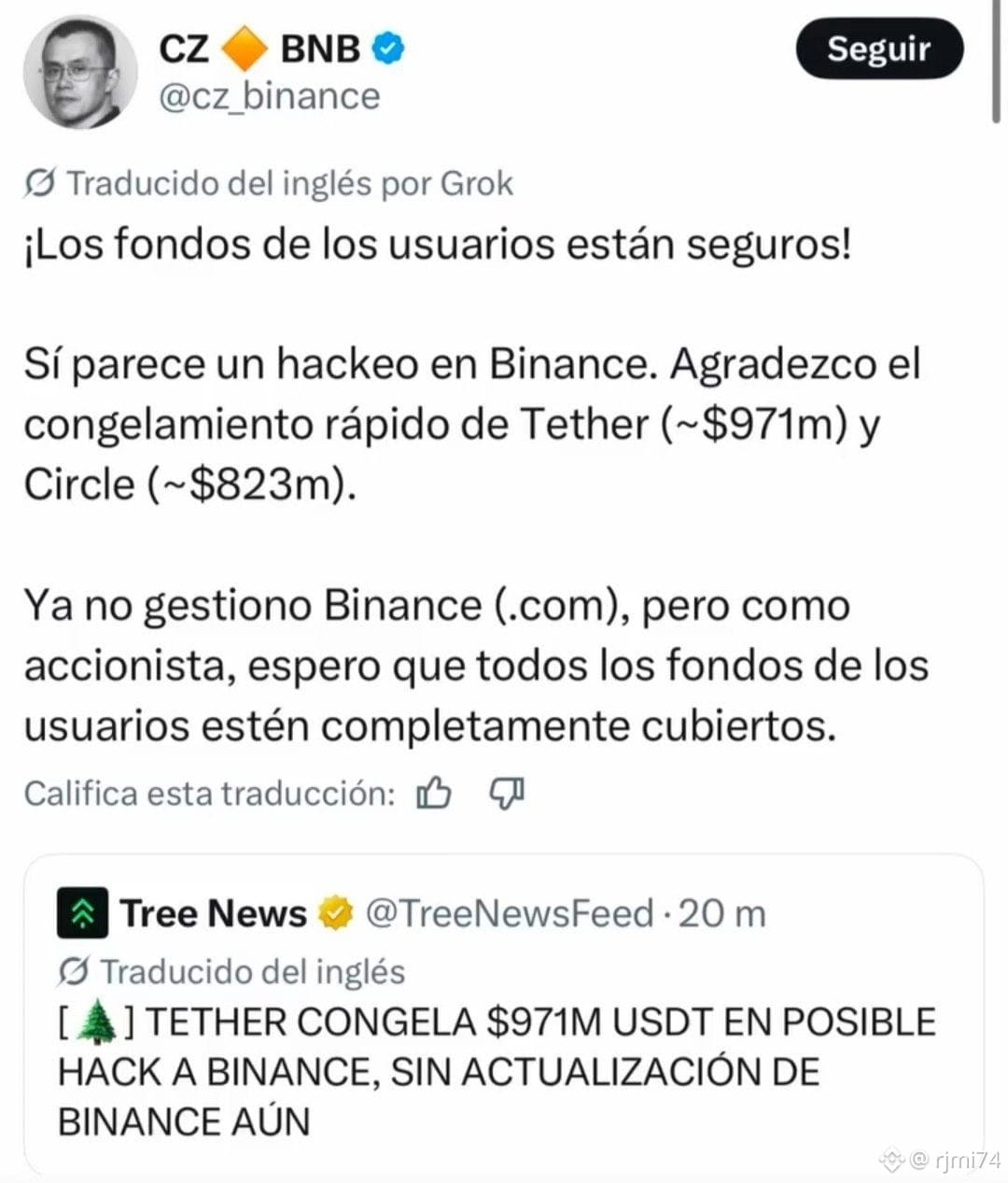
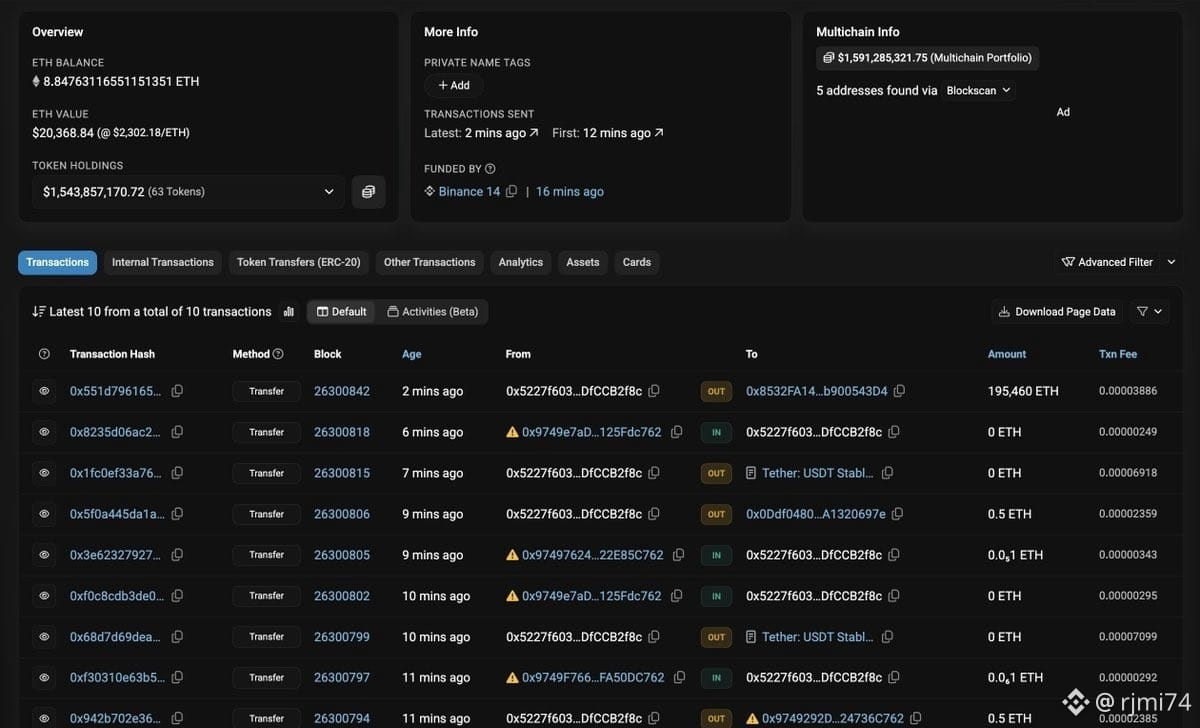
Wallets linked to Binance have allegedly moved $2.7 TRILLION in crypto to a newly created wallet in just 24 seconds.
Tether has frozen $971 million in $USDT, while Circle has allegedly frozen another $823 million in $USDC related to this movement.
Tether has now frozen $1.5 billion in $USDT linked to the alleged Binance hack.👀
✅
$AAPLB
14
13
18.3k
·
--
Bullish
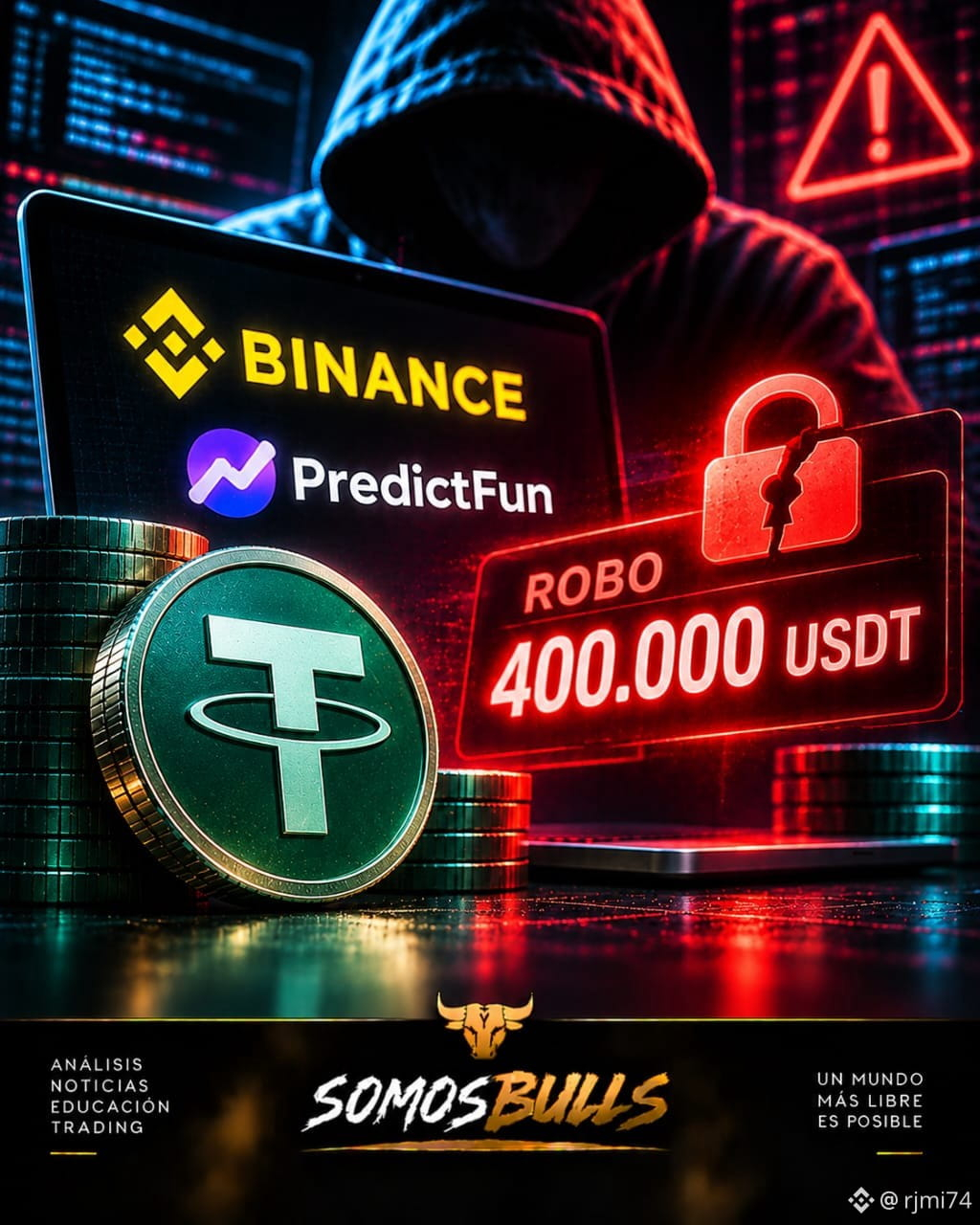
🚨 Nearly USD 400,000 in USDT stolen from Predict.fun users
🔐 The prediction market integrated into Binance Wallet confirmed unauthorized transfers from users’ wallets. Bitquery’s analysis traced 397,708 USDT stolen from 29 wallets in two waves, on October 22 and 27.
⚠️ How did it happen?
Predict.fun suspects its API documentation site, hosted by a third party, may have been compromised. The platform took it offline while it investigates. The exact cause has not yet been confirmed.
💰 Will users be reimbursed?
The team promised to reimburse losses directly related to the incident and publish a technical report once the investigation is complete.
📌 Although Predict.fun is integrated into Binance Wallet, it is an independent service: this does not mean Binance was hacked.
💡 The takeaway: this case shows that security also depends on the external tools and services connected to a platform.
$NVDAB
1
149
·
--
Bullish
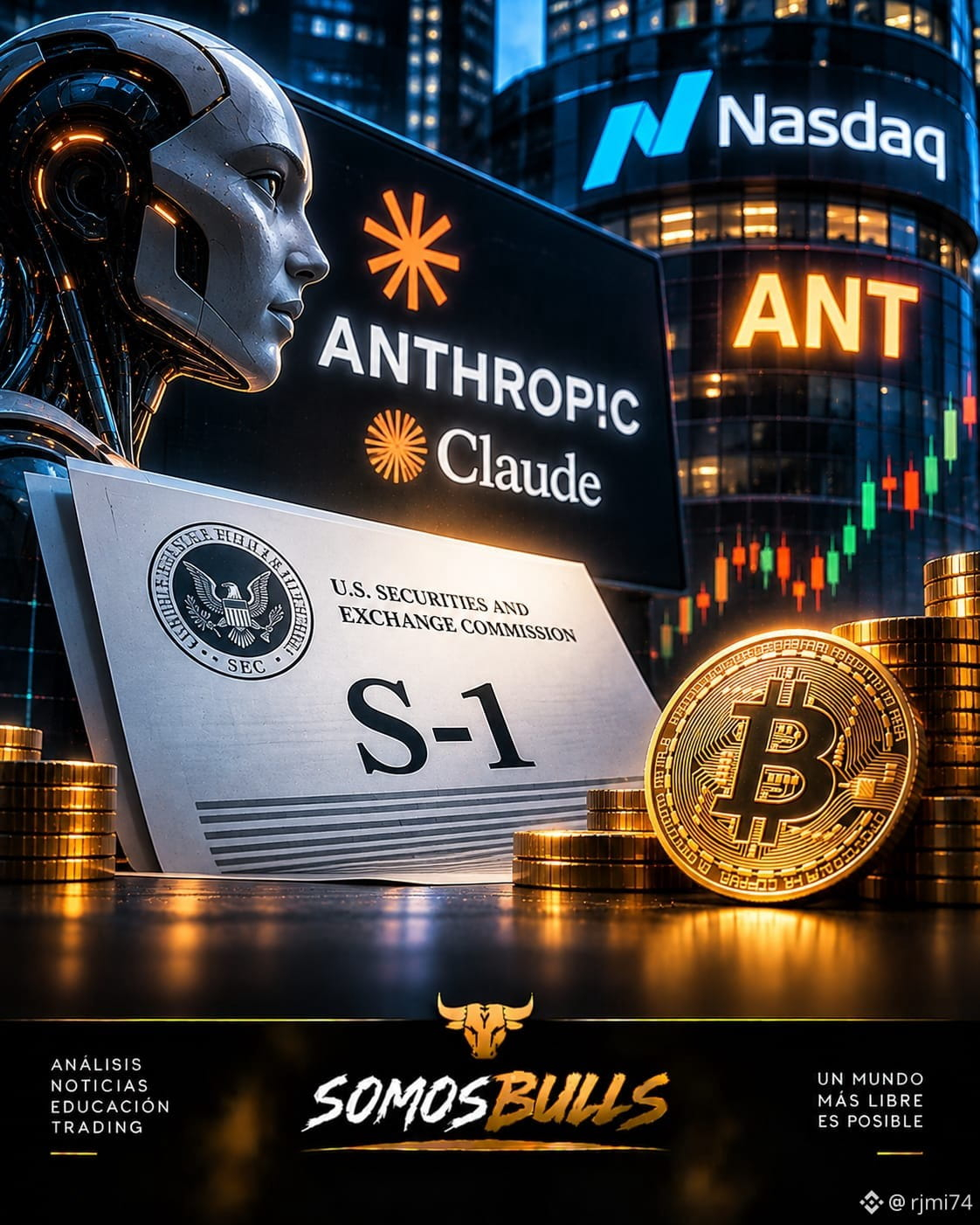
🤖 Anthropic files its S-1, and the crypto market is already speculating about its valuation
🚀 The company behind Claude filed with the SEC to list on Nasdaq under the ticker ANT.
📊 The figures in the filing:
• First-half 2026 revenue: USD 16.286 billion.
• Net loss: USD 80.748 billion, largely influenced by accounting adjustments.
• Cash and short-term investments: USD 131.651 billion.
💰 What’s happening in crypto?
Contracts linked to Anthropic’s estimated valuation are already trading on platforms such as Hyperliquid. After the filing became public, the ANTH contract fell about 6% from its intraday highs.
⚠️ Important: these derivatives don’t grant shares or guarantee access to the IPO. They may involve leverage, low liquidity, and rapid liquidations.
💡 The takeaway: interest in AI is also reaching crypto markets, but the prices of these contracts don’t necessarily reflect the company’s final valuation.
$BTC This is not investment advice.
124
·
--
🚨🚗 #ElonMusk has just unveiled a flying car
#TESLAROADSTER!
The Tesla Roadster defies gravity with an incredible “kickflip” stunt over a row of Tesla cars$
$TSLAB
🚨🚗 #ElonMusk has just unveiled a flying car
#TESLAROADSTER!
The Tesla Roadster defies gravity with an incredible “kickflip” stunt over a row of Tesla cars$
$TSLAB
#TESLAROADSTER!
The Tesla Roadster defies gravity with an incredible “kickflip” stunt over a row of Tesla cars$
$TSLAB
108
·
--
Bullish
TODAY’S VERY IMPORTANT DATA
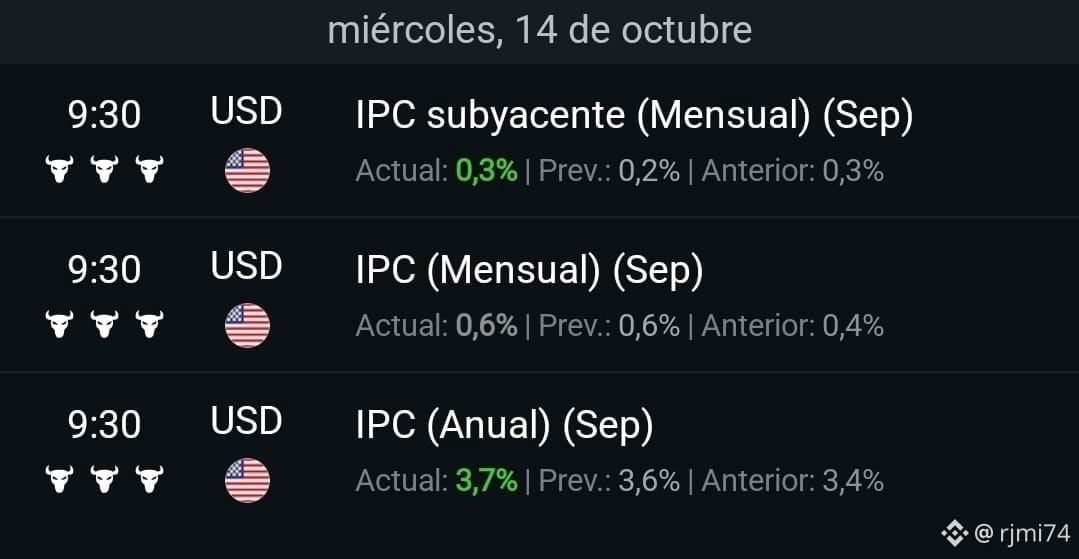
🕤 09:30 → U.S. CPI WAS RELEASED 🇺🇸
📈 Monthly core CPI
🟢 Actual: 0.3% | Forecast: 0.2% | Previous: 0.3%
📊 Monthly CPI
Actual: 0.6% | Forecast: 0.6% | Previous: 0.4%
🔥 Annual CPI
🟢 Actual: 3.7% | Forecast: 3.6% | Previous: 3.4%
⚠️ PAY ATTENTION TO THESE RESULTS: annual inflation came in higher than expected, and monthly core CPI also exceeded forecasts.
🧠 Why does this matter? Because these figures influence expectations about Fed interest rates. More persistent inflation could put pressure on the markets.
📈📉 WATCH OUT FOR VOLATILITY in stocks, the dollar, gold, and cryptocurrencies. Don’t rush in; first, see how prices react! 👀
$BTC
375
·
--
Article
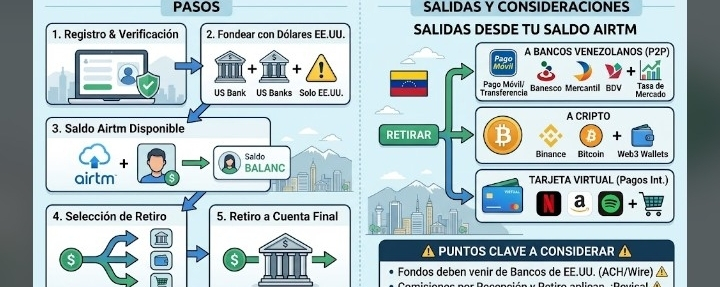
Airtm USA Virtual Account$BTC
A lot of people are asking how this works in practice for those of us in Venezuela.
I’m starting a detailed thread on how to set it up, receive U.S. payments (ACH/Wire), and convert them to bolivars in your local bank account 👇
What exactly is Airtm’s USA Virtual Account?
It’s not a traditional checking account at a physical U.S. bank in your name with a card. Instead, it’s a U.S. routing (Routing/ABA) number and account number assigned to your user account.
It lets you receive dollar payments directly via ACH, Wire, or FedNow from:
Airtm USA Virtual Account
$BTC
A lot of people are asking how this works in practice for those of us in Venezuela.
I’m starting a detailed thread on how to set it up, receive U.S. payments (ACH/Wire), and convert them to bolivars in your local bank account 👇
What exactly is Airtm’s USA Virtual Account?
It’s not a traditional checking account at a physical U.S. bank in your name with a card. Instead, it’s a U.S. routing (Routing/ABA) number and account number assigned to your user account.
It lets you receive dollar payments directly via ACH, Wire, or FedNow from:
94
·
--
Bullish
📌 Samsung Wallet will allow users to send USDC
Samsung announced that, starting in the last week of October, some Galaxy users in the United States will be able to send USDC from Samsung Wallet to compatible crypto wallets.
The service will also allow users to transfer funds to bank accounts in more than 60 countries, where recipients can receive the money in their local currency. Users will need to verify their identity and have a compatible Galaxy device. Samsung will not charge fees for sending USDC to other wallets, although fees may apply from the receiving platforms.
$SAMSUNG

324
Log in to explore more content
Join global crypto users on Binance Square
⚡️ Get latest and useful information about crypto.
💬 Trusted by the world’s largest crypto exchange.
👍 Discover real insights from verified creators.
Email / Phone number
Trending Topics
WhatWillDriveCryptoandStocks’NextRebound?
27,954 views
454 Discussing
Bitcoin Slips Below $70,000 as Dollar Index Hits 19-Month High
Binance News
·12 Likes
·28k views
Anthropic’s6xIPODemandSignalsPotentialRecordRaise
8,543 views
201 Discussing
HuangExitNvidiaStrategyInFocus
171,811 views
1,525 Discussing