
RISKK TAKER
482 Posts

RISKK TAKER
RISK TAKER, Technical Analyst, Trader, My post NFA
Open Trade
Occasional Trader
7.2 Months
6 Following
31 Followers
688 Liked
Posts
Portfolio
All
Quotes
Videos
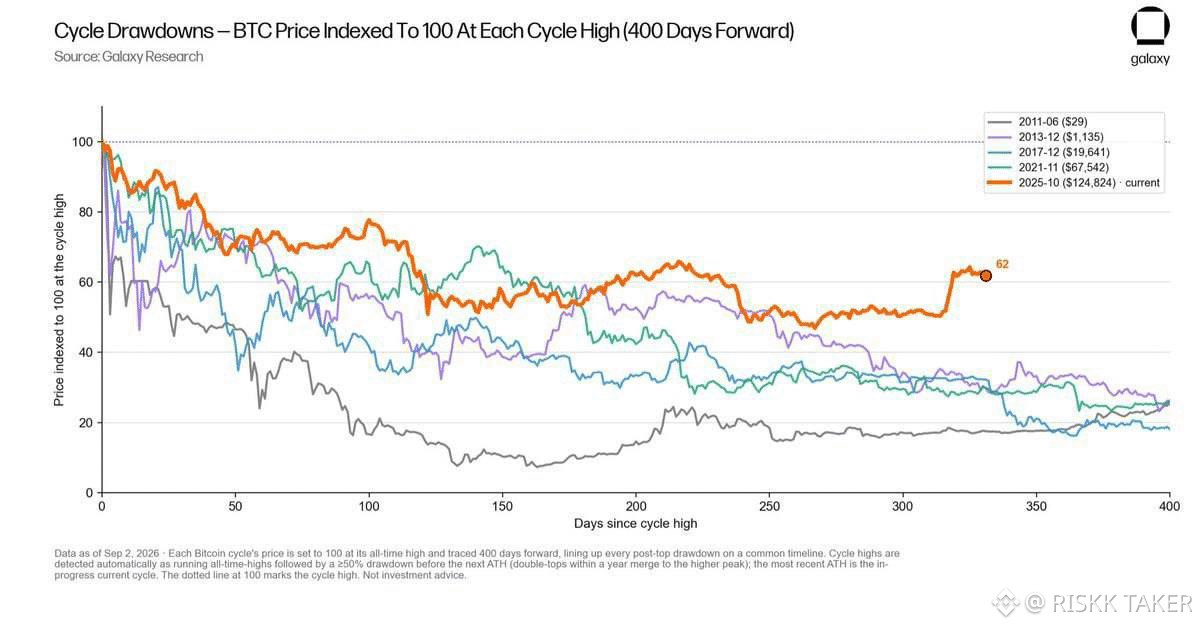
Bitcoin may be going through its shallowest bear market on record, according to Galaxy Research.
Unlike previous major downturns, Bitcoin’s current cycle has shown considerably stronger price resilience. Galaxy’s research notes that the June low held close to the long-term 200-week moving average, a level that has historically acted as a major bear-market floor.
The recovery has also been significant. Bitcoin recently rallied more than 30% from the June low and pushed back toward the 50-week moving average, a level Galaxy considers critical for determining whether the bear market has actually ended.
That doesn’t mean the bottom is guaranteed. A weekly close above the 50-week moving average would provide much stronger confirmation, while losing major support could reopen the downside.
Still, the structure is notably different from the brutal drawdowns seen in earlier cycles.
If this really is the shallowest Bitcoin bear market yet, the next breakout could be far more important than the correction that came before it.
$BTC
Unlike previous major downturns, Bitcoin’s current cycle has shown considerably stronger price resilience. Galaxy’s research notes that the June low held close to the long-term 200-week moving average, a level that has historically acted as a major bear-market floor.
The recovery has also been significant. Bitcoin recently rallied more than 30% from the June low and pushed back toward the 50-week moving average, a level Galaxy considers critical for determining whether the bear market has actually ended.
That doesn’t mean the bottom is guaranteed. A weekly close above the 50-week moving average would provide much stronger confirmation, while losing major support could reopen the downside.
Still, the structure is notably different from the brutal drawdowns seen in earlier cycles.
If this really is the shallowest Bitcoin bear market yet, the next breakout could be far more important than the correction that came before it.
$BTC
Zcash just broke above $900 as the privacy narrative gains serious momentum.
Grayscale says ZEC’s latest move into fresh price discovery is being supported by two forces: its hard-money characteristics and growing awareness around the importance of digital financial privacy.
The timing is particularly interesting. Grayscale has been increasingly positioning Zcash as a potential beneficiary of an AI-driven world where financial data becomes easier to analyze, track and potentially deanonymize. Its research argues that Zcash combines a Bitcoin-like monetary structure with the ability to transact privately.
That gives the current rally a narrative beyond pure speculation. $ZEC is benefiting from renewed interest in scarce digital assets while privacy is becoming a bigger discussion as blockchain surveillance and AI capabilities improve.
Of course, after such a powerful move, volatility and profit taking remain major risks.
But if privacy becomes a bigger priority in the next phase of crypto, Zcash may be entering price discovery at a very interesting time.
#zec #zcash
Grayscale says ZEC’s latest move into fresh price discovery is being supported by two forces: its hard-money characteristics and growing awareness around the importance of digital financial privacy.
The timing is particularly interesting. Grayscale has been increasingly positioning Zcash as a potential beneficiary of an AI-driven world where financial data becomes easier to analyze, track and potentially deanonymize. Its research argues that Zcash combines a Bitcoin-like monetary structure with the ability to transact privately.
That gives the current rally a narrative beyond pure speculation. $ZEC is benefiting from renewed interest in scarce digital assets while privacy is becoming a bigger discussion as blockchain surveillance and AI capabilities improve.
Of course, after such a powerful move, volatility and profit taking remain major risks.
But if privacy becomes a bigger priority in the next phase of crypto, Zcash may be entering price discovery at a very interesting time.
#zec #zcash

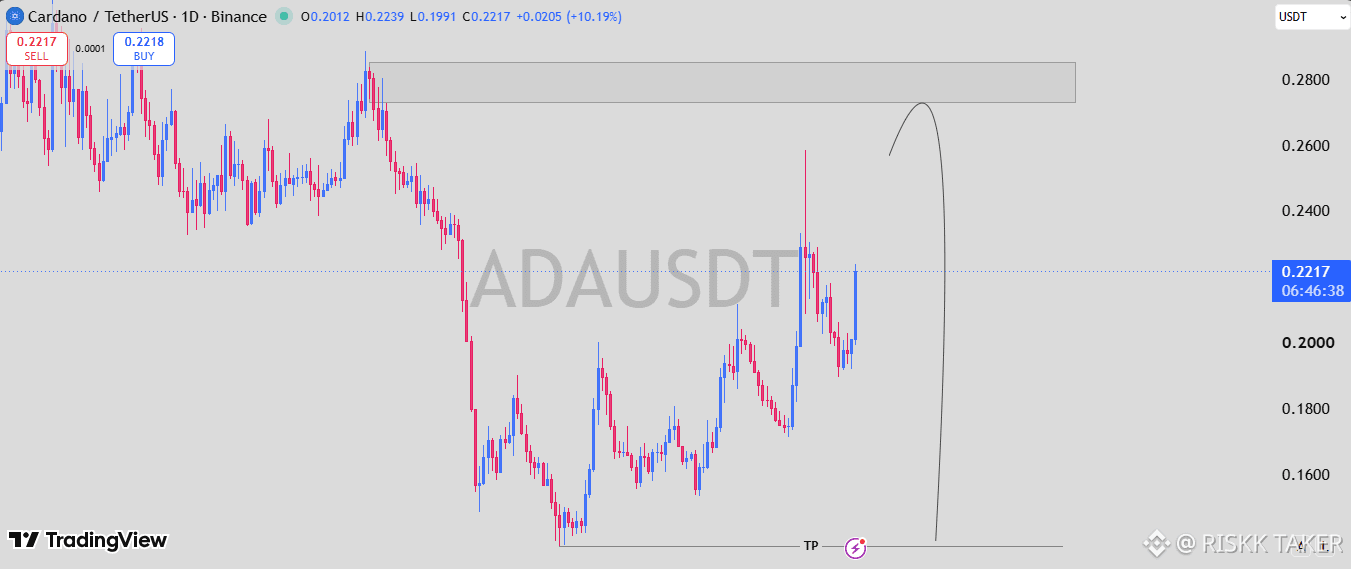
#Cardano has produced an aggressive daily recovery, with ADA trading around $0.22 after gaining more than 10%. The move has clearly shifted short-term momentum back toward buyers, but the larger chart structure remains at a critical decision point.
The main resistance area is positioned around $0.27–$0.285. This zone previously acted as a major rejection area, making it the level that needs to be broken before calling this a confirmed trend reversal.
If ADA pushes into that supply and fails, the recovery could unwind toward $0.20, while a deeper rejection could eventually expose the $0.15 area marked by the broader structure.
Conversely, a decisive daily close above $0.285 followed by a successful retest would strengthen the bullish case considerably.
For now, $ADA has momentum, but momentum alone is not confirmation. The reaction at $0.27–$0.285 should determine the next major direction.
#bullish
The main resistance area is positioned around $0.27–$0.285. This zone previously acted as a major rejection area, making it the level that needs to be broken before calling this a confirmed trend reversal.
If ADA pushes into that supply and fails, the recovery could unwind toward $0.20, while a deeper rejection could eventually expose the $0.15 area marked by the broader structure.
Conversely, a decisive daily close above $0.285 followed by a successful retest would strengthen the bullish case considerably.
For now, $ADA has momentum, but momentum alone is not confirmation. The reaction at $0.27–$0.285 should determine the next major direction.
#bullish
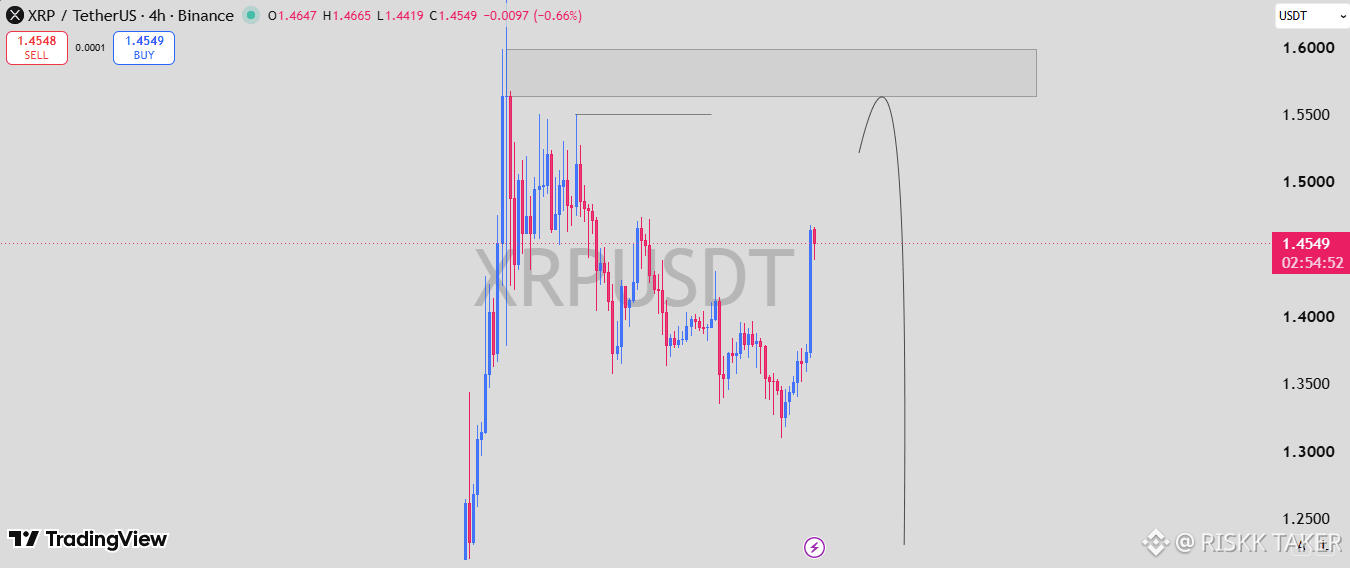
XRP is showing renewed buying pressure on the 4H timeframe after bouncing strongly from the $1.30–$1.35 region. The latest impulse has pushed price toward $1.45, but the next area could determine whether this recovery becomes a larger breakout or simply another relief rally.
The major technical zone is around $1.55–$1.60. This area represents significant overhead supply, meaning buyers will need substantially stronger momentum to push through it. A rejection there could send $XRP back toward $1.35, while a decisive loss of that level could open the door toward the $1.25 region highlighted by the broader structure.
On the other hand, a clean 4H breakout above $1.60 followed by a successful retest would significantly strengthen the bullish case.
For now, XRP is approaching resistance, not yet confirming a breakout. The reaction around $1.55–$1.60 should be closely watched.
#xrp #BTCTops$80K
The major technical zone is around $1.55–$1.60. This area represents significant overhead supply, meaning buyers will need substantially stronger momentum to push through it. A rejection there could send $XRP back toward $1.35, while a decisive loss of that level could open the door toward the $1.25 region highlighted by the broader structure.
On the other hand, a clean 4H breakout above $1.60 followed by a successful retest would significantly strengthen the bullish case.
For now, XRP is approaching resistance, not yet confirming a breakout. The reaction around $1.55–$1.60 should be closely watched.
#xrp #BTCTops$80K
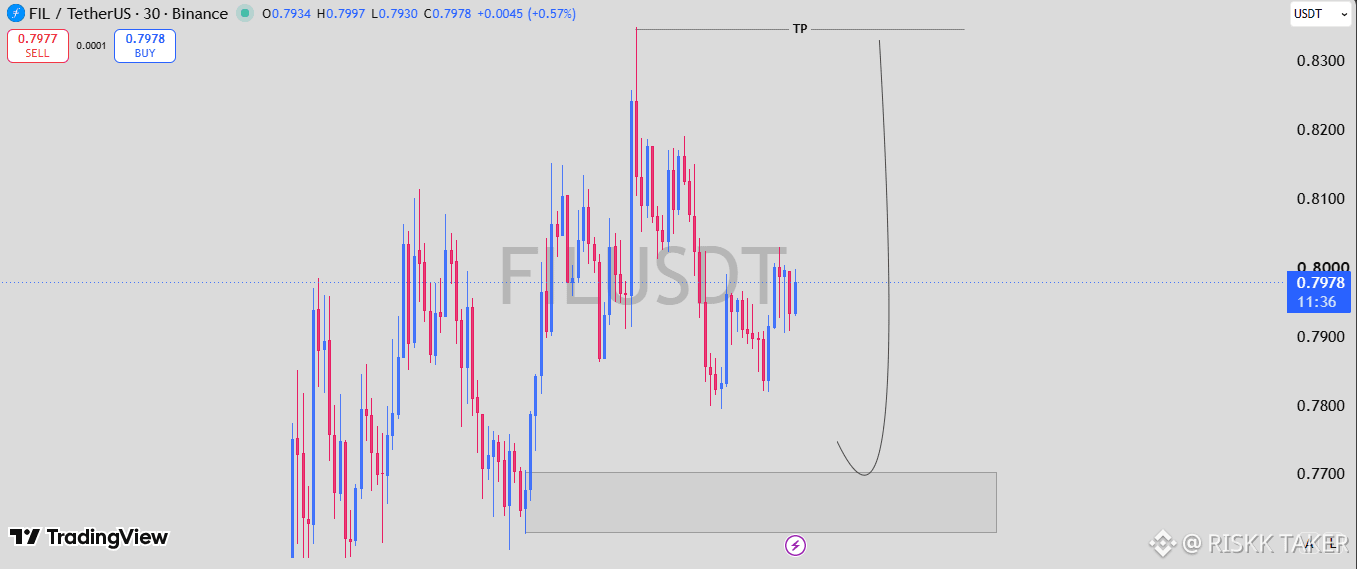
#fil is sitting near $0.80 after a sharp recovery, and the current price action is becoming increasingly important.
The 30-minute chart shows consolidation after the initial expansion, with buyers defending the $0.78–$0.79 region. The marked $0.76–$0.77 zone remains the main demand area to monitor.
If price dips into that zone and buyers step in, FIL could form a continuation setup targeting $0.83–$0.84.
The immediate hurdle is $0.80. A decisive breakout and hold above this level would strengthen the bullish structure and confirm that the recent recovery is developing into a larger move.
Conversely, a breakdown through $0.76 would invalidate the current setup and expose lower levels.
For now, $FIL remains constructive, but the next reaction around $0.76–$0.80 should determine the direction. #Cardano $ADA
The 30-minute chart shows consolidation after the initial expansion, with buyers defending the $0.78–$0.79 region. The marked $0.76–$0.77 zone remains the main demand area to monitor.
If price dips into that zone and buyers step in, FIL could form a continuation setup targeting $0.83–$0.84.
The immediate hurdle is $0.80. A decisive breakout and hold above this level would strengthen the bullish structure and confirm that the recent recovery is developing into a larger move.
Conversely, a breakdown through $0.76 would invalidate the current setup and expose lower levels.
For now, $FIL remains constructive, but the next reaction around $0.76–$0.80 should determine the direction. #Cardano $ADA
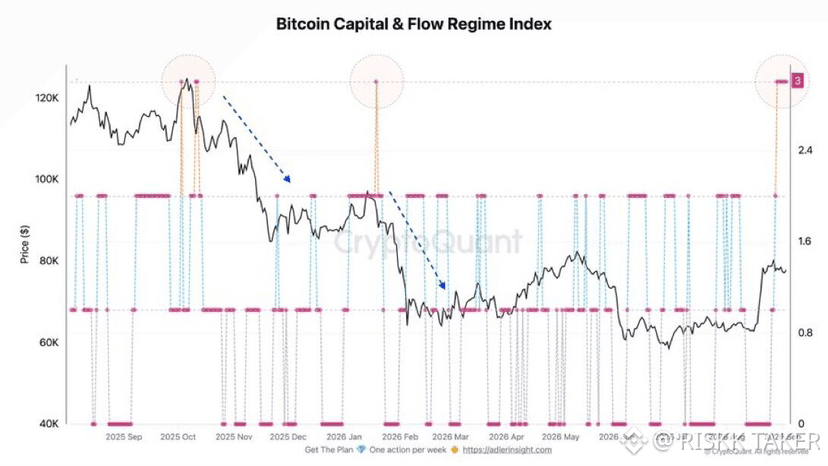
Bitcoin’s capital flows have stayed at extreme levels for six straight days.
CryptoQuant analyst Axel Adler Jr. says the current pattern is worth watching because similar periods of unusually intense capital movement during this cycle have previously
been followed by $BTC price declines.
That doesn’t necessarily mean another drop is guaranteed. Extreme inflows and outflows can also reflect traders aggressively repositioning after a major price move, and Bitcoin has recently rallied sharply before consolidating around the $77K–$80K region.
#BTCTops$80K #btc
CryptoQuant analyst Axel Adler Jr. says the current pattern is worth watching because similar periods of unusually intense capital movement during this cycle have previously
been followed by $BTC price declines.
That doesn’t necessarily mean another drop is guaranteed. Extreme inflows and outflows can also reflect traders aggressively repositioning after a major price move, and Bitcoin has recently rallied sharply before consolidating around the $77K–$80K region.
#BTCTops$80K #btc
Hargreaves Lansdown opens Bitcoin and Ether ETN trading to nearly 2 million investors.
The UK’s largest investment platform has finally entered the retail crypto market, giving its roughly 2 million clients access to nine Bitcoin and Ether exchange-traded notes from issuers including BlackRock’s iShares, WisdomTree and 21Shares.
The timing is notable. The FCA lifted its four-year ban on UK retail access to crypto ETNs in October 2025, but Hargreaves Lansdown had remained one of the major holdouts. Now its clients can gain exposure to BTC and ETH through a traditional investment platform rather than having to use a crypto exchange.
The UK’s largest investment platform has finally entered the retail crypto market, giving its roughly 2 million clients access to nine Bitcoin and Ether exchange-traded notes from issuers including BlackRock’s iShares, WisdomTree and 21Shares.
The timing is notable. The FCA lifted its four-year ban on UK retail access to crypto ETNs in October 2025, but Hargreaves Lansdown had remained one of the major holdouts. Now its clients can gain exposure to BTC and ETH through a traditional investment platform rather than having to use a crypto exchange.



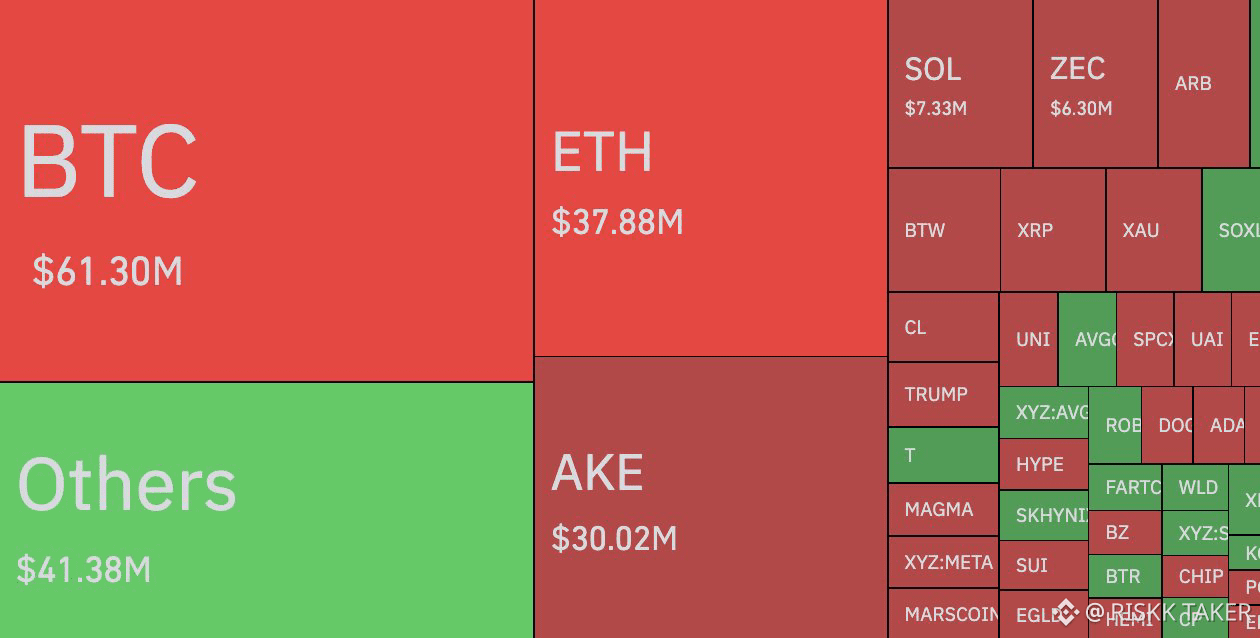
$170M in #bitcoin shorts were wiped out over the past 24 hours.
A wave of forced liquidations shows just how heavily traders were positioned for further downside. When short positions get liquidated, exchanges automatically close them by buying back the underlying asset, which can add another layer of upward pressure to an already rising market.
That makes short liquidations more than just a statistic. They can accelerate a move through a short squeeze, forcing increasingly bearish positions out of the market.
However, liquidation data alone doesn’t confirm a lasting #bullish reversal. The key is whether Bitcoin can maintain the move after the forced buying fades and whether genuine spot demand follows.
With bearish leverage being cleared out, the market may now have a cleaner setup for its next major move.
$170M in shorts gone. Now we find out whether real buyers can keep the momentum going.
$BTC $ZEC
A wave of forced liquidations shows just how heavily traders were positioned for further downside. When short positions get liquidated, exchanges automatically close them by buying back the underlying asset, which can add another layer of upward pressure to an already rising market.
That makes short liquidations more than just a statistic. They can accelerate a move through a short squeeze, forcing increasingly bearish positions out of the market.
However, liquidation data alone doesn’t confirm a lasting #bullish reversal. The key is whether Bitcoin can maintain the move after the forced buying fades and whether genuine spot demand follows.
With bearish leverage being cleared out, the market may now have a cleaner setup for its next major move.
$170M in shorts gone. Now we find out whether real buyers can keep the momentum going.
$BTC $ZEC
Nvidia is acquiring Hugging Face for $12.93B.
This is much bigger than a typical AI acquisition. Nvidia is buying one of the most important platforms in the open-AI ecosystem, giving the chip giant direct access to a community of more than 18 million developers, researchers and creators.
Hugging Face hosts more than 3 million AI models, 500,000 datasets and 1 million applications, making it a critical distribution and collaboration layer for developers building AI systems.
The interesting part is that Nvidia says Hugging Face will remain open and compute-agnostic. Developers will still be able to choose their models, frameworks, cloud providers and computing platforms rather than being forced onto Nvidia hardware.$NVDAB
This is much bigger than a typical AI acquisition. Nvidia is buying one of the most important platforms in the open-AI ecosystem, giving the chip giant direct access to a community of more than 18 million developers, researchers and creators.
Hugging Face hosts more than 3 million AI models, 500,000 datasets and 1 million applications, making it a critical distribution and collaboration layer for developers building AI systems.
The interesting part is that Nvidia says Hugging Face will remain open and compute-agnostic. Developers will still be able to choose their models, frameworks, cloud providers and computing platforms rather than being forced onto Nvidia hardware.$NVDAB


Arbitrum’s stablecoin economy is scaling fast in 2026.
During the first half of the year, Arbitrum averaged more than $70 billion in monthly stablecoin transfer volume, while the number of stablecoin holders jumped 40% to 10.5 million.
That growth is more significant than simply having more capital sitting on-chain. Stablecoins are increasingly being used for trading, settlement, payments and DeFi activity, turning them into a key measure of actual on-chain financial usage.
Arbitrum also processed 478 million transactions during H1, taking its lifetime total to roughly 2.7 billion. The network generated $206 million in ecosystem GDP during the period, while ArbitrumDAO recorded $6.19 million in income.
#arbitrum $ARB $ZEC
During the first half of the year, Arbitrum averaged more than $70 billion in monthly stablecoin transfer volume, while the number of stablecoin holders jumped 40% to 10.5 million.
That growth is more significant than simply having more capital sitting on-chain. Stablecoins are increasingly being used for trading, settlement, payments and DeFi activity, turning them into a key measure of actual on-chain financial usage.
Arbitrum also processed 478 million transactions during H1, taking its lifetime total to roughly 2.7 billion. The network generated $206 million in ecosystem GDP during the period, while ArbitrumDAO recorded $6.19 million in income.
#arbitrum $ARB $ZEC

Polygon just generated more than $1.3M in network revenue over the past 30 days.
That number is becoming harder to ignore when you look at what is happening underneath the network. #Polygon has been processing billions of transactions while stablecoin activity continues to expand, with its stablecoin supply now above $3 billion.
The more interesting part is the source of that revenue: actual network usage. Polygon’s payment and settlement activity has been growing rapidly, with stablecoins becoming a major part of the ecosystem. The network recently surpassed 8 billion cumulative transactions, showing that this is not simply a short-term spike in speculative activity.
$POL
That number is becoming harder to ignore when you look at what is happening underneath the network. #Polygon has been processing billions of transactions while stablecoin activity continues to expand, with its stablecoin supply now above $3 billion.
The more interesting part is the source of that revenue: actual network usage. Polygon’s payment and settlement activity has been growing rapidly, with stablecoins becoming a major part of the ecosystem. The network recently surpassed 8 billion cumulative transactions, showing that this is not simply a short-term spike in speculative activity.
$POL

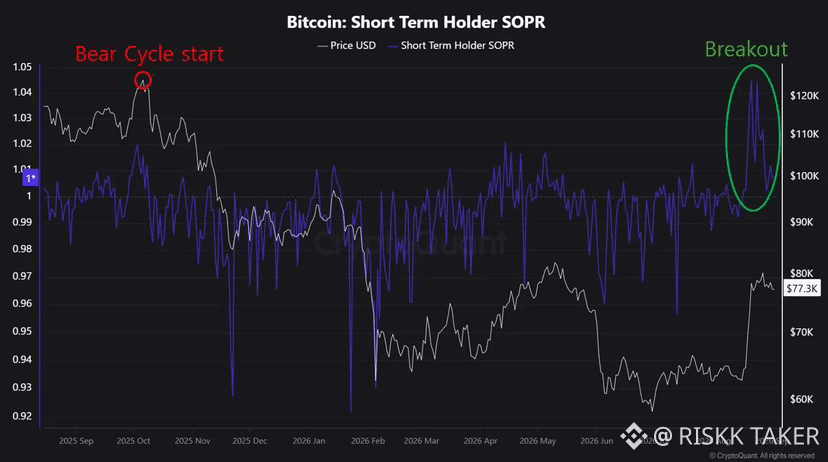
Bitcoin’s SOPR has broken an 11 month downtrend, according to CryptoQuant analyst Crypto Dan.
That’s an important on-chain development because SOPR tracks whether coins being spent are, on average, moving at a profit or a loss. A sustained improvement can indicate that market participants are regaining confidence and that selling pressure is starting to weaken.
CryptoQuant’s broader cycle momentum data is also turning more constructive, with the indicator recently moving back into positive territory after an extended bearish phase. The analyst says confirmation would come from continued improvement in the indicator alongside Bitcoin’s price recovery.
$BTC
That’s an important on-chain development because SOPR tracks whether coins being spent are, on average, moving at a profit or a loss. A sustained improvement can indicate that market participants are regaining confidence and that selling pressure is starting to weaken.
CryptoQuant’s broader cycle momentum data is also turning more constructive, with the indicator recently moving back into positive territory after an extended bearish phase. The analyst says confirmation would come from continued improvement in the indicator alongside Bitcoin’s price recovery.
$BTC
CZ says “hot money” is starting to rotate from AI back into crypto.
Changpeng Zhao is pointing to a potentially important shift in where speculative capital is moving. After AI captured a huge amount of investor attention and liquidity, CZ now says some of that “hot money” is finding its way back into crypto.
The timing is interesting. Earlier this year, CZ identified capital flowing toward AI as one of the factors weighing on crypto, alongside geopolitical uncertainty and the market’s broader four-year cycle.
If this rotation continues, crypto could benefit from more than just retail enthusiasm. Fresh speculative capital can increase trading activity, improve liquidity and potentially accelerate moves across Bitcoin and higher-beta altcoins.
Of course, one comment does not prove a sustained capital rotation. The real confirmation will come from actual fund flows, trading volumes and institutional positioning.
If AI was where the hot money went during crypto’s weakness, its return could become an important catalyst for the next move.
#cz
Changpeng Zhao is pointing to a potentially important shift in where speculative capital is moving. After AI captured a huge amount of investor attention and liquidity, CZ now says some of that “hot money” is finding its way back into crypto.
The timing is interesting. Earlier this year, CZ identified capital flowing toward AI as one of the factors weighing on crypto, alongside geopolitical uncertainty and the market’s broader four-year cycle.
If this rotation continues, crypto could benefit from more than just retail enthusiasm. Fresh speculative capital can increase trading activity, improve liquidity and potentially accelerate moves across Bitcoin and higher-beta altcoins.
Of course, one comment does not prove a sustained capital rotation. The real confirmation will come from actual fund flows, trading volumes and institutional positioning.
If AI was where the hot money went during crypto’s weakness, its return could become an important catalyst for the next move.
#cz

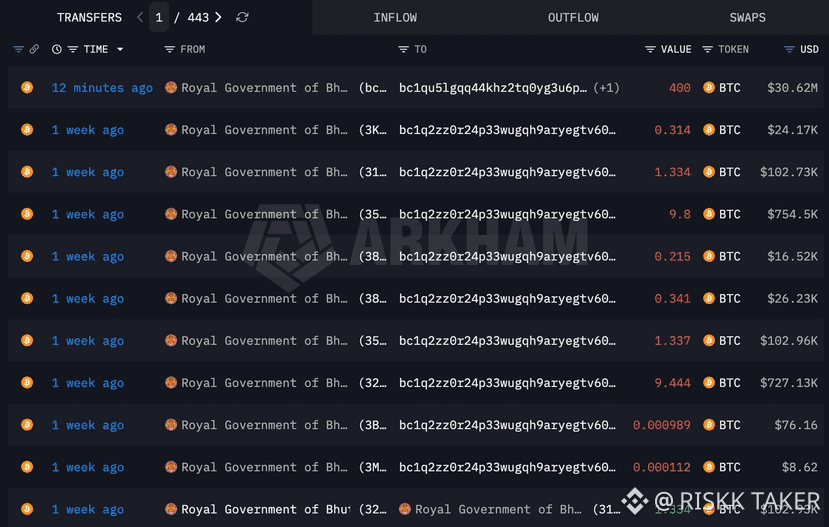
Bhutan just moved another 400 $BTC worth
around $30.6M.
The latest on-chain movement, flagged by Lookonchain, adds to a growing pattern of large Bitcoin transfers from wallets linked to the
Bhutanese government.
What makes this interesting is the destination. A government transferring BTC out of its known wallets does not automatically mean it is selling.
Previous Bhutan transactions have involved fresh
or unidentified wallets, making it difficult to determine whether the coins are being sold, repositioned, or moved for custody purposes.
around $30.6M.
The latest on-chain movement, flagged by Lookonchain, adds to a growing pattern of large Bitcoin transfers from wallets linked to the
Bhutanese government.
What makes this interesting is the destination. A government transferring BTC out of its known wallets does not automatically mean it is selling.
Previous Bhutan transactions have involved fresh
or unidentified wallets, making it difficult to determine whether the coins are being sold, repositioned, or moved for custody purposes.
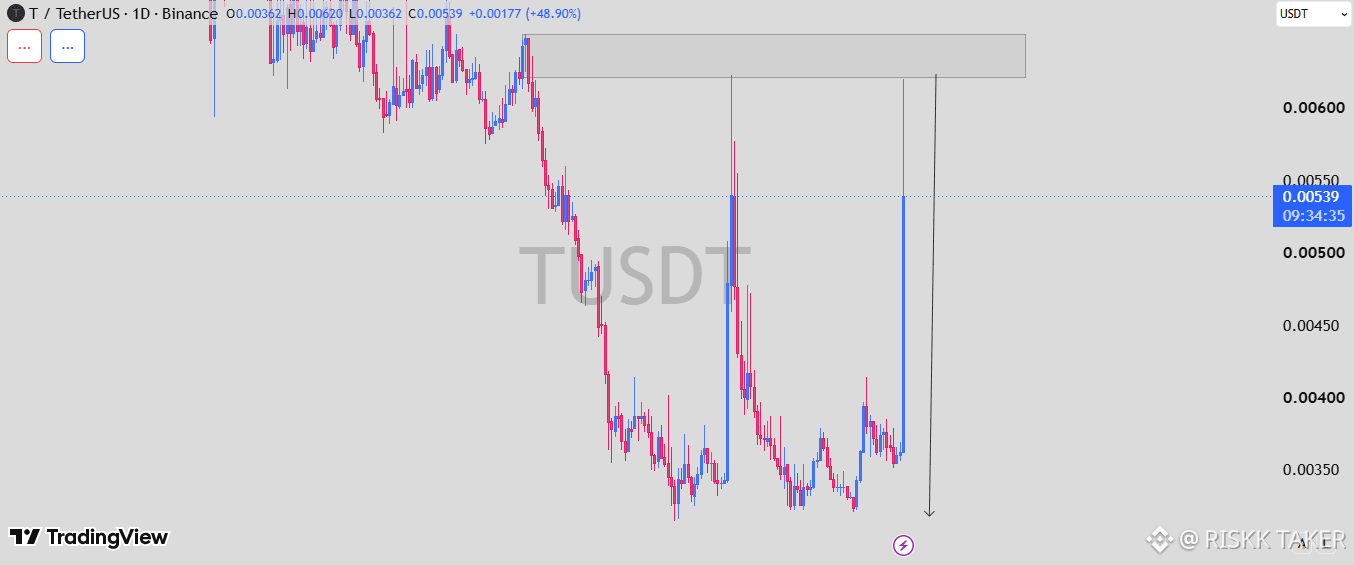
$T has completely changed its short term momentum, but the chart is now approaching the level that matters most.
After a prolonged decline, buyers produced a powerful expansion from around $0.0035, sending T toward $0.0062. That move confirms strong demand has entered the market, but it has also brought price directly into a previously established supply zone.
The $0.0062–$0.0065 area is therefore the major resistance to monitor. A decisive break and daily close above it would signal that buyers have absorbed the overhead supply.
Until that happens, rejection remains a valid scenario. A failed breakout could send $T back toward the $0.0040 area, with the broader demand zone around $0.0032–$0.0035 becoming the deeper downside target.
The setup is bullish on momentum, but confirmation requires a breakout above supply. #analysis #TrendingTopic
After a prolonged decline, buyers produced a powerful expansion from around $0.0035, sending T toward $0.0062. That move confirms strong demand has entered the market, but it has also brought price directly into a previously established supply zone.
The $0.0062–$0.0065 area is therefore the major resistance to monitor. A decisive break and daily close above it would signal that buyers have absorbed the overhead supply.
Until that happens, rejection remains a valid scenario. A failed breakout could send $T back toward the $0.0040 area, with the broader demand zone around $0.0032–$0.0035 becoming the deeper downside target.
The setup is bullish on momentum, but confirmation requires a breakout above supply. #analysis #TrendingTopic
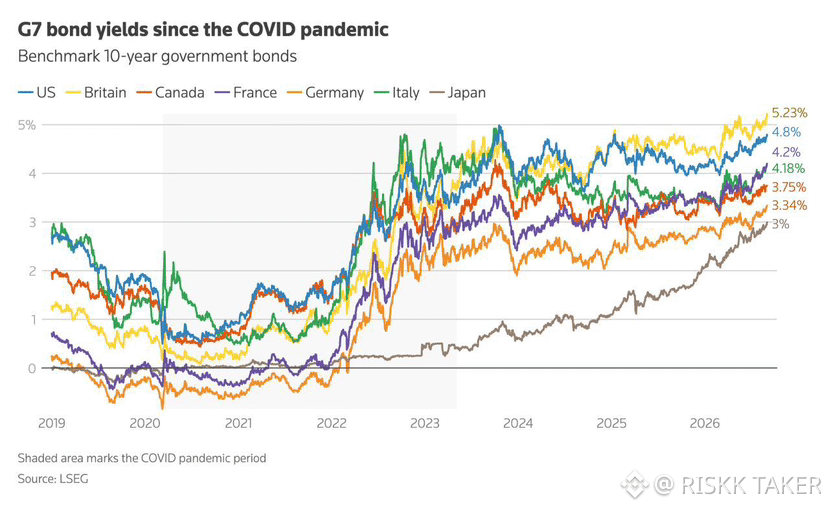
Global bond markets are getting hit hard as inflation fears push yields to multi decade highs.
The selloff is being fueled by rising energy prices, concerns over government debt and growing expectations that major central banks may need to keep rates higher for longer. Reuters reports that the U.S. 10-year Treasury yield has climbed to around 4.81%, while Japan’s 10-year yield has moved above 3% for the first time in 30 years.
This matters far beyond bonds. Higher sovereign yields raise borrowing costs across the economy and can put pressure on stocks, real estate and other risk assets, including crypto.
Bitcoin has benefited from periods of easier liquidity and falling yields in the past, so a sustained rise in global borrowing costs could create a tougher environment for risk appetite.
At the same time, the bond market is sending a bigger warning: investors are demanding more compensation for inflation, fiscal risk and the enormous amount of debt being issued.
The question now is whether yields stabilize, or whether the global bond selloff becomes the next major macro risk for markets.
#btc #ETH $BTC $ETH
The selloff is being fueled by rising energy prices, concerns over government debt and growing expectations that major central banks may need to keep rates higher for longer. Reuters reports that the U.S. 10-year Treasury yield has climbed to around 4.81%, while Japan’s 10-year yield has moved above 3% for the first time in 30 years.
This matters far beyond bonds. Higher sovereign yields raise borrowing costs across the economy and can put pressure on stocks, real estate and other risk assets, including crypto.
Bitcoin has benefited from periods of easier liquidity and falling yields in the past, so a sustained rise in global borrowing costs could create a tougher environment for risk appetite.
At the same time, the bond market is sending a bigger warning: investors are demanding more compensation for inflation, fiscal risk and the enormous amount of debt being issued.
The question now is whether yields stabilize, or whether the global bond selloff becomes the next major macro risk for markets.
#btc #ETH $BTC $ETH
$250M USDC has just been minted on Solana.
The latest on-chain data shows the USDC Treasury creating another 250 million USDC directly on Solana.
A large stablecoin mint is worth watching because USDC is essentially the dollar liquidity traders use across exchanges, DeFi and other on-chain markets. But there’s an important distinction: minted USDC is not automatically money flowing into Bitcoin or SOL. The tokens still need to move and actually be deployed before that liquidity becomes market demand.
Still, repeated large issuances on Solana highlight how important the network has become for stablecoin activity. Circle has already carried out several major $USDC mints on the chain this year.
#usdc #solana $SOL
The latest on-chain data shows the USDC Treasury creating another 250 million USDC directly on Solana.
A large stablecoin mint is worth watching because USDC is essentially the dollar liquidity traders use across exchanges, DeFi and other on-chain markets. But there’s an important distinction: minted USDC is not automatically money flowing into Bitcoin or SOL. The tokens still need to move and actually be deployed before that liquidity becomes market demand.
Still, repeated large issuances on Solana highlight how important the network has become for stablecoin activity. Circle has already carried out several major $USDC mints on the chain this year.
#usdc #solana $SOL

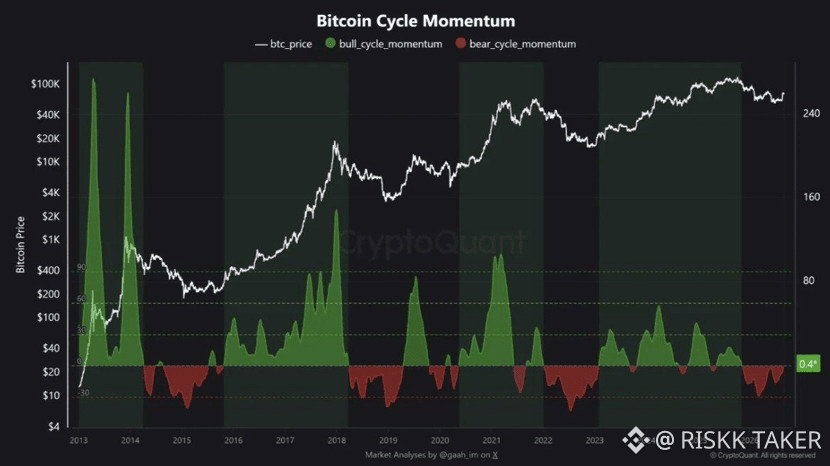
#bitcoin may be showing early signs of a bear-market reversal.
CryptoQuant’s latest cycle, momentum data is giving bulls something to watch, especially after Bitcoin’s strong recovery from the recent lows.
The important part is that cycle momentum appears to be improving rather than continuing to deteriorate. That matters because this indicator is designed to identify broader shifts in Bitcoin’s market cycle, not just short-term price movements.
But a reversal is not confirmed yet. CryptoQuant previously warned that Bitcoin’s rebound could still represent a bear-market recovery, with its broader Bull Score Index remaining in bearish territory.
For traders, the key question now is whether momentum can continue improving alongside spot demand, liquidity and on-chain activity. If those signals turn decisively positive together, the current recovery could start looking much more like a genuine trend change.
Bitcoin may be trying to turn the page, but the data still needs to confirm it.
#CryptoQuant $BTC $SOL
CryptoQuant’s latest cycle, momentum data is giving bulls something to watch, especially after Bitcoin’s strong recovery from the recent lows.
The important part is that cycle momentum appears to be improving rather than continuing to deteriorate. That matters because this indicator is designed to identify broader shifts in Bitcoin’s market cycle, not just short-term price movements.
But a reversal is not confirmed yet. CryptoQuant previously warned that Bitcoin’s rebound could still represent a bear-market recovery, with its broader Bull Score Index remaining in bearish territory.
For traders, the key question now is whether momentum can continue improving alongside spot demand, liquidity and on-chain activity. If those signals turn decisively positive together, the current recovery could start looking much more like a genuine trend change.
Bitcoin may be trying to turn the page, but the data still needs to confirm it.
#CryptoQuant $BTC $SOL
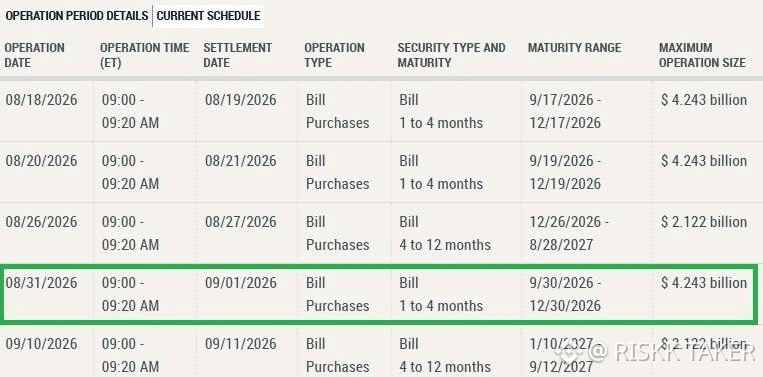
The #Fed is set to inject $4.243 billion into markets today.
The move is drawing attention from crypto traders because liquidity conditions can have a meaningful impact on risk assets like Bitcoin and altcoins.
But this isn’t necessarily a fresh round of “money printing.” The Federal Reserve uses repo operations and other market tools to manage short-term funding conditions and keep overnight rates within its target range.
The timing is particularly interesting. Treasury yields are currently climbing sharply, with the U.S. 10-year yield around 4.81%, while markets are pricing a growing chance of another Fed rate hike this month.
#crypto $BTC $ETH
The move is drawing attention from crypto traders because liquidity conditions can have a meaningful impact on risk assets like Bitcoin and altcoins.
But this isn’t necessarily a fresh round of “money printing.” The Federal Reserve uses repo operations and other market tools to manage short-term funding conditions and keep overnight rates within its target range.
The timing is particularly interesting. Treasury yields are currently climbing sharply, with the U.S. 10-year yield around 4.81%, while markets are pricing a growing chance of another Fed rate hike this month.
#crypto $BTC $ETH
Log in to explore more content