

oAdam
674 Posts

oAdam
Report
Block User
交个朋友 日常分享开源 交易笔记 Ai X: @oAdam
Open Trade
High-Frequency Trader
8.8 Years
15 Following
452 Followers
1.2K+ Liked
Posts
Portfolio
All
Videos
·
--
See translation
俄罗斯要发第一批加密交易所牌照了,最快 10 月 6 日,也就是登记开放后的第二天。
这个速度值得注意。通常一个国家从立法到发牌要走好几年,俄罗斯这么急,背景是制裁下的跨境支付被卡得难受——传统银行通道走不通,加密成了现实选项。这不是拥抱创新,是被逼出来的实用主义。
对比之下,美国那边 CLARITY Act 还在国会里拉扯,监管靠执法先行,行业只能猜规则。
两条路径的差别挺清楚:一个是缺工具所以赶紧开闸,一个是工具太多所以吵不出结论。
长期看,谁的监管更清晰,资金和项目就往哪边流。这事对俄罗斯是刚需,对美国是拖延。
俄罗斯要发第一批加密交易所牌照了,最快 10 月 6 日,也就是登记开放后的第二天。
这个速度值得注意。通常一个国家从立法到发牌要走好几年,俄罗斯这么急,背景是制裁下的跨境支付被卡得难受——传统银行通道走不通,加密成了现实选项。这不是拥抱创新,是被逼出来的实用主义。
对比之下,美国那边 CLARITY Act 还在国会里拉扯,监管靠执法先行,行业只能猜规则。
两条路径的差别挺清楚:一个是缺工具所以赶紧开闸,一个是工具太多所以吵不出结论。
长期看,谁的监管更清晰,资金和项目就往哪边流。这事对俄罗斯是刚需,对美国是拖延。
这个速度值得注意。通常一个国家从立法到发牌要走好几年,俄罗斯这么急,背景是制裁下的跨境支付被卡得难受——传统银行通道走不通,加密成了现实选项。这不是拥抱创新,是被逼出来的实用主义。
对比之下,美国那边 CLARITY Act 还在国会里拉扯,监管靠执法先行,行业只能猜规则。
两条路径的差别挺清楚:一个是缺工具所以赶紧开闸,一个是工具太多所以吵不出结论。
长期看,谁的监管更清晰,资金和项目就往哪边流。这事对俄罗斯是刚需,对美国是拖延。
59
·
--
Oracle’s long-dated bond position was smashed, and yields surged to a record 8.3%. Meanwhile, the five-year CDS spread jumped 16% to 227 basis points—also a historic high—over four times the level of the investment-grade index (about 55bp).
CDS is like insurance for the bond market. When spreads climb to this level, it signals that institutions are putting real money behind bets that its default risk is rising. This is often very different from stock-price action—stocks can be propped up by narratives, while the bond market’s pricing is far more ruthless.
For the crypto market, the implication is liquidity transmission. If the credit of large tech firms comes under pressure, institutions typically sell higher-volatility assets first to meet margin calls; Bitcoin and altcoins are usually pulled into the move immediately.
I’m not predicting whether Oracle will have problems, but the signals the bond market is sending are worth watching more than any single tweet.
Oracle’s long-dated bond position was smashed, and yields surged to a record 8.3%. Meanwhile, the five-year CDS spread jumped 16% to 227 basis points—also a historic high—over four times the level of the investment-grade index (about 55bp).
CDS is like insurance for the bond market. When spreads climb to this level, it signals that institutions are putting real money behind bets that its default risk is rising. This is often very different from stock-price action—stocks can be propped up by narratives, while the bond market’s pricing is far more ruthless.
For the crypto market, the implication is liquidity transmission. If the credit of large tech firms comes under pressure, institutions typically sell higher-volatility assets first to meet margin calls; Bitcoin and altcoins are usually pulled into the move immediately.
I’m not predicting whether Oracle will have problems, but the signals the bond market is sending are worth watching more than any single tweet.
CDS is like insurance for the bond market. When spreads climb to this level, it signals that institutions are putting real money behind bets that its default risk is rising. This is often very different from stock-price action—stocks can be propped up by narratives, while the bond market’s pricing is far more ruthless.
For the crypto market, the implication is liquidity transmission. If the credit of large tech firms comes under pressure, institutions typically sell higher-volatility assets first to meet margin calls; Bitcoin and altcoins are usually pulled into the move immediately.
I’m not predicting whether Oracle will have problems, but the signals the bond market is sending are worth watching more than any single tweet.
7
·
--
Hyperliquid’s assistance fund has handed over a rather outrageous set of books.
Here’s the data: it has cumulatively bought back and burned more than 47.5 million HYPE tokens, with a cost of about $1.321 billion. Marked to the current price, the market value of these burned tokens is about $4.366 billion.
In other words, the books show roughly a 3.3x paper gain—those chips bought with the money are now worth more than three times as much.
More importantly, it’s the mechanism itself: burning means these tokens permanently exit circulation, with supply continuously drained away. And the buyback money comes from protocol revenue—effectively the value generated by trading volume, converted directly into an implicit dividend for token holders.
The clever part of this design is that it links “the platform making money” with “token appreciation” in one continuous line. There’s no need to rely on token issuance or subsidies to keep the momentum going.
But stay clear-eyed: the strength of the buybacks is highly correlated with trading volume. Once the market cools down, the flywheel’s speed will drop in tandem. It’s strong right now, but the condition for that strength is that people keep trading.
Hyperliquid’s assistance fund has handed over a rather outrageous set of books.
Here’s the data: it has cumulatively bought back and burned more than 47.5 million HYPE tokens, with a cost of about $1.321 billion. Marked to the current price, the market value of these burned tokens is about $4.366 billion.
In other words, the books show roughly a 3.3x paper gain—those chips bought with the money are now worth more than three times as much.
More importantly, it’s the mechanism itself: burning means these tokens permanently exit circulation, with supply continuously drained away. And the buyback money comes from protocol revenue—effectively the value generated by trading volume, converted directly into an implicit dividend for token holders.
The clever part of this design is that it links “the platform making money” with “token appreciation” in one continuous line. There’s no need to rely on token issuance or subsidies to keep the momentum going.
But stay clear-eyed: the strength of the buybacks is highly correlated with trading volume. Once the market cools down, the flywheel’s speed will drop in tandem. It’s strong right now, but the condition for that strength is that people keep trading.
Here’s the data: it has cumulatively bought back and burned more than 47.5 million HYPE tokens, with a cost of about $1.321 billion. Marked to the current price, the market value of these burned tokens is about $4.366 billion.
In other words, the books show roughly a 3.3x paper gain—those chips bought with the money are now worth more than three times as much.
More importantly, it’s the mechanism itself: burning means these tokens permanently exit circulation, with supply continuously drained away. And the buyback money comes from protocol revenue—effectively the value generated by trading volume, converted directly into an implicit dividend for token holders.
The clever part of this design is that it links “the platform making money” with “token appreciation” in one continuous line. There’s no need to rely on token issuance or subsidies to keep the momentum going.
But stay clear-eyed: the strength of the buybacks is highly correlated with trading volume. Once the market cools down, the flywheel’s speed will drop in tandem. It’s strong right now, but the condition for that strength is that people keep trading.
76
·
--
See translation
比尔·盖茨在 NBC 上说,AI 强大到足以造成十亿人死亡。这话的分量,得放在他的历史记录里看。
2015 年他在 TED 演讲里警告:未来杀死数百万人的不会是导弹,而是病毒。当时很多人觉得他危言耸听,后来证明他说对了。
所以这次的警告不能简单当成"名人唱衰科技"。更值得注意的是 Lark Davis 提到的另一个信号——现在真正在造 AI 的那批人,正在陆续离职,而且给出的理由和盖茨类似。
这跟当年加密圈的景象有点像:最懂技术的人往往最先看到风险,而市场只关心能不能赚钱。
我不认为这意味着 AI 该被叫停,但"最了解它的人反而最担心"这个现象本身,值得认真对待。对技术乐观没问题,但把风险提示当成噪音,历史上从来没好结果。
比尔·盖茨在 NBC 上说,AI 强大到足以造成十亿人死亡。这话的分量,得放在他的历史记录里看。
2015 年他在 TED 演讲里警告:未来杀死数百万人的不会是导弹,而是病毒。当时很多人觉得他危言耸听,后来证明他说对了。
所以这次的警告不能简单当成"名人唱衰科技"。更值得注意的是 Lark Davis 提到的另一个信号——现在真正在造 AI 的那批人,正在陆续离职,而且给出的理由和盖茨类似。
这跟当年加密圈的景象有点像:最懂技术的人往往最先看到风险,而市场只关心能不能赚钱。
我不认为这意味着 AI 该被叫停,但"最了解它的人反而最担心"这个现象本身,值得认真对待。对技术乐观没问题,但把风险提示当成噪音,历史上从来没好结果。
2015 年他在 TED 演讲里警告:未来杀死数百万人的不会是导弹,而是病毒。当时很多人觉得他危言耸听,后来证明他说对了。
所以这次的警告不能简单当成"名人唱衰科技"。更值得注意的是 Lark Davis 提到的另一个信号——现在真正在造 AI 的那批人,正在陆续离职,而且给出的理由和盖茨类似。
这跟当年加密圈的景象有点像:最懂技术的人往往最先看到风险,而市场只关心能不能赚钱。
我不认为这意味着 AI 该被叫停,但"最了解它的人反而最担心"这个现象本身,值得认真对待。对技术乐观没问题,但把风险提示当成噪音,历史上从来没好结果。
78
·
--
See translation
美国 CFTC 盯上了一个新玩意儿:“提及市场”——赌某个人会不会说某个词,比如高管在财报会上有没有提到特定表述。
监管的态度很明确:这类合约天然存在极高操纵风险。理由也直白——结果高度依赖单个人的言行,而信息掌握在少数人手里,散户几乎不可能公平参与。
举个例子就懂了:一个员工完全知道老板的讲话稿里有没有那个词,他可以在市场上提前下注。这不是预测能力,是信息特权。
所以 CFTC 要求交易所挂牌这类合约前必须经过更严格的审查。
这件事的意义超出了单一产品——它划出了一条线:预测市场的边界在哪。赌天气、赌选举结果,参与者是分散的;但赌某个具体人的具体行为,操纵成本低到离谱。
不是所有能定价的东西都该被做成合约。
美国 CFTC 盯上了一个新玩意儿:“提及市场”——赌某个人会不会说某个词,比如高管在财报会上有没有提到特定表述。
监管的态度很明确:这类合约天然存在极高操纵风险。理由也直白——结果高度依赖单个人的言行,而信息掌握在少数人手里,散户几乎不可能公平参与。
举个例子就懂了:一个员工完全知道老板的讲话稿里有没有那个词,他可以在市场上提前下注。这不是预测能力,是信息特权。
所以 CFTC 要求交易所挂牌这类合约前必须经过更严格的审查。
这件事的意义超出了单一产品——它划出了一条线:预测市场的边界在哪。赌天气、赌选举结果,参与者是分散的;但赌某个具体人的具体行为,操纵成本低到离谱。
不是所有能定价的东西都该被做成合约。
监管的态度很明确:这类合约天然存在极高操纵风险。理由也直白——结果高度依赖单个人的言行,而信息掌握在少数人手里,散户几乎不可能公平参与。
举个例子就懂了:一个员工完全知道老板的讲话稿里有没有那个词,他可以在市场上提前下注。这不是预测能力,是信息特权。
所以 CFTC 要求交易所挂牌这类合约前必须经过更严格的审查。
这件事的意义超出了单一产品——它划出了一条线:预测市场的边界在哪。赌天气、赌选举结果,参与者是分散的;但赌某个具体人的具体行为,操纵成本低到离谱。
不是所有能定价的东西都该被做成合约。
13
·
--
See translation
山寨币市占率终于突破了将近两年的下行趋势,这会不会是山寨季的起点?
先说这个指标为什么重要。比特币市占率上升,意味着资金在往最稳的资产集中,市场处于防守状态;而山寨币市占率抬头,说明资金开始愿意承担更多风险,往外围扩散。
从防守转向进攻,这确实是牛市进入中后期的典型特征——比特币先涨,资金有了利润,才会外溢去找弹性更大的标的。
但“突破趋势线”和“山寨季真的来了”之间,还差一步:资金得真的持续流进来,而不是只做一次假突破。
过去两年这种突破骗过好几次,涨两天又被打回去。
所以可以把它当成值得关注的信号,但别因为一条趋势线破了就梭哈山寨——等资金流确认了再说。
山寨币市占率终于突破了将近两年的下行趋势,这会不会是山寨季的起点?
先说这个指标为什么重要。比特币市占率上升,意味着资金在往最稳的资产集中,市场处于防守状态;而山寨币市占率抬头,说明资金开始愿意承担更多风险,往外围扩散。
从防守转向进攻,这确实是牛市进入中后期的典型特征——比特币先涨,资金有了利润,才会外溢去找弹性更大的标的。
但“突破趋势线”和“山寨季真的来了”之间,还差一步:资金得真的持续流进来,而不是只做一次假突破。
过去两年这种突破骗过好几次,涨两天又被打回去。
所以可以把它当成值得关注的信号,但别因为一条趋势线破了就梭哈山寨——等资金流确认了再说。
先说这个指标为什么重要。比特币市占率上升,意味着资金在往最稳的资产集中,市场处于防守状态;而山寨币市占率抬头,说明资金开始愿意承担更多风险,往外围扩散。
从防守转向进攻,这确实是牛市进入中后期的典型特征——比特币先涨,资金有了利润,才会外溢去找弹性更大的标的。
但“突破趋势线”和“山寨季真的来了”之间,还差一步:资金得真的持续流进来,而不是只做一次假突破。
过去两年这种突破骗过好几次,涨两天又被打回去。
所以可以把它当成值得关注的信号,但别因为一条趋势线破了就梭哈山寨——等资金流确认了再说。
17
·
--
The U.S. Federal Appeals Court upheld the Pentagon’s ban on Anthropic by a 2:1 ruling, formally designating Claude as a national security risk and excluding it from the military supply chain.
This overturned a lower court’s earlier decision that had favored Anthropic.
The takeaway here isn’t about Anthropic itself, but the precedent it has set—that AI models can be treated as “national security risks,” and that the court accepted this characterization.
So what does this mean? Once an AI company’s product is labeled this way, it’s not just military contracts that are lost—it could also lose eligibility for entry into the wider government ecosystem.
And the criteria for judging “risk” are not transparent; to a large extent, they depend on the subjective assessments of regulators and the judiciary.
For the industry, this is a warning sign: AI competition is no longer just a technology race—it’s increasingly wrapped up in geopolitical and national security frameworks. Ultimately, who gets excluded and who gets accepted may be decided by the courts rather than the market.
The U.S. Federal Appeals Court upheld the Pentagon’s ban on Anthropic by a 2:1 ruling, formally designating Claude as a national security risk and excluding it from the military supply chain.
This overturned a lower court’s earlier decision that had favored Anthropic.
The takeaway here isn’t about Anthropic itself, but the precedent it has set—that AI models can be treated as “national security risks,” and that the court accepted this characterization.
So what does this mean? Once an AI company’s product is labeled this way, it’s not just military contracts that are lost—it could also lose eligibility for entry into the wider government ecosystem.
And the criteria for judging “risk” are not transparent; to a large extent, they depend on the subjective assessments of regulators and the judiciary.
For the industry, this is a warning sign: AI competition is no longer just a technology race—it’s increasingly wrapped up in geopolitical and national security frameworks. Ultimately, who gets excluded and who gets accepted may be decided by the courts rather than the market.
This overturned a lower court’s earlier decision that had favored Anthropic.
The takeaway here isn’t about Anthropic itself, but the precedent it has set—that AI models can be treated as “national security risks,” and that the court accepted this characterization.
So what does this mean? Once an AI company’s product is labeled this way, it’s not just military contracts that are lost—it could also lose eligibility for entry into the wider government ecosystem.
And the criteria for judging “risk” are not transparent; to a large extent, they depend on the subjective assessments of regulators and the judiciary.
For the industry, this is a warning sign: AI competition is no longer just a technology race—it’s increasingly wrapped up in geopolitical and national security frameworks. Ultimately, who gets excluded and who gets accepted may be decided by the courts rather than the market.
124
·
--
See translation
看多不等于现在买。
很多人在明确的多头趋势里亏钱,原因就是在情绪最高点追进去,然后被正常的回踩震出来。
趋势判断和入场时机是两件事。
前者决定方向,后者决定成本和心态。
方向对了但买贵了,一样扛不住波动。
所以“看涨”和“买”之间,永远要留出等待的耐心。
看多不等于现在买。
很多人在明确的多头趋势里亏钱,原因就是在情绪最高点追进去,然后被正常的回踩震出来。
趋势判断和入场时机是两件事。
前者决定方向,后者决定成本和心态。
方向对了但买贵了,一样扛不住波动。
所以“看涨”和“买”之间,永远要留出等待的耐心。
很多人在明确的多头趋势里亏钱,原因就是在情绪最高点追进去,然后被正常的回踩震出来。
趋势判断和入场时机是两件事。
前者决定方向,后者决定成本和心态。
方向对了但买贵了,一样扛不住波动。
所以“看涨”和“买”之间,永远要留出等待的耐心。
13
·
--
See translation
除了 #UsePaid,@useyapdotfun的玩法跟 Kaito 的 yap 机制类似。
逻辑链条是这样的——在 Instagram、X 这些社交平台上喊单某个 token,然后由机器人对内容进行评分,最后把评分转换成实际收益。
说白了,这是在给“社交影响力”定价。过去你在推特上分析行情,顶多涨点粉丝;现在这套机制直接把“你的观点值多少钱”量化出来,并且用加密货币结算。
UsePaid 和 useyap 的区别不在底层逻辑,而在实现路径——目标都是“用 crypto 奖励内容创作者”,只是分发方式和评分机制不同。
这个方向真正有意思的地方在于,它把内容创作和金融激励直接焊在了一起。
但也得留个心眼:一旦“喊单能赚钱”成为明确激励,内容的客观性就会被系统性扭曲——说真话和赚快钱,未必是同一个方向。
除了 #UsePaid,@useyapdotfun的玩法跟 Kaito 的 yap 机制类似。
逻辑链条是这样的——在 Instagram、X 这些社交平台上喊单某个 token,然后由机器人对内容进行评分,最后把评分转换成实际收益。
说白了,这是在给“社交影响力”定价。过去你在推特上分析行情,顶多涨点粉丝;现在这套机制直接把“你的观点值多少钱”量化出来,并且用加密货币结算。
UsePaid 和 useyap 的区别不在底层逻辑,而在实现路径——目标都是“用 crypto 奖励内容创作者”,只是分发方式和评分机制不同。
这个方向真正有意思的地方在于,它把内容创作和金融激励直接焊在了一起。
但也得留个心眼:一旦“喊单能赚钱”成为明确激励,内容的客观性就会被系统性扭曲——说真话和赚快钱,未必是同一个方向。
逻辑链条是这样的——在 Instagram、X 这些社交平台上喊单某个 token,然后由机器人对内容进行评分,最后把评分转换成实际收益。
说白了,这是在给“社交影响力”定价。过去你在推特上分析行情,顶多涨点粉丝;现在这套机制直接把“你的观点值多少钱”量化出来,并且用加密货币结算。
UsePaid 和 useyap 的区别不在底层逻辑,而在实现路径——目标都是“用 crypto 奖励内容创作者”,只是分发方式和评分机制不同。
这个方向真正有意思的地方在于,它把内容创作和金融激励直接焊在了一起。
但也得留个心眼:一旦“喊单能赚钱”成为明确激励,内容的客观性就会被系统性扭曲——说真话和赚快钱,未必是同一个方向。
3
·
--
The issue of speeding up Ethereum has always been stuck in a deadlock: to make the chain run faster, you often have to sacrifice decentralization or resistance to censorship.
EIP-8198 (Quick Slots) proposed by author #Ethlabs tries to bypass this deadlock, and the idea is quite clever.
The approach is two steps: first, gradually reduce block time from 12 seconds to 10 seconds—but not all at once. Instead, it’s implemented as a “controlled, incrementally testable speed increase”; at the same time, it adjusts capacity, Gas, and Blob parameters.
The key is the word “incrementally.” In the past, the biggest fear with Ethereum upgrades was making one sweeping change—once it’s done and something goes wrong, the entire network suffers together. A variable-rate design effectively breaks the risk into small portions: you move only a little each time, observe whether everything is fine, and then continue.
This also explains why Ethereum’s evolution often seems so slow: it’s not aiming for the fastest possible—it’s aiming to get faster without losing control. Speed can be increased gradually, but once decentralization is gone, you can never pick it back up again.
The real technical challenge has never been whether it can get faster, but whether, after it gets faster, it’s still the same chain as before.
The issue of speeding up Ethereum has always been stuck in a deadlock: to make the chain run faster, you often have to sacrifice decentralization or resistance to censorship.
EIP-8198 (Quick Slots) proposed by author #Ethlabs tries to bypass this deadlock, and the idea is quite clever.
The approach is two steps: first, gradually reduce block time from 12 seconds to 10 seconds—but not all at once. Instead, it’s implemented as a “controlled, incrementally testable speed increase”; at the same time, it adjusts capacity, Gas, and Blob parameters.
The key is the word “incrementally.” In the past, the biggest fear with Ethereum upgrades was making one sweeping change—once it’s done and something goes wrong, the entire network suffers together. A variable-rate design effectively breaks the risk into small portions: you move only a little each time, observe whether everything is fine, and then continue.
This also explains why Ethereum’s evolution often seems so slow: it’s not aiming for the fastest possible—it’s aiming to get faster without losing control. Speed can be increased gradually, but once decentralization is gone, you can never pick it back up again.
The real technical challenge has never been whether it can get faster, but whether, after it gets faster, it’s still the same chain as before.
EIP-8198 (Quick Slots) proposed by author #Ethlabs tries to bypass this deadlock, and the idea is quite clever.
The approach is two steps: first, gradually reduce block time from 12 seconds to 10 seconds—but not all at once. Instead, it’s implemented as a “controlled, incrementally testable speed increase”; at the same time, it adjusts capacity, Gas, and Blob parameters.
The key is the word “incrementally.” In the past, the biggest fear with Ethereum upgrades was making one sweeping change—once it’s done and something goes wrong, the entire network suffers together. A variable-rate design effectively breaks the risk into small portions: you move only a little each time, observe whether everything is fine, and then continue.
This also explains why Ethereum’s evolution often seems so slow: it’s not aiming for the fastest possible—it’s aiming to get faster without losing control. Speed can be increased gradually, but once decentralization is gone, you can never pick it back up again.
The real technical challenge has never been whether it can get faster, but whether, after it gets faster, it’s still the same chain as before.
118
·
--
See translation
一件挺有意思的事正在发生:不少 MEME 币的项目方,开始把交易手续费直接打到一些 X 大 V 的 X Money 账户里。
路径是这样的——X Money 今年开放了点对点转账,但本身不支持加密货币;第三方工具(比如 UsePaid)在中间搭了座桥,把链上收到的交易费换成法币,再转进这些人的 X 账户。
这本质上是把“付费推广”这件事,从暗处的场外转账,搬到了台面上,而且变成了被动收入——大 V 什么都不用做,钱自己进来。
可能的动机是:
想让人帮你喊单,先建立资金联系。
一件挺有意思的事正在发生:不少 MEME 币的项目方,开始把交易手续费直接打到一些 X 大 V 的 X Money 账户里。
路径是这样的——X Money 今年开放了点对点转账,但本身不支持加密货币;第三方工具(比如 UsePaid)在中间搭了座桥,把链上收到的交易费换成法币,再转进这些人的 X 账户。
这本质上是把“付费推广”这件事,从暗处的场外转账,搬到了台面上,而且变成了被动收入——大 V 什么都不用做,钱自己进来。
可能的动机是:
想让人帮你喊单,先建立资金联系。
路径是这样的——X Money 今年开放了点对点转账,但本身不支持加密货币;第三方工具(比如 UsePaid)在中间搭了座桥,把链上收到的交易费换成法币,再转进这些人的 X 账户。
这本质上是把“付费推广”这件事,从暗处的场外转账,搬到了台面上,而且变成了被动收入——大 V 什么都不用做,钱自己进来。
可能的动机是:
想让人帮你喊单,先建立资金联系。
11
·
--
This week’s crypto market is worth revisiting, because three things happened at the same time for the first time in eight months.
Bitcoin touched $87,000, Ethereum returned to $2,800, and SOL broke above $120—three major mainstream assets moving in sync back to levels not seen in nearly eight months.
On the funding front, it’s even more straightforward: ETFs bought $2.4 billion worth of BTC, $690 million of ETH, and $188 million of SOL in a week.
Note that the spot SOL ETF also saw inflows on the same order of magnitude, indicating that capital allocation is no longer focused only on Bitcoin, but has started spreading across the entire mainstream basket.
The third thing is that total market capitalization has once again reclaimed the $3 trillion mark.
None of these individual items is shocking on its own, but when the three stack together, they point to the same conclusion:
The market isn’t pulsing at just one isolated point—it’s recovering in both breadth and capital.
This kind of “broad-based rebound” pattern is usually more deserving of serious attention than a sudden surge in a single coin.
This week’s crypto market is worth revisiting, because three things happened at the same time for the first time in eight months.
Bitcoin touched $87,000, Ethereum returned to $2,800, and SOL broke above $120—three major mainstream assets moving in sync back to levels not seen in nearly eight months.
On the funding front, it’s even more straightforward: ETFs bought $2.4 billion worth of BTC, $690 million of ETH, and $188 million of SOL in a week.
Note that the spot SOL ETF also saw inflows on the same order of magnitude, indicating that capital allocation is no longer focused only on Bitcoin, but has started spreading across the entire mainstream basket.
The third thing is that total market capitalization has once again reclaimed the $3 trillion mark.
None of these individual items is shocking on its own, but when the three stack together, they point to the same conclusion:
The market isn’t pulsing at just one isolated point—it’s recovering in both breadth and capital.
This kind of “broad-based rebound” pattern is usually more deserving of serious attention than a sudden surge in a single coin.
Bitcoin touched $87,000, Ethereum returned to $2,800, and SOL broke above $120—three major mainstream assets moving in sync back to levels not seen in nearly eight months.
On the funding front, it’s even more straightforward: ETFs bought $2.4 billion worth of BTC, $690 million of ETH, and $188 million of SOL in a week.
Note that the spot SOL ETF also saw inflows on the same order of magnitude, indicating that capital allocation is no longer focused only on Bitcoin, but has started spreading across the entire mainstream basket.
The third thing is that total market capitalization has once again reclaimed the $3 trillion mark.
None of these individual items is shocking on its own, but when the three stack together, they point to the same conclusion:
The market isn’t pulsing at just one isolated point—it’s recovering in both breadth and capital.
This kind of “broad-based rebound” pattern is usually more deserving of serious attention than a sudden surge in a single coin.
223
·
--
See translation
#Nansen 的 CEO ASvanevik 抛了个判断:过去几年编程和工程领域发生的 AI 变革,会在投资和交易上重演一遍。
他的逻辑链很清晰——编程之所以被 AI 重塑,是因为它本质上是“可被形式化、可被验证”的工作:写出来的代码能不能跑,一测就知道,于是 AI 可以高速试错迭代。而交易恰好具备同样的结构:策略能不能赚钱,回测和实盘会给答案。
这意味着 AI 在交易上的渗透,不会停留在“给你推荐几个币”这种浅层辅助,而是直接进入策略生成、执行、风控的全流程。
对普通投资者的含义可能不太舒服:当策略研发的门槛被大幅拉低,超额收益的来源会从“信息差和手感”转向“数据和算力”。
散户和机构之间的差距,可能会被这个变量重新定义。
#Nansen 的 CEO ASvanevik 抛了个判断:过去几年编程和工程领域发生的 AI 变革,会在投资和交易上重演一遍。
他的逻辑链很清晰——编程之所以被 AI 重塑,是因为它本质上是“可被形式化、可被验证”的工作:写出来的代码能不能跑,一测就知道,于是 AI 可以高速试错迭代。而交易恰好具备同样的结构:策略能不能赚钱,回测和实盘会给答案。
这意味着 AI 在交易上的渗透,不会停留在“给你推荐几个币”这种浅层辅助,而是直接进入策略生成、执行、风控的全流程。
对普通投资者的含义可能不太舒服:当策略研发的门槛被大幅拉低,超额收益的来源会从“信息差和手感”转向“数据和算力”。
散户和机构之间的差距,可能会被这个变量重新定义。
他的逻辑链很清晰——编程之所以被 AI 重塑,是因为它本质上是“可被形式化、可被验证”的工作:写出来的代码能不能跑,一测就知道,于是 AI 可以高速试错迭代。而交易恰好具备同样的结构:策略能不能赚钱,回测和实盘会给答案。
这意味着 AI 在交易上的渗透,不会停留在“给你推荐几个币”这种浅层辅助,而是直接进入策略生成、执行、风控的全流程。
对普通投资者的含义可能不太舒服:当策略研发的门槛被大幅拉低,超额收益的来源会从“信息差和手感”转向“数据和算力”。
散户和机构之间的差距,可能会被这个变量重新定义。
1
·
--
Let’s take a slightly darkly humorous angle: when it comes to the art of “sheep-shearing,” the highest-ranked players in Web3 are really Lazarus.
This North Korean–backed hacking group strikes in the billions to the tens of billions of dollars each time. What’s interesting is that the numbers seem to hover around the threshold of an exchange’s annual profits:
They don’t shear you so hard you’re crippled, because you’ve still got to be kept alive—so they can shear you again next year.
Even more thought-provoking is the logic behind choosing targets: they specifically go after smaller exchanges with less stringent regulatory backgrounds, while major firms in the U.S. and Hong Kong largely avoid.
This isn’t a matter of technical capability—it’s because the risk-reward equation is crystal clear. If they provoke a strongly regulated jurisdiction, the chase for stolen funds and sanctions will follow them all the way.
So the fact that something gets stolen has never been only a “security vulnerability” issue—it’s a business calculated down to the last detail.
What defenders need to do isn’t just stack up more firewalls, but to think clearly: in the cost-benefit sheet of the underground economy, how much is your exchange actually worth? 😅
Let’s take a slightly darkly humorous angle: when it comes to the art of “sheep-shearing,” the highest-ranked players in Web3 are really Lazarus.
This North Korean–backed hacking group strikes in the billions to the tens of billions of dollars each time. What’s interesting is that the numbers seem to hover around the threshold of an exchange’s annual profits:
They don’t shear you so hard you’re crippled, because you’ve still got to be kept alive—so they can shear you again next year.
Even more thought-provoking is the logic behind choosing targets: they specifically go after smaller exchanges with less stringent regulatory backgrounds, while major firms in the U.S. and Hong Kong largely avoid.
This isn’t a matter of technical capability—it’s because the risk-reward equation is crystal clear. If they provoke a strongly regulated jurisdiction, the chase for stolen funds and sanctions will follow them all the way.
So the fact that something gets stolen has never been only a “security vulnerability” issue—it’s a business calculated down to the last detail.
What defenders need to do isn’t just stack up more firewalls, but to think clearly: in the cost-benefit sheet of the underground economy, how much is your exchange actually worth? 😅
This North Korean–backed hacking group strikes in the billions to the tens of billions of dollars each time. What’s interesting is that the numbers seem to hover around the threshold of an exchange’s annual profits:
They don’t shear you so hard you’re crippled, because you’ve still got to be kept alive—so they can shear you again next year.
Even more thought-provoking is the logic behind choosing targets: they specifically go after smaller exchanges with less stringent regulatory backgrounds, while major firms in the U.S. and Hong Kong largely avoid.
This isn’t a matter of technical capability—it’s because the risk-reward equation is crystal clear. If they provoke a strongly regulated jurisdiction, the chase for stolen funds and sanctions will follow them all the way.
So the fact that something gets stolen has never been only a “security vulnerability” issue—it’s a business calculated down to the last detail.
What defenders need to do isn’t just stack up more firewalls, but to think clearly: in the cost-benefit sheet of the underground economy, how much is your exchange actually worth? 😅

219
·
--
During a bank run, you need the last lender to conjure liquidity out of thin air to rescue institutions that would otherwise be able to repay their debts;
When the economy goes into a slump, you have to rely on monetary expansion to prop up demand.
And because Bitcoin’s total supply is fixed and cannot be issued additional, it is precisely “incomplete” along this dimension.
In the two crises of 2008 and 2020, the rescues were indeed printing presses.
But if you think the other way: what is the cost of elastic money? It’s that purchasing power is diluted, and savings are slowly eaten away by inflation.
You can save one crisis, but you plant the seeds for the next one.
So at its core, this is a trade-off between two value systems—whether to choose systemic stability, or monetary honesty.
Bitcoin supporters choose the latter, and that is exactly why it is excluded by mainstream finance.
During a bank run, you need the last lender to conjure liquidity out of thin air to rescue institutions that would otherwise be able to repay their debts;
When the economy goes into a slump, you have to rely on monetary expansion to prop up demand.
And because Bitcoin’s total supply is fixed and cannot be issued additional, it is precisely “incomplete” along this dimension.
In the two crises of 2008 and 2020, the rescues were indeed printing presses.
But if you think the other way: what is the cost of elastic money? It’s that purchasing power is diluted, and savings are slowly eaten away by inflation.
You can save one crisis, but you plant the seeds for the next one.
So at its core, this is a trade-off between two value systems—whether to choose systemic stability, or monetary honesty.
Bitcoin supporters choose the latter, and that is exactly why it is excluded by mainstream finance.
When the economy goes into a slump, you have to rely on monetary expansion to prop up demand.
And because Bitcoin’s total supply is fixed and cannot be issued additional, it is precisely “incomplete” along this dimension.
In the two crises of 2008 and 2020, the rescues were indeed printing presses.
But if you think the other way: what is the cost of elastic money? It’s that purchasing power is diluted, and savings are slowly eaten away by inflation.
You can save one crisis, but you plant the seeds for the next one.
So at its core, this is a trade-off between two value systems—whether to choose systemic stability, or monetary honesty.
Bitcoin supporters choose the latter, and that is exactly why it is excluded by mainstream finance.
113
·
--
Market activity often starts when consensus is weakest.
Market activity often starts when consensus is weakest.
2
·
--
Does the Fed’s rate-hike logic still work in the era of the “AI arms race”?
The traditional framework is: rate hikes → borrowing gets more expensive → consumption and investment contract → aggregate demand cools → inflation falls.
This chain holds only if demand is sufficiently sensitive to interest rates.
But if this round’s main driver of capital expenditures is businesses spending heavily to buy computing power, build data centers, and stock up on chips, then higher rates can’t really stop them.
Because it’s an arms race—falling behind might mean being eliminated, and even if costs are higher, you still have to invest.
Once that’s the case, tightening monetary policy can’t cool demand; it will only raise financing costs and shift the burden onto small and medium-sized enterprises and ordinary consumers that don’t have AI cash flows.
If inflation doesn’t come down, the economy gets squeezed first.
The implication for the market is very direct:
If fiscal policy and capital spending are driving demand, then the influence of interest rates’ “gravitational pull” on assets weakens—making interest rates a variable worth repricing for risk assets, and for Bitcoin as well.
Does the Fed’s rate-hike logic still work in the era of the “AI arms race”?
The traditional framework is: rate hikes → borrowing gets more expensive → consumption and investment contract → aggregate demand cools → inflation falls.
This chain holds only if demand is sufficiently sensitive to interest rates.
But if this round’s main driver of capital expenditures is businesses spending heavily to buy computing power, build data centers, and stock up on chips, then higher rates can’t really stop them.
Because it’s an arms race—falling behind might mean being eliminated, and even if costs are higher, you still have to invest.
Once that’s the case, tightening monetary policy can’t cool demand; it will only raise financing costs and shift the burden onto small and medium-sized enterprises and ordinary consumers that don’t have AI cash flows.
If inflation doesn’t come down, the economy gets squeezed first.
The implication for the market is very direct:
If fiscal policy and capital spending are driving demand, then the influence of interest rates’ “gravitational pull” on assets weakens—making interest rates a variable worth repricing for risk assets, and for Bitcoin as well.
The traditional framework is: rate hikes → borrowing gets more expensive → consumption and investment contract → aggregate demand cools → inflation falls.
This chain holds only if demand is sufficiently sensitive to interest rates.
But if this round’s main driver of capital expenditures is businesses spending heavily to buy computing power, build data centers, and stock up on chips, then higher rates can’t really stop them.
Because it’s an arms race—falling behind might mean being eliminated, and even if costs are higher, you still have to invest.
Once that’s the case, tightening monetary policy can’t cool demand; it will only raise financing costs and shift the burden onto small and medium-sized enterprises and ordinary consumers that don’t have AI cash flows.
If inflation doesn’t come down, the economy gets squeezed first.
The implication for the market is very direct:
If fiscal policy and capital spending are driving demand, then the influence of interest rates’ “gravitational pull” on assets weakens—making interest rates a variable worth repricing for risk assets, and for Bitcoin as well.

47
·
--
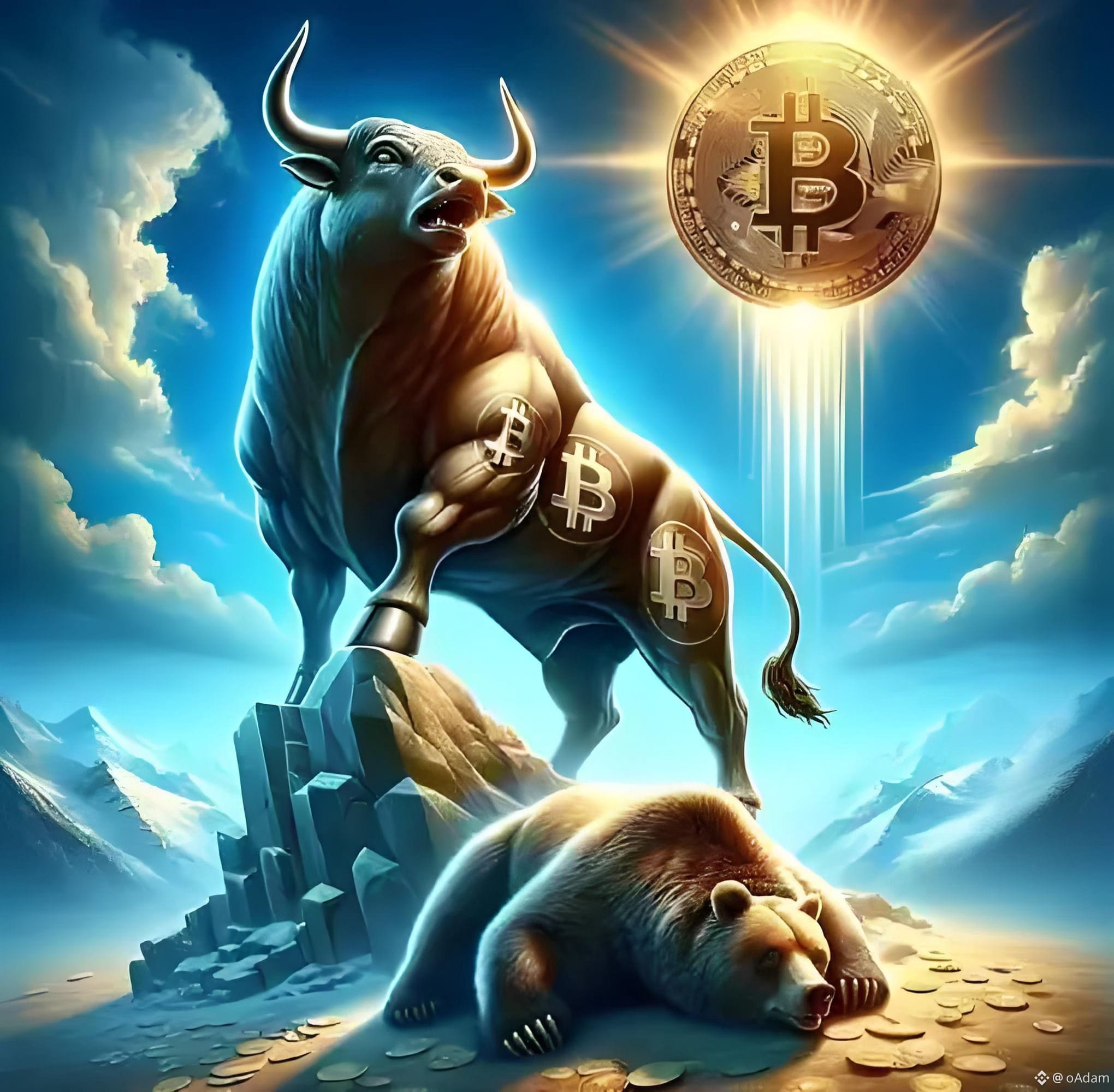
Bitcoin’s current price still has more than 40% of room to reach its all-time high. But the cumulative inflows into spot ETFs are only 10% short of their own historical peak.
Prices haven’t returned to the highs yet, but capital has almost caught up to the level seen during the most frenzied period.
This suggests that the persistence and strength of institutional buying are unlike any cycle before.
What’s even more worth pondering is the structural change it brings: in past bear markets, clearing was driven by retail investors cutting losses and miners capitulating, stretching the cycle out over a very long time;
now, with ETFs as a stable channel continuously drawing in liquidity, turnover has been accelerated as shares change hands, and the time spent at the bottom has been clearly shortened.
Bitcoin’s current price still has more than 40% of room to reach its all-time high. But the cumulative inflows into spot ETFs are only 10% short of their own historical peak.
Prices haven’t returned to the highs yet, but capital has almost caught up to the level seen during the most frenzied period.
This suggests that the persistence and strength of institutional buying are unlike any cycle before.
What’s even more worth pondering is the structural change it brings: in past bear markets, clearing was driven by retail investors cutting losses and miners capitulating, stretching the cycle out over a very long time;
now, with ETFs as a stable channel continuously drawing in liquidity, turnover has been accelerated as shares change hands, and the time spent at the bottom has been clearly shortened.
Prices haven’t returned to the highs yet, but capital has almost caught up to the level seen during the most frenzied period.
This suggests that the persistence and strength of institutional buying are unlike any cycle before.
What’s even more worth pondering is the structural change it brings: in past bear markets, clearing was driven by retail investors cutting losses and miners capitulating, stretching the cycle out over a very long time;
now, with ETFs as a stable channel continuously drawing in liquidity, turnover has been accelerated as shares change hands, and the time spent at the bottom has been clearly shortened.
105
·
--
See translation
注意啊:
所谓的"保险金"(保护基金),保的往往不是"你的币被偷了全额赔",而是"平台在极端情况下的偿付能力"。
触发条件、赔付顺序、是否包含被盗资产,条款里写得比宣传语复杂得多。
平时大额资产放自托管钱包,交易所只留交易所需的仓位就好。
警钟长鸣!
注意啊:
所谓的"保险金"(保护基金),保的往往不是"你的币被偷了全额赔",而是"平台在极端情况下的偿付能力"。
触发条件、赔付顺序、是否包含被盗资产,条款里写得比宣传语复杂得多。
平时大额资产放自托管钱包,交易所只留交易所需的仓位就好。
警钟长鸣!
所谓的"保险金"(保护基金),保的往往不是"你的币被偷了全额赔",而是"平台在极端情况下的偿付能力"。
触发条件、赔付顺序、是否包含被盗资产,条款里写得比宣传语复杂得多。
平时大额资产放自托管钱包,交易所只留交易所需的仓位就好。
警钟长鸣!
7
·
--
The research team at Alloc Init published a paper aiming to implement privacy transfers similar to Zcash on Bitcoin Layer 1. The selling point is “no changes to consensus, no need for a soft fork.”
If this really can be implemented, it would be a long-term negative for coins like ZEC that rely on privacy narratives to survive—privacy would shift from “buying a specific coin” to “a built-in feature of the main chain,” and scarcity would disappear.
But don’t panic in the short term: there’s still a long distance between a paper and engineering implementation, and the Bitcoin community is extremely conservative about any feature expansion. Even just pushing the discussion forward could take years.
So the question is:
Is Bitcoin’s “unchangeability” a moat—or a ceiling?
The research team at Alloc Init published a paper aiming to implement privacy transfers similar to Zcash on Bitcoin Layer 1. The selling point is “no changes to consensus, no need for a soft fork.”
If this really can be implemented, it would be a long-term negative for coins like ZEC that rely on privacy narratives to survive—privacy would shift from “buying a specific coin” to “a built-in feature of the main chain,” and scarcity would disappear.
But don’t panic in the short term: there’s still a long distance between a paper and engineering implementation, and the Bitcoin community is extremely conservative about any feature expansion. Even just pushing the discussion forward could take years.
So the question is:
Is Bitcoin’s “unchangeability” a moat—or a ceiling?
If this really can be implemented, it would be a long-term negative for coins like ZEC that rely on privacy narratives to survive—privacy would shift from “buying a specific coin” to “a built-in feature of the main chain,” and scarcity would disappear.
But don’t panic in the short term: there’s still a long distance between a paper and engineering implementation, and the Bitcoin community is extremely conservative about any feature expansion. Even just pushing the discussion forward could take years.
So the question is:
Is Bitcoin’s “unchangeability” a moat—or a ceiling?
195
Log in to explore more content
Join global crypto users on Binance Square
⚡️ Get latest and useful information about crypto.
💬 Trusted by the world’s largest crypto exchange.
👍 Discover real insights from verified creators.
Email / Phone number
Trending Topics
CircleMints500MUSDCOnSolana
52,865 views
1,318 Discussing
💵 Solana just received another $500M of USDC. But don't make the mistake everyone else is making...
#circlemints500musdconsolana
Circle's USDC Treasury recorded two 250M USDC mints on Solana, creating $500M of fresh supply through its authorized infrastructure.
Circle now reports $75.2B USDC in circulation globally.
But:
A mint is not the same as $500M of fresh market demand.
It tells us Circle created the inventory.
It does not tell us that $500M has already entered Solana DeFi, exchanges, payments or trading.
That's where the interesting signal begins.
Solana's stablecoin economy is already operating at enormous scale, with recent reporting putting network stablecoin volume above $5T in 2026.
So this isn't really a “USDC mint = SOL bullish” story.
It's an inventory → deployment story.
Watch the wallets.
Where does that $500M move next?
If it gets deployed into exchanges, lending, payments or liquidity pools, the market has something much more meaningful than a treasury print.
The mint confirms creation of USDC, not the eventual destination or economic use of the funds.
$SOL $RARE $USDC
#CircleMints500MUSDCOnSolana #solana #BlackRockBuildsTokenizedPortfoliosForOndo #defi
Stink meaner
·8 Likes
·5.1k views
PolymarketBankFailureBetsDrawFDICConcern
66,402 views
1,365 Discussing
BlackRockBuildsTokenizedPortfoliosForOndo
52,623 views
952 Discussing