
老王玩币
261 Posts

老王玩币
Report
Block User
21 Following
20 Followers
7 Liked
Posts
·
--
I came across that breaking-news post and stared at it for a long time. The more I read, the more it felt like looking in a mirror. The biggest HYPE long on Hyperliquid: 1.38 million tokens, 5x cross margin, average entry price of $38.68. At September’s peak, its unrealized profit was $68.26 million; now only $17.66 million remains. More than $50 million vanished just like that. But instead of trimming the position, the trader added another $7 million in USDC across six transactions over 13 hours, forcing the liquidation price down from $54.55 to $52.94—with only about 9% left before liquidation. What really sent a chill down my spine wasn’t the shrinking unrealized profit, but the fact that the account had zero withdrawable balance. When you’re making money, it’s just a number; when you’re losing, what you put in to cover the losses is real cash—and this position no longer lets you get off the ride. I used to think refusing to back down was courage. Now I realize it often just means turning the pride you felt at the start into a bet you feel compelled to see through to the end. If 1.38 million tokens get liquidated and dumped onto the market, nobody may be able to get out in time. But what you should fear even more is fooling yourself with, “Just one more top-up and I’ll make it through.” The market never runs short of people willing to add margin. What it lacks are people who know exactly when they should get off the ride.#Hyperliquid #合约交易 #Web3 $HYPE $BTC
I came across that breaking-news post and stared at it for a long time. The more I read, the more it felt like looking in a mirror. The biggest HYPE long on Hyperliquid: 1.38 million tokens, 5x cross margin, average entry price of $38.68. At September’s peak, its unrealized profit was $68.26 million; now only $17.66 million remains. More than $50 million vanished just like that. But instead of trimming the position, the trader added another $7 million in USDC across six transactions over 13 hours, forcing the liquidation price down from $54.55 to $52.94—with only about 9% left before liquidation. What really sent a chill down my spine wasn’t the shrinking unrealized profit, but the fact that the account had zero withdrawable balance. When you’re making money, it’s just a number; when you’re losing, what you put in to cover the losses is real cash—and this position no longer lets you get off the ride. I used to think refusing to back down was courage. Now I realize it often just means turning the pride you felt at the start into a bet you feel compelled to see through to the end. If 1.38 million tokens get liquidated and dumped onto the market, nobody may be able to get out in time. But what you should fear even more is fooling yourself with, “Just one more top-up and I’ll make it through.” The market never runs short of people willing to add margin. What it lacks are people who know exactly when they should get off the ride.#Hyperliquid #合约交易 #Web3 $HYPE $BTC
27
·
--
When I came across that post about Kraken, my hands were itching: CAD trading pairs were broadly broken for about five hours, and at one point you could get BTC for $39,000—or even $27,000—in USD, exchange $1 for just $0.70, and USDC was also skewed to 0.9 CAD. Someone in the comments said they’d actually bought some and even withdrawn the coins. For a second, all I could think was: isn’t this basically an ATM?
But two lines later, my excitement died. To take advantage of that spread, you’d first need a Canadian account and Canadian dollars. Interac transfers have per-transaction limits, and settlement can take anywhere from an hour to a full day. By the time you move the money in and then withdraw the coins, that 30-point gap will have closed. The difference between a price gap you can see and one you can actually profit from isn’t how fast you are—it’s whether you were already in that channel to begin with. These bargains are never for people just passing through.
Besides, the company hasn’t confirmed anything yet. It could just be a display glitch, or even a baited hook deliberately put out there. What worries me more is the illusion that “I can grab a bargain other people can’t.” The most expensive lessons in the market often start that way. Keep your wallet shut for now, and wait for Kraken to clarify what happened.
#比特币 #交易所 #Web3
$BTC $USDC
When I came across that post about Kraken, my hands were itching: CAD trading pairs were broadly broken for about five hours, and at one point you could get BTC for $39,000—or even $27,000—in USD, exchange $1 for just $0.70, and USDC was also skewed to 0.9 CAD. Someone in the comments said they’d actually bought some and even withdrawn the coins. For a second, all I could think was: isn’t this basically an ATM?
But two lines later, my excitement died. To take advantage of that spread, you’d first need a Canadian account and Canadian dollars. Interac transfers have per-transaction limits, and settlement can take anywhere from an hour to a full day. By the time you move the money in and then withdraw the coins, that 30-point gap will have closed. The difference between a price gap you can see and one you can actually profit from isn’t how fast you are—it’s whether you were already in that channel to begin with. These bargains are never for people just passing through.
Besides, the company hasn’t confirmed anything yet. It could just be a display glitch, or even a baited hook deliberately put out there. What worries me more is the illusion that “I can grab a bargain other people can’t.” The most expensive lessons in the market often start that way. Keep your wallet shut for now, and wait for Kraken to clarify what happened.
#比特币 #交易所 #Web3
$BTC $USDC
But two lines later, my excitement died. To take advantage of that spread, you’d first need a Canadian account and Canadian dollars. Interac transfers have per-transaction limits, and settlement can take anywhere from an hour to a full day. By the time you move the money in and then withdraw the coins, that 30-point gap will have closed. The difference between a price gap you can see and one you can actually profit from isn’t how fast you are—it’s whether you were already in that channel to begin with. These bargains are never for people just passing through.
Besides, the company hasn’t confirmed anything yet. It could just be a display glitch, or even a baited hook deliberately put out there. What worries me more is the illusion that “I can grab a bargain other people can’t.” The most expensive lessons in the market often start that way. Keep your wallet shut for now, and wait for Kraken to clarify what happened.
#比特币 #交易所 #Web3
$BTC $USDC
219
·
--
I always thought Bitcoin’s core code was the one piece of software the whole world kept an eye on—that AI wouldn’t have any room to nitpick. Today’s vulnerability disclosure changed my mind.
The technique was actually quite simple: send a node an orphan transaction missing more than a thousand parent transactions, then repeat its ID 50,000 times in the same message. The node gets stuck for over ten seconds, processing no one’s messages during that time—not even receiving new blocks. Keep sending it, and you can keep it tied up. The severity rating was only moderate, and the official report went out of its way to add four words: “easy to detect.”
And yet this supposedly easy-to-detect vulnerability lay buried from version 29.0 until today. It was finally uncovered by automated scanning from Loupe, an AI project at Spiral, a Block subsidiary, then verified and patched by human engineers. It was reported in July, kept under wraps until today, and the fix made it into versions 30.5 and 31.3.
What gets to me isn’t the vulnerability itself, but those words: “easy to detect.” So many eyes had been on that code, and in the end, a machine found the hole. What stings even more is that 29.x is already end-of-life; the official word is that it won’t be patched. Anyone still running an old node is on their own.
Stop treating AI like a toy for writing jokes. It’s already helping us dig through the foundations we haven’t examined closely enough ourselves.
#比特币 #Web3 #安全 $BTC $ETH
I always thought Bitcoin’s core code was the one piece of software the whole world kept an eye on—that AI wouldn’t have any room to nitpick. Today’s vulnerability disclosure changed my mind.
The technique was actually quite simple: send a node an orphan transaction missing more than a thousand parent transactions, then repeat its ID 50,000 times in the same message. The node gets stuck for over ten seconds, processing no one’s messages during that time—not even receiving new blocks. Keep sending it, and you can keep it tied up. The severity rating was only moderate, and the official report went out of its way to add four words: “easy to detect.”
And yet this supposedly easy-to-detect vulnerability lay buried from version 29.0 until today. It was finally uncovered by automated scanning from Loupe, an AI project at Spiral, a Block subsidiary, then verified and patched by human engineers. It was reported in July, kept under wraps until today, and the fix made it into versions 30.5 and 31.3.
What gets to me isn’t the vulnerability itself, but those words: “easy to detect.” So many eyes had been on that code, and in the end, a machine found the hole. What stings even more is that 29.x is already end-of-life; the official word is that it won’t be patched. Anyone still running an old node is on their own.
Stop treating AI like a toy for writing jokes. It’s already helping us dig through the foundations we haven’t examined closely enough ourselves.
#比特币 #Web3 #安全 $BTC $ETH
The technique was actually quite simple: send a node an orphan transaction missing more than a thousand parent transactions, then repeat its ID 50,000 times in the same message. The node gets stuck for over ten seconds, processing no one’s messages during that time—not even receiving new blocks. Keep sending it, and you can keep it tied up. The severity rating was only moderate, and the official report went out of its way to add four words: “easy to detect.”
And yet this supposedly easy-to-detect vulnerability lay buried from version 29.0 until today. It was finally uncovered by automated scanning from Loupe, an AI project at Spiral, a Block subsidiary, then verified and patched by human engineers. It was reported in July, kept under wraps until today, and the fix made it into versions 30.5 and 31.3.
What gets to me isn’t the vulnerability itself, but those words: “easy to detect.” So many eyes had been on that code, and in the end, a machine found the hole. What stings even more is that 29.x is already end-of-life; the official word is that it won’t be patched. Anyone still running an old node is on their own.
Stop treating AI like a toy for writing jokes. It’s already helping us dig through the foundations we haven’t examined closely enough ourselves.
#比特币 #Web3 #安全 $BTC $ETH
378
·
--
While everyone was watching the liquidation figures, I dug up the Ahr999 indicator that nobody usually talks about. It’s now reading 0.2338—breaking below the 0.24 low from the March 12, 2020 pandemic flash crash. By the formula behind this dip-buying indicator, Bitcoin is now cheaper than it was that day. Sounds like a starting gun, right? But I didn’t rush to pull the trigger, because the same indicator hit 0.15 in November 2011, when Bitcoin was still in the single digits. Cheap can always get cheaper. More importantly, the backdrop is different this time: December rate hikes are looming, spot ETFs have seen nearly $2.9 billion in outflows in a month, AI is sucking money away, and this bear market has already dragged on for 410 days. So I don’t treat 0.23 as a signal to buy. I treat it as a reminder: when fear reaches this level, the most expensive thing is never the price—it’s the act of handing over your coins. Indicators can tell you something is cheap; they can never tell you where the bottom is.
#比特币 #Ahr999 #抄底 #Web3 $BTC $ETH
While everyone was watching the liquidation figures, I dug up the Ahr999 indicator that nobody usually talks about. It’s now reading 0.2338—breaking below the 0.24 low from the March 12, 2020 pandemic flash crash. By the formula behind this dip-buying indicator, Bitcoin is now cheaper than it was that day. Sounds like a starting gun, right? But I didn’t rush to pull the trigger, because the same indicator hit 0.15 in November 2011, when Bitcoin was still in the single digits. Cheap can always get cheaper. More importantly, the backdrop is different this time: December rate hikes are looming, spot ETFs have seen nearly $2.9 billion in outflows in a month, AI is sucking money away, and this bear market has already dragged on for 410 days. So I don’t treat 0.23 as a signal to buy. I treat it as a reminder: when fear reaches this level, the most expensive thing is never the price—it’s the act of handing over your coins. Indicators can tell you something is cheap; they can never tell you where the bottom is.
#比特币 #Ahr999 #抄底 #Web3 $BTC $ETH
#比特币 #Ahr999 #抄底 #Web3 $BTC $ETH
341
·
--
The starkest contrast today: BTC fell below $56,000, with 2.382 billion in liquidations across the market in 24 hours and 340,000 people liquidated as retail investors scrambled to get out. At the same time, early this morning Morgan Stanley poured $47.49 million into its own spot Bitcoin ETF, adding about 799 BTC and bringing its total holdings to 12,448 BTC, worth roughly $709 million. Plenty of people will see this and want to follow suit and buy the dip, but I’d say don’t rush. On the same day, it also transferred 1,548 SOL to Coinbase, possibly to sell. Buying and selling at the same time isn’t “being bullish on crypto”—it’s making its own trade-offs. Institutions can withstand drawdowns and have access to off-exchange cash flows; we don’t. Its buying is portfolio management—copying it as an act of faith is another matter. What really matters isn’t who’s buying, but what they’re buying—and what they’re quietly selling. #比特币 #抄底 #机构 $BTC $SOL
The starkest contrast today: BTC fell below $56,000, with 2.382 billion in liquidations across the market in 24 hours and 340,000 people liquidated as retail investors scrambled to get out. At the same time, early this morning Morgan Stanley poured $47.49 million into its own spot Bitcoin ETF, adding about 799 BTC and bringing its total holdings to 12,448 BTC, worth roughly $709 million. Plenty of people will see this and want to follow suit and buy the dip, but I’d say don’t rush. On the same day, it also transferred 1,548 SOL to Coinbase, possibly to sell. Buying and selling at the same time isn’t “being bullish on crypto”—it’s making its own trade-offs. Institutions can withstand drawdowns and have access to off-exchange cash flows; we don’t. Its buying is portfolio management—copying it as an act of faith is another matter. What really matters isn’t who’s buying, but what they’re buying—and what they’re quietly selling. #比特币 #抄底 #机构 $BTC $SOL
71
·
--
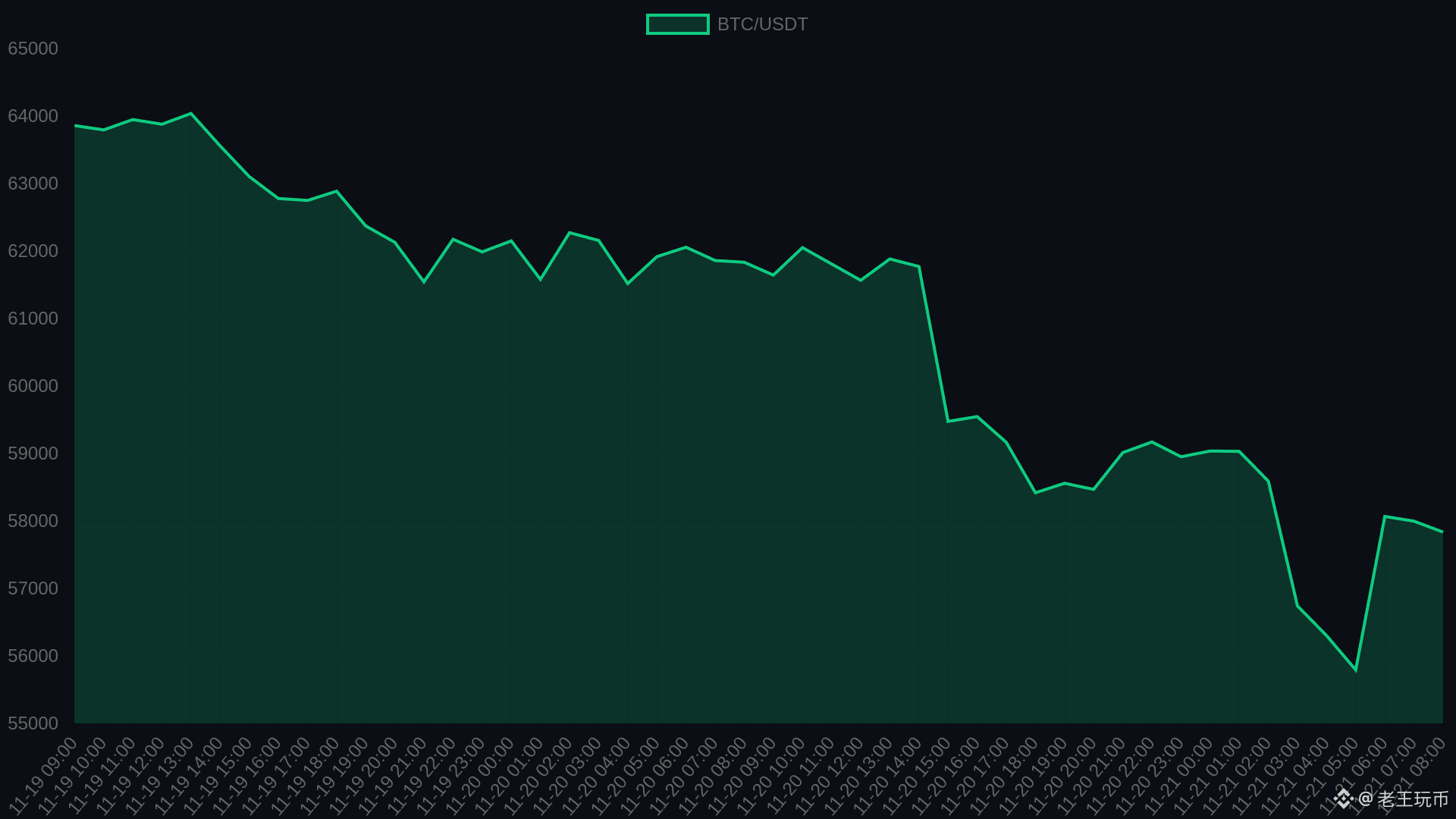
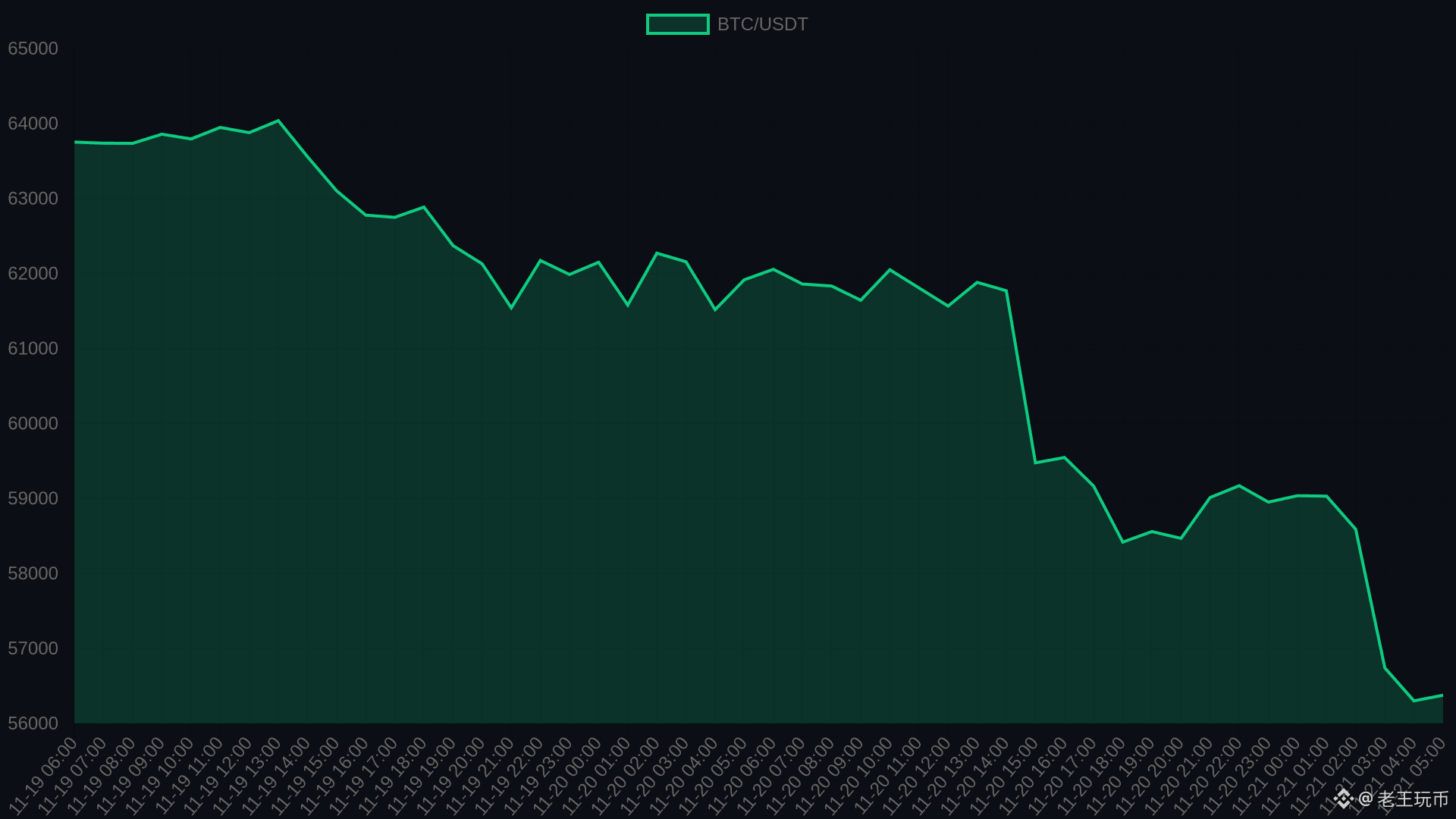
I always treated the “four-year cycle” like an alarm clock for buying the dip: a year after the halving, the market peaks; a year after that, it bottoms. When the time came, prices were supposed to go up. Today, that clock has stopped for good. Counting from the peak on October 7, 2025, this bear market has already lasted 410 days—the longest ever. By the old script, we should have turned bullish in early October this year. Instead, after mid-October, we followed U.S. stocks all the way down from $85,000 to $56,000, wiping nearly $1 trillion off the entire crypto market. The most humbling part isn’t the drop—it’s that the “time pattern” I believed in for so long may have been nothing more than a coincidence in previous cycles. The market doesn’t look at the calendar; liquidity is the real starting gun. Hayes and Yi Lihua have both said not to rush into buying the dip, and this time I’m taking their advice: the old map won’t help you find a new bottom. Keeping cash on hand matters far more than guessing the exact price level.
#比特币 #加密市场 #投资 $BTC $ETH
I always treated the “four-year cycle” like an alarm clock for buying the dip: a year after the halving, the market peaks; a year after that, it bottoms. When the time came, prices were supposed to go up. Today, that clock has stopped for good. Counting from the peak on October 7, 2025, this bear market has already lasted 410 days—the longest ever. By the old script, we should have turned bullish in early October this year. Instead, after mid-October, we followed U.S. stocks all the way down from $85,000 to $56,000, wiping nearly $1 trillion off the entire crypto market. The most humbling part isn’t the drop—it’s that the “time pattern” I believed in for so long may have been nothing more than a coincidence in previous cycles. The market doesn’t look at the calendar; liquidity is the real starting gun. Hayes and Yi Lihua have both said not to rush into buying the dip, and this time I’m taking their advice: the old map won’t help you find a new bottom. Keeping cash on hand matters far more than guessing the exact price level.
#比特币 #加密市场 #投资 $BTC $ETH
#比特币 #加密市场 #投资 $BTC $ETH
·
--
An on-chain alert caught my attention today. Over the past 8 hours, an institution withdrew 5,856 bitcoins worth $343 million from Binance and Kraken. Including earlier withdrawals, the total comes to 7,259 bitcoins, worth $434 million.
If any other whale had done this, the comments would already be full of “bullish” and “long-term hold.” But this time, the player is Abraxas—one of the biggest institutional shorts on Hyperliquid, the group that made over $500 million by shorting near the top. More intriguing still, it has recently been closing its shorts: its BTC short position has dwindled from more than 2,000 coins to almost zero, while it’s been withdrawing spot BTC from exchanges piece by piece.
The signal I read isn’t that it’s turned bullish, but that it’s cashing out: closing its bearish bets and moving its profits and spot holdings into its own hands. Withdrawals never tell you which way the market will go; they only tell you where a player wants to keep its chips. When retail traders see a whale withdrawing and rush in, they’re often seeing only the half it’s willing to show on-chain.
Even the best short-sellers are starting to take profits. I’d rather first admit that this storm isn’t over than mistake its withdrawals for a signal to buy the dip.
#比特币 #链上数据 #Web3 $BTC $HYPE
An on-chain alert caught my attention today. Over the past 8 hours, an institution withdrew 5,856 bitcoins worth $343 million from Binance and Kraken. Including earlier withdrawals, the total comes to 7,259 bitcoins, worth $434 million.
If any other whale had done this, the comments would already be full of “bullish” and “long-term hold.” But this time, the player is Abraxas—one of the biggest institutional shorts on Hyperliquid, the group that made over $500 million by shorting near the top. More intriguing still, it has recently been closing its shorts: its BTC short position has dwindled from more than 2,000 coins to almost zero, while it’s been withdrawing spot BTC from exchanges piece by piece.
The signal I read isn’t that it’s turned bullish, but that it’s cashing out: closing its bearish bets and moving its profits and spot holdings into its own hands. Withdrawals never tell you which way the market will go; they only tell you where a player wants to keep its chips. When retail traders see a whale withdrawing and rush in, they’re often seeing only the half it’s willing to show on-chain.
Even the best short-sellers are starting to take profits. I’d rather first admit that this storm isn’t over than mistake its withdrawals for a signal to buy the dip.
#比特币 #链上数据 #Web3 $BTC $HYPE
If any other whale had done this, the comments would already be full of “bullish” and “long-term hold.” But this time, the player is Abraxas—one of the biggest institutional shorts on Hyperliquid, the group that made over $500 million by shorting near the top. More intriguing still, it has recently been closing its shorts: its BTC short position has dwindled from more than 2,000 coins to almost zero, while it’s been withdrawing spot BTC from exchanges piece by piece.
The signal I read isn’t that it’s turned bullish, but that it’s cashing out: closing its bearish bets and moving its profits and spot holdings into its own hands. Withdrawals never tell you which way the market will go; they only tell you where a player wants to keep its chips. When retail traders see a whale withdrawing and rush in, they’re often seeing only the half it’s willing to show on-chain.
Even the best short-sellers are starting to take profits. I’d rather first admit that this storm isn’t over than mistake its withdrawals for a signal to buy the dip.
#比特币 #链上数据 #Web3 $BTC $HYPE
461
·
--
Last night, I came across that on-chain monitoring post and stared at the numbers for a long time: a trader called AguilaTrades had compounded $610,000 into $10.21 million in 10 days—a 17x return. He’d just closed a 2,000 BTC short for a $6.87 million profit, then turned around and placed new short orders for 1,000 BTC between $59,800 and $60,200.
What really sent a chill down my spine wasn’t the 17x return. It was the note in the same data: last year, he’d lost $39 million compounding positions. The same strategy can be an ATM or a shredder; the only difference is whether that sudden wick goes your way.
This latest drop to $58,000 liquidated nearly 290,000 people across the market and wiped out $1.89 billion, with long positions accounting for 90% of it. Meanwhile, one entity was sitting on long positions in 60,000 ETH and 600 BTC, down $65.47 million on paper—giving back all $67.05 million it had made going long earlier this year.
While everyone else was getting liquidated, he was changing cars. I told myself not to rush into copying his trades: the blockchain only records the addresses that survive. Liquidated addresses have a balance of 0, so screening tools can’t even find them. The 17x return you see is the one account picked out of 10,000. The market doesn’t create money; it just transfers it. Think carefully about which side you’re on.
#合约交易 #Web3 #Bitcoin
$BTC $ETH
Last night, I came across that on-chain monitoring post and stared at the numbers for a long time: a trader called AguilaTrades had compounded $610,000 into $10.21 million in 10 days—a 17x return. He’d just closed a 2,000 BTC short for a $6.87 million profit, then turned around and placed new short orders for 1,000 BTC between $59,800 and $60,200.
What really sent a chill down my spine wasn’t the 17x return. It was the note in the same data: last year, he’d lost $39 million compounding positions. The same strategy can be an ATM or a shredder; the only difference is whether that sudden wick goes your way.
This latest drop to $58,000 liquidated nearly 290,000 people across the market and wiped out $1.89 billion, with long positions accounting for 90% of it. Meanwhile, one entity was sitting on long positions in 60,000 ETH and 600 BTC, down $65.47 million on paper—giving back all $67.05 million it had made going long earlier this year.
While everyone else was getting liquidated, he was changing cars. I told myself not to rush into copying his trades: the blockchain only records the addresses that survive. Liquidated addresses have a balance of 0, so screening tools can’t even find them. The 17x return you see is the one account picked out of 10,000. The market doesn’t create money; it just transfers it. Think carefully about which side you’re on.
#合约交易 #Web3 #Bitcoin
$BTC $ETH
What really sent a chill down my spine wasn’t the 17x return. It was the note in the same data: last year, he’d lost $39 million compounding positions. The same strategy can be an ATM or a shredder; the only difference is whether that sudden wick goes your way.
This latest drop to $58,000 liquidated nearly 290,000 people across the market and wiped out $1.89 billion, with long positions accounting for 90% of it. Meanwhile, one entity was sitting on long positions in 60,000 ETH and 600 BTC, down $65.47 million on paper—giving back all $67.05 million it had made going long earlier this year.
While everyone else was getting liquidated, he was changing cars. I told myself not to rush into copying his trades: the blockchain only records the addresses that survive. Liquidated addresses have a balance of 0, so screening tools can’t even find them. The 17x return you see is the one account picked out of 10,000. The market doesn’t create money; it just transfers it. Think carefully about which side you’re on.
#合约交易 #Web3 #Bitcoin
$BTC $ETH
470
·
--
I’ve always thought of prediction markets as places to price elections and sports—until today, when I saw a Polymarket market asking whether “AI will solve the Riemann hypothesis before the end of 2026.” Its odds surged 73% in 24 hours, hitting 79%.
What really sent a chill down my spine wasn’t the number, but the settlement rules: if labs like Anthropic, OpenAI, or Google announce that they’ve solved it, that counts as Yes. No certification from the Clay Mathematics Institute is needed. But a solution produced by outside researchers using AI wouldn’t count.
In other words, this market isn’t betting on whether the theorem is true—it’s betting on who’ll be the first to shout about it. The spark was a Nature report saying that Anthropic mathematician Alpöge claimed to have produced a proof with Claude, and extended it to the generalized Riemann hypothesis, with 17 million lines of Lean formalization code. But the mathematical community hasn’t accepted it, Anthropic itself hasn’t endorsed it, and the news came the day after the company went public.
The market has already priced in an answer on humanity’s behalf, while peer review is still in the queue. Don’t rush to treat this as proof that AI has won, but don’t rush to call it a bubble either—the market is really pricing the speed at which a narrative spreads, not the truth. When guessing right or wrong turns into guessing who’ll announce it first, prediction markets slide from information tools into narrative gambling.
#预测市场 #AI #Web3 $USDC $BTC
I’ve always thought of prediction markets as places to price elections and sports—until today, when I saw a Polymarket market asking whether “AI will solve the Riemann hypothesis before the end of 2026.” Its odds surged 73% in 24 hours, hitting 79%.
What really sent a chill down my spine wasn’t the number, but the settlement rules: if labs like Anthropic, OpenAI, or Google announce that they’ve solved it, that counts as Yes. No certification from the Clay Mathematics Institute is needed. But a solution produced by outside researchers using AI wouldn’t count.
In other words, this market isn’t betting on whether the theorem is true—it’s betting on who’ll be the first to shout about it. The spark was a Nature report saying that Anthropic mathematician Alpöge claimed to have produced a proof with Claude, and extended it to the generalized Riemann hypothesis, with 17 million lines of Lean formalization code. But the mathematical community hasn’t accepted it, Anthropic itself hasn’t endorsed it, and the news came the day after the company went public.
The market has already priced in an answer on humanity’s behalf, while peer review is still in the queue. Don’t rush to treat this as proof that AI has won, but don’t rush to call it a bubble either—the market is really pricing the speed at which a narrative spreads, not the truth. When guessing right or wrong turns into guessing who’ll announce it first, prediction markets slide from information tools into narrative gambling.
#预测市场 #AI #Web3 $USDC $BTC
What really sent a chill down my spine wasn’t the number, but the settlement rules: if labs like Anthropic, OpenAI, or Google announce that they’ve solved it, that counts as Yes. No certification from the Clay Mathematics Institute is needed. But a solution produced by outside researchers using AI wouldn’t count.
In other words, this market isn’t betting on whether the theorem is true—it’s betting on who’ll be the first to shout about it. The spark was a Nature report saying that Anthropic mathematician Alpöge claimed to have produced a proof with Claude, and extended it to the generalized Riemann hypothesis, with 17 million lines of Lean formalization code. But the mathematical community hasn’t accepted it, Anthropic itself hasn’t endorsed it, and the news came the day after the company went public.
The market has already priced in an answer on humanity’s behalf, while peer review is still in the queue. Don’t rush to treat this as proof that AI has won, but don’t rush to call it a bubble either—the market is really pricing the speed at which a narrative spreads, not the truth. When guessing right or wrong turns into guessing who’ll announce it first, prediction markets slide from information tools into narrative gambling.
#预测市场 #AI #Web3 $USDC $BTC
56
·
--
I used to think tokenization just meant creating another shadow ticker for NVIDIA, letting people bet on whether it would go up or down from the sidelines of the blockchain. This story changed my mind today: POSCO International, South Korea’s largest trading company, and LG CNS, LG’s IT subsidiary, have tokenized real cross-border trade receivables on Injective. The parties to each transaction share the same on-chain ledger, and according to the report, it covers trade records worth billions of dollars.
What really struck me wasn’t the amount, but how utterly mundane it is: putting IOUs from overseas subsidiaries on-chain, having AI read letters of credit and documents and flag errors before settlement, and specifying directly in the protocol who can hold and transfer them. This is what receivables should look like—not chips to speculate with, but a way for all parties to stop keeping separate books for the same debt.
The irony is that hardly anyone is talking about something this big today, because INJ has fallen nearly 9% along with the broader market, leaving no candlestick chart to trade. But I’m becoming more and more convinced that the real dividing line for tokenization has never been which stock gets listed next. It’s whether there’s a real business behind that IOU on-chain.
#RWA #代币化 #Web3
$INJ $BTC
I used to think tokenization just meant creating another shadow ticker for NVIDIA, letting people bet on whether it would go up or down from the sidelines of the blockchain. This story changed my mind today: POSCO International, South Korea’s largest trading company, and LG CNS, LG’s IT subsidiary, have tokenized real cross-border trade receivables on Injective. The parties to each transaction share the same on-chain ledger, and according to the report, it covers trade records worth billions of dollars.
What really struck me wasn’t the amount, but how utterly mundane it is: putting IOUs from overseas subsidiaries on-chain, having AI read letters of credit and documents and flag errors before settlement, and specifying directly in the protocol who can hold and transfer them. This is what receivables should look like—not chips to speculate with, but a way for all parties to stop keeping separate books for the same debt.
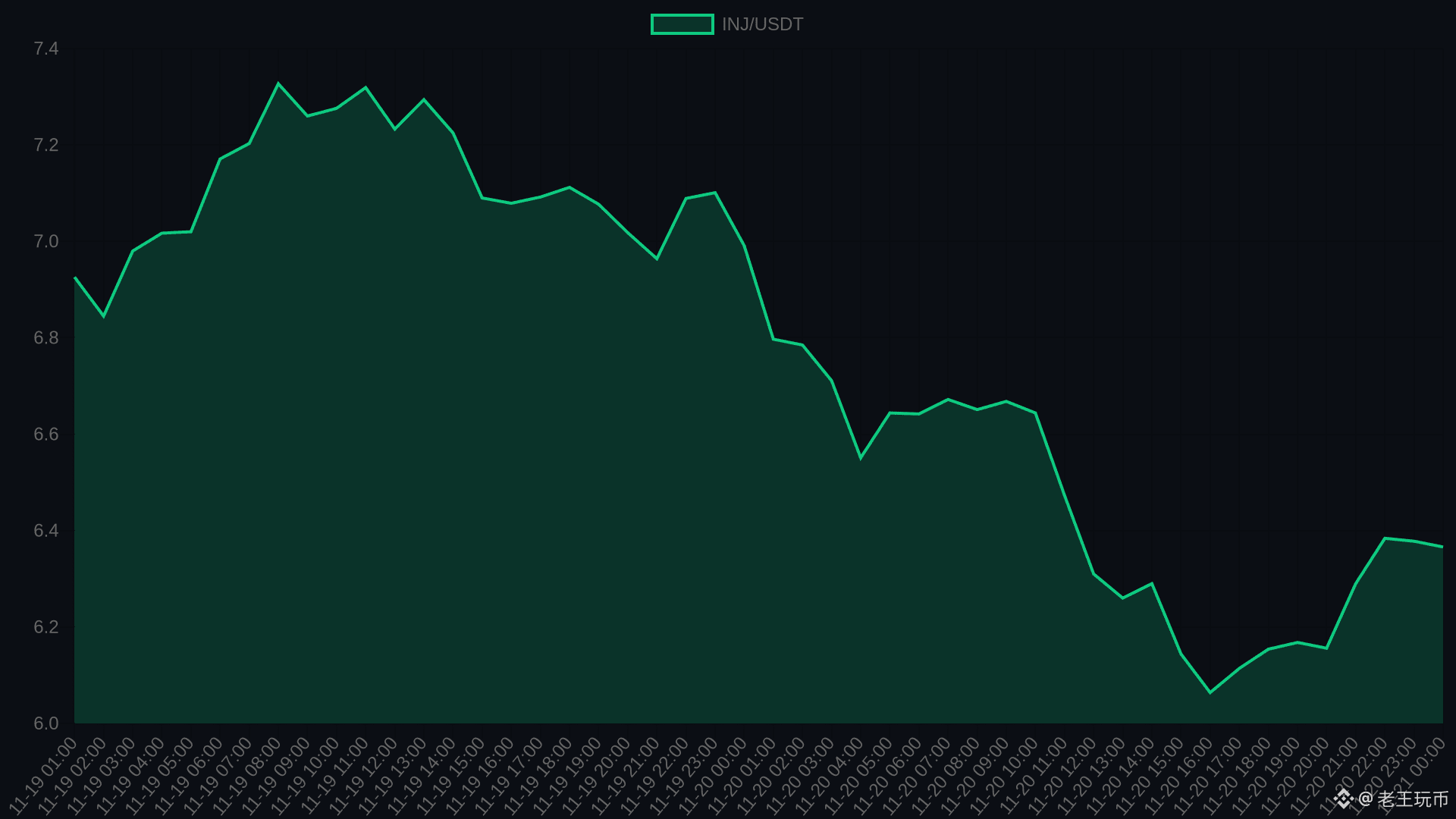
The irony is that hardly anyone is talking about something this big today, because INJ has fallen nearly 9% along with the broader market, leaving no candlestick chart to trade. But I’m becoming more and more convinced that the real dividing line for tokenization has never been which stock gets listed next. It’s whether there’s a real business behind that IOU on-chain.
#RWA #代币化 #Web3
$INJ $BTC
What really struck me wasn’t the amount, but how utterly mundane it is: putting IOUs from overseas subsidiaries on-chain, having AI read letters of credit and documents and flag errors before settlement, and specifying directly in the protocol who can hold and transfer them. This is what receivables should look like—not chips to speculate with, but a way for all parties to stop keeping separate books for the same debt.
The irony is that hardly anyone is talking about something this big today, because INJ has fallen nearly 9% along with the broader market, leaving no candlestick chart to trade. But I’m becoming more and more convinced that the real dividing line for tokenization has never been which stock gets listed next. It’s whether there’s a real business behind that IOU on-chain.
#RWA #代币化 #Web3
$INJ $BTC
364
·
--
Article
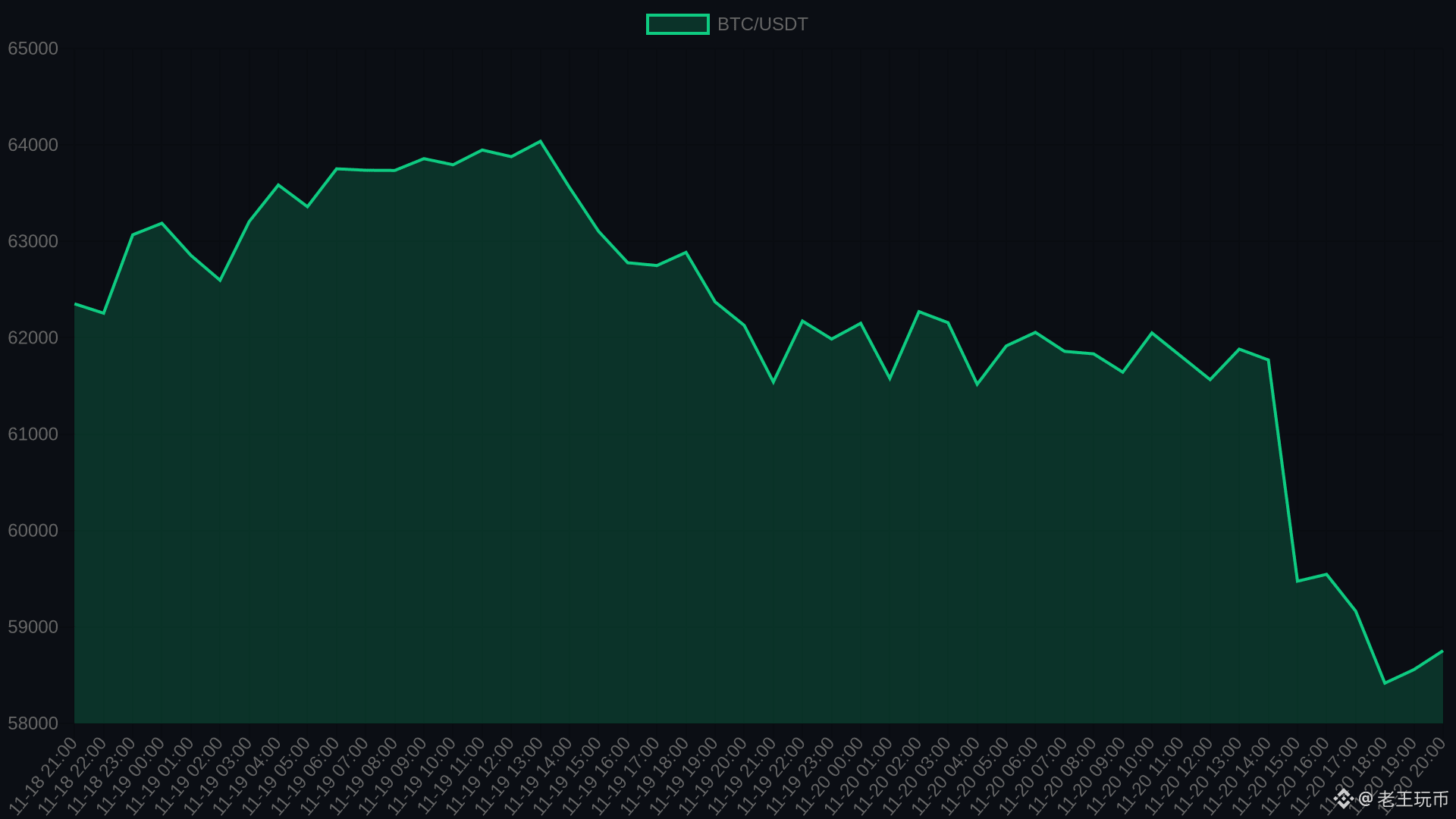
Below $60,000, Fear Index at Just 12: I’m Not Rushing to Buy the Dip as ETFs See Record OutflowsData is taken from Binance public market data and global aggregators as of 08:02 Beijing time on November 21 (00:02 UTC on November 21).
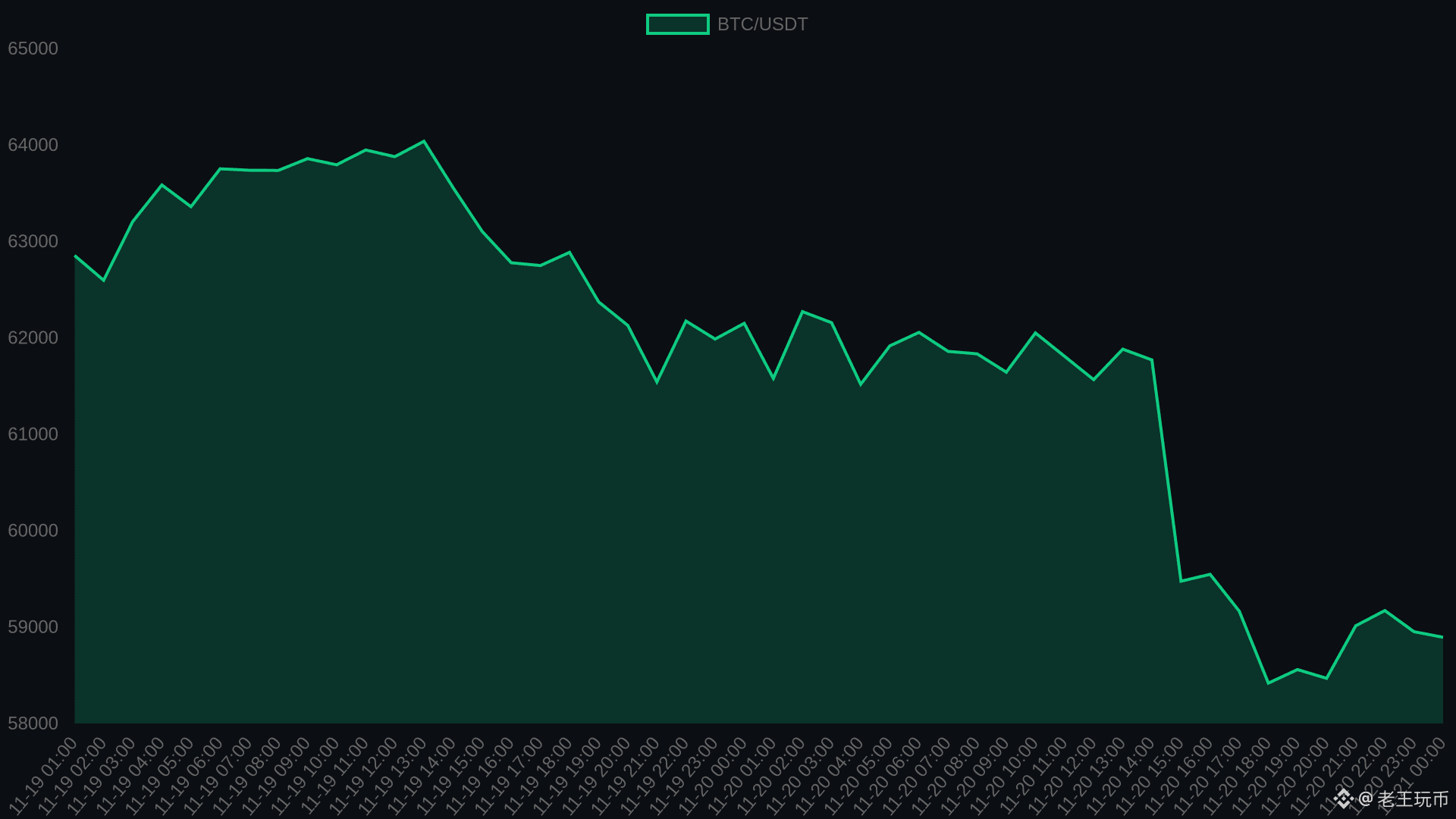
Bitcoin is at $58,930, down 5.05% in 24 hours, with an intraday high of $62,639 and low of $57,778. This is no ordinary bearish candle: BTC has genuinely fallen below $60,000 for the first time since July. Ethereum is at $1,623.97, down 7.79%; BNB is down 7.01% to $540.51, SOL is down 5.94% to $68.91, and XRP is down 5.31% to $0.9118. According to CoinGecko, the global market cap is about $2.04 trillion, down 7.65%; CoinPaprika puts it at about $2.11 trillion, down 4.92%. The figures differ, but the direction is the same: hundreds of billions of dollars wiped out in a single day. The Fear and Greed Index is at 12, still in extreme fear. It has been stuck between 10 and 12 for the past seven days, with no sign of recovery.
Below $60,000, Fear Index at Just 12: I’m Not Rushing to Buy the Dip as ETFs See Record Outflows
Data is taken from Binance public market data and global aggregators as of 08:02 Beijing time on November 21 (00:02 UTC on November 21).
Bitcoin is at $58,930, down 5.05% in 24 hours, with an intraday high of $62,639 and low of $57,778. This is no ordinary bearish candle: BTC has genuinely fallen below $60,000 for the first time since July. Ethereum is at $1,623.97, down 7.79%; BNB is down 7.01% to $540.51, SOL is down 5.94% to $68.91, and XRP is down 5.31% to $0.9118. According to CoinGecko, the global market cap is about $2.04 trillion, down 7.65%; CoinPaprika puts it at about $2.11 trillion, down 4.92%. The figures differ, but the direction is the same: hundreds of billions of dollars wiped out in a single day. The Fear and Greed Index is at 12, still in extreme fear. It has been stuck between 10 and 12 for the past seven days, with no sign of recovery.
Bitcoin is at $58,930, down 5.05% in 24 hours, with an intraday high of $62,639 and low of $57,778. This is no ordinary bearish candle: BTC has genuinely fallen below $60,000 for the first time since July. Ethereum is at $1,623.97, down 7.79%; BNB is down 7.01% to $540.51, SOL is down 5.94% to $68.91, and XRP is down 5.31% to $0.9118. According to CoinGecko, the global market cap is about $2.04 trillion, down 7.65%; CoinPaprika puts it at about $2.11 trillion, down 4.92%. The figures differ, but the direction is the same: hundreds of billions of dollars wiped out in a single day. The Fear and Greed Index is at 12, still in extreme fear. It has been stuck between 10 and 12 for the past seven days, with no sign of recovery.
92
·
--
I always thought this downturn was macro forces crushing valuations. Only today did I realize that the top brick was already coming loose because of Nvidia itself. SEC enforcement staff are investigating its books: how it recognized $104 billion in revenue from Singapore, the financing guarantees it provided to cloud providers and AI customers, and orders booked through intermediaries like Megaspeed. Its days sales outstanding have stretched to 64 days, the slowest since 2022. Put simply, customers are using Nvidia’s own money to buy its chips, and the money goes around in a circle before showing up on the books as revenue. On Friday, it lost about $400 billion in market value in a single day, its seventh straight session of losses, and it’s down $2.5 trillion from its October peak. Even revenue that beat expectations couldn’t help. The market is finally asking the most basic question: How much of these numbers is real? The crypto market is taking the hit more directly: BTC fell below $59,000 today, shedding nearly another 5% in 24 hours. I used to worry that AI would siphon money out of crypto. Now I’m more afraid that if its own books are scrutinized, we’ll be the first to get dragged under. An investigation doesn’t mean wrongdoing, but when a story rests on accounting figures, the cracks always start on the inside.
#英伟达 #AI泡沫 #比特币 #Crypto Market
$BTC $ETH
I always thought this downturn was macro forces crushing valuations. Only today did I realize that the top brick was already coming loose because of Nvidia itself. SEC enforcement staff are investigating its books: how it recognized $104 billion in revenue from Singapore, the financing guarantees it provided to cloud providers and AI customers, and orders booked through intermediaries like Megaspeed. Its days sales outstanding have stretched to 64 days, the slowest since 2022. Put simply, customers are using Nvidia’s own money to buy its chips, and the money goes around in a circle before showing up on the books as revenue. On Friday, it lost about $400 billion in market value in a single day, its seventh straight session of losses, and it’s down $2.5 trillion from its October peak. Even revenue that beat expectations couldn’t help. The market is finally asking the most basic question: How much of these numbers is real? The crypto market is taking the hit more directly: BTC fell below $59,000 today, shedding nearly another 5% in 24 hours. I used to worry that AI would siphon money out of crypto. Now I’m more afraid that if its own books are scrutinized, we’ll be the first to get dragged under. An investigation doesn’t mean wrongdoing, but when a story rests on accounting figures, the cracks always start on the inside.
#英伟达 #AI泡沫 #比特币 #Crypto Market
$BTC $ETH
#英伟达 #AI泡沫 #比特币 #Crypto Market
$BTC $ETH
880
·
--
Today, BlackRock’s IBIT saw $541 million in outflows in a single day, its largest since launch. I stared at that number and suddenly understood this latest downturn—when I overlaid the timelines of the Anthropic and SpaceX IPOs: in the 30 days before they went public, Bitcoin fell 22.7% and 22.3%, respectively—less than half a percentage point apart.
This doesn’t look like a coincidence. When liquidity is tight, tech stocks, crude oil, gold, and crypto are all sold off together for cash in the first 15 minutes after the market opens, and the correlation between all assets instantly shoots up to one. What’s even tougher is how long it takes for the money to come back: IPO subscriptions have a 15-to-30-day lockup period. In the case of SpaceX, Bitcoin didn’t really bottom until 70 days after the IPO went through.
So I don’t believe in the idea that the bell rings and a rebound immediately follows. The money has been pulled out, and it won’t flow back in until the lockup period is over. The real bottom usually comes dozens of days later, not on IPO day. Those watching for an immediate post-listing dip to buy are mostly catching a falling knife halfway down the mountain.
#比特币 #加密市场 #IPO
$BTC $ETH
Today, BlackRock’s IBIT saw $541 million in outflows in a single day, its largest since launch. I stared at that number and suddenly understood this latest downturn—when I overlaid the timelines of the Anthropic and SpaceX IPOs: in the 30 days before they went public, Bitcoin fell 22.7% and 22.3%, respectively—less than half a percentage point apart.
This doesn’t look like a coincidence. When liquidity is tight, tech stocks, crude oil, gold, and crypto are all sold off together for cash in the first 15 minutes after the market opens, and the correlation between all assets instantly shoots up to one. What’s even tougher is how long it takes for the money to come back: IPO subscriptions have a 15-to-30-day lockup period. In the case of SpaceX, Bitcoin didn’t really bottom until 70 days after the IPO went through.
So I don’t believe in the idea that the bell rings and a rebound immediately follows. The money has been pulled out, and it won’t flow back in until the lockup period is over. The real bottom usually comes dozens of days later, not on IPO day. Those watching for an immediate post-listing dip to buy are mostly catching a falling knife halfway down the mountain.
#比特币 #加密市场 #IPO
$BTC $ETH
This doesn’t look like a coincidence. When liquidity is tight, tech stocks, crude oil, gold, and crypto are all sold off together for cash in the first 15 minutes after the market opens, and the correlation between all assets instantly shoots up to one. What’s even tougher is how long it takes for the money to come back: IPO subscriptions have a 15-to-30-day lockup period. In the case of SpaceX, Bitcoin didn’t really bottom until 70 days after the IPO went through.
So I don’t believe in the idea that the bell rings and a rebound immediately follows. The money has been pulled out, and it won’t flow back in until the lockup period is over. The real bottom usually comes dozens of days later, not on IPO day. Those watching for an immediate post-listing dip to buy are mostly catching a falling knife halfway down the mountain.
#比特币 #加密市场 #IPO
$BTC $ETH
703
·
--
I’ve always said tokenized stocks are just price shadows: you get the ups and downs, but forget about shareholder rights. Today, I got thoroughly proven wrong by a single cent.
Securitize issued the first on-chain dividend for tokenized Apple shares, sending USDC directly to wallets. Circle’s CEO reposted the announcement, saying this was just the first one. At $0.27 per share, exactly the same as actual shareholders get. Sounds like it’s finally starting to feel real, doesn’t it?
But when I dug into the on-chain data, I couldn’t help laughing. A total of $43.14 was sent out, split among 20 wallets. One market maker wallet pocketed $40.03, or 93%, because it held 148 of the 160 tokens. The remaining 19 people got a total of $3.11. The largest payout was $1.58, and 10 people got one cent each. Someone held 0.028689 Apple tokens and received one cent after rounding.
This is the much-hyped "real-time dividend."
I’m not denying it’s a milestone: for the first time, tokenized stocks have shown they can handle a corporate action like dividends, rather than just acting as price trackers. But a milestone and mass adoption are two different things. When more than 90% of the money goes into market makers’ pockets, and ordinary people get a one-cent "shareholder experience," this looks more like a compliance demo for institutions than retail investors actually getting a share of Apple’s profits.
The real signal isn’t these $43. It’s that USDC has gone from being a "settlement tool for buying stocks" to a "cash channel for dividends." Stablecoins have moved another step closer to the heart of securities issuance. As for when you and I will receive a dividend worth talking about, don’t rush—the road has only just begun to be paved.
#代币化股票 #RWA #稳定币 $USDC $SOL
I’ve always said tokenized stocks are just price shadows: you get the ups and downs, but forget about shareholder rights. Today, I got thoroughly proven wrong by a single cent.
Securitize issued the first on-chain dividend for tokenized Apple shares, sending USDC directly to wallets. Circle’s CEO reposted the announcement, saying this was just the first one. At $0.27 per share, exactly the same as actual shareholders get. Sounds like it’s finally starting to feel real, doesn’t it?
But when I dug into the on-chain data, I couldn’t help laughing. A total of $43.14 was sent out, split among 20 wallets. One market maker wallet pocketed $40.03, or 93%, because it held 148 of the 160 tokens. The remaining 19 people got a total of $3.11. The largest payout was $1.58, and 10 people got one cent each. Someone held 0.028689 Apple tokens and received one cent after rounding.
This is the much-hyped "real-time dividend."
I’m not denying it’s a milestone: for the first time, tokenized stocks have shown they can handle a corporate action like dividends, rather than just acting as price trackers. But a milestone and mass adoption are two different things. When more than 90% of the money goes into market makers’ pockets, and ordinary people get a one-cent "shareholder experience," this looks more like a compliance demo for institutions than retail investors actually getting a share of Apple’s profits.
The real signal isn’t these $43. It’s that USDC has gone from being a "settlement tool for buying stocks" to a "cash channel for dividends." Stablecoins have moved another step closer to the heart of securities issuance. As for when you and I will receive a dividend worth talking about, don’t rush—the road has only just begun to be paved.
#代币化股票 #RWA #稳定币 $USDC $SOL
Securitize issued the first on-chain dividend for tokenized Apple shares, sending USDC directly to wallets. Circle’s CEO reposted the announcement, saying this was just the first one. At $0.27 per share, exactly the same as actual shareholders get. Sounds like it’s finally starting to feel real, doesn’t it?
But when I dug into the on-chain data, I couldn’t help laughing. A total of $43.14 was sent out, split among 20 wallets. One market maker wallet pocketed $40.03, or 93%, because it held 148 of the 160 tokens. The remaining 19 people got a total of $3.11. The largest payout was $1.58, and 10 people got one cent each. Someone held 0.028689 Apple tokens and received one cent after rounding.
This is the much-hyped "real-time dividend."
I’m not denying it’s a milestone: for the first time, tokenized stocks have shown they can handle a corporate action like dividends, rather than just acting as price trackers. But a milestone and mass adoption are two different things. When more than 90% of the money goes into market makers’ pockets, and ordinary people get a one-cent "shareholder experience," this looks more like a compliance demo for institutions than retail investors actually getting a share of Apple’s profits.
The real signal isn’t these $43. It’s that USDC has gone from being a "settlement tool for buying stocks" to a "cash channel for dividends." Stablecoins have moved another step closer to the heart of securities issuance. As for when you and I will receive a dividend worth talking about, don’t rush—the road has only just begun to be paved.
#代币化股票 #RWA #稳定币 $USDC $SOL
531
·
--
I once thought the $6.5 billion freeze order was the end of it: the money was frozen, the case was closed. Today, Elliptic’s update snapped me out of that: at least 2,310 BTC, worth about $149 million, has gone through CoinJoin mixers, and 90% of it happened after Tuesday. Even more alarming is the trail: 488,000 ETH was transferred out of five wallets, and about $70 million of it was converted to BTC via THORChain and entered a mixing pool within hours. The 18,700 coins stolen directly from Binance, by contrast, haven’t moved; it’s all the converted funds that have been laundered. That’s the most ironic part: a freeze order can lock an address, but it can’t lock down a transaction that’s been mixed into the crowd. $2.35 billion is still in associated wallets, and $2.85 billion has been frozen—a very impressive set of figures. But only a small fraction of the mixed funds may actually have been cashed out. It’s not that they don’t want to spend it; it’s that spending it would make them identifiable. My view has changed: the key to winning the asset recovery battle isn’t in court—it’s in the mixers. #Web3 #加密安全 #反洗钱 $BTC $ETH
I once thought the $6.5 billion freeze order was the end of it: the money was frozen, the case was closed. Today, Elliptic’s update snapped me out of that: at least 2,310 BTC, worth about $149 million, has gone through CoinJoin mixers, and 90% of it happened after Tuesday. Even more alarming is the trail: 488,000 ETH was transferred out of five wallets, and about $70 million of it was converted to BTC via THORChain and entered a mixing pool within hours. The 18,700 coins stolen directly from Binance, by contrast, haven’t moved; it’s all the converted funds that have been laundered. That’s the most ironic part: a freeze order can lock an address, but it can’t lock down a transaction that’s been mixed into the crowd. $2.35 billion is still in associated wallets, and $2.85 billion has been frozen—a very impressive set of figures. But only a small fraction of the mixed funds may actually have been cashed out. It’s not that they don’t want to spend it; it’s that spending it would make them identifiable. My view has changed: the key to winning the asset recovery battle isn’t in court—it’s in the mixers. #Web3 #加密安全 #反洗钱 $BTC $ETH
699
·
--
Gold doesn’t earn interest—that’s a basic fact I was taught growing up. Seeing that Bloomberg story today left me a little dazed: two former Tether executives have launched a fund called Kintsugi that aims to generate a net yield of around 4% on the gold token XAUt. It does this through hedged staking, lending, basis trading, and options: using XAUt as on-chain collateral, then hedging gold-price fluctuations with derivatives. Put simply, it wraps a lump of gold that doesn’t lay eggs in the guise of an income-generating asset. I get the idea: Tether holds more than $19 billion in gold reserves, and XAUt has a market cap of about $3 billion. It needs to tell a money-making story about all that gold just sitting idle. But I have a very practical question: if gold-price movements are hedged away, who exactly is shouldering the counterparty risk and leverage behind that 4% return? Gold’s volatility may be gone, but in its place are strategy risk, counterparty risk, and a dizzyingly convoluted offshore structure involving Cayman Islands regulation and BVI oversight. A safe-haven asset just took a dip this week, and now it’s being turned into a yield machine. I, for one, won’t treat the words “market neutral” as a certificate of risk-free status. Whether gold can lay eggs isn’t the point; what matters is knowing who’s hatching them for you—and what they’ve put on the line. #RWA #黄金 #代币化 $XAUT $BTC
Gold doesn’t earn interest—that’s a basic fact I was taught growing up. Seeing that Bloomberg story today left me a little dazed: two former Tether executives have launched a fund called Kintsugi that aims to generate a net yield of around 4% on the gold token XAUt. It does this through hedged staking, lending, basis trading, and options: using XAUt as on-chain collateral, then hedging gold-price fluctuations with derivatives. Put simply, it wraps a lump of gold that doesn’t lay eggs in the guise of an income-generating asset. I get the idea: Tether holds more than $19 billion in gold reserves, and XAUt has a market cap of about $3 billion. It needs to tell a money-making story about all that gold just sitting idle. But I have a very practical question: if gold-price movements are hedged away, who exactly is shouldering the counterparty risk and leverage behind that 4% return? Gold’s volatility may be gone, but in its place are strategy risk, counterparty risk, and a dizzyingly convoluted offshore structure involving Cayman Islands regulation and BVI oversight. A safe-haven asset just took a dip this week, and now it’s being turned into a yield machine. I, for one, won’t treat the words “market neutral” as a certificate of risk-free status. Whether gold can lay eggs isn’t the point; what matters is knowing who’s hatching them for you—and what they’ve put on the line. #RWA #黄金 #代币化 $XAUT $BTC
235
·
--
I always treated prediction markets as a mirror, until they started reflecting people's deaths.
The U.S. Senate passed the DEATH BETS Act, which would ban CFTC-registered platforms from listing contracts on terrorist attacks, assassinations, wars, and U.S. military actions, as well as bets settled primarily on a particular person's death. The bill must still pass the House to become law.
Supporters say it puts guardrails on the “Wild West.” I looked at some of those contracts: people betting on whether a lunar mission would explode or whether four astronauts would come to harm; someone who made $2.4 million betting on geopolitical conflicts and was accused of insider trading; and a platform sued for refusing to pay out after the person involved died.
My view has changed. Information markets have value, but when the stakes are on someone else's death, what the price reveals isn't information—it's voyeurism and inside knowledge. The trickier issue is who gets to define the rules: the CFTC and more than a dozen states are still fighting over jurisdiction, yet the line around death has already been drawn.
Don't treat the word “prediction” as a get-out-of-jail-free card. A real market shouldn't set prices based on someone else's tragedy.
#预测市场 #Web3 #Regulation
$BTC $ETH
I always treated prediction markets as a mirror, until they started reflecting people's deaths.
The U.S. Senate passed the DEATH BETS Act, which would ban CFTC-registered platforms from listing contracts on terrorist attacks, assassinations, wars, and U.S. military actions, as well as bets settled primarily on a particular person's death. The bill must still pass the House to become law.
Supporters say it puts guardrails on the “Wild West.” I looked at some of those contracts: people betting on whether a lunar mission would explode or whether four astronauts would come to harm; someone who made $2.4 million betting on geopolitical conflicts and was accused of insider trading; and a platform sued for refusing to pay out after the person involved died.
My view has changed. Information markets have value, but when the stakes are on someone else's death, what the price reveals isn't information—it's voyeurism and inside knowledge. The trickier issue is who gets to define the rules: the CFTC and more than a dozen states are still fighting over jurisdiction, yet the line around death has already been drawn.
Don't treat the word “prediction” as a get-out-of-jail-free card. A real market shouldn't set prices based on someone else's tragedy.
#预测市场 #Web3 #Regulation
$BTC $ETH
The U.S. Senate passed the DEATH BETS Act, which would ban CFTC-registered platforms from listing contracts on terrorist attacks, assassinations, wars, and U.S. military actions, as well as bets settled primarily on a particular person's death. The bill must still pass the House to become law.
Supporters say it puts guardrails on the “Wild West.” I looked at some of those contracts: people betting on whether a lunar mission would explode or whether four astronauts would come to harm; someone who made $2.4 million betting on geopolitical conflicts and was accused of insider trading; and a platform sued for refusing to pay out after the person involved died.
My view has changed. Information markets have value, but when the stakes are on someone else's death, what the price reveals isn't information—it's voyeurism and inside knowledge. The trickier issue is who gets to define the rules: the CFTC and more than a dozen states are still fighting over jurisdiction, yet the line around death has already been drawn.
Don't treat the word “prediction” as a get-out-of-jail-free card. A real market shouldn't set prices based on someone else's tragedy.
#预测市场 #Web3 #Regulation
$BTC $ETH
611
·
--
I’ve always felt that when digital asset treasury companies make bullish calls, there’s a bit of a “pumping their own bags” vibe to it. Today’s balance sheet pretty much confirms that.
Tom Lee’s BitMine is the largest Ethereum treasury company in the market, and it’s been saying all along that ETH will hit new highs. But looking at the books, its $20.2 billion investment in ETH is now worth only about $10.1 billion—a 49.7% unrealized loss, nearly cut in half. The company’s stock also fell nearly 6% on Friday.
I don’t think Ethereum is to blame. The real problem is the DAT structure itself: when the market is doing well, companies issue shares to raise money and keep adding to their holdings, magnifying the gains and making management look like geniuses. But when the market turns, there’s no reverse gear. Every cent of the paper loss shows up on shareholders’ books. It’s a gas station on the way up and an amplifier on the way down.
It’s worth thinking about how the people making the loudest bullish calls are the first to get humbled by their own balance sheets. ETH has now fallen to around 1630, down more than 7% in 24 hours. Around $1.5 billion in positions were liquidated across the market in the past 24 hours, and 260,000 people were wiped out.
One thing I’ve learned: don’t treat every treasury company’s decision to add to its holdings as good news. It’s just leverage hidden in the balance sheet. When the market turns, the first to get buried are often the people who mistake faith for a position.
#以太坊 #数字资产财库 #Web3 $ETH $BTC
I’ve always felt that when digital asset treasury companies make bullish calls, there’s a bit of a “pumping their own bags” vibe to it. Today’s balance sheet pretty much confirms that.
Tom Lee’s BitMine is the largest Ethereum treasury company in the market, and it’s been saying all along that ETH will hit new highs. But looking at the books, its $20.2 billion investment in ETH is now worth only about $10.1 billion—a 49.7% unrealized loss, nearly cut in half. The company’s stock also fell nearly 6% on Friday.
I don’t think Ethereum is to blame. The real problem is the DAT structure itself: when the market is doing well, companies issue shares to raise money and keep adding to their holdings, magnifying the gains and making management look like geniuses. But when the market turns, there’s no reverse gear. Every cent of the paper loss shows up on shareholders’ books. It’s a gas station on the way up and an amplifier on the way down.
It’s worth thinking about how the people making the loudest bullish calls are the first to get humbled by their own balance sheets. ETH has now fallen to around 1630, down more than 7% in 24 hours. Around $1.5 billion in positions were liquidated across the market in the past 24 hours, and 260,000 people were wiped out.
One thing I’ve learned: don’t treat every treasury company’s decision to add to its holdings as good news. It’s just leverage hidden in the balance sheet. When the market turns, the first to get buried are often the people who mistake faith for a position.
#以太坊 #数字资产财库 #Web3 $ETH $BTC
Tom Lee’s BitMine is the largest Ethereum treasury company in the market, and it’s been saying all along that ETH will hit new highs. But looking at the books, its $20.2 billion investment in ETH is now worth only about $10.1 billion—a 49.7% unrealized loss, nearly cut in half. The company’s stock also fell nearly 6% on Friday.
I don’t think Ethereum is to blame. The real problem is the DAT structure itself: when the market is doing well, companies issue shares to raise money and keep adding to their holdings, magnifying the gains and making management look like geniuses. But when the market turns, there’s no reverse gear. Every cent of the paper loss shows up on shareholders’ books. It’s a gas station on the way up and an amplifier on the way down.
It’s worth thinking about how the people making the loudest bullish calls are the first to get humbled by their own balance sheets. ETH has now fallen to around 1630, down more than 7% in 24 hours. Around $1.5 billion in positions were liquidated across the market in the past 24 hours, and 260,000 people were wiped out.
One thing I’ve learned: don’t treat every treasury company’s decision to add to its holdings as good news. It’s just leverage hidden in the balance sheet. When the market turns, the first to get buried are often the people who mistake faith for a position.
#以太坊 #数字资产财库 #Web3 $ETH $BTC
476
·
--
Reuse a random number twice, and the private key is no longer yours.
I saw an experiment by two researchers at the University of Liège today, and it sent a chill down my spine. They planted $3 to $5 as bait in wallets with deliberate vulnerabilities, and bots rushed into the transaction pool to grab it within a second, with two competing transactions launching at the same time. This wasn’t hypothetical—it was a real on-chain scenario they reproduced.
The problem lies with ECDSA signatures: every signature requires a random number that can only be used once. If the same private key ends up using the same number twice, anyone who sees those two transactions can use a little algebra to recover the private key. They scanned every signature on six blockchains from launch through June 30, 2024, and recovered 3,620 private keys, of which 3,278 came from Bitcoin. Adding up the highest historical balances for each address and using November 2024 prices, the exposure comes to about $106 million—but that’s a theoretical upper limit. The paper explicitly says it didn’t measure how much was actually stolen.
What concerns me more is who’s responsible: this wasn’t a user slip-up; the wallet software itself made a basic mistake. Fifteen private keys only surfaced when all six chains were scanned together, suggesting that some wallets reused the same random number across chains. The bots aren’t targeting anyone in particular; they’re simply watching the public transaction pool around the clock for this kind of old vulnerability.
From today on, the first thing I’ll check when choosing a wallet is how it generates random numbers. A pretty interface comes second. The blockchain is public, and your mistakes have an audience.
#比特币 #加密货币 #区块链安全 #Web3
$BTC $ETH
Reuse a random number twice, and the private key is no longer yours.
I saw an experiment by two researchers at the University of Liège today, and it sent a chill down my spine. They planted $3 to $5 as bait in wallets with deliberate vulnerabilities, and bots rushed into the transaction pool to grab it within a second, with two competing transactions launching at the same time. This wasn’t hypothetical—it was a real on-chain scenario they reproduced.
The problem lies with ECDSA signatures: every signature requires a random number that can only be used once. If the same private key ends up using the same number twice, anyone who sees those two transactions can use a little algebra to recover the private key. They scanned every signature on six blockchains from launch through June 30, 2024, and recovered 3,620 private keys, of which 3,278 came from Bitcoin. Adding up the highest historical balances for each address and using November 2024 prices, the exposure comes to about $106 million—but that’s a theoretical upper limit. The paper explicitly says it didn’t measure how much was actually stolen.
What concerns me more is who’s responsible: this wasn’t a user slip-up; the wallet software itself made a basic mistake. Fifteen private keys only surfaced when all six chains were scanned together, suggesting that some wallets reused the same random number across chains. The bots aren’t targeting anyone in particular; they’re simply watching the public transaction pool around the clock for this kind of old vulnerability.
From today on, the first thing I’ll check when choosing a wallet is how it generates random numbers. A pretty interface comes second. The blockchain is public, and your mistakes have an audience.
#比特币 #加密货币 #区块链安全 #Web3
$BTC $ETH
I saw an experiment by two researchers at the University of Liège today, and it sent a chill down my spine. They planted $3 to $5 as bait in wallets with deliberate vulnerabilities, and bots rushed into the transaction pool to grab it within a second, with two competing transactions launching at the same time. This wasn’t hypothetical—it was a real on-chain scenario they reproduced.
The problem lies with ECDSA signatures: every signature requires a random number that can only be used once. If the same private key ends up using the same number twice, anyone who sees those two transactions can use a little algebra to recover the private key. They scanned every signature on six blockchains from launch through June 30, 2024, and recovered 3,620 private keys, of which 3,278 came from Bitcoin. Adding up the highest historical balances for each address and using November 2024 prices, the exposure comes to about $106 million—but that’s a theoretical upper limit. The paper explicitly says it didn’t measure how much was actually stolen.
What concerns me more is who’s responsible: this wasn’t a user slip-up; the wallet software itself made a basic mistake. Fifteen private keys only surfaced when all six chains were scanned together, suggesting that some wallets reused the same random number across chains. The bots aren’t targeting anyone in particular; they’re simply watching the public transaction pool around the clock for this kind of old vulnerability.
From today on, the first thing I’ll check when choosing a wallet is how it generates random numbers. A pretty interface comes second. The blockchain is public, and your mistakes have an audience.
#比特币 #加密货币 #区块链安全 #Web3
$BTC $ETH
534
·
--
Tokenization has been talked about for years. I thought technology was what was holding it back, but today one sentence from Lagarde made me see the real obstacle: national pride.
Speaking in Frankfurt, she said Europe must establish common rules before trading platforms each adopt their own standards; otherwise, the market will splinter into a collection of islands that cannot settle with one another. The numbers speak for themselves: global tokenized assets stood at around €23 billion in March this year, five times higher than a year earlier. In September, the euro area launched Pontes, which uses central bank money to settle tokenized securities. This month, the European Stability Mechanism settled a €1 billion digital bond on it. The Appia blueprint for common standards won’t arrive until 2028.
What I find most interesting is that the rails have already been laid—and they use central bank money, not commercial bank liabilities or some private stablecoin. But lawmakers hold the rulebook, and none of the 27 countries is willing to give up its regulatory authority first. This is just the old story of the EU trying to turn a fragmented capital market into a single market, playing out all over again on-chain.
So stop thinking of RWA as simply “moving assets onto a blockchain.” Blockchains have no borders, but settlement and licensing do. She is due to step down in February 2027, which means she has set herself a countdown, too.
Until the rulebook is put to paper, the biggest risk facing tokenization isn’t whether assets make it on-chain—it’s that everyone builds their own roads, and they never connect.
#RWA #代币化 #Web3 $ONDO $BTC
Tokenization has been talked about for years. I thought technology was what was holding it back, but today one sentence from Lagarde made me see the real obstacle: national pride.
Speaking in Frankfurt, she said Europe must establish common rules before trading platforms each adopt their own standards; otherwise, the market will splinter into a collection of islands that cannot settle with one another. The numbers speak for themselves: global tokenized assets stood at around €23 billion in March this year, five times higher than a year earlier. In September, the euro area launched Pontes, which uses central bank money to settle tokenized securities. This month, the European Stability Mechanism settled a €1 billion digital bond on it. The Appia blueprint for common standards won’t arrive until 2028.
What I find most interesting is that the rails have already been laid—and they use central bank money, not commercial bank liabilities or some private stablecoin. But lawmakers hold the rulebook, and none of the 27 countries is willing to give up its regulatory authority first. This is just the old story of the EU trying to turn a fragmented capital market into a single market, playing out all over again on-chain.
So stop thinking of RWA as simply “moving assets onto a blockchain.” Blockchains have no borders, but settlement and licensing do. She is due to step down in February 2027, which means she has set herself a countdown, too.
Until the rulebook is put to paper, the biggest risk facing tokenization isn’t whether assets make it on-chain—it’s that everyone builds their own roads, and they never connect.
#RWA #代币化 #Web3 $ONDO $BTC
Speaking in Frankfurt, she said Europe must establish common rules before trading platforms each adopt their own standards; otherwise, the market will splinter into a collection of islands that cannot settle with one another. The numbers speak for themselves: global tokenized assets stood at around €23 billion in March this year, five times higher than a year earlier. In September, the euro area launched Pontes, which uses central bank money to settle tokenized securities. This month, the European Stability Mechanism settled a €1 billion digital bond on it. The Appia blueprint for common standards won’t arrive until 2028.
What I find most interesting is that the rails have already been laid—and they use central bank money, not commercial bank liabilities or some private stablecoin. But lawmakers hold the rulebook, and none of the 27 countries is willing to give up its regulatory authority first. This is just the old story of the EU trying to turn a fragmented capital market into a single market, playing out all over again on-chain.
So stop thinking of RWA as simply “moving assets onto a blockchain.” Blockchains have no borders, but settlement and licensing do. She is due to step down in February 2027, which means she has set herself a countdown, too.
Until the rulebook is put to paper, the biggest risk facing tokenization isn’t whether assets make it on-chain—it’s that everyone builds their own roads, and they never connect.
#RWA #代币化 #Web3 $ONDO $BTC
Log in to explore more content
Join global crypto users on Binance Square
⚡️ Get latest and useful information about crypto.
💬 Trusted by the world’s largest crypto exchange.
👍 Discover real insights from verified creators.
Email / Phone number
Trending Topics
CanBTCReboundAfterFallingBelow60K?
379,243 views
1,614 Discussing
Bitcoin News | Bitcoin Falls Below $60,000 for the First Time Since July as IBIT Posts Record $541 Million Outflow
Binance News
·54 Likes
·100.9k views
GlobalStocksFaceLongestLosingStreakSince2023
127,711 views
1,132 Discussing
BlackRockIBITPostsRecord$541MSingleDayOutflow
755 views
28 Discussing