
MoonMan567
6.4k Posts

MoonMan567
Navigating the Web3 cosmos | Cutting-edge crypto & finance insights | Professional analysis | Bold opinions | Trusted voice for smart investors
Open Trade

BNB Holder
High-Frequency Trader
2.5 Years
56 Following
10.6K+ Followers
23.9K+ Liked
Posts
Portfolio
All
Quotes
Videos
Live
Two genuine transparency wins came out of the latest CreatorPad relaunch: the open leaderboard, and naming the three scoring pillars - relevance, creativity, professionalism. Close to a year later, the score breakdown by those three pillars still isn't shown anywhere. Every campaign, creators are left guessing why a post scored low, because the only number we ever see is the total.
This very announcement is evidence of the gap: what you're visibly reacting to is comment volume and reciprocal patterns, not relevance, creativity, or professionalism. If the algorithm didn't respond to comment count in the first place, there'd be far less incentive to farm it. You're policing a symptom that your own opacity keeps creating.
@Binance Square Official - bring back the breakdown you promised at the CreatorPad's relaunch. Show us the three numbers, not just the sum - that would do more for "real conversation" than any detection system!
This very announcement is evidence of the gap: what you're visibly reacting to is comment volume and reciprocal patterns, not relevance, creativity, or professionalism. If the algorithm didn't respond to comment count in the first place, there'd be far less incentive to farm it. You're policing a symptom that your own opacity keeps creating.
@Binance Square Official - bring back the breakdown you promised at the CreatorPad's relaunch. Show us the three numbers, not just the sum - that would do more for "real conversation" than any detection system!


Binance Square Official
·
--
Real conversation is what makes Binance Square worth being part of.
- Posting a high volume of repetitive, templated, AI-generated, or empty comments, far more than a normal user would, goes against our rules. In serious cases it can lead to losing monetization eligibility and being muted.
- The same goes for accounts that keep trading templated replies to fake engagement for points or rewards. It hurts your account health and reach, and serious cases can also lose monetization eligibility.
Based on the above, and since many of you have shared feedback about CreatorPad, we reviewed the award winners of the BABY CreatorPad. Here's what we found:
- 27 accounts were commenting at rates far beyond normal interaction. Their reward eligibility has been revoked, they've been flagged as a violation.
- 265 accounts were part of reciprocal spamming. They've been warned, and it's been noted on the account.
Binance Square is about real community interaction. We've added detection for meaningless comment spam, small-circle reciprocal commenting, and repeatedly asking others to leave comments. From this announcement on, it applies to all features and campaigns going forward, including the current CreatorPad campaigns. Anyone whose behavior falls into these patterns might lose reward eligibility.
Thank you to everyone who keeps creating with care. Let's keep the community fair, together.
We'd also like to hear from you. Drop your thoughts on CreatorPad and Binance Square in the comments — we'll pick 3 commenters to receive a reward red packet. Your honest feedback helps us make this better.
- Posting a high volume of repetitive, templated, AI-generated, or empty comments, far more than a normal user would, goes against our rules. In serious cases it can lead to losing monetization eligibility and being muted.
- The same goes for accounts that keep trading templated replies to fake engagement for points or rewards. It hurts your account health and reach, and serious cases can also lose monetization eligibility.
Based on the above, and since many of you have shared feedback about CreatorPad, we reviewed the award winners of the BABY CreatorPad. Here's what we found:
- 27 accounts were commenting at rates far beyond normal interaction. Their reward eligibility has been revoked, they've been flagged as a violation.
- 265 accounts were part of reciprocal spamming. They've been warned, and it's been noted on the account.
Binance Square is about real community interaction. We've added detection for meaningless comment spam, small-circle reciprocal commenting, and repeatedly asking others to leave comments. From this announcement on, it applies to all features and campaigns going forward, including the current CreatorPad campaigns. Anyone whose behavior falls into these patterns might lose reward eligibility.
Thank you to everyone who keeps creating with care. Let's keep the community fair, together.
We'd also like to hear from you. Drop your thoughts on CreatorPad and Binance Square in the comments — we'll pick 3 commenters to receive a reward red packet. Your honest feedback helps us make this better.


Verified
🇺🇸 The American labor market has once again given the Fed reasons not to rush.
In August, the U.S. economy added 162,000 jobs versus the expected 55,000. After July’s -23,000, that looks especially stark.
Unemployment remained at 4.1%, and average hourly earnings rose by 0.3% m/m — exactly in line with the forecast.
So the main surprise here is not in wages, but in employment. The labor market turned out to be much stronger than expected.
For the Fed, this is an argument in favor of caution when cutting rates. And for crypto, the problem is simple: the longer rates stay high, the fewer reasons the market has to celebrate cheap money.
But I wouldn’t write “strong NFP = Bitcoin drops.” Macro doesn’t work like a button.
I’ve already seen one labor market indicator being turned into a ready-made forecast for BTC. First we look at how yields, the dollar, and Fed expectations react — and only then do we draw conclusions. If you’re also interested in understanding the reasons rather than chasing headlines, subscribe to @MoonMan567
In August, the U.S. economy added 162,000 jobs versus the expected 55,000. After July’s -23,000, that looks especially stark.
Unemployment remained at 4.1%, and average hourly earnings rose by 0.3% m/m — exactly in line with the forecast.
So the main surprise here is not in wages, but in employment. The labor market turned out to be much stronger than expected.
For the Fed, this is an argument in favor of caution when cutting rates. And for crypto, the problem is simple: the longer rates stay high, the fewer reasons the market has to celebrate cheap money.
But I wouldn’t write “strong NFP = Bitcoin drops.” Macro doesn’t work like a button.
I’ve already seen one labor market indicator being turned into a ready-made forecast for BTC. First we look at how yields, the dollar, and Fed expectations react — and only then do we draw conclusions. If you’re also interested in understanding the reasons rather than chasing headlines, subscribe to @MoonMan567
🚨 $1.7M has gone missing from the escrow Notional Finance. But here’s the catch: Notional itself has not yet confirmed what exactly happened.
Specter reports a possible exploit of the escrow contract: about 69,242 DAI + 1.658M $USDC were withdrawn, exchanged for approximately 689,$ETH , and then sent to Tornado Cash.
PeckShield has confirmed this transaction trail.
But there’s still no technical response. We don’t know which exact function or mechanism allowed the funds to be withdrawn—and even the final size of the losses hasn’t been confirmed by the team yet.
Here’s where I slow down with the loud word “hack.” On-chain, you can already see the movement of funds, but there’s a very important gap between “funds left the contract” and “the protocol was broken like this.”
In DeFi, I’ve long learned not to fill that gap with my own imagination. First come the transactions, then the technical explanation, and only after that the conclusions. If you’re also interested in facts—not FUD at a speed of 689 $ETH —subscribe to @MoonMan567
Specter reports a possible exploit of the escrow contract: about 69,242 DAI + 1.658M $USDC were withdrawn, exchanged for approximately 689,$ETH , and then sent to Tornado Cash.
PeckShield has confirmed this transaction trail.
But there’s still no technical response. We don’t know which exact function or mechanism allowed the funds to be withdrawn—and even the final size of the losses hasn’t been confirmed by the team yet.
Here’s where I slow down with the loud word “hack.” On-chain, you can already see the movement of funds, but there’s a very important gap between “funds left the contract” and “the protocol was broken like this.”
In DeFi, I’ve long learned not to fill that gap with my own imagination. First come the transactions, then the technical explanation, and only after that the conclusions. If you’re also interested in facts—not FUD at a speed of 689 $ETH —subscribe to @MoonMan567


Verified
🚨 TAC does not just «treat» the consequences of the hack. They actually replace $TAC with BNB Chain.
After the August 22 attack, the attacker had 1.662 billion TAC left. Now the team has decided to replace the old BEP20 contract with a new one—so these tokens will no longer be involved in the new distribution.
And the most important thing: the snapshot has already been taken.
As of block 119,573,620, the team recorded who owned $TAC . Those balances will be the basis for the migration. Addresses associated with the attack will be excluded. So buying the old $TAC after the snapshot and then trying to calculate/get the new tokens—won’t work.
For Binance Alpha, the swap of the new token is scheduled for September 4. The new PancakeSwap pool and the bridge are also planned to be restored by Friday.
And separately: there will be no claim site. If someone asks you to connect a wallet «for TAC migration»—then this isn’t a migration anymore, but a very familiar crypto scam scenario.
I love it when, after an exploit, a team moves from beautiful statements to a specific mechanism. Here the mechanism exists—now let’s see how it works in practice. These are the details worth watching—follow @MoonMan567
After the August 22 attack, the attacker had 1.662 billion TAC left. Now the team has decided to replace the old BEP20 contract with a new one—so these tokens will no longer be involved in the new distribution.
And the most important thing: the snapshot has already been taken.
As of block 119,573,620, the team recorded who owned $TAC . Those balances will be the basis for the migration. Addresses associated with the attack will be excluded. So buying the old $TAC after the snapshot and then trying to calculate/get the new tokens—won’t work.
For Binance Alpha, the swap of the new token is scheduled for September 4. The new PancakeSwap pool and the bridge are also planned to be restored by Friday.
And separately: there will be no claim site. If someone asks you to connect a wallet «for TAC migration»—then this isn’t a migration anymore, but a very familiar crypto scam scenario.
I love it when, after an exploit, a team moves from beautiful statements to a specific mechanism. Here the mechanism exists—now let’s see how it works in practice. These are the details worth watching—follow @MoonMan567
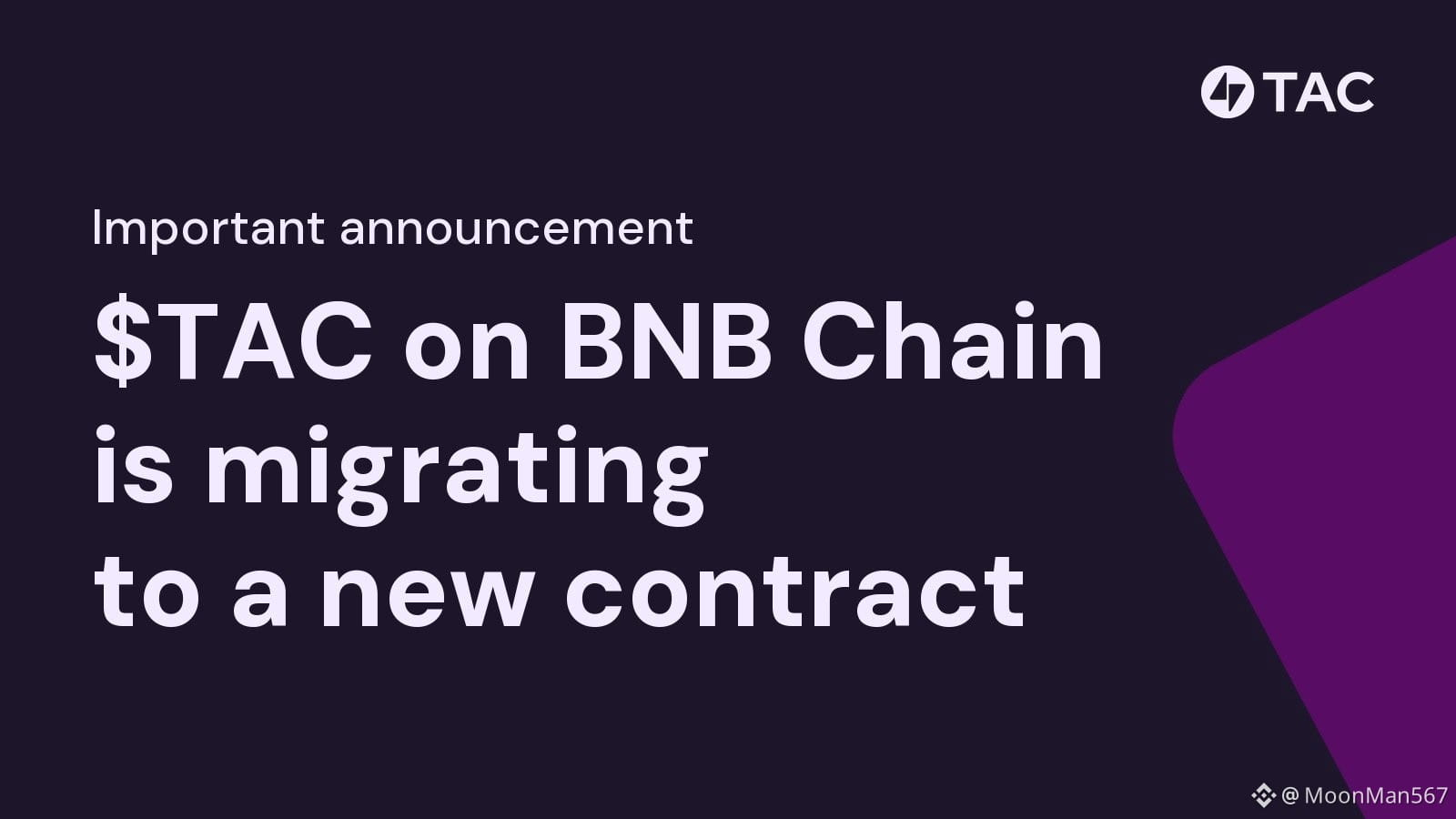
🍂 September has once again decided to remind us why bitcoiners don’t particularly like it.
From 2013–2025, $BTC closed September in the red 8 times out of 13, and the month’s average return was about -3%. Historically, no other month has had a worse result.
But there’s an interesting detail: over the last three years, this pattern broke down. Bitcoin finished September 2023, 2024, and 2025 in the green.
In 2026, so far, we’re at about -1.4% month to date.
And this is where I wouldn’t rush to pull out the “Rektember” chart from the closet. Thirteen observations is an interesting seasonality, but by no means a law of nature. Bitcoin has already shown three times in a row that an historical pattern can be broken.
I’m generally cautious about calendars that try to trade for us. If you want to look at the numbers instead of guessing by the month - subscribe to @MoonMan567
From 2013–2025, $BTC closed September in the red 8 times out of 13, and the month’s average return was about -3%. Historically, no other month has had a worse result.
But there’s an interesting detail: over the last three years, this pattern broke down. Bitcoin finished September 2023, 2024, and 2025 in the green.
In 2026, so far, we’re at about -1.4% month to date.
And this is where I wouldn’t rush to pull out the “Rektember” chart from the closet. Thirteen observations is an interesting seasonality, but by no means a law of nature. Bitcoin has already shown three times in a row that an historical pattern can be broken.
I’m generally cautious about calendars that try to trade for us. If you want to look at the numbers instead of guessing by the month - subscribe to @MoonMan567
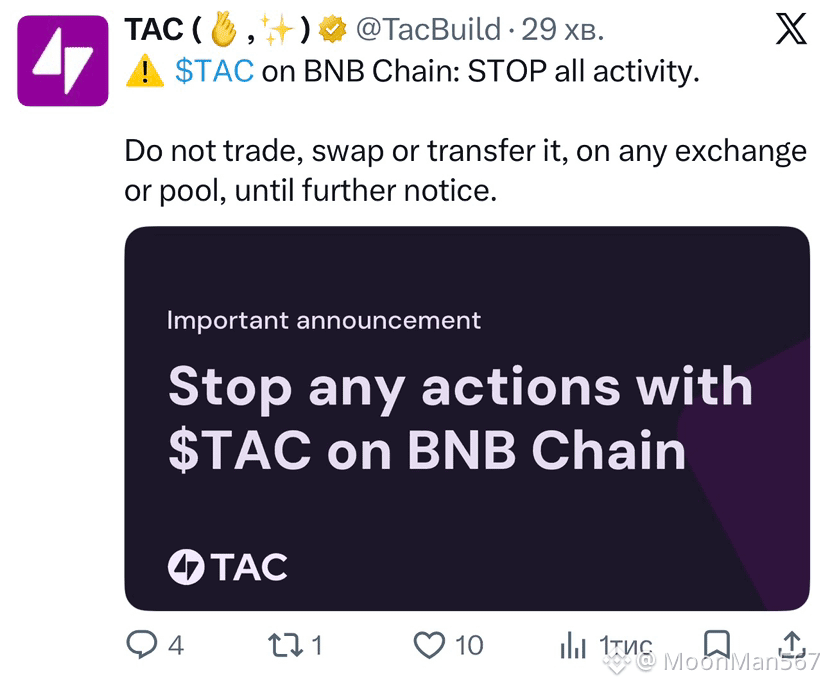
🚨 TAC was hacked on August 22. And today the team says: don’t touch $TAC on BNB Chain.
And this is no longer just “incident aftermath.”
During the attack, the staking pool was compromised and 2.985 billion TAC was taken — about 28.6% of the entire issuance. About 1.208 billion attackers have already sold through DEX, receiving about $950K in USDT.
But the most interesting part remains: 1.662 billion $TAC still sits on BNB Chain at addresses linked to the attack.
The bridge between BNB Chain and TAC is disabled. The TAC network is still halted. And most importantly — the team directly states that the terms for these 1.662 billion tokens have not been determined yet.
So this isn’t a “new hack.” It’s the tail of the old one — and a very long one.
I’ve already seen enough cases where, after an exploit, the market starts trading not the token, but fantasies about “the bottom.” Here, even the rules of the game for part of $TAC aren’t defined yet. If you prefer facts over crypto-folklore — follow @MoonMan567
And this is no longer just “incident aftermath.”
During the attack, the staking pool was compromised and 2.985 billion TAC was taken — about 28.6% of the entire issuance. About 1.208 billion attackers have already sold through DEX, receiving about $950K in USDT.
But the most interesting part remains: 1.662 billion $TAC still sits on BNB Chain at addresses linked to the attack.
The bridge between BNB Chain and TAC is disabled. The TAC network is still halted. And most importantly — the team directly states that the terms for these 1.662 billion tokens have not been determined yet.
So this isn’t a “new hack.” It’s the tail of the old one — and a very long one.
I’ve already seen enough cases where, after an exploit, the market starts trading not the token, but fantasies about “the bottom.” Here, even the rules of the game for part of $TAC aren’t defined yet. If you prefer facts over crypto-folklore — follow @MoonMan567
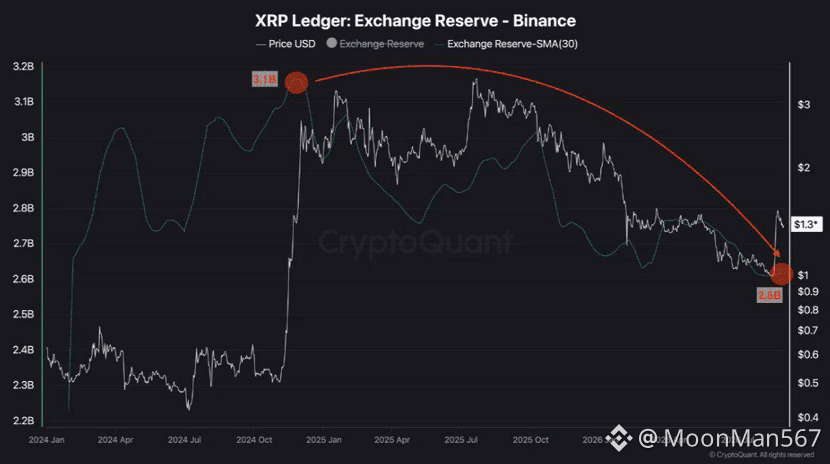
👛 About 500 million $XRP has disappeared from Binance. But don’t rush to call it “accumulation.”
The average reserves on Binance $XRP decreased from approximately 3.1 billion to 2.6 billion coins since November 2025. This is a level not seen since February 2024.
At first glance everything looks good: less XRP on the exchange means fewer coins potentially available for quick selling.
But there’s a catch. We don’t know exactly where those 500 million went. They could be withdrawals by users, transfers between wallets, or other operational changes. Reserve data by itself doesn’t tell the full story.
So “exchange reserves are falling = $XRP is accumulating” is already an interpretation, not a fact.
I’ve seen so many times how one on-chain metric is ceremonially declared “proof of a future pump” that now I first look for the other side of the coin. If you’re also closer to numbers than to blockchain fortune-telling—follow @MoonMan567
The average reserves on Binance $XRP decreased from approximately 3.1 billion to 2.6 billion coins since November 2025. This is a level not seen since February 2024.
At first glance everything looks good: less XRP on the exchange means fewer coins potentially available for quick selling.
But there’s a catch. We don’t know exactly where those 500 million went. They could be withdrawals by users, transfers between wallets, or other operational changes. Reserve data by itself doesn’t tell the full story.
So “exchange reserves are falling = $XRP is accumulating” is already an interpretation, not a fact.
I’ve seen so many times how one on-chain metric is ceremonially declared “proof of a future pump” that now I first look for the other side of the coin. If you’re also closer to numbers than to blockchain fortune-telling—follow @MoonMan567
Verified
🇦🇪 Almost half of Trump’s crypto-banking company is owned by entities linked to the UAE sheikh
The WSJ uncovered an interesting setup: entities associated with Sheikh Tahnoun bin Zayed Al Nahyan control 49% of the WLTC Holdings holding company, through which World Liberty Financial ($WLFI ) is developing its banking business. The Trump family’s entities hold another 38%.
And this isn’t just a wealthy investor.
Tahnoun is the brother of the UAE president and a country’s national security adviser. In 2025, the entity associated with him approved an investment of $500 million in World Liberty Financial; according to the WSJ, $187 million from the initial payment went to the Trump family entities.
Now this story is moving to the next level: a foreign top official has become the largest investor in a structure that is aiming to serve as an American crypto bank.
I’ve already seen plenty of strange ownership structures in crypto. But when you put Trump, a sheikh, an American banking charter, and $500 million in the same line, Excel starts looking like a political thriller. If you want to break down such arrangements without conspiracy theories and fanfare—subscribe to @MoonMan567
The WSJ uncovered an interesting setup: entities associated with Sheikh Tahnoun bin Zayed Al Nahyan control 49% of the WLTC Holdings holding company, through which World Liberty Financial ($WLFI ) is developing its banking business. The Trump family’s entities hold another 38%.
And this isn’t just a wealthy investor.
Tahnoun is the brother of the UAE president and a country’s national security adviser. In 2025, the entity associated with him approved an investment of $500 million in World Liberty Financial; according to the WSJ, $187 million from the initial payment went to the Trump family entities.
Now this story is moving to the next level: a foreign top official has become the largest investor in a structure that is aiming to serve as an American crypto bank.
I’ve already seen plenty of strange ownership structures in crypto. But when you put Trump, a sheikh, an American banking charter, and $500 million in the same line, Excel starts looking like a political thriller. If you want to break down such arrangements without conspiracy theories and fanfare—subscribe to @MoonMan567
Verified
⚡ ISM in the US came in weaker than expected. But don't rush to bury American industry.
The ISM manufacturing activity index in August was 54.6 versus expected 55.2. In July it was 55.6.
Yes, the data cooled off. But there’s a small detail that people love to lose in loud macro headlines: 54.6 is still an expansion of manufacturing activity, since the dividing line between growth and contraction is at 50.
For the Fed, the weaker result slightly removes an argument in favor of tighter policy. For the crypto market, it could be a mildly easing factor—but not some magical “bullish signal.”
I’m already tired of macroeconomic arithmetic, where “worse than forecast” automatically turns into “good for BTC.” The economy doesn’t work on a kid’s menu like that.
Here, for now, it’s simpler: production continues to grow, just a bit slower than they expected. If you want to tell macro apart from macro-voodoo—follow @MoonMan567
The ISM manufacturing activity index in August was 54.6 versus expected 55.2. In July it was 55.6.
Yes, the data cooled off. But there’s a small detail that people love to lose in loud macro headlines: 54.6 is still an expansion of manufacturing activity, since the dividing line between growth and contraction is at 50.
For the Fed, the weaker result slightly removes an argument in favor of tighter policy. For the crypto market, it could be a mildly easing factor—but not some magical “bullish signal.”
I’m already tired of macroeconomic arithmetic, where “worse than forecast” automatically turns into “good for BTC.” The economy doesn’t work on a kid’s menu like that.
Here, for now, it’s simpler: production continues to grow, just a bit slower than they expected. If you want to tell macro apart from macro-voodoo—follow @MoonMan567

🪙 Crypto projects are buying their own tokens. And it’s no longer just a small whim.
Since the start of 2026, they’ve spent about $638 million on buybacks—more than they did throughout all of 2024. Nearly 90% of that amount is accounted for by Hyperliquid and pump.fun.
The mechanism is simple: the project buys its own token on the market, reducing its circulating supply. It sounds familiar—public companies do the same with their shares.
But that’s where it gets really interesting.
Buyback doesn’t create a magical “+price” button. Hyperliquid spends 99% of trading fees on buying back $HYPE , and the token added about 70% over the year. And Jupiter spent almost $14 million on buyback $JUP —and its token dropped 55% over the same period.
So the question isn’t whether the project buys its own token. The question is where the money for this buyback comes from and what real economic value the token holder actually receives.
Because it’s easy to burn supply. The harder part is making sure the token is backed by real economics—not a neatly packaged, artificially created deficit.
I’ve already seen enough crypto projects trying to “treat” fundamental problems with deflationary cosmetics. If you want to tell financial engineering apart from real value—follow @MoonMan567
Since the start of 2026, they’ve spent about $638 million on buybacks—more than they did throughout all of 2024. Nearly 90% of that amount is accounted for by Hyperliquid and pump.fun.
The mechanism is simple: the project buys its own token on the market, reducing its circulating supply. It sounds familiar—public companies do the same with their shares.
But that’s where it gets really interesting.
Buyback doesn’t create a magical “+price” button. Hyperliquid spends 99% of trading fees on buying back $HYPE , and the token added about 70% over the year. And Jupiter spent almost $14 million on buyback $JUP —and its token dropped 55% over the same period.
So the question isn’t whether the project buys its own token. The question is where the money for this buyback comes from and what real economic value the token holder actually receives.
Because it’s easy to burn supply. The harder part is making sure the token is backed by real economics—not a neatly packaged, artificially created deficit.
I’ve already seen enough crypto projects trying to “treat” fundamental problems with deflationary cosmetics. If you want to tell financial engineering apart from real value—follow @MoonMan567
Verified
🎁 Павло Дуров begins handing out a Telegram crypto wallet to a billion people
Gram Wallet is already live, but it’s currently available to only a limited group of users. Over the coming weeks, Telegram plans to gradually open it up to its audience—more than a billion people.
And what’s interesting isn’t the number itself. We’ve already seen plenty of crypto wallets that promised “easy crypto for everyone,” and then required the user to feel like a blockchain engineer.
With Gram Wallet, Durov specifically emphasizes a different point: validators approved the smart contract so that future updates won’t require complex migrations.
In other words, Telegram (ticker $GRAM ) is trying to remove one of crypto’s most annoying features—when users need to understand what’s happening under the hood just to keep using the wallet.
Let’s see if it works. Making a wallet for a billion people is one story. Making it so that a billion people actually use it—that’s a completely different one. If you’re interested in following this story without trumpets and “revolutions every Tuesday,” follow @MoonMan567
Gram Wallet is already live, but it’s currently available to only a limited group of users. Over the coming weeks, Telegram plans to gradually open it up to its audience—more than a billion people.
And what’s interesting isn’t the number itself. We’ve already seen plenty of crypto wallets that promised “easy crypto for everyone,” and then required the user to feel like a blockchain engineer.
With Gram Wallet, Durov specifically emphasizes a different point: validators approved the smart contract so that future updates won’t require complex migrations.
In other words, Telegram (ticker $GRAM ) is trying to remove one of crypto’s most annoying features—when users need to understand what’s happening under the hood just to keep using the wallet.
Let’s see if it works. Making a wallet for a billion people is one story. Making it so that a billion people actually use it—that’s a completely different one. If you’re interested in following this story without trumpets and “revolutions every Tuesday,” follow @MoonMan567

Verified
🔊 The Fed’s chapter: Kevin Worsh says: the era of “excess savings” is ending. An investment boom begins.
At the G20 meeting, Worsh stated that in the world economy, money is increasingly going into investments rather than simply being accumulated. One of the main directions is AI.
Hence his conclusion: the concept of “secular stagnation,” which for years has explained weak growth and a lack of investment opportunities, no longer describes reality as well.
It sounds beautiful. Almost like the start of a new economic cycle.
But there’s one small detail that, for some reason, is always lost in such headlines: an investment boom requires capital. And capital doesn’t become cheaper just because we came up with a beautiful story for it.
I’ve already seen enough “new eras” to not run to greet each one with a flag. First, let’s see whether these trillions of investments turn into real productivity growth. If you’re also interested in distinguishing economic change from yet another attractive narrative—follow @MoonMan567
At the G20 meeting, Worsh stated that in the world economy, money is increasingly going into investments rather than simply being accumulated. One of the main directions is AI.
Hence his conclusion: the concept of “secular stagnation,” which for years has explained weak growth and a lack of investment opportunities, no longer describes reality as well.
It sounds beautiful. Almost like the start of a new economic cycle.
But there’s one small detail that, for some reason, is always lost in such headlines: an investment boom requires capital. And capital doesn’t become cheaper just because we came up with a beautiful story for it.
I’ve already seen enough “new eras” to not run to greet each one with a flag. First, let’s see whether these trillions of investments turn into real productivity growth. If you’re also interested in distinguishing economic change from yet another attractive narrative—follow @MoonMan567

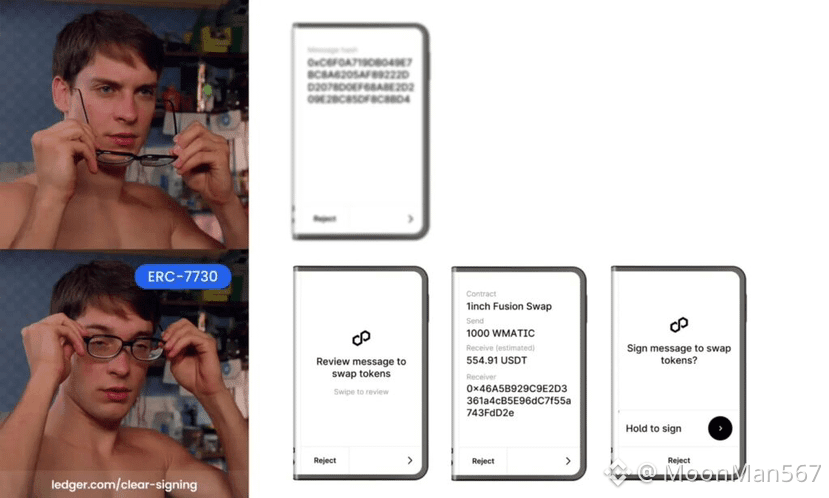
😬 A vulnerability was found at Ledger in the principle of “what you see is what you sign”
Researchers discovered a problem in the Ethereum app for Ledger: when reviewing a transaction, the device could receive a new command before finishing the previous one. As a result, the data the user saw on the screen could differ from the parameters of the actual signature.
The irony is obvious: Clear Signing was created specifically so that the Ledger screen is the source of truth — “what you see is what you sign”.
The vulnerability affected Ethereum app versions up to 1.22.3. Ledger has released a fix and recommends updating the app. Important: the company does not report that this issue has been exploited against users.
So this is not a story about “Ledger being hacked.” It’s a much more interesting lesson: even a hardware wallet can’t just show you a screen and say “trust me.” Security has to be ensured across the entire chain, from receiving data to the moment of signing.
I’ve always said that the “Secure” label on the box isn’t a magic spell. In crypto, security ends where you stop checking what exactly you are signing. Now Ledger has another reason to remind its users about this — follow @MoonMan567 if you want to see such stories without marketing gloss.
Researchers discovered a problem in the Ethereum app for Ledger: when reviewing a transaction, the device could receive a new command before finishing the previous one. As a result, the data the user saw on the screen could differ from the parameters of the actual signature.
The irony is obvious: Clear Signing was created specifically so that the Ledger screen is the source of truth — “what you see is what you sign”.
The vulnerability affected Ethereum app versions up to 1.22.3. Ledger has released a fix and recommends updating the app. Important: the company does not report that this issue has been exploited against users.
So this is not a story about “Ledger being hacked.” It’s a much more interesting lesson: even a hardware wallet can’t just show you a screen and say “trust me.” Security has to be ensured across the entire chain, from receiving data to the moment of signing.
I’ve always said that the “Secure” label on the box isn’t a magic spell. In crypto, security ends where you stop checking what exactly you are signing. Now Ledger has another reason to remind its users about this — follow @MoonMan567 if you want to see such stories without marketing gloss.
💳 An expired Visa card might not be as “dead” as it seems.
Researchers at UMass Amherst have shown that certain contactless Visa cards can be made to process a payment even after the expiration date has passed.
The issue isn’t broken cryptography. During a relay attack between the card and the terminal, you can change the expiration date that the POS sees. It isn’t cryptographically protected properly, and the bank doesn’t always recheck it during authorization.
The researchers carried out successful demonstrations on real terminals. But that doesn’t mean any expired card will automatically work: the outcome depends on the specific card, the bank, and the payment system settings.
So an old card isn’t junk. It’s better to physically destroy it, and after replacement or closing the account, check transactions for a little while.
I always thought the scariest thing about an old bank card is that it takes up space in a drawer. Turns out the drawer was just waiting for its cyberattack.
If you want to explore these tech details without panic and horror stories—follow @MoonMan567
Researchers at UMass Amherst have shown that certain contactless Visa cards can be made to process a payment even after the expiration date has passed.
The issue isn’t broken cryptography. During a relay attack between the card and the terminal, you can change the expiration date that the POS sees. It isn’t cryptographically protected properly, and the bank doesn’t always recheck it during authorization.
The researchers carried out successful demonstrations on real terminals. But that doesn’t mean any expired card will automatically work: the outcome depends on the specific card, the bank, and the payment system settings.
So an old card isn’t junk. It’s better to physically destroy it, and after replacement or closing the account, check transactions for a little while.
I always thought the scariest thing about an old bank card is that it takes up space in a drawer. Turns out the drawer was just waiting for its cyberattack.
If you want to explore these tech details without panic and horror stories—follow @MoonMan567

Verified
⚡ US macro data without surprises. But I wouldn’t be so quick to call them fully neutral.
Real GDP in the US grew by 1.5% year-on-year in Q2—just as much as the previous estimate showed.
Core PCE added 0.2% m/m, also in line with expectations. But on a year-on-year basis, core PCE stayed at 3.3%—far from the Fed’s 2% target.
So there’s no surprise, but there’s also no signal that inflation is cooling quickly.
For the crypto market, this is more of a mixed signal: the economy is growing, while inflationary pressure remains high enough that the Fed can’t afford to calmly think about easing policy.
In releases like these, I like one simple thing: the “as expected” figure still doesn’t mean “everything is fine.” Sometimes the most interesting part is exactly that the market didn’t get a reason to change its expectations.
If you want to break down macro without the magical “this is bullish for BTC,” follow me on @MoonMan567
Real GDP in the US grew by 1.5% year-on-year in Q2—just as much as the previous estimate showed.
Core PCE added 0.2% m/m, also in line with expectations. But on a year-on-year basis, core PCE stayed at 3.3%—far from the Fed’s 2% target.
So there’s no surprise, but there’s also no signal that inflation is cooling quickly.
For the crypto market, this is more of a mixed signal: the economy is growing, while inflationary pressure remains high enough that the Fed can’t afford to calmly think about easing policy.
In releases like these, I like one simple thing: the “as expected” figure still doesn’t mean “everything is fine.” Sometimes the most interesting part is exactly that the market didn’t get a reason to change its expectations.
If you want to break down macro without the magical “this is bullish for BTC,” follow me on @MoonMan567
Verified
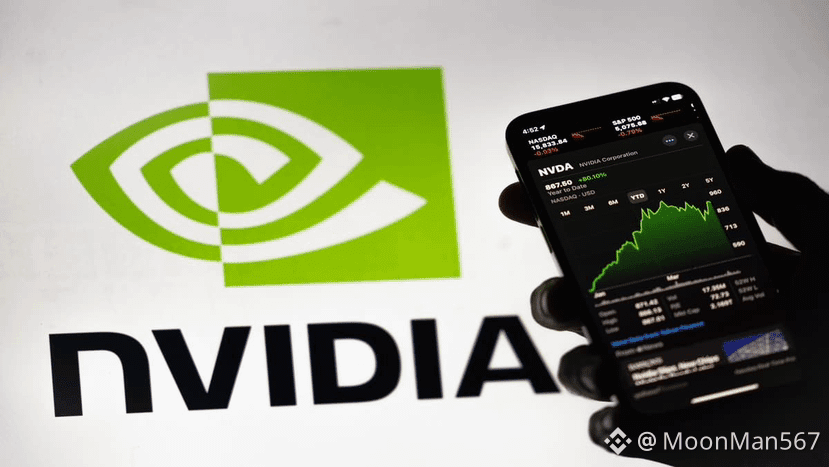
🖥️ Nvidia once again beat Wall Street expectations. But what’s more interesting here isn’t the “beat on the forecast” itself.
Adjusted EPS came in at $2.22 versus the expected $2.09, and revenue was $96.22 billion versus approximately $92.3 billion.
And this isn’t just a good quarter: Nvidia’s revenue grew by 106% year over year. Most of it came from Data Center—$89 billion, +117% YoY. The company also expects around $108 billion in revenue next quarter.
So the main takeaway right now isn’t “Nvidia beat expectations.” The market received yet another confirmation that demand for AI infrastructure hasn’t run out—something that immediately showed up in the stock price $NVDA and its bStock version $NVDAB .
But I wouldn’t confuse Nvidia’s strength with evidence that every dollar invested in AI is guaranteed to pay back. That’s a completely different claim.
I like one simple figure: $96 billion in quarterly revenue from the chip maker. Once, that would’ve sounded like an Excel error. Now it’s just the environment.
If you want to look at the AI boom through numbers, not corporate mantras—follow @MoonMan567
Adjusted EPS came in at $2.22 versus the expected $2.09, and revenue was $96.22 billion versus approximately $92.3 billion.
And this isn’t just a good quarter: Nvidia’s revenue grew by 106% year over year. Most of it came from Data Center—$89 billion, +117% YoY. The company also expects around $108 billion in revenue next quarter.
So the main takeaway right now isn’t “Nvidia beat expectations.” The market received yet another confirmation that demand for AI infrastructure hasn’t run out—something that immediately showed up in the stock price $NVDA and its bStock version $NVDAB .
But I wouldn’t confuse Nvidia’s strength with evidence that every dollar invested in AI is guaranteed to pay back. That’s a completely different claim.
I like one simple figure: $96 billion in quarterly revenue from the chip maker. Once, that would’ve sounded like an Excel error. Now it’s just the environment.
If you want to look at the AI boom through numbers, not corporate mantras—follow @MoonMan567
Verified
Dusk sells one thesis—privacy and compliance in parallel—for regulated markets. The architecture for this thesis is real and consistent. The regulatory and commercial layer around it isn’t.
DuskEVM is testnet, not mainnet. Dusk Trade is in Building status, only a waitlist. Citadel 2, the identity layer—an entirely rewritten-from-scratch protocol, Draft status as of May 2026.
The sharpest point in regulation. NPEX and Dusk are still preparing the DLT-TSS application—according to the team, October 2025. 21X received the same license in December 2024 and has already completed a bond placement for 500 million euros. Dusk’s ECSP application was submitted into a category where hundreds of platforms have been operating for five years.
This is not a death sentence for the product. The architecture solves a real problem—the choice between anonymity with no exceptions and full transparency. EU regulators themselves are moving in this direction—a ban on privacy coins without a disclosure mechanism.
$DUSK remains a network token, whose technical foundation is ready earlier than the commercial one.
Fourteen days of review revealed one pattern—filed earlier than it’s ready, visible in the sources if you dig deep enough. The question is whether the partners are ready to wait that long—so the architecture can catch up to its own thesis.
@Dusk $DUSK #dusk
DuskEVM is testnet, not mainnet. Dusk Trade is in Building status, only a waitlist. Citadel 2, the identity layer—an entirely rewritten-from-scratch protocol, Draft status as of May 2026.
The sharpest point in regulation. NPEX and Dusk are still preparing the DLT-TSS application—according to the team, October 2025. 21X received the same license in December 2024 and has already completed a bond placement for 500 million euros. Dusk’s ECSP application was submitted into a category where hundreds of platforms have been operating for five years.
This is not a death sentence for the product. The architecture solves a real problem—the choice between anonymity with no exceptions and full transparency. EU regulators themselves are moving in this direction—a ban on privacy coins without a disclosure mechanism.
$DUSK remains a network token, whose technical foundation is ready earlier than the commercial one.
Fourteen days of review revealed one pattern—filed earlier than it’s ready, visible in the sources if you dig deep enough. The question is whether the partners are ready to wait that long—so the architecture can catch up to its own thesis.
@Dusk $DUSK #dusk

Log in to explore more content