
1uu是链上预测奖池平台
257 Posts

1uu是链上预测奖池平台
Report
Block User
1uu.io 是bsc链的链上预测奖池平台,支持meme币成为预测生态应用。
Occasional Trader
4.4 Years
360 Following
858 Followers
177 Liked
Posts
All
Quotes
Live
PINNED
·
--
Article
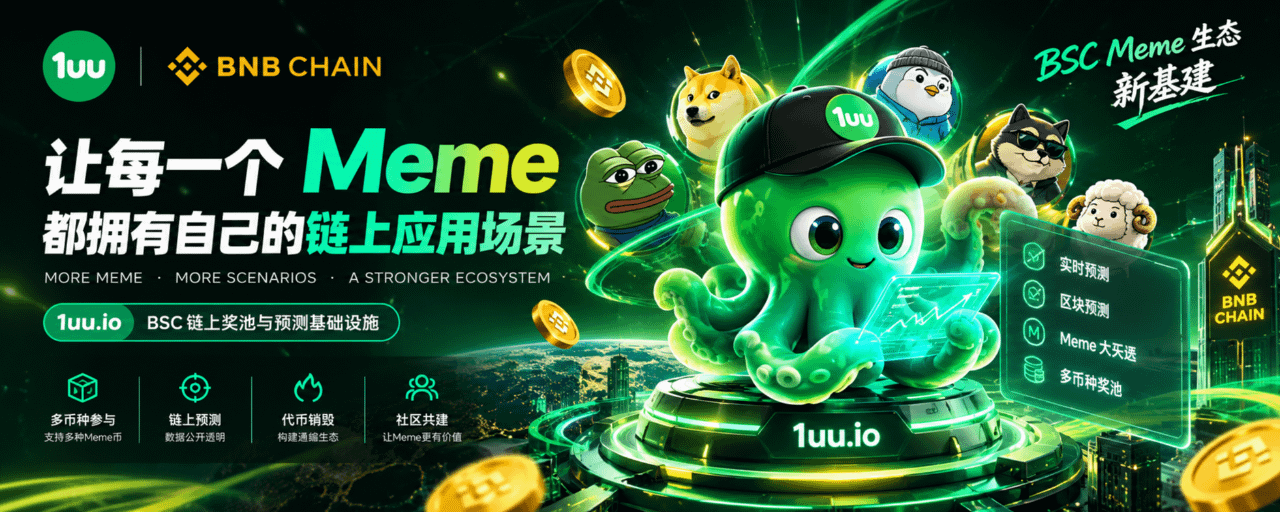
Give every Meme its own on-chain use case.Enable Meme coins to build on-chain prediction prize pools, creating real-world use cases for on-chain prediction applications.
1uu provides on-chain prediction prize pool infrastructure for Meme communities, supporting community tokens in prediction markets and prize pool applications, as well as token-burning mechanisms. It helps Meme coins move beyond trading and into practical applications through a transparent, verifiable, and tamper-proof prediction model powered by on-chain data and smart contracts.
I. Bringing community tokens into real on-chain applications
1uu’s ecosystem model emphasizes community participation. Projects or communities can build corresponding prize pools and prediction applications around their own tokens, allowing community members to participate under a unified set of rules.
Give every Meme its own on-chain use case.
Enable Meme coins to build on-chain prediction prize pools, creating real-world use cases for on-chain prediction applications.
1uu provides on-chain prediction prize pool infrastructure for Meme communities, supporting community tokens in prediction markets and prize pool applications, as well as token-burning mechanisms. It helps Meme coins move beyond trading and into practical applications through a transparent, verifiable, and tamper-proof prediction model powered by on-chain data and smart contracts.
I. Bringing community tokens into real on-chain applications
1uu’s ecosystem model emphasizes community participation. Projects or communities can build corresponding prize pools and prediction applications around their own tokens, allowing community members to participate under a unified set of rules.
67
·
--
Partly True
Why am I so bullish on #年年 ?
On November 1, its market cap was 1.6 million; by November 2, it had reached 4 million.
On November 1, 1uu listed #年年 as a prediction prize pool token.
On the evening of November 1, the meeting reached a consensus, and members completed a charitable donation of one million tokens. There was consensus, action, and warmth.
On November 2, Twitter blogger TCC bought in, driving purchases in international markets year after year.
The year-end pool is BNCB, which is currently the trend for future pools.
1
1.8k
·
--
AGENT ID kicks off a new Mint wave,
The NFT+MeMe wave is here. Which one will be the next to hit the 10-million mark?
#币安第一阶段15个网络已恢复提现 #币安更新储备证明地址 #币安已覆盖60亿美元被盗损失
AGENT ID kicks off a new Mint wave,
The NFT+MeMe wave is here. Which one will be the next to hit the 10-million mark?
#币安第一阶段15个网络已恢复提现 #币安更新储备证明地址 #币安已覆盖60亿美元被盗损失
The NFT+MeMe wave is here. Which one will be the next to hit the 10-million mark?
#币安第一阶段15个网络已恢复提现 #币安更新储备证明地址 #币安已覆盖60亿美元被盗损失

24
·
--
Binance is set to start withdrawals at 14:00 on November 1,
Ordinary users probably won’t panic and withdraw their coins; rather, institutions/whales will start.
#币安将恢复第一阶段提现 #币安被盗
Binance is set to start withdrawals at 14:00 on November 1,
Ordinary users probably won’t panic and withdraw their coins; rather, institutions/whales will start.
#币安将恢复第一阶段提现 #币安被盗
Ordinary users probably won’t panic and withdraw their coins; rather, institutions/whales will start.
#币安将恢复第一阶段提现 #币安被盗
106
·
--
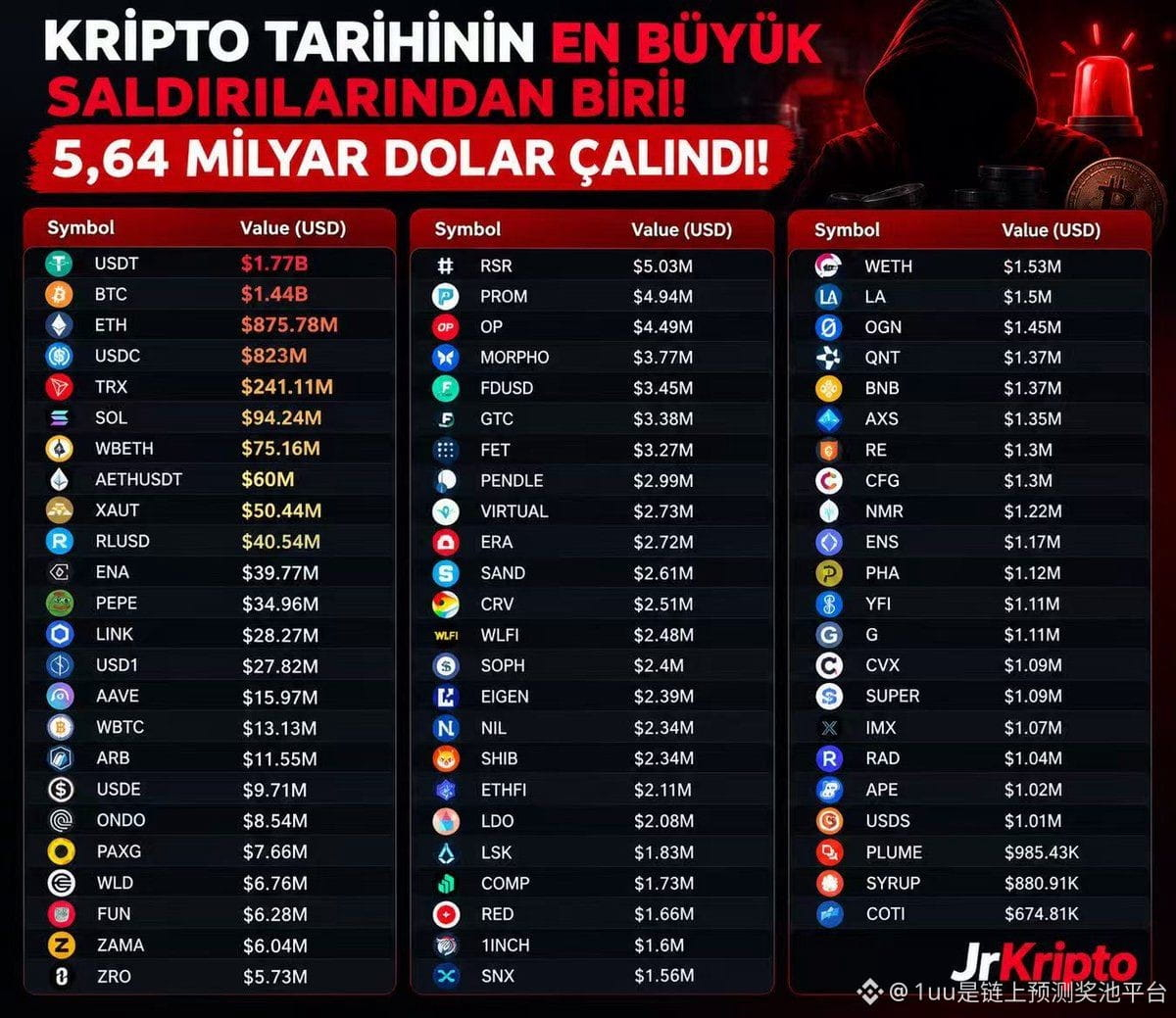
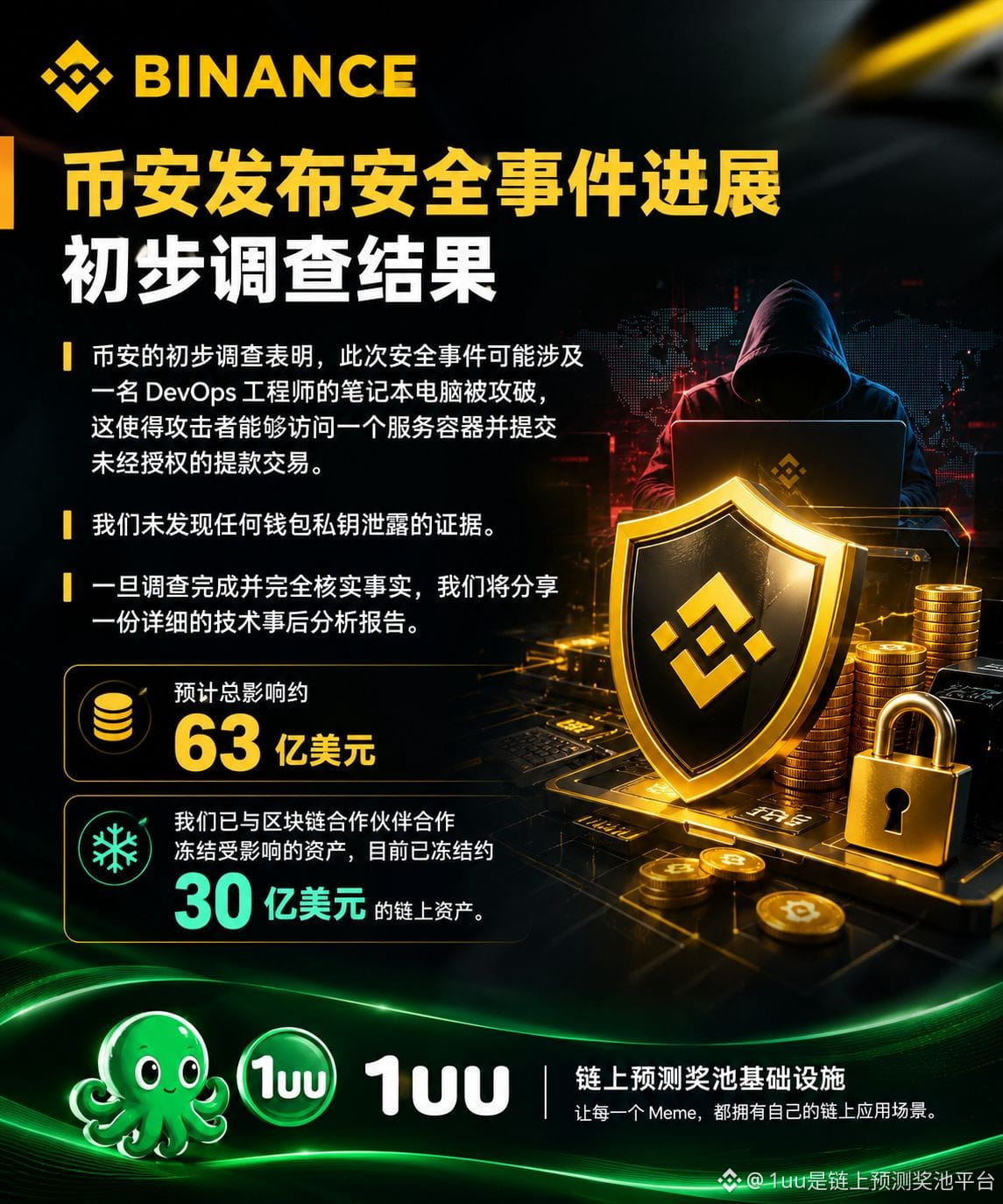
More than $6 billion was stolen this time, with $3 billion frozen so far, leaving losses of over 20 billion yuan.
This would be a fatal blow to any company, but Binance should be okay.
Judging by CZ’s tweets, they’re fully capable of covering the losses, though it’ll still hurt.
So far, I haven’t seen any panic among retail investors.
Last year, Bybit had 510,000 ETH stolen. Every time the hackers dumped ETH, its price fell. I was holding a long position in ETH back then, and I was pretty anxious every day.
This time, it’s still 510,000 ETH, plus 18,000 bitcoins. I wonder what kind of storm is coming.
This is rough. It may look like Binance was hacked, but in reality, the fallout affects the entire market.
1
860
·
--
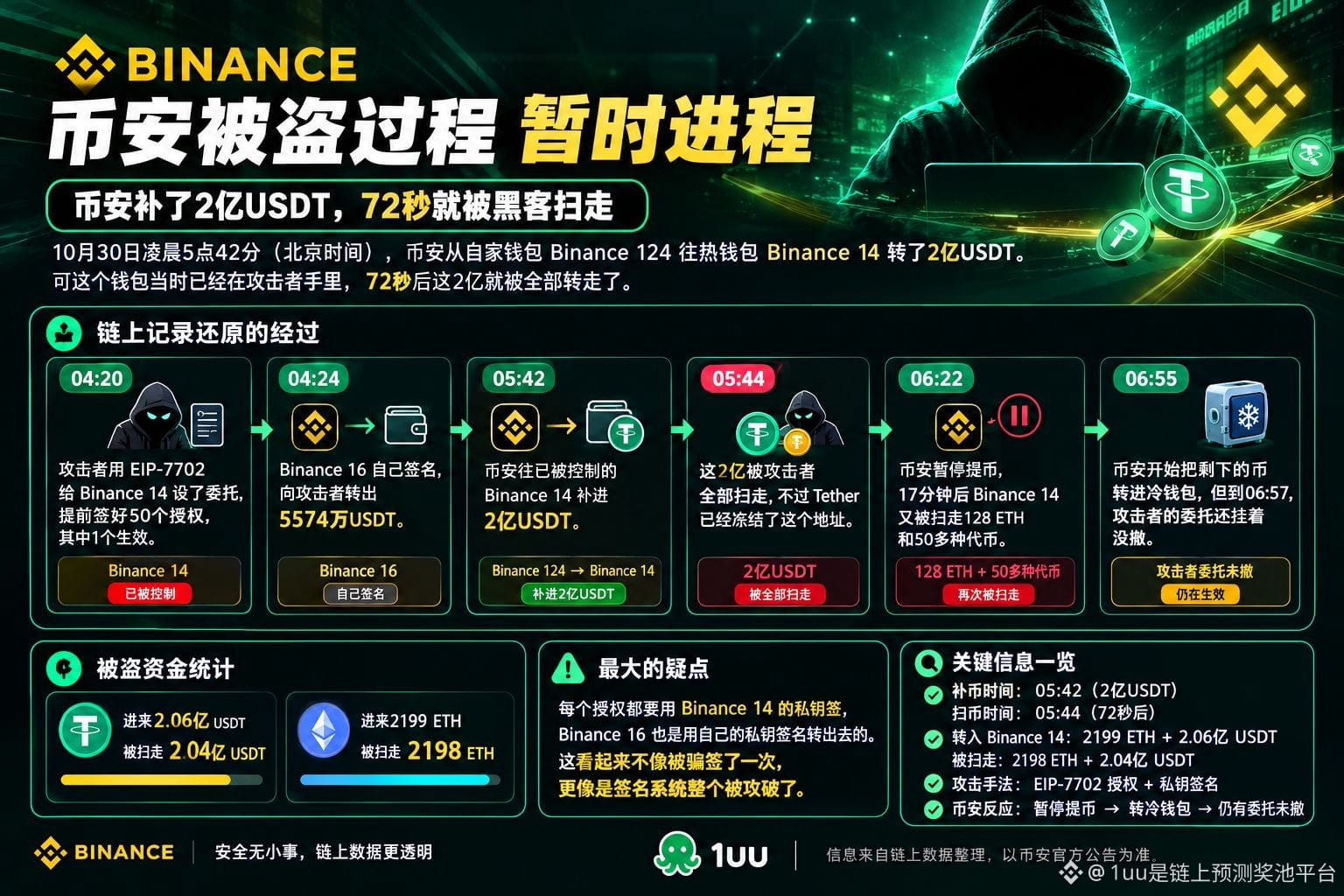
How Binance was hacked, determine the cause, and upgrade its technology,
A leading woman in the industry says withdrawals may reopen within 48 hours. Don’t panic—trust Binance.
How Binance was hacked, determine the cause, and upgrade its technology,
A leading woman in the industry says withdrawals may reopen within 48 hours. Don’t panic—trust Binance.
A leading woman in the industry says withdrawals may reopen within 48 hours. Don’t panic—trust Binance.
75
·
--
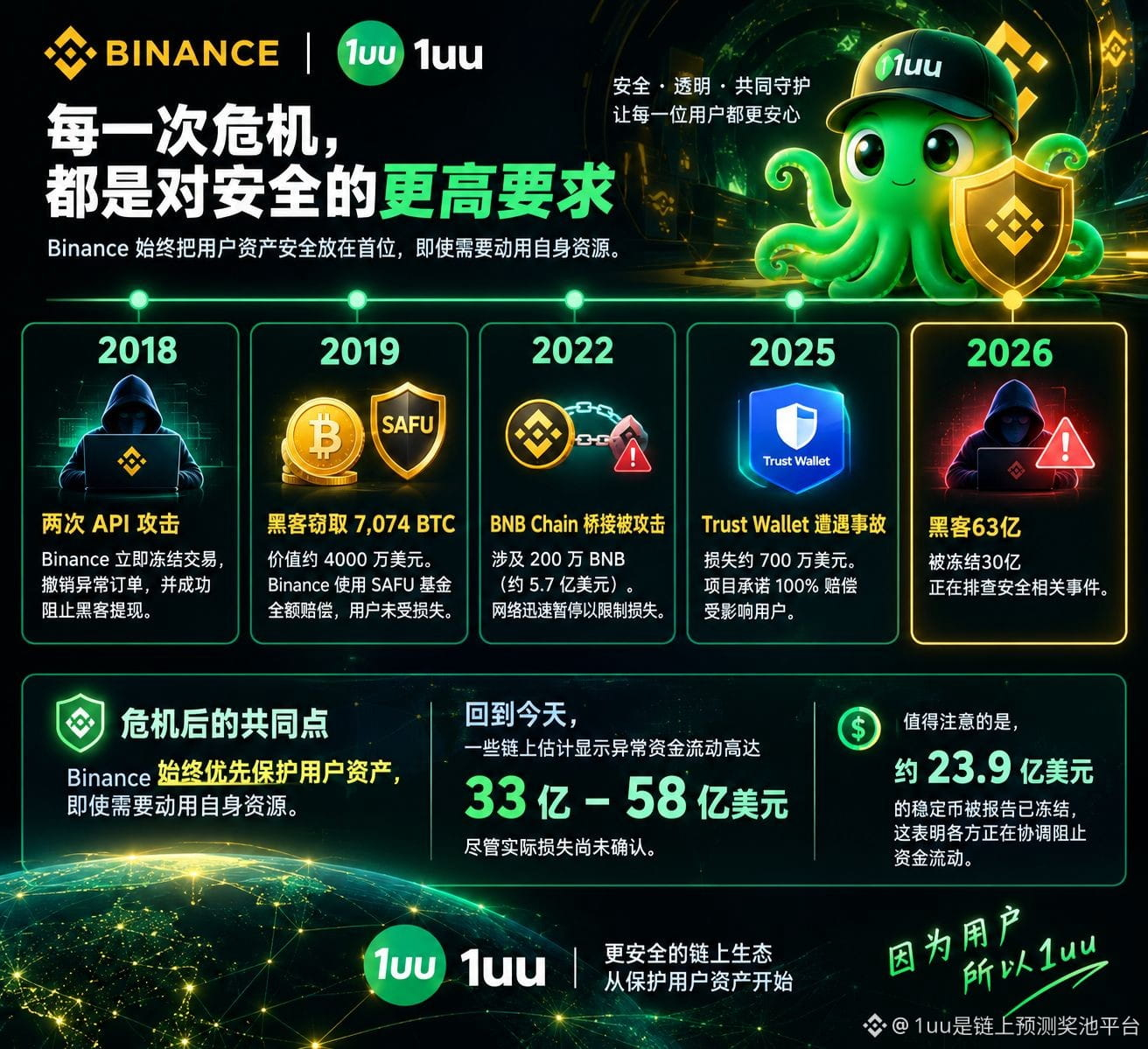
In this time of rampant hacks and FUD, ae, don’t panic… Instead, let’s look back at how #BINANCE handled crises in the past.
🔸 2018: Two API attacks. Binance immediately froze trading, canceled abnormal orders, and successfully prevented the hackers from withdrawing funds.
🔸 2019: Hackers stole 7,074 BTC, worth approximately $40 million. Binance fully compensated users using the SAFU Fund, and users suffered no losses.
🔸 2022: The BNB Chain bridge was attacked, involving 2 million BNB (approximately $570 million). The network was quickly paused to limit losses.
🔸 2025: Trust Wallet suffered an incident resulting in losses of approximately $7 million. The project pledged to fully compensate affected users. What these crises had in common is that Binance always prioritized protecting user assets, even when it meant using its own resources. Returning to today, some on-chain estimates indicate abnormal fund flows of as much as $3.3–5.8 billion, although actual losses have not yet been confirmed. It is worth noting that approximately $2.39 billion in stablecoins has reportedly been frozen, suggesting that various parties are coordinating to stop the movement of funds.
🔸 2026: Hackers stole $6.3 billion; $3 billion has been frozen. The security-related incident is under investigation.
Big Brother CZ and Sister Yi
have also spoken out, confirming that user assets are completely safe.
Personally, I still believe in their ability to handle crises. Because an exchange’s reputation isn’t built on never having an incident, but on how it steps up to protect users when one occurs.
274
·
--
Today, #年年 has a market cap of 2.8 million; #雪球 has a market cap of 1.6 million; #TLS has a market cap of 1.6 million.
They’ve all pulled back quite a bit. Do you think you can start building a position? 1uu will invite more tokens to join in succession,
giving the Niannian, Snowball, and TLS tokens another application in the prediction ecosystem.
They’ve all pulled back quite a bit. Do you think you can start building a position? 1uu will invite more tokens to join in succession,
giving the Niannian, Snowball, and TLS tokens another application in the prediction ecosystem.
42
·
--
Wake up #gang callbacks, quite a few. Normal callbacks, with the market cap holding steady at around 5m.
The team has been coding through the night—it’s no joke. The official team will take over the community today.
Then we won’t be scattered anymore. Let’s look forward to GANG breaking through again!
The team has been coding through the night—it’s no joke. The official team will take over the community today.
Then we won’t be scattered anymore. Let’s look forward to GANG breaking through again!
262
·
--
Partly True
On October 28, the market cap remains steady at around 3.5M, and the Chinese-speaking community continues to grow.
So far, #年年 has donated a total of 17,638 BNCB to @Square-Creator-4a949128de84 .
At the current price of $5.71 each, that’s already worth over $100,000!
The numbers keep rising. There’s no limit to charity. The community comes first. Crypto for good.
On October 28, the market cap remains steady at around 3.5M, and the Chinese-speaking community continues to grow.
So far, #年年 has donated a total of 17,638 BNCB to @giggle Academy .
At the current price of $5.71 each, that’s already worth over $100,000!
The numbers keep rising. There’s no limit to charity. The community comes first. Crypto for good.
So far, #年年 has donated a total of 17,638 BNCB to @giggle Academy .
At the current price of $5.71 each, that’s already worth over $100,000!
The numbers keep rising. There’s no limit to charity. The community comes first. Crypto for good.
942
·
--
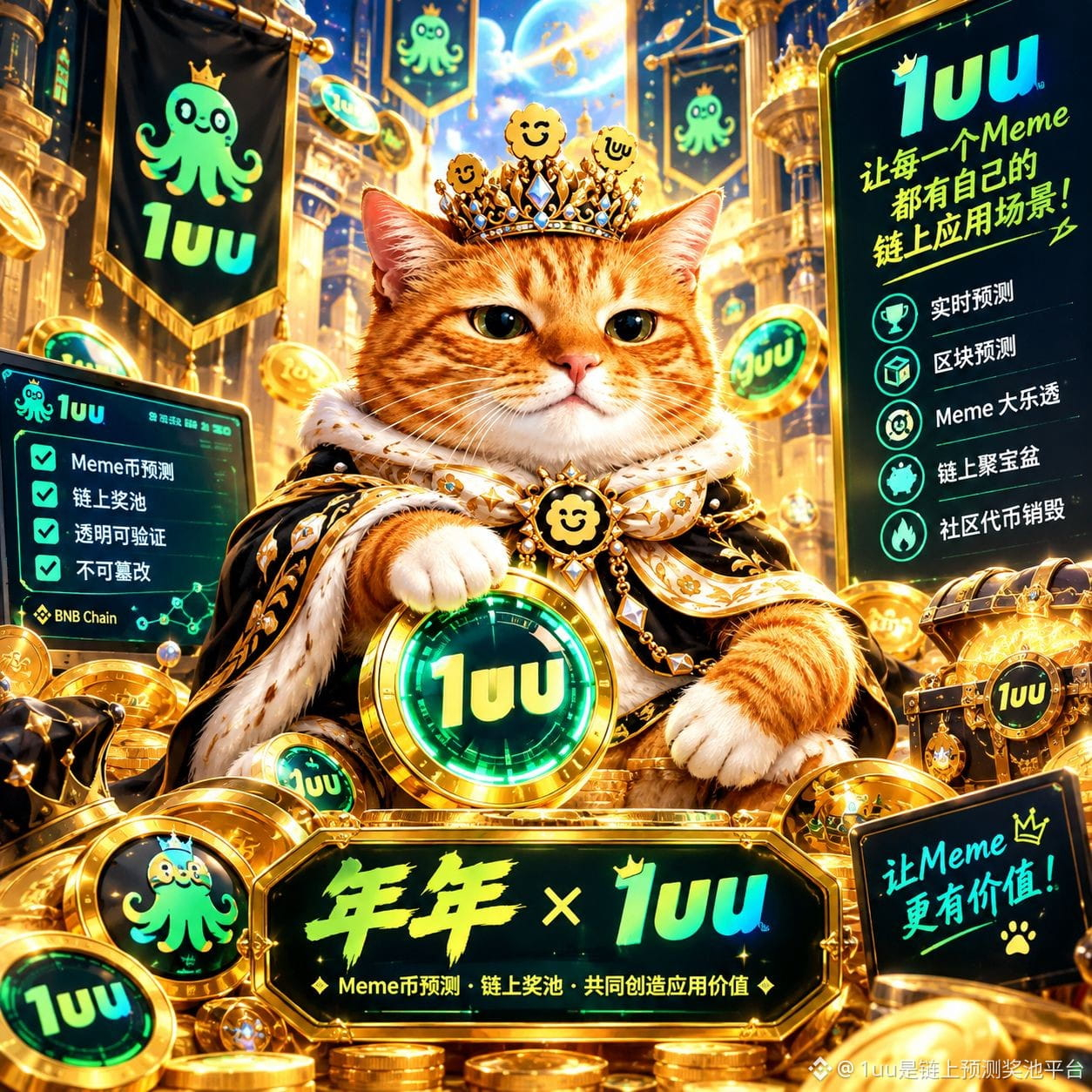
#年年 Community coins are most active in October,
from a value of 0.15m to 10m, with a current market cap of 3.9m. Key marketing points:
1: At a market cap of 0.15m each year, it was promoted by the Liangshan community, followed by Chinese bloggers.
2: The year-end pool is BNCB, a Binance treasury company stock, and it will be listed on October 26.
3: 40% of the tax is donated to CZ's charity @Square-Creator-4a949128de84
#年年 Community coins are most active in October,
from a value of 0.15m to 10m, with a current market cap of 3.9m. Key marketing points:
1: At a market cap of 0.15m each year, it was promoted by the Liangshan community, followed by Chinese bloggers.
2: The year-end pool is BNCB, a Binance treasury company stock, and it will be listed on October 26.
3: 40% of the tax is donated to CZ's charity @giggle Academy
388
·
--
Recently, #gang is worth keeping an eye on.
Binance Agents are the trend of the future, and GANG has appeared.
Just like when Binance was about to launch Alpha, Four appeared.
Now Binance needs a community, and Flap has appeared.
Recently, #gang is worth keeping an eye on.
Binance Agents are the trend of the future, and GANG has appeared.
Just like when Binance was about to launch Alpha, Four appeared.
Now Binance needs a community, and Flap has appeared.
Binance Agents are the trend of the future, and GANG has appeared.
Just like when Binance was about to launch Alpha, Four appeared.
Now Binance needs a community, and Flap has appeared.
420
·
--
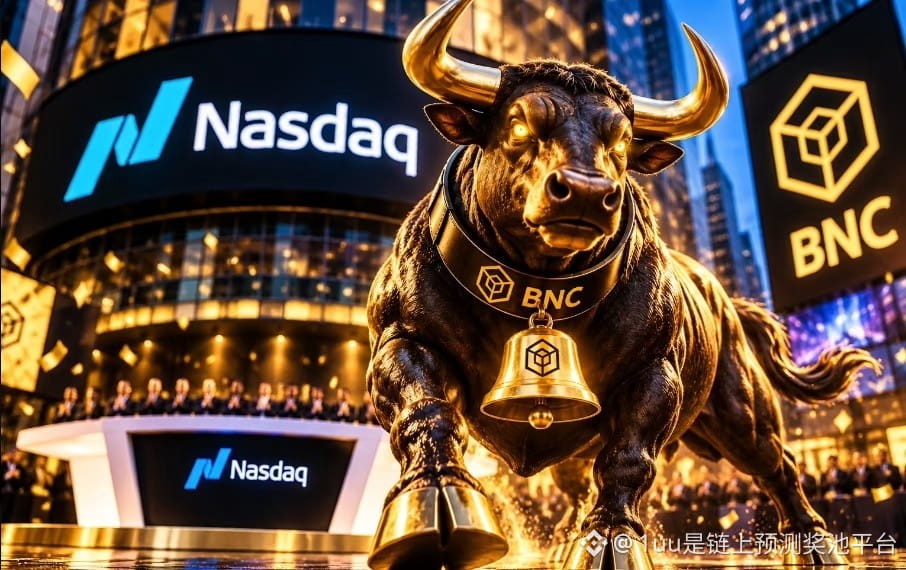
This morning at
@Nasdaq
@odagius
will ring the opening bell for
@BNBStandard
, joined in celebration by
@cz_binance
,
@ellazhang516
, the YZi Labs team, and our community.
The livestream starts at 9:15 a.m. ET. The bell rings at 9:30 a.m. 👉
Watch live: https://nasdaq.com/events/nasdaq-opening-bell-ceremony-bnb-standard
130
·
--
🎙️ 🚀How can ordinary people seize the traffic benefits of the square?
End
05 h 33 m 54 s
16.3k
8
12
·
--
$ASTER is it true that many people have been tricked? How much did you all buy it for?
$ASTER is it true that many people have been tricked? How much did you all buy it for?
1
725
Log in to explore more content
Join global crypto users on Binance Square
⚡️ Get latest and useful information about crypto.
💬 Trusted by the world’s largest crypto exchange.
👍 Discover real insights from verified creators.
Email / Phone number
Trending Topics
USMidterms-WhatAreMarketsExpecting?
3,583 views
118 Discussing
UBS: Rising Democratic 'Blue Wave' Expectations Deepen Market Risk Aversion
Binance News
·0 Likes
·547 views
USOctoberNFP-AreRateCutsStillPossible
196,032 views
1,484 Discussing
AMDBeatsExpectations-AINarrativeContinues
612 views
55 Discussing