
KimDieu KD_Research
279 Posts

KimDieu KD_Research
Report
Block User
Content Creator & Crypto Research girl, hi | X: KimDieu (KD)
48 Following
80 Followers
343 Liked
Posts
PINNED
After years in crypto, where timing and finding the next opportunity often drive returns, I’m discovering that investing in stocks seems to reward the opposite: patience and simplicity.
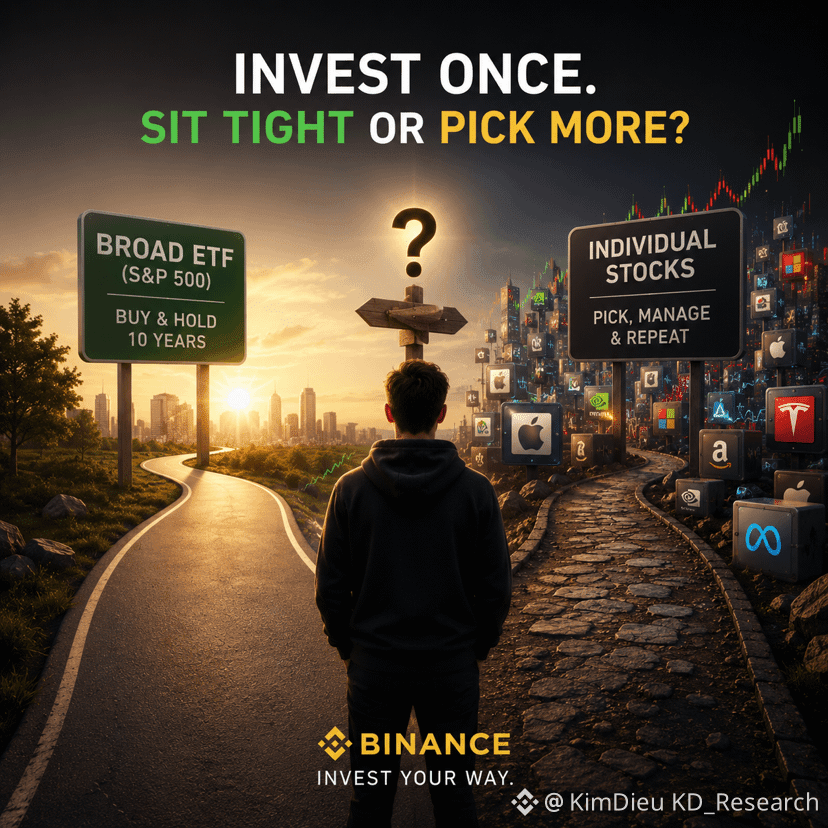
If you had $10,000 to invest today, would you put it all into a broad ETF like the S&P 500 and do nothing for 10 years, or would you build a portfolio of individual stocks?
What convinced you that your approach was better?
I’m curious because crypto taught me to constantly look for opportunities, while stocks seem to reward doing less.
#MyStocksQuestion #ETFs
After years in crypto, where timing and finding the next opportunity often drive returns, I’m discovering that investing in stocks seems to reward the opposite: patience and simplicity.
If you had $10,000 to invest today, would you put it all into a broad ETF like the S&P 500 and do nothing for 10 years, or would you build a portfolio of individual stocks?
What convinced you that your approach was better?
I’m curious because crypto taught me to constantly look for opportunities, while stocks seem to reward doing less.
#MyStocksQuestion #ETFs
If you had $10,000 to invest today, would you put it all into a broad ETF like the S&P 500 and do nothing for 10 years, or would you build a portfolio of individual stocks?
What convinced you that your approach was better?
I’m curious because crypto taught me to constantly look for opportunities, while stocks seem to reward doing less.
#MyStocksQuestion #ETFs
7
7
6.4k
#BinancePickAndWin ae this season make sure to join the trade and snag those Binance tournament spins. The pool is solid and pretty sweet.
With a bit of luck, you might scoop up a few tokens for coffee.
#BinancePickAndWin ae this season make sure to join the trade and snag those Binance tournament spins. The pool is solid and pretty sweet.
With a bit of luck, you might scoop up a few tokens for coffee.
With a bit of luck, you might scoop up a few tokens for coffee.
74
·
--
Bearish
#bedrock $BR
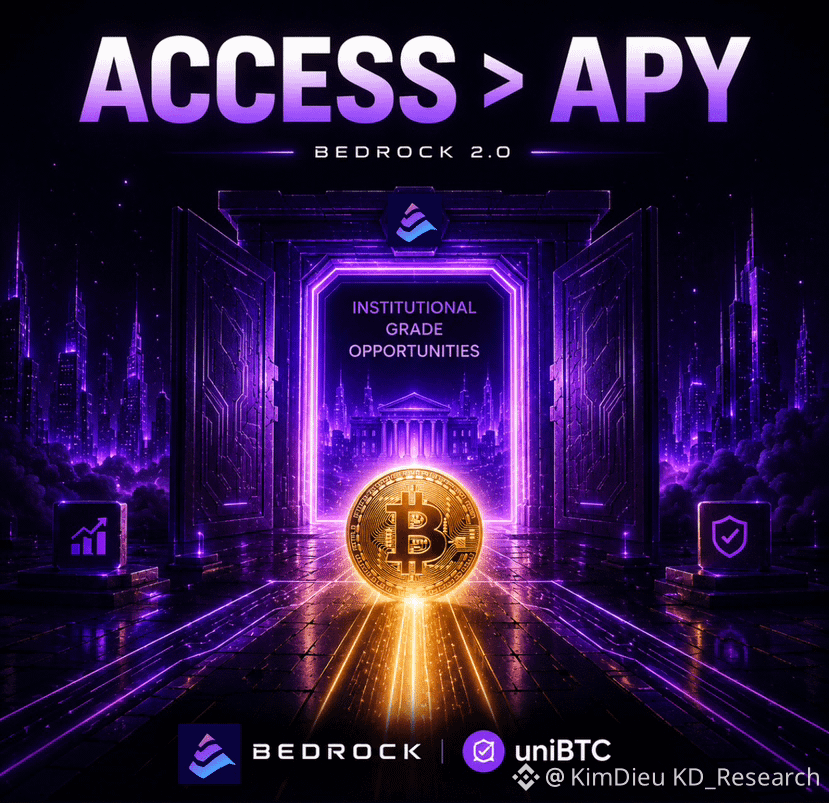
Most people think yield is the goal.
I think access is.
Because yield is everywhere.
But access to institutional-grade opportunities isn’t.
That’s why I find Bedrock 2.0 interesting.
Not because it’s chasing the highest APY.
But because it’s building an Intelligent Yield Engine for Bitcoin Capital.
Today, @Bedrock has already deployed over $183M and works alongside institutional participants such as Amber Group, Flowdesk, Susquehanna Crypto and Selini Capital.
That changes the conversation.
The question is no longer:
“Where can I find yield?”
It’s:
“Who can give Bitcoin capital access to better opportunities?”
As BTCFi grows, fragmentation becomes inevitable.
More chains.
More vaults.
More strategies.
More complexity.
That’s where the Bedrock 2.0 architecture starts to matter.
🟣 uniBTC acts as a Unified Capital Layer.
⚡ Intelligent Routing connects Bitcoin capital with opportunities across ecosystems.
🧠 BRClaw introduces AI-powered decision making, helping users understand allocation rather than simply chase APY.
And with Institutional-Grade Vaults and the Modular Vault Framework, Bedrock is moving toward something larger:
Infrastructure for Bitcoin Capital.
Because the next phase of BTCFi may not be defined by yield.
It may be defined by access.
Access > APY.
And that could change how Bitcoin capital gets allocated in the years ahead.
#bedrock $BR
Most people think yield is the goal.
I think access is.
Because yield is everywhere.
But access to institutional-grade opportunities isn’t.
That’s why I find Bedrock 2.0 interesting.
Not because it’s chasing the highest APY.
But because it’s building an Intelligent Yield Engine for Bitcoin Capital.
Today, @Bedrock has already deployed over $183M and works alongside institutional participants such as Amber Group, Flowdesk, Susquehanna Crypto and Selini Capital.
That changes the conversation.
The question is no longer:
“Where can I find yield?”
It’s:
“Who can give Bitcoin capital access to better opportunities?”
As BTCFi grows, fragmentation becomes inevitable.
More chains.
More vaults.
More strategies.
More complexity.
That’s where the Bedrock 2.0 architecture starts to matter.
🟣 uniBTC acts as a Unified Capital Layer.
⚡ Intelligent Routing connects Bitcoin capital with opportunities across ecosystems.
🧠 BRClaw introduces AI-powered decision making, helping users understand allocation rather than simply chase APY.
And with Institutional-Grade Vaults and the Modular Vault Framework, Bedrock is moving toward something larger:
Infrastructure for Bitcoin Capital.
Because the next phase of BTCFi may not be defined by yield.
It may be defined by access.
Access > APY.
And that could change how Bitcoin capital gets allocated in the years ahead.
Most people think yield is the goal.
I think access is.
Because yield is everywhere.
But access to institutional-grade opportunities isn’t.
That’s why I find Bedrock 2.0 interesting.
Not because it’s chasing the highest APY.
But because it’s building an Intelligent Yield Engine for Bitcoin Capital.
Today, @Bedrock has already deployed over $183M and works alongside institutional participants such as Amber Group, Flowdesk, Susquehanna Crypto and Selini Capital.
That changes the conversation.
The question is no longer:
“Where can I find yield?”
It’s:
“Who can give Bitcoin capital access to better opportunities?”
As BTCFi grows, fragmentation becomes inevitable.
More chains.
More vaults.
More strategies.
More complexity.
That’s where the Bedrock 2.0 architecture starts to matter.
🟣 uniBTC acts as a Unified Capital Layer.
⚡ Intelligent Routing connects Bitcoin capital with opportunities across ecosystems.
🧠 BRClaw introduces AI-powered decision making, helping users understand allocation rather than simply chase APY.
And with Institutional-Grade Vaults and the Modular Vault Framework, Bedrock is moving toward something larger:
Infrastructure for Bitcoin Capital.
Because the next phase of BTCFi may not be defined by yield.
It may be defined by access.
Access > APY.
And that could change how Bitcoin capital gets allocated in the years ahead.
1
82
·
--
Bearish
#bedrock $BR
🚨 The next phase of BTCFi may not be about chasing higher yield.
It may be about accessing better capital.
For years, institutional opportunities and retail opportunities lived in different worlds.
Institutions had access to structured credit.
Retail users had access to whatever APY happened to be trending.
That gap is exactly what makes Bedrock 2.0 interesting.
Because the question isn’t:
“Where can I find yield?”
It’s:
“Who has access to the best opportunities?”
Today, Bedrock is positioning itself as an Intelligent Yield Engine for Bitcoin Capital.
At the center sits uniBTC, a Unified Capital Layer designed to simplify fragmentation and connect Bitcoin Capital across multiple strategies.
But what caught my attention recently wasn’t another APY number.
It was the emergence of Institutional-Grade Opportunities becoming accessible through BTCFi infrastructure.
According to Bedrock, over $183M has already been deployed through institutional credit infrastructure, with participants including:
• Amber Group
• Flowdesk
• Susquehanna Crypto
• Selini Capital
This changes the conversation.
Because yield is everywhere.
But quality opportunities are not.
And as Bitcoin Capital grows across 19+ chains and increasingly complex markets, Smarter Capital Allocation becomes more important than yield itself.
Perhaps the biggest opportunity in BTCFi isn’t finding more yield.
It’s giving more users access to opportunities that historically belonged only to institutions.
That’s what Infrastructure for Bitcoin Capital should look like.
And that might be one of the most important shifts happening inside BTCFi.
@Bedrock
#BTCFi
#bedrock $BR
🚨 The next phase of BTCFi may not be about chasing higher yield.
It may be about accessing better capital.
For years, institutional opportunities and retail opportunities lived in different worlds.
Institutions had access to structured credit.
Retail users had access to whatever APY happened to be trending.
That gap is exactly what makes Bedrock 2.0 interesting.
Because the question isn’t:
“Where can I find yield?”
It’s:
“Who has access to the best opportunities?”
Today, Bedrock is positioning itself as an Intelligent Yield Engine for Bitcoin Capital.
At the center sits uniBTC, a Unified Capital Layer designed to simplify fragmentation and connect Bitcoin Capital across multiple strategies.
But what caught my attention recently wasn’t another APY number.
It was the emergence of Institutional-Grade Opportunities becoming accessible through BTCFi infrastructure.
According to Bedrock, over $183M has already been deployed through institutional credit infrastructure, with participants including:
• Amber Group
• Flowdesk
• Susquehanna Crypto
• Selini Capital
This changes the conversation.
Because yield is everywhere.
But quality opportunities are not.
And as Bitcoin Capital grows across 19+ chains and increasingly complex markets, Smarter Capital Allocation becomes more important than yield itself.
Perhaps the biggest opportunity in BTCFi isn’t finding more yield.
It’s giving more users access to opportunities that historically belonged only to institutions.
That’s what Infrastructure for Bitcoin Capital should look like.
And that might be one of the most important shifts happening inside BTCFi.
@Bedrock
#BTCFi
🚨 The next phase of BTCFi may not be about chasing higher yield.
It may be about accessing better capital.
For years, institutional opportunities and retail opportunities lived in different worlds.
Institutions had access to structured credit.
Retail users had access to whatever APY happened to be trending.
That gap is exactly what makes Bedrock 2.0 interesting.
Because the question isn’t:
“Where can I find yield?”
It’s:
“Who has access to the best opportunities?”
Today, Bedrock is positioning itself as an Intelligent Yield Engine for Bitcoin Capital.
At the center sits uniBTC, a Unified Capital Layer designed to simplify fragmentation and connect Bitcoin Capital across multiple strategies.
But what caught my attention recently wasn’t another APY number.
It was the emergence of Institutional-Grade Opportunities becoming accessible through BTCFi infrastructure.
According to Bedrock, over $183M has already been deployed through institutional credit infrastructure, with participants including:
• Amber Group
• Flowdesk
• Susquehanna Crypto
• Selini Capital
This changes the conversation.
Because yield is everywhere.
But quality opportunities are not.
And as Bitcoin Capital grows across 19+ chains and increasingly complex markets, Smarter Capital Allocation becomes more important than yield itself.
Perhaps the biggest opportunity in BTCFi isn’t finding more yield.
It’s giving more users access to opportunities that historically belonged only to institutions.
That’s what Infrastructure for Bitcoin Capital should look like.
And that might be one of the most important shifts happening inside BTCFi.
@Bedrock
#BTCFi

3
2
119
Haters gonna say this is photoshopped :)))
$BTC
Haters gonna say this is photoshopped :)))
$BTC
$BTC
1
121
·
--
Bearish
Verified
#bedrock $BR
Everyone talks about Bitcoin opportunities.
Few people talk about Bitcoin decisions.
And those are two very different things.
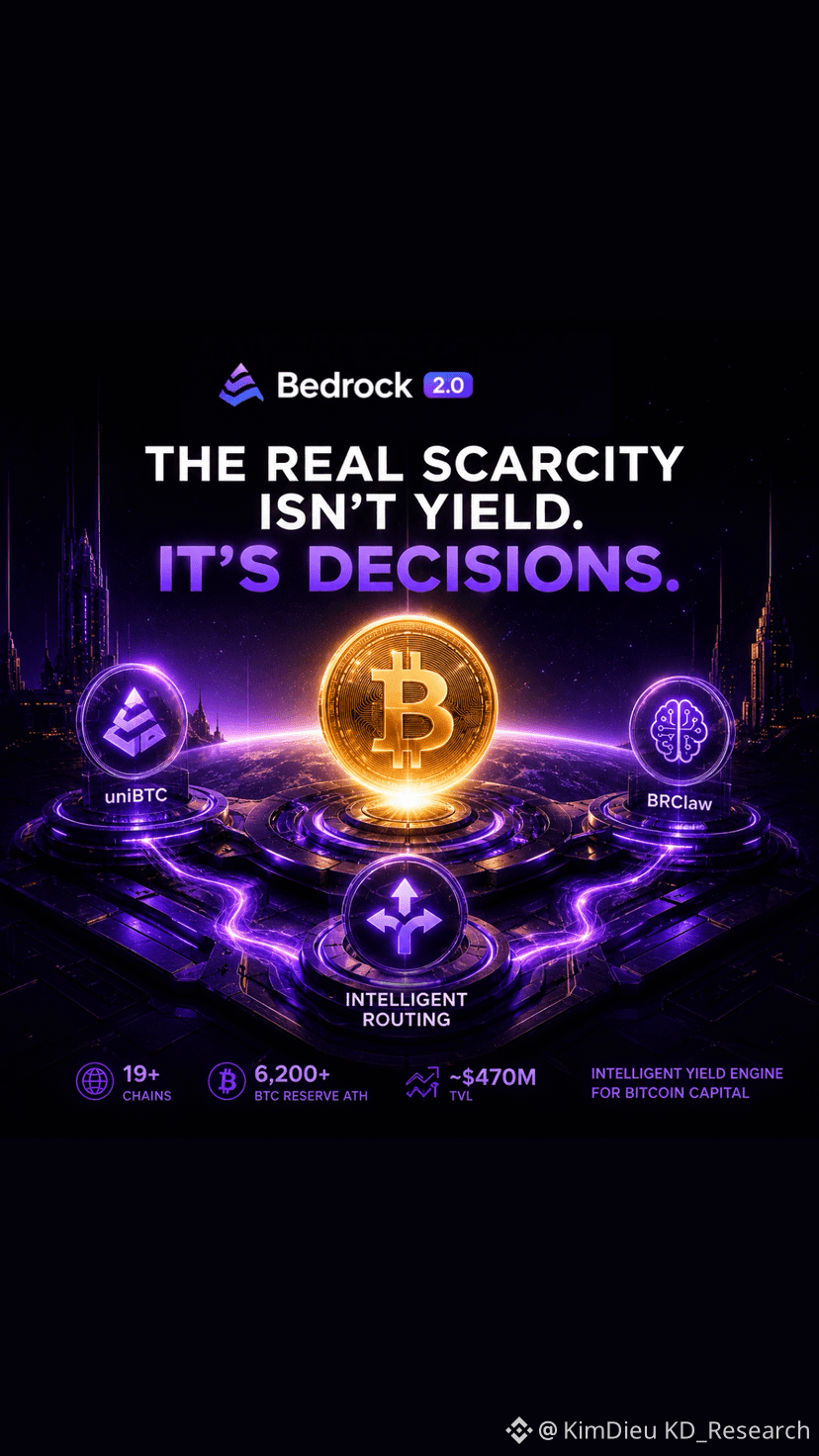
As Bitcoin Capital expands across 19+ chains and dozens of protocols, opportunities are becoming abundant.
But abundance creates a new problem:
Complexity.
More yield strategies.
More lending markets.
More credit markets.
More RWA opportunities.
And more difficult decisions.
That’s why I think the next stage of BTCFi won’t be defined by who offers the highest APY.
It will be defined by who helps Bitcoin Capital make better decisions.
This is what makes Bedrock 2.0 interesting to me.
Not as another yield platform.
But as an Intelligent Yield Engine for Bitcoin Capital.
At the center sits uniBTC — a unified capital layer designed to connect fragmented Bitcoin Capital.
Then comes Intelligent Routing.
Because finding opportunities is easy.
Allocating capital intelligently is hard.
And as complexity continues to grow, AI-powered decision making becomes increasingly valuable.
That’s where BRClaw, Bedrock’s AI On-Chain Analyst, enters the picture.
Not to replace users.
But to help them:
🧠 Understand risk
📊 Compare strategies
⚡ Navigate opportunities
🎯 Allocate Bitcoin Capital more intelligently
Yield opportunities are everywhere.
Smarter allocation is rare.
And perhaps that’s why Bedrock 2.0 is evolving beyond a protocol.
It’s becoming infrastructure for Bitcoin Capital.
Curious to hear your thoughts:
As BTCFi becomes more complex, do you think AI-powered decision making will become necessary for Bitcoin users?
@Bedrock
#BTCFi
#bedrock $BR
Everyone talks about Bitcoin opportunities.
Few people talk about Bitcoin decisions.
And those are two very different things.
As Bitcoin Capital expands across 19+ chains and dozens of protocols, opportunities are becoming abundant.
But abundance creates a new problem:
Complexity.
More yield strategies.
More lending markets.
More credit markets.
More RWA opportunities.
And more difficult decisions.
That’s why I think the next stage of BTCFi won’t be defined by who offers the highest APY.
It will be defined by who helps Bitcoin Capital make better decisions.
This is what makes Bedrock 2.0 interesting to me.
Not as another yield platform.
But as an Intelligent Yield Engine for Bitcoin Capital.
At the center sits uniBTC — a unified capital layer designed to connect fragmented Bitcoin Capital.
Then comes Intelligent Routing.
Because finding opportunities is easy.
Allocating capital intelligently is hard.
And as complexity continues to grow, AI-powered decision making becomes increasingly valuable.
That’s where BRClaw, Bedrock’s AI On-Chain Analyst, enters the picture.
Not to replace users.
But to help them:
🧠 Understand risk
📊 Compare strategies
⚡ Navigate opportunities
🎯 Allocate Bitcoin Capital more intelligently
Yield opportunities are everywhere.
Smarter allocation is rare.
And perhaps that’s why Bedrock 2.0 is evolving beyond a protocol.
It’s becoming infrastructure for Bitcoin Capital.
Curious to hear your thoughts:
As BTCFi becomes more complex, do you think AI-powered decision making will become necessary for Bitcoin users?
@Bedrock
#BTCFi
Everyone talks about Bitcoin opportunities.
Few people talk about Bitcoin decisions.
And those are two very different things.
As Bitcoin Capital expands across 19+ chains and dozens of protocols, opportunities are becoming abundant.
But abundance creates a new problem:
Complexity.
More yield strategies.
More lending markets.
More credit markets.
More RWA opportunities.
And more difficult decisions.
That’s why I think the next stage of BTCFi won’t be defined by who offers the highest APY.
It will be defined by who helps Bitcoin Capital make better decisions.
This is what makes Bedrock 2.0 interesting to me.
Not as another yield platform.
But as an Intelligent Yield Engine for Bitcoin Capital.
At the center sits uniBTC — a unified capital layer designed to connect fragmented Bitcoin Capital.
Then comes Intelligent Routing.
Because finding opportunities is easy.
Allocating capital intelligently is hard.
And as complexity continues to grow, AI-powered decision making becomes increasingly valuable.
That’s where BRClaw, Bedrock’s AI On-Chain Analyst, enters the picture.
Not to replace users.
But to help them:
🧠 Understand risk
📊 Compare strategies
⚡ Navigate opportunities
🎯 Allocate Bitcoin Capital more intelligently
Yield opportunities are everywhere.
Smarter allocation is rare.
And perhaps that’s why Bedrock 2.0 is evolving beyond a protocol.
It’s becoming infrastructure for Bitcoin Capital.
Curious to hear your thoughts:
As BTCFi becomes more complex, do you think AI-powered decision making will become necessary for Bitcoin users?
@Bedrock
#BTCFi
5
2
1k
·
--
Bearish
@Bedrock
Everyone talks about capital.
Very few people talk about complexity.
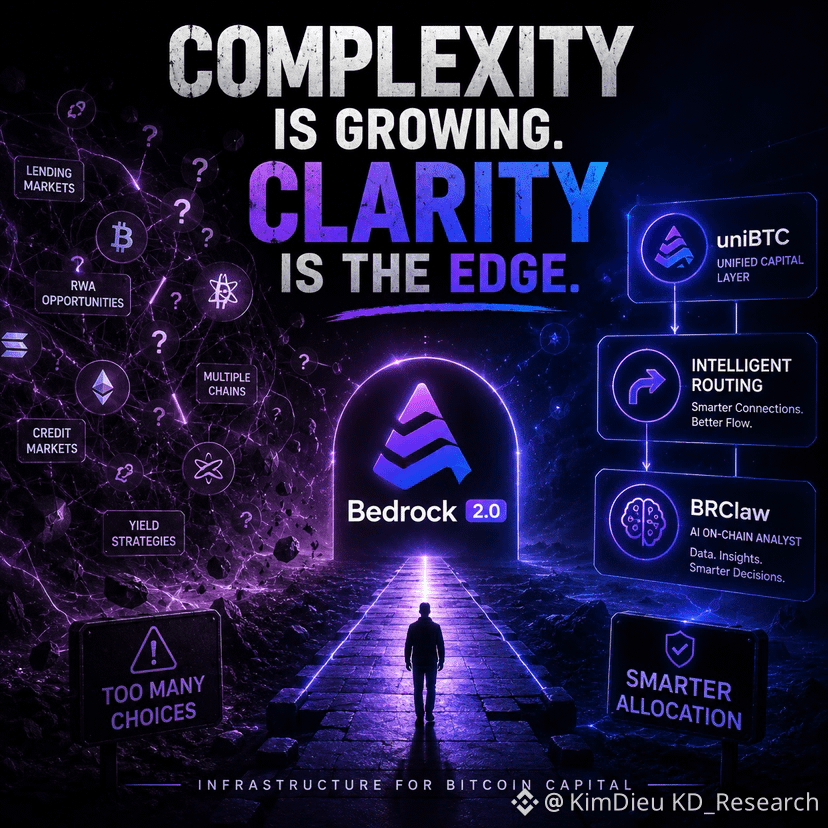
And complexity is growing fast.
Bitcoin Capital is no longer limited to a single chain, a single strategy, or a single opportunity.
Today it can move across lending markets, credit markets, RWA opportunities, and an expanding BTCFi ecosystem.
More opportunities sound great.
Until you have to decide between them.
Because every new opportunity creates another decision.
Another comparison.
Another risk assessment.
Another allocation choice.
That’s why I think the next challenge for Bitcoin Capital isn’t access.
It’s navigation.
Bedrock 2.0 approaches this challenge from an interesting angle.
uniBTC creates a unified capital layer that helps reduce fragmentation.
Intelligent Routing helps connect Bitcoin Capital with relevant opportunities across ecosystems.
And BRClaw, the AI On-Chain Analyst, is designed to help users make smarter decisions in an increasingly complex environment.
The future of BTCFi may not belong to the platform with the most opportunities.
It may belong to the infrastructure that helps Bitcoin Capital navigate them.
Because as complexity grows, clarity becomes an advantage.
#bedrock $BR
@Bedrock
Everyone talks about capital.
Very few people talk about complexity.
And complexity is growing fast.
Bitcoin Capital is no longer limited to a single chain, a single strategy, or a single opportunity.
Today it can move across lending markets, credit markets, RWA opportunities, and an expanding BTCFi ecosystem.
More opportunities sound great.
Until you have to decide between them.
Because every new opportunity creates another decision.
Another comparison.
Another risk assessment.
Another allocation choice.
That’s why I think the next challenge for Bitcoin Capital isn’t access.
It’s navigation.
Bedrock 2.0 approaches this challenge from an interesting angle.
uniBTC creates a unified capital layer that helps reduce fragmentation.
Intelligent Routing helps connect Bitcoin Capital with relevant opportunities across ecosystems.
And BRClaw, the AI On-Chain Analyst, is designed to help users make smarter decisions in an increasingly complex environment.
The future of BTCFi may not belong to the platform with the most opportunities.
It may belong to the infrastructure that helps Bitcoin Capital navigate them.
Because as complexity grows, clarity becomes an advantage.
#bedrock $BR
Everyone talks about capital.
Very few people talk about complexity.
And complexity is growing fast.
Bitcoin Capital is no longer limited to a single chain, a single strategy, or a single opportunity.
Today it can move across lending markets, credit markets, RWA opportunities, and an expanding BTCFi ecosystem.
More opportunities sound great.
Until you have to decide between them.
Because every new opportunity creates another decision.
Another comparison.
Another risk assessment.
Another allocation choice.
That’s why I think the next challenge for Bitcoin Capital isn’t access.
It’s navigation.
Bedrock 2.0 approaches this challenge from an interesting angle.
uniBTC creates a unified capital layer that helps reduce fragmentation.
Intelligent Routing helps connect Bitcoin Capital with relevant opportunities across ecosystems.
And BRClaw, the AI On-Chain Analyst, is designed to help users make smarter decisions in an increasingly complex environment.
The future of BTCFi may not belong to the platform with the most opportunities.
It may belong to the infrastructure that helps Bitcoin Capital navigate them.
Because as complexity grows, clarity becomes an advantage.
#bedrock $BR
8
7
289
Verified
@Bedrock
Everyone talks about Bitcoin Capital.
Very few people talk about attention.
And that’s becoming a problem.
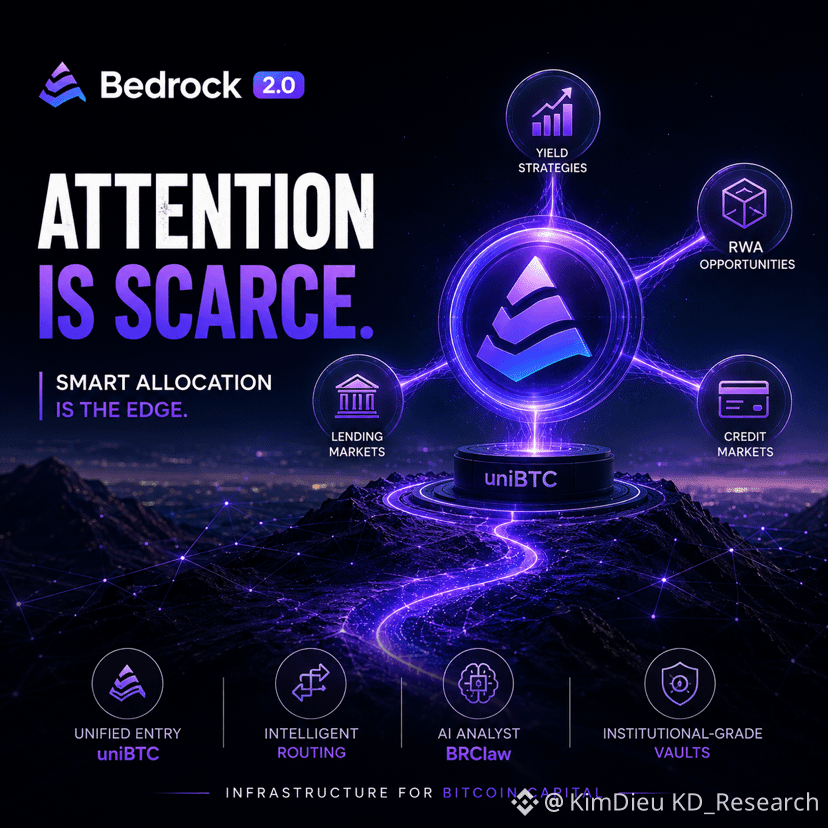
Bitcoin opportunities are expanding across lending markets, credit markets, RWA strategies, and dozens of ecosystems.
The opportunities keep growing.
Human attention doesn’t.
No investor can monitor everything.
No team can evaluate every strategy.
No portfolio manager can track every opportunity at scale.
This is why I think the next challenge in BTCFi isn’t access.
It’s decision-making.
As Bitcoin Capital grows, the value of information grows even faster.
That’s what makes Bedrock 2.0 interesting to me.
Not simply as infrastructure.
But as infrastructure designed for smarter capital allocation.
uniBTC creates a unified entry point.
Intelligent Routing helps capital move more efficiently.
BRClaw introduces AI-powered decision making for an increasingly complex Bitcoin economy.
The future of BTCFi may not belong to the people with the most opportunities.
It may belong to the people who can identify the right opportunities fastest.
#bedrock $BR
@Bedrock
Everyone talks about Bitcoin Capital.
Very few people talk about attention.
And that’s becoming a problem.
Bitcoin opportunities are expanding across lending markets, credit markets, RWA strategies, and dozens of ecosystems.
The opportunities keep growing.
Human attention doesn’t.
No investor can monitor everything.
No team can evaluate every strategy.
No portfolio manager can track every opportunity at scale.
This is why I think the next challenge in BTCFi isn’t access.
It’s decision-making.
As Bitcoin Capital grows, the value of information grows even faster.
That’s what makes Bedrock 2.0 interesting to me.
Not simply as infrastructure.
But as infrastructure designed for smarter capital allocation.
uniBTC creates a unified entry point.
Intelligent Routing helps capital move more efficiently.
BRClaw introduces AI-powered decision making for an increasingly complex Bitcoin economy.
The future of BTCFi may not belong to the people with the most opportunities.
It may belong to the people who can identify the right opportunities fastest.
#bedrock $BR
Everyone talks about Bitcoin Capital.
Very few people talk about attention.
And that’s becoming a problem.
Bitcoin opportunities are expanding across lending markets, credit markets, RWA strategies, and dozens of ecosystems.
The opportunities keep growing.
Human attention doesn’t.
No investor can monitor everything.
No team can evaluate every strategy.
No portfolio manager can track every opportunity at scale.
This is why I think the next challenge in BTCFi isn’t access.
It’s decision-making.
As Bitcoin Capital grows, the value of information grows even faster.
That’s what makes Bedrock 2.0 interesting to me.
Not simply as infrastructure.
But as infrastructure designed for smarter capital allocation.
uniBTC creates a unified entry point.
Intelligent Routing helps capital move more efficiently.
BRClaw introduces AI-powered decision making for an increasingly complex Bitcoin economy.
The future of BTCFi may not belong to the people with the most opportunities.
It may belong to the people who can identify the right opportunities fastest.
#bedrock $BR
18
6
948
·
--
Bearish
Verified
@Bedrock
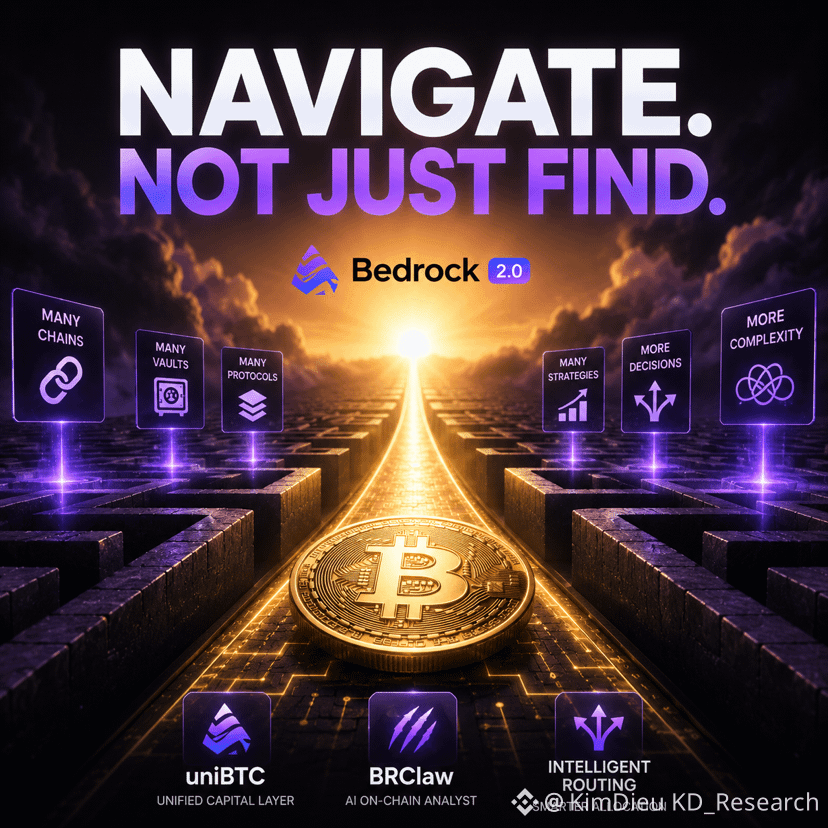
🚨Every new Bitcoin opportunity creates a new problem.
More chains.
More protocols.
More vaults.
More strategies.
More decisions.
At first, that sounds like progress.
But complexity has a cost.
Because every new opportunity competes for the same thing:
Bitcoin capital.
The next phase of BTCFi may not be about creating more opportunities.
It may be about helping users navigate them.
That’s why Bedrock 2.0 stands out to me.
Not because it promises higher rewards.
But because it’s focused on Bitcoin capital efficiency.
As BTCFi expands, fragmentation becomes inevitable.
Capital gets scattered.
Attention gets divided.
Decision-making becomes harder.
Bedrock’s approach is interesting because it focuses on coordination.
🟣 uniBTC creates a unified capital layer.
🧠 BRClaw helps users analyze opportunities more intelligently.
⚡ Intelligent Routing aims to connect Bitcoin capital with the most relevant opportunities.
The future of BTCFi won’t be defined by how many opportunities exist.
It will be defined by how effectively Bitcoin capital can navigate them.
And that might become one of the most important challenges in crypto.
#bedrock $BR
@Bedrock
🚨Every new Bitcoin opportunity creates a new problem.
More chains.
More protocols.
More vaults.
More strategies.
More decisions.
At first, that sounds like progress.
But complexity has a cost.
Because every new opportunity competes for the same thing:
Bitcoin capital.
The next phase of BTCFi may not be about creating more opportunities.
It may be about helping users navigate them.
That’s why Bedrock 2.0 stands out to me.
Not because it promises higher rewards.
But because it’s focused on Bitcoin capital efficiency.
As BTCFi expands, fragmentation becomes inevitable.
Capital gets scattered.
Attention gets divided.
Decision-making becomes harder.
Bedrock’s approach is interesting because it focuses on coordination.
🟣 uniBTC creates a unified capital layer.
🧠 BRClaw helps users analyze opportunities more intelligently.
⚡ Intelligent Routing aims to connect Bitcoin capital with the most relevant opportunities.
The future of BTCFi won’t be defined by how many opportunities exist.
It will be defined by how effectively Bitcoin capital can navigate them.
And that might become one of the most important challenges in crypto.
#bedrock $BR
🚨Every new Bitcoin opportunity creates a new problem.
More chains.
More protocols.
More vaults.
More strategies.
More decisions.
At first, that sounds like progress.
But complexity has a cost.
Because every new opportunity competes for the same thing:
Bitcoin capital.
The next phase of BTCFi may not be about creating more opportunities.
It may be about helping users navigate them.
That’s why Bedrock 2.0 stands out to me.
Not because it promises higher rewards.
But because it’s focused on Bitcoin capital efficiency.
As BTCFi expands, fragmentation becomes inevitable.
Capital gets scattered.
Attention gets divided.
Decision-making becomes harder.
Bedrock’s approach is interesting because it focuses on coordination.
🟣 uniBTC creates a unified capital layer.
🧠 BRClaw helps users analyze opportunities more intelligently.
⚡ Intelligent Routing aims to connect Bitcoin capital with the most relevant opportunities.
The future of BTCFi won’t be defined by how many opportunities exist.
It will be defined by how effectively Bitcoin capital can navigate them.
And that might become one of the most important challenges in crypto.
#bedrock $BR
11
6
1.1k
·
--
Bullish
Verified
#bedrock $BR
For years, owning Bitcoin was considered enough.
Buy it.
Hold it.
Wait.
That strategy worked.
But markets evolve.
And so do expectations.
Today, investors don’t just want exposure to an asset.
They want access.
Flexibility.
Utility.
They want capital that can do more than sit still.
That’s one reason BTCFi has become such an interesting narrative.
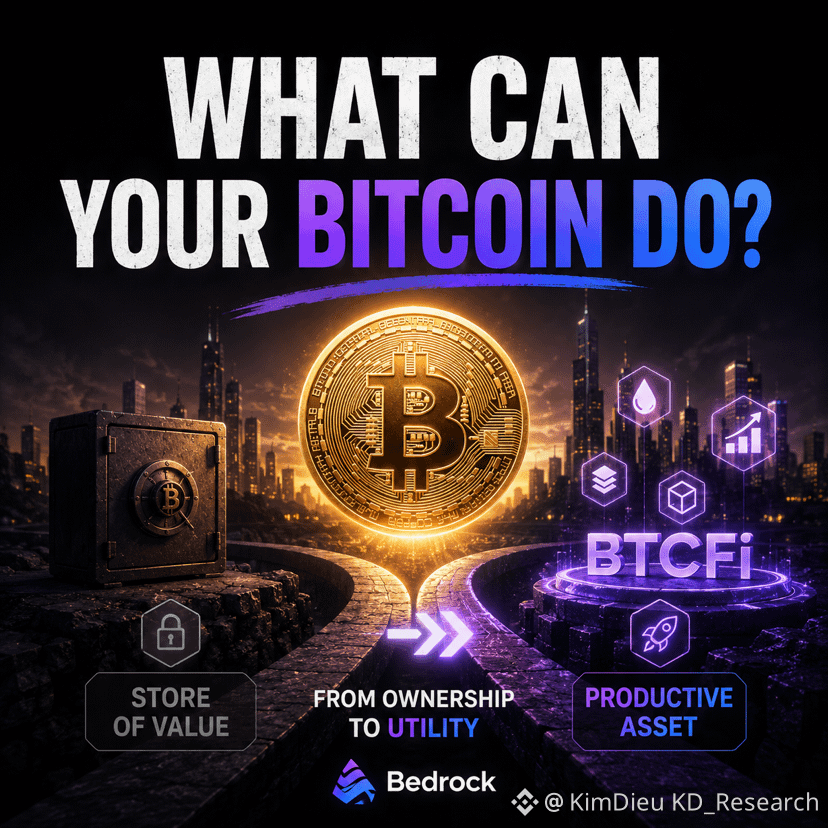
The conversation is slowly shifting from:
“How much Bitcoin do you own?”
to
“What can your Bitcoin do?”
Projects like @Bedrock are helping explore that next chapter by building infrastructure that expands the possibilities around Bitcoin.
Not replacing Bitcoin.
Enhancing its role in the on-chain economy.
Because the future may not belong to assets that simply exist.
It may belong to assets that actively participate.
From Ownership ➜ Utility.
That shift could be bigger than most people realize.
#bedrock $BR
For years, owning Bitcoin was considered enough.
Buy it.
Hold it.
Wait.
That strategy worked.
But markets evolve.
And so do expectations.
Today, investors don’t just want exposure to an asset.
They want access.
Flexibility.
Utility.
They want capital that can do more than sit still.
That’s one reason BTCFi has become such an interesting narrative.
The conversation is slowly shifting from:
“How much Bitcoin do you own?”
to
“What can your Bitcoin do?”
Projects like @Bedrock are helping explore that next chapter by building infrastructure that expands the possibilities around Bitcoin.
Not replacing Bitcoin.
Enhancing its role in the on-chain economy.
Because the future may not belong to assets that simply exist.
It may belong to assets that actively participate.
From Ownership ➜ Utility.
That shift could be bigger than most people realize.
For years, owning Bitcoin was considered enough.
Buy it.
Hold it.
Wait.
That strategy worked.
But markets evolve.
And so do expectations.
Today, investors don’t just want exposure to an asset.
They want access.
Flexibility.
Utility.
They want capital that can do more than sit still.
That’s one reason BTCFi has become such an interesting narrative.
The conversation is slowly shifting from:
“How much Bitcoin do you own?”
to
“What can your Bitcoin do?”
Projects like @Bedrock are helping explore that next chapter by building infrastructure that expands the possibilities around Bitcoin.
Not replacing Bitcoin.
Enhancing its role in the on-chain economy.
Because the future may not belong to assets that simply exist.
It may belong to assets that actively participate.
From Ownership ➜ Utility.
That shift could be bigger than most people realize.
5
3
1.6k
·
--
Bullish
#bedrock $BR
@Bedrock
Most crypto innovations don’t fail because the technology is bad.
They fail because users don’t change their behavior.
That’s why I think behavior is more important than technology.
Think about it.
People didn’t adopt smartphones because they understood the hardware.
They adopted them because life became easier.
Crypto works the same way.
Users rarely care about infrastructure.
They care about better outcomes.
Faster.
Simpler.
More useful.
That’s what makes BTCFi interesting to me.
Not because it’s a new narrative.
But because it has the potential to change user expectations.
Once people experience capital that is more flexible and productive, they start expecting that experience everywhere.
And expectations are powerful.
They quietly become standards.
Maybe the biggest opportunity for Bedrock 2.0 isn’t building new technology.
Maybe it’s helping create a new standard for how users think about Bitcoin.
Because once a standard changes, the market usually follows.
#bedrock $BR
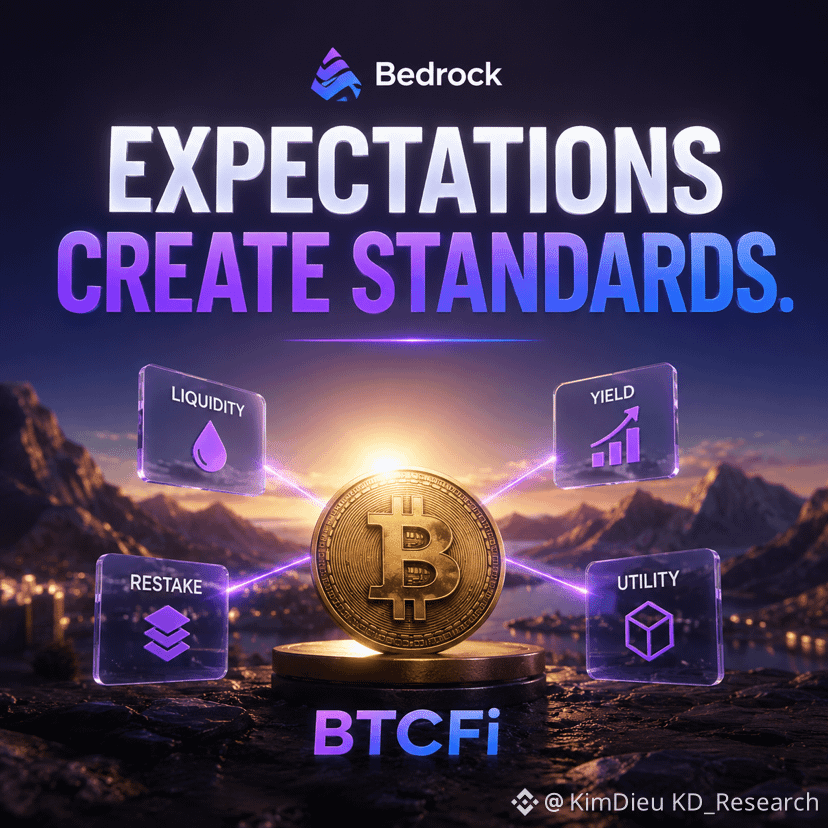
@Bedrock
Most crypto innovations don’t fail because the technology is bad.
They fail because users don’t change their behavior.
That’s why I think behavior is more important than technology.
Think about it.
People didn’t adopt smartphones because they understood the hardware.
They adopted them because life became easier.
Crypto works the same way.
Users rarely care about infrastructure.
They care about better outcomes.
Faster.
Simpler.
More useful.
That’s what makes BTCFi interesting to me.
Not because it’s a new narrative.
But because it has the potential to change user expectations.
Once people experience capital that is more flexible and productive, they start expecting that experience everywhere.
And expectations are powerful.
They quietly become standards.
Maybe the biggest opportunity for Bedrock 2.0 isn’t building new technology.
Maybe it’s helping create a new standard for how users think about Bitcoin.
Because once a standard changes, the market usually follows.
@Bedrock
Most crypto innovations don’t fail because the technology is bad.
They fail because users don’t change their behavior.
That’s why I think behavior is more important than technology.
Think about it.
People didn’t adopt smartphones because they understood the hardware.
They adopted them because life became easier.
Crypto works the same way.
Users rarely care about infrastructure.
They care about better outcomes.
Faster.
Simpler.
More useful.
That’s what makes BTCFi interesting to me.
Not because it’s a new narrative.
But because it has the potential to change user expectations.
Once people experience capital that is more flexible and productive, they start expecting that experience everywhere.
And expectations are powerful.
They quietly become standards.
Maybe the biggest opportunity for Bedrock 2.0 isn’t building new technology.
Maybe it’s helping create a new standard for how users think about Bitcoin.
Because once a standard changes, the market usually follows.
7
5
825
#genius $GENIUS
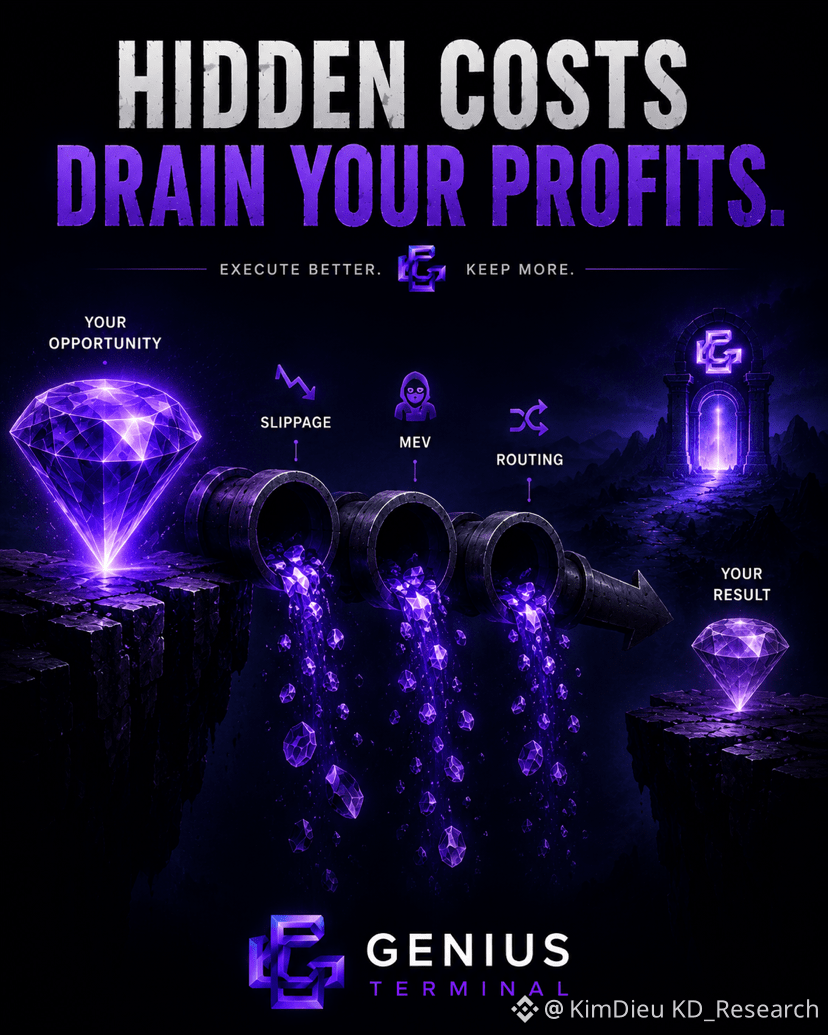
Most traders pay attention to visible costs.
Trading fees.
Gas fees.
Bridge fees.
Because they can see them.
But what about the costs you don’t notice?
The extra slippage.
The inefficient route.
The value lost during execution.
Those hidden costs rarely appear on a dashboard.
Yet over time, they can add up to far more than the fees you’re worried about.
That’s why I think many traders are optimizing the wrong thing.
They’re trying to save a few dollars on fees…
while unknowingly losing much more through poor execution.
The longer I spend in DeFi, the more I realize that trading isn’t just about finding opportunities.
It’s about preserving value from the moment you enter to the moment you exit.
That’s one reason infrastructure projects like Genius Terminal have caught my attention.
Not because they promise magic profits.
But because they’re focused on improving what happens between the idea and the result.
And sometimes, that’s where the biggest difference is made.
👇 Question:
What’s the biggest hidden cost you’ve experienced in crypto?
1️⃣ Slippage
2️⃣ MEV
3️⃣ Bridge delays
4️⃣ Poor routing
5️⃣ Something else?
@GeniusOfficial
#genius $GENIUS
Most traders pay attention to visible costs.
Trading fees.
Gas fees.
Bridge fees.
Because they can see them.
But what about the costs you don’t notice?
The extra slippage.
The inefficient route.
The value lost during execution.
Those hidden costs rarely appear on a dashboard.
Yet over time, they can add up to far more than the fees you’re worried about.
That’s why I think many traders are optimizing the wrong thing.
They’re trying to save a few dollars on fees…
while unknowingly losing much more through poor execution.
The longer I spend in DeFi, the more I realize that trading isn’t just about finding opportunities.
It’s about preserving value from the moment you enter to the moment you exit.
That’s one reason infrastructure projects like Genius Terminal have caught my attention.
Not because they promise magic profits.
But because they’re focused on improving what happens between the idea and the result.
And sometimes, that’s where the biggest difference is made.
👇 Question:
What’s the biggest hidden cost you’ve experienced in crypto?
1️⃣ Slippage
2️⃣ MEV
3️⃣ Bridge delays
4️⃣ Poor routing
5️⃣ Something else?
@GeniusOfficial
Most traders pay attention to visible costs.
Trading fees.
Gas fees.
Bridge fees.
Because they can see them.
But what about the costs you don’t notice?
The extra slippage.
The inefficient route.
The value lost during execution.
Those hidden costs rarely appear on a dashboard.
Yet over time, they can add up to far more than the fees you’re worried about.
That’s why I think many traders are optimizing the wrong thing.
They’re trying to save a few dollars on fees…
while unknowingly losing much more through poor execution.
The longer I spend in DeFi, the more I realize that trading isn’t just about finding opportunities.
It’s about preserving value from the moment you enter to the moment you exit.
That’s one reason infrastructure projects like Genius Terminal have caught my attention.
Not because they promise magic profits.
But because they’re focused on improving what happens between the idea and the result.
And sometimes, that’s where the biggest difference is made.
👇 Question:
What’s the biggest hidden cost you’ve experienced in crypto?
1️⃣ Slippage
2️⃣ MEV
3️⃣ Bridge delays
4️⃣ Poor routing
5️⃣ Something else?
@GeniusOfficial
2
3
409
·
--
Bearish
Verified
@Bedrock
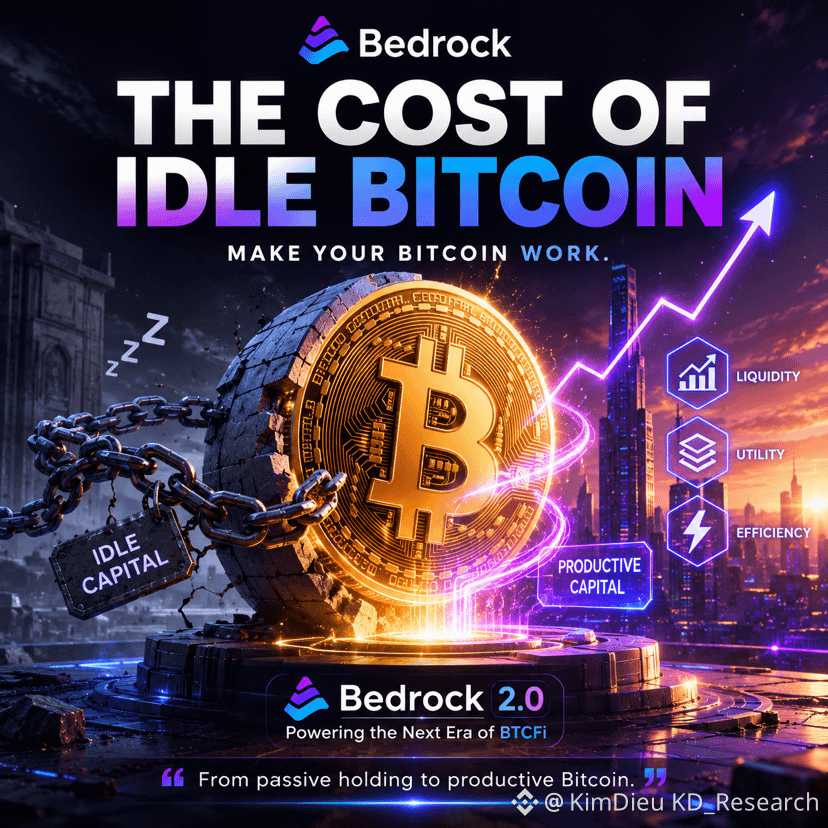
People often talk about the value of Bitcoin.
I think we should talk more about the cost of idle Bitcoin.
Not the price.
The opportunity cost.
Every day, billions of dollars worth of BTC sit still.
Doing nothing.
Waiting.
And for years, that felt normal.
Because Bitcoin’s job was simple:
Store value.
But what if that’s only part of the story?
What if the next chapter of Bitcoin isn’t about holding more BTC…
But about doing more with the BTC that already exists?
That’s one reason BTCFi keeps getting my attention.
Not because it changes Bitcoin.
Because it changes what’s possible around Bitcoin.
Bedrock 2.0 is interesting in this context.
It reflects a broader shift in crypto.
From ownership…
To capital efficiency.
From passive assets…
To productive assets.
The biggest opportunity in Bitcoin may not be creating more capital.
It may be unlocking the capital that’s already there.
And if that’s true, the real question isn’t:
“How much Bitcoin exists?”
It’s:
“How much Bitcoin is actually working?”
#bedrock $BR #BTCFi
@Bedrock
People often talk about the value of Bitcoin.
I think we should talk more about the cost of idle Bitcoin.
Not the price.
The opportunity cost.
Every day, billions of dollars worth of BTC sit still.
Doing nothing.
Waiting.
And for years, that felt normal.
Because Bitcoin’s job was simple:
Store value.
But what if that’s only part of the story?
What if the next chapter of Bitcoin isn’t about holding more BTC…
But about doing more with the BTC that already exists?
That’s one reason BTCFi keeps getting my attention.
Not because it changes Bitcoin.
Because it changes what’s possible around Bitcoin.
Bedrock 2.0 is interesting in this context.
It reflects a broader shift in crypto.
From ownership…
To capital efficiency.
From passive assets…
To productive assets.
The biggest opportunity in Bitcoin may not be creating more capital.
It may be unlocking the capital that’s already there.
And if that’s true, the real question isn’t:
“How much Bitcoin exists?”
It’s:
“How much Bitcoin is actually working?”
#bedrock $BR #BTCFi
People often talk about the value of Bitcoin.
I think we should talk more about the cost of idle Bitcoin.
Not the price.
The opportunity cost.
Every day, billions of dollars worth of BTC sit still.
Doing nothing.
Waiting.
And for years, that felt normal.
Because Bitcoin’s job was simple:
Store value.
But what if that’s only part of the story?
What if the next chapter of Bitcoin isn’t about holding more BTC…
But about doing more with the BTC that already exists?
That’s one reason BTCFi keeps getting my attention.
Not because it changes Bitcoin.
Because it changes what’s possible around Bitcoin.
Bedrock 2.0 is interesting in this context.
It reflects a broader shift in crypto.
From ownership…
To capital efficiency.
From passive assets…
To productive assets.
The biggest opportunity in Bitcoin may not be creating more capital.
It may be unlocking the capital that’s already there.
And if that’s true, the real question isn’t:
“How much Bitcoin exists?”
It’s:
“How much Bitcoin is actually working?”
#bedrock $BR #BTCFi
4
7
4.6k
#genius $GENIUS
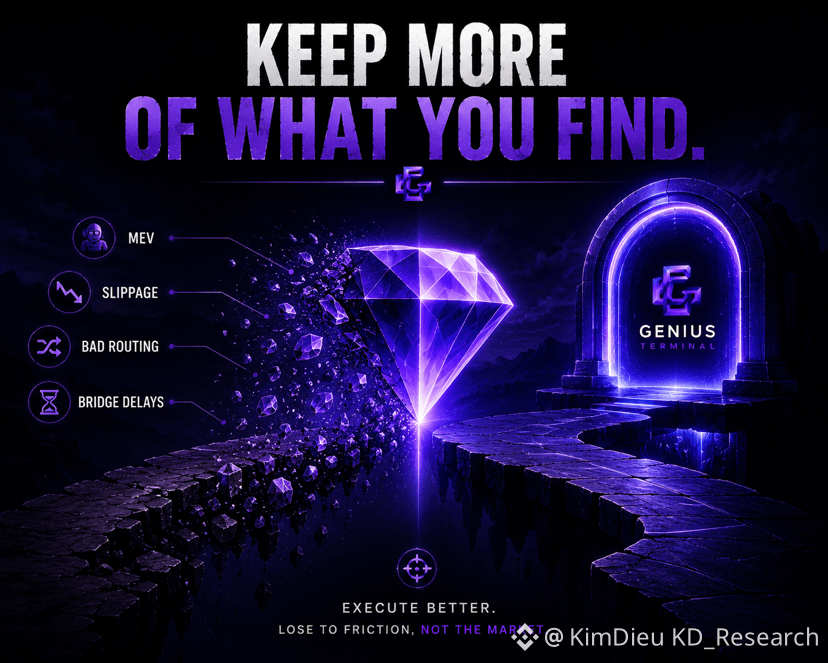
MOST TRADERS ARE MEASURING THE WRONG THING.
They celebrate finding alpha.
But rarely measure how much of it they actually keep.
Think about your last winning trade.
The market moved in your favor.
Your thesis was right.
Your timing was solid.
But did you capture the full opportunity?
Or did part of it disappear through:
⚠️ Slippage
⚠️ MEV
⚠️ Poor routing
⚠️ Cross-chain friction
These costs don’t usually show up on a PnL screenshot.
That’s why they’re easy to ignore.
But over hundreds of trades, small inefficiencies can quietly become one of the biggest expenses in crypto.
The traders who consistently outperform aren’t always the ones who find the most opportunities.
They’re often the ones who lose the least value between idea and execution.
That’s one reason why I’m paying attention to projects like Genius Terminal.
Not because they promise better predictions.
But because they’re focused on helping traders execute more efficiently.
In a market obsessed with finding alpha,
execution quality might be one of the most overlooked edges.
👇 Hot take:
Bad execution costs traders more money than bad market analysis.
Agree or disagree?
@GeniusOfficial
#genius $GENIUS
MOST TRADERS ARE MEASURING THE WRONG THING.
They celebrate finding alpha.
But rarely measure how much of it they actually keep.
Think about your last winning trade.
The market moved in your favor.
Your thesis was right.
Your timing was solid.
But did you capture the full opportunity?
Or did part of it disappear through:
⚠️ Slippage
⚠️ MEV
⚠️ Poor routing
⚠️ Cross-chain friction
These costs don’t usually show up on a PnL screenshot.
That’s why they’re easy to ignore.
But over hundreds of trades, small inefficiencies can quietly become one of the biggest expenses in crypto.
The traders who consistently outperform aren’t always the ones who find the most opportunities.
They’re often the ones who lose the least value between idea and execution.
That’s one reason why I’m paying attention to projects like Genius Terminal.
Not because they promise better predictions.
But because they’re focused on helping traders execute more efficiently.
In a market obsessed with finding alpha,
execution quality might be one of the most overlooked edges.
👇 Hot take:
Bad execution costs traders more money than bad market analysis.
Agree or disagree?
@GeniusOfficial
MOST TRADERS ARE MEASURING THE WRONG THING.
They celebrate finding alpha.
But rarely measure how much of it they actually keep.
Think about your last winning trade.
The market moved in your favor.
Your thesis was right.
Your timing was solid.
But did you capture the full opportunity?
Or did part of it disappear through:
⚠️ Slippage
⚠️ MEV
⚠️ Poor routing
⚠️ Cross-chain friction
These costs don’t usually show up on a PnL screenshot.
That’s why they’re easy to ignore.
But over hundreds of trades, small inefficiencies can quietly become one of the biggest expenses in crypto.
The traders who consistently outperform aren’t always the ones who find the most opportunities.
They’re often the ones who lose the least value between idea and execution.
That’s one reason why I’m paying attention to projects like Genius Terminal.
Not because they promise better predictions.
But because they’re focused on helping traders execute more efficiently.
In a market obsessed with finding alpha,
execution quality might be one of the most overlooked edges.
👇 Hot take:
Bad execution costs traders more money than bad market analysis.
Agree or disagree?
@GeniusOfficial
1
2
2.4k
Verified
#bedrock $BR
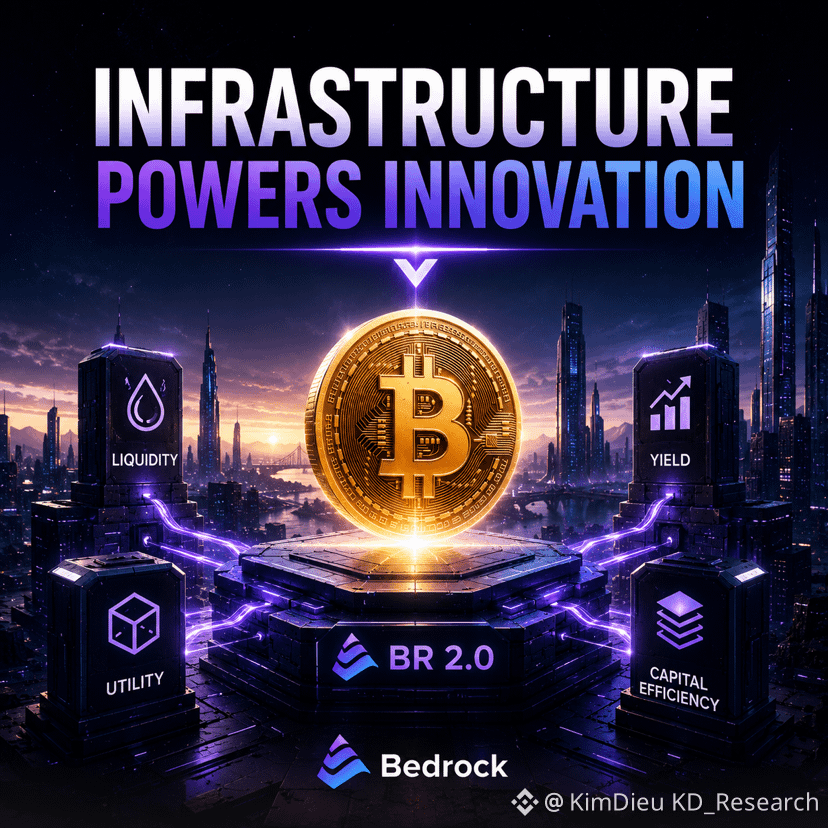
In every major technology cycle, infrastructure often creates the strongest foundation for long-term growth.
The internet needed networks.
Cloud computing needed data centers.
And BTCFi needs infrastructure.
As Bitcoin expands beyond being just a store of value, the ecosystem will require more efficient ways to move capital, access liquidity, and participate in on-chain opportunities.
That’s why Bedrock 2.0 stands out to me.
Rather than focusing on a single use case, Bedrock 2.0 is building infrastructure designed to support the next phase of BTCFi development—where liquidity, utility, and capital efficiency become increasingly important.
The most valuable innovations are often the ones working behind the scenes.
Not because they’re the loudest.
But because they enable everything else to grow.
As BTCFi evolves, infrastructure may become one of the most important narratives to watch.
What do you think matters more for long-term growth: applications or infrastructure?
#bedrock $BR
In every major technology cycle, infrastructure often creates the strongest foundation for long-term growth.
The internet needed networks.
Cloud computing needed data centers.
And BTCFi needs infrastructure.
As Bitcoin expands beyond being just a store of value, the ecosystem will require more efficient ways to move capital, access liquidity, and participate in on-chain opportunities.
That’s why Bedrock 2.0 stands out to me.
Rather than focusing on a single use case, Bedrock 2.0 is building infrastructure designed to support the next phase of BTCFi development—where liquidity, utility, and capital efficiency become increasingly important.
The most valuable innovations are often the ones working behind the scenes.
Not because they’re the loudest.
But because they enable everything else to grow.
As BTCFi evolves, infrastructure may become one of the most important narratives to watch.
What do you think matters more for long-term growth: applications or infrastructure?
In every major technology cycle, infrastructure often creates the strongest foundation for long-term growth.
The internet needed networks.
Cloud computing needed data centers.
And BTCFi needs infrastructure.
As Bitcoin expands beyond being just a store of value, the ecosystem will require more efficient ways to move capital, access liquidity, and participate in on-chain opportunities.
That’s why Bedrock 2.0 stands out to me.
Rather than focusing on a single use case, Bedrock 2.0 is building infrastructure designed to support the next phase of BTCFi development—where liquidity, utility, and capital efficiency become increasingly important.
The most valuable innovations are often the ones working behind the scenes.
Not because they’re the loudest.
But because they enable everything else to grow.
As BTCFi evolves, infrastructure may become one of the most important narratives to watch.
What do you think matters more for long-term growth: applications or infrastructure?
2
2
270
#genius $GENIUS
YOU DID EVERYTHING RIGHT.
And still made less money than expected.
That’s one of the most frustrating experiences in crypto.
You researched the project.
You entered at the right time.
The market moved in your favor.
But somehow the final result didn’t match the opportunity.
Why?
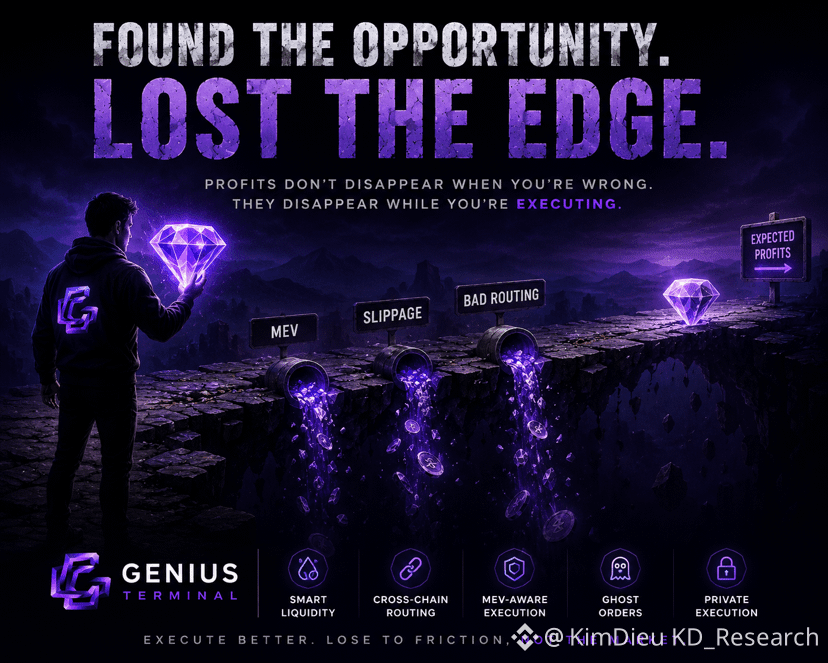
Because profits don’t disappear only when you’re wrong.
Sometimes they disappear while you’re executing.
A little slippage.
A little MEV.
A little inefficiency in routing.
Individually, they seem small.
Together, they can quietly turn a great trade into an average one.
Most traders spend their time searching for better entries.
Fewer spend time thinking about what happens after they click “Buy”.
That’s where execution starts to matter.
And that’s why I’m paying attention to projects like Genius Terminal.
Not because they promise more alpha.
But because they’re focused on helping traders keep more of the value they already found.
In a market where everyone is chasing opportunities,
the real edge might come from losing less along the way.
👇
What’s the bigger challenge in crypto today?
1️⃣ Finding opportunities
2️⃣ Protecting profits during execution
@GeniusOfficial
#genius $GENIUS
YOU DID EVERYTHING RIGHT.
And still made less money than expected.
That’s one of the most frustrating experiences in crypto.
You researched the project.
You entered at the right time.
The market moved in your favor.
But somehow the final result didn’t match the opportunity.
Why?
Because profits don’t disappear only when you’re wrong.
Sometimes they disappear while you’re executing.
A little slippage.
A little MEV.
A little inefficiency in routing.
Individually, they seem small.
Together, they can quietly turn a great trade into an average one.
Most traders spend their time searching for better entries.
Fewer spend time thinking about what happens after they click “Buy”.
That’s where execution starts to matter.
And that’s why I’m paying attention to projects like Genius Terminal.
Not because they promise more alpha.
But because they’re focused on helping traders keep more of the value they already found.
In a market where everyone is chasing opportunities,
the real edge might come from losing less along the way.
👇
What’s the bigger challenge in crypto today?
1️⃣ Finding opportunities
2️⃣ Protecting profits during execution
@GeniusOfficial
YOU DID EVERYTHING RIGHT.
And still made less money than expected.
That’s one of the most frustrating experiences in crypto.
You researched the project.
You entered at the right time.
The market moved in your favor.
But somehow the final result didn’t match the opportunity.
Why?
Because profits don’t disappear only when you’re wrong.
Sometimes they disappear while you’re executing.
A little slippage.
A little MEV.
A little inefficiency in routing.
Individually, they seem small.
Together, they can quietly turn a great trade into an average one.
Most traders spend their time searching for better entries.
Fewer spend time thinking about what happens after they click “Buy”.
That’s where execution starts to matter.
And that’s why I’m paying attention to projects like Genius Terminal.
Not because they promise more alpha.
But because they’re focused on helping traders keep more of the value they already found.
In a market where everyone is chasing opportunities,
the real edge might come from losing less along the way.
👇
What’s the bigger challenge in crypto today?
1️⃣ Finding opportunities
2️⃣ Protecting profits during execution
@GeniusOfficial
5
3
416
Verified
#bedrock $BR
Everyone talks about Ethereum when discussing DeFi.
But what if the next major growth engine comes from Bitcoin?
Bitcoin remains the largest crypto asset by market cap, yet a significant portion of BTC is still sitting idle. That’s a massive amount of untapped capital.
The rise of BTCFi aims to change that.
As infrastructure continues to improve, Bitcoin holders may gain more ways to access liquidity, earn yield, and participate in on-chain opportunities without giving up exposure to BTC itself.
This is one reason I’m paying attention to projects like @Bedrock
The bigger picture isn’t just about one protocol.
It’s about unlocking the economic potential of trillions of dollars worth of Bitcoin.
If BTCFi succeeds, we may look back at this period as the beginning of Bitcoin’s second evolution.
What do you think: Can BTCFi become the next major DeFi growth engine?
#bedrock $BR
Everyone talks about Ethereum when discussing DeFi.
But what if the next major growth engine comes from Bitcoin?
Bitcoin remains the largest crypto asset by market cap, yet a significant portion of BTC is still sitting idle. That’s a massive amount of untapped capital.
The rise of BTCFi aims to change that.
As infrastructure continues to improve, Bitcoin holders may gain more ways to access liquidity, earn yield, and participate in on-chain opportunities without giving up exposure to BTC itself.
This is one reason I’m paying attention to projects like @Bedrock
The bigger picture isn’t just about one protocol.
It’s about unlocking the economic potential of trillions of dollars worth of Bitcoin.
If BTCFi succeeds, we may look back at this period as the beginning of Bitcoin’s second evolution.
What do you think: Can BTCFi become the next major DeFi growth engine?
Everyone talks about Ethereum when discussing DeFi.
But what if the next major growth engine comes from Bitcoin?
Bitcoin remains the largest crypto asset by market cap, yet a significant portion of BTC is still sitting idle. That’s a massive amount of untapped capital.
The rise of BTCFi aims to change that.
As infrastructure continues to improve, Bitcoin holders may gain more ways to access liquidity, earn yield, and participate in on-chain opportunities without giving up exposure to BTC itself.
This is one reason I’m paying attention to projects like @Bedrock
The bigger picture isn’t just about one protocol.
It’s about unlocking the economic potential of trillions of dollars worth of Bitcoin.
If BTCFi succeeds, we may look back at this period as the beginning of Bitcoin’s second evolution.
What do you think: Can BTCFi become the next major DeFi growth engine?
9
6
3k
Verified
#bedrock $BR
For years, Bitcoin has been known as digital gold.
A safe place to store value.
A hedge against uncertainty.
A long-term investment.
But what if Bitcoin could become more than that?
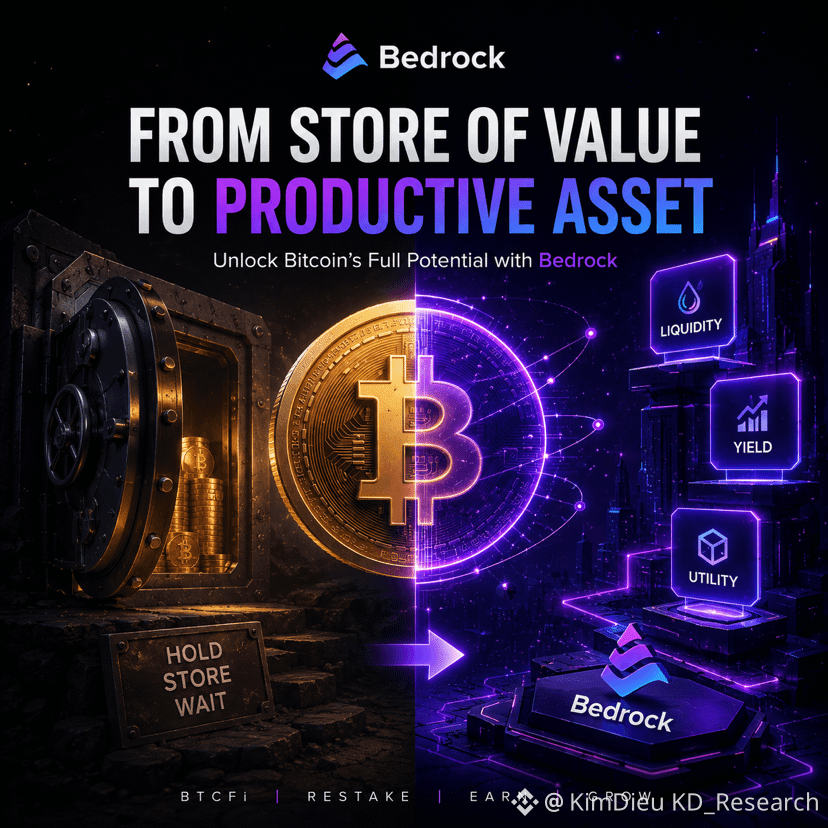
One of the most interesting trends emerging in crypto today is the shift from passive ownership to productive assets. Users no longer want their capital sitting idle—they want it working.
This is where BTCFi enters the conversation.
Projects like @Bedrock are helping build the infrastructure that allows Bitcoin to participate more actively in decentralized finance, unlocking new possibilities for liquidity, utility, and yield generation.
The evolution of Bitcoin isn’t just about a higher price.
It’s about transforming the world’s largest crypto asset into a more efficient and productive part of the on-chain economy.
From Store of Value ➜ Productive Asset.
That may be one of the most important narratives to watch in the years ahead.
#bedrock $BR
For years, Bitcoin has been known as digital gold.
A safe place to store value.
A hedge against uncertainty.
A long-term investment.
But what if Bitcoin could become more than that?
One of the most interesting trends emerging in crypto today is the shift from passive ownership to productive assets. Users no longer want their capital sitting idle—they want it working.
This is where BTCFi enters the conversation.
Projects like @Bedrock are helping build the infrastructure that allows Bitcoin to participate more actively in decentralized finance, unlocking new possibilities for liquidity, utility, and yield generation.
The evolution of Bitcoin isn’t just about a higher price.
It’s about transforming the world’s largest crypto asset into a more efficient and productive part of the on-chain economy.
From Store of Value ➜ Productive Asset.
That may be one of the most important narratives to watch in the years ahead.
For years, Bitcoin has been known as digital gold.
A safe place to store value.
A hedge against uncertainty.
A long-term investment.
But what if Bitcoin could become more than that?
One of the most interesting trends emerging in crypto today is the shift from passive ownership to productive assets. Users no longer want their capital sitting idle—they want it working.
This is where BTCFi enters the conversation.
Projects like @Bedrock are helping build the infrastructure that allows Bitcoin to participate more actively in decentralized finance, unlocking new possibilities for liquidity, utility, and yield generation.
The evolution of Bitcoin isn’t just about a higher price.
It’s about transforming the world’s largest crypto asset into a more efficient and productive part of the on-chain economy.
From Store of Value ➜ Productive Asset.
That may be one of the most important narratives to watch in the years ahead.
7
15
13.3k
Verified
#genius $GENIUS
A few years ago, most users stayed on a single blockchain.
Today, the reality is completely different.
Liquidity is spread across multiple ecosystems.
Opportunities appear on different chains every day.
The challenge is no longer finding opportunities.
It’s accessing them efficiently.
That’s why I believe cross-chain infrastructure will play a major role in the next phase of DeFi growth.
Users don’t want to think about which chain they’re on.
They want the best route.
The best liquidity.
And the smoothest experience.
Projects like Genius Terminal are building toward that vision by connecting trading, liquidity access, and portfolio management across multiple ecosystems.
In the future, the strongest platforms may not be those tied to a single chain.
They may be the ones that make every chain feel like one ecosystem.
The easier DeFi becomes, the faster adoption can grow.
What’s your view?
Will the future be dominated by one chain, or by seamless cross-chain experiences?
@GeniusOfficial
#genius $GENIUS
A few years ago, most users stayed on a single blockchain.
Today, the reality is completely different.
Liquidity is spread across multiple ecosystems.
Opportunities appear on different chains every day.
The challenge is no longer finding opportunities.
It’s accessing them efficiently.
That’s why I believe cross-chain infrastructure will play a major role in the next phase of DeFi growth.
Users don’t want to think about which chain they’re on.
They want the best route.
The best liquidity.
And the smoothest experience.
Projects like Genius Terminal are building toward that vision by connecting trading, liquidity access, and portfolio management across multiple ecosystems.
In the future, the strongest platforms may not be those tied to a single chain.
They may be the ones that make every chain feel like one ecosystem.
The easier DeFi becomes, the faster adoption can grow.
What’s your view?
Will the future be dominated by one chain, or by seamless cross-chain experiences?
@GeniusOfficial
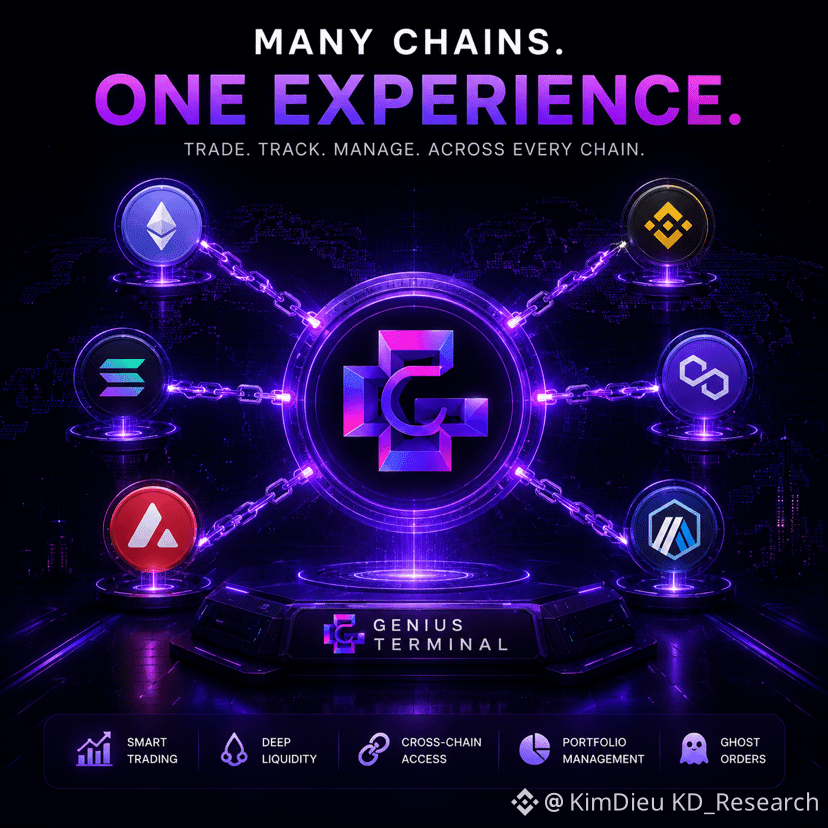
A few years ago, most users stayed on a single blockchain.
Today, the reality is completely different.
Liquidity is spread across multiple ecosystems.
Opportunities appear on different chains every day.
The challenge is no longer finding opportunities.
It’s accessing them efficiently.
That’s why I believe cross-chain infrastructure will play a major role in the next phase of DeFi growth.
Users don’t want to think about which chain they’re on.
They want the best route.
The best liquidity.
And the smoothest experience.
Projects like Genius Terminal are building toward that vision by connecting trading, liquidity access, and portfolio management across multiple ecosystems.
In the future, the strongest platforms may not be those tied to a single chain.
They may be the ones that make every chain feel like one ecosystem.
The easier DeFi becomes, the faster adoption can grow.
What’s your view?
Will the future be dominated by one chain, or by seamless cross-chain experiences?
@GeniusOfficial
4
3
2.2k
#genius $GENIUS
Most traders spend hours searching for the next opportunity.
But very few spend time improving how they execute.
The truth is:
A good idea can still fail because of poor execution.
Bad routes.
High slippage.
Fragmented liquidity.
Too many platforms.
All of these small inefficiencies add up over time.
That’s one reason why trading infrastructure is becoming more important in DeFi.
Projects like Genius Terminal aren’t just focused on helping users find opportunities.
They’re focused on helping traders execute those opportunities more efficiently.
Because in the long run, successful trading isn’t only about finding the right asset.
It’s also about having the right tools.
The market rewards good decisions.
But good execution helps you keep those rewards.
What do you think matters more in trading:
Finding opportunities or executing them efficiently?
@GeniusOfficial
#genius $GENIUS
Most traders spend hours searching for the next opportunity.
But very few spend time improving how they execute.
The truth is:
A good idea can still fail because of poor execution.
Bad routes.
High slippage.
Fragmented liquidity.
Too many platforms.
All of these small inefficiencies add up over time.
That’s one reason why trading infrastructure is becoming more important in DeFi.
Projects like Genius Terminal aren’t just focused on helping users find opportunities.
They’re focused on helping traders execute those opportunities more efficiently.
Because in the long run, successful trading isn’t only about finding the right asset.
It’s also about having the right tools.
The market rewards good decisions.
But good execution helps you keep those rewards.
What do you think matters more in trading:
Finding opportunities or executing them efficiently?
@GeniusOfficial
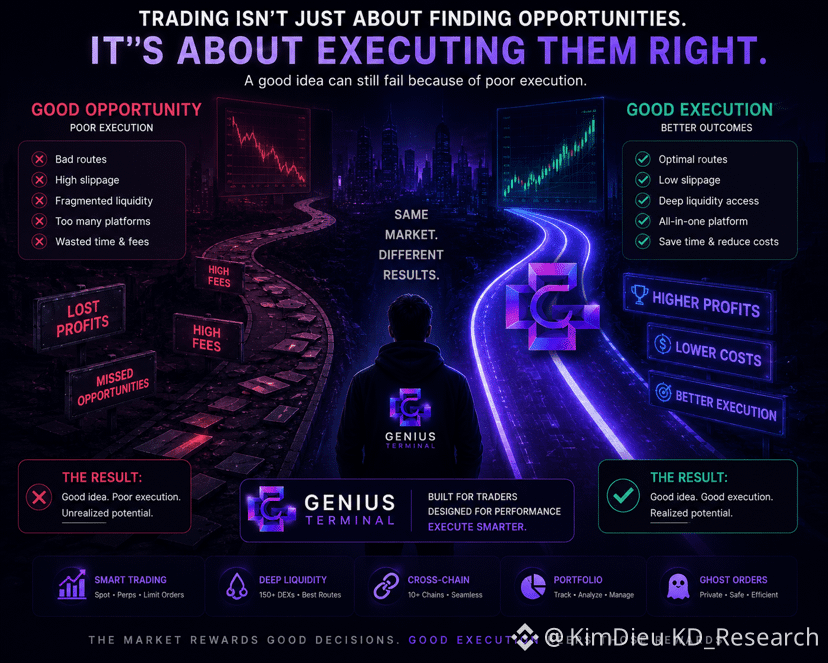
Most traders spend hours searching for the next opportunity.
But very few spend time improving how they execute.
The truth is:
A good idea can still fail because of poor execution.
Bad routes.
High slippage.
Fragmented liquidity.
Too many platforms.
All of these small inefficiencies add up over time.
That’s one reason why trading infrastructure is becoming more important in DeFi.
Projects like Genius Terminal aren’t just focused on helping users find opportunities.
They’re focused on helping traders execute those opportunities more efficiently.
Because in the long run, successful trading isn’t only about finding the right asset.
It’s also about having the right tools.
The market rewards good decisions.
But good execution helps you keep those rewards.
What do you think matters more in trading:
Finding opportunities or executing them efficiently?
@GeniusOfficial
2
7
6.2k
Log in to explore more content
Join global crypto users on Binance Square
⚡️ Get latest and useful information about crypto.
💬 Trusted by the world’s largest crypto exchange.
👍 Discover real insights from verified creators.
Email / Phone number