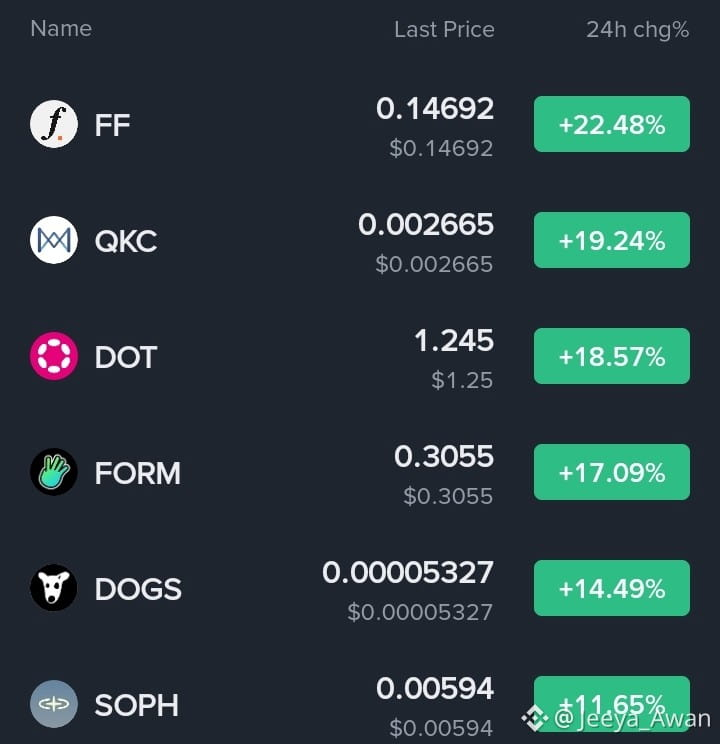
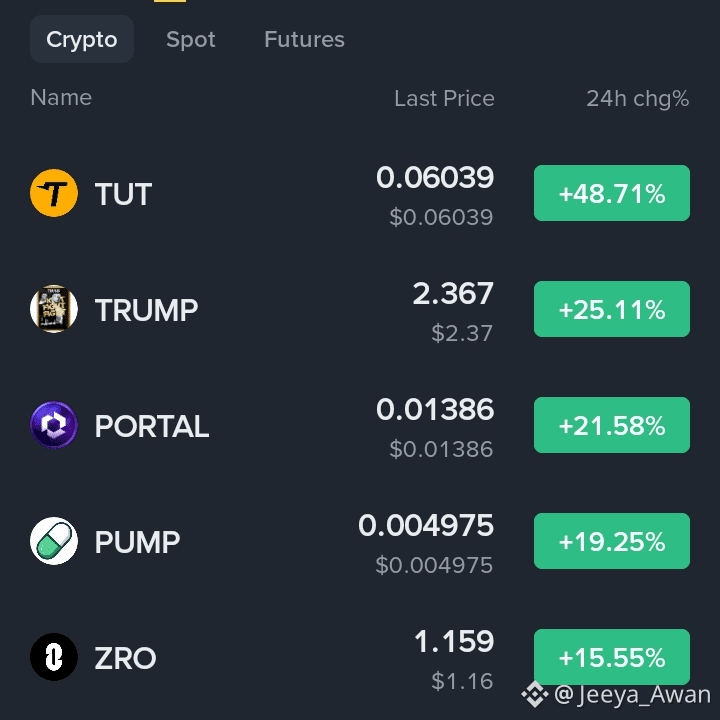
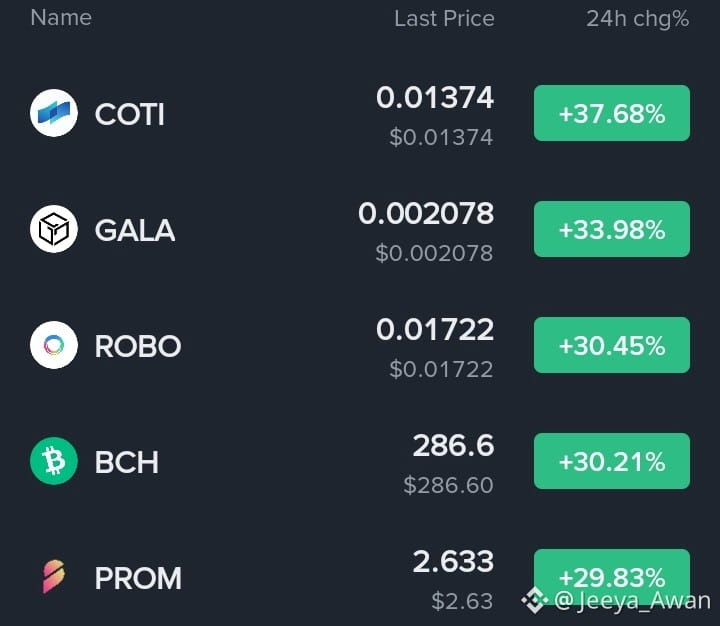
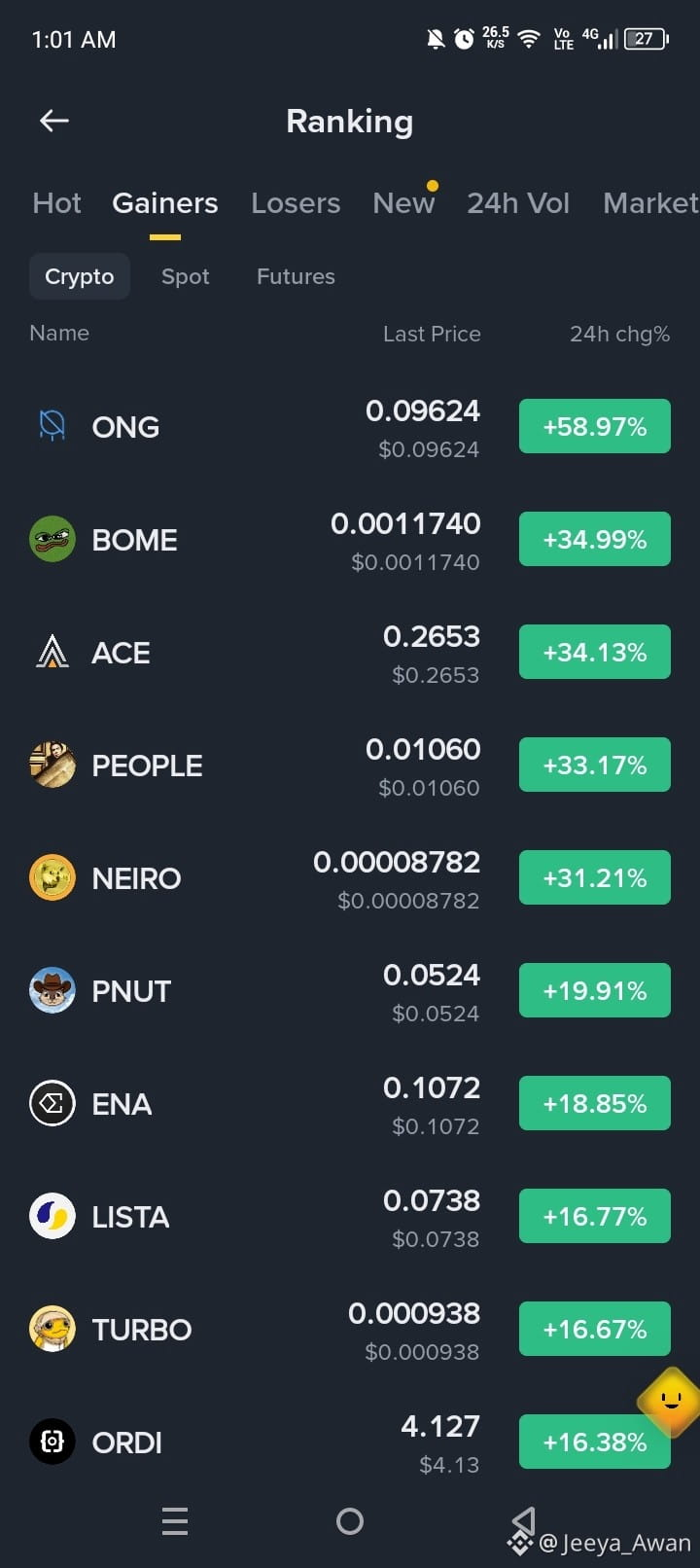
Markets are moving, and sentiments are changing quickly today. It is necessary to remain patient, monitor trading volumes, and manage risks. Opportunities arise when the noise settles. Trade wisely, protect your capital, and be consistent. #TrumpNewTariffs #TokenizedRealEstate
#fogo When I first used FOGO, I noticed that even execution speeds of a millisecond could reshape market behavior. Faster updates not only tighten spreads but also change the psychology of liquidity. Market makers constantly adjust prices, and inventory risk decreases accordingly. However, during periods of market stress, liquidity can evaporate even faster. Fogo's goal is not just chasing speed, but to redesign how the onchain markets behave under pressure. @Fogo Official $FOGO
40ms Blocks and 1.3s Finality: My Experience with Fogo
#fogo When I started using Fogo, I wasn't just looking for another fast blockchain. What I wanted to verify was whether a Layer-1 blockchain could meet institutional-grade standards without being subjected to real-world market pressures. Officially launched on January 15, 2026, Fogo aims to create a mature execution layer for institutional DeFi and high-frequency trading, rather than a general-purpose blockchain.
What attracted me most was its multi-location consensus model. Instead of forcing all validators globally to approve every transaction simultaneously, Fogo organizes validators into different geographical zones. This regionalized approach reduces geographical distance in the consensus process and delivers significant performance improvements. Fogo's block generation time is only 40ms, and the final execution time is approximately 1.3s, making the transaction experience feel more like traditional financial infrastructure than a traditional blockchain. The "Follow the Sun" rotation mechanism is another feature I greatly appreciate. Active consensus regions rotate between different centers globally based on the time of day. This maintains low latency during peak regional periods while preserving long-term decentralization. This isn't about sacrificing decentralization for speed, but rather a different design philosophy. Fogo internally operates on a customized Firedancer client built on the Solana Virtual Machine (SVM). This means it boasts extremely high throughput, over 130,000 transactions per second, and compatibility with Solana's native software. This combination is crucial for developers and traders. Performance isn't just theoretical; it's quantifiable.
I also noticed how Fogo's session mechanism enhances the user experience. Transactions can be completed without gas fees and signatures, making the user experience closer to Web 2.0 than traditional cryptocurrencies. For institutional and professional traders, this smoother interaction reduces operational complexity. Another key element is the carefully selected validators. Fogo enforces strict performance standards. This may not be universally accepted in principle, but from a high-frequency trading perspective, it ensures trading stability. If the quorum in a region fails, the network can seamlessly recover to global consensus. This backup mechanism enhances the system's resilience during market volatility. For me, the biggest advantage lies in settlement efficiency. Fogo shortens data transmission paths through standardized consensus standards, thereby reducing settlement time and mitigating the risks of slippage and insider trading. It appears to be designed specifically for high-risk environments where even a fraction of a second can be critical. Fogo's goal is not to be an all-encompassing system; instead, it focuses on providing predictability, speed, and stability for financial applications. This focus is particularly important in highly volatile markets. @Fogo Official $FOGO
I wasnโt even planning to look at $XRP tonigh but this chart made me pause.
On the 15m timeframe, price is sitting around $1.44 and what caught my attention is how cleanly itโs respecting the 200 MA near $1.424.
Earlier we saw that push from around $1.435 straight to $1.464. That wasnโt random. Volume expanded. Buyers showed up. Energy was there.
Instead of dumping hard, XRP is pulling back slowly. Making small higher lows. Cooling off without collapsing. Thatโs usually a healthier sign than straight vertical moves.
Right now it feels like the market is thinking.
Thereโs a clear battle zone:
โข Support around $1.435 โ $1.424 โข Resistance around $1.455 โ $1.464
But if $1.424 breaks cleanly, short-term structure weakens and sellers might test lower liquidity.
Also, zoom out for a second 30D and 90D performance hasnโt been pretty. Which makes this quiet stabilization even more interesting.
Sometimes reversals donโt start with fireworks. They start with boredom.
Iโm not calling a breakout yet. Iโm just watching how price behaves around this MA. That reaction will tell the real story.
What are you seeing on your side strength building or just another bounce?
#fogo When I first used Fogo, I wasn't chasing profits. I just wanted to see if I could make the trading experience on Fogo closer to traditional trading. On most trading platforms, you click and then have to wait. With Fogo, that feeling of waiting disappears. The increased speed changes your mindset. You're no longer afraid of delays and start thinking like a real trader. It's not perfect, but it's the first platform that makes trade execution feel so natural. @Fogo Official $FOGO
When I First Realized Speed Defines DeFi: My Experience with Fogo
#fogo When I realized the importance of latency in decentralized finance, I stopped viewing blockchain as an abstract technology and began to see it as the infrastructure of real-world markets. This shift occurred after I actually experienced Fogo and understood how its Layer 1 performance truly works. Designed for high-speed DeFi, Fogo's focus, in my experience, is not just a marketing gimmick but a genuine engineering practice. Running directly on the Solana SVM's Layer 1, Fogo achieves seamless integration with the Solana ecosystem. I was deeply impressed by the seamless experience while interacting with Fogo. Developers can deploy existing Solana software without modification. Familiar Rust and C++ tools, standard frameworks, and infrastructure function seamlessly. There are no migration issues, no need to rebuild from scratch, everything is a direct continuation.
On a technical level, Fogo's choice to use the Firedancer verification client from JumpCrypto also impressed me. This is not merely for marketing purposes. This client is optimized for parallel execution, memory utilization, and extremely low-latency networks. In practice, this translates to perfect transaction consistency and zero-latency transaction execution.Performance is the aspect where I noticed the most significant difference. Fogo aims for a block creation time of less than 40 milliseconds, with a final block generation time of approximately 1.3 seconds. With its multi-site consensus model, validator nodes are distributed across major financial data centers. Fogo doesn't ignore geolocation; instead, its architecture is designed to adapt to it. The physical distance between validator nodes is minimized, significantly reducing latency. This design choice makes perfect sense considering on-chain order books or derivatives trading.
Another important point I noticed is that Fogo operates as an independent network state. While it's compatible with SVM, it's not affected by Solana congestion. This decoupling creates a stable environment, crucial for high-frequency trading strategies and spot auctions.FOGO's session mechanism also caught my attention. Session-based interaction eliminates protocol-level fees, significantly improving the user experience. They felt closer to traditional financial platforms while maintaining the transparency of blockchain. After actually studying Fogo's architecture, I came to the conclusion that inefficient decentralization cannot support a true market. Fogo's design goals are high throughput, low latency, and superior reliability, and the difference is already evident. @Fogo Official $FOGO
Markets do not reward noise โ they reward patience and strategy. Volatility is an opportunity if you manage risks wisely. Accumulate wisely, trade disciplined, and never invest what you cannot afford to lose. In cryptocurrency, consistency always beats emotions. ๐ #TrumpNewTariffs #WhenWillCLARITYActPass
Iโve started to realize that colocated validators reveal how #fogo truly works. By shortening physical distance, they reduce latency volatility and optimize performance for consistent response times, not just peak TPS screenshots. Markets abhor chaos more than mediocre speed. If execution stays predictable even during volatility, this model makes sense. If not, the skepticism will persist. @Fogo Official $FOGO
When I first used FOGO, I thought I would hear another talk about "fast blockchains." But I didn't expect it to treat validator performance as a fundamental principle, not just a suggestion. FOGO is built on the Solana virtual machine, optimizing not only the code path but also the efficiency of the maintenance team. This difference changes everything.
Performance is More Than Just Software Most blockchains talk about optimizing virtual machines, modifying block parameters, or reducing network overload. But after carefully studying the FOGO model, I realized a worrying problem: Even perfect software cannot compensate for the instability of maintenance team performance. In a system with extremely low latency, where the target block creation time is around 40 milliseconds, weaker validators are not an isolated problem; they slow down the entire network. The slowest, most trusted participant determines the maximum consensus speed. This is not unfounded; it's simply a methodological issue. The Importance of Standards In studying Fogo's validation methodology, I noticed it establishes stricter operational standards: High-performance hardware requirementsOptimized network configurationControllable geographical clustersEffective monitoring of latency and uptime This isn't about exclusivity for its own sake, but about minimizing volatility. In decentralized systems, volatility is often more detrimental than average latency. A chain that runs fast most of the time but crashes occasionally is unreliable for serious financial applications. Fogo also seems to recognize that if block creation is measured in milliseconds, participation cannot be random. Trade-offs: Openness vs. Determinism I understand why some people worry about selective validation pools. The concept of "decentralization" has significant ideological implications in the cryptocurrency space. But after using Fogo and analyzing its premises, I understand the engineering logic behind it. If the goal is inevitably to achieve a latency-sensitive decentralized finance (DeFi) system, then: The quality of validators must be predictable.Hardware and network standards must be enforced.Inefficient nodes cannot unknowingly undermine consensus. This shifts decentralization from a node-based model to a performance-based model. This doesn't eliminate risk; instead, it raises concerns about governance and attention. But it highlights trade-offs, not ignoring them. Side Effects of Inefficient Validators One point I always keep in mind is: In high-speed consensus, inefficient validators not only harm themselves but also produce side effects. Delayed vote deploymentInconsistent block confirmationsIncreased probability of forksIncreased latency All these effects have a ripple effect. For trading systems, filtering engines, and order matching protocols, these effects will alter the final outcome. Discipline as Infrastructure What impressed me most was that Fogo treats validator discipline as an integral part of the product, not a secondary feature. Performance standards are integrated into the network's characteristics, marking Fogo's shift from "open participation at all costs" to "coordinated participation with specific expectations." In traditional finance, trading platforms have stringent requirements for the infrastructure of their members. Fogo seems closer to this model than an amateur consensus network.
My Key Insights After experiencing Fogo firsthand, I no longer evaluate it based on the common debate between decentralization and speed, but rather as a form of infrastructure. Fogo's second argument is clear: if you want low latency and predictable execution, you must implement validator performance standards. This implementation presents some challenges because it requires transparency and reliable governance. But without these, the promise of guaranteed execution collapses due to its inherent instability. Speed attracts attention; standards maintain the sustainability of speed. #fogo @Fogo Official $FOGO
#fogo My first experience with the Fogo processor made me realize that it wasn't selling absolute speed, but rather precision and stability. Process isolation, core stability, and scheduler noise suppression, these are real oscillation control measures, not just marketing gimmicks. For professional developers, a processor series that runs fast most of the time but falters under pressure is simply slow. Stability is Fogo's true value. @Fogo Official $FOGO
People always ask why traders return to Binance when the market becomes unstable. It's simple: reliability is more important than hype. When volatility rises sharply, you need not promises, but execution. Fast order matching, high liquidity, and a system that doesn't freeze when things heat up. In cryptocurrency, trust is not built on bull markets. It is proven in chaos. That's why stability wins. ๐ #WhenWillCLARITYActPass #StrategyBTCPurchase
#fogo When I first used Fogo, I felt that the concept of zones made more sense than any slogan of infinite decentralization. Fogo tightly groups validators to minimize communication latency and then rotate regions over time. It's not perfect, but it's geographically accurate. Consensus messages shouldn't spend most of their time being transmitted across continents. @Fogo Official $FOGO
Fogo Thesis # 1: Designing with Physical Space in Mind
In researching Fogo, I became increasingly interested in how it addresses a problem many Layer 1 blockchains overlook: physical distance. While most discussions about blockchain scalability focus on throughput, transactions per second, or token economics, I found Fogo's architecture is based on a more fundamental principle: physics. Built on top of the Solana Virtual Machine (SVM), Fogo doesn't treat the network as an abstract cloud. Instead, it acknowledges that validating nodes are located in real-world geographical zones, and that speed directly impacts consensus time. My paper explores how Fogo designs its infrastructure with physical space as a key constraint. The Weakest Link Problem in Decentralized Consensus Understanding its Limitations In traditional globally decentralized blockchains, overall performance depends on: The slowest validator nodeThe longest network round-trip time (RTT)The greatest physical distance between nodes Based on my analysis of latency parameters across multiple validator zones, I observed that global latency typically falls within the following ranges: 180-250 milliseconds (intercontinental)40-80 milliseconds (regional clusters) This means that if the blockchain's ultimate goal is latency below 100 milliseconds, relying on globally decentralized validators without compromise is impractical.
My Key Insights Fogo's argument is: Network speed is limited by physical distance, not just software optimization. Fogo's Engineering Approach Geographically Aware Auditor Design Based on my research, Fogo reduces latency fluctuations by: Encouraging the construction of geographically optimized auditor groupsDesigning compatible regions to minimize long-distance connectionsPrioritizing predictable latency over maximum decentralization Fogo does not increase node dispersion; instead, it improves the performance of stable node clusters. Multi-Zone Consensus Model In my view, Fogo's architecture appears to operate through the following mechanisms: High-speed local consensus regionsInter-regional synchronization layerReduced reliance on global round trips for each block This results in: Block time of approximately 40 millisecondsStable throughput under pressureReduced volatility during peak trading periods
Performance Vs. Abstract Decentralization My Comparative Observations When comparing different Layer 1 models, I found that: Fully global distribution of validators โ Higher theoretical decentralization, higher latencyRegional cluster optimization โ Lower latency, higher consistency Fogo relies on deterministic performance, especially in the following areas: Decentralized Finance (DeFi) implementationHigh-frequency trading environmentInstant liquidation engines In the market, a 200ms latency can alter trading outcomes. Ignoring physical space in the design leads to inefficiency.
Why Physical Space Matters? From a systems perspective, ignoring geographical location leads to: Slower block propagation speedIncreased probability of forksLarger fluctuations in confirmation rate Conversely, Fogo's space-aware design brings: Predictable block generation timeReduced consensus stabilityPredictability of enterprise-level deployment Through my research, I believe Fogo's first premise is not only technically significant but also philosophically significant. It redefines blockchain design from an abstract network model to a physically constrained decentralized system. By considering physical space, Fogo's design aligns its consensus architecture with real-world constraints. It doesn't ignore the importance of distance but rather designs an engineering solution that transcends distance. For high-performance financial infrastructure, this approach may not be an improvement, but an absolute necessity. #fogo @Fogo Official $FOGO