

Jeeva_jvan
6.9k Posts

Jeeva_jvan
 Square Verified+
Report
Block User
Web3 Strategist | 8M Views, Narratives to Alpha, Founder - Web3 Marketing Mavericks, NFTs, Memecoins, Market Psychology | Yaadhum Oore Yaavarum Kelir #DYOR
Open Trade

BNB Holder
High-Frequency Trader
5.6 Years
358 Following
43.1K+ Followers
33.7K+ Liked
Posts
Portfolio
All
Quotes
Videos
Live
PINNED
·
--
Bullish
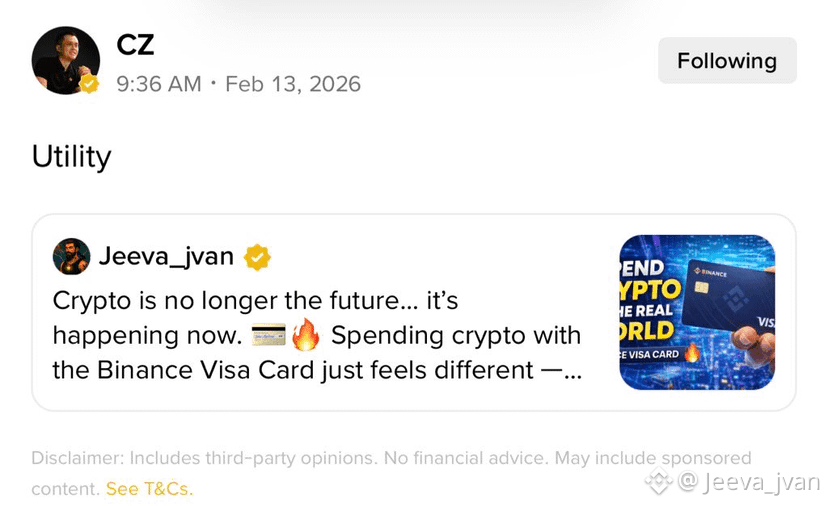
Moments like this made my day 🥹🔥
CZ shared my post — truly grateful for the support!
Thank you Binance and the Binance Square team 💛🚀 @CZ @Binance_Square_Official
#Binance #CZ #BinanceSquare #crypto #Community
Moments like this made my day 🥹🔥
CZ shared my post — truly grateful for the support!
Thank you Binance and the Binance Square team 💛🚀 @CZ @Binance_Square_Official
#Binance #CZ #BinanceSquare #crypto #Community
CZ shared my post — truly grateful for the support!
Thank you Binance and the Binance Square team 💛🚀 @CZ @Binance_Square_Official
#Binance #CZ #BinanceSquare #crypto #Community
14
3
86
748
PINNED
·
--
Bullish
Verified
Crypto is no longer the future… it’s happening now. 💳🔥
Spending crypto with the Binance Visa Card just feels different — fast, simple, and global. This is how Web3 connects to the real world.
BNB isn’t just a token… it’s utility. 💛
#BNB #Binance #Crypto #Web3 #FutureOfPayments $BNB
{future}(BNBUSDT)
Crypto is no longer the future… it’s happening now. 💳🔥
Spending crypto with the Binance Visa Card just feels different — fast, simple, and global. This is how Web3 connects to the real world.
BNB isn’t just a token… it’s utility. 💛
#BNB #Binance #Crypto #Web3 #FutureOfPayments $BNB
Spending crypto with the Binance Visa Card just feels different — fast, simple, and global. This is how Web3 connects to the real world.
BNB isn’t just a token… it’s utility. 💛
#BNB #Binance #Crypto #Web3 #FutureOfPayments $BNB


505
211
556
41.4k
·
--
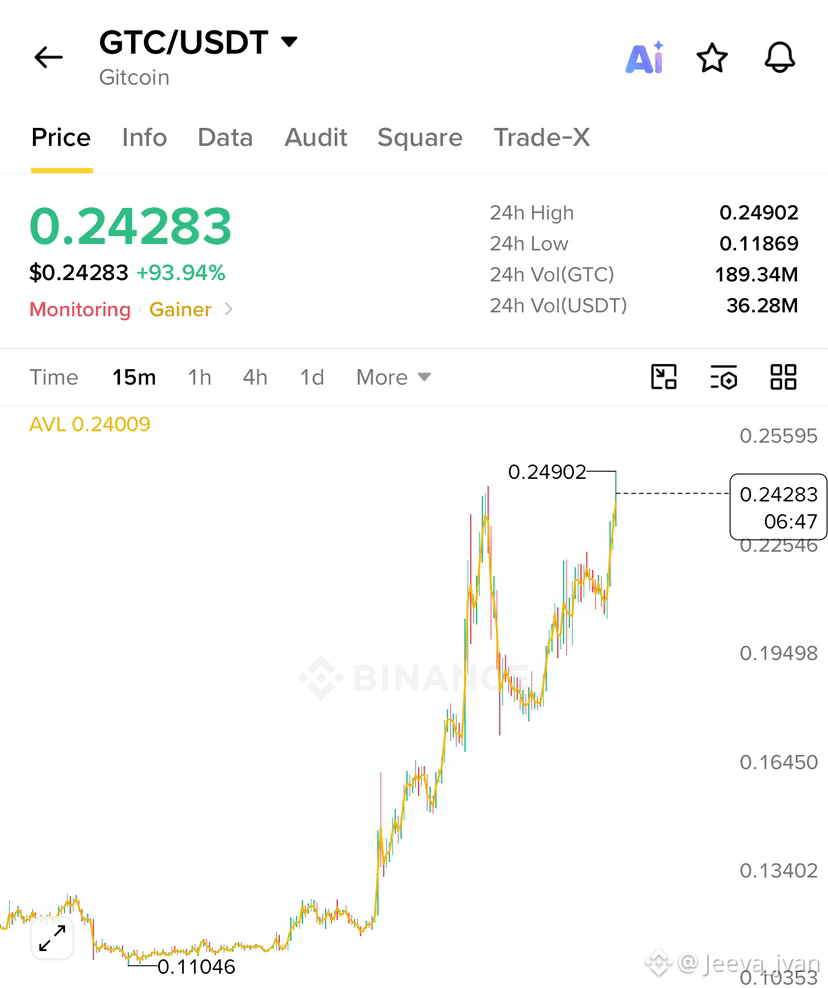
GTC is moving hard! 🔥
+94% in 24H and testing the $0.249 zone. Momentum is strong, but RSI is overheated — watch the next move carefully.
#DYOR #GTC #Crypto #Altcoins #jeevajvan $GTC
GTC is moving hard! 🔥
+94% in 24H and testing the $0.249 zone. Momentum is strong, but RSI is overheated — watch the next move carefully.
#DYOR #GTC #Crypto #Altcoins #jeevajvan $GTC
+94% in 24H and testing the $0.249 zone. Momentum is strong, but RSI is overheated — watch the next move carefully.
#DYOR #GTC #Crypto #Altcoins #jeevajvan $GTC
301
·
--
ApePay is shipping.
The first payments are now live on ApeChain, powered by Caldera.
Real payments. Real adoption.
Could this be the next big step for $APE? 🦍
#APE #ApePay #apechain #Caldera #jeevajvan $APE
{future}(APEUSDT)
ApePay is shipping.
The first payments are now live on ApeChain, powered by Caldera.
Real payments. Real adoption.
Could this be the next big step for $APE ? 🦍
#APE #ApePay #apechain #Caldera #jeevajvan $APE
The first payments are now live on ApeChain, powered by Caldera.
Real payments. Real adoption.
Could this be the next big step for $APE ? 🦍
#APE #ApePay #apechain #Caldera #jeevajvan $APE

1
1
525
·
--
Binance SAFU is back in focus.
With the reserve around 15,000 BTC, any major SAFU rebalancing could be an important signal for the market.
Watching this closely.
#dyor #Binance #SAFU #BTC #jeevajvan
Binance SAFU is back in focus.
With the reserve around 15,000 BTC, any major SAFU rebalancing could be an important signal for the market.
Watching this closely.
#dyor #Binance #SAFU #BTC #jeevajvan
With the reserve around 15,000 BTC, any major SAFU rebalancing could be an important signal for the market.
Watching this closely.
#dyor #Binance #SAFU #BTC #jeevajvan

1
3
578
·
--
Bullish
Verified
Just Hype 🔥
23%
AI + BNB integration
23%
Big BNB utility upgrade
46%
Something completely unexpecte
8%
13 votes • Voting closed
4
591
·
--
30D trade $TRUMP 19.2K USDT
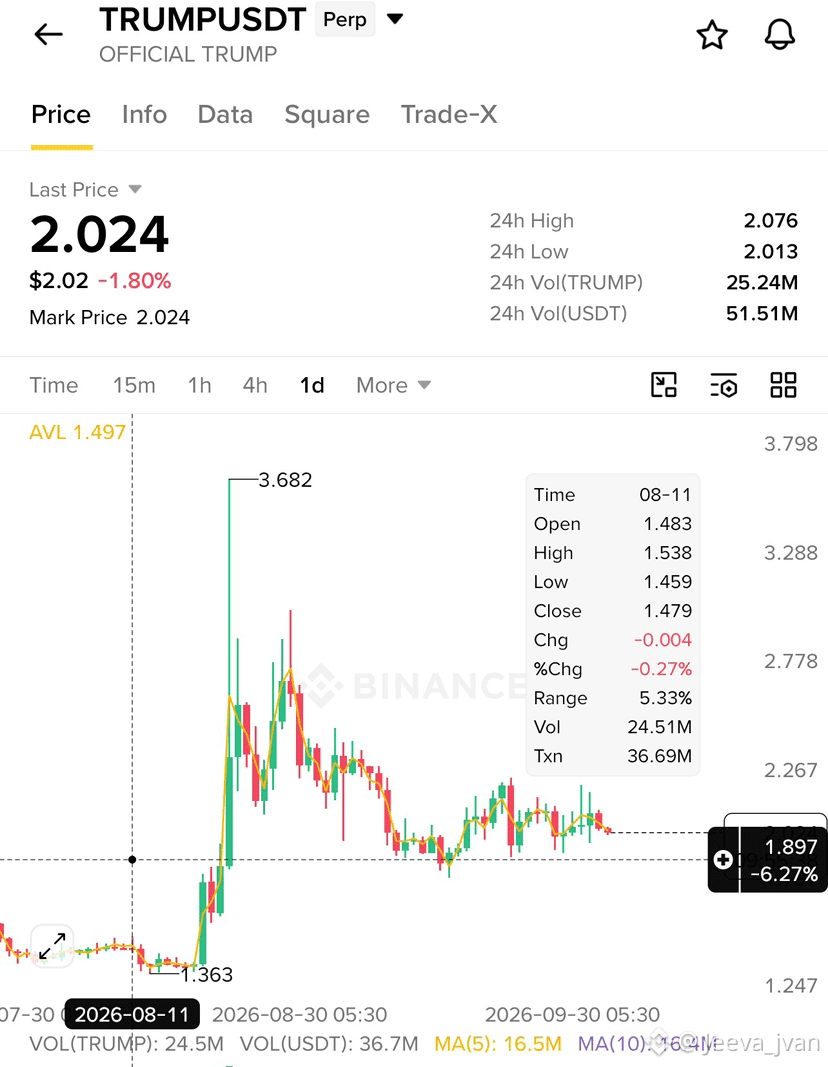
TRUMP looks like it’s building up for something. 👀
This zone is getting interesting — watch the range carefully. A breakout or breakdown could come fast.
Don’t chase. Wait for confirmation. DYOR.
#TRUMP #TRUMPUSDT #Crypto #Trading #DYOR $TRUMP
TRUMP looks like it’s building up for something. 👀
This zone is getting interesting — watch the range carefully. A breakout or breakdown could come fast.
Don’t chase. Wait for confirmation. DYOR.
#TRUMP #TRUMPUSDT #Crypto #Trading #DYOR $TRUMP
This zone is getting interesting — watch the range carefully. A breakout or breakdown could come fast.
Don’t chase. Wait for confirmation. DYOR.
#TRUMP #TRUMPUSDT #Crypto #Trading #DYOR $TRUMP
1
917
·
--
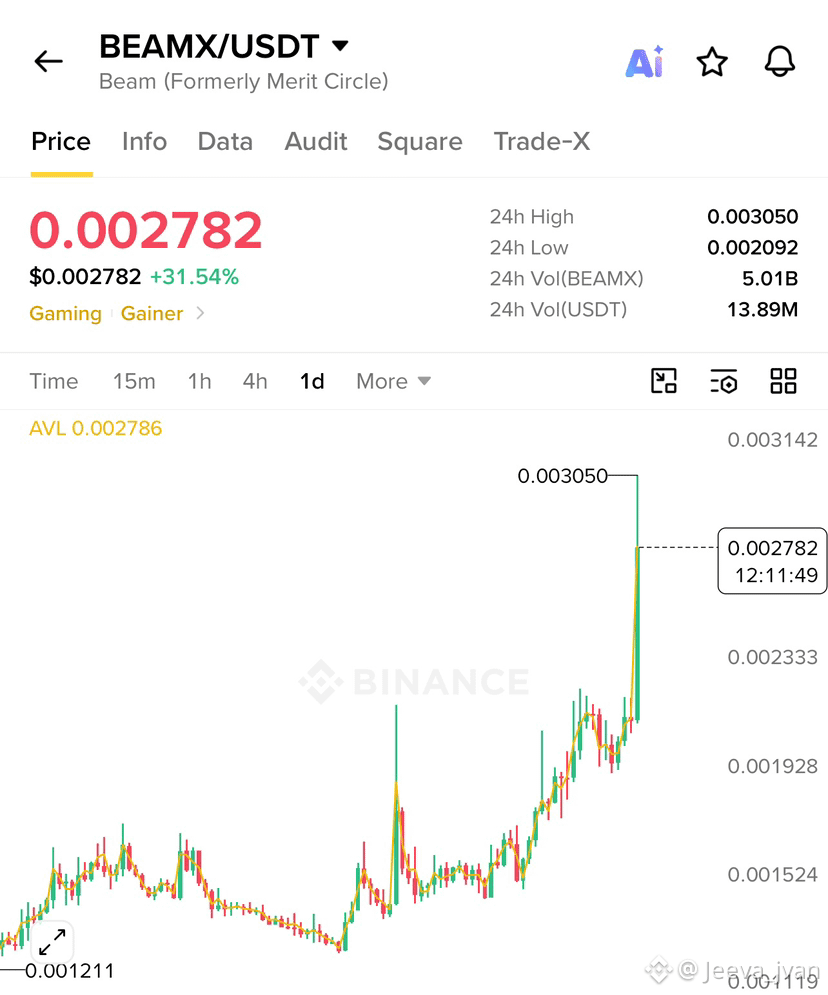
BEAMX/USDT — Opportunity Entry
BEAMX is showing strong momentum, but RSI is already in the overbought zone, so chasing the current pump can be risky.
Entry Zone: 0.00240 – 0.00260
Aggressive Entry: 0.00265 – 0.00278
TP1: 0.00305
TP2: 0.00335
TP3: 0.00380
Stop Loss: 0.00215
If price pulls back and holds the entry zone, it could offer a better risk/reward setup. Don’t chase a vertical candle.
#DYOR — Not financial advice.$BEAMX
#BEAMX #Crypto #Altcoins #jeevajvan
{future}(BEAMXUSDT)
BEAMX/USDT — Opportunity Entry
BEAMX is showing strong momentum, but RSI is already in the overbought zone, so chasing the current pump can be risky.
Entry Zone: 0.00240 – 0.00260
Aggressive Entry: 0.00265 – 0.00278
TP1: 0.00305
TP2: 0.00335
TP3: 0.00380
Stop Loss: 0.00215
If price pulls back and holds the entry zone, it could offer a better risk/reward setup. Don’t chase a vertical candle.
#DYOR — Not financial advice.$BEAMX
#BEAMX #Crypto #Altcoins #jeevajvan
BEAMX is showing strong momentum, but RSI is already in the overbought zone, so chasing the current pump can be risky.
Entry Zone: 0.00240 – 0.00260
Aggressive Entry: 0.00265 – 0.00278
TP1: 0.00305
TP2: 0.00335
TP3: 0.00380
Stop Loss: 0.00215
If price pulls back and holds the entry zone, it could offer a better risk/reward setup. Don’t chase a vertical candle.
#DYOR — Not financial advice.$BEAMX
#BEAMX #Crypto #Altcoins #jeevajvan
314
·
--
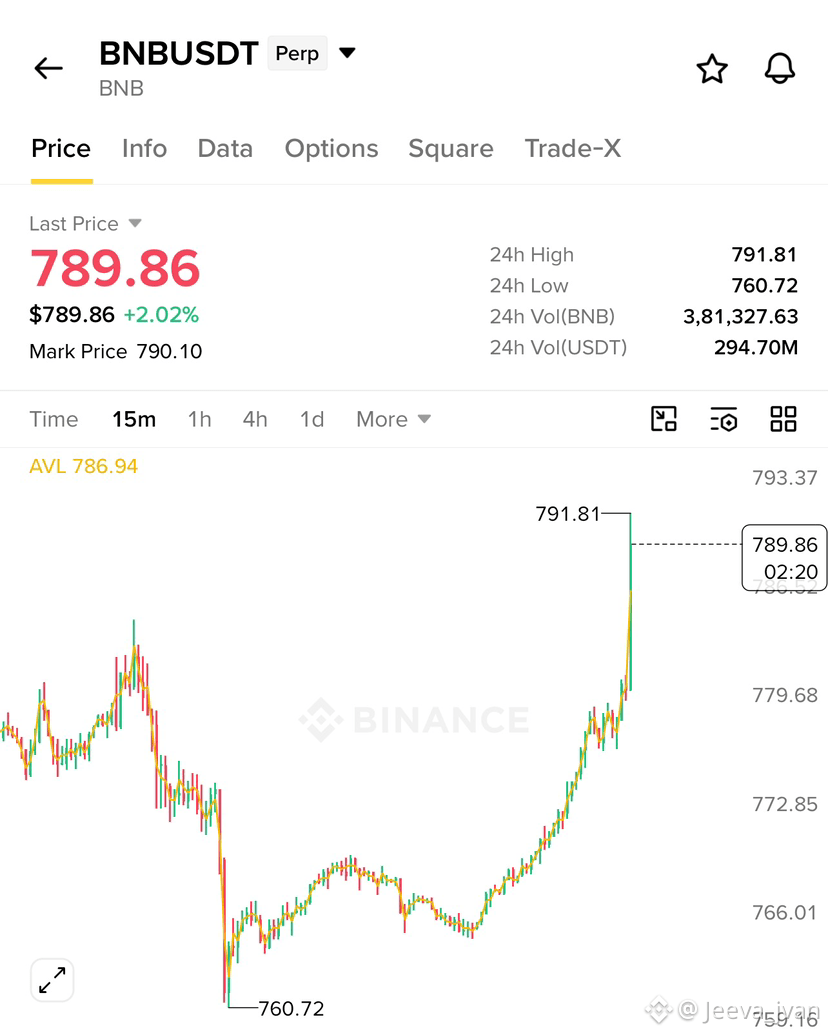
BNB is moving like digital gold these days.
Strong momentum, strong demand, and no signs of slowing down. 🚀
#BNB #Crypto #BNBUSDT #DYOR #jeevajvan $BNB
{future}(BNBUSDT)
BNB is moving like digital gold these days.
Strong momentum, strong demand, and no signs of slowing down. 🚀
#BNB #Crypto #BNBUSDT #DYOR #jeevajvan $BNB
Strong momentum, strong demand, and no signs of slowing down. 🚀
#BNB #Crypto #BNBUSDT #DYOR #jeevajvan $BNB
5
2k
·
--
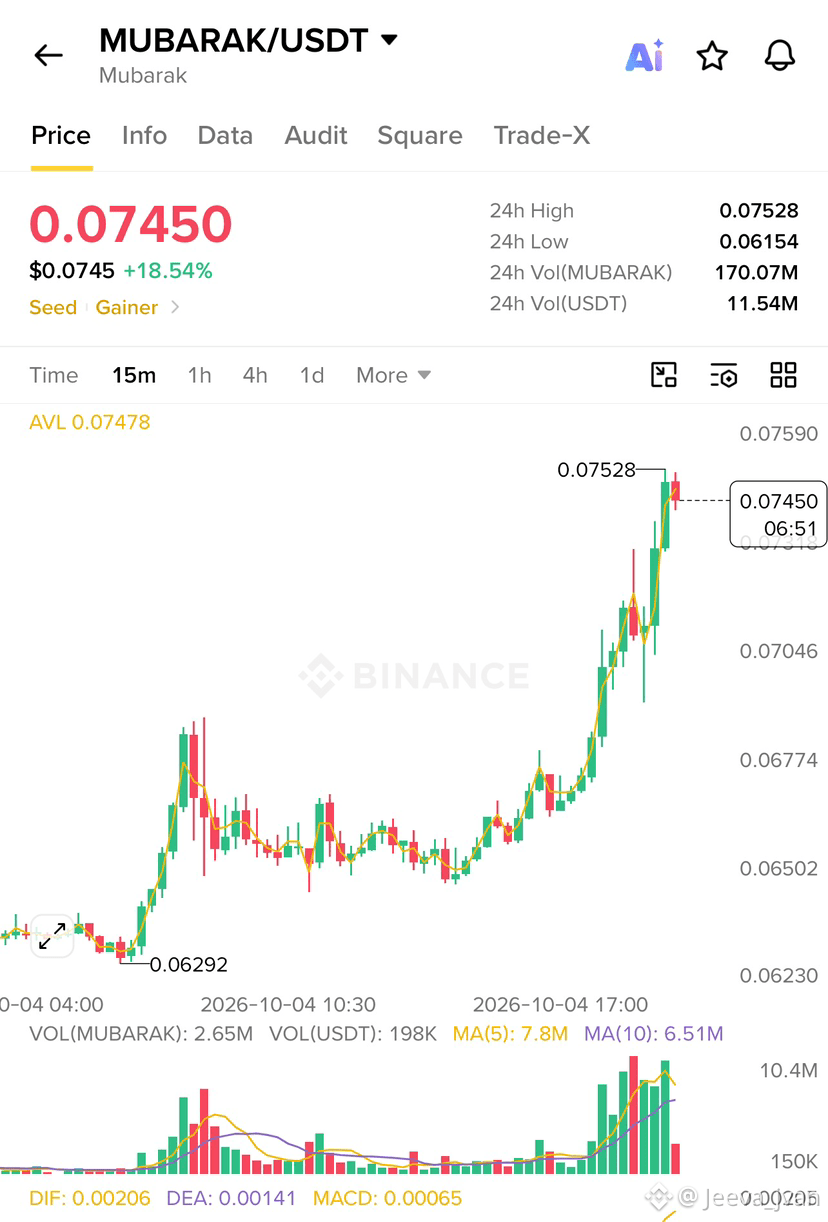
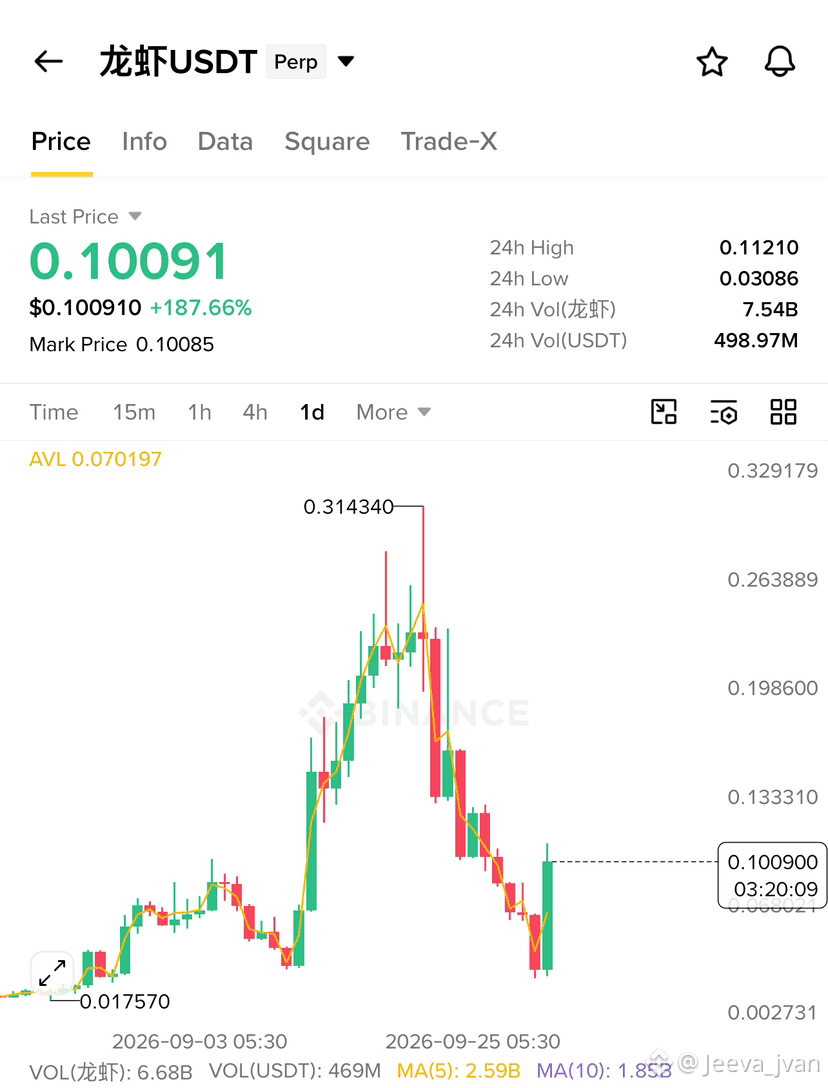
🚀 Bullish setup: +187% in 24H with massive volume. The bounce from the lows is getting attention — now the key is whether it can hold above 0.10 and build momentum.
0.10 is the battlefield. 👀 #EntryOpportunity #Binance #dyor #BTC #bnb
🚀 Bullish setup: +187% in 24H with massive volume. The bounce from the lows is getting attention — now the key is whether it can hold above 0.10 and build momentum.
0.10 is the battlefield. 👀 #EntryOpportunity #Binance #dyor #BTC #bnb
0.10 is the battlefield. 👀 #EntryOpportunity #Binance #dyor #BTC #bnb
2
2.8k
·
--
Verified
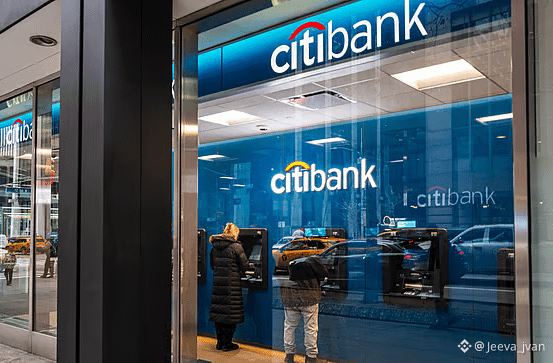
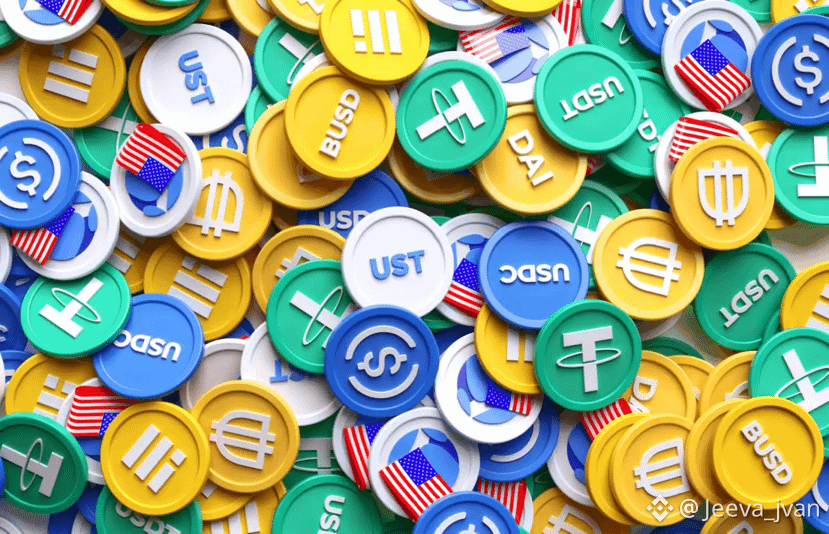
Citigroup is exploring stablecoin payments with Coinbase to help corporate clients make faster, more efficient payments.
Traditional banking meets crypto innovation. The future of payments is evolving!
#Crypto #Coinbase #Stablecoins #Citigroup #jeevajvan
Citigroup is exploring stablecoin payments with Coinbase to help corporate clients make faster, more efficient payments.
Traditional banking meets crypto innovation. The future of payments is evolving!
#Crypto #Coinbase #Stablecoins #Citigroup #jeevajvan
Traditional banking meets crypto innovation. The future of payments is evolving!
#Crypto #Coinbase #Stablecoins #Citigroup #jeevajvan
1
1
1.2k
·
--
Article
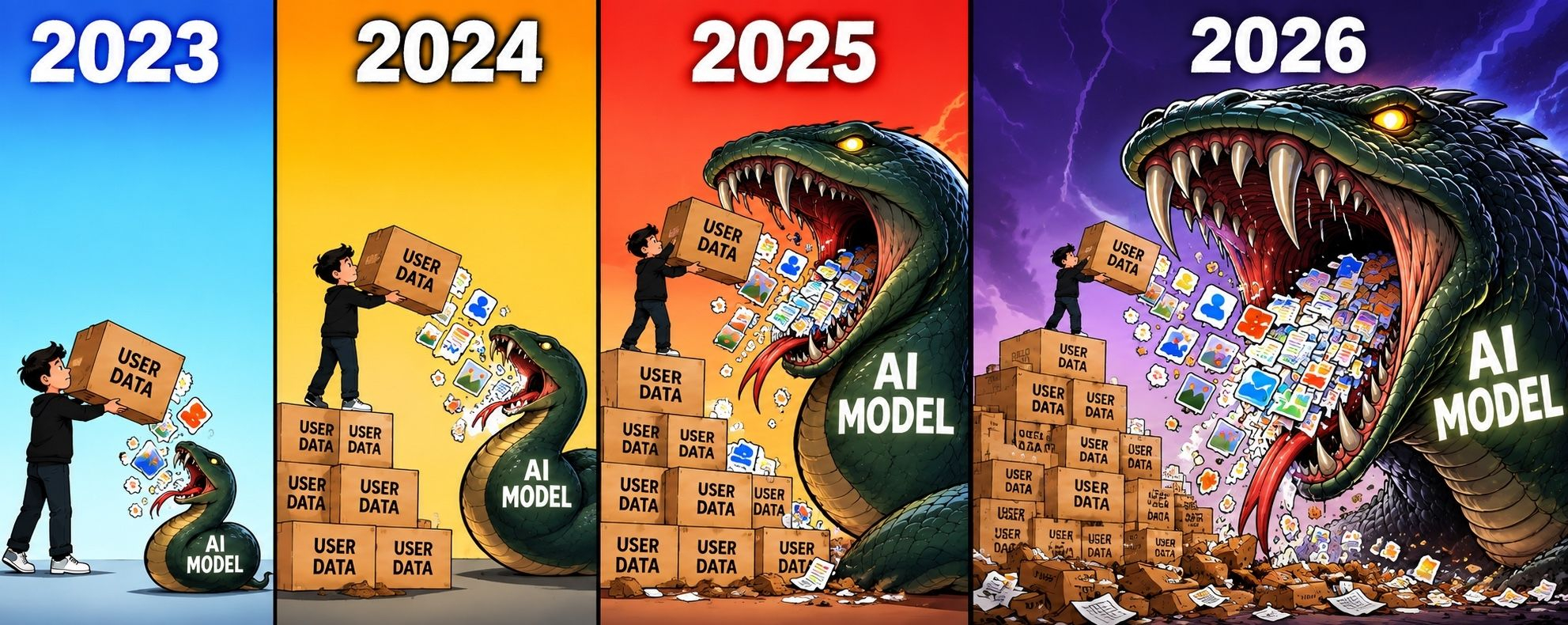
AI's Growing Hunger for Data: From a Small Model to a Digital MonsterIn 2023, AI was just getting started. By 2026, it has become a giant that needs more and more data to grow.
The real power of AI isn't just computing. It's the data we feed it. Every image, text, video, and interaction helps train smarter models.
But here's the big question: As AI becomes more powerful, how much of our data will it need next?
The future of AI will depend not only on how smart models become, but also on how responsibly we manage the data behind them.
#AI #ArtificialIntelligence #data #Web3 #jeevajvan
AI's Growing Hunger for Data: From a Small Model to a Digital Monster
In 2023, AI was just getting started. By 2026, it has become a giant that needs more and more data to grow.
The real power of AI isn't just computing. It's the data we feed it. Every image, text, video, and interaction helps train smarter models.
But here's the big question: As AI becomes more powerful, how much of our data will it need next?
The future of AI will depend not only on how smart models become, but also on how responsibly we manage the data behind them.
#AI #ArtificialIntelligence #data #Web3 #jeevajvan
The real power of AI isn't just computing. It's the data we feed it. Every image, text, video, and interaction helps train smarter models.
But here's the big question: As AI becomes more powerful, how much of our data will it need next?
The future of AI will depend not only on how smart models become, but also on how responsibly we manage the data behind them.
#AI #ArtificialIntelligence #data #Web3 #jeevajvan
8
1
44
22.2k
·
--
🏦 Banks can stop. Payments shouldn’t.
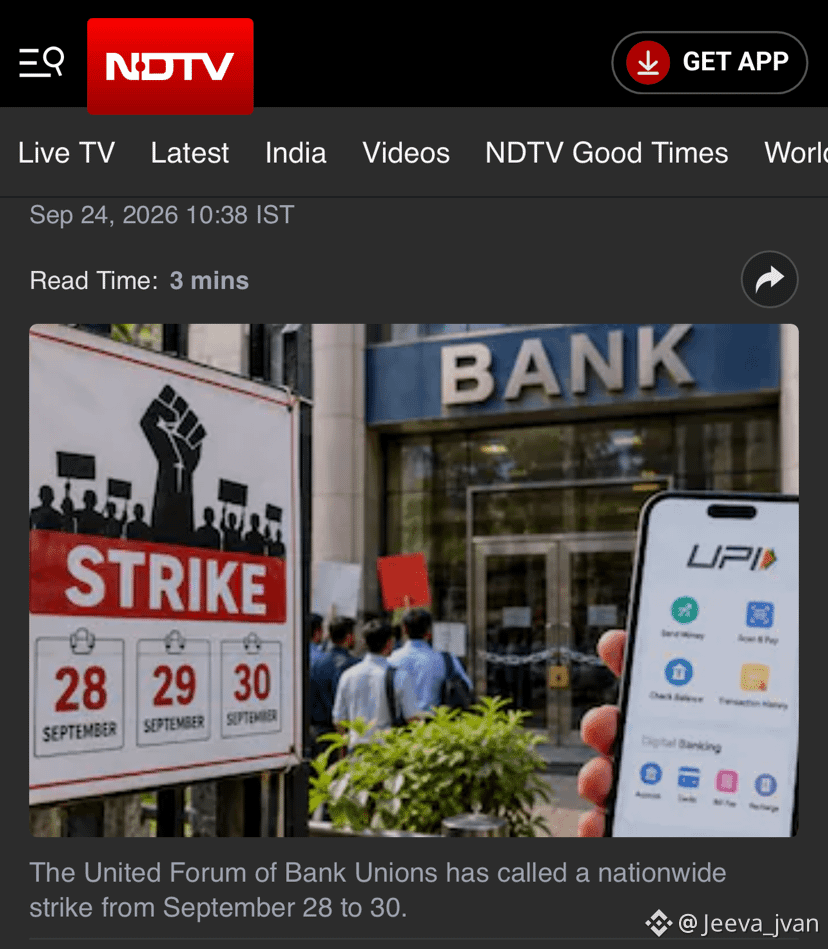
India is heading into a 3-day bank strike from Sept 28–30, which may disrupt some physical banking services.
This highlights one of crypto’s biggest ideas: a 24/7, global financial network that doesn’t depend on bank branch hours.
No weekend. No holiday. No waiting for Monday.
The future of payments is always-on. 🌍₿ #btc #ETC #xrp #sol #bankstrike
🏦 Banks can stop. Payments shouldn’t.
India is heading into a 3-day bank strike from Sept 28–30, which may disrupt some physical banking services.
This highlights one of crypto’s biggest ideas: a 24/7, global financial network that doesn’t depend on bank branch hours.
No weekend. No holiday. No waiting for Monday.
The future of payments is always-on. 🌍₿ #btc #ETC #xrp #sol #bankstrike
India is heading into a 3-day bank strike from Sept 28–30, which may disrupt some physical banking services.
This highlights one of crypto’s biggest ideas: a 24/7, global financial network that doesn’t depend on bank branch hours.
No weekend. No holiday. No waiting for Monday.
The future of payments is always-on. 🌍₿ #btc #ETC #xrp #sol #bankstrike

3
1.9k
·
--
Bullish
CZ has taken every step to push crypto forward globally — from supporting governments exploring adoption to helping bring crypto to new communities.
From being called a “scam” to becoming part of the future, the industry has come a long way. Crypto adoption continues to grow. @BNB_Chain @CZ 👏👏💛💛💛Binance #Binance #BinanceSquare #bnb #blockchain #crypto
CZ has taken every step to push crypto forward globally — from supporting governments exploring adoption to helping bring crypto to new communities.
From being called a “scam” to becoming part of the future, the industry has come a long way. Crypto adoption continues to grow. @BNB Chain @CZ 👏👏💛💛💛Binance #Binance #BinanceSquare #bnb #blockchain #crypto
From being called a “scam” to becoming part of the future, the industry has come a long way. Crypto adoption continues to grow. @BNB Chain @CZ 👏👏💛💛💛Binance #Binance #BinanceSquare #bnb #blockchain #crypto

1
1
9
5.7k
·
--
Bullish
30D trade $BTC 4.5K USDT
TIM DRAPER: APPLE & META SHOULD HOLD BITCOIN
Billionaire investor Tim Draper says it’s “irresponsible” for giants like Apple and Meta to hold zero Bitcoin on their balance sheets.
His message is simple:
Big companies should start treating BTC as a treasury asset.
Apple + Meta + Bitcoin…
Could this become the next major corporate Bitcoin story? 👀
#Bitcoin #BTC #Apple #Meta #jeevajvan $BTC
TIM DRAPER: APPLE & META SHOULD HOLD BITCOIN
Billionaire investor Tim Draper says it’s “irresponsible” for giants like Apple and Meta to hold zero Bitcoin on their balance sheets.
His message is simple:
Big companies should start treating BTC as a treasury asset.
Apple + Meta + Bitcoin…
Could this become the next major corporate Bitcoin story? 👀
#Bitcoin #BTC #Apple #Meta #jeevajvan $BTC
Billionaire investor Tim Draper says it’s “irresponsible” for giants like Apple and Meta to hold zero Bitcoin on their balance sheets.
His message is simple:
Big companies should start treating BTC as a treasury asset.
Apple + Meta + Bitcoin…
Could this become the next major corporate Bitcoin story? 👀
#Bitcoin #BTC #Apple #Meta #jeevajvan $BTC

1
2
2.5k
Log in to explore more content
Join global crypto users on Binance Square
⚡️ Get latest and useful information about crypto.
💬 Trusted by the world’s largest crypto exchange.
👍 Discover real insights from verified creators.
Email / Phone number
Trending Topics
ADAGains10%Above$0.27
8,529 views
149 Discussing
$ADA is making a strong move today jumping over 10 percent to around 027 and breaking into a new 90 day high
Trading volume has also surged above 1 billion showing strong market activity
The move comes as $ADA continues its recovery from the June lows while its recent technical structure has turned more bullish
The 027 to 028 zone is now the key area to watch A sustained breakout could open the door toward higher resistance levels
But after such a sharp daily move volatility could remain high
#ADAGains10%Above$0.27 #crypto #ADA #Cardano #crypto #Write2Earn
AbdullahAbid_7
·0 Likes
·289 views
ETHUp70%InQ3ButLiquidityFalls
100,293 views
879 Discussing
EthStakingExitQueueHits2026High
37,103 views
648 Discussing