
عبدالحكيم العنزي
36 Posts

عبدالحكيم العنزي
حسابي موحد في تويتر و يوتيوب و تيليجرام و سناب شات hkemXrp
Open Trade

PUMP Holder
Frequent Trader
5.4 Years
59 Following
16 Followers
18 Liked
Posts
Portfolio
All
Quotes


OpenGradient
·
--
Our strongest unrestricted video model is live at @OpenGradient
Happy Horse 1.1 generates whatever you prompt, stores nothing after it renders, and still shoots full cinematic quality.
Use your creative mind in private → http://chat.opengradient.ai
Happy Horse 1.1 generates whatever you prompt, stores nothing after it renders, and still shoots full cinematic quality.
Use your creative mind in private → http://chat.opengradient.ai


Binance News
·
--
Crypto News: Crypto Rebounds Modestly — But Funding Rates Reveal the Bounce Isn't Backed by Bullish Conviction
Bitcoin is trading at $63,671.32, up 1.60% over the past 24 hours, while Ethereum has climbed to $1,723.81, up 1.64% over the same period — a modest rebound following the four-day decline that took Bitcoin below $62,400 in the wake of Wednesday's hawkish Fed dot plot and the STRC-driven credit market stress.
What funding rates reveal beneath the price action
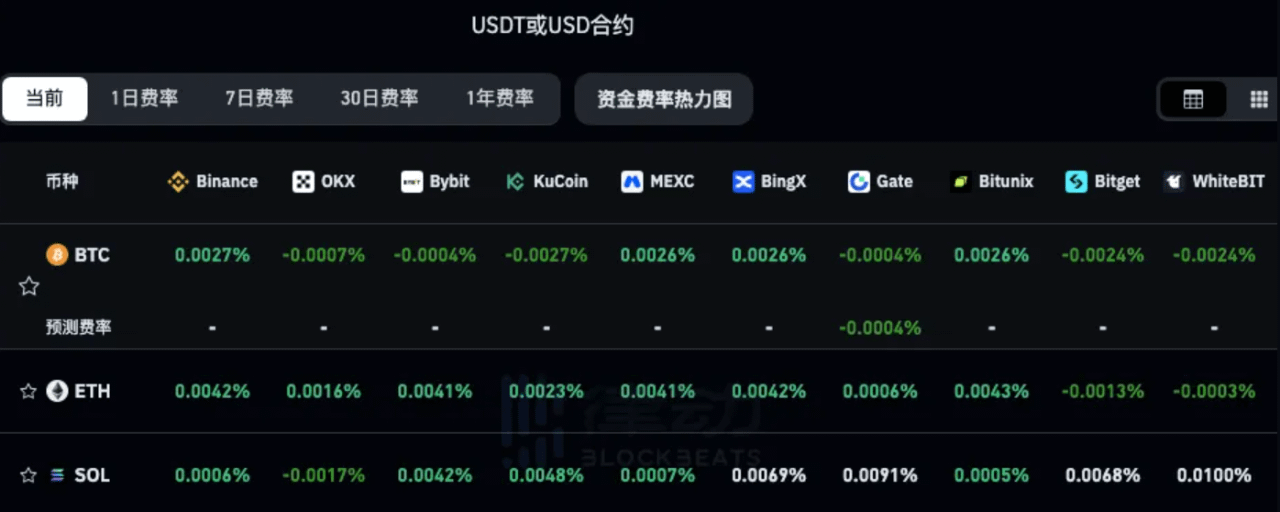
Despite the price recovery, funding rates across major trading platforms tell a more cautious story. BTC funding rates are below the bullish threshold on all platforms, with roughly half turning negative — indicating that the price increase has not been accompanied by a corresponding recovery in bullish sentiment among leveraged traders. ETH funding rates are similarly in bearish territory across platforms, though most remain positive, suggesting Ethereum sentiment is comparatively less negative than Bitcoin's at this moment.
A funding rate of 0.01% represents the neutral benchmark. Rates above that threshold typically indicate bullish positioning, where long traders are paying shorts to maintain leveraged positions. Rates below approximately 0.005% indicate bearish positioning, where the balance of leveraged demand has shifted toward shorts or simply away from aggressive long conviction.
Why this divergence matters
The gap between rising spot prices and weak funding rates is a meaningful signal in itself. When price rises but funding rates stay low or negative, it typically suggests the rally is being driven by short covering or spot buying rather than fresh leveraged long conviction — a pattern consistent with what derivatives data showed during Monday's earlier short-squeeze-driven bounce to $66,000 following the initial US-Iran deal confirmation.
This pattern also lines up with the broader market structure described throughout the week: more than $450 million in long liquidations following Wednesday's Fed meeting, elevated put option demand targeting a potential slide to $52,000, and persistent negative cumulative volume delta across most major tokens. Traders who were burned by the post-FOMC selloff and the STRC credit scare appear to be treating today's bounce with caution rather than re-leveraging aggressively into long positions.
The broader context
Today's modest recovery arrives against a backdrop of accumulating structural signals — Glassnode's Accumulation Trend Score at its maximum reading, K33's record 79% long-term holder supply share, and CryptoQuant's Sharpe ratio hitting historical cycle-bottom levels — all of which suggest underlying demand conditions have been improving even through the week's volatility. The disconnect between that accumulation picture and today's tepid funding rates may simply reflect the lag between spot-level accumulation by long-term holders and the return of confidence among shorter-term leveraged traders, who tend to be the last cohort to re-engage after a sharp selloff.
Whether today's bounce extends or fades will likely depend on whether funding rates begin normalizing toward the bullish threshold in the coming sessions — a shift that would indicate leveraged traders are starting to share the conviction reflected in the broader on-chain accumulation data, rather than remaining skeptical of the recovery's durability.
What funding rates reveal beneath the price action
Despite the price recovery, funding rates across major trading platforms tell a more cautious story. BTC funding rates are below the bullish threshold on all platforms, with roughly half turning negative — indicating that the price increase has not been accompanied by a corresponding recovery in bullish sentiment among leveraged traders. ETH funding rates are similarly in bearish territory across platforms, though most remain positive, suggesting Ethereum sentiment is comparatively less negative than Bitcoin's at this moment.
A funding rate of 0.01% represents the neutral benchmark. Rates above that threshold typically indicate bullish positioning, where long traders are paying shorts to maintain leveraged positions. Rates below approximately 0.005% indicate bearish positioning, where the balance of leveraged demand has shifted toward shorts or simply away from aggressive long conviction.
Why this divergence matters
The gap between rising spot prices and weak funding rates is a meaningful signal in itself. When price rises but funding rates stay low or negative, it typically suggests the rally is being driven by short covering or spot buying rather than fresh leveraged long conviction — a pattern consistent with what derivatives data showed during Monday's earlier short-squeeze-driven bounce to $66,000 following the initial US-Iran deal confirmation.
This pattern also lines up with the broader market structure described throughout the week: more than $450 million in long liquidations following Wednesday's Fed meeting, elevated put option demand targeting a potential slide to $52,000, and persistent negative cumulative volume delta across most major tokens. Traders who were burned by the post-FOMC selloff and the STRC credit scare appear to be treating today's bounce with caution rather than re-leveraging aggressively into long positions.
The broader context
Today's modest recovery arrives against a backdrop of accumulating structural signals — Glassnode's Accumulation Trend Score at its maximum reading, K33's record 79% long-term holder supply share, and CryptoQuant's Sharpe ratio hitting historical cycle-bottom levels — all of which suggest underlying demand conditions have been improving even through the week's volatility. The disconnect between that accumulation picture and today's tepid funding rates may simply reflect the lag between spot-level accumulation by long-term holders and the return of confidence among shorter-term leveraged traders, who tend to be the last cohort to re-engage after a sharp selloff.
Whether today's bounce extends or fades will likely depend on whether funding rates begin normalizing toward the bullish threshold in the coming sessions — a shift that would indicate leveraged traders are starting to share the conviction reflected in the broader on-chain accumulation data, rather than remaining skeptical of the recovery's durability.


专业交易员_291
·
--
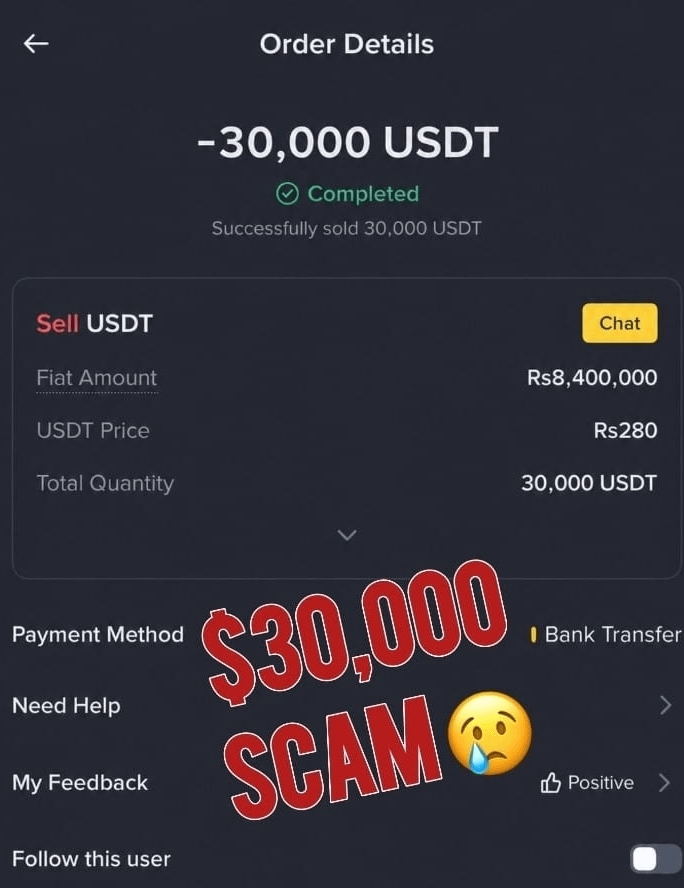
⚠️ P2P Scam Warning - My Real Experience! ⚠️
I lost $30,000 in USDT to a P2P scam, and it still hurts 💔📉
On May 15, I listed USDT for sale on the Binance P2P platform, and a buyer reached out who seemed totally legit 🤝🔥
They were labeled as a "trusted trader," so I didn’t suspect anything.
I received the payment, got an SMS notification from the bank, and everything seemed normal 💳📲
At that moment, I thought the trade was a success.
Then everything changed suddenly ⚠️
The buyer canceled the order, filed a fake report, and my account got frozen 😳🧊
The payment was reversed, and my digital funds vanished… just like that 💔📉
All my months of hard work disappeared in an instant.
𝗠𝗮 𝘁𝗮𝗹𝗮𝗺𝗮𝘁 𝗺𝗶𝗻 𝗹𝗼𝘀𝘀 $30,000:
1️⃣ Don’t trust anyone
Even if they seem reliable or "verified," it doesn’t mean they are safe. Scammers know how to build trust quickly 🎭⚠️
2️⃣ Confirm real payment
An SMS or screenshot means nothing. Don’t release coins until you see the money actually in your bank account 💳🚫
3️⃣ Don’t rush any trade
Pressure and speed are scammers' weapons. If you feel rushed or anxious, stop immediately 🛑🔥
Losing one trade is better than losing all your capital 💔📊
$AIA $ARC $US 🚨
I lost $30,000 in USDT to a P2P scam, and it still hurts 💔📉
On May 15, I listed USDT for sale on the Binance P2P platform, and a buyer reached out who seemed totally legit 🤝🔥
They were labeled as a "trusted trader," so I didn’t suspect anything.
I received the payment, got an SMS notification from the bank, and everything seemed normal 💳📲
At that moment, I thought the trade was a success.
Then everything changed suddenly ⚠️
The buyer canceled the order, filed a fake report, and my account got frozen 😳🧊
The payment was reversed, and my digital funds vanished… just like that 💔📉
All my months of hard work disappeared in an instant.
𝗠𝗮 𝘁𝗮𝗹𝗮𝗺𝗮𝘁 𝗺𝗶𝗻 𝗹𝗼𝘀𝘀 $30,000:
1️⃣ Don’t trust anyone
Even if they seem reliable or "verified," it doesn’t mean they are safe. Scammers know how to build trust quickly 🎭⚠️
2️⃣ Confirm real payment
An SMS or screenshot means nothing. Don’t release coins until you see the money actually in your bank account 💳🚫
3️⃣ Don’t rush any trade
Pressure and speed are scammers' weapons. If you feel rushed or anxious, stop immediately 🛑🔥
Losing one trade is better than losing all your capital 💔📊
$AIA $ARC $US 🚨
Quoted content has been removed

Ahmad alsquor
·
--
False Transfer Scams#Avoidfraud
#Binance ⚠️🙏
Sometimes, after a peer-to-peer trading transaction is complete, a fraudster may successfully attempt to cancel the transaction. This may include contacting his bank to cancel the transaction, claiming that the money transfer was wrong or that his account was stolen. Once the seller loses money in this way, the scammer scares him into reporting the cancellation to the police, saying that cryptocurrencies are “illegal” or through any other claim.
How to avoid it: In these cases, screenshots of your transaction can serve as evidence that the scammer acted in bad faith. Don't be intimidated by such scare tactics, and calmly collect evidence such as screenshots of your correspondence with the scammer and other useful details. The Binance P2P platform is here to help you resolve such cases.#Binance #BinanceTournament" #bitcoin #nft
#Binance ⚠️🙏
Sometimes, after a peer-to-peer trading transaction is complete, a fraudster may successfully attempt to cancel the transaction. This may include contacting his bank to cancel the transaction, claiming that the money transfer was wrong or that his account was stolen. Once the seller loses money in this way, the scammer scares him into reporting the cancellation to the police, saying that cryptocurrencies are “illegal” or through any other claim.
How to avoid it: In these cases, screenshots of your transaction can serve as evidence that the scammer acted in bad faith. Don't be intimidated by such scare tactics, and calmly collect evidence such as screenshots of your correspondence with the scammer and other useful details. The Binance P2P platform is here to help you resolve such cases.#Binance #BinanceTournament" #bitcoin #nft

Binance Risk Sniper
·
--
⚠️Latam's Ponzi scheme is coming
Recently, a scam project called KFC-USDT is spreading in Latam. This project has a clear VIP level system and claims that your income depends on the number of users you invite and their level (recharge amount). This is a typical Ponzi scheme.
We firmly believe that the most important thing to prevent scam is to enhance your own awareness. For this scam project, you can judge the risk by checking the website information. For example, kfc-usdt.com was created less than 15 days ago. This is a risk signal. Please pay attention to the new website.
Follow us to learn more risk management tips.
Recently, a scam project called KFC-USDT is spreading in Latam. This project has a clear VIP level system and claims that your income depends on the number of users you invite and their level (recharge amount). This is a typical Ponzi scheme.
We firmly believe that the most important thing to prevent scam is to enhance your own awareness. For this scam project, you can judge the risk by checking the website information. For example, kfc-usdt.com was created less than 15 days ago. This is a risk signal. Please pay attention to the new website.
Follow us to learn more risk management tips.


Binance Blog
·
--
How to use Binance Authenticator for two-factor authentication using your account and the Binance app
Basic conclusionsUsing two-factor authentication (2FA) is an important part of securing your Binance account. It adds an extra layer of protection beyond just using a password.You can enable the Binance Validator via the Binance app or desktop website.Binance Authenticator provides a secure alternative to two-factor authentication that stores all personal data locally on your device instead of in the cloud.

Log in to explore more content