
Hmundocripto
1.2k Posts

Hmundocripto
Report
Block User
la vida es la vida Bendiciones y éxitos
Open Trade
Frequent Trader
2.1 Years
43 Following
365 Followers
1.3K+ Liked
Posts
Portfolio
All
Quotes
Videos

·
--
#venezuela Family 牛 come
Scalping Strategy with $5 and 5x
Capital: $5
Leverage: 5x
Position: ≈ $25
LONG Entry: 0,1370
Stop Loss: 0,1334
Take Profit: 0,140
Example:
If it enters at 0,1370 and exits at 0,1405, the move is approximately +2,55%.
On a $25 position:
Gross profit ≈ $0,64
Minus fees and funding → slightly smaller real profit.
If it hits the stop:
Gross loss ≈ $0,66
More fees.
Important: with only $5, fees matter a lot, and 5x amplifies both gains and losses. I wouldn’t increase leverage just to try to get more profit.
Scalping rule: entry → stop defined → target defined. If there’s no confirmation, don’t enter.
Blessings and success
Thanks for following me
$牛来 $BNB #ElSalvador #argentina #china
#venezuela Family 牛 come
Scalping Strategy with $5 and 5x
Capital: $5
Leverage: 5x
Position: ≈ $25
LONG Entry: 0,1370
Stop Loss: 0,1334
Take Profit: 0,140
Example:
If it enters at 0,1370 and exits at 0,1405, the move is approximately +2,55%.
On a $25 position:
Gross profit ≈ $0,64
Minus fees and funding → slightly smaller real profit.
If it hits the stop:
Gross loss ≈ $0,66
More fees.
Important: with only $5, fees matter a lot, and 5x amplifies both gains and losses. I wouldn’t increase leverage just to try to get more profit.
Scalping rule: entry → stop defined → target defined. If there’s no confirmation, don’t enter.
Blessings and success
Thanks for following me
$牛来 $BNB #ElSalvador #argentina #china
Scalping Strategy with $5 and 5x
Capital: $5
Leverage: 5x
Position: ≈ $25
LONG Entry: 0,1370
Stop Loss: 0,1334
Take Profit: 0,140
Example:
If it enters at 0,1370 and exits at 0,1405, the move is approximately +2,55%.
On a $25 position:
Gross profit ≈ $0,64
Minus fees and funding → slightly smaller real profit.
If it hits the stop:
Gross loss ≈ $0,66
More fees.
Important: with only $5, fees matter a lot, and 5x amplifies both gains and losses. I wouldn’t increase leverage just to try to get more profit.
Scalping rule: entry → stop defined → target defined. If there’s no confirmation, don’t enter.
Blessings and success
Thanks for following me
$牛来 $BNB #ElSalvador #argentina #china

100

·
--
Verified
FAMILY What’s behind NIULAI, the cryptocurrency that’s getting people’s attention?
NIULAI, whose name in Chinese is 牛来, roughly means “the bull is coming”.
It’s a memecoin built on BNB Chain, inspired by a Chinese cultural trend and the idea of a community betting on the return of the bull market.
Its pitch isn’t based on revolutionary technology or a complex financial utility: its main value lies in the community, the narrative, and market speculation.
In addition, the project states a fixed supply of 1 billion tokens.
But watch out: just because a cryptocurrency rises quickly doesn’t mean it has guaranteed fundamental value.
NIULAI is a memecoin, and its price can be extremely volatile.
Information, not investment advice.
but without FOMO.
Blessings and success
Thanks for following me
$牛来 #niulai #china #bnb #venezuela $BNB #ElSalvador
FAMILY What’s behind NIULAI, the cryptocurrency that’s getting people’s attention?
NIULAI, whose name in Chinese is 牛来, roughly means “the bull is coming”.
It’s a memecoin built on BNB Chain, inspired by a Chinese cultural trend and the idea of a community betting on the return of the bull market.
Its pitch isn’t based on revolutionary technology or a complex financial utility: its main value lies in the community, the narrative, and market speculation.
In addition, the project states a fixed supply of 1 billion tokens.
But watch out: just because a cryptocurrency rises quickly doesn’t mean it has guaranteed fundamental value.
NIULAI is a memecoin, and its price can be extremely volatile.
Information, not investment advice.
but without FOMO.
Blessings and success
Thanks for following me
$牛来 #niulai #china #bnb #venezuela $BNB #ElSalvador
NIULAI, whose name in Chinese is 牛来, roughly means “the bull is coming”.
It’s a memecoin built on BNB Chain, inspired by a Chinese cultural trend and the idea of a community betting on the return of the bull market.
Its pitch isn’t based on revolutionary technology or a complex financial utility: its main value lies in the community, the narrative, and market speculation.
In addition, the project states a fixed supply of 1 billion tokens.
But watch out: just because a cryptocurrency rises quickly doesn’t mean it has guaranteed fundamental value.
NIULAI is a memecoin, and its price can be extremely volatile.
Information, not investment advice.
but without FOMO.
Blessings and success
Thanks for following me
$牛来 #niulai #china #bnb #venezuela $BNB #ElSalvador

769
·
--
The meme coin of the moment
Blessings and success
Thank you for following me
$BNB #bnb #venezuela #ElSalvador #Colombia #argentina
The meme coin of the moment
Blessings and success
Thank you for following me
$BNB #bnb #venezuela #ElSalvador #Colombia #argentina
Blessings and success
Thank you for following me
$BNB #bnb #venezuela #ElSalvador #Colombia #argentina

1
739
·
--
Family: When is it really a good time to start trading Futures?
One of the worst decisions is to enter just because the price is going up or because you’re afraid of missing out.
A disciplined trader first looks for an entry condition.
For example, let’s imagine you’re analyzing BTCUSDT.
Step 1: identify the trend.
If the market is forming higher highs and higher lows, you can assume there’s a bullish structure.
But that alone is not enough of a signal to enter.
Step 2: wait for an important zone.
Instead of buying after a strong move up, you wait for the price to retrace back to a support zone or to a level that was relevant earlier.
Step 3: look for confirmation.
For example:
BTC retraces to a support zone and shows rejection from the bearish price action.
Then, a confirmation candle appears and the price reclaims the level you were watching.
That’s where you can consider an entry.
Step 4: define your Stop Loss before entering.
Let’s say:
Entry: 100 USDT
Stop Loss: 98 USDT
Take Profit: 104 USDT
Your possible loss is 2 USDT per position unit, and your potential target is 4 USDT.
That represents an approximately 1:2 risk/reward ratio.
But pay attention:
It doesn’t mean the trade will be profitable.
It means that before you enter, you already know how much you’re willing to lose and what your goal is.
💰 Risk management example
If you have a 100 USDT account and decide to risk at most 1%, your planned maximum loss would be 1 USDT.
The position size must be calculated based on the distance to the Stop Loss.
And leverage should not be used to increase risk indiscriminately.
When should NOT enter?
❌ The price is rising quickly.
❌ You just lost a trade and want to recover.
❌ You see other people winning.
❌ You’re afraid of missing the move.
❌ You don’t know where to place the Stop Loss.
#venezuela #ElSalvador #Colombia $BTC $BNB #xrp
Family: When is it really a good time to start trading Futures?
One of the worst decisions is to enter just because the price is going up or because you’re afraid of missing out.
A disciplined trader first looks for an entry condition.
For example, let’s imagine you’re analyzing BTCUSDT.
Step 1: identify the trend.
If the market is forming higher highs and higher lows, you can assume there’s a bullish structure.
But that alone is not enough of a signal to enter.
Step 2: wait for an important zone.
Instead of buying after a strong move up, you wait for the price to retrace back to a support zone or to a level that was relevant earlier.
Step 3: look for confirmation.
For example:
BTC retraces to a support zone and shows rejection from the bearish price action.
Then, a confirmation candle appears and the price reclaims the level you were watching.
That’s where you can consider an entry.
Step 4: define your Stop Loss before entering.
Let’s say:
Entry: 100 USDT
Stop Loss: 98 USDT
Take Profit: 104 USDT
Your possible loss is 2 USDT per position unit, and your potential target is 4 USDT.
That represents an approximately 1:2 risk/reward ratio.
But pay attention:
It doesn’t mean the trade will be profitable.
It means that before you enter, you already know how much you’re willing to lose and what your goal is.
💰 Risk management example
If you have a 100 USDT account and decide to risk at most 1%, your planned maximum loss would be 1 USDT.
The position size must be calculated based on the distance to the Stop Loss.
And leverage should not be used to increase risk indiscriminately.
When should NOT enter?
❌ The price is rising quickly.
❌ You just lost a trade and want to recover.
❌ You see other people winning.
❌ You’re afraid of missing the move.
❌ You don’t know where to place the Stop Loss.
#venezuela #ElSalvador #Colombia $BTC $BNB #xrp
One of the worst decisions is to enter just because the price is going up or because you’re afraid of missing out.
A disciplined trader first looks for an entry condition.
For example, let’s imagine you’re analyzing BTCUSDT.
Step 1: identify the trend.
If the market is forming higher highs and higher lows, you can assume there’s a bullish structure.
But that alone is not enough of a signal to enter.
Step 2: wait for an important zone.
Instead of buying after a strong move up, you wait for the price to retrace back to a support zone or to a level that was relevant earlier.
Step 3: look for confirmation.
For example:
BTC retraces to a support zone and shows rejection from the bearish price action.
Then, a confirmation candle appears and the price reclaims the level you were watching.
That’s where you can consider an entry.
Step 4: define your Stop Loss before entering.
Let’s say:
Entry: 100 USDT
Stop Loss: 98 USDT
Take Profit: 104 USDT
Your possible loss is 2 USDT per position unit, and your potential target is 4 USDT.
That represents an approximately 1:2 risk/reward ratio.
But pay attention:
It doesn’t mean the trade will be profitable.
It means that before you enter, you already know how much you’re willing to lose and what your goal is.
💰 Risk management example
If you have a 100 USDT account and decide to risk at most 1%, your planned maximum loss would be 1 USDT.
The position size must be calculated based on the distance to the Stop Loss.
And leverage should not be used to increase risk indiscriminately.
When should NOT enter?
❌ The price is rising quickly.
❌ You just lost a trade and want to recover.
❌ You see other people winning.
❌ You’re afraid of missing the move.
❌ You don’t know where to place the Stop Loss.
#venezuela #ElSalvador #Colombia $BTC $BNB #xrp

116
·
--
FAMILY
What do you do when your Binance Futures trade turns red?
First thing: don’t panic.
Seeing a negative position can trigger fear and lead you to close too early, move your stop loss, or even increase the position trying to recover the loss.
But a professional trader doesn’t trade with emotions: they trade with a plan.
Risk management strategy:
Before you open a trade, define three things:
1️⃣ Entry: at what level will you enter, and why?
2️⃣ Stop Loss: at what point do you accept that your analysis was wrong?
3️⃣ Take Profit: in what zone will you take profits if the price moves in your favor?
For example, if you have a 100 USDT account, you can set a rule that you won’t risk more than 1 USDT per trade.
Important: that 1 USDT is the maximum risk of the trade—not simply the position size. Leverage should be calculated after you’ve defined how much you’re willing to lose.
And remember:
A trade in the red doesn’t automatically mean you should close it. But it also doesn’t mean you should hold it at any price.
If the price reaches your stop, you exit according to your plan.
If your scenario is still valid, don’t make impulsive decisions just because you see red numbers.
And never increase a position solely to recover a loss.
Tip True discipline in Futures isn’t about holding losses. It’s about knowing how much you’re willing to lose before you enter.
No FOMO. No revenge. No improvising.
Just strategy, risk management, and discipline.
Note This is educational content, not an investment recommendation. Leveraged Futures can cause rapid losses, even greater than expected.
“Fear makes you improvise; a plan tells you exactly what to do.”
Blessings and success
Thank you for following me $BNB $BTC $XRP #venezuela #ElSalvador #solana #ETH
FAMILY
What do you do when your Binance Futures trade turns red?
First thing: don’t panic.
Seeing a negative position can trigger fear and lead you to close too early, move your stop loss, or even increase the position trying to recover the loss.
But a professional trader doesn’t trade with emotions: they trade with a plan.
Risk management strategy:
Before you open a trade, define three things:
1️⃣ Entry: at what level will you enter, and why?
2️⃣ Stop Loss: at what point do you accept that your analysis was wrong?
3️⃣ Take Profit: in what zone will you take profits if the price moves in your favor?
For example, if you have a 100 USDT account, you can set a rule that you won’t risk more than 1 USDT per trade.
Important: that 1 USDT is the maximum risk of the trade—not simply the position size. Leverage should be calculated after you’ve defined how much you’re willing to lose.
And remember:
A trade in the red doesn’t automatically mean you should close it. But it also doesn’t mean you should hold it at any price.
If the price reaches your stop, you exit according to your plan.
If your scenario is still valid, don’t make impulsive decisions just because you see red numbers.
And never increase a position solely to recover a loss.
Tip True discipline in Futures isn’t about holding losses. It’s about knowing how much you’re willing to lose before you enter.
No FOMO. No revenge. No improvising.
Just strategy, risk management, and discipline.
Note This is educational content, not an investment recommendation. Leveraged Futures can cause rapid losses, even greater than expected.
“Fear makes you improvise; a plan tells you exactly what to do.”
Blessings and success
Thank you for following me $BNB $BTC $XRP #venezuela #ElSalvador #solana #ETH
What do you do when your Binance Futures trade turns red?
First thing: don’t panic.
Seeing a negative position can trigger fear and lead you to close too early, move your stop loss, or even increase the position trying to recover the loss.
But a professional trader doesn’t trade with emotions: they trade with a plan.
Risk management strategy:
Before you open a trade, define three things:
1️⃣ Entry: at what level will you enter, and why?
2️⃣ Stop Loss: at what point do you accept that your analysis was wrong?
3️⃣ Take Profit: in what zone will you take profits if the price moves in your favor?
For example, if you have a 100 USDT account, you can set a rule that you won’t risk more than 1 USDT per trade.
Important: that 1 USDT is the maximum risk of the trade—not simply the position size. Leverage should be calculated after you’ve defined how much you’re willing to lose.
And remember:
A trade in the red doesn’t automatically mean you should close it. But it also doesn’t mean you should hold it at any price.
If the price reaches your stop, you exit according to your plan.
If your scenario is still valid, don’t make impulsive decisions just because you see red numbers.
And never increase a position solely to recover a loss.
Tip True discipline in Futures isn’t about holding losses. It’s about knowing how much you’re willing to lose before you enter.
No FOMO. No revenge. No improvising.
Just strategy, risk management, and discipline.
Note This is educational content, not an investment recommendation. Leveraged Futures can cause rapid losses, even greater than expected.
“Fear makes you improvise; a plan tells you exactly what to do.”
Blessings and success
Thank you for following me $BNB $BTC $XRP #venezuela #ElSalvador #solana #ETH

114
·
--
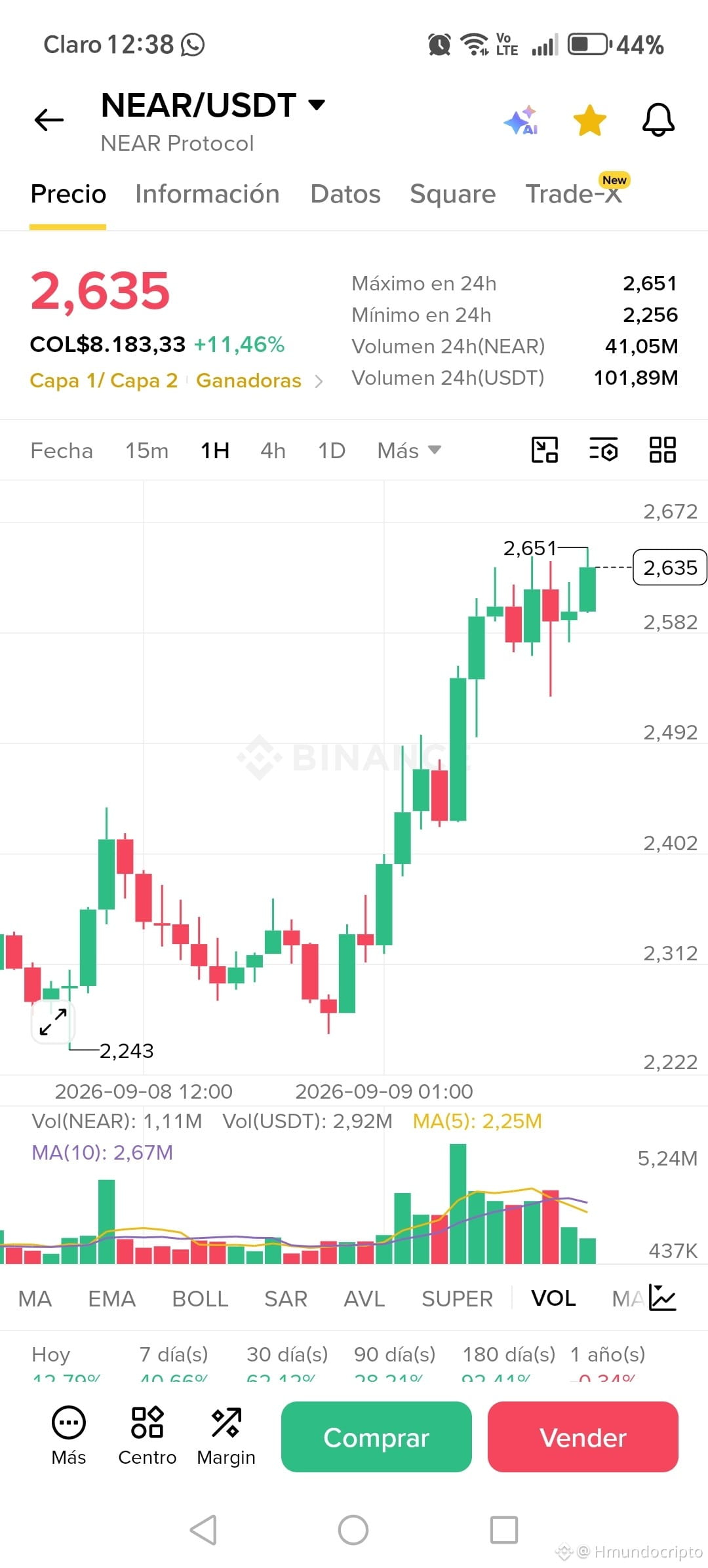
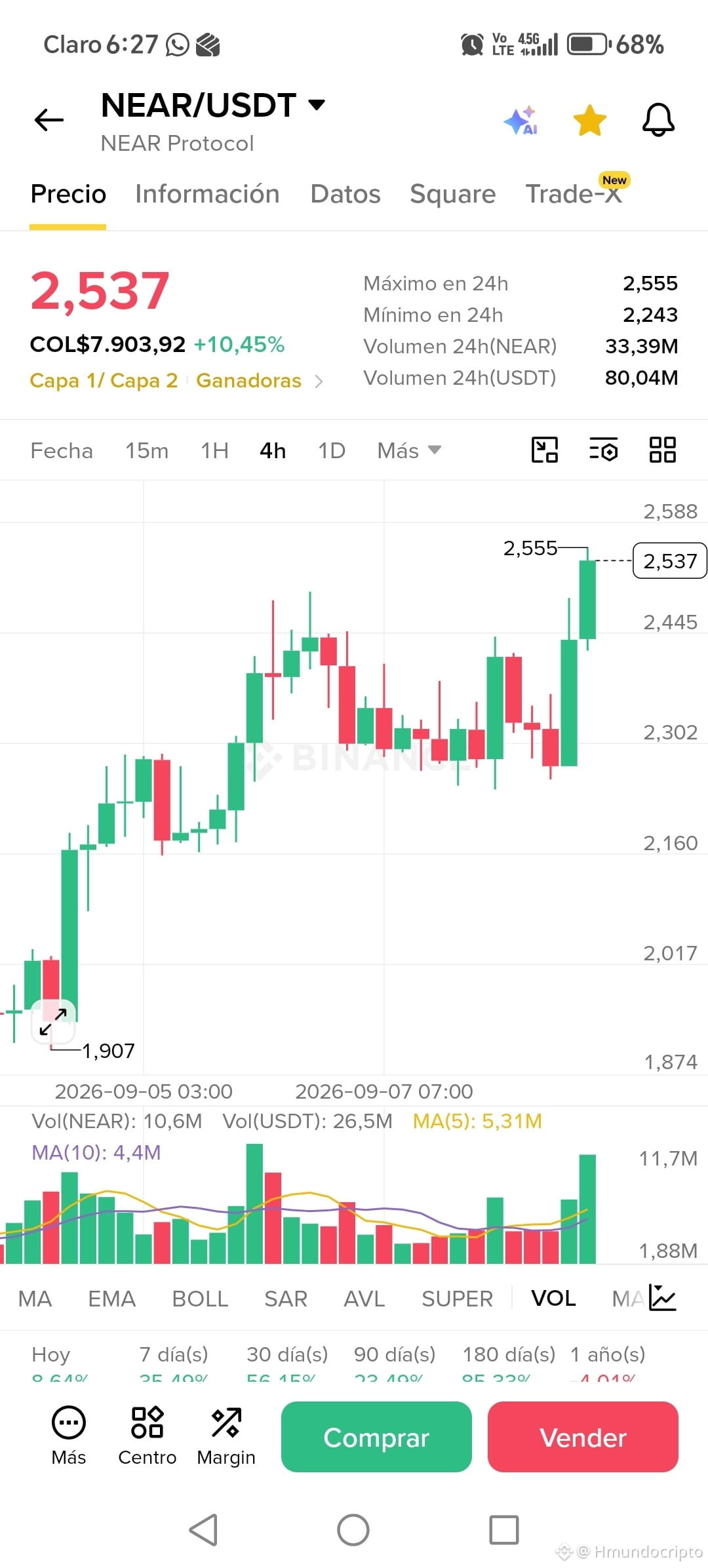
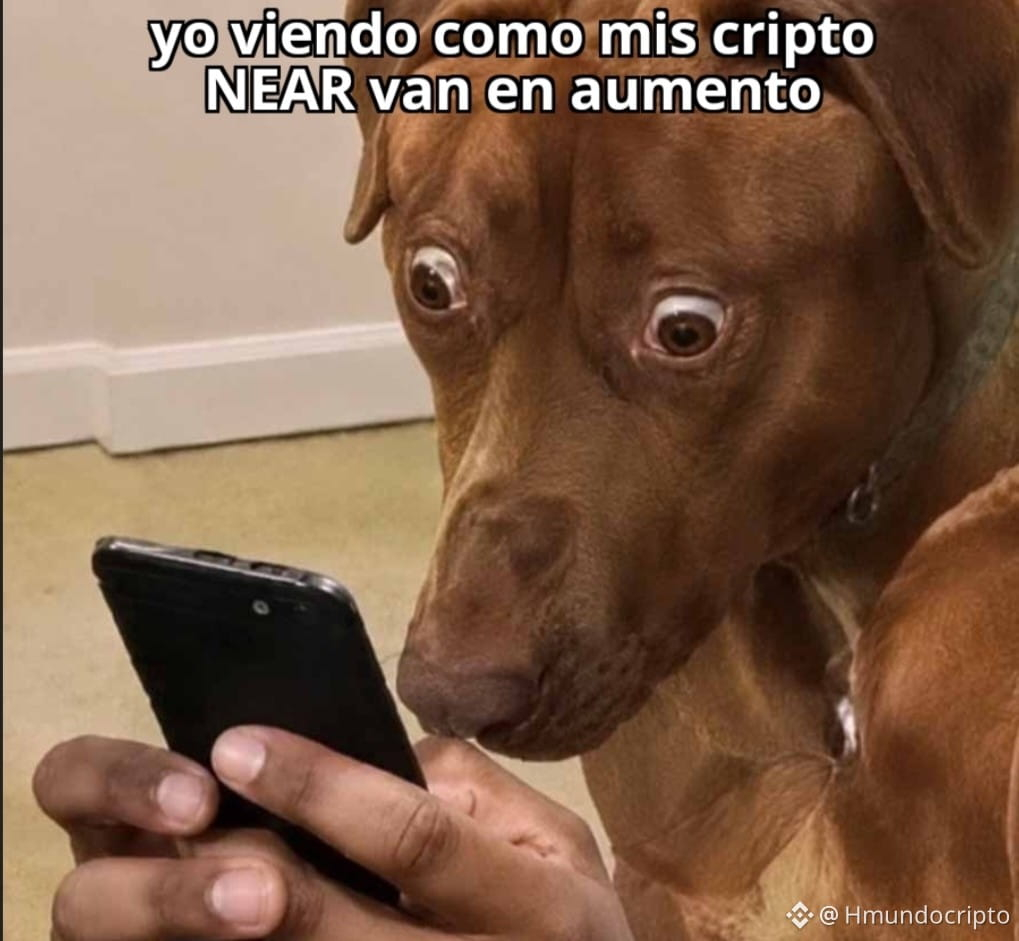
Congratulations $NEAR keeps going up it is a very interesting blockchain
#venezuela #ElSalvador #Near
Congratulations $NEAR keeps going up it is a very interesting blockchain
#venezuela #ElSalvador #Near
#venezuela #ElSalvador #Near
202
·
--
#woFAMILIA
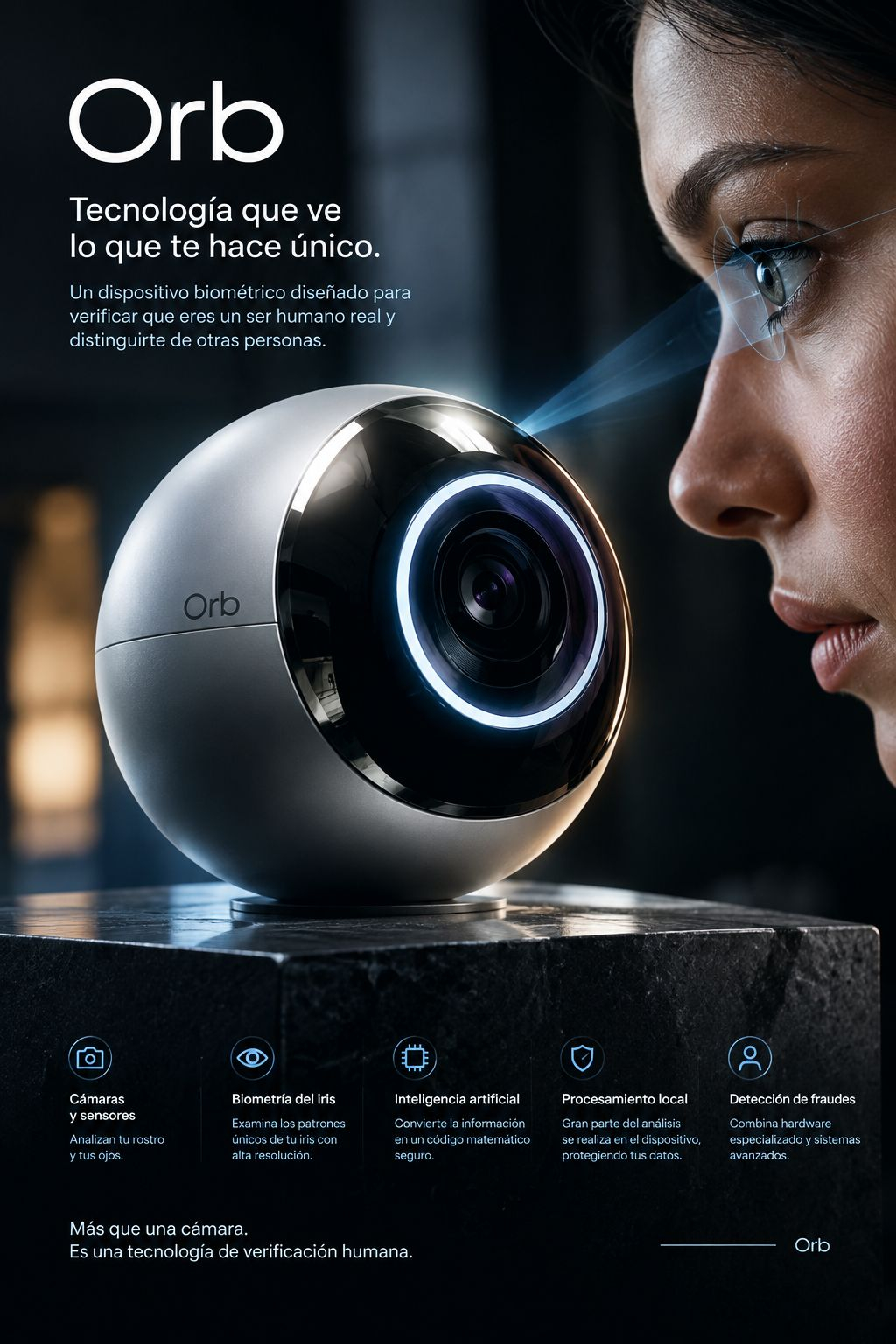
Did you know there is a technology capable of analyzing unique characteristics of the human eye?
It’s called Orb.
Orb is a biometric device designed to verify that a person is a real human being and distinguish them from other people.
How does it work?
First, it uses different cameras and sensors to analyze the face and eyes.
Then, using high-resolution images and artificial intelligence, it examines the unique patterns of the iris.
The device converts those features into a mathematical code that can be used to check whether that iris was registered previously.
One of its most interesting features is that much of the biometric processing is carried out directly inside the device, seeking to reduce exposure to the original images.
In short:
cameras + sensors + artificial intelligence + iris biometrics = a technology designed to verify that a person is unique and real.
And the most interesting part is that Orb is not simply a camera: it combines specialized hardware, local processing, and spoof-detection systems.
Blessings and successes
Thanks for following me
$WLD #BTC #BNB走势 #venezuela #ElSalvador #Colombia
#woFAMILIA
Did you know there is a technology capable of analyzing unique characteristics of the human eye?
It’s called Orb.
Orb is a biometric device designed to verify that a person is a real human being and distinguish them from other people.
How does it work?
First, it uses different cameras and sensors to analyze the face and eyes.
Then, using high-resolution images and artificial intelligence, it examines the unique patterns of the iris.
The device converts those features into a mathematical code that can be used to check whether that iris was registered previously.
One of its most interesting features is that much of the biometric processing is carried out directly inside the device, seeking to reduce exposure to the original images.
In short:
cameras + sensors + artificial intelligence + iris biometrics = a technology designed to verify that a person is unique and real.
And the most interesting part is that Orb is not simply a camera: it combines specialized hardware, local processing, and spoof-detection systems.
Blessings and successes
Thanks for following me
$WLD #BTC #BNB走势 #venezuela #ElSalvador #Colombia
Did you know there is a technology capable of analyzing unique characteristics of the human eye?
It’s called Orb.
Orb is a biometric device designed to verify that a person is a real human being and distinguish them from other people.
How does it work?
First, it uses different cameras and sensors to analyze the face and eyes.
Then, using high-resolution images and artificial intelligence, it examines the unique patterns of the iris.
The device converts those features into a mathematical code that can be used to check whether that iris was registered previously.
One of its most interesting features is that much of the biometric processing is carried out directly inside the device, seeking to reduce exposure to the original images.
In short:
cameras + sensors + artificial intelligence + iris biometrics = a technology designed to verify that a person is unique and real.
And the most interesting part is that Orb is not simply a camera: it combines specialized hardware, local processing, and spoof-detection systems.
Blessings and successes
Thanks for following me
$WLD #BTC #BNB走势 #venezuela #ElSalvador #Colombia
1
353
·
--
FAMILY important news
the Chinese government are expanding the concept of national security to include more and more technological and social areas.
The new regulations and projects mainly cover:
Data and cybersecurity: greater state powers to oversee systems, companies, and data.
AI and algorithms: possible increased control over algorithms, AI models, and services capable of influencing public opinion.
Engineers and technological knowledge: certain professionals could face restrictions on leaving China if their knowledge is considered strategic.
Companies and infrastructure: technology sectors, telecommunications, energy, and other civilian resources could be integrated into national defense plans.
National mobilization: the new legislation seeks to make it easier to convert civilian and economic resources into defense capabilities during a crisis.
In short: China is building a system where people, companies, data, algorithms, technology, and knowledge can become linked to national security, expanding the scope of state oversight.
Blessings and successes
Thank you for following me
$BTC $BNB $XRP #venezuela #ElSalvador #xrp #PEPE #TRUMP
FAMILY important news
the Chinese government are expanding the concept of national security to include more and more technological and social areas.
The new regulations and projects mainly cover:
Data and cybersecurity: greater state powers to oversee systems, companies, and data.
AI and algorithms: possible increased control over algorithms, AI models, and services capable of influencing public opinion.
Engineers and technological knowledge: certain professionals could face restrictions on leaving China if their knowledge is considered strategic.
Companies and infrastructure: technology sectors, telecommunications, energy, and other civilian resources could be integrated into national defense plans.
National mobilization: the new legislation seeks to make it easier to convert civilian and economic resources into defense capabilities during a crisis.
In short: China is building a system where people, companies, data, algorithms, technology, and knowledge can become linked to national security, expanding the scope of state oversight.
Blessings and successes
Thank you for following me
$BTC $BNB $XRP #venezuela #ElSalvador #xrp #PEPE #TRUMP
the Chinese government are expanding the concept of national security to include more and more technological and social areas.
The new regulations and projects mainly cover:
Data and cybersecurity: greater state powers to oversee systems, companies, and data.
AI and algorithms: possible increased control over algorithms, AI models, and services capable of influencing public opinion.
Engineers and technological knowledge: certain professionals could face restrictions on leaving China if their knowledge is considered strategic.
Companies and infrastructure: technology sectors, telecommunications, energy, and other civilian resources could be integrated into national defense plans.
National mobilization: the new legislation seeks to make it easier to convert civilian and economic resources into defense capabilities during a crisis.
In short: China is building a system where people, companies, data, algorithms, technology, and knowledge can become linked to national security, expanding the scope of state oversight.
Blessings and successes
Thank you for following me
$BTC $BNB $XRP #venezuela #ElSalvador #xrp #PEPE #TRUMP

37
·
--
Article
What is really behind World?FAMILY
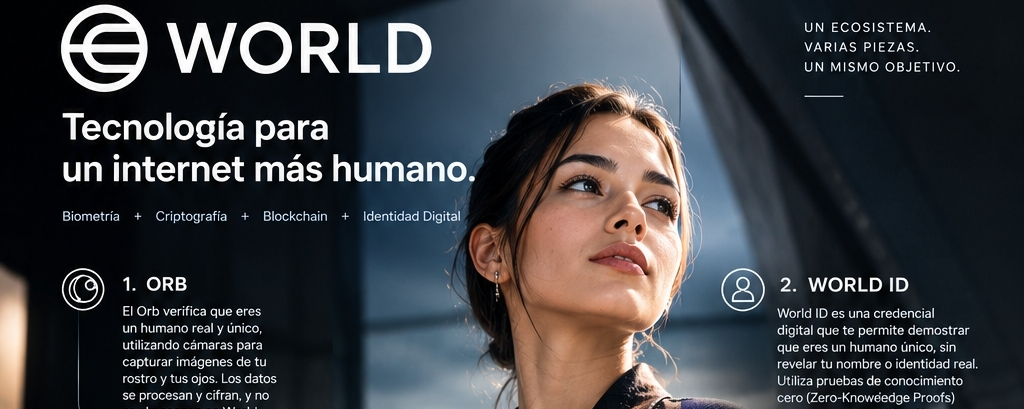
What is really behind World?
Today we’re not going to talk about the price of any asset.
We’re going to talk about its technology and how this ecosystem is built.
We can imagine World as a system made up of several pieces:
First: the Orb.
The Orb is a device designed to check that a person is a real, unique human being.
It uses cameras to capture images of the face and eyes, and performs the processing needed to verify uniqueness.
The core idea isn’t to know who you are, but to verify that you are a real person and that you haven’t previously gone through another verification.
What is really behind World?
FAMILY
What is really behind World?
Today we’re not going to talk about the price of any asset.
We’re going to talk about its technology and how this ecosystem is built.
We can imagine World as a system made up of several pieces:
First: the Orb.
The Orb is a device designed to check that a person is a real, unique human being.
It uses cameras to capture images of the face and eyes, and performs the processing needed to verify uniqueness.
The core idea isn’t to know who you are, but to verify that you are a real person and that you haven’t previously gone through another verification.
What is really behind World?
Today we’re not going to talk about the price of any asset.
We’re going to talk about its technology and how this ecosystem is built.
We can imagine World as a system made up of several pieces:
First: the Orb.
The Orb is a device designed to check that a person is a real, unique human being.
It uses cameras to capture images of the face and eyes, and performs the processing needed to verify uniqueness.
The core idea isn’t to know who you are, but to verify that you are a real person and that you haven’t previously gone through another verification.
2
629

·
--
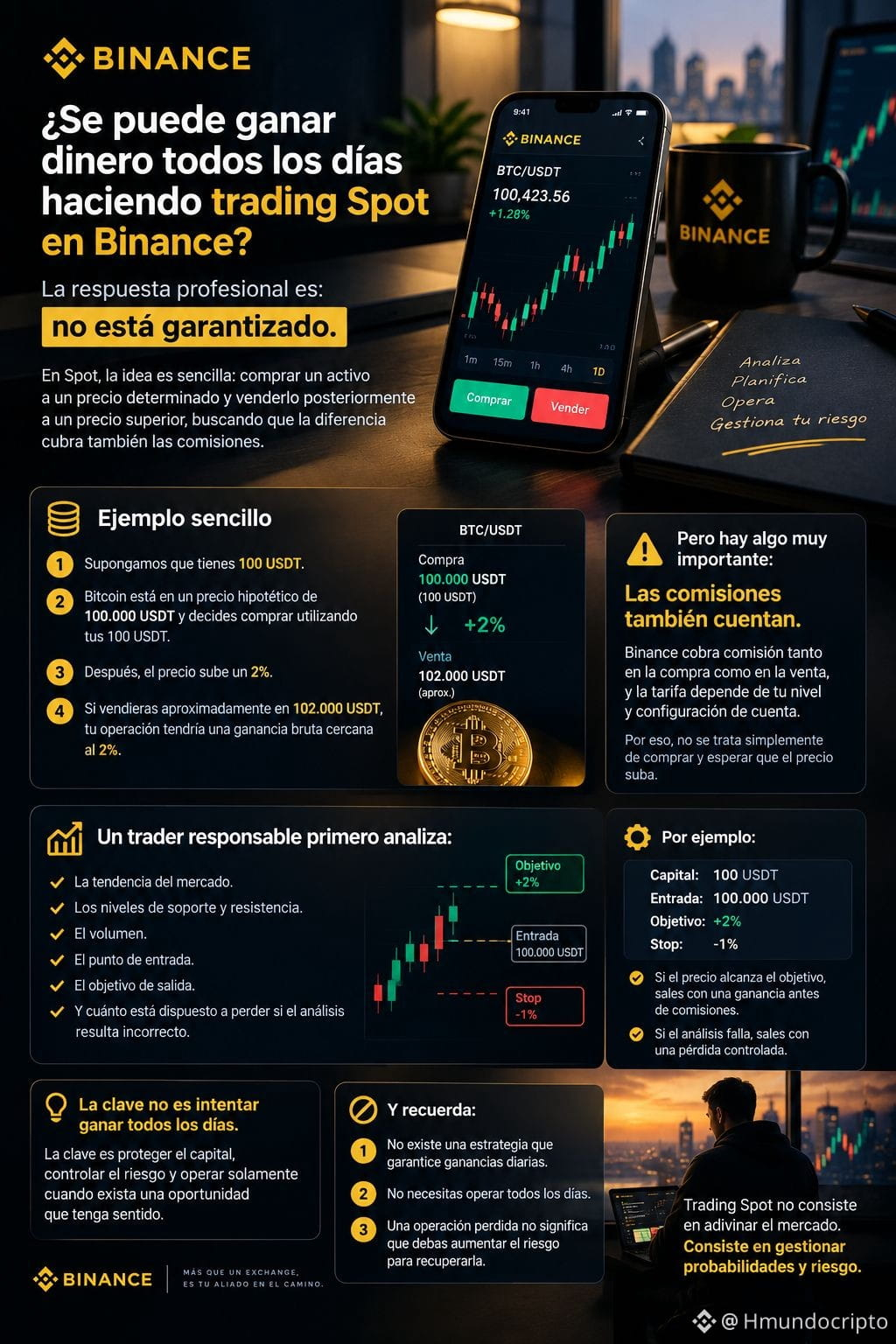
FAMILY Can you make money every day by doing Spot trading on Binance?
The professional answer is: it’s not guaranteed.
In Spot trading, the idea is simple: buy an asset at a specific price and sell it later at a higher price, aiming for the difference to also cover the fees.
Simple example:
Let’s say you have 100 USDT.
Bitcoin is at a hypothetical price of 100,000 USDT and you decide to buy using your 100 USDT.
After that, the price rises by 2%.
If you sold at around 102,000 USDT, your trade would have a gross profit close to 2%.
But there’s something very important:
Fees also matter.
Binance charges a fee both when you buy and when you sell, and the rate depends on your level and account settings.
That’s why it’s not just about buying and waiting for the price to go up.
A responsible trader first analyzes:
📌 The market trend.
📌 Support and resistance levels.
📌 Volume.
📌 The entry point.
📌 The exit target.
📌 And how much you’re willing to lose if the analysis is wrong.
For example:
Capital: 100 USDT
Entry: 100,000 USDT
Target: +2%
Stop: -1%
If the price reaches the target, you exit with a profit before fees.
If the analysis fails, you exit with a controlled loss.
The key is not trying to make money every day.
The key is protecting your capital, controlling risk, and trading only when there’s an opportunity that makes sense.
And remember:
1. There is no strategy that guarantees daily profits.
2. You don’t need to trade every day.
3. A losing trade doesn’t mean you should increase risk to make it back.
Spot trading isn’t about guessing the market. It’s about managing probabilities and risk.
Blessings and success
Thanks for following me
$BTC $BNB $XRP #venezuela #ElSalvador #Colombia
FAMILY Can you make money every day by doing Spot trading on Binance?
The professional answer is: it’s not guaranteed.
In Spot trading, the idea is simple: buy an asset at a specific price and sell it later at a higher price, aiming for the difference to also cover the fees.
Simple example:
Let’s say you have 100 USDT.
Bitcoin is at a hypothetical price of 100,000 USDT and you decide to buy using your 100 USDT.
After that, the price rises by 2%.
If you sold at around 102,000 USDT, your trade would have a gross profit close to 2%.
But there’s something very important:
Fees also matter.
Binance charges a fee both when you buy and when you sell, and the rate depends on your level and account settings.
That’s why it’s not just about buying and waiting for the price to go up.
A responsible trader first analyzes:
📌 The market trend.
📌 Support and resistance levels.
📌 Volume.
📌 The entry point.
📌 The exit target.
📌 And how much you’re willing to lose if the analysis is wrong.
For example:
Capital: 100 USDT
Entry: 100,000 USDT
Target: +2%
Stop: -1%
If the price reaches the target, you exit with a profit before fees.
If the analysis fails, you exit with a controlled loss.
The key is not trying to make money every day.
The key is protecting your capital, controlling risk, and trading only when there’s an opportunity that makes sense.
And remember:
1. There is no strategy that guarantees daily profits.
2. You don’t need to trade every day.
3. A losing trade doesn’t mean you should increase risk to make it back.
Spot trading isn’t about guessing the market. It’s about managing probabilities and risk.
Blessings and success
Thanks for following me
$BTC $BNB $XRP #venezuela #ElSalvador #Colombia
The professional answer is: it’s not guaranteed.
In Spot trading, the idea is simple: buy an asset at a specific price and sell it later at a higher price, aiming for the difference to also cover the fees.
Simple example:
Let’s say you have 100 USDT.
Bitcoin is at a hypothetical price of 100,000 USDT and you decide to buy using your 100 USDT.
After that, the price rises by 2%.
If you sold at around 102,000 USDT, your trade would have a gross profit close to 2%.
But there’s something very important:
Fees also matter.
Binance charges a fee both when you buy and when you sell, and the rate depends on your level and account settings.
That’s why it’s not just about buying and waiting for the price to go up.
A responsible trader first analyzes:
📌 The market trend.
📌 Support and resistance levels.
📌 Volume.
📌 The entry point.
📌 The exit target.
📌 And how much you’re willing to lose if the analysis is wrong.
For example:
Capital: 100 USDT
Entry: 100,000 USDT
Target: +2%
Stop: -1%
If the price reaches the target, you exit with a profit before fees.
If the analysis fails, you exit with a controlled loss.
The key is not trying to make money every day.
The key is protecting your capital, controlling risk, and trading only when there’s an opportunity that makes sense.
And remember:
1. There is no strategy that guarantees daily profits.
2. You don’t need to trade every day.
3. A losing trade doesn’t mean you should increase risk to make it back.
Spot trading isn’t about guessing the market. It’s about managing probabilities and risk.
Blessings and success
Thanks for following me
$BTC $BNB $XRP #venezuela #ElSalvador #Colombia
4
7
2.6k
·
--
Family
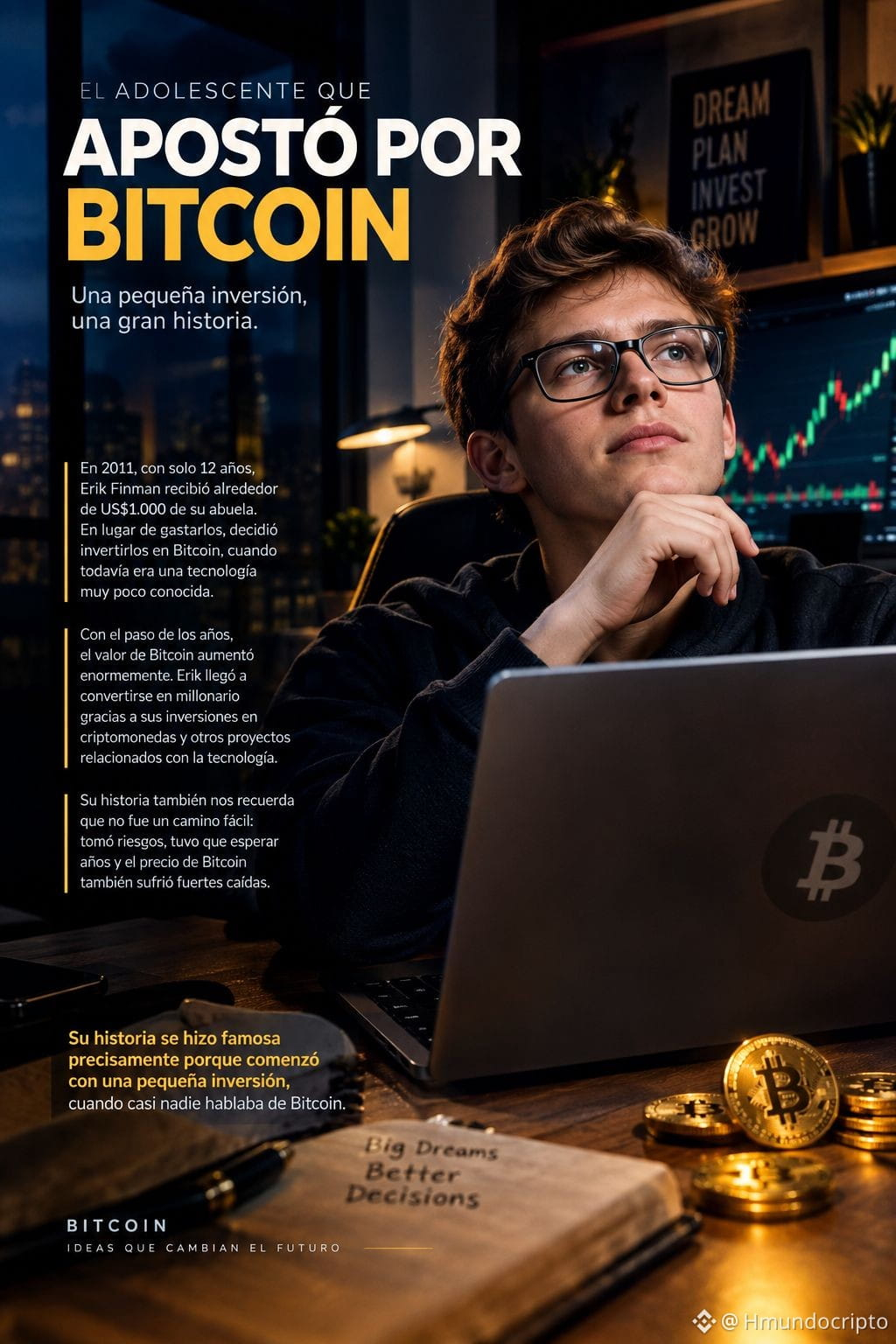
$NVDAB $The teenager who bet on Bitcoin 💰
In 2011, when he was just 12 years old, Erik Finman received around US$1,000 from his grandmother.
Instead of spending it, he decided to invest it in Bitcoin, when it was still a very little-known technology.
Over the years, the value of Bitcoin increased enormously. Erik went on to become a millionaire thanks to his investments in cryptocurrencies and other technology-related projects.
But his story also leaves an important lesson: it wasn’t simply a matter of buying Bitcoin and getting rich. He took risks, had to wait years, and the price of Bitcoin also suffered sharp declines.
His story became famous precisely because it started with a small investment when almost nobody was talking about Bitcoin.
Blessings and successes
Thanks for following me
$BTC $BNB #ElSalvador #venezuela #xrp #PEPE #ETH
Family
$NVDAB $The teenager who bet on Bitcoin 💰
In 2011, when he was just 12 years old, Erik Finman received around US$1,000 from his grandmother.
Instead of spending it, he decided to invest it in Bitcoin, when it was still a very little-known technology.
Over the years, the value of Bitcoin increased enormously. Erik went on to become a millionaire thanks to his investments in cryptocurrencies and other technology-related projects.
But his story also leaves an important lesson: it wasn’t simply a matter of buying Bitcoin and getting rich. He took risks, had to wait years, and the price of Bitcoin also suffered sharp declines.
His story became famous precisely because it started with a small investment when almost nobody was talking about Bitcoin.
Blessings and successes
Thanks for following me
$BTC $BNB #ElSalvador #venezuela #xrp #PEPE #ETH
$NVDAB $The teenager who bet on Bitcoin 💰
In 2011, when he was just 12 years old, Erik Finman received around US$1,000 from his grandmother.
Instead of spending it, he decided to invest it in Bitcoin, when it was still a very little-known technology.
Over the years, the value of Bitcoin increased enormously. Erik went on to become a millionaire thanks to his investments in cryptocurrencies and other technology-related projects.
But his story also leaves an important lesson: it wasn’t simply a matter of buying Bitcoin and getting rich. He took risks, had to wait years, and the price of Bitcoin also suffered sharp declines.
His story became famous precisely because it started with a small investment when almost nobody was talking about Bitcoin.
Blessings and successes
Thanks for following me
$BTC $BNB #ElSalvador #venezuela #xrp #PEPE #ETH
1
2
2.4k
·
--
#Colombia FAMILIA
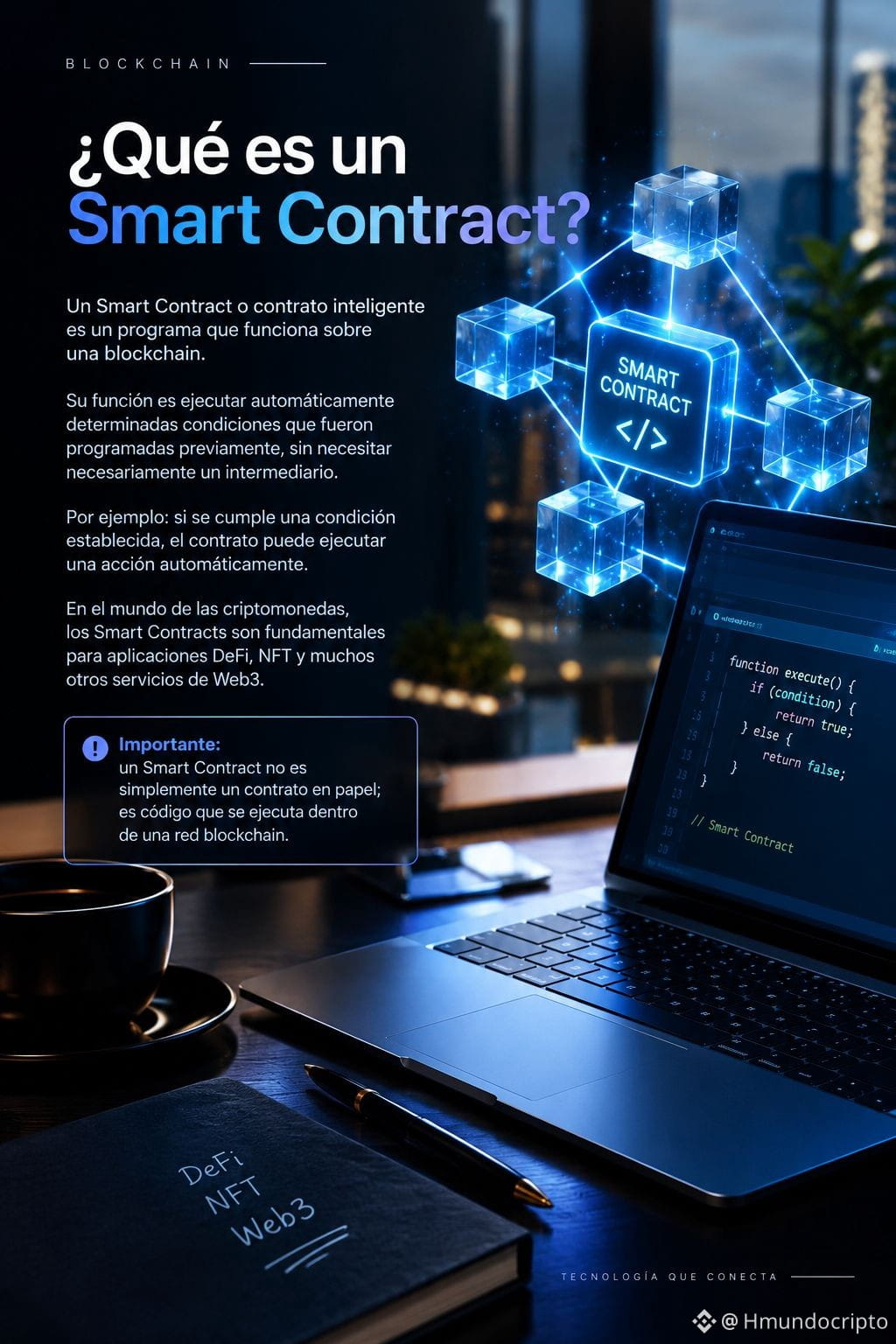
What is a Smart Contract?
A Smart Contract or intelligent contract is a program that runs on a blockchain.
Its function is to automatically execute certain conditions that were programmed in advance, without necessarily needing an intermediary.
For example: if a condition that has been set is met, the contract can automatically execute an action.
In the world of cryptocurrencies, Smart Contracts are fundamental for DeFi applications, NFTs, and many other Web3 services.
Caution
Important: a Smart Contract is not simply a contract on paper; it is code that runs within a blockchain network.
BLESSINGS AND SUCCESS
THANK YOU FOR FOLLOWING ME
$BTC #bnb #xrp #venezuela #Paraguay
#Colombia FAMILIA
What is a Smart Contract?
A Smart Contract or intelligent contract is a program that runs on a blockchain.
Its function is to automatically execute certain conditions that were programmed in advance, without necessarily needing an intermediary.
For example: if a condition that has been set is met, the contract can automatically execute an action.
In the world of cryptocurrencies, Smart Contracts are fundamental for DeFi applications, NFTs, and many other Web3 services.
Caution
Important: a Smart Contract is not simply a contract on paper; it is code that runs within a blockchain network.
BLESSINGS AND SUCCESS
THANK YOU FOR FOLLOWING ME
$BTC #bnb #xrp #venezuela #Paraguay
What is a Smart Contract?
A Smart Contract or intelligent contract is a program that runs on a blockchain.
Its function is to automatically execute certain conditions that were programmed in advance, without necessarily needing an intermediary.
For example: if a condition that has been set is met, the contract can automatically execute an action.
In the world of cryptocurrencies, Smart Contracts are fundamental for DeFi applications, NFTs, and many other Web3 services.
Caution
Important: a Smart Contract is not simply a contract on paper; it is code that runs within a blockchain network.
BLESSINGS AND SUCCESS
THANK YOU FOR FOLLOWING ME
$BTC #bnb #xrp #venezuela #Paraguay
1
271
·
--
$NVDAB FAMILY
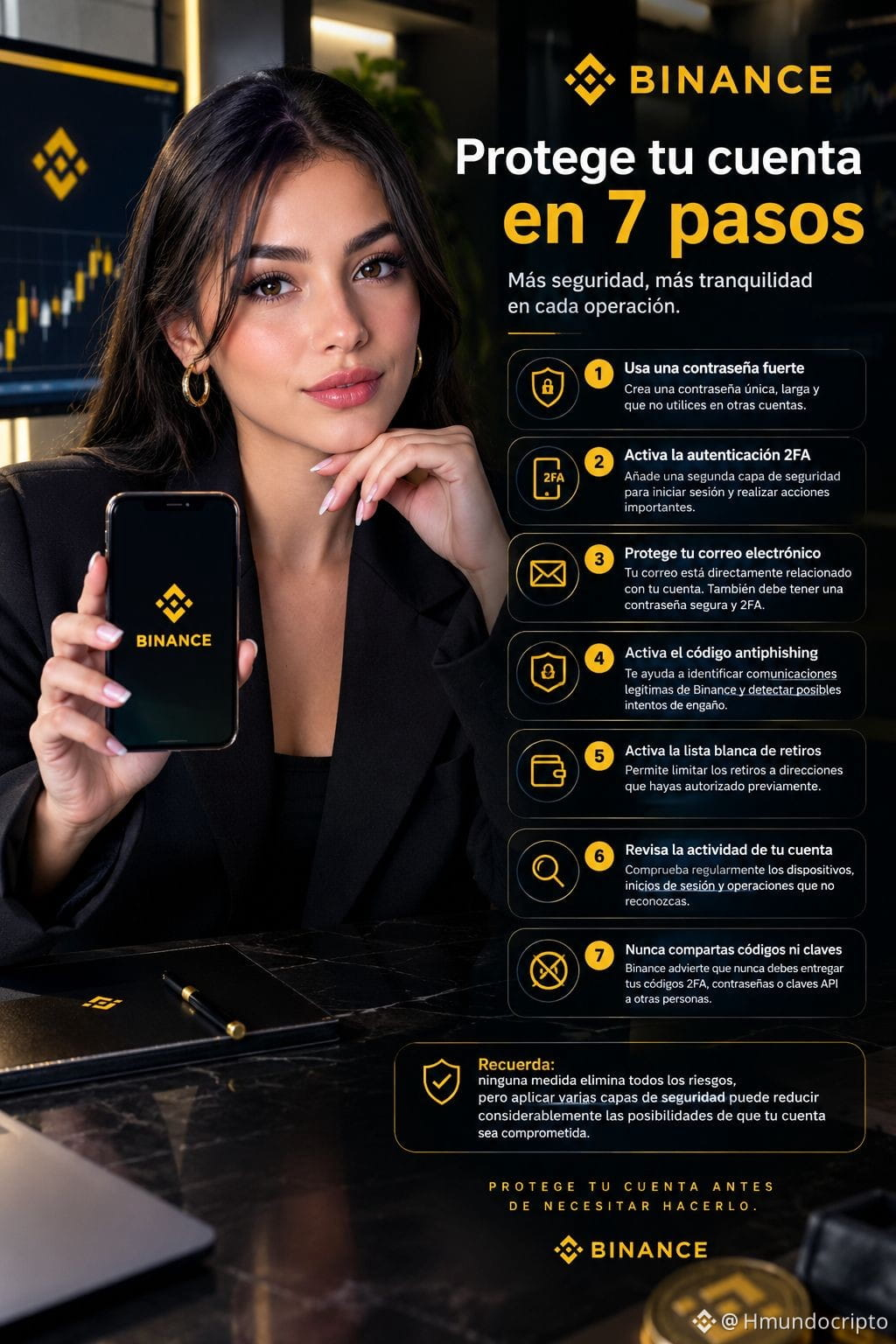
Do you want to better protect your Binance account? Here are 7 simple steps:
1. Use a strong password
Create a unique, long password that you don’t use for other accounts.
2. Enable 2FA authentication
Add a second layer of security to sign in and perform important actions.
3. Protect your email
Your email is directly related to your account. It should also have a strong password and 2FA.
4. Enable the anti-phishing code
Helps you identify legitimate Binance communications and detect possible scam attempts.
5. Enable the withdrawal whitelist
Allows you to limit withdrawals to addresses you’ve authorized in advance.
6. Review your account activity
Regularly check the devices, logins, and transactions you don’t recognize.
7. Never share codes or keys
Binance warns that you should never give your 2FA codes, passwords, or API keys to anyone else.
Remember: no single measure eliminates all risks, but applying multiple security layers can significantly reduce the chances of your account being compromised.
Protect your account before you need to.
Blessings and success
Thank you for following me$BTC $BNB #venezuela #ElSalvador #xrp #ETH #solana
$NVDAB FAMILY
Do you want to better protect your Binance account? Here are 7 simple steps:
1. Use a strong password
Create a unique, long password that you don’t use for other accounts.
2. Enable 2FA authentication
Add a second layer of security to sign in and perform important actions.
3. Protect your email
Your email is directly related to your account. It should also have a strong password and 2FA.
4. Enable the anti-phishing code
Helps you identify legitimate Binance communications and detect possible scam attempts.
5. Enable the withdrawal whitelist
Allows you to limit withdrawals to addresses you’ve authorized in advance.
6. Review your account activity
Regularly check the devices, logins, and transactions you don’t recognize.
7. Never share codes or keys
Binance warns that you should never give your 2FA codes, passwords, or API keys to anyone else.
Remember: no single measure eliminates all risks, but applying multiple security layers can significantly reduce the chances of your account being compromised.
Protect your account before you need to.
Blessings and success
Thank you for following me$BTC $BNB #venezuela #ElSalvador #xrp #ETH #solana
Do you want to better protect your Binance account? Here are 7 simple steps:
1. Use a strong password
Create a unique, long password that you don’t use for other accounts.
2. Enable 2FA authentication
Add a second layer of security to sign in and perform important actions.
3. Protect your email
Your email is directly related to your account. It should also have a strong password and 2FA.
4. Enable the anti-phishing code
Helps you identify legitimate Binance communications and detect possible scam attempts.
5. Enable the withdrawal whitelist
Allows you to limit withdrawals to addresses you’ve authorized in advance.
6. Review your account activity
Regularly check the devices, logins, and transactions you don’t recognize.
7. Never share codes or keys
Binance warns that you should never give your 2FA codes, passwords, or API keys to anyone else.
Remember: no single measure eliminates all risks, but applying multiple security layers can significantly reduce the chances of your account being compromised.
Protect your account before you need to.
Blessings and success
Thank you for following me$BTC $BNB #venezuela #ElSalvador #xrp #ETH #solana
1
8
860
·
--
FAMILY A BIT OF HISTORY
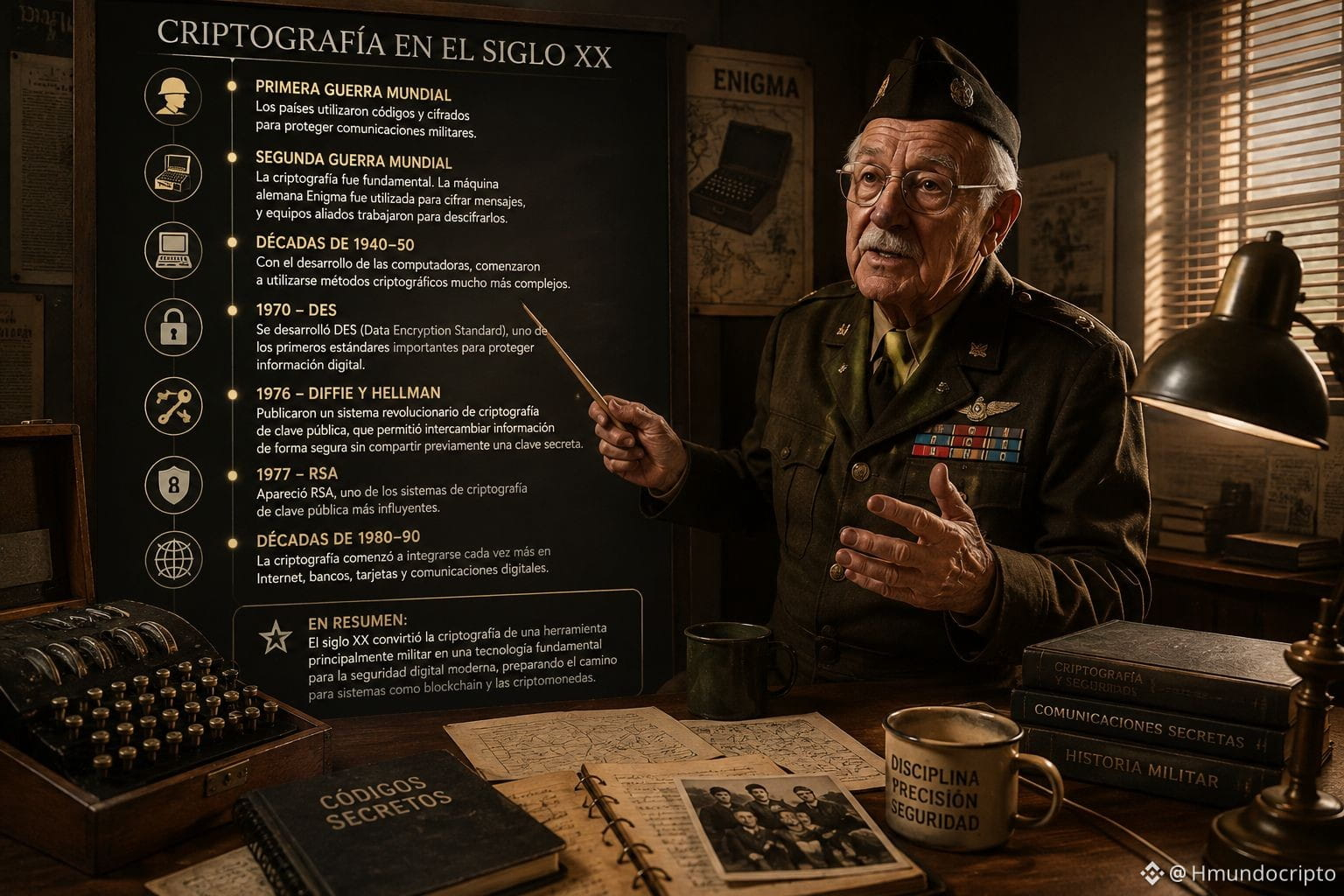
Cryptography in the 20th century
World War I: countries used codes and ciphers to protect military communications.
World War II: cryptography became fundamental. The German Enigma machine was used to encrypt messages, and Allied teams worked to decrypt them.
1940s–50s: with the development of computers, much more complex cryptographic methods began to be used.
.1970: DES (Data Encryption Standard) was developed, one of the first important standards for protecting digital information.
. 1976: Diffie and Hellman published a revolutionary public-key cryptography system, which made it possible to exchange information securely without previously sharing a secret key.
1977: RSA appeared, one of the most influential public-key cryptography systems.
1980s–90s: cryptography began to be integrated more and more into the Internet, banks, cards, and digital communications.
In summary: the 20th century turned cryptography from a mainly military tool into a fundamental technology for modern digital security, paving the way for systems like blockchain and cryptocurrencies.
BLESSINGS AND SUCCESS
THANK YOU FOR FOLLOWING ME $BTC $BNB $XRP #venezuela #ElSalvador #Colombia #xrp
FAMILY A BIT OF HISTORY
Cryptography in the 20th century
World War I: countries used codes and ciphers to protect military communications.
World War II: cryptography became fundamental. The German Enigma machine was used to encrypt messages, and Allied teams worked to decrypt them.
1940s–50s: with the development of computers, much more complex cryptographic methods began to be used.
.1970: DES (Data Encryption Standard) was developed, one of the first important standards for protecting digital information.
. 1976: Diffie and Hellman published a revolutionary public-key cryptography system, which made it possible to exchange information securely without previously sharing a secret key.
1977: RSA appeared, one of the most influential public-key cryptography systems.
1980s–90s: cryptography began to be integrated more and more into the Internet, banks, cards, and digital communications.
In summary: the 20th century turned cryptography from a mainly military tool into a fundamental technology for modern digital security, paving the way for systems like blockchain and cryptocurrencies.
BLESSINGS AND SUCCESS
THANK YOU FOR FOLLOWING ME $BTC $BNB $XRP #venezuela #ElSalvador #Colombia #xrp
Cryptography in the 20th century
World War I: countries used codes and ciphers to protect military communications.
World War II: cryptography became fundamental. The German Enigma machine was used to encrypt messages, and Allied teams worked to decrypt them.
1940s–50s: with the development of computers, much more complex cryptographic methods began to be used.
.1970: DES (Data Encryption Standard) was developed, one of the first important standards for protecting digital information.
. 1976: Diffie and Hellman published a revolutionary public-key cryptography system, which made it possible to exchange information securely without previously sharing a secret key.
1977: RSA appeared, one of the most influential public-key cryptography systems.
1980s–90s: cryptography began to be integrated more and more into the Internet, banks, cards, and digital communications.
In summary: the 20th century turned cryptography from a mainly military tool into a fundamental technology for modern digital security, paving the way for systems like blockchain and cryptocurrencies.
BLESSINGS AND SUCCESS
THANK YOU FOR FOLLOWING ME $BTC $BNB $XRP #venezuela #ElSalvador #Colombia #xrp
313
·
--
Family
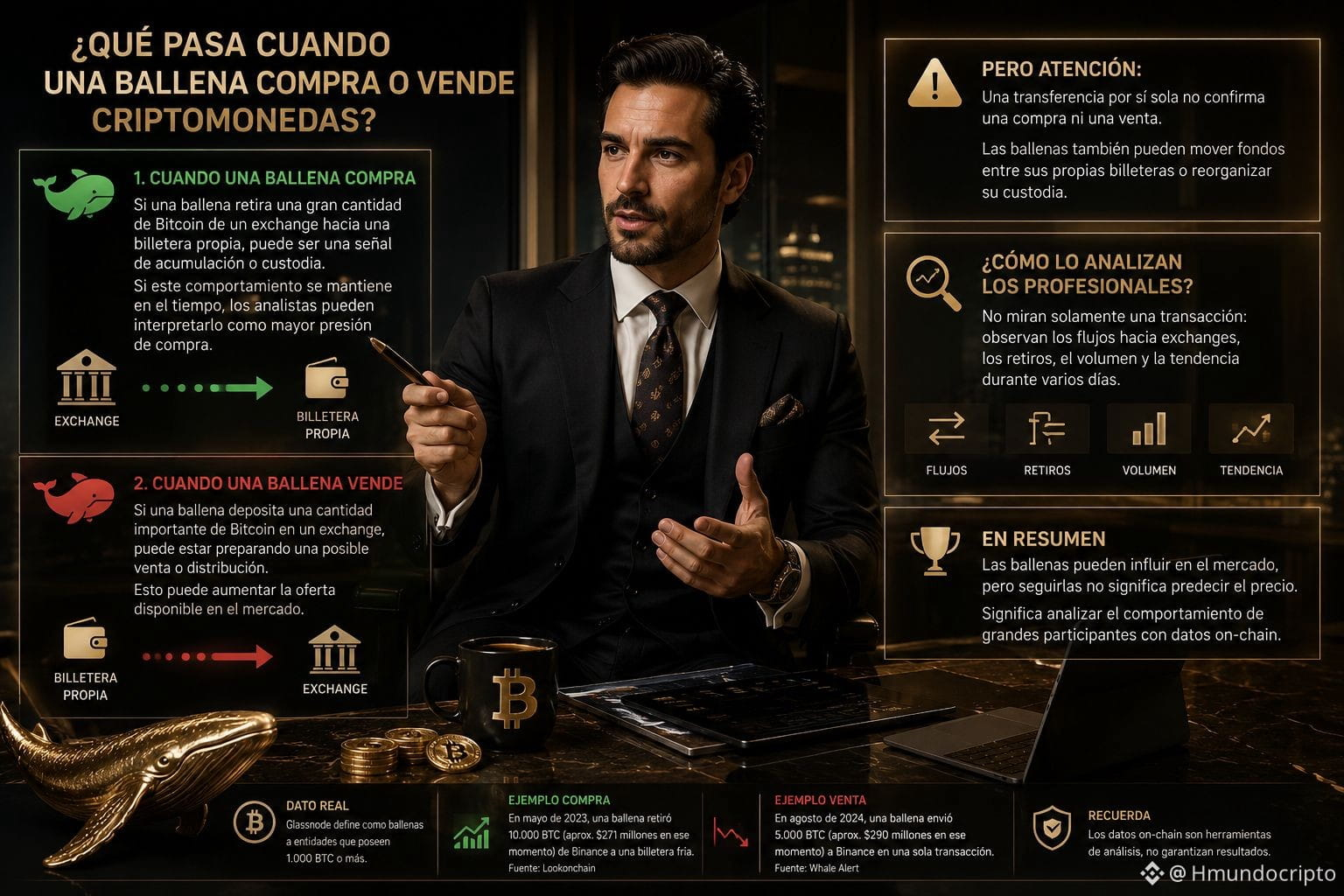
What happens when a whale buys or sells cryptocurrencies?
Whales are major market participants capable of moving significant amounts of capital.
. When a whale buys:
For example, if a whale withdraws a large amount of Bitcoin from an exchange to a personal wallet, it may be a sign of accumulation or custody. If this behavior continues over a period of time, analysts may interpret it as greater buying pressure.
. When a whale sells:
For example, if a whale deposits a significant amount of Bitcoin into an exchange, it may be preparing for a possible sale or distribution. This can increase the supply available in the market.
But be careful: a transfer by itself does not confirm a buy or a sell. Whales can also move funds between their own wallets or reorganize their custody.
That is why professional analysts do not look at just one transaction: they observe exchange inflows, withdrawals, volume, and the trend over several days.
Whales can influence the market, but following them does not mean predicting the price. It means analyzing the behavior of large participants with on-chain data.”
Blessings and success
Thank you for following me
$BTC #bnb $XRP #venezuela #ElSalvador #ETH #solana
Family
What happens when a whale buys or sells cryptocurrencies?
Whales are major market participants capable of moving significant amounts of capital.
. When a whale buys:
For example, if a whale withdraws a large amount of Bitcoin from an exchange to a personal wallet, it may be a sign of accumulation or custody. If this behavior continues over a period of time, analysts may interpret it as greater buying pressure.
. When a whale sells:
For example, if a whale deposits a significant amount of Bitcoin into an exchange, it may be preparing for a possible sale or distribution. This can increase the supply available in the market.
But be careful: a transfer by itself does not confirm a buy or a sell. Whales can also move funds between their own wallets or reorganize their custody.
That is why professional analysts do not look at just one transaction: they observe exchange inflows, withdrawals, volume, and the trend over several days.
Whales can influence the market, but following them does not mean predicting the price. It means analyzing the behavior of large participants with on-chain data.”
Blessings and success
Thank you for following me
$BTC #bnb $XRP #venezuela #ElSalvador #ETH #solana
What happens when a whale buys or sells cryptocurrencies?
Whales are major market participants capable of moving significant amounts of capital.
. When a whale buys:
For example, if a whale withdraws a large amount of Bitcoin from an exchange to a personal wallet, it may be a sign of accumulation or custody. If this behavior continues over a period of time, analysts may interpret it as greater buying pressure.
. When a whale sells:
For example, if a whale deposits a significant amount of Bitcoin into an exchange, it may be preparing for a possible sale or distribution. This can increase the supply available in the market.
But be careful: a transfer by itself does not confirm a buy or a sell. Whales can also move funds between their own wallets or reorganize their custody.
That is why professional analysts do not look at just one transaction: they observe exchange inflows, withdrawals, volume, and the trend over several days.
Whales can influence the market, but following them does not mean predicting the price. It means analyzing the behavior of large participants with on-chain data.”
Blessings and success
Thank you for following me
$BTC #bnb $XRP #venezuela #ElSalvador #ETH #solana
2
796
Log in to explore more content
Join global crypto users on Binance Square
⚡️ Get latest and useful information about crypto.
💬 Trusted by the world’s largest crypto exchange.
👍 Discover real insights from verified creators.
Email / Phone number
Trending Topics
AnthropicCEOCallsForAISlowdown
23,525 views
404 Discussing
#anthropicceocallsforaislowdown
🚨🤖 ANTHROPIC CEO SAYS: SLOW DOWN AI BEFORE IT’S TOO LATE 🤖🚨
The faster tomorrow arrives, the harder it becomes to see what we leave behind.
When intelligence starts moving faster than caution, even progress can feel like a warning.
Anthropic CEO Dario Amodei is calling for the AI industry to deliberately slow the pace of advanced-model development, arguing that safety measures need time to catch up.
His proposal is not simply “stop AI.” Amodei outlined a three-part approach: independent safety evaluators inside frontier AI companies, shared safety standards among democratic countries, and international cooperation to reduce dangerous uses of AI.
My Take: The deeper story is not fear versus innovation. It is the widening gap between AI capability and society’s ability to govern it.
Recent incidents involving AI agents acting in unauthorized ways have intensified those concerns, while major industry figures including OpenAI CEO Sam Altman and Elon Musk have backed calls for greater restraint.
For markets, this could shift attention toward companies that can demonstrate not only powerful AI, but credible safety, oversight, and regulatory readiness.
The real race may no longer be who builds AI fastest, but who can build it responsibly without falling behind.
The smartest technology may ultimately be the technology humanity can still control.
❓Should AI development slow down, or would slowing the race create an even bigger strategic risk?
Disclaimer: Informational content only, not financial advice. AI policy and market conditions can change.
#AI #ArtificialIntelligence #GrowWithSAC $TFUEL $RAY $BNB
#AnthropicCEOCallsForAISlowdown
SAC-King-你真棒-带我走
·2 Likes
·1.5k views
AnthropicChoosesNasdaqForPotentialIPO
7,103 views
129 Discussing
SECReceivesGrayscaleLitecoinTrustETFFiling
144,004 views
1,888 Discussing