
Jealousy尼卡
120 Posts

Jealousy尼卡
“善妒者无大为,行而不远”!
管理学博士,金融学硕士。聊聊Web3 | 美股 | AI。
14 Following
159 Followers
262 Liked
Posts
All
Quotes
Videos
Here’s a blunt take: chains that can’t pump MEME are basically trash. The only exception I’m willing to keep is @HyperliquidX, purely for its perp DEX narrative; the rest just aren’t worth it.
MEME is the most native asset in crypto. Talking about “value” in this circle is, by itself, the biggest nonsense. At the base of crypto, there are only emotions, consensus, and faith. People come here to make money. If you really want to talk about value, why not go to U.S. stocks? There are products, deliveries, and earnings reports — isn’t that much more concrete than crypto?
This MEME run is basically a truth mirror: which chain can play and which chain can’t is obvious at a glance. Either there’s a strong backer behind it, like BSC; or retail enthusiasm and consensus are high enough, like RH. Pumping prices is the number one productivity. Chains that only talk to you about building and value can basically be blocked.
ETH has given birth to countless gem coins
@solana is the same, especially in the last bull market — there were way too many gem coins
@RobinhoodApp fully went mainstream this round, and could even produce four or five gem coins in one night; the MEME launchpad $pons surged nearly 60x in a short time
@BNBCHAIN, backed by Binance, has capital and strength; from $MarsCoin to $牛来 , both were deeply impressive
@base, I originally still had a sliver of hope, and it also performed okay in the last bull market. But in the past few months, there have been nonstop antics, which has really killed public goodwill. @okx’s X Layer is even more forgettable — completely obscure, basically nonexistent except when KOLs are hired to post ads.
Finally, take another look at $PONS’s price chart — this is the kind of force this circle should truly be chasing.
#pons带动牛市
MEME is the most native asset in crypto. Talking about “value” in this circle is, by itself, the biggest nonsense. At the base of crypto, there are only emotions, consensus, and faith. People come here to make money. If you really want to talk about value, why not go to U.S. stocks? There are products, deliveries, and earnings reports — isn’t that much more concrete than crypto?
This MEME run is basically a truth mirror: which chain can play and which chain can’t is obvious at a glance. Either there’s a strong backer behind it, like BSC; or retail enthusiasm and consensus are high enough, like RH. Pumping prices is the number one productivity. Chains that only talk to you about building and value can basically be blocked.
ETH has given birth to countless gem coins
@solana is the same, especially in the last bull market — there were way too many gem coins
@RobinhoodApp fully went mainstream this round, and could even produce four or five gem coins in one night; the MEME launchpad $pons surged nearly 60x in a short time
@BNBCHAIN, backed by Binance, has capital and strength; from $MarsCoin to $牛来 , both were deeply impressive
@base, I originally still had a sliver of hope, and it also performed okay in the last bull market. But in the past few months, there have been nonstop antics, which has really killed public goodwill. @okx’s X Layer is even more forgettable — completely obscure, basically nonexistent except when KOLs are hired to post ads.
Finally, take another look at $PONS’s price chart — this is the kind of force this circle should truly be chasing.
#pons带动牛市

The No. 1 on Robinhood is $pons
The No. 1 on BSC is $MarsCoin
Is the No. 1 on Base $basecat?
The No. 1 on BSC is $MarsCoin
Is the No. 1 on Base $basecat?
#Robinhood
$pons is making a huge profit, and opening a casino to collect tolls is still the best business
#pons
$pons is making a huge profit, and opening a casino to collect tolls is still the best business
#pons
It feels pretty similar in terms of experience; when going for RH in the group, it’s usually the same situation.
I started playing about half a month ago, and basically everyone has been making money—especially if you happened to catch $PONS; those were all huge wins. Earlier, some P-newbies could catch several gold dogs in a single night.
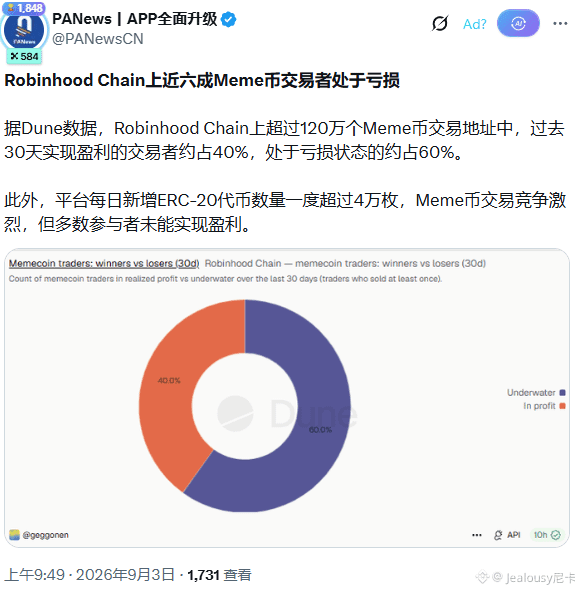
On the other hand, recently when people started going for RH, they’ve basically been losing money.
Also, this is basically the norm in the crypto world: if it’s something new, the first wave that rushes in gets the meat, and the second wave that rushes in gets the shit. Right now, there are still 40% of addresses in profit, but as more and more people enter, that 40% will keep dropping. After cutting the next batch of newbies, it may then have another “second spring.”
Truly the “crypto pig cycle” #Robinhood
I started playing about half a month ago, and basically everyone has been making money—especially if you happened to catch $PONS; those were all huge wins. Earlier, some P-newbies could catch several gold dogs in a single night.
On the other hand, recently when people started going for RH, they’ve basically been losing money.
Also, this is basically the norm in the crypto world: if it’s something new, the first wave that rushes in gets the meat, and the second wave that rushes in gets the shit. Right now, there are still 40% of addresses in profit, but as more and more people enter, that 40% will keep dropping. After cutting the next batch of newbies, it may then have another “second spring.”
Truly the “crypto pig cycle” #Robinhood

CZ: The encryption industry has weathered the harshest «winter» and the fundamentals are healthy
#比特币守稳78000美元上方
#比特币守稳78000美元上方
How many people treat “Maji” as a contrarian indicator?
“Ma Ji” used high leverage to roll over positions and faced a volatile market during a period of market turbulence; the account’s funds shrank by $2.35 million, yet still holds a long position of $114 million
Maji is still suitable for a one-way market
$BTC
“Ma Ji” used high leverage to roll over positions and faced a volatile market during a period of market turbulence; the account’s funds shrank by $2.35 million, yet still holds a long position of $114 million
Maji is still suitable for a one-way market
$BTC
Picking flowers without losing
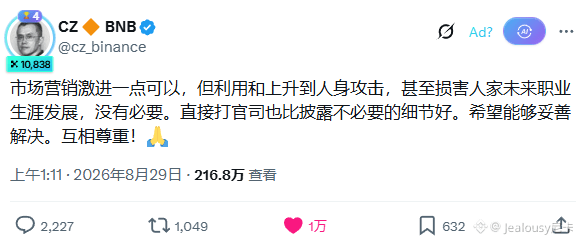
So cz is still a decent person, and for an industry big shot to speak out about this kind of matter surprises me—also, it shows that cz really couldn’t stand it anymore.
Also, this round in the crypto circle has basically ruined the reputation of casual bystanders.
Judging by the long-tail effect of public opinion, it’s really hard to say who wins and who loses.
You can clearly feel that Sun has started to be backfired on by public opinion.
Public opinion is a double-edged sword; if you use it poorly, it will hurt both others and yourself.
So cz is still a decent person, and for an industry big shot to speak out about this kind of matter surprises me—also, it shows that cz really couldn’t stand it anymore.
Also, this round in the crypto circle has basically ruined the reputation of casual bystanders.
Judging by the long-tail effect of public opinion, it’s really hard to say who wins and who loses.
You can clearly feel that Sun has started to be backfired on by public opinion.
Public opinion is a double-edged sword; if you use it poorly, it will hurt both others and yourself.
Verified
If Bitcoin falls below $760,000, the liquidation intensity of long positions on major CEXs will reach 797 million
#沃什称通胀是美联储首要关注 $BTC
#沃什称通胀是美联储首要关注 $BTC
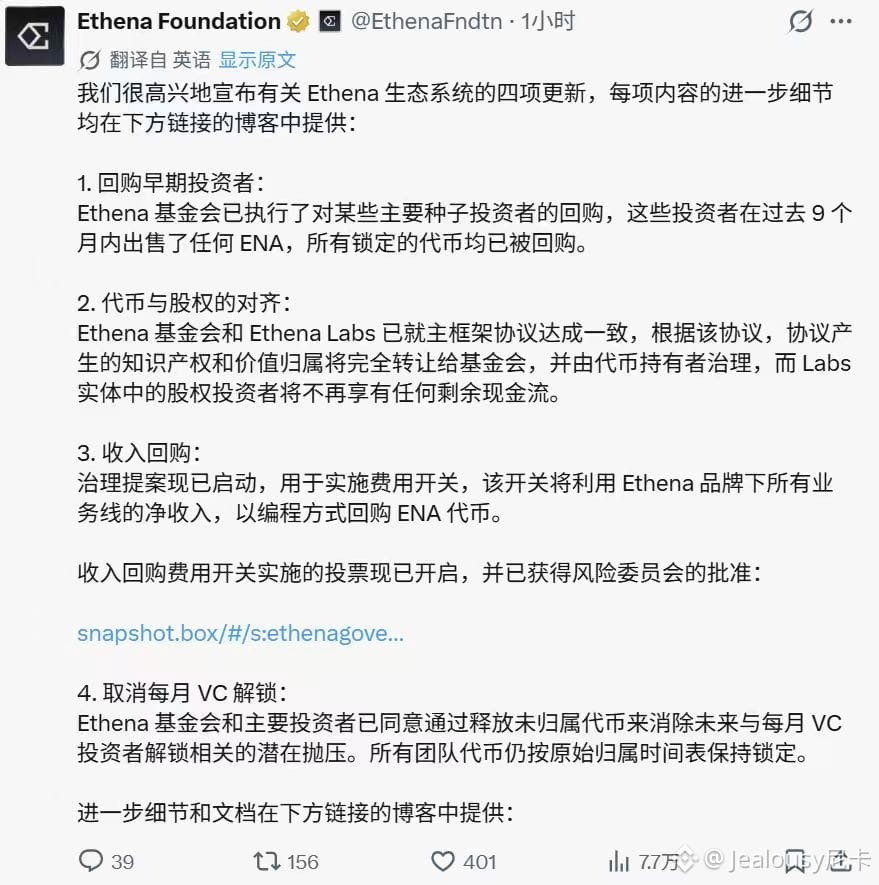
$ENA is incredibly awesome, just like $KAITO —both start falling right after the good news is released
SK hynix CEO: The expected memory shortage situation will continue until the end of 2030.
$SKHY
$SKHY
Verified
White-haired stock god Serenity interprets Nvidia earnings: AI will continue to surge; demand shows no signs of slowing
#英伟达营收超预期股价涨4% $NVDA.US
#英伟达营收超预期股价涨4% $NVDA.US
NVDAUS+0.63%
#dusk $DUSK @Dusk
Recently I came across $DUSK , and one point that I find particularly interesting is:
It doesn’t seem in a hurry to prove whether “blockchain can be used for finance.” Instead, it’s tackling the question of “why finance needs blockchain.”
These two questions are very different.
In traditional finance, asset issuance, trading, clearing, and custody are often handled by different institutions and systems, with lots of manual processes and data silos in between.
The real opportunity for blockchain to change things is exactly the connections between these steps.
What Dusk wants to do is put financial assets, trading, and settlement into the same on-chain infrastructure layer.
For example, Dusk Trade is designed for financial assets like MMFs, ETFs, and bonds; DuskEVM provides a familiar EVM environment so developers can continue building applications with Solidity.
However, putting finance on-chain can’t simply copy Crypto’s playbook.
Institutions need privacy, regulators need auditability, and trades require deterministic settlement.
That’s why Dusk places “privacy + compliance + on-chain settlement” at the core of its design.
I think this is more interesting than just talking about the “trillion-dollar RWA market.”
Because the real question has never been: “How many assets can be tokenized?”
It has always been: “After these assets are put on-chain, will it truly improve the efficiency of the entire financial market?”
If you could choose only one, what do you think will be the biggest change blockchain brings to traditional finance in the future?
A: Reduce transaction costs
B: Improve settlement efficiency
C: Enable more assets to trade around the clock
Personally, I would choose B. What about you?
Recently I came across $DUSK , and one point that I find particularly interesting is:
It doesn’t seem in a hurry to prove whether “blockchain can be used for finance.” Instead, it’s tackling the question of “why finance needs blockchain.”
These two questions are very different.
In traditional finance, asset issuance, trading, clearing, and custody are often handled by different institutions and systems, with lots of manual processes and data silos in between.
The real opportunity for blockchain to change things is exactly the connections between these steps.
What Dusk wants to do is put financial assets, trading, and settlement into the same on-chain infrastructure layer.
For example, Dusk Trade is designed for financial assets like MMFs, ETFs, and bonds; DuskEVM provides a familiar EVM environment so developers can continue building applications with Solidity.
However, putting finance on-chain can’t simply copy Crypto’s playbook.
Institutions need privacy, regulators need auditability, and trades require deterministic settlement.
That’s why Dusk places “privacy + compliance + on-chain settlement” at the core of its design.
I think this is more interesting than just talking about the “trillion-dollar RWA market.”
Because the real question has never been: “How many assets can be tokenized?”
It has always been: “After these assets are put on-chain, will it truly improve the efficiency of the entire financial market?”
If you could choose only one, what do you think will be the biggest change blockchain brings to traditional finance in the future?
A: Reduce transaction costs
B: Improve settlement efficiency
C: Enable more assets to trade around the clock
Personally, I would choose B. What about you?
The Fed’s most favored inflation gauge is out, PCE is flat with last month
On August 26, the U.S. PCE price index has been released—this is the inflation indicator the Federal Reserve favors most.
The PCE inflation rate rose 3.7% year over year, unchanged from June.
Excluding volatile food and energy categories, the core PCE inflation rate was 3.3% year over year, also unchanged from June.
Because this report is based on other inflation data that had already been released, PCE figures typically come very close to investors’ expectations.
However, as the Fed grapples with inflation concerns, this report further clarifies the inflation picture, and Fed Chair Waller will deliver an important speech on Friday.
The U.S. CPI data brought good news in July: core CPI eased to a relatively moderate 2.5%.
But the PCE inflation rate places different weights on different spending categories, so its performance has consistently been noticeably stronger.
At present, there are still many uncertainties about how Waller views the inflation challenge he has inherited.
He has not included his own economic forecasts in the quarterly “dot plot,” which summarizes Fed officials’ views on the outlook for the economy and interest rates. At the same time, he has not indicated whether he might support further rate hikes at upcoming meetings—a question that has already sparked disagreement within the Fed.
#PCE数据 $BTC
On August 26, the U.S. PCE price index has been released—this is the inflation indicator the Federal Reserve favors most.
The PCE inflation rate rose 3.7% year over year, unchanged from June.
Excluding volatile food and energy categories, the core PCE inflation rate was 3.3% year over year, also unchanged from June.
Because this report is based on other inflation data that had already been released, PCE figures typically come very close to investors’ expectations.
However, as the Fed grapples with inflation concerns, this report further clarifies the inflation picture, and Fed Chair Waller will deliver an important speech on Friday.
The U.S. CPI data brought good news in July: core CPI eased to a relatively moderate 2.5%.
But the PCE inflation rate places different weights on different spending categories, so its performance has consistently been noticeably stronger.
At present, there are still many uncertainties about how Waller views the inflation challenge he has inherited.
He has not included his own economic forecasts in the quarterly “dot plot,” which summarizes Fed officials’ views on the outlook for the economy and interest rates. At the same time, he has not indicated whether he might support further rate hikes at upcoming meetings—a question that has already sparked disagreement within the Fed.
#PCE数据 $BTC
The expectation of the Federal Reserve raising interest rates next month has risen slightly
#美联储何时降息?
#美联储何时降息?
Log in to explore more content