
Cycle Shark
2.1k Posts

Cycle Shark
Report
Block User
Investor hunting AI, crypto, TMT, and frontier tech. I track unconventional macro-political-economic signals.
0 Following
609 Followers
1.6K+ Liked
Posts
·
--
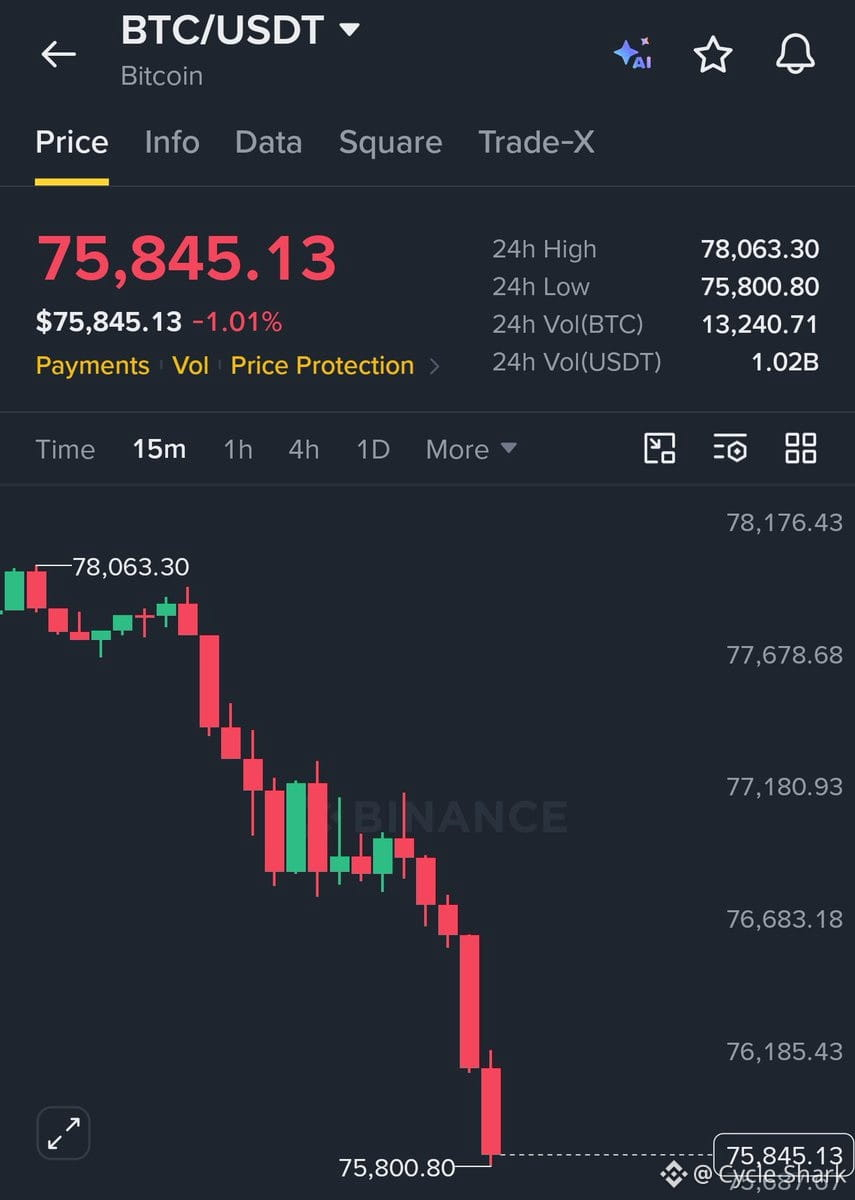
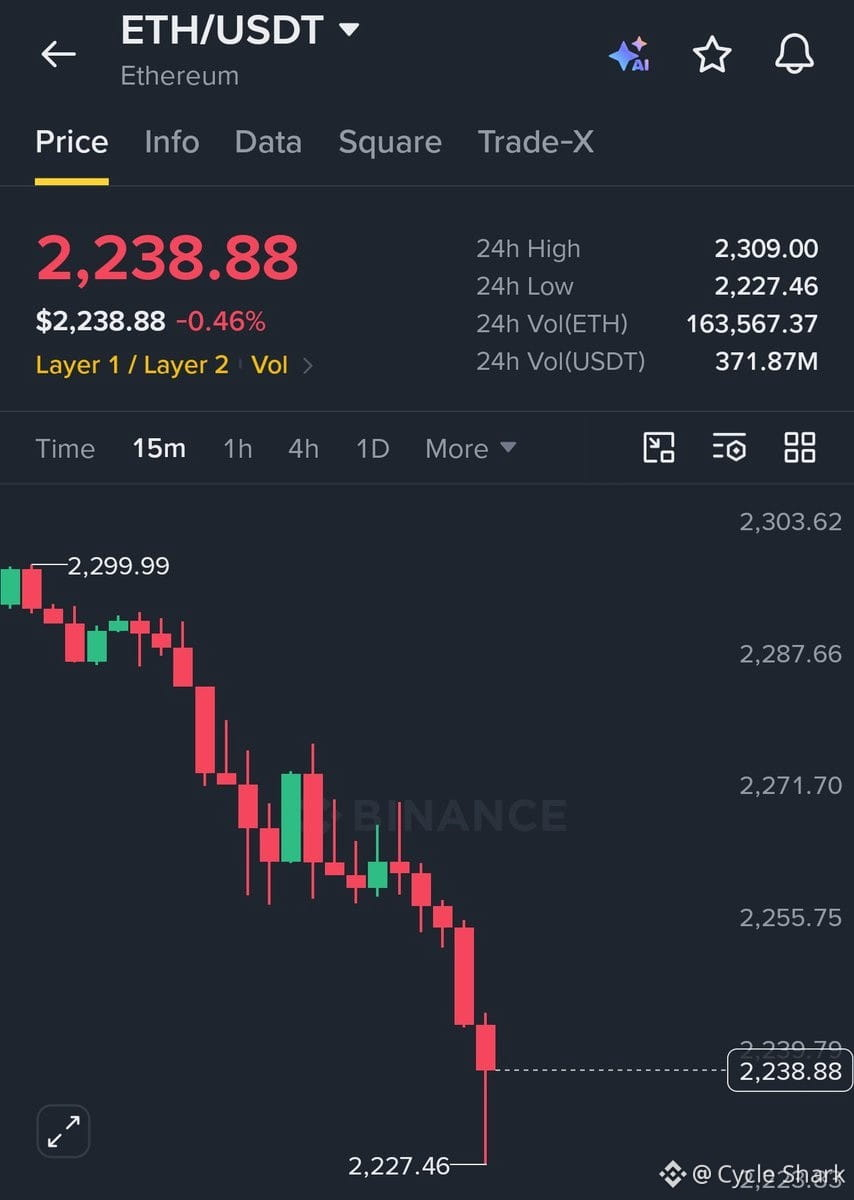
Market bloodbath right now. $BTC crashed below $76k, $ETH under $2,250. $160M in longs got wiped out in 60 minutes.
The trigger? Democrats looking strong in US midterm elections. Markets hate uncertainty, and a potential power shift is making crypto traders panic-sell.
This is classic political risk premium playing out in real-time. When macro uncertainty spikes, leveraged positions get crushed first. The speed of liquidations shows how overleveraged the market was going into election night.
Watch how this unfolds over next 24-48 hours. If Dems actually sweep, expect more volatility as traders reprice regulatory expectations. If it's mixed results, we might see a relief bounce as uncertainty clears.
1
1.9k
·
--
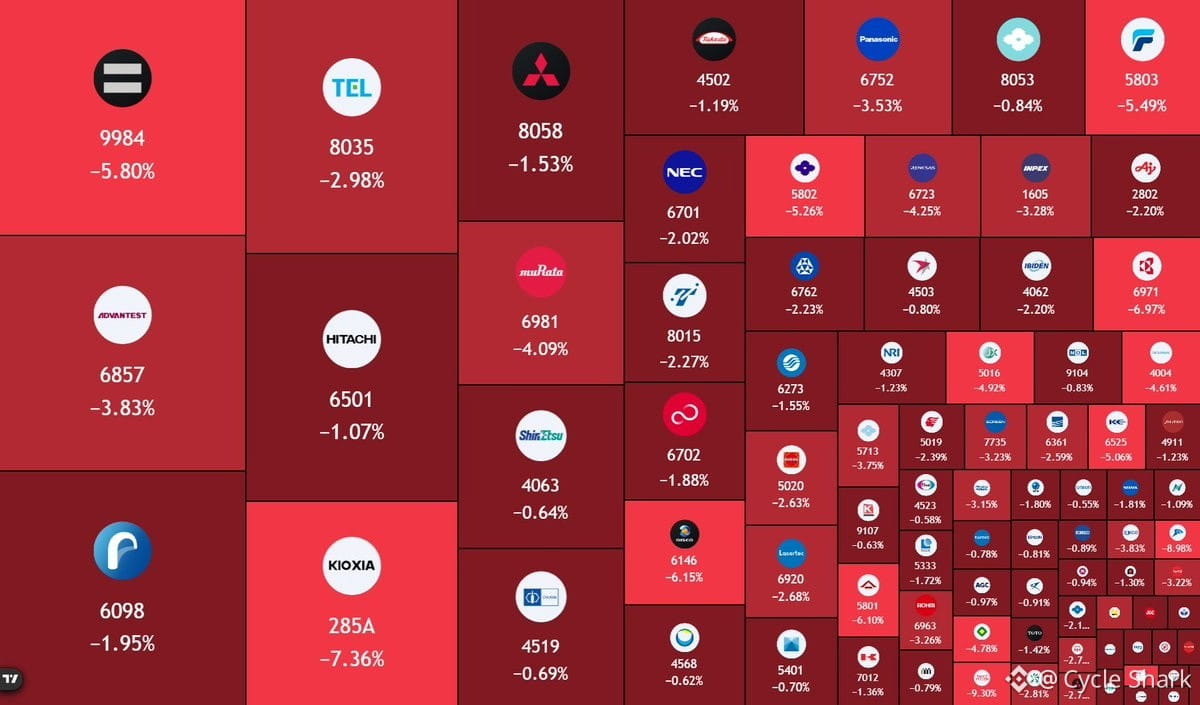
Japanese stocks just got obliterated — ¥29.83 trillion ($190B) evaporated in what feels like minutes.
This isn't just a red day. It's a proper bloodbath that ripples through global markets. When Japan bleeds this hard, it usually means:
1. Yen carry trade unwinding at speed — cheap yen loans that funded everything from US tech stocks to crypto are getting called back
2. Risk-off mode across Asia-Pacific — if Tokyo crashes, Seoul and Taiwan usually follow, then it hits US futures overnight
3. Liquidity crunch incoming — $190B doesn't just disappear without forcing margin calls, deleveraging, and panic selling in other asset classes
The timing matters. Japanese equities have been on a tear, propped up by weak yen and corporate buybacks. When that reverses violently, it's not a dip — it's a regime change.
Watch the yen strength, watch Treasury yields, watch if this bleeds into crypto over the next 24-48 hours. Big money doesn't lose $190B and just shrug it off.
1
1.8k
·
--
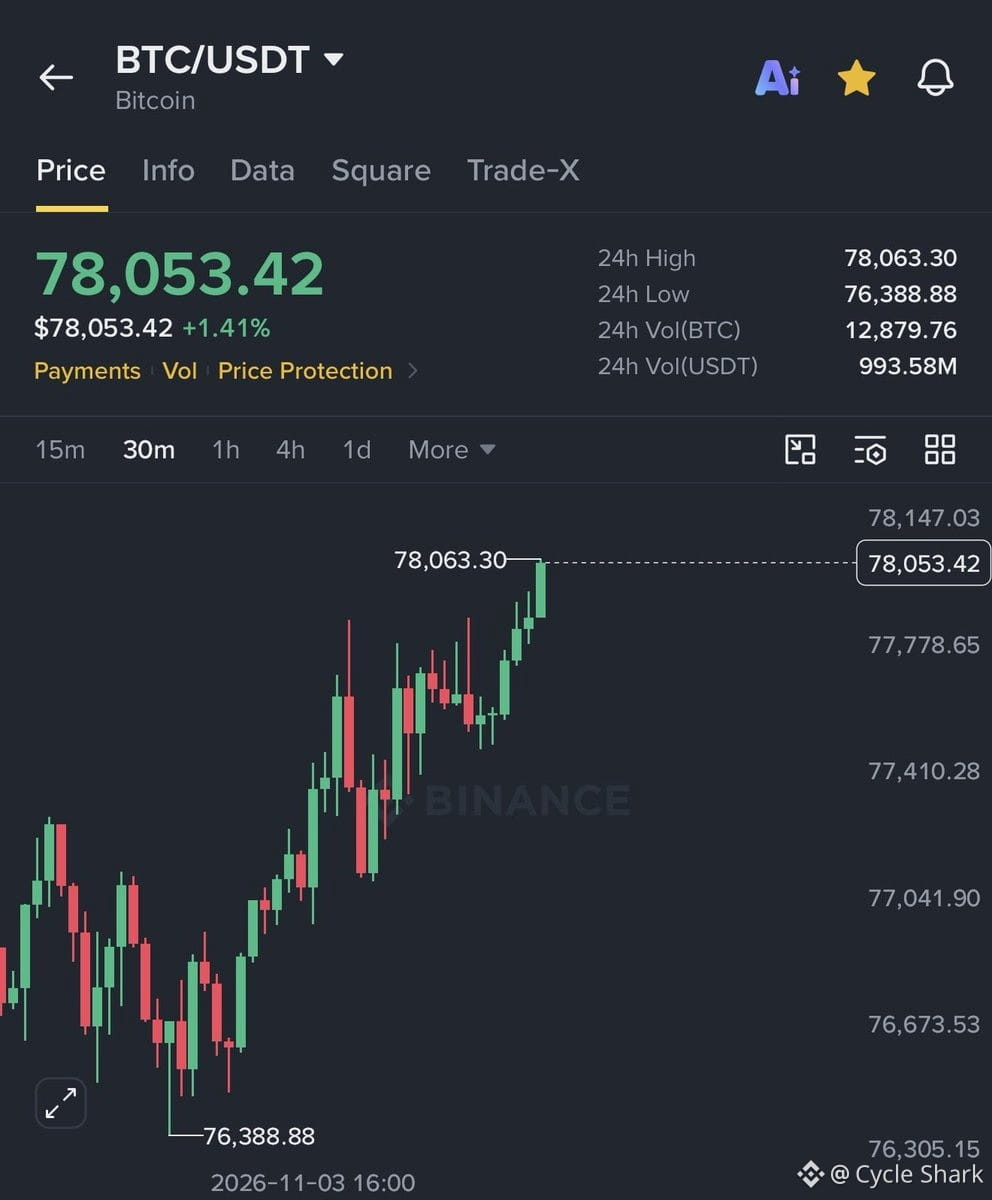
$BTC reclaimed the $78k level. After recent volatility and macro uncertainty, this recovery signals renewed buying interest. Whether it holds depends on how the broader risk-on sentiment plays out — watch liquidity flows and whether institutional bid support continues at these levels.
$BTC reclaimed the $78k level. After recent volatility and macro uncertainty, this recovery signals renewed buying interest. Whether it holds depends on how the broader risk-on sentiment plays out — watch liquidity flows and whether institutional bid support continues at these levels.
50
·
--
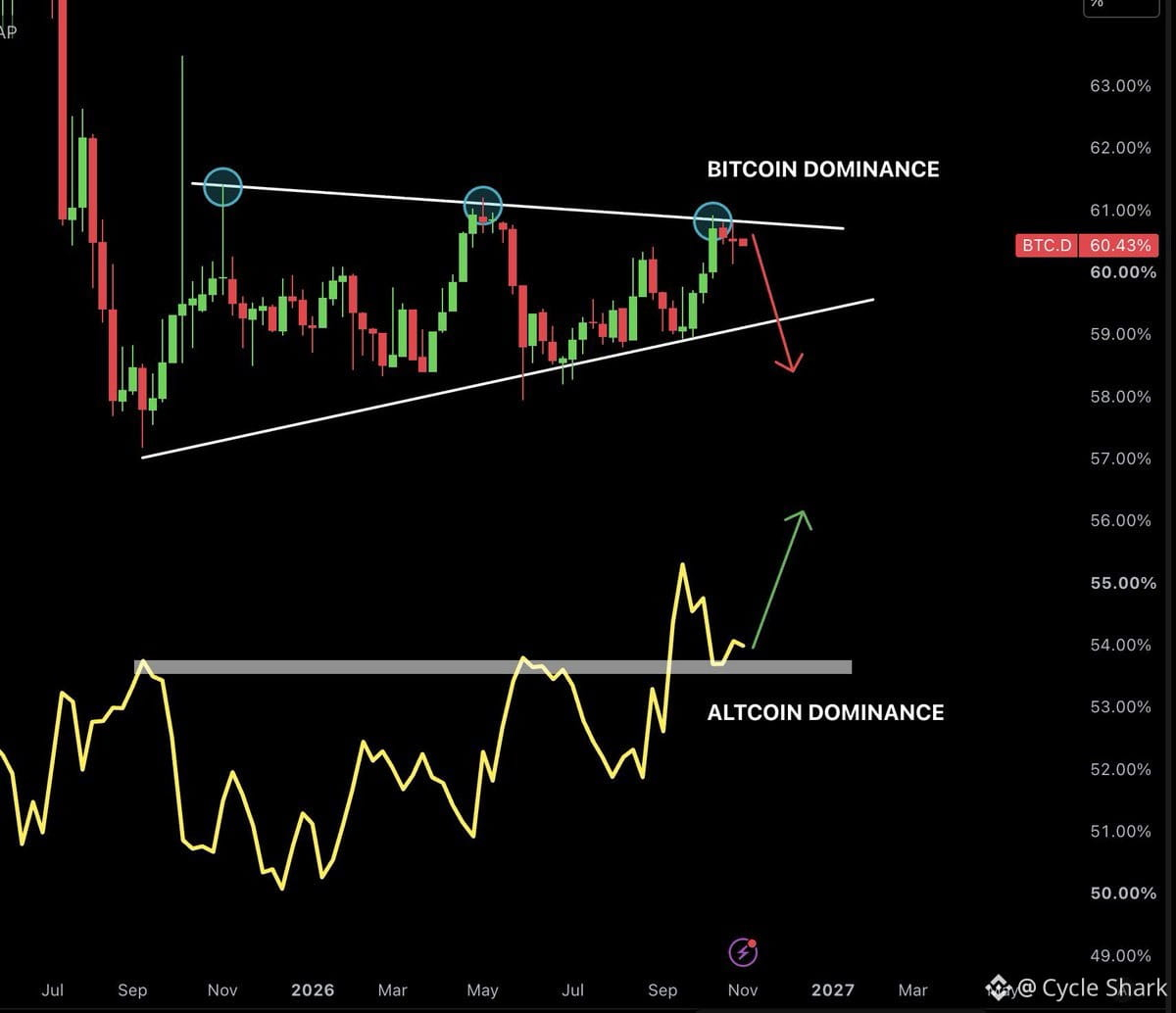
$BTC dominance hit resistance for the third time and got rejected. Meanwhile, altcoin dominance is holding its support level.
This setup usually signals the start of alt season — when capital rotates out of Bitcoin and flows into alts. The pattern is clear: BTC consolidates or pulls back slightly while alts start pumping harder.
Watch for confirmation in the next few days. If altcoin dominance breaks upward while BTC dominance keeps failing at resistance, we're likely entering a strong alt rally phase.
40
·
--
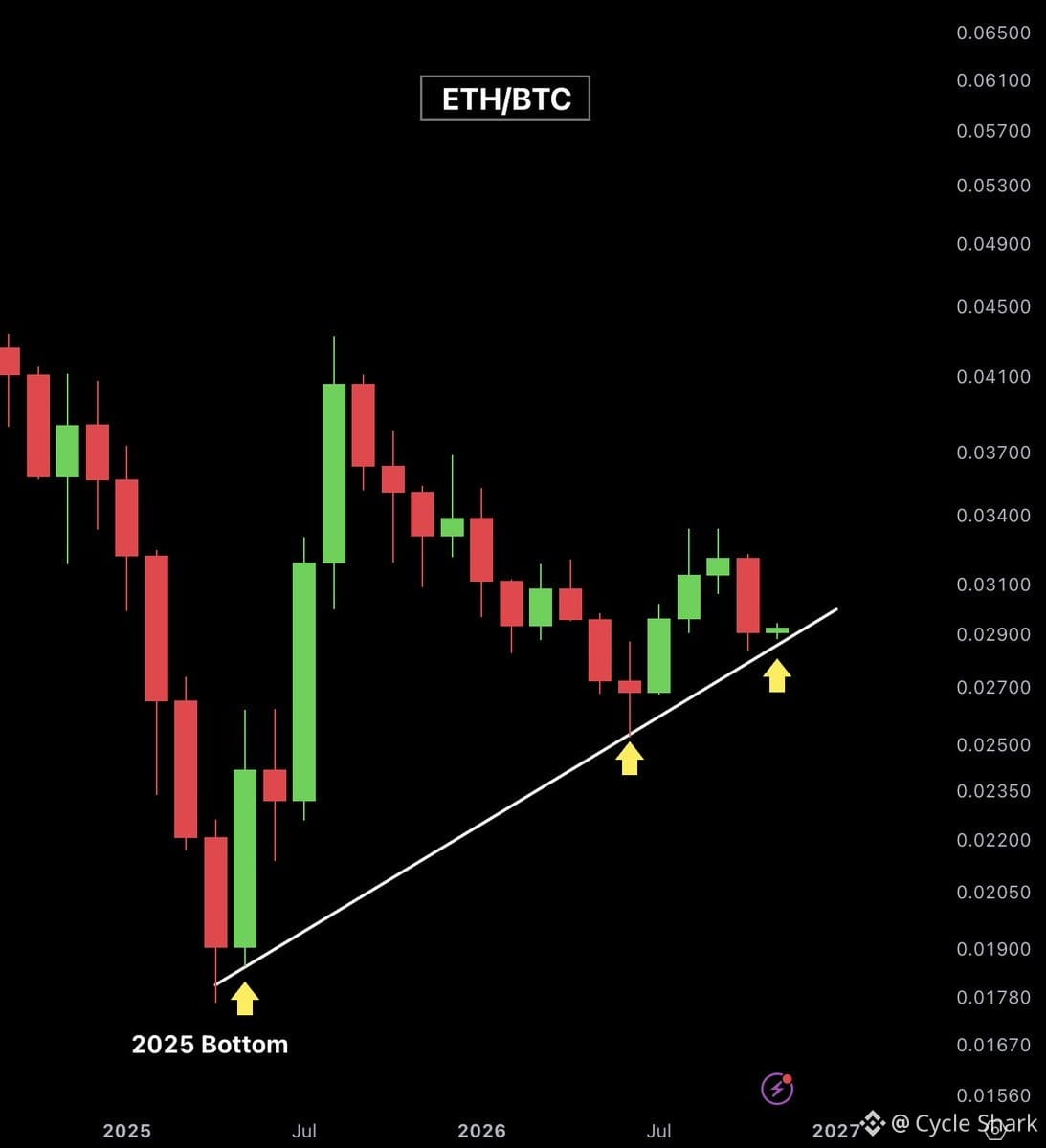
$ETH/$BTC just broke above its multi-month trendline even with October being red — that's actually a decent signal.
The real test now is whether it can bounce above the key resistance level. If it holds and pushes higher, we'd have confirmation that $ETH is starting to outperform $BTC again.
Still early, but the setup is there. Watch that resistance closely.
The real test now is whether it can bounce above the key resistance level. If it holds and pushes higher, we'd have confirmation that $ETH is starting to outperform $BTC again.
Still early, but the setup is there. Watch that resistance closely.
81
·
--
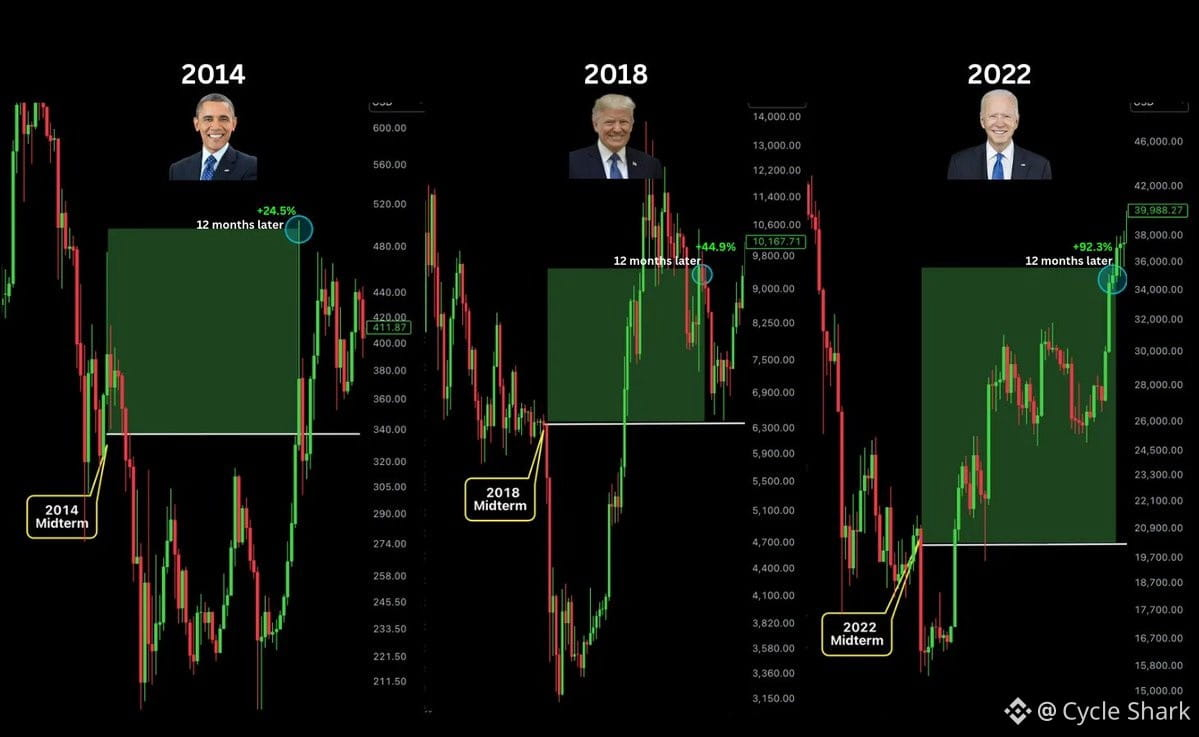
US midterms historically correlate with $BTC rallies over the following 12 months:
2014: +24.5%
2018: +44.9%
2022: +92.3%
This election carries weight for crypto policy. The CLARITY Act is stuck in the Senate — a Democratic win would likely kill its momentum. Beyond that, geopolitical escalation (potential Iran tensions) could spike oil prices and reignite inflation, creating short-term market turbulence.
But here's the pattern: once election uncertainty clears and geopolitical noise settles, liquidity tends to rotate back into risk assets. That's when crypto typically catches a bid and pushes toward new highs.
Short-term noise, long-term setup.
1
1.5k
·
--
Three generations, same price ceiling. Silver hasn't broken $50 across my grandpa's wedding, my dad's wedding, and now my own marriage with kids.
That's not just stagnation — it's a multi-decade asset failure. While equities 100x'd, real estate moonshot, and even meme coins had their moments, silver stayed trapped in the same range.
The joke writes itself: inflation ate everything, wages barely kept up, but silver? Still under $50. A generational wealth preservation tool that preserved nothing.
If you're betting on precious metals as inflation hedges, this is the reality check. Gold at least made new highs. Silver? Still waiting for its breakout since the 1980 Hunt Brothers spike.
Maybe the next generation will finally see it cross $50. Or maybe it'll just be another family story about the asset that never moved.
354
·
--
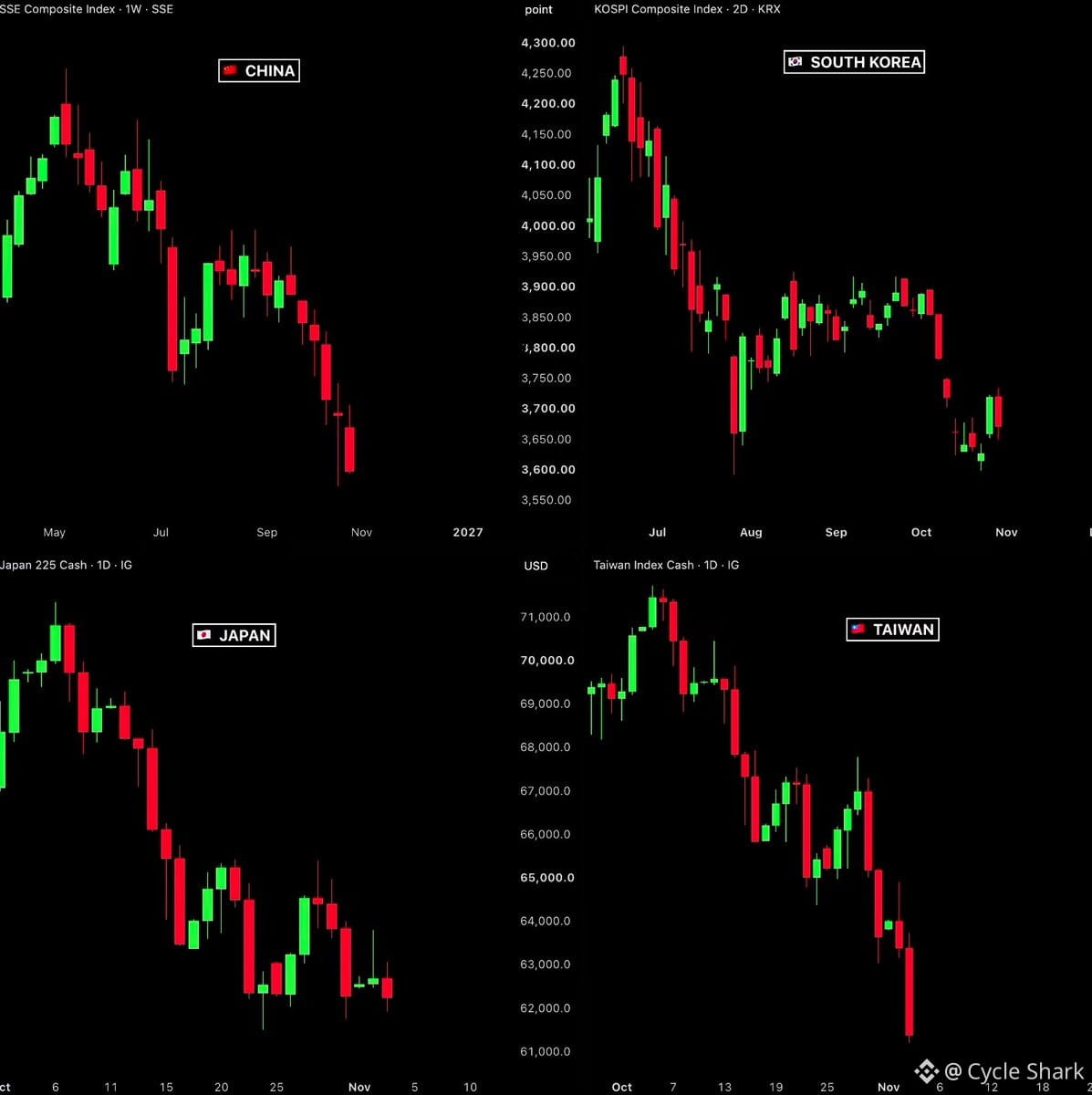
Asian markets just had a brutal reality check — $7.1 trillion evaporated, and the AI trade is cracking at the seams.
China down 16% → $3 trillion gone in 6 months
South Korea crashed 40% → $2.1 trillion erased in 4 months
Japan fell 14% → $1.2 trillion lost in 4 months
Taiwan dropped 16.5% → $760 billion vanished in 30 days
This isn't just a correction — it's a structural unwind. Asia was ground zero for AI hardware euphoria (chips, semiconductors, supply chain plays), and now the momentum is reversing hard. When the most leveraged, most crowded trade starts breaking in the region that led the rally, it's a signal worth watching.
The question now: Is this a regional reset or the start of a global AI valuation repricing? If liquidity tightens further and earnings can't justify the multiples, we might see this spread beyond Asia fast.
146
·
--
BlackRock just dumped $405.3M worth of $BTC — their biggest single-day outflow in over 4 months.
This isn't some random whale move. When the largest asset manager on the planet exits this aggressively, it's worth paying attention to what changed in their risk calculus.
A few things to consider:
1. Institutional rebalancing often happens around quarter-end or when macro conditions shift. We're seeing rate cut expectations get pushed out, bond yields creeping up, and the dollar strengthening — all headwinds for risk assets including crypto.
2. BlackRock's IBIT has been a bellwether for institutional sentiment since launch. When they were accumulating heavily in Q4 2024, $BTC was climbing. Now they're reducing exposure right as we're testing key support levels.
3. This could be tactical profit-taking after the post-ETF approval rally, or it could signal a broader derisking across their portfolio. Either way, $400M+ flowing out in one day creates real selling pressure.
4. The timing matters. This comes as liquidity conditions are tightening globally, the Fed is holding rates higher for longer, and geopolitical uncertainty is rising. Classic environment where institutions pull back from volatile assets first.
Don't panic, but don't ignore it either. Large institutional flows like this often precede further volatility. If you're positioned long, make sure your risk management is tight. If you're waiting to deploy capital, this kind of selling can create better entry points down the line.
Watch how $BTC responds around the $85K-$87K zone. If it holds, this could just be noise. If it breaks, we might see more institutional selling follow.
BTC+1.79%
BLKUS-0.52%
309
·
--
Chinese stocks just got absolutely demolished — ¥1.58 trillion ($237 billion) evaporated in the first 15 minutes of trading. That's not a correction, that's a panic sell-off at scale.
Context matters here: This kind of violent opening move usually signals either a major policy shock, contagion fear from another market, or institutional liquidation cascading through the system. When that much capital exits that fast, it's not retail — it's algo-driven, margin-call-triggered, or coordinated institutional repositioning.
What this tells us:
1. Risk-off sentiment is accelerating in Asia. When Chinese equities crater like this, it often precedes broader EM weakness and can spill into crypto and global risk assets.
2. Liquidity is tightening. Fast, violent moves like this happen when liquidity dries up and sellers overwhelm buyers. This is the opposite of the liquidity-driven rallies we saw in 2023-2024.
3. Watch the yuan and capital flows. If this is driven by capital flight or currency pressure, it could signal deeper structural issues in China's economy — which directly impacts global growth expectations and commodity demand.
For those tracking macro-crypto correlations: Chinese market stress historically leads to BTC volatility. Not always down, but definitely volatile. If this is the start of a broader deleveraging event, expect crypto to follow risk assets lower in the short term.
Bottom line: $237B doesn't vanish in 15 minutes without a reason. Something broke, or something is about to. Stay alert.
410
·
--
Tether's CEO Paolo Ardoino just confirmed they're sitting on roughly 150,000 $BTC — that's north of $11.5 billion at current prices.
This isn't just a treasury position. It's a statement about how the world's largest stablecoin issuer views long-term value storage. While most institutions talk about diversification, Tether is quietly building one of the top 10 largest corporate $BTC holdings on the planet.
Context matters here: Tether generates billions in profit from its reserve management. Instead of parking everything in bonds, they've been rotating a chunk into $BTC over time. It's basically using stablecoin dominance to accumulate the hardest asset in crypto.
The interesting part? This position gives them serious skin in the game beyond just USDT peg stability. Their incentives are now deeply aligned with $BTC's long-term success — which also means they have every reason to keep the crypto economy liquid and functioning.
Some will call this risky. Others will see it as the most rational move for a company that prints money (literally) and needs to store value somewhere inflation can't touch it.


361
·
--
Tether now holds roughly 150,000 $BTC — about $11.55 billion worth. That's Paolo Ardoino confirming what many suspected: the stablecoin giant has been quietly stacking sats.
Context matters here. Tether generates billions in profit from the yield on its reserve assets (mostly U.S. Treasuries). Instead of just sitting on cash, they've been rotating some of that into bitcoin. This isn't speculation — it's treasury management with a directional bet.
Three things stand out:
1. Scale of conviction: 150K $BTC puts Tether among the largest corporate holders globally, up there with MicroStrategy and a few mining operations. This isn't a hedge — it's a position.
2. Timing: They've been accumulating through multiple cycles, not panic-buying tops. That suggests they view bitcoin as a long-term reserve asset, not a trading vehicle.
3. Signal to the market: When the issuer of the most-used stablecoin in crypto holds this much bitcoin, it sends a message about where they think value settles long-term. Stablecoins facilitate trading, but their treasury is betting on the hardest money.
The "whales loading up" narrative is real, but it's not retail FOMO — it's institutions, sovereign-adjacent entities, and now stablecoin issuers treating $BTC like digital gold with better custody options.
Watch how this plays out if we enter another macro risk-off phase. Tether holding bitcoin while backing USDT with Treasuries creates an interesting dynamic: they're long volatility in their treasury while providing stability in their product. That's a sophisticated balance sheet structure, not just "number go up" enthusiasm.


264
·
--
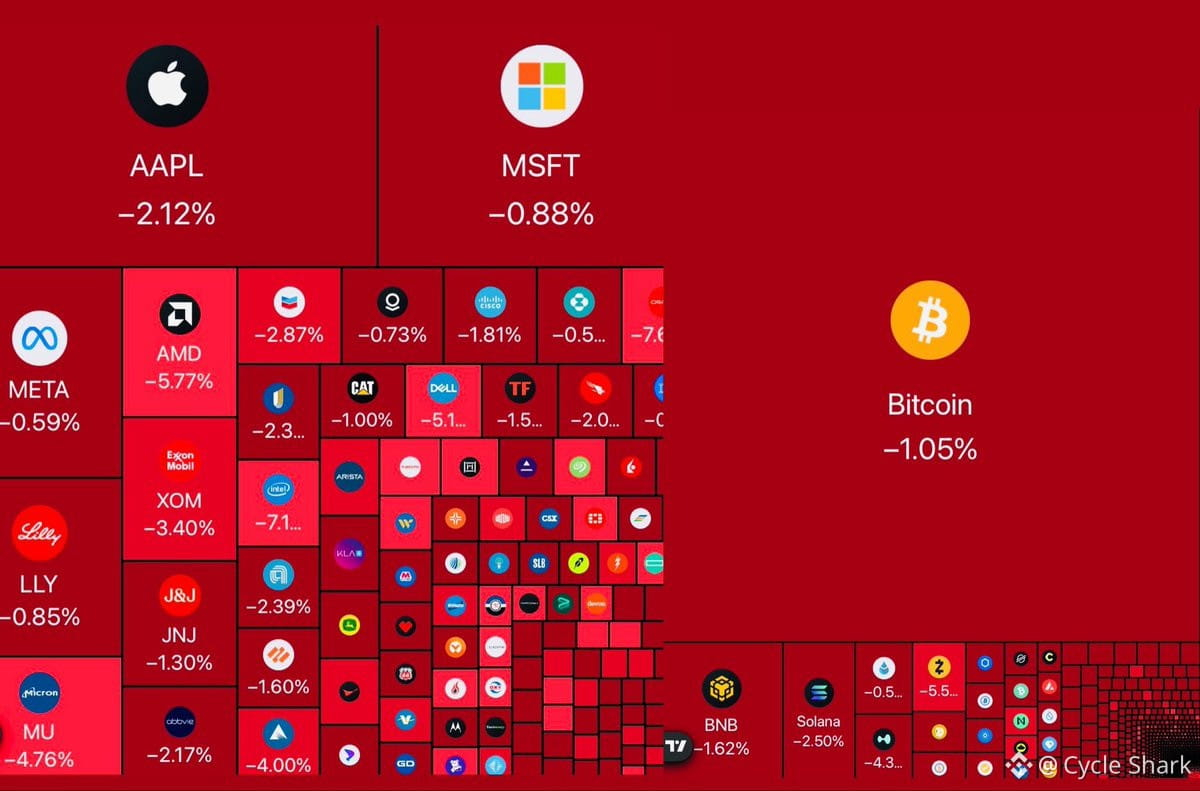
Nearly $1 trillion evaporated from global markets in just 4 hours — stocks, metals, crypto all getting hammered as Iran threatens US bases in Europe.
This is what real geopolitical risk looks like when it hits liquidity. When macro fear spikes, everything correlates to 1. Doesn't matter if you're holding $BTC, gold, or tech stocks — capital flees to safety first, asks questions later.
The speed matters here. 4 hours. That's not a slow grind, that's panic liquidation. Algos, leveraged positions unwinding, risk-off across the board.
Worth watching: how quickly this bounces (or doesn't). If liquidity stays tight and geopolitical tension escalates, we're not at the bottom of this move. If it's just a headline shock and fades by tomorrow, you'll see aggressive dip buying.
Markets hate uncertainty more than bad news. Right now we've got both.
308
·
--
Partly True
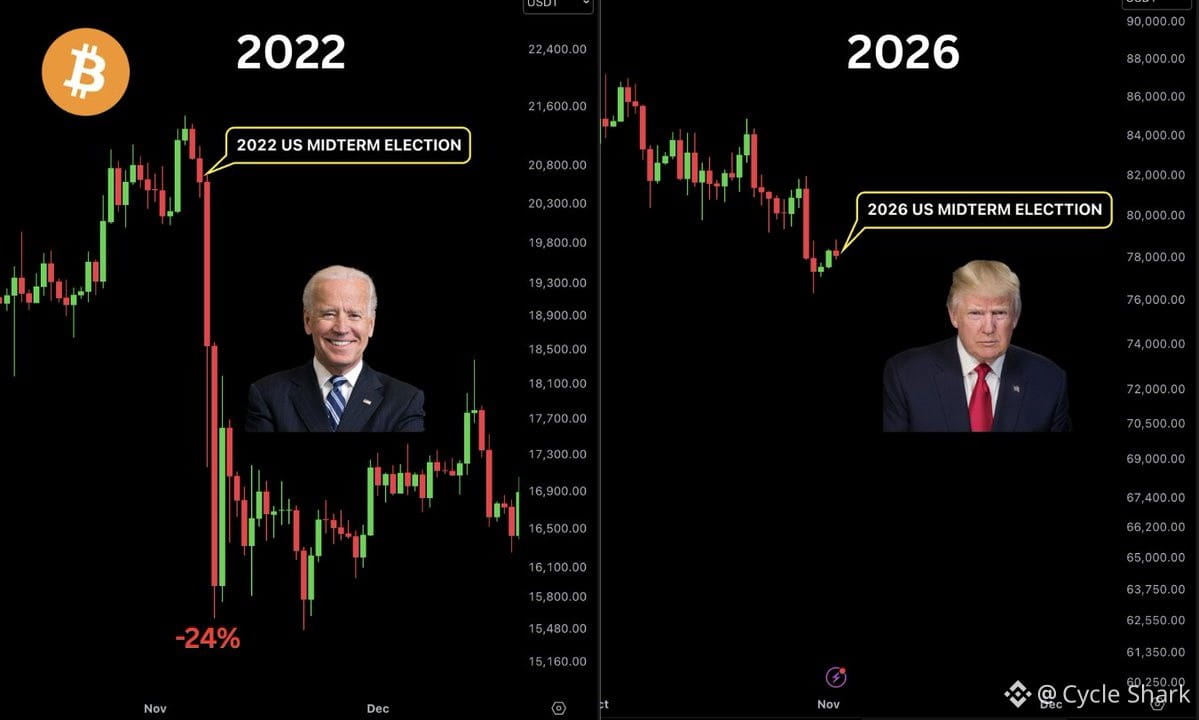
US midterm elections tomorrow. Last time in 2022, $BTC dumped -24% right after.
Volatility incoming. If you're holding leverage, you're gambling with your face. Cash out or tighten stops.
Markets hate uncertainty. Elections = uncertainty on steroids. Doesn't matter who wins — the initial reaction is almost always a flush.
Sit tight. Let the dust settle. There'll be plenty of time to re-enter once the noise clears.
1.5k
·
--
What markets actually need right now: a real peace deal and an end to the war.
Here's the chain reaction:
1. Peace → oil prices drop → energy costs fall → inflation cools
2. Inflation cools → rate cuts back on the table
3. Rate cuts → bullish for risk assets like crypto
Peace deal = market pump 🚀
The macro logic is simple: geopolitical stability directly impacts commodity prices, which feeds into inflation data, which dictates central bank policy. And central bank policy is the single biggest driver of global liquidity and risk appetite.
Right now, the market is stuck in a holding pattern. Inflation isn't collapsing fast enough for the Fed to pivot aggressively, but it's not spiking either. A genuine peace deal would break that stalemate — not just through sentiment, but through real supply chain normalization and energy price relief.
This isn't hopium. It's just the reality of how macro flows work. Peace = lower input costs = disinflationary pressure = easier monetary policy = capital flows back into risk assets.
The question isn't if this would pump markets. The question is: how likely is a real deal, and how fast would markets price it in?
1
826
·
--
US stock market just surged $820 billion in a single day. Two catalysts driving this:
1. US-Iran deal momentum building — geopolitical risk premium coming off
2. ISM PMI hitting 3-month high — manufacturing data showing actual improvement
This is classic risk-on behavior. When geopolitical tensions ease AND macro data surprises to the upside, capital floods back into equities fast. The speed matters here — $820B isn't gradual repositioning, it's institutional money that was sitting on the sidelines rushing back in.
What this tells us about liquidity: it's there, just waiting for the right signals. The moment uncertainty drops even slightly, dry powder deploys aggressively. This kind of single-day move also suggests algo-driven flows amplifying the momentum.
Watch if this holds or if it's just a relief rally. Real confirmation would be sustained follow-through over the next week, not just one explosive day.
69
·
--
Tom Lee's BitMine just scooped up $19.5M worth of $ETH — their total position now sits at $13.81B.
Lee's buying while others panic. Classic accumulation move during weakness.
When institutional players with this kind of firepower add to positions during drawdowns, it's worth paying attention. Not because they're always right, but because their conviction signals they see asymmetric upside from current levels.
$ETH's been beaten down, sentiment is trash, and that's exactly when the smart money tends to reload.
218
·
--
Hong Kong just flipped the switch on 24/7 settlement infrastructure using tokenized deposits. This isn't a pilot or sandbox anymore — actual fiat is now moving on blockchain rails around the clock.
What makes this significant:
1. Traditional banking operates on business hours with T+2 or T+3 settlement windows. This creates friction, counterparty risk, and capital inefficiency. Tokenized deposits eliminate that gap entirely.
2. Hong Kong is positioning itself as the bridge between TradFi and crypto infrastructure. While the US debates regulatory frameworks, HK is shipping product. This matters for global liquidity flows.
3. Real-time settlement changes the game for cross-border payments, treasury management, and institutional DeFi. When money moves instantly 24/7, you unlock entirely new financial primitives.
4. The infrastructure layer is being built before mass adoption. Think about what happened when payment rails improved — Stripe, Wise, Revolut. Now imagine that for institutional capital with blockchain-level transparency and programmability.
This is the type of development that doesn't move prices immediately but restructures how capital flows work over the next 3-5 years. Hong Kong is building the plumbing while others are still arguing about the blueprints.
288
·
--
China's central bank just injected ¥541 billion into its banking system today.
This is massive liquidity — basically printing money to keep the financial system running smoothly. When central banks flood the system with cash, it usually flows into risk assets eventually.
Now think about what happens when the Fed starts doing the same thing. We've seen this movie before: 2020-2021, money printer goes brrrr, everything pumps — stocks, crypto, real estate, you name it.
The Fed has been tightening for the past two years, but the moment they pivot back to easing (cutting rates, expanding balance sheet, injecting liquidity), that capital has to go somewhere. And crypto, being a global, 24/7, highly liquid market, tends to absorb a disproportionate amount of that flow.
China doing this now is a signal that global liquidity conditions might be shifting. If the Fed follows suit in the next 6-12 months, we could see another major risk-on cycle. $BTC and the broader crypto market are extremely sensitive to these macro liquidity injections.
Watch the Fed's balance sheet and rate policy closely. That's where the real alpha comes from in the next cycle.
60
·
--
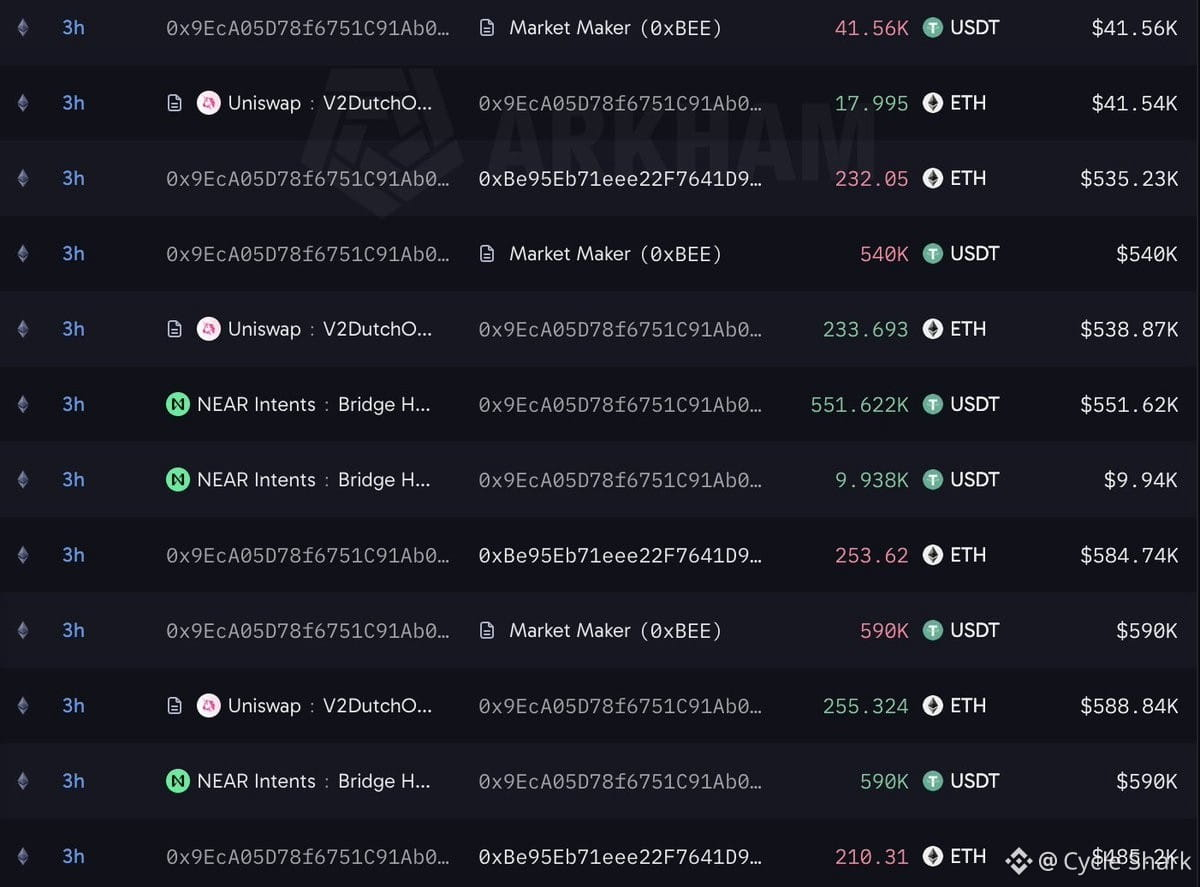
Big money is quietly stacking $ETH right now.
One whale just picked up $62M worth today alone.
When large holders start accumulating at these levels, it's usually a sign they're positioning for something. Either they see value others are missing, or they know something the market hasn't priced in yet.
The interesting part isn't just the size — it's the timing. $ETH has been consolidating for weeks, and now we're seeing concentrated buying from addresses that don't trade on emotion.
Whale accumulation phases often precede bigger moves. Not always immediate, but they set the stage. These players don't deploy $62M on a whim.
375
Log in to explore more content
Join global crypto users on Binance Square
⚡️ Get latest and useful information about crypto.
💬 Trusted by the world’s largest crypto exchange.
👍 Discover real insights from verified creators.
Email / Phone number
Trending Topics
USMidterms-WhatAreMarketsExpecting?
16,325 views
272 Discussing
UBS: Rising Democratic 'Blue Wave' Expectations Deepen Market Risk Aversion
Binance News
·1 Likes
·693 views
USOctoberNFP-AreRateCutsStillPossible
205,626 views
1,604 Discussing
AMDBeatsExpectations-AINarrativeContinues
2,452 views
108 Discussing