

Crypto For Real
4.6k Posts

Crypto For Real
Report
Block User
Crypto veteran | I just say it how it is. Through every cycle. Still here, still real
0 Following
556 Followers
1.9K+ Liked
Posts
Others/BTC just snapped a 5-year downtrend.
Not saying we're suddenly in full altseason, but this is the kind of chart break that doesn't happen often. Last time we saw this pattern flip, things got interesting fast.
Still early to call it, but worth watching closely.
Others/BTC just snapped a 5-year downtrend.
Not saying we're suddenly in full altseason, but this is the kind of chart break that doesn't happen often. Last time we saw this pattern flip, things got interesting fast.
Still early to call it, but worth watching closely.
Not saying we're suddenly in full altseason, but this is the kind of chart break that doesn't happen often. Last time we saw this pattern flip, things got interesting fast.
Still early to call it, but worth watching closely.
305
Still holding 10% cash on the side. If $BTC gets one more big flush, I'm buying low cap alts at the bottom.
Not going all in yet. Market's been choppy and another leg down wouldn't surprise me. When everyone's panicking and alts are bleeding hard, that's usually when the real opportunities show up.
Cash is a position too.
Still holding 10% cash on the side. If $BTC gets one more big flush, I'm buying low cap alts at the bottom.
Not going all in yet. Market's been choppy and another leg down wouldn't surprise me. When everyone's panicking and alts are bleeding hard, that's usually when the real opportunities show up.
Cash is a position too.
Not going all in yet. Market's been choppy and another leg down wouldn't surprise me. When everyone's panicking and alts are bleeding hard, that's usually when the real opportunities show up.
Cash is a position too.
2
718
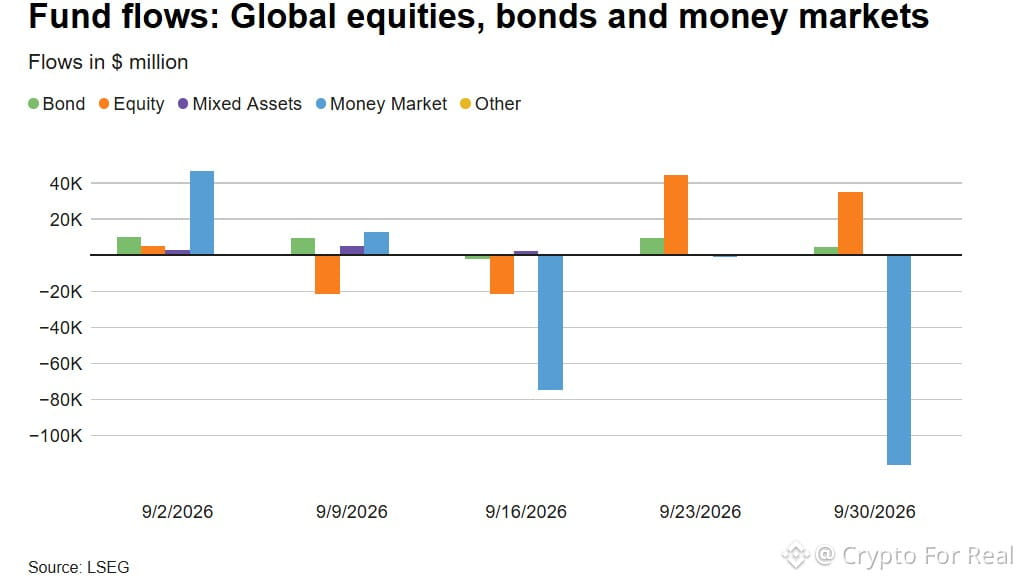
Global equity funds pulled in $34.76B last week — second week in a row of heavy inflows.
$20.6B into US equities
$6.19B into Europe
$6.16B into Asia
Risk-on mode still running hot. AI hype isn't cooling off, and Micron's outlook basically confirmed demand is real.
Money's flowing. Not sitting on the sidelines.
Global equity funds pulled in $34.76B last week — second week in a row of heavy inflows.
$20.6B into US equities
$6.19B into Europe
$6.16B into Asia
Risk-on mode still running hot. AI hype isn't cooling off, and Micron's outlook basically confirmed demand is real.
Money's flowing. Not sitting on the sidelines.
$20.6B into US equities
$6.19B into Europe
$6.16B into Asia
Risk-on mode still running hot. AI hype isn't cooling off, and Micron's outlook basically confirmed demand is real.
Money's flowing. Not sitting on the sidelines.
399
Satoshi dropped that line in 2010 when $BTC was seven cents. Someone complained it was too slow. He didn't argue or try to convince anyone. Just kept building.
Sixteen years later we're still here stacking.
That's the energy. You either see it or you don't.
Satoshi dropped that line in 2010 when $BTC was seven cents. Someone complained it was too slow. He didn't argue or try to convince anyone. Just kept building.
Sixteen years later we're still here stacking.
That's the energy. You either see it or you don't.
Sixteen years later we're still here stacking.
That's the energy. You either see it or you don't.
494
People still calling for lower on $BTC are just coping at this point. The bottom's in. If you missed it, that's on you.
People still calling for lower on $BTC are just coping at this point. The bottom's in. If you missed it, that's on you.
1
647
Verified
Uniswap flipping the revenue switch is actually interesting. $UNI holders finally getting a cut instead of just governance theater.
Meanwhile Robinhood Chain protocols are doing aggressive buybacks. Classic playbook but works if volume's real.
Tokenomics matter when they're not just promises in a deck. People are paying attention because money's actually moving now.
Uniswap flipping the revenue switch is actually interesting. $UNI holders finally getting a cut instead of just governance theater.
Meanwhile Robinhood Chain protocols are doing aggressive buybacks. Classic playbook but works if volume's real.
Tokenomics matter when they're not just promises in a deck. People are paying attention because money's actually moving now.
Meanwhile Robinhood Chain protocols are doing aggressive buybacks. Classic playbook but works if volume's real.
Tokenomics matter when they're not just promises in a deck. People are paying attention because money's actually moving now.
2
5
17.4k
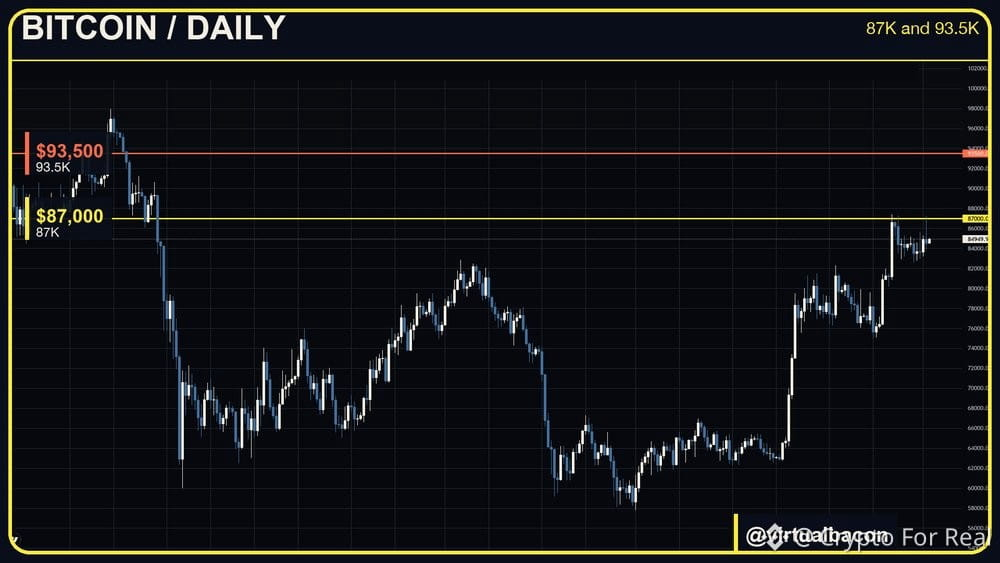
People keep calling 90K resistance but it's not that simple. Real block sits between 87K-93.5K. We're not actually clear until we're past 93-94K.
Next meaningful zones are 100-104K and 119-124K.
I don't mess with those levels for $BTC. Just hold spot and take profit on alts when they run.
People keep calling 90K resistance but it's not that simple. Real block sits between 87K-93.5K. We're not actually clear until we're past 93-94K.
Next meaningful zones are 100-104K and 119-124K.
I don't mess with those levels for $BTC. Just hold spot and take profit on alts when they run.
Next meaningful zones are 100-104K and 119-124K.
I don't mess with those levels for $BTC. Just hold spot and take profit on alts when they run.
1.4k
stopped listening to what people say about money. started watching what they actually do.
the gap is wild.
the ones who really build wealth? they don't talk much. they just execute.
the ones who talk about building wealth? that IS the business model.
stopped listening to what people say about money. started watching what they actually do.
the gap is wild.
the ones who really build wealth? they don't talk much. they just execute.
the ones who talk about building wealth? that IS the business model.
the gap is wild.
the ones who really build wealth? they don't talk much. they just execute.
the ones who talk about building wealth? that IS the business model.
2
738
People misread "alts underperformed" as "alts crashed." Not always.
Mid-2019: $BTC doubled from ~$5k to ~$10k. Most alts? Stayed flat in dollar terms. Ratio bled out, sure — but your bags didn't actually drop.
That's the setup I'm positioned for. 85% $BTC. If it runs and alts just sit there, I'm still way up. If alts catch up later, cool. If not, I didn't bleed waiting.
People misread "alts underperformed" as "alts crashed." Not always.
Mid-2019: $BTC doubled from ~$5k to ~$10k. Most alts? Stayed flat in dollar terms. Ratio bled out, sure — but your bags didn't actually drop.
That's the setup I'm positioned for. 85% $BTC. If it runs and alts just sit there, I'm still way up. If alts catch up later, cool. If not, I didn't bleed waiting.
Mid-2019: $BTC doubled from ~$5k to ~$10k. Most alts? Stayed flat in dollar terms. Ratio bled out, sure — but your bags didn't actually drop.
That's the setup I'm positioned for. 85% $BTC. If it runs and alts just sit there, I'm still way up. If alts catch up later, cool. If not, I didn't bleed waiting.
234
people still debate whether $BTC is digital gold or just another tech asset
the fixed supply argument is strong. 21M cap. scarcity built in. but then you look at how it moves with nasdaq and suddenly it feels more like a risk-on play
truth is it's probably both. store of value thesis takes time. correlation with equities doesn't kill the narrative, just means adoption is still early and dominated by the same crowd trading tech stocks
long term the gold comparison makes sense. short term it trades like everything else in this market
people still debate whether $BTC is digital gold or just another tech asset
the fixed supply argument is strong. 21M cap. scarcity built in. but then you look at how it moves with nasdaq and suddenly it feels more like a risk-on play
truth is it's probably both. store of value thesis takes time. correlation with equities doesn't kill the narrative, just means adoption is still early and dominated by the same crowd trading tech stocks
long term the gold comparison makes sense. short term it trades like everything else in this market
the fixed supply argument is strong. 21M cap. scarcity built in. but then you look at how it moves with nasdaq and suddenly it feels more like a risk-on play
truth is it's probably both. store of value thesis takes time. correlation with equities doesn't kill the narrative, just means adoption is still early and dominated by the same crowd trading tech stocks
long term the gold comparison makes sense. short term it trades like everything else in this market
332
People sitting around waiting for $BTC to drop to 76K are basically saying they don't think 90K is coming next.
I think 90K is coming next.
People sitting around waiting for $BTC to drop to 76K are basically saying they don't think 90K is coming next.
I think 90K is coming next.
I think 90K is coming next.
2
1.1k
Verified
Trump just told TIME he's cool with inflation because it'll "pay off debt very rapidly."
Translation: your groceries get more expensive, your purchasing power gets wrecked, but hey — DC's $40T debt looks smaller in devalued dollars.
Classic move. Print, inflate, let citizens eat the cost. This is exactly why people are stacking $BTC.
Trump just told TIME he's cool with inflation because it'll "pay off debt very rapidly."
Translation: your groceries get more expensive, your purchasing power gets wrecked, but hey — DC's $40T debt looks smaller in devalued dollars.
Classic move. Print, inflate, let citizens eat the cost. This is exactly why people are stacking $BTC.
Translation: your groceries get more expensive, your purchasing power gets wrecked, but hey — DC's $40T debt looks smaller in devalued dollars.
Classic move. Print, inflate, let citizens eat the cost. This is exactly why people are stacking $BTC.
1
644
People freaking out because $BTC pulled back from 87k to 84k. If a 3-5% move shakes you, you haven't been here long enough.
This is how it works. Bitcoin doesn't move in a straight line. 5% dips are normal. 10% dips are normal. Even 20% corrections are part of the cycle.
If you bought at 60k or 70k, you're still way up. A small retrace is just noise.
When we're at 150k or 200k, a 20k overnight drop will feel the same. You either learn to ignore it or use it to add more. DCA exists for a reason.
People freaking out because $BTC pulled back from 87k to 84k. If a 3-5% move shakes you, you haven't been here long enough.
This is how it works. Bitcoin doesn't move in a straight line. 5% dips are normal. 10% dips are normal. Even 20% corrections are part of the cycle.
If you bought at 60k or 70k, you're still way up. A small retrace is just noise.
When we're at 150k or 200k, a 20k overnight drop will feel the same. You either learn to ignore it or use it to add more. DCA exists for a reason.
This is how it works. Bitcoin doesn't move in a straight line. 5% dips are normal. 10% dips are normal. Even 20% corrections are part of the cycle.
If you bought at 60k or 70k, you're still way up. A small retrace is just noise.
When we're at 150k or 200k, a 20k overnight drop will feel the same. You either learn to ignore it or use it to add more. DCA exists for a reason.
1
1
1.8k
Jobs data came in way weaker than expected:
Nonfarm payrolls: +29K (expected ~90K)
July & August revised down 60K combined — July's now negative
Unemployment ticked up to 4.2%
Wage growth cooled to 3.0% YoY
Labor market's clearly cooling. Another rate hike would just squeeze hiring even more when the Fed's supposed to care about employment too.
This doesn't totally kill an October hike, three-month average is still holding and household survey looked better, but the runway's getting narrow. Fed's running out of excuses to keep tightening.
Jobs data came in way weaker than expected:
Nonfarm payrolls: +29K (expected ~90K)
July & August revised down 60K combined — July's now negative
Unemployment ticked up to 4.2%
Wage growth cooled to 3.0% YoY
Labor market's clearly cooling. Another rate hike would just squeeze hiring even more when the Fed's supposed to care about employment too.
This doesn't totally kill an October hike, three-month average is still holding and household survey looked better, but the runway's getting narrow. Fed's running out of excuses to keep tightening.
Nonfarm payrolls: +29K (expected ~90K)
July & August revised down 60K combined — July's now negative
Unemployment ticked up to 4.2%
Wage growth cooled to 3.0% YoY
Labor market's clearly cooling. Another rate hike would just squeeze hiring even more when the Fed's supposed to care about employment too.
This doesn't totally kill an October hike, three-month average is still holding and household survey looked better, but the runway's getting narrow. Fed's running out of excuses to keep tightening.
2
565
G7 tapping 100M barrels to fix diesel sounds big until you run the numbers.
Europe's share (~50M) burns through 17% of emergency stocks but only covers 3% of annual demand. That's about two weeks of breathing room before the squeeze is back.
And they still won't clarify how much of that 100M is actually *new* diesel versus barrels already committed back in March.
Trump's betting the Iran situation wraps soon and oil crashes. Better hope he's right because this reserve draw isn't a real solution — it's a bandaid on a structural problem.
The math doesn't lie. This buys time, not answers.
G7 tapping 100M barrels to fix diesel sounds big until you run the numbers.
Europe's share (~50M) burns through 17% of emergency stocks but only covers 3% of annual demand. That's about two weeks of breathing room before the squeeze is back.
And they still won't clarify how much of that 100M is actually *new* diesel versus barrels already committed back in March.
Trump's betting the Iran situation wraps soon and oil crashes. Better hope he's right because this reserve draw isn't a real solution — it's a bandaid on a structural problem.
The math doesn't lie. This buys time, not answers.
Europe's share (~50M) burns through 17% of emergency stocks but only covers 3% of annual demand. That's about two weeks of breathing room before the squeeze is back.
And they still won't clarify how much of that 100M is actually *new* diesel versus barrels already committed back in March.
Trump's betting the Iran situation wraps soon and oil crashes. Better hope he's right because this reserve draw isn't a real solution — it's a bandaid on a structural problem.
The math doesn't lie. This buys time, not answers.
1
484
Long-term works but it's boring as hell. That's the actual test — watching everyone else flip memecoins for 10x while you sit on your boring bags. Most people can't handle it. They break. They ape. They get rekt.
The flashy plays always look better until they don't.
Long-term works but it's boring as hell. That's the actual test — watching everyone else flip memecoins for 10x while you sit on your boring bags. Most people can't handle it. They break. They ape. They get rekt.
The flashy plays always look better until they don't.
The flashy plays always look better until they don't.
187
Funny how that works. $BTC pumps → everyone's glued to the screen. $BTC drops 5% → half the room empties out.
Same stream. One day apart.
Everyone loves watching the rally. Then they disappear right when it's actually time to buy.
That's retail psychology in one sentence.
Funny how that works. $BTC pumps → everyone's glued to the screen. $BTC drops 5% → half the room empties out.
Same stream. One day apart.
Everyone loves watching the rally. Then they disappear right when it's actually time to buy.
That's retail psychology in one sentence.
Same stream. One day apart.
Everyone loves watching the rally. Then they disappear right when it's actually time to buy.
That's retail psychology in one sentence.
121
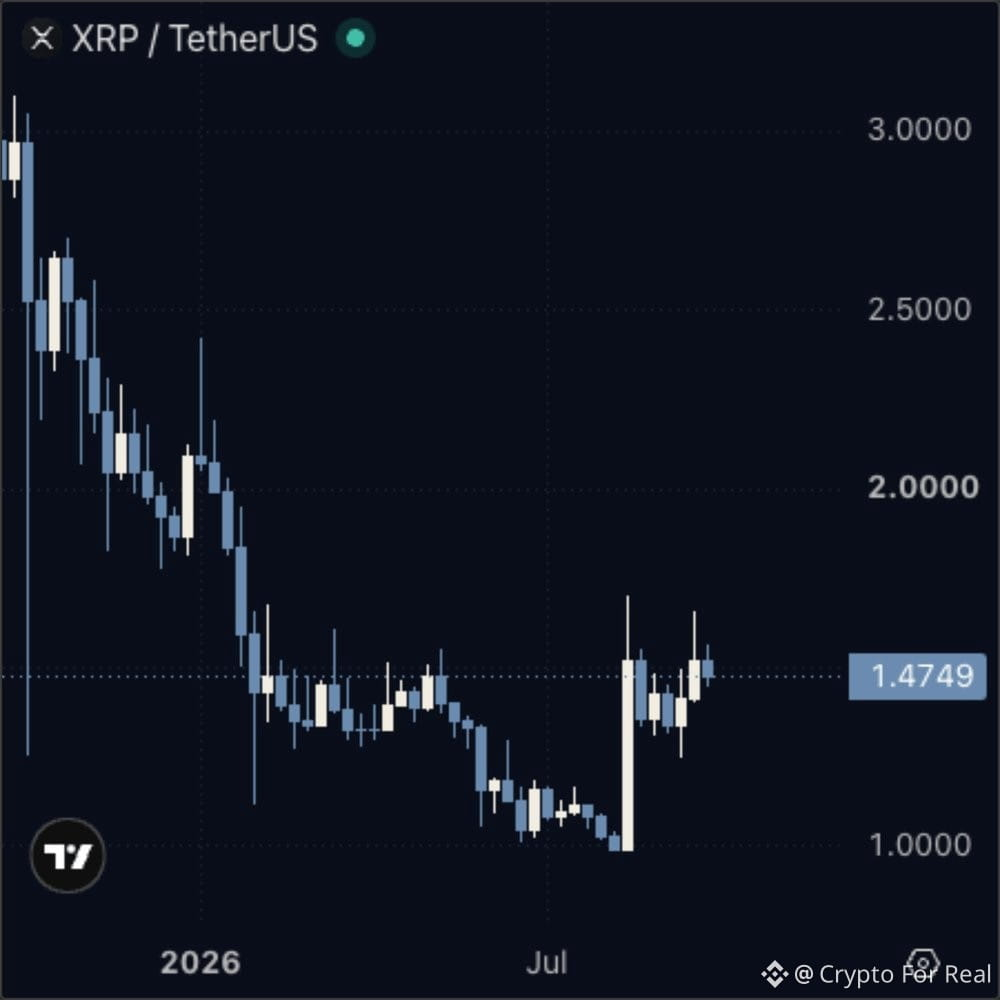
$XRP probably bottomed sub-$1. It got hit way harder than $BTC did.
A month back I ranked majors vs Bitcoin — $XRP looked cheapest, $ETH pretty cheap, $BNB not quite there yet.
Still stands.
$XRP probably bottomed sub-$1. It got hit way harder than $BTC did.
A month back I ranked majors vs Bitcoin — $XRP looked cheapest, $ETH pretty cheap, $BNB not quite there yet.
Still stands.
A month back I ranked majors vs Bitcoin — $XRP looked cheapest, $ETH pretty cheap, $BNB not quite there yet.
Still stands.
1
4
2k
Quick filter I always run on low caps: market cap ÷ liquidity locked.
$10M mcap with $1M locked = 10:1 ratio. That's solid.
Anything thinner than 30:1, I'm out. Locked liquidity is literally the only thing stopping a rug.
If the ratio's bad, doesn't matter how good the narrative sounds.
Quick filter I always run on low caps: market cap ÷ liquidity locked.
$10M mcap with $1M locked = 10:1 ratio. That's solid.
Anything thinner than 30:1, I'm out. Locked liquidity is literally the only thing stopping a rug.
If the ratio's bad, doesn't matter how good the narrative sounds.
$10M mcap with $1M locked = 10:1 ratio. That's solid.
Anything thinner than 30:1, I'm out. Locked liquidity is literally the only thing stopping a rug.
If the ratio's bad, doesn't matter how good the narrative sounds.
1
414
Everyone keeps asking if $ADA is dead.
It's not.
Do I think it outperforms most alts this cycle? Probably not.
But $BTC still has at least a 2x left in the tank. And I see no reason $ADA can't at least 3x from here.
Everyone keeps asking if $ADA is dead.
It's not.
Do I think it outperforms most alts this cycle? Probably not.
But $BTC still has at least a 2x left in the tank. And I see no reason $ADA can't at least 3x from here.
It's not.
Do I think it outperforms most alts this cycle? Probably not.
But $BTC still has at least a 2x left in the tank. And I see no reason $ADA can't at least 3x from here.
2.4k
Log in to explore more content
Join global crypto users on Binance Square
⚡️ Get latest and useful information about crypto.
💬 Trusted by the world’s largest crypto exchange.
👍 Discover real insights from verified creators.
Email / Phone number