

Marcus Corvinus
15.5k Posts

Marcus Corvinus
 Square Verified+
Report
Block User
Marcus is Here. Crypto since 2015. Web3 builder. Verified KOL on Binance Square. Let's grow together: X- @CryptoBull009

Traders League Badge Beginner

Top Voices
128 Following
78.7K+ Followers
94.0K+ Liked
2 Badges
Posts
All
Quotes
PINNED
·
--
Bullish
135
10
179
21.9k
PINNED

Article
Why Binance Square Feels Like My Home in CryptoI’ll say it the simple way.
I don’t like wearing “square.” I never did. I don’t like boxes, fixed lanes, or platforms that force you to think in one direction.
But Binance Square isn’t a box.
It’s more like a live crypto street—open, noisy in a good way, full of real people, real opinions, and real updates happening at the same time. Every time I open it, I feel like I’m stepping into the place where crypto is actually being discussed properly, not just posted.
And that’s why I keep choosing it.
Binance Square doesn’t feel like a feed, it feels like a place
Most places feel like endless scrolling.
Binance Square feels like a place people meet.
You can literally watch the market mood change in real time. One moment everyone is calm, next moment something breaks out and the entire community is discussing it from different angles—news, charts, fundamentals, risk, narratives, timing. It feels alive because it’s not one-way content. It’s two-way conversation.
That’s what I mean when I say there is a full real community here. Everything gets discussed. Nothing feels too small, too early, or too “niche” to talk about.
If it matters in crypto, it’s already here.
The value-to-value creator culture is rare
What makes Binance Square special isn’t just that people post. It’s how people post.
There are creators here who consistently bring value. You can feel it immediately:
Posts that make you understand a move instead of fear it
Breakdowns that explain why something matters
Updates that feel fresh, not recycled
Warnings that save people from bad decisions
Research that feels like time was actually spent on it
This is the kind of environment where you naturally grow, because your mind stays sharp. You don’t just consume content, you learn patterns.
And when a platform becomes “value-to-value,” it stops being entertainment and starts becoming education.
Every crypto update feels different here
This is one of the biggest reasons I stay.
Even when everyone is talking about the same topic, Binance Square doesn’t feel copy-pasted. You’ll see ten people cover one update, but each one brings a different angle—market structure, macro view, on-chain perspective, risk management, timing, sentiment.
So instead of getting bored, you get layered understanding.
That’s why I can say this confidently:
Anything about the crypto space is always available on Binance Square.
Not just available—explained, debated, broken down, and updated.
It’s where the whole crypto world gets connected in one place
Crypto is not only charts.
It’s also:
narrativesnew listings and rotationsstablecoin flowsbig wallets movingtoken unlock pressurehype cycles and reality checkssecurity issues and scamsregulation impactscommunity sentiment
On Binance Square, all of this lives together. That matters because crypto never moves because of one reason. It moves because many reasons collide.
This is why Binance Square feels complete: you’re not forced to leave the platform just to understand what’s going on.
The campaigns keep the community active and moving
One thing I genuinely like is the campaign culture. It keeps the community alive. It creates momentum. It makes creators show up, think, compete, and improve.
Campaigns don’t just give rewards—they create direction. They push people to contribute more, write better, and stay consistent. It keeps the ecosystem warm, not cold.
And if you’re active, you feel it immediately. You feel like you’re part of something happening, not just watching from outside.
Why I always prioritize Binance Square above everything else
I’m not even trying to “compare” in a loud way, but the difference is clear.
In other places, crypto discussion often turns into noise: people repeat the same lines, chase attention, and argue without adding any clarity. It’s loud, but it’s not helpful.
Binance Square has noise too sometimes—crypto is crypto—but it has a stronger backbone:
More focus on actual market reality
More creators trying to be useful
More community discussion that adds something
More learning if you pay attention
So even if other platforms exist, Binance Square still stays above them for me because I actually leave this place smarter than I entered.
My personal story with Binance Square (63.9K followers, and still learning daily)
This part matters to me.
I’m sitting at 63.9K followers on Binance Square, and that number didn’t happen from luck.
It happened because I stayed consistent.
I learned. I posted. I improved. I studied the market. I listened to the community. I kept showing up. And the more I stayed active, the more the platform gave me something back—knowledge, reach, growth, and opportunities.
I can say it honestly:
I learn almost everything from Binance Square about the crypto space.
Not because I can’t learn elsewhere, but because Binance Square gives it to me in the most practical format:
The update
The reaction
The debate
The lesson
The next move
And yes… I’ve earned from Binance Square in ways people wouldn’t even imagine. Not just “a little.” I mean real value. The kind of value that comes when you become consistent, active, and serious about what you’re doing.
I stay active, I participate, and I take every campaign seriously
I’m not the type to appear once and disappear for weeks.
I stay active.
I comment, I engage, I post, I contribute. And whenever there’s a campaign, I’m not watching it… I’m in it.
Because campaigns are not just rewards to me. They’re a signal that Binance Square is alive and expanding. They’re a reason to stay sharp, push harder, and stay consistent.
That’s why I actively participate in every campaign—because it keeps me connected to the community and keeps my growth moving forward.
Binance Square is the only “Square” I actually like
So yeah… I don’t like wearing square.
But Binance Square is the exception.
Because it doesn’t make me feel boxed in. It makes me feel plugged in—to the market, to creators, to discussions, to real-time updates, and to a community that actually understands crypto.
That’s why it’s my all-time favorite.
And that’s why, no matter what else exists out there, I’ll keep prioritizing Binance Square above everything else.
Because for me, Binance Square isn’t just where I post.
It’s where I grow.
#Square #squarecreator #BinanceSquare
Why Binance Square Feels Like My Home in Crypto
I’ll say it the simple way.
I don’t like wearing “square.” I never did. I don’t like boxes, fixed lanes, or platforms that force you to think in one direction.
But Binance Square isn’t a box.
It’s more like a live crypto street—open, noisy in a good way, full of real people, real opinions, and real updates happening at the same time. Every time I open it, I feel like I’m stepping into the place where crypto is actually being discussed properly, not just posted.
And that’s why I keep choosing it.
Binance Square doesn’t feel like a feed, it feels like a place
Most places feel like endless scrolling.
Binance Square feels like a place people meet.
You can literally watch the market mood change in real time. One moment everyone is calm, next moment something breaks out and the entire community is discussing it from different angles—news, charts, fundamentals, risk, narratives, timing. It feels alive because it’s not one-way content. It’s two-way conversation.
That’s what I mean when I say there is a full real community here. Everything gets discussed. Nothing feels too small, too early, or too “niche” to talk about.
If it matters in crypto, it’s already here.
The value-to-value creator culture is rare
What makes Binance Square special isn’t just that people post. It’s how people post.
There are creators here who consistently bring value. You can feel it immediately:
Posts that make you understand a move instead of fear it
Breakdowns that explain why something matters
Updates that feel fresh, not recycled
Warnings that save people from bad decisions
Research that feels like time was actually spent on it
This is the kind of environment where you naturally grow, because your mind stays sharp. You don’t just consume content, you learn patterns.
And when a platform becomes “value-to-value,” it stops being entertainment and starts becoming education.
Every crypto update feels different here
This is one of the biggest reasons I stay.
Even when everyone is talking about the same topic, Binance Square doesn’t feel copy-pasted. You’ll see ten people cover one update, but each one brings a different angle—market structure, macro view, on-chain perspective, risk management, timing, sentiment.
So instead of getting bored, you get layered understanding.
That’s why I can say this confidently:
Anything about the crypto space is always available on Binance Square.
Not just available—explained, debated, broken down, and updated.
It’s where the whole crypto world gets connected in one place
Crypto is not only charts.
It’s also:
narrativesnew listings and rotationsstablecoin flowsbig wallets movingtoken unlock pressurehype cycles and reality checkssecurity issues and scamsregulation impactscommunity sentiment
On Binance Square, all of this lives together. That matters because crypto never moves because of one reason. It moves because many reasons collide.
This is why Binance Square feels complete: you’re not forced to leave the platform just to understand what’s going on.
The campaigns keep the community active and moving
One thing I genuinely like is the campaign culture. It keeps the community alive. It creates momentum. It makes creators show up, think, compete, and improve.
Campaigns don’t just give rewards—they create direction. They push people to contribute more, write better, and stay consistent. It keeps the ecosystem warm, not cold.
And if you’re active, you feel it immediately. You feel like you’re part of something happening, not just watching from outside.
Why I always prioritize Binance Square above everything else
I’m not even trying to “compare” in a loud way, but the difference is clear.
In other places, crypto discussion often turns into noise: people repeat the same lines, chase attention, and argue without adding any clarity. It’s loud, but it’s not helpful.
Binance Square has noise too sometimes—crypto is crypto—but it has a stronger backbone:
More focus on actual market reality
More creators trying to be useful
More community discussion that adds something
More learning if you pay attention
So even if other platforms exist, Binance Square still stays above them for me because I actually leave this place smarter than I entered.
My personal story with Binance Square (63.9K followers, and still learning daily)
This part matters to me.
I’m sitting at 63.9K followers on Binance Square, and that number didn’t happen from luck.
It happened because I stayed consistent.
I learned. I posted. I improved. I studied the market. I listened to the community. I kept showing up. And the more I stayed active, the more the platform gave me something back—knowledge, reach, growth, and opportunities.
I can say it honestly:
I learn almost everything from Binance Square about the crypto space.
Not because I can’t learn elsewhere, but because Binance Square gives it to me in the most practical format:
The update
The reaction
The debate
The lesson
The next move
And yes… I’ve earned from Binance Square in ways people wouldn’t even imagine. Not just “a little.” I mean real value. The kind of value that comes when you become consistent, active, and serious about what you’re doing.
I stay active, I participate, and I take every campaign seriously
I’m not the type to appear once and disappear for weeks.
I stay active.
I comment, I engage, I post, I contribute. And whenever there’s a campaign, I’m not watching it… I’m in it.
Because campaigns are not just rewards to me. They’re a signal that Binance Square is alive and expanding. They’re a reason to stay sharp, push harder, and stay consistent.
That’s why I actively participate in every campaign—because it keeps me connected to the community and keeps my growth moving forward.
Binance Square is the only “Square” I actually like
So yeah… I don’t like wearing square.
But Binance Square is the exception.
Because it doesn’t make me feel boxed in. It makes me feel plugged in—to the market, to creators, to discussions, to real-time updates, and to a community that actually understands crypto.
That’s why it’s my all-time favorite.
And that’s why, no matter what else exists out there, I’ll keep prioritizing Binance Square above everything else.
Because for me, Binance Square isn’t just where I post.
It’s where I grow.
#Square #squarecreator #BinanceSquare
I don’t like wearing “square.” I never did. I don’t like boxes, fixed lanes, or platforms that force you to think in one direction.
But Binance Square isn’t a box.
It’s more like a live crypto street—open, noisy in a good way, full of real people, real opinions, and real updates happening at the same time. Every time I open it, I feel like I’m stepping into the place where crypto is actually being discussed properly, not just posted.
And that’s why I keep choosing it.
Binance Square doesn’t feel like a feed, it feels like a place
Most places feel like endless scrolling.
Binance Square feels like a place people meet.
You can literally watch the market mood change in real time. One moment everyone is calm, next moment something breaks out and the entire community is discussing it from different angles—news, charts, fundamentals, risk, narratives, timing. It feels alive because it’s not one-way content. It’s two-way conversation.
That’s what I mean when I say there is a full real community here. Everything gets discussed. Nothing feels too small, too early, or too “niche” to talk about.
If it matters in crypto, it’s already here.
The value-to-value creator culture is rare
What makes Binance Square special isn’t just that people post. It’s how people post.
There are creators here who consistently bring value. You can feel it immediately:
Posts that make you understand a move instead of fear it
Breakdowns that explain why something matters
Updates that feel fresh, not recycled
Warnings that save people from bad decisions
Research that feels like time was actually spent on it
This is the kind of environment where you naturally grow, because your mind stays sharp. You don’t just consume content, you learn patterns.
And when a platform becomes “value-to-value,” it stops being entertainment and starts becoming education.
Every crypto update feels different here
This is one of the biggest reasons I stay.
Even when everyone is talking about the same topic, Binance Square doesn’t feel copy-pasted. You’ll see ten people cover one update, but each one brings a different angle—market structure, macro view, on-chain perspective, risk management, timing, sentiment.
So instead of getting bored, you get layered understanding.
That’s why I can say this confidently:
Anything about the crypto space is always available on Binance Square.
Not just available—explained, debated, broken down, and updated.
It’s where the whole crypto world gets connected in one place
Crypto is not only charts.
It’s also:
narrativesnew listings and rotationsstablecoin flowsbig wallets movingtoken unlock pressurehype cycles and reality checkssecurity issues and scamsregulation impactscommunity sentiment
On Binance Square, all of this lives together. That matters because crypto never moves because of one reason. It moves because many reasons collide.
This is why Binance Square feels complete: you’re not forced to leave the platform just to understand what’s going on.
The campaigns keep the community active and moving
One thing I genuinely like is the campaign culture. It keeps the community alive. It creates momentum. It makes creators show up, think, compete, and improve.
Campaigns don’t just give rewards—they create direction. They push people to contribute more, write better, and stay consistent. It keeps the ecosystem warm, not cold.
And if you’re active, you feel it immediately. You feel like you’re part of something happening, not just watching from outside.
Why I always prioritize Binance Square above everything else
I’m not even trying to “compare” in a loud way, but the difference is clear.
In other places, crypto discussion often turns into noise: people repeat the same lines, chase attention, and argue without adding any clarity. It’s loud, but it’s not helpful.
Binance Square has noise too sometimes—crypto is crypto—but it has a stronger backbone:
More focus on actual market reality
More creators trying to be useful
More community discussion that adds something
More learning if you pay attention
So even if other platforms exist, Binance Square still stays above them for me because I actually leave this place smarter than I entered.
My personal story with Binance Square (63.9K followers, and still learning daily)
This part matters to me.
I’m sitting at 63.9K followers on Binance Square, and that number didn’t happen from luck.
It happened because I stayed consistent.
I learned. I posted. I improved. I studied the market. I listened to the community. I kept showing up. And the more I stayed active, the more the platform gave me something back—knowledge, reach, growth, and opportunities.
I can say it honestly:
I learn almost everything from Binance Square about the crypto space.
Not because I can’t learn elsewhere, but because Binance Square gives it to me in the most practical format:
The update
The reaction
The debate
The lesson
The next move
And yes… I’ve earned from Binance Square in ways people wouldn’t even imagine. Not just “a little.” I mean real value. The kind of value that comes when you become consistent, active, and serious about what you’re doing.
I stay active, I participate, and I take every campaign seriously
I’m not the type to appear once and disappear for weeks.
I stay active.
I comment, I engage, I post, I contribute. And whenever there’s a campaign, I’m not watching it… I’m in it.
Because campaigns are not just rewards to me. They’re a signal that Binance Square is alive and expanding. They’re a reason to stay sharp, push harder, and stay consistent.
That’s why I actively participate in every campaign—because it keeps me connected to the community and keeps my growth moving forward.
Binance Square is the only “Square” I actually like
So yeah… I don’t like wearing square.
But Binance Square is the exception.
Because it doesn’t make me feel boxed in. It makes me feel plugged in—to the market, to creators, to discussions, to real-time updates, and to a community that actually understands crypto.
That’s why it’s my all-time favorite.
And that’s why, no matter what else exists out there, I’ll keep prioritizing Binance Square above everything else.
Because for me, Binance Square isn’t just where I post.
It’s where I grow.
#Square #squarecreator #BinanceSquare
117
18
284
50.4k
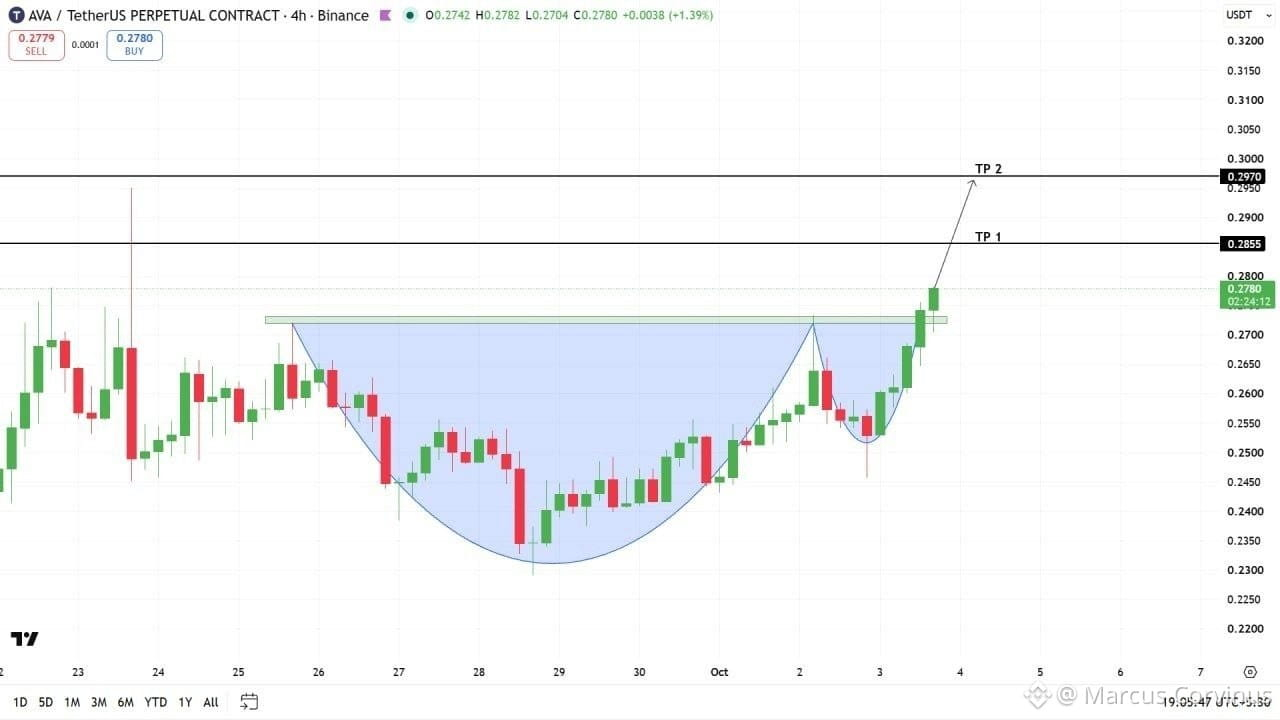
$AVA is starting to heat up after a clean breakout above the key resistance zone.
The bullish structure has been building for days, and buyers are now pushing price into fresh territory with strong momentum.
If this breakout holds, the next major levels in focus are $0.2855 and $0.2970.
Momentum is shifting fast. $AVA could be preparing for its next explosive move.
$AVA is starting to heat up after a clean breakout above the key resistance zone.
The bullish structure has been building for days, and buyers are now pushing price into fresh territory with strong momentum.
If this breakout holds, the next major levels in focus are $0.2855 and $0.2970.
Momentum is shifting fast. $AVA could be preparing for its next explosive move.
The bullish structure has been building for days, and buyers are now pushing price into fresh territory with strong momentum.
If this breakout holds, the next major levels in focus are $0.2855 and $0.2970.
Momentum is shifting fast. $AVA could be preparing for its next explosive move.
7
10
976
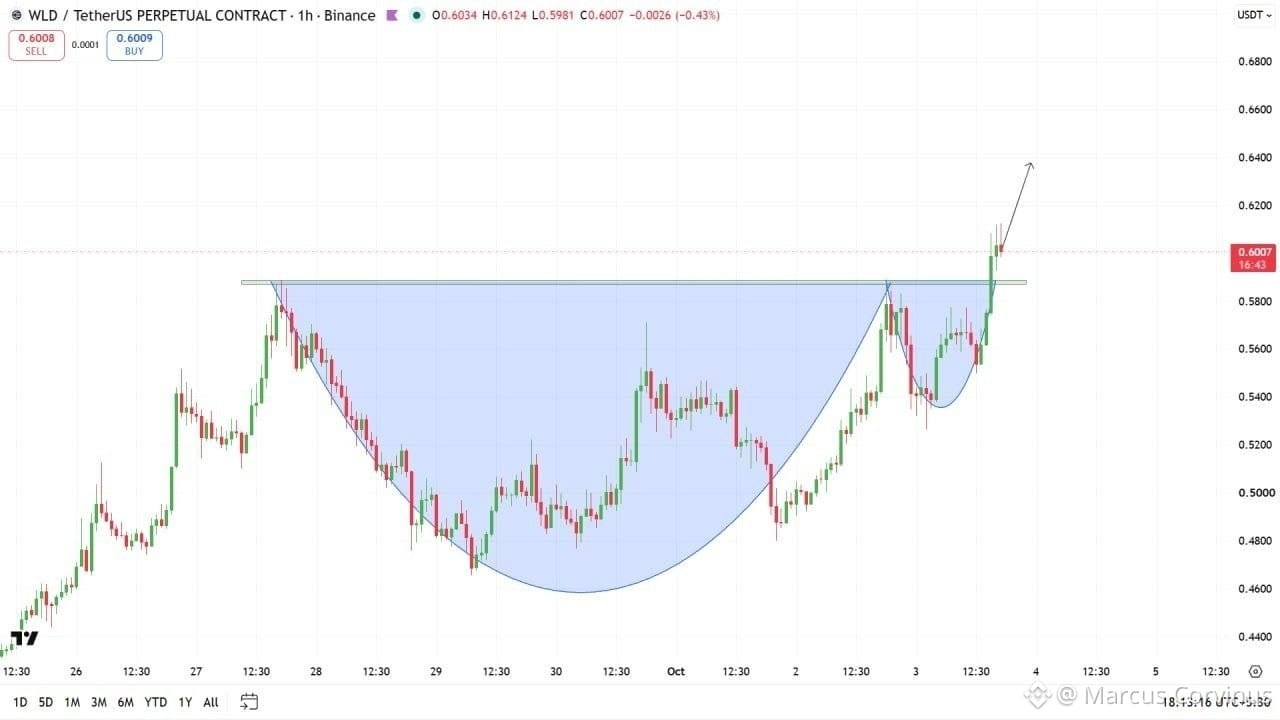
$WLD is starting to look seriously interesting.
After spending time building a solid cup and handle formation, price has finally escaped the structure.
That breakout changes the picture.
Momentum could accelerate as more attention shifts toward WLD and buyers begin chasing the move.
Holding above the breakout region would add even more strength to the setup and could prepare the way for a sharp expansion.
Watch $WLD closely from here. The quiet phase may be ending, and the real move could be just getting started.
$WLD is starting to look seriously interesting.
After spending time building a solid cup and handle formation, price has finally escaped the structure.
That breakout changes the picture.
Momentum could accelerate as more attention shifts toward WLD and buyers begin chasing the move.
Holding above the breakout region would add even more strength to the setup and could prepare the way for a sharp expansion.
Watch $WLD closely from here. The quiet phase may be ending, and the real move could be just getting started.
After spending time building a solid cup and handle formation, price has finally escaped the structure.
That breakout changes the picture.
Momentum could accelerate as more attention shifts toward WLD and buyers begin chasing the move.
Holding above the breakout region would add even more strength to the setup and could prepare the way for a sharp expansion.
Watch $WLD closely from here. The quiet phase may be ending, and the real move could be just getting started.
12
38
24.3k
·
--
Bullish
Polymarket is turning real-world information into a tradable market.
Instead of just watching major events unfold, traders can take positions based on what they believe will actually happen.
• YES -> You believe the outcome will happen.
• NO -> You believe the outcome will not happen.
• $0.70 -> The market is implying roughly a 70% probability.
• $1 -> A winning share settles at $1 after the market resolves.
The real opportunity comes from spotting where your research differs from the market price.
If you estimate an outcome has an 80% chance while the market prices it around 60%, that difference can become your trading edge.
Polymarket covers major narratives across crypto, economics, geopolitics, AI, sports, entertainment, and more.
$UMA and $GNO are connected to the broader prediction and information infrastructure space, while Polymarket focuses the trading experience directly on real-world outcomes.
Information is no longer something traders only consume.
It can now be priced, traded, and turned into an edge.
LFG 🥂
NFA + DYOR
#Polymarket #PredictionMarkets
Polymarket is turning real-world information into a tradable market.
Instead of just watching major events unfold, traders can take positions based on what they believe will actually happen.
• YES -> You believe the outcome will happen.
• NO -> You believe the outcome will not happen.
• $0.70 -> The market is implying roughly a 70% probability.
• $1 -> A winning share settles at $1 after the market resolves.
The real opportunity comes from spotting where your research differs from the market price.
If you estimate an outcome has an 80% chance while the market prices it around 60%, that difference can become your trading edge.
Polymarket covers major narratives across crypto, economics, geopolitics, AI, sports, entertainment, and more.
$UMA and $GNO are connected to the broader prediction and information infrastructure space, while Polymarket focuses the trading experience directly on real-world outcomes.
Information is no longer something traders only consume.
It can now be priced, traded, and turned into an edge.
LFG 🥂
NFA + DYOR
#Polymarket #PredictionMarkets
Instead of just watching major events unfold, traders can take positions based on what they believe will actually happen.
• YES -> You believe the outcome will happen.
• NO -> You believe the outcome will not happen.
• $0.70 -> The market is implying roughly a 70% probability.
• $1 -> A winning share settles at $1 after the market resolves.
The real opportunity comes from spotting where your research differs from the market price.
If you estimate an outcome has an 80% chance while the market prices it around 60%, that difference can become your trading edge.
Polymarket covers major narratives across crypto, economics, geopolitics, AI, sports, entertainment, and more.
$UMA and $GNO are connected to the broader prediction and information infrastructure space, while Polymarket focuses the trading experience directly on real-world outcomes.
Information is no longer something traders only consume.
It can now be priced, traded, and turned into an edge.
LFG 🥂
NFA + DYOR
#Polymarket #PredictionMarkets

101
1
64
11.2k
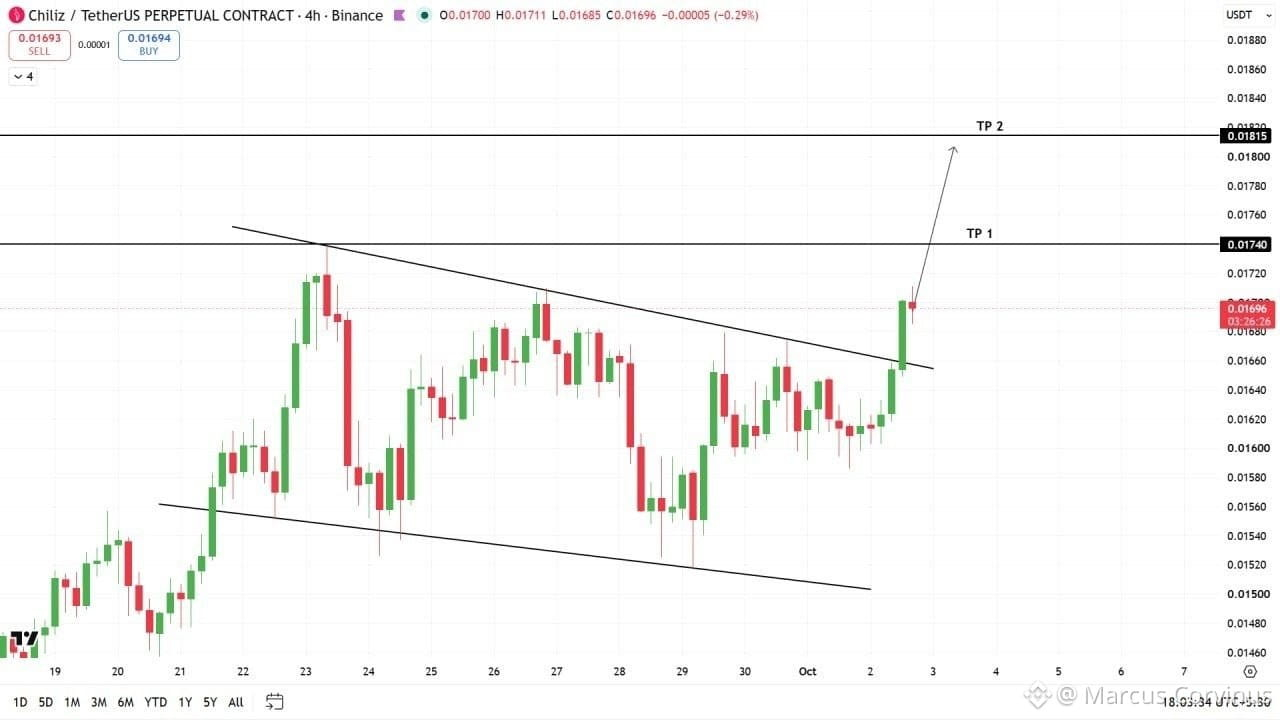
$CHZ is making a statement.
After spending days compressed beneath descending resistance, price has finally broken through with strong bullish momentum.
The breakout puts 0.01740 directly in focus. That level could be the first major test for buyers.
If momentum carries $CHZ beyond 0.01740, attention shifts toward 0.01815 as the next significant upside zone.
The key now is whether price can defend the breakout area and turn former resistance into support.
Momentum is building, resistance is being challenged, and the chart is entering an interesting phase.
$CHZ could be preparing for its next explosive leg.
$CHZ is making a statement.
After spending days compressed beneath descending resistance, price has finally broken through with strong bullish momentum.
The breakout puts 0.01740 directly in focus. That level could be the first major test for buyers.
If momentum carries $CHZ beyond 0.01740, attention shifts toward 0.01815 as the next significant upside zone.
The key now is whether price can defend the breakout area and turn former resistance into support.
Momentum is building, resistance is being challenged, and the chart is entering an interesting phase.
$CHZ could be preparing for its next explosive leg.
After spending days compressed beneath descending resistance, price has finally broken through with strong bullish momentum.
The breakout puts 0.01740 directly in focus. That level could be the first major test for buyers.
If momentum carries $CHZ beyond 0.01740, attention shifts toward 0.01815 as the next significant upside zone.
The key now is whether price can defend the breakout area and turn former resistance into support.
Momentum is building, resistance is being challenged, and the chart is entering an interesting phase.
$CHZ could be preparing for its next explosive leg.
10
1
15
3.3k
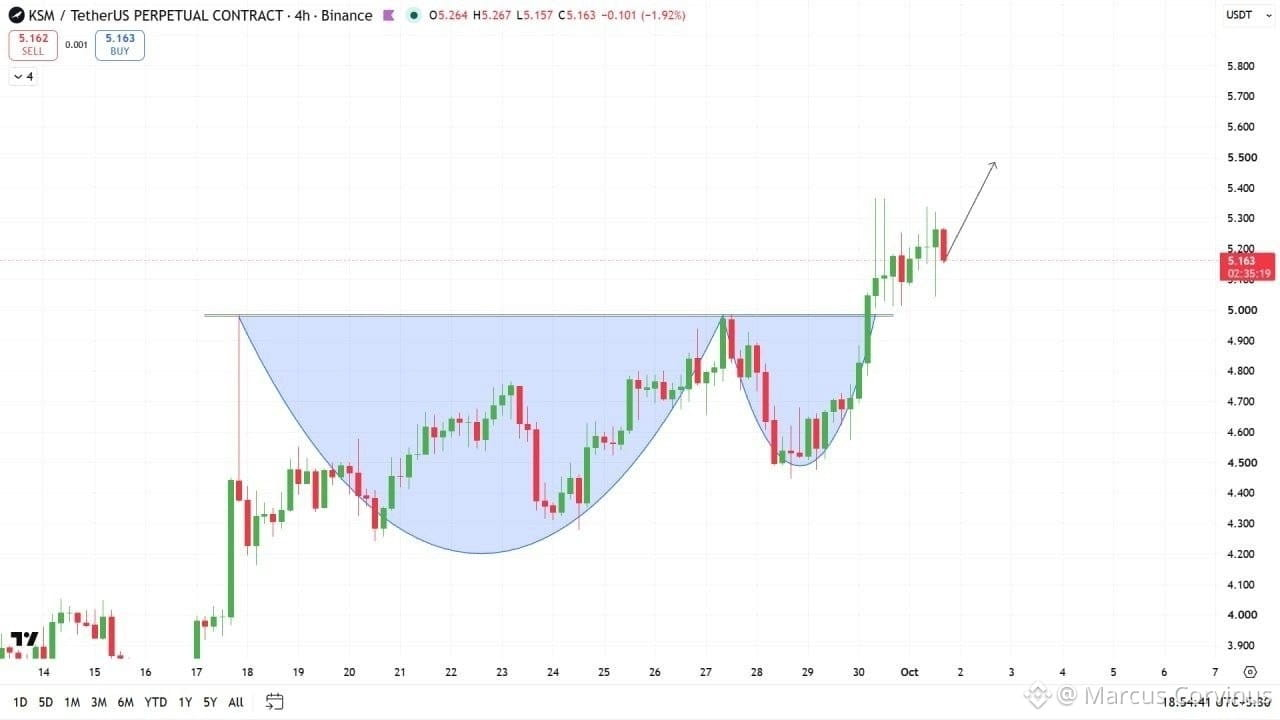
$KSM is starting to look seriously interesting.
The breakout is already in, and price action is showing clear bullish momentum after pushing beyond resistance.
Now the focus shifts to whether buyers can defend this move.
If the breakout area holds as support, $KSM could build a stronger base and prepare for another expansion upward.
Momentum can accelerate quickly once resistance disappears and fresh buying pressure enters.
The setup is getting hotter, and $KSM could be approaching a much bigger move.
Keep this one firmly on the radar.
$KSM is starting to look seriously interesting.
The breakout is already in, and price action is showing clear bullish momentum after pushing beyond resistance.
Now the focus shifts to whether buyers can defend this move.
If the breakout area holds as support, $KSM could build a stronger base and prepare for another expansion upward.
Momentum can accelerate quickly once resistance disappears and fresh buying pressure enters.
The setup is getting hotter, and $KSM could be approaching a much bigger move.
Keep this one firmly on the radar.
The breakout is already in, and price action is showing clear bullish momentum after pushing beyond resistance.
Now the focus shifts to whether buyers can defend this move.
If the breakout area holds as support, $KSM could build a stronger base and prepare for another expansion upward.
Momentum can accelerate quickly once resistance disappears and fresh buying pressure enters.
The setup is getting hotter, and $KSM could be approaching a much bigger move.
Keep this one firmly on the radar.
10
19
3.8k
·
--
Bullish
Polymarket — Prediction markets are entering a serious credibility test.
Beni’s recent analysis put Kalshi’s crypto activity under the microscope.
$539M → highlighted 24-hour ETH perpetual volume
$3.1M → highlighted open interest
$5,500 → repeated trade sizes highlighted in the analysis
Volume ↑ + Open Interest ↓ = a major contrast worth watching.
Kalshi has disputed the allegations, so these claims remain contested rather than established facts.
For Polymarket, this puts greater attention on transparency, liquidity, and verifiable market activity.
Three competitive tokens provide useful context:
$GNO → prediction-market ecosystem exposure
$UMA → decentralized verification and optimistic oracle infrastructure
$LINK → decentralized oracle and real-world data infrastructure
Different tokens. Different roles. Different approaches.
As prediction markets expand, transparent and verifiable activity could become one of the strongest foundations for long-term trust.
NFA + DYOR
#Polymarket #PredictionMarkets
Polymarket — Prediction markets are entering a serious credibility test.
Beni’s recent analysis put Kalshi’s crypto activity under the microscope.
$539M → highlighted 24-hour ETH perpetual volume
$3.1M → highlighted open interest
$5,500 → repeated trade sizes highlighted in the analysis
Volume ↑ + Open Interest ↓ = a major contrast worth watching.
Kalshi has disputed the allegations, so these claims remain contested rather than established facts.
For Polymarket, this puts greater attention on transparency, liquidity, and verifiable market activity.
Three competitive tokens provide useful context:
$GNO → prediction-market ecosystem exposure
$UMA → decentralized verification and optimistic oracle infrastructure
$LINK → decentralized oracle and real-world data infrastructure
Different tokens. Different roles. Different approaches.
As prediction markets expand, transparent and verifiable activity could become one of the strongest foundations for long-term trust.
NFA + DYOR
#Polymarket #PredictionMarkets
Beni’s recent analysis put Kalshi’s crypto activity under the microscope.
$539M → highlighted 24-hour ETH perpetual volume
$3.1M → highlighted open interest
$5,500 → repeated trade sizes highlighted in the analysis
Volume ↑ + Open Interest ↓ = a major contrast worth watching.
Kalshi has disputed the allegations, so these claims remain contested rather than established facts.
For Polymarket, this puts greater attention on transparency, liquidity, and verifiable market activity.
Three competitive tokens provide useful context:
$GNO → prediction-market ecosystem exposure
$UMA → decentralized verification and optimistic oracle infrastructure
$LINK → decentralized oracle and real-world data infrastructure
Different tokens. Different roles. Different approaches.
As prediction markets expand, transparent and verifiable activity could become one of the strongest foundations for long-term trust.
NFA + DYOR
#Polymarket #PredictionMarkets
87
2
57
12.2k
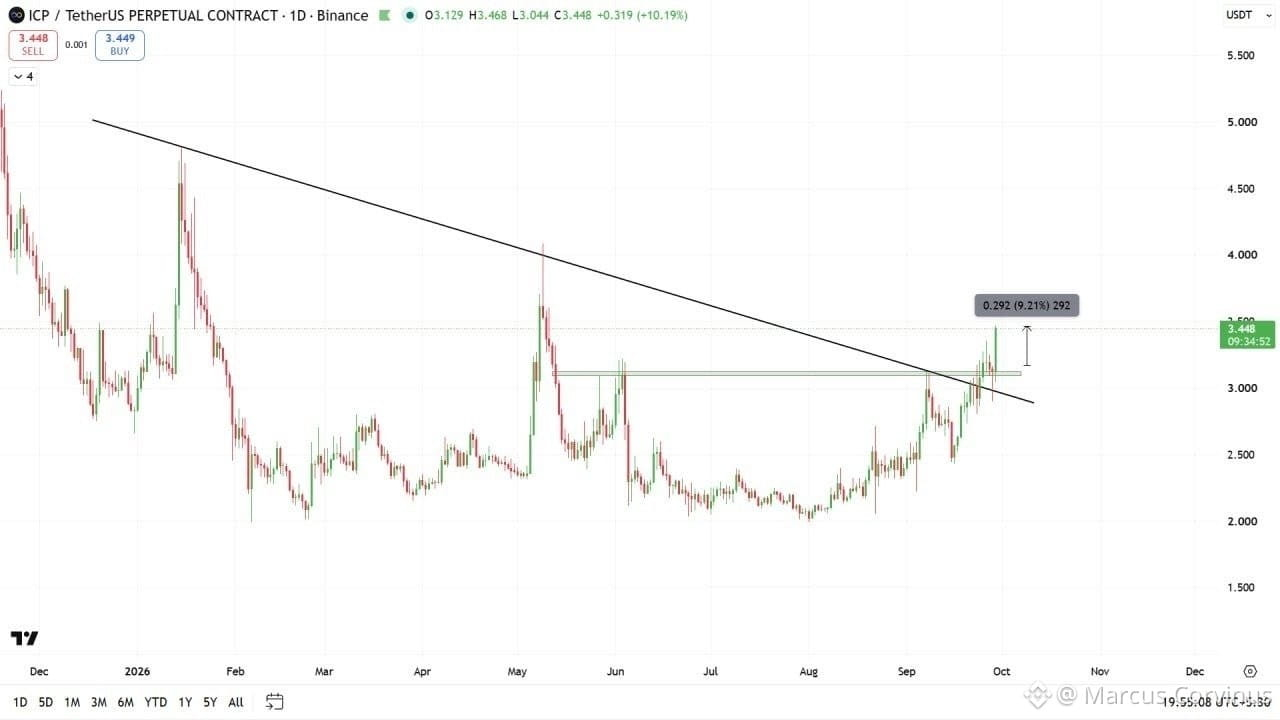
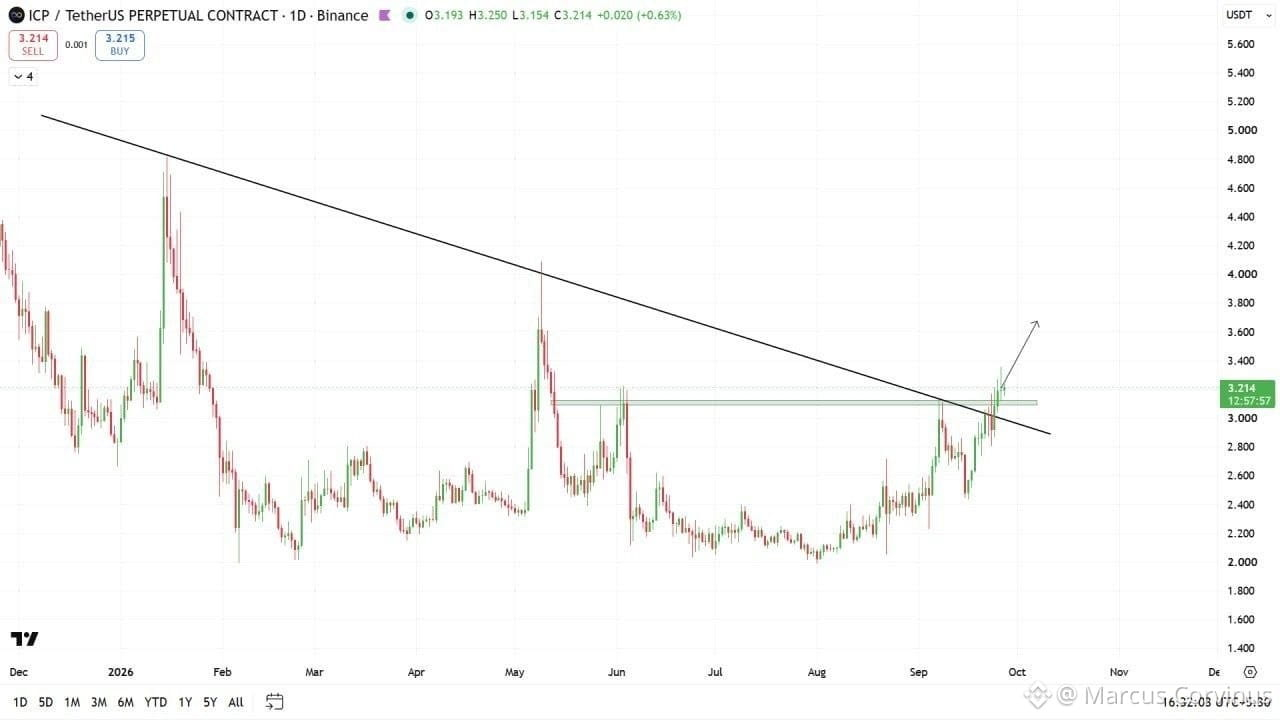
$ICP breakout is delivering.
Up 9% since breaking free from the long-term descending resistance, and momentum is building fast.
The move above the key $3.10 zone flipped a major resistance area and opened the door for expansion.
Price has now pushed toward $3.45, showing strong follow-through after the breakout.
As long as the reclaimed breakout zone holds, bulls remain in control of the structure.
Clean breakout. Strong continuation. 9% already secured.
Enjoy the move...
$ICP breakout is delivering.
Up 9% since breaking free from the long-term descending resistance, and momentum is building fast.
The move above the key $3.10 zone flipped a major resistance area and opened the door for expansion.
Price has now pushed toward $3.45, showing strong follow-through after the breakout.
As long as the reclaimed breakout zone holds, bulls remain in control of the structure.
Clean breakout. Strong continuation. 9% already secured.
Enjoy the move...
Up 9% since breaking free from the long-term descending resistance, and momentum is building fast.
The move above the key $3.10 zone flipped a major resistance area and opened the door for expansion.
Price has now pushed toward $3.45, showing strong follow-through after the breakout.
As long as the reclaimed breakout zone holds, bulls remain in control of the structure.
Clean breakout. Strong continuation. 9% already secured.
Enjoy the move...
Marcus Corvinus
·
--
$ICP is showing serious strength after a clean breakout.
Momentum is building, and the bullish structure is starting to look increasingly interesting.
If buyers maintain control above the breakout zone, the next expansion could come quickly.
Volume and follow-through are key from here. A strong continuation could open the door for a much bigger move.
Keep $ICP on the radar. This setup is heating up.
Momentum is building, and the bullish structure is starting to look increasingly interesting.
If buyers maintain control above the breakout zone, the next expansion could come quickly.
Volume and follow-through are key from here. A strong continuation could open the door for a much bigger move.
Keep $ICP on the radar. This setup is heating up.
15
18
8.2k
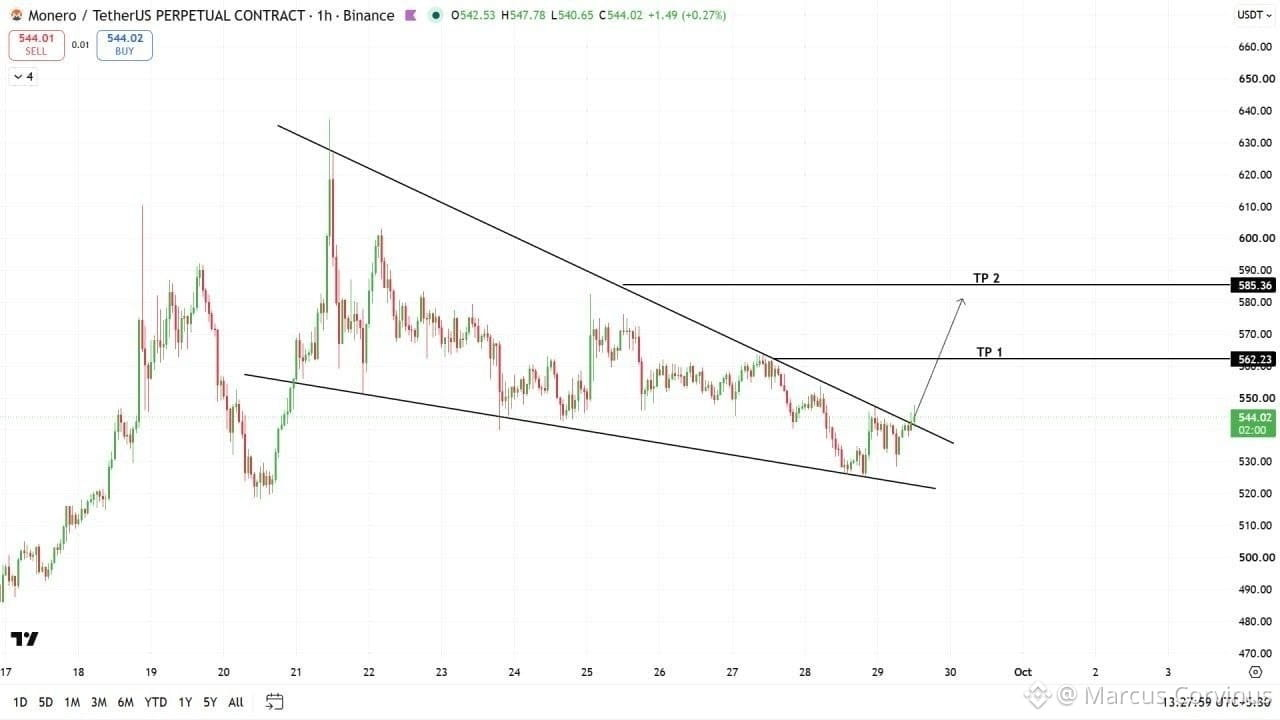
$XMR is waking up with a major technical move.
After spending time trapped inside a falling wedge, price has finally escaped the structure and momentum is beginning to shift.
• Sellers are losing control
• The wedge resistance has been cleared
• Bullish momentum is building
• Previous resistance could now become an important support zone
• Higher price levels are back in focus
The breakout itself is only the beginning. What happens around the former resistance area could determine whether $XMR develops this into a much larger move.
If buyers continue defending the breakout and volume follows, the next phase could get aggressive.
$XMR is entering a very interesting zone.
$XMR is waking up with a major technical move.
After spending time trapped inside a falling wedge, price has finally escaped the structure and momentum is beginning to shift.
• Sellers are losing control
• The wedge resistance has been cleared
• Bullish momentum is building
• Previous resistance could now become an important support zone
• Higher price levels are back in focus
The breakout itself is only the beginning. What happens around the former resistance area could determine whether $XMR develops this into a much larger move.
If buyers continue defending the breakout and volume follows, the next phase could get aggressive.
$XMR is entering a very interesting zone.
After spending time trapped inside a falling wedge, price has finally escaped the structure and momentum is beginning to shift.
• Sellers are losing control
• The wedge resistance has been cleared
• Bullish momentum is building
• Previous resistance could now become an important support zone
• Higher price levels are back in focus
The breakout itself is only the beginning. What happens around the former resistance area could determine whether $XMR develops this into a much larger move.
If buyers continue defending the breakout and volume follows, the next phase could get aggressive.
$XMR is entering a very interesting zone.
9
1
11
1.8k
$ICP is showing serious strength after a clean breakout.
Momentum is building, and the bullish structure is starting to look increasingly interesting.
If buyers maintain control above the breakout zone, the next expansion could come quickly.
Volume and follow-through are key from here. A strong continuation could open the door for a much bigger move.
Keep $ICP on the radar. This setup is heating up.
$ICP is showing serious strength after a clean breakout.
Momentum is building, and the bullish structure is starting to look increasingly interesting.
If buyers maintain control above the breakout zone, the next expansion could come quickly.
Volume and follow-through are key from here. A strong continuation could open the door for a much bigger move.
Keep $ICP on the radar. This setup is heating up.
Momentum is building, and the bullish structure is starting to look increasingly interesting.
If buyers maintain control above the breakout zone, the next expansion could come quickly.
Volume and follow-through are key from here. A strong continuation could open the door for a much bigger move.
Keep $ICP on the radar. This setup is heating up.
17
1
55
37.4k
·
--
Bullish
Verified
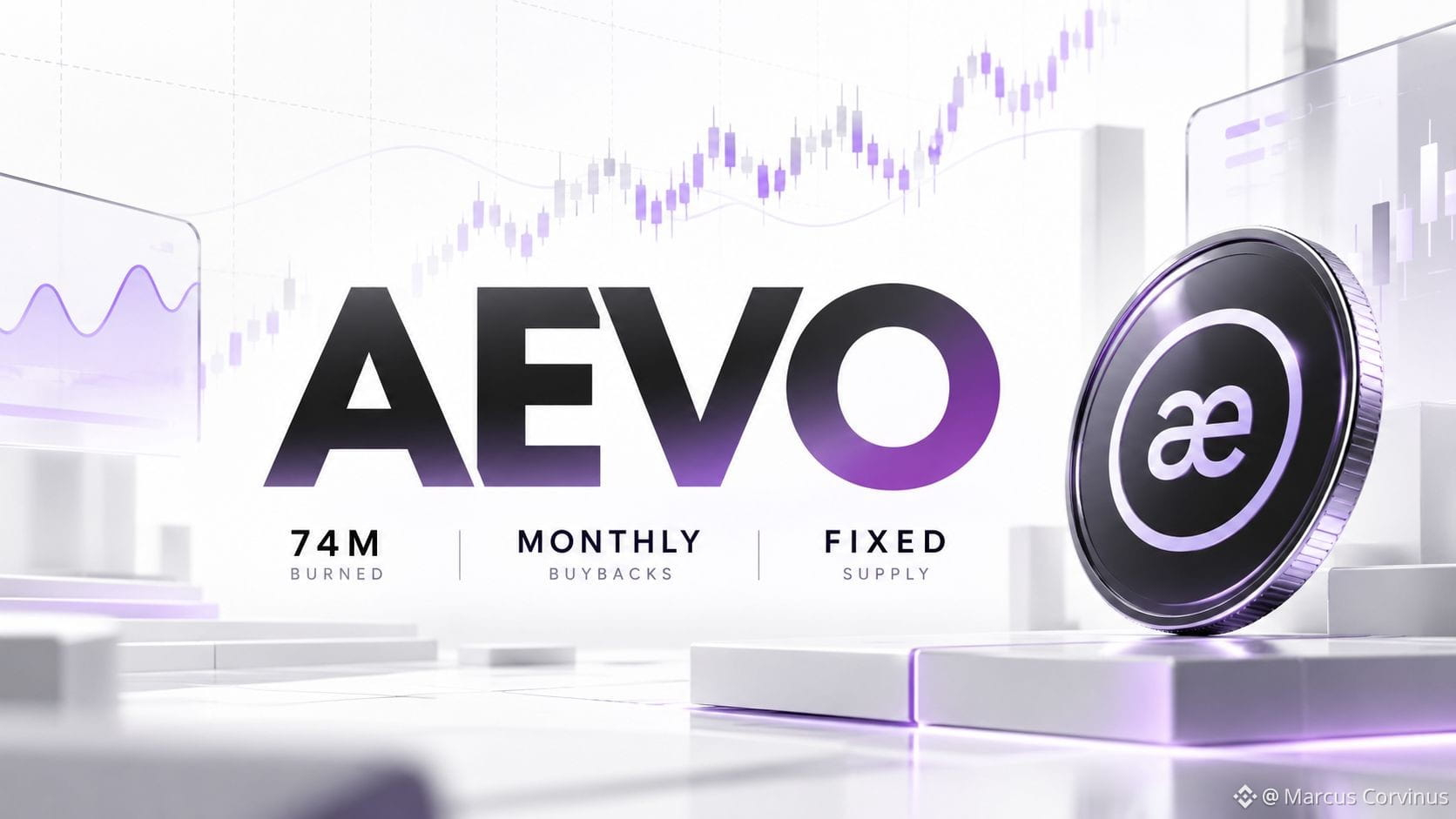
Aevo just rebuilt the $AEVO token around real platform activity.
AEVO = the native token powering Aevo’s economic system.
The important change is simple:
• 74M AEVO burned so far
• 69M came through AGP-3
• Scheduled unlocks are finished
• Monthly buybacks are funded by trading fees
• Bought-back AEVO is permanently removed from circulation
That creates a clear relationship:
More activity
→ More trading fees
→ More buybacks
→ More AEVO removed
There is another detail worth understanding.
Aevo distributes 1M AEVO weekly to active traders.
But those rewards come from the existing fixed 1B supply.
✓ No new tokens are being minted for those rewards.
That makes the structure very different from the usual inflation-heavy reward model.
$AAVE and $AVAX have also been exploring how mature token models can evolve.
Aevo has already moved its own model toward something more directly connected to actual platform usage.
For me, that is the part worth watching.
When token economics start responding to real activity instead of just emissions, the whole conversation changes.
Let's go 🤝
NFA + DYOR
#AEVO
Aevo just rebuilt the $AEVO token around real platform activity.
AEVO = the native token powering Aevo’s economic system.
The important change is simple:
• 74M AEVO burned so far
• 69M came through AGP-3
• Scheduled unlocks are finished
• Monthly buybacks are funded by trading fees
• Bought-back AEVO is permanently removed from circulation
That creates a clear relationship:
More activity
→ More trading fees
→ More buybacks
→ More AEVO removed
There is another detail worth understanding.
Aevo distributes 1M AEVO weekly to active traders.
But those rewards come from the existing fixed 1B supply.
✓ No new tokens are being minted for those rewards.
That makes the structure very different from the usual inflation-heavy reward model.
$AAVE and $AVAX have also been exploring how mature token models can evolve.
Aevo has already moved its own model toward something more directly connected to actual platform usage.
For me, that is the part worth watching.
When token economics start responding to real activity instead of just emissions, the whole conversation changes.
Let's go 🤝
NFA + DYOR
#AEVO
AEVO = the native token powering Aevo’s economic system.
The important change is simple:
• 74M AEVO burned so far
• 69M came through AGP-3
• Scheduled unlocks are finished
• Monthly buybacks are funded by trading fees
• Bought-back AEVO is permanently removed from circulation
That creates a clear relationship:
More activity
→ More trading fees
→ More buybacks
→ More AEVO removed
There is another detail worth understanding.
Aevo distributes 1M AEVO weekly to active traders.
But those rewards come from the existing fixed 1B supply.
✓ No new tokens are being minted for those rewards.
That makes the structure very different from the usual inflation-heavy reward model.
$AAVE and $AVAX have also been exploring how mature token models can evolve.
Aevo has already moved its own model toward something more directly connected to actual platform usage.
For me, that is the part worth watching.
When token economics start responding to real activity instead of just emissions, the whole conversation changes.
Let's go 🤝
NFA + DYOR
#AEVO
59
61
11.5k
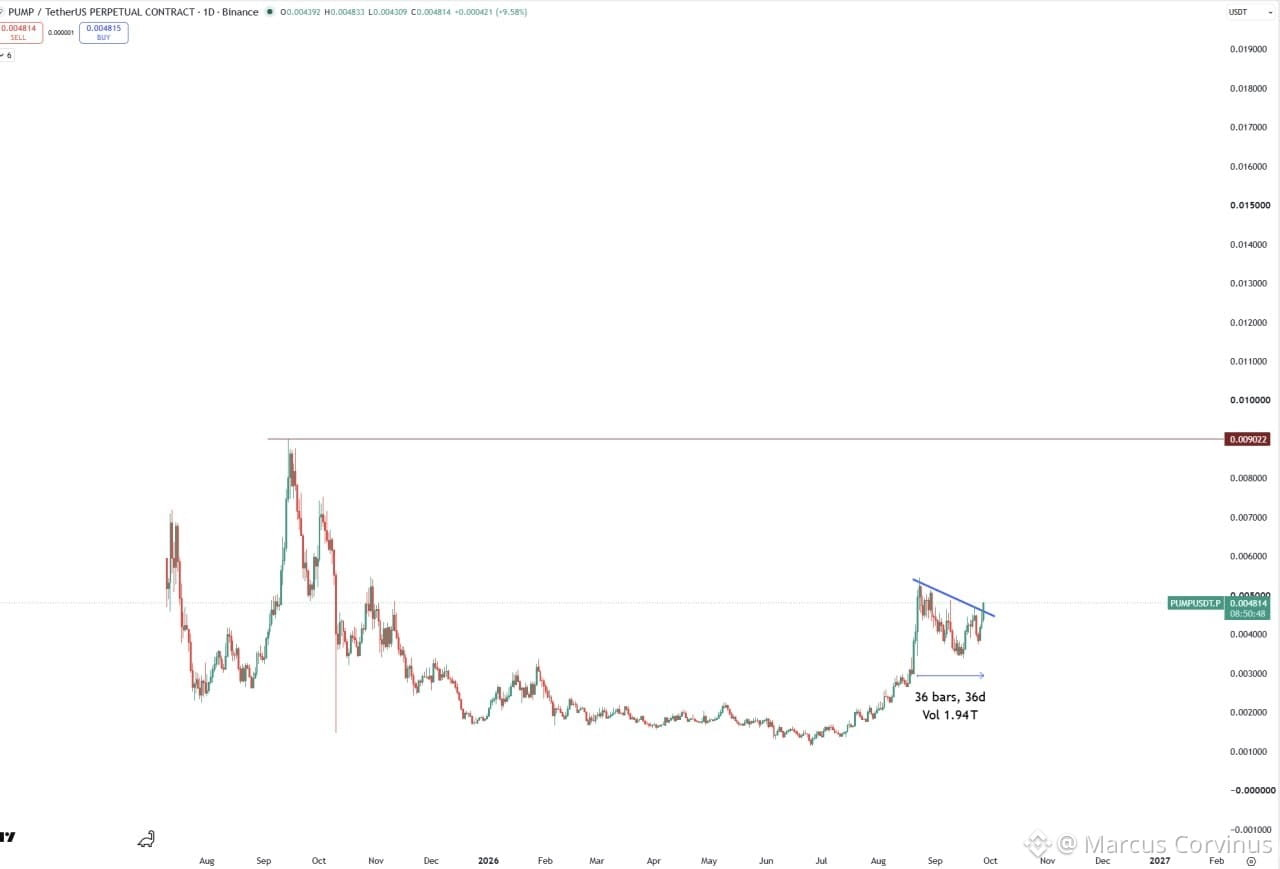
$PUMP is waking up.
After nearly one month of consolidation, the pressure is starting to build and the market is watching closely.
Weeks of sideways movement have created a major zone. Now PUMP looks ready to test whether it can finally break free.
The previous ATH is the big level on the radar.
If momentum continues and the breakout holds, attention could quickly shift from reclaiming the ATH to exploring new price territory above it.
One month of patience.
One breakout could change the entire picture.
PUMP is back in focus.
$PUMP is waking up.
After nearly one month of consolidation, the pressure is starting to build and the market is watching closely.
Weeks of sideways movement have created a major zone. Now PUMP looks ready to test whether it can finally break free.
The previous ATH is the big level on the radar.
If momentum continues and the breakout holds, attention could quickly shift from reclaiming the ATH to exploring new price territory above it.
One month of patience.
One breakout could change the entire picture.
PUMP is back in focus.
After nearly one month of consolidation, the pressure is starting to build and the market is watching closely.
Weeks of sideways movement have created a major zone. Now PUMP looks ready to test whether it can finally break free.
The previous ATH is the big level on the radar.
If momentum continues and the breakout holds, attention could quickly shift from reclaiming the ATH to exploring new price territory above it.
One month of patience.
One breakout could change the entire picture.
PUMP is back in focus.
9
20
4.7k
·
--
Bullish
Verified
Blockchain privacy is shifting from “hide everything” to “prove what matters.”
That’s where NIGHT enters — the native token of Midnight, a standalone Layer 1 for programmable privacy.
• $NIGHT → Governance + network utility, distinct from ADA.
• DUST → Non-transferable, regenerating resource generated by NIGHT to power private transactions.
Selective disclosure → Prove something is true without exposing the underlying data.
Dual ledger → Public coordination + shielded execution for sensitive details.
Adoption → Monument Bank is targeting up to £250M in tokenized customer deposits, alongside an enterprise validator roster including Google Cloud, MoneyGram and Pairpoint by Vodafone.
While $ZEC represents the established shielded-privacy narrative and $ZAMA explores confidential computation through FHE, Midnight is focused on programmable privacy with selective disclosure.
Built by Input Output, Midnight remains its own L1 — not a Cardano subchain or L2.
Privacy + proof + institutional utility. A major Web3 narrative is taking shape.
LFG 🥂
NFA + DYOR
#MidnightNetwork #ProgrammablePrivacy
Blockchain privacy is shifting from “hide everything” to “prove what matters.”
That’s where NIGHT enters — the native token of Midnight, a standalone Layer 1 for programmable privacy.
• $NIGHT → Governance + network utility, distinct from ADA.
• DUST → Non-transferable, regenerating resource generated by NIGHT to power private transactions.
Selective disclosure → Prove something is true without exposing the underlying data.
Dual ledger → Public coordination + shielded execution for sensitive details.
Adoption → Monument Bank is targeting up to £250M in tokenized customer deposits, alongside an enterprise validator roster including Google Cloud, MoneyGram and Pairpoint by Vodafone.
While $ZEC represents the established shielded-privacy narrative and $ZAMA explores confidential computation through FHE, Midnight is focused on programmable privacy with selective disclosure.
Built by Input Output, Midnight remains its own L1 — not a Cardano subchain or L2.
Privacy + proof + institutional utility. A major Web3 narrative is taking shape.
LFG 🥂
NFA + DYOR
#MidnightNetwork #ProgrammablePrivacy
That’s where NIGHT enters — the native token of Midnight, a standalone Layer 1 for programmable privacy.
• $NIGHT → Governance + network utility, distinct from ADA.
• DUST → Non-transferable, regenerating resource generated by NIGHT to power private transactions.
Selective disclosure → Prove something is true without exposing the underlying data.
Dual ledger → Public coordination + shielded execution for sensitive details.
Adoption → Monument Bank is targeting up to £250M in tokenized customer deposits, alongside an enterprise validator roster including Google Cloud, MoneyGram and Pairpoint by Vodafone.
While $ZEC represents the established shielded-privacy narrative and $ZAMA explores confidential computation through FHE, Midnight is focused on programmable privacy with selective disclosure.
Built by Input Output, Midnight remains its own L1 — not a Cardano subchain or L2.
Privacy + proof + institutional utility. A major Web3 narrative is taking shape.
LFG 🥂
NFA + DYOR
#MidnightNetwork #ProgrammablePrivacy
70
2
59
13k
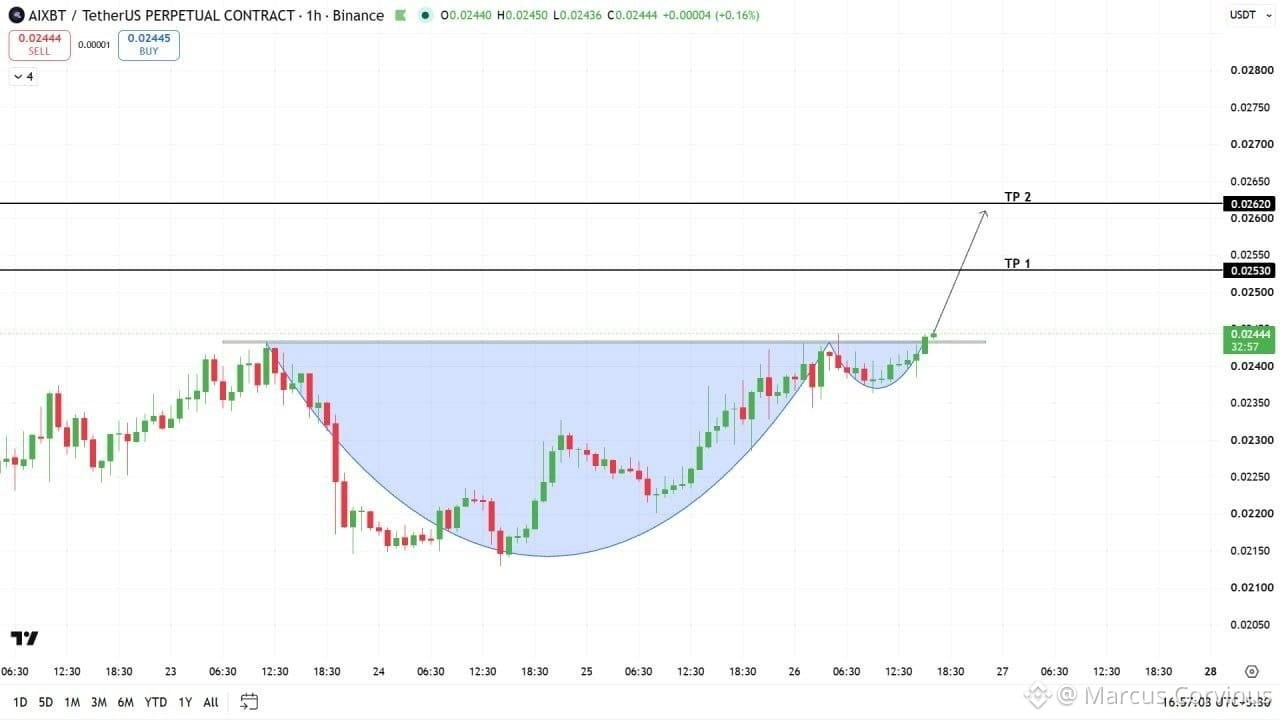
$AIXBT has made its move.
The breakout is already in, and momentum is starting to lean heavily toward the bulls.
Price has pushed beyond the previous range, putting the upper targets firmly back into focus.
Now the key is whether buyers can keep defending the breakout zone. If they do, the next expansion could come quickly.
Momentum is building. Structure looks strong. Those higher targets are getting closer.
Keep $AIXBT on the radar.
$AIXBT has made its move.
The breakout is already in, and momentum is starting to lean heavily toward the bulls.
Price has pushed beyond the previous range, putting the upper targets firmly back into focus.
Now the key is whether buyers can keep defending the breakout zone. If they do, the next expansion could come quickly.
Momentum is building. Structure looks strong. Those higher targets are getting closer.
Keep $AIXBT on the radar.
The breakout is already in, and momentum is starting to lean heavily toward the bulls.
Price has pushed beyond the previous range, putting the upper targets firmly back into focus.
Now the key is whether buyers can keep defending the breakout zone. If they do, the next expansion could come quickly.
Momentum is building. Structure looks strong. Those higher targets are getting closer.
Keep $AIXBT on the radar.
10
16
3.2k
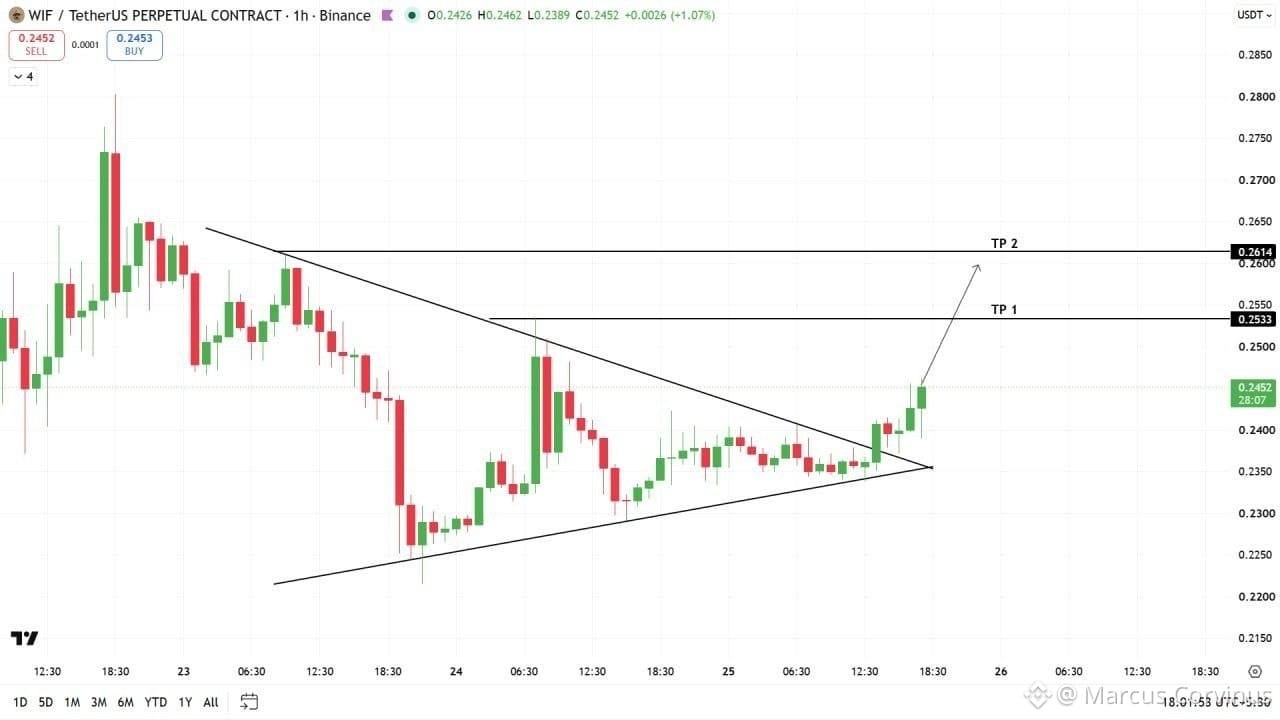
$WIF has already broken out, and the momentum is starting to build.
The breakout could open the door for a push toward those upper targets sooner than expected.
If buyers keep the pressure on and the breakout holds, the next move could get aggressive fast.
Volume and follow-through will be key from here.
Keep $WIF on the radar. Things are heating up.
$WIF has already broken out, and the momentum is starting to build.
The breakout could open the door for a push toward those upper targets sooner than expected.
If buyers keep the pressure on and the breakout holds, the next move could get aggressive fast.
Volume and follow-through will be key from here.
Keep $WIF on the radar. Things are heating up.
The breakout could open the door for a push toward those upper targets sooner than expected.
If buyers keep the pressure on and the breakout holds, the next move could get aggressive fast.
Volume and follow-through will be key from here.
Keep $WIF on the radar. Things are heating up.
11
17
3.4k
·
--
Bullish
Verified
The prediction market battle just got a lot more interesting.
Polymarket is becoming one of the biggest names to watch as questions around prediction-market activity keep getting louder.
→ Beni recently questioned Kalshi’s crypto trading numbers after spotting roughly $539M in 24-hour ETH perpetual volume against only about $3.1M in open interest.
→ His analysis also highlighted repeated trades around exactly $5,500, reportedly representing a significant share of ETH perpetual activity during several periods.
That pattern alone does not prove artificial trading.
Kalshi has rejected the allegations, pointing toward liquidity incentives as a possible explanation for repetitive trading activity.
◆ Volume alone never tells the full story.
◆ Open interest, trade distribution, incentives and genuine participation matter when evaluating market activity.
For Polymarket, this puts an even bigger spotlight on transparency and organic participation as prediction markets continue growing.
The real competition may not be about who shows the biggest numbers — it may be about which market earns the most trust.
Let's go 🤝
NFA + DYOR
#Polymarket #PredictionMarkets
The prediction market battle just got a lot more interesting.
Polymarket is becoming one of the biggest names to watch as questions around prediction-market activity keep getting louder.
→ Beni recently questioned Kalshi’s crypto trading numbers after spotting roughly $539M in 24-hour ETH perpetual volume against only about $3.1M in open interest.
→ His analysis also highlighted repeated trades around exactly $5,500, reportedly representing a significant share of ETH perpetual activity during several periods.
That pattern alone does not prove artificial trading.
Kalshi has rejected the allegations, pointing toward liquidity incentives as a possible explanation for repetitive trading activity.
◆ Volume alone never tells the full story.
◆ Open interest, trade distribution, incentives and genuine participation matter when evaluating market activity.
For Polymarket, this puts an even bigger spotlight on transparency and organic participation as prediction markets continue growing.
The real competition may not be about who shows the biggest numbers — it may be about which market earns the most trust.
Let's go 🤝
NFA + DYOR
#Polymarket #PredictionMarkets
Polymarket is becoming one of the biggest names to watch as questions around prediction-market activity keep getting louder.
→ Beni recently questioned Kalshi’s crypto trading numbers after spotting roughly $539M in 24-hour ETH perpetual volume against only about $3.1M in open interest.
→ His analysis also highlighted repeated trades around exactly $5,500, reportedly representing a significant share of ETH perpetual activity during several periods.
That pattern alone does not prove artificial trading.
Kalshi has rejected the allegations, pointing toward liquidity incentives as a possible explanation for repetitive trading activity.
◆ Volume alone never tells the full story.
◆ Open interest, trade distribution, incentives and genuine participation matter when evaluating market activity.
For Polymarket, this puts an even bigger spotlight on transparency and organic participation as prediction markets continue growing.
The real competition may not be about who shows the biggest numbers — it may be about which market earns the most trust.
Let's go 🤝
NFA + DYOR
#Polymarket #PredictionMarkets

88
71
20.3k
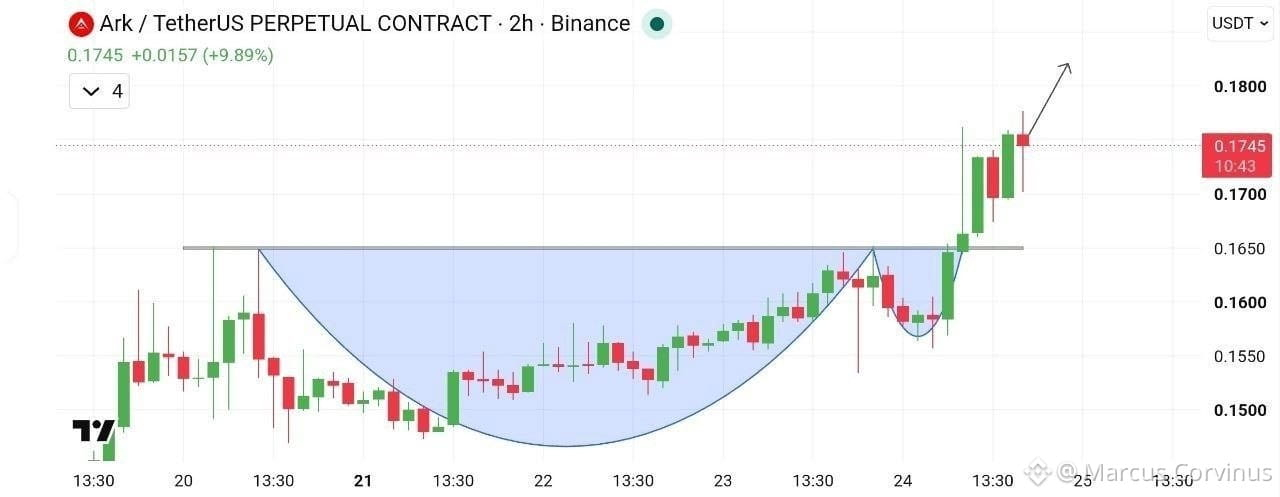
$ARK is starting to look seriously bullish after breaking out of its recent structure.
The breakout is the first signal. What matters now is whether buyers can defend the move and keep price trading above the previous resistance zone.
If that level flips into support, momentum could accelerate quickly as sidelined traders start paying attention.
A clean continuation with rising volume would make the setup even stronger and could open the door for another aggressive leg higher.
But failed breakouts can reverse fast, so the reaction around the breakout zone is critical.
$ARK is definitely one to keep on the radar right now.
The breakout happened. Now the real test begins.
$ARK is starting to look seriously bullish after breaking out of its recent structure.
The breakout is the first signal. What matters now is whether buyers can defend the move and keep price trading above the previous resistance zone.
If that level flips into support, momentum could accelerate quickly as sidelined traders start paying attention.
A clean continuation with rising volume would make the setup even stronger and could open the door for another aggressive leg higher.
But failed breakouts can reverse fast, so the reaction around the breakout zone is critical.
$ARK is definitely one to keep on the radar right now.
The breakout happened. Now the real test begins.
The breakout is the first signal. What matters now is whether buyers can defend the move and keep price trading above the previous resistance zone.
If that level flips into support, momentum could accelerate quickly as sidelined traders start paying attention.
A clean continuation with rising volume would make the setup even stronger and could open the door for another aggressive leg higher.
But failed breakouts can reverse fast, so the reaction around the breakout zone is critical.
$ARK is definitely one to keep on the radar right now.
The breakout happened. Now the real test begins.
9
15
4k
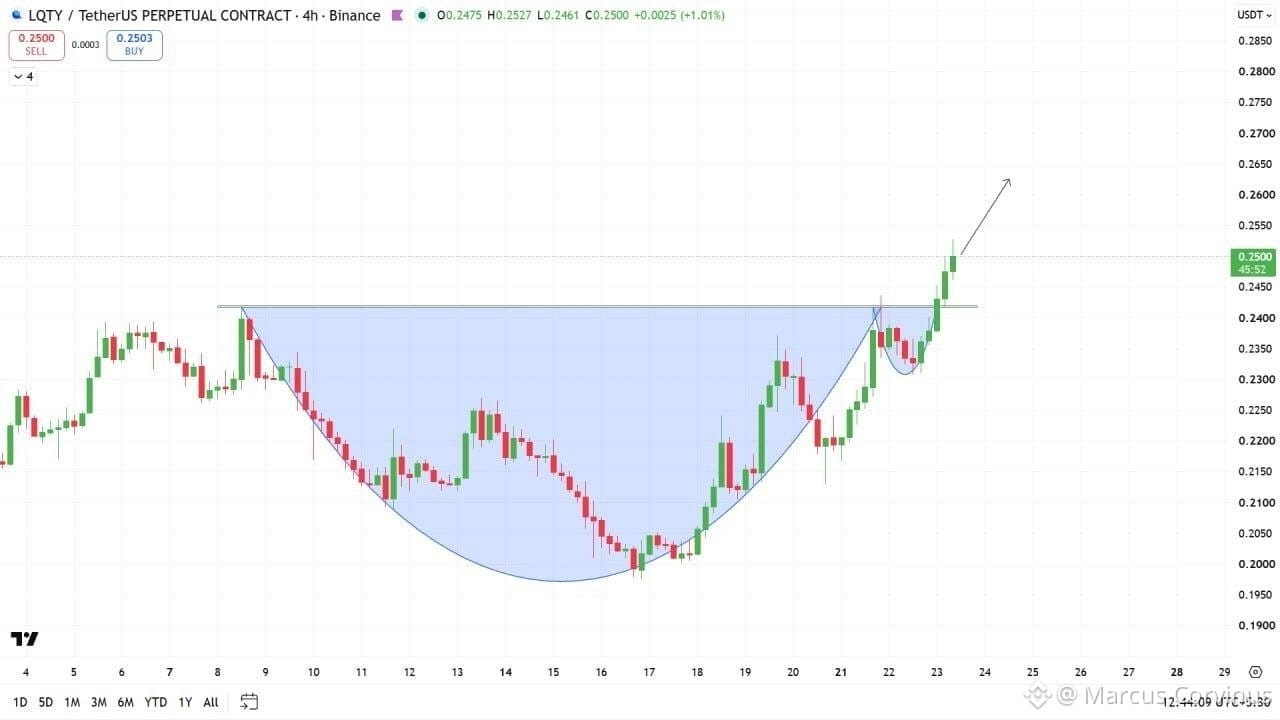
$LQTY just broke out, and the structure is turning seriously bullish.
Momentum is building while buyers continue to take control.
If this breakout holds, the next expansion could come fast.
Volume and follow-through are the key things to watch now.
$LQTY could be setting up for a strong pump from here.
$LQTY just broke out, and the structure is turning seriously bullish.
Momentum is building while buyers continue to take control.
If this breakout holds, the next expansion could come fast.
Volume and follow-through are the key things to watch now.
$LQTY could be setting up for a strong pump from here.
Momentum is building while buyers continue to take control.
If this breakout holds, the next expansion could come fast.
Volume and follow-through are the key things to watch now.
$LQTY could be setting up for a strong pump from here.
11
15
5.5k
·
--
Bullish
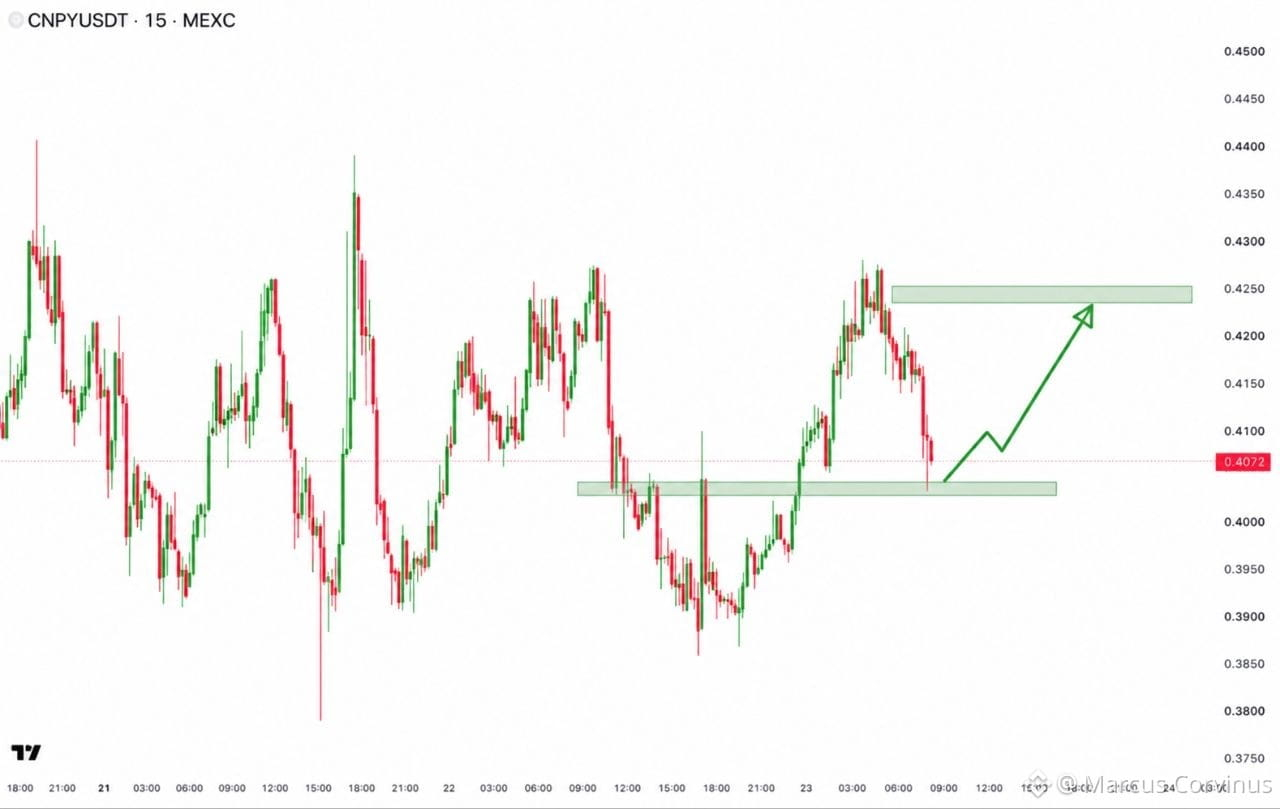
Canopy Network — $CNPY is approaching a level worth watching closely.
$CNPY = the native token powering the Canopy Network ecosystem.
Security → $CNPY supports the network’s restaking-based security model.
Utility → CNPY connects network participation with activity across Canopy’s appchain ecosystem.
Development → Canopy is focused on making application-specific blockchains easier for developers to build and operate.
Price → CNPY has pulled back toward the $0.405–$0.407 area after recently trading around $0.425.
Support holds → bullish structure has room to recover.
Momentum returns → $0.420–$0.425 becomes an important area to watch again.
The combination of developing infrastructure and price testing a key technical zone makes CNPY one to keep on the radar.
LFG 🥂
NFA + DYOR
#CNPY #CanopyNetwork
Canopy Network — $CNPY is approaching a level worth watching closely.
$CNPY = the native token powering the Canopy Network ecosystem.
Security → $CNPY supports the network’s restaking-based security model.
Utility → CNPY connects network participation with activity across Canopy’s appchain ecosystem.
Development → Canopy is focused on making application-specific blockchains easier for developers to build and operate.
Price → CNPY has pulled back toward the $0.405–$0.407 area after recently trading around $0.425.
Support holds → bullish structure has room to recover.
Momentum returns → $0.420–$0.425 becomes an important area to watch again.
The combination of developing infrastructure and price testing a key technical zone makes CNPY one to keep on the radar.
LFG 🥂
NFA + DYOR
#CNPY #CanopyNetwork
$CNPY = the native token powering the Canopy Network ecosystem.
Security → $CNPY supports the network’s restaking-based security model.
Utility → CNPY connects network participation with activity across Canopy’s appchain ecosystem.
Development → Canopy is focused on making application-specific blockchains easier for developers to build and operate.
Price → CNPY has pulled back toward the $0.405–$0.407 area after recently trading around $0.425.
Support holds → bullish structure has room to recover.
Momentum returns → $0.420–$0.425 becomes an important area to watch again.
The combination of developing infrastructure and price testing a key technical zone makes CNPY one to keep on the radar.
LFG 🥂
NFA + DYOR
#CNPY #CanopyNetwork
92
63
13.9k
Log in to explore more content
Join global crypto users on Binance Square
⚡️ Get latest and useful information about crypto.
💬 Trusted by the world’s largest crypto exchange.
👍 Discover real insights from verified creators.
Email / Phone number
Trending Topics
BNBSurpasses$790
21,516 views
152 Discussing
$BNB strategic long plan -> FOCUS NOW
BNB has created 2 strong lows after taking out internal liquidity
I'm expecting a move towards swing high $815-$830 and looking for a long on a retest of the green box
#BNBSurpasses$790 #bnb
Ghost Writer
·6 Likes
·12.9k views
ZamaRises15.99%ToIntradayHigh$0.09
19,183 views
106 Discussing
BitcoinSpotETFsDraw$6.34BInflowsInQ3
6,455 views
93 Discussing