
Crypto_Paykash
2.3k Posts

Crypto_Paykash
Report
Block User
Crypto enthusiast | Exploring blockchain and digital assets | Content creator | Writer | CMC KOL.
Open Trade
Occasional Trader
4.3 Years
15 Following
1.7K+ Followers
3.2K+ Liked
Posts
Portfolio
All
Quotes
PINNED
For many traders that doesn't know how SpaceX $SPCX works is much bigger than many traders give it credit for.
From my perspective, anyone buying now should be thinking long term rather than chasing short-term price action. The company's future revenue potential is massive, so don't be surprised if the price trades below $100 at some point. That's completely normal in the stock market.
If you believe in the long-term story, short-term volatility is just part of the journey.
For many traders that doesn't know how SpaceX $SPCX works is much bigger than many traders give it credit for.
From my perspective, anyone buying now should be thinking long term rather than chasing short-term price action. The company's future revenue potential is massive, so don't be surprised if the price trades below $100 at some point. That's completely normal in the stock market.
If you believe in the long-term story, short-term volatility is just part of the journey.
From my perspective, anyone buying now should be thinking long term rather than chasing short-term price action. The company's future revenue potential is massive, so don't be surprised if the price trades below $100 at some point. That's completely normal in the stock market.
If you believe in the long-term story, short-term volatility is just part of the journey.
17
3
122
396.9k
PINNED
Article
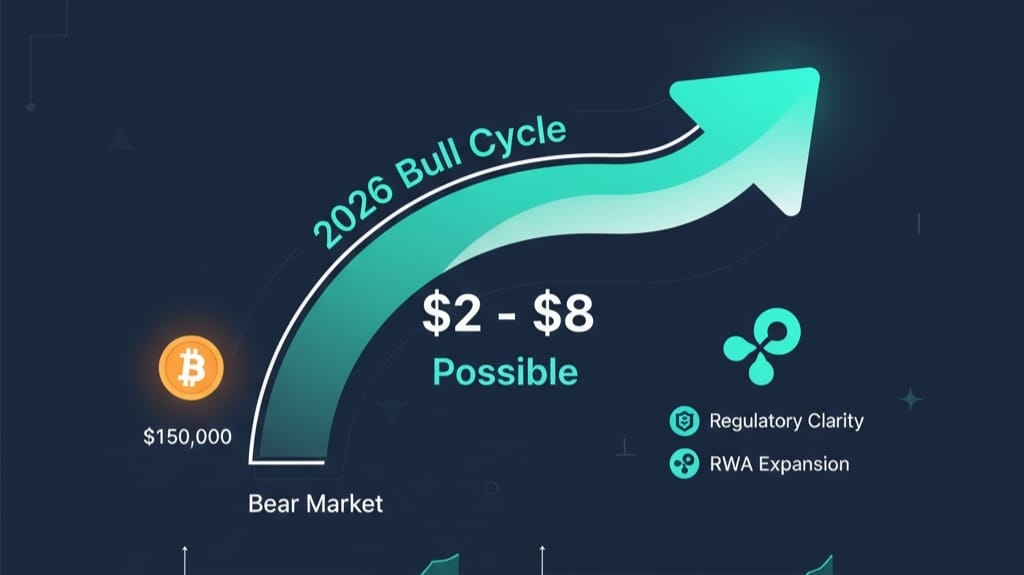
Understanding XRP’s Potential Cycle Turn in 2026Crypto markets move in cycles periods of rapid growth followed by deep corrections. In early 2026, sentiment feels bearish: Bitcoin sits near $69K after pulling back from 2025 highs, while major altcoins like Solana (SOL) and are down roughly 40–45% year-to-date. Historically, however, these pessimistic phases often set the stage for the next major rally.
XRP is particularly interesting right now. Trading around $1.40–$1.60, it remains below its 2018 ATH of $3.65 but far above the $0.20 lows seen in past downturns. The big question: Could 2026 mark a cycle turn from bear to bull?
What Are Crypto Market Cycles?
Crypto cycles typically align with Bitcoin’s four-year halving rhythm:
Accumulation, Bull Market, Distribution, Bear Market.
While we appear to be in a cooling phase, catalysts like ETF approvals, regulatory clarity, and institutional adoption can accelerate a reversal.
XRP’s 2026 Outlook
Analysts remain mixed but increasingly optimistic.
Conservative views: $2–$4 without major catalysts.
Bullish scenarios: $5–$8 if ETFs, regulation, and adoption improve.
Extreme upside: Higher targets depend heavily on mass institutional use.
Key drivers to watch:
Institutional inflows through potential XRP ETFs
Regulatory progress for Ripple
Expansion into real-world assets (RWAs)
A broader Bitcoin recovery
Technically, XRP appears to be defending previous breakout zones, suggesting $1.40 could act as strong support but regulatory setbacks or prolonged bearish conditions could keep it range-bound.
XRP vs. Solana: Speed vs. Stability
Solana tends to move faster due to retail hype, DeFi activity, and meme-coin ecosystems. Its cycles are explosive but volatile.
SOL: High-beta asset that often rebounds quickly.
XRP: Slower mover with stronger institutional narratives.
If alt season returns, may surge first, but XRP could deliver steadier, more sustainable gains.
XRP vs. Bitcoin: Following the Market Leader
Bitcoin still dictates macro direction. Historically, alts rally after BTC strengthens.
A BTC push toward new highs could lift XRP into the $4–$8 range.
Unlike Bitcoin’s scarcity-driven growth, XRP’s upside relies more on adoption and utility.
Expect higher volatility but also larger percentage moves.
In Conclusion:
Market cycles reward patience. While sentiment is uncertain, consolidation often comes before expansion.
The edge belongs to investors who stay informed and think long-term because the biggest moves usually begin when conviction is quiet.
Understanding XRP’s Potential Cycle Turn in 2026
Crypto markets move in cycles periods of rapid growth followed by deep corrections. In early 2026, sentiment feels bearish: Bitcoin sits near $69K after pulling back from 2025 highs, while major altcoins like Solana (SOL) and are down roughly 40–45% year-to-date. Historically, however, these pessimistic phases often set the stage for the next major rally.
XRP is particularly interesting right now. Trading around $1.40–$1.60, it remains below its 2018 ATH of $3.65 but far above the $0.20 lows seen in past downturns. The big question: Could 2026 mark a cycle turn from bear to bull?
What Are Crypto Market Cycles?
Crypto cycles typically align with Bitcoin’s four-year halving rhythm:
Accumulation, Bull Market, Distribution, Bear Market.
While we appear to be in a cooling phase, catalysts like ETF approvals, regulatory clarity, and institutional adoption can accelerate a reversal.
XRP’s 2026 Outlook
Analysts remain mixed but increasingly optimistic.
Conservative views: $2–$4 without major catalysts.
Bullish scenarios: $5–$8 if ETFs, regulation, and adoption improve.
Extreme upside: Higher targets depend heavily on mass institutional use.
Key drivers to watch:
Institutional inflows through potential XRP ETFs
Regulatory progress for Ripple
Expansion into real-world assets (RWAs)
A broader Bitcoin recovery
Technically, XRP appears to be defending previous breakout zones, suggesting $1.40 could act as strong support but regulatory setbacks or prolonged bearish conditions could keep it range-bound.
XRP vs. Solana: Speed vs. Stability
Solana tends to move faster due to retail hype, DeFi activity, and meme-coin ecosystems. Its cycles are explosive but volatile.
SOL: High-beta asset that often rebounds quickly.
XRP: Slower mover with stronger institutional narratives.
If alt season returns, may surge first, but XRP could deliver steadier, more sustainable gains.
XRP vs. Bitcoin: Following the Market Leader
Bitcoin still dictates macro direction. Historically, alts rally after BTC strengthens.
A BTC push toward new highs could lift XRP into the $4–$8 range.
Unlike Bitcoin’s scarcity-driven growth, XRP’s upside relies more on adoption and utility.
Expect higher volatility but also larger percentage moves.
In Conclusion:
Market cycles reward patience. While sentiment is uncertain, consolidation often comes before expansion.
The edge belongs to investors who stay informed and think long-term because the biggest moves usually begin when conviction is quiet.
XRP is particularly interesting right now. Trading around $1.40–$1.60, it remains below its 2018 ATH of $3.65 but far above the $0.20 lows seen in past downturns. The big question: Could 2026 mark a cycle turn from bear to bull?
What Are Crypto Market Cycles?
Crypto cycles typically align with Bitcoin’s four-year halving rhythm:
Accumulation, Bull Market, Distribution, Bear Market.
While we appear to be in a cooling phase, catalysts like ETF approvals, regulatory clarity, and institutional adoption can accelerate a reversal.
XRP’s 2026 Outlook
Analysts remain mixed but increasingly optimistic.
Conservative views: $2–$4 without major catalysts.
Bullish scenarios: $5–$8 if ETFs, regulation, and adoption improve.
Extreme upside: Higher targets depend heavily on mass institutional use.
Key drivers to watch:
Institutional inflows through potential XRP ETFs
Regulatory progress for Ripple
Expansion into real-world assets (RWAs)
A broader Bitcoin recovery
Technically, XRP appears to be defending previous breakout zones, suggesting $1.40 could act as strong support but regulatory setbacks or prolonged bearish conditions could keep it range-bound.
XRP vs. Solana: Speed vs. Stability
Solana tends to move faster due to retail hype, DeFi activity, and meme-coin ecosystems. Its cycles are explosive but volatile.
SOL: High-beta asset that often rebounds quickly.
XRP: Slower mover with stronger institutional narratives.
If alt season returns, may surge first, but XRP could deliver steadier, more sustainable gains.
XRP vs. Bitcoin: Following the Market Leader
Bitcoin still dictates macro direction. Historically, alts rally after BTC strengthens.
A BTC push toward new highs could lift XRP into the $4–$8 range.
Unlike Bitcoin’s scarcity-driven growth, XRP’s upside relies more on adoption and utility.
Expect higher volatility but also larger percentage moves.
In Conclusion:
Market cycles reward patience. While sentiment is uncertain, consolidation often comes before expansion.
The edge belongs to investors who stay informed and think long-term because the biggest moves usually begin when conviction is quiet.
8
5
71
55.5k
🚨 LATEST: $META has been quietly using human contractors to handle some phone calls made through its new AI agent Muse, raising privacy concerns among employees, per Reuters.
#AIStocksWhatNext
🚨 LATEST: $META has been quietly using human contractors to handle some phone calls made through its new AI agent Muse, raising privacy concerns among employees, per Reuters.
#AIStocksWhatNext
#AIStocksWhatNext


119
⚡️ NEW: Ark Invest’s Cathie Wood believes a technology-driven productivity boom could push real GDP growth to 7% or higher while inflation continues to cool.
She also suggests investors may want to consider increasing their exposure to equities, with $BTC potentially benefiting from the same shift.
⚡️ NEW: Ark Invest’s Cathie Wood believes a technology-driven productivity boom could push real GDP growth to 7% or higher while inflation continues to cool.
She also suggests investors may want to consider increasing their exposure to equities, with $BTC potentially benefiting from the same shift.
She also suggests investors may want to consider increasing their exposure to equities, with $BTC potentially benefiting from the same shift.


66
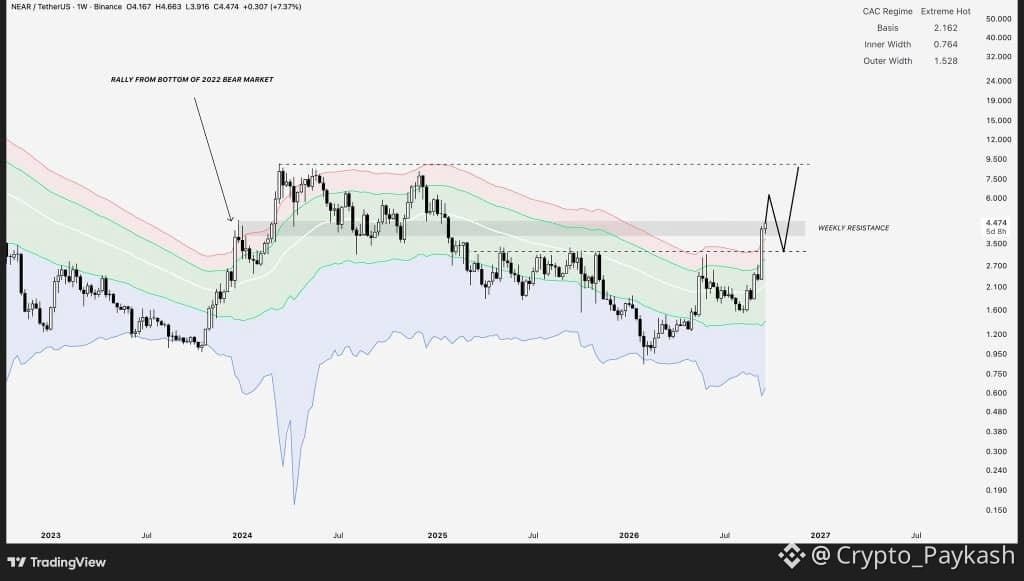
$NEAR is approaching an important weekly decision zone around $4.70.
A clean break above it could open the way toward $6–$7, but I wouldn’t expect the move to be straight up.
NEAR has moved quickly from the blue acceptance zone into a much hotter area. A pullback toward $3.30–$3.60 wouldn’t necessarily change the bigger setup. It could clear leverage, rebalance liquidity and give buyers a chance to show strength again.
For now, $4.70 is the key level to watch, while $3.30–$3.60 remains the main pullback zone.
Already positioned from $3.60 and up around 30%. Now we wait to see whether resistance breaks first or the market gives another entry lower.
$NEAR is approaching an important weekly decision zone around $4.70.
A clean break above it could open the way toward $6–$7, but I wouldn’t expect the move to be straight up.
NEAR has moved quickly from the blue acceptance zone into a much hotter area. A pullback toward $3.30–$3.60 wouldn’t necessarily change the bigger setup. It could clear leverage, rebalance liquidity and give buyers a chance to show strength again.
For now, $4.70 is the key level to watch, while $3.30–$3.60 remains the main pullback zone.
Already positioned from $3.60 and up around 30%. Now we wait to see whether resistance breaks first or the market gives another entry lower.
A clean break above it could open the way toward $6–$7, but I wouldn’t expect the move to be straight up.
NEAR has moved quickly from the blue acceptance zone into a much hotter area. A pullback toward $3.30–$3.60 wouldn’t necessarily change the bigger setup. It could clear leverage, rebalance liquidity and give buyers a chance to show strength again.
For now, $4.70 is the key level to watch, while $3.30–$3.60 remains the main pullback zone.
Already positioned from $3.60 and up around 30%. Now we wait to see whether resistance breaks first or the market gives another entry lower.
63
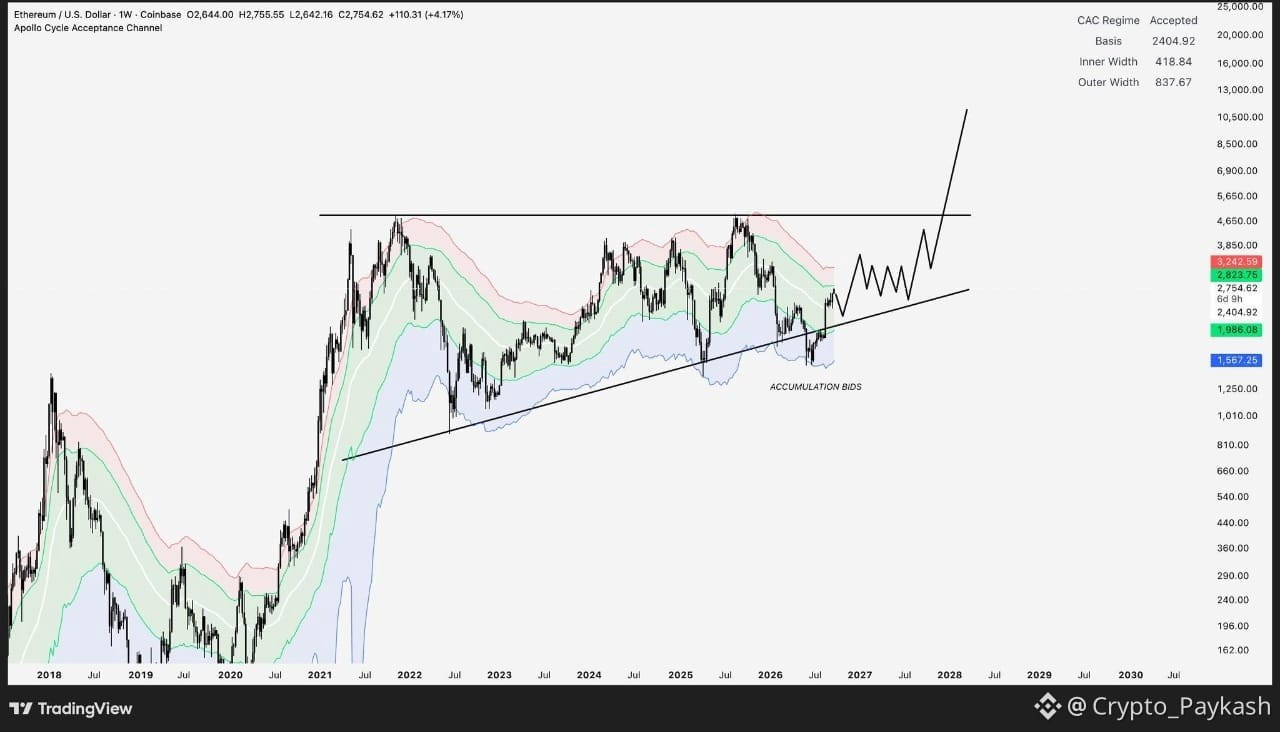
$ETH still has one of the cleanest macro setups among the major assets.
Back in April, I mapped out the structure I wanted to see: a return to the cycle acceptance zone, accumulation around the multi-year trendline, and eventually a move back above $2,500.
Six months later, Ethereum has followed that path pretty closely.
It may take some patience, but the next bigger expansion could eventually take ETH toward the $5,000 area.
For the second-largest asset in crypto, I still think sub-$3K levels deserve attention.
$ETH still has one of the cleanest macro setups among the major assets.
Back in April, I mapped out the structure I wanted to see: a return to the cycle acceptance zone, accumulation around the multi-year trendline, and eventually a move back above $2,500.
Six months later, Ethereum has followed that path pretty closely.
It may take some patience, but the next bigger expansion could eventually take ETH toward the $5,000 area.
For the second-largest asset in crypto, I still think sub-$3K levels deserve attention.
Back in April, I mapped out the structure I wanted to see: a return to the cycle acceptance zone, accumulation around the multi-year trendline, and eventually a move back above $2,500.
Six months later, Ethereum has followed that path pretty closely.
It may take some patience, but the next bigger expansion could eventually take ETH toward the $5,000 area.
For the second-largest asset in crypto, I still think sub-$3K levels deserve attention.
77
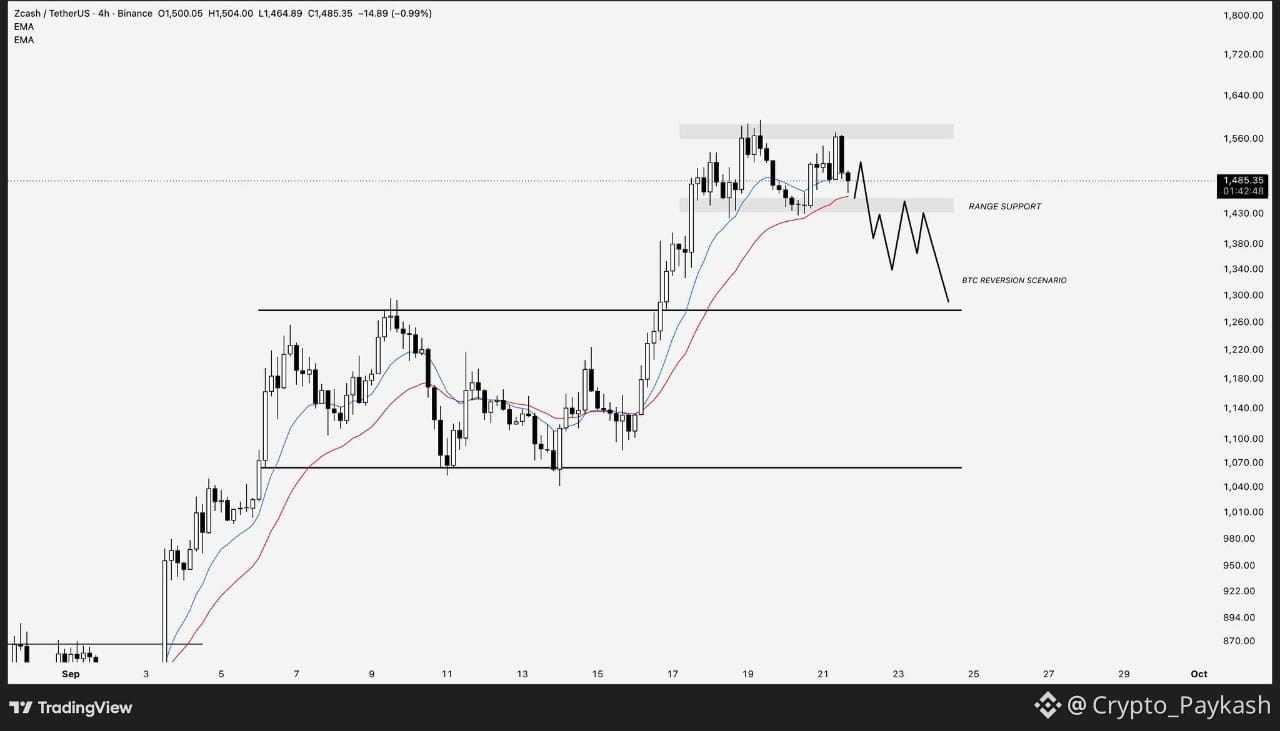
Funny how quickly the $ZEC narrative changes just because it didn’t follow $BTC higher for one day.
One day of underperformance shouldn’t erase how strong ZEC has been over the past six weeks. Over the last month alone, holding Zcash has outperformed Bitcoin by roughly 160%.
But no asset stays ahead forever. If the broader market pulls back and ZEC loses the $1,430 support, I’d be watching the $1,250 area as a potential liquidity zone.
After six weeks of expansion, a pullback could simply be the market giving buyers another chance to reload.
#CircleLaunchesInstitutionalBTCBackedBorrowing
Funny how quickly the $ZEC narrative changes just because it didn’t follow $BTC higher for one day.
One day of underperformance shouldn’t erase how strong ZEC has been over the past six weeks. Over the last month alone, holding Zcash has outperformed Bitcoin by roughly 160%.
But no asset stays ahead forever. If the broader market pulls back and ZEC loses the $1,430 support, I’d be watching the $1,250 area as a potential liquidity zone.
After six weeks of expansion, a pullback could simply be the market giving buyers another chance to reload.
#CircleLaunchesInstitutionalBTCBackedBorrowing
One day of underperformance shouldn’t erase how strong ZEC has been over the past six weeks. Over the last month alone, holding Zcash has outperformed Bitcoin by roughly 160%.
But no asset stays ahead forever. If the broader market pulls back and ZEC loses the $1,430 support, I’d be watching the $1,250 area as a potential liquidity zone.
After six weeks of expansion, a pullback could simply be the market giving buyers another chance to reload.
#CircleLaunchesInstitutionalBTCBackedBorrowing
78
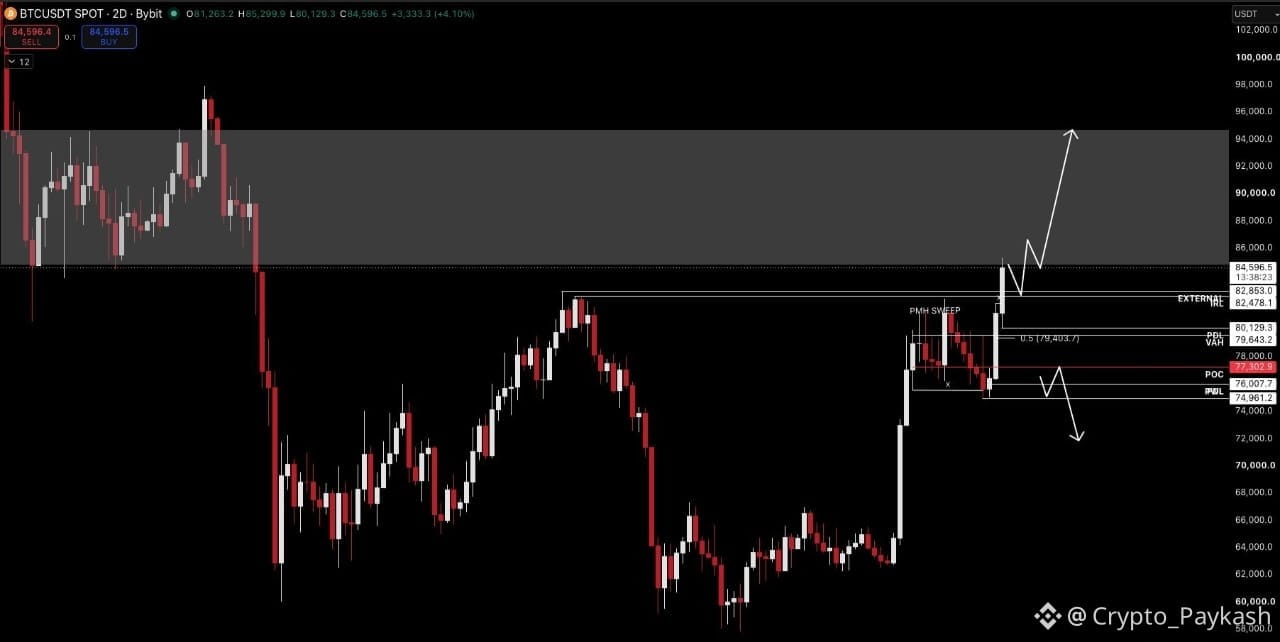
$BTC showed serious aggression during the London session and pushed straight to $85K.
The liquidity levels I marked this morning have already been hit. That moved fast.
If you’re already long, I’d consider taking some profits here while watching the local PA closely.
BTC is now testing the $85K area, the bottom of the previous consolidation, with billions in shorts already liquidated.
Momentum is strong. Ideally, I’d like to see BTC hold above $83K, consolidate, then give us a clean retest for a new long setup.
If it keeps pumping, I’ll scalp along with the move, but I still prefer clean intraday retests.
No reason to fight this momentum with shorts until HTF weakness shows up. For now, waiting for the next clean setup.
#SaylorHintsStrategyBitcoinBuy
$BTC showed serious aggression during the London session and pushed straight to $85K.
The liquidity levels I marked this morning have already been hit. That moved fast.
If you’re already long, I’d consider taking some profits here while watching the local PA closely.
BTC is now testing the $85K area, the bottom of the previous consolidation, with billions in shorts already liquidated.
Momentum is strong. Ideally, I’d like to see BTC hold above $83K, consolidate, then give us a clean retest for a new long setup.
If it keeps pumping, I’ll scalp along with the move, but I still prefer clean intraday retests.
No reason to fight this momentum with shorts until HTF weakness shows up. For now, waiting for the next clean setup.
#SaylorHintsStrategyBitcoinBuy
The liquidity levels I marked this morning have already been hit. That moved fast.
If you’re already long, I’d consider taking some profits here while watching the local PA closely.
BTC is now testing the $85K area, the bottom of the previous consolidation, with billions in shorts already liquidated.
Momentum is strong. Ideally, I’d like to see BTC hold above $83K, consolidate, then give us a clean retest for a new long setup.
If it keeps pumping, I’ll scalp along with the move, but I still prefer clean intraday retests.
No reason to fight this momentum with shorts until HTF weakness shows up. For now, waiting for the next clean setup.
#SaylorHintsStrategyBitcoinBuy
1
152
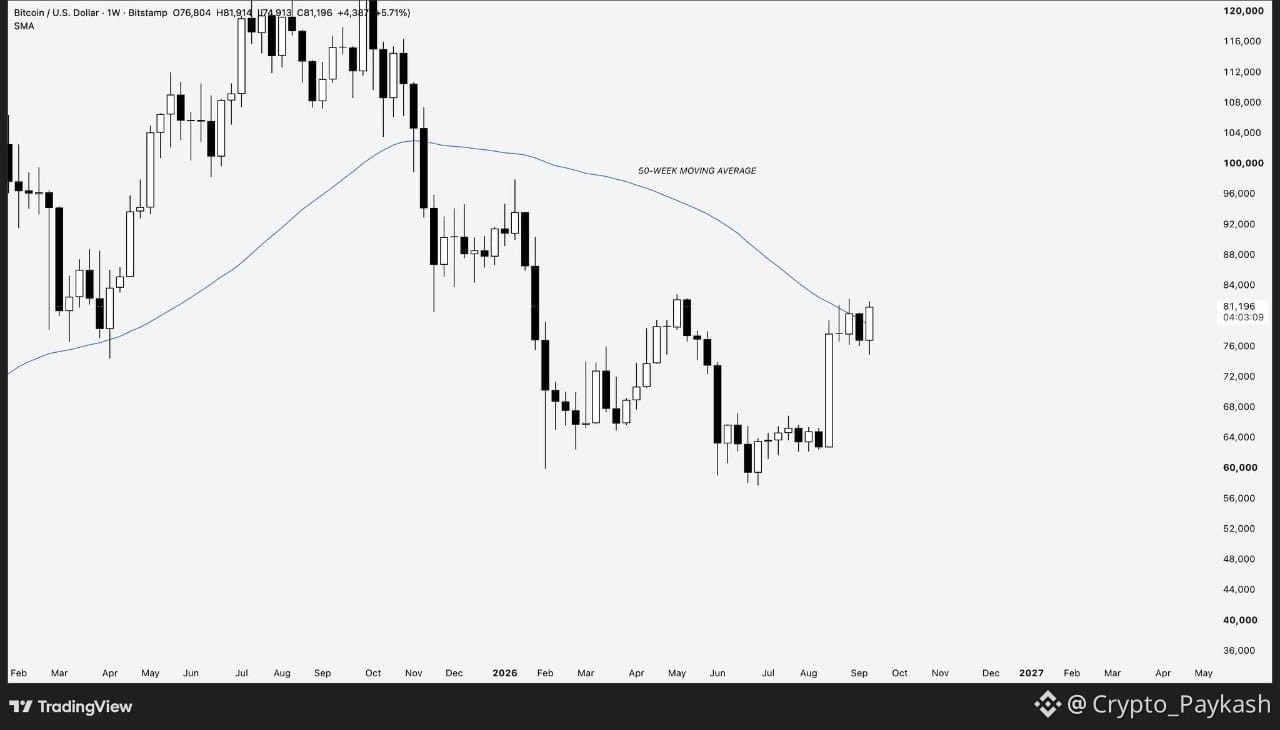
$BTC is on track for its first weekly close above the 50WMA since losing it around $103K.
The first reclaim attempt was rejected a few weeks ago, which isn’t unusual. Historically, Bitcoin has often struggled on the first 50WMA retest during bear markets before eventually reclaiming it on the second attempt.
Interestingly, those successful second reclaims have historically aligned with major market regime shifts.
Now we’re seeing the second attempt. Watching how this weekly close plays out.
#BTCBreaks80K
$BTC is on track for its first weekly close above the 50WMA since losing it around $103K.
The first reclaim attempt was rejected a few weeks ago, which isn’t unusual. Historically, Bitcoin has often struggled on the first 50WMA retest during bear markets before eventually reclaiming it on the second attempt.
Interestingly, those successful second reclaims have historically aligned with major market regime shifts.
Now we’re seeing the second attempt. Watching how this weekly close plays out.
#BTCBreaks80K
The first reclaim attempt was rejected a few weeks ago, which isn’t unusual. Historically, Bitcoin has often struggled on the first 50WMA retest during bear markets before eventually reclaiming it on the second attempt.
Interestingly, those successful second reclaims have historically aligned with major market regime shifts.
Now we’re seeing the second attempt. Watching how this weekly close plays out.
#BTCBreaks80K
59
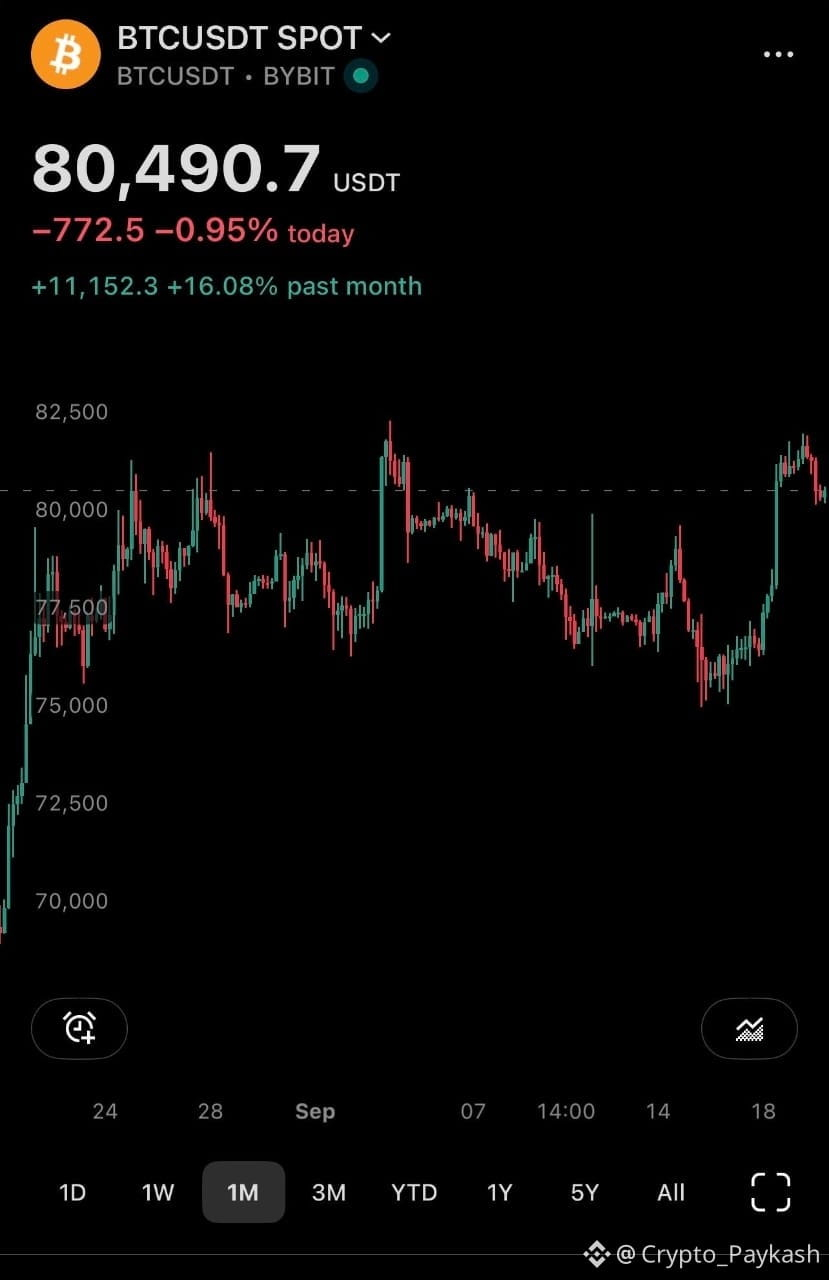
$BTC is still moving in that typical weekend consolidation range.
Bitcoin showed some strength and pushed into the $81K local range high. I stayed out of positions over the weekend, but this week could be important.
Now it’s about seeing whether BTC can hold this momentum and break the range high for the next leg up, or if we get another rejection.
If it does reject here, I’d prefer to see a shallow pullback rather than a deeper move.
For now, it’s still range-bound until we get a clear breakout.
#SaylorHintsStrategyBitcoinBuy
$BTC is still moving in that typical weekend consolidation range.
Bitcoin showed some strength and pushed into the $81K local range high. I stayed out of positions over the weekend, but this week could be important.
Now it’s about seeing whether BTC can hold this momentum and break the range high for the next leg up, or if we get another rejection.
If it does reject here, I’d prefer to see a shallow pullback rather than a deeper move.
For now, it’s still range-bound until we get a clear breakout.
#SaylorHintsStrategyBitcoinBuy
Bitcoin showed some strength and pushed into the $81K local range high. I stayed out of positions over the weekend, but this week could be important.
Now it’s about seeing whether BTC can hold this momentum and break the range high for the next leg up, or if we get another rejection.
If it does reject here, I’d prefer to see a shallow pullback rather than a deeper move.
For now, it’s still range-bound until we get a clear breakout.
#SaylorHintsStrategyBitcoinBuy
69
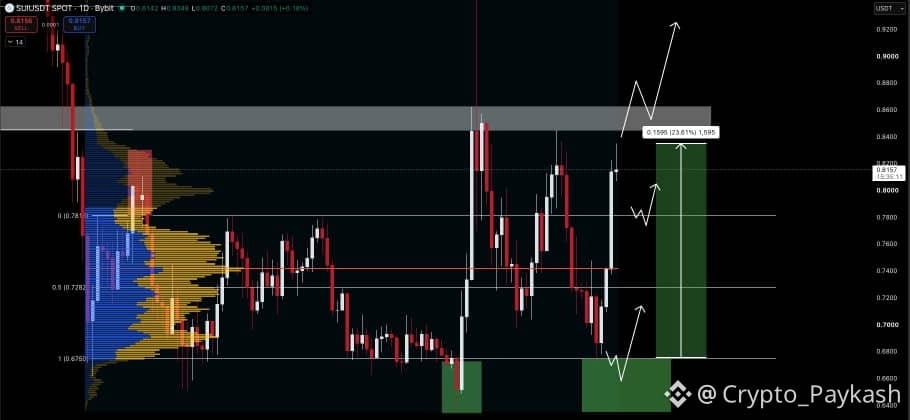
$SUI doesn’t get much cleaner than this.
4 days ago, I shared the 0.67 long POI, which lined up with the HTF range low and value area low.
The ideal setup was for BTC to flush lower, then recover and allow SUI to test that region.
That’s exactly what happened.
SUI tapped the lows, BTC bounced, and SUI quickly pushed back toward the 0.83 highs, giving a clean 23.6% move from the entry.
Now I’m watching whether BTC can continue higher and give SUI enough momentum to finally break the 0.86 resistance.
If we get a pullback, 0.778 is the first level I’d be watching. That lines up with the range high/VAH and the 50% level of the daily candle.
Alts have been showing some really clean PA lately. Let’s see if it continues.
#BOJRaisesRatesTo31YearHigh
$SUI doesn’t get much cleaner than this.
4 days ago, I shared the 0.67 long POI, which lined up with the HTF range low and value area low.
The ideal setup was for BTC to flush lower, then recover and allow SUI to test that region.
That’s exactly what happened.
SUI tapped the lows, BTC bounced, and SUI quickly pushed back toward the 0.83 highs, giving a clean 23.6% move from the entry.
Now I’m watching whether BTC can continue higher and give SUI enough momentum to finally break the 0.86 resistance.
If we get a pullback, 0.778 is the first level I’d be watching. That lines up with the range high/VAH and the 50% level of the daily candle.
Alts have been showing some really clean PA lately. Let’s see if it continues.
#BOJRaisesRatesTo31YearHigh
4 days ago, I shared the 0.67 long POI, which lined up with the HTF range low and value area low.
The ideal setup was for BTC to flush lower, then recover and allow SUI to test that region.
That’s exactly what happened.
SUI tapped the lows, BTC bounced, and SUI quickly pushed back toward the 0.83 highs, giving a clean 23.6% move from the entry.
Now I’m watching whether BTC can continue higher and give SUI enough momentum to finally break the 0.86 resistance.
If we get a pullback, 0.778 is the first level I’d be watching. That lines up with the range high/VAH and the 50% level of the daily candle.
Alts have been showing some really clean PA lately. Let’s see if it continues.
#BOJRaisesRatesTo31YearHigh
49
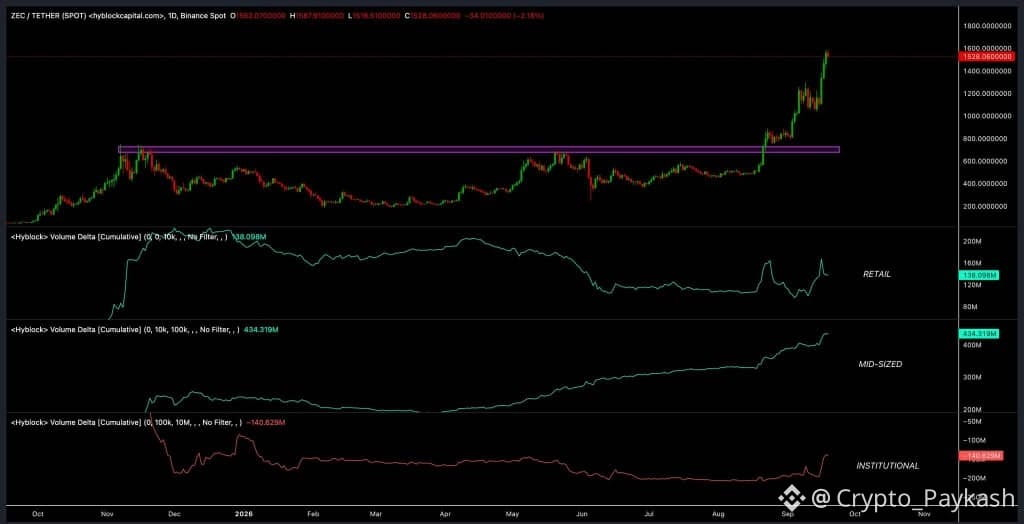
$ZEC keeps pushing higher after every pullback, and the latest participant data gives some context for why.
Mid-sized CVD, covering $10K–$100K trades, is still making new highs. What’s even more interesting is that retail trades below $10K and larger $100K–$10M trades are now moving higher alongside them.
Earlier in the rally, mid-sized participants were doing most of the buying while the others stayed on the sidelines.
Now all three groups are stepping in together.
A lot of the participants who missed the move from $400 are now buying ZEC above $1,500. The shift in participation is definitely worth watching.
#BTCBreaks80K
$ZEC keeps pushing higher after every pullback, and the latest participant data gives some context for why.
Mid-sized CVD, covering $10K–$100K trades, is still making new highs. What’s even more interesting is that retail trades below $10K and larger $100K–$10M trades are now moving higher alongside them.
Earlier in the rally, mid-sized participants were doing most of the buying while the others stayed on the sidelines.
Now all three groups are stepping in together.
A lot of the participants who missed the move from $400 are now buying ZEC above $1,500. The shift in participation is definitely worth watching.
#BTCBreaks80K
Mid-sized CVD, covering $10K–$100K trades, is still making new highs. What’s even more interesting is that retail trades below $10K and larger $100K–$10M trades are now moving higher alongside them.
Earlier in the rally, mid-sized participants were doing most of the buying while the others stayed on the sidelines.
Now all three groups are stepping in together.
A lot of the participants who missed the move from $400 are now buying ZEC above $1,500. The shift in participation is definitely worth watching.
#BTCBreaks80K
93
🇺🇸 ETF flows are looking solid today.
BTC led the inflows with $433M, followed by ETH at $143M. $SOL was flat, while $XRP saw a small $43K outflow.
Overall, the strong BTC and ETH inflows are definitely worth watching as market momentum continues to build.
#SOLJumpsAbout10%
🇺🇸 ETF flows are looking solid today.
BTC led the inflows with $433M, followed by ETH at $143M. $SOL was flat, while $XRP saw a small $43K outflow.
Overall, the strong BTC and ETH inflows are definitely worth watching as market momentum continues to build.
#SOLJumpsAbout10%
BTC led the inflows with $433M, followed by ETH at $143M. $SOL was flat, while $XRP saw a small $43K outflow.
Overall, the strong BTC and ETH inflows are definitely worth watching as market momentum continues to build.
#SOLJumpsAbout10%

52
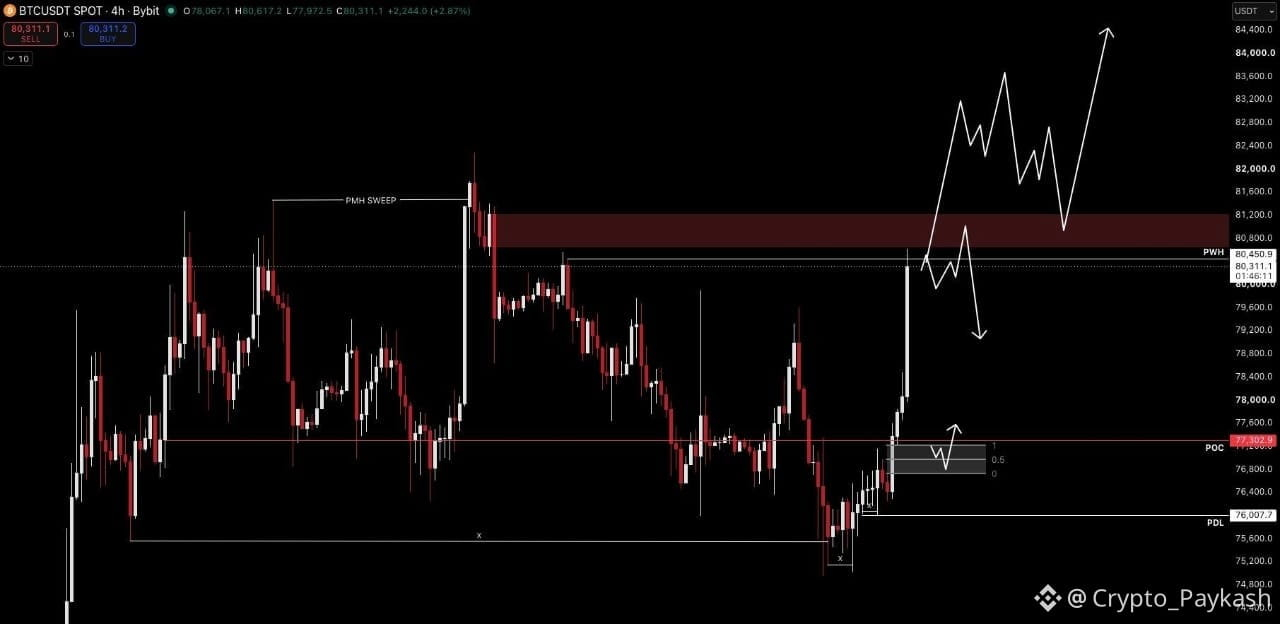
$BTC is showing serious strength during the NY session.
Bitcoin is pushing higher while DXY is also moving up, which makes this strength even more noticeable. BTC is absorbing the dollar strength well, and I like seeing this kind of aggressive PA.
Price pushed into my short POI, but there was no trigger, so no trade for me.
I understand the range-high short thesis, but I’d treat it as a short-term exhaustion setup and wait for clear bearish confirmation.
Since the $82K move two weeks ago, I’ve mainly been focused on quality longs. This week already gave us two solid entries, so if you’re in with a good entry, letting a portion run could make sense while managing risk.
Best case, BTC breaks the range high, consolidates, and gives us another opportunity to long higher.
Stay reactive and manage risk. Have a great weekend.
#BTCBreaks80K
$BTC is showing serious strength during the NY session.
Bitcoin is pushing higher while DXY is also moving up, which makes this strength even more noticeable. BTC is absorbing the dollar strength well, and I like seeing this kind of aggressive PA.
Price pushed into my short POI, but there was no trigger, so no trade for me.
I understand the range-high short thesis, but I’d treat it as a short-term exhaustion setup and wait for clear bearish confirmation.
Since the $82K move two weeks ago, I’ve mainly been focused on quality longs. This week already gave us two solid entries, so if you’re in with a good entry, letting a portion run could make sense while managing risk.
Best case, BTC breaks the range high, consolidates, and gives us another opportunity to long higher.
Stay reactive and manage risk. Have a great weekend.
#BTCBreaks80K
Bitcoin is pushing higher while DXY is also moving up, which makes this strength even more noticeable. BTC is absorbing the dollar strength well, and I like seeing this kind of aggressive PA.
Price pushed into my short POI, but there was no trigger, so no trade for me.
I understand the range-high short thesis, but I’d treat it as a short-term exhaustion setup and wait for clear bearish confirmation.
Since the $82K move two weeks ago, I’ve mainly been focused on quality longs. This week already gave us two solid entries, so if you’re in with a good entry, letting a portion run could make sense while managing risk.
Best case, BTC breaks the range high, consolidates, and gives us another opportunity to long higher.
Stay reactive and manage risk. Have a great weekend.
#BTCBreaks80K
84
Verified
🔥 Latest: Evernorth has secured a $30M commitment from South Korea’s NH Investment & Securities to help fund additional $XRP purchases.
Another notable development as Evernorth continues expanding its XRP-focused strategy.
🔥 Latest: Evernorth has secured a $30M commitment from South Korea’s NH Investment & Securities to help fund additional $XRP purchases.
Another notable development as Evernorth continues expanding its XRP-focused strategy.
Another notable development as Evernorth continues expanding its XRP-focused strategy.
2
3
3k
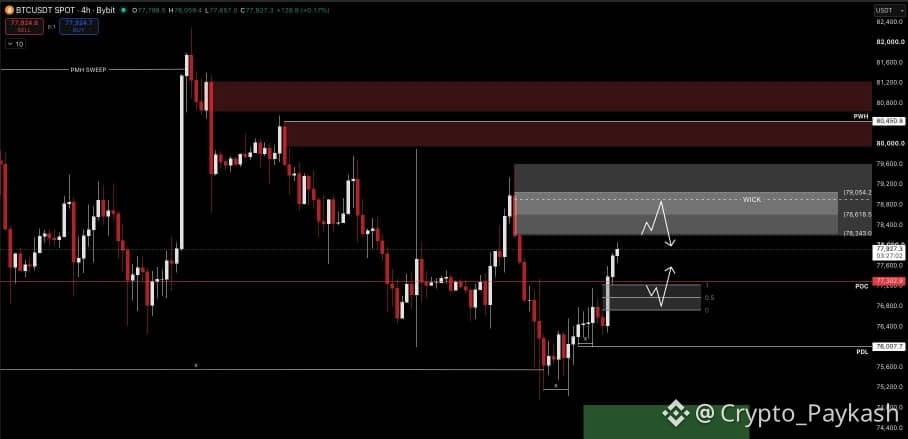
$BTC pushed into 78K and reached our final long target.
Really clean price action. Jobless claims came in bearish, but Bitcoin first pushed higher, swept liquidity, trapped early buyers and induced sellers before the real move up followed.
If you’re not familiar with this type of inducement, it’s easy to get chopped up. Sometimes waiting for confirmation is the better play.
We had two clean long setups this week that played out nicely. The hedge short got stopped, but the long more than compensated for it.
For today, I’m not chasing longs after this pump. BTC is retesting a higher-timeframe short POI, with 78.6K–78.8K being the main area I’m watching for a trigger.
For longs, I’d be more interested in a retest of the gap around 76.9K.
Overall, a solid week.
#BOJHikesRatesTo31YearHigh
$BTC pushed into 78K and reached our final long target.
Really clean price action. Jobless claims came in bearish, but Bitcoin first pushed higher, swept liquidity, trapped early buyers and induced sellers before the real move up followed.
If you’re not familiar with this type of inducement, it’s easy to get chopped up. Sometimes waiting for confirmation is the better play.
We had two clean long setups this week that played out nicely. The hedge short got stopped, but the long more than compensated for it.
For today, I’m not chasing longs after this pump. BTC is retesting a higher-timeframe short POI, with 78.6K–78.8K being the main area I’m watching for a trigger.
For longs, I’d be more interested in a retest of the gap around 76.9K.
Overall, a solid week.
#BOJHikesRatesTo31YearHigh
Really clean price action. Jobless claims came in bearish, but Bitcoin first pushed higher, swept liquidity, trapped early buyers and induced sellers before the real move up followed.
If you’re not familiar with this type of inducement, it’s easy to get chopped up. Sometimes waiting for confirmation is the better play.
We had two clean long setups this week that played out nicely. The hedge short got stopped, but the long more than compensated for it.
For today, I’m not chasing longs after this pump. BTC is retesting a higher-timeframe short POI, with 78.6K–78.8K being the main area I’m watching for a trigger.
For longs, I’d be more interested in a retest of the gap around 76.9K.
Overall, a solid week.
#BOJHikesRatesTo31YearHigh
1
124
$ZEC is pushing higher with solid momentum.
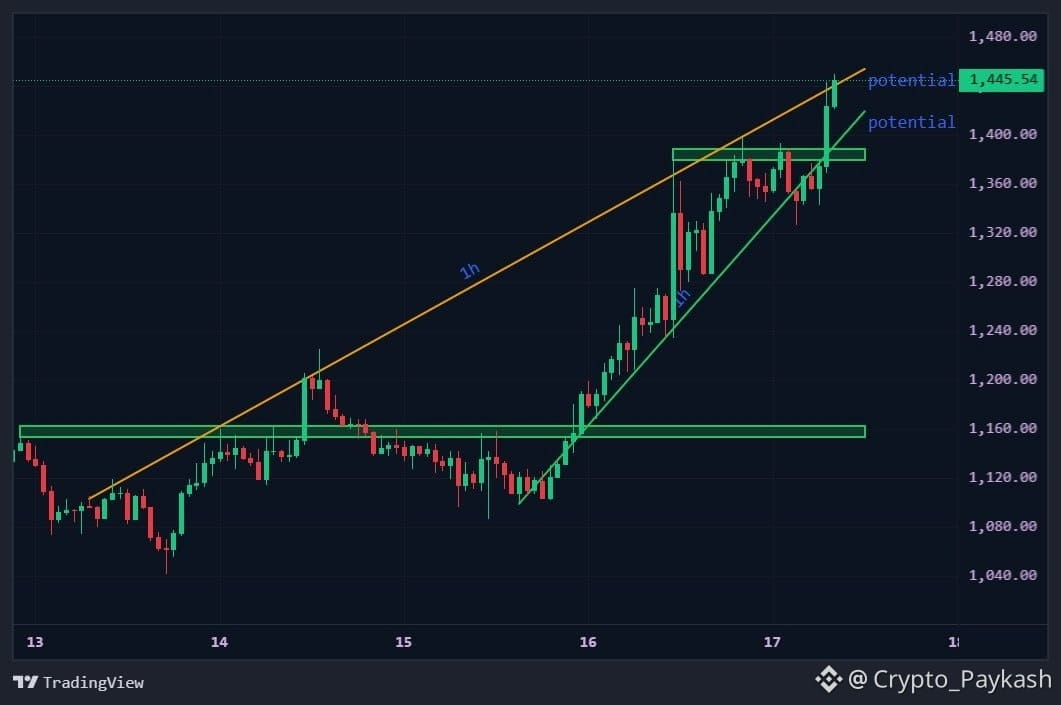
The 1H chart has been printing higher prices since September 15, and price is now around $1,445.87 after tapping $1,450 earlier today.
The main thing I’m watching here is resistance. Price is approaching the upper trendline around $1,454, while the rising support sits near $1,420.
As long as ZEC holds that rising support, the bullish structure remains intact. If it breaks, I’d be watching the $1,380–$1,389 area for the next potential support.
For now, the trend is still up, but $1,450–$1,454 is the zone that needs to be cleared. The current candle is still forming, so I’m treating $1,445.87 as live price rather than a confirmed close.
#ElSalvadorBTCHoldingsRiseTo7777
$ZEC is pushing higher with solid momentum.
The 1H chart has been printing higher prices since September 15, and price is now around $1,445.87 after tapping $1,450 earlier today.
The main thing I’m watching here is resistance. Price is approaching the upper trendline around $1,454, while the rising support sits near $1,420.
As long as ZEC holds that rising support, the bullish structure remains intact. If it breaks, I’d be watching the $1,380–$1,389 area for the next potential support.
For now, the trend is still up, but $1,450–$1,454 is the zone that needs to be cleared. The current candle is still forming, so I’m treating $1,445.87 as live price rather than a confirmed close.
#ElSalvadorBTCHoldingsRiseTo7777
The 1H chart has been printing higher prices since September 15, and price is now around $1,445.87 after tapping $1,450 earlier today.
The main thing I’m watching here is resistance. Price is approaching the upper trendline around $1,454, while the rising support sits near $1,420.
As long as ZEC holds that rising support, the bullish structure remains intact. If it breaks, I’d be watching the $1,380–$1,389 area for the next potential support.
For now, the trend is still up, but $1,450–$1,454 is the zone that needs to be cleared. The current candle is still forming, so I’m treating $1,445.87 as live price rather than a confirmed close.
#ElSalvadorBTCHoldingsRiseTo7777
1
1
323
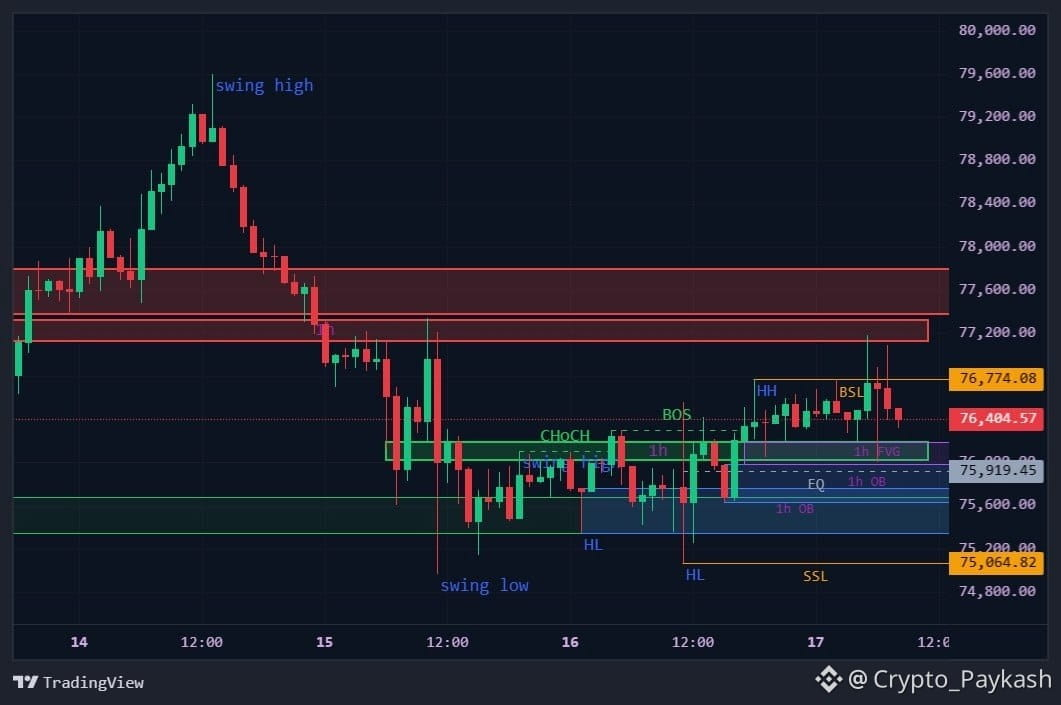
$BTC /USDT is pulling back within the short-term rebound, but the trend still isn’t clearly directional.
Price is currently around 76,364, with the candle still forming. BTC pushed above 76,774 but quickly fell back below it, showing some rejection around the recent high.
The key area I’m watching is 76,022–76,194. As long as BTC holds above this zone, the rebound structure remains intact.
If that support breaks, the next area to watch is around 75,350–75,986.
On the upside, 77,125–77,324 remains the main resistance zone.
Buyers have managed to recover from the 75K area, but sellers are still defending 76.8K–77.3K. Until BTC breaks and closes outside the 76K–77.3K range, I’m treating this as a range rather than a clean directional move.
$BTC /USDT is pulling back within the short-term rebound, but the trend still isn’t clearly directional.
Price is currently around 76,364, with the candle still forming. BTC pushed above 76,774 but quickly fell back below it, showing some rejection around the recent high.
The key area I’m watching is 76,022–76,194. As long as BTC holds above this zone, the rebound structure remains intact.
If that support breaks, the next area to watch is around 75,350–75,986.
On the upside, 77,125–77,324 remains the main resistance zone.
Buyers have managed to recover from the 75K area, but sellers are still defending 76.8K–77.3K. Until BTC breaks and closes outside the 76K–77.3K range, I’m treating this as a range rather than a clean directional move.
Price is currently around 76,364, with the candle still forming. BTC pushed above 76,774 but quickly fell back below it, showing some rejection around the recent high.
The key area I’m watching is 76,022–76,194. As long as BTC holds above this zone, the rebound structure remains intact.
If that support breaks, the next area to watch is around 75,350–75,986.
On the upside, 77,125–77,324 remains the main resistance zone.
Buyers have managed to recover from the 75K area, but sellers are still defending 76.8K–77.3K. Until BTC breaks and closes outside the 76K–77.3K range, I’m treating this as a range rather than a clean directional move.
1
76
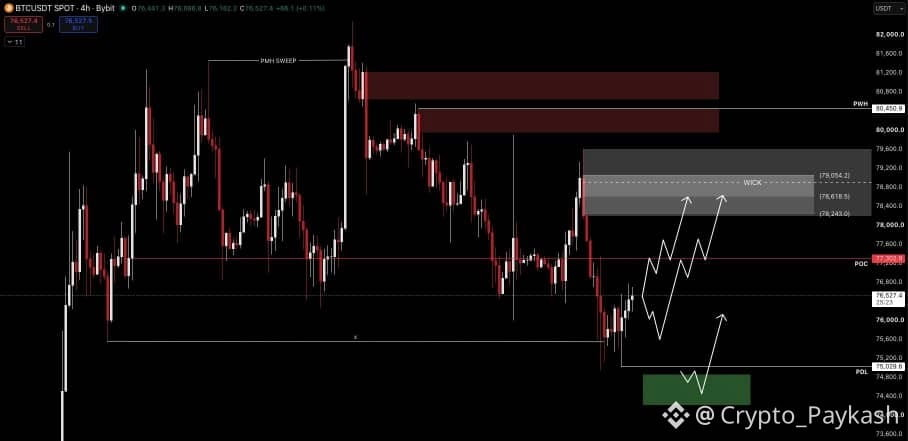
$BTC held the $75K low through FOMC yesterday.
The statement and press conference were mostly in line with expectations, so there weren’t many surprises. That usually means less volatility, which is what we saw.
I wanted a deeper sweep, but not getting the move you want is part of trading.
For now, I’m more interested in longs. OI shows the recent dumps pulled in plenty of shorts, while the untested daily wick gives me another confluence for a long setup.
I’m looking to scalp toward the $77.3K POC first. Reclaiming that level would be the next bullish trigger, with $78.5K as the next target.
Initial Jobless Claims drops at 08:30 ET. A slightly higher-than-expected number could support a bullish reaction.
If BTC sweeps into my $74.5K support box, I’ll still be watching for long triggers. Either way, I’ll be cautious around the data and likely wait for the NY session for a cleaner setup.
#FedSEPProjects2026RateAt4.1%
$BTC held the $75K low through FOMC yesterday.
The statement and press conference were mostly in line with expectations, so there weren’t many surprises. That usually means less volatility, which is what we saw.
I wanted a deeper sweep, but not getting the move you want is part of trading.
For now, I’m more interested in longs. OI shows the recent dumps pulled in plenty of shorts, while the untested daily wick gives me another confluence for a long setup.
I’m looking to scalp toward the $77.3K POC first. Reclaiming that level would be the next bullish trigger, with $78.5K as the next target.
Initial Jobless Claims drops at 08:30 ET. A slightly higher-than-expected number could support a bullish reaction.
If BTC sweeps into my $74.5K support box, I’ll still be watching for long triggers. Either way, I’ll be cautious around the data and likely wait for the NY session for a cleaner setup.
#FedSEPProjects2026RateAt4.1%
The statement and press conference were mostly in line with expectations, so there weren’t many surprises. That usually means less volatility, which is what we saw.
I wanted a deeper sweep, but not getting the move you want is part of trading.
For now, I’m more interested in longs. OI shows the recent dumps pulled in plenty of shorts, while the untested daily wick gives me another confluence for a long setup.
I’m looking to scalp toward the $77.3K POC first. Reclaiming that level would be the next bullish trigger, with $78.5K as the next target.
Initial Jobless Claims drops at 08:30 ET. A slightly higher-than-expected number could support a bullish reaction.
If BTC sweeps into my $74.5K support box, I’ll still be watching for long triggers. Either way, I’ll be cautious around the data and likely wait for the NY session for a cleaner setup.
#FedSEPProjects2026RateAt4.1%
1
67
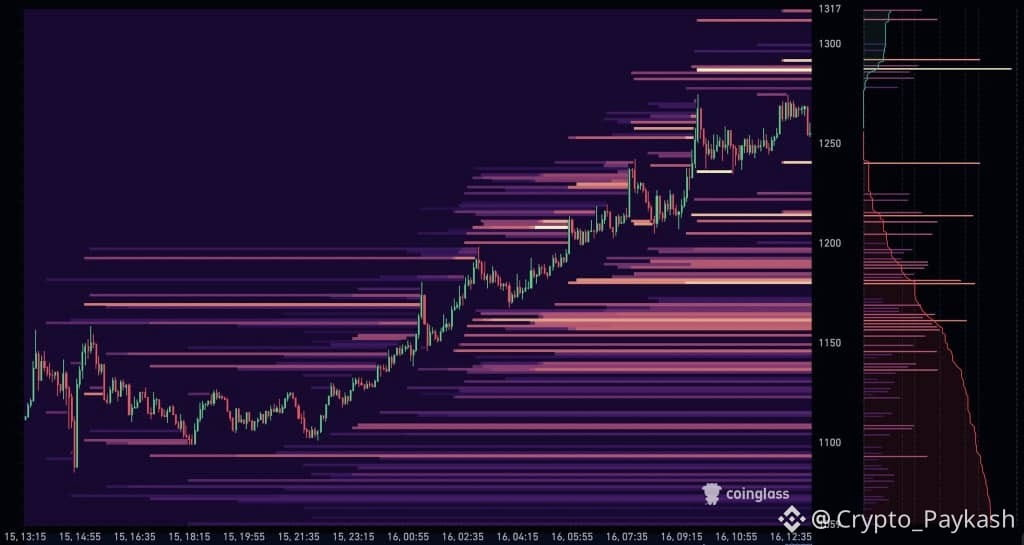
Always entertaining watching $ZEC shorts try to call the exact top of a momentum move.
More often than not, they end up becoming fuel for the next leg higher.
If ZEC breaks $1,300, I think the squeeze gets pretty brutal again.
Always entertaining watching $ZEC shorts try to call the exact top of a momentum move.
More often than not, they end up becoming fuel for the next leg higher.
If ZEC breaks $1,300, I think the squeeze gets pretty brutal again.
More often than not, they end up becoming fuel for the next leg higher.
If ZEC breaks $1,300, I think the squeeze gets pretty brutal again.
125
Log in to explore more content
Join global crypto users on Binance Square
⚡️ Get latest and useful information about crypto.
💬 Trusted by the world’s largest crypto exchange.
👍 Discover real insights from verified creators.
Email / Phone number
Trending Topics
AIStocksWhatNext
886,516 views
6,635 Discussing
Share & Win Traffic Reward in our Trending Hashtag Campaign
✨Topic: What Other Investment Opportunities Remain as AI Stocks Keep Rising?
👉How to Join:
Publish a short post or article with hashtag #AIStocksWhatNext
Share whether you’re bullish or bearish, and post your AI stock holdings or trade — using the trade widget may improve your eligibility.
You can also strengthen your post by sharing data or charts, and avoiding AI-generated images.
✍️Create content based on the below angles:
- Nvidia says chip sales will double next year, and top AI companies keep hitting record revenue, the compute spend behind it is just as staggering. Is AI demand really taking off? And how long can it last? AI stocks are up across the board. Is this a real breakout, or just a short-term bounce?
- Industry leaders are calling to slow down AI development, while Trump plans to build an “AI Force”, claiming AI could account for 25% of U.S. GDP in the future. Whose side are you on? Will state-level backing be a long-term win for AI stocks?
- Are you buying AI stocks? Share your AI-related trade/holdings with our trade sharing widget.
⏰Campaign Period:
- 2026-09-22 7:00 - 2026-09-24 4:00 UTC
🎁Reward:
- Qualified posts that comply with the above guidelines and contain more than 100 words will be reviewed and may receive a random traffic boost of 500 to 3,000 views. You will receive a notification from your feed secretary if your post is selected.
- Get a chance to have your article featured on Binance Square Official
Need ideas for your post? Visit the topic page #AIStocksWhatNext or the Square Guide on How to Post for Better Reach.
Binance Square Official
·586 Likes
·1.7M views
BitcoinRejectedAt$87,300Twice
0 views
0 Discussing
BCHJumps28%OnCMEFuturesListing
11,309 views
522 Discussing