
CristianoMonte
499 Posts

CristianoMonte
Report
Block User
depois de apanhar e hora de lucrar
Open Trade
High-Frequency Trader
5.5 Years
98 Following
63 Followers
303 Liked
Posts
Portfolio
All
Quotes
·
--
Bullish
##BTC70K✈️
$From now on, will it be normal to see a correction?
I ask: will there be continuation of the highs or a consolidation in the 78,000 range before an eventual significant rise?!
##BTC70K✈️
$From now on, will it be normal to see a correction?
I ask: will there be continuation of the highs or a consolidation in the 78,000 range before an eventual significant rise?!
$From now on, will it be normal to see a correction?
I ask: will there be continuation of the highs or a consolidation in the 78,000 range before an eventual significant rise?!

1.5k
·
--
Bullish
🚨 BREAKING NEWS: Trump’s Push in Crypto Sends a Strong Signal to the Binance Family
President Trump’s administration is moving toward a more crypto-friendly regulation, with the SEC proposing clearer rules and new pathways for digital asset companies. The latest shift could create a more favorable environment for major exchanges and for the crypto market as a whole.
For the Binance family, the message is simple: U.S. crypto policy is entering a new chapter, and the next wave of adoption could be much bigger than expected.
🚨 BREAKING NEWS: Trump’s Push in Crypto Sends a Strong Signal to the Binance Family
President Trump’s administration is moving toward a more crypto-friendly regulation, with the SEC proposing clearer rules and new pathways for digital asset companies. The latest shift could create a more favorable environment for major exchanges and for the crypto market as a whole.
For the Binance family, the message is simple: U.S. crypto policy is entering a new chapter, and the next wave of adoption could be much bigger than expected.
President Trump’s administration is moving toward a more crypto-friendly regulation, with the SEC proposing clearer rules and new pathways for digital asset companies. The latest shift could create a more favorable environment for major exchanges and for the crypto market as a whole.
For the Binance family, the message is simple: U.S. crypto policy is entering a new chapter, and the next wave of adoption could be much bigger than expected.
191
#BTC
$AAPL.US
Tactical Analysis: Defending the US$ 63.8K Rebound Zone 📉🔥
The market is regaining stability! $BTC is trading near US$ 64,000, rebounding after consolidating a solid demand base around the US$ 63,000 range. Reduced liquidity on the exchange and maintenance-like behavior suggest that “smart money” is quietly accumulating.
As CoinStrategist_, here is our operational list for today:
⚡ Resistance Test: we’re closely monitoring the volume movement in the US$ 64,200 - US$ 64,500 regions. A breakout above this level will put short-term bulls back in play.
⚡ Execution Model: don’t chase market orders within the pivot area. Let the breakout confirm, keep your risk limits well-calibrated, and have your “dry powder” ready for validated setups.
Stay calm, follow the execution plan, and protect your capital.
$BTC
#BTCUSDT!
#BTC
$AAPL.US
Tactical Analysis: Defending the US$ 63.8K Rebound Zone 📉🔥
The market is regaining stability! $BTC is trading near US$ 64,000, rebounding after consolidating a solid demand base around the US$ 63,000 range. Reduced liquidity on the exchange and maintenance-like behavior suggest that “smart money” is quietly accumulating.
As CoinStrategist_, here is our operational list for today:
⚡ Resistance Test: we’re closely monitoring the volume movement in the US$ 64,200 - US$ 64,500 regions. A breakout above this level will put short-term bulls back in play.
⚡ Execution Model: don’t chase market orders within the pivot area. Let the breakout confirm, keep your risk limits well-calibrated, and have your “dry powder” ready for validated setups.
Stay calm, follow the execution plan, and protect your capital.
$BTC
#BTCUSDT!
$AAPL.US
Tactical Analysis: Defending the US$ 63.8K Rebound Zone 📉🔥
The market is regaining stability! $BTC is trading near US$ 64,000, rebounding after consolidating a solid demand base around the US$ 63,000 range. Reduced liquidity on the exchange and maintenance-like behavior suggest that “smart money” is quietly accumulating.
As CoinStrategist_, here is our operational list for today:
⚡ Resistance Test: we’re closely monitoring the volume movement in the US$ 64,200 - US$ 64,500 regions. A breakout above this level will put short-term bulls back in play.
⚡ Execution Model: don’t chase market orders within the pivot area. Let the breakout confirm, keep your risk limits well-calibrated, and have your “dry powder” ready for validated setups.
Stay calm, follow the execution plan, and protect your capital.
$BTC
#BTCUSDT!

BTC+0.63%
AAPLUS-0.36%
1
219
·
--
Bullish
1
812
·
--
Bearish
Bitcoin Reclaims $65K
A small pullback, evident, after not breaking 65,800—take the opportunity to short at 0.#BTC
Bitcoin Reclaims $65K
A small pullback, evident, after not breaking 65,800—take the opportunity to short at 0.#BTC
A small pullback, evident, after not breaking 65,800—take the opportunity to short at 0.#BTC
132
·
--
Bearish
Iran war now
And here we go again with oil prices rising
The United States bombed Iranian targets in the Strait of Hormuz. The action came after Tehran attacked a commercial ship in the region. As a result, the recently signed peace and ceasefire agreement between the two countries collapsed, creating new threats of retaliation from Iran’s Islamic Revolutionary Guard. The conflict has the following dynamics:Attacks in the Strait of Hormuz: U.S. fighter jets hit coastal radar installations, missile storage sites, and drone bases in southern Iran, in retaliation for strikes against a commercial vessel in the area.Iran’s response: The Iranian authority issued a statement saying it does not guarantee safe passage for vessels on alternative routes in the region. The country’s government classified the offensives as a breach of the ceasefire.Regional Crisis: The parallel conflict between Israel and Hezbollah remains active, which affects the direct negotiations between Washington and Tehran.Political Pressure: The U.S. Senate approved a resolution requiring that President Donald Trump halt the war in Iran or seek authorization from Congress.$BTC
Iran war now
And here we go again with oil prices rising
The United States bombed Iranian targets in the Strait of Hormuz. The action came after Tehran attacked a commercial ship in the region. As a result, the recently signed peace and ceasefire agreement between the two countries collapsed, creating new threats of retaliation from Iran’s Islamic Revolutionary Guard. The conflict has the following dynamics:Attacks in the Strait of Hormuz: U.S. fighter jets hit coastal radar installations, missile storage sites, and drone bases in southern Iran, in retaliation for strikes against a commercial vessel in the area.Iran’s response: The Iranian authority issued a statement saying it does not guarantee safe passage for vessels on alternative routes in the region. The country’s government classified the offensives as a breach of the ceasefire.Regional Crisis: The parallel conflict between Israel and Hezbollah remains active, which affects the direct negotiations between Washington and Tehran.Political Pressure: The U.S. Senate approved a resolution requiring that President Donald Trump halt the war in Iran or seek authorization from Congress.$BTC
And here we go again with oil prices rising
The United States bombed Iranian targets in the Strait of Hormuz. The action came after Tehran attacked a commercial ship in the region. As a result, the recently signed peace and ceasefire agreement between the two countries collapsed, creating new threats of retaliation from Iran’s Islamic Revolutionary Guard. The conflict has the following dynamics:Attacks in the Strait of Hormuz: U.S. fighter jets hit coastal radar installations, missile storage sites, and drone bases in southern Iran, in retaliation for strikes against a commercial vessel in the area.Iran’s response: The Iranian authority issued a statement saying it does not guarantee safe passage for vessels on alternative routes in the region. The country’s government classified the offensives as a breach of the ceasefire.Regional Crisis: The parallel conflict between Israel and Hezbollah remains active, which affects the direct negotiations between Washington and Tehran.Political Pressure: The U.S. Senate approved a resolution requiring that President Donald Trump halt the war in Iran or seek authorization from Congress.$BTC
133
·
--
Bearish
Satoshi could wake up and sell all his coins; only then would this market start from zero!!!
And put an end to these manipulators
Satoshi could wake up and sell all his coins; only then would this market start from zero!!!
And put an end to these manipulators
And put an end to these manipulators
1
52

Article
What's the ideal bottom for BTC?If we analyze the current scenario coolly, the "ideal bottom" — the point where the price finds the perfect balance between investor capitulation and market math defense — would be in the range of $50,000 to $54,000.
$BTC
To understand why this region is the most logical bottom for Bitcoin in this cycle, we need to look at three factors that support this value:
1. The Miners' Production Cost
Bitcoin mining is a highly competitive industrial activity. With the current price hovering around $61,000, large mining companies are already operating on thin margins due to the cost of electricity and equipment upgrades.
What's the ideal bottom for BTC?
If we analyze the current scenario coolly, the "ideal bottom" — the point where the price finds the perfect balance between investor capitulation and market math defense — would be in the range of $50,000 to $54,000.
$BTC
To understand why this region is the most logical bottom for Bitcoin in this cycle, we need to look at three factors that support this value:
1. The Miners' Production Cost
Bitcoin mining is a highly competitive industrial activity. With the current price hovering around $61,000, large mining companies are already operating on thin margins due to the cost of electricity and equipment upgrades.
$BTC
To understand why this region is the most logical bottom for Bitcoin in this cycle, we need to look at three factors that support this value:
1. The Miners' Production Cost
Bitcoin mining is a highly competitive industrial activity. With the current price hovering around $61,000, large mining companies are already operating on thin margins due to the cost of electricity and equipment upgrades.
96
·
--
Bearish
🚨 THE DUMP BELOW $59,000 IS GOING TO BE BRUTAL
In all my years of trading, I've NEVER seen so much long liquidity stacked in one zone
Over $1.6 BILLION in longs will get liquidated if the price drops below $58,000
$BTC
Do you understand how much that is?
$1.6 billion in leveraged bets, disappearing faster than you can update the candlestick
Every influencer who shouted "the bottom is in" is about to get liquidated.
And here’s the part nobody wants to hear:
This is EXACTLY when you should be buying
Not when it looks safe. But when it looks brutal
Once that liquidity is taken, there’s nothing left to dump
This is how all the macro funds were formed
Reminder: I’ve called all the major tops and bottoms over the last 11 years
Including the BTC top at $126,000
The next call will be even more important
When I make my next move, I’ll post publicly, just like I always do
Many people will wish they had followed me before June 30, 2026
Soon you'll understand why.#BTCBreaksBelowRainbowChartFloor
🚨 THE DUMP BELOW $59,000 IS GOING TO BE BRUTAL
In all my years of trading, I've NEVER seen so much long liquidity stacked in one zone
Over $1.6 BILLION in longs will get liquidated if the price drops below $58,000
$BTC
Do you understand how much that is?
$1.6 billion in leveraged bets, disappearing faster than you can update the candlestick
Every influencer who shouted "the bottom is in" is about to get liquidated.
And here’s the part nobody wants to hear:
This is EXACTLY when you should be buying
Not when it looks safe. But when it looks brutal
Once that liquidity is taken, there’s nothing left to dump
This is how all the macro funds were formed
Reminder: I’ve called all the major tops and bottoms over the last 11 years
Including the BTC top at $126,000
The next call will be even more important
When I make my next move, I’ll post publicly, just like I always do
Many people will wish they had followed me before June 30, 2026
Soon you'll understand why.#BTCBreaksBelowRainbowChartFloor
In all my years of trading, I've NEVER seen so much long liquidity stacked in one zone
Over $1.6 BILLION in longs will get liquidated if the price drops below $58,000
$BTC
Do you understand how much that is?
$1.6 billion in leveraged bets, disappearing faster than you can update the candlestick
Every influencer who shouted "the bottom is in" is about to get liquidated.
And here’s the part nobody wants to hear:
This is EXACTLY when you should be buying
Not when it looks safe. But when it looks brutal
Once that liquidity is taken, there’s nothing left to dump
This is how all the macro funds were formed
Reminder: I’ve called all the major tops and bottoms over the last 11 years
Including the BTC top at $126,000
The next call will be even more important
When I make my next move, I’ll post publicly, just like I always do
Many people will wish they had followed me before June 30, 2026
Soon you'll understand why.#BTCBreaksBelowRainbowChartFloor
1
124
Oil Price!Oil prices extended their losses in the Asian session this Wednesday, pulling back for the third consecutive session as signs of a gradual reopening of the Strait of Hormuz and improving relations between the US and Iran eased fears of a prolonged disruption in Middle Eastern energy supply.$MUB
Around 01:28, August Brent futures were down 0.4%, trading at $76.76 per barrel, while West Texas Intermediate (WTI) futures also slipped 0.4%, priced at $72.91 per barrel.
Oil Price!
Oil prices extended their losses in the Asian session this Wednesday, pulling back for the third consecutive session as signs of a gradual reopening of the Strait of Hormuz and improving relations between the US and Iran eased fears of a prolonged disruption in Middle Eastern energy supply.$MUB
Around 01:28, August Brent futures were down 0.4%, trading at $76.76 per barrel, while West Texas Intermediate (WTI) futures also slipped 0.4%, priced at $72.91 per barrel.
Around 01:28, August Brent futures were down 0.4%, trading at $76.76 per barrel, while West Texas Intermediate (WTI) futures also slipped 0.4%, priced at $72.91 per barrel.
1
135
·
--
Bullish
Panic
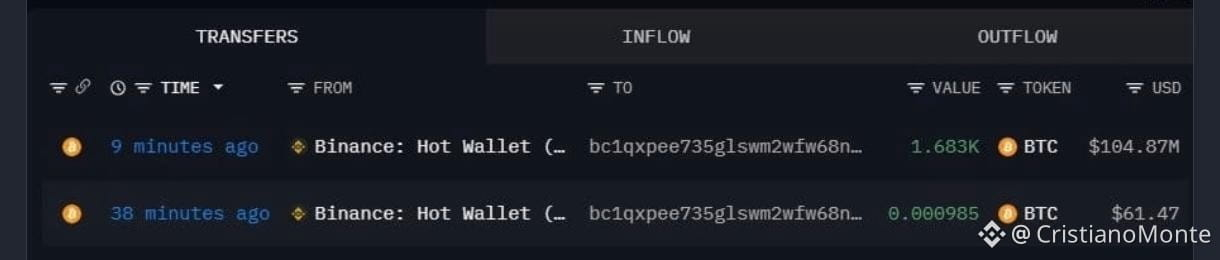
LATEST NEWS: A whale bought $104,870,000 in $BTC on Binance.
Retail traders are selling in a frenzy; the whales are accumulating in a rush.$BTC
{spot}(BTCUSDT)
Panic
LATEST NEWS: A whale bought $104,870,000 in $BTC on Binance.
Retail traders are selling in a frenzy; the whales are accumulating in a rush.$BTC
LATEST NEWS: A whale bought $104,870,000 in $BTC on Binance.
Retail traders are selling in a frenzy; the whales are accumulating in a rush.$BTC
1
73
·
--
Bullish
🚀 $ZEC Long Setup: Compression in the Key Demand Zone!
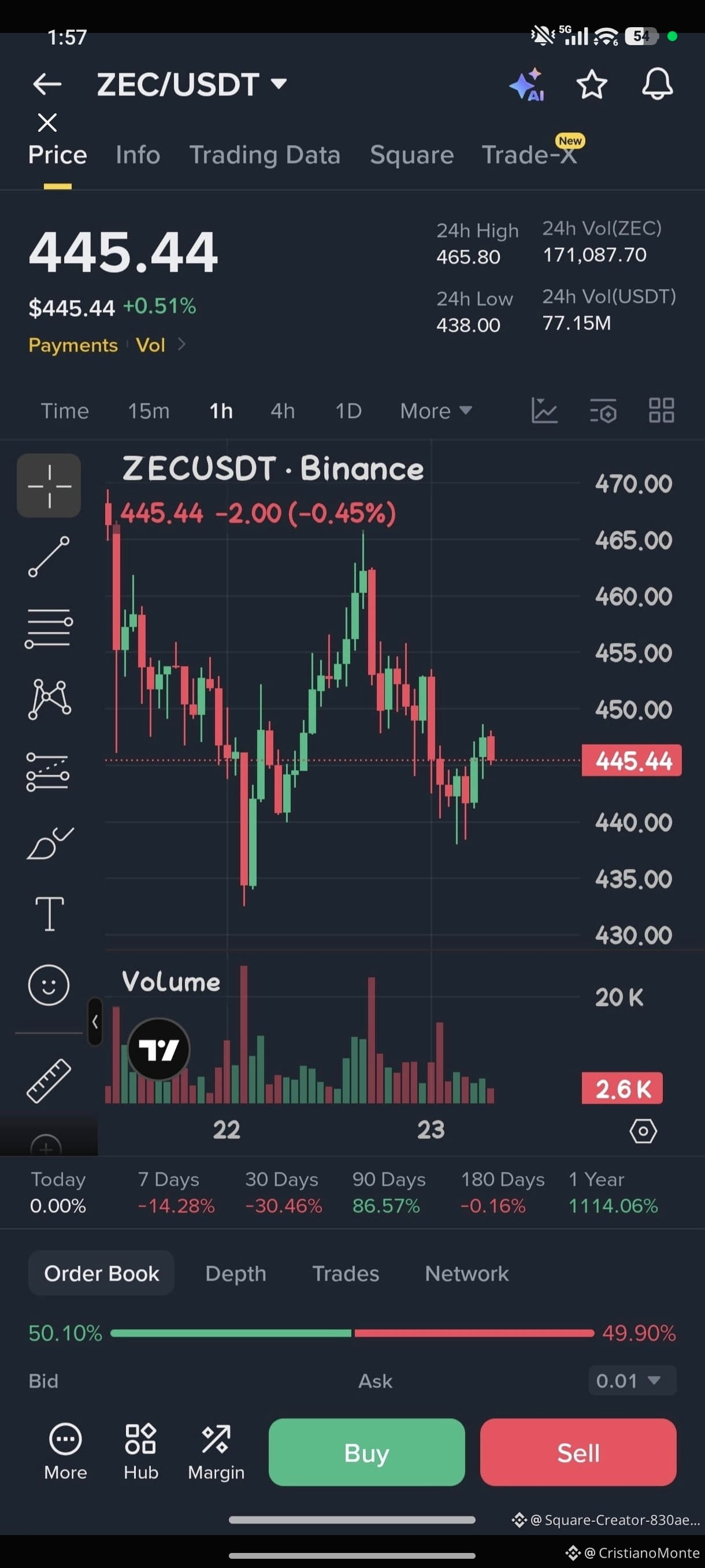
$ZEC is firmly positioned within a high-interest demand zone after a sharp correction from its local highs. As seen in the attached chart, price action is building a tight compression pattern, signaling that market orders are absorbing local selling pressure and gearing up for the next big expansion move.
A decisive breakout, backed by volume, above the horizontal resistance at 466 will act as confirmation of the macro trend, completely shifting the momentum back to the bulls for a powerful recovery.
.#
🎯 Trade Plan:
Buy/Accumulation Zone: 440 – 448
Current Entry Price (EP): 445.57
Target 1 (TP1): 465
Target 2 (TP2): 495
Target 3 (TP3): 545
Stop Loss (SL): 428$
$ZEC
🚀 $ZEC Long Setup: Compression in the Key Demand Zone!
$ZEC is firmly positioned within a high-interest demand zone after a sharp correction from its local highs. As seen in the attached chart, price action is building a tight compression pattern, signaling that market orders are absorbing local selling pressure and gearing up for the next big expansion move.
A decisive breakout, backed by volume, above the horizontal resistance at 466 will act as confirmation of the macro trend, completely shifting the momentum back to the bulls for a powerful recovery.
.#
🎯 Trade Plan:
Buy/Accumulation Zone: 440 – 448
Current Entry Price (EP): 445.57
Target 1 (TP1): 465
Target 2 (TP2): 495
Target 3 (TP3): 545
Stop Loss (SL): 428$
$ZEC
$ZEC is firmly positioned within a high-interest demand zone after a sharp correction from its local highs. As seen in the attached chart, price action is building a tight compression pattern, signaling that market orders are absorbing local selling pressure and gearing up for the next big expansion move.
A decisive breakout, backed by volume, above the horizontal resistance at 466 will act as confirmation of the macro trend, completely shifting the momentum back to the bulls for a powerful recovery.
.#
🎯 Trade Plan:
Buy/Accumulation Zone: 440 – 448
Current Entry Price (EP): 445.57
Target 1 (TP1): 465
Target 2 (TP2): 495
Target 3 (TP3): 545
Stop Loss (SL): 428$
$ZEC
1
213
🔥 $SUI Ready for a Major Move! 💎
📈 Entry Zone: $0.70 – $0.72
🎯 Target 1: $1
🎯 Target 2: $2
🎯 Target 3: $3 🚀
💪 Stay patient.
💪 Trust your strategy.
💪 Let the market do the work.
👀 Will $SUI be one of the biggest winners in the next bull run?
$BTC
🔥 $SUI Ready for a Major Move! 💎
📈 Entry Zone: $0.70 – $0.72
🎯 Target 1: $1
🎯 Target 2: $2
🎯 Target 3: $3 🚀
💪 Stay patient.
💪 Trust your strategy.
💪 Let the market do the work.
👀 Will $SUI be one of the biggest winners in the next bull run?
$BTC
📈 Entry Zone: $0.70 – $0.72
🎯 Target 1: $1
🎯 Target 2: $2
🎯 Target 3: $3 🚀
💪 Stay patient.
💪 Trust your strategy.
💪 Let the market do the work.
👀 Will $SUI be one of the biggest winners in the next bull run?
$BTC
1
126
Article
Regulation of Stablecoins in the USHere’s the rundown of the key points presented in the text about stablecoin regulation in the US:
## 1. Identity Verification in the Banking Standard (CIP)
Stablecoin issuers will be legally classified as 'financial institutions' under the Bank Secrecy Act (BSA). They will need to implement formal Customer Identification Programs (CIP).$TSLAB
* **The Requirement:** Just like when you open a traditional bank account, individuals wanting to mint, redeem, or 'open an account' directly with a stablecoin provider will need to go through a thorough identity verification process.
Regulation of Stablecoins in the US
Here’s the rundown of the key points presented in the text about stablecoin regulation in the US:
## 1. Identity Verification in the Banking Standard (CIP)
Stablecoin issuers will be legally classified as 'financial institutions' under the Bank Secrecy Act (BSA). They will need to implement formal Customer Identification Programs (CIP).$TSLAB
* **The Requirement:** Just like when you open a traditional bank account, individuals wanting to mint, redeem, or 'open an account' directly with a stablecoin provider will need to go through a thorough identity verification process.
## 1. Identity Verification in the Banking Standard (CIP)
Stablecoin issuers will be legally classified as 'financial institutions' under the Bank Secrecy Act (BSA). They will need to implement formal Customer Identification Programs (CIP).$TSLAB
* **The Requirement:** Just like when you open a traditional bank account, individuals wanting to mint, redeem, or 'open an account' directly with a stablecoin provider will need to go through a thorough identity verification process.
110
Winner or Loser?The idea that Iran emerges as the "strategic winner" is a solid take based on **relative gains**. For Tehran, the survival of the regime, the maintenance of its basic military infrastructure, and breaking free from economic isolation (ending the blockade and easing sanctions) weigh much more than the formal renunciation of a nuclear weapon that they have always publicly denied seeking.
However, to get the full picture of this chessboard, it's worth looking at the long-term risks and the nuances that might put this so-called "Iranian victory" into perspective.$BTC
Winner or Loser?
The idea that Iran emerges as the "strategic winner" is a solid take based on **relative gains**. For Tehran, the survival of the regime, the maintenance of its basic military infrastructure, and breaking free from economic isolation (ending the blockade and easing sanctions) weigh much more than the formal renunciation of a nuclear weapon that they have always publicly denied seeking.
However, to get the full picture of this chessboard, it's worth looking at the long-term risks and the nuances that might put this so-called "Iranian victory" into perspective.$BTC
However, to get the full picture of this chessboard, it's worth looking at the long-term risks and the nuances that might put this so-called "Iranian victory" into perspective.$BTC
100
Article
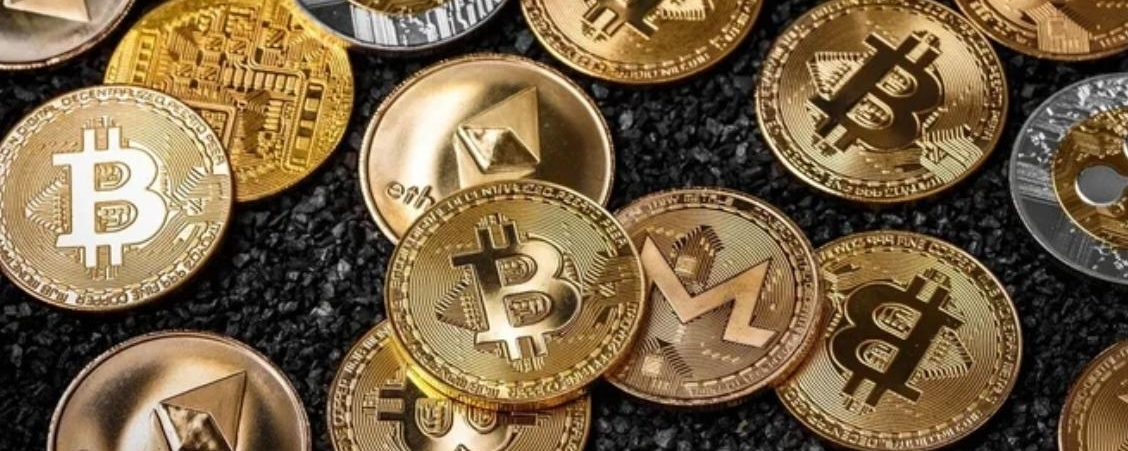
Relief with possible US-Iran dealAll about Cryptos
Most cryptocurrencies are in the green this Monday, the 15th, with the ZEC token from the privacy blockchain ZCash surging 24%.
On the radar, the crypto market is reacting positively to the agreement between the US and Iran to end the conflict that has been ongoing since February 28. The forecast is that the Strait of Hormuz, through which one-fifth of the world's oil passes, will be reopened in up to 30 days.
Dollar trades near a 10-day low with the US-Iran deal
Relief with possible US-Iran deal
All about Cryptos
Most cryptocurrencies are in the green this Monday, the 15th, with the ZEC token from the privacy blockchain ZCash surging 24%.
On the radar, the crypto market is reacting positively to the agreement between the US and Iran to end the conflict that has been ongoing since February 28. The forecast is that the Strait of Hormuz, through which one-fifth of the world's oil passes, will be reopened in up to 30 days.
Dollar trades near a 10-day low with the US-Iran deal
Most cryptocurrencies are in the green this Monday, the 15th, with the ZEC token from the privacy blockchain ZCash surging 24%.
On the radar, the crypto market is reacting positively to the agreement between the US and Iran to end the conflict that has been ongoing since February 28. The forecast is that the Strait of Hormuz, through which one-fifth of the world's oil passes, will be reopened in up to 30 days.
Dollar trades near a 10-day low with the US-Iran deal
105
Log in to explore more content
Join global crypto users on Binance Square
⚡️ Get latest and useful information about crypto.
💬 Trusted by the world’s largest crypto exchange.
👍 Discover real insights from verified creators.
Email / Phone number
Trending Topics
BOJRaisesRatesTo31YearHigh
25,468 views
664 Discussing
Bitcoin Reclaims the Spotlight as Macro Pressure Fails to Break Crypto Demand
Fatima_Tariq
·10 Likes
·5.4k views
BuffettStepsDownAsBerkshireChairman
7,346 views
258 Discussing
XRPExchangeReservesHitSevenYearLow
11,253 views
282 Discussing