

小鼓贝贝
124 Posts

小鼓贝贝
Report
Block User
intp |持续学习中
56 Following
14.3K+ Followers
2.2K+ Liked
Posts
All
Quotes
Live
·
--
Now calling on the big model, everyone is already used to paying by the count or by Token.
But there's a question that hasn't been seriously discussed: what exactly are users buying when they spend their money? Is it just a piece of text, or is it a provable model inference that really happened?
Most APIs only give you the results. As for which model ran in the background, whether there were hidden prompts, or if the reply got modified, the average user has no clue.
This is what I find intriguing about OpenGradient's x402 LLM inference.
It's not just a payment gateway; it ties together payment, model calls, signatures, and on-chain records. Users pay inference fees with $OPG, and each call leaves an auditable record.
Simply put, before you paid for "trusting the platform's answer," now you're trying to buy "the answer plus an execution proof."
This change might feel subtle in casual chats, but it makes a huge difference in corporate auditing, financial brokering, and dispute resolution scenarios.
For instance, if AI generates a risk report for a company and a problem arises later, in the past you could only sift through backend logs, and you wouldn’t even know if the logs were complete. If the calling process has signatures and on-chain records, at least you can confirm which model was used, when it was executed, and whether the results were tampered with.
I believe this is the layer that AI payments need to truly enhance in the future. While low prices are important, for high-risk tasks, being able to prove "the money really bought the specified service" is more critical than saving a few cents.
There are risks too. On-chain records, TEE validation, and payment settlement will increase system complexity, and users may not be willing to bear a higher cost for every casual conversation.
So OpenGradient can’t just talk about verifiability; it also needs to keep fees and user experience feeling natural. Users aren’t going to click five extra confirmations just for a tech principle.
But if it can be as smooth as a regular API while ensuring every paid inference comes with a proof, then AI services won't just be about selling answers; they'll be about selling accountable computational results.
$OPG @OpenGradient #OPG
Now calling on the big model, everyone is already used to paying by the count or by Token.
But there's a question that hasn't been seriously discussed: what exactly are users buying when they spend their money? Is it just a piece of text, or is it a provable model inference that really happened?
Most APIs only give you the results. As for which model ran in the background, whether there were hidden prompts, or if the reply got modified, the average user has no clue.
This is what I find intriguing about OpenGradient's x402 LLM inference.
It's not just a payment gateway; it ties together payment, model calls, signatures, and on-chain records. Users pay inference fees with $OPG , and each call leaves an auditable record.
Simply put, before you paid for "trusting the platform's answer," now you're trying to buy "the answer plus an execution proof."
This change might feel subtle in casual chats, but it makes a huge difference in corporate auditing, financial brokering, and dispute resolution scenarios.
For instance, if AI generates a risk report for a company and a problem arises later, in the past you could only sift through backend logs, and you wouldn’t even know if the logs were complete. If the calling process has signatures and on-chain records, at least you can confirm which model was used, when it was executed, and whether the results were tampered with.
I believe this is the layer that AI payments need to truly enhance in the future. While low prices are important, for high-risk tasks, being able to prove "the money really bought the specified service" is more critical than saving a few cents.
There are risks too. On-chain records, TEE validation, and payment settlement will increase system complexity, and users may not be willing to bear a higher cost for every casual conversation.
So OpenGradient can’t just talk about verifiability; it also needs to keep fees and user experience feeling natural. Users aren’t going to click five extra confirmations just for a tech principle.
But if it can be as smooth as a regular API while ensuring every paid inference comes with a proof, then AI services won't just be about selling answers; they'll be about selling accountable computational results.
$OPG @OpenGradient #OPG
But there's a question that hasn't been seriously discussed: what exactly are users buying when they spend their money? Is it just a piece of text, or is it a provable model inference that really happened?
Most APIs only give you the results. As for which model ran in the background, whether there were hidden prompts, or if the reply got modified, the average user has no clue.
This is what I find intriguing about OpenGradient's x402 LLM inference.
It's not just a payment gateway; it ties together payment, model calls, signatures, and on-chain records. Users pay inference fees with $OPG , and each call leaves an auditable record.
Simply put, before you paid for "trusting the platform's answer," now you're trying to buy "the answer plus an execution proof."
This change might feel subtle in casual chats, but it makes a huge difference in corporate auditing, financial brokering, and dispute resolution scenarios.
For instance, if AI generates a risk report for a company and a problem arises later, in the past you could only sift through backend logs, and you wouldn’t even know if the logs were complete. If the calling process has signatures and on-chain records, at least you can confirm which model was used, when it was executed, and whether the results were tampered with.
I believe this is the layer that AI payments need to truly enhance in the future. While low prices are important, for high-risk tasks, being able to prove "the money really bought the specified service" is more critical than saving a few cents.
There are risks too. On-chain records, TEE validation, and payment settlement will increase system complexity, and users may not be willing to bear a higher cost for every casual conversation.
So OpenGradient can’t just talk about verifiability; it also needs to keep fees and user experience feeling natural. Users aren’t going to click five extra confirmations just for a tech principle.
But if it can be as smooth as a regular API while ensuring every paid inference comes with a proof, then AI services won't just be about selling answers; they'll be about selling accountable computational results.
$OPG @OpenGradient #OPG
234
·
--
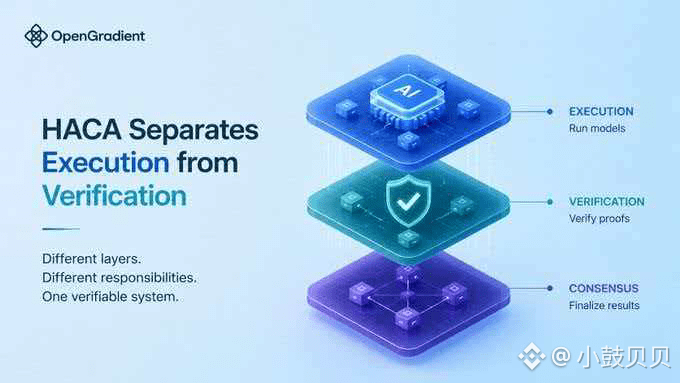
Right now, a lot of AI products have a common issue: they just stop after giving an answer.
You ask it for market insights, risk management conclusions, or project analysis, and it can definitely spit out a long response. But a few days later, if you want to revisit it: what model did it use? What data did it pull? Were the results modified? It's pretty hard to clarify that.
This is actually a rarely discussed contradiction in AI applications: people are increasingly relying on AI for judgments, yet the AI's assessments often lack a "record feel."
I think OpenGradient has valuable potential because it aims to transform AI reasoning from a temporary answer into a traceable computational record.
The browser, verification layer, TEE inference, and on-chain settlement in the project are all addressing this gap. It's not just about the AI giving you answers; each call should have an execution path, verification status, and settlement info behind it.
This may not be obvious in regular chats, but it’s crucial in finance, auditing, compliance, and agent scenarios.
For instance, if an AI agent suggests "reduce the risk exposure of a certain position," you can't just leave a chat screenshot afterward. A more reasonable approach would be to trace the model it called, the input it used, the execution time, and evidence of completion.
It's similar to on-chain transactions. We don't just look at the four words "transfer successful"; we also check the hash, block, status, and amount. In the future, AI calls will align more closely with this logic.
Of course, having a record doesn't guarantee the result is correct. It can only address whether the "process exists and whether it has been modified"; it can't replace human judgment of the conclusion itself.
But I believe this is the foundation for AI to enter serious scenarios. Intelligence without records is only suitable for lightweight use; to truly engage in funds and decision-making processes, AI must leave traceable footprints.
$OPG @OpenGradient #OPG
Right now, a lot of AI products have a common issue: they just stop after giving an answer.
You ask it for market insights, risk management conclusions, or project analysis, and it can definitely spit out a long response. But a few days later, if you want to revisit it: what model did it use? What data did it pull? Were the results modified? It's pretty hard to clarify that.
This is actually a rarely discussed contradiction in AI applications: people are increasingly relying on AI for judgments, yet the AI's assessments often lack a "record feel."
I think OpenGradient has valuable potential because it aims to transform AI reasoning from a temporary answer into a traceable computational record.
The browser, verification layer, TEE inference, and on-chain settlement in the project are all addressing this gap. It's not just about the AI giving you answers; each call should have an execution path, verification status, and settlement info behind it.
This may not be obvious in regular chats, but it’s crucial in finance, auditing, compliance, and agent scenarios.
For instance, if an AI agent suggests "reduce the risk exposure of a certain position," you can't just leave a chat screenshot afterward. A more reasonable approach would be to trace the model it called, the input it used, the execution time, and evidence of completion.
It's similar to on-chain transactions. We don't just look at the four words "transfer successful"; we also check the hash, block, status, and amount. In the future, AI calls will align more closely with this logic.
Of course, having a record doesn't guarantee the result is correct. It can only address whether the "process exists and whether it has been modified"; it can't replace human judgment of the conclusion itself.
But I believe this is the foundation for AI to enter serious scenarios. Intelligence without records is only suitable for lightweight use; to truly engage in funds and decision-making processes, AI must leave traceable footprints.
$OPG @OpenGradient #OPG
You ask it for market insights, risk management conclusions, or project analysis, and it can definitely spit out a long response. But a few days later, if you want to revisit it: what model did it use? What data did it pull? Were the results modified? It's pretty hard to clarify that.
This is actually a rarely discussed contradiction in AI applications: people are increasingly relying on AI for judgments, yet the AI's assessments often lack a "record feel."
I think OpenGradient has valuable potential because it aims to transform AI reasoning from a temporary answer into a traceable computational record.
The browser, verification layer, TEE inference, and on-chain settlement in the project are all addressing this gap. It's not just about the AI giving you answers; each call should have an execution path, verification status, and settlement info behind it.
This may not be obvious in regular chats, but it’s crucial in finance, auditing, compliance, and agent scenarios.
For instance, if an AI agent suggests "reduce the risk exposure of a certain position," you can't just leave a chat screenshot afterward. A more reasonable approach would be to trace the model it called, the input it used, the execution time, and evidence of completion.
It's similar to on-chain transactions. We don't just look at the four words "transfer successful"; we also check the hash, block, status, and amount. In the future, AI calls will align more closely with this logic.
Of course, having a record doesn't guarantee the result is correct. It can only address whether the "process exists and whether it has been modified"; it can't replace human judgment of the conclusion itself.
But I believe this is the foundation for AI to enter serious scenarios. Intelligence without records is only suitable for lightweight use; to truly engage in funds and decision-making processes, AI must leave traceable footprints.
$OPG @OpenGradient #OPG
130
·
--
I think the biggest issue with many AI applications right now isn't that they can't be used, but rather that after using them, you can't make heads or tails of it.
You ask it a question, it gives you an answer. The surface process ends there, but if you really dig deeper: which model was called just now? When was it called? Was there any tampering in between? Is there proof? Most platforms basically only let you trust the backend logs.
To put it bluntly, AI is too much like a 'black box customer service' right now. Whatever it says, you just have to take it at face value.
I think OpenGradient is quite practical; it doesn’t just let AI respond, but aims to leave behind something akin to an on-chain transaction receipt for every inference.
Just like after we make a transfer, we can check the hash, the time, and the status, AI calls should also allow us to trace execution records. Especially in the future when AI agents are involved in funds, risk control, and review scenarios, having just the results won’t cut it; we need to be able to look back at the process.
Its web browser, verification layer, and TEE proof—all these things come together to accomplish this: turning AI inference from backend logs into a verifiable computation record.
I think this is crucial. Because in the future, users won't just ask 'Is the AI accurate?' but will also ask 'How can you prove it executed that way at that time?'
Of course, having a receipt doesn't mean the model is smart, nor does it mean the judgment is necessarily correct. But at least if something goes wrong, people won't just argue; they can trace back through the records.
This is where OpenGradient stands out. It’s not just creating an AI entry point; it’s filling in the layer that’s most lacking in AI infrastructure: traceability.
The more AI gets involved in the real world, the less we can rely on just saying 'system generated.' Where evidence needs to be left, it must be documented.
$OPG @OpenGradient #OPG
I think the biggest issue with many AI applications right now isn't that they can't be used, but rather that after using them, you can't make heads or tails of it.
You ask it a question, it gives you an answer. The surface process ends there, but if you really dig deeper: which model was called just now? When was it called? Was there any tampering in between? Is there proof? Most platforms basically only let you trust the backend logs.
To put it bluntly, AI is too much like a 'black box customer service' right now. Whatever it says, you just have to take it at face value.
I think OpenGradient is quite practical; it doesn’t just let AI respond, but aims to leave behind something akin to an on-chain transaction receipt for every inference.
Just like after we make a transfer, we can check the hash, the time, and the status, AI calls should also allow us to trace execution records. Especially in the future when AI agents are involved in funds, risk control, and review scenarios, having just the results won’t cut it; we need to be able to look back at the process.
Its web browser, verification layer, and TEE proof—all these things come together to accomplish this: turning AI inference from backend logs into a verifiable computation record.
I think this is crucial. Because in the future, users won't just ask 'Is the AI accurate?' but will also ask 'How can you prove it executed that way at that time?'
Of course, having a receipt doesn't mean the model is smart, nor does it mean the judgment is necessarily correct. But at least if something goes wrong, people won't just argue; they can trace back through the records.
This is where OpenGradient stands out. It’s not just creating an AI entry point; it’s filling in the layer that’s most lacking in AI infrastructure: traceability.
The more AI gets involved in the real world, the less we can rely on just saying 'system generated.' Where evidence needs to be left, it must be documented.
$OPG @OpenGradient #OPG
You ask it a question, it gives you an answer. The surface process ends there, but if you really dig deeper: which model was called just now? When was it called? Was there any tampering in between? Is there proof? Most platforms basically only let you trust the backend logs.
To put it bluntly, AI is too much like a 'black box customer service' right now. Whatever it says, you just have to take it at face value.
I think OpenGradient is quite practical; it doesn’t just let AI respond, but aims to leave behind something akin to an on-chain transaction receipt for every inference.
Just like after we make a transfer, we can check the hash, the time, and the status, AI calls should also allow us to trace execution records. Especially in the future when AI agents are involved in funds, risk control, and review scenarios, having just the results won’t cut it; we need to be able to look back at the process.
Its web browser, verification layer, and TEE proof—all these things come together to accomplish this: turning AI inference from backend logs into a verifiable computation record.
I think this is crucial. Because in the future, users won't just ask 'Is the AI accurate?' but will also ask 'How can you prove it executed that way at that time?'
Of course, having a receipt doesn't mean the model is smart, nor does it mean the judgment is necessarily correct. But at least if something goes wrong, people won't just argue; they can trace back through the records.
This is where OpenGradient stands out. It’s not just creating an AI entry point; it’s filling in the layer that’s most lacking in AI infrastructure: traceability.
The more AI gets involved in the real world, the less we can rely on just saying 'system generated.' Where evidence needs to be left, it must be documented.
$OPG @OpenGradient #OPG
3
2
159
·
--
I've noticed a lot of AI learning tools have a common issue: you ask it a question, and it can explain it pretty clearly; but when you ask again a few days later, it acts like it's meeting you for the first time.
It can't remember where the kid struggles, what they got wrong last time, whether it was carelessness or a lack of understanding. Parents have to keep going over the test papers, mistakes, and study habits over and over again.
This highlights a rarely discussed paradox in AI learning: learning is supposed to be a long-term process, but many AIs excel only at providing single-instance answers.
In my view, a truly useful learning assistant shouldn't just be able to "solve problems" but should be able to track a person's learning progress over time. It should know that the kid isn't bad at all math but keeps messing up on word problems; they're not poor in English, but they consistently overlook details in reading comprehension.
OpenGradient's MemSync fits this scenario quite well. It can extract key information from conversations, documents, and web resources and turn it into searchable long-term memory. In a learning context, this means accumulating mistakes, review records, teacher feedback, and the child's own questions.
The workflow can go like this: Parents take photos of recent mistakes and organize them into text, then let the learning assistant analyze the causes of the errors; MemSync logs long-term issues like "missing conditions," "slow calculations," and "weak essay openings." The next time a review plan is made, the AI doesn't start from scratch but offers suggestions based on previous records.
On the access side, regular users can try out the MemSync WebApp or extension; developers can also integrate memory capabilities into their own learning applications via REST API.
Of course, AI can't replace teachers and parents. It can help identify patterns, but a child's emotions, habits, and execution still need real human presence.
But I really support this direction. A good learning AI isn't just about making noise every time; it's about sticking around long enough to really understand where you're stuck.
$OPG @OpenGradient #OPG
I've noticed a lot of AI learning tools have a common issue: you ask it a question, and it can explain it pretty clearly; but when you ask again a few days later, it acts like it's meeting you for the first time.
It can't remember where the kid struggles, what they got wrong last time, whether it was carelessness or a lack of understanding. Parents have to keep going over the test papers, mistakes, and study habits over and over again.
This highlights a rarely discussed paradox in AI learning: learning is supposed to be a long-term process, but many AIs excel only at providing single-instance answers.
In my view, a truly useful learning assistant shouldn't just be able to "solve problems" but should be able to track a person's learning progress over time. It should know that the kid isn't bad at all math but keeps messing up on word problems; they're not poor in English, but they consistently overlook details in reading comprehension.
OpenGradient's MemSync fits this scenario quite well. It can extract key information from conversations, documents, and web resources and turn it into searchable long-term memory. In a learning context, this means accumulating mistakes, review records, teacher feedback, and the child's own questions.
The workflow can go like this: Parents take photos of recent mistakes and organize them into text, then let the learning assistant analyze the causes of the errors; MemSync logs long-term issues like "missing conditions," "slow calculations," and "weak essay openings." The next time a review plan is made, the AI doesn't start from scratch but offers suggestions based on previous records.
On the access side, regular users can try out the MemSync WebApp or extension; developers can also integrate memory capabilities into their own learning applications via REST API.
Of course, AI can't replace teachers and parents. It can help identify patterns, but a child's emotions, habits, and execution still need real human presence.
But I really support this direction. A good learning AI isn't just about making noise every time; it's about sticking around long enough to really understand where you're stuck.
$OPG @OpenGradient #OPG
It can't remember where the kid struggles, what they got wrong last time, whether it was carelessness or a lack of understanding. Parents have to keep going over the test papers, mistakes, and study habits over and over again.
This highlights a rarely discussed paradox in AI learning: learning is supposed to be a long-term process, but many AIs excel only at providing single-instance answers.
In my view, a truly useful learning assistant shouldn't just be able to "solve problems" but should be able to track a person's learning progress over time. It should know that the kid isn't bad at all math but keeps messing up on word problems; they're not poor in English, but they consistently overlook details in reading comprehension.
OpenGradient's MemSync fits this scenario quite well. It can extract key information from conversations, documents, and web resources and turn it into searchable long-term memory. In a learning context, this means accumulating mistakes, review records, teacher feedback, and the child's own questions.
The workflow can go like this: Parents take photos of recent mistakes and organize them into text, then let the learning assistant analyze the causes of the errors; MemSync logs long-term issues like "missing conditions," "slow calculations," and "weak essay openings." The next time a review plan is made, the AI doesn't start from scratch but offers suggestions based on previous records.
On the access side, regular users can try out the MemSync WebApp or extension; developers can also integrate memory capabilities into their own learning applications via REST API.
Of course, AI can't replace teachers and parents. It can help identify patterns, but a child's emotions, habits, and execution still need real human presence.
But I really support this direction. A good learning AI isn't just about making noise every time; it's about sticking around long enough to really understand where you're stuck.
$OPG @OpenGradient #OPG
145
·
--
Back in the day, I used AI to organize a niche, and the most frustrating part wasn't its inability to analyze, but the fact that every time I started a new chat, I had to feed it the background info all over again.
Websites, tweets, long articles, meeting notes—just throw it all in, and the context gets messier; but if I don’t, it’s like it forgets everything we talked about just days before.
This is actually a contradiction many AI applications face: the model can read a lot at once, but what sticks is minimal. The so-called 'long context' often just means pasting the info again, not having a truly reusable memory system.
I think the real utility of OpenGradient's MemSync is not just having AI remember 'what you like,' but creating a long-term, updatable research database.
For instance, if I'm tracking a sector, I can hand over website content, project introductions, social media accounts, and previous chat logs to MemSync. It will automatically extract important info and differentiate between long-term facts and temporary events.
Next time I ask, 'What changes has this team made recently?' I don’t need to shove all the info back into the model; it will pull out the relevant content from memory first and then let the AI analyze it further.
This experience is crucial because when doing research, the last thing you want is to have too much info and lose sight of the key points.
Developers can access it via REST API, and you can also try out the MemSync app to experience memory extraction, search, and user data generation. For those creating research assistants, customer service, or long-term companion apps, the entry point isn’t too complex.
Of course, the memory system can make mistakes. If temporary messages are mistaken for long-term facts, subsequent judgments can go off track, so regular updates, clean-ups, and manual checks are essential.
But I agree with its direction in solving problems: good AI doesn’t memorize all the data; it just retrieves that one useful piece of info when needed.
$OPG @OpenGradient #OPG
Back in the day, I used AI to organize a niche, and the most frustrating part wasn't its inability to analyze, but the fact that every time I started a new chat, I had to feed it the background info all over again.
Websites, tweets, long articles, meeting notes—just throw it all in, and the context gets messier; but if I don’t, it’s like it forgets everything we talked about just days before.
This is actually a contradiction many AI applications face: the model can read a lot at once, but what sticks is minimal. The so-called 'long context' often just means pasting the info again, not having a truly reusable memory system.
I think the real utility of OpenGradient's MemSync is not just having AI remember 'what you like,' but creating a long-term, updatable research database.
For instance, if I'm tracking a sector, I can hand over website content, project introductions, social media accounts, and previous chat logs to MemSync. It will automatically extract important info and differentiate between long-term facts and temporary events.
Next time I ask, 'What changes has this team made recently?' I don’t need to shove all the info back into the model; it will pull out the relevant content from memory first and then let the AI analyze it further.
This experience is crucial because when doing research, the last thing you want is to have too much info and lose sight of the key points.
Developers can access it via REST API, and you can also try out the MemSync app to experience memory extraction, search, and user data generation. For those creating research assistants, customer service, or long-term companion apps, the entry point isn’t too complex.
Of course, the memory system can make mistakes. If temporary messages are mistaken for long-term facts, subsequent judgments can go off track, so regular updates, clean-ups, and manual checks are essential.
But I agree with its direction in solving problems: good AI doesn’t memorize all the data; it just retrieves that one useful piece of info when needed.
$OPG @OpenGradient #OPG
Websites, tweets, long articles, meeting notes—just throw it all in, and the context gets messier; but if I don’t, it’s like it forgets everything we talked about just days before.
This is actually a contradiction many AI applications face: the model can read a lot at once, but what sticks is minimal. The so-called 'long context' often just means pasting the info again, not having a truly reusable memory system.
I think the real utility of OpenGradient's MemSync is not just having AI remember 'what you like,' but creating a long-term, updatable research database.
For instance, if I'm tracking a sector, I can hand over website content, project introductions, social media accounts, and previous chat logs to MemSync. It will automatically extract important info and differentiate between long-term facts and temporary events.
Next time I ask, 'What changes has this team made recently?' I don’t need to shove all the info back into the model; it will pull out the relevant content from memory first and then let the AI analyze it further.
This experience is crucial because when doing research, the last thing you want is to have too much info and lose sight of the key points.
Developers can access it via REST API, and you can also try out the MemSync app to experience memory extraction, search, and user data generation. For those creating research assistants, customer service, or long-term companion apps, the entry point isn’t too complex.
Of course, the memory system can make mistakes. If temporary messages are mistaken for long-term facts, subsequent judgments can go off track, so regular updates, clean-ups, and manual checks are essential.
But I agree with its direction in solving problems: good AI doesn’t memorize all the data; it just retrieves that one useful piece of info when needed.
$OPG @OpenGradient #OPG
134
·
--
A lot of folks think releasing a model is a walk in the park: train it up, upload the files, write a brief, and call it a day.
But anyone who's been in the game knows the real headaches often kick in after the launch.
Data updates? Time to retrain; parameter tweaks? Gotta roll out a new version; user feedback says performance dropped? Now you’ve gotta trace back to see what changed. Here’s a common dilemma that gets overlooked: everyone wants their models to update quickly, but they're also scared that a single update could wreck the features that were working fine before.
So I've always felt that model hosting can't just be a cloud drive. A truly useful platform should at least let developers know what’s changed in each version, who’s still rocking the old versions, and whether the new versions can be tested before going live.
OpenGradient's Model Hub really nails this, acting more like a model release system.
You can set up an independent repository for a model first, then release different versions like v1.00, v1.01, v2.00, and so on. Each version can have its model files, configurations, and documentation stored, rather than just overwriting the old model with a fresh upload.
The workflow is pretty smooth too.
A developer trains a risk prediction model, exports it in ONNX format, creates a repository in the Model Hub, and uploads v1.00. Then they can directly test it in the web Playground, making sure the inputs and outputs look solid before locking in that version for their applications.
Later, when training data gets updated, they can push out v1.01 with clear notes on the changes, allowing a portion of applications to test it first. The old version remains intact, so no product using it goes down just because of one update. The team can also integrate the model upload into their training or release process using the Python SDK and CLI.
Of course, no matter how slick the version numbers are, that doesn't guarantee the model's reliability. ONNX conversion can introduce discrepancies, and new data might degrade performance, so ultimately it’s all about testing and real-world results.
But at least it addresses a very real issue: models aren't just one-off files; they’re software that needs ongoing maintenance. Being able to clearly communicate each change is often way more crucial than making a big splash on the initial release.
$OPG @OpenGradient #OPG
A lot of folks think releasing a model is a walk in the park: train it up, upload the files, write a brief, and call it a day.
But anyone who's been in the game knows the real headaches often kick in after the launch.
Data updates? Time to retrain; parameter tweaks? Gotta roll out a new version; user feedback says performance dropped? Now you’ve gotta trace back to see what changed. Here’s a common dilemma that gets overlooked: everyone wants their models to update quickly, but they're also scared that a single update could wreck the features that were working fine before.
So I've always felt that model hosting can't just be a cloud drive. A truly useful platform should at least let developers know what’s changed in each version, who’s still rocking the old versions, and whether the new versions can be tested before going live.
OpenGradient's Model Hub really nails this, acting more like a model release system.
You can set up an independent repository for a model first, then release different versions like v1.00, v1.01, v2.00, and so on. Each version can have its model files, configurations, and documentation stored, rather than just overwriting the old model with a fresh upload.
The workflow is pretty smooth too.
A developer trains a risk prediction model, exports it in ONNX format, creates a repository in the Model Hub, and uploads v1.00. Then they can directly test it in the web Playground, making sure the inputs and outputs look solid before locking in that version for their applications.
Later, when training data gets updated, they can push out v1.01 with clear notes on the changes, allowing a portion of applications to test it first. The old version remains intact, so no product using it goes down just because of one update. The team can also integrate the model upload into their training or release process using the Python SDK and CLI.
Of course, no matter how slick the version numbers are, that doesn't guarantee the model's reliability. ONNX conversion can introduce discrepancies, and new data might degrade performance, so ultimately it’s all about testing and real-world results.
But at least it addresses a very real issue: models aren't just one-off files; they’re software that needs ongoing maintenance. Being able to clearly communicate each change is often way more crucial than making a big splash on the initial release.
$OPG @OpenGradient #OPG
But anyone who's been in the game knows the real headaches often kick in after the launch.
Data updates? Time to retrain; parameter tweaks? Gotta roll out a new version; user feedback says performance dropped? Now you’ve gotta trace back to see what changed. Here’s a common dilemma that gets overlooked: everyone wants their models to update quickly, but they're also scared that a single update could wreck the features that were working fine before.
So I've always felt that model hosting can't just be a cloud drive. A truly useful platform should at least let developers know what’s changed in each version, who’s still rocking the old versions, and whether the new versions can be tested before going live.
OpenGradient's Model Hub really nails this, acting more like a model release system.
You can set up an independent repository for a model first, then release different versions like v1.00, v1.01, v2.00, and so on. Each version can have its model files, configurations, and documentation stored, rather than just overwriting the old model with a fresh upload.
The workflow is pretty smooth too.
A developer trains a risk prediction model, exports it in ONNX format, creates a repository in the Model Hub, and uploads v1.00. Then they can directly test it in the web Playground, making sure the inputs and outputs look solid before locking in that version for their applications.
Later, when training data gets updated, they can push out v1.01 with clear notes on the changes, allowing a portion of applications to test it first. The old version remains intact, so no product using it goes down just because of one update. The team can also integrate the model upload into their training or release process using the Python SDK and CLI.
Of course, no matter how slick the version numbers are, that doesn't guarantee the model's reliability. ONNX conversion can introduce discrepancies, and new data might degrade performance, so ultimately it’s all about testing and real-world results.
But at least it addresses a very real issue: models aren't just one-off files; they’re software that needs ongoing maintenance. Being able to clearly communicate each change is often way more crucial than making a big splash on the initial release.
$OPG @OpenGradient #OPG
183
·
--
AI messing up isn't the end of the world, but the real headache comes when things go south and everyone starts pointing fingers.
The devs say the model responded that way, the model provider claims there were no issues on their end, and the agency running it suggests it might've been a user input error. After a full circle, all that’s left are some regular logs, and whether those logs are complete or tampered with, no one can prove.
In a casual chat, this might just lead to a bad experience, but if AI is involved in transactions, approvals, risk management, or medical decisions, saying 'system error' just won’t cut it.
This is why I find OpenGradient quite realistic: it aims to leave a traceable evidence chain for each inference.
Model calls will be signed, proofs will be anchored on the chain, and external data can also have source records via data nodes. If disputes arise later, it’s not just folks recalling from memory, but we can check which model was called, what input was used, when the results came back, and whether the execution path was altered.
I believe this is closer to actual business applications than merely chasing after 'smarter AI'. Whether businesses are willing to hand over critical processes to AI depends not just on accuracy but also on whether we can backtrack when issues pop up.
Of course, having records doesn’t mean responsibility is automatically clear. Even if it’s proven the model executed as intended, there might be design flaws in the prompts or issues with the raw data itself. On-chain evidence can tell you what happened but won’t necessarily clarify who should foot the bill.
So, OpenGradient still needs to align with clearer permissions, responsibilities, and dispute resolution mechanisms. We can’t wrap 'auditable' in 'it'll never go wrong'.
But at least it tackles the first step: making AI's critical actions no longer just sit in some company’s backend.
In the future, high-value AI services might compete not on who talks the best but on who can clearly explain the entire situation when problems arise.
$OPG @OpenGradient #OPG
AI messing up isn't the end of the world, but the real headache comes when things go south and everyone starts pointing fingers.
The devs say the model responded that way, the model provider claims there were no issues on their end, and the agency running it suggests it might've been a user input error. After a full circle, all that’s left are some regular logs, and whether those logs are complete or tampered with, no one can prove.
In a casual chat, this might just lead to a bad experience, but if AI is involved in transactions, approvals, risk management, or medical decisions, saying 'system error' just won’t cut it.
This is why I find OpenGradient quite realistic: it aims to leave a traceable evidence chain for each inference.
Model calls will be signed, proofs will be anchored on the chain, and external data can also have source records via data nodes. If disputes arise later, it’s not just folks recalling from memory, but we can check which model was called, what input was used, when the results came back, and whether the execution path was altered.
I believe this is closer to actual business applications than merely chasing after 'smarter AI'. Whether businesses are willing to hand over critical processes to AI depends not just on accuracy but also on whether we can backtrack when issues pop up.
Of course, having records doesn’t mean responsibility is automatically clear. Even if it’s proven the model executed as intended, there might be design flaws in the prompts or issues with the raw data itself. On-chain evidence can tell you what happened but won’t necessarily clarify who should foot the bill.
So, OpenGradient still needs to align with clearer permissions, responsibilities, and dispute resolution mechanisms. We can’t wrap 'auditable' in 'it'll never go wrong'.
But at least it tackles the first step: making AI's critical actions no longer just sit in some company’s backend.
In the future, high-value AI services might compete not on who talks the best but on who can clearly explain the entire situation when problems arise.
$OPG @OpenGradient #OPG
The devs say the model responded that way, the model provider claims there were no issues on their end, and the agency running it suggests it might've been a user input error. After a full circle, all that’s left are some regular logs, and whether those logs are complete or tampered with, no one can prove.
In a casual chat, this might just lead to a bad experience, but if AI is involved in transactions, approvals, risk management, or medical decisions, saying 'system error' just won’t cut it.
This is why I find OpenGradient quite realistic: it aims to leave a traceable evidence chain for each inference.
Model calls will be signed, proofs will be anchored on the chain, and external data can also have source records via data nodes. If disputes arise later, it’s not just folks recalling from memory, but we can check which model was called, what input was used, when the results came back, and whether the execution path was altered.
I believe this is closer to actual business applications than merely chasing after 'smarter AI'. Whether businesses are willing to hand over critical processes to AI depends not just on accuracy but also on whether we can backtrack when issues pop up.
Of course, having records doesn’t mean responsibility is automatically clear. Even if it’s proven the model executed as intended, there might be design flaws in the prompts or issues with the raw data itself. On-chain evidence can tell you what happened but won’t necessarily clarify who should foot the bill.
So, OpenGradient still needs to align with clearer permissions, responsibilities, and dispute resolution mechanisms. We can’t wrap 'auditable' in 'it'll never go wrong'.
But at least it tackles the first step: making AI's critical actions no longer just sit in some company’s backend.
In the future, high-value AI services might compete not on who talks the best but on who can clearly explain the entire situation when problems arise.
$OPG @OpenGradient #OPG
136
·
--
I’m starting to feel like Bedrock isn’t just a yield product, but rather a whole yield system.
I was chatting with a buddy from traditional finance yesterday.
He said something that stuck with me.
He said, "What’s really valuable is never the product, but the system."
I didn’t quite get it at the time.
Later on my way home, it hit me thinking about Bedrock.
A lot of folks still see Bedrock as just a yield product. There’s assets, there’s yields, there’s Vaults, and then the story ends there.
But I’m increasingly convinced that what’s going on behind the scenes is more than just individual products.
If you take a closer look, you’ll see that uniETH manages asset entry into the system, uniBTC boosts BTC utilization, Vault handles yield management, BRclaw provides info clarification, and veBR is all about long-term participation and governance.
When you look at each of these separately, they seem like just functions.
But when they’re all connected, it looks more like a complete yield ecosystem.
This reminds me of how smartphones evolved.
Back in the day, you needed a camera to take pictures, an MP3 player to listen to music, and a GPS for navigation. Each function had its own device.
Then smartphones came along.
They didn’t just do one function; they integrated all those capabilities into a single system.
I think Bedrock is kind of like that now.
In the future, users won’t just come here for a specific yield pool or a particular asset. More often, they might be here to manage their assets, yields, risks, and long-term relationships.
At that point, its value won’t just be about product value, but rather system value.
Of course, many things are still in the development stage, and we’ll need time to see how far it can go.
But at least in terms of direction, I think it’s becoming clearer.
Good products solve one problem.
Good systems solve a class of problems.
And what’s really worth watching about Bedrock might not be what new features it launches, but whether it can slowly connect those features into a complete ecosystem.
$BR #Bedrock @Bedrock
I’m starting to feel like Bedrock isn’t just a yield product, but rather a whole yield system.
I was chatting with a buddy from traditional finance yesterday.
He said something that stuck with me.
He said, "What’s really valuable is never the product, but the system."
I didn’t quite get it at the time.
Later on my way home, it hit me thinking about Bedrock.
A lot of folks still see Bedrock as just a yield product. There’s assets, there’s yields, there’s Vaults, and then the story ends there.
But I’m increasingly convinced that what’s going on behind the scenes is more than just individual products.
If you take a closer look, you’ll see that uniETH manages asset entry into the system, uniBTC boosts BTC utilization, Vault handles yield management, BRclaw provides info clarification, and veBR is all about long-term participation and governance.
When you look at each of these separately, they seem like just functions.
But when they’re all connected, it looks more like a complete yield ecosystem.
This reminds me of how smartphones evolved.
Back in the day, you needed a camera to take pictures, an MP3 player to listen to music, and a GPS for navigation. Each function had its own device.
Then smartphones came along.
They didn’t just do one function; they integrated all those capabilities into a single system.
I think Bedrock is kind of like that now.
In the future, users won’t just come here for a specific yield pool or a particular asset. More often, they might be here to manage their assets, yields, risks, and long-term relationships.
At that point, its value won’t just be about product value, but rather system value.
Of course, many things are still in the development stage, and we’ll need time to see how far it can go.
But at least in terms of direction, I think it’s becoming clearer.
Good products solve one problem.
Good systems solve a class of problems.
And what’s really worth watching about Bedrock might not be what new features it launches, but whether it can slowly connect those features into a complete ecosystem.
$BR #Bedrock @Bedrock
I was chatting with a buddy from traditional finance yesterday.
He said something that stuck with me.
He said, "What’s really valuable is never the product, but the system."
I didn’t quite get it at the time.
Later on my way home, it hit me thinking about Bedrock.
A lot of folks still see Bedrock as just a yield product. There’s assets, there’s yields, there’s Vaults, and then the story ends there.
But I’m increasingly convinced that what’s going on behind the scenes is more than just individual products.
If you take a closer look, you’ll see that uniETH manages asset entry into the system, uniBTC boosts BTC utilization, Vault handles yield management, BRclaw provides info clarification, and veBR is all about long-term participation and governance.
When you look at each of these separately, they seem like just functions.
But when they’re all connected, it looks more like a complete yield ecosystem.
This reminds me of how smartphones evolved.
Back in the day, you needed a camera to take pictures, an MP3 player to listen to music, and a GPS for navigation. Each function had its own device.
Then smartphones came along.
They didn’t just do one function; they integrated all those capabilities into a single system.
I think Bedrock is kind of like that now.
In the future, users won’t just come here for a specific yield pool or a particular asset. More often, they might be here to manage their assets, yields, risks, and long-term relationships.
At that point, its value won’t just be about product value, but rather system value.
Of course, many things are still in the development stage, and we’ll need time to see how far it can go.
But at least in terms of direction, I think it’s becoming clearer.
Good products solve one problem.
Good systems solve a class of problems.
And what’s really worth watching about Bedrock might not be what new features it launches, but whether it can slowly connect those features into a complete ecosystem.
$BR #Bedrock @Bedrock
179
·
--
Not long ago, someone in the group shared a screenshot.
A wallet just received a reward and then sold everything within minutes. Someone joked below, saying: "Now that's true on-chain efficiency."
Everyone had a good laugh.
But after the laughter, I suddenly felt it was a bit of a reality check.
Because nowadays, fewer and fewer people are willing to wait it out long-term.
Most folks are focused on whether prices are up today, or if they'll double tomorrow. As for what the ecosystem will look like in a year, that's rarely discussed.
So when I later researched veBR, my focus wasn't so much on locking tokens, but rather on the logic behind it.
I believe that veBR essentially filters not just funds, but time.
A user who comes in today and leaves tomorrow doesn’t have much of a connection to the ecosystem. But those who are willing to stick around long-term are different; they will vote, provide feedback, suggest improvements, and genuinely care about the future of the ecosystem.
With Bedrock implementing veBR, I think the core lies right there.
It's not just about locking up tokens, but about giving more weight to long-term participants.
This logic is quite similar to shareholders in a company.
Short-term traders care about how much the stock price has risen today, while long-term shareholders are concerned about how the company will develop over the next few years. Both roles exist, but it’s often the latter that truly drives company growth.
So I believe that in the future, when observing veBR, the focus shouldn’t just be on how large the locked amount is, but rather on whether it can gradually cultivate a culture of long-term governance.
Allowing those who genuinely want to grow with the ecosystem to have a greater voice.
Because as any ecosystem matures, what it always lacks is not traffic, but people willing to stick around.
Hype can bring attention.
Long-term participants can set the direction.
This might be the most valuable aspect of veBR.
$BR #Bedrock @Bedrock
Not long ago, someone in the group shared a screenshot.
A wallet just received a reward and then sold everything within minutes. Someone joked below, saying: "Now that's true on-chain efficiency."
Everyone had a good laugh.
But after the laughter, I suddenly felt it was a bit of a reality check.
Because nowadays, fewer and fewer people are willing to wait it out long-term.
Most folks are focused on whether prices are up today, or if they'll double tomorrow. As for what the ecosystem will look like in a year, that's rarely discussed.
So when I later researched veBR, my focus wasn't so much on locking tokens, but rather on the logic behind it.
I believe that veBR essentially filters not just funds, but time.
A user who comes in today and leaves tomorrow doesn’t have much of a connection to the ecosystem. But those who are willing to stick around long-term are different; they will vote, provide feedback, suggest improvements, and genuinely care about the future of the ecosystem.
With Bedrock implementing veBR, I think the core lies right there.
It's not just about locking up tokens, but about giving more weight to long-term participants.
This logic is quite similar to shareholders in a company.
Short-term traders care about how much the stock price has risen today, while long-term shareholders are concerned about how the company will develop over the next few years. Both roles exist, but it’s often the latter that truly drives company growth.
So I believe that in the future, when observing veBR, the focus shouldn’t just be on how large the locked amount is, but rather on whether it can gradually cultivate a culture of long-term governance.
Allowing those who genuinely want to grow with the ecosystem to have a greater voice.
Because as any ecosystem matures, what it always lacks is not traffic, but people willing to stick around.
Hype can bring attention.
Long-term participants can set the direction.
This might be the most valuable aspect of veBR.
$BR #Bedrock @Bedrock
A wallet just received a reward and then sold everything within minutes. Someone joked below, saying: "Now that's true on-chain efficiency."
Everyone had a good laugh.
But after the laughter, I suddenly felt it was a bit of a reality check.
Because nowadays, fewer and fewer people are willing to wait it out long-term.
Most folks are focused on whether prices are up today, or if they'll double tomorrow. As for what the ecosystem will look like in a year, that's rarely discussed.
So when I later researched veBR, my focus wasn't so much on locking tokens, but rather on the logic behind it.
I believe that veBR essentially filters not just funds, but time.
A user who comes in today and leaves tomorrow doesn’t have much of a connection to the ecosystem. But those who are willing to stick around long-term are different; they will vote, provide feedback, suggest improvements, and genuinely care about the future of the ecosystem.
With Bedrock implementing veBR, I think the core lies right there.
It's not just about locking up tokens, but about giving more weight to long-term participants.
This logic is quite similar to shareholders in a company.
Short-term traders care about how much the stock price has risen today, while long-term shareholders are concerned about how the company will develop over the next few years. Both roles exist, but it’s often the latter that truly drives company growth.
So I believe that in the future, when observing veBR, the focus shouldn’t just be on how large the locked amount is, but rather on whether it can gradually cultivate a culture of long-term governance.
Allowing those who genuinely want to grow with the ecosystem to have a greater voice.
Because as any ecosystem matures, what it always lacks is not traffic, but people willing to stick around.
Hype can bring attention.
Long-term participants can set the direction.
This might be the most valuable aspect of veBR.
$BR #Bedrock @Bedrock
313
·
--
BRclaw: The most valuable asset in the future might not be data, but the people who understand data.
A couple of days ago, around 1 AM, I was diving into the data of various protocols.
To be honest, that night was less about hunting for opportunities and more about assessing risks.
Because nowadays, many yield products aren’t just about checking an APY anymore. Behind the scenes, there are different strategies, various funding sources, and diverse risk structures. You think you’ve got it all figured out, but you might only be scratching the surface.
I was flipping through several pages, reading documentation, checking community discussions, and then digging into on-chain data. After nearly an hour of this back-and-forth, I suddenly thought:
If every decision requires this much digging, how can the average user participate?
Later, when I looked at Bedrock’s BRclaw, I realized it might actually be solving this issue.
Many folks see BRclaw as an AI tool, but I think it’s more accurately described as a “translation layer” within the Bedrock ecosystem.
As Bedrock 2.0 evolves towards the Intelligent Yield Engine, there will be an increasing number of Vaults, more yield sources, and a wider variety of asset combinations.
These are things that professional users can dive into.
But most users don’t have that kind of time.
What they need is plain language.
Where does the yield come from?
What are the main risks?
Is it suitable for long-term holding or short-term allocations?
What changes should they be paying attention to?
These are the real questions users ask every day.
I believe if BRclaw can nail this, its value might exceed what many people expect.
Because the rarest asset in the future might not be data.
There’s never a shortage of data on-chain.
What’s truly scarce is the ability to understand that data.
Bedrock now has an asset layer, a yield layer, and a governance layer.
BRclaw's role is to connect these elements, enabling users to understand them.
I’m quite supportive of this direction.
Because in complex systems, it’s not about complexity; it’s about who can clarify that complexity.
Many projects are generating information.
But BRclaw is more about generating understanding.
A good tool doesn’t make the decision for you; it helps you comprehend the decision.
$BR #Bedrock @Bedrock
BRclaw: The most valuable asset in the future might not be data, but the people who understand data.
A couple of days ago, around 1 AM, I was diving into the data of various protocols.
To be honest, that night was less about hunting for opportunities and more about assessing risks.
Because nowadays, many yield products aren’t just about checking an APY anymore. Behind the scenes, there are different strategies, various funding sources, and diverse risk structures. You think you’ve got it all figured out, but you might only be scratching the surface.
I was flipping through several pages, reading documentation, checking community discussions, and then digging into on-chain data. After nearly an hour of this back-and-forth, I suddenly thought:
If every decision requires this much digging, how can the average user participate?
Later, when I looked at Bedrock’s BRclaw, I realized it might actually be solving this issue.
Many folks see BRclaw as an AI tool, but I think it’s more accurately described as a “translation layer” within the Bedrock ecosystem.
As Bedrock 2.0 evolves towards the Intelligent Yield Engine, there will be an increasing number of Vaults, more yield sources, and a wider variety of asset combinations.
These are things that professional users can dive into.
But most users don’t have that kind of time.
What they need is plain language.
Where does the yield come from?
What are the main risks?
Is it suitable for long-term holding or short-term allocations?
What changes should they be paying attention to?
These are the real questions users ask every day.
I believe if BRclaw can nail this, its value might exceed what many people expect.
Because the rarest asset in the future might not be data.
There’s never a shortage of data on-chain.
What’s truly scarce is the ability to understand that data.
Bedrock now has an asset layer, a yield layer, and a governance layer.
BRclaw's role is to connect these elements, enabling users to understand them.
I’m quite supportive of this direction.
Because in complex systems, it’s not about complexity; it’s about who can clarify that complexity.
Many projects are generating information.
But BRclaw is more about generating understanding.
A good tool doesn’t make the decision for you; it helps you comprehend the decision.
$BR #Bedrock @Bedrock
A couple of days ago, around 1 AM, I was diving into the data of various protocols.
To be honest, that night was less about hunting for opportunities and more about assessing risks.
Because nowadays, many yield products aren’t just about checking an APY anymore. Behind the scenes, there are different strategies, various funding sources, and diverse risk structures. You think you’ve got it all figured out, but you might only be scratching the surface.
I was flipping through several pages, reading documentation, checking community discussions, and then digging into on-chain data. After nearly an hour of this back-and-forth, I suddenly thought:
If every decision requires this much digging, how can the average user participate?
Later, when I looked at Bedrock’s BRclaw, I realized it might actually be solving this issue.
Many folks see BRclaw as an AI tool, but I think it’s more accurately described as a “translation layer” within the Bedrock ecosystem.
As Bedrock 2.0 evolves towards the Intelligent Yield Engine, there will be an increasing number of Vaults, more yield sources, and a wider variety of asset combinations.
These are things that professional users can dive into.
But most users don’t have that kind of time.
What they need is plain language.
Where does the yield come from?
What are the main risks?
Is it suitable for long-term holding or short-term allocations?
What changes should they be paying attention to?
These are the real questions users ask every day.
I believe if BRclaw can nail this, its value might exceed what many people expect.
Because the rarest asset in the future might not be data.
There’s never a shortage of data on-chain.
What’s truly scarce is the ability to understand that data.
Bedrock now has an asset layer, a yield layer, and a governance layer.
BRclaw's role is to connect these elements, enabling users to understand them.
I’m quite supportive of this direction.
Because in complex systems, it’s not about complexity; it’s about who can clarify that complexity.
Many projects are generating information.
But BRclaw is more about generating understanding.
A good tool doesn’t make the decision for you; it helps you comprehend the decision.
$BR #Bedrock @Bedrock
368
·
--
I have a buddy who's been holding ETH for ages, but he never thought about running a validator node.
One time I asked him why, and he replied pretty straightforward: "I just want to participate in staking, not trying to moonlight fixing servers after work."
That statement is actually quite real.
A lot of folks see staking and their first reaction is profit; but once you dive in, you realize there’s a lot more—node deployment, uptime, key management, validator maintenance, and all sorts of operations that most people aren't familiar with. The 32 ETH threshold is just the tip of the iceberg; the ongoing management is what most casual users really want to avoid.
I think the role of uniETH is to take on that hassle.
Users don’t need to gather a full set of node requirements, nor do they have to worry every day about whether their machine is online. Bedrock handles validator operations and related on-chain interactions, giving users an asset that still has liquidity and can continue to enter the DeFi space.
It’s kind of like running an online store.
Sure, you can rent a warehouse, find drivers, and create an inventory system, but most people end up using established logistics services. It's not that they can’t do it themselves, it’s just not worth spending all that time on backend processes.
Looking back at Bedrock’s development path, you’ll see it’s doing uniBTC, uniETH, uniIOTX, and other asset lines with a pretty consistent underlying thought: taking the complex parts that regular users aren’t great at and don’t want to deal with to the backend, while providing an easier asset interface up front.
That’s why I believe Bedrock is more than just a “yield asset provider.”
What it’s really accumulating are foundational capabilities like node operations, asset integration, yield calculations, and liquidity packaging. As more asset lines emerge, this backend capability will become increasingly crucial.
But I can’t overstate things either. Just because Bedrock is handling the complexity doesn’t mean the risks disappear. Node performance, contract security, exchange mechanisms, and exit strategies still need long-term monitoring.
However, I’m on board with this direction: ordinary users shouldn’t have to turn into node operation experts just to participate in yield; what Bedrock needs to prove is whether it can handle these backend tasks well over the long haul.
$BR #Bedrock @Bedrock
I have a buddy who's been holding ETH for ages, but he never thought about running a validator node.
One time I asked him why, and he replied pretty straightforward: "I just want to participate in staking, not trying to moonlight fixing servers after work."
That statement is actually quite real.
A lot of folks see staking and their first reaction is profit; but once you dive in, you realize there’s a lot more—node deployment, uptime, key management, validator maintenance, and all sorts of operations that most people aren't familiar with. The 32 ETH threshold is just the tip of the iceberg; the ongoing management is what most casual users really want to avoid.
I think the role of uniETH is to take on that hassle.
Users don’t need to gather a full set of node requirements, nor do they have to worry every day about whether their machine is online. Bedrock handles validator operations and related on-chain interactions, giving users an asset that still has liquidity and can continue to enter the DeFi space.
It’s kind of like running an online store.
Sure, you can rent a warehouse, find drivers, and create an inventory system, but most people end up using established logistics services. It's not that they can’t do it themselves, it’s just not worth spending all that time on backend processes.
Looking back at Bedrock’s development path, you’ll see it’s doing uniBTC, uniETH, uniIOTX, and other asset lines with a pretty consistent underlying thought: taking the complex parts that regular users aren’t great at and don’t want to deal with to the backend, while providing an easier asset interface up front.
That’s why I believe Bedrock is more than just a “yield asset provider.”
What it’s really accumulating are foundational capabilities like node operations, asset integration, yield calculations, and liquidity packaging. As more asset lines emerge, this backend capability will become increasingly crucial.
But I can’t overstate things either. Just because Bedrock is handling the complexity doesn’t mean the risks disappear. Node performance, contract security, exchange mechanisms, and exit strategies still need long-term monitoring.
However, I’m on board with this direction: ordinary users shouldn’t have to turn into node operation experts just to participate in yield; what Bedrock needs to prove is whether it can handle these backend tasks well over the long haul.
$BR #Bedrock @Bedrock
One time I asked him why, and he replied pretty straightforward: "I just want to participate in staking, not trying to moonlight fixing servers after work."
That statement is actually quite real.
A lot of folks see staking and their first reaction is profit; but once you dive in, you realize there’s a lot more—node deployment, uptime, key management, validator maintenance, and all sorts of operations that most people aren't familiar with. The 32 ETH threshold is just the tip of the iceberg; the ongoing management is what most casual users really want to avoid.
I think the role of uniETH is to take on that hassle.
Users don’t need to gather a full set of node requirements, nor do they have to worry every day about whether their machine is online. Bedrock handles validator operations and related on-chain interactions, giving users an asset that still has liquidity and can continue to enter the DeFi space.
It’s kind of like running an online store.
Sure, you can rent a warehouse, find drivers, and create an inventory system, but most people end up using established logistics services. It's not that they can’t do it themselves, it’s just not worth spending all that time on backend processes.
Looking back at Bedrock’s development path, you’ll see it’s doing uniBTC, uniETH, uniIOTX, and other asset lines with a pretty consistent underlying thought: taking the complex parts that regular users aren’t great at and don’t want to deal with to the backend, while providing an easier asset interface up front.
That’s why I believe Bedrock is more than just a “yield asset provider.”
What it’s really accumulating are foundational capabilities like node operations, asset integration, yield calculations, and liquidity packaging. As more asset lines emerge, this backend capability will become increasingly crucial.
But I can’t overstate things either. Just because Bedrock is handling the complexity doesn’t mean the risks disappear. Node performance, contract security, exchange mechanisms, and exit strategies still need long-term monitoring.
However, I’m on board with this direction: ordinary users shouldn’t have to turn into node operation experts just to participate in yield; what Bedrock needs to prove is whether it can handle these backend tasks well over the long haul.
$BR #Bedrock @Bedrock
2
209
·
--
I used to be super into chasing new stuff.
When a new pool launched, a new event dropped, or a new narrative popped up, I just couldn't help but dive in to check it out. Back then, I thought the earlier you got in, the better the chance. But after stepping into too many projects, I realized that just because something is hot on day one, it doesn’t mean it’ll be stable three months down the line. The hype at launch and the ability to sustain operations long-term are two different beasts.
A couple of days ago, we discussed this in the group. Some folks said the Bedrock Yield Vault isn’t fully rolled out yet, so we should wait for more details; others argued that getting in early secures a position. The debate was pretty heated. Personally, I think we shouldn’t just judge based on 'early or not,' but rather see if Bedrock aims for short-term gains or long-term yield layers.
That distinction is huge.
It’s the same with running a restaurant. Just because there’s a line out the door on opening day doesn’t mean the place will last three years. What truly matters is whether the supply chain is solid, if the dishes can be consistently delivered, if the service will hold up, and whether customers will come back for more.
If Bedrock 2.0 is just about high-yield activities, then tracking short-term hype is enough. But if it's aiming to create an Intelligent Yield Engine for Bitcoin Capital, then the logic shifts. uniBTC is the entry point, and Cap's covered credit is one of the yield channels, with more diverse vaults coming down the pike. What it needs to prove isn’t just a flashy APY on a given day, but whether it can consistently route BTC to a more suitable risk-reward position over the long haul.
So I’m more focused on its product lifecycle.
The first stage is helping users understand that uniBTC isn’t just wrapping BTC; the second stage is integrating BTC with institutional credit and other real yield sources through the Yield Vault; the third stage is gradually layering strategies like credit, market-neutral, RWA, and DeFi-native; and the fourth stage is where $BR, BRclaw, governance, and ecosystem rights come in to retain long-term users.
I support this development path because BTC funds aren’t just here for a quick ride. The truly long-term money isn’t impressed by how loud the opening bell rings, but rather if the operation can keep running smoothly afterward.
Of course, judgment should still be tempered. The actual performance of the vaults, risk control, liquidity, and user retention will be key.
Hype determines the launch, but structure determines whether it can stick around.
$BR #Bedrock @Bedrock
I used to be super into chasing new stuff.
When a new pool launched, a new event dropped, or a new narrative popped up, I just couldn't help but dive in to check it out. Back then, I thought the earlier you got in, the better the chance. But after stepping into too many projects, I realized that just because something is hot on day one, it doesn’t mean it’ll be stable three months down the line. The hype at launch and the ability to sustain operations long-term are two different beasts.
A couple of days ago, we discussed this in the group. Some folks said the Bedrock Yield Vault isn’t fully rolled out yet, so we should wait for more details; others argued that getting in early secures a position. The debate was pretty heated. Personally, I think we shouldn’t just judge based on 'early or not,' but rather see if Bedrock aims for short-term gains or long-term yield layers.
That distinction is huge.
It’s the same with running a restaurant. Just because there’s a line out the door on opening day doesn’t mean the place will last three years. What truly matters is whether the supply chain is solid, if the dishes can be consistently delivered, if the service will hold up, and whether customers will come back for more.
If Bedrock 2.0 is just about high-yield activities, then tracking short-term hype is enough. But if it's aiming to create an Intelligent Yield Engine for Bitcoin Capital, then the logic shifts. uniBTC is the entry point, and Cap's covered credit is one of the yield channels, with more diverse vaults coming down the pike. What it needs to prove isn’t just a flashy APY on a given day, but whether it can consistently route BTC to a more suitable risk-reward position over the long haul.
So I’m more focused on its product lifecycle.
The first stage is helping users understand that uniBTC isn’t just wrapping BTC; the second stage is integrating BTC with institutional credit and other real yield sources through the Yield Vault; the third stage is gradually layering strategies like credit, market-neutral, RWA, and DeFi-native; and the fourth stage is where $BR , BRclaw, governance, and ecosystem rights come in to retain long-term users.
I support this development path because BTC funds aren’t just here for a quick ride. The truly long-term money isn’t impressed by how loud the opening bell rings, but rather if the operation can keep running smoothly afterward.
Of course, judgment should still be tempered. The actual performance of the vaults, risk control, liquidity, and user retention will be key.
Hype determines the launch, but structure determines whether it can stick around.
$BR #Bedrock @Bedrock
When a new pool launched, a new event dropped, or a new narrative popped up, I just couldn't help but dive in to check it out. Back then, I thought the earlier you got in, the better the chance. But after stepping into too many projects, I realized that just because something is hot on day one, it doesn’t mean it’ll be stable three months down the line. The hype at launch and the ability to sustain operations long-term are two different beasts.
A couple of days ago, we discussed this in the group. Some folks said the Bedrock Yield Vault isn’t fully rolled out yet, so we should wait for more details; others argued that getting in early secures a position. The debate was pretty heated. Personally, I think we shouldn’t just judge based on 'early or not,' but rather see if Bedrock aims for short-term gains or long-term yield layers.
That distinction is huge.
It’s the same with running a restaurant. Just because there’s a line out the door on opening day doesn’t mean the place will last three years. What truly matters is whether the supply chain is solid, if the dishes can be consistently delivered, if the service will hold up, and whether customers will come back for more.
If Bedrock 2.0 is just about high-yield activities, then tracking short-term hype is enough. But if it's aiming to create an Intelligent Yield Engine for Bitcoin Capital, then the logic shifts. uniBTC is the entry point, and Cap's covered credit is one of the yield channels, with more diverse vaults coming down the pike. What it needs to prove isn’t just a flashy APY on a given day, but whether it can consistently route BTC to a more suitable risk-reward position over the long haul.
So I’m more focused on its product lifecycle.
The first stage is helping users understand that uniBTC isn’t just wrapping BTC; the second stage is integrating BTC with institutional credit and other real yield sources through the Yield Vault; the third stage is gradually layering strategies like credit, market-neutral, RWA, and DeFi-native; and the fourth stage is where $BR , BRclaw, governance, and ecosystem rights come in to retain long-term users.
I support this development path because BTC funds aren’t just here for a quick ride. The truly long-term money isn’t impressed by how loud the opening bell rings, but rather if the operation can keep running smoothly afterward.
Of course, judgment should still be tempered. The actual performance of the vaults, risk control, liquidity, and user retention will be key.
Hype determines the launch, but structure determines whether it can stick around.
$BR #Bedrock @Bedrock
181
·
--
Once, I was making a trade on-chain, and the worst part wasn't buying at a high price, but when I clicked and it just got stuck there.
You know that feeling, right? The page shows pending, the wallet isn't budging, and when I open the block explorer, it just won't refresh. You have no idea if the trade is still in the queue, if there's an issue with the path, or if the network is acting up. The market keeps moving, and your heart is racing along with it. Those few minutes are really torturous, even more frustrating than taking a small loss, because you have no clue where you stand in the process.
So now when I look at Genius, I’m not just checking if it can execute orders, but also if it has clarity on execution management.
On-chain trading isn’t as straightforward as just hitting buy on a regular CEX. There are routes, signatures, broadcasts, confirmations, and potential rollbacks involved. Many tools simply focus on the "hit the button" aspect, but the state management after that click is often weak. Users don’t know if their order has been submitted, executed, failed, or is stuck at some stage.
For terminals like Genius to truly serve traders, execution status must be crystal clear. From order creation to completion, every step should ideally be transparent to the user. It’s not just about looking professional; it’s to alleviate that anxiety of "What am I even waiting for?"
I think this point is often underestimated. Everyone loves to talk about speed, privacy, and cross-chain, but in real trading, it’s often the abnormal states that most affect trust. When things are running smoothly, it's all good, but when they get stuck, that's when you realize whether the tool is reliable or not.
Of course, execution management doesn’t guarantee that all trades will be successful. The on-chain market inherently has congestion, slippage, path changes, and liquidity variations. Its true value lies in informing users about what’s happening when issues arise, rather than leaving them staring at a pending status.
I have a good impression of this direction for Genius. A trading terminal should do more than just help you hit send; it should also help you see where that trade is in the process. Getting this small detail right can make a huge difference in the long-term experience.
$GENIUS #genius @GeniusOfficial
Once, I was making a trade on-chain, and the worst part wasn't buying at a high price, but when I clicked and it just got stuck there.
You know that feeling, right? The page shows pending, the wallet isn't budging, and when I open the block explorer, it just won't refresh. You have no idea if the trade is still in the queue, if there's an issue with the path, or if the network is acting up. The market keeps moving, and your heart is racing along with it. Those few minutes are really torturous, even more frustrating than taking a small loss, because you have no clue where you stand in the process.
So now when I look at Genius, I’m not just checking if it can execute orders, but also if it has clarity on execution management.
On-chain trading isn’t as straightforward as just hitting buy on a regular CEX. There are routes, signatures, broadcasts, confirmations, and potential rollbacks involved. Many tools simply focus on the "hit the button" aspect, but the state management after that click is often weak. Users don’t know if their order has been submitted, executed, failed, or is stuck at some stage.
For terminals like Genius to truly serve traders, execution status must be crystal clear. From order creation to completion, every step should ideally be transparent to the user. It’s not just about looking professional; it’s to alleviate that anxiety of "What am I even waiting for?"
I think this point is often underestimated. Everyone loves to talk about speed, privacy, and cross-chain, but in real trading, it’s often the abnormal states that most affect trust. When things are running smoothly, it's all good, but when they get stuck, that's when you realize whether the tool is reliable or not.
Of course, execution management doesn’t guarantee that all trades will be successful. The on-chain market inherently has congestion, slippage, path changes, and liquidity variations. Its true value lies in informing users about what’s happening when issues arise, rather than leaving them staring at a pending status.
I have a good impression of this direction for Genius. A trading terminal should do more than just help you hit send; it should also help you see where that trade is in the process. Getting this small detail right can make a huge difference in the long-term experience.
$GENIUS #genius @GeniusOfficial
You know that feeling, right? The page shows pending, the wallet isn't budging, and when I open the block explorer, it just won't refresh. You have no idea if the trade is still in the queue, if there's an issue with the path, or if the network is acting up. The market keeps moving, and your heart is racing along with it. Those few minutes are really torturous, even more frustrating than taking a small loss, because you have no clue where you stand in the process.
So now when I look at Genius, I’m not just checking if it can execute orders, but also if it has clarity on execution management.
On-chain trading isn’t as straightforward as just hitting buy on a regular CEX. There are routes, signatures, broadcasts, confirmations, and potential rollbacks involved. Many tools simply focus on the "hit the button" aspect, but the state management after that click is often weak. Users don’t know if their order has been submitted, executed, failed, or is stuck at some stage.
For terminals like Genius to truly serve traders, execution status must be crystal clear. From order creation to completion, every step should ideally be transparent to the user. It’s not just about looking professional; it’s to alleviate that anxiety of "What am I even waiting for?"
I think this point is often underestimated. Everyone loves to talk about speed, privacy, and cross-chain, but in real trading, it’s often the abnormal states that most affect trust. When things are running smoothly, it's all good, but when they get stuck, that's when you realize whether the tool is reliable or not.
Of course, execution management doesn’t guarantee that all trades will be successful. The on-chain market inherently has congestion, slippage, path changes, and liquidity variations. Its true value lies in informing users about what’s happening when issues arise, rather than leaving them staring at a pending status.
I have a good impression of this direction for Genius. A trading terminal should do more than just help you hit send; it should also help you see where that trade is in the process. Getting this small detail right can make a huge difference in the long-term experience.
$GENIUS #genius @GeniusOfficial
422
·
--
I used to have a bad habit of jumping into new opportunities headfirst without a second thought.
At first, I thought I was being decisive, but after getting schooled by the market, I realized that it’s not about being bold to make big bucks; it’s about giving yourself time to observe. Especially with something like BTCFi, BTC itself is too core to treat as a trial and error asset.
So now I’m looking at @Bedrock and the Cap line, and what really strikes me isn’t some outrageous return figure, but rather that ‘slowly scaling up’ process.
Bedrock doesn’t just dump all its funds in one go; it starts with small-scale delegation, watching the operator’s performance, the market environment, and structural stability, then gradually ramps up. I find this pace very authentic and suitable for everyday users to grasp BTCFi.
Because a lot of people looking at yield products love to ask: can this moon? But for BTC, a better question might be: can I start with a small test? Can I watch for a while? Can I slowly build my confidence?
Bedrock 2.0 connects BTC funds to different yield layers through uniBTC, which sounds grand, but for users, it’s really just a steadier way to participate. You don’t have to force yourself to act like a pro from the get-go, nor do you need to go all in just because you see a vault. You can first understand the source of the yield, then assess the risk structure, and decide if you want to increase your involvement.
This is how mature markets operate.
I used to get burnt by believing in phrases like ‘the window of opportunity is short; if you miss it, it’s gone.’ Now I actually prefer products that clearly explain their mechanisms and let users take their time to observe and enter slowly. If Bedrock 2.0 can maintain this rhythm, I think it will be more user-friendly for BTC holders.
Real long-term money isn’t afraid of going slow; it’s afraid of being unclear.
$BR #Bedrock @Bedrock
I used to have a bad habit of jumping into new opportunities headfirst without a second thought.
At first, I thought I was being decisive, but after getting schooled by the market, I realized that it’s not about being bold to make big bucks; it’s about giving yourself time to observe. Especially with something like BTCFi, BTC itself is too core to treat as a trial and error asset.
So now I’m looking at @Bedrock and the Cap line, and what really strikes me isn’t some outrageous return figure, but rather that ‘slowly scaling up’ process.
Bedrock doesn’t just dump all its funds in one go; it starts with small-scale delegation, watching the operator’s performance, the market environment, and structural stability, then gradually ramps up. I find this pace very authentic and suitable for everyday users to grasp BTCFi.
Because a lot of people looking at yield products love to ask: can this moon? But for BTC, a better question might be: can I start with a small test? Can I watch for a while? Can I slowly build my confidence?
Bedrock 2.0 connects BTC funds to different yield layers through uniBTC, which sounds grand, but for users, it’s really just a steadier way to participate. You don’t have to force yourself to act like a pro from the get-go, nor do you need to go all in just because you see a vault. You can first understand the source of the yield, then assess the risk structure, and decide if you want to increase your involvement.
This is how mature markets operate.
I used to get burnt by believing in phrases like ‘the window of opportunity is short; if you miss it, it’s gone.’ Now I actually prefer products that clearly explain their mechanisms and let users take their time to observe and enter slowly. If Bedrock 2.0 can maintain this rhythm, I think it will be more user-friendly for BTC holders.
Real long-term money isn’t afraid of going slow; it’s afraid of being unclear.
$BR #Bedrock @Bedrock
At first, I thought I was being decisive, but after getting schooled by the market, I realized that it’s not about being bold to make big bucks; it’s about giving yourself time to observe. Especially with something like BTCFi, BTC itself is too core to treat as a trial and error asset.
So now I’m looking at @Bedrock and the Cap line, and what really strikes me isn’t some outrageous return figure, but rather that ‘slowly scaling up’ process.
Bedrock doesn’t just dump all its funds in one go; it starts with small-scale delegation, watching the operator’s performance, the market environment, and structural stability, then gradually ramps up. I find this pace very authentic and suitable for everyday users to grasp BTCFi.
Because a lot of people looking at yield products love to ask: can this moon? But for BTC, a better question might be: can I start with a small test? Can I watch for a while? Can I slowly build my confidence?
Bedrock 2.0 connects BTC funds to different yield layers through uniBTC, which sounds grand, but for users, it’s really just a steadier way to participate. You don’t have to force yourself to act like a pro from the get-go, nor do you need to go all in just because you see a vault. You can first understand the source of the yield, then assess the risk structure, and decide if you want to increase your involvement.
This is how mature markets operate.
I used to get burnt by believing in phrases like ‘the window of opportunity is short; if you miss it, it’s gone.’ Now I actually prefer products that clearly explain their mechanisms and let users take their time to observe and enter slowly. If Bedrock 2.0 can maintain this rhythm, I think it will be more user-friendly for BTC holders.
Real long-term money isn’t afraid of going slow; it’s afraid of being unclear.
$BR #Bedrock @Bedrock
318


·
--
I used to really get annoyed with wallet signatures.
It's not that signing itself is bad, but a lot of on-chain tools just keep popping up. Wallet prompts, authorization requests, network switches, transaction confirmations—it's non-stop. At first, I would pay attention, but after a while, it becomes a blur. The worst is when the market gets crazy; my hands move faster than my brain, and I sign off thinking: what permissions did I just approve?
So now when I check out trading tools, I pay special attention to account and authentication experience. Genius has got something interesting going on; they mention Turnkey, Lit Protocol, and Passkeys. It sounds technical, but what it really boils down to for users is this: can we make accounts smoother while keeping asset control intact?
Passkeys are more in line with regular user habits. Using device authentication and biometrics to handle account access feels smoother than the traditional mess of passwords, seed phrases, and signature windows. Plus, Genius is leaning towards a non-custodial direction, meaning they’re not asking users to hand over their assets completely; instead, they want to improve the experience while maintaining that on-chain sense of control.
That balance is tough to strike. If you focus too much on security, the process becomes cumbersome; if you chase a silky experience, users might worry they're giving up control. What Genius aims to do is pull both sides toward the middle: you shouldn't feel too annoyed using it, but you should also know where your assets and permissions lie.
Of course, having Passkeys and a non-custodial structure doesn't mean you can just close your eyes. Device security, authorization habits, transaction paths—those are still your responsibility. There's no absolute peace of mind on-chain; it’s about minimizing the places where mistakes can happen.
I think this point is often underestimated. Everyone loves to chat about multi-chain, privacy, and yields, but what really determines whether users are willing to stick around long-term is the foundational account experience. If a trading terminal makes you anxious every time you log in and operate, all the features in the world won't matter. Genius is putting in the work on this front, and I think that's quite practical.
$GENIUS #genius @GeniusOfficial
I used to really get annoyed with wallet signatures.
It's not that signing itself is bad, but a lot of on-chain tools just keep popping up. Wallet prompts, authorization requests, network switches, transaction confirmations—it's non-stop. At first, I would pay attention, but after a while, it becomes a blur. The worst is when the market gets crazy; my hands move faster than my brain, and I sign off thinking: what permissions did I just approve?
So now when I check out trading tools, I pay special attention to account and authentication experience. Genius has got something interesting going on; they mention Turnkey, Lit Protocol, and Passkeys. It sounds technical, but what it really boils down to for users is this: can we make accounts smoother while keeping asset control intact?
Passkeys are more in line with regular user habits. Using device authentication and biometrics to handle account access feels smoother than the traditional mess of passwords, seed phrases, and signature windows. Plus, Genius is leaning towards a non-custodial direction, meaning they’re not asking users to hand over their assets completely; instead, they want to improve the experience while maintaining that on-chain sense of control.
That balance is tough to strike. If you focus too much on security, the process becomes cumbersome; if you chase a silky experience, users might worry they're giving up control. What Genius aims to do is pull both sides toward the middle: you shouldn't feel too annoyed using it, but you should also know where your assets and permissions lie.
Of course, having Passkeys and a non-custodial structure doesn't mean you can just close your eyes. Device security, authorization habits, transaction paths—those are still your responsibility. There's no absolute peace of mind on-chain; it’s about minimizing the places where mistakes can happen.
I think this point is often underestimated. Everyone loves to chat about multi-chain, privacy, and yields, but what really determines whether users are willing to stick around long-term is the foundational account experience. If a trading terminal makes you anxious every time you log in and operate, all the features in the world won't matter. Genius is putting in the work on this front, and I think that's quite practical.
$GENIUS #genius @GeniusOfficial
It's not that signing itself is bad, but a lot of on-chain tools just keep popping up. Wallet prompts, authorization requests, network switches, transaction confirmations—it's non-stop. At first, I would pay attention, but after a while, it becomes a blur. The worst is when the market gets crazy; my hands move faster than my brain, and I sign off thinking: what permissions did I just approve?
So now when I check out trading tools, I pay special attention to account and authentication experience. Genius has got something interesting going on; they mention Turnkey, Lit Protocol, and Passkeys. It sounds technical, but what it really boils down to for users is this: can we make accounts smoother while keeping asset control intact?
Passkeys are more in line with regular user habits. Using device authentication and biometrics to handle account access feels smoother than the traditional mess of passwords, seed phrases, and signature windows. Plus, Genius is leaning towards a non-custodial direction, meaning they’re not asking users to hand over their assets completely; instead, they want to improve the experience while maintaining that on-chain sense of control.
That balance is tough to strike. If you focus too much on security, the process becomes cumbersome; if you chase a silky experience, users might worry they're giving up control. What Genius aims to do is pull both sides toward the middle: you shouldn't feel too annoyed using it, but you should also know where your assets and permissions lie.
Of course, having Passkeys and a non-custodial structure doesn't mean you can just close your eyes. Device security, authorization habits, transaction paths—those are still your responsibility. There's no absolute peace of mind on-chain; it’s about minimizing the places where mistakes can happen.
I think this point is often underestimated. Everyone loves to chat about multi-chain, privacy, and yields, but what really determines whether users are willing to stick around long-term is the foundational account experience. If a trading terminal makes you anxious every time you log in and operate, all the features in the world won't matter. Genius is putting in the work on this front, and I think that's quite practical.
$GENIUS #genius @GeniusOfficial
1
251
·
--
Not long ago, I was chatting with a friend who trades spot, and he mentioned he's currently looking at BTCFi. His biggest fear isn't about getting in, but rather about getting out.
I totally get where he's coming from. A lot of yield products advertise a smooth entry, show off a beautiful APY, and have a flashy interface. But what the average user really cares about is the latter part: When can I exit? Do I have to queue to withdraw? How’s the yield calculated? Will I get stuck in there if the market suddenly swings?
So when I see @Bedrock 2.0, I think it’s worth paying attention to not just because it “generates yield for BTC,” but because it has the capability to clarify the entry, allocation, and exit for BTCFi.
uniBTC, as a unified entry point, seems to make it easier for BTC capital to access different vaults, but on a deeper level, it’s actually helping users reduce the confusion of navigating paths. In the past, you might have to figure out which chain, which pool, or which strategy to go for by yourself. Now, Bedrock aims to put all these complexities into a more orderly yield layer.
I believe this is especially important for BTC holders. Because many BTC holders aren’t aggressive traders; they won’t scatter their assets around just for a few days of high yield. What really makes them willing to participate isn’t just “where does the yield come from,” but also “how can I leave.”
This might be where BRclaw could provide value later on. An AI On-Chain Analyst, if it can clarify the liquidity windows, exit restrictions, risk exposures, and yield sources of different vaults, it wouldn't just be introducing products but actually helping users translate the risks before making decisions.
Personally, I think that once BTCFi matures, people won't just ask how high the APY is, but rather: Can I understand this yield? Can I handle this risk? Can I accept this exit?
If Bedrock 2.0 can clarify these questions, it won’t just be a yield platform but more like a long-term management entry for BTC funds.
$BR #Bedrock @Bedrock
Not long ago, I was chatting with a friend who trades spot, and he mentioned he's currently looking at BTCFi. His biggest fear isn't about getting in, but rather about getting out.
I totally get where he's coming from. A lot of yield products advertise a smooth entry, show off a beautiful APY, and have a flashy interface. But what the average user really cares about is the latter part: When can I exit? Do I have to queue to withdraw? How’s the yield calculated? Will I get stuck in there if the market suddenly swings?
So when I see @Bedrock 2.0, I think it’s worth paying attention to not just because it “generates yield for BTC,” but because it has the capability to clarify the entry, allocation, and exit for BTCFi.
uniBTC, as a unified entry point, seems to make it easier for BTC capital to access different vaults, but on a deeper level, it’s actually helping users reduce the confusion of navigating paths. In the past, you might have to figure out which chain, which pool, or which strategy to go for by yourself. Now, Bedrock aims to put all these complexities into a more orderly yield layer.
I believe this is especially important for BTC holders. Because many BTC holders aren’t aggressive traders; they won’t scatter their assets around just for a few days of high yield. What really makes them willing to participate isn’t just “where does the yield come from,” but also “how can I leave.”
This might be where BRclaw could provide value later on. An AI On-Chain Analyst, if it can clarify the liquidity windows, exit restrictions, risk exposures, and yield sources of different vaults, it wouldn't just be introducing products but actually helping users translate the risks before making decisions.
Personally, I think that once BTCFi matures, people won't just ask how high the APY is, but rather: Can I understand this yield? Can I handle this risk? Can I accept this exit?
If Bedrock 2.0 can clarify these questions, it won’t just be a yield platform but more like a long-term management entry for BTC funds.
$BR #Bedrock @Bedrock
I totally get where he's coming from. A lot of yield products advertise a smooth entry, show off a beautiful APY, and have a flashy interface. But what the average user really cares about is the latter part: When can I exit? Do I have to queue to withdraw? How’s the yield calculated? Will I get stuck in there if the market suddenly swings?
So when I see @Bedrock 2.0, I think it’s worth paying attention to not just because it “generates yield for BTC,” but because it has the capability to clarify the entry, allocation, and exit for BTCFi.
uniBTC, as a unified entry point, seems to make it easier for BTC capital to access different vaults, but on a deeper level, it’s actually helping users reduce the confusion of navigating paths. In the past, you might have to figure out which chain, which pool, or which strategy to go for by yourself. Now, Bedrock aims to put all these complexities into a more orderly yield layer.
I believe this is especially important for BTC holders. Because many BTC holders aren’t aggressive traders; they won’t scatter their assets around just for a few days of high yield. What really makes them willing to participate isn’t just “where does the yield come from,” but also “how can I leave.”
This might be where BRclaw could provide value later on. An AI On-Chain Analyst, if it can clarify the liquidity windows, exit restrictions, risk exposures, and yield sources of different vaults, it wouldn't just be introducing products but actually helping users translate the risks before making decisions.
Personally, I think that once BTCFi matures, people won't just ask how high the APY is, but rather: Can I understand this yield? Can I handle this risk? Can I accept this exit?
If Bedrock 2.0 can clarify these questions, it won’t just be a yield platform but more like a long-term management entry for BTC funds.
$BR #Bedrock @Bedrock
266
·
--
A few days ago, while I was digging through some on-chain tools, I got kinda frustrated. One page looks like a wallet, another like a DEX, and yet another like an aggregator. When you click in, you’re left guessing: what's this thing really for? Is it to check my assets, help me place orders, or do I have to open another page?
This feeling is pretty common. There are so many on-chain tools out there, and each claims to be faster, smoother, and more professional. But when users actually try to use them, the biggest fear is unclear positioning. You call it a wallet, but it also wants to facilitate trades; you say it's an exchange, but it lacks its own order book; you label it an aggregator, but it’s also pushing for cross-chain, privacy, perpetuals, and yield farming. At first glance, it can definitely be overwhelming, and you might even wonder: is this yet another tool trying to do everything?
However, after spending some time with Genius, I actually think its positioning is pretty crucial: it’s not an exchange, nor a traditional wallet, but more like an "on-chain trading workstation" that combines wallet certification, liquidity access, and trade execution.
This point is significant. In the past, wallets felt more like keychains that could open doors but wouldn’t guide you on how to navigate once inside. After connecting your wallet, you’d have to search for a DEX, find a bridge, look for charts, and hunt for liquidity pools. Exchanges provide a smooth experience, but the asset control feels different. Genius is positioned in-between, aiming to let users maintain control over their on-chain assets while making the trading process feel like a complete environment.
If they nail this experience, it could be quite user-friendly for the average trader. You wouldn’t have to jump from your wallet to a DEX, then to a bridge, and back to check your assets; nor would you have to fully trust a centralized system. You can complete more actions in one terminal, while still benefiting from the underlying on-chain liquidity and pathways.
What I appreciate is that Genius isn’t trying to force itself into being a "one-size-fits-all exchange," but rather is building a more practical middle layer. If on-chain trading wants to attract more long-term users, it may truly need something like this: not as rough as traditional wallets, yet not as flimsy as standard trading pages.
$GENIUS #genius @GeniusOfficial
A few days ago, while I was digging through some on-chain tools, I got kinda frustrated. One page looks like a wallet, another like a DEX, and yet another like an aggregator. When you click in, you’re left guessing: what's this thing really for? Is it to check my assets, help me place orders, or do I have to open another page?
This feeling is pretty common. There are so many on-chain tools out there, and each claims to be faster, smoother, and more professional. But when users actually try to use them, the biggest fear is unclear positioning. You call it a wallet, but it also wants to facilitate trades; you say it's an exchange, but it lacks its own order book; you label it an aggregator, but it’s also pushing for cross-chain, privacy, perpetuals, and yield farming. At first glance, it can definitely be overwhelming, and you might even wonder: is this yet another tool trying to do everything?
However, after spending some time with Genius, I actually think its positioning is pretty crucial: it’s not an exchange, nor a traditional wallet, but more like an "on-chain trading workstation" that combines wallet certification, liquidity access, and trade execution.
This point is significant. In the past, wallets felt more like keychains that could open doors but wouldn’t guide you on how to navigate once inside. After connecting your wallet, you’d have to search for a DEX, find a bridge, look for charts, and hunt for liquidity pools. Exchanges provide a smooth experience, but the asset control feels different. Genius is positioned in-between, aiming to let users maintain control over their on-chain assets while making the trading process feel like a complete environment.
If they nail this experience, it could be quite user-friendly for the average trader. You wouldn’t have to jump from your wallet to a DEX, then to a bridge, and back to check your assets; nor would you have to fully trust a centralized system. You can complete more actions in one terminal, while still benefiting from the underlying on-chain liquidity and pathways.
What I appreciate is that Genius isn’t trying to force itself into being a "one-size-fits-all exchange," but rather is building a more practical middle layer. If on-chain trading wants to attract more long-term users, it may truly need something like this: not as rough as traditional wallets, yet not as flimsy as standard trading pages.
$GENIUS #genius @GeniusOfficial
This feeling is pretty common. There are so many on-chain tools out there, and each claims to be faster, smoother, and more professional. But when users actually try to use them, the biggest fear is unclear positioning. You call it a wallet, but it also wants to facilitate trades; you say it's an exchange, but it lacks its own order book; you label it an aggregator, but it’s also pushing for cross-chain, privacy, perpetuals, and yield farming. At first glance, it can definitely be overwhelming, and you might even wonder: is this yet another tool trying to do everything?
However, after spending some time with Genius, I actually think its positioning is pretty crucial: it’s not an exchange, nor a traditional wallet, but more like an "on-chain trading workstation" that combines wallet certification, liquidity access, and trade execution.
This point is significant. In the past, wallets felt more like keychains that could open doors but wouldn’t guide you on how to navigate once inside. After connecting your wallet, you’d have to search for a DEX, find a bridge, look for charts, and hunt for liquidity pools. Exchanges provide a smooth experience, but the asset control feels different. Genius is positioned in-between, aiming to let users maintain control over their on-chain assets while making the trading process feel like a complete environment.
If they nail this experience, it could be quite user-friendly for the average trader. You wouldn’t have to jump from your wallet to a DEX, then to a bridge, and back to check your assets; nor would you have to fully trust a centralized system. You can complete more actions in one terminal, while still benefiting from the underlying on-chain liquidity and pathways.
What I appreciate is that Genius isn’t trying to force itself into being a "one-size-fits-all exchange," but rather is building a more practical middle layer. If on-chain trading wants to attract more long-term users, it may truly need something like this: not as rough as traditional wallets, yet not as flimsy as standard trading pages.
$GENIUS #genius @GeniusOfficial
217
·
--
A few days ago, I was chatting with a friend who's a typical BTC hodler. He keeps most of his coins in a cold wallet and doesn't really mess with DeFi. I told him that there are plenty of BTCFi opportunities right now, and his first response was, "I’m not against earning yields, but I’m most afraid that if I move my BTC, I won’t even know where it went."
That statement is pretty real.
Many BTC holders aren’t just conservative and unwilling to earn yields; they don’t want to hand over their core assets to a process they don’t fully understand just for a seemingly high APY. Cross-chain this, vault that, credit, arbitrage — it all sounds good, but when it comes time to confirm, they hesitate.
So when I see @Bedrock 2.0, I’m not just looking at how high the yield is; I’m more interested in whether it can address this "psychological barrier."
That’s where uniBTC comes in. It doesn’t require users to navigate through a dozen protocols; instead, it transforms BTC capital into a unified entry point and then connects to different strategies through Bedrock’s yield layer. This way, users don’t have to be anxious right from the start: Which chain do I go to? Which pool do I enter? Can I actually handle this yield?
What’s more important is that Bedrock 2.0 isn’t designed just for aggressive players. It offers various vaults like Delta-Neutral, Credit, RWA, and DeFi-native, essentially telling users: You don’t have to dive in and go for max yield right away; you can choose gradually based on your risk appetite.
I think this feels a lot like real asset management.
What BTC veterans need most isn’t excitement, but control. Being able to understand, to layer, and to take things slow is what might help them transition from "just sitting in their wallets" to "letting BTC work moderately."
I believe the opportunity with Bedrock 2.0 isn’t just about attracting short-term funds but also about providing an entry point for those BTC holders who normally shy away from DeFi, finally giving them something worth taking a serious look at.
$BR #Bedrock @Bedrock
A few days ago, I was chatting with a friend who's a typical BTC hodler. He keeps most of his coins in a cold wallet and doesn't really mess with DeFi. I told him that there are plenty of BTCFi opportunities right now, and his first response was, "I’m not against earning yields, but I’m most afraid that if I move my BTC, I won’t even know where it went."
That statement is pretty real.
Many BTC holders aren’t just conservative and unwilling to earn yields; they don’t want to hand over their core assets to a process they don’t fully understand just for a seemingly high APY. Cross-chain this, vault that, credit, arbitrage — it all sounds good, but when it comes time to confirm, they hesitate.
So when I see @Bedrock 2.0, I’m not just looking at how high the yield is; I’m more interested in whether it can address this "psychological barrier."
That’s where uniBTC comes in. It doesn’t require users to navigate through a dozen protocols; instead, it transforms BTC capital into a unified entry point and then connects to different strategies through Bedrock’s yield layer. This way, users don’t have to be anxious right from the start: Which chain do I go to? Which pool do I enter? Can I actually handle this yield?
What’s more important is that Bedrock 2.0 isn’t designed just for aggressive players. It offers various vaults like Delta-Neutral, Credit, RWA, and DeFi-native, essentially telling users: You don’t have to dive in and go for max yield right away; you can choose gradually based on your risk appetite.
I think this feels a lot like real asset management.
What BTC veterans need most isn’t excitement, but control. Being able to understand, to layer, and to take things slow is what might help them transition from "just sitting in their wallets" to "letting BTC work moderately."
I believe the opportunity with Bedrock 2.0 isn’t just about attracting short-term funds but also about providing an entry point for those BTC holders who normally shy away from DeFi, finally giving them something worth taking a serious look at.
$BR #Bedrock @Bedrock
That statement is pretty real.
Many BTC holders aren’t just conservative and unwilling to earn yields; they don’t want to hand over their core assets to a process they don’t fully understand just for a seemingly high APY. Cross-chain this, vault that, credit, arbitrage — it all sounds good, but when it comes time to confirm, they hesitate.
So when I see @Bedrock 2.0, I’m not just looking at how high the yield is; I’m more interested in whether it can address this "psychological barrier."
That’s where uniBTC comes in. It doesn’t require users to navigate through a dozen protocols; instead, it transforms BTC capital into a unified entry point and then connects to different strategies through Bedrock’s yield layer. This way, users don’t have to be anxious right from the start: Which chain do I go to? Which pool do I enter? Can I actually handle this yield?
What’s more important is that Bedrock 2.0 isn’t designed just for aggressive players. It offers various vaults like Delta-Neutral, Credit, RWA, and DeFi-native, essentially telling users: You don’t have to dive in and go for max yield right away; you can choose gradually based on your risk appetite.
I think this feels a lot like real asset management.
What BTC veterans need most isn’t excitement, but control. Being able to understand, to layer, and to take things slow is what might help them transition from "just sitting in their wallets" to "letting BTC work moderately."
I believe the opportunity with Bedrock 2.0 isn’t just about attracting short-term funds but also about providing an entry point for those BTC holders who normally shy away from DeFi, finally giving them something worth taking a serious look at.
$BR #Bedrock @Bedrock
289
·
--
To be honest, a lot of on-chain tools nowadays like to claim they're "aggregating a bunch of DEXs," but I'm not as hyped about that statement anymore.
Because connecting to many is one thing, but actually executing trades smoothly is another. You see a quote on your screen that looks good, but when you try to trade, the path changes, slippage changes, gas fees are off, and the final execution price isn’t as sweet as you imagined. That feeling is really frustrating. It’s not that your judgment was wrong; it’s that there are too many details in the execution chain consuming your time.
So when I look at Genius, I’m particularly interested in its aggregator-of-aggregators concept.
This term sounds a bit technical, but to put it simply: it’s not just helping you find prices in a few pools; it’s trying to sift through a larger aggregation network to help you find a more optimal execution path. Average users might not care which route is taken behind the scenes, but they will definitely feel the final results: Is the quote fresh? Is the execution solid? Is the slippage acceptable? Is the failure rate low?
I think this is the core of on-chain trading tools. It’s not just about telling users "I connected to this many DEXs," but whether you can turn complex liquidity into a smoother trading result. Especially now, with liquidity being so fragmented across multiple chains, the same asset might have prices in different chains, different pools, and different aggregators, making it impossible for users to compare effectively.
If Genius can seamlessly connect quote generation, routing, and execution, it’s not just adding "one more Swap button"; it’s helping traders eliminate a lot of hidden costs. This cost includes time, as well as that frustration of hitting the trade button and realizing the execution wasn’t satisfactory.
Of course, this direction needs real user experience to validate it. Quote efficiency shouldn’t just be measured by the numbers on the page; it should also consider stability during high volatility, whether large trades show significant impact, and how it handles failed paths.
So I have a cautious judgment on Genius: its highlight isn’t the number of aggregates itself, but whether it can turn quote efficiency into a tangible execution quality that users truly feel. In future on-chain trading, what might really matter are these invisible, yet crucial, execution details.
$GENIUS #genius @GeniusOfficial
To be honest, a lot of on-chain tools nowadays like to claim they're "aggregating a bunch of DEXs," but I'm not as hyped about that statement anymore.
Because connecting to many is one thing, but actually executing trades smoothly is another. You see a quote on your screen that looks good, but when you try to trade, the path changes, slippage changes, gas fees are off, and the final execution price isn’t as sweet as you imagined. That feeling is really frustrating. It’s not that your judgment was wrong; it’s that there are too many details in the execution chain consuming your time.
So when I look at Genius, I’m particularly interested in its aggregator-of-aggregators concept.
This term sounds a bit technical, but to put it simply: it’s not just helping you find prices in a few pools; it’s trying to sift through a larger aggregation network to help you find a more optimal execution path. Average users might not care which route is taken behind the scenes, but they will definitely feel the final results: Is the quote fresh? Is the execution solid? Is the slippage acceptable? Is the failure rate low?
I think this is the core of on-chain trading tools. It’s not just about telling users "I connected to this many DEXs," but whether you can turn complex liquidity into a smoother trading result. Especially now, with liquidity being so fragmented across multiple chains, the same asset might have prices in different chains, different pools, and different aggregators, making it impossible for users to compare effectively.
If Genius can seamlessly connect quote generation, routing, and execution, it’s not just adding "one more Swap button"; it’s helping traders eliminate a lot of hidden costs. This cost includes time, as well as that frustration of hitting the trade button and realizing the execution wasn’t satisfactory.
Of course, this direction needs real user experience to validate it. Quote efficiency shouldn’t just be measured by the numbers on the page; it should also consider stability during high volatility, whether large trades show significant impact, and how it handles failed paths.
So I have a cautious judgment on Genius: its highlight isn’t the number of aggregates itself, but whether it can turn quote efficiency into a tangible execution quality that users truly feel. In future on-chain trading, what might really matter are these invisible, yet crucial, execution details.
$GENIUS #genius @GeniusOfficial
Because connecting to many is one thing, but actually executing trades smoothly is another. You see a quote on your screen that looks good, but when you try to trade, the path changes, slippage changes, gas fees are off, and the final execution price isn’t as sweet as you imagined. That feeling is really frustrating. It’s not that your judgment was wrong; it’s that there are too many details in the execution chain consuming your time.
So when I look at Genius, I’m particularly interested in its aggregator-of-aggregators concept.
This term sounds a bit technical, but to put it simply: it’s not just helping you find prices in a few pools; it’s trying to sift through a larger aggregation network to help you find a more optimal execution path. Average users might not care which route is taken behind the scenes, but they will definitely feel the final results: Is the quote fresh? Is the execution solid? Is the slippage acceptable? Is the failure rate low?
I think this is the core of on-chain trading tools. It’s not just about telling users "I connected to this many DEXs," but whether you can turn complex liquidity into a smoother trading result. Especially now, with liquidity being so fragmented across multiple chains, the same asset might have prices in different chains, different pools, and different aggregators, making it impossible for users to compare effectively.
If Genius can seamlessly connect quote generation, routing, and execution, it’s not just adding "one more Swap button"; it’s helping traders eliminate a lot of hidden costs. This cost includes time, as well as that frustration of hitting the trade button and realizing the execution wasn’t satisfactory.
Of course, this direction needs real user experience to validate it. Quote efficiency shouldn’t just be measured by the numbers on the page; it should also consider stability during high volatility, whether large trades show significant impact, and how it handles failed paths.
So I have a cautious judgment on Genius: its highlight isn’t the number of aggregates itself, but whether it can turn quote efficiency into a tangible execution quality that users truly feel. In future on-chain trading, what might really matter are these invisible, yet crucial, execution details.
$GENIUS #genius @GeniusOfficial

258
Log in to explore more content
Join global crypto users on Binance Square
⚡️ Get latest and useful information about crypto.
💬 Trusted by the world’s largest crypto exchange.
👍 Discover real insights from verified creators.
Email / Phone number