
Bluue
113 Posts

Bluue
Report
Block User
天天学习 天天快乐 https://twitter.com/deepbluuest

Top traders by profit in 30D
Open Trade

BTC Holder
Frequent Trader
5.9 Years
39 Following
362 Followers
1.7K+ Liked
1 Badges
Posts
Portfolio
All
Quotes
PINNED
·
--

Article
x402: AI Agent Reviving Internet CivilizationWhat is x402
Introduction
x402 is an open payment standard launched in 2025, aimed at officially activating the HTTP 402 status code and transforming it into an internet-native payment mechanism.
A technical standard jointly promoted by the internet infrastructure company Cloudflare and the cryptocurrency exchange Coinbase.
Compared to traditional models that require creating accounts, binding credit cards, or pre-loading funds, x402 embeds payment requests directly into HTTP responses, allowing clients (whether human, robot, or AI agent) to automatically recognize payment information and complete transactions.
x402: AI Agent Reviving Internet Civilization
What is x402
Introduction
x402 is an open payment standard launched in 2025, aimed at officially activating the HTTP 402 status code and transforming it into an internet-native payment mechanism.
A technical standard jointly promoted by the internet infrastructure company Cloudflare and the cryptocurrency exchange Coinbase.
Compared to traditional models that require creating accounts, binding credit cards, or pre-loading funds, x402 embeds payment requests directly into HTTP responses, allowing clients (whether human, robot, or AI agent) to automatically recognize payment information and complete transactions.
Introduction
x402 is an open payment standard launched in 2025, aimed at officially activating the HTTP 402 status code and transforming it into an internet-native payment mechanism.
A technical standard jointly promoted by the internet infrastructure company Cloudflare and the cryptocurrency exchange Coinbase.
Compared to traditional models that require creating accounts, binding credit cards, or pre-loading funds, x402 embeds payment requests directly into HTTP responses, allowing clients (whether human, robot, or AI agent) to automatically recognize payment information and complete transactions.
1
522
·
--

Article
TurboFlow: How do you judge whether an event-based market product is worth trusting?TurboFlow: How do you judge whether an event-based market product is worth trusting?
One of the easiest illusions to create with event contracts is: “The product is simple, so judging the platform must also be simple.”
What users may see is only whether the market is bullish or bearish, the amount invested, and a countdown timer of dozens of seconds. The quality of the trade depends on the system behind the page: where the price comes from, when it is captured, who provides liquidity, how the result is settled, how fees are incorporated into the returns, and what rules the platform follows when abnormal market conditions occur.
Therefore, when determining whether an event-based market product is trustworthy, you cannot just ask whether it has a license, whether it has funding, or whether it has on-chain records—and you also cannot look only at the minimum amount and the maximum return rate. A more effective approach is to break “trustworthiness” into three layers: whether the platform has the capability for sustained operations, whether the trading mechanism is understandable and can be audited, and whether the product fits the user’s abilities and risk tolerance. None of the three can be missing.
TurboFlow: How do you judge whether an event-based market product is worth trusting?
TurboFlow: How do you judge whether an event-based market product is worth trusting?
One of the easiest illusions to create with event contracts is: “The product is simple, so judging the platform must also be simple.”
What users may see is only whether the market is bullish or bearish, the amount invested, and a countdown timer of dozens of seconds. The quality of the trade depends on the system behind the page: where the price comes from, when it is captured, who provides liquidity, how the result is settled, how fees are incorporated into the returns, and what rules the platform follows when abnormal market conditions occur.
Therefore, when determining whether an event-based market product is trustworthy, you cannot just ask whether it has a license, whether it has funding, or whether it has on-chain records—and you also cannot look only at the minimum amount and the maximum return rate. A more effective approach is to break “trustworthiness” into three layers: whether the platform has the capability for sustained operations, whether the trading mechanism is understandable and can be audited, and whether the product fits the user’s abilities and risk tolerance. None of the three can be missing.
One of the easiest illusions to create with event contracts is: “The product is simple, so judging the platform must also be simple.”
What users may see is only whether the market is bullish or bearish, the amount invested, and a countdown timer of dozens of seconds. The quality of the trade depends on the system behind the page: where the price comes from, when it is captured, who provides liquidity, how the result is settled, how fees are incorporated into the returns, and what rules the platform follows when abnormal market conditions occur.
Therefore, when determining whether an event-based market product is trustworthy, you cannot just ask whether it has a license, whether it has funding, or whether it has on-chain records—and you also cannot look only at the minimum amount and the maximum return rate. A more effective approach is to break “trustworthiness” into three layers: whether the platform has the capability for sustained operations, whether the trading mechanism is understandable and can be audited, and whether the product fits the user’s abilities and risk tolerance. None of the three can be missing.
89
·
--
Article
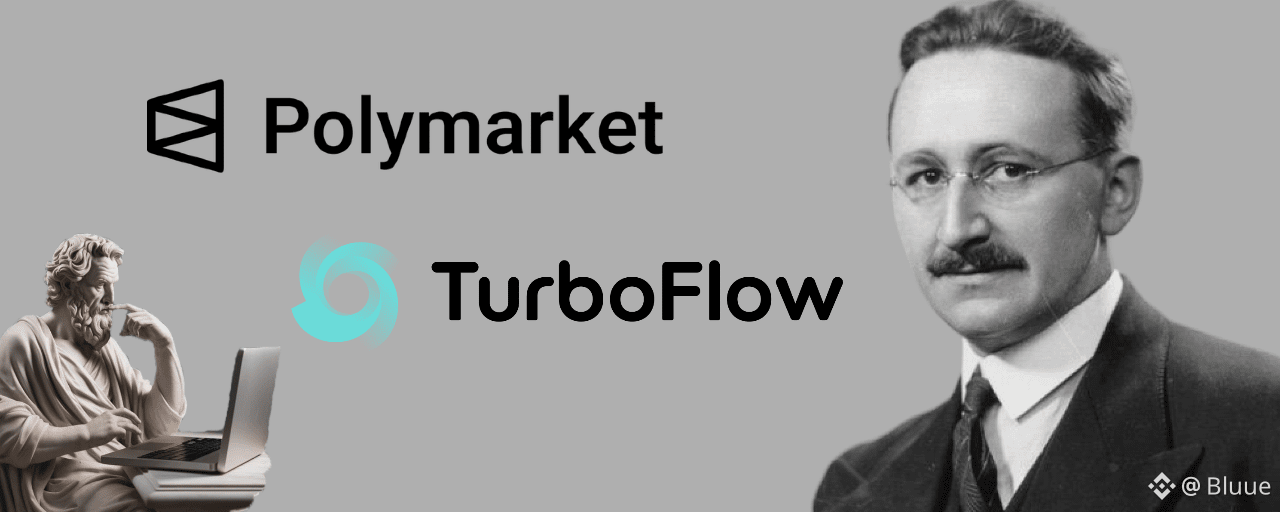
From Hayek to Polymarket to TurboFlow: A Century-Long Evolution from Prediction Markets to Event ContractsHow does a society know what it knows?
From weight guessing games at the market to political prediction markets, and then to short-cycle Event Contracts that let people participate on-chain at any time—event contracts have gone through over a century of continuous evolution. At their core, nothing has changed: converting people’s different judgments about the future into prices, and then settling via the outcome. What has changed are the kinds of events covered by the market, the participation thresholds, the trading cycle, and the underlying infrastructure.
Looking back along this line, Polymarket turned prediction markets into a global internet product, while TurboFlow brought event contracts further into an on-chain trading environment designed for everyday traders. Though they operate at different stages and take different product forms, together they have helped “trading the future” move from an economic experiment to a mainstream product.
From Hayek to Polymarket to TurboFlow: A Century-Long Evolution from Prediction Markets to Event Contracts
How does a society know what it knows?
From weight guessing games at the market to political prediction markets, and then to short-cycle Event Contracts that let people participate on-chain at any time—event contracts have gone through over a century of continuous evolution. At their core, nothing has changed: converting people’s different judgments about the future into prices, and then settling via the outcome. What has changed are the kinds of events covered by the market, the participation thresholds, the trading cycle, and the underlying infrastructure.
Looking back along this line, Polymarket turned prediction markets into a global internet product, while TurboFlow brought event contracts further into an on-chain trading environment designed for everyday traders. Though they operate at different stages and take different product forms, together they have helped “trading the future” move from an economic experiment to a mainstream product.
From weight guessing games at the market to political prediction markets, and then to short-cycle Event Contracts that let people participate on-chain at any time—event contracts have gone through over a century of continuous evolution. At their core, nothing has changed: converting people’s different judgments about the future into prices, and then settling via the outcome. What has changed are the kinds of events covered by the market, the participation thresholds, the trading cycle, and the underlying infrastructure.
Looking back along this line, Polymarket turned prediction markets into a global internet product, while TurboFlow brought event contracts further into an on-chain trading environment designed for everyday traders. Though they operate at different stages and take different product forms, together they have helped “trading the future” move from an economic experiment to a mainstream product.
348
·
--
Article
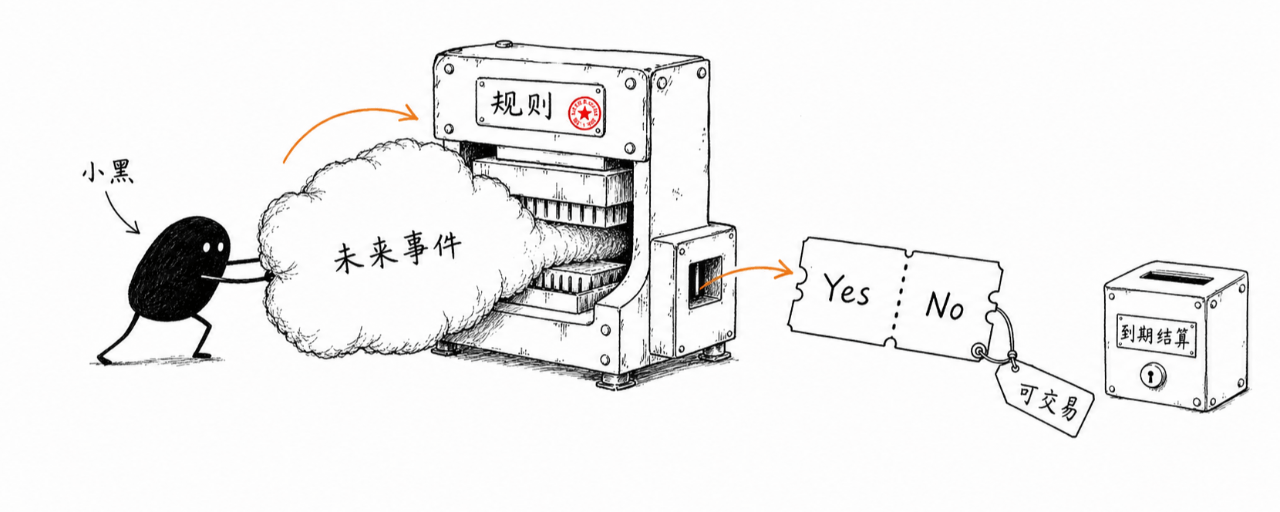
What Is an Event Contract? Operating Mechanism, Pricing Methods, Settlement Rules, and Key RisksAn event contract converts a future outcome into a contract with clearly defined terms that can be traded and settled according to rules. Products can be based on major events, economic data, sports matches, weather, or cryptocurrency asset prices. When evaluating a platform, you should focus on six aspects: the contract question, the quoting method, the expiration time, whether you can exit early, the settlement data source, and fees.
What is an event contract?
An event contract proposes a verifiable question and pre-defines the possible outcome options and settlement conditions. Common structures include: Yes/No: e.g., “Does a certain metric reach its target by a specified date?” Higher/Lower: determine whether the expiry price is higher or lower than the entry price. Threshold-based: judge whether the final value is above, below, or not less than a certain number. Multi-outcome: set multiple mutually exclusive results for the same event, and quote each result separately.
What Is an Event Contract? Operating Mechanism, Pricing Methods, Settlement Rules, and Key Risks
An event contract converts a future outcome into a contract with clearly defined terms that can be traded and settled according to rules. Products can be based on major events, economic data, sports matches, weather, or cryptocurrency asset prices. When evaluating a platform, you should focus on six aspects: the contract question, the quoting method, the expiration time, whether you can exit early, the settlement data source, and fees.
What is an event contract?
An event contract proposes a verifiable question and pre-defines the possible outcome options and settlement conditions. Common structures include: Yes/No: e.g., “Does a certain metric reach its target by a specified date?” Higher/Lower: determine whether the expiry price is higher or lower than the entry price. Threshold-based: judge whether the final value is above, below, or not less than a certain number. Multi-outcome: set multiple mutually exclusive results for the same event, and quote each result separately.
What is an event contract?
An event contract proposes a verifiable question and pre-defines the possible outcome options and settlement conditions. Common structures include: Yes/No: e.g., “Does a certain metric reach its target by a specified date?” Higher/Lower: determine whether the expiry price is higher or lower than the entry price. Threshold-based: judge whether the final value is above, below, or not less than a certain number. Multi-outcome: set multiple mutually exclusive results for the same event, and quote each result separately.
109
·
--
Use a simple numerical example to illustrate. Why do ETFs experience more wear and tear in volatile markets?
Assume there is an index with an initial price of 100, and you buy a corresponding 2x long ETF, investing 100 yuan.
Day 1: Up 10%
The index rises to 110, the 2x ETF rises 20%, and your assets become 120 yuan.
Day 2: Down 10%
The index falls from 110 to 99, the 2x ETF falls 20%, and your assets decrease from 120 to 96 yuan.
At this point, the index has only dropped by 1% (100 → 99), but your 2x ETF has already lost 4% (100 → 96).
⬛️⬛️⬛️⬛️
If there is no leverage and you simply hold the index, your assets are 99 yuan, losing 1 yuan.
The 2x ETF lost 4 yuan, which is 4 times the loss of the index, rather than the expected 2 times.
Why is this the case?
The key lies in the【base of the fluctuations】which changes every day.
If it goes up 10% and then down 10%, the result is ×1.1 × 0.9 = 0.99, a loss of 1%.
The 2x ETF is ×1.2 × 0.8 = 0.96, a loss of 4%.
The asymmetry of multiplication leads to greater losses with larger fluctuations and more frequent volatility. If the market rises 20% and then drops 20%, ordinary holders lose 4%, while the 2x ETF loses 16%—the gap widens sharply.
This loss is called Volatility Drag, which is caused by the inherent mechanism of leveraged ETFs and is unrelated to fund management fees. The more intense the fluctuations and the longer the holding period, the more wear and tear.
Therefore, the 2x ETF is more suitable for short-term trends, and holding it for a long time in a sideways market will almost certainly underperform the 2x index.
Use a simple numerical example to illustrate. Why do ETFs experience more wear and tear in volatile markets?
Assume there is an index with an initial price of 100, and you buy a corresponding 2x long ETF, investing 100 yuan.
Day 1: Up 10%
The index rises to 110, the 2x ETF rises 20%, and your assets become 120 yuan.
Day 2: Down 10%
The index falls from 110 to 99, the 2x ETF falls 20%, and your assets decrease from 120 to 96 yuan.
At this point, the index has only dropped by 1% (100 → 99), but your 2x ETF has already lost 4% (100 → 96).
⬛️⬛️⬛️⬛️
If there is no leverage and you simply hold the index, your assets are 99 yuan, losing 1 yuan.
The 2x ETF lost 4 yuan, which is 4 times the loss of the index, rather than the expected 2 times.
Why is this the case?
The key lies in the【base of the fluctuations】which changes every day.
If it goes up 10% and then down 10%, the result is ×1.1 × 0.9 = 0.99, a loss of 1%.
The 2x ETF is ×1.2 × 0.8 = 0.96, a loss of 4%.
The asymmetry of multiplication leads to greater losses with larger fluctuations and more frequent volatility. If the market rises 20% and then drops 20%, ordinary holders lose 4%, while the 2x ETF loses 16%—the gap widens sharply.
This loss is called Volatility Drag, which is caused by the inherent mechanism of leveraged ETFs and is unrelated to fund management fees. The more intense the fluctuations and the longer the holding period, the more wear and tear.
Therefore, the 2x ETF is more suitable for short-term trends, and holding it for a long time in a sideways market will almost certainly underperform the 2x index.
Assume there is an index with an initial price of 100, and you buy a corresponding 2x long ETF, investing 100 yuan.
Day 1: Up 10%
The index rises to 110, the 2x ETF rises 20%, and your assets become 120 yuan.
Day 2: Down 10%
The index falls from 110 to 99, the 2x ETF falls 20%, and your assets decrease from 120 to 96 yuan.
At this point, the index has only dropped by 1% (100 → 99), but your 2x ETF has already lost 4% (100 → 96).
⬛️⬛️⬛️⬛️
If there is no leverage and you simply hold the index, your assets are 99 yuan, losing 1 yuan.
The 2x ETF lost 4 yuan, which is 4 times the loss of the index, rather than the expected 2 times.
Why is this the case?
The key lies in the【base of the fluctuations】which changes every day.
If it goes up 10% and then down 10%, the result is ×1.1 × 0.9 = 0.99, a loss of 1%.
The 2x ETF is ×1.2 × 0.8 = 0.96, a loss of 4%.
The asymmetry of multiplication leads to greater losses with larger fluctuations and more frequent volatility. If the market rises 20% and then drops 20%, ordinary holders lose 4%, while the 2x ETF loses 16%—the gap widens sharply.
This loss is called Volatility Drag, which is caused by the inherent mechanism of leveraged ETFs and is unrelated to fund management fees. The more intense the fluctuations and the longer the holding period, the more wear and tear.
Therefore, the 2x ETF is more suitable for short-term trends, and holding it for a long time in a sideways market will almost certainly underperform the 2x index.
103
·
--
Bearish
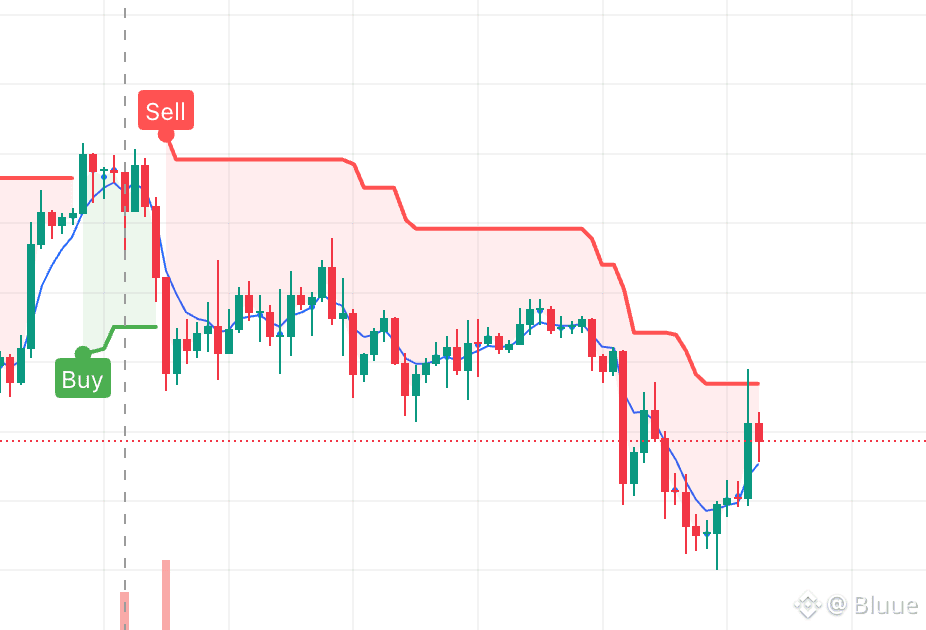
ETH 4 hours breakthrough currently failed, short-term probability of continued decline is high
ETH 4 hours breakthrough currently failed, short-term probability of continued decline is high
1
404
·
--
BTC
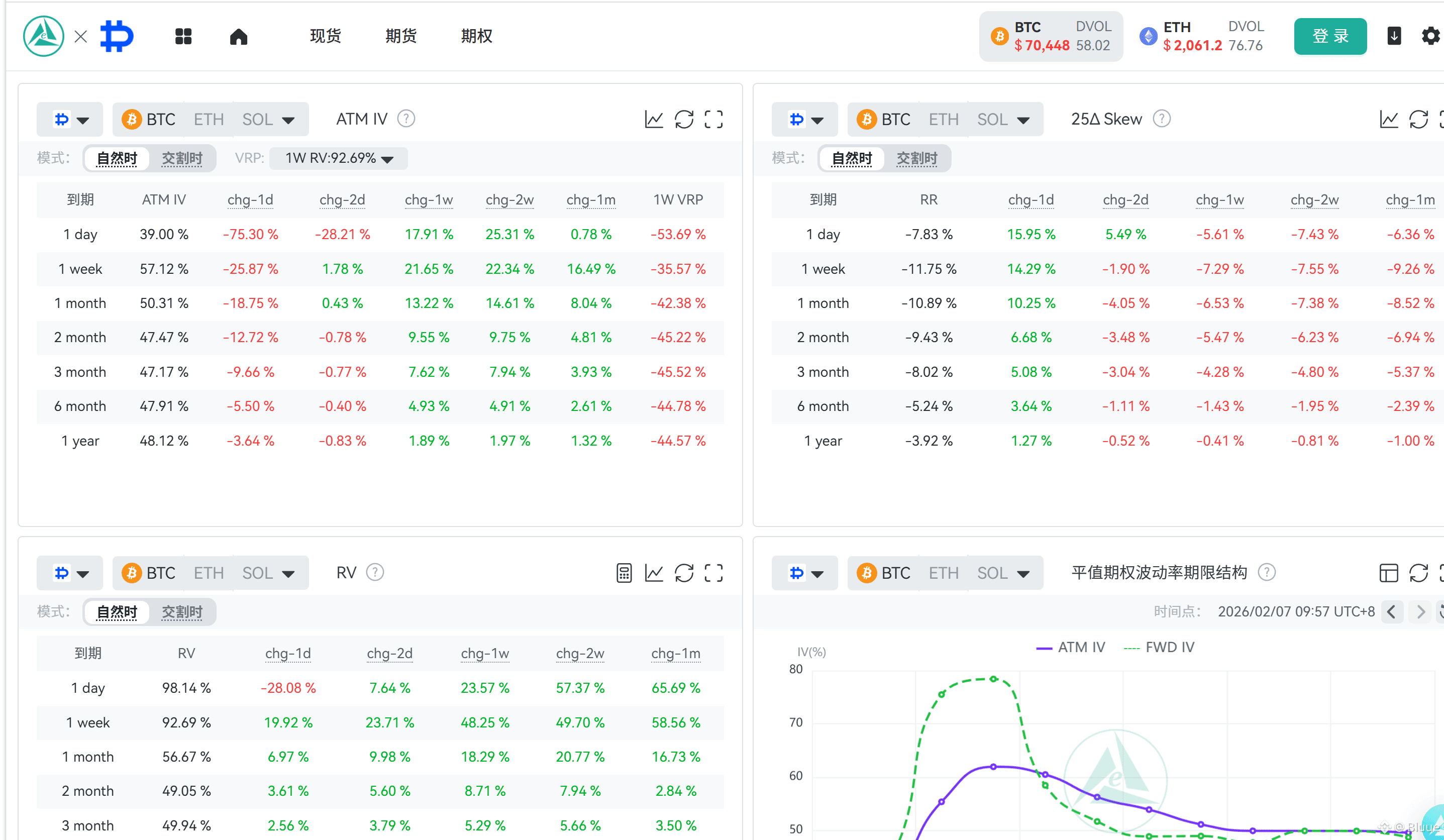
1. The open interest of unclosed contracts has decreased, leverage has gone through a washout, and the market has become light, with a technical rebound demand present.
2. The overall trend is still downward, with a large-scale outflow from ETFs, totaling $2.9 billion over 12 trading days.
3. IV is lower than RV, indicating a potential short-term collapse, and the market is not pricing in a long-term price decline.
Core conclusion
—— In the short to medium term (1-2 weeks), the focus is on defense, with expectations of significant volatility.
—— Long-term declines may not be too different from current levels.
—— Based on market conditions, there is a lack of a conclusion summarizing the current market collapse, specifically what has caused the collapse and whether there are unknown reasons behind it.
BTC
1. The open interest of unclosed contracts has decreased, leverage has gone through a washout, and the market has become light, with a technical rebound demand present.
2. The overall trend is still downward, with a large-scale outflow from ETFs, totaling $2.9 billion over 12 trading days.
3. IV is lower than RV, indicating a potential short-term collapse, and the market is not pricing in a long-term price decline.
Core conclusion
—— In the short to medium term (1-2 weeks), the focus is on defense, with expectations of significant volatility.
—— Long-term declines may not be too different from current levels.
—— Based on market conditions, there is a lack of a conclusion summarizing the current market collapse, specifically what has caused the collapse and whether there are unknown reasons behind it.
1. The open interest of unclosed contracts has decreased, leverage has gone through a washout, and the market has become light, with a technical rebound demand present.
2. The overall trend is still downward, with a large-scale outflow from ETFs, totaling $2.9 billion over 12 trading days.
3. IV is lower than RV, indicating a potential short-term collapse, and the market is not pricing in a long-term price decline.
Core conclusion
—— In the short to medium term (1-2 weeks), the focus is on defense, with expectations of significant volatility.
—— Long-term declines may not be too different from current levels.
—— Based on market conditions, there is a lack of a conclusion summarizing the current market collapse, specifically what has caused the collapse and whether there are unknown reasons behind it.
366
·
--
Bearish
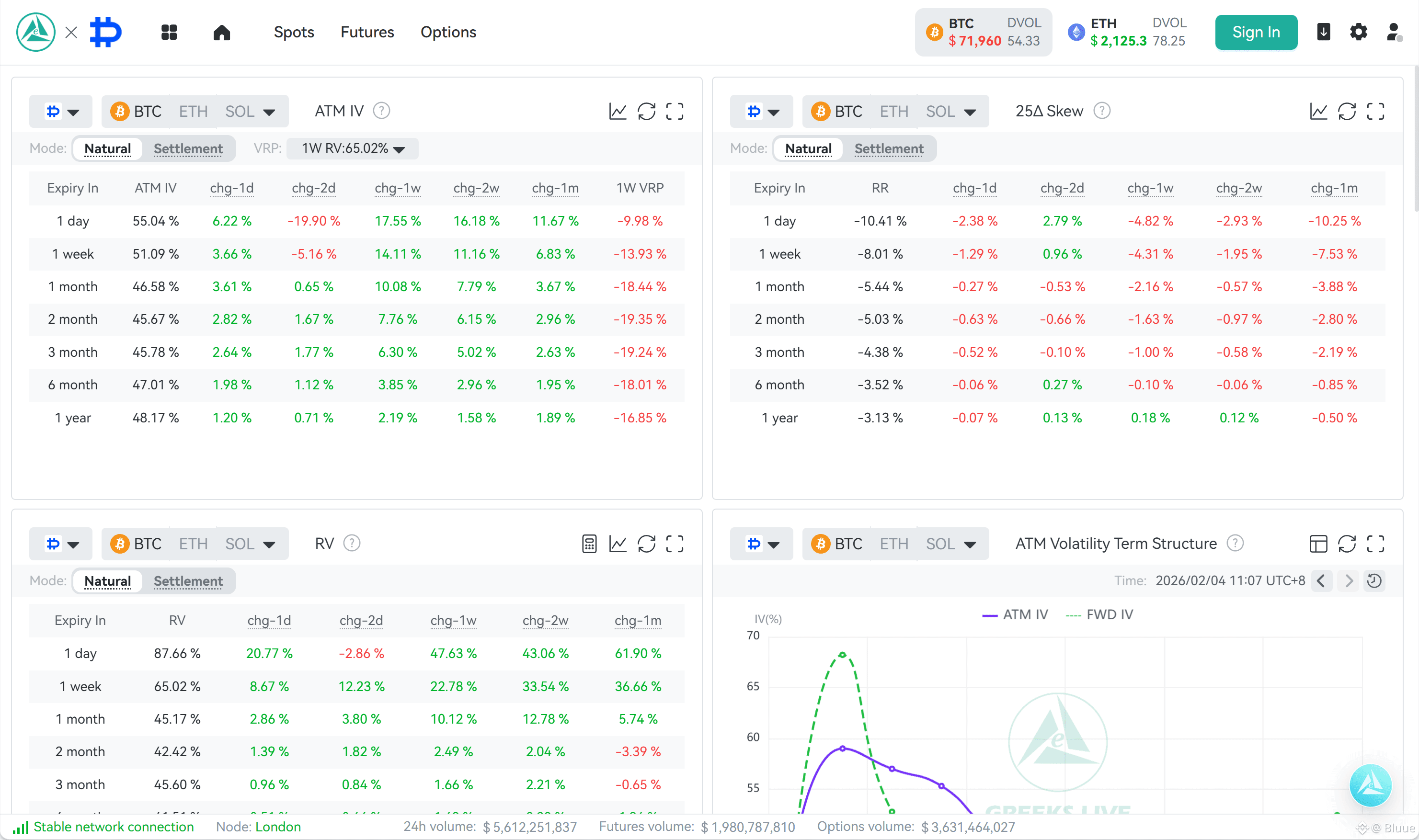
Based on options data performance
BTC: The pullback may still not be over, and the market generally remains bearish
Market sentiment: High-level defense, extremely cautious
Short term (1-7 days): May face severe volatility again
Possible short-term pullback, but primarily defensive
Based on options data performance
BTC: The pullback may still not be over, and the market generally remains bearish
Market sentiment: High-level defense, extremely cautious
Short term (1-7 days): May face severe volatility again
Possible short-term pullback, but primarily defensive
BTC: The pullback may still not be over, and the market generally remains bearish
Market sentiment: High-level defense, extremely cautious
Short term (1-7 days): May face severe volatility again
Possible short-term pullback, but primarily defensive
1
588
·
--
Bearish
BTC Options Data
1-Day ATM IV Soared to 58.50%, Forming a Significant Inversion Structure
1-Day Skew Dropped to -10.80%, the Market is Sending a Strong "Short-Term Hedging Alert"
The Combination of High Volatility and Extreme Negative Skew Indicates Traders Are Reluctantly Buying Put Options to Defend Against Upcoming Severe Fluctuations
Market Defense is Key, and there Will Be Extremely Unstable Conditions in the Next 24-48 Hours, with Downside Risks Significantly Greater than Upside Opportunities
BTC Options Data
1-Day ATM IV Soared to 58.50%, Forming a Significant Inversion Structure
1-Day Skew Dropped to -10.80%, the Market is Sending a Strong "Short-Term Hedging Alert"
The Combination of High Volatility and Extreme Negative Skew Indicates Traders Are Reluctantly Buying Put Options to Defend Against Upcoming Severe Fluctuations
Market Defense is Key, and there Will Be Extremely Unstable Conditions in the Next 24-48 Hours, with Downside Risks Significantly Greater than Upside Opportunities
1-Day ATM IV Soared to 58.50%, Forming a Significant Inversion Structure
1-Day Skew Dropped to -10.80%, the Market is Sending a Strong "Short-Term Hedging Alert"
The Combination of High Volatility and Extreme Negative Skew Indicates Traders Are Reluctantly Buying Put Options to Defend Against Upcoming Severe Fluctuations
Market Defense is Key, and there Will Be Extremely Unstable Conditions in the Next 24-48 Hours, with Downside Risks Significantly Greater than Upside Opportunities
151
·
--

Article
AI Agent: The Small Giant of Payment and Agency Economy - SkyfireSkyfire was co-founded by two former Ripple executives @AmirSarhangi and DeWitt, who were responsible for building cross-border payment networks during their time at Ripple and participated in processing over $50 billion in transaction volume.
Funding Status
In 2024, Skyfire completed approximately $8.5 million in seed round funding, with investors including Circle, Ripple, Gemini, Tim Draper-related funds, and other crypto and financial institutions.
Subsequently received additional investment from Coinbase Ventures and a16z (Andreessen Horowitz) Crypto Startup Accelerator (CSX), totaling $9.5 million.
Background
As artificial intelligence shifts from content generation to autonomous agents, existing financial and identity infrastructures begin to struggle.
AI Agent: The Small Giant of Payment and Agency Economy - Skyfire
Skyfire was co-founded by two former Ripple executives @AmirSarhangi and DeWitt, who were responsible for building cross-border payment networks during their time at Ripple and participated in processing over $50 billion in transaction volume.
Funding Status
In 2024, Skyfire completed approximately $8.5 million in seed round funding, with investors including Circle, Ripple, Gemini, Tim Draper-related funds, and other crypto and financial institutions.
Subsequently received additional investment from Coinbase Ventures and a16z (Andreessen Horowitz) Crypto Startup Accelerator (CSX), totaling $9.5 million.
Background
As artificial intelligence shifts from content generation to autonomous agents, existing financial and identity infrastructures begin to struggle.
Funding Status
In 2024, Skyfire completed approximately $8.5 million in seed round funding, with investors including Circle, Ripple, Gemini, Tim Draper-related funds, and other crypto and financial institutions.
Subsequently received additional investment from Coinbase Ventures and a16z (Andreessen Horowitz) Crypto Startup Accelerator (CSX), totaling $9.5 million.
Background
As artificial intelligence shifts from content generation to autonomous agents, existing financial and identity infrastructures begin to struggle.
197

·
--
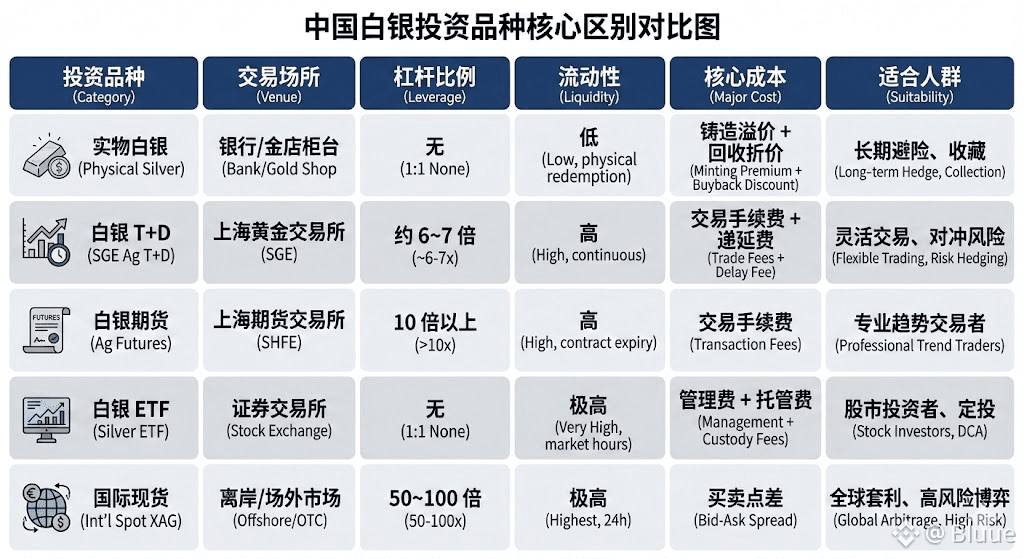
Silver prices reach new highs
Affected by the global shortage of photovoltaic and AI hardware supplies, domestic silver prices have shown a certain degree of premium compared to the international market.
Types of silver investment:
——Physical silver
——Shanghai Gold Exchange: Silver T+D (SGE Ag T+D), spot deferred trading
——Shanghai Futures Exchange: Silver futures, commodities
——Silver ETF and paper silver, non-physical financial derivatives
——International silver, "London silver" or Comex futures, the core of global silver pricing
Silver prices reach new highs
Affected by the global shortage of photovoltaic and AI hardware supplies, domestic silver prices have shown a certain degree of premium compared to the international market.
Types of silver investment:
——Physical silver
——Shanghai Gold Exchange: Silver T+D (SGE Ag T+D), spot deferred trading
——Shanghai Futures Exchange: Silver futures, commodities
——Silver ETF and paper silver, non-physical financial derivatives
——International silver, "London silver" or Comex futures, the core of global silver pricing
Affected by the global shortage of photovoltaic and AI hardware supplies, domestic silver prices have shown a certain degree of premium compared to the international market.
Types of silver investment:
——Physical silver
——Shanghai Gold Exchange: Silver T+D (SGE Ag T+D), spot deferred trading
——Shanghai Futures Exchange: Silver futures, commodities
——Silver ETF and paper silver, non-physical financial derivatives
——International silver, "London silver" or Comex futures, the core of global silver pricing
1
7
756
·
--
Learn about Master Weituo's content
Lila's current issues:
1. A fiat currency with an inflation rate of 31% per year
2. If you don't make money by holding it, purchasing power decreases every year
Why can it survive?
- Because the interest given is higher
Normal people see a leak, they either block it or give up
Turkey's reaction to a leak: TM It must be that I didn't add enough water; as long as I add enough, the bucket will always have water
So despite devaluing by 30% each year, the deposit interest is 56% per year
That is, saving in a bank can still make money
Thus, this interest rate differential attracts global capital
It's equivalent to always having someone playing, leading to liquidity
Liquidity is the core of capital, not low volatility
Relying on trading rather than value = trading currency
On the other hand, counterintuitively, as long as this devaluation is expected, there are ways to hedge
With hedging, it's not a risk but a cost
Learn about Master Weituo's content
Lila's current issues:
1. A fiat currency with an inflation rate of 31% per year
2. If you don't make money by holding it, purchasing power decreases every year
Why can it survive?
- Because the interest given is higher
Normal people see a leak, they either block it or give up
Turkey's reaction to a leak: TM It must be that I didn't add enough water; as long as I add enough, the bucket will always have water
So despite devaluing by 30% each year, the deposit interest is 56% per year
That is, saving in a bank can still make money
Thus, this interest rate differential attracts global capital
It's equivalent to always having someone playing, leading to liquidity
Liquidity is the core of capital, not low volatility
Relying on trading rather than value = trading currency
On the other hand, counterintuitively, as long as this devaluation is expected, there are ways to hedge
With hedging, it's not a risk but a cost
Lila's current issues:
1. A fiat currency with an inflation rate of 31% per year
2. If you don't make money by holding it, purchasing power decreases every year
Why can it survive?
- Because the interest given is higher
Normal people see a leak, they either block it or give up
Turkey's reaction to a leak: TM It must be that I didn't add enough water; as long as I add enough, the bucket will always have water
So despite devaluing by 30% each year, the deposit interest is 56% per year
That is, saving in a bank can still make money
Thus, this interest rate differential attracts global capital
It's equivalent to always having someone playing, leading to liquidity
Liquidity is the core of capital, not low volatility
Relying on trading rather than value = trading currency
On the other hand, counterintuitively, as long as this devaluation is expected, there are ways to hedge
With hedging, it's not a risk but a cost

加密韋馱Crypto Skanda
·
--
Open Source Scythe 31: The Merits of Bad Money - Turkish Lira, Shorting in the Crypto Space, and the Buyback Narrative
I first heard about the 'Gresham's Law' in middle school:
Under the condition that the legal exchange rate remains unchanged, the currency with lower actual value (bad money) will drive the currency with higher actual value (good money) out of circulation, causing the market to be flooded with bad money.
This is what we often refer to as 'bad money drives out good money.'
But what I was thinking at the time was:
Since the free market emphasizes supply and demand, if bad money can drive out good money, isn't that saying bad money is more powerful?
We have all experienced this, unless you are that 'bad money.'
It was only after working that I realized this matter is essentially determined by stance + microstructure.
Under the condition that the legal exchange rate remains unchanged, the currency with lower actual value (bad money) will drive the currency with higher actual value (good money) out of circulation, causing the market to be flooded with bad money.
This is what we often refer to as 'bad money drives out good money.'
But what I was thinking at the time was:
Since the free market emphasizes supply and demand, if bad money can drive out good money, isn't that saying bad money is more powerful?
We have all experienced this, unless you are that 'bad money.'
It was only after working that I realized this matter is essentially determined by stance + microstructure.
1
1
22
·
--
AAVE Founder and DAO Debate Latest Timeline
December 11: DAO representative @DeFi_EzR3aL and Marc Zeller (Aave Chan Initiative Founder) publicly accused Aave Labs of unilaterally transferring front-end swap fees (estimated at $1-10M per year) from DAO to Labs by replacing ParaSwap with CoW Swap.
December 12-13: Stani Kulechov responded that the front-end is a product owned by Labs (not a core protocol), with revenue independent of the DAO; emphasized that Labs self-funded the development of the interface and purchased $10M worth of $AAVE to prove "alignment."
December 16: Former Aave CTO Ernesto Boado (co-founder of BGD Labs) submitted proposal ARFC “$AAVE token alignment. Phase 1 – Ownership,” suggesting that brand assets (aave.com, social media, GitHub, etc.) be transferred to a legal entity controlled by the DAO, adding anti-capture mechanisms.
December 16-21: Intense forum discussions ensued, with DAO members criticizing Labs' control over key channels. Stani released a “master plan” roadmap, emphasizing V4, Horizon, and App, pushing for trillion-scale; DAO members (like Duo Nine) warned that “DAO has no leverage.”
December 22: Stani unilaterally moved the proposal to Snapshot voting (despite only discussing for 5 days), claiming it met governance frameworks. Ernesto publicly denied: did not agree to submission and considered the rushed vote “disgraceful.” Marc Zeller and others criticized “unprecedented interference” and voting during the holiday period (Christmas). Whales sold 230K $AAVE (approximately $38M), causing the token to drop over 10%.
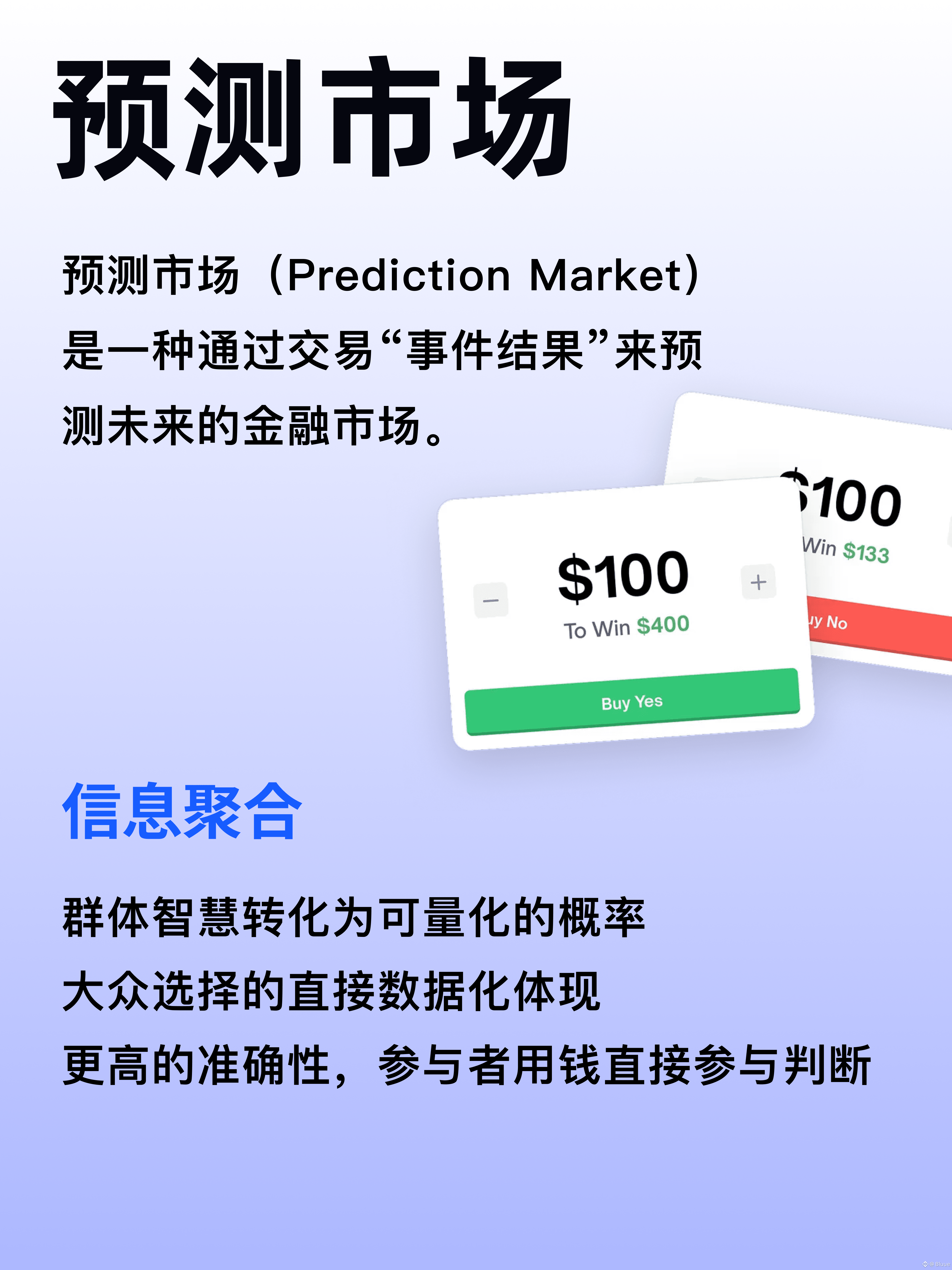
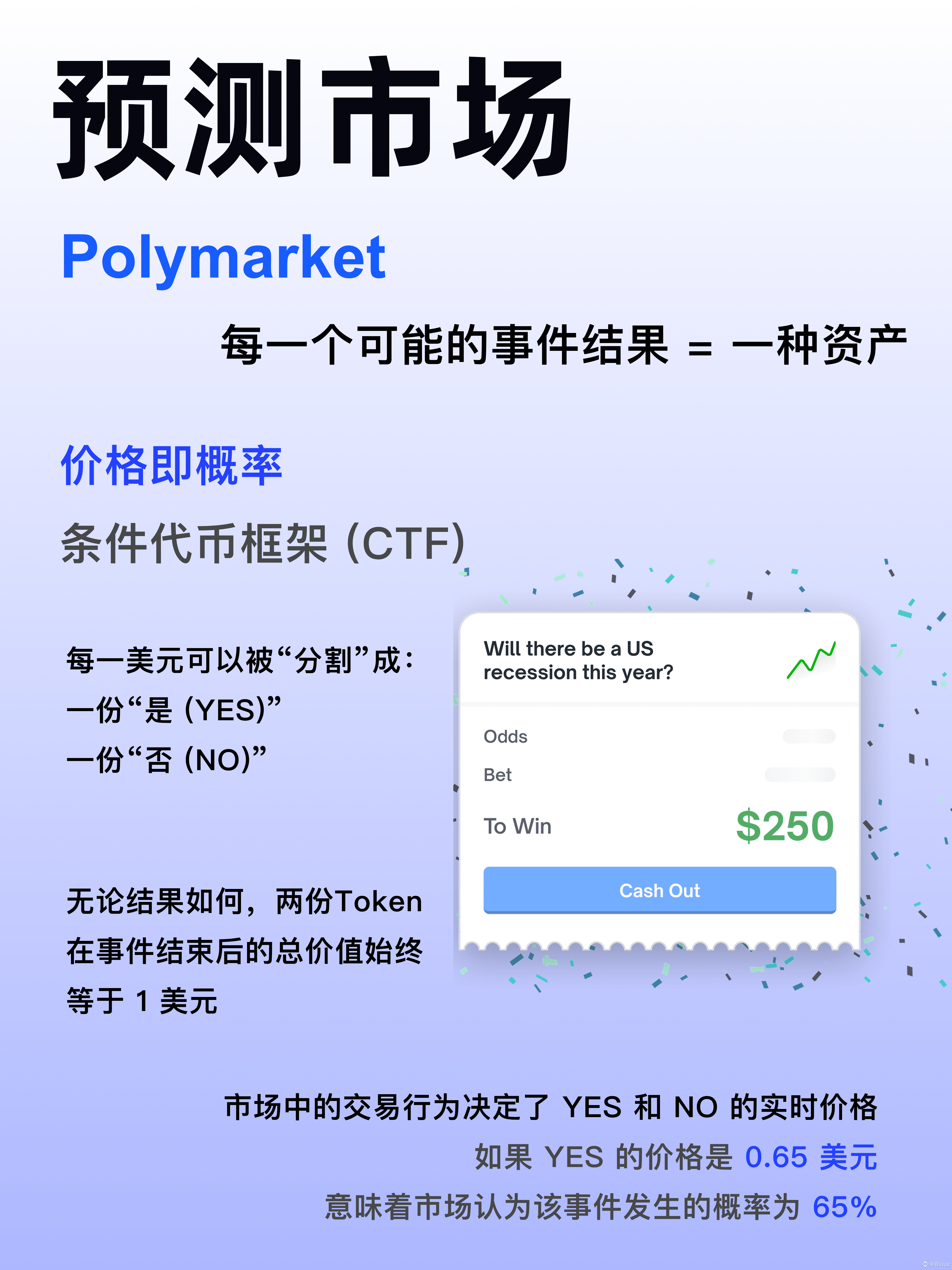
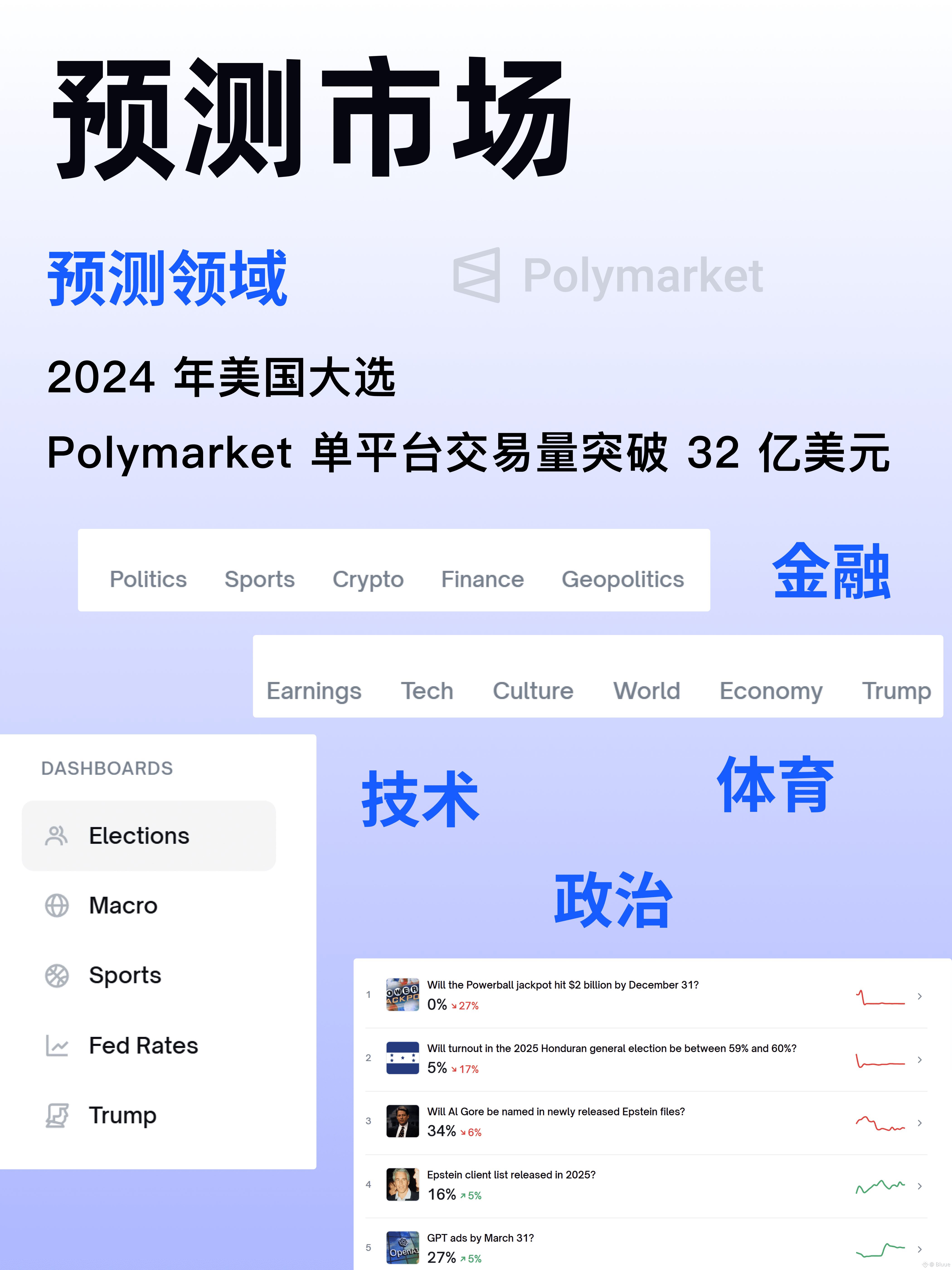
December 22 (latest): The community continues to debate, with Polymarket voting probability at only 25%. Critics claim Stani is using his founder role to interfere with governance; supporters believe Labs needs to incentivize development.
AAVE Founder and DAO Debate Latest Timeline
December 11: DAO representative @DeFi_EzR3aL and Marc Zeller (Aave Chan Initiative Founder) publicly accused Aave Labs of unilaterally transferring front-end swap fees (estimated at $1-10M per year) from DAO to Labs by replacing ParaSwap with CoW Swap.
December 12-13: Stani Kulechov responded that the front-end is a product owned by Labs (not a core protocol), with revenue independent of the DAO; emphasized that Labs self-funded the development of the interface and purchased $10M worth of $AAVE to prove "alignment."
December 16: Former Aave CTO Ernesto Boado (co-founder of BGD Labs) submitted proposal ARFC “$AAVE token alignment. Phase 1 – Ownership,” suggesting that brand assets (aave.com, social media, GitHub, etc.) be transferred to a legal entity controlled by the DAO, adding anti-capture mechanisms.
December 16-21: Intense forum discussions ensued, with DAO members criticizing Labs' control over key channels. Stani released a “master plan” roadmap, emphasizing V4, Horizon, and App, pushing for trillion-scale; DAO members (like Duo Nine) warned that “DAO has no leverage.”
December 22: Stani unilaterally moved the proposal to Snapshot voting (despite only discussing for 5 days), claiming it met governance frameworks. Ernesto publicly denied: did not agree to submission and considered the rushed vote “disgraceful.” Marc Zeller and others criticized “unprecedented interference” and voting during the holiday period (Christmas). Whales sold 230K $AAVE (approximately $38M), causing the token to drop over 10%.
December 22 (latest): The community continues to debate, with Polymarket voting probability at only 25%. Critics claim Stani is using his founder role to interfere with governance; supporters believe Labs needs to incentivize development.
December 11: DAO representative @DeFi_EzR3aL and Marc Zeller (Aave Chan Initiative Founder) publicly accused Aave Labs of unilaterally transferring front-end swap fees (estimated at $1-10M per year) from DAO to Labs by replacing ParaSwap with CoW Swap.
December 12-13: Stani Kulechov responded that the front-end is a product owned by Labs (not a core protocol), with revenue independent of the DAO; emphasized that Labs self-funded the development of the interface and purchased $10M worth of $AAVE to prove "alignment."
December 16: Former Aave CTO Ernesto Boado (co-founder of BGD Labs) submitted proposal ARFC “$AAVE token alignment. Phase 1 – Ownership,” suggesting that brand assets (aave.com, social media, GitHub, etc.) be transferred to a legal entity controlled by the DAO, adding anti-capture mechanisms.
December 16-21: Intense forum discussions ensued, with DAO members criticizing Labs' control over key channels. Stani released a “master plan” roadmap, emphasizing V4, Horizon, and App, pushing for trillion-scale; DAO members (like Duo Nine) warned that “DAO has no leverage.”
December 22: Stani unilaterally moved the proposal to Snapshot voting (despite only discussing for 5 days), claiming it met governance frameworks. Ernesto publicly denied: did not agree to submission and considered the rushed vote “disgraceful.” Marc Zeller and others criticized “unprecedented interference” and voting during the holiday period (Christmas). Whales sold 230K $AAVE (approximately $38M), causing the token to drop over 10%.
December 22 (latest): The community continues to debate, with Polymarket voting probability at only 25%. Critics claim Stani is using his founder role to interfere with governance; supporters believe Labs needs to incentivize development.
254
·
--
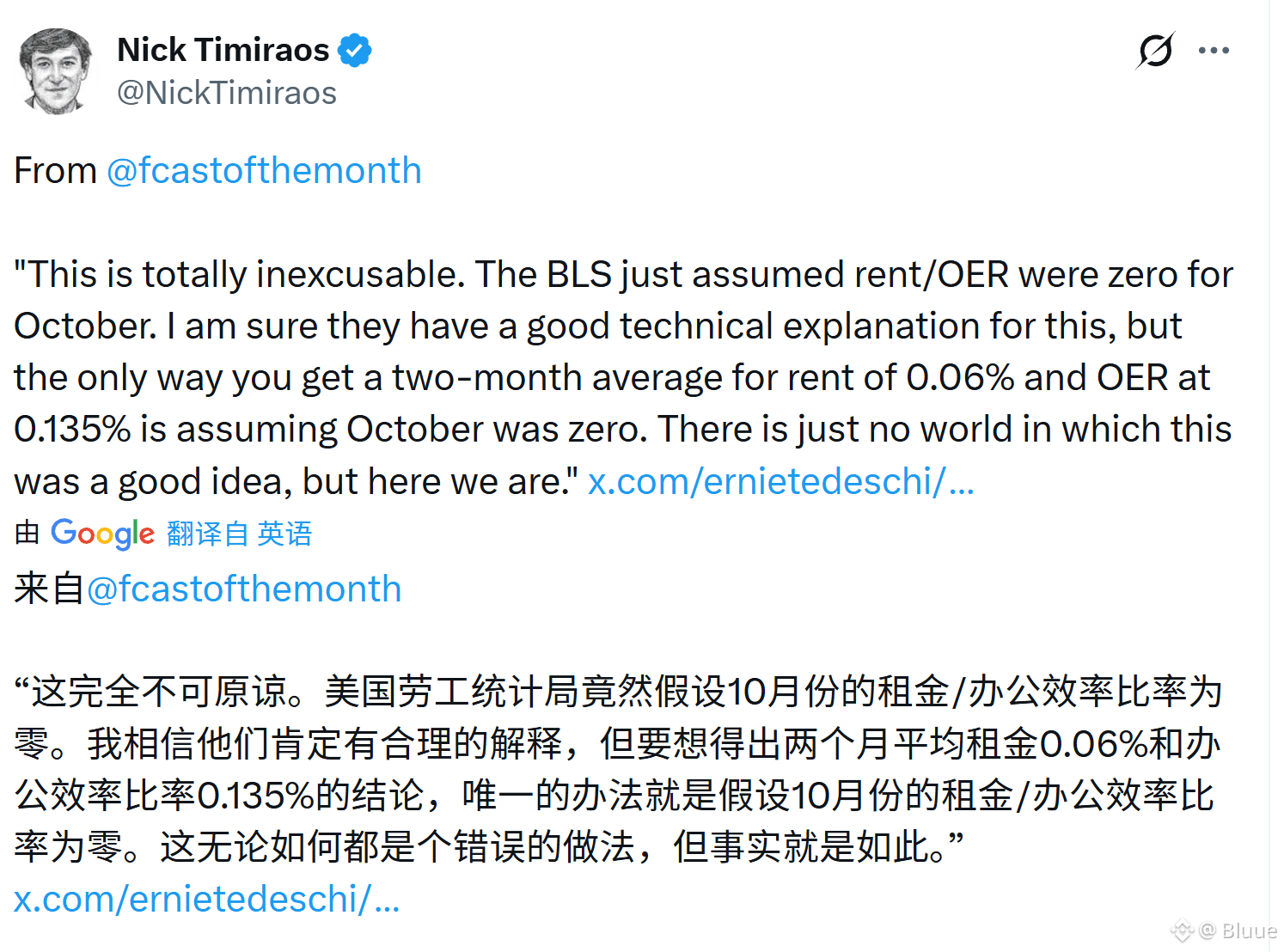
A sad thing
CPI fraud
In the data, the rent increase in November was originally low
It was actually found that, assuming 0 growth in October rent
A sad thing
CPI fraud
In the data, the rent increase in November was originally low
It was actually found that, assuming 0 growth in October rent
CPI fraud
In the data, the rent increase in November was originally low
It was actually found that, assuming 0 growth in October rent
Bluue
·
--
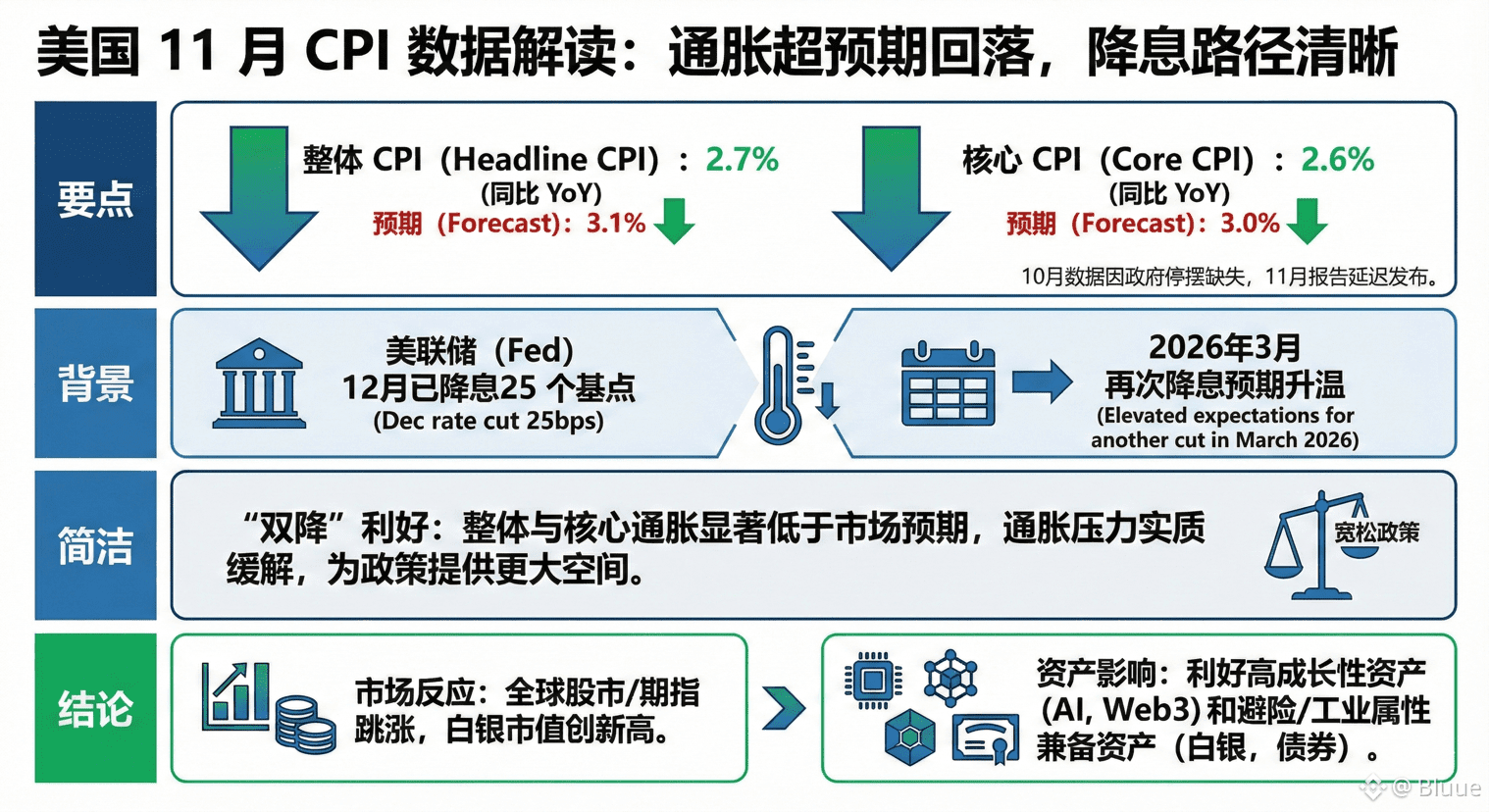
The U.S. November CPI data was delayed after the government shutdown ended.
Data shows that inflation is significantly lower than expected, with the overall CPI year-on-year growth rate dropping to 2.7% and the core CPI falling to 2.6%.
This result indicates that the U.S. disinflation process is accelerating. The market reacted to this, with the market capitalization of silver briefly surpassing Alphabet, indicating the direction of capital flows.
Currently, the market has generally raised expectations for the Federal Reserve to cut interest rates again in March 2026. The macroeconomic environment has shifted to a state more favorable for liquidity-sensitive assets.
#CPI #macroeconomics #U.S.stocks
Data shows that inflation is significantly lower than expected, with the overall CPI year-on-year growth rate dropping to 2.7% and the core CPI falling to 2.6%.
This result indicates that the U.S. disinflation process is accelerating. The market reacted to this, with the market capitalization of silver briefly surpassing Alphabet, indicating the direction of capital flows.
Currently, the market has generally raised expectations for the Federal Reserve to cut interest rates again in March 2026. The macroeconomic environment has shifted to a state more favorable for liquidity-sensitive assets.
#CPI #macroeconomics #U.S.stocks
2
939
·
--
The U.S. November CPI data was delayed after the government shutdown ended.
Data shows that inflation is significantly lower than expected, with the overall CPI year-on-year growth rate dropping to 2.7% and the core CPI falling to 2.6%.
This result indicates that the U.S. disinflation process is accelerating. The market reacted to this, with the market capitalization of silver briefly surpassing Alphabet, indicating the direction of capital flows.
Currently, the market has generally raised expectations for the Federal Reserve to cut interest rates again in March 2026. The macroeconomic environment has shifted to a state more favorable for liquidity-sensitive assets.
#CPI #macroeconomics #U.S.stocks
The U.S. November CPI data was delayed after the government shutdown ended.
Data shows that inflation is significantly lower than expected, with the overall CPI year-on-year growth rate dropping to 2.7% and the core CPI falling to 2.6%.
This result indicates that the U.S. disinflation process is accelerating. The market reacted to this, with the market capitalization of silver briefly surpassing Alphabet, indicating the direction of capital flows.
Currently, the market has generally raised expectations for the Federal Reserve to cut interest rates again in March 2026. The macroeconomic environment has shifted to a state more favorable for liquidity-sensitive assets.
#CPI #macroeconomics #U.S.stocks
Data shows that inflation is significantly lower than expected, with the overall CPI year-on-year growth rate dropping to 2.7% and the core CPI falling to 2.6%.
This result indicates that the U.S. disinflation process is accelerating. The market reacted to this, with the market capitalization of silver briefly surpassing Alphabet, indicating the direction of capital flows.
Currently, the market has generally raised expectations for the Federal Reserve to cut interest rates again in March 2026. The macroeconomic environment has shifted to a state more favorable for liquidity-sensitive assets.
#CPI #macroeconomics #U.S.stocks
1
5
1k
·
--
When will Binance go public on the US stock market!
CIRCLE $CRCL has opportunities recently
When will Binance go public on the US stock market!
CIRCLE $CRCL has opportunities recently
CIRCLE $CRCL has opportunities recently
10
·
--
The emergence of prediction markets
is essentially a natural
evolutionary product of
the loss of media credibility
The emergence of prediction markets
is essentially a natural
evolutionary product of
the loss of media credibility
is essentially a natural
evolutionary product of
the loss of media credibility
14
·
--
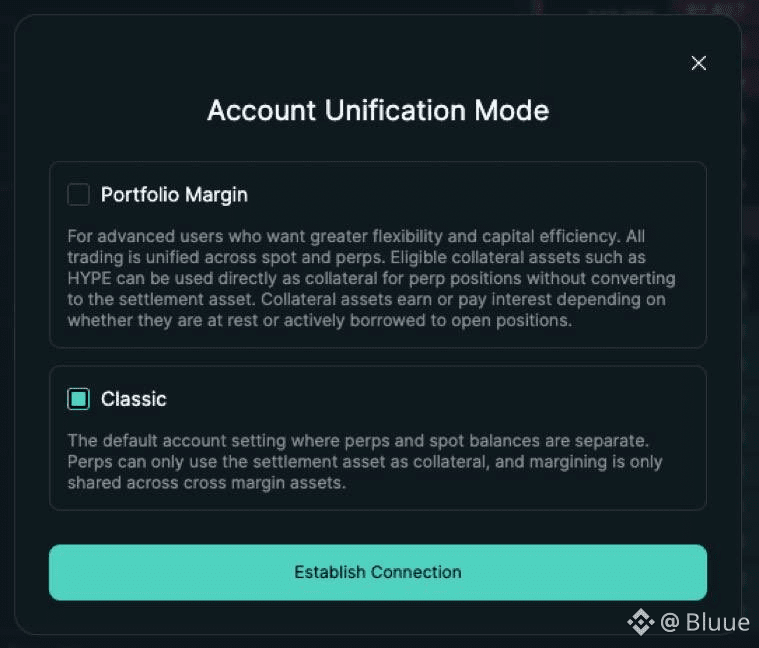
The smart logic of Hyperliquid PM:
Long 1 BTC + Short 1 BTC ≈ 0 Risk
The system recognizes: "Regardless of whether BTC rises or falls, your total asset value remains basically unchanged.
Therefore, only a very small margin is required, possibly only 1/5 or even lower than traditional methods.
At the same time, due to the different risks of mainstream coins and meme/altcoins, Hyperliquid has implemented a tiered system.
The asset risk of BTC and HIP3 is not the same, so contracts for HIP3 will enforce isolated margin trading.
The smart logic of Hyperliquid PM:
Long 1 BTC + Short 1 BTC ≈ 0 Risk
The system recognizes: "Regardless of whether BTC rises or falls, your total asset value remains basically unchanged.
Therefore, only a very small margin is required, possibly only 1/5 or even lower than traditional methods.
At the same time, due to the different risks of mainstream coins and meme/altcoins, Hyperliquid has implemented a tiered system.
The asset risk of BTC and HIP3 is not the same, so contracts for HIP3 will enforce isolated margin trading.
Long 1 BTC + Short 1 BTC ≈ 0 Risk
The system recognizes: "Regardless of whether BTC rises or falls, your total asset value remains basically unchanged.
Therefore, only a very small margin is required, possibly only 1/5 or even lower than traditional methods.
At the same time, due to the different risks of mainstream coins and meme/altcoins, Hyperliquid has implemented a tiered system.
The asset risk of BTC and HIP3 is not the same, so contracts for HIP3 will enforce isolated margin trading.
Bluue
·
--
Hyperliquid Portfolio Margin
1
First, let's talk about why full margin and isolated margin are needed for opening contracts
In isolated margin, each position's margin is independent, and the maximum loss is just the margin of that one project.
- The benefit is risk isolation, one liquidation triggers only one
- The drawback is low capital utilization
In full margin,
One balance serves as margin for all positions; the floating profit of one project can act as margin for another's floating loss.
- The benefit is greatly increased capital utilization without the need for frequent top-ups
- The drawback is that liquidation = zero
Currently, the common full margin calculation model uses addition, meaning the margin requirements for each position are summed.
The problem this brings is: there's no overall perspective.
For example--
Suppose you are bearish on BTC, but you are actually using arbitrage.
- Buy 1 BTC spot
- Open a 1X BTC short position
Earn funding rates.
In theory, your risk is actually close to 0.
But if you use full margin, you still need to pay margin equivalent to 2 BTC's value.
This is the problem Hyperliquid aims to solve.
1
First, let's talk about why full margin and isolated margin are needed for opening contracts
In isolated margin, each position's margin is independent, and the maximum loss is just the margin of that one project.
- The benefit is risk isolation, one liquidation triggers only one
- The drawback is low capital utilization
In full margin,
One balance serves as margin for all positions; the floating profit of one project can act as margin for another's floating loss.
- The benefit is greatly increased capital utilization without the need for frequent top-ups
- The drawback is that liquidation = zero
Currently, the common full margin calculation model uses addition, meaning the margin requirements for each position are summed.
The problem this brings is: there's no overall perspective.
For example--
Suppose you are bearish on BTC, but you are actually using arbitrage.
- Buy 1 BTC spot
- Open a 1X BTC short position
Earn funding rates.
In theory, your risk is actually close to 0.
But if you use full margin, you still need to pay margin equivalent to 2 BTC's value.
This is the problem Hyperliquid aims to solve.
322
·
--
Hyperliquid Portfolio Margin
1
First, let's talk about why full margin and isolated margin are needed for opening contracts
In isolated margin, each position's margin is independent, and the maximum loss is just the margin of that one project.
- The benefit is risk isolation, one liquidation triggers only one
- The drawback is low capital utilization
In full margin,
One balance serves as margin for all positions; the floating profit of one project can act as margin for another's floating loss.
- The benefit is greatly increased capital utilization without the need for frequent top-ups
- The drawback is that liquidation = zero
Currently, the common full margin calculation model uses addition, meaning the margin requirements for each position are summed.
The problem this brings is: there's no overall perspective.
For example--
Suppose you are bearish on BTC, but you are actually using arbitrage.
- Buy 1 BTC spot
- Open a 1X BTC short position
Earn funding rates.
In theory, your risk is actually close to 0.
But if you use full margin, you still need to pay margin equivalent to 2 BTC's value.
This is the problem Hyperliquid aims to solve.
Hyperliquid Portfolio Margin
1
First, let's talk about why full margin and isolated margin are needed for opening contracts
In isolated margin, each position's margin is independent, and the maximum loss is just the margin of that one project.
- The benefit is risk isolation, one liquidation triggers only one
- The drawback is low capital utilization
In full margin,
One balance serves as margin for all positions; the floating profit of one project can act as margin for another's floating loss.
- The benefit is greatly increased capital utilization without the need for frequent top-ups
- The drawback is that liquidation = zero
Currently, the common full margin calculation model uses addition, meaning the margin requirements for each position are summed.
The problem this brings is: there's no overall perspective.
For example--
Suppose you are bearish on BTC, but you are actually using arbitrage.
- Buy 1 BTC spot
- Open a 1X BTC short position
Earn funding rates.
In theory, your risk is actually close to 0.
But if you use full margin, you still need to pay margin equivalent to 2 BTC's value.
This is the problem Hyperliquid aims to solve.
1
First, let's talk about why full margin and isolated margin are needed for opening contracts
In isolated margin, each position's margin is independent, and the maximum loss is just the margin of that one project.
- The benefit is risk isolation, one liquidation triggers only one
- The drawback is low capital utilization
In full margin,
One balance serves as margin for all positions; the floating profit of one project can act as margin for another's floating loss.
- The benefit is greatly increased capital utilization without the need for frequent top-ups
- The drawback is that liquidation = zero
Currently, the common full margin calculation model uses addition, meaning the margin requirements for each position are summed.
The problem this brings is: there's no overall perspective.
For example--
Suppose you are bearish on BTC, but you are actually using arbitrage.
- Buy 1 BTC spot
- Open a 1X BTC short position
Earn funding rates.
In theory, your risk is actually close to 0.
But if you use full margin, you still need to pay margin equivalent to 2 BTC's value.
This is the problem Hyperliquid aims to solve.
1
80
Log in to explore more content
Join global crypto users on Binance Square
⚡️ Get latest and useful information about crypto.
💬 Trusted by the world’s largest crypto exchange.
👍 Discover real insights from verified creators.
Email / Phone number
Trending Topics
MemeLaunchpads82%OfArcDayOneVolume
2,494 views
130 Discussing
🚨 #ARCS FIRST DAY WASN’T ABOUT WALL STREET… IT WAS ABOUT #MEME COINS! 👀🔥
Circle’s new Arc Layer-1 just made a massive entrance, clearing $410.8M in DEX volume on day one.
But here’s the shocker: ~82% came from meme-coin launchpads. 🤯
💰 $336.26M in launchpad trading volume
🔥 Arguspad: $202.35M
⚡ 97,025 tokens minted
🚀 7.76M transactions in just 24 hours
Arc was built with institutional finance in mind, with names like BlackRock, Visa, Mastercard, DTCC and ICE among its founding validators.
Yet on launch day, speculation stole the spotlight. 😂
Now comes the real test:
Was this just launch-day madness… or the beginning of a much bigger Arc ecosystem? 👀📈
#ARC #Circle #Crypto #MemeCoins #DeFi #Layer1 #USDC
#MemeLaunchpads82%OfArcDayOneVolume
MFI crypto
·1 Likes
·16 views
OstiumLoanDisputeHearingSetInNYFederalCourt
4,347 views
132 Discussing
HyperliquidUSDCSupplyOvertakesSolana
0 views
0 Discussing