
Binance Afrique
506 Posts

Binance Afrique
 Binance Officially Verified Account
Report
Restez informé sur les actualités, les campagnes et l'éducation sur les cryptomonnaies et la blockchain en Afrique.
Open Trade
4.4 Years
7 Following
14.4K+ Followers
3.9K+ Liked
Posts
Portfolio
All
Videos
Live
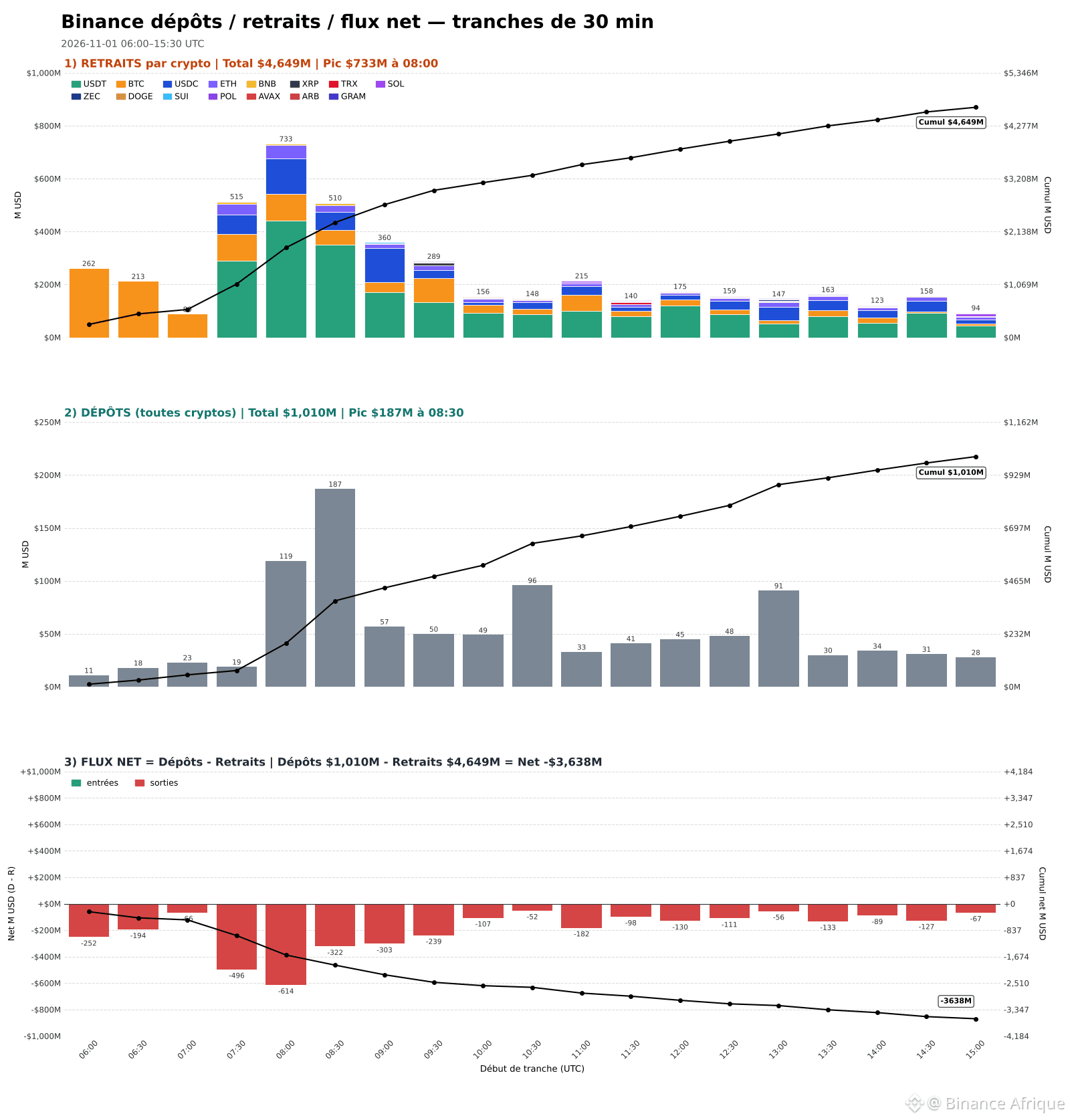
Binance began gradually restoring withdrawals on November 1, 2026, at 06:00 UTC. By 12:36 UTC, withdrawals had resumed across all 15 networks and assets affected in the first phase.
After an initial increase, withdrawal volumes declined and are stabilizing as expected, while deposit volumes remained high.
Between 06:00 and 15:30 UTC on November 1, we processed $4.649 billion in withdrawals and $1.01 billion in deposits, resulting in a net outflow of approximately $3.64 billion.
This amount represents 2.1% of our $171 billion in total assets under management (AUM), according to the latest available data from our Proof of Reserves (PoR), dated October 28, 2026.
A new snapshot of our Proof of Reserves was taken on October 31 at 00:00 UTC, and the zero-knowledge proof (ZKP) calculation has begun. The updated report is expected to be available tomorrow on our dedicated Proof of Reserves website.
Our team is continuing rigorous testing on the remaining networks and assets. We know how important it is for you to be able to access your funds safely and reliably. We will share details of the next phase as soon as possible.
Rest assured that market conditions are stable.
Thank you for your patience and continued support.
1
1
6
2.2k
A message from @richardteng , co-CEO of Binance.
A message from @Richard Teng , co-CEO of Binance.
3
1
20
4.1k
Binance has begun recovering the assets of affected users and continues to work with law enforcement, token issuers, blockchain analytics firms, and industry partners to locate, freeze, and recover additional funds.
As previously announced, Binance has publicly committed to covering the losses with its own funds.
Binance has already set aside more than $6.34 billion in its own funds to cover this incident. Of this amount, $5 billion is already held in the affected tokens.
We are currently finalizing the acquisition of the remaining amount by purchasing the affected tokens on the markets and through over-the-counter (OTC) transactions.
This approach aims to replenish reserves in the same assets and cover any potential shortfall.
This step may take longer, as some tokens have low liquidity and settling OTC transactions also takes time.
We will share further updates on the progress of these operations as soon as possible.
These amounts do not include frozen or protected assets, which are still subject to recovery and verification procedures.
To date, $3 billion has been frozen thanks to the collaboration of our industry partners.
We are working with these partners and law enforcement to recover the frozen assets.
We will continue to mobilize company resources to cover any confirmed shortfall and publish further verified updates as recovery operations progress.
Ultimately, all user funds will be publicly verifiable through our Proof of Reserves system.
We will overcome this challenge.
Thank you for your support.
7
1
20
5.7k
Investigation update: our initial investigation suggested that the security incident may have originated from a compromised laptop. However, subsequent investigations have uncovered other points of intrusion.
This is a complex attack. We are doing everything we can, in coordination with law enforcement, to resolve it. We continue to gather the facts and will communicate them to you directly as they emerge.
Binance will cover all losses through the SAFU fund and its own funds. User funds are safe.
The planned timeline remains unchanged: withdrawal services are expected to resume within 45 hours. Deposits are unaffected.
Outflows stopped as soon as withdrawal services were suspended. We continue to work with our partners to freeze a large portion of the affected assets. Approximately $3 billion has been frozen to date.
6
1.4k
Our teams are aware of reports of a potential security issue and are actively investigating. Users' funds are completely safe.
Our security teams are urgently reviewing all relevant information, and we will share updates through Binance's official channels as soon as we have verified information.
Please remain alert to scams and do not trust unofficial links, messages, or requests for account information.
Our security teams are urgently reviewing all relevant information, and we will share updates through Binance's official channels as soon as we have verified information.
Please remain alert to scams and do not trust unofficial links, messages, or requests for account information.
4
15
1.4k
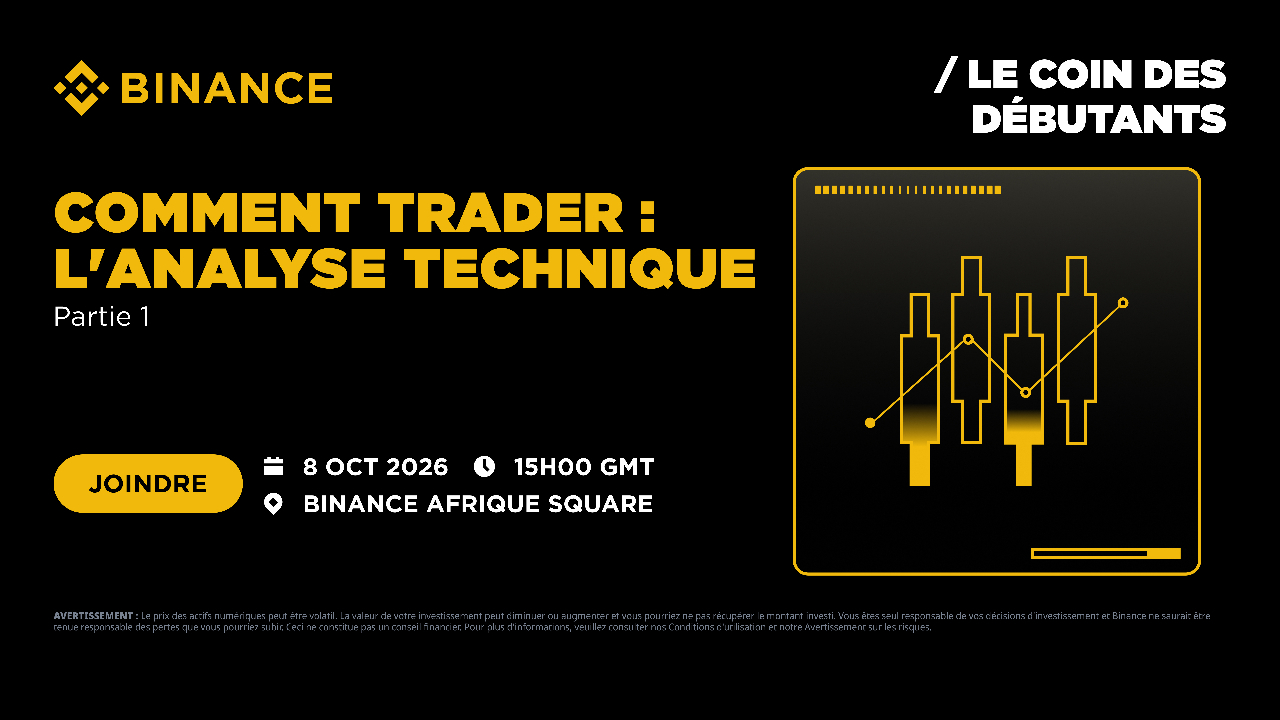
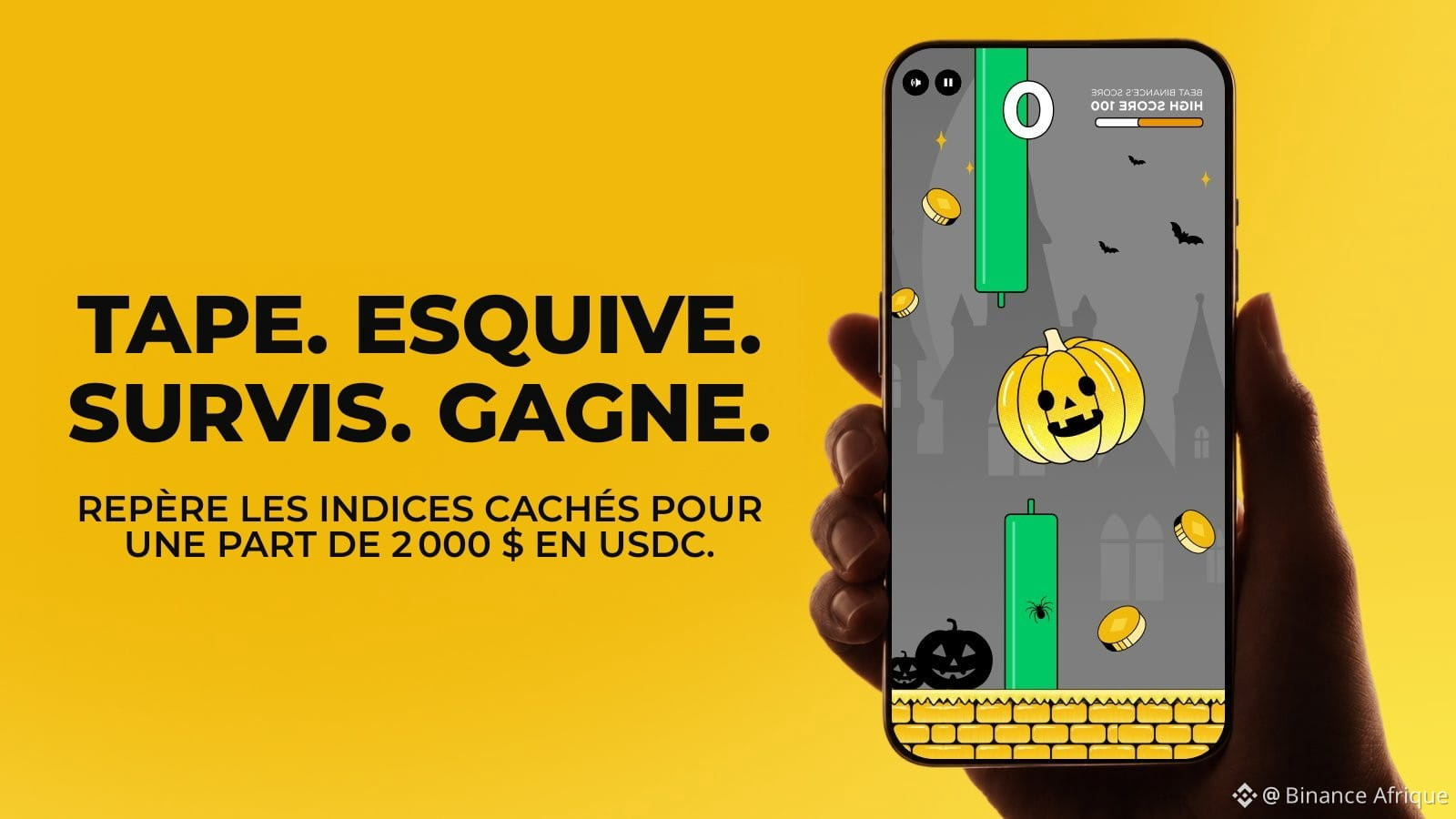
Haven't played with our SAFU-mode pumpkin yet? 🎃
Now's your chance to tap, dodge, survive, and win.
How to participate:
🎮 Have fun with our Halloween game
👀 Find the 5 hidden clues
📸 Share your end-of-game card on X and tag us
2,000 $ en USDC will be shared among the first 10 eligible participants who find all 5 clues and share their card.
Now's your chance to tap, dodge, survive, and win.
How to participate:
🎮 Have fun with our Halloween game
👀 Find the 5 hidden clues
📸 Share your end-of-game card on X and tag us
2,000 $ en USDC will be shared among the first 10 eligible participants who find all 5 clues and share their card.
1
2
471
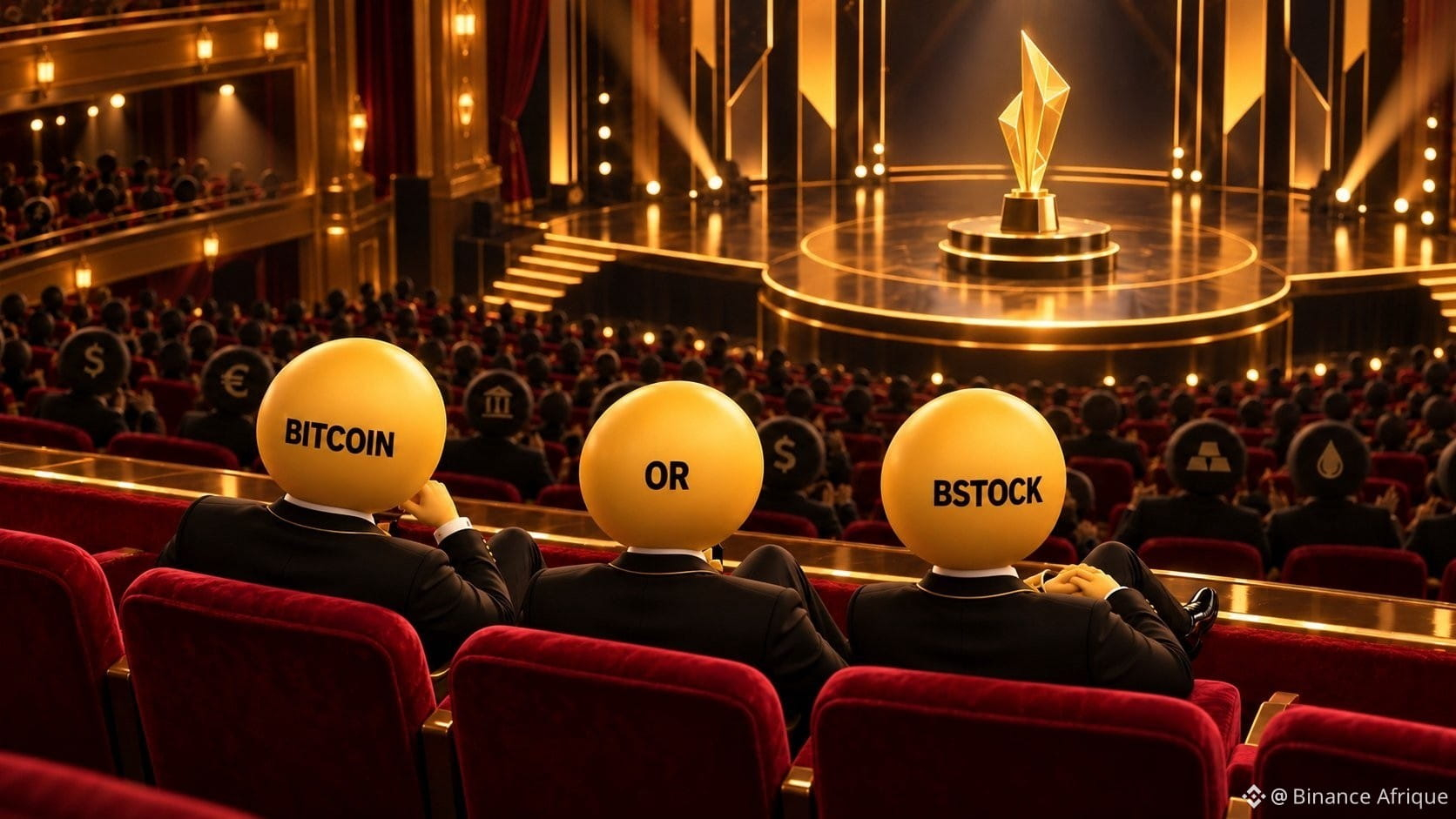
The beautiful game has chosen its winner. And you, who’s your top pick?
P.S. The social media manager isn’t voting 😉
The beautiful game has chosen its winner. And you, who’s your top pick?
P.S. The social media manager isn’t voting 😉
P.S. The social media manager isn’t voting 😉
1
1
7
1.5k
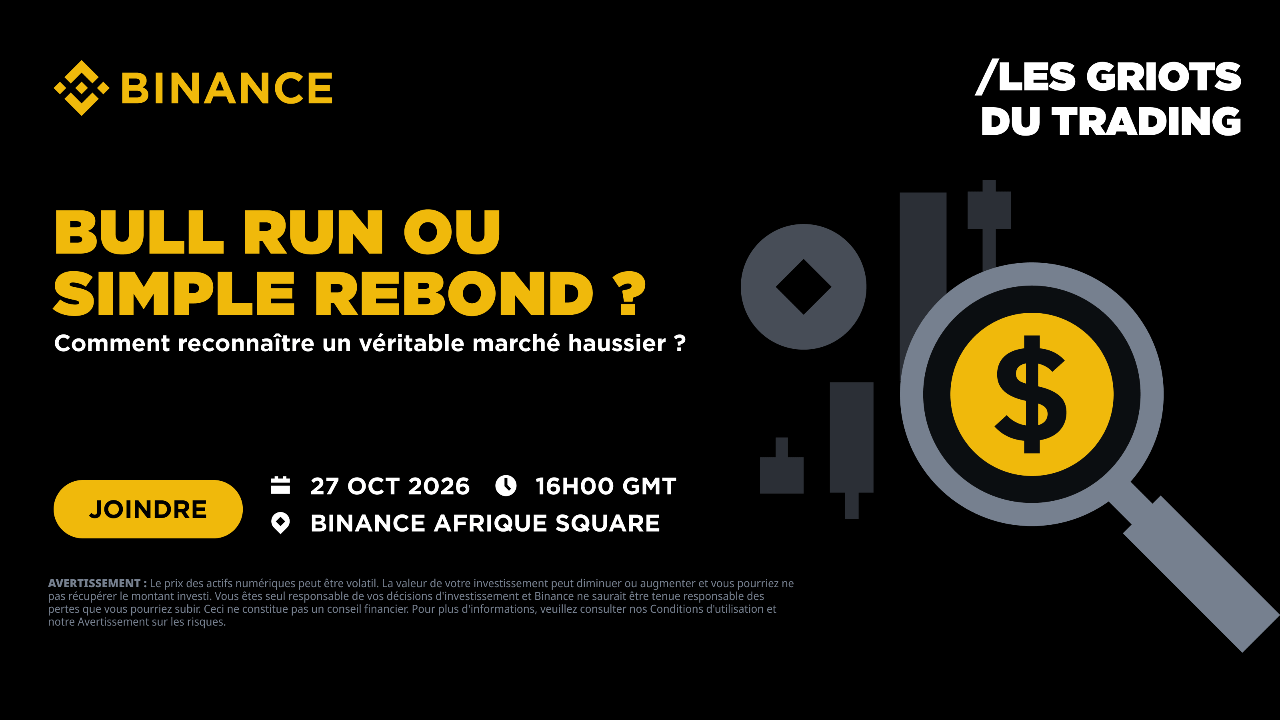
🎙️ BULL RUN or just a rebound?
How can you recognize a bull market?
End
01 h 09 m 08 s
323
2
2
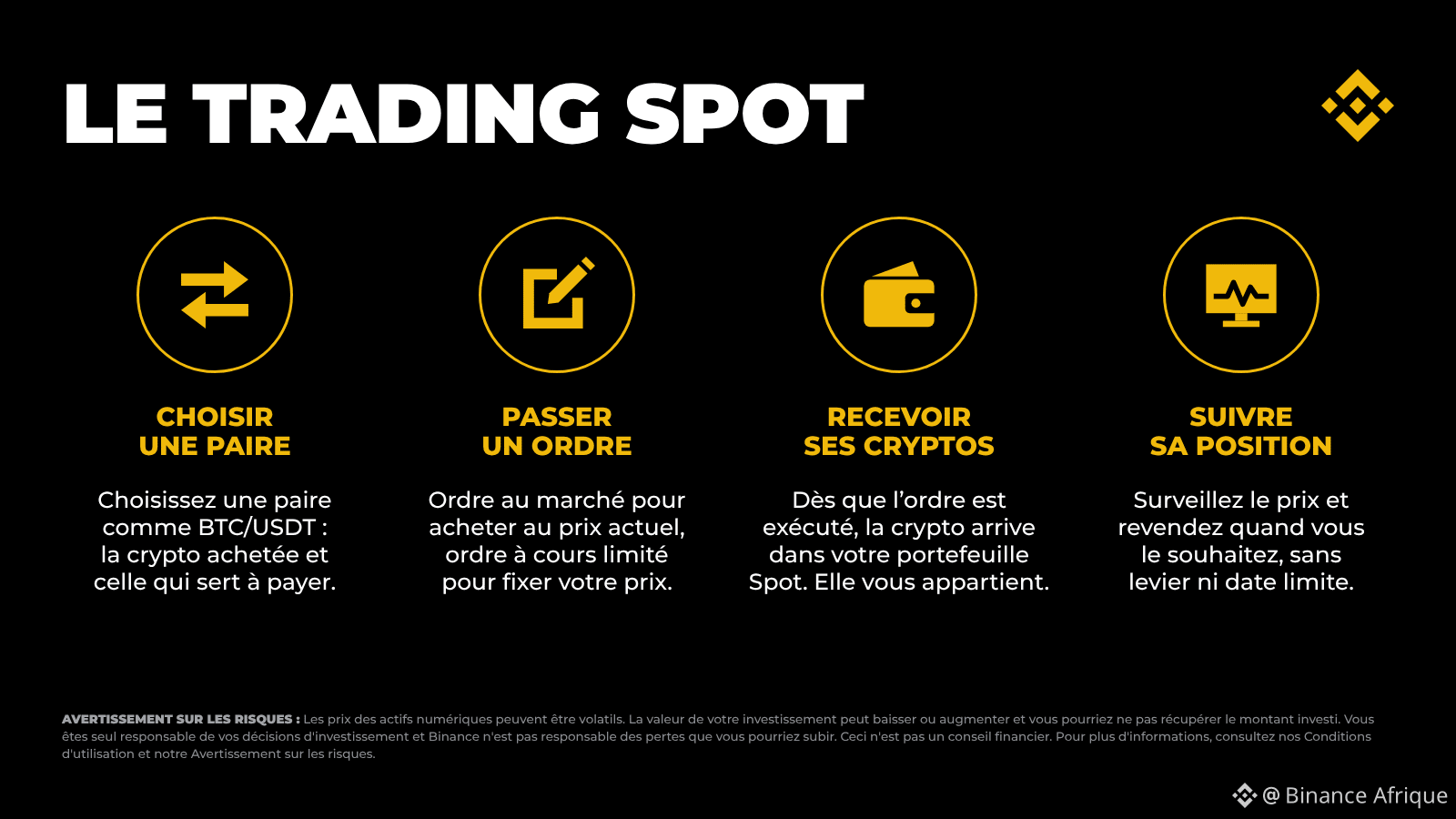
Spot trading is the simplest way to buy crypto. 🟡 Like at the market: you pay and walk away with your tomatoes. What you buy is truly yours.
Here’s how it works, in 4 steps:
1⃣ Choose a trading pair
A pair like BTC/USDT shows which crypto you’re buying and which one you’re paying with.
2⃣ Place an order
A market order buys instantly at the current price. A limit order waits until the price you set is reached.
3⃣ Receive your crypto
As soon as the order is filled, the crypto arrives in your Spot wallet.
4⃣ Track your position
Keep an eye on the price and sell whenever you want. With Spot trading, there’s no leverage or expiry date: you can never lose more than you invested.
Spot trading is a great place to start learning how to trade step by step, with small amounts.
4
380

What principles should guide the diversification of one’s investments, and how should one go about it [parvenir](https://academy.binance.com/fr/articles/asset-allocation-and-diversification-explained)
What principles should guide the diversification of one’s investments, and how should one go about it parvenir
2
932
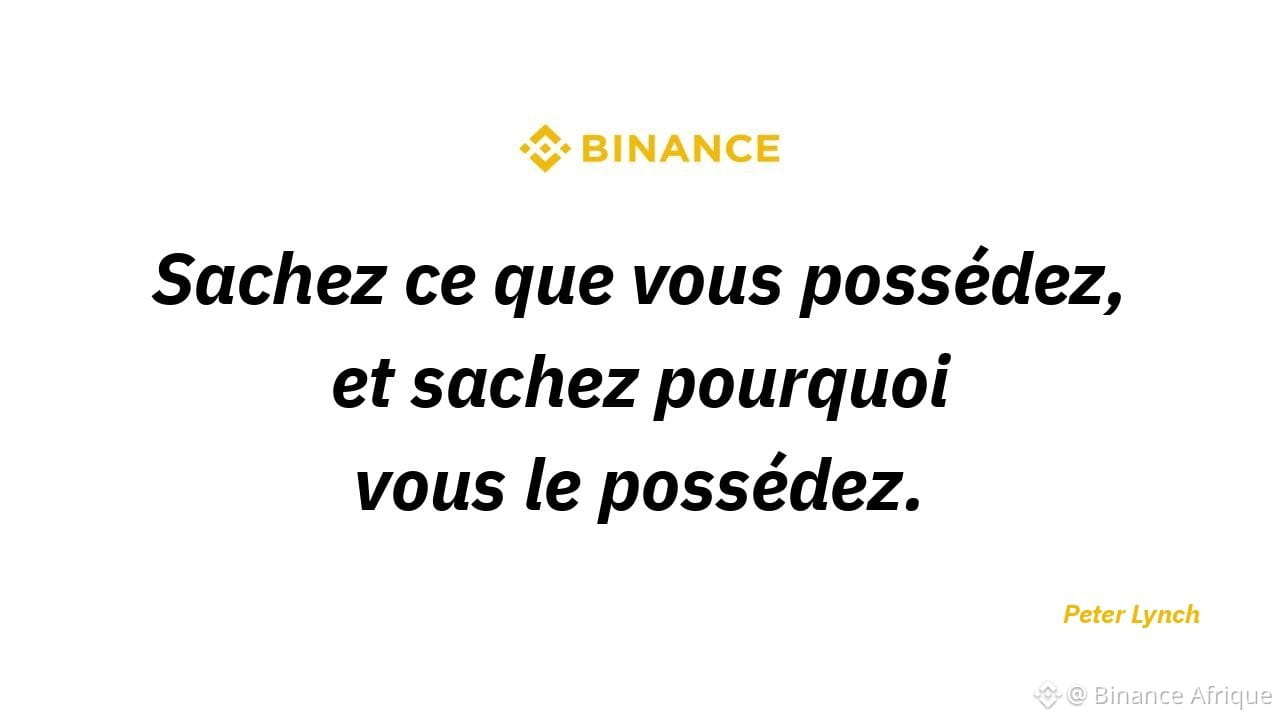
Before buying a crypto, ask yourself 2 questions: what is it, and why am I buying it? 🧠
Before buying a crypto, ask yourself 2 questions: what is it, and why am I buying it? 🧠
1
8
1k

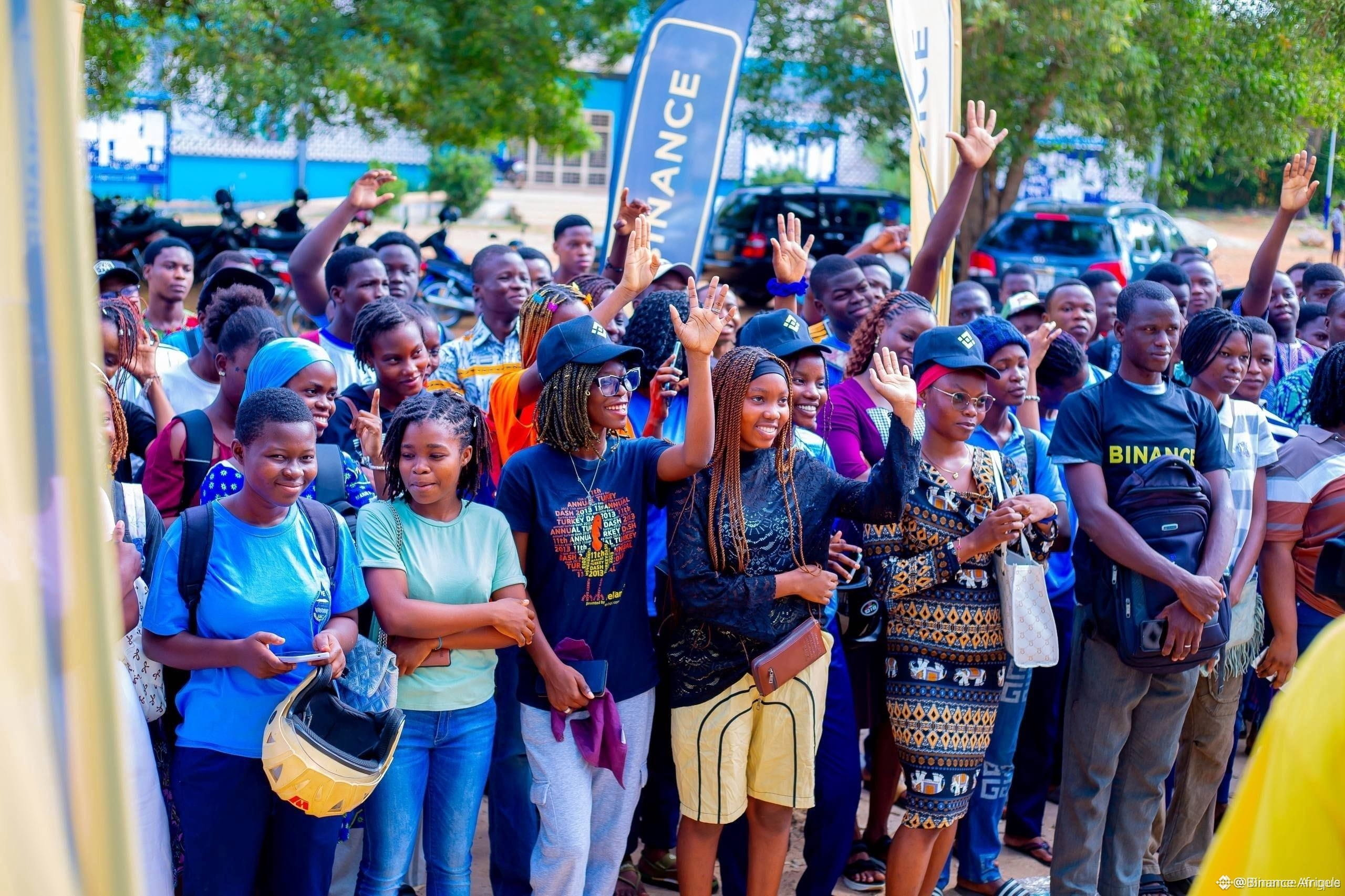
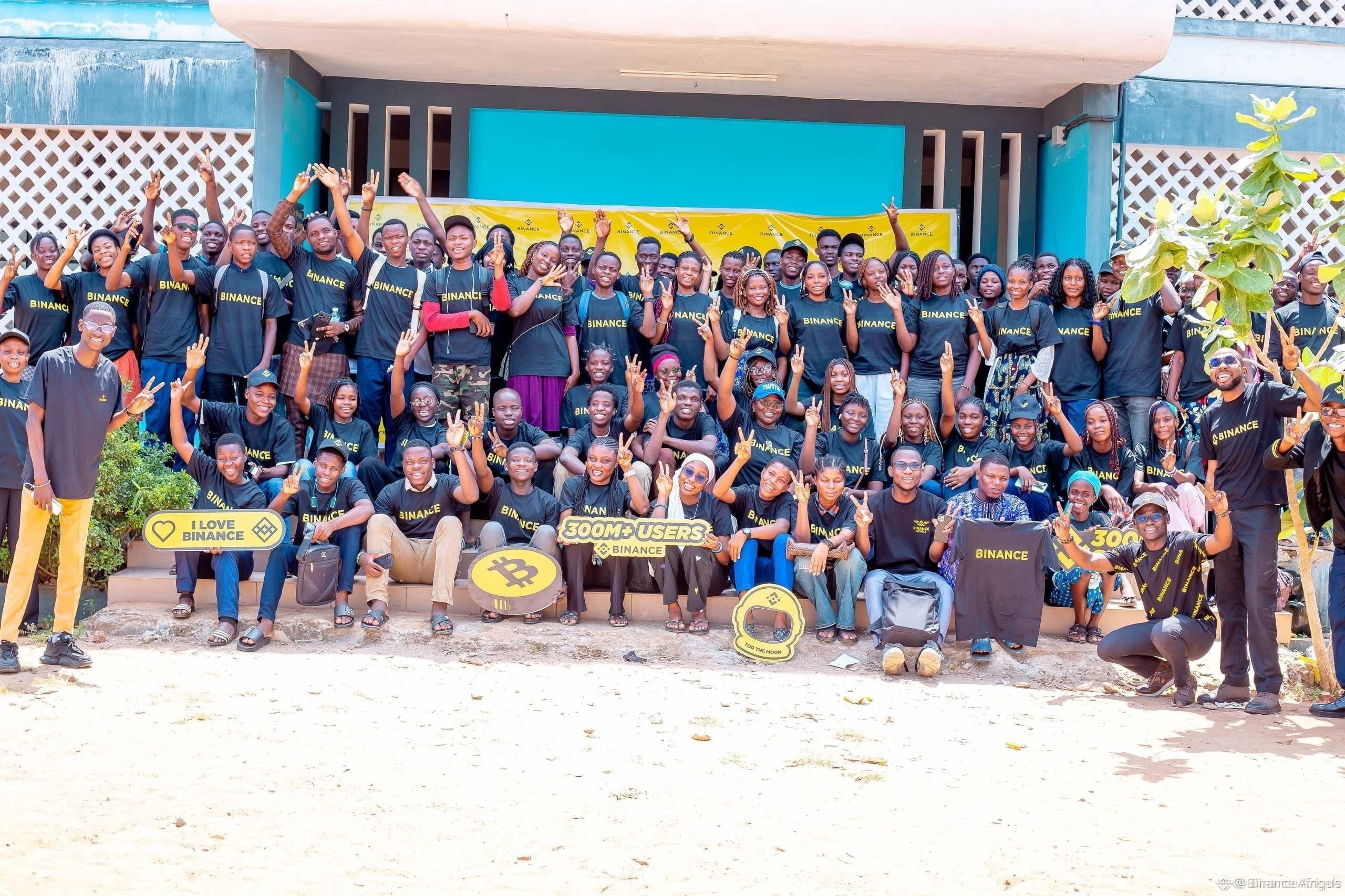
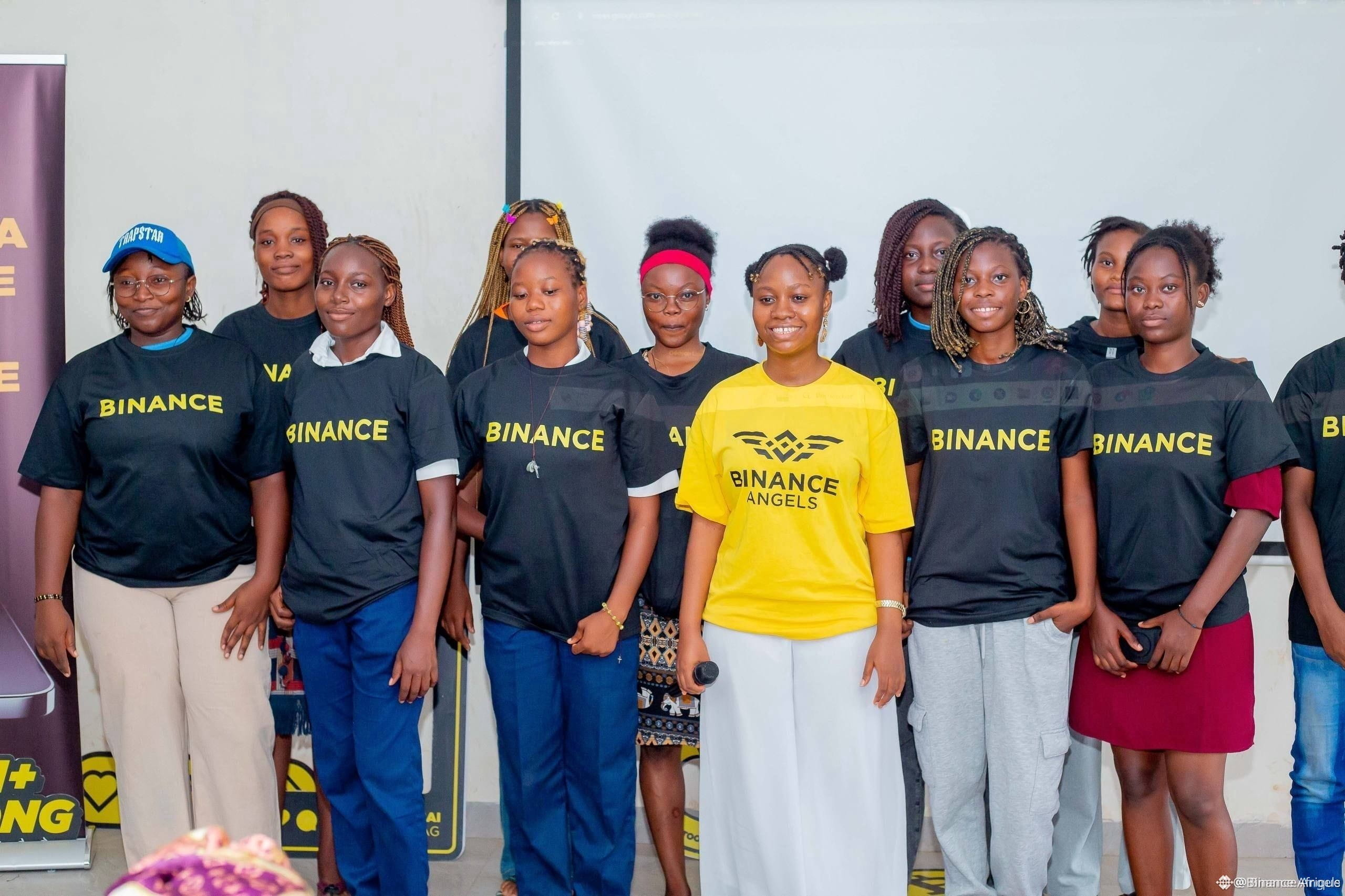
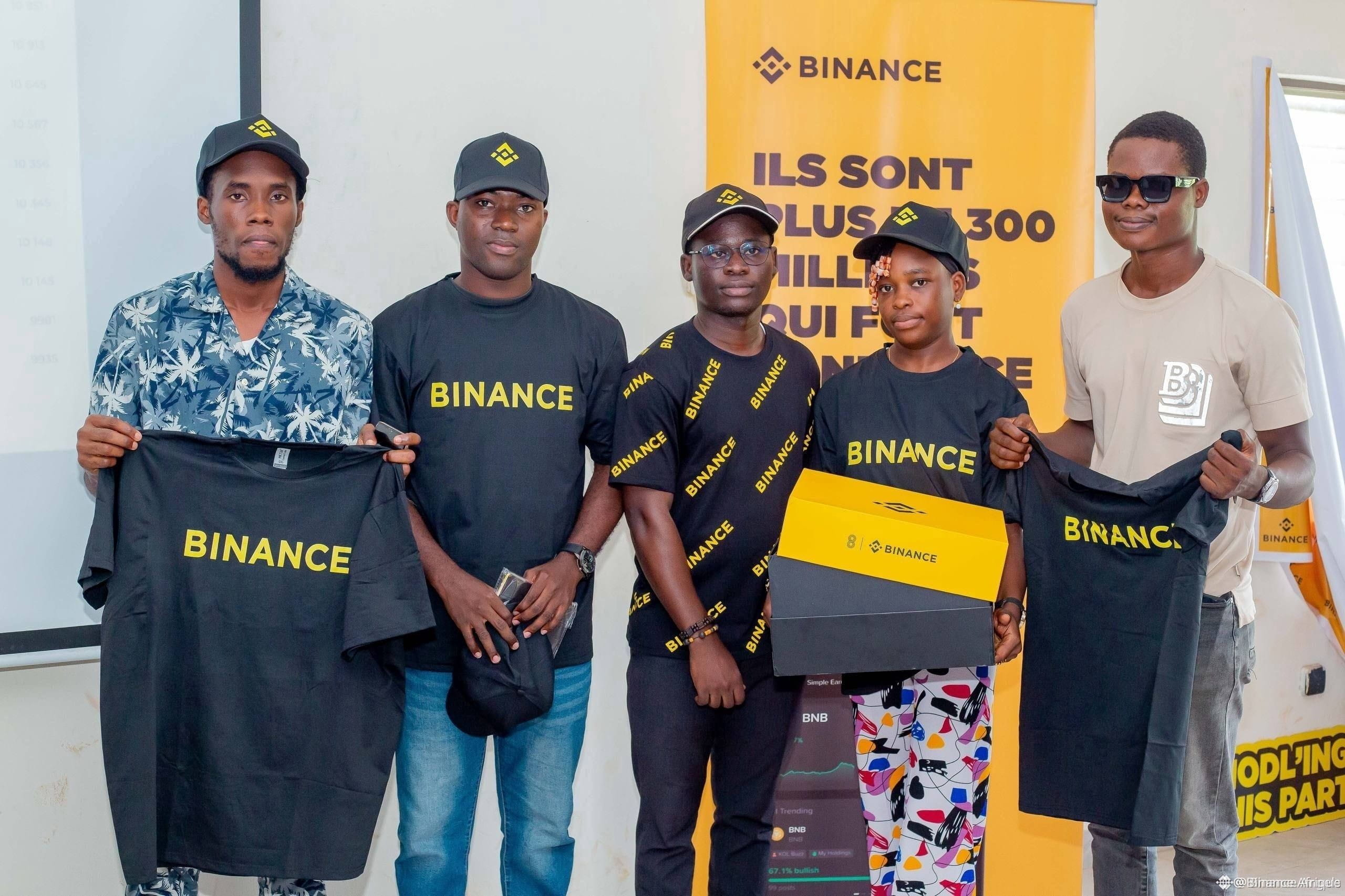
A look back in pictures at a wonderful gathering about blockchain and cryptocurrencies in Benin 🇧🇯
An opportunity to share knowledge, discover the possibilities offered by Web3, and connect with a new generation of financial technology enthusiasts.
Thank you to all the participants for being there, for your curiosity, and for your commitment.
Education remains essential to making blockchain accessible to everyone.
See you very soon at future events!
3
11
1.6k
When you walk into a trader’s house, there are telltale signs 😂
When you walk into a trader’s house, there are telltale signs 😂

2
11
1.5k
Bitcoin belongs to no one: no bank, company, or state.
Thousands of nodes around the world enforce the same rules. To change them, you need the network's agreement.
Bitcoin belongs to no one: no bank, company, or state.
Thousands of nodes around the world enforce the same rules. To change them, you need the network's agreement.
Thousands of nodes around the world enforce the same rules. To change them, you need the network's agreement.
1
19
3.8k
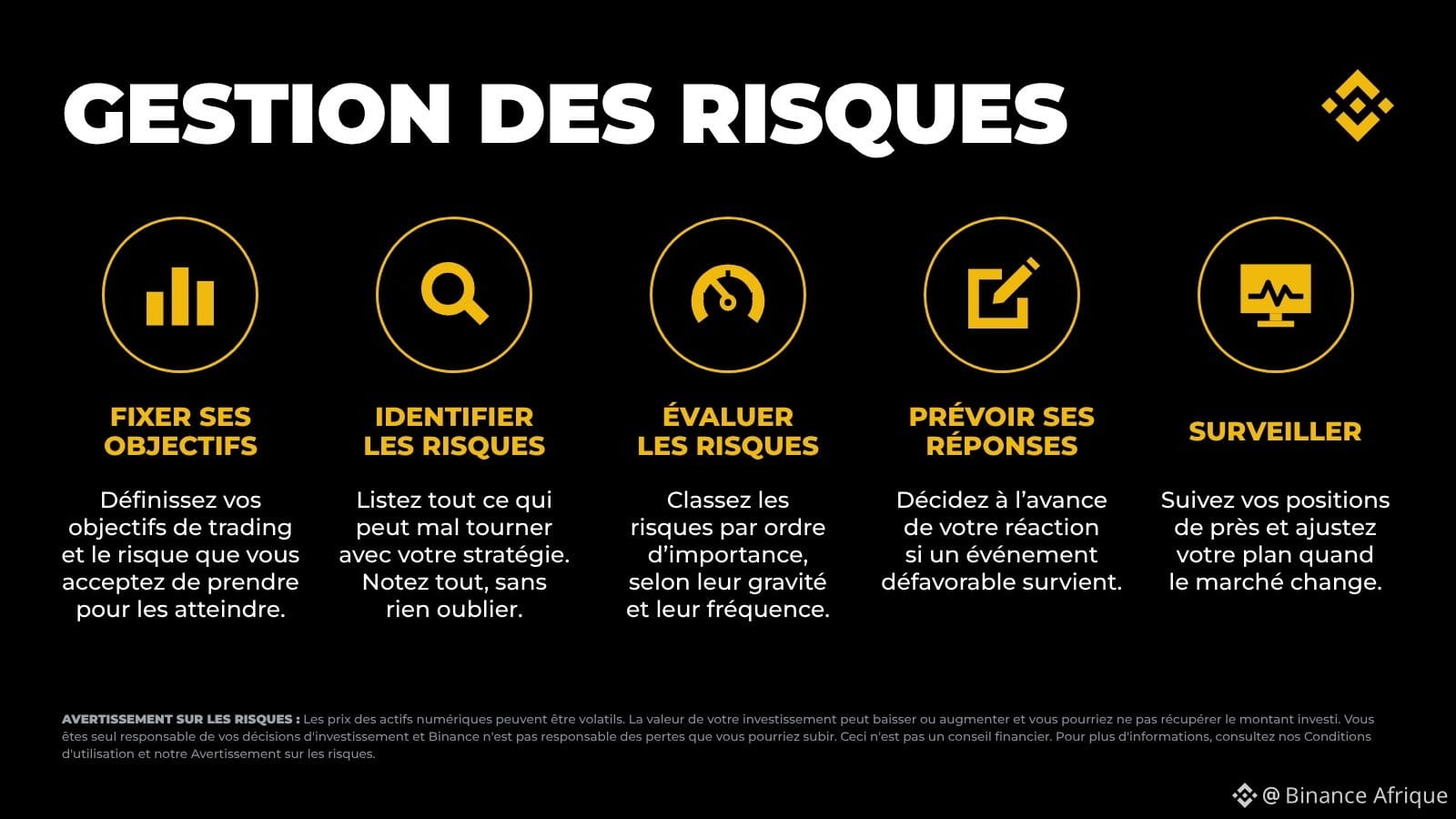
Have you ever opened a trade without knowing when you were going to exit? 🤔
It’s like setting off on a trip without checking your brakes: everything’s fine… until the first turn. Risk management is that check you do before you set off.
The 5 steps to remember:
1. Set your goals
2. Identify the risks
3. Assess them (severity and frequency)
4. Plan your responses in advance
5. Monitor and adjust
This is not financial advice. DYOR.
And you, which step are you already applying? Let us know in the comments 👇
#BinanceAfrique #RiskManagement
1
7
491
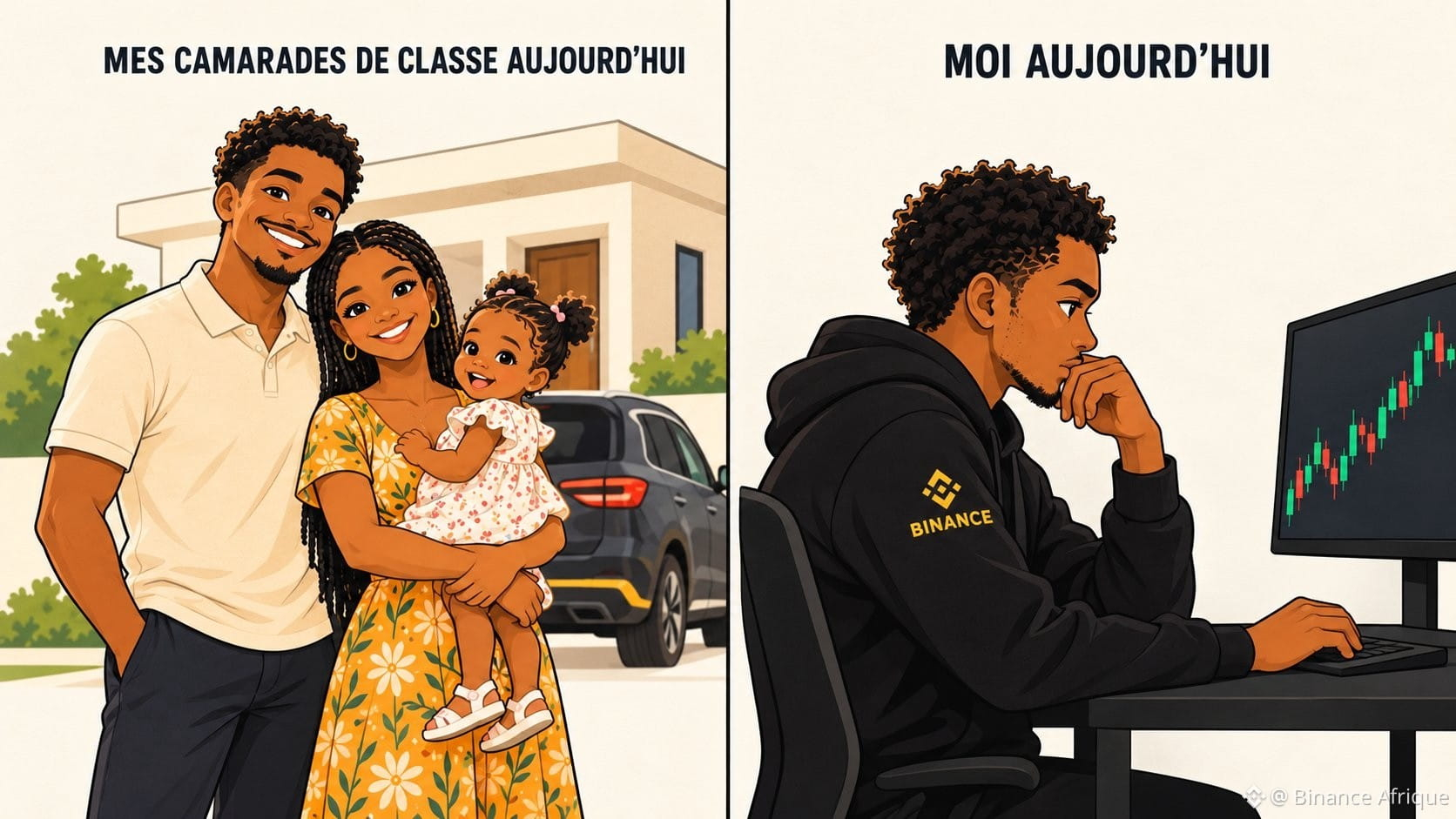
Them: a house, a car, a small family. Me: charts, analysis, and patience.
We don't all move at the same pace. The most important thing is to stay the course... and not confuse trading with guaranteed success.
Them: a house, a car, a small family. Me: charts, analysis, and patience.
We don't all move at the same pace. The most important thing is to stay the course... and not confuse trading with guaranteed success.
We don't all move at the same pace. The most important thing is to stay the course... and not confuse trading with guaranteed success.
1
5
707
Log in to explore more content
Join global crypto users on Binance Square
⚡️ Get latest and useful information about crypto.
💬 Trusted by the world’s largest crypto exchange.
👍 Discover real insights from verified creators.
Email / Phone number
Trending Topics
JobsReportRaisesHikeOdds
308,608 views
2,370 Discussing
TradFi News | US Adds 165,000 Jobs in October, More Than Double the 65,000 Forecast, as Unemployment Falls to 4.1%
Binance News
·38 Likes
·23.5k views
CPITestsDecemberRateOutlook
44,353 views
532 Discussing
BitcoinRebounds$75KAsChipsLead
25,025 views
240 Discussing