
Binance Blog
298 Posts

Binance Blog
 Binance Officially Verified Account
Report
Stay up to date with the latest stories and commentary.
0 Following
502.7K+ Followers
196.1K+ Liked
Posts
All
Quotes
Videos
Live
·
--
Article
New Report: bStocks Is Scaling Faster Than Any Other Tokenized Stock ProductMain TakeawaysbStocks are tokenized 1:1 U.S. stocks that trade 24/7 on Binance, giving users indirect price exposure to equities like Tesla and Nvidia without a separate brokerage account.A new report from Delphi Digital found that bStocks scaled faster in its first month than any other tokenized stock product, based on data through the end of July.Volume grew from $1.8 billion in the first 24 days to $14.7 billion by the second month.On August 25, Delphi Digital, a crypto research and analytics firm, published a new report looking at the growth dynamics of tokenized stock platforms and instruments. Using data through the end of July, the report found that bStocks, Binance’s tokenized stock product, scaled faster in its first month than any other product tracked. Here’s what the data from the report shows.How Fast bStocks GrewSince launching in June, Binance’s bStocks has out-scaled every other tokenized stock product on the market. Per the report, it did $1.8 billion in volume within its first 24 days alone, then climbed to $14.7 billion by month two, the fastest growth of any product in the report over that stretch. That’s a sign of real, broad-based demand: bStocks has already captured 28% of total tokenized stock value outstanding among the market’s largest issuers, built from a standing start in a fraction of the time it took the competition to get there.Who’s Trading bStocksDelphi’s findings point to bStocks’ growth so far being driven almost entirely by users who were already in crypto. At the latest cohort breakdown, 88% of bStocks buyers already held other digital assets before trading their first tokenized stock.That’s a different story from the traditional path into equities. Rather than discovering stocks through a separate brokerage, they’re building their first equity positions in the same app they already use for crypto. It’s a small but telling sign of what accessible TradFi can look like in practice: for a growing number of users, tokenized stocks are simply the easiest way into equities they’ve found so far.Execution Stays Stable, Even After HoursbStocks trade 24/7, but being open isn’t the same as working well. Many after-hours markets suffer from thin order books and wider price swings once the main session ends, exactly the kind of trade-off a global, always-on product needs to avoid.Delphi’s report put that to the test. Placing the same $100,000 NVDA order once during U.S. market hours and once after the close, the report found that how much the price moved against the order – a cost known as slippage – stayed in a similar 0.3% to 0.5% range both times. Pricing barely moved, whether the underlying U.S. market was open or shut.That stability comes down to how the order book is built. The same $100,000 order filled across 53 separate price levels on Binance, with no single order making up more than a small fraction of the total. A deep, evenly spread book like that means large trades don’t have to move far to get filled, in session or after hours.Final ThoughtsThe numbers in the report back up what bStocks users are already experiencing: fast, easy access to equities, without leaving the app they already use for crypto. By Delphi’s count, that combination scaled faster than any other tokenized stock platform on the market, and it’s crypto-native users leading the way.That’s the point of Binance’s financial super app: one place to trade, whether that’s crypto or stocks, without extra accounts, apps, or hours to work around. If bStocks’ early growth is any sign, removing that friction is exactly what users have been waiting for.Further ReadingIntroducing bStocks – Trade and Hold Tokenized 1:1 U.S. Stocks on BinanceInside the Numbers Behind Binance’s Financial Super AppWhy Tokenized Securities? A Look at bStocks vs. Traditional StocksDisclaimer: Nest Trading Limited acts as your introducing broker and routes your orders for Securities to its clearing broker partner, Alpaca Securities LLC, for execution, clearing, settlement and custody. Binance does not handle or custody your Securities. Securities are subject to high market and liquidity risk and price volatility (particularly outside traditional market hours). The value of your investment may go down or up and you may not get back the amount invested. You are solely responsible for your investment decisions and Binance is not liable for any losses you may incur. Past performance is not a reliable predictor of future performance. Before trading, you should make an independent assessment of the appropriateness of the transaction in light of your own objectives and circumstances, including the risks and potential benefits. Consult your own advisers, where appropriate. This information should not be construed as financial or investment advice. Binance may receive payment for order flow remuneration for directing your orders. To learn more about how to protect yourself, visit our Responsible Trading page. For more information, see our Terms of Use, Securities Trading Product Terms and Risk Warning.bStocks Tokenized Securities are classified as Certificates representing certain Financial Instruments (paragraph 92, Schedule 1 to FSMR). bStocks are not stocks or shares and bStocks do not allow holders to directly own a share or stock in the underlying listed company. bStocks do not represent any affiliation with the underlying asset's issuer. bStocks are offered through an Approved Prospectus in the ADGM and are not offered in any other jurisdiction. No public offer is made outside of the ADGM. Tokenized Securities are available only to eligible users in permitted jurisdictions on a secondary market basis only. It is your sole responsibility to ensure that accessing and trading Tokenized Securities is lawful in your jurisdiction before proceeding. Accessing this product from a jurisdiction in which it is prohibited or restricted does not create any liability or obligation on the part of Binance. We may restrict, suspend, reject, cancel, or unwind access or transactions if we determine, in our sole discretion, that your access or transaction may breach applicable law, product restrictions, eligibility criteria, sanctions requirements, or the relevant offering documents. No information displayed in connection with Tokenized Securities is intended as an offer, solicitation, promotion, recommendation, or invitation to buy or sell securities in any jurisdiction. Tokenized Securities are not offered, sold, distributed, made available, or accessible in the United States or to, or for the account or benefit of, U.S. persons. The Tokenized Securities have not been and will not be registered under the U.S. Securities Act of 1933 or any U.S. state securities laws and a public offering of bStocks will not be conducted in the United States or any other jurisdiction (other than the ADGM). By accessing this product, you represent and warrant that you are not a U.S. person, are not located in the United States, are not acting for the account or benefit of any U.S. person, and will not access, purchase, sell, transfer, redeem, or otherwise transact in Tokenized Securities from within the United States. To learn more about how to protect yourself, visit our Responsible Trading page. For more information, see the Terms of Use, Exchange Rules, Exchange Procedures, relevant Prospectus, Admission to Trading Notice and Risk Warning.
New Report: bStocks Is Scaling Faster Than Any Other Tokenized Stock Product
Main TakeawaysbStocks are tokenized 1:1 U.S. stocks that trade 24/7 on Binance, giving users indirect price exposure to equities like Tesla and Nvidia without a separate brokerage account.A new report from Delphi Digital found that bStocks scaled faster in its first month than any other tokenized stock product, based on data through the end of July.Volume grew from $1.8 billion in the first 24 days to $14.7 billion by the second month.On August 25, Delphi Digital, a crypto research and analytics firm, published a new report looking at the growth dynamics of tokenized stock platforms and instruments. Using data through the end of July, the report found that bStocks, Binance’s tokenized stock product, scaled faster in its first month than any other product tracked. Here’s what the data from the report shows.How Fast bStocks GrewSince launching in June, Binance’s bStocks has out-scaled every other tokenized stock product on the market. Per the report, it did $1.8 billion in volume within its first 24 days alone, then climbed to $14.7 billion by month two, the fastest growth of any product in the report over that stretch. That’s a sign of real, broad-based demand: bStocks has already captured 28% of total tokenized stock value outstanding among the market’s largest issuers, built from a standing start in a fraction of the time it took the competition to get there.Who’s Trading bStocksDelphi’s findings point to bStocks’ growth so far being driven almost entirely by users who were already in crypto. At the latest cohort breakdown, 88% of bStocks buyers already held other digital assets before trading their first tokenized stock.That’s a different story from the traditional path into equities. Rather than discovering stocks through a separate brokerage, they’re building their first equity positions in the same app they already use for crypto. It’s a small but telling sign of what accessible TradFi can look like in practice: for a growing number of users, tokenized stocks are simply the easiest way into equities they’ve found so far.Execution Stays Stable, Even After HoursbStocks trade 24/7, but being open isn’t the same as working well. Many after-hours markets suffer from thin order books and wider price swings once the main session ends, exactly the kind of trade-off a global, always-on product needs to avoid.Delphi’s report put that to the test. Placing the same $100,000 NVDA order once during U.S. market hours and once after the close, the report found that how much the price moved against the order – a cost known as slippage – stayed in a similar 0.3% to 0.5% range both times. Pricing barely moved, whether the underlying U.S. market was open or shut.That stability comes down to how the order book is built. The same $100,000 order filled across 53 separate price levels on Binance, with no single order making up more than a small fraction of the total. A deep, evenly spread book like that means large trades don’t have to move far to get filled, in session or after hours.Final ThoughtsThe numbers in the report back up what bStocks users are already experiencing: fast, easy access to equities, without leaving the app they already use for crypto. By Delphi’s count, that combination scaled faster than any other tokenized stock platform on the market, and it’s crypto-native users leading the way.That’s the point of Binance’s financial super app: one place to trade, whether that’s crypto or stocks, without extra accounts, apps, or hours to work around. If bStocks’ early growth is any sign, removing that friction is exactly what users have been waiting for.Further ReadingIntroducing bStocks – Trade and Hold Tokenized 1:1 U.S. Stocks on BinanceInside the Numbers Behind Binance’s Financial Super AppWhy Tokenized Securities? A Look at bStocks vs. Traditional StocksDisclaimer: Nest Trading Limited acts as your introducing broker and routes your orders for Securities to its clearing broker partner, Alpaca Securities LLC, for execution, clearing, settlement and custody. Binance does not handle or custody your Securities. Securities are subject to high market and liquidity risk and price volatility (particularly outside traditional market hours). The value of your investment may go down or up and you may not get back the amount invested. You are solely responsible for your investment decisions and Binance is not liable for any losses you may incur. Past performance is not a reliable predictor of future performance. Before trading, you should make an independent assessment of the appropriateness of the transaction in light of your own objectives and circumstances, including the risks and potential benefits. Consult your own advisers, where appropriate. This information should not be construed as financial or investment advice. Binance may receive payment for order flow remuneration for directing your orders. To learn more about how to protect yourself, visit our Responsible Trading page. For more information, see our Terms of Use, Securities Trading Product Terms and Risk Warning.bStocks Tokenized Securities are classified as Certificates representing certain Financial Instruments (paragraph 92, Schedule 1 to FSMR). bStocks are not stocks or shares and bStocks do not allow holders to directly own a share or stock in the underlying listed company. bStocks do not represent any affiliation with the underlying asset's issuer. bStocks are offered through an Approved Prospectus in the ADGM and are not offered in any other jurisdiction. No public offer is made outside of the ADGM. Tokenized Securities are available only to eligible users in permitted jurisdictions on a secondary market basis only. It is your sole responsibility to ensure that accessing and trading Tokenized Securities is lawful in your jurisdiction before proceeding. Accessing this product from a jurisdiction in which it is prohibited or restricted does not create any liability or obligation on the part of Binance. We may restrict, suspend, reject, cancel, or unwind access or transactions if we determine, in our sole discretion, that your access or transaction may breach applicable law, product restrictions, eligibility criteria, sanctions requirements, or the relevant offering documents. No information displayed in connection with Tokenized Securities is intended as an offer, solicitation, promotion, recommendation, or invitation to buy or sell securities in any jurisdiction. Tokenized Securities are not offered, sold, distributed, made available, or accessible in the United States or to, or for the account or benefit of, U.S. persons. The Tokenized Securities have not been and will not be registered under the U.S. Securities Act of 1933 or any U.S. state securities laws and a public offering of bStocks will not be conducted in the United States or any other jurisdiction (other than the ADGM). By accessing this product, you represent and warrant that you are not a U.S. person, are not located in the United States, are not acting for the account or benefit of any U.S. person, and will not access, purchase, sell, transfer, redeem, or otherwise transact in Tokenized Securities from within the United States. To learn more about how to protect yourself, visit our Responsible Trading page. For more information, see the Terms of Use, Exchange Rules, Exchange Procedures, relevant Prospectus, Admission to Trading Notice and Risk Warning.
7
915
·
--

Article
Binance Agent OS Playbook: Choosing the Right Tools for Your AI AgentMain TakeawaysBinance Agent OS gives developers multiple ways to connect AI agents to Binance, with dedicated tools for trading, payments, wallet interactions, and more.The right starting point depends on what you need from your agent. You can start with one tool and combine others as your requirements grow.You’re always in control of the permissions and limits assigned to each agent, and can revoke access at any time.Binance Agent OS gives developers multiple ways to connect AI agents to Binance. The right approach depends on what your agent needs to do, how much control you want, and where you’re building it.Agent OS is the broader platform and toolkit. Its MCP server, APIs, Agentic Wallet, x402, and Skills Hub each address a different part of the agent stack. You can start with one tool or combine several as your requirements expand. We worked with our AI development team to identify useful starting points, example use cases, and tips for building effective agents on Binance.Start with Your Use CaseIf you want to…Start with…Connect an agent to trading and live market data MCP serverBuild custom execution logic or backend workflowsBinance APIsAdd permission-controlled wallet interactionsAgentic WalletEnable agent-driven payments and settlementBinance x402Add capabilities without building from scratchBinance Skills HubBuild and configure your agent within Binance’s own ecosystemBinance Ai ProBuild an agent with several capabilitiesCombination of Agent OS toolsTrading and Live Market Data: Binance MCP ServerThe Binance MCP Server implements the Model Context Protocol, allowing AI agents to plug into supported Binance tools.It currently supports a focused set of trading and market data capabilities. For workflows that require greater customization – for instance, payment and on-chain functionality – developers can use other Agent OS products while MCP support continues to expand.Controlled Access to Web3: Agentic WalletAgentic Wallet is designed for agents that need wallet and on-chain capabilities. Each Agentic Wallet is a separate, MPC-secured wallet created under your Binance account and authorized specifically for an AI agent. Your main wallet stays untouched. From a dedicated dashboard, you can set boundaries such as spending limits and token scope, then monitor assets and activity in real time. Inside those boundaries, agents can handle token transfers, swaps, limit orders, and other on-chain operations. Payments for Agents and Applications: Binance x402x402 is an HTTP-native payment protocol for agents and applications. When an agent requests a paid resource, the service responds with an HTTP 402 status and its payment requirements. The agent signs an authorization off-chain, and a facilitator verifies and settles the payment on-chain without taking custody of the funds.The x402 Payment Skill lets your Agentic Wallet handle this flow without any custom payment code. It can parse the request, present the price for confirmation, sign the authorization, retry the request, and return the result – all in one seamless flow.For developers offering paid APIs or services, Binance’s B402 infrastructure supports per-request billing and gas-sponsored settlement on BNB Smart Chain. It also allows for agent-to-agent payments, broadening the payments ecosystem well beyond human users.Curated Skill Library: Binance Skills HubBinance Skills Hub is an open marketplace of curated, security-reviewed skills that agents use through natural language. You don’t need to build these capabilities from scratch. Skills Hub gives you a ready-made library you can plug into your agent right away. Available skills span:Spot, Futures, and Convert tradingWallet operationsDEX swapsMarket intelligenceToken and address analysisContract security checksPayments and P2PBuild a Setup that Works for YouAgent OS gives developers one place to discover and connect Binance’s agent capabilities, with plug-and-play tools for different use cases. MCP currently supports trading and market data. For on-chain activity and payments, you can layer in Agentic Wallet, x402, Skills Hub, or Binance APIs as needed. As MCP support expands, more of these capabilities will become available through a single connection.Start with the tools your agent needs today, then add more as your use case grows. You remain in control of the permissions and limits assigned to each agent and can change or revoke access at any time. To get started, visit the Binance Agent OS page and find the right entry point for your build.Further ReadingIntroducing Agent OS: Built for AI Agent Integration How Binance is Connecting AI Agents to the Financial Super App ExperienceHow Binance AI Pro Changes What Traders Can Do in The MarketDisclaimer: Your use of Binance Ai, including any Binance Ai Service, is at your own risk. It is provided to you on an “as is” and “as available” basis, without representation or warranty of any kind. You are fully responsible for all of your Prompts. AI Inputs may include various unvetted third party sourced content. Any sourced content is provided “as is” without any guarantee. Binance may restrict or alter sourced content based on various compliance safety filters, however this is not absolute. Binance does not endorse or guarantee any AI Outputs. AI Outputs may include or reflect content, positions, views and opinions of third parties unknown to Binance, which may also include errors, biases, synthetic data and or outdated information. Any AI Output should not be solely relied on for decision making. AI Outputs do not constitute any kind of advice by Binance nor any other intermediary services. Binance Ai may use or make available third party AI Tools without any guarantee and subject to third party terms. Where AI Tools are configured by yourself or a third-party, you indemnify Binance against all liability. Binance does not guarantee any AI Tools. Binance Ai may respond to your requests, but without any guarantee that your request will be fulfilled satisfactorily or at all. Digital asset prices can be volatile. You are solely responsible for your investment decisions and Binance is not liable for any losses. Use of Binance Ai may be subject to additional Binance Product Terms, where applicable. For more information, see our Terms of Use, Risk Warning and AI Policy and Terms.
Binance Agent OS Playbook: Choosing the Right Tools for Your AI Agent
Main TakeawaysBinance Agent OS gives developers multiple ways to connect AI agents to Binance, with dedicated tools for trading, payments, wallet interactions, and more.The right starting point depends on what you need from your agent. You can start with one tool and combine others as your requirements grow.You’re always in control of the permissions and limits assigned to each agent, and can revoke access at any time.Binance Agent OS gives developers multiple ways to connect AI agents to Binance. The right approach depends on what your agent needs to do, how much control you want, and where you’re building it.Agent OS is the broader platform and toolkit. Its MCP server, APIs, Agentic Wallet, x402, and Skills Hub each address a different part of the agent stack. You can start with one tool or combine several as your requirements expand. We worked with our AI development team to identify useful starting points, example use cases, and tips for building effective agents on Binance.Start with Your Use CaseIf you want to…Start with…Connect an agent to trading and live market data MCP serverBuild custom execution logic or backend workflowsBinance APIsAdd permission-controlled wallet interactionsAgentic WalletEnable agent-driven payments and settlementBinance x402Add capabilities without building from scratchBinance Skills HubBuild and configure your agent within Binance’s own ecosystemBinance Ai ProBuild an agent with several capabilitiesCombination of Agent OS toolsTrading and Live Market Data: Binance MCP ServerThe Binance MCP Server implements the Model Context Protocol, allowing AI agents to plug into supported Binance tools.It currently supports a focused set of trading and market data capabilities. For workflows that require greater customization – for instance, payment and on-chain functionality – developers can use other Agent OS products while MCP support continues to expand.Controlled Access to Web3: Agentic WalletAgentic Wallet is designed for agents that need wallet and on-chain capabilities. Each Agentic Wallet is a separate, MPC-secured wallet created under your Binance account and authorized specifically for an AI agent. Your main wallet stays untouched. From a dedicated dashboard, you can set boundaries such as spending limits and token scope, then monitor assets and activity in real time. Inside those boundaries, agents can handle token transfers, swaps, limit orders, and other on-chain operations. Payments for Agents and Applications: Binance x402x402 is an HTTP-native payment protocol for agents and applications. When an agent requests a paid resource, the service responds with an HTTP 402 status and its payment requirements. The agent signs an authorization off-chain, and a facilitator verifies and settles the payment on-chain without taking custody of the funds.The x402 Payment Skill lets your Agentic Wallet handle this flow without any custom payment code. It can parse the request, present the price for confirmation, sign the authorization, retry the request, and return the result – all in one seamless flow.For developers offering paid APIs or services, Binance’s B402 infrastructure supports per-request billing and gas-sponsored settlement on BNB Smart Chain. It also allows for agent-to-agent payments, broadening the payments ecosystem well beyond human users.Curated Skill Library: Binance Skills HubBinance Skills Hub is an open marketplace of curated, security-reviewed skills that agents use through natural language. You don’t need to build these capabilities from scratch. Skills Hub gives you a ready-made library you can plug into your agent right away. Available skills span:Spot, Futures, and Convert tradingWallet operationsDEX swapsMarket intelligenceToken and address analysisContract security checksPayments and P2PBuild a Setup that Works for YouAgent OS gives developers one place to discover and connect Binance’s agent capabilities, with plug-and-play tools for different use cases. MCP currently supports trading and market data. For on-chain activity and payments, you can layer in Agentic Wallet, x402, Skills Hub, or Binance APIs as needed. As MCP support expands, more of these capabilities will become available through a single connection.Start with the tools your agent needs today, then add more as your use case grows. You remain in control of the permissions and limits assigned to each agent and can change or revoke access at any time. To get started, visit the Binance Agent OS page and find the right entry point for your build.Further ReadingIntroducing Agent OS: Built for AI Agent Integration How Binance is Connecting AI Agents to the Financial Super App ExperienceHow Binance AI Pro Changes What Traders Can Do in The MarketDisclaimer: Your use of Binance Ai, including any Binance Ai Service, is at your own risk. It is provided to you on an “as is” and “as available” basis, without representation or warranty of any kind. You are fully responsible for all of your Prompts. AI Inputs may include various unvetted third party sourced content. Any sourced content is provided “as is” without any guarantee. Binance may restrict or alter sourced content based on various compliance safety filters, however this is not absolute. Binance does not endorse or guarantee any AI Outputs. AI Outputs may include or reflect content, positions, views and opinions of third parties unknown to Binance, which may also include errors, biases, synthetic data and or outdated information. Any AI Output should not be solely relied on for decision making. AI Outputs do not constitute any kind of advice by Binance nor any other intermediary services. Binance Ai may use or make available third party AI Tools without any guarantee and subject to third party terms. Where AI Tools are configured by yourself or a third-party, you indemnify Binance against all liability. Binance does not guarantee any AI Tools. Binance Ai may respond to your requests, but without any guarantee that your request will be fulfilled satisfactorily or at all. Digital asset prices can be volatile. You are solely responsible for your investment decisions and Binance is not liable for any losses. Use of Binance Ai may be subject to additional Binance Product Terms, where applicable. For more information, see our Terms of Use, Risk Warning and AI Policy and Terms.
4
325
·
--
Article
What Really Happens When You Load a Crypto CardMain TakeawaysCrypto cards don’t all work the same way. Some classify your deposit as a sale – transferring control to the card company – while others keep it in your account.A deposit-equals-sale model can strip your control, may potentially trigger capital gains tax the moment you load your card, and may leave you an unsecured creditor if the company fails.However, the Binance Card uses an account-linked model. Your crypto stays in your Binance account until you make a purchase, at which point the required amount is converted to USDC and settled with the card issuer. Your assets on Binance are subject to Binance's security measures.More people are paying with bitcoin, ethereum, and stablecoins through crypto cards than ever before. But before you pick a crypto card to load, and tap it for your everyday purchases, there’s an important question worth asking:What happens to my crypto when I deposit it into my card?The answer depends entirely on which card you use, and the difference could cost you more than you think, both in control and in taxes. In this piece, we’ll break down the two different ways crypto cards handle your deposit, what each one means for your control and might mean for your tax bill, and how to check which model your card uses so you can make an informed choice.Two Common Deposit Models: Sale Versus Account-LinkedEvery crypto card has to answer one basic question behind the scenes: when you load crypto onto it, what happens to that crypto? The answer determines who controls your assets, when you may be taxed, and what you’re entitled to if something goes wrong.Broadly, there are two fundamentally different ways a card can handle your deposit. On the surface they look identical: you load crypto, you get a balance, you spend. But underneath, that difference is where the real consequences hide.Model 1: Deposit = SaleSome cards classify your deposit as a “sale.” The moment you transfer crypto onto the card, you no longer control it, the card company does. Your crypto becomes their asset, and you simply receive a balance to spend.Model 2: Deposit = Control Crypto Through Your AccountYour crypto stays in your account, and the card draws from your balance only when you actually make a purchase. There is no transfer of crypto to the card company in advance.The Binance Card uses Model 2. Your crypto remains in your Binance account until a purchase triggers conversion and settlement. Who Actually Controls Your Crypto?When a card treats your deposit as a sale, control transfers to the card company. Your assets move from your wallet to theirs, and you become an unsecured creditor — in some cases with what the company owes you capped as low as $500. If that company mismanages funds, gets hacked, or goes under, you’re at the back of the line to recover anything.The ‘Deposit Equals Sale’ Model Creates Tax ExposureThis is not tax advice. Tax treatment depends on your jurisdiction and you should consult a tax professional. That said, under a deposit-equals-sale model, a deposit may be treated as a taxable sale of the underlying crypto. If your crypto has appreciated since you bought it, you may have realized a capital gain before you've even purchased a single thing.Here’s how it could play out:You buy 1 bitcoin at $30,000.The price of 1 bitcoin rises to $70,000.When you deposit the same 1 bitcoin into your card, it may be classified as a sale of bitcoin.You now owe capital gains tax on $40,000 of profit, just for loading your card.You later spend from the card, triggering a second taxable event.One deposit and one spend now constitute two taxable events – effectively double taxation. There are no tax forms or cost-basis reporting either, which leaves you to reconcile every single deposit with your tax professional on your own.The Binance Card works differently. It does not require you to transfer your crypto to the card company in advance. Your crypto stays in your Binance account, and conversion only happens when you make a purchase. You should consult a tax professional about the tax treatment of spending crypto via the card in your jurisdiction.Binance Card Puts Its Terms in Plain SightControl and tax treatment vary meaningfully across providers, but very few cards make it easy to find out which model you're actually signing up for. Deposit-equals-sale terms are often buried in the fine print, leaving you to discover the consequences only after you've already loaded your card.The Binance Card Terms are publicly available and set out how deposits, conversion, and spending work. You can review them before you commit. The Binance Card is issued by the relevant card issuer, with Nest Trading Limited (ADGM) acting with the issuer (subject to local jurisdictions). Final ThoughtsThe right crypto card shouldn't cost you control or catch you off guard. With the Binance Card, your crypto stays in your Binance account until you spend, conversion only happens at the point of purchase, and the terms are available for you to review before you commit.Further ReadingBrazilian Users Can Now Tap and Pay with Binance x Mastercard Crypto CardHow Binance Serves Your Full Financial JourneyBuilt by You: How User Feedback Shaped BinanceDisclaimer: Digital asset prices can be volatile. The value of your investment may go down or up, and you may not get back the amount invested. This content is for general information only and should not be construed as financial, investment, or tax advice.For more information, see our Terms of Use, Binance Card Terms of Use and Risk Warning.
What Really Happens When You Load a Crypto Card
Main TakeawaysCrypto cards don’t all work the same way. Some classify your deposit as a sale – transferring control to the card company – while others keep it in your account.A deposit-equals-sale model can strip your control, may potentially trigger capital gains tax the moment you load your card, and may leave you an unsecured creditor if the company fails.However, the Binance Card uses an account-linked model. Your crypto stays in your Binance account until you make a purchase, at which point the required amount is converted to USDC and settled with the card issuer. Your assets on Binance are subject to Binance's security measures.More people are paying with bitcoin, ethereum, and stablecoins through crypto cards than ever before. But before you pick a crypto card to load, and tap it for your everyday purchases, there’s an important question worth asking:What happens to my crypto when I deposit it into my card?The answer depends entirely on which card you use, and the difference could cost you more than you think, both in control and in taxes. In this piece, we’ll break down the two different ways crypto cards handle your deposit, what each one means for your control and might mean for your tax bill, and how to check which model your card uses so you can make an informed choice.Two Common Deposit Models: Sale Versus Account-LinkedEvery crypto card has to answer one basic question behind the scenes: when you load crypto onto it, what happens to that crypto? The answer determines who controls your assets, when you may be taxed, and what you’re entitled to if something goes wrong.Broadly, there are two fundamentally different ways a card can handle your deposit. On the surface they look identical: you load crypto, you get a balance, you spend. But underneath, that difference is where the real consequences hide.Model 1: Deposit = SaleSome cards classify your deposit as a “sale.” The moment you transfer crypto onto the card, you no longer control it, the card company does. Your crypto becomes their asset, and you simply receive a balance to spend.Model 2: Deposit = Control Crypto Through Your AccountYour crypto stays in your account, and the card draws from your balance only when you actually make a purchase. There is no transfer of crypto to the card company in advance.The Binance Card uses Model 2. Your crypto remains in your Binance account until a purchase triggers conversion and settlement. Who Actually Controls Your Crypto?When a card treats your deposit as a sale, control transfers to the card company. Your assets move from your wallet to theirs, and you become an unsecured creditor — in some cases with what the company owes you capped as low as $500. If that company mismanages funds, gets hacked, or goes under, you’re at the back of the line to recover anything.The ‘Deposit Equals Sale’ Model Creates Tax ExposureThis is not tax advice. Tax treatment depends on your jurisdiction and you should consult a tax professional. That said, under a deposit-equals-sale model, a deposit may be treated as a taxable sale of the underlying crypto. If your crypto has appreciated since you bought it, you may have realized a capital gain before you've even purchased a single thing.Here’s how it could play out:You buy 1 bitcoin at $30,000.The price of 1 bitcoin rises to $70,000.When you deposit the same 1 bitcoin into your card, it may be classified as a sale of bitcoin.You now owe capital gains tax on $40,000 of profit, just for loading your card.You later spend from the card, triggering a second taxable event.One deposit and one spend now constitute two taxable events – effectively double taxation. There are no tax forms or cost-basis reporting either, which leaves you to reconcile every single deposit with your tax professional on your own.The Binance Card works differently. It does not require you to transfer your crypto to the card company in advance. Your crypto stays in your Binance account, and conversion only happens when you make a purchase. You should consult a tax professional about the tax treatment of spending crypto via the card in your jurisdiction.Binance Card Puts Its Terms in Plain SightControl and tax treatment vary meaningfully across providers, but very few cards make it easy to find out which model you're actually signing up for. Deposit-equals-sale terms are often buried in the fine print, leaving you to discover the consequences only after you've already loaded your card.The Binance Card Terms are publicly available and set out how deposits, conversion, and spending work. You can review them before you commit. The Binance Card is issued by the relevant card issuer, with Nest Trading Limited (ADGM) acting with the issuer (subject to local jurisdictions). Final ThoughtsThe right crypto card shouldn't cost you control or catch you off guard. With the Binance Card, your crypto stays in your Binance account until you spend, conversion only happens at the point of purchase, and the terms are available for you to review before you commit.Further ReadingBrazilian Users Can Now Tap and Pay with Binance x Mastercard Crypto CardHow Binance Serves Your Full Financial JourneyBuilt by You: How User Feedback Shaped BinanceDisclaimer: Digital asset prices can be volatile. The value of your investment may go down or up, and you may not get back the amount invested. This content is for general information only and should not be construed as financial, investment, or tax advice.For more information, see our Terms of Use, Binance Card Terms of Use and Risk Warning.
3
1
17
1.8k
·
--
Article
Binance's Yield Layer – Hodl Crypto For The Future While Generating Yield TodayMain TakeawaysBinance Earn builds the yield curve crypto was not born with, giving users a spectrum of ways to turn idle assets into yield-generating opportunities.Binance VIP Earn adds a loyalty layer to that curve, offering eligible users higher yield potential without moving into a higher-risk product tier.Together, they shift crypto investing from passive holding to productive allocation, where users can hold for the future while generating yield today.Most crypto assets were not originally designed to generate native yield. Bitcoin was designed as a scarce store of value and settlement layer, and many early crypto assets followed. For holders, generating a return required moving into activities such as on-chain lending, which brought added technical complexity and risk.Binance is changing that by building an easy-to-manage yield layer on top of crypto – a full risk-return spectrum that allows users to move from flexible liquidity-first products to more structured yield strategies with a few clicks. VIP Earn adds a preferential yield tier, helping turn loyalty and platform engagement into better yield opportunities.Binance Earn: Flexible Liquidity-first to Structured YieldBinance Earn offers a spectrum of products designed for different user needs, from liquidity-first solutions for idle assets to structured strategies for users with stronger market views. As shown below, each instrument serves a different scenario across liquidity needs, return expectations, and risk appetite.Binance Earn Instrument TypeRisk ProfileCommon Usage ScenarioFlexible ProductsLowIdeal for idle assets, long-term holdings, or the liquid portion of your portfolio. Earn rewards every minute without locking up funds.USD Yield HubLow to ModerateSuitable for users holding stablecoins who want to generate yield on idle USD-pegged assets (stablecoins), while also using the allocated assets as collateral or margin assets for Loan and Futures Trading.Locked ProductsModerateFor those who don’t need immediate asset access and want a more predictable return over a set period; returns are usually higher than flexible products. Suitable for medium-term holders.On-Chain YieldModerateProvides exposure to blockchain-based yield without managing the technical process. Suitable for users seeking income-like on-chain yield.BTC YieldModerate to HighHelps make BTC more productive instead of holding it passively. Suitable for BTC holders seeking additional yield opportunities.Dual InvestmentModerate to HighFor those with a clear market view and comfortable with price-based outcomes. Suitable for users seeking enhanced yield and willing to buy low or sell high at a target price.Binance VIP Earn: Turning Loyalty Into Preferential YieldAfter you have considered your preference of which Binance Earn products fit your personal objectives and risk appetite, Binance VIP Earn adds another advantage. It gives Binance VIPs a way to unlock higher earning potential without moving into a higher-risk product tier.Through selected On-Chain Yield and Locked Products, Binance VIPs may receive up to 20% higher APR than retail Earn rates, and together with greater subscription quotas, depending on the product and campaign structure. This means more yield with the same product-risk category, without added complexity. The proposition is especially powerful since in many financial markets, higher returns usually require users to move further out on the risk curve.Beyond these evergreen benefits, Binance also periodically introduces VIP-exclusive Earn campaigns across different products, offering additional yield opportunities and enhanced quotas. Currently, VIP users can enjoy up to 4.12% APR on RWUSD and up to 5% APR on U Flexible Products with enhanced tier, alongside sizable subscription quotas, further rewarding VIP loyalty alongside the permanent VIP Earn offering.Binance VIP Access is Becoming More InclusiveRecently, Binance lowered the VIP 1 wallet asset threshold from $500,000 to $100,000, making VIP benefits accessible to a broader user base. This expands the VIP framework beyond ultra-high-volume traders and gives asset holders a clearer path into the VIP ecosystem. As you deepen your engagement through trading, holding, or participating in Binance products, it compounds as VIP Earn turns this relationship into a visible yield advantage.How to Reach Binance VIP 1To qualify for Binance VIP 1, users can meet the requirements through different routes, such as:Holding 5 BNB, plus one of the following:$100K wallet asset balance$100K 30-day net borrowing$1M spot trading volume$5M futures trading volumeThis shift in access criteria redefines VIP status from a trading-driven tier into a broader recognition of the value users hold, allocate, and bring into the Binance ecosystem. For more information on other VIP tiers, click here.Final ThoughtsBinance Earn is changing what holding crypto can mean. By creating a full spectrum of yield opportunities, from flexible income-like products to structured strategies, Binance gives users a way to make their assets more productive.VIP Earn adds the next layer by turning loyalty and asset commitment into preferential yield access. Together, they move crypto investing beyond passive ownership and toward productive allocation, where users can hold for the future while generating yield today.Further ReadingWhat Is Binance Earn and How to Use It?What Is the Binance VIP Program? Benefits, Tiers & How to JoinBinance is Building Crypto’s Yield InfrastructureDisclaimer: Digital asset prices can be volatile. The value of your investment may go down or up and you may not get back the amount invested. You are solely responsible for your investment decisions and Binance is not liable for any losses you may incur. APR is an estimate of rewards you will earn in cryptocurrency over the selected timeframe. It does not display the actual or predicted returns/yield in any fiat currency. APR is adjusted daily and the estimated rewards may differ from the actual rewards generated. Not financial advice. For more information, see our Terms of Use and Risk Warning.
Binance's Yield Layer – Hodl Crypto For The Future While Generating Yield Today
Main TakeawaysBinance Earn builds the yield curve crypto was not born with, giving users a spectrum of ways to turn idle assets into yield-generating opportunities.Binance VIP Earn adds a loyalty layer to that curve, offering eligible users higher yield potential without moving into a higher-risk product tier.Together, they shift crypto investing from passive holding to productive allocation, where users can hold for the future while generating yield today.Most crypto assets were not originally designed to generate native yield. Bitcoin was designed as a scarce store of value and settlement layer, and many early crypto assets followed. For holders, generating a return required moving into activities such as on-chain lending, which brought added technical complexity and risk.Binance is changing that by building an easy-to-manage yield layer on top of crypto – a full risk-return spectrum that allows users to move from flexible liquidity-first products to more structured yield strategies with a few clicks. VIP Earn adds a preferential yield tier, helping turn loyalty and platform engagement into better yield opportunities.Binance Earn: Flexible Liquidity-first to Structured YieldBinance Earn offers a spectrum of products designed for different user needs, from liquidity-first solutions for idle assets to structured strategies for users with stronger market views. As shown below, each instrument serves a different scenario across liquidity needs, return expectations, and risk appetite.Binance Earn Instrument TypeRisk ProfileCommon Usage ScenarioFlexible ProductsLowIdeal for idle assets, long-term holdings, or the liquid portion of your portfolio. Earn rewards every minute without locking up funds.USD Yield HubLow to ModerateSuitable for users holding stablecoins who want to generate yield on idle USD-pegged assets (stablecoins), while also using the allocated assets as collateral or margin assets for Loan and Futures Trading.Locked ProductsModerateFor those who don’t need immediate asset access and want a more predictable return over a set period; returns are usually higher than flexible products. Suitable for medium-term holders.On-Chain YieldModerateProvides exposure to blockchain-based yield without managing the technical process. Suitable for users seeking income-like on-chain yield.BTC YieldModerate to HighHelps make BTC more productive instead of holding it passively. Suitable for BTC holders seeking additional yield opportunities.Dual InvestmentModerate to HighFor those with a clear market view and comfortable with price-based outcomes. Suitable for users seeking enhanced yield and willing to buy low or sell high at a target price.Binance VIP Earn: Turning Loyalty Into Preferential YieldAfter you have considered your preference of which Binance Earn products fit your personal objectives and risk appetite, Binance VIP Earn adds another advantage. It gives Binance VIPs a way to unlock higher earning potential without moving into a higher-risk product tier.Through selected On-Chain Yield and Locked Products, Binance VIPs may receive up to 20% higher APR than retail Earn rates, and together with greater subscription quotas, depending on the product and campaign structure. This means more yield with the same product-risk category, without added complexity. The proposition is especially powerful since in many financial markets, higher returns usually require users to move further out on the risk curve.Beyond these evergreen benefits, Binance also periodically introduces VIP-exclusive Earn campaigns across different products, offering additional yield opportunities and enhanced quotas. Currently, VIP users can enjoy up to 4.12% APR on RWUSD and up to 5% APR on U Flexible Products with enhanced tier, alongside sizable subscription quotas, further rewarding VIP loyalty alongside the permanent VIP Earn offering.Binance VIP Access is Becoming More InclusiveRecently, Binance lowered the VIP 1 wallet asset threshold from $500,000 to $100,000, making VIP benefits accessible to a broader user base. This expands the VIP framework beyond ultra-high-volume traders and gives asset holders a clearer path into the VIP ecosystem. As you deepen your engagement through trading, holding, or participating in Binance products, it compounds as VIP Earn turns this relationship into a visible yield advantage.How to Reach Binance VIP 1To qualify for Binance VIP 1, users can meet the requirements through different routes, such as:Holding 5 BNB, plus one of the following:$100K wallet asset balance$100K 30-day net borrowing$1M spot trading volume$5M futures trading volumeThis shift in access criteria redefines VIP status from a trading-driven tier into a broader recognition of the value users hold, allocate, and bring into the Binance ecosystem. For more information on other VIP tiers, click here.Final ThoughtsBinance Earn is changing what holding crypto can mean. By creating a full spectrum of yield opportunities, from flexible income-like products to structured strategies, Binance gives users a way to make their assets more productive.VIP Earn adds the next layer by turning loyalty and asset commitment into preferential yield access. Together, they move crypto investing beyond passive ownership and toward productive allocation, where users can hold for the future while generating yield today.Further ReadingWhat Is Binance Earn and How to Use It?What Is the Binance VIP Program? Benefits, Tiers & How to JoinBinance is Building Crypto’s Yield InfrastructureDisclaimer: Digital asset prices can be volatile. The value of your investment may go down or up and you may not get back the amount invested. You are solely responsible for your investment decisions and Binance is not liable for any losses you may incur. APR is an estimate of rewards you will earn in cryptocurrency over the selected timeframe. It does not display the actual or predicted returns/yield in any fiat currency. APR is adjusted daily and the estimated rewards may differ from the actual rewards generated. Not financial advice. For more information, see our Terms of Use and Risk Warning.
1
10
1.9k
·
--

Article
Binance Donates INR 3.3 Crore to Goonj’s Rahat Initiative for Assam Flood ReliefMain TakeawaysBinance Charity is donating INR 3.3 crore (or INR 33 million), approximately $350,000, to Goonj’s Rahat Initiative to support Assam flood relief efforts in India.The donation will help provide emergency food, clean water, hygiene kits, dignity kits, tents, and tarpaulins to families affected across seven districts and 349 villages.The initiative reflects Binance’s commitment to supporting communities in times of need through trusted local partners like Goonj.Entire villages in Assam, India have been left underwater or cut off, with families displaced from their homes and many struggling to access basic necessities such as food, clean water, hygiene supplies, and temporary shelter. According to regional reports, the floods – described as the state’s worst in over 60 years – have claimed 82 lives and affected nearly 178,000 people across seven districts and 349 villages.In response to the urgent humanitarian needs on the ground, Binance Charity, the philanthropic arm of Binance, is donating INR 3.3 crore, approximately $350,000, to the Rahat Initiative, run by the prominent humanitarian NGO Goonj. The contribution will support emergency relief efforts for affected communities, helping provide essential supplies including food, clean water, hygiene kits, dignity kits, tents, and tarpaulins for displaced families.How Binance Charity Is Supporting Assam Flood Relief Through GoonjBinance Charity’s donation will help fund immediate relief and early recovery needs for affected communities, including emergency food supplies, clean drinking water, hygiene kits, tents, tarpaulins, and dignity kits for displaced families. The contribution is expected to reach 27,500 families across the affected districts, helping communities meet immediate survival needs while beginning the longer process of recovery and rebuilding.Binance Charity and Goonj Join Hands for Assam Flood ReliefThe scale of loss across Assam this monsoon has been staggering, forcing people into makeshift arrangements with months of stored grain and livelihoods gone overnight. Commenting on the situation, Anshu Gupta, Founder of Goonj, said, “Support like this lets us move faster: getting relief material into the hardest-to-reach districts now, and staying on the ground through the recovery phase, not just the emergency. A long-term intervention is needed apart from the immediate support,and that is what we are aiming for.”Echoing the importance of swift, coordinated support, SB Seker, Head of APAC, Binance, said, “Our thoughts are with everyone affected by the devastating floods. In times like these, it is crucial that communities and organizations come together to support those most in need. By working with Goonj’s Rahat Initiative, we hope our contribution will provide urgent relief on the ground and help families begin the long journey of rebuilding and recovery.”Final ThoughtsAs Assam continues to recover from the floods, timely support can help families access essentials and take early steps toward rebuilding. Binance Charity’s contribution to Goonj’s Rahat Initiative is intended to support these relief efforts and complement the work already being done on the ground.This initiative reflects Binance’s broader commitment to helping communities in times of need. By working with local partners like Goonj, Binance Charity hopes to contribute in a meaningful way to relief and recovery efforts for affected families.If you would like to contribute to the relief efforts, you can support affected communities directly through Goonj’s open fundraiser.Further ReadingHow Binance Charity Is Supporting Users and Communities in the Wake of the Ghana FloodsBinance Charity to Donate $3 Million to Support Users Affected by the Venezuela EarthquakesBinance Charity Commits 4 Million Pesos to Mindanao Earthquake Relief
Binance Donates INR 3.3 Crore to Goonj’s Rahat Initiative for Assam Flood Relief
Main TakeawaysBinance Charity is donating INR 3.3 crore (or INR 33 million), approximately $350,000, to Goonj’s Rahat Initiative to support Assam flood relief efforts in India.The donation will help provide emergency food, clean water, hygiene kits, dignity kits, tents, and tarpaulins to families affected across seven districts and 349 villages.The initiative reflects Binance’s commitment to supporting communities in times of need through trusted local partners like Goonj.Entire villages in Assam, India have been left underwater or cut off, with families displaced from their homes and many struggling to access basic necessities such as food, clean water, hygiene supplies, and temporary shelter. According to regional reports, the floods – described as the state’s worst in over 60 years – have claimed 82 lives and affected nearly 178,000 people across seven districts and 349 villages.In response to the urgent humanitarian needs on the ground, Binance Charity, the philanthropic arm of Binance, is donating INR 3.3 crore, approximately $350,000, to the Rahat Initiative, run by the prominent humanitarian NGO Goonj. The contribution will support emergency relief efforts for affected communities, helping provide essential supplies including food, clean water, hygiene kits, dignity kits, tents, and tarpaulins for displaced families.How Binance Charity Is Supporting Assam Flood Relief Through GoonjBinance Charity’s donation will help fund immediate relief and early recovery needs for affected communities, including emergency food supplies, clean drinking water, hygiene kits, tents, tarpaulins, and dignity kits for displaced families. The contribution is expected to reach 27,500 families across the affected districts, helping communities meet immediate survival needs while beginning the longer process of recovery and rebuilding.Binance Charity and Goonj Join Hands for Assam Flood ReliefThe scale of loss across Assam this monsoon has been staggering, forcing people into makeshift arrangements with months of stored grain and livelihoods gone overnight. Commenting on the situation, Anshu Gupta, Founder of Goonj, said, “Support like this lets us move faster: getting relief material into the hardest-to-reach districts now, and staying on the ground through the recovery phase, not just the emergency. A long-term intervention is needed apart from the immediate support,and that is what we are aiming for.”Echoing the importance of swift, coordinated support, SB Seker, Head of APAC, Binance, said, “Our thoughts are with everyone affected by the devastating floods. In times like these, it is crucial that communities and organizations come together to support those most in need. By working with Goonj’s Rahat Initiative, we hope our contribution will provide urgent relief on the ground and help families begin the long journey of rebuilding and recovery.”Final ThoughtsAs Assam continues to recover from the floods, timely support can help families access essentials and take early steps toward rebuilding. Binance Charity’s contribution to Goonj’s Rahat Initiative is intended to support these relief efforts and complement the work already being done on the ground.This initiative reflects Binance’s broader commitment to helping communities in times of need. By working with local partners like Goonj, Binance Charity hopes to contribute in a meaningful way to relief and recovery efforts for affected families.If you would like to contribute to the relief efforts, you can support affected communities directly through Goonj’s open fundraiser.Further ReadingHow Binance Charity Is Supporting Users and Communities in the Wake of the Ghana FloodsBinance Charity to Donate $3 Million to Support Users Affected by the Venezuela EarthquakesBinance Charity Commits 4 Million Pesos to Mindanao Earthquake Relief
6
12
3.1k
·
--
Article
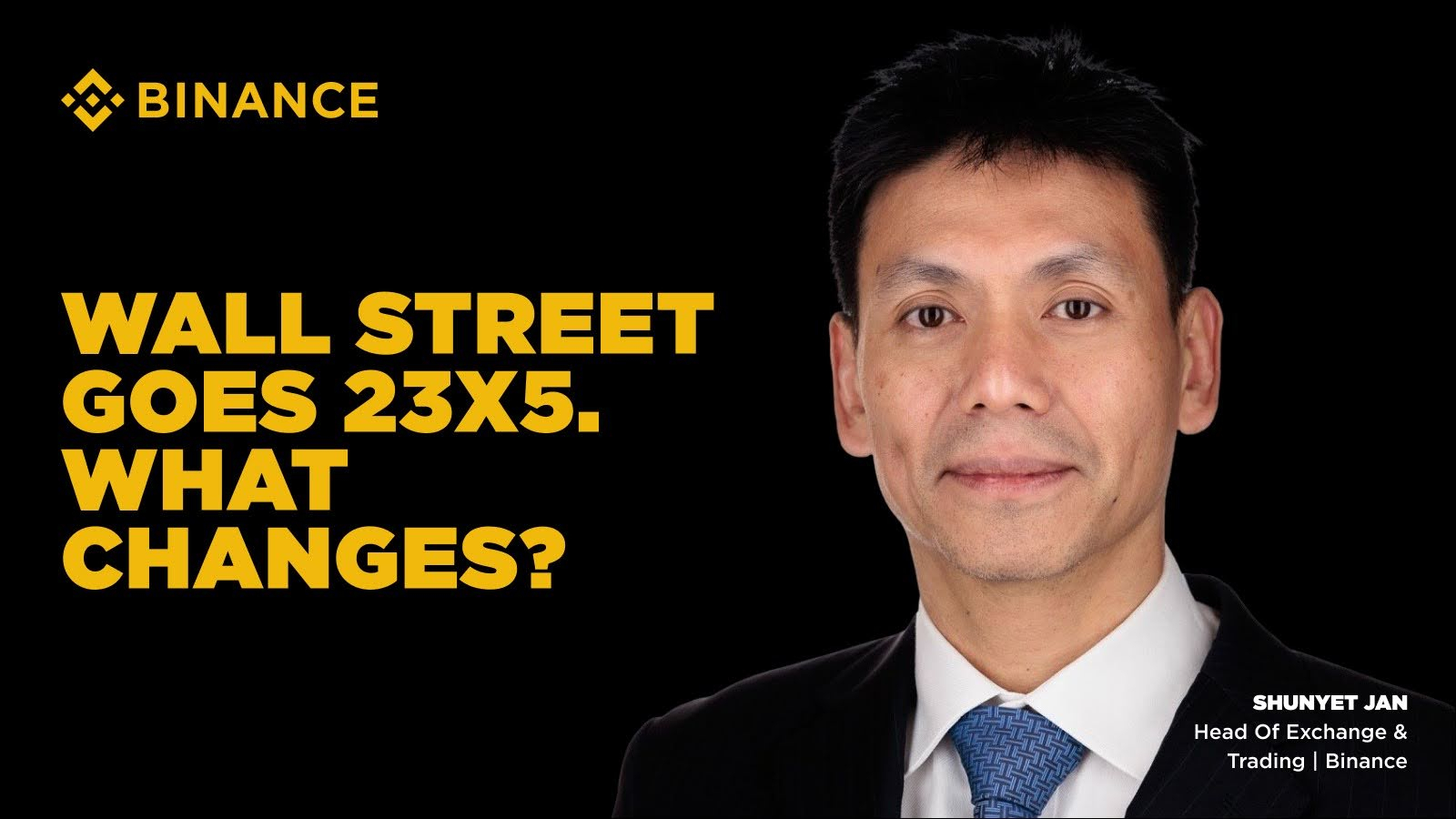
As Wall Street Extends Trading Hours, Binance Retains Its 24/7 EdgeMain TakeawaysAs U.S. exchanges move toward 23×5 trading in response to global demand, Binance already gives users 24/7 access to traditional-market products.Monthly weekend trading volume in perpetuals linked to traditional-market assets on crypto exchanges has grown from roughly $4.5 billion to $28 billion by mid-August this year, with Binance accounting for nearly half.Shunyet Jan, Binance’s Head of Exchange & Trading, explains why extending trading hours alone doesn’t create an always-on market, and where Binance retains its 24/7 edge.Wall Street is extending its trading day. Both Nasdaq and the NYSE are planning to move to longer trading hours this year, responding to growing global demand for access to U.S. markets beyond New York hours.On Binance, users already have around-the-clock access to traditional-market products. More than half (62%) of bStocks volume happened outside regular U.S. trading hours in July, according to Binance Research. By comparison, despite extended-hours trading already being available, July saw 89.2% of U.S. equity share volume remain concentrated in the regular session.We spoke with Shunyet Jan, Binance’s Head of Exchange & Trading, about what’s driving the shift, why extended-hours access alone doesn’t necessarily create liquidity, and what 23×5 still doesn’t solve.A Global Market on New York HoursU.S. equities have offered extended-hours trading for decades. Yet activity remains overwhelmingly concentrated in the regular session: 80.7% of the calendar week falls outside regular U.S. equity hours, but off-hours captured just 10.8% of share volume in July, with activity materially lower overnight and during weekend periods.According to Shunyet, part of the reason is structural. The U.S. equity market remains heavily institutionally driven, and large investors tend to trade where liquidity is concentrated and market protections are strongest.“The demand’s been there for a long time,” he says. “But for the big exchanges to adapt to that demand, they need to make a lot of changes.”That includes not only exchanges themselves, but clearing firms, banks, market makers, and other parts of the traditional financial system.Where the Overnight Demand Comes FromThat demand increasingly extends beyond U.S. trading hours. NYSE data shows overnight activity peaking around 21:00 ET, coinciding with Asian market opens, and again around 03:00 ET as they close. Binance sees a similar pattern: in July, 62% of bStocks volume took place while U.S. markets were closed, with particularly strong activity during Asian hours. The explanation can be as simple as time zones: users want to trade when they’re awake, rather than organize their trading around New York hours.Crypto markets were built around that global competition from the start. “For Bitcoin, we can’t say, ‘I want to sleep at night, so our exchange is only eight hours a day,’” Shunyet says. “Bitcoin can move around anywhere. Some other competitor will make it 24/7.”Traditional stocks historically haven’t faced the same competitive pressure. Bitcoin can trade across competing exchanges around the world, creating an incentive for each venue to remain available whenever the market is moving. Equity trading has traditionally remained tied more closely to the hours and infrastructure of its underlying market.TradFi Is Becoming a Bigger Part of BinanceCrypto exchanges are already seeing growing demand for traditional-market exposure, including outside conventional trading hours. According to Binance Research, monthly weekend trading volume in perpetuals linked to traditional-market assets across crypto exchanges has grown from roughly $4.5 billion to $28 billion by mid-August this year, with Binance accounting for nearly half.The shift is also visible in Binance’s overall trading mix. TradFi-linked perps account for 37% of Binance perp volume in August to date. In a recent 24-hour snapshot, they occupied 10 of the 15 highest-volume contracts and represented 59% of top-15 volume. SNDK even ranked first, ahead of BTC-USDT, according to Binance Research. The way Binance users trade those products is also different from the traditional U.S. equity market. “If you look at a typical U.S. portfolio, you’ll see names like Apple, Microsoft, and maybe some financial stocks,” Shunyet says. “Our users are much more tech- and momentum-driven. They like semiconductors, AI names, memory makers, chipmakers – whatever is hot at the moment.”Where Binance Users Trade FromWhat Binance users trade isn’t the only difference. Where they trade from matters, too. More than 90% of Binance’s Direct Stocks and bStocks users come from emerging markets, where access to international markets has traditionally involved more friction.“Take someone in Bangladesh who previously had access mainly to their local market, with expensive access to U.S. stocks,” Shunyet says. “All of a sudden, they can access a much broader range of markets in one place. That’s where a lot of our growth is coming from – users who simply didn’t have that kind of access before.”Price Discovery After the Closing BellAround-the-clock access becomes particularly valuable when markets move while traditional venues are closed.Cisco and Coherent recently reported earnings at 16:05 ET, five minutes after the U.S. market closed. Their underlying stocks could no longer trade in the regular session, while TradFi perps on Binance continued trading and repricing as investors reacted to the results.Binance Research has observed a similar pattern over weekends. Across seven weekends, bStocks prices had already reflected a median 92% of the price movement seen when the underlying stocks reopened on Monday. And when Monday’s move was larger than 3%, bStocks had anticipated the direction correctly in all 41 observed cases.Shunyet draws a clear distinction between price discovery during regular trading hours and when those markets are unavailable.“When U.S. markets are open, they’re much larger and naturally lead price discovery,” Shunyet says. “But on weekends, those markets are closed. During those hours, platforms like Binance can contribute to setting the price.”Beyond 23×5 Moving toward 23×5 will significantly expand traditional trading hours. But even under the proposed schedules, there would still be roughly 53 hours each week when no U.S. equity venue is open – around 31.5% of the calendar week.Reaching a fully continuous market presents a different challenge. It requires the infrastructure supporting trading – from banking to settlement – to operate continuously as well.“Weekends are harder because it’s not just the exchanges that need to be open – the banking system has to work seven days a week as well,” he says. “That’s very different in crypto. Stablecoins operate 24/7 and give us instant settlement, so we don’t have the same dependency on banking hours.”Even as traditional exchanges extend their hours, the difference goes beyond the trading clock. Weekend continuity, stablecoin settlement, and cross-asset collateral are all part of what separates an always-on market from one that simply stays open longer.Final ThoughtsNasdaq and the NYSE moving toward longer trading hours is a significant shift. It reflects growing demand from global investors to access U.S. assets on their own schedules rather than only during the traditional New York trading day.On Binance, users are already trading traditional-market products across time zones and through weekends, with much of that activity coming from markets where access has historically been more limited. At the same time, TradFi-linked products are becoming a growing part of what Binance users trade.As traditional exchanges move toward 23×5, trading hours will become more aligned with the needs of global investors. Binance will continue to cover the hours they don’t, supported by infrastructure designed for continuous trading and settlement.Further ReadingBinance Never Sleeps: The AI Earnings That Landed After the BellWhat Binance’s Direct Stocks Mean for Everyday InvestorsIntroducing bStocks – Trade and Hold Tokenized 1:1 U.S. Stocks on BinanceDisclaimer: Products mentioned above may not be available in your jurisdiction. Nest Trading Limited acts as your introducing broker and routes your orders for Securities to its clearing broker partner, Alpaca Securities LLC, for execution, clearing, settlement and custody. Binance does not handle or custody your Securities. Securities are subject to high market and liquidity risk and price volatility (particularly outside traditional market hours). The value of your investment may go down or up and you may not get back the amount invested. You are solely responsible for your investment decisions and Binance is not liable for any losses you may incur. Past performance is not a reliable predictor of future performance. Before trading, you should make an independent assessment of the appropriateness of the transaction in light of your own objectives and circumstances, including the risks and potential benefits. Consult your own advisers, where appropriate. This information should not be construed as financial or investment advice. Binance may receive payment for order flow remuneration for directing your orders. To learn more about how to protect yourself, visit our Responsible Trading page. For more information, see our Terms of Use, Securities Trading Product Terms and Risk Warning.bStocks tokenized securities are classified as Certificates representing certain Financial Instruments (paragraph 92, Schedule 1 to FSMR). bStocks are not stocks or shares and bStocks do not allow holders to directly own a share or stock in the underlying listed company. bStocks do not represent any affiliation with the underlying asset's issuer. bStocks are offered through an Approved Prospectus in the ADGM and are not offered in any other jurisdiction. No public offer is made outside of the ADGM. Tokenized securities are available only to eligible users in permitted jurisdictions on a secondary market basis only. It is your sole responsibility to ensure that accessing and trading tokenized securities is lawful in your jurisdiction before proceeding. Accessing this product from a jurisdiction in which it is prohibited or restricted does not create any liability or obligation on the part of Binance. We may restrict, suspend, reject, cancel, or unwind access or transactions if we determine, in our sole discretion, that your access or transaction may breach applicable law, product restrictions, eligibility criteria, sanctions requirements, or the relevant offering documents. Tokenized securities may be held and transferred on-chain outside the CSD environment. The transfer of tokenized securities back into the CSD environment is subject to conditions and you may be unable to trade, redeem or otherwise deal with the tokenized securities within the CSD environment if such conditions are not fulfilled.Digital asset prices can be volatile. The value of your investment may go down or up and you may not get back the amount invested. You are solely responsible for your investment decisions and Binance is not liable for any losses you may incur. TradFi Perps are subject to high market risk and price volatility (particularly outside traditional market hours). You may be called upon at short notice to make additional margin deposits or interest payments. If the required margin deposits or interest payments are not made within the prescribed time, your collateral may be liquidated. Moreover, you will remain liable for any resulting deficit in your account and interest charged on your account. All of your margin balance may be liquidated in the event of adverse price movement. Past performance is not a reliable predictor of future performance. TradFi Perps do not represent ownership of the relevant underlying asset. Before trading, you should make an independent assessment of the appropriateness of the transaction in light of your own objectives and circumstances, including the risks and potential benefits. Consult your own advisers, where appropriate. This information should not be construed as financial or investment advice. To learn more about how to protect yourself, visit our Responsible Trading page. For more information, see our Terms of Use, Exchange Rules, Clearing Rules, Exchange Procedures, Clearing Procedures, Contract Specifications and Risk Warning.No information displayed in connection with tokenized securities is intended as an offer, solicitation, promotion, recommendation, or invitation to buy or sell securities in any jurisdiction. tokenized securities are not offered, sold, distributed, made available, or accessible in the United States or to, or for the account or benefit of, U.S. persons. The tokenized securities have not been and will not be registered under the U.S. Securities Act of 1933 or any U.S. state securities laws and a public offering of bStocks will not be conducted in the United States or any other jurisdiction (other than the ADGM). By accessing this product, you represent and warrant that you are not a U.S. person, are not located in the United States, are not acting for the account or benefit of any U.S. person, and will not access, purchase, sell, transfer, redeem, or otherwise transact in tokenized securities from within the United States. Digital asset prices are subject to high market risk and price volatility. The value of your investment may go down or up, and you may not get back the amount invested. You are solely responsible for your investment decisions and Binance is not liable for any losses you may incur. Past performance is not a reliable predictor of future performance. This material should not be construed as financial advice.Any references to specific companies, stock tickers, or securities are for informational and illustrative purposes only. Such references do not constitute a recommendation, endorsement, or solicitation to buy, sell, or hold any security, and should not be construed as an affiliation, sponsorship, or endorsement by, or affiliation with, the companies mentioned. Binance is not affiliated with, sponsored by, or endorsed by any of the companies referenced in this article.For more information, see the Terms of Use, Exchange Rules, Exchange Procedures, relevant Prospectus (if applicable to you and understanding that the offer is only made in ADGM, no public offer is being made elsewhere and viewing the prospectus does not constitute an invitation or solicitation outside ADGM), bStocks Minting and Redemption Product Terms, Admission to Trading Notice and Risk Warning.
As Wall Street Extends Trading Hours, Binance Retains Its 24/7 Edge
Main TakeawaysAs U.S. exchanges move toward 23×5 trading in response to global demand, Binance already gives users 24/7 access to traditional-market products.Monthly weekend trading volume in perpetuals linked to traditional-market assets on crypto exchanges has grown from roughly $4.5 billion to $28 billion by mid-August this year, with Binance accounting for nearly half.Shunyet Jan, Binance’s Head of Exchange & Trading, explains why extending trading hours alone doesn’t create an always-on market, and where Binance retains its 24/7 edge.Wall Street is extending its trading day. Both Nasdaq and the NYSE are planning to move to longer trading hours this year, responding to growing global demand for access to U.S. markets beyond New York hours.On Binance, users already have around-the-clock access to traditional-market products. More than half (62%) of bStocks volume happened outside regular U.S. trading hours in July, according to Binance Research. By comparison, despite extended-hours trading already being available, July saw 89.2% of U.S. equity share volume remain concentrated in the regular session.We spoke with Shunyet Jan, Binance’s Head of Exchange & Trading, about what’s driving the shift, why extended-hours access alone doesn’t necessarily create liquidity, and what 23×5 still doesn’t solve.A Global Market on New York HoursU.S. equities have offered extended-hours trading for decades. Yet activity remains overwhelmingly concentrated in the regular session: 80.7% of the calendar week falls outside regular U.S. equity hours, but off-hours captured just 10.8% of share volume in July, with activity materially lower overnight and during weekend periods.According to Shunyet, part of the reason is structural. The U.S. equity market remains heavily institutionally driven, and large investors tend to trade where liquidity is concentrated and market protections are strongest.“The demand’s been there for a long time,” he says. “But for the big exchanges to adapt to that demand, they need to make a lot of changes.”That includes not only exchanges themselves, but clearing firms, banks, market makers, and other parts of the traditional financial system.Where the Overnight Demand Comes FromThat demand increasingly extends beyond U.S. trading hours. NYSE data shows overnight activity peaking around 21:00 ET, coinciding with Asian market opens, and again around 03:00 ET as they close. Binance sees a similar pattern: in July, 62% of bStocks volume took place while U.S. markets were closed, with particularly strong activity during Asian hours. The explanation can be as simple as time zones: users want to trade when they’re awake, rather than organize their trading around New York hours.Crypto markets were built around that global competition from the start. “For Bitcoin, we can’t say, ‘I want to sleep at night, so our exchange is only eight hours a day,’” Shunyet says. “Bitcoin can move around anywhere. Some other competitor will make it 24/7.”Traditional stocks historically haven’t faced the same competitive pressure. Bitcoin can trade across competing exchanges around the world, creating an incentive for each venue to remain available whenever the market is moving. Equity trading has traditionally remained tied more closely to the hours and infrastructure of its underlying market.TradFi Is Becoming a Bigger Part of BinanceCrypto exchanges are already seeing growing demand for traditional-market exposure, including outside conventional trading hours. According to Binance Research, monthly weekend trading volume in perpetuals linked to traditional-market assets across crypto exchanges has grown from roughly $4.5 billion to $28 billion by mid-August this year, with Binance accounting for nearly half.The shift is also visible in Binance’s overall trading mix. TradFi-linked perps account for 37% of Binance perp volume in August to date. In a recent 24-hour snapshot, they occupied 10 of the 15 highest-volume contracts and represented 59% of top-15 volume. SNDK even ranked first, ahead of BTC-USDT, according to Binance Research. The way Binance users trade those products is also different from the traditional U.S. equity market. “If you look at a typical U.S. portfolio, you’ll see names like Apple, Microsoft, and maybe some financial stocks,” Shunyet says. “Our users are much more tech- and momentum-driven. They like semiconductors, AI names, memory makers, chipmakers – whatever is hot at the moment.”Where Binance Users Trade FromWhat Binance users trade isn’t the only difference. Where they trade from matters, too. More than 90% of Binance’s Direct Stocks and bStocks users come from emerging markets, where access to international markets has traditionally involved more friction.“Take someone in Bangladesh who previously had access mainly to their local market, with expensive access to U.S. stocks,” Shunyet says. “All of a sudden, they can access a much broader range of markets in one place. That’s where a lot of our growth is coming from – users who simply didn’t have that kind of access before.”Price Discovery After the Closing BellAround-the-clock access becomes particularly valuable when markets move while traditional venues are closed.Cisco and Coherent recently reported earnings at 16:05 ET, five minutes after the U.S. market closed. Their underlying stocks could no longer trade in the regular session, while TradFi perps on Binance continued trading and repricing as investors reacted to the results.Binance Research has observed a similar pattern over weekends. Across seven weekends, bStocks prices had already reflected a median 92% of the price movement seen when the underlying stocks reopened on Monday. And when Monday’s move was larger than 3%, bStocks had anticipated the direction correctly in all 41 observed cases.Shunyet draws a clear distinction between price discovery during regular trading hours and when those markets are unavailable.“When U.S. markets are open, they’re much larger and naturally lead price discovery,” Shunyet says. “But on weekends, those markets are closed. During those hours, platforms like Binance can contribute to setting the price.”Beyond 23×5 Moving toward 23×5 will significantly expand traditional trading hours. But even under the proposed schedules, there would still be roughly 53 hours each week when no U.S. equity venue is open – around 31.5% of the calendar week.Reaching a fully continuous market presents a different challenge. It requires the infrastructure supporting trading – from banking to settlement – to operate continuously as well.“Weekends are harder because it’s not just the exchanges that need to be open – the banking system has to work seven days a week as well,” he says. “That’s very different in crypto. Stablecoins operate 24/7 and give us instant settlement, so we don’t have the same dependency on banking hours.”Even as traditional exchanges extend their hours, the difference goes beyond the trading clock. Weekend continuity, stablecoin settlement, and cross-asset collateral are all part of what separates an always-on market from one that simply stays open longer.Final ThoughtsNasdaq and the NYSE moving toward longer trading hours is a significant shift. It reflects growing demand from global investors to access U.S. assets on their own schedules rather than only during the traditional New York trading day.On Binance, users are already trading traditional-market products across time zones and through weekends, with much of that activity coming from markets where access has historically been more limited. At the same time, TradFi-linked products are becoming a growing part of what Binance users trade.As traditional exchanges move toward 23×5, trading hours will become more aligned with the needs of global investors. Binance will continue to cover the hours they don’t, supported by infrastructure designed for continuous trading and settlement.Further ReadingBinance Never Sleeps: The AI Earnings That Landed After the BellWhat Binance’s Direct Stocks Mean for Everyday InvestorsIntroducing bStocks – Trade and Hold Tokenized 1:1 U.S. Stocks on BinanceDisclaimer: Products mentioned above may not be available in your jurisdiction. Nest Trading Limited acts as your introducing broker and routes your orders for Securities to its clearing broker partner, Alpaca Securities LLC, for execution, clearing, settlement and custody. Binance does not handle or custody your Securities. Securities are subject to high market and liquidity risk and price volatility (particularly outside traditional market hours). The value of your investment may go down or up and you may not get back the amount invested. You are solely responsible for your investment decisions and Binance is not liable for any losses you may incur. Past performance is not a reliable predictor of future performance. Before trading, you should make an independent assessment of the appropriateness of the transaction in light of your own objectives and circumstances, including the risks and potential benefits. Consult your own advisers, where appropriate. This information should not be construed as financial or investment advice. Binance may receive payment for order flow remuneration for directing your orders. To learn more about how to protect yourself, visit our Responsible Trading page. For more information, see our Terms of Use, Securities Trading Product Terms and Risk Warning.bStocks tokenized securities are classified as Certificates representing certain Financial Instruments (paragraph 92, Schedule 1 to FSMR). bStocks are not stocks or shares and bStocks do not allow holders to directly own a share or stock in the underlying listed company. bStocks do not represent any affiliation with the underlying asset's issuer. bStocks are offered through an Approved Prospectus in the ADGM and are not offered in any other jurisdiction. No public offer is made outside of the ADGM. Tokenized securities are available only to eligible users in permitted jurisdictions on a secondary market basis only. It is your sole responsibility to ensure that accessing and trading tokenized securities is lawful in your jurisdiction before proceeding. Accessing this product from a jurisdiction in which it is prohibited or restricted does not create any liability or obligation on the part of Binance. We may restrict, suspend, reject, cancel, or unwind access or transactions if we determine, in our sole discretion, that your access or transaction may breach applicable law, product restrictions, eligibility criteria, sanctions requirements, or the relevant offering documents. Tokenized securities may be held and transferred on-chain outside the CSD environment. The transfer of tokenized securities back into the CSD environment is subject to conditions and you may be unable to trade, redeem or otherwise deal with the tokenized securities within the CSD environment if such conditions are not fulfilled.Digital asset prices can be volatile. The value of your investment may go down or up and you may not get back the amount invested. You are solely responsible for your investment decisions and Binance is not liable for any losses you may incur. TradFi Perps are subject to high market risk and price volatility (particularly outside traditional market hours). You may be called upon at short notice to make additional margin deposits or interest payments. If the required margin deposits or interest payments are not made within the prescribed time, your collateral may be liquidated. Moreover, you will remain liable for any resulting deficit in your account and interest charged on your account. All of your margin balance may be liquidated in the event of adverse price movement. Past performance is not a reliable predictor of future performance. TradFi Perps do not represent ownership of the relevant underlying asset. Before trading, you should make an independent assessment of the appropriateness of the transaction in light of your own objectives and circumstances, including the risks and potential benefits. Consult your own advisers, where appropriate. This information should not be construed as financial or investment advice. To learn more about how to protect yourself, visit our Responsible Trading page. For more information, see our Terms of Use, Exchange Rules, Clearing Rules, Exchange Procedures, Clearing Procedures, Contract Specifications and Risk Warning.No information displayed in connection with tokenized securities is intended as an offer, solicitation, promotion, recommendation, or invitation to buy or sell securities in any jurisdiction. tokenized securities are not offered, sold, distributed, made available, or accessible in the United States or to, or for the account or benefit of, U.S. persons. The tokenized securities have not been and will not be registered under the U.S. Securities Act of 1933 or any U.S. state securities laws and a public offering of bStocks will not be conducted in the United States or any other jurisdiction (other than the ADGM). By accessing this product, you represent and warrant that you are not a U.S. person, are not located in the United States, are not acting for the account or benefit of any U.S. person, and will not access, purchase, sell, transfer, redeem, or otherwise transact in tokenized securities from within the United States. Digital asset prices are subject to high market risk and price volatility. The value of your investment may go down or up, and you may not get back the amount invested. You are solely responsible for your investment decisions and Binance is not liable for any losses you may incur. Past performance is not a reliable predictor of future performance. This material should not be construed as financial advice.Any references to specific companies, stock tickers, or securities are for informational and illustrative purposes only. Such references do not constitute a recommendation, endorsement, or solicitation to buy, sell, or hold any security, and should not be construed as an affiliation, sponsorship, or endorsement by, or affiliation with, the companies mentioned. Binance is not affiliated with, sponsored by, or endorsed by any of the companies referenced in this article.For more information, see the Terms of Use, Exchange Rules, Exchange Procedures, relevant Prospectus (if applicable to you and understanding that the offer is only made in ADGM, no public offer is being made elsewhere and viewing the prospectus does not constitute an invitation or solicitation outside ADGM), bStocks Minting and Redemption Product Terms, Admission to Trading Notice and Risk Warning.
13
1.6k
·
--
Article
How Binance is Connecting AI Agents to the Financial Super App ExperienceMain TakeawaysFor three decades, participating in financial markets has involved clicking a screen. That assumption is starting to break down as AI software begins acting on our behalf.Open standards like MCP are making it easier for AI applications to discover and call external tools, which is speeding up agent integrations into daily life.Binance Agent OS helps developers connect AI agents to Binance trading, market data, wallets, payments, and on-chain capabilities, with permissions and access controls that can be set and revoked at any time.Binance began as a crypto exchange. From there, we built a financial super app, unifying crypto, traditional finance, tokenized securities, cross-border payments, and social features into a single ecosystem.Now we’re focused on bringing AI agents into Binance’s financial super app experience with Binance Agent OS, a bridge that connects our core capabilities to a new generation of software.Why Crypto Is a Natural Fit for Agentic FinanceAI agents are software-native. The tasks they perform involve frequent, conditional decisions — patterns that don’t map cleanly onto legacy financial systems designed around rigid business hours, middlemen, and multi-day settlement cycles.As agents evolve and take on more complex tasks, they’ll need fast payment rails that can keep pace. Traditional billing is too much friction for an agent trying to pay for a single API call or a slice of compute power. Stablecoins and crypto networks, by contrast, can support real-time settlement and global transferability. Agents also cannot open or operate a traditional bank account, but it can hold a wallet. That makes agent-to-agent payments possible, within boundaries set by their users. Building a Financial Capability LayerThe first wave of consumer AI products helped people find and interpret information. AI agents go a step further by interpreting and executing without needing a prompt at every step.Three things have fallen into place at once. First, agents have settled on a common language: the Model Context Protocol (MCP), open-sourced by Anthropic in late 2024 and since adopted by OpenAI, Google, Microsoft, and AWS. It has become the de facto way AI applications discover and call external tools. Public MCP servers grew from roughly 2,000 at the start of 2025 to more than 10,000 by year-end.Second, the environments where agents run have continued to scale. Cursor – an AI-native code editor – climbed from about $150M in annualized revenue in early 2025 to roughly $2B a year later, and GitHub Copilot passed 20 million cumulative users. Third, capital is following the pattern. Analysts project the agent market growing from single-digit billions in 2025 to between $24B and $53B by 2030, based on 2025–26 market size estimates from Grand View, Omdia, MarketsandMarkets, MarkNtel, and Precedence.Why Binance’s Infrastructure MattersBut even the smartest model is constrained by what it plugs into. An agent that trades well is still limited by the trading engine it routes through, and an agent capable of market analysis is only as effective as the quality of the data it consumes. MCP is, put simply, a convenient gateway; what matters more is the infrastructure standing behind it.With a global user base of over 300 million and high-throughput infrastructure backed by security and risk controls that have been battle-tested for nearly a decade, Binance is designed to support agentic workflows that require live data, fast routing, and reliable execution. Opening the Super App to AI AgentsBinance Agent OS gives developers a dedicated toolkit to connect agents into deep trading liquidity and a broader set of markets beyond crypto for eligible users, including over 7,000 U.S.-listed stocks, TradFi perpetual contracts, and tokenized securities through bStocks.Beyond trading, Agent OS extends to payments, wallets, and on-chain activity — including machine-to-machine settlement over x402, wallet transactions, and DeFi access through Binance Web3 APIs, as well as a curated library of skills.Security controls are granular. Users decide which features each agent can access, and every agent operates from a dedicated sub-account that keeps funds in the main account separate. Individual agents can be disconnected at any time, and an emergency killswitch revokes access to all agents at once. Execution is handled by software – rather than taps on a screen – but the user still sets the boundaries it works within.Final ThoughtsHow we interact with financial services is changing: from juggling multiple apps, to unified super apps, to experiences where users set goals and delegate AI agents to carry out the steps. Binance’s role is to provide the tools needed to build that experience responsibly. To learn more about Binance Agent OS, read our launch blog post or get started on the official Agent OS page. Further ReadingIntroducing Binance Agent OS: Built for AI Agent IntegrationHow Binance AI Pro Changes What Traders Can Do in The MarketBinance AI Agent Skills: How to Install and Use ThemDisclaimer: Your use of Binance AI, including any Binance AI Service, is at your own risk. It is provided to you on an “as is” and “as available” basis, without representation or warranty of any kind. You are solely responsible for all of your Prompts. Prompts may be used for training purposes. AI Inputs may include various unvetted third party sourced content. Any sourced content is provided “as is” without any guarantee. Binance may restrict or alter sourced content based on various compliance safety filters, however this is not absolute. Binance does not endorse or guarantee any AI Outputs. AI Outputs may include or reflect content, positions, views and opinions of third parties unknown to Binance, which may also include errors, biases, synthetic data and or outdated information. Any AI Output should not be solely relied on for decision making. AI Outputs do not constitute any kind of advice by Binance nor any other intermediary services. Binance AI may use or make available third party AI Tools without any guarantee and subject to third party terms. Where AI Tools are configured by yourself or a third-party, you indemnify Binance against all liability. Binance does not guarantee any AI Tools. Binance AI may respond to your requests, but without any guarantee that your request will be fulfilled satisfactorily or at all. Digital asset prices can be volatile. You are solely responsible for your investment decisions and Binance is not liable for any losses. Digital asset prices can be volatile. DYOR. Use of Binance AI may be subject to additional Binance Product Terms, where applicable. For more information, see our Terms of Use, Risk Warning and AI Policy and Terms.
How Binance is Connecting AI Agents to the Financial Super App Experience
Main TakeawaysFor three decades, participating in financial markets has involved clicking a screen. That assumption is starting to break down as AI software begins acting on our behalf.Open standards like MCP are making it easier for AI applications to discover and call external tools, which is speeding up agent integrations into daily life.Binance Agent OS helps developers connect AI agents to Binance trading, market data, wallets, payments, and on-chain capabilities, with permissions and access controls that can be set and revoked at any time.Binance began as a crypto exchange. From there, we built a financial super app, unifying crypto, traditional finance, tokenized securities, cross-border payments, and social features into a single ecosystem.Now we’re focused on bringing AI agents into Binance’s financial super app experience with Binance Agent OS, a bridge that connects our core capabilities to a new generation of software.Why Crypto Is a Natural Fit for Agentic FinanceAI agents are software-native. The tasks they perform involve frequent, conditional decisions — patterns that don’t map cleanly onto legacy financial systems designed around rigid business hours, middlemen, and multi-day settlement cycles.As agents evolve and take on more complex tasks, they’ll need fast payment rails that can keep pace. Traditional billing is too much friction for an agent trying to pay for a single API call or a slice of compute power. Stablecoins and crypto networks, by contrast, can support real-time settlement and global transferability. Agents also cannot open or operate a traditional bank account, but it can hold a wallet. That makes agent-to-agent payments possible, within boundaries set by their users. Building a Financial Capability LayerThe first wave of consumer AI products helped people find and interpret information. AI agents go a step further by interpreting and executing without needing a prompt at every step.Three things have fallen into place at once. First, agents have settled on a common language: the Model Context Protocol (MCP), open-sourced by Anthropic in late 2024 and since adopted by OpenAI, Google, Microsoft, and AWS. It has become the de facto way AI applications discover and call external tools. Public MCP servers grew from roughly 2,000 at the start of 2025 to more than 10,000 by year-end.Second, the environments where agents run have continued to scale. Cursor – an AI-native code editor – climbed from about $150M in annualized revenue in early 2025 to roughly $2B a year later, and GitHub Copilot passed 20 million cumulative users. Third, capital is following the pattern. Analysts project the agent market growing from single-digit billions in 2025 to between $24B and $53B by 2030, based on 2025–26 market size estimates from Grand View, Omdia, MarketsandMarkets, MarkNtel, and Precedence.Why Binance’s Infrastructure MattersBut even the smartest model is constrained by what it plugs into. An agent that trades well is still limited by the trading engine it routes through, and an agent capable of market analysis is only as effective as the quality of the data it consumes. MCP is, put simply, a convenient gateway; what matters more is the infrastructure standing behind it.With a global user base of over 300 million and high-throughput infrastructure backed by security and risk controls that have been battle-tested for nearly a decade, Binance is designed to support agentic workflows that require live data, fast routing, and reliable execution. Opening the Super App to AI AgentsBinance Agent OS gives developers a dedicated toolkit to connect agents into deep trading liquidity and a broader set of markets beyond crypto for eligible users, including over 7,000 U.S.-listed stocks, TradFi perpetual contracts, and tokenized securities through bStocks.Beyond trading, Agent OS extends to payments, wallets, and on-chain activity — including machine-to-machine settlement over x402, wallet transactions, and DeFi access through Binance Web3 APIs, as well as a curated library of skills.Security controls are granular. Users decide which features each agent can access, and every agent operates from a dedicated sub-account that keeps funds in the main account separate. Individual agents can be disconnected at any time, and an emergency killswitch revokes access to all agents at once. Execution is handled by software – rather than taps on a screen – but the user still sets the boundaries it works within.Final ThoughtsHow we interact with financial services is changing: from juggling multiple apps, to unified super apps, to experiences where users set goals and delegate AI agents to carry out the steps. Binance’s role is to provide the tools needed to build that experience responsibly. To learn more about Binance Agent OS, read our launch blog post or get started on the official Agent OS page. Further ReadingIntroducing Binance Agent OS: Built for AI Agent IntegrationHow Binance AI Pro Changes What Traders Can Do in The MarketBinance AI Agent Skills: How to Install and Use ThemDisclaimer: Your use of Binance AI, including any Binance AI Service, is at your own risk. It is provided to you on an “as is” and “as available” basis, without representation or warranty of any kind. You are solely responsible for all of your Prompts. Prompts may be used for training purposes. AI Inputs may include various unvetted third party sourced content. Any sourced content is provided “as is” without any guarantee. Binance may restrict or alter sourced content based on various compliance safety filters, however this is not absolute. Binance does not endorse or guarantee any AI Outputs. AI Outputs may include or reflect content, positions, views and opinions of third parties unknown to Binance, which may also include errors, biases, synthetic data and or outdated information. Any AI Output should not be solely relied on for decision making. AI Outputs do not constitute any kind of advice by Binance nor any other intermediary services. Binance AI may use or make available third party AI Tools without any guarantee and subject to third party terms. Where AI Tools are configured by yourself or a third-party, you indemnify Binance against all liability. Binance does not guarantee any AI Tools. Binance AI may respond to your requests, but without any guarantee that your request will be fulfilled satisfactorily or at all. Digital asset prices can be volatile. You are solely responsible for your investment decisions and Binance is not liable for any losses. Digital asset prices can be volatile. DYOR. Use of Binance AI may be subject to additional Binance Product Terms, where applicable. For more information, see our Terms of Use, Risk Warning and AI Policy and Terms.
9
3.7k
·
--
Article
Capital Connect: The Marketplace for Investment StrategiesMain TakeawaysMost platforms offering investment strategy access are partnerships, directories, or yield products, not real marketplaces.Capital Connect is different: it’s exchange-native, so investors can discover, evaluate, invest, monitor, and switch strategies without ever leaving Binance, or paying a platform fee.It serves two audiences at once: trading teams get distribution to Binance's institutional investor base, and investors get a credible, verified place to find them.Note: This is a general announcement. Certain products and services may not be available in your region.Platforms across crypto and traditional finance are racing to offer institutional investors access to trading strategies. Some launched funds. Some built partnerships. Some ran tournaments.Each model has merit. Each has limitations. But none of them built the marketplace.Binance Capital Connect is the marketplace, and the distinction matters.The Three Models in Investment Strategy AccessInstitutional investors looking for investment strategy exposure encounter three dominant models:The Exclusive PartnershipOne exchange partners with one strategy provider. Investors get a single strategy curated on their behalf. It’s simple, until the strategy underperforms or market conditions shift. Then investors are locked into someone else’s decision, with no ability to browse, compare, or switch.The Data AggregatorA platform aggregates strategy data across exchanges and connects investors to trading teams via API. The infrastructure is strong. But a marketplace without an exchange is a directory. Investors can discover strategies, but execution, custody, and settlement happen elsewhere, on partner platforms they have to onboard with separately.The Product MarketplaceA platform offers structured products: accumulators, dual-currency investments, shark fin, with defined yields. These are yield products, not alpha strategies. They serve a purpose in a portfolio, but don’t give investors access to active quantitative strategies with real-time performance data. It’s wealth management, not strategy investing.Each model solves a piece of the problem. None of them get you all the way there.The Open MarketplaceCapital Connect is the fourth model, the one that solves the whole thing: the marketplace.It is an open strategy marketplace where investors can browse strategies from multiple trading teams, compare performance with full transparency, invest with zero platform fee for investors, and switch when the market changes – all across both crypto and stocks, under one roof.The full lifecycle (discover, evaluate, invest, monitor, switch) happens on one platform, without the need for partner exchanges to onboard with, custody to negotiate, platform fees for investors, or a single strategy to be locked into.The Advantages of Exchange-NativeThe difference between a marketplace and a directory is what happens after you find a strategy.A directory shows you data and sends you elsewhere to execute. A marketplace lets you act: invest, monitor, and switch, without leaving the platform.Capital Connect is exchange-native. Execution happens on Binance: crypto (spot, futures, options) and equities (Stocks, bStocks), the deepest liquidity in crypto and native, one-account access to U.S. equities and tokenized stocks.Zero Fees Is StructuralEvery basis point matters to institutional investors. Over a year, platform fees compound into real money that comes directly out of returns.Capital Connect charges zero platform fees to investors. Because it’s built on Binance’s existing exchange infrastructure, the marketplace doesn’t need to charge for access. It’s supported by the broader ecosystem: trading fees, custody, institutional services.Choice Scales Better Than CurationOne partner, one strategy, no decision fatigue. For institutions new to strategy investment, it feels safe.But markets change, and strategies underperform. When the curated strategy no longer fits, investors face a binary choice: stay or leave.Choice solves this. With 20+ strategies across multiple types (statistical arbitrage, directional, delta-neutral, market-neutral), investors compare standardized data side by side: NAV, Sharpe ratio, max drawdown, gross vs net returns. When the market changes, they switch – but the platform and onboarding experience remain the same, as do zero fees. Standardized data makes comparison instant.The Ecosystem AdvantageCapital Connect sits inside Binance VIP and Institutional, the full-stack platform for institutional crypto trading, investment, and strategy access. Investors who access Capital Connect are plugging into a multi-asset ecosystem that covers the entire institutional workflow:A Strategy Marketplace That Spans Both Crypto and TradFiCapital Connect is the only strategy marketplace built on an exchange that serves both asset classes natively, allowing users to invest in crypto strategies, and in equity and TradFi strategies, without the need for a second platform.Fully Regulated and Globally LicensedSecurity, compliance, and operational resilience are foundational at Binance. Our on-exchange custody framework is reinforced by industry-recognized certifications, including A-LIGN SOC 1 & 2, ISO 22301, ISO/IEC 27001, and ISO/IEC 27701, helping institutions trade and deploy capital with greater confidence.Multi-Asset ExecutionDeploy across the full stack under one account: crypto strategies (spot, futures, options), equity and TradFi strategies, and U.S. equities and tokenized stocks (Stocks, bStocks), on the world's deepest crypto liquidity. Execute large blocks through the Binance OTC desk: 445+ crypto and fiat assets, no upper size limit, dedicated trader oversight on every order.Yield and Capital EfficiencyBinance offers one of the most comprehensive yield ecosystems in crypto. From boosted APR on exclusive VIP products to a growing range of compatible yield-bearing assets including BUIDL, USYC, and iBENJI, there are multiple ways to keep capital productive across the platform.Institutional-Grade Custody InfrastructureFor institutions looking to meet internal risk control and compliance requirements, Banking Triparty provides a compliant structure to scale trading activity while keeping capital protected. Capital stays in third-party custody through a wide range of banking partners, with full trading capability maintained on Binance. Custody and settlement scale with you, without fragmenting capital across providers.Built for Teams. Built for Investors.For trading teams, this means access to a broader investor base already embedded in the Binance ecosystem: investors who trade stocks, hold yield products, and use OTC services alongside their strategy investments.For investors, Capital Connect offers one access point within a multi-asset institutional platform. You can allocate to alpha strategies, trade equities, earn yield, and settle off-exchange – all under one VIP status.Getting Started with Capital ConnectFor Trading TeamsComplete Binance KYB verificationContact your dedicated Account Manager to apply access to Capital Connect with license proofBinance Compliance and Ops review all applications before activation.For InvestorsCapital Connect is available to KYB-verified Binance VIP 3+ users with $1M+ in assets. External asset proof equivalent to $1M may also qualify.How it works:Browse: Explore over 20 active crypto and traditional finance strategies with full performance dataEvaluate: Compare NAV, Sharpe ratio, max drawdown, and gross vs net returnsInvest: Allocate with zero platform feeMonitor and switch: Track performance in real time. Switch strategies when the market changes.Final ThoughtsThe crypto strategy market needs a permanent, exchange-native, zero-fee marketplace where investors have choice, transparency, and control, and where trading teams have a credible path to institutional capital.That marketplace is already here. It’s called Capital Connect, and it’s only getting started.Further ReadingBinance Capital Connect: Crypto Strategy Discovery, Allocation and ManagementBinance Launches Portfolio AccountsBinance Expands Triparty Banking NetworkDisclaimer: Capital Connect is a connection and facilitation service presented on an “as is” and “as available” basis without representation or warranty of any kind, operated by Nest Trading Limited, an Authorised Person holding Financial Services Permission from the Financial Services Regulatory Authority of the Abu Dhabi Global Market. This service is only accessible to qualified persons and may not be available in your region. Capital Connect does not constitute investment advice, a personal recommendation, or an offer or solicitation to buy or sell any investment. Binance does not act as agent, fiduciary or adviser to any person in connection with Capital Connect. Binance is not recommending that any person invests with any of the Trading Teams listed. Investing with Trading Teams involves a high degree of risk, including the risk of total loss of investment. Investors are solely responsible for assessing the suitability of a particular investment opportunity and carrying out the appropriate due diligence. In doing so, investors should seek independent advice and further information and should not rely on the information presented here. Investors are solely responsible for their investment decisions and Binance is not liable for any losses incurred. Binance is not liable or responsible for the completeness or accuracy of any information presented on or through Capital Connect (including, without limitation, any information relating to past or projected future performance of any Trading Team). No information presented on or through Capital Connect should be construed as financial advice, a personal recommendation, or an offer or solicitation to buy or sell any investment. For more information, see our Terms of Use and Risk Warning.
Capital Connect: The Marketplace for Investment Strategies
Main TakeawaysMost platforms offering investment strategy access are partnerships, directories, or yield products, not real marketplaces.Capital Connect is different: it’s exchange-native, so investors can discover, evaluate, invest, monitor, and switch strategies without ever leaving Binance, or paying a platform fee.It serves two audiences at once: trading teams get distribution to Binance's institutional investor base, and investors get a credible, verified place to find them.Note: This is a general announcement. Certain products and services may not be available in your region.Platforms across crypto and traditional finance are racing to offer institutional investors access to trading strategies. Some launched funds. Some built partnerships. Some ran tournaments.Each model has merit. Each has limitations. But none of them built the marketplace.Binance Capital Connect is the marketplace, and the distinction matters.The Three Models in Investment Strategy AccessInstitutional investors looking for investment strategy exposure encounter three dominant models:The Exclusive PartnershipOne exchange partners with one strategy provider. Investors get a single strategy curated on their behalf. It’s simple, until the strategy underperforms or market conditions shift. Then investors are locked into someone else’s decision, with no ability to browse, compare, or switch.The Data AggregatorA platform aggregates strategy data across exchanges and connects investors to trading teams via API. The infrastructure is strong. But a marketplace without an exchange is a directory. Investors can discover strategies, but execution, custody, and settlement happen elsewhere, on partner platforms they have to onboard with separately.The Product MarketplaceA platform offers structured products: accumulators, dual-currency investments, shark fin, with defined yields. These are yield products, not alpha strategies. They serve a purpose in a portfolio, but don’t give investors access to active quantitative strategies with real-time performance data. It’s wealth management, not strategy investing.Each model solves a piece of the problem. None of them get you all the way there.The Open MarketplaceCapital Connect is the fourth model, the one that solves the whole thing: the marketplace.It is an open strategy marketplace where investors can browse strategies from multiple trading teams, compare performance with full transparency, invest with zero platform fee for investors, and switch when the market changes – all across both crypto and stocks, under one roof.The full lifecycle (discover, evaluate, invest, monitor, switch) happens on one platform, without the need for partner exchanges to onboard with, custody to negotiate, platform fees for investors, or a single strategy to be locked into.The Advantages of Exchange-NativeThe difference between a marketplace and a directory is what happens after you find a strategy.A directory shows you data and sends you elsewhere to execute. A marketplace lets you act: invest, monitor, and switch, without leaving the platform.Capital Connect is exchange-native. Execution happens on Binance: crypto (spot, futures, options) and equities (Stocks, bStocks), the deepest liquidity in crypto and native, one-account access to U.S. equities and tokenized stocks.Zero Fees Is StructuralEvery basis point matters to institutional investors. Over a year, platform fees compound into real money that comes directly out of returns.Capital Connect charges zero platform fees to investors. Because it’s built on Binance’s existing exchange infrastructure, the marketplace doesn’t need to charge for access. It’s supported by the broader ecosystem: trading fees, custody, institutional services.Choice Scales Better Than CurationOne partner, one strategy, no decision fatigue. For institutions new to strategy investment, it feels safe.But markets change, and strategies underperform. When the curated strategy no longer fits, investors face a binary choice: stay or leave.Choice solves this. With 20+ strategies across multiple types (statistical arbitrage, directional, delta-neutral, market-neutral), investors compare standardized data side by side: NAV, Sharpe ratio, max drawdown, gross vs net returns. When the market changes, they switch – but the platform and onboarding experience remain the same, as do zero fees. Standardized data makes comparison instant.The Ecosystem AdvantageCapital Connect sits inside Binance VIP and Institutional, the full-stack platform for institutional crypto trading, investment, and strategy access. Investors who access Capital Connect are plugging into a multi-asset ecosystem that covers the entire institutional workflow:A Strategy Marketplace That Spans Both Crypto and TradFiCapital Connect is the only strategy marketplace built on an exchange that serves both asset classes natively, allowing users to invest in crypto strategies, and in equity and TradFi strategies, without the need for a second platform.Fully Regulated and Globally LicensedSecurity, compliance, and operational resilience are foundational at Binance. Our on-exchange custody framework is reinforced by industry-recognized certifications, including A-LIGN SOC 1 & 2, ISO 22301, ISO/IEC 27001, and ISO/IEC 27701, helping institutions trade and deploy capital with greater confidence.Multi-Asset ExecutionDeploy across the full stack under one account: crypto strategies (spot, futures, options), equity and TradFi strategies, and U.S. equities and tokenized stocks (Stocks, bStocks), on the world's deepest crypto liquidity. Execute large blocks through the Binance OTC desk: 445+ crypto and fiat assets, no upper size limit, dedicated trader oversight on every order.Yield and Capital EfficiencyBinance offers one of the most comprehensive yield ecosystems in crypto. From boosted APR on exclusive VIP products to a growing range of compatible yield-bearing assets including BUIDL, USYC, and iBENJI, there are multiple ways to keep capital productive across the platform.Institutional-Grade Custody InfrastructureFor institutions looking to meet internal risk control and compliance requirements, Banking Triparty provides a compliant structure to scale trading activity while keeping capital protected. Capital stays in third-party custody through a wide range of banking partners, with full trading capability maintained on Binance. Custody and settlement scale with you, without fragmenting capital across providers.Built for Teams. Built for Investors.For trading teams, this means access to a broader investor base already embedded in the Binance ecosystem: investors who trade stocks, hold yield products, and use OTC services alongside their strategy investments.For investors, Capital Connect offers one access point within a multi-asset institutional platform. You can allocate to alpha strategies, trade equities, earn yield, and settle off-exchange – all under one VIP status.Getting Started with Capital ConnectFor Trading TeamsComplete Binance KYB verificationContact your dedicated Account Manager to apply access to Capital Connect with license proofBinance Compliance and Ops review all applications before activation.For InvestorsCapital Connect is available to KYB-verified Binance VIP 3+ users with $1M+ in assets. External asset proof equivalent to $1M may also qualify.How it works:Browse: Explore over 20 active crypto and traditional finance strategies with full performance dataEvaluate: Compare NAV, Sharpe ratio, max drawdown, and gross vs net returnsInvest: Allocate with zero platform feeMonitor and switch: Track performance in real time. Switch strategies when the market changes.Final ThoughtsThe crypto strategy market needs a permanent, exchange-native, zero-fee marketplace where investors have choice, transparency, and control, and where trading teams have a credible path to institutional capital.That marketplace is already here. It’s called Capital Connect, and it’s only getting started.Further ReadingBinance Capital Connect: Crypto Strategy Discovery, Allocation and ManagementBinance Launches Portfolio AccountsBinance Expands Triparty Banking NetworkDisclaimer: Capital Connect is a connection and facilitation service presented on an “as is” and “as available” basis without representation or warranty of any kind, operated by Nest Trading Limited, an Authorised Person holding Financial Services Permission from the Financial Services Regulatory Authority of the Abu Dhabi Global Market. This service is only accessible to qualified persons and may not be available in your region. Capital Connect does not constitute investment advice, a personal recommendation, or an offer or solicitation to buy or sell any investment. Binance does not act as agent, fiduciary or adviser to any person in connection with Capital Connect. Binance is not recommending that any person invests with any of the Trading Teams listed. Investing with Trading Teams involves a high degree of risk, including the risk of total loss of investment. Investors are solely responsible for assessing the suitability of a particular investment opportunity and carrying out the appropriate due diligence. In doing so, investors should seek independent advice and further information and should not rely on the information presented here. Investors are solely responsible for their investment decisions and Binance is not liable for any losses incurred. Binance is not liable or responsible for the completeness or accuracy of any information presented on or through Capital Connect (including, without limitation, any information relating to past or projected future performance of any Trading Team). No information presented on or through Capital Connect should be construed as financial advice, a personal recommendation, or an offer or solicitation to buy or sell any investment. For more information, see our Terms of Use and Risk Warning.
1
8
2k
·
--
Article
Introducing Binance Agent OS: Built for AI Agent IntegrationMain TakeawaysBinance Agent OS is a platform and toolkit that connects AI agents to Binance trading and market data, wallet, and payment capabilities.Developers can equip AI agents to trade, access live market data, manage trading activity, transact on-chain, and settle payments. The Binance MCP server currently supports trading and market-data capabilities, while on-chain and payment functionality can be integrated through other Binance APIs, tools, and skills.Developers set the permissions, including funding limits and what features the agent can use, and can revoke access at any time.Rather than moving between apps, people are beginning to delegate tasks to AI agents that can navigate services and take action on their behalf. And unlike the early iterations of Large Language Models, these agents do more than generate text. They search, coordinate, transact, and act – for users and for one another.Imagine an agent that can follow the market and manage your positions or help your business make and receive payments.With Binance Agent OS, developers can connect their AI agents to Binance trading, market data, payment and wallets, along with a curated library of ready-made skills and developer tools.What is Binance Agent OS?Binance Agent OS is a gateway and toolkit for connecting AI agents to Binance. Our built-in MCP server currently supports trading and market data access, with payment and on-chain capabilities coming in future releases. In the meantime, developers can add these capabilities through other Agent OS tools.How to Connect Your AI Agent in MinutesConnect your AI agent to Binance by adding the Binance MCP server to your agent environment, then authenticate it from your Binance account. For Claude Code users:Add the MCP server. Open your terminal, then copy and paste the following command:claude mcp add binance-mcp-server --transport http https://agent.binance.com/mcp/agenticOpen your agent environment and enter /mcp. This lists your connected MCP servers, including binance-mcp-server.Start authentication. Select binance-mcp-server and press Enter, then choose [Authenticate]. Your browser will redirect to an authentication page.Select your agent. From the dropdown, choose which agent you want to connect to Binance.Set permissions. Toggle which features and products this agent can access. Anything left off stays inaccessible until you enable it.Return to your agent environment to configure trading parameters. You can review or change these permissions at any time under [Sub Accounts] → [Account Management]. Binance Agent OS works with Claude Code, Cursor, Codex, ChatGPT, and self-built agents. Setup guides for other environments are available at binance.com/agent-os.What Can Your AI Agent Do with Binance Agent OS?Available capabilities on Binance Agent OS depend on the connection method. MCP currently covers trading and market data access, while developers can use other Agent OS integrations for payments and on-chain activity until these are added to MCP.CapabilityWhat Your Agent Can AccessTradingSpot, Futures and ConvertMarket dataLive order books, price feeds and klinesAccountBalances, positions and transfersOn-chainWallet transactions and DeFi access via Binance Web3 APIsPaymentsMachine-to-machine settlement over x402Trading analysisBinance trading analysis toolsFor users who’d rather not write the integration logic themselves, the Binance Skills Hub offers ready-made skills for common tasks, including trading, Web3 wallet tracking, and DeFi interactions. Control What Your AI Agent can AccessYou decide what each agent can reach, how much of your account it can touch, and how long it retains access.Go to [Sub Accounts] → [Account Management] to see or make changes to your agent’s permissions.[Account Permissions] → [Disconnect Agents] revokes access to selected agents.[Emergency Stop] revokes access to all agents.It’s important to note that Binance Agent OS is not an autonomous trading system. It does not remove the need for authorization, safeguards, or careful judgement on your part. Your agent acts on what you have explicitly allowed, within the limits you set.Why Connect Your AI Agent to BinanceWhile MCP servers are now supported across many financial platforms, the actual execution quality depends on the infrastructure behind the connection.Binance gives agents one place to access deep crypto liquidity, real-time market data, and a wide range of markets, spanning crypto, over 7,000 U.S.-listed stocks, TradFi perpetuals, and tokenized securities through bStocks.For execution, Binance’s liquidity provides robust order books and tighter spreads. This becomes increasingly important at the high frequencies agents trade at. Not enough liquidity, and your agents are taking longer to execute orders and trading at worse prices than expected.Final ThoughtsThe future of the internet is agentic. Gartner projects that 33% of enterprise software applications will include agentic AI by 2028, up from less than 1% in 2024. Public MCP servers, meanwhile, grew from roughly 2,000 in early 2025 to more than 10,000 by the end of that yearAI is shifting from a tool people consult before making financial decisions to a much more autonomous system complete with an execution layer. Binance Agent OS is the first release of a longer roadmap. Expect more AI products catered to all levels of users over the coming months. MCP support begins with trading and market data, with payment and on-chain capabilities to follow in future releases.If you’re ready to onboard your agent, get started today by visiting the Agent OS page. Further ReadingHow Binance AI Pro Changes What Traders Can Do in The MarketBinance AI Agent Skills: How to Install and Use ThemInside Binance, Episode 01 – DG on Building a Financial Super AppDisclaimer: Your use of Binance Ai, including any Binance Ai Service, is at your own risk. It is provided to you on an “as is” and “as available” basis, without representation or warranty of any kind. You are fully responsible for all of your Prompts. AI Inputs may include various unvetted third party sourced content. Any sourced content is provided “as is” without any guarantee. Binance may restrict or alter sourced content based on various compliance safety filters, however this is not absolute. Binance does not endorse or guarantee any AI Outputs. AI Outputs may include or reflect content, positions, views and opinions of third parties unknown to Binance, which may also include errors, biases, synthetic data and or outdated information. Any AI Output should not be solely relied on for decision making. AI Outputs do not constitute any kind of advice by Binance nor any other intermediary services. Binance Ai may use or make available third party AI Tools without any guarantee and subject to third party terms. Where AI Tools are configured by yourself or a third-party, you indemnify Binance against all liability. Binance does not guarantee any AI Tools. Binance Ai may respond to your requests, but without any guarantee that your request will be fulfilled satisfactorily or at all. Digital asset prices can be volatile. You are solely responsible for your investment decisions and Binance is not liable for any losses. Use of Binance Ai may be subject to additional Binance Product Terms, where applicable. For more information, see our Terms of Use, Risk Warning and AI Policy and Terms.
Introducing Binance Agent OS: Built for AI Agent Integration
Main TakeawaysBinance Agent OS is a platform and toolkit that connects AI agents to Binance trading and market data, wallet, and payment capabilities.Developers can equip AI agents to trade, access live market data, manage trading activity, transact on-chain, and settle payments. The Binance MCP server currently supports trading and market-data capabilities, while on-chain and payment functionality can be integrated through other Binance APIs, tools, and skills.Developers set the permissions, including funding limits and what features the agent can use, and can revoke access at any time.Rather than moving between apps, people are beginning to delegate tasks to AI agents that can navigate services and take action on their behalf. And unlike the early iterations of Large Language Models, these agents do more than generate text. They search, coordinate, transact, and act – for users and for one another.Imagine an agent that can follow the market and manage your positions or help your business make and receive payments.With Binance Agent OS, developers can connect their AI agents to Binance trading, market data, payment and wallets, along with a curated library of ready-made skills and developer tools.What is Binance Agent OS?Binance Agent OS is a gateway and toolkit for connecting AI agents to Binance. Our built-in MCP server currently supports trading and market data access, with payment and on-chain capabilities coming in future releases. In the meantime, developers can add these capabilities through other Agent OS tools.How to Connect Your AI Agent in MinutesConnect your AI agent to Binance by adding the Binance MCP server to your agent environment, then authenticate it from your Binance account. For Claude Code users:Add the MCP server. Open your terminal, then copy and paste the following command:claude mcp add binance-mcp-server --transport http https://agent.binance.com/mcp/agenticOpen your agent environment and enter /mcp. This lists your connected MCP servers, including binance-mcp-server.Start authentication. Select binance-mcp-server and press Enter, then choose [Authenticate]. Your browser will redirect to an authentication page.Select your agent. From the dropdown, choose which agent you want to connect to Binance.Set permissions. Toggle which features and products this agent can access. Anything left off stays inaccessible until you enable it.Return to your agent environment to configure trading parameters. You can review or change these permissions at any time under [Sub Accounts] → [Account Management]. Binance Agent OS works with Claude Code, Cursor, Codex, ChatGPT, and self-built agents. Setup guides for other environments are available at binance.com/agent-os.What Can Your AI Agent Do with Binance Agent OS?Available capabilities on Binance Agent OS depend on the connection method. MCP currently covers trading and market data access, while developers can use other Agent OS integrations for payments and on-chain activity until these are added to MCP.CapabilityWhat Your Agent Can AccessTradingSpot, Futures and ConvertMarket dataLive order books, price feeds and klinesAccountBalances, positions and transfersOn-chainWallet transactions and DeFi access via Binance Web3 APIsPaymentsMachine-to-machine settlement over x402Trading analysisBinance trading analysis toolsFor users who’d rather not write the integration logic themselves, the Binance Skills Hub offers ready-made skills for common tasks, including trading, Web3 wallet tracking, and DeFi interactions. Control What Your AI Agent can AccessYou decide what each agent can reach, how much of your account it can touch, and how long it retains access.Go to [Sub Accounts] → [Account Management] to see or make changes to your agent’s permissions.[Account Permissions] → [Disconnect Agents] revokes access to selected agents.[Emergency Stop] revokes access to all agents.It’s important to note that Binance Agent OS is not an autonomous trading system. It does not remove the need for authorization, safeguards, or careful judgement on your part. Your agent acts on what you have explicitly allowed, within the limits you set.Why Connect Your AI Agent to BinanceWhile MCP servers are now supported across many financial platforms, the actual execution quality depends on the infrastructure behind the connection.Binance gives agents one place to access deep crypto liquidity, real-time market data, and a wide range of markets, spanning crypto, over 7,000 U.S.-listed stocks, TradFi perpetuals, and tokenized securities through bStocks.For execution, Binance’s liquidity provides robust order books and tighter spreads. This becomes increasingly important at the high frequencies agents trade at. Not enough liquidity, and your agents are taking longer to execute orders and trading at worse prices than expected.Final ThoughtsThe future of the internet is agentic. Gartner projects that 33% of enterprise software applications will include agentic AI by 2028, up from less than 1% in 2024. Public MCP servers, meanwhile, grew from roughly 2,000 in early 2025 to more than 10,000 by the end of that yearAI is shifting from a tool people consult before making financial decisions to a much more autonomous system complete with an execution layer. Binance Agent OS is the first release of a longer roadmap. Expect more AI products catered to all levels of users over the coming months. MCP support begins with trading and market data, with payment and on-chain capabilities to follow in future releases.If you’re ready to onboard your agent, get started today by visiting the Agent OS page. Further ReadingHow Binance AI Pro Changes What Traders Can Do in The MarketBinance AI Agent Skills: How to Install and Use ThemInside Binance, Episode 01 – DG on Building a Financial Super AppDisclaimer: Your use of Binance Ai, including any Binance Ai Service, is at your own risk. It is provided to you on an “as is” and “as available” basis, without representation or warranty of any kind. You are fully responsible for all of your Prompts. AI Inputs may include various unvetted third party sourced content. Any sourced content is provided “as is” without any guarantee. Binance may restrict or alter sourced content based on various compliance safety filters, however this is not absolute. Binance does not endorse or guarantee any AI Outputs. AI Outputs may include or reflect content, positions, views and opinions of third parties unknown to Binance, which may also include errors, biases, synthetic data and or outdated information. Any AI Output should not be solely relied on for decision making. AI Outputs do not constitute any kind of advice by Binance nor any other intermediary services. Binance Ai may use or make available third party AI Tools without any guarantee and subject to third party terms. Where AI Tools are configured by yourself or a third-party, you indemnify Binance against all liability. Binance does not guarantee any AI Tools. Binance Ai may respond to your requests, but without any guarantee that your request will be fulfilled satisfactorily or at all. Digital asset prices can be volatile. You are solely responsible for your investment decisions and Binance is not liable for any losses. Use of Binance Ai may be subject to additional Binance Product Terms, where applicable. For more information, see our Terms of Use, Risk Warning and AI Policy and Terms.
4
13
2.3k
·
--
Article
How Crypto Scams Use Social EngineeringMain TakeawaysSocial engineering targets the individual, and every version runs a similar script: trust, urgency, a payoff too big to ignore, then a push to act.Nobody legitimate will ever guarantee returns, rush your decision, or ask for your seed phrase, passwords, or keys.Always verify, do your own research, and never use a platform or link a stranger sent you.Beware the friendly “analyst” who slides into your DMs, the private channel dropping "insider tips,” or the stranger who swears a coin is going 100x by Friday. These are the frequent openings of social engineering attacks, aimed at you rather than your wallet’s code or your account’s defenses – and engineered to pull the levers of greed, fear, urgency, and trust. But they all follow a similar script. Below, we'll show you how to spot them and how to protect yourself.How Does Social Engineering Work?Almost every social-engineering scam runs the same four steps: build trust, manufacture urgency, promise a payoff too big to ignore, then push you to act before the feeling fades. While the sequence is consistent, the packaging changes – and that's what we'll teach you to spot. Below are a few persistent themes you should be on the lookout for.Fake Investment PitchesThe criminals’ goal is often to get you to buy a low-quality or manipulated token at an inflated price. Once your money is in, the scammers cash out, the price collapses, and you're left holding a coin nobody wants. In trading terms, you are their exit liquidity.Types of PitchesFake official groups: You're added to a channel called something like "Official VIP Signals," where a steady stream of winning calls creates the impression of a proven track record and a crowd already profiting from it.The "analyst" DM: A stranger offers private guidance to the next big token and backs it up with screenshots, charts, and stats to get you to believe they are an expert.The "100x by Friday" post: A big, badge-verified public account promises a token will 100x in days. The follower count stands in for credibility, and the deadline turns a gamble into an “opportunity” you're allegedly about to miss.These pitches are usually paired with pressure. Ask whether the token is safe, and you'll be mocked, silenced, or kicked out. The same pressure shows up when a warning appears on your screen: you'll be coached to click through it, to treat the alert as a bug or "just a glitch."Manufactured Relationships and Impersonation ScamsThese scams are after direct access to your money, your wallet, or the credentials that unlock it, meaning your seed phrase and private keys. The person behind it is either manufacturing a relationship built to earn your trust over days or weeks, or impersonating someone you are already inclined to believe, such as customer support of a reputable platform or a recovery service. You’ll usually encounter them in DMs on dating and messaging apps, in fake support chats, and anywhere else a one-on-one conversation can be started.Fake relationshipsPig-butchering scam: A conversation that starts by accident grows into weeks of “real” affection, whether friendship or romance, then drifts toward a “special platform” showing impressive returns. The relationship is what makes you believe the numbers, and the numbers make a fortune feel within reach.ImpersonationFake support agents: Someone posing as your exchange or wallet team reaches out about an urgent problem with your account, then asks you to verify your wallet, share your seed phrase, or connect to a malicious site that will “fix” it.The "better deal" pitch: An unusually good rate or exclusive access appears, available only if you continue the conversation in DMs and use their “special” website.Recovery scams: After a loss, a self-proclaimed recovery service, forensics firm, or official-sounding “authority” promises to trace your funds for an upfront fee, or says your money is already recovered and waiting on one final deposit. It borrows the credibility of an institution and aims at the moment your judgment is weakest, which is why the same victims are often hit twice.How to Protect Yourself From Social EngineeringIn the end, the last line of defence is you. Exchanges, wallets, and tools can flag a risk, but only you can decide not to proceed. Here's what should give you pause and how to protect your funds.Beware of guaranteed returns: Anyone who tells you a token will "definitely" go up is either lying or guessing.Assume every screenshot is fake: Profit screenshots, wallet balances, trading dashboards, and leaked "insider info" all take minutes to fabricate and cost nothing to send.Never share your seed phrase or private keys: No legitimate company needs them, not for support, not for verification, not for recovery, or any other reason.Be careful when a relationship turns toward money: A friend or partner you met online steering the conversation toward investing is not a coincidence.Never use a platform an online contact introduced you to: The site may look polished and the person may seem trustworthy, but this single step is the whole scam in one move. Choose where you invest yourself, and don't click links sent to you in a chat.Treat unsolicited recovery offers as a red flag: Anyone who appears after a loss promising to trace or release your funds for a fee is almost always running the second half of the same scam. Real recovery does not begin with a stranger's DM or an upfront payment.Do the basic checks before you buy: At a minimum, find out who holds the token supply, whether liquidity is locked and for how long, and whether any single party still controls the contract. Confirm that you can actually sell after buying, as honeypot tokens let you buy but not sell. If your wallet or a reputable community source raises a warning, pause and check again.Real-world Example 1: The “Analyst” PitchThis screenshot shows a typical fake "analyst" pitch. The sender claims to be from JPMorgan to make the recommendation sound legitimate, claims the token will be adopted by the banking system, and promises 25x returns. The contract address is pasted directly into the chat so you can copy, paste, and buy in seconds, and the offer to help "if you get stuck" turns a cold pitch into a favor from someone who sounds qualified to give it.Real-world Example 2: Fake VIP GroupsThis screenshot shows a fake VIP group. The sender, "Crypto Legend (VIP)," leads with a photo of his Ferrari as proof that the strategy works, then names a token and predicts a move from $0.11 to $1, a 10x. Note that the wealth is displayed rather than demonstrated, and the target price arrives with no reasoning attached.The pitch may change, but the structure stays the same: trust, urgency, promised certainty, then a push to act quickly.Social Engineering Safety ChecklistAlways verify: Confirm identities and links yourself before you engage, using an official app or an address you typed in. Never click a link a stranger sent you, however harmless it looks. Impersonators depend on you moving too fast to check.Pause and think, especially when it feels urgent: If something is only available today or demands that you act right now, the deadline is usually the trap. Nothing legitimate expires because you took an hour to think.Do your own research: Even if it comes from someone you trust, verify the platform or the coin yourself before any money moves.Protect your secrets: Your seed phrase, private keys, and passwords should always stay private. Never share them with anyone, and never store them digitally, which includes screenshots, notes apps, and cloud backups.Final ThoughtsExchanges, wallets and tools can flag a risk, but they can’t reverse a decision you were talked into. Always verify, keep your keys and seed phrases private, and never let urgency blind you. The opportunity you miss by checking first will always cost less than the one you don't, and if something sounds too good to be true, it isn't good at all.Recognizing one scam is a good start, but new variations emerge constantly. Our Security Series breaks down the rest of the playbook, from wallet drainers to phishing sites, so nothing arrives as a surprise for you.Further ReadingWeb3 Security Tips – Customize 2FA and Embrace Passkeys on BinanceWeb3 Security – SAFU Trading on Decentralized ExchangesMastering Safe DApp Navigation to Enhance Your Web3 Security
How Crypto Scams Use Social Engineering
Main TakeawaysSocial engineering targets the individual, and every version runs a similar script: trust, urgency, a payoff too big to ignore, then a push to act.Nobody legitimate will ever guarantee returns, rush your decision, or ask for your seed phrase, passwords, or keys.Always verify, do your own research, and never use a platform or link a stranger sent you.Beware the friendly “analyst” who slides into your DMs, the private channel dropping "insider tips,” or the stranger who swears a coin is going 100x by Friday. These are the frequent openings of social engineering attacks, aimed at you rather than your wallet’s code or your account’s defenses – and engineered to pull the levers of greed, fear, urgency, and trust. But they all follow a similar script. Below, we'll show you how to spot them and how to protect yourself.How Does Social Engineering Work?Almost every social-engineering scam runs the same four steps: build trust, manufacture urgency, promise a payoff too big to ignore, then push you to act before the feeling fades. While the sequence is consistent, the packaging changes – and that's what we'll teach you to spot. Below are a few persistent themes you should be on the lookout for.Fake Investment PitchesThe criminals’ goal is often to get you to buy a low-quality or manipulated token at an inflated price. Once your money is in, the scammers cash out, the price collapses, and you're left holding a coin nobody wants. In trading terms, you are their exit liquidity.Types of PitchesFake official groups: You're added to a channel called something like "Official VIP Signals," where a steady stream of winning calls creates the impression of a proven track record and a crowd already profiting from it.The "analyst" DM: A stranger offers private guidance to the next big token and backs it up with screenshots, charts, and stats to get you to believe they are an expert.The "100x by Friday" post: A big, badge-verified public account promises a token will 100x in days. The follower count stands in for credibility, and the deadline turns a gamble into an “opportunity” you're allegedly about to miss.These pitches are usually paired with pressure. Ask whether the token is safe, and you'll be mocked, silenced, or kicked out. The same pressure shows up when a warning appears on your screen: you'll be coached to click through it, to treat the alert as a bug or "just a glitch."Manufactured Relationships and Impersonation ScamsThese scams are after direct access to your money, your wallet, or the credentials that unlock it, meaning your seed phrase and private keys. The person behind it is either manufacturing a relationship built to earn your trust over days or weeks, or impersonating someone you are already inclined to believe, such as customer support of a reputable platform or a recovery service. You’ll usually encounter them in DMs on dating and messaging apps, in fake support chats, and anywhere else a one-on-one conversation can be started.Fake relationshipsPig-butchering scam: A conversation that starts by accident grows into weeks of “real” affection, whether friendship or romance, then drifts toward a “special platform” showing impressive returns. The relationship is what makes you believe the numbers, and the numbers make a fortune feel within reach.ImpersonationFake support agents: Someone posing as your exchange or wallet team reaches out about an urgent problem with your account, then asks you to verify your wallet, share your seed phrase, or connect to a malicious site that will “fix” it.The "better deal" pitch: An unusually good rate or exclusive access appears, available only if you continue the conversation in DMs and use their “special” website.Recovery scams: After a loss, a self-proclaimed recovery service, forensics firm, or official-sounding “authority” promises to trace your funds for an upfront fee, or says your money is already recovered and waiting on one final deposit. It borrows the credibility of an institution and aims at the moment your judgment is weakest, which is why the same victims are often hit twice.How to Protect Yourself From Social EngineeringIn the end, the last line of defence is you. Exchanges, wallets, and tools can flag a risk, but only you can decide not to proceed. Here's what should give you pause and how to protect your funds.Beware of guaranteed returns: Anyone who tells you a token will "definitely" go up is either lying or guessing.Assume every screenshot is fake: Profit screenshots, wallet balances, trading dashboards, and leaked "insider info" all take minutes to fabricate and cost nothing to send.Never share your seed phrase or private keys: No legitimate company needs them, not for support, not for verification, not for recovery, or any other reason.Be careful when a relationship turns toward money: A friend or partner you met online steering the conversation toward investing is not a coincidence.Never use a platform an online contact introduced you to: The site may look polished and the person may seem trustworthy, but this single step is the whole scam in one move. Choose where you invest yourself, and don't click links sent to you in a chat.Treat unsolicited recovery offers as a red flag: Anyone who appears after a loss promising to trace or release your funds for a fee is almost always running the second half of the same scam. Real recovery does not begin with a stranger's DM or an upfront payment.Do the basic checks before you buy: At a minimum, find out who holds the token supply, whether liquidity is locked and for how long, and whether any single party still controls the contract. Confirm that you can actually sell after buying, as honeypot tokens let you buy but not sell. If your wallet or a reputable community source raises a warning, pause and check again.Real-world Example 1: The “Analyst” PitchThis screenshot shows a typical fake "analyst" pitch. The sender claims to be from JPMorgan to make the recommendation sound legitimate, claims the token will be adopted by the banking system, and promises 25x returns. The contract address is pasted directly into the chat so you can copy, paste, and buy in seconds, and the offer to help "if you get stuck" turns a cold pitch into a favor from someone who sounds qualified to give it.Real-world Example 2: Fake VIP GroupsThis screenshot shows a fake VIP group. The sender, "Crypto Legend (VIP)," leads with a photo of his Ferrari as proof that the strategy works, then names a token and predicts a move from $0.11 to $1, a 10x. Note that the wealth is displayed rather than demonstrated, and the target price arrives with no reasoning attached.The pitch may change, but the structure stays the same: trust, urgency, promised certainty, then a push to act quickly.Social Engineering Safety ChecklistAlways verify: Confirm identities and links yourself before you engage, using an official app or an address you typed in. Never click a link a stranger sent you, however harmless it looks. Impersonators depend on you moving too fast to check.Pause and think, especially when it feels urgent: If something is only available today or demands that you act right now, the deadline is usually the trap. Nothing legitimate expires because you took an hour to think.Do your own research: Even if it comes from someone you trust, verify the platform or the coin yourself before any money moves.Protect your secrets: Your seed phrase, private keys, and passwords should always stay private. Never share them with anyone, and never store them digitally, which includes screenshots, notes apps, and cloud backups.Final ThoughtsExchanges, wallets and tools can flag a risk, but they can’t reverse a decision you were talked into. Always verify, keep your keys and seed phrases private, and never let urgency blind you. The opportunity you miss by checking first will always cost less than the one you don't, and if something sounds too good to be true, it isn't good at all.Recognizing one scam is a good start, but new variations emerge constantly. Our Security Series breaks down the rest of the playbook, from wallet drainers to phishing sites, so nothing arrives as a surprise for you.Further ReadingWeb3 Security Tips – Customize 2FA and Embrace Passkeys on BinanceWeb3 Security – SAFU Trading on Decentralized ExchangesMastering Safe DApp Navigation to Enhance Your Web3 Security
2
8
1.9k
·
--
Article
Inside Binance, Episode 01 – DG on Building a Financial Super AppMain TakeawaysIn the first episode of Inside Binance, DG from our Central Projects team explains why he joined Binance and how the company’s results-driven culture shapes the way teams build.DG sees direct stocks and bStocks as a natural extension of Binance’s mission to increase the freedom of money by widening access to financial products.Crypto remains the foundation of Binance’s long-term vision: an integrated financial super app designed to serve billions of users across trading, payments, on-chain services, yield, community, and AI.Binance began as a crypto exchange. Nine years later, we are building toward a broader vision: a financial super app where users can access and manage more of their financial lives through one connected experience.This evolution is powered by people across Binance who turn an ambitious mission into products that work at global scale. Inside Binance is a new series that introduces some of those builders, exploring what motivates them, how they make decisions, and where they believe digital finance is heading.In our first episode, host Kevin Susanto sits down with DG, a member of Binance’s Central Projects team who has helped drive key initiatives behind our expansion into traditional financial markets. Their conversation covers DG’s journey from Binance user to employee, the thinking behind direct stocks and bStocks, the importance of emerging markets, and what it will take to build for the next three billion users.Watch The Full VideoThis conversation has been edited for length and clarity.From Binance User to Binance BuilderDG’s decision to join Binance developed over years. Long before he became an employee, he had used Binance to buy his first crypto and navigate several market cycles. The platform had already earned his trust through its product experience, accessibility, and track record of protecting users.The decisive factor was the culture he encountered during the interview process. DG was drawn to Binance’s “hardcore” value: a willingness to take ownership, focus on results, and put in the work required to deliver for users.“By the time the opportunity came, it wasn’t a hard decision,” DG says. “It felt like closing a loop that had started when I first became a Binance user.”As part of the Central Projects team, DG works across high-priority initiatives that require coordination between multiple functions. When the opportunity arose to contribute to Binance’s TradFi expansion, he put his hand up.“It was a steep learning curve, genuinely energizing, and I haven’t looked back,” he says.Extending the Mission Into Traditional MarketsDG sees Binance’s move into traditional assets as a direct extension of our mission to increase the freedom of money. That’s why he takes pride in his work on bringing traditional and tokenized stocks access to more than 300 million of Binance’s global users.For eligible users in permitted jurisdictions, direct stocks on Binance provide access to more than 7,000 U.S.-listed stocks and ETFs, settled in stablecoins and available on a 24/5 schedule. Fractional investing starts from $5, reducing the financial threshold for users who want to begin with a smaller amount.bStocks add a crypto-native layer to this experience. Supported direct-stock positions can be converted 1:1 into bStocks and converted back again without any conversion fee. bStocks can trade 24/7 on Binance Spot and can be withdrawn to a compatible self-custody wallet, allowing eligible users to take tokenized securities on-chain.“The mission is increasing the freedom of money,” DG says. “For us, that means giving users access to more financial products on terms that work for them.”This principle affects product decisions. The team chose to go the extra mile and build in extended-hours and overnight access to create a 24/5 experience for users across time zones.“We could have shipped U.S. stock trading for regular hours only. That would have been faster and simpler,” DG says. “Instead, we invested more to build out extended-hours and overnight trading, because that is what actually serves the mission.”Building Where Access Matters MostIn many developed markets, opening a brokerage account and buying U.S. equities has become relatively straightforward. Elsewhere, the same process may involve limited brokerage availability, foreign-currency restrictions, international transfers, high fees, minimum deposits, and long settlement times.Binance’s early direct-stock data showed how much demand had been obscured by those barriers. More than 80% of direct-stock trading volume in the first week came from emerging-market users. The product attracted users who wanted access to U.S. markets without maintaining a separate brokerage relationship or moving funds out of the crypto ecosystem.For DG, these users are central to the product’s purpose. They are mobile-first, often comfortable with stablecoins, and accustomed to financial services that operate across borders and outside conventional banking hours. They also expect low entry thresholds and the ability to move between asset classes without rebuilding their financial setup on multiple platforms.“When I think about the next billion users, I think about people in emerging markets,” DG says. “Geographical and financial access are still real problems, and that is where better infrastructure can make the biggest difference.”Trust Is Part of the ProductAccess only matters when it rests on trust and strong user protections. For DG, this was part of Binance’s appeal even before he joined the company.He points to the Secure Asset Fund for Users (SAFU), which Binance established in 2018 by allocating a portion of trading fees to an emergency safety net. When Binance experienced a security breach in May 2019, the company used the fund to cover the loss in full, ensuring that not a cent of user funds had been lost in the incident.“That decision, to absorb a real loss rather than pass it to users, is invisible until the moment you actually need it,” DG says. “It convinced me that Binance was building for the long run.”The same focus on trust influences how new products are structured. With bStocks, Binance chose a model in which supported direct-stock positions can be converted 1:1 into tokenized securities and converted back, instead of offering a product designed only to track price performance.“We might not be the fastest to launch a product, but when we do, we want to build the right one,” DG says.Building the Super App in the Right OrderThe expansion from crypto into direct stocks and tokenized securities may look sweeping from the outside, but DG sees a clear sequence behind it. Each layer depends on capabilities and trust established by the one before it.Crypto trading and infrastructure created the foundation. Direct stocks then extended the range of assets eligible users could access from the same account. bStocks built on that offering by bringing supported positions into a tokenized, on-chain format.“There is a real logic to the order,” DG says. “Each step is a prerequisite for the next.”That sequence points toward Binance’s longer-term ambition to serve three billion users. Crypto will remain our foundation, but reaching that scale will require an experience that brings together more of what people need from finance: trading, payments, yield, community, on-chain services, and AI-powered tools that help users understand markets and act with greater confidence.DG describes the mission as an “infinite game.” There will always be another barrier to remove, another product to improve, and another group of users whose needs are not being met by the existing financial system.“The mission does not really end,” he says. “We want to keep building better products for users. In the future we are working toward, Binance is a financial super app that helps people invest, make payments, and use their money more freely.”Final ThoughtsDG joined Binance as someone who had already experienced the platform as a user and wanted to help build the next stage of its evolution. Today, his work is helping connect crypto-native infrastructure with traditional markets and create new routes to financial participation.The products will continue to evolve, guided by user feedback, regulatory requirements, and the standards of trust needed to serve people globally. The underlying direction is to build from the strength of crypto, widen access to useful financial products, and make the experience work for users wherever they are.Further ReadingIntroducing bStocks: Trade and Hold Tokenized 1:1 U.S. Stocks on BinanceHow Binance Is Building a Multi-Asset Super AppThe Next Three Billion Users and the Widening Addressable Market for Digital FinanceDisclaimer: Nest Trading Limited acts as your introducing broker and routes your orders for Securities to its clearing broker partner, Alpaca Securities LLC, for execution, clearing, settlement and custody. Binance does not handle or custody your Securities. Securities are subject to high market and liquidity risk and price volatility (particularly outside traditional market hours). The value of your investment may go down or up and you may not get back the amount invested. You are solely responsible for your investment decisions and Binance is not liable for any losses you may incur. Past performance is not a reliable predictor of future performance. Before trading, you should make an independent assessment of the appropriateness of the transaction in light of your own objectives and circumstances, including the risks and potential benefits. Consult your own advisers, where appropriate. This information should not be construed as financial or investment advice. Binance may receive payment for order flow remuneration for directing your orders. To learn more about how to protect yourself, visit our Responsible Trading page.bStocks Tokenized Securities are classified as Certificates representing certain Financial Instruments (paragraph 92, Schedule 1 to FSMR). bStocks are not stocks or shares and bStocks do not allow holders to directly own a share or stock in the underlying listed company. bStocks do not represent any affiliation with the underlying asset's issuer. bStocks are offered through an Approved Prospectus in the ADGM and are not offered in any other jurisdiction. No public offer is made outside of the ADGM. Tokenized Securities are available only to eligible users in permitted jurisdictions on a secondary market basis only. It is your sole responsibility to ensure that accessing and trading Tokenized Securities is lawful in your jurisdiction before proceeding. Accessing this product from a jurisdiction in which it is prohibited or restricted does not create any liability or obligation on the part of Binance. We may restrict, suspend, reject, cancel, or unwind access or transactions if we determine, in our sole discretion, that your access or transaction may breach applicable law, product restrictions, eligibility criteria, sanctions requirements, or the relevant offering documents.No information displayed in connection with Tokenized Securities is intended as an offer, solicitation, promotion, recommendation, or invitation to buy or sell securities in any jurisdiction. Tokenized Securities are not offered, sold, distributed, made available, or accessible in the United States or to, or for the account or benefit of, U.S. persons. The Tokenized Securities have not been and will not be registered under the U.S. Securities Act of 1933 or any U.S. state securities laws and a public offering of bStocks will not be conducted in the United States or any other jurisdiction (other than the ADGM). By accessing this product, you represent and warrant that you are not a U.S. person, are not located in the United States, are not acting for the account or benefit of any U.S. person, and will not access, purchase, sell, transfer, redeem, or otherwise transact in Tokenized Securities from within the United States. For more information, see the Terms of Use, Exchange Rules, Exchange Procedures, relevant Prospectus (if applicable to you and understanding that the offer is only made in ADGM, no public offer is being made elsewhere and viewing the prospectus does not constitute an invitation or solicitation outside ADGM), bStocks Minting and Redemption Product Terms, Admission to Trading Notice and Risk Warning.
Inside Binance, Episode 01 – DG on Building a Financial Super App
Main TakeawaysIn the first episode of Inside Binance, DG from our Central Projects team explains why he joined Binance and how the company’s results-driven culture shapes the way teams build.DG sees direct stocks and bStocks as a natural extension of Binance’s mission to increase the freedom of money by widening access to financial products.Crypto remains the foundation of Binance’s long-term vision: an integrated financial super app designed to serve billions of users across trading, payments, on-chain services, yield, community, and AI.Binance began as a crypto exchange. Nine years later, we are building toward a broader vision: a financial super app where users can access and manage more of their financial lives through one connected experience.This evolution is powered by people across Binance who turn an ambitious mission into products that work at global scale. Inside Binance is a new series that introduces some of those builders, exploring what motivates them, how they make decisions, and where they believe digital finance is heading.In our first episode, host Kevin Susanto sits down with DG, a member of Binance’s Central Projects team who has helped drive key initiatives behind our expansion into traditional financial markets. Their conversation covers DG’s journey from Binance user to employee, the thinking behind direct stocks and bStocks, the importance of emerging markets, and what it will take to build for the next three billion users.Watch The Full VideoThis conversation has been edited for length and clarity.From Binance User to Binance BuilderDG’s decision to join Binance developed over years. Long before he became an employee, he had used Binance to buy his first crypto and navigate several market cycles. The platform had already earned his trust through its product experience, accessibility, and track record of protecting users.The decisive factor was the culture he encountered during the interview process. DG was drawn to Binance’s “hardcore” value: a willingness to take ownership, focus on results, and put in the work required to deliver for users.“By the time the opportunity came, it wasn’t a hard decision,” DG says. “It felt like closing a loop that had started when I first became a Binance user.”As part of the Central Projects team, DG works across high-priority initiatives that require coordination between multiple functions. When the opportunity arose to contribute to Binance’s TradFi expansion, he put his hand up.“It was a steep learning curve, genuinely energizing, and I haven’t looked back,” he says.Extending the Mission Into Traditional MarketsDG sees Binance’s move into traditional assets as a direct extension of our mission to increase the freedom of money. That’s why he takes pride in his work on bringing traditional and tokenized stocks access to more than 300 million of Binance’s global users.For eligible users in permitted jurisdictions, direct stocks on Binance provide access to more than 7,000 U.S.-listed stocks and ETFs, settled in stablecoins and available on a 24/5 schedule. Fractional investing starts from $5, reducing the financial threshold for users who want to begin with a smaller amount.bStocks add a crypto-native layer to this experience. Supported direct-stock positions can be converted 1:1 into bStocks and converted back again without any conversion fee. bStocks can trade 24/7 on Binance Spot and can be withdrawn to a compatible self-custody wallet, allowing eligible users to take tokenized securities on-chain.“The mission is increasing the freedom of money,” DG says. “For us, that means giving users access to more financial products on terms that work for them.”This principle affects product decisions. The team chose to go the extra mile and build in extended-hours and overnight access to create a 24/5 experience for users across time zones.“We could have shipped U.S. stock trading for regular hours only. That would have been faster and simpler,” DG says. “Instead, we invested more to build out extended-hours and overnight trading, because that is what actually serves the mission.”Building Where Access Matters MostIn many developed markets, opening a brokerage account and buying U.S. equities has become relatively straightforward. Elsewhere, the same process may involve limited brokerage availability, foreign-currency restrictions, international transfers, high fees, minimum deposits, and long settlement times.Binance’s early direct-stock data showed how much demand had been obscured by those barriers. More than 80% of direct-stock trading volume in the first week came from emerging-market users. The product attracted users who wanted access to U.S. markets without maintaining a separate brokerage relationship or moving funds out of the crypto ecosystem.For DG, these users are central to the product’s purpose. They are mobile-first, often comfortable with stablecoins, and accustomed to financial services that operate across borders and outside conventional banking hours. They also expect low entry thresholds and the ability to move between asset classes without rebuilding their financial setup on multiple platforms.“When I think about the next billion users, I think about people in emerging markets,” DG says. “Geographical and financial access are still real problems, and that is where better infrastructure can make the biggest difference.”Trust Is Part of the ProductAccess only matters when it rests on trust and strong user protections. For DG, this was part of Binance’s appeal even before he joined the company.He points to the Secure Asset Fund for Users (SAFU), which Binance established in 2018 by allocating a portion of trading fees to an emergency safety net. When Binance experienced a security breach in May 2019, the company used the fund to cover the loss in full, ensuring that not a cent of user funds had been lost in the incident.“That decision, to absorb a real loss rather than pass it to users, is invisible until the moment you actually need it,” DG says. “It convinced me that Binance was building for the long run.”The same focus on trust influences how new products are structured. With bStocks, Binance chose a model in which supported direct-stock positions can be converted 1:1 into tokenized securities and converted back, instead of offering a product designed only to track price performance.“We might not be the fastest to launch a product, but when we do, we want to build the right one,” DG says.Building the Super App in the Right OrderThe expansion from crypto into direct stocks and tokenized securities may look sweeping from the outside, but DG sees a clear sequence behind it. Each layer depends on capabilities and trust established by the one before it.Crypto trading and infrastructure created the foundation. Direct stocks then extended the range of assets eligible users could access from the same account. bStocks built on that offering by bringing supported positions into a tokenized, on-chain format.“There is a real logic to the order,” DG says. “Each step is a prerequisite for the next.”That sequence points toward Binance’s longer-term ambition to serve three billion users. Crypto will remain our foundation, but reaching that scale will require an experience that brings together more of what people need from finance: trading, payments, yield, community, on-chain services, and AI-powered tools that help users understand markets and act with greater confidence.DG describes the mission as an “infinite game.” There will always be another barrier to remove, another product to improve, and another group of users whose needs are not being met by the existing financial system.“The mission does not really end,” he says. “We want to keep building better products for users. In the future we are working toward, Binance is a financial super app that helps people invest, make payments, and use their money more freely.”Final ThoughtsDG joined Binance as someone who had already experienced the platform as a user and wanted to help build the next stage of its evolution. Today, his work is helping connect crypto-native infrastructure with traditional markets and create new routes to financial participation.The products will continue to evolve, guided by user feedback, regulatory requirements, and the standards of trust needed to serve people globally. The underlying direction is to build from the strength of crypto, widen access to useful financial products, and make the experience work for users wherever they are.Further ReadingIntroducing bStocks: Trade and Hold Tokenized 1:1 U.S. Stocks on BinanceHow Binance Is Building a Multi-Asset Super AppThe Next Three Billion Users and the Widening Addressable Market for Digital FinanceDisclaimer: Nest Trading Limited acts as your introducing broker and routes your orders for Securities to its clearing broker partner, Alpaca Securities LLC, for execution, clearing, settlement and custody. Binance does not handle or custody your Securities. Securities are subject to high market and liquidity risk and price volatility (particularly outside traditional market hours). The value of your investment may go down or up and you may not get back the amount invested. You are solely responsible for your investment decisions and Binance is not liable for any losses you may incur. Past performance is not a reliable predictor of future performance. Before trading, you should make an independent assessment of the appropriateness of the transaction in light of your own objectives and circumstances, including the risks and potential benefits. Consult your own advisers, where appropriate. This information should not be construed as financial or investment advice. Binance may receive payment for order flow remuneration for directing your orders. To learn more about how to protect yourself, visit our Responsible Trading page.bStocks Tokenized Securities are classified as Certificates representing certain Financial Instruments (paragraph 92, Schedule 1 to FSMR). bStocks are not stocks or shares and bStocks do not allow holders to directly own a share or stock in the underlying listed company. bStocks do not represent any affiliation with the underlying asset's issuer. bStocks are offered through an Approved Prospectus in the ADGM and are not offered in any other jurisdiction. No public offer is made outside of the ADGM. Tokenized Securities are available only to eligible users in permitted jurisdictions on a secondary market basis only. It is your sole responsibility to ensure that accessing and trading Tokenized Securities is lawful in your jurisdiction before proceeding. Accessing this product from a jurisdiction in which it is prohibited or restricted does not create any liability or obligation on the part of Binance. We may restrict, suspend, reject, cancel, or unwind access or transactions if we determine, in our sole discretion, that your access or transaction may breach applicable law, product restrictions, eligibility criteria, sanctions requirements, or the relevant offering documents.No information displayed in connection with Tokenized Securities is intended as an offer, solicitation, promotion, recommendation, or invitation to buy or sell securities in any jurisdiction. Tokenized Securities are not offered, sold, distributed, made available, or accessible in the United States or to, or for the account or benefit of, U.S. persons. The Tokenized Securities have not been and will not be registered under the U.S. Securities Act of 1933 or any U.S. state securities laws and a public offering of bStocks will not be conducted in the United States or any other jurisdiction (other than the ADGM). By accessing this product, you represent and warrant that you are not a U.S. person, are not located in the United States, are not acting for the account or benefit of any U.S. person, and will not access, purchase, sell, transfer, redeem, or otherwise transact in Tokenized Securities from within the United States. For more information, see the Terms of Use, Exchange Rules, Exchange Procedures, relevant Prospectus (if applicable to you and understanding that the offer is only made in ADGM, no public offer is being made elsewhere and viewing the prospectus does not constitute an invitation or solicitation outside ADGM), bStocks Minting and Redemption Product Terms, Admission to Trading Notice and Risk Warning.
1
11
2.6k
·
--
Article
How Binance Security Prevented a $1.2M Governance AttackMain TakeawaysBinance’s security team independently detected a malicious DAO governance proposal that could have put approximately $1.2 million in treasury tokens at risk.With less than 48 hours to respond, Binance alerted the project to vote against the proposal and coordinated with other exchanges to help prevent any potentially compromised funds from moving.The attack was stopped before execution with no funds lost, underscoring the importance of proactive monitoring and ecosystem-wide security coordination.Binance’s monitoring systems recently detected and helped prevent a potential governance attack on a project’s protocol that could have placed approximately $1.2 million worth of tokens from its decentralized autonomous organization treasury at risk. Here’s how it went down.What is a Governance Attack?A governance attack is an attempt to exploit weaknesses in a blockchain protocol’s decision-making process, often through its DAO voting system.In many decentralized projects, token holders can submit and vote on proposals that may affect treasury funds, protocol parameters, upgrades, or other important actions. If the barrier to submitting or passing a proposal is too low, or if governance rules are not properly designed, an attacker may try to push through a malicious proposal that benefits them at the expense of the project and its users.How Binance Security Prevented the Governance AttackBinance’s monitoring systems independently detected a malicious governance proposal targeting a project’s DAO, which governs the network through its token. The proposal attempted to exploit a vulnerability in the project’s on-chain governance mechanism, where the barrier to creating a proposal was low enough for an attacker to try to bypass protocol requirements.Time was critical. There was less than 48 hours to respond before the malicious proposal could be executed. Once the threat was identified, Binance’s security team immediately contacted the project directly and coordinated with other centralized exchanges that listed the affected token to close deposits as a precaution. This helped reduce the risk that any potentially compromised funds could be moved through exchanges if the proposal succeeded.With the threat flagged in time and all parties moving quickly, the project voted against the malicious proposal and blocked the potential breach. As a result, the attack was stopped before execution, with no funds lost.Stopping Threats Beyond Our PlatformAs the digital financial ecosystem becomes more interconnected, risks can emerge across protocols, governance systems, and user access points, making early detection and ecosystem-wide coordination increasingly important."This case demonstrates what security by design looks like, extending beyond our own walls,” said Jimmy Su, Chief Security Officer at Binance. "Our team and systems identified a threat that no external security provider had flagged and moved proactively to protect ecosystem users.”Jimmy also emphasized that user protection is not only about defending Binance’s own platform, but also about strengthening the wider ecosystem against attacks: “This malicious proposal also highlights the importance of protecting people, not just platforms. The biggest risks in crypto today increasingly target people, access, and behaviors rather than code vulnerabilities. In this case, the attack stemmed from an underlying governance vulnerability.”The incident points to a broader industry reality: security practices must keep pace with the changing ways attackers target crypto ecosystems. Su explained that as the industry matures, governance attacks, which exploit weaknesses in DAO voting mechanisms rather than smart contract code, are an emerging attack vector.He added: “Crypto security is increasingly converging with enterprise security as the industry shifts beyond protocol vulnerabilities, and security practices must evolve with it.”Final ThoughtsThis intervention reflects Binance’s ongoing commitment to prevention, real-time detection, and coordinated response across the wider crypto ecosystem. In 2025, our systems helped prevent more than $3.9 billion in potential scam losses and blocked $6.69 billion in fraud and scams affecting 5.4 million users. Binance also helped recover over $12.8 million for users and supported more than 48,000 recovery cases through internal efforts and industry coordination.As threats continue to evolve, protecting users means working with projects, exchanges, and partners across the ecosystem to help reduce risk before it reaches users. By acting beyond our platform, we aim to strengthen trust, improve resilience, and support greater confidence in the crypto ecosystem as a whole.Further ReadingBinance Becomes The First Member of T3+ Global Collaboration to Fight Blockchain-Related CrimesBinance Partners with STOP THE TRAFFIK to Disrupt Crypto Flows in Human Trafficking and Child ExploitationLearn Crypto Risk Management – Protect Your Crypto with Binance Academy
How Binance Security Prevented a $1.2M Governance Attack
Main TakeawaysBinance’s security team independently detected a malicious DAO governance proposal that could have put approximately $1.2 million in treasury tokens at risk.With less than 48 hours to respond, Binance alerted the project to vote against the proposal and coordinated with other exchanges to help prevent any potentially compromised funds from moving.The attack was stopped before execution with no funds lost, underscoring the importance of proactive monitoring and ecosystem-wide security coordination.Binance’s monitoring systems recently detected and helped prevent a potential governance attack on a project’s protocol that could have placed approximately $1.2 million worth of tokens from its decentralized autonomous organization treasury at risk. Here’s how it went down.What is a Governance Attack?A governance attack is an attempt to exploit weaknesses in a blockchain protocol’s decision-making process, often through its DAO voting system.In many decentralized projects, token holders can submit and vote on proposals that may affect treasury funds, protocol parameters, upgrades, or other important actions. If the barrier to submitting or passing a proposal is too low, or if governance rules are not properly designed, an attacker may try to push through a malicious proposal that benefits them at the expense of the project and its users.How Binance Security Prevented the Governance AttackBinance’s monitoring systems independently detected a malicious governance proposal targeting a project’s DAO, which governs the network through its token. The proposal attempted to exploit a vulnerability in the project’s on-chain governance mechanism, where the barrier to creating a proposal was low enough for an attacker to try to bypass protocol requirements.Time was critical. There was less than 48 hours to respond before the malicious proposal could be executed. Once the threat was identified, Binance’s security team immediately contacted the project directly and coordinated with other centralized exchanges that listed the affected token to close deposits as a precaution. This helped reduce the risk that any potentially compromised funds could be moved through exchanges if the proposal succeeded.With the threat flagged in time and all parties moving quickly, the project voted against the malicious proposal and blocked the potential breach. As a result, the attack was stopped before execution, with no funds lost.Stopping Threats Beyond Our PlatformAs the digital financial ecosystem becomes more interconnected, risks can emerge across protocols, governance systems, and user access points, making early detection and ecosystem-wide coordination increasingly important."This case demonstrates what security by design looks like, extending beyond our own walls,” said Jimmy Su, Chief Security Officer at Binance. "Our team and systems identified a threat that no external security provider had flagged and moved proactively to protect ecosystem users.”Jimmy also emphasized that user protection is not only about defending Binance’s own platform, but also about strengthening the wider ecosystem against attacks: “This malicious proposal also highlights the importance of protecting people, not just platforms. The biggest risks in crypto today increasingly target people, access, and behaviors rather than code vulnerabilities. In this case, the attack stemmed from an underlying governance vulnerability.”The incident points to a broader industry reality: security practices must keep pace with the changing ways attackers target crypto ecosystems. Su explained that as the industry matures, governance attacks, which exploit weaknesses in DAO voting mechanisms rather than smart contract code, are an emerging attack vector.He added: “Crypto security is increasingly converging with enterprise security as the industry shifts beyond protocol vulnerabilities, and security practices must evolve with it.”Final ThoughtsThis intervention reflects Binance’s ongoing commitment to prevention, real-time detection, and coordinated response across the wider crypto ecosystem. In 2025, our systems helped prevent more than $3.9 billion in potential scam losses and blocked $6.69 billion in fraud and scams affecting 5.4 million users. Binance also helped recover over $12.8 million for users and supported more than 48,000 recovery cases through internal efforts and industry coordination.As threats continue to evolve, protecting users means working with projects, exchanges, and partners across the ecosystem to help reduce risk before it reaches users. By acting beyond our platform, we aim to strengthen trust, improve resilience, and support greater confidence in the crypto ecosystem as a whole.Further ReadingBinance Becomes The First Member of T3+ Global Collaboration to Fight Blockchain-Related CrimesBinance Partners with STOP THE TRAFFIK to Disrupt Crypto Flows in Human Trafficking and Child ExploitationLearn Crypto Risk Management – Protect Your Crypto with Binance Academy
6
2.4k
·
--
Article
Binance Blockchain Week Bangkok 2026 | Asia EditionMain TakeawaysBinance Blockchain Week is coming to Bangkok, Thailand for a special Asia edition on November 28-29, 2026. Early bird tickets are available now for just $19 – secure your seat before they sell out!The two-day conference will be hosted at the Queen Sirikit National Convention Center (QSNCC) in the heart of Bangkok.Expect exclusive insights from fintech's leading players as traditional finance and crypto rails merge, plus two days of market, policy, and technology discussion featuring the global leaders shaping the future of financial technology.After electrifying editions in Singapore, Paris, Istanbul, and Dubai, Binance Blockchain Week is returning to Asia, and this time it is landing in one of the region's most vibrant, fast-growing crypto hubs, Bangkok, Thailand, with an exclusive Asia Edition.Binance Blockchain Week Comes to BangkokMark your calendars for November 28-29, 2026. Over two unforgettable days at the iconic Queen Sirikit National Convention Center (QSNCC), thousands of builders, investors, founders, policymakers, and fintech leaders will gather under one roof to define what comes next for the industry.This exclusive BBW edition is where the momentum of a maturing industry meets the raw energy of the region driving global adoption forward. As traditional finance and crypto rails increasingly merge, the lines between banks, payment networks, and digital assets are blurring fast, and Binance sits at the center of that shift. From Bitcoin and stablecoins to DeFi, tokenized real-world assets, cross-border payments, AI, and next-generation products, Binance Blockchain Week Bangkok 2026 brings the conversations that matter most to the stage.Why Bangkok? Why Asia? Why Now?Asia has long been at the frontier of crypto innovation and adoption, and Thailand's dynamic, forward-looking market makes Bangkok the perfect home for this special edition. With a thriving developer community, a growing base of retail and institutional participants, and an increasingly progressive regulatory landscape, the region is helping to write the next chapter of finance. This is where established financial institutions and crypto-native builders are coming together, and where the infrastructure connecting the two is being built in real time.By bringing our flagship event back to Asia, we are putting the spotlight exactly where the future is being built, connecting the global community with the local innovators, entrepreneurs, and institutional voices propelling the industry forward.What to ExpectTwo days of headline keynotes and expert-led panels from the leaders shaping digital assetsDeep dives into the trends defining the industry across Bitcoin, stablecoins, DeFi, real-world asset tokenization, tokenized stocks, cross-border payments, AI, and regulationHands-on workshops and masterclasses for developers, founders, and buildersExclusive insights from fintech's leading players on how traditional finance and crypto rails are mergingUnmatched networking with banks, payment giants, institutional investors, regulators, and ecosystem partners and a front-row seat to the ideas turning today's prototypes into tomorrow's standards.Event DetailsEvent: Binance Blockchain Week Bangkok 2026, Asia EditionDates: November 28-29, 2026 (Saturday-Sunday)Venue: Queen Sirikit National Convention Center (QSNCC), Bangkok, ThailandTickets: Early bird tickets on sale now at www.binanceblockchainweek.com Secure Your Spot TodayEarly bird tickets are available now for just $19, but not for long. Whether you are a developer exploring the latest tools, a fintech leader tracking where finance is headed, an investor scouting the next breakthrough, or simply passionate about the future of finance, this is your invitation to be part of the conversation that shapes it.Don't watch the future unfold from the sidelines – grab your early bird ticket, pack your bags for Bangkok, and join us at Binance Blockchain Week Bangkok 2026 – Asia Edition. See you at the front! Further ReadingBinance Online: What BlackRock, CZ, Chamath, Ripple, Solana, and Adam Back Said About Crypto in 2026Binance Blockchain Week Dubai 2025: Day 2 Ends With a BangDay 1 of Binance Blockchain Week: Yi He as Co-CEO, Michael Saylor’s Case For Bitcoin & Game-changing Insights Across Panels
Binance Blockchain Week Bangkok 2026 | Asia Edition
Main TakeawaysBinance Blockchain Week is coming to Bangkok, Thailand for a special Asia edition on November 28-29, 2026. Early bird tickets are available now for just $19 – secure your seat before they sell out!The two-day conference will be hosted at the Queen Sirikit National Convention Center (QSNCC) in the heart of Bangkok.Expect exclusive insights from fintech's leading players as traditional finance and crypto rails merge, plus two days of market, policy, and technology discussion featuring the global leaders shaping the future of financial technology.After electrifying editions in Singapore, Paris, Istanbul, and Dubai, Binance Blockchain Week is returning to Asia, and this time it is landing in one of the region's most vibrant, fast-growing crypto hubs, Bangkok, Thailand, with an exclusive Asia Edition.Binance Blockchain Week Comes to BangkokMark your calendars for November 28-29, 2026. Over two unforgettable days at the iconic Queen Sirikit National Convention Center (QSNCC), thousands of builders, investors, founders, policymakers, and fintech leaders will gather under one roof to define what comes next for the industry.This exclusive BBW edition is where the momentum of a maturing industry meets the raw energy of the region driving global adoption forward. As traditional finance and crypto rails increasingly merge, the lines between banks, payment networks, and digital assets are blurring fast, and Binance sits at the center of that shift. From Bitcoin and stablecoins to DeFi, tokenized real-world assets, cross-border payments, AI, and next-generation products, Binance Blockchain Week Bangkok 2026 brings the conversations that matter most to the stage.Why Bangkok? Why Asia? Why Now?Asia has long been at the frontier of crypto innovation and adoption, and Thailand's dynamic, forward-looking market makes Bangkok the perfect home for this special edition. With a thriving developer community, a growing base of retail and institutional participants, and an increasingly progressive regulatory landscape, the region is helping to write the next chapter of finance. This is where established financial institutions and crypto-native builders are coming together, and where the infrastructure connecting the two is being built in real time.By bringing our flagship event back to Asia, we are putting the spotlight exactly where the future is being built, connecting the global community with the local innovators, entrepreneurs, and institutional voices propelling the industry forward.What to ExpectTwo days of headline keynotes and expert-led panels from the leaders shaping digital assetsDeep dives into the trends defining the industry across Bitcoin, stablecoins, DeFi, real-world asset tokenization, tokenized stocks, cross-border payments, AI, and regulationHands-on workshops and masterclasses for developers, founders, and buildersExclusive insights from fintech's leading players on how traditional finance and crypto rails are mergingUnmatched networking with banks, payment giants, institutional investors, regulators, and ecosystem partners and a front-row seat to the ideas turning today's prototypes into tomorrow's standards.Event DetailsEvent: Binance Blockchain Week Bangkok 2026, Asia EditionDates: November 28-29, 2026 (Saturday-Sunday)Venue: Queen Sirikit National Convention Center (QSNCC), Bangkok, ThailandTickets: Early bird tickets on sale now at www.binanceblockchainweek.com Secure Your Spot TodayEarly bird tickets are available now for just $19, but not for long. Whether you are a developer exploring the latest tools, a fintech leader tracking where finance is headed, an investor scouting the next breakthrough, or simply passionate about the future of finance, this is your invitation to be part of the conversation that shapes it.Don't watch the future unfold from the sidelines – grab your early bird ticket, pack your bags for Bangkok, and join us at Binance Blockchain Week Bangkok 2026 – Asia Edition. See you at the front! Further ReadingBinance Online: What BlackRock, CZ, Chamath, Ripple, Solana, and Adam Back Said About Crypto in 2026Binance Blockchain Week Dubai 2025: Day 2 Ends With a BangDay 1 of Binance Blockchain Week: Yi He as Co-CEO, Michael Saylor’s Case For Bitcoin & Game-changing Insights Across Panels
5
1.3k
·
--
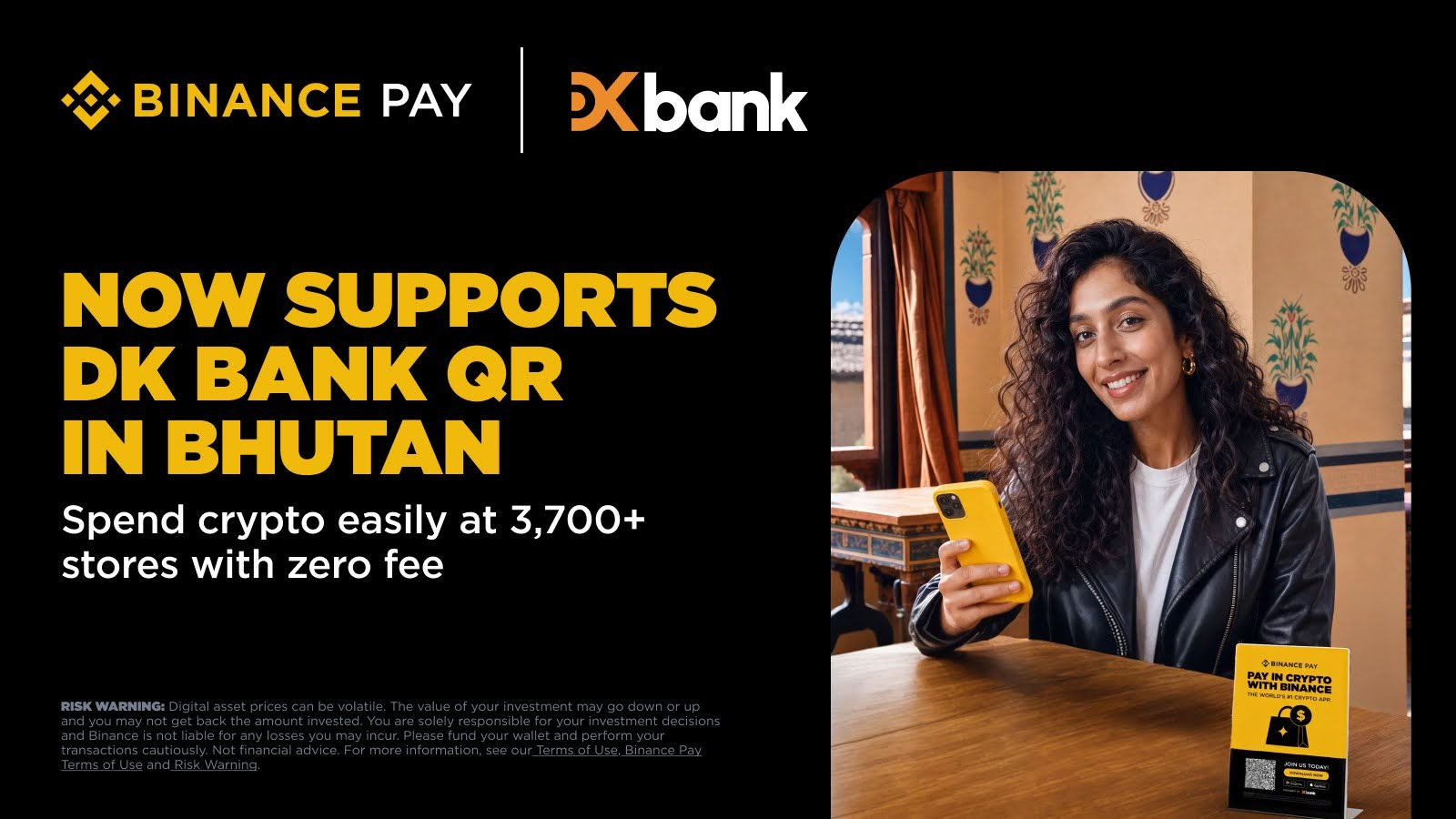
Article
Binance Pay is Now Live Across 3,700+ Merchants in Bhutan Through DK Bank QR IntegrationMain TakeawaysBinance Pay has integrated with Bhutan’s DK Bank’s QR payment network, enabling crypto payments at more than 3,700 merchants across the country.International visitors can use the Binance app to scan existing DK Bank QR codes for eligible purchases such as travel, lodging, dining, and retail with zero fees through December 31, 2026.The integration builds on Binance Pay’s May 2025 collaboration with Bhutan’s Department of Tourism and DK Bank, supporting real-world crypto adoption through trusted local payment infrastructure.Binance Pay has strategically integrated with Bhutan's DK Bank’s QR payment network – bringing cryptocurrency payments directly into Bhutan's everyday commerce. This means international visitors can now pay securely and seamlessly with crypto for travel, lodging, dining, and retail at more than 3,700 merchants across Bhutan, simply by scanning merchants' existing DK Bank QR codes through the Binance app.Expanding Crypto Payments Across BhutanThis expansion builds on the landmark collaboration launched in May 2025 between Binance Pay, Bhutan's Department of Tourism, and DK Bank to support crypto payments for tourism in Bhutan.What began as a pilot with just over 100 merchants now scales nationwide through DK Bank's QR network. The unique advantage lies in what doesn't change: merchants keep their existing payment setup and simply gain Binance Pay as an additional option, while travelers gain another way to pay at counters across the country – no new hardware or workflows, and no friction on either side.What Happens When You Use Binance Pay in BhutanTo pay with Binance Pay in Bhutan, look for the Binance Pay sticker at the storefront, which clearly indicates that Binance Pay is accepted.Example of a Binance Pay Sticker Even if there is no sticker, customers can still pay as long as a Binance Pay QR code or DK Bank QR code is available.To pay, open the Binance app, scan the merchant's DK Bank QR code, enter the amount in Bhutanese Ngultrum (BTN), and confirm. Transactions settle in USDT with automatic FX conversion – and through December 31, 2026, customers pay zero extra fees at a competitive rate.Building Crypto Utility Through Trusted Local InfrastructureThis Bhutan rollout reflects a growing shift toward crypto payment solutions that work within existing local systems. Instead of asking merchants to adopt new infrastructure, Binance Pay's integration with DK Bank QR introduces crypto through a network merchants and customers already recognize.Binance Pay’s integration with Bhutan’s domestic QR network demonstrates how crypto payments can scale through trusted local infrastructure. Globally, Binance Pay now reaches more than 21 million merchants and has processed over $321 billion in total transactions since 2021. Binance Pay local QR network integrations alone have moved $40 million in the first year, with monthly volumes growing double digits month over month.This regional momentum is especially relevant in APAC, where tourism-driven economies and established QR payment networks create a natural pathway for practical crypto payment adoption. “Bhutan represents an important step in demonstrating how this model can be successfully adapted at a national scale, and it’s the blueprint we’re taking to the next wave of tourism-dependent markets,” said SB Seker, Head of APAC, Binance.DK Bank also expressed enthusiasm for the partnership and its potential to modernize payments in Bhutan while preserving the trusted infrastructure already in place."We are proud to partner with Binance to bring cutting-edge crypto payment solutions to Bhutan’s merchants and visitors. Integrating Binance Pay with our domestic QR network allows us to enhance the payment experience while maintaining the trusted payment infrastructure already in place. This initiative supports Bhutan’s vision of embracing innovation and providing visitors with modern, seamless payment options," said Ugyen Tenzin, Country CEO at DK Bank Bhutan and Gelephu Mindfulness City.Final ThoughtsBhutan's rollout comes as QR payments expand worldwide, with the market projected to grow from $15.37 billion in 2025 to $18.49 billion in 2026 and beyond $81 billion by 2034. This trajectory underscores the value of interoperable models that link digital assets to local-currency commerce in everyday settings. Bhutan marks another step in Binance Pay's work to make crypto usable in more places for our community, building adoption market by market.Further ReadingHow to Use Tourist Payment via QR Code in Bhutan?Binance Pay Travel Route – Bhutan, the Land of Gross National HappinessBinance Pay to Expand Crypto QR Payments to 10+ Countries by Q3 2026 After $40M Milestone
Binance Pay is Now Live Across 3,700+ Merchants in Bhutan Through DK Bank QR Integration
Main TakeawaysBinance Pay has integrated with Bhutan’s DK Bank’s QR payment network, enabling crypto payments at more than 3,700 merchants across the country.International visitors can use the Binance app to scan existing DK Bank QR codes for eligible purchases such as travel, lodging, dining, and retail with zero fees through December 31, 2026.The integration builds on Binance Pay’s May 2025 collaboration with Bhutan’s Department of Tourism and DK Bank, supporting real-world crypto adoption through trusted local payment infrastructure.Binance Pay has strategically integrated with Bhutan's DK Bank’s QR payment network – bringing cryptocurrency payments directly into Bhutan's everyday commerce. This means international visitors can now pay securely and seamlessly with crypto for travel, lodging, dining, and retail at more than 3,700 merchants across Bhutan, simply by scanning merchants' existing DK Bank QR codes through the Binance app.Expanding Crypto Payments Across BhutanThis expansion builds on the landmark collaboration launched in May 2025 between Binance Pay, Bhutan's Department of Tourism, and DK Bank to support crypto payments for tourism in Bhutan.What began as a pilot with just over 100 merchants now scales nationwide through DK Bank's QR network. The unique advantage lies in what doesn't change: merchants keep their existing payment setup and simply gain Binance Pay as an additional option, while travelers gain another way to pay at counters across the country – no new hardware or workflows, and no friction on either side.What Happens When You Use Binance Pay in BhutanTo pay with Binance Pay in Bhutan, look for the Binance Pay sticker at the storefront, which clearly indicates that Binance Pay is accepted.Example of a Binance Pay Sticker Even if there is no sticker, customers can still pay as long as a Binance Pay QR code or DK Bank QR code is available.To pay, open the Binance app, scan the merchant's DK Bank QR code, enter the amount in Bhutanese Ngultrum (BTN), and confirm. Transactions settle in USDT with automatic FX conversion – and through December 31, 2026, customers pay zero extra fees at a competitive rate.Building Crypto Utility Through Trusted Local InfrastructureThis Bhutan rollout reflects a growing shift toward crypto payment solutions that work within existing local systems. Instead of asking merchants to adopt new infrastructure, Binance Pay's integration with DK Bank QR introduces crypto through a network merchants and customers already recognize.Binance Pay’s integration with Bhutan’s domestic QR network demonstrates how crypto payments can scale through trusted local infrastructure. Globally, Binance Pay now reaches more than 21 million merchants and has processed over $321 billion in total transactions since 2021. Binance Pay local QR network integrations alone have moved $40 million in the first year, with monthly volumes growing double digits month over month.This regional momentum is especially relevant in APAC, where tourism-driven economies and established QR payment networks create a natural pathway for practical crypto payment adoption. “Bhutan represents an important step in demonstrating how this model can be successfully adapted at a national scale, and it’s the blueprint we’re taking to the next wave of tourism-dependent markets,” said SB Seker, Head of APAC, Binance.DK Bank also expressed enthusiasm for the partnership and its potential to modernize payments in Bhutan while preserving the trusted infrastructure already in place."We are proud to partner with Binance to bring cutting-edge crypto payment solutions to Bhutan’s merchants and visitors. Integrating Binance Pay with our domestic QR network allows us to enhance the payment experience while maintaining the trusted payment infrastructure already in place. This initiative supports Bhutan’s vision of embracing innovation and providing visitors with modern, seamless payment options," said Ugyen Tenzin, Country CEO at DK Bank Bhutan and Gelephu Mindfulness City.Final ThoughtsBhutan's rollout comes as QR payments expand worldwide, with the market projected to grow from $15.37 billion in 2025 to $18.49 billion in 2026 and beyond $81 billion by 2034. This trajectory underscores the value of interoperable models that link digital assets to local-currency commerce in everyday settings. Bhutan marks another step in Binance Pay's work to make crypto usable in more places for our community, building adoption market by market.Further ReadingHow to Use Tourist Payment via QR Code in Bhutan?Binance Pay Travel Route – Bhutan, the Land of Gross National HappinessBinance Pay to Expand Crypto QR Payments to 10+ Countries by Q3 2026 After $40M Milestone
3
17
5.3k
·
--
Article
New on Binance Stocks – Smarter Charts, Financials, and Stock TransfersMain TakeawaysExplore improved charting tools, including K-line time intervals (1m to 1M), horizontal scrolling, chart customization (percentage, logarithmic, inverted views), and the ability to toggle overnight data on or off.Do your research on the Binance app with the new Financials tab (earnings, revenue, margins, key indicators) on every stock page, plus track P&L in real time directly from the Funding Wallet.Transfer U.S.-listed stocks and ETFs into Binance from other platforms with a few taps.The more you trade, the more you might need from your tools. Our recent update brings improved charts, clearer performance tracking, deeper research data, and a simple way to transfer your U.S.-listed stocks and ETFs from other platforms.Explore New Chart EnhancementsSwitch K-Line Time IntervalsWe’ve made two small but impactful changes to K-line charts. You can now switch between time intervals with a tap – from 1-minute candles to monthly views – and scroll horizontally.Supported intervals: 1m · 5m · 15m · 1h · 4h · 1D · 1W · 1MChart CustomizationSet up a chart display that suits your trading preferences, including cost price overlay, order history, and three different chart views: 1) Percentage; 2) Logarithmic; and 3) Inverted.Toggle Overnight DataFor the traders who like to capture opportunities outside standard hours, you can quickly toggle overnight data directly from your chart settings. Or, turn it off for a cleaner view of standard session activity. Note that overnight data is currently visible only on intervals below 1 day.Track Your Stock Portfolio PerformanceGet a dedicated view of your stock portfolio in the Funding Wallet, separate from crypto. See your stock allocation, current value, cost price, and unrealized PnL, and benchmark your portfolio returns against the S&P 500 – all in one place.Do Your Research with Deeper Financial Data We’ve also upgraded the stock detail page to make it easier for users to research the stocks they’re trading without leaving the app. Every stock now features a [Financials] tab where you’ll find important information such as earnings, revenue, margins, and other core performance indicators.Strong investing relies on having the right information at hand. Having key financials for every company directly accessible gives users more of the context they need to make informed decisions.Transfer Your Stocks and ETFs to BinanceEligible users holding U.S.-listed stocks and ETFs with another broker can now transfer them to Binance through the standard DTC (Depository Trust Company) process. Watch our tutorial video above to see how it works, or follow the steps in our FAQ guide.Only stocks and ETFs listed on Binance are eligible. Options, bonds, and futures cannot be transferred, and users are limited to one active transfer request per asset type at a time.Final ThoughtsEach enhancement we’ve launched is part of our commitment to building the best version of Binance for our users, whether it is cleaner charting tools or better resources to make more informed decisions.Every feature on this list is live on the platform right now. Update to the latest Binance app version and check availability in your region.As always, the tools we provide assist your trading journey, but ultimately they do not provide financial advice or recommendations; always do your own research before trading. Further ReadingTrade Direct Stocks and ETFs on BinanceInside the Numbers Behind Binance’s Financial Super AppHow Emerging Markets Are Driving Stock Investing on BinanceDisclaimer: Direct stocks are available only to eligible users and subject to local regulatory requirements and product availability. Securities are subject to market and liquidity risk, price volatility, and potential loss of capital. This content is for informational purposes only and should not be construed as financial or investment advice. Users should make an independent assessment of any transaction in light of their own objectives and circumstances and consult their own advisers where appropriate.Disclaimer: Nest Trading Limited acts as your introducing broker and routes your orders for Securities to its clearing broker partner, Alpaca Securities LLC, for execution, clearing, settlement and custody. Binance does not handle or custody your Securities. Securities are subject to high market and liquidity risk and price volatility (particularly outside traditional market hours). The value of your investment may go down or up and you may not get back the amount invested. You are solely responsible for your investment decisions and Binance is not liable for any losses you may incur. Past performance is not a reliable predictor of future performance. Before trading, you should make an independent assessment of the appropriateness of the transaction in light of your own objectives and circumstances, including the risks and potential benefits. Consult your own advisers, where appropriate. This information should not be construed as financial or investment advice. Binance may receive payment for order flow remuneration for directing your orders. To learn more about how to protect yourself, visit our Responsible Trading page. For more information, see our Terms of Use, Securities Trading Product Terms and Risk Warning.
New on Binance Stocks – Smarter Charts, Financials, and Stock Transfers
Main TakeawaysExplore improved charting tools, including K-line time intervals (1m to 1M), horizontal scrolling, chart customization (percentage, logarithmic, inverted views), and the ability to toggle overnight data on or off.Do your research on the Binance app with the new Financials tab (earnings, revenue, margins, key indicators) on every stock page, plus track P&L in real time directly from the Funding Wallet.Transfer U.S.-listed stocks and ETFs into Binance from other platforms with a few taps.The more you trade, the more you might need from your tools. Our recent update brings improved charts, clearer performance tracking, deeper research data, and a simple way to transfer your U.S.-listed stocks and ETFs from other platforms.Explore New Chart EnhancementsSwitch K-Line Time IntervalsWe’ve made two small but impactful changes to K-line charts. You can now switch between time intervals with a tap – from 1-minute candles to monthly views – and scroll horizontally.Supported intervals: 1m · 5m · 15m · 1h · 4h · 1D · 1W · 1MChart CustomizationSet up a chart display that suits your trading preferences, including cost price overlay, order history, and three different chart views: 1) Percentage; 2) Logarithmic; and 3) Inverted.Toggle Overnight DataFor the traders who like to capture opportunities outside standard hours, you can quickly toggle overnight data directly from your chart settings. Or, turn it off for a cleaner view of standard session activity. Note that overnight data is currently visible only on intervals below 1 day.Track Your Stock Portfolio PerformanceGet a dedicated view of your stock portfolio in the Funding Wallet, separate from crypto. See your stock allocation, current value, cost price, and unrealized PnL, and benchmark your portfolio returns against the S&P 500 – all in one place.Do Your Research with Deeper Financial Data We’ve also upgraded the stock detail page to make it easier for users to research the stocks they’re trading without leaving the app. Every stock now features a [Financials] tab where you’ll find important information such as earnings, revenue, margins, and other core performance indicators.Strong investing relies on having the right information at hand. Having key financials for every company directly accessible gives users more of the context they need to make informed decisions.Transfer Your Stocks and ETFs to BinanceEligible users holding U.S.-listed stocks and ETFs with another broker can now transfer them to Binance through the standard DTC (Depository Trust Company) process. Watch our tutorial video above to see how it works, or follow the steps in our FAQ guide.Only stocks and ETFs listed on Binance are eligible. Options, bonds, and futures cannot be transferred, and users are limited to one active transfer request per asset type at a time.Final ThoughtsEach enhancement we’ve launched is part of our commitment to building the best version of Binance for our users, whether it is cleaner charting tools or better resources to make more informed decisions.Every feature on this list is live on the platform right now. Update to the latest Binance app version and check availability in your region.As always, the tools we provide assist your trading journey, but ultimately they do not provide financial advice or recommendations; always do your own research before trading. Further ReadingTrade Direct Stocks and ETFs on BinanceInside the Numbers Behind Binance’s Financial Super AppHow Emerging Markets Are Driving Stock Investing on BinanceDisclaimer: Direct stocks are available only to eligible users and subject to local regulatory requirements and product availability. Securities are subject to market and liquidity risk, price volatility, and potential loss of capital. This content is for informational purposes only and should not be construed as financial or investment advice. Users should make an independent assessment of any transaction in light of their own objectives and circumstances and consult their own advisers where appropriate.Disclaimer: Nest Trading Limited acts as your introducing broker and routes your orders for Securities to its clearing broker partner, Alpaca Securities LLC, for execution, clearing, settlement and custody. Binance does not handle or custody your Securities. Securities are subject to high market and liquidity risk and price volatility (particularly outside traditional market hours). The value of your investment may go down or up and you may not get back the amount invested. You are solely responsible for your investment decisions and Binance is not liable for any losses you may incur. Past performance is not a reliable predictor of future performance. Before trading, you should make an independent assessment of the appropriateness of the transaction in light of your own objectives and circumstances, including the risks and potential benefits. Consult your own advisers, where appropriate. This information should not be construed as financial or investment advice. Binance may receive payment for order flow remuneration for directing your orders. To learn more about how to protect yourself, visit our Responsible Trading page. For more information, see our Terms of Use, Securities Trading Product Terms and Risk Warning.
7
1.6k
·
--
Article
Binance VIP 6 for Six – Experience VIP 6 for Up to Six MonthsMain TakeawaysBinance VIP 6 for Six campaign gives eligible users an initial two-month upgrade to VIP 6, with the opportunity to extend the upgrade for up to six months by meeting the applicable trading-volume and BNB milestones.Subject to eligibility, participants can experience the practical advantages of VIP 6, including preferential Spot and Futures fee rates, higher VIP Earn yields, dedicated account coverage, selected institutional products, BNB Boost, Capital Connect, and VIP events and recognition.The campaign offers two routes: a Growth Track for eligible current VIP 1-5 users and a Reactivation Track for selected users who held VIP 3-6 status in 2025.This is a general announcement. Products and services referred to here may not be available in your region. Terms and conditions apply.At higher trading volumes, the value of a Binance VIP tier is felt across every part of a user's activity. Fee savings accumulate with each transaction; efficient access to capital can create more room to execute a strategy; dedicated support becomes increasingly important as account structures and operational needs grow more complex.VIP 6 brings these advantages together. From August 17, 2026, our limited-time VIP 6 for Six campaign will give eligible users direct access to this tier for an initial two months, with the opportunity to extend their VIP 6 status for up to six months in total.The idea is to give more high-potential and returning VIP users enough time to experience the tier in practice. Participants can trade at VIP 6 fee rates, explore eligible institutional services, work directly with an account manager, and see how the benefits support their activity.[Apply Now]What Is the Binance VIP Program?The Binance VIP Program is a nine-tier framework designed for users operating at higher levels of activity across trading, borrowing, investing, and asset holdings. Users can qualify through several routes, reflecting the different ways they participate in the Binance ecosystem.As users progress through the tiers, they can access increasingly preferential fee schedules, higher and customizable limits, priority customer service, tailored account support, advanced trading and institutional infrastructure, exclusive insights, and selected events and experiences.The program is designed around sustained participation. It recognizes users who contribute meaningful liquidity, deploy capital at scale, or maintain significant assets across Binance products. Earlier this year, we updated key VIP criteria to reflect the way users trade, hedge, hold, and allocate capital today. VIP 6 for Six takes the next step by allowing eligible users to experience one of the program's upper tiers directly.What VIP 6 OffersVIP 6 is designed for sophisticated and high-volume users whose needs extend beyond a standard trading account. Eligible campaign participants can access the following benefits:VIP 6 trading fees: Participants receive the applicable VIP 6 Spot and Futures fee rates – up to 80% discounted trading fee – from the time their upgrade takes effect, helping reduce transaction costs as volume grows.One month of 0% Institutional Loans: Eligible KYB users can access a 0% interest rate for one month, subject to manual review and approved limits based on assets and trading activity. Availability and additional terms apply.BNB Boost: Eligible VIP users can borrow BNB at a preferential annual interest rate of 2.5%, without collateral, to help meet the BNB holding requirement used for VIP tier calculation. Borrowed BNB is subject to product restrictions and cannot be used as a trading asset, collateral, or to earn staking, Earn, airdrop, or BNB trading-fee benefits.Capital Connect: Eligible investors can discover and assess participating trading teams using standardized performance data, while eligible trading teams can access institutional capital, set portfolio terms, build a verifiable track record, and manage allocations at scale.Dedicated account coverage: Participants can work directly with an account manager who understands their trading profile and can support them as their needs evolve.VIP events and recognition: Eligible users can receive invitations to selected local, regional, and global gatherings, alongside seasonal gifts and VIP merchandise.Taken together, these benefits are intended to support three practical outcomes: lower trading friction, enable more efficient use of capital, and enjoy a closer service relationship with Binance.Start With Two Months, Extend Up to SixThe campaign begins on August 17, 2026, at 10:00 UTC. Eligible participants will initially receive VIP 6 status for two months, through October 16, 2026.Users who meet the applicable trading-volume and BNB requirements at the campaign checkpoints can extend their VIP 6 status during the second phase, with the longest available extension running through January 31, 2027. This gives qualifying participants enough time to use the tier across different market conditions and evaluate its impact on fees, capital efficiency, and day-to-day account management.Exact milestones, assessment periods, and extension dates depend on the applicable campaign track. Please refer to the Campaign Terms and Conditions for full details.Two Routes to VIP 6Growth Track: Move Up From Your Current TierThe Growth Track is intended for eligible users who currently hold VIP 1-5 status on Binance and are ready to scale their activity.If you have a Dedicated Account Manager, contact them directly to express your interest in VIP 6 for Six. Your account manager will review your eligibility, guide you through the application, and explain the milestones required to extend the initial two-month upgrade.If you do not have a Dedicated Account Manager, register on the campaign landing page and our team will reach out to you.Reactivation Track: Return to VIP 6The Reactivation Track is designed for selected users who held VIP 3-6 status on Binance in 2025 but no longer hold that tier.No application is required. Eligible users will receive an email notification, and the initial two-month VIP 6 upgrade will be applied automatically. Participants can then maintain the applicable trading-volume and BNB milestones to extend their status during the campaign period.If you previously held VIP status, check the email address registered to your Binance account for an eligibility notification. Always verify that communications come through official Binance channels before following any instructions or links.Final ThoughtsVIP benefits matter most when users have enough time to integrate them into the way they trade and manage capital. A few days can show a different fee schedule; a longer period reveals how fee savings, account coverage, and capital tools work together over time.VIP 6 for Six gives eligible current and former VIP users that opportunity. The campaign begins with two months of full VIP 6 status and rewards sustained activity with extensions of up to six months. Whether you are scaling toward the upper tiers or returning to Binance, it offers a direct way to experience the infrastructure, service, and efficiency built for our most active users.[Apply Now]Further ReadingThe Next Era of Binance VIP: Expanding Access to Match Evolving User StrategiesWhat Is the Binance VIP Program? Benefits, Tiers and How to JoinBNB Boost: Borrow BNB for VIP Tiering at 2.5% InterestBinance reserves the right in its sole discretion to amend or cancel this announcement at any time and for any reason without prior notice.Disclaimer: Digital asset prices are subject to high market risk and price volatility. The value of your investment may go down or up, and you may not get back the amount invested. You are solely responsible for your investment decisions, and Binance is not liable for any losses you may incur. Past performance is not a reliable predictor of future performance. You should only invest in products you are familiar with and where you understand the risks. You should carefully consider your investment experience, financial situation, investment objectives, and risk tolerance, and consult an independent financial adviser before making any investment. This material should not be construed as financial advice. For more information, see our Terms of Use and Risk Warning.
Binance VIP 6 for Six – Experience VIP 6 for Up to Six Months
Main TakeawaysBinance VIP 6 for Six campaign gives eligible users an initial two-month upgrade to VIP 6, with the opportunity to extend the upgrade for up to six months by meeting the applicable trading-volume and BNB milestones.Subject to eligibility, participants can experience the practical advantages of VIP 6, including preferential Spot and Futures fee rates, higher VIP Earn yields, dedicated account coverage, selected institutional products, BNB Boost, Capital Connect, and VIP events and recognition.The campaign offers two routes: a Growth Track for eligible current VIP 1-5 users and a Reactivation Track for selected users who held VIP 3-6 status in 2025.This is a general announcement. Products and services referred to here may not be available in your region. Terms and conditions apply.At higher trading volumes, the value of a Binance VIP tier is felt across every part of a user's activity. Fee savings accumulate with each transaction; efficient access to capital can create more room to execute a strategy; dedicated support becomes increasingly important as account structures and operational needs grow more complex.VIP 6 brings these advantages together. From August 17, 2026, our limited-time VIP 6 for Six campaign will give eligible users direct access to this tier for an initial two months, with the opportunity to extend their VIP 6 status for up to six months in total.The idea is to give more high-potential and returning VIP users enough time to experience the tier in practice. Participants can trade at VIP 6 fee rates, explore eligible institutional services, work directly with an account manager, and see how the benefits support their activity.[Apply Now]What Is the Binance VIP Program?The Binance VIP Program is a nine-tier framework designed for users operating at higher levels of activity across trading, borrowing, investing, and asset holdings. Users can qualify through several routes, reflecting the different ways they participate in the Binance ecosystem.As users progress through the tiers, they can access increasingly preferential fee schedules, higher and customizable limits, priority customer service, tailored account support, advanced trading and institutional infrastructure, exclusive insights, and selected events and experiences.The program is designed around sustained participation. It recognizes users who contribute meaningful liquidity, deploy capital at scale, or maintain significant assets across Binance products. Earlier this year, we updated key VIP criteria to reflect the way users trade, hedge, hold, and allocate capital today. VIP 6 for Six takes the next step by allowing eligible users to experience one of the program's upper tiers directly.What VIP 6 OffersVIP 6 is designed for sophisticated and high-volume users whose needs extend beyond a standard trading account. Eligible campaign participants can access the following benefits:VIP 6 trading fees: Participants receive the applicable VIP 6 Spot and Futures fee rates – up to 80% discounted trading fee – from the time their upgrade takes effect, helping reduce transaction costs as volume grows.One month of 0% Institutional Loans: Eligible KYB users can access a 0% interest rate for one month, subject to manual review and approved limits based on assets and trading activity. Availability and additional terms apply.BNB Boost: Eligible VIP users can borrow BNB at a preferential annual interest rate of 2.5%, without collateral, to help meet the BNB holding requirement used for VIP tier calculation. Borrowed BNB is subject to product restrictions and cannot be used as a trading asset, collateral, or to earn staking, Earn, airdrop, or BNB trading-fee benefits.Capital Connect: Eligible investors can discover and assess participating trading teams using standardized performance data, while eligible trading teams can access institutional capital, set portfolio terms, build a verifiable track record, and manage allocations at scale.Dedicated account coverage: Participants can work directly with an account manager who understands their trading profile and can support them as their needs evolve.VIP events and recognition: Eligible users can receive invitations to selected local, regional, and global gatherings, alongside seasonal gifts and VIP merchandise.Taken together, these benefits are intended to support three practical outcomes: lower trading friction, enable more efficient use of capital, and enjoy a closer service relationship with Binance.Start With Two Months, Extend Up to SixThe campaign begins on August 17, 2026, at 10:00 UTC. Eligible participants will initially receive VIP 6 status for two months, through October 16, 2026.Users who meet the applicable trading-volume and BNB requirements at the campaign checkpoints can extend their VIP 6 status during the second phase, with the longest available extension running through January 31, 2027. This gives qualifying participants enough time to use the tier across different market conditions and evaluate its impact on fees, capital efficiency, and day-to-day account management.Exact milestones, assessment periods, and extension dates depend on the applicable campaign track. Please refer to the Campaign Terms and Conditions for full details.Two Routes to VIP 6Growth Track: Move Up From Your Current TierThe Growth Track is intended for eligible users who currently hold VIP 1-5 status on Binance and are ready to scale their activity.If you have a Dedicated Account Manager, contact them directly to express your interest in VIP 6 for Six. Your account manager will review your eligibility, guide you through the application, and explain the milestones required to extend the initial two-month upgrade.If you do not have a Dedicated Account Manager, register on the campaign landing page and our team will reach out to you.Reactivation Track: Return to VIP 6The Reactivation Track is designed for selected users who held VIP 3-6 status on Binance in 2025 but no longer hold that tier.No application is required. Eligible users will receive an email notification, and the initial two-month VIP 6 upgrade will be applied automatically. Participants can then maintain the applicable trading-volume and BNB milestones to extend their status during the campaign period.If you previously held VIP status, check the email address registered to your Binance account for an eligibility notification. Always verify that communications come through official Binance channels before following any instructions or links.Final ThoughtsVIP benefits matter most when users have enough time to integrate them into the way they trade and manage capital. A few days can show a different fee schedule; a longer period reveals how fee savings, account coverage, and capital tools work together over time.VIP 6 for Six gives eligible current and former VIP users that opportunity. The campaign begins with two months of full VIP 6 status and rewards sustained activity with extensions of up to six months. Whether you are scaling toward the upper tiers or returning to Binance, it offers a direct way to experience the infrastructure, service, and efficiency built for our most active users.[Apply Now]Further ReadingThe Next Era of Binance VIP: Expanding Access to Match Evolving User StrategiesWhat Is the Binance VIP Program? Benefits, Tiers and How to JoinBNB Boost: Borrow BNB for VIP Tiering at 2.5% InterestBinance reserves the right in its sole discretion to amend or cancel this announcement at any time and for any reason without prior notice.Disclaimer: Digital asset prices are subject to high market risk and price volatility. The value of your investment may go down or up, and you may not get back the amount invested. You are solely responsible for your investment decisions, and Binance is not liable for any losses you may incur. Past performance is not a reliable predictor of future performance. You should only invest in products you are familiar with and where you understand the risks. You should carefully consider your investment experience, financial situation, investment objectives, and risk tolerance, and consult an independent financial adviser before making any investment. This material should not be construed as financial advice. For more information, see our Terms of Use and Risk Warning.
9
8.7k
·
--
Article
Beyond the Trade: How Gen Z Investors Are Building for the Long TermMain TakeawaysOne in five Gen Z-held direct-equity accounts on Binance has never placed a sell order, while 76% of Gen Z bStocks accounts are net accumulators – the highest share of any generation.Gen Z avoids leveraged and inverse ETFs more than any other working-age cohort: 88.2% in TradFi-Perps, 98.9% in bStocks recorded no such activity.Three Gen Z users explain what shaped their approach, and how Binance helps them invest across crypto and traditional markets in one place.Disclaimer: Products mentioned may not be available in your jurisdiction. Gen Z investors are often portrayed as chasing momentum, trading on hype, and taking outsized risks. New Binance Research across direct equities, bStocks, and TradFi Perps usage patterns challenges that stereotype: Gen Z users buy more than they sell, trade less often than older working-age generations, and largely avoid leveraged exposure.We spoke with three Gen Z Binance users about how crypto led them into traditional markets and shaped the way they invest today.Research First, Trade SecondKevinZ, a 27-year-old full-time trader, grew up around financial markets, spending time after school at a brokerage and learning from his parents, both experienced stock investors. A friend introduced him to Bitcoin in 2018, and DeFi Summer later convinced him to enter the blockchain industry. Today, he runs a systematic BTC strategy.His trading style has changed considerably over the years. After starting with small-cap tokens and high-leverage contracts, he shifted toward BTC and tighter risk controls. He now uses AI signals to identify possible trend reversals, then reviews market structure, price, volume, and risk before making a decision.“Before every trade, I define what evidence supports it, what would prove it wrong, and how much I can afford to lose,” he says.KevinZ wants to achieve long-term financial independence, support his family, and build a trading system that can survive different market cycles.An April rally in U.S. equities prompted him to use Binance’s TradFi products. Although he already had a U.S. brokerage account, some of his capital remained in stablecoins on an exchange.“bStocks reduced the friction of shifting funds between accounts,” he says. “I could act more quickly on opportunities I had already researched.”KevinZ also sees the ability to wait when there is no clear edge as an important part of investing. That approach helps put the broader Gen Z data into context: Binance Research found that Gen Z bStocks accounts average three trades a month, the lowest of any cohort, while 76% are net accumulators, the highest share of any generation.Binance’s TradFi offering also makes it easier for KevinZ to compare opportunities across markets. “When crypto lacks high-quality opportunities, I can look at stocks, indexes, or other traditional assets through the same framework,” he says.Getting Knocked Around And Getting BetterDa Laoshi, an options trader and analyst, has used Binance for eight and a half years. He discovered crypto in 2016 through a group chat that initially focused on equity shares, then earned his first crypto profit from a small ICO investment.“Investing is a way to truly understand industries and the world,” he says. “Trading also helps you grow and understand yourself.”For much of his time in crypto, he held BTC long term before shifting more of his attention to U.S. equities and options. He tried Binance’s TradFi offering early because it made overseas markets easier to access.“For many users, opening a brokerage account and moving money in and out are genuinely difficult,” he says. “Binance opened that up.”While Da Laoshi’s long-term position was in BTC, Binance Research finds similar patience among Gen Z users toward equity products. In direct equities, 22% of Gen Z accounts have never placed a sell order, while buy-only bStocks users trade about half as often as the typical user.Purchase sizes offer another indication of conviction. Among the top holdings in buy-only accounts, average purchase sizes were largest for SCHD and AVGO in direct equities, while high-profile names such as TSLA and NVDA drew smaller average purchases in their respective products. This suggests that attention does not always translate into larger purchases.“My approach has evolved mostly through getting knocked around,” he says. “The more you get hit, the more you reflect, and the better you get.”Learning to Stay in the Game0xKeyNG, a 24-year-old full-time trader, says he first encountered USDT through gambling. Curious about crypto, he downloaded an exchange app and began learning about Bitcoin and altcoins.His first major gain came from Dogecoin during a rally driven by Elon Musk’s tweets. “That success made me think I was a trading genius,” he says. The confidence did not last: when the bear market arrived, he lost everything.Rather than leave crypto, he continued working while rebuilding his portfolio by accumulating BTC on Binance, a habit he maintains today. He also makes short-term trades based on news and market events, using Binance as his main trading platform because it brings crypto and traditional markets together in one place.The experience shaped how he approaches risk. Binance Research found similar restraint among Gen Z users: 88.2% of Gen Z TradFi-Perps accounts and 98.9% of Gen Z bStocks accounts recorded no leveraged or inverse ETF activity, the lowest usage among working-age cohorts.“Never go all in. Always stay in the game,” 0xKeyNG says. “There will always be more opportunities. Surviving matters more than anything.”Final Thoughts: Building Across MarketsFor the users we spoke with, moving into traditional markets built on their experience in crypto. Binance gives eligible users access to crypto and traditional markets in one place, reducing the need to move funds between separate accounts.That wider access matters as Gen Z looks beyond individual assets. Binance Research shows that diversified exposure remained important even as overall investment slowed. In July, Gen Z’s overall net equity investment was 17.4% lower than in June, while net inflows to unleveraged ETFs were down just 2%, indicating that diversified exposure remained comparatively resilient even as overall activity slowed.Binance supports this flexibility through a range of crypto and TradFi products. Through direct equities, eligible users can access stocks and ETFs. With bStocks, they can hold or trade supported tokenized securities 24/7 on Binance Spot, while TradFi Perps provide another way to participate in traditional markets.These products support Binance’s vision of a financial super app that brings crypto and traditional markets together, giving users more freedom to build portfolios around their own goals.Further ReadingGen Z Perspective RewriteHow Emerging Markets Are Driving Stock Investing on BinanceInside the Numbers Behind Binance’s Financial Super AppDisclaimer: Products mentioned above may not be available in your jurisdiction. Content may include third party comments and opinions. Please note that: (a) all content is presented on an "as is" basis for general information purposes only, without representation or warranty of any kind; (b) such comments and opinions belong to these third parties, and do not purport to reflect the views, comments or opinions of Binance; and (c) correspondingly, their comments and opinions as expressed on our platform is not intended to be and shall not be construed as an endorsement by Binance. We shall not be liable or responsible for any errors or omissions, or for the results obtained from your use of such information. The content above shall not be construed as financial advice.Nest Trading Limited acts as your introducing broker and routes your orders for Securities to its clearing broker partner, Alpaca Securities LLC, for execution, clearing, settlement and custody. Binance does not handle or custody your Securities. Securities are subject to high market and liquidity risk and price volatility (particularly outside traditional market hours). The value of your investment may go down or up and you may not get back the amount invested. You are solely responsible for your investment decisions and Binance is not liable for any losses you may incur. Past performance is not a reliable predictor of future performance. Before trading, you should make an independent assessment of the appropriateness of the transaction in light of your own objectives and circumstances, including the risks and potential benefits. Consult your own advisers, where appropriate. This information should not be construed as financial or investment advice. Binance may receive payment for order flow remuneration for directing your orders. To learn more about how to protect yourself, visit our Responsible Trading page. For more information, see our Terms of Use, Securities Trading Product Terms and Risk Warning.bStocks tokenized securities are classified as Certificates representing certain Financial Instruments (paragraph 92, Schedule 1 to FSMR). bStocks are not stocks or shares and bStocks do not allow holders to directly own a share or stock in the underlying listed company. bStocks do not represent any affiliation with the underlying asset's issuer. bStocks are offered through an Approved Prospectus in the ADGM and are not offered in any other jurisdiction. No public offer is made outside of the ADGM. Tokenized securities are available only to eligible users in permitted jurisdictions on a secondary market basis only. It is your sole responsibility to ensure that accessing and trading tokenized securities is lawful in your jurisdiction before proceeding. Accessing this product from a jurisdiction in which it is prohibited or restricted does not create any liability or obligation on the part of Binance. We may restrict, suspend, reject, cancel, or unwind access or transactions if we determine, in our sole discretion, that your access or transaction may breach applicable law, product restrictions, eligibility criteria, sanctions requirements, or the relevant offering documents. Tokenized securities may be held and transferred on-chain outside the CSD environment. The transfer of tokenized securities back into the CSD environment is subject to conditions and you may be unable to trade, redeem or otherwise deal with the tokenized securities within the CSD environment if such conditions are not fulfilled.Digital asset prices can be volatile. The value of your investment may go down or up and you may not get back the amount invested. You are solely responsible for your investment decisions and Binance is not liable for any losses you may incur. TradFi Perps are subject to high market risk and price volatility (particularly outside traditional market hours). You may be called upon at short notice to make additional margin deposits or interest payments. If the required margin deposits or interest payments are not made within the prescribed time, your collateral may be liquidated. Moreover, you will remain liable for any resulting deficit in your account and interest charged on your account. All of your margin balance may be liquidated in the event of adverse price movement. Past performance is not a reliable predictor of future performance. TradFi Perps do not represent ownership of the relevant underlying asset. Before trading, you should make an independent assessment of the appropriateness of the transaction in light of your own objectives and circumstances, including the risks and potential benefits. Consult your own advisers, where appropriate. This information should not be construed as financial or investment advice. To learn more about how to protect yourself, visit our Responsible Trading page. For more information, see our Terms of Use, Exchange Rules, Clearing Rules, Exchange Procedures, Clearing Procedures, Contract Specifications and Risk Warning.No information displayed in connection with tokenized securities is intended as an offer, solicitation, promotion, recommendation, or invitation to buy or sell securities in any jurisdiction. tokenized securities are not offered, sold, distributed, made available, or accessible in the United States or to, or for the account or benefit of, U.S. persons. The tokenized securities have not been and will not be registered under the U.S. Securities Act of 1933 or any U.S. state securities laws and a public offering of bStocks will not be conducted in the United States or any other jurisdiction (other than the ADGM). By accessing this product, you represent and warrant that you are not a U.S. person, are not located in the United States, are not acting for the account or benefit of any U.S. person, and will not access, purchase, sell, transfer, redeem, or otherwise transact in tokenized securities from within the United States. Digital asset prices are subject to high market risk and price volatility. The value of your investment may go down or up, and you may not get back the amount invested. You are solely responsible for your investment decisions and Binance is not liable for any losses you may incur. Past performance is not a reliable predictor of future performance. This material should not be construed as financial advice.Any references to specific companies, stock tickers, or securities are for informational and illustrative purposes only. Such references do not constitute a recommendation, endorsement, or solicitation to buy, sell, or hold any security, and should not be construed as an affiliation, sponsorship, or endorsement by, or affiliation with, the companies mentioned. Binance is not affiliated with, sponsored by, or endorsed by any of the companies referenced in this article.For more information, see the Terms of Use, Exchange Rules, Exchange Procedures, relevant Prospectus (if applicable to you and understanding that the offer is only made in ADGM, no public offer is being made elsewhere and viewing the prospectus does not constitute an invitation or solicitation outside ADGM), bStocks Minting and Redemption Product Terms, Admission to Trading Notice and Risk Warning.
Beyond the Trade: How Gen Z Investors Are Building for the Long Term
Main TakeawaysOne in five Gen Z-held direct-equity accounts on Binance has never placed a sell order, while 76% of Gen Z bStocks accounts are net accumulators – the highest share of any generation.Gen Z avoids leveraged and inverse ETFs more than any other working-age cohort: 88.2% in TradFi-Perps, 98.9% in bStocks recorded no such activity.Three Gen Z users explain what shaped their approach, and how Binance helps them invest across crypto and traditional markets in one place.Disclaimer: Products mentioned may not be available in your jurisdiction. Gen Z investors are often portrayed as chasing momentum, trading on hype, and taking outsized risks. New Binance Research across direct equities, bStocks, and TradFi Perps usage patterns challenges that stereotype: Gen Z users buy more than they sell, trade less often than older working-age generations, and largely avoid leveraged exposure.We spoke with three Gen Z Binance users about how crypto led them into traditional markets and shaped the way they invest today.Research First, Trade SecondKevinZ, a 27-year-old full-time trader, grew up around financial markets, spending time after school at a brokerage and learning from his parents, both experienced stock investors. A friend introduced him to Bitcoin in 2018, and DeFi Summer later convinced him to enter the blockchain industry. Today, he runs a systematic BTC strategy.His trading style has changed considerably over the years. After starting with small-cap tokens and high-leverage contracts, he shifted toward BTC and tighter risk controls. He now uses AI signals to identify possible trend reversals, then reviews market structure, price, volume, and risk before making a decision.“Before every trade, I define what evidence supports it, what would prove it wrong, and how much I can afford to lose,” he says.KevinZ wants to achieve long-term financial independence, support his family, and build a trading system that can survive different market cycles.An April rally in U.S. equities prompted him to use Binance’s TradFi products. Although he already had a U.S. brokerage account, some of his capital remained in stablecoins on an exchange.“bStocks reduced the friction of shifting funds between accounts,” he says. “I could act more quickly on opportunities I had already researched.”KevinZ also sees the ability to wait when there is no clear edge as an important part of investing. That approach helps put the broader Gen Z data into context: Binance Research found that Gen Z bStocks accounts average three trades a month, the lowest of any cohort, while 76% are net accumulators, the highest share of any generation.Binance’s TradFi offering also makes it easier for KevinZ to compare opportunities across markets. “When crypto lacks high-quality opportunities, I can look at stocks, indexes, or other traditional assets through the same framework,” he says.Getting Knocked Around And Getting BetterDa Laoshi, an options trader and analyst, has used Binance for eight and a half years. He discovered crypto in 2016 through a group chat that initially focused on equity shares, then earned his first crypto profit from a small ICO investment.“Investing is a way to truly understand industries and the world,” he says. “Trading also helps you grow and understand yourself.”For much of his time in crypto, he held BTC long term before shifting more of his attention to U.S. equities and options. He tried Binance’s TradFi offering early because it made overseas markets easier to access.“For many users, opening a brokerage account and moving money in and out are genuinely difficult,” he says. “Binance opened that up.”While Da Laoshi’s long-term position was in BTC, Binance Research finds similar patience among Gen Z users toward equity products. In direct equities, 22% of Gen Z accounts have never placed a sell order, while buy-only bStocks users trade about half as often as the typical user.Purchase sizes offer another indication of conviction. Among the top holdings in buy-only accounts, average purchase sizes were largest for SCHD and AVGO in direct equities, while high-profile names such as TSLA and NVDA drew smaller average purchases in their respective products. This suggests that attention does not always translate into larger purchases.“My approach has evolved mostly through getting knocked around,” he says. “The more you get hit, the more you reflect, and the better you get.”Learning to Stay in the Game0xKeyNG, a 24-year-old full-time trader, says he first encountered USDT through gambling. Curious about crypto, he downloaded an exchange app and began learning about Bitcoin and altcoins.His first major gain came from Dogecoin during a rally driven by Elon Musk’s tweets. “That success made me think I was a trading genius,” he says. The confidence did not last: when the bear market arrived, he lost everything.Rather than leave crypto, he continued working while rebuilding his portfolio by accumulating BTC on Binance, a habit he maintains today. He also makes short-term trades based on news and market events, using Binance as his main trading platform because it brings crypto and traditional markets together in one place.The experience shaped how he approaches risk. Binance Research found similar restraint among Gen Z users: 88.2% of Gen Z TradFi-Perps accounts and 98.9% of Gen Z bStocks accounts recorded no leveraged or inverse ETF activity, the lowest usage among working-age cohorts.“Never go all in. Always stay in the game,” 0xKeyNG says. “There will always be more opportunities. Surviving matters more than anything.”Final Thoughts: Building Across MarketsFor the users we spoke with, moving into traditional markets built on their experience in crypto. Binance gives eligible users access to crypto and traditional markets in one place, reducing the need to move funds between separate accounts.That wider access matters as Gen Z looks beyond individual assets. Binance Research shows that diversified exposure remained important even as overall investment slowed. In July, Gen Z’s overall net equity investment was 17.4% lower than in June, while net inflows to unleveraged ETFs were down just 2%, indicating that diversified exposure remained comparatively resilient even as overall activity slowed.Binance supports this flexibility through a range of crypto and TradFi products. Through direct equities, eligible users can access stocks and ETFs. With bStocks, they can hold or trade supported tokenized securities 24/7 on Binance Spot, while TradFi Perps provide another way to participate in traditional markets.These products support Binance’s vision of a financial super app that brings crypto and traditional markets together, giving users more freedom to build portfolios around their own goals.Further ReadingGen Z Perspective RewriteHow Emerging Markets Are Driving Stock Investing on BinanceInside the Numbers Behind Binance’s Financial Super AppDisclaimer: Products mentioned above may not be available in your jurisdiction. Content may include third party comments and opinions. Please note that: (a) all content is presented on an "as is" basis for general information purposes only, without representation or warranty of any kind; (b) such comments and opinions belong to these third parties, and do not purport to reflect the views, comments or opinions of Binance; and (c) correspondingly, their comments and opinions as expressed on our platform is not intended to be and shall not be construed as an endorsement by Binance. We shall not be liable or responsible for any errors or omissions, or for the results obtained from your use of such information. The content above shall not be construed as financial advice.Nest Trading Limited acts as your introducing broker and routes your orders for Securities to its clearing broker partner, Alpaca Securities LLC, for execution, clearing, settlement and custody. Binance does not handle or custody your Securities. Securities are subject to high market and liquidity risk and price volatility (particularly outside traditional market hours). The value of your investment may go down or up and you may not get back the amount invested. You are solely responsible for your investment decisions and Binance is not liable for any losses you may incur. Past performance is not a reliable predictor of future performance. Before trading, you should make an independent assessment of the appropriateness of the transaction in light of your own objectives and circumstances, including the risks and potential benefits. Consult your own advisers, where appropriate. This information should not be construed as financial or investment advice. Binance may receive payment for order flow remuneration for directing your orders. To learn more about how to protect yourself, visit our Responsible Trading page. For more information, see our Terms of Use, Securities Trading Product Terms and Risk Warning.bStocks tokenized securities are classified as Certificates representing certain Financial Instruments (paragraph 92, Schedule 1 to FSMR). bStocks are not stocks or shares and bStocks do not allow holders to directly own a share or stock in the underlying listed company. bStocks do not represent any affiliation with the underlying asset's issuer. bStocks are offered through an Approved Prospectus in the ADGM and are not offered in any other jurisdiction. No public offer is made outside of the ADGM. Tokenized securities are available only to eligible users in permitted jurisdictions on a secondary market basis only. It is your sole responsibility to ensure that accessing and trading tokenized securities is lawful in your jurisdiction before proceeding. Accessing this product from a jurisdiction in which it is prohibited or restricted does not create any liability or obligation on the part of Binance. We may restrict, suspend, reject, cancel, or unwind access or transactions if we determine, in our sole discretion, that your access or transaction may breach applicable law, product restrictions, eligibility criteria, sanctions requirements, or the relevant offering documents. Tokenized securities may be held and transferred on-chain outside the CSD environment. The transfer of tokenized securities back into the CSD environment is subject to conditions and you may be unable to trade, redeem or otherwise deal with the tokenized securities within the CSD environment if such conditions are not fulfilled.Digital asset prices can be volatile. The value of your investment may go down or up and you may not get back the amount invested. You are solely responsible for your investment decisions and Binance is not liable for any losses you may incur. TradFi Perps are subject to high market risk and price volatility (particularly outside traditional market hours). You may be called upon at short notice to make additional margin deposits or interest payments. If the required margin deposits or interest payments are not made within the prescribed time, your collateral may be liquidated. Moreover, you will remain liable for any resulting deficit in your account and interest charged on your account. All of your margin balance may be liquidated in the event of adverse price movement. Past performance is not a reliable predictor of future performance. TradFi Perps do not represent ownership of the relevant underlying asset. Before trading, you should make an independent assessment of the appropriateness of the transaction in light of your own objectives and circumstances, including the risks and potential benefits. Consult your own advisers, where appropriate. This information should not be construed as financial or investment advice. To learn more about how to protect yourself, visit our Responsible Trading page. For more information, see our Terms of Use, Exchange Rules, Clearing Rules, Exchange Procedures, Clearing Procedures, Contract Specifications and Risk Warning.No information displayed in connection with tokenized securities is intended as an offer, solicitation, promotion, recommendation, or invitation to buy or sell securities in any jurisdiction. tokenized securities are not offered, sold, distributed, made available, or accessible in the United States or to, or for the account or benefit of, U.S. persons. The tokenized securities have not been and will not be registered under the U.S. Securities Act of 1933 or any U.S. state securities laws and a public offering of bStocks will not be conducted in the United States or any other jurisdiction (other than the ADGM). By accessing this product, you represent and warrant that you are not a U.S. person, are not located in the United States, are not acting for the account or benefit of any U.S. person, and will not access, purchase, sell, transfer, redeem, or otherwise transact in tokenized securities from within the United States. Digital asset prices are subject to high market risk and price volatility. The value of your investment may go down or up, and you may not get back the amount invested. You are solely responsible for your investment decisions and Binance is not liable for any losses you may incur. Past performance is not a reliable predictor of future performance. This material should not be construed as financial advice.Any references to specific companies, stock tickers, or securities are for informational and illustrative purposes only. Such references do not constitute a recommendation, endorsement, or solicitation to buy, sell, or hold any security, and should not be construed as an affiliation, sponsorship, or endorsement by, or affiliation with, the companies mentioned. Binance is not affiliated with, sponsored by, or endorsed by any of the companies referenced in this article.For more information, see the Terms of Use, Exchange Rules, Exchange Procedures, relevant Prospectus (if applicable to you and understanding that the offer is only made in ADGM, no public offer is being made elsewhere and viewing the prospectus does not constitute an invitation or solicitation outside ADGM), bStocks Minting and Redemption Product Terms, Admission to Trading Notice and Risk Warning.
12
4.8k
·
--
Article
Binance Never Sleeps: The AI Earnings That Landed After the BellMain TakeawaysAI-related earnings news landed outside U.S. market hours this week, and Binance’s 24/7 markets allowed users to act instead of waiting for the next open.After-the-bell moves can be large and fast. CSCOUSDT and COHRUSDT both saw post-earnings swings on Binance during the hours when U.S. equity markets were closed, while related bStocks tickers (CRWVB, SMCIB, and LITEB) also moved after results.Early pricing data suggests bStocks prices formed during U.S. closed hours often align closely with where the underlying reopens. Over seven weekends (June 12 to July 27), weekend prices reflected a median 92% of the Monday opening gap, with a median residual deviation of 0.19%The NYSE closes at 4pm Friday, but the world keeps moving. News continues to arrive whether or not there's a platform to price it. Traders have had to work around this gap for decades. Sit and wait until Monday's 9:30 open absorbs everything that happened over the weekend.With Binance, waiting is optional. We've gone back through the data to see what happens when traders don't have to wait – when they can capitalize on market opportunities at any time. This week gave us a clean test case, because the single most closely watched theme in global equities reported almost entirely outside market hours.The Week AI Stocks Traded Without Wall StreetThe AI complex – including demand-side names, compute providers, server builders, and the upstream optical and networking suppliers – reported their earnings this week. Every one of these critical events happened after the closing bell. Cisco and Coherent both reported at 16:05 ET on August 12, five minutes after market close. TradFi Perp traders on Binance, however, were able to gain exposure for another five and a half hours. CSCOUSDT traded +7.2% before reversing to -12.1%. COHRUSDT ran +4.9%, then fell to -11.4%. Both tickers settled right below the close before the next opening bell. The entire round trip, from initial enthusiasm to full reversal, took place in a window where users on traditional platforms could only wait. On bStocks, other AI-infrastructure names like CRWV, SMCI, and LITE reported earnings after the U.S. close on August 11. By 18:00, CRWVB was +13.3%, SMCIB was +5.7%, and LITEB had round-tripped a 4.4% drop.The Market Runs 24/7 on BinanceThis week was a pattern in how Binance’s 24/7 market is offering something legacy platforms can’t: continuous access.On July 28, bStocks crossed $500M in AUM. As of writing, it is the fastest-growing tokenized security product since its launch in June, and it now accounts for roughly 27% of tokenized equity market capitalization. Notably, most of the trading happens while the market is shut. Across July, closed U.S. market hours accounted for 62% of bStocks volume on Binance, and 58% since inception. Roughly $1.5B in value changed hands on Binance while the NYSE was closed.The volume numbers only show there’s demand for exposure when the underlying market is shut. While impressive, a market can be both busy and still be mispricing assets. Thus, arguably a bigger question is whether the price our bStocks users are trading at holds up once the underlying market reopens. To test it, we compared the weekend price to Monday's opening price. If the bStocks market has genuinely worked out where an asset’s price belongs, the two should line up. If it's just noise, they won't. What the Monday Open ShowsWe took where bStocks settled over the weekend, compared it to where the underlying opened Monday, and measured how much of the gap the weekend price had already anticipated. Figure 1: Share of the Monday price gap reflected in bStocks prices over the weekend. Source: Binance Research, as of July 28.Over a window of seven weekends, from June 12 to July 27, the on-chain price captured a median 92% of the Monday gap, leaving a median residual deviation of 0.19% at the reopen – meaning the underlying stock price had only a relatively small price difference once traditional markets opened. On larger moves – gaps above 3% – all 41 of the 41 observed instances were directionally correct, with the weekend price capturing a median 99.6% of the gap.Figure 2: Accuracy of bStocks weekend price direction by the size of the Monday opening price gap. Source: Binance Research, as of July 28.What makes the pattern even harder to dismiss is how accuracy tracks the size of the move. On the smallest weekend moves — under 0.5% — the on-chain price called the direction right about 81% of the time. That rose to roughly 90% on moves of 0.5-1%, and around 97% on moves of 1-3%, before reaching the near-total capture on the largest gaps above.If the weekend price were just random guessing, one would expect accuracy to jump around with no pattern to it. Instead, the data shows accuracy climbing steadily as the moves get bigger. Final ThoughtsThe window we measured was only across 7 weekends. It’s short enough that a run of news-driven Sundays could exaggerate the trend. A larger sample will tell us how decisively bStocks weekend pricing is leading intraday moves that Monday later confirms.The early data appears encouraging for now. In a small sample, with the caveat above in mind, the data points to a market that’s forming a real view of equity pricing while Wall Street sleeps. Even in this small dataset, the results suggest bStocks markets are contributing to price discovery while U.S. equity venues are closed. This week’s after-the-bell AI earnings were a practical example. News arrived outside the U.S. cash session, and Binance users were able to express their views in real time.Further ReadingInside the Numbers Behind Binance’s Financial Super AppbStocks Crosses $500 Million in AUM on Binance168 Hours a Week: How Binance is Extending TradFi AccessDisclaimer: bStocks Tokenized Securities are classified as Certificates representing certain Financial Instruments (paragraph 92, Schedule 1 to FSMR). bStocks are not stocks or shares and bStocks do not allow holders to directly own a share or stock in the underlying listed company. bStocks do not represent any affiliation with the underlying asset's issuer. bStocks are offered through an Approved Prospectus in the ADGM and are not offered in any other jurisdiction. No public offer is made outside of the ADGM. Tokenized Securities are available only to eligible users in permitted jurisdictions on a secondary market basis only. It is your sole responsibility to ensure that accessing and trading Tokenized Securities is lawful in your jurisdiction before proceeding. Accessing this product from a jurisdiction in which it is prohibited or restricted does not create any liability or obligation on the part of Binance. We may restrict, suspend, reject, cancel, or unwind access or transactions if we determine, in our sole discretion, that your access or transaction may breach applicable law, product restrictions, eligibility criteria, sanctions requirements, or the relevant offering documents.No information displayed in connection with Tokenized Securities is intended as an offer, solicitation, promotion, recommendation, or invitation to buy or sell securities in any jurisdiction. Tokenized Securities are not offered, sold, distributed, made available, or accessible in the United States or to, or for the account or benefit of, U.S. persons. The Tokenized Securities have not been and will not be registered under the U.S. Securities Act of 1933 or any U.S. state securities laws and a public offering of bStocks will not be conducted in the United States or any other jurisdiction (other than the ADGM). By accessing this product, you represent and warrant that you are not a U.S. person, are not located in the United States, are not acting for the account or benefit of any U.S. person, and will not access, purchase, sell, transfer, redeem, or otherwise transact in Tokenized Securities from within the United States. For more information, see the Terms of Use, Exchange Rules, Exchange Procedures, relevant Prospectus (if applicable to you and understanding that the offer is only made in ADGM, no public offer is being made elsewhere and viewing the prospectus does not constitute an invitation or solicitation outside ADGM), bStocks Minting and Redemption Product Terms, Admission to Trading Notice and Risk Warning.Disclaimer: Digital asset prices can be volatile. The value of your investment may go down or up and you may not get back the amount invested. You are solely responsible for your investment decisions and Binance is not liable for any losses you may incur. TradFi Perps are subject to high market risk and price volatility (particularly outside traditional market hours). You may be called upon at short notice to make additional margin deposits or interest payments. If the required margin deposits or interest payments are not made within the prescribed time, your collateral may be liquidated. Moreover, you will remain liable for any resulting deficit in your account and interest charged on your account. All of your margin balance may be liquidated in the event of adverse price movement. Past performance is not a reliable predictor of future performance. TradFi Perps do not represent ownership of the relevant underlying asset. Before trading, you should make an independent assessment of the appropriateness of the transaction in light of your own objectives and circumstances, including the risks and potential benefits. Consult your own advisers, where appropriate. This information should not be construed as financial or investment advice. To learn more about how to protect yourself, visit our Responsible Trading page. For more information, see our Terms of Use, Clearing Rules, Clearing Procedures, Contract Specifications and Risk Warning.
Binance Never Sleeps: The AI Earnings That Landed After the Bell
Main TakeawaysAI-related earnings news landed outside U.S. market hours this week, and Binance’s 24/7 markets allowed users to act instead of waiting for the next open.After-the-bell moves can be large and fast. CSCOUSDT and COHRUSDT both saw post-earnings swings on Binance during the hours when U.S. equity markets were closed, while related bStocks tickers (CRWVB, SMCIB, and LITEB) also moved after results.Early pricing data suggests bStocks prices formed during U.S. closed hours often align closely with where the underlying reopens. Over seven weekends (June 12 to July 27), weekend prices reflected a median 92% of the Monday opening gap, with a median residual deviation of 0.19%The NYSE closes at 4pm Friday, but the world keeps moving. News continues to arrive whether or not there's a platform to price it. Traders have had to work around this gap for decades. Sit and wait until Monday's 9:30 open absorbs everything that happened over the weekend.With Binance, waiting is optional. We've gone back through the data to see what happens when traders don't have to wait – when they can capitalize on market opportunities at any time. This week gave us a clean test case, because the single most closely watched theme in global equities reported almost entirely outside market hours.The Week AI Stocks Traded Without Wall StreetThe AI complex – including demand-side names, compute providers, server builders, and the upstream optical and networking suppliers – reported their earnings this week. Every one of these critical events happened after the closing bell. Cisco and Coherent both reported at 16:05 ET on August 12, five minutes after market close. TradFi Perp traders on Binance, however, were able to gain exposure for another five and a half hours. CSCOUSDT traded +7.2% before reversing to -12.1%. COHRUSDT ran +4.9%, then fell to -11.4%. Both tickers settled right below the close before the next opening bell. The entire round trip, from initial enthusiasm to full reversal, took place in a window where users on traditional platforms could only wait. On bStocks, other AI-infrastructure names like CRWV, SMCI, and LITE reported earnings after the U.S. close on August 11. By 18:00, CRWVB was +13.3%, SMCIB was +5.7%, and LITEB had round-tripped a 4.4% drop.The Market Runs 24/7 on BinanceThis week was a pattern in how Binance’s 24/7 market is offering something legacy platforms can’t: continuous access.On July 28, bStocks crossed $500M in AUM. As of writing, it is the fastest-growing tokenized security product since its launch in June, and it now accounts for roughly 27% of tokenized equity market capitalization. Notably, most of the trading happens while the market is shut. Across July, closed U.S. market hours accounted for 62% of bStocks volume on Binance, and 58% since inception. Roughly $1.5B in value changed hands on Binance while the NYSE was closed.The volume numbers only show there’s demand for exposure when the underlying market is shut. While impressive, a market can be both busy and still be mispricing assets. Thus, arguably a bigger question is whether the price our bStocks users are trading at holds up once the underlying market reopens. To test it, we compared the weekend price to Monday's opening price. If the bStocks market has genuinely worked out where an asset’s price belongs, the two should line up. If it's just noise, they won't. What the Monday Open ShowsWe took where bStocks settled over the weekend, compared it to where the underlying opened Monday, and measured how much of the gap the weekend price had already anticipated. Figure 1: Share of the Monday price gap reflected in bStocks prices over the weekend. Source: Binance Research, as of July 28.Over a window of seven weekends, from June 12 to July 27, the on-chain price captured a median 92% of the Monday gap, leaving a median residual deviation of 0.19% at the reopen – meaning the underlying stock price had only a relatively small price difference once traditional markets opened. On larger moves – gaps above 3% – all 41 of the 41 observed instances were directionally correct, with the weekend price capturing a median 99.6% of the gap.Figure 2: Accuracy of bStocks weekend price direction by the size of the Monday opening price gap. Source: Binance Research, as of July 28.What makes the pattern even harder to dismiss is how accuracy tracks the size of the move. On the smallest weekend moves — under 0.5% — the on-chain price called the direction right about 81% of the time. That rose to roughly 90% on moves of 0.5-1%, and around 97% on moves of 1-3%, before reaching the near-total capture on the largest gaps above.If the weekend price were just random guessing, one would expect accuracy to jump around with no pattern to it. Instead, the data shows accuracy climbing steadily as the moves get bigger. Final ThoughtsThe window we measured was only across 7 weekends. It’s short enough that a run of news-driven Sundays could exaggerate the trend. A larger sample will tell us how decisively bStocks weekend pricing is leading intraday moves that Monday later confirms.The early data appears encouraging for now. In a small sample, with the caveat above in mind, the data points to a market that’s forming a real view of equity pricing while Wall Street sleeps. Even in this small dataset, the results suggest bStocks markets are contributing to price discovery while U.S. equity venues are closed. This week’s after-the-bell AI earnings were a practical example. News arrived outside the U.S. cash session, and Binance users were able to express their views in real time.Further ReadingInside the Numbers Behind Binance’s Financial Super AppbStocks Crosses $500 Million in AUM on Binance168 Hours a Week: How Binance is Extending TradFi AccessDisclaimer: bStocks Tokenized Securities are classified as Certificates representing certain Financial Instruments (paragraph 92, Schedule 1 to FSMR). bStocks are not stocks or shares and bStocks do not allow holders to directly own a share or stock in the underlying listed company. bStocks do not represent any affiliation with the underlying asset's issuer. bStocks are offered through an Approved Prospectus in the ADGM and are not offered in any other jurisdiction. No public offer is made outside of the ADGM. Tokenized Securities are available only to eligible users in permitted jurisdictions on a secondary market basis only. It is your sole responsibility to ensure that accessing and trading Tokenized Securities is lawful in your jurisdiction before proceeding. Accessing this product from a jurisdiction in which it is prohibited or restricted does not create any liability or obligation on the part of Binance. We may restrict, suspend, reject, cancel, or unwind access or transactions if we determine, in our sole discretion, that your access or transaction may breach applicable law, product restrictions, eligibility criteria, sanctions requirements, or the relevant offering documents.No information displayed in connection with Tokenized Securities is intended as an offer, solicitation, promotion, recommendation, or invitation to buy or sell securities in any jurisdiction. Tokenized Securities are not offered, sold, distributed, made available, or accessible in the United States or to, or for the account or benefit of, U.S. persons. The Tokenized Securities have not been and will not be registered under the U.S. Securities Act of 1933 or any U.S. state securities laws and a public offering of bStocks will not be conducted in the United States or any other jurisdiction (other than the ADGM). By accessing this product, you represent and warrant that you are not a U.S. person, are not located in the United States, are not acting for the account or benefit of any U.S. person, and will not access, purchase, sell, transfer, redeem, or otherwise transact in Tokenized Securities from within the United States. For more information, see the Terms of Use, Exchange Rules, Exchange Procedures, relevant Prospectus (if applicable to you and understanding that the offer is only made in ADGM, no public offer is being made elsewhere and viewing the prospectus does not constitute an invitation or solicitation outside ADGM), bStocks Minting and Redemption Product Terms, Admission to Trading Notice and Risk Warning.Disclaimer: Digital asset prices can be volatile. The value of your investment may go down or up and you may not get back the amount invested. You are solely responsible for your investment decisions and Binance is not liable for any losses you may incur. TradFi Perps are subject to high market risk and price volatility (particularly outside traditional market hours). You may be called upon at short notice to make additional margin deposits or interest payments. If the required margin deposits or interest payments are not made within the prescribed time, your collateral may be liquidated. Moreover, you will remain liable for any resulting deficit in your account and interest charged on your account. All of your margin balance may be liquidated in the event of adverse price movement. Past performance is not a reliable predictor of future performance. TradFi Perps do not represent ownership of the relevant underlying asset. Before trading, you should make an independent assessment of the appropriateness of the transaction in light of your own objectives and circumstances, including the risks and potential benefits. Consult your own advisers, where appropriate. This information should not be construed as financial or investment advice. To learn more about how to protect yourself, visit our Responsible Trading page. For more information, see our Terms of Use, Clearing Rules, Clearing Procedures, Contract Specifications and Risk Warning.
1
8
2.6k
·
--
Article
Binance Charity Commits $650,000 and Waives P2P Fees to Support Users Affected by the Colombia EarthquakeMain TakeawaysBinance Charity is committing $650,000 in 20 USDT token vouchers to support eligible Binance users in the Colombian areas most affected by the August 10 earthquake.The initiative will cover eligible users in Valle del Cauca, Risaralda, Caldas, and Chocó, with recipients identified using account verification and Proof of Address records.Binance will also waive fees on all COP-denominated P2P transactions for seven days, through August 18, 2026.On August 10, 2026, a magnitude 7.4 earthquake struck Colombia, causing extensive damage across the country’s western regions. Communities in Valle del Cauca, Risaralda, Caldas, and Chocó were among the hardest hit, with collapsed buildings, damaged homes and public infrastructure, injuries, loss of life, and significant disruption to transport and essential services.In response, Binance Charity is committing a total of $650,000 in direct assistance to eligible Binance users living in the affected areas. We will distribute 20 USDT in token vouchers to each eligible user and waive fees on COP-denominated Binance P2P transactions for seven days.Through this initiative, we aim to provide rapid, practical support that affected users can access directly as their communities begin the difficult work of recovery.Delivering Direct Assistance to Affected UsersThe token-voucher program will focus on four of the departments most severely affected by the earthquake: Valle del Cauca, Risaralda, Caldas, and Chocó.Eligibility will be determined using Binance users’ identity verification, or KYC, and Proof of Address (POA) records.Existing users who completed both identity verification and POA before August 11, 2026, with an address in one of the designated areas, will each receive 20 USDT in token vouchers through their Binance Rewards Hub.We recognize that some existing users living in the affected areas may not have completed identity verification or POA before the cutoff date. Existing users who complete the outstanding verification requirement on or after August 11 and no later than August 25, 2026, at 23:59 (UTC-3), may also receive 20 USDT, subject to eligibility checks and the limit of the total donation allocation.Eligible recipients in this group will receive their token vouchers within 30 days of completing POA. Users who created a Binance account after August 11, 2026, will not be eligible for this initiative.Waiving P2P Fees for COP TransactionsAlongside the token-voucher distribution, Binance will waive fees on all Colombian peso-denominated transactions on Binance P2P for seven days, ending August 18, 2026, at 23:59 (UTC-3).P2P services play an important role in helping users access and move digital assets using their local currency. Temporarily removing fees is intended to make this channel easier to use during a period when many people in the affected communities face urgent needs and disruption to their daily lives.For complete eligibility requirements, distribution details, and terms, please visit our FAQ page.Standing With Our Community in ColombiaWhen a disaster strikes, the ability to deliver assistance quickly matters. Blockchain-based support allows Binance Charity to reach eligible users directly and distribute aid efficiently, while existing account-verification tools help identify people located in the affected regions.This initiative continues Binance Charity’s wider commitment to helping communities respond to natural disasters and humanitarian emergencies. We have previously supported relief initiatives for communities affected by crises in Venezuela, Argentina, Brazil, Mexico, Ukraine, Türkiye, Libya, Morocco, Taiwan, Italy, and other countries around the world.Our thoughts are with everyone affected by the earthquake, including those who have lost loved ones, suffered injuries, or seen their homes and communities damaged. Binance stands with our users in Colombia, and we will continue exploring additional ways to support the community as recovery efforts progress.Further ReadingBinance Charity Commits 4 Million Pesos to Mindanao Earthquake ReliefBinance Charity Pledges $200,000 to Support Flood Relief in Southern ThailandBinance Charity Donates $200,000 to Support Vietnam’s Flood Relief and Recovery
Binance Charity Commits $650,000 and Waives P2P Fees to Support Users Affected by the Colombia Earthquake
Main TakeawaysBinance Charity is committing $650,000 in 20 USDT token vouchers to support eligible Binance users in the Colombian areas most affected by the August 10 earthquake.The initiative will cover eligible users in Valle del Cauca, Risaralda, Caldas, and Chocó, with recipients identified using account verification and Proof of Address records.Binance will also waive fees on all COP-denominated P2P transactions for seven days, through August 18, 2026.On August 10, 2026, a magnitude 7.4 earthquake struck Colombia, causing extensive damage across the country’s western regions. Communities in Valle del Cauca, Risaralda, Caldas, and Chocó were among the hardest hit, with collapsed buildings, damaged homes and public infrastructure, injuries, loss of life, and significant disruption to transport and essential services.In response, Binance Charity is committing a total of $650,000 in direct assistance to eligible Binance users living in the affected areas. We will distribute 20 USDT in token vouchers to each eligible user and waive fees on COP-denominated Binance P2P transactions for seven days.Through this initiative, we aim to provide rapid, practical support that affected users can access directly as their communities begin the difficult work of recovery.Delivering Direct Assistance to Affected UsersThe token-voucher program will focus on four of the departments most severely affected by the earthquake: Valle del Cauca, Risaralda, Caldas, and Chocó.Eligibility will be determined using Binance users’ identity verification, or KYC, and Proof of Address (POA) records.Existing users who completed both identity verification and POA before August 11, 2026, with an address in one of the designated areas, will each receive 20 USDT in token vouchers through their Binance Rewards Hub.We recognize that some existing users living in the affected areas may not have completed identity verification or POA before the cutoff date. Existing users who complete the outstanding verification requirement on or after August 11 and no later than August 25, 2026, at 23:59 (UTC-3), may also receive 20 USDT, subject to eligibility checks and the limit of the total donation allocation.Eligible recipients in this group will receive their token vouchers within 30 days of completing POA. Users who created a Binance account after August 11, 2026, will not be eligible for this initiative.Waiving P2P Fees for COP TransactionsAlongside the token-voucher distribution, Binance will waive fees on all Colombian peso-denominated transactions on Binance P2P for seven days, ending August 18, 2026, at 23:59 (UTC-3).P2P services play an important role in helping users access and move digital assets using their local currency. Temporarily removing fees is intended to make this channel easier to use during a period when many people in the affected communities face urgent needs and disruption to their daily lives.For complete eligibility requirements, distribution details, and terms, please visit our FAQ page.Standing With Our Community in ColombiaWhen a disaster strikes, the ability to deliver assistance quickly matters. Blockchain-based support allows Binance Charity to reach eligible users directly and distribute aid efficiently, while existing account-verification tools help identify people located in the affected regions.This initiative continues Binance Charity’s wider commitment to helping communities respond to natural disasters and humanitarian emergencies. We have previously supported relief initiatives for communities affected by crises in Venezuela, Argentina, Brazil, Mexico, Ukraine, Türkiye, Libya, Morocco, Taiwan, Italy, and other countries around the world.Our thoughts are with everyone affected by the earthquake, including those who have lost loved ones, suffered injuries, or seen their homes and communities damaged. Binance stands with our users in Colombia, and we will continue exploring additional ways to support the community as recovery efforts progress.Further ReadingBinance Charity Commits 4 Million Pesos to Mindanao Earthquake ReliefBinance Charity Pledges $200,000 to Support Flood Relief in Southern ThailandBinance Charity Donates $200,000 to Support Vietnam’s Flood Relief and Recovery
1
2
21
4.9k
·
--
Article
Learn Crypto Risk Management – Protect Your Crypto with Binance AcademyMain TakeawaysBinance Academy is launching a new Crypto Risk Management course on August 12, 2026 to help users better understand and manage crypto risks.The course covers key risk areas including market volatility, wallet security, fraud prevention, compliance, and incident response.Designed for beginners and experienced users alike, the course provides practical frameworks to help individuals and organizations protect their assets and navigate crypto safely.Crypto opens the door to a new world of financial opportunity, but it also introduces new types of risk. Whether you’re trading on an exchange, holding tokens in your wallet, or overseeing a corporate crypto treasury, understanding risk is the foundation for protecting your assets and making confident, informed decisions.To help users build stronger knowledge and safer habits, Binance Academy is launching a new Crypto Risk Management course on August 12. The course is designed to help learners develop practical understanding across the full crypto risk landscape, from market volatility and wallet security to fraud prevention, compliance, and incident response.Why Crypto Risk Management MattersIn crypto, users generally have greater control over their assets compared to traditional finance. However, a flipside is that a single mistake such as interacting with a malicious smart contract or phishing link can lead to significant losses.This course helps learners move beyond basic awareness and toward practical action. By understanding where risks come from and how to manage them, users and organizations can participate in crypto more safely and confidently.Do You Need Technical Experience?The Binance Academy Crypto Risk Management course does not require any crypto trading or technical experience. Basic financial knowledge can be helpful, as the course is designed for beginners while still offering practical insights for experienced crypto holders and organizations.What You’ll LearnThe course is divided into four sections and includes 16 modules. Each module is approximately five to eight minutes, with a total course duration of around 95 minutes. By the end of the course, you’ll be able to:Identify Crypto RisksUnderstand the major categories of crypto risk, including market, custody, protocol, behavioral, and regulatory risks. Learn how these risks arise, how you can mitigate them, and why crypto requires a different approach to risk management.Protect Crypto Assets and WalletsMake informed decisions about wallets, custody solutions, security architecture, hot and cold storage, and multi-signature setups.Recognize and Defend Against Crypto ScamsRecognize common fraud vectors, social engineering tactics, DeFi attack patterns, and other technical threats targeting crypto users and organizations.Understand Compliance and GovernanceExplore regulatory considerations, governance frameworks, incident response planning, and how to build a stronger risk culture.Final ThoughtsRisk cannot be completely eliminated, but it can be understood, reduced, and managed. The Crypto Risk Management course provides a clear framework for identifying threats, defending against attacks, and responding effectively when incidents occur. Whether you’re an individual holder or an institutional investor, the principles in this course can help you improve how you secure your systems and navigate the crypto ecosystem with greater confidence. Ultimately, you are responsible for doing your own research, protecting your assets and cultivating proper risk management habits.This educational initiative is aligned with Binance’s mission to increase crypto awareness, strengthen user protection, and support the long-term growth of the ecosystem. By helping users better understand and manage risk, Binance Academy aims to make crypto participation safer, more informed, and more accessible for everyone.Further ReadingAccount Security, 2026 Edition – Early Alerts, Simple Setups, and Scam Awareness to Protect Your Binance AccountProtect Your iPhone in 30 Seconds with Two Simple SetupsUnderstanding Honeypot Scams – How They Work, What to Watch Out For, and How Binance Wallet Prevents it
Learn Crypto Risk Management – Protect Your Crypto with Binance Academy
Main TakeawaysBinance Academy is launching a new Crypto Risk Management course on August 12, 2026 to help users better understand and manage crypto risks.The course covers key risk areas including market volatility, wallet security, fraud prevention, compliance, and incident response.Designed for beginners and experienced users alike, the course provides practical frameworks to help individuals and organizations protect their assets and navigate crypto safely.Crypto opens the door to a new world of financial opportunity, but it also introduces new types of risk. Whether you’re trading on an exchange, holding tokens in your wallet, or overseeing a corporate crypto treasury, understanding risk is the foundation for protecting your assets and making confident, informed decisions.To help users build stronger knowledge and safer habits, Binance Academy is launching a new Crypto Risk Management course on August 12. The course is designed to help learners develop practical understanding across the full crypto risk landscape, from market volatility and wallet security to fraud prevention, compliance, and incident response.Why Crypto Risk Management MattersIn crypto, users generally have greater control over their assets compared to traditional finance. However, a flipside is that a single mistake such as interacting with a malicious smart contract or phishing link can lead to significant losses.This course helps learners move beyond basic awareness and toward practical action. By understanding where risks come from and how to manage them, users and organizations can participate in crypto more safely and confidently.Do You Need Technical Experience?The Binance Academy Crypto Risk Management course does not require any crypto trading or technical experience. Basic financial knowledge can be helpful, as the course is designed for beginners while still offering practical insights for experienced crypto holders and organizations.What You’ll LearnThe course is divided into four sections and includes 16 modules. Each module is approximately five to eight minutes, with a total course duration of around 95 minutes. By the end of the course, you’ll be able to:Identify Crypto RisksUnderstand the major categories of crypto risk, including market, custody, protocol, behavioral, and regulatory risks. Learn how these risks arise, how you can mitigate them, and why crypto requires a different approach to risk management.Protect Crypto Assets and WalletsMake informed decisions about wallets, custody solutions, security architecture, hot and cold storage, and multi-signature setups.Recognize and Defend Against Crypto ScamsRecognize common fraud vectors, social engineering tactics, DeFi attack patterns, and other technical threats targeting crypto users and organizations.Understand Compliance and GovernanceExplore regulatory considerations, governance frameworks, incident response planning, and how to build a stronger risk culture.Final ThoughtsRisk cannot be completely eliminated, but it can be understood, reduced, and managed. The Crypto Risk Management course provides a clear framework for identifying threats, defending against attacks, and responding effectively when incidents occur. Whether you’re an individual holder or an institutional investor, the principles in this course can help you improve how you secure your systems and navigate the crypto ecosystem with greater confidence. Ultimately, you are responsible for doing your own research, protecting your assets and cultivating proper risk management habits.This educational initiative is aligned with Binance’s mission to increase crypto awareness, strengthen user protection, and support the long-term growth of the ecosystem. By helping users better understand and manage risk, Binance Academy aims to make crypto participation safer, more informed, and more accessible for everyone.Further ReadingAccount Security, 2026 Edition – Early Alerts, Simple Setups, and Scam Awareness to Protect Your Binance AccountProtect Your iPhone in 30 Seconds with Two Simple SetupsUnderstanding Honeypot Scams – How They Work, What to Watch Out For, and How Binance Wallet Prevents it
12
2.6k
Log in to explore more content
Join global crypto users on Binance Square
⚡️ Get latest and useful information about crypto.
💬 Trusted by the world’s largest crypto exchange.
👍 Discover real insights from verified creators.
Email / Phone number
Trending Topics
OktaCrowdStrikeSurgeOnEarningsBeat
8,431 views
316 Discussing
📈 Tech Giants Surge: Okta & CrowdStrike Crush Earnings!
👉🏼The cybersecurity sector is officially on fire🔥.
👉🏼Two industry titans, Okta (OKTA) and CrowdStrike (CRWD), just reported massive earnings beats, sending shockwaves through Wall Street and triggering strong bullish momentum.
🤔If you are looking for high-growth narratives in the tech sector, this dual surge demands your attention.
🗣️Both companies proved that enterprise demand for digital security and identity protection remains bulletproof, even in a challenging macroeconomic environment.
#marketanalysiswithnehatahir
.🔐 Okta (OKTA) | The Identity Champion
😳The Beat: Smashed consensus estimates on both top and bottom lines.
😳The Catalyst: Rapid adoption of its Identity Cloud and strong enterprise contract renewals.
😳Market Reaction: Shares surged as institutional investors repositioned into identity access management (IAM) as a fundamental tech layer.
🦅 CrowdStrike (CRWD) | The Endpoint King
✍🏼The Beat: Delivered a masterclass in annual recurring revenue (ARR) growth, beating EPS expectations.
✍🏼The Catalyst: Massive cross-selling success with its Falcon platform, proving customers want a single consolidated security vendor.
✍🏼Market Reaction: The stock experienced a violent upward breakout, confirming its status as a market leader.
#OktaCrowdStrikeSurgeOnEarningsBeat
$B
$GNO
$XRP
Market Analysis with Neha Tahir
·0 Likes
·230 views
BitcoinHoldsNear$79400
8,746 views
121 Discussing
BitcoinTops$80KThreeMonthHigh
2,504 views
89 Discussing