
Mr Azun
3k Posts

Mr Azun
bnb holder
1.7K+ Following
1.7K+ Followers
1.5K+ Liked
Posts
All
Quotes
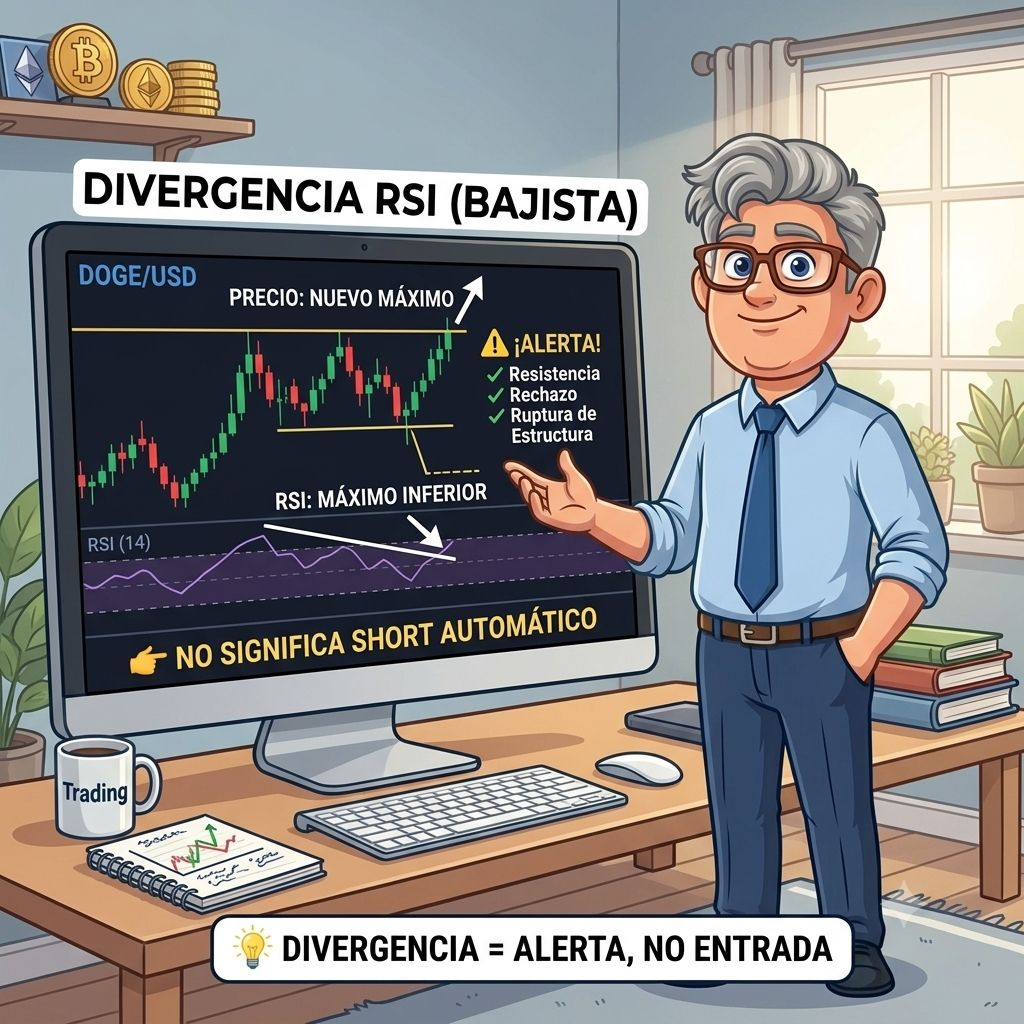
🚀 RSI divergence + structure
The RSI can help you detect loss of momentum.
📊 Example: $DOGE
The price makes a new high, but the RSI makes a lower high.
That’s a bearish divergence.
⚠️ It doesn’t automatically mean you should open a Short.
Also look for:
✔ resistance
✔ rejection
✔ structure break
💡 Divergence is an alert, not an entry order.
The RSI can help you detect loss of momentum.
📊 Example: $DOGE
The price makes a new high, but the RSI makes a lower high.
That’s a bearish divergence.
⚠️ It doesn’t automatically mean you should open a Short.
Also look for:
✔ resistance
✔ rejection
✔ structure break
💡 Divergence is an alert, not an entry order.
🚀 Moving average crossover + trend confirmation
Moving averages can be used to identify direction, not to predict the future.
📊 Example: $ADA
EMA 20 > EMA 50
→ favorable short-term trend.
But you don’t enter immediately.
You wait for:
✔ a pullback
✔ maintenance of structure
✔ a new bullish reaction
💡 The crossover gives you context; the price gives you the entry.
👉 Don’t turn an indicator into an automatic signal.
Moving averages can be used to identify direction, not to predict the future.
📊 Example: $ADA
EMA 20 > EMA 50
→ favorable short-term trend.
But you don’t enter immediately.
You wait for:
✔ a pullback
✔ maintenance of structure
✔ a new bullish reaction
💡 The crossover gives you context; the price gives you the entry.
👉 Don’t turn an indicator into an automatic signal.

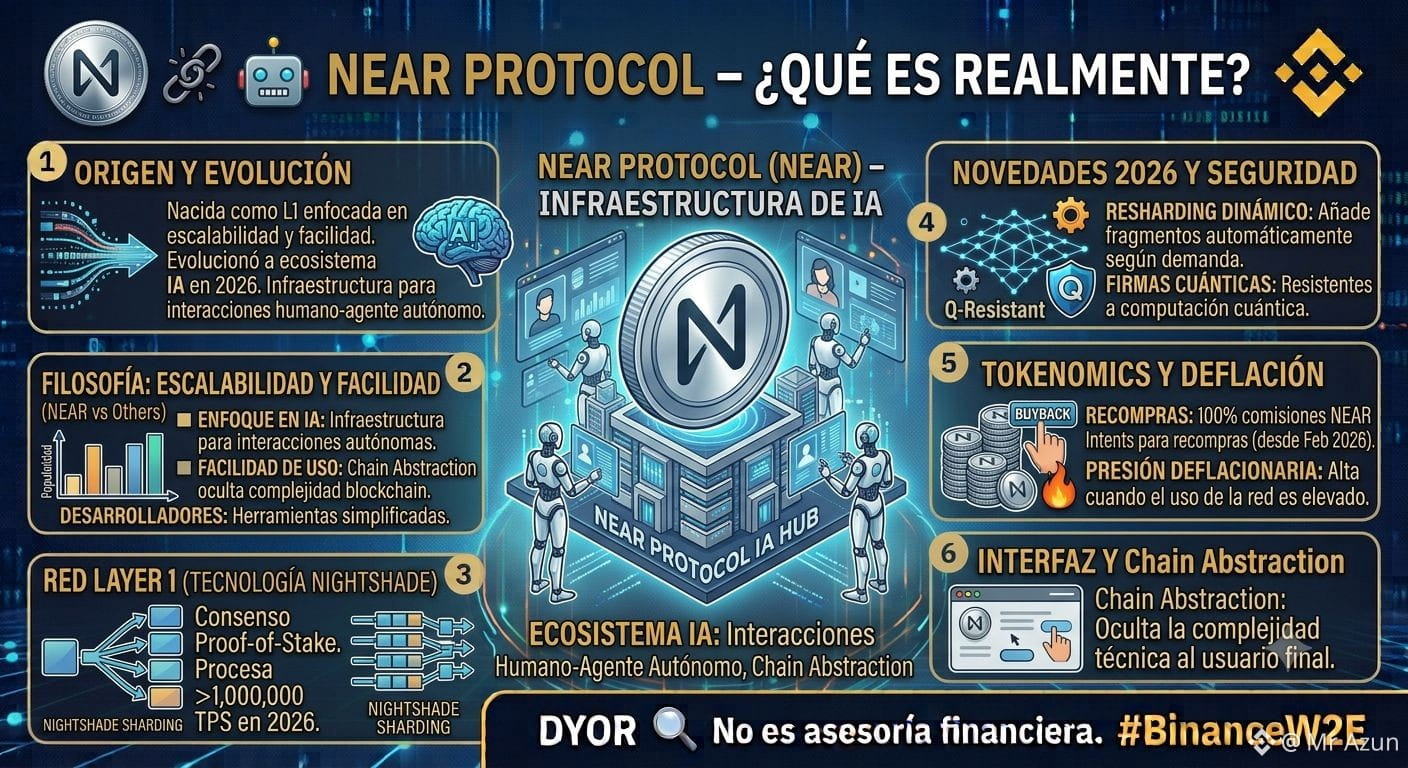
🤖 $NEAR – What is it really?
Born as a Layer 1 blockchain focused on scalability and ease of use for developers, in 2026 NEAR evolved into an AI-oriented ecosystem, positioning itself as infrastructure for interaction between humans and autonomous agents.
⚙️ Technology: Uses Nightshade, its sharding system (fragmentation) with Proof-of-Stake consensus, which in 2026 enables processing more than 1,000,000 transactions per second. Includes Chain Abstraction, which hides blockchain complexity from the end user.
🚀 2026 novelty: Introduced dynamic resharding, allowing the network to automatically add shards based on demand, in addition to quantum-computation-resistant signatures.
🔥 Tokenomics: Since February 2026, 100% of NEAR Intents fees are used for buybacks in the open market, creating deflationary pressure when network usage is high.
DYOR 🔍 Not financial advice.
Born as a Layer 1 blockchain focused on scalability and ease of use for developers, in 2026 NEAR evolved into an AI-oriented ecosystem, positioning itself as infrastructure for interaction between humans and autonomous agents.
⚙️ Technology: Uses Nightshade, its sharding system (fragmentation) with Proof-of-Stake consensus, which in 2026 enables processing more than 1,000,000 transactions per second. Includes Chain Abstraction, which hides blockchain complexity from the end user.
🚀 2026 novelty: Introduced dynamic resharding, allowing the network to automatically add shards based on demand, in addition to quantum-computation-resistant signatures.
🔥 Tokenomics: Since February 2026, 100% of NEAR Intents fees are used for buybacks in the open market, creating deflationary pressure when network usage is high.
DYOR 🔍 Not financial advice.
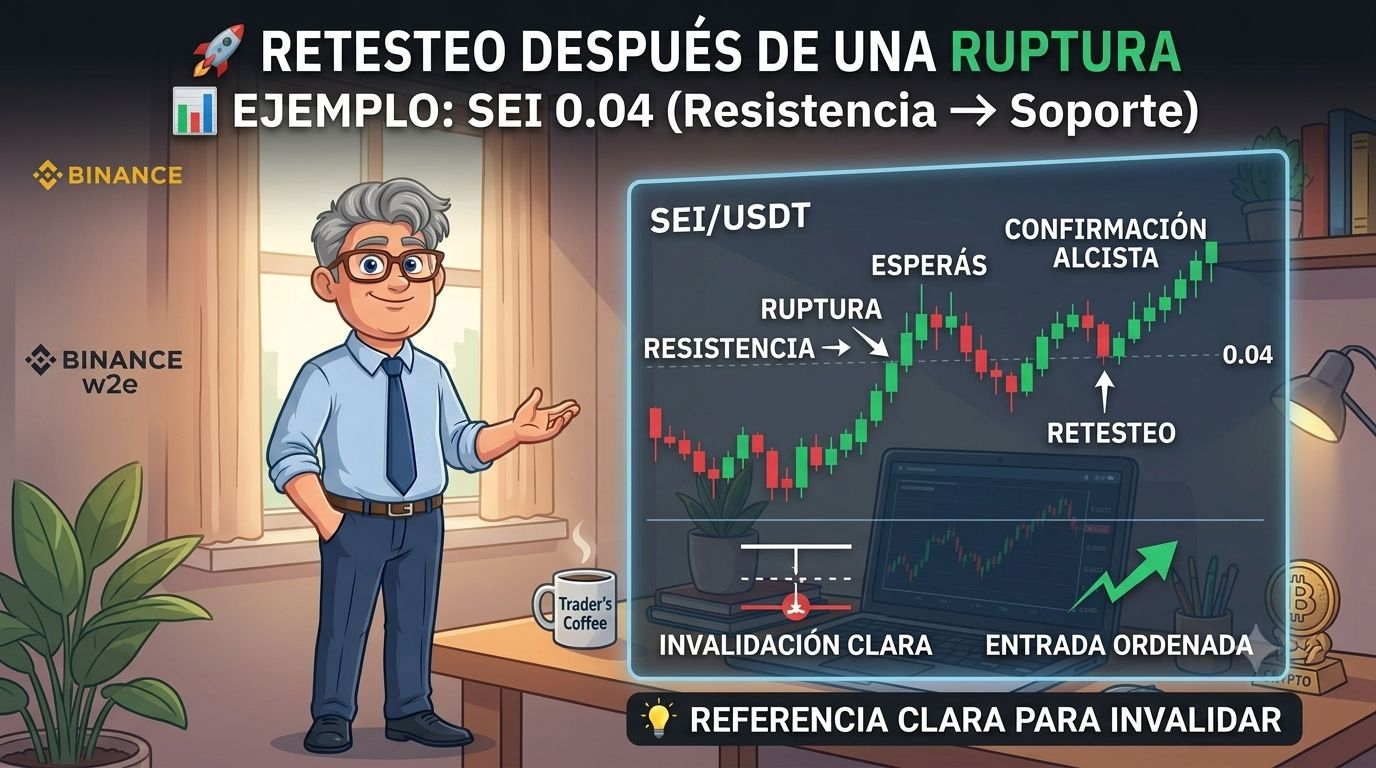
🚀Retest after a breakout
This one deserves special attention.
📊 Example: $SEI breaks through a resistance at 0.04.
Instead of chasing the candle:
Wait.
Price returns to 0.04.
The former resistance acts as support.
Bullish confirmation appears.
💡 Now you have a clear reference to invalidate the trade.
👉 Many times the second move provides a more orderly entry than the first.
This one deserves special attention.
📊 Example: $SEI breaks through a resistance at 0.04.
Instead of chasing the candle:
Wait.
Price returns to 0.04.
The former resistance acts as support.
Bullish confirmation appears.
💡 Now you have a clear reference to invalidate the trade.
👉 Many times the second move provides a more orderly entry than the first.
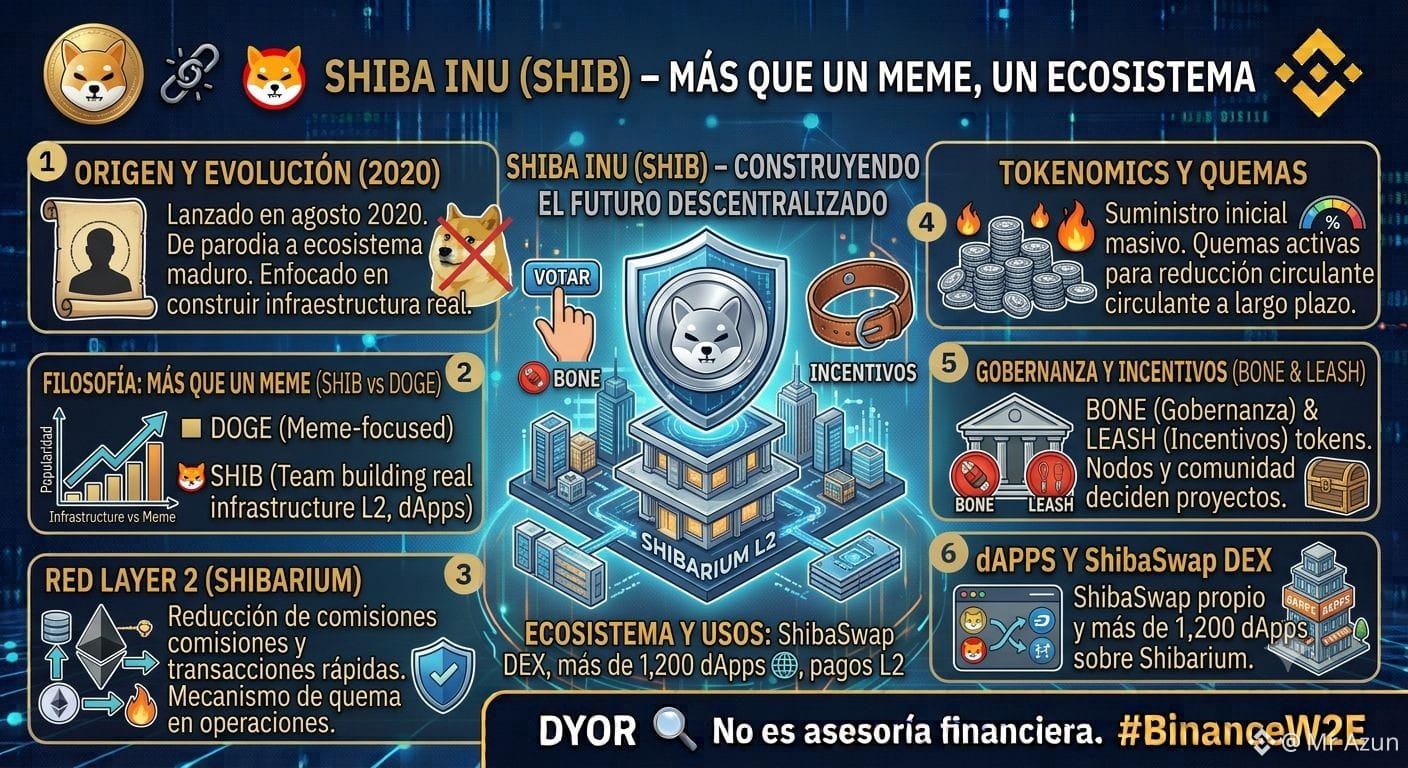
🐕 SHIBA INU $SHIB – What is it really?
Launched in August 2020 under the pseudonym "Ryoshi", SHIB began as a parody of Dogecoin (a parody of a parody), but it evolved into one of the most developed meme ecosystems in the industry.
⚙️ Technology: ERC-20 token on Ethereum. In 2023 it launched Shibarium, its own Layer 2 network, which lowers fees and processes transactions off Ethereum, with a burn mechanism on certain operations.
🌐 Ecosystem: ShibaSwap (its own DEX), more than 1,200 dApps on Shibarium, and two complementary tokens: BONE (governance) and LEASH (incentives).
📦 Tokenomics: Massive initial supply, with active burns to reduce circulating supply over the long term.
🎯 Differentiator: Unlike DOGE, its team chose to build real infrastructure (L2, dApps) beyond the meme.
DYOR 🔍 Not financial advice.
Launched in August 2020 under the pseudonym "Ryoshi", SHIB began as a parody of Dogecoin (a parody of a parody), but it evolved into one of the most developed meme ecosystems in the industry.
⚙️ Technology: ERC-20 token on Ethereum. In 2023 it launched Shibarium, its own Layer 2 network, which lowers fees and processes transactions off Ethereum, with a burn mechanism on certain operations.
🌐 Ecosystem: ShibaSwap (its own DEX), more than 1,200 dApps on Shibarium, and two complementary tokens: BONE (governance) and LEASH (incentives).
📦 Tokenomics: Massive initial supply, with active burns to reduce circulating supply over the long term.
🎯 Differentiator: Unlike DOGE, its team chose to build real infrastructure (L2, dApps) beyond the meme.
DYOR 🔍 Not financial advice.
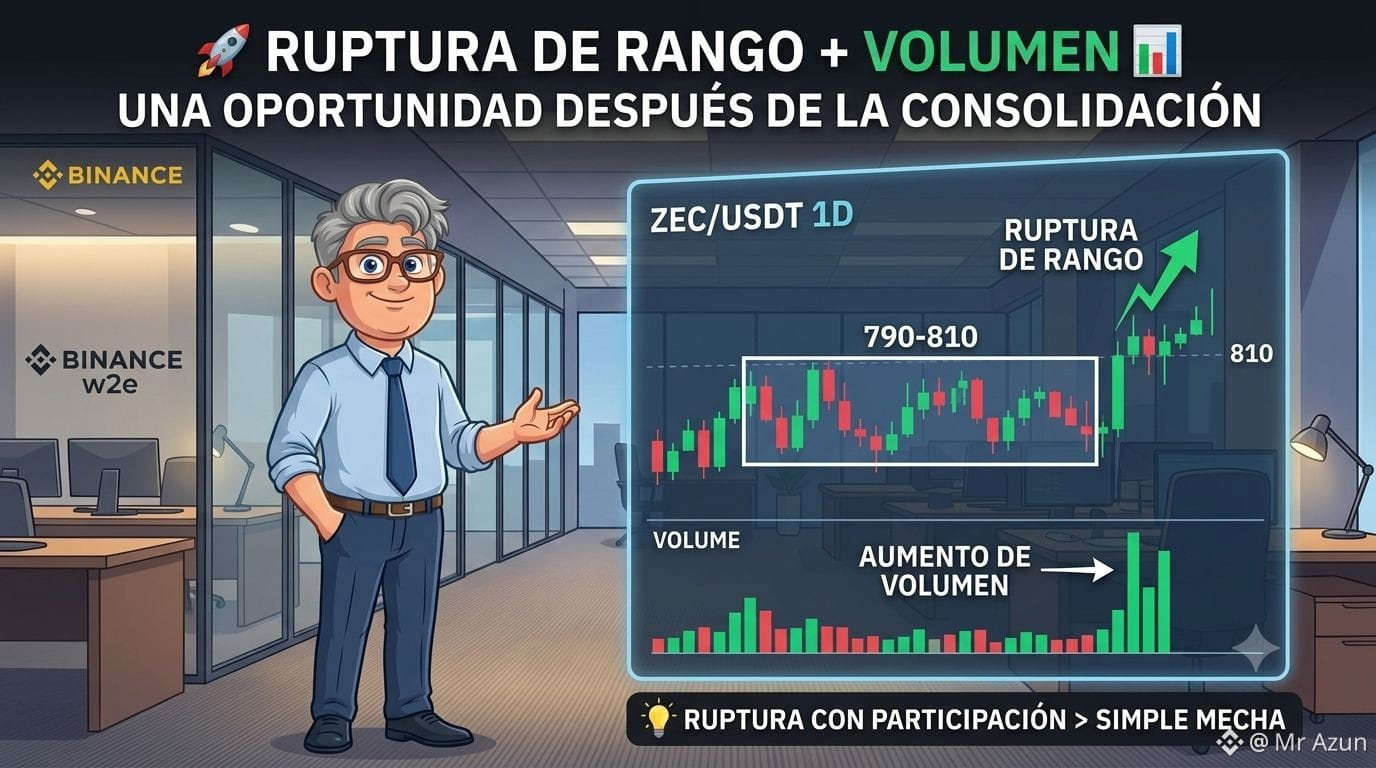
🚀 Breakout of range + volume
After consolidation, a price expansion can create an opportunity.
📊 Example: $ZEC spends hours between 790 and 810.
Finally: → breaks 810
→ increases volume
→ holds the level
💡 A breakout with participation is usually more interesting than a simple wick above the range.
👉 Avoid entering just because you saw a big candle.
After consolidation, a price expansion can create an opportunity.
📊 Example: $ZEC spends hours between 790 and 810.
Finally: → breaks 810
→ increases volume
→ holds the level
💡 A breakout with participation is usually more interesting than a simple wick above the range.
👉 Avoid entering just because you saw a big candle.
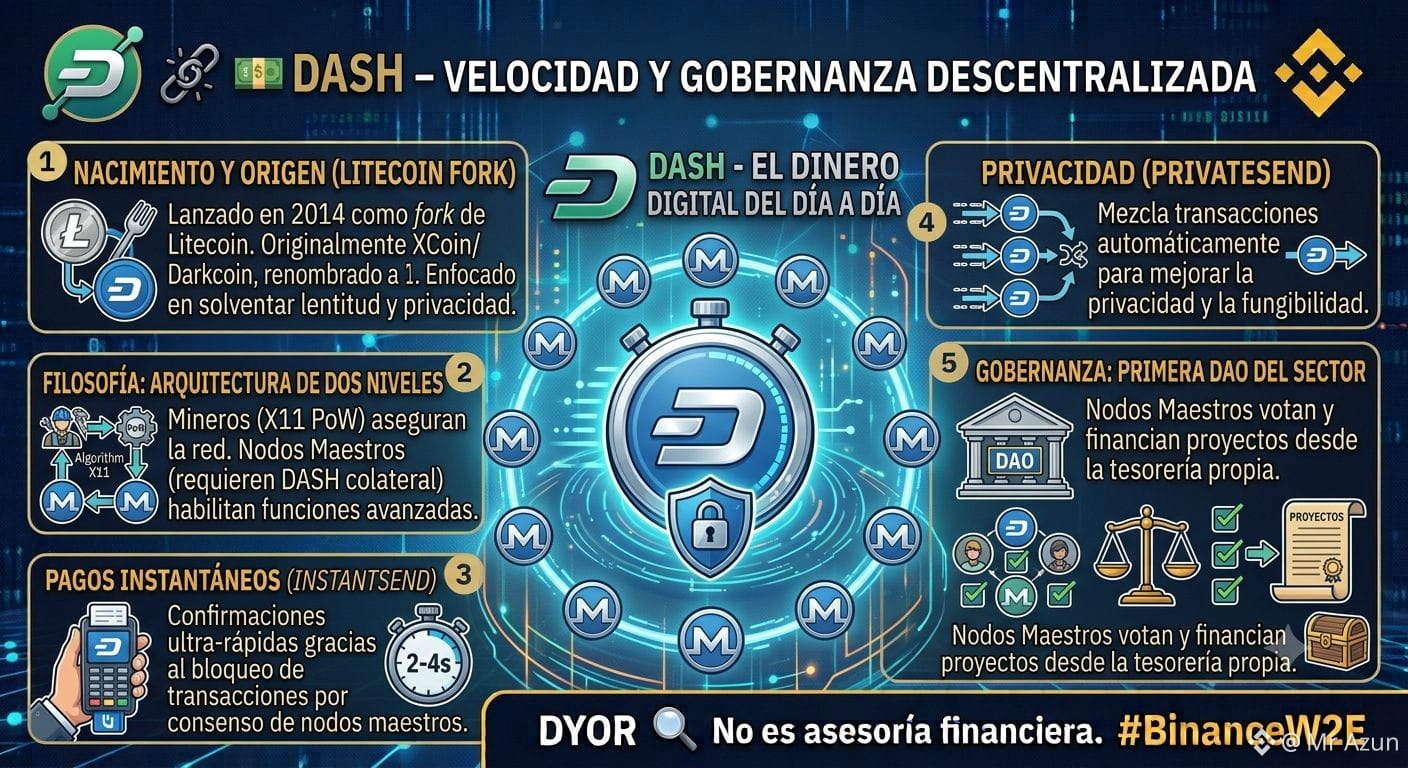
💵 $DASH – What is it really?
Launched in 2014 as a fork of Litecoin (originally called XCoin, then Darkcoin), Dash was created to address two weaknesses of Bitcoin: slow confirmation times and lack of privacy.
⚙️ Two-tier architecture: Miners secure the network with PoW (X11 algorithm) and masternodes, which require DASH collateral and enable advanced features.
⚡ InstantSend: Confirmations in ~2-4 seconds thanks to transaction locking via consensus from masternodes, ideal for point-of-sale payments.
🔒 PrivateSend: Mixes transactions to improve privacy.
🏛️ Governance: The first real DAO in the crypto industry: masternodes vote on projects funded by their own treasury.
DYOR 🔍 Not financial advice.
Launched in 2014 as a fork of Litecoin (originally called XCoin, then Darkcoin), Dash was created to address two weaknesses of Bitcoin: slow confirmation times and lack of privacy.
⚙️ Two-tier architecture: Miners secure the network with PoW (X11 algorithm) and masternodes, which require DASH collateral and enable advanced features.
⚡ InstantSend: Confirmations in ~2-4 seconds thanks to transaction locking via consensus from masternodes, ideal for point-of-sale payments.
🔒 PrivateSend: Mixes transactions to improve privacy.
🏛️ Governance: The first real DAO in the crypto industry: masternodes vote on projects funded by their own treasury.
DYOR 🔍 Not financial advice.
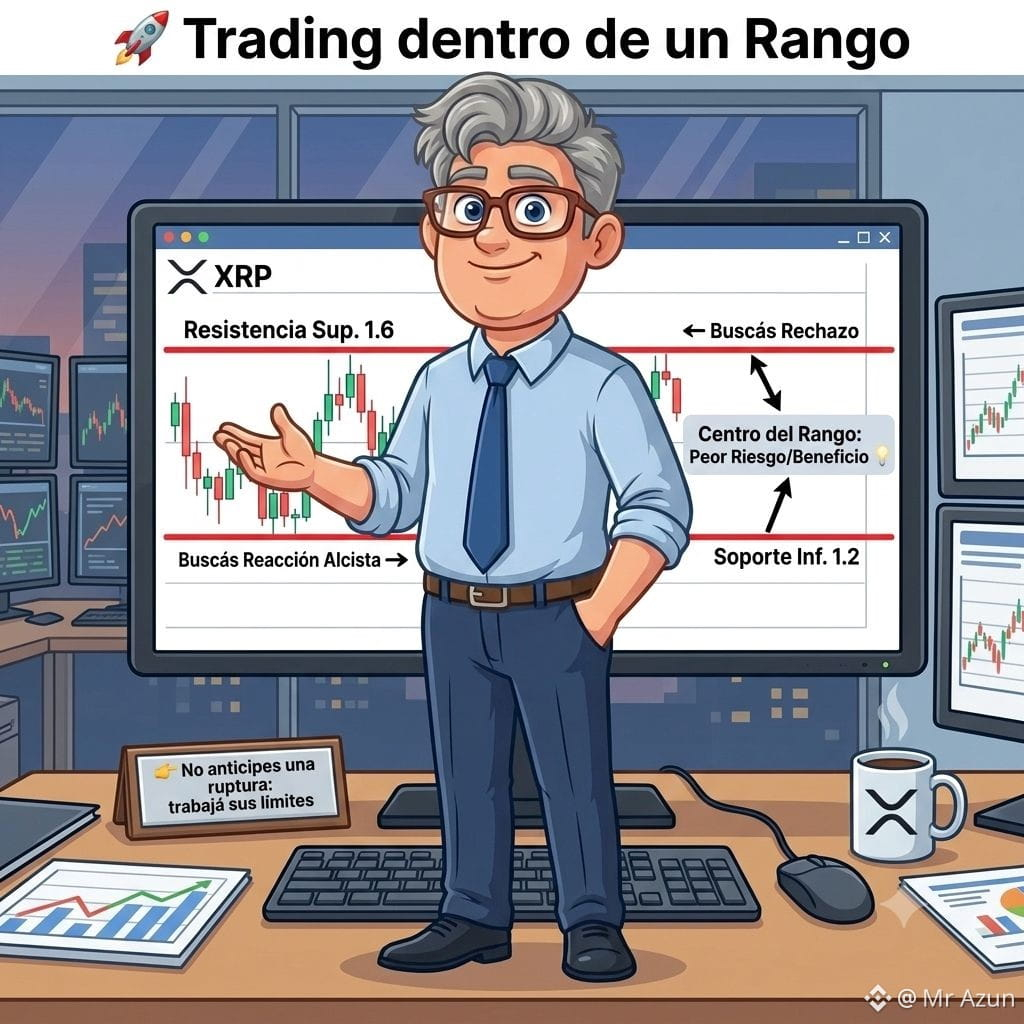
🚀 Trading within a range
When there’s no clear trend, you can trade the extremes of the range.
📊 Example: $XRP remains between 1.2 and 1.6.
Lower zone: → you’re looking for bullish reaction.
Upper zone: → you’re looking for rejection.
💡 The middle of the range usually offers a worse risk/reward ratio.
👉 Don’t anticipate a breakout: as long as the range is still valid, trade its limits.
When there’s no clear trend, you can trade the extremes of the range.
📊 Example: $XRP remains between 1.2 and 1.6.
Lower zone: → you’re looking for bullish reaction.
Upper zone: → you’re looking for rejection.
💡 The middle of the range usually offers a worse risk/reward ratio.
👉 Don’t anticipate a breakout: as long as the range is still valid, trade its limits.
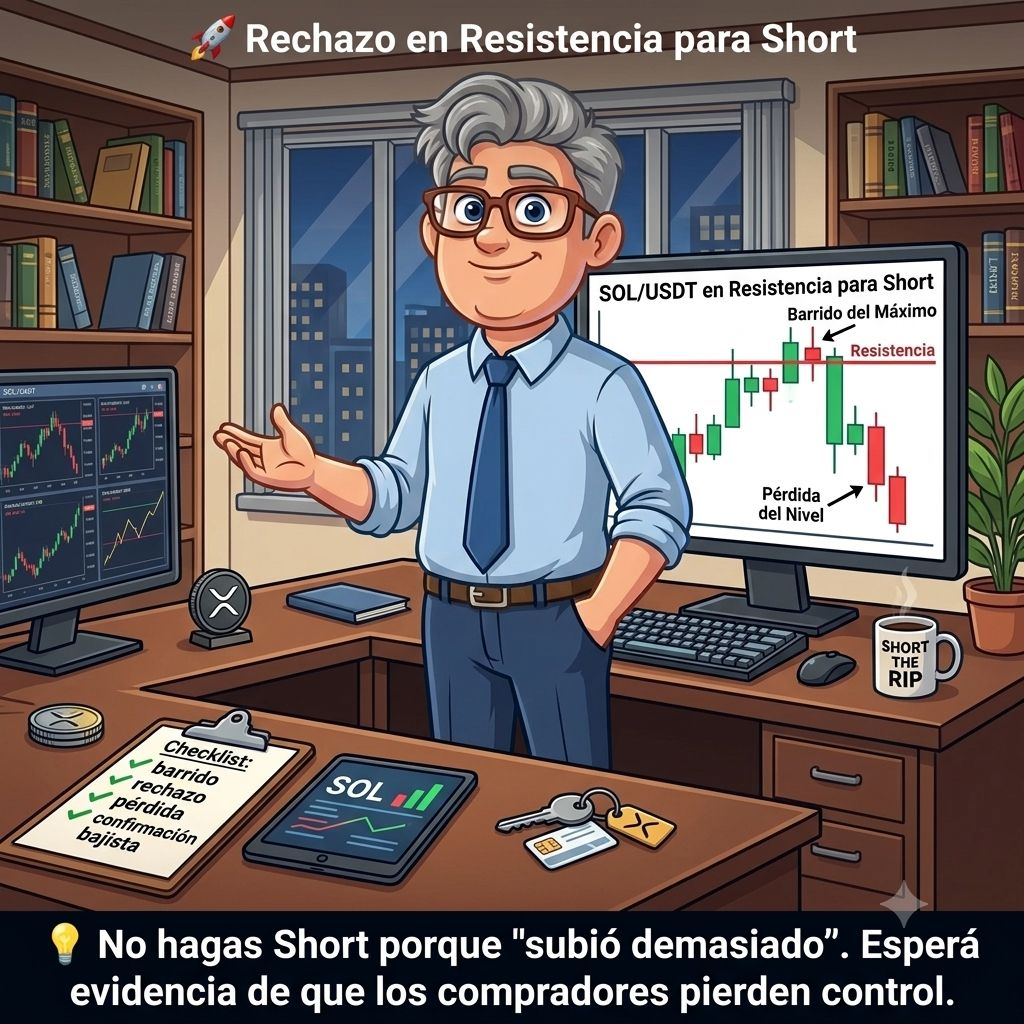
🚀 Rejection at resistance for Short
The same logic can be used in reverse.
📊 Example: $SOL reaches a resistance multiple times. In the next attempt it briefly breaks above it, but quickly returns below the level.
What you're looking for:
✔ sweep of the high
✔ rejection
✔ loss of the level
✔ bearish confirmation
💡 Don’t take a Short just because it "went up too much".
👉 Wait for evidence that buyers are losing control.
The same logic can be used in reverse.
📊 Example: $SOL reaches a resistance multiple times. In the next attempt it briefly breaks above it, but quickly returns below the level.
What you're looking for:
✔ sweep of the high
✔ rejection
✔ loss of the level
✔ bearish confirmation
💡 Don’t take a Short just because it "went up too much".
👉 Wait for evidence that buyers are losing control.
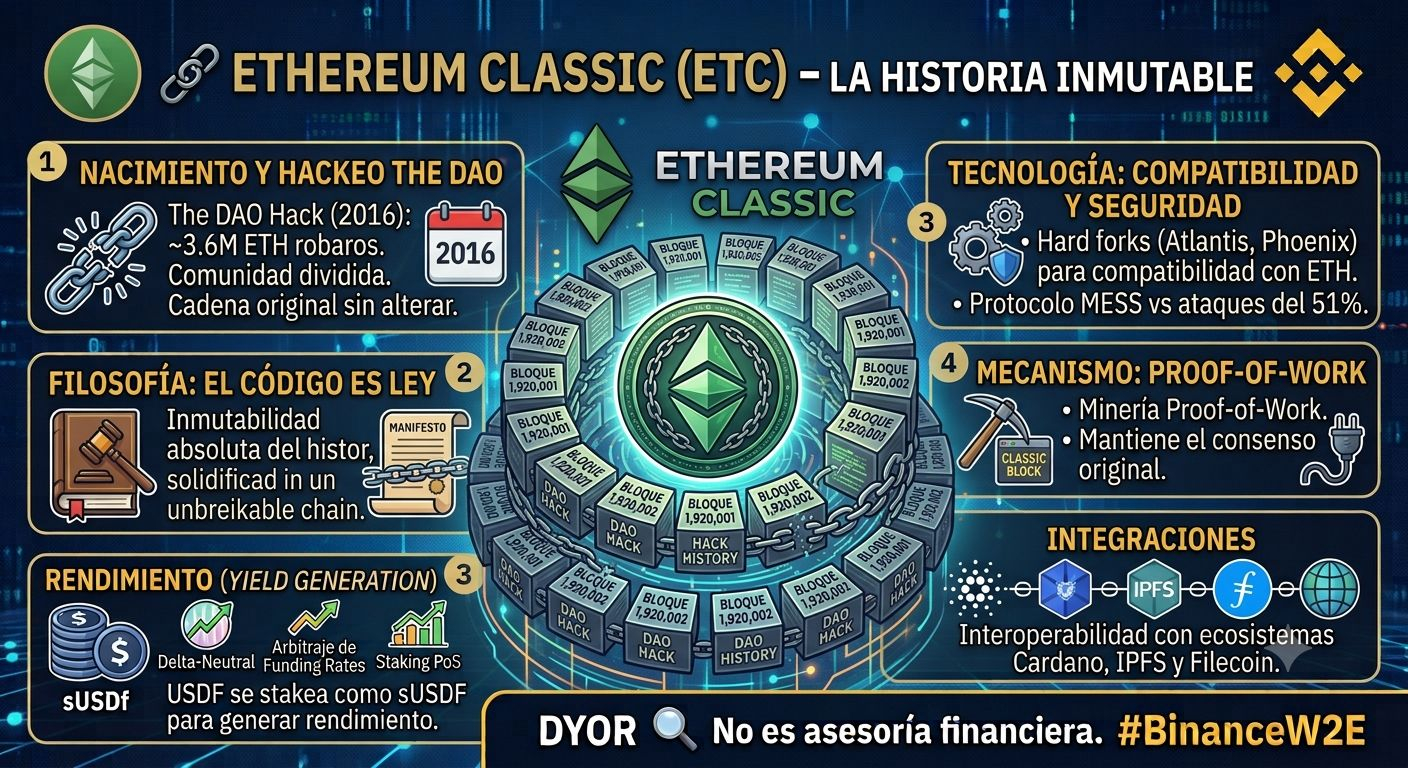
⛓️ ETHEREUM CLASSIC $ETC – What is it really?
It was born in 2016 after the hack of "The DAO" on Ethereum, where ~3.6M ETH was stolen. The community split: some reversed the transaction (today Ethereum), others argued that "code is law" and kept the original chain unchanged—that’s ETC.
⚙️ Philosophy: Absolute immutability of the history, Proof-of-Work mining (unlike ETH, which moved to PoS) and radical decentralization, reflected in its 2016 Crypto-Decentralist Manifesto.
🛡️ Technology: Hard forks (Atlantis, Agharta, Phoenix) that made it compatible with the Ethereum ecosystem, plus the MESS protocol, designed specifically to protect the network from 51% attack attempts—a real risk it has already suffered.
🌐 Integrations: Interoperability with Cardano, IPFS and Filecoin.
DYOR 🔍 Not financial advice.
It was born in 2016 after the hack of "The DAO" on Ethereum, where ~3.6M ETH was stolen. The community split: some reversed the transaction (today Ethereum), others argued that "code is law" and kept the original chain unchanged—that’s ETC.
⚙️ Philosophy: Absolute immutability of the history, Proof-of-Work mining (unlike ETH, which moved to PoS) and radical decentralization, reflected in its 2016 Crypto-Decentralist Manifesto.
🛡️ Technology: Hard forks (Atlantis, Agharta, Phoenix) that made it compatible with the Ethereum ecosystem, plus the MESS protocol, designed specifically to protect the network from 51% attack attempts—a real risk it has already suffered.
🌐 Integrations: Interoperability with Cardano, IPFS and Filecoin.
DYOR 🔍 Not financial advice.
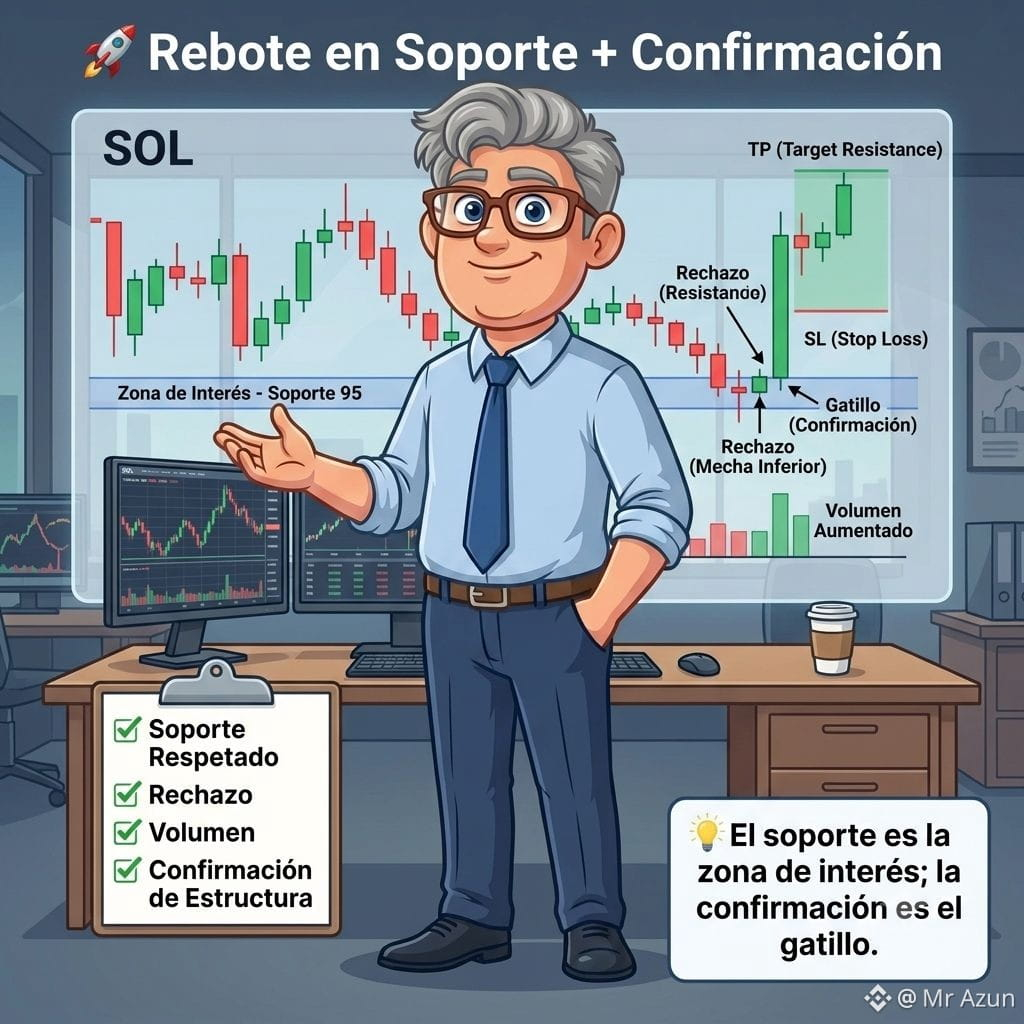
🚀 Bounce off support + confirmation
Don’t buy just because the price reached a support.
Look for:
✔ support previously respected
✔ price rejection
✔ volume increase
✔ structure confirmation
📊 Example: $SOL reaches 95, leaves a lower wick, and then later breaks the rejection candle’s high.
💡 Support is the zone of interest; confirmation is the trigger.
👉 Entry after confirmation, SL below the structure, and target at the next resistance.
Don’t buy just because the price reached a support.
Look for:
✔ support previously respected
✔ price rejection
✔ volume increase
✔ structure confirmation
📊 Example: $SOL reaches 95, leaves a lower wick, and then later breaks the rejection candle’s high.
💡 Support is the zone of interest; confirmation is the trigger.
👉 Entry after confirmation, SL below the structure, and target at the next resistance.
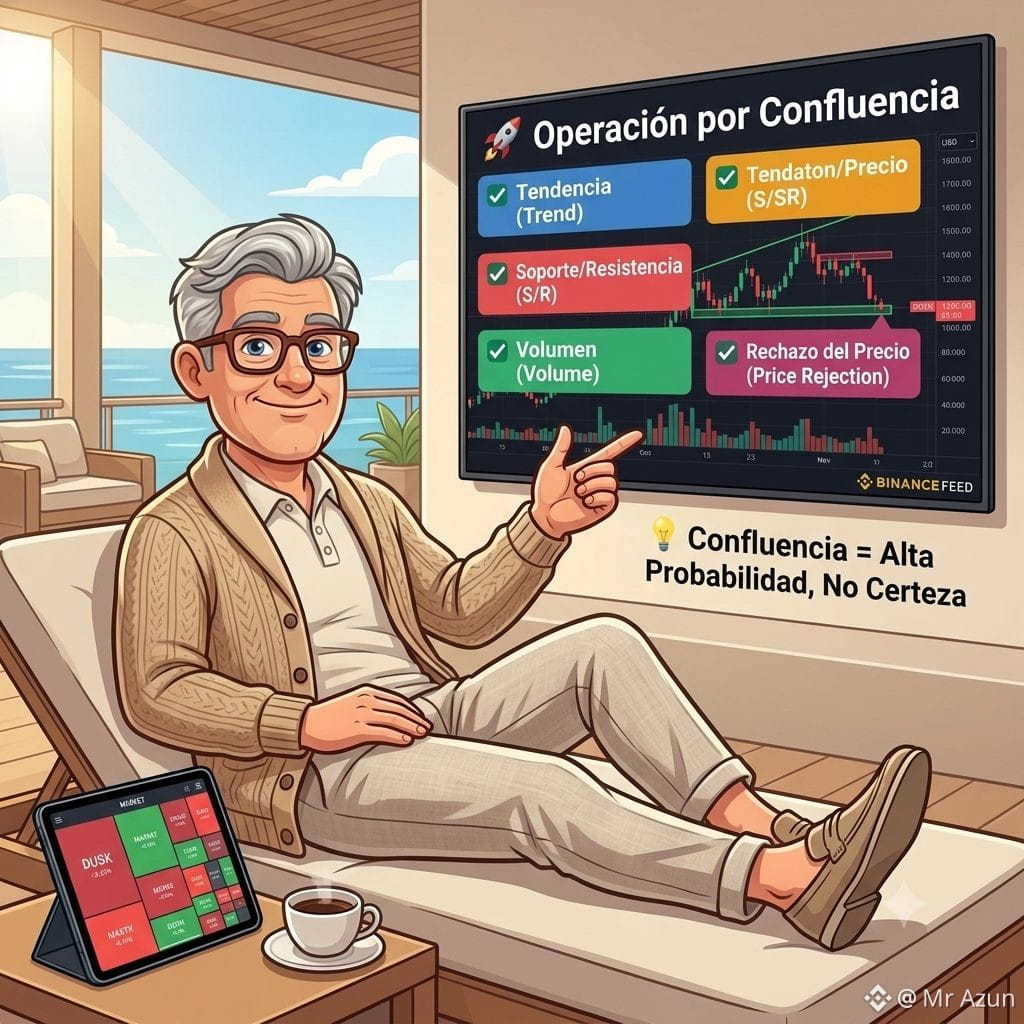
🚀 Confluence Operation
The best entries rarely depend on a single signal.
Look for at least 3 confirmations:
✔ Trend
✔ Support/Resistance
✔ Volume
✔ Price rejection
📊 Example: $DUSK reaches support, buyer volume appears, and an engulfing candle forms.
💡 A single signal can fail. Multiple confluences increase the probability, not the certainty.
The best entries rarely depend on a single signal.
Look for at least 3 confirmations:
✔ Trend
✔ Support/Resistance
✔ Volume
✔ Price rejection
📊 Example: $DUSK reaches support, buyer volume appears, and an engulfing candle forms.
💡 A single signal can fail. Multiple confluences increase the probability, not the certainty.
🚀 Scalping at support
Ideal for fast and well-defined moves.
Checklist:
Strong support.
RSI oversold (as a complement).
Rejection candle.
Short Stop Loss.
📊 Example: $SOL hits support at 90 USDT, leaves a lower wick, and bounces.
💡 If support fails, exit without hesitation. Speed also applies when accepting errors.
Ideal for fast and well-defined moves.
Checklist:
Strong support.
RSI oversold (as a complement).
Rejection candle.
Short Stop Loss.
📊 Example: $SOL hits support at 90 USDT, leaves a lower wick, and bounces.
💡 If support fails, exit without hesitation. Speed also applies when accepting errors.

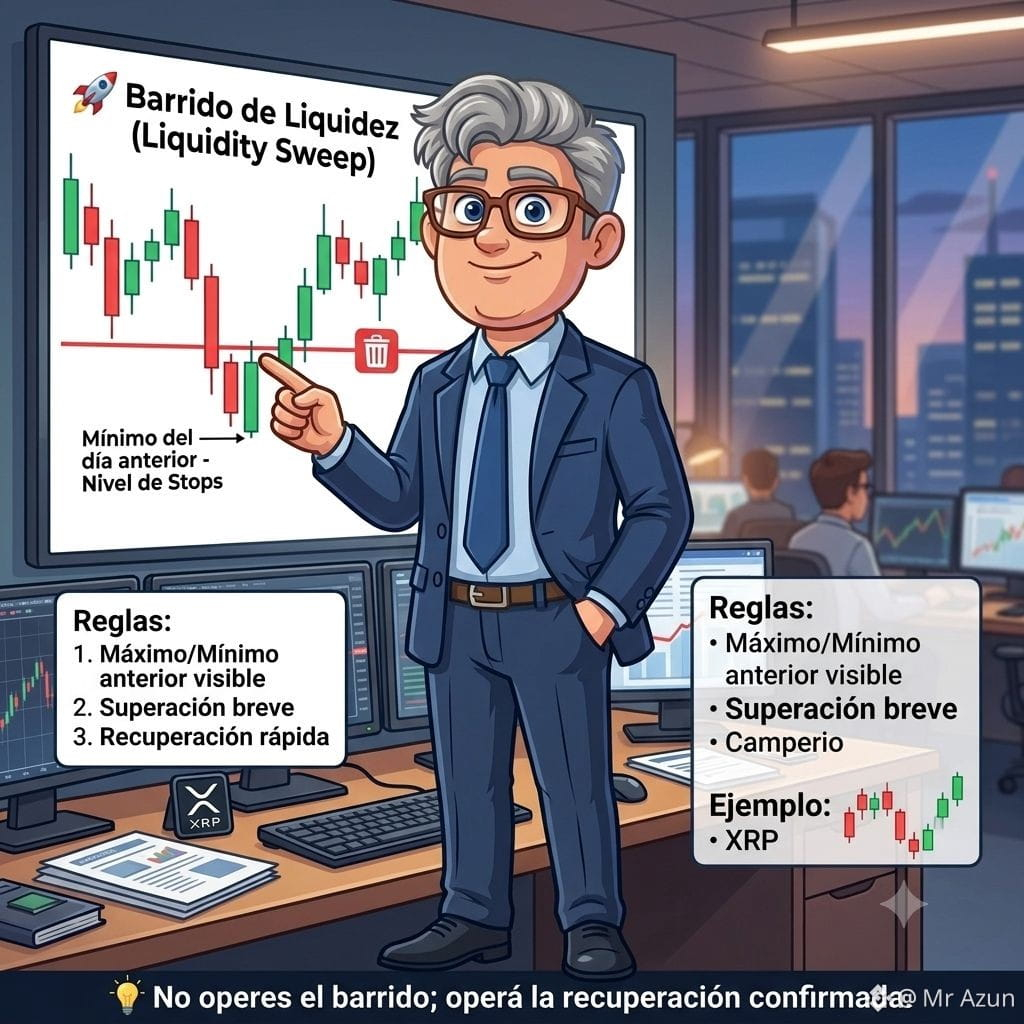
🚀 Liquidity Sweep
Large moves usually begin after clearing stops.
Rules:
Previous visible maximum or minimum.
Price briefly breaks through it.
It quickly reclaims the level.
📊 Example: $XRP breaks the day’s low, triggers stops, and recovers immediately.
💡 Don’t trade the sweep; trade the confirmed recovery.
Large moves usually begin after clearing stops.
Rules:
Previous visible maximum or minimum.
Price briefly breaks through it.
It quickly reclaims the level.
📊 Example: $XRP breaks the day’s low, triggers stops, and recovers immediately.
💡 Don’t trade the sweep; trade the confirmed recovery.
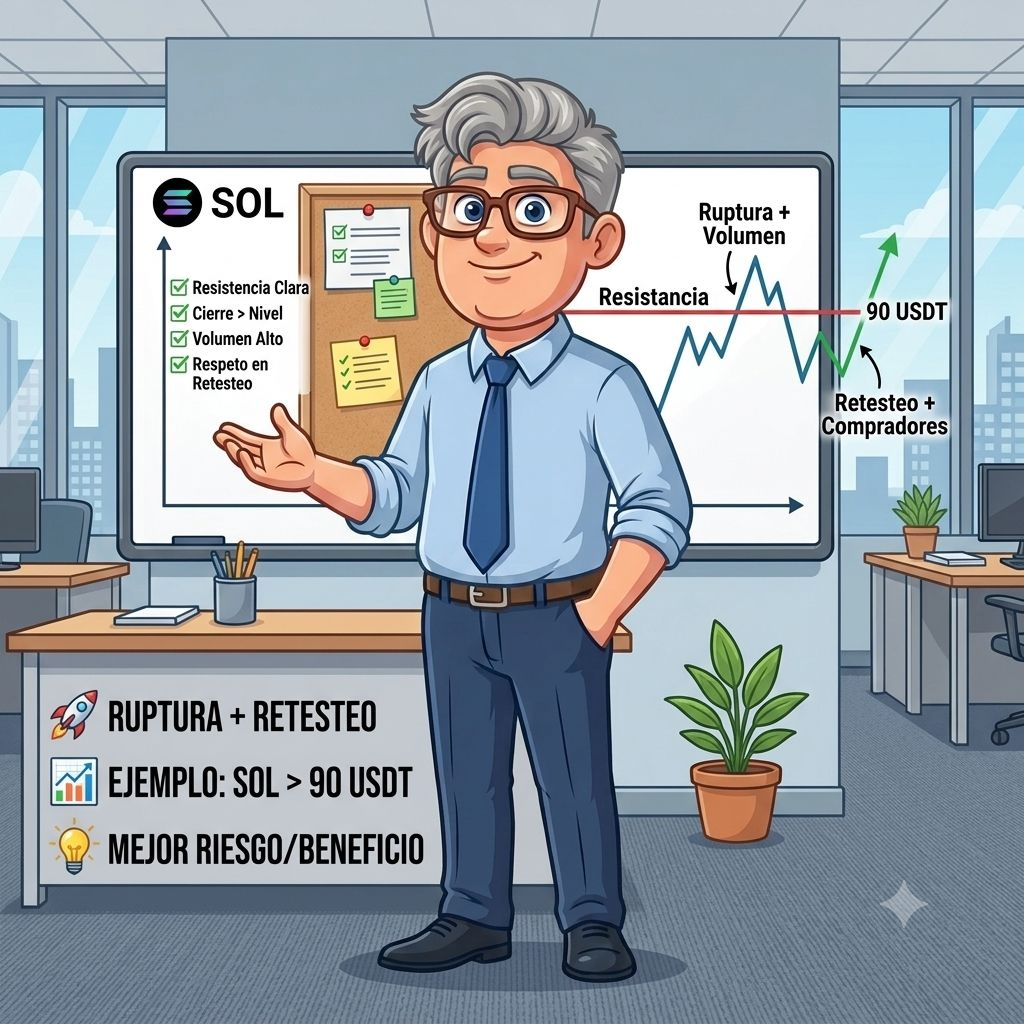
🚀 Break + Retest
Breaks have more quality when the level is confirmed.
Rules:
Clearly identified resistance.
Close above with volume.
The price retests the level and respects it.
📊 Example: $SOL breaks the 90 USDT level, comes back to that zone, and finds buyers.
💡 Retesting usually offers a better risk/reward ratio than entering on the first candle.
Breaks have more quality when the level is confirmed.
Rules:
Clearly identified resistance.
Close above with volume.
The price retests the level and respects it.
📊 Example: $SOL breaks the 90 USDT level, comes back to that zone, and finds buyers.
💡 Retesting usually offers a better risk/reward ratio than entering on the first candle.
🚀 Pullback to the 20 EMA
One of the most commonly used entries in trending markets.
Rules:
Uptrend on 1H or 4H.
Price retraces to the 20 EMA.
A rejection candle appears with volume.
📊 Example: $SOL keeps making higher highs, pulls back to the 20 EMA, and bounces.
💡 Don’t chase momentum; wait for price to return to a value zone.
One of the most commonly used entries in trending markets.
Rules:
Uptrend on 1H or 4H.
Price retraces to the 20 EMA.
A rejection candle appears with volume.
📊 Example: $SOL keeps making higher highs, pulls back to the 20 EMA, and bounces.
💡 Don’t chase momentum; wait for price to return to a value zone.

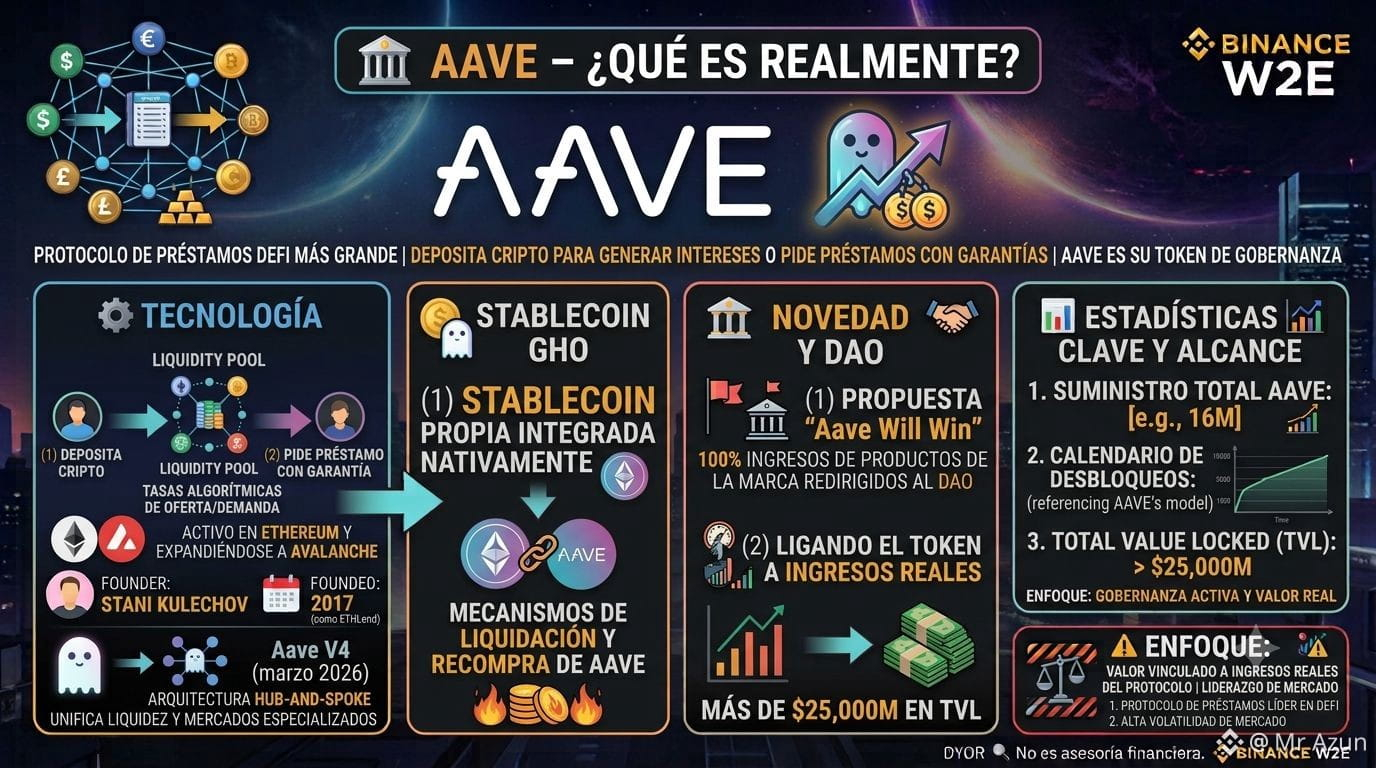
🏦 $AAVE – What is it really?
Born in 2017 as ETHLend, Aave is the largest DeFi lending protocol in the market: it lets you deposit crypto to earn interest or take out loans using collateral, without banks or intermediaries.
⚙️ Technology: Peer-to-contract model with algorithmic supply/demand rates. In March 2026 it launched Aave V4, with a Hub-and-Spoke architecture that unifies fragmented liquidity and adds specialized markets without losing capital efficiency.
🪙 Its own stablecoin: GHO, natively integrated into V4 with new liquidation and AAVE buyback mechanisms.
🏛️ Key novelty: The “Aave Will Win” proposal redirected 100% of the brand’s product revenues to the DAO, directly linking the token’s value to the protocol’s real income.
🌐 Scope: Over $25,000M in TVL, active on Ethereum and expanding to Avalanche.
DYOR 🔍 Not financial advice.
Born in 2017 as ETHLend, Aave is the largest DeFi lending protocol in the market: it lets you deposit crypto to earn interest or take out loans using collateral, without banks or intermediaries.
⚙️ Technology: Peer-to-contract model with algorithmic supply/demand rates. In March 2026 it launched Aave V4, with a Hub-and-Spoke architecture that unifies fragmented liquidity and adds specialized markets without losing capital efficiency.
🪙 Its own stablecoin: GHO, natively integrated into V4 with new liquidation and AAVE buyback mechanisms.
🏛️ Key novelty: The “Aave Will Win” proposal redirected 100% of the brand’s product revenues to the DAO, directly linking the token’s value to the protocol’s real income.
🌐 Scope: Over $25,000M in TVL, active on Ethereum and expanding to Avalanche.
DYOR 🔍 Not financial advice.
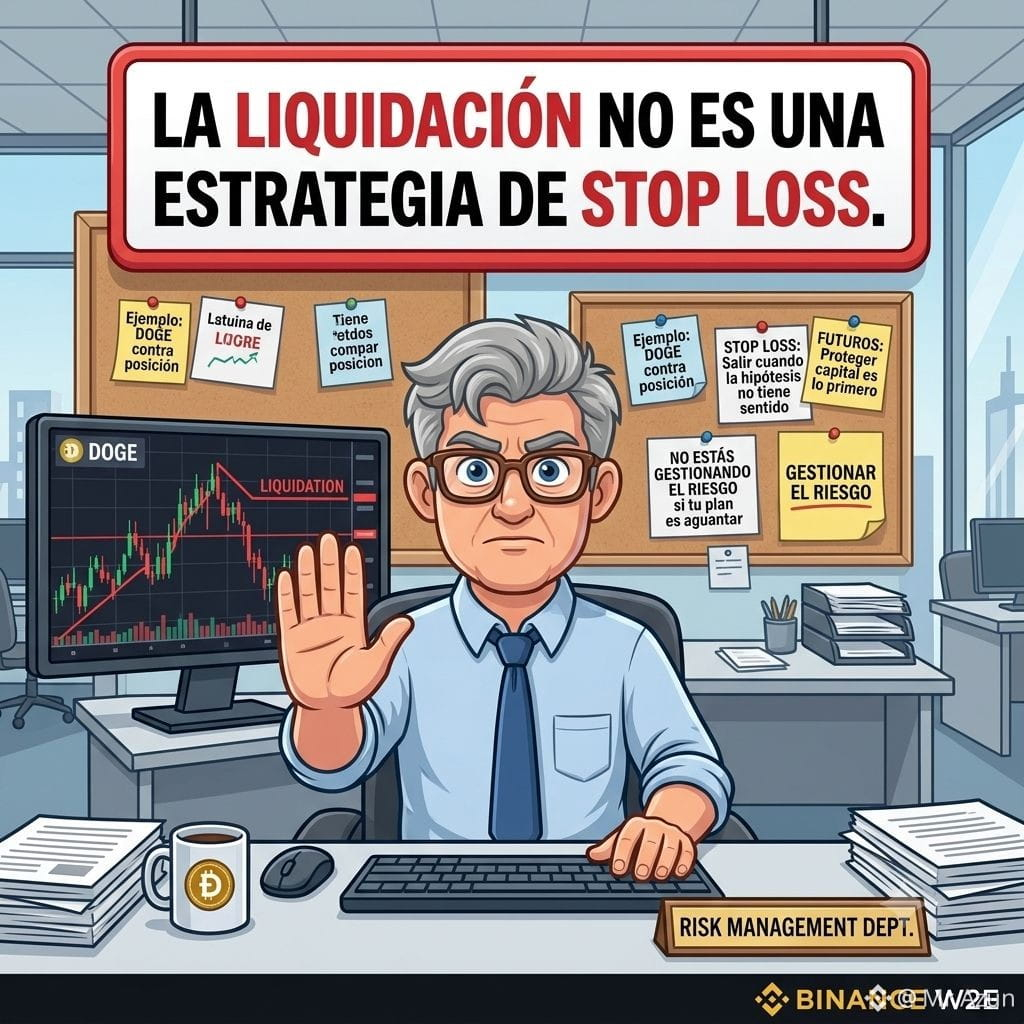
🚀 Liquidation is not a Stop Loss strategy
If your plan is: "I’ll hold until I get liquidated"
then you’re not managing risk.
📊 Example: $DOGE moves quickly against your position.
Waiting for liquidation can turn a loss that was manageable into a much bigger one.
💡 The goal of a Stop Loss is to exit when your thesis no longer makes sense.
👉 In Futures, protecting capital should always come before trying to chase maximum profit.
In Futures, protecting capital also requires controlling costs and execution—especially when a market order can worsen your entry due to slippage during periods of high volatility.
If your plan is: "I’ll hold until I get liquidated"
then you’re not managing risk.
📊 Example: $DOGE moves quickly against your position.
Waiting for liquidation can turn a loss that was manageable into a much bigger one.
💡 The goal of a Stop Loss is to exit when your thesis no longer makes sense.
👉 In Futures, protecting capital should always come before trying to chase maximum profit.
In Futures, protecting capital also requires controlling costs and execution—especially when a market order can worsen your entry due to slippage during periods of high volatility.
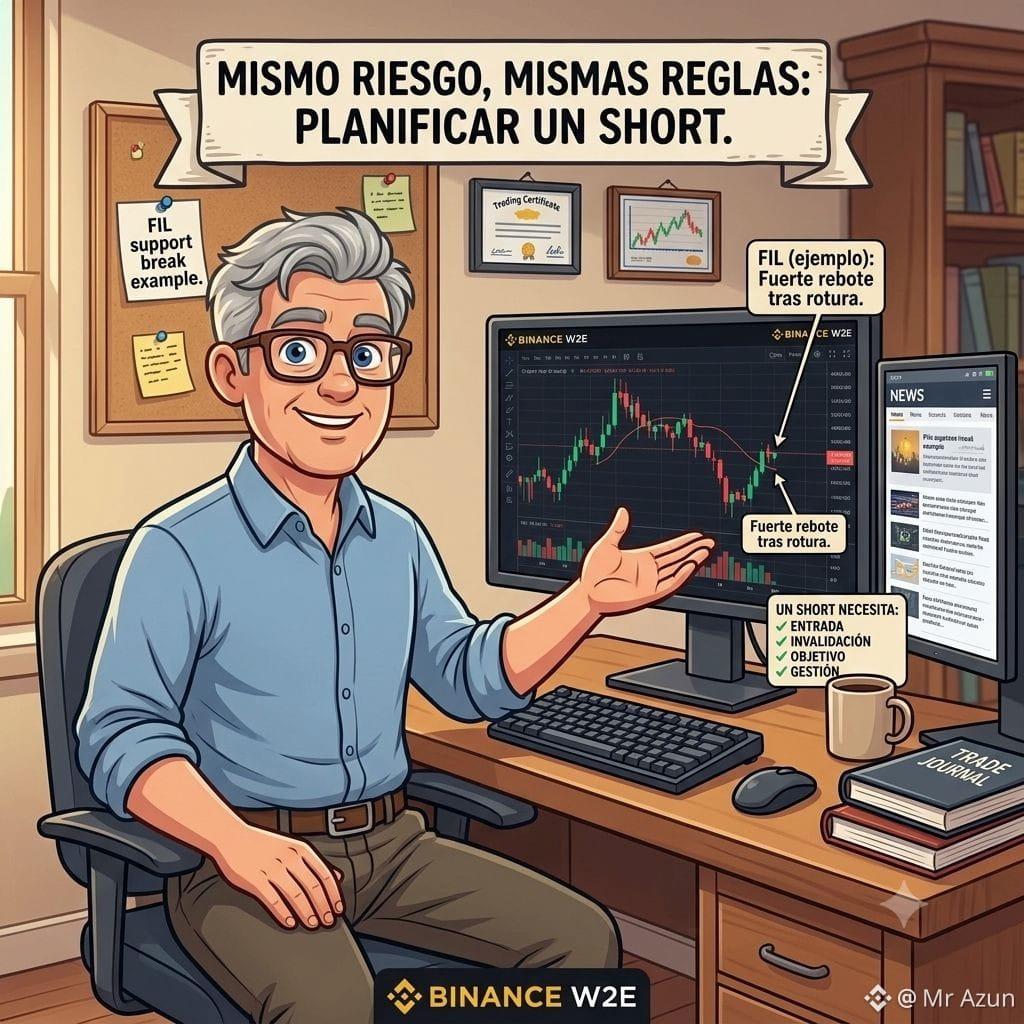
🚀 A short needs the same planning as a long
📉 Being able to profit when the price goes down doesn’t mean it’s easier.
📊 Example: $FIL breaks support and you open a short.
But the price quickly recovers the level and triggers a strong rebound.
💡 A short also needs:
✔ entry
✔ invalidation
✔ target
✔ risk management
👉 Switching from long to short doesn’t change the basic trading rules.
📉 Being able to profit when the price goes down doesn’t mean it’s easier.
📊 Example: $FIL breaks support and you open a short.
But the price quickly recovers the level and triggers a strong rebound.
💡 A short also needs:
✔ entry
✔ invalidation
✔ target
✔ risk management
👉 Switching from long to short doesn’t change the basic trading rules.
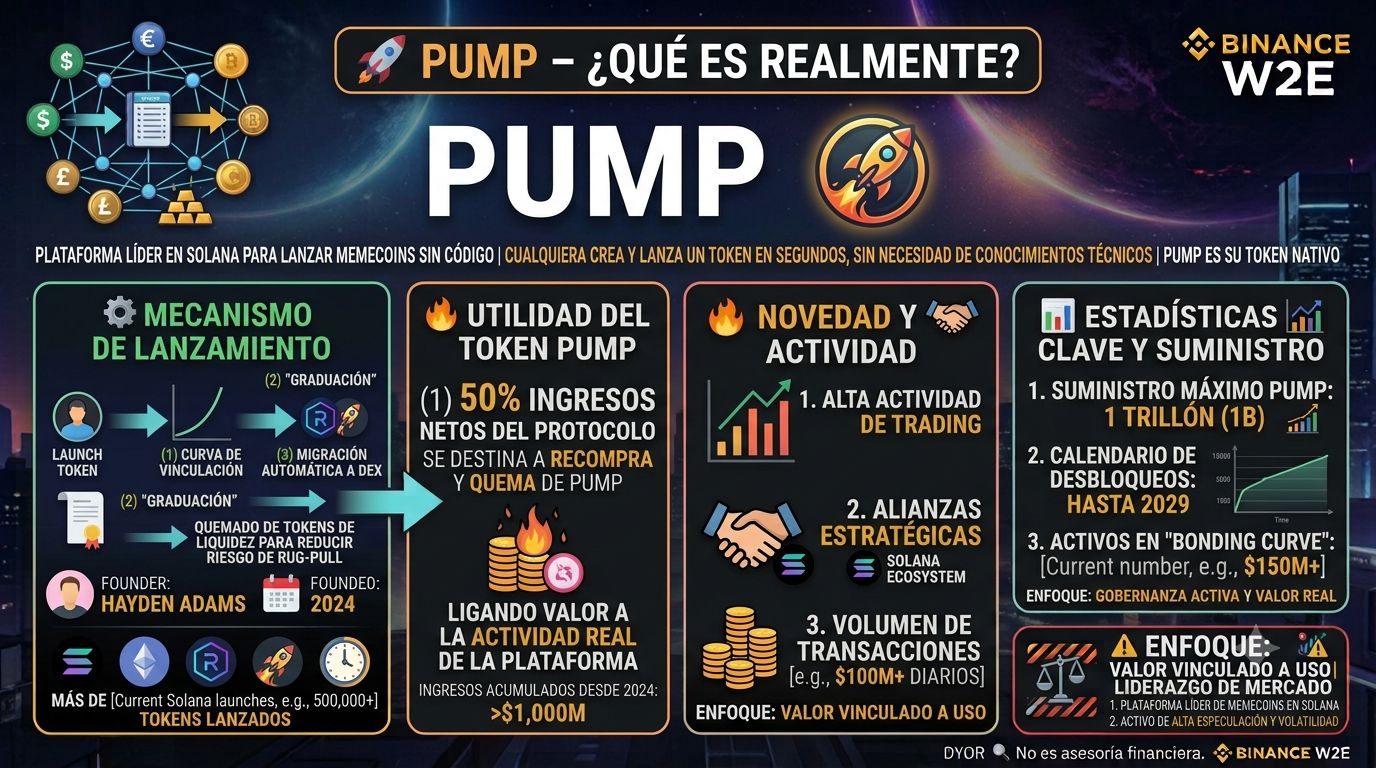
🚀 $PUMP What is it really?
PUMP is the native token of pump.fun, the leading Solana platform for launching memecoins without code: anyone can create and launch a token in seconds, with no technical knowledge required.
⚙️ Mechanism: Each new token uses a bonding curve. Once it reaches a certain market cap, it "graduates" and its liquidity automatically migrates to a DEX (Raydium/PumpSwap), burning the liquidity tokens to reduce rug-pull risk.
🔥 Token utility: 50% of the protocol’s net revenues are used to buy back and burn PUMP, tying its value to the platform’s real activity, which has already generated more than $1,000M in accumulated revenue since 2024.
📦 Supply: Up to 1 billion (trillion) maximum, with a vesting/unlock schedule through 2029.
⚠️ A highly speculative and volatile asset.
DYOR 🔍 Not financial advice.
PUMP is the native token of pump.fun, the leading Solana platform for launching memecoins without code: anyone can create and launch a token in seconds, with no technical knowledge required.
⚙️ Mechanism: Each new token uses a bonding curve. Once it reaches a certain market cap, it "graduates" and its liquidity automatically migrates to a DEX (Raydium/PumpSwap), burning the liquidity tokens to reduce rug-pull risk.
🔥 Token utility: 50% of the protocol’s net revenues are used to buy back and burn PUMP, tying its value to the platform’s real activity, which has already generated more than $1,000M in accumulated revenue since 2024.
📦 Supply: Up to 1 billion (trillion) maximum, with a vesting/unlock schedule through 2029.
⚠️ A highly speculative and volatile asset.
DYOR 🔍 Not financial advice.
Log in to explore more content