
Crypto Koala Brasil
2.3k Posts

Crypto Koala Brasil
 Square Verified+
Report
Block User
Content Creator and Institutional Trader | Reach out to me if you need help — Message ID: crip8nv
Open Trade
Frequent Trader
4.8 Years
1.4K+ Following
29.8K+ Followers
8.3K+ Liked
Posts
Portfolio
All
Quotes
Videos
Live
PINNED
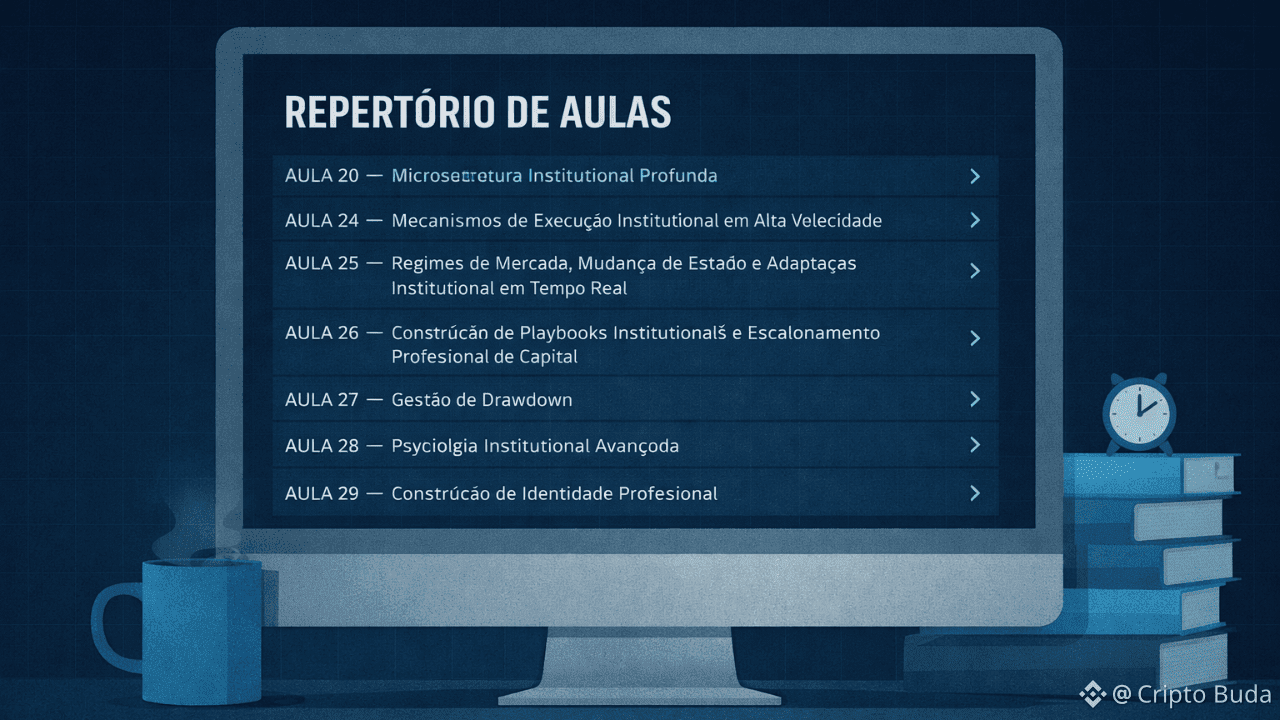
Article
Relevant Contents1) Trader Training
1.1) Operator Training:
-
Lesson 1 - Introduction to the Financial Market
-
Lesson 2 - What Really Moves the Price
-
Lesson 3 - Professional Entries, Pullbacks - OB's...
-
Lesson 4 - Advanced Liquidity, Stop Hunts, and Price Formation
-
Lesson 5 - BOS, CHoCH, Continuation vs Reversal, Liquidity...
-
Lesson 6 - How to Identify the Institutional Origin of the Move
-
Lesson 7 — Fair Value Gaps (FVG), Imbalance, and Inefficiency
-
Lesson 8 - How to Identify the Last Failed Block That Reveals Institutional Takeover
Relevant Contents
1) Trader Training
1.1) Operator Training:
-
Lesson 1 - Introduction to the Financial Market
-
Lesson 2 - What Really Moves the Price
-
Lesson 3 - Professional Entries, Pullbacks - OB's...
-
Lesson 4 - Advanced Liquidity, Stop Hunts, and Price Formation
-
Lesson 5 - BOS, CHoCH, Continuation vs Reversal, Liquidity...
-
Lesson 6 - How to Identify the Institutional Origin of the Move
-
Lesson 7 — Fair Value Gaps (FVG), Imbalance, and Inefficiency
-
Lesson 8 - How to Identify the Last Failed Block That Reveals Institutional Takeover
1.1) Operator Training:
-
Lesson 1 - Introduction to the Financial Market
-
Lesson 2 - What Really Moves the Price
-
Lesson 3 - Professional Entries, Pullbacks - OB's...
-
Lesson 4 - Advanced Liquidity, Stop Hunts, and Price Formation
-
Lesson 5 - BOS, CHoCH, Continuation vs Reversal, Liquidity...
-
Lesson 6 - How to Identify the Institutional Origin of the Move
-
Lesson 7 — Fair Value Gaps (FVG), Imbalance, and Inefficiency
-
Lesson 8 - How to Identify the Last Failed Block That Reveals Institutional Takeover
27
27
59
428
·
--
Bullish
Holding $XRP 1.9K USDT
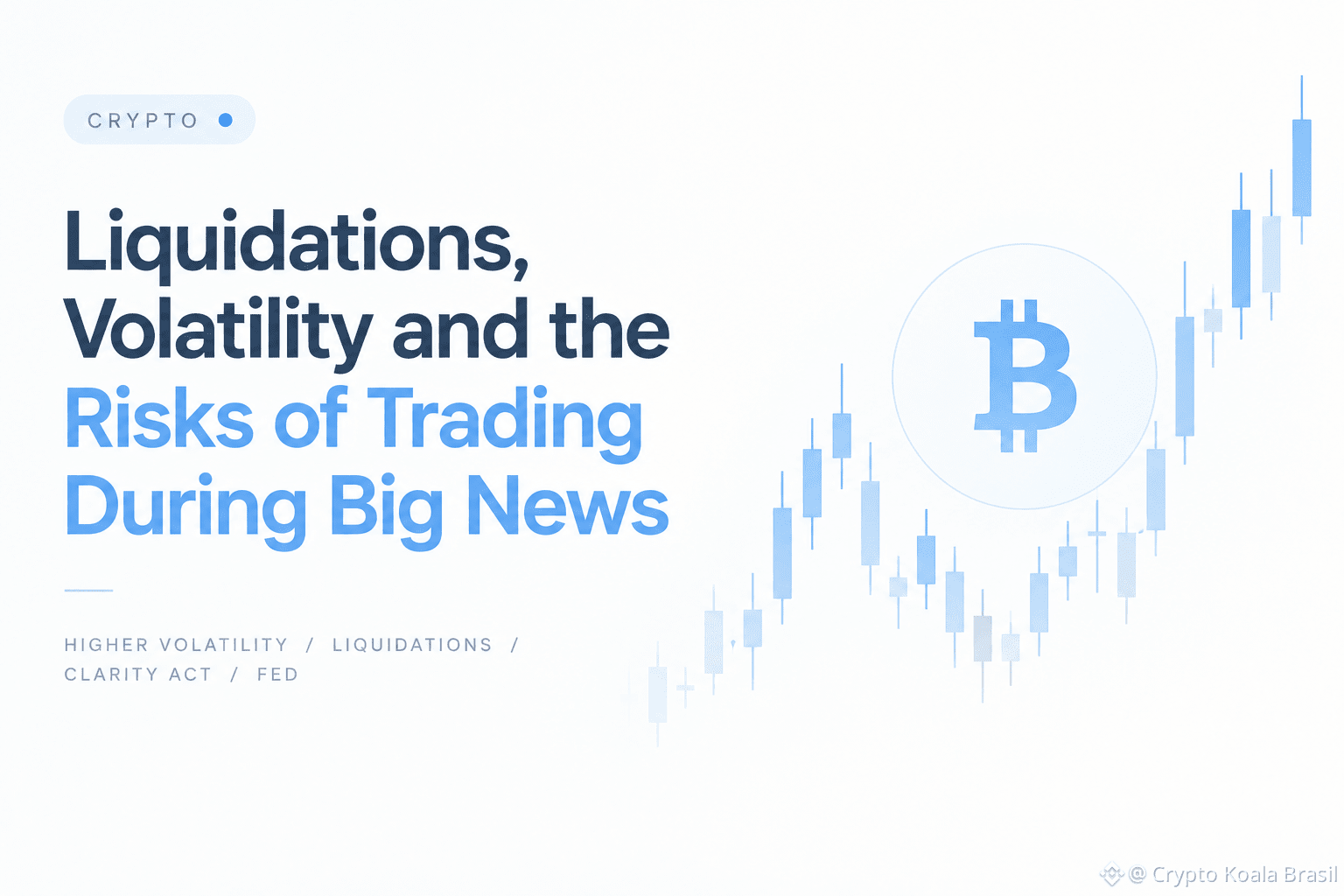
⚠️ BITCOIN SHOWS WHY WEEKS OF BIG NEWS ARE DANGEROUS FOR LEVERAGED TRADERS
Bitcoin’s volatility has increased precisely in one of the most important weeks of the year for the crypto market.
BTC has been wildly oscillating in the US$76–80k range, while macroeconomic data, expectations for the Fed, and the CLARITY Act vote raise uncertainty.
And when price moves quickly, the cascade effect kicks in:
📉 BTC drops → leveraged longs are liquidated → forced selling increases → price falls even more.
📈 BTC rebounds → shorts are liquidated → forced buybacks accelerate the rally → price rises even more.
That’s why a relatively small move in the spot market can trigger a much bigger move in derivatives.
🔥 The real danger isn’t just getting the direction right or wrong.
It’s being overleveraged when the market decides to move against you.
In normal weeks, a position has time to breathe.
In weeks like this, a single piece of news can trigger an extremely fast candle, sweep your stop, seek liquidity, and then flip again minutes later.
📅 And this week has plenty of fuel:
🇺🇸 CLARITY Act — cloture vote in the Senate
🏦 Fed — interest rate decision
🛢️ High oil
📊 Tense Treasury yields
₿ Bitcoin near important technical levels
For the trader, the lesson is simple:
The more events there are that can move the market, the less you should need to use excessive leverage.
You don’t need to predict every piece of news.
You just need to survive the volatility that comes with it.
⚠️ DISCLAIMER: despite uncertainties and the low, implied probabilities priced in some prediction markets, my reading is that the CLARITY Act has a reasonable chance of eventually advancing and passing the Senate—especially considering the recent negotiations and revisions. That said, it does not mean that today’s cloture is guaranteed—those are different things.
$XRP
⚠️ BITCOIN SHOWS WHY WEEKS OF BIG NEWS ARE DANGEROUS FOR LEVERAGED TRADERS
Bitcoin’s volatility has increased precisely in one of the most important weeks of the year for the crypto market.
BTC has been wildly oscillating in the US$76–80k range, while macroeconomic data, expectations for the Fed, and the CLARITY Act vote raise uncertainty.
And when price moves quickly, the cascade effect kicks in:
📉 BTC drops → leveraged longs are liquidated → forced selling increases → price falls even more.
📈 BTC rebounds → shorts are liquidated → forced buybacks accelerate the rally → price rises even more.
That’s why a relatively small move in the spot market can trigger a much bigger move in derivatives.
🔥 The real danger isn’t just getting the direction right or wrong.
It’s being overleveraged when the market decides to move against you.
In normal weeks, a position has time to breathe.
In weeks like this, a single piece of news can trigger an extremely fast candle, sweep your stop, seek liquidity, and then flip again minutes later.
📅 And this week has plenty of fuel:
🇺🇸 CLARITY Act — cloture vote in the Senate
🏦 Fed — interest rate decision
🛢️ High oil
📊 Tense Treasury yields
₿ Bitcoin near important technical levels
For the trader, the lesson is simple:
The more events there are that can move the market, the less you should need to use excessive leverage.
You don’t need to predict every piece of news.
You just need to survive the volatility that comes with it.
⚠️ DISCLAIMER: despite uncertainties and the low, implied probabilities priced in some prediction markets, my reading is that the CLARITY Act has a reasonable chance of eventually advancing and passing the Senate—especially considering the recent negotiations and revisions. That said, it does not mean that today’s cloture is guaranteed—those are different things.
$XRP
Bitcoin’s volatility has increased precisely in one of the most important weeks of the year for the crypto market.
BTC has been wildly oscillating in the US$76–80k range, while macroeconomic data, expectations for the Fed, and the CLARITY Act vote raise uncertainty.
And when price moves quickly, the cascade effect kicks in:
📉 BTC drops → leveraged longs are liquidated → forced selling increases → price falls even more.
📈 BTC rebounds → shorts are liquidated → forced buybacks accelerate the rally → price rises even more.
That’s why a relatively small move in the spot market can trigger a much bigger move in derivatives.
🔥 The real danger isn’t just getting the direction right or wrong.
It’s being overleveraged when the market decides to move against you.
In normal weeks, a position has time to breathe.
In weeks like this, a single piece of news can trigger an extremely fast candle, sweep your stop, seek liquidity, and then flip again minutes later.
📅 And this week has plenty of fuel:
🇺🇸 CLARITY Act — cloture vote in the Senate
🏦 Fed — interest rate decision
🛢️ High oil
📊 Tense Treasury yields
₿ Bitcoin near important technical levels
For the trader, the lesson is simple:
The more events there are that can move the market, the less you should need to use excessive leverage.
You don’t need to predict every piece of news.
You just need to survive the volatility that comes with it.
⚠️ DISCLAIMER: despite uncertainties and the low, implied probabilities priced in some prediction markets, my reading is that the CLARITY Act has a reasonable chance of eventually advancing and passing the Senate—especially considering the recent negotiations and revisions. That said, it does not mean that today’s cloture is guaranteed—those are different things.
$XRP
1
289
Holding $XRP 1.8K USDT
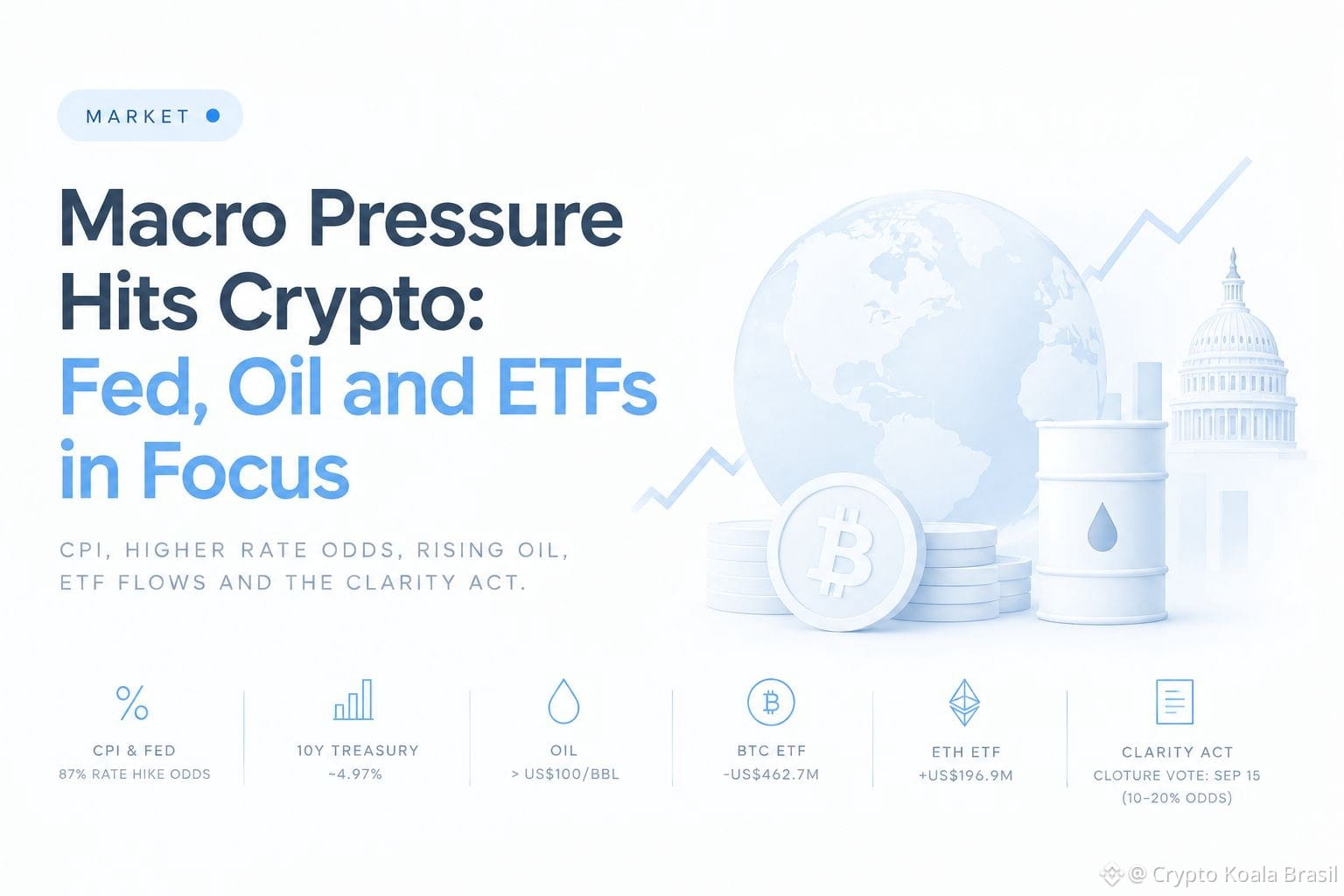
🚨 CRYPTO UNDER MACRO PRESSURE: THE FED, PETROLEUM AND ETFs PUT BTC UNDER THE SPOTLIGHT
The crypto market enters the week with several unfavorable macroeconomic signals — and Bitcoin has returned to the US$77k region.
🔥 What’s putting pressure on the market?
🇺🇸 MORE HAWKISH FED
After August’s CPI, released on September 11, expectations for a 25 bps rate hike at the Fed meeting reached approximately 87%.
📈 10-YEAR TREASURY
Yields touched the 4.97% area, increasing pressure on risk assets.
🛢️ OIL ABOVE US$100
Tensions involving Iran and the Middle East pushed oil prices higher, raising the risk of persistent inflation.
₿ BTC ETF: -US$462.7 MILLION
Between September 8 and 11, spot Bitcoin ETFs saw a strong outflow of capital.
⟠ ETH ETF: +US$196.9 MILLION
Meanwhile, Ethereum ETFs recorded positive net inflows — a contrast that may suggest relatively higher interest in ETH and capital rotation within the crypto market.
⚖️ AND NOW COMES THE CLARITY ACT
📅 SEPTEMBER 15
The U.S. Senate is expected to hold the cloture vote for the CLARITY Act.
Approval odds are low in prediction markets, around 10–20%, depending on the platform.
📌 For traders, the combination is delicate:
A more hawkish Fed + higher oil + the Treasury near 5% + capital outflows from BTC ETFs = an environment with greater pressure on risk assets.
On the other hand, the positive flow into ETH ETFs and the regulatory event of the CLARITY Act could create points of asymmetry and volatility.
⚠️ Next week may be decisive for the crypto market.
$XRP
{spot}(XRPUSDT)
🚨 CRYPTO UNDER MACRO PRESSURE: THE FED, PETROLEUM AND ETFs PUT BTC UNDER THE SPOTLIGHT
The crypto market enters the week with several unfavorable macroeconomic signals — and Bitcoin has returned to the US$77k region.
🔥 What’s putting pressure on the market?
🇺🇸 MORE HAWKISH FED
After August’s CPI, released on September 11, expectations for a 25 bps rate hike at the Fed meeting reached approximately 87%.
📈 10-YEAR TREASURY
Yields touched the 4.97% area, increasing pressure on risk assets.
🛢️ OIL ABOVE US$100
Tensions involving Iran and the Middle East pushed oil prices higher, raising the risk of persistent inflation.
₿ BTC ETF: -US$462.7 MILLION
Between September 8 and 11, spot Bitcoin ETFs saw a strong outflow of capital.
⟠ ETH ETF: +US$196.9 MILLION
Meanwhile, Ethereum ETFs recorded positive net inflows — a contrast that may suggest relatively higher interest in ETH and capital rotation within the crypto market.
⚖️ AND NOW COMES THE CLARITY ACT
📅 SEPTEMBER 15
The U.S. Senate is expected to hold the cloture vote for the CLARITY Act.
Approval odds are low in prediction markets, around 10–20%, depending on the platform.
📌 For traders, the combination is delicate:
A more hawkish Fed + higher oil + the Treasury near 5% + capital outflows from BTC ETFs = an environment with greater pressure on risk assets.
On the other hand, the positive flow into ETH ETFs and the regulatory event of the CLARITY Act could create points of asymmetry and volatility.
⚠️ Next week may be decisive for the crypto market.
$XRP
The crypto market enters the week with several unfavorable macroeconomic signals — and Bitcoin has returned to the US$77k region.
🔥 What’s putting pressure on the market?
🇺🇸 MORE HAWKISH FED
After August’s CPI, released on September 11, expectations for a 25 bps rate hike at the Fed meeting reached approximately 87%.
📈 10-YEAR TREASURY
Yields touched the 4.97% area, increasing pressure on risk assets.
🛢️ OIL ABOVE US$100
Tensions involving Iran and the Middle East pushed oil prices higher, raising the risk of persistent inflation.
₿ BTC ETF: -US$462.7 MILLION
Between September 8 and 11, spot Bitcoin ETFs saw a strong outflow of capital.
⟠ ETH ETF: +US$196.9 MILLION
Meanwhile, Ethereum ETFs recorded positive net inflows — a contrast that may suggest relatively higher interest in ETH and capital rotation within the crypto market.
⚖️ AND NOW COMES THE CLARITY ACT
📅 SEPTEMBER 15
The U.S. Senate is expected to hold the cloture vote for the CLARITY Act.
Approval odds are low in prediction markets, around 10–20%, depending on the platform.
📌 For traders, the combination is delicate:
A more hawkish Fed + higher oil + the Treasury near 5% + capital outflows from BTC ETFs = an environment with greater pressure on risk assets.
On the other hand, the positive flow into ETH ETFs and the regulatory event of the CLARITY Act could create points of asymmetry and volatility.
⚠️ Next week may be decisive for the crypto market.
$XRP
1
641

Article
WHY THE CRYPTO MARKET EXPLODED TODAY?The move this Friday, September 11, may seem contradictory: the CPI came in with a core above expectations, but BTC and altcoins reacted strongly to the upside.
The explanation is mainly positioning, liquidity, and expectations. 👇
📊 1. The CPI wasn’t as bad as the market feared
August’s CPI came in at +0.4% month-over-month and 3.4% year-over-year, exactly in line with expectations.
Core CPI came in at +0.3% month-over-month, above the expected +0.2%.
In other words: it wasn’t a perfect data release, but it also didn’t bring an inflation surprise big enough to justify a new wave of selling.
WHY THE CRYPTO MARKET EXPLODED TODAY?
The move this Friday, September 11, may seem contradictory: the CPI came in with a core above expectations, but BTC and altcoins reacted strongly to the upside.
The explanation is mainly positioning, liquidity, and expectations. 👇
📊 1. The CPI wasn’t as bad as the market feared
August’s CPI came in at +0.4% month-over-month and 3.4% year-over-year, exactly in line with expectations.
Core CPI came in at +0.3% month-over-month, above the expected +0.2%.
In other words: it wasn’t a perfect data release, but it also didn’t bring an inflation surprise big enough to justify a new wave of selling.
The explanation is mainly positioning, liquidity, and expectations. 👇
📊 1. The CPI wasn’t as bad as the market feared
August’s CPI came in at +0.4% month-over-month and 3.4% year-over-year, exactly in line with expectations.
Core CPI came in at +0.3% month-over-month, above the expected +0.2%.
In other words: it wasn’t a perfect data release, but it also didn’t bring an inflation surprise big enough to justify a new wave of selling.
2
1.2k
·
--
Bullish
Verified
Holding $XRP 1.9K USDT
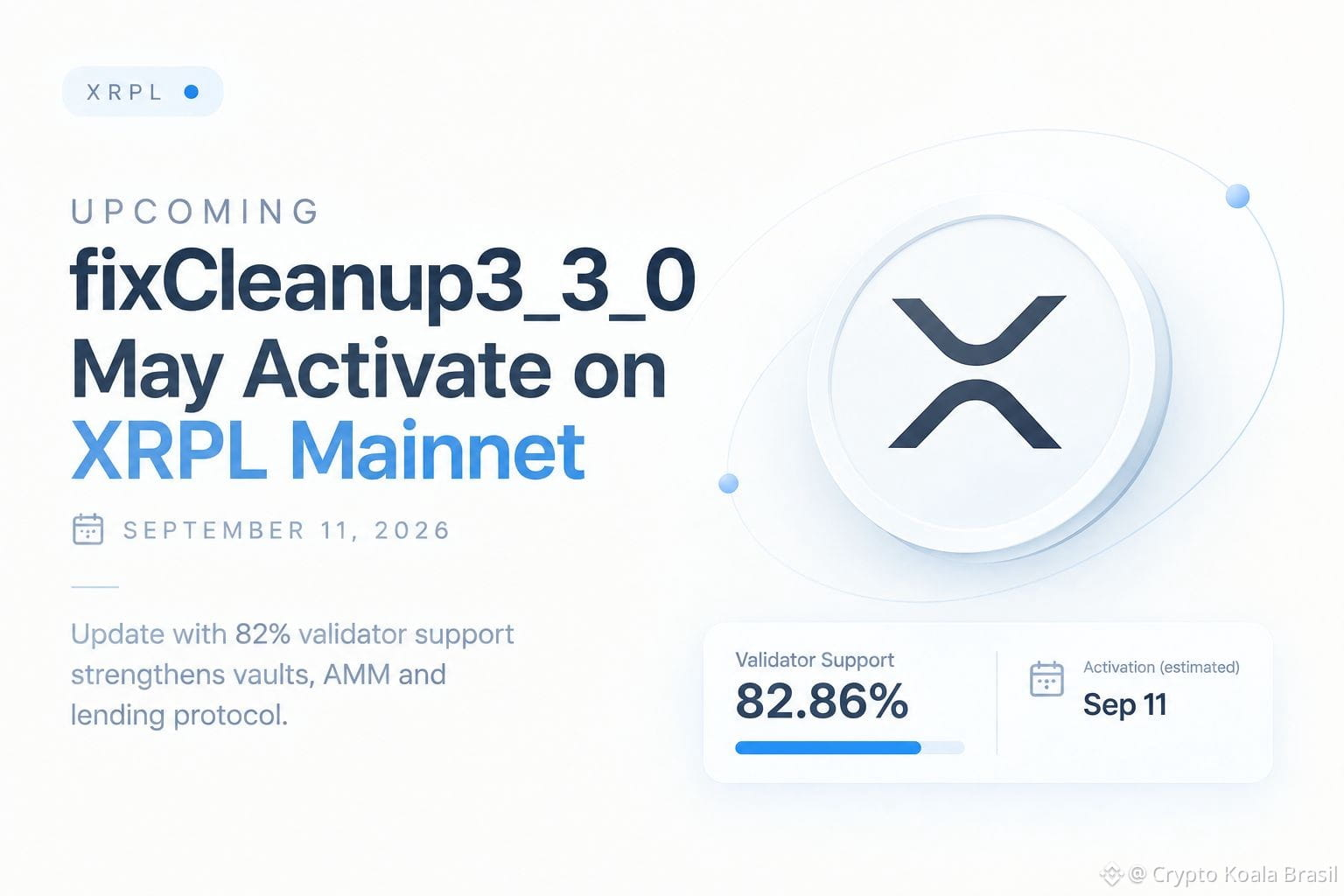
🚨 XRPL CAN ACTIVATE AN IMPORTANT UPDATE ON SEPTEMBER 11
The XRP Ledger is approaching the activation of fixCleanup3_3_0, an update that has already reached 82.86% validator support.
🔧 What changes?
• Improvements to Single Asset Vaults • Corrections to the Lending Protocol • AMM adjustments and protections • Corrections to permissioned DEX • Improvements to the Checks system • More security and consistency involving pseudo-accounts
📅 Scheduled date: September 11, 2026
🗳️ Support: 82.86%
✅ Minimum required: more than 80%
⚠️ Activation still depends on maintaining this support. If support falls to 80% or less during the window, the process may be restarted.
📌 For traders and investors: this is not an update created directly to boost the price of XRP. It is mainly an infrastructure fix that strengthens important parts of the XRPL ecosystem — especially AMMs, Vaults, and Lending.
The market may keep an eye on September 11. 👀
$XRP
🚨 XRPL CAN ACTIVATE AN IMPORTANT UPDATE ON SEPTEMBER 11
The XRP Ledger is approaching the activation of fixCleanup3_3_0, an update that has already reached 82.86% validator support.
🔧 What changes?
• Improvements to Single Asset Vaults • Corrections to the Lending Protocol • AMM adjustments and protections • Corrections to permissioned DEX • Improvements to the Checks system • More security and consistency involving pseudo-accounts
📅 Scheduled date: September 11, 2026
🗳️ Support: 82.86%
✅ Minimum required: more than 80%
⚠️ Activation still depends on maintaining this support. If support falls to 80% or less during the window, the process may be restarted.
📌 For traders and investors: this is not an update created directly to boost the price of XRP. It is mainly an infrastructure fix that strengthens important parts of the XRPL ecosystem — especially AMMs, Vaults, and Lending.
The market may keep an eye on September 11. 👀
$XRP
The XRP Ledger is approaching the activation of fixCleanup3_3_0, an update that has already reached 82.86% validator support.
🔧 What changes?
• Improvements to Single Asset Vaults • Corrections to the Lending Protocol • AMM adjustments and protections • Corrections to permissioned DEX • Improvements to the Checks system • More security and consistency involving pseudo-accounts
📅 Scheduled date: September 11, 2026
🗳️ Support: 82.86%
✅ Minimum required: more than 80%
⚠️ Activation still depends on maintaining this support. If support falls to 80% or less during the window, the process may be restarted.
📌 For traders and investors: this is not an update created directly to boost the price of XRP. It is mainly an infrastructure fix that strengthens important parts of the XRPL ecosystem — especially AMMs, Vaults, and Lending.
The market may keep an eye on September 11. 👀
$XRP
3
1.9k
·
--
Bullish
Partly True
🚨 ARTHUR HAYES BETS ALMOST $1 MILLION ON PENDLE — AND DEFI IS STARTING TO DRAW ATTENTION.
BitMEX co-founder Arthur Hayes accumulated approximately $973K in PENDLE, while the token’s derivatives activity also increased. 💰📈
🔥 Why are traders watching?
The combination of a significant buy by a well-known market figure with rising derivatives activity may indicate that speculative interest in PENDLE is growing.
📊 Key signals: • ~US$ 973K in PENDLE accumulated
• Purchase attributed to Arthur Hayes
• Simultaneous increase in derivatives activity
• Greater attention on the DeFi sector
👀 The buy alone doesn’t guarantee a rally. But when big players start positioning themselves as market activity increases, it’s worth keeping a close eye.
Arthur Hayes is buying PENDLE. Has the next DeFi move already begun? 🔥
$PENDLE
🚨 ARTHUR HAYES BETS ALMOST $1 MILLION ON PENDLE — AND DEFI IS STARTING TO DRAW ATTENTION.
BitMEX co-founder Arthur Hayes accumulated approximately $973K in PENDLE, while the token’s derivatives activity also increased. 💰📈
🔥 Why are traders watching?
The combination of a significant buy by a well-known market figure with rising derivatives activity may indicate that speculative interest in PENDLE is growing.
📊 Key signals: • ~US$ 973K in PENDLE accumulated
• Purchase attributed to Arthur Hayes
• Simultaneous increase in derivatives activity
• Greater attention on the DeFi sector
👀 The buy alone doesn’t guarantee a rally. But when big players start positioning themselves as market activity increases, it’s worth keeping a close eye.
Arthur Hayes is buying PENDLE. Has the next DeFi move already begun? 🔥
$PENDLE
BitMEX co-founder Arthur Hayes accumulated approximately $973K in PENDLE, while the token’s derivatives activity also increased. 💰📈
🔥 Why are traders watching?
The combination of a significant buy by a well-known market figure with rising derivatives activity may indicate that speculative interest in PENDLE is growing.
📊 Key signals: • ~US$ 973K in PENDLE accumulated
• Purchase attributed to Arthur Hayes
• Simultaneous increase in derivatives activity
• Greater attention on the DeFi sector
👀 The buy alone doesn’t guarantee a rally. But when big players start positioning themselves as market activity increases, it’s worth keeping a close eye.
Arthur Hayes is buying PENDLE. Has the next DeFi move already begun? 🔥
$PENDLE
6
4
1.6k
·
--
Bearish
Verified
Holding $BTC 1.2K USDT
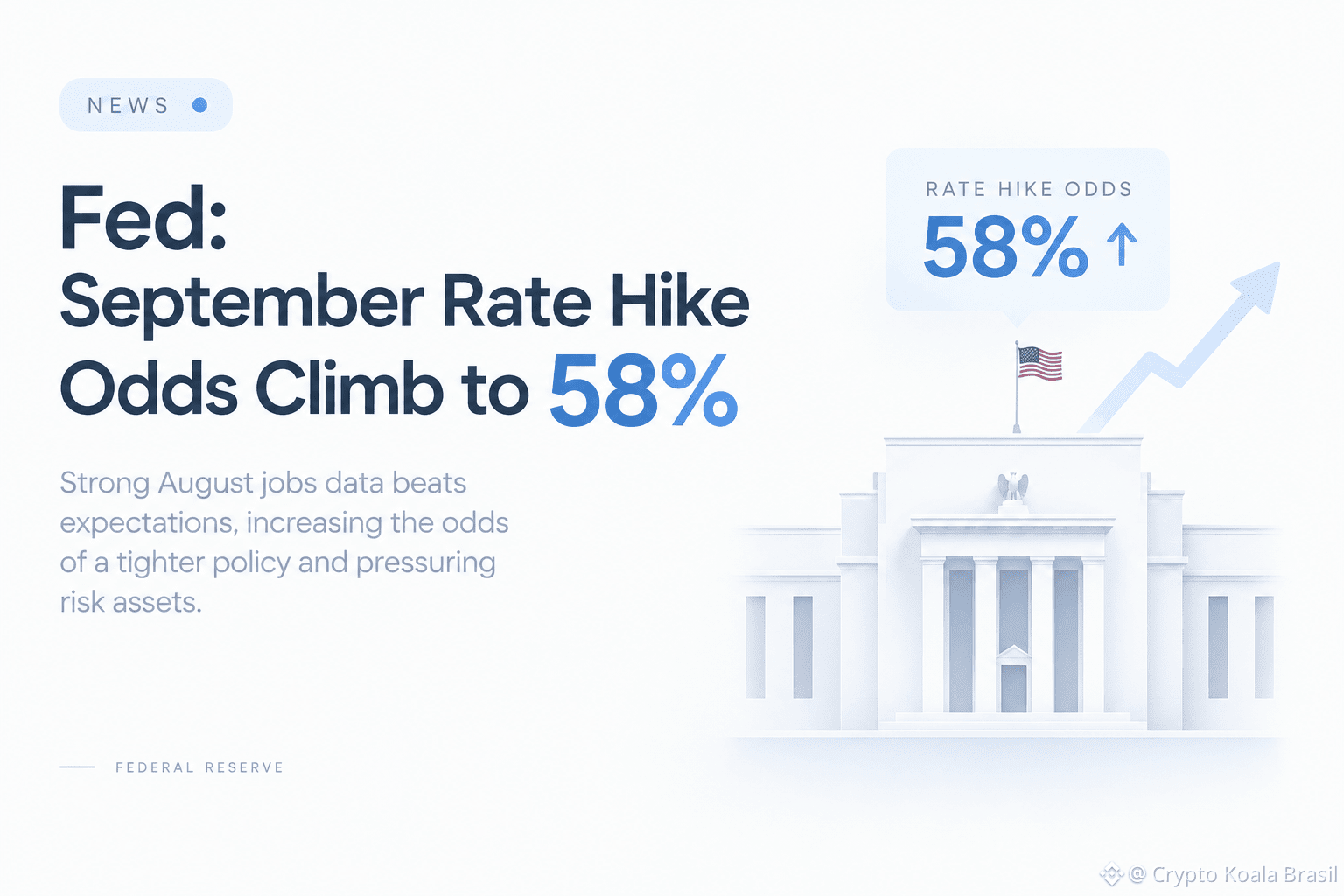
🚨 STRONG PAYROLL MEETS APOSTASY FROM THE FED — AND CRYPTO FEELS THE PRESSURE.
U.S. employment data in August beat expectations, pushing the probability of a rate hike in September up to 58%. 🇺🇸📊
For markets, the logic is straightforward:
📈 Strong employment
⬇️
🏦 Less need for cuts / more room for tightening
⬇️
💵 Potentially higher rates for longer
⬇️
📉 Pressure on risk assets
And that’s exactly where the crypto market comes onto the radar.
Bitcoin and altcoins tend to struggle when rate expectations become more restrictive, since tighter monetary policy can reduce the liquidity available for higher-risk assets.
⚠️ Key point for traders: a 58% probability doesn’t mean a hike is guaranteed.
It means the market is repricing the Fed outlook after the employment data.
👀 Now, inflation, upcoming employment data, and Fed members’ statements become even more important.
A strong payroll may seem positive for the economy — but for crypto, it could mean exactly the opposite in the short term.
$BTC
🚨 STRONG PAYROLL MEETS APOSTASY FROM THE FED — AND CRYPTO FEELS THE PRESSURE.
U.S. employment data in August beat expectations, pushing the probability of a rate hike in September up to 58%. 🇺🇸📊
For markets, the logic is straightforward:
📈 Strong employment
⬇️
🏦 Less need for cuts / more room for tightening
⬇️
💵 Potentially higher rates for longer
⬇️
📉 Pressure on risk assets
And that’s exactly where the crypto market comes onto the radar.
Bitcoin and altcoins tend to struggle when rate expectations become more restrictive, since tighter monetary policy can reduce the liquidity available for higher-risk assets.
⚠️ Key point for traders: a 58% probability doesn’t mean a hike is guaranteed.
It means the market is repricing the Fed outlook after the employment data.
👀 Now, inflation, upcoming employment data, and Fed members’ statements become even more important.
A strong payroll may seem positive for the economy — but for crypto, it could mean exactly the opposite in the short term.
$BTC
U.S. employment data in August beat expectations, pushing the probability of a rate hike in September up to 58%. 🇺🇸📊
For markets, the logic is straightforward:
📈 Strong employment
⬇️
🏦 Less need for cuts / more room for tightening
⬇️
💵 Potentially higher rates for longer
⬇️
📉 Pressure on risk assets
And that’s exactly where the crypto market comes onto the radar.
Bitcoin and altcoins tend to struggle when rate expectations become more restrictive, since tighter monetary policy can reduce the liquidity available for higher-risk assets.
⚠️ Key point for traders: a 58% probability doesn’t mean a hike is guaranteed.
It means the market is repricing the Fed outlook after the employment data.
👀 Now, inflation, upcoming employment data, and Fed members’ statements become even more important.
A strong payroll may seem positive for the economy — but for crypto, it could mean exactly the opposite in the short term.
$BTC
1
285
·
--
Bullish
Verified
Holding $XRP 1.1K USDT
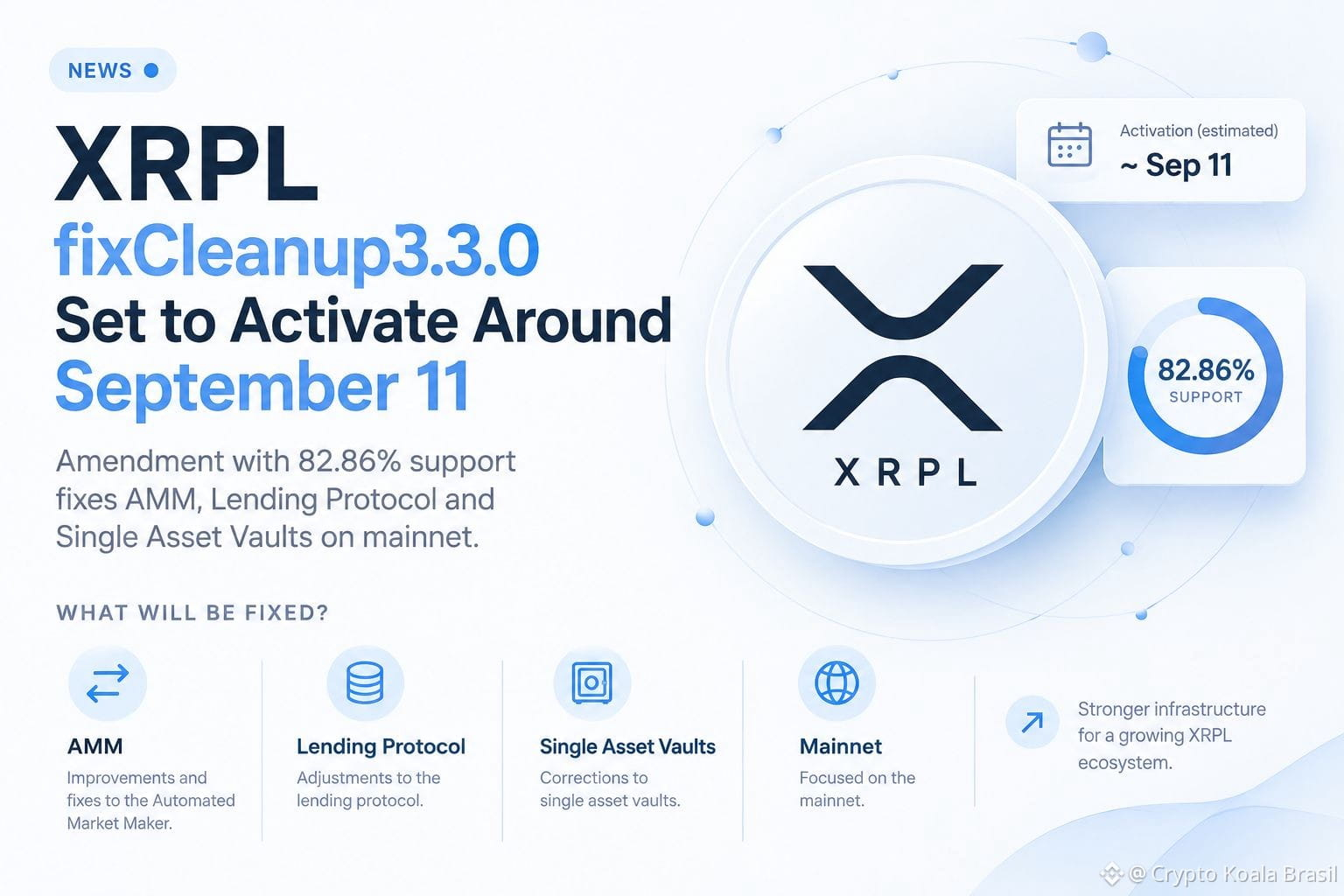
🚨 XRPL HAS AN IMPORTANT UPDATE ON THE WAY — AND IT ALREADY HAS 82.86% SUPPORT.
The fixCleanup3.3.0 amendment is expected to activate around September 11, bringing important fixes for XRPL ecosystem components. ⚙️
🔧 What will be fixed?
• AMM — improvements and fixes in the Automated Market Maker
• Lending Protocol — adjustments to the lending protocol
• Single Asset Vaults — fixes to single-asset vaults
• Update targeted at mainnet
📊 With 82.86% support, the amendment shows strong community/validator backing.
👀 Why should traders pay attention?
Infrastructure updates can directly affect the stability, efficiency, and evolution of the XRPL ecosystem — especially as new DeFi applications gain traction on the network.
📅 Expected date: ~September 11
🗳️ Current support: 82.86%
⚙️ Focus: fixes and improvements in XRPL
The market may be looking at the price of XRP, but the infrastructure behind the asset is also evolving.
$XRP
🚨 XRPL HAS AN IMPORTANT UPDATE ON THE WAY — AND IT ALREADY HAS 82.86% SUPPORT.
The fixCleanup3.3.0 amendment is expected to activate around September 11, bringing important fixes for XRPL ecosystem components. ⚙️
🔧 What will be fixed?
• AMM — improvements and fixes in the Automated Market Maker
• Lending Protocol — adjustments to the lending protocol
• Single Asset Vaults — fixes to single-asset vaults
• Update targeted at mainnet
📊 With 82.86% support, the amendment shows strong community/validator backing.
👀 Why should traders pay attention?
Infrastructure updates can directly affect the stability, efficiency, and evolution of the XRPL ecosystem — especially as new DeFi applications gain traction on the network.
📅 Expected date: ~September 11
🗳️ Current support: 82.86%
⚙️ Focus: fixes and improvements in XRPL
The market may be looking at the price of XRP, but the infrastructure behind the asset is also evolving.
$XRP
The fixCleanup3.3.0 amendment is expected to activate around September 11, bringing important fixes for XRPL ecosystem components. ⚙️
🔧 What will be fixed?
• AMM — improvements and fixes in the Automated Market Maker
• Lending Protocol — adjustments to the lending protocol
• Single Asset Vaults — fixes to single-asset vaults
• Update targeted at mainnet
📊 With 82.86% support, the amendment shows strong community/validator backing.
👀 Why should traders pay attention?
Infrastructure updates can directly affect the stability, efficiency, and evolution of the XRPL ecosystem — especially as new DeFi applications gain traction on the network.
📅 Expected date: ~September 11
🗳️ Current support: 82.86%
⚙️ Focus: fixes and improvements in XRPL
The market may be looking at the price of XRP, but the infrastructure behind the asset is also evolving.
$XRP
4
2k
Verified
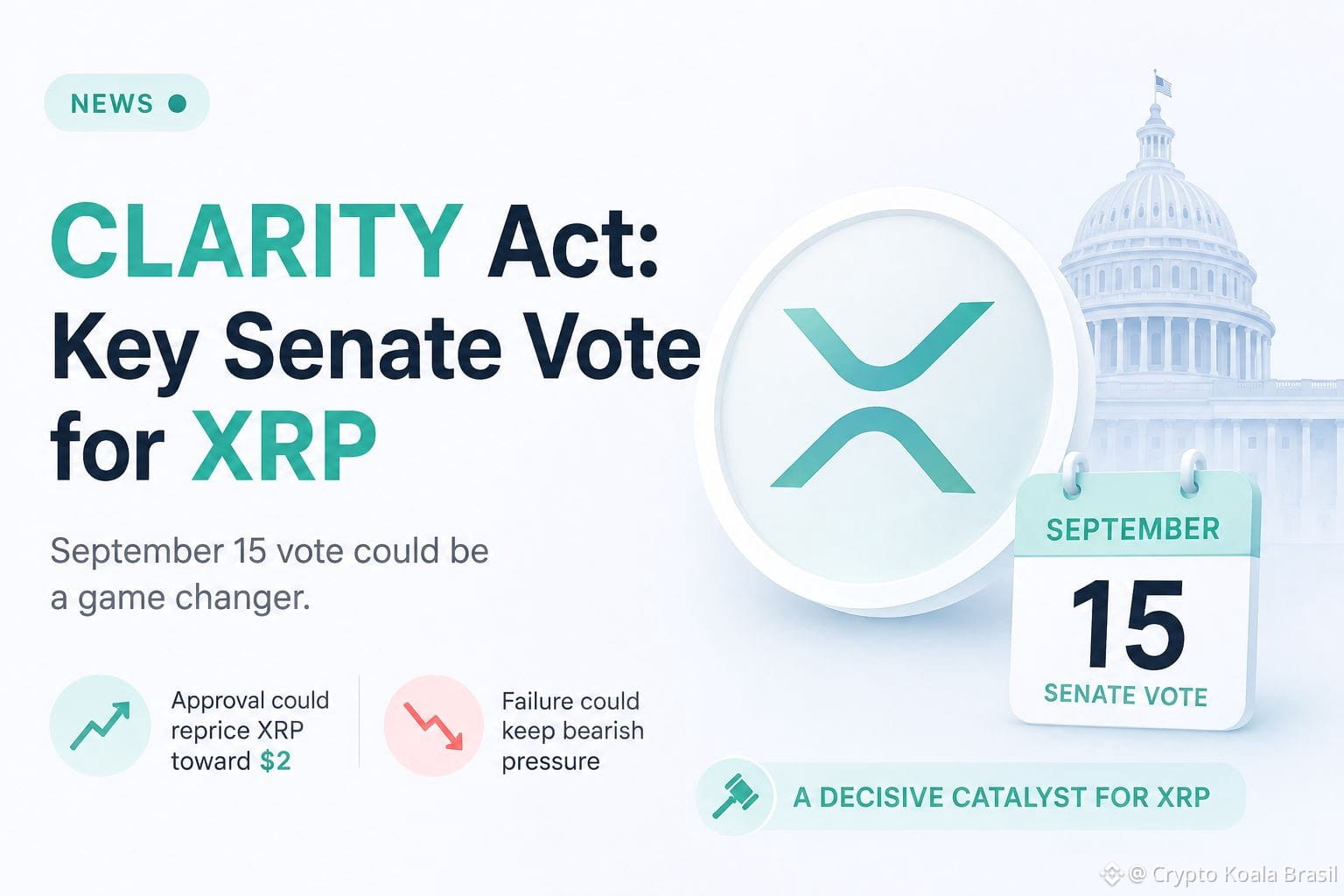
🚨 SEPTEMBER 15 COULD BE ONE OF THE MOST IMPORTANT DAYS OF THE YEAR FOR XRP.
The U.S. Senate has an important vote on the CLARITY Act, and the outcome could be a decisive catalyst for XRP. 🇺🇸⚖️
🔥 If the bill advances: Greater regulatory clarity for the crypto market could reduce uncertainty around assets like XRP, making room for a revaluation.
🎯 One of the market’s projected scenarios is XRP once again targeting the US$ 2 region.
⚠️ But there is another side.
If the vote fails or the process faces new obstacles, regulatory uncertainty remains — which could increase selling pressure on XRP.
📊 For traders, the situation is simple:
🟢 CLARITY advances → possible bullish catalyst
🔴 CLARITY fails → risk of bearish pressure
👀 15/Sep → a date to keep on your radar
The market may begin pricing in the outcome even before the vote, increasing volatility as the date approaches.
🚨 SEPTEMBER 15 COULD BE ONE OF THE MOST IMPORTANT DAYS OF THE YEAR FOR XRP.
The U.S. Senate has an important vote on the CLARITY Act, and the outcome could be a decisive catalyst for XRP. 🇺🇸⚖️
🔥 If the bill advances: Greater regulatory clarity for the crypto market could reduce uncertainty around assets like XRP, making room for a revaluation.
🎯 One of the market’s projected scenarios is XRP once again targeting the US$ 2 region.
⚠️ But there is another side.
If the vote fails or the process faces new obstacles, regulatory uncertainty remains — which could increase selling pressure on XRP.
📊 For traders, the situation is simple:
🟢 CLARITY advances → possible bullish catalyst
🔴 CLARITY fails → risk of bearish pressure
👀 15/Sep → a date to keep on your radar
The market may begin pricing in the outcome even before the vote, increasing volatility as the date approaches.
The U.S. Senate has an important vote on the CLARITY Act, and the outcome could be a decisive catalyst for XRP. 🇺🇸⚖️
🔥 If the bill advances: Greater regulatory clarity for the crypto market could reduce uncertainty around assets like XRP, making room for a revaluation.
🎯 One of the market’s projected scenarios is XRP once again targeting the US$ 2 region.
⚠️ But there is another side.
If the vote fails or the process faces new obstacles, regulatory uncertainty remains — which could increase selling pressure on XRP.
📊 For traders, the situation is simple:
🟢 CLARITY advances → possible bullish catalyst
🔴 CLARITY fails → risk of bearish pressure
👀 15/Sep → a date to keep on your radar
The market may begin pricing in the outcome even before the vote, increasing volatility as the date approaches.
3
2.4k
·
--
Bullish
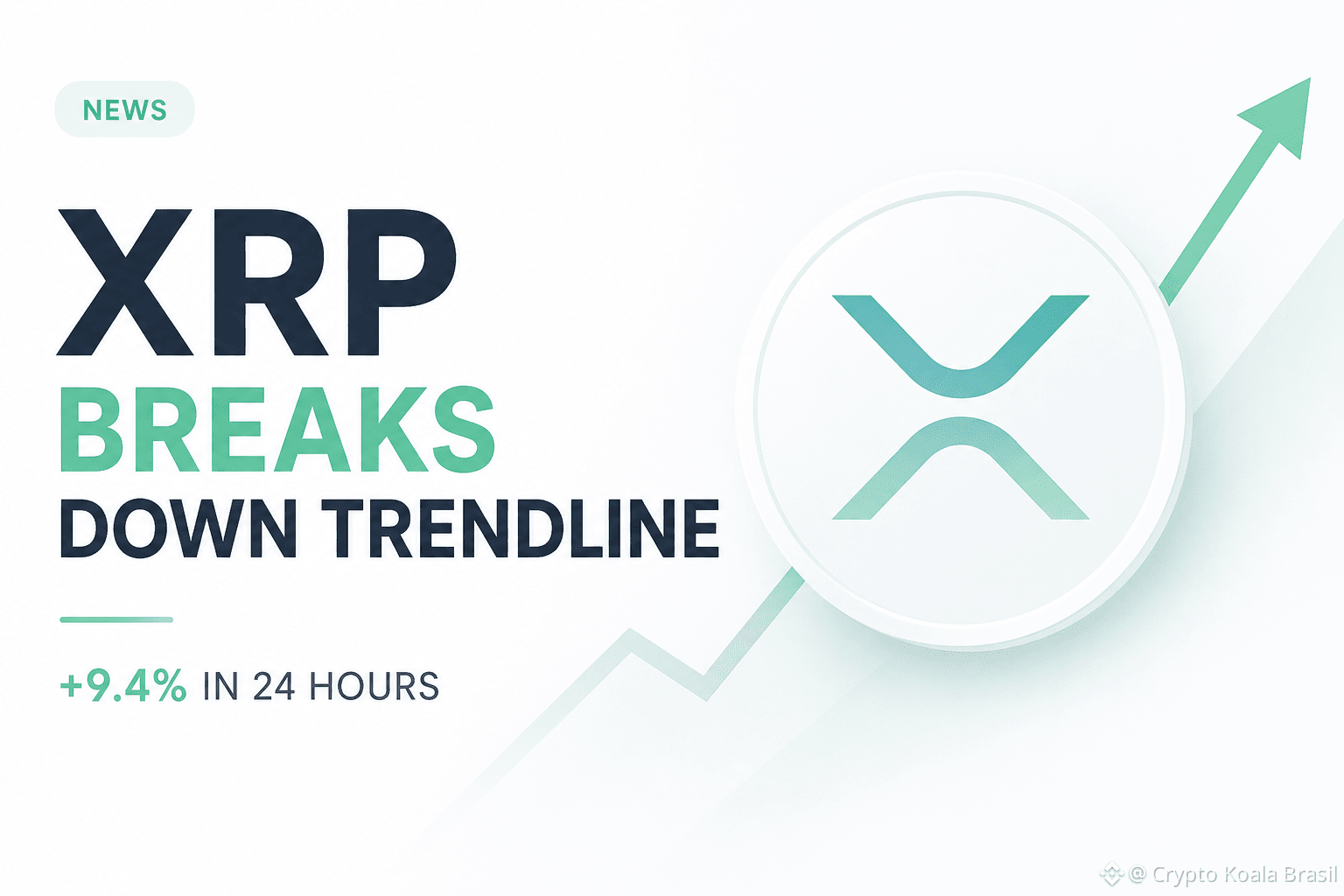
🚨 XRP SOARS 9.4% IN 24H AND BREAKS THE DOWNTREND.
XRP moved from US$ 1.33 to US$ 1.46, while buyers returned to defend a support level considered critical. 📈
🔥 What changed for traders?
The asset managed to break its downtrend line, signaling that selling pressure may be losing strength in the short term.
Now, the main point of attention is whether this breakout can hold.
📊 XRP in focus: • +9.4% in 24 hours • US$ 1.33 → US$ 1.46 • Downtrend line broken • Buyers returning to the market • Critical support defended
⚠️ The breakout is a positive sign, but the next moves will be important to determine whether we’re looking at a trend reversal or just a short-term bounce.
👀 XRP managed to break the downtrend. Now it needs to prove it can stay above it.
🚨 XRP SOARS 9.4% IN 24H AND BREAKS THE DOWNTREND.
XRP moved from US$ 1.33 to US$ 1.46, while buyers returned to defend a support level considered critical. 📈
🔥 What changed for traders?
The asset managed to break its downtrend line, signaling that selling pressure may be losing strength in the short term.
Now, the main point of attention is whether this breakout can hold.
📊 XRP in focus: • +9.4% in 24 hours • US$ 1.33 → US$ 1.46 • Downtrend line broken • Buyers returning to the market • Critical support defended
⚠️ The breakout is a positive sign, but the next moves will be important to determine whether we’re looking at a trend reversal or just a short-term bounce.
👀 XRP managed to break the downtrend. Now it needs to prove it can stay above it.
XRP moved from US$ 1.33 to US$ 1.46, while buyers returned to defend a support level considered critical. 📈
🔥 What changed for traders?
The asset managed to break its downtrend line, signaling that selling pressure may be losing strength in the short term.
Now, the main point of attention is whether this breakout can hold.
📊 XRP in focus: • +9.4% in 24 hours • US$ 1.33 → US$ 1.46 • Downtrend line broken • Buyers returning to the market • Critical support defended
⚠️ The breakout is a positive sign, but the next moves will be important to determine whether we’re looking at a trend reversal or just a short-term bounce.
👀 XRP managed to break the downtrend. Now it needs to prove it can stay above it.
1
882
·
--
Bearish
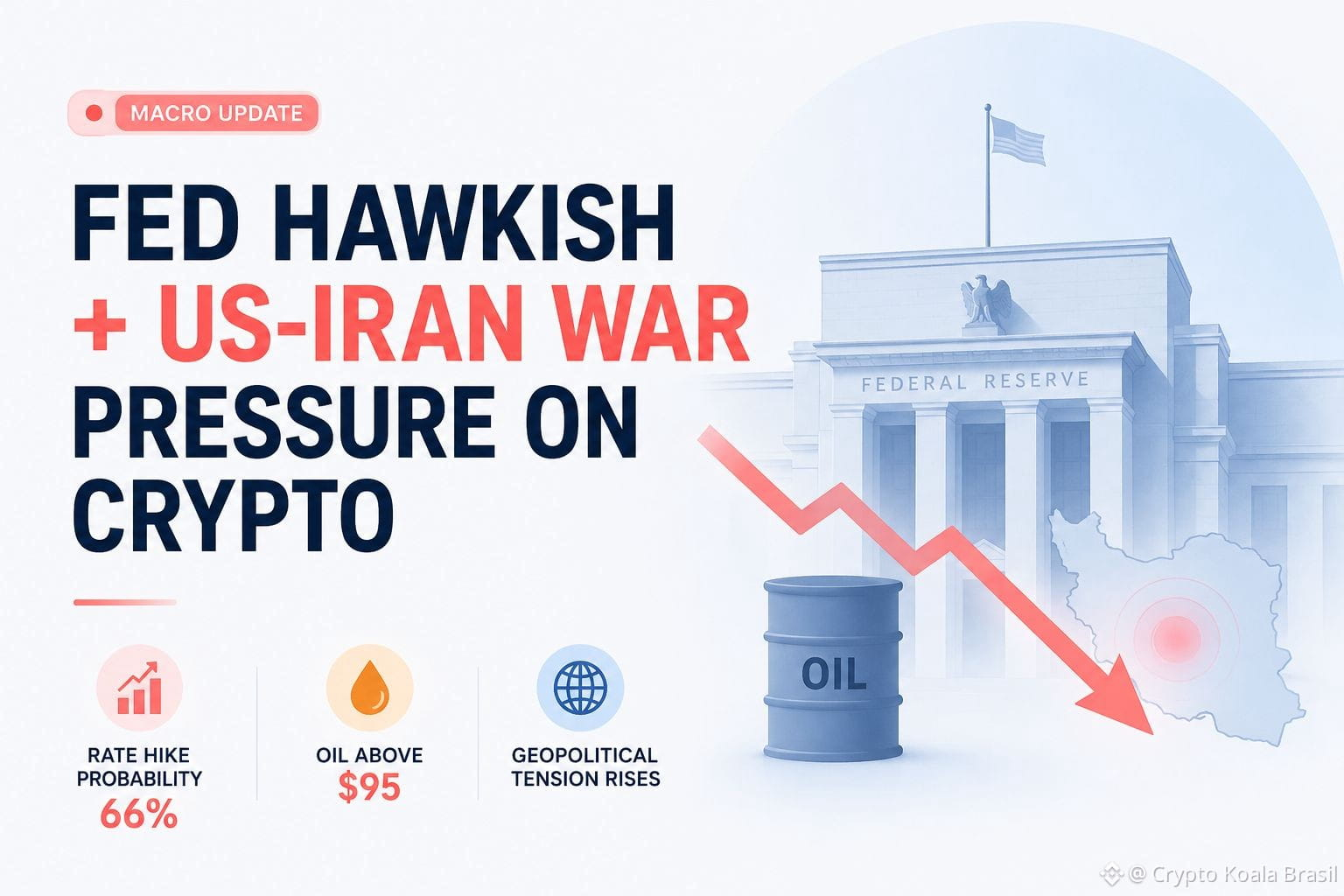
🚨 THE MACRO SCENARIO JUST GOT MUCH WORSE FOR THE CRYPTO MARKET.
The combination of a more hawkish Fed + military escalation between the US and Iran + oil surging is increasing pressure on risk assets. 📉
🇺🇸 Market pricing for a Fed rate hike in September reached around 66% after the shift in monetary policy tone.
🛢️ At the same time, Brent crude has been approaching <$ 95>, fueling inflation concerns. Escalation in the Middle East raises the risk of new energy shocks.
And here’s the problem for crypto:
Oil ↑ → inflation ↑ → more hawkish Fed → rates ↑ → liquidity ↓ → pressure on risk assets.
Bitcoin and the rest of the crypto market could feel this effect especially if investors start reducing exposure to higher-risk assets.
⚠️ But pay attention: a rate hike is still not guaranteed. Expectations change as US employment and inflation data come in, and members of the Fed itself continue to diverge on the need to tighten monetary policy.
📌 For traders, the focus now is on the macro.
The Fed, oil, inflation, and war may determine whether the market correction will be just profit-taking—or the start of a deeper move.
September began with a macro storm. 🌪️
🚨 THE MACRO SCENARIO JUST GOT MUCH WORSE FOR THE CRYPTO MARKET.
The combination of a more hawkish Fed + military escalation between the US and Iran + oil surging is increasing pressure on risk assets. 📉
🇺🇸 Market pricing for a Fed rate hike in September reached around 66% after the shift in monetary policy tone.
🛢️ At the same time, Brent crude has been approaching <$ 95>, fueling inflation concerns. Escalation in the Middle East raises the risk of new energy shocks.
And here’s the problem for crypto:
Oil ↑ → inflation ↑ → more hawkish Fed → rates ↑ → liquidity ↓ → pressure on risk assets.
Bitcoin and the rest of the crypto market could feel this effect especially if investors start reducing exposure to higher-risk assets.
⚠️ But pay attention: a rate hike is still not guaranteed. Expectations change as US employment and inflation data come in, and members of the Fed itself continue to diverge on the need to tighten monetary policy.
📌 For traders, the focus now is on the macro.
The Fed, oil, inflation, and war may determine whether the market correction will be just profit-taking—or the start of a deeper move.
September began with a macro storm. 🌪️
The combination of a more hawkish Fed + military escalation between the US and Iran + oil surging is increasing pressure on risk assets. 📉
🇺🇸 Market pricing for a Fed rate hike in September reached around 66% after the shift in monetary policy tone.
🛢️ At the same time, Brent crude has been approaching <$ 95>, fueling inflation concerns. Escalation in the Middle East raises the risk of new energy shocks.
And here’s the problem for crypto:
Oil ↑ → inflation ↑ → more hawkish Fed → rates ↑ → liquidity ↓ → pressure on risk assets.
Bitcoin and the rest of the crypto market could feel this effect especially if investors start reducing exposure to higher-risk assets.
⚠️ But pay attention: a rate hike is still not guaranteed. Expectations change as US employment and inflation data come in, and members of the Fed itself continue to diverge on the need to tighten monetary policy.
📌 For traders, the focus now is on the macro.
The Fed, oil, inflation, and war may determine whether the market correction will be just profit-taking—or the start of a deeper move.
September began with a macro storm. 🌪️
1
332
·
--
Bearish
Verified
🚨 1 BILLION XRP JUST GOT UNLOCKED — AND TRADERS NEED TO KEEP AN EYE ON THIS.
Ripple released 1 billion XRP from escrow this Tuesday, September 1st, in three transactions of 500 million, 400 million, and 100 million tokens.
💰 In market value terms, the unlock represents more than $1 billion worth of XRP.
But there’s an important detail:
⚠️ Unlocked doesn’t mean sold.
Ripple’s escrow mechanism includes monthly releases of up to 1 billion XRP. The company has historically returned a significant portion of unused tokens back to escrow, meaning the actual impact on circulating supply is smaller than the announced figure.
📉 For traders, what matters now is the flow.
If a significant portion of these XRP is sent to exchanges, sell pressure could emerge in the short term.
If most of it is locked up again, the impact on supply will be much smaller.
🔎 So the figure of 1 billion XRP is the warning — but the next on-chain moves are what really matter.
XRP just received a new supply test. Will demand be able to absorb it? 👀
$XRP
🚨 1 BILLION XRP JUST GOT UNLOCKED — AND TRADERS NEED TO KEEP AN EYE ON THIS.
Ripple released 1 billion XRP from escrow this Tuesday, September 1st, in three transactions of 500 million, 400 million, and 100 million tokens.
💰 In market value terms, the unlock represents more than $1 billion worth of XRP.
But there’s an important detail:
⚠️ Unlocked doesn’t mean sold.
Ripple’s escrow mechanism includes monthly releases of up to 1 billion XRP. The company has historically returned a significant portion of unused tokens back to escrow, meaning the actual impact on circulating supply is smaller than the announced figure.
📉 For traders, what matters now is the flow.
If a significant portion of these XRP is sent to exchanges, sell pressure could emerge in the short term.
If most of it is locked up again, the impact on supply will be much smaller.
🔎 So the figure of 1 billion XRP is the warning — but the next on-chain moves are what really matter.
XRP just received a new supply test. Will demand be able to absorb it? 👀
$XRP
Ripple released 1 billion XRP from escrow this Tuesday, September 1st, in three transactions of 500 million, 400 million, and 100 million tokens.
💰 In market value terms, the unlock represents more than $1 billion worth of XRP.
But there’s an important detail:
⚠️ Unlocked doesn’t mean sold.
Ripple’s escrow mechanism includes monthly releases of up to 1 billion XRP. The company has historically returned a significant portion of unused tokens back to escrow, meaning the actual impact on circulating supply is smaller than the announced figure.
📉 For traders, what matters now is the flow.
If a significant portion of these XRP is sent to exchanges, sell pressure could emerge in the short term.
If most of it is locked up again, the impact on supply will be much smaller.
🔎 So the figure of 1 billion XRP is the warning — but the next on-chain moves are what really matter.
XRP just received a new supply test. Will demand be able to absorb it? 👀
$XRP
1
2
2.6k
·
--
Bullish
🔥 TRADERS ON HYPERLIQUID CAN NOW TRADE THEIR FEE DISCOUNTS.
Pendle, in partnership with Valantis, launched the first open market to trade discounts on Hyperliquid perpetual trading fees.
In practice, this turns something that was previously just an operational benefit into an asset with economic value and the possibility to trade. 👀
💰 Why does this matter for traders?
• Fee discounts can gain liquidity
• Traders can have new ways to capture value
• Trading incentives become part of an open market
• A new opportunity emerges within the perpetuals ecosystem
The news also points to a broader trend in DeFi: turning benefits, rebates, and incentives into tradable financial markets.
And this might be only the beginning.
If a fee discount can become a market, what else will DeFi turn into an asset? 👀
$PENDLE
🔥 TRADERS ON HYPERLIQUID CAN NOW TRADE THEIR FEE DISCOUNTS.
Pendle, in partnership with Valantis, launched the first open market to trade discounts on Hyperliquid perpetual trading fees.
In practice, this turns something that was previously just an operational benefit into an asset with economic value and the possibility to trade. 👀
💰 Why does this matter for traders?
• Fee discounts can gain liquidity
• Traders can have new ways to capture value
• Trading incentives become part of an open market
• A new opportunity emerges within the perpetuals ecosystem
The news also points to a broader trend in DeFi: turning benefits, rebates, and incentives into tradable financial markets.
And this might be only the beginning.
If a fee discount can become a market, what else will DeFi turn into an asset? 👀
$PENDLE
Pendle, in partnership with Valantis, launched the first open market to trade discounts on Hyperliquid perpetual trading fees.
In practice, this turns something that was previously just an operational benefit into an asset with economic value and the possibility to trade. 👀
💰 Why does this matter for traders?
• Fee discounts can gain liquidity
• Traders can have new ways to capture value
• Trading incentives become part of an open market
• A new opportunity emerges within the perpetuals ecosystem
The news also points to a broader trend in DeFi: turning benefits, rebates, and incentives into tradable financial markets.
And this might be only the beginning.
If a fee discount can become a market, what else will DeFi turn into an asset? 👀
$PENDLE
2
499
Article
Financial Education - Lesson 21 – Stock Exchange: How the Stock Market WorksClass objective
At the end of this class, you will understand what the Stock Exchange is, how it works, why stock prices fluctuate, and how anyone can become a shareholder in large companies.
What is the Stock Exchange?
The Stock Exchange is an organized market where investors buy and sell financial assets, such as:
Stocks.
Real Estate Investment Funds (FIIs).
ETFs.
BDRs (Brazilian Depositary Receipts).
Other financial assets.
In Brazil, the main exchange is B3.
What is a stock?
A stock represents a small part of a company.
Financial Education - Lesson 21 – Stock Exchange: How the Stock Market Works
Class objective
At the end of this class, you will understand what the Stock Exchange is, how it works, why stock prices fluctuate, and how anyone can become a shareholder in large companies.
What is the Stock Exchange?
The Stock Exchange is an organized market where investors buy and sell financial assets, such as:
Stocks.
Real Estate Investment Funds (FIIs).
ETFs.
BDRs (Brazilian Depositary Receipts).
Other financial assets.
In Brazil, the main exchange is B3.
What is a stock?
A stock represents a small part of a company.
At the end of this class, you will understand what the Stock Exchange is, how it works, why stock prices fluctuate, and how anyone can become a shareholder in large companies.
What is the Stock Exchange?
The Stock Exchange is an organized market where investors buy and sell financial assets, such as:
Stocks.
Real Estate Investment Funds (FIIs).
ETFs.
BDRs (Brazilian Depositary Receipts).
Other financial assets.
In Brazil, the main exchange is B3.
What is a stock?
A stock represents a small part of a company.
1
638
Article
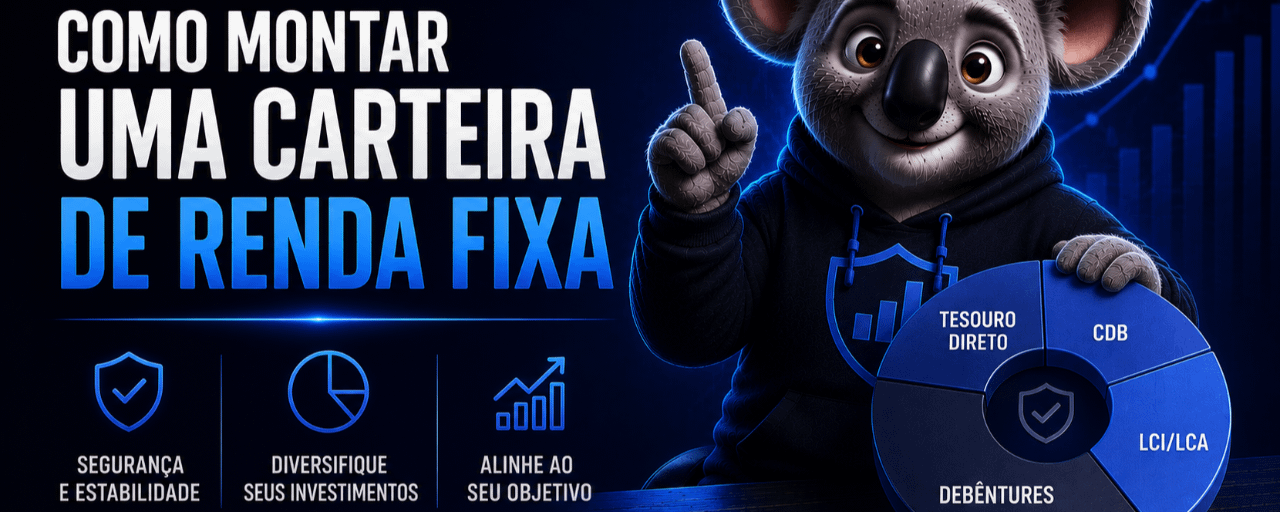
Financial Education - Lesson 20 – How to Build a Fixed-Income PortfolioLesson objective
By the end of this lesson, you will understand how to build a fixed-income portfolio according to your goals, time horizons, and investor profile, using different types of investments strategically.
What is an investment portfolio?
An investment portfolio is the set of all the assets you own.
It should not be made up of just one investment.
Just like a soccer team needs players with different roles, a portfolio needs investments that play different roles.
Financial Education - Lesson 20 – How to Build a Fixed-Income Portfolio
Lesson objective
By the end of this lesson, you will understand how to build a fixed-income portfolio according to your goals, time horizons, and investor profile, using different types of investments strategically.
What is an investment portfolio?
An investment portfolio is the set of all the assets you own.
It should not be made up of just one investment.
Just like a soccer team needs players with different roles, a portfolio needs investments that play different roles.
By the end of this lesson, you will understand how to build a fixed-income portfolio according to your goals, time horizons, and investor profile, using different types of investments strategically.
What is an investment portfolio?
An investment portfolio is the set of all the assets you own.
It should not be made up of just one investment.
Just like a soccer team needs players with different roles, a portfolio needs investments that play different roles.
1
435

Article
Financial Education - Lesson 19 – Taxation of Investments: Understanding Income TaxLesson objective
At the end of this lesson, you will understand how taxation works for the main fixed-income investments, why it’s important to analyze net returns, and how to compare investments correctly.
Why understand taxes?
Imagine two investments:
Investment A yields 12% per year.
Investment B yields 11% per year.
Which one is better?
Many people would answer: the one at 12%.
But that isn’t always true.
If the 12% investment pays Income Tax and the 11% investment is tax-exempt, the net return can be similar or even better on the tax-exempt investment.
Financial Education - Lesson 19 – Taxation of Investments: Understanding Income Tax
Lesson objective
At the end of this lesson, you will understand how taxation works for the main fixed-income investments, why it’s important to analyze net returns, and how to compare investments correctly.
Why understand taxes?
Imagine two investments:
Investment A yields 12% per year.
Investment B yields 11% per year.
Which one is better?
Many people would answer: the one at 12%.
But that isn’t always true.
If the 12% investment pays Income Tax and the 11% investment is tax-exempt, the net return can be similar or even better on the tax-exempt investment.
At the end of this lesson, you will understand how taxation works for the main fixed-income investments, why it’s important to analyze net returns, and how to compare investments correctly.
Why understand taxes?
Imagine two investments:
Investment A yields 12% per year.
Investment B yields 11% per year.
Which one is better?
Many people would answer: the one at 12%.
But that isn’t always true.
If the 12% investment pays Income Tax and the 11% investment is tax-exempt, the net return can be similar or even better on the tax-exempt investment.
1
363

Article
Personal Finance Education - Lesson 18 – Liquidity and Maturity: Choosing the Right InvestmentLesson goal
At the end of this lesson, you will understand what liquidity and maturity are, why these concepts are fundamental, and how to choose investments according to your goals.
What is liquidity?
Liquidity is the ease and speed with which an investment can be turned into money.
The higher the liquidity, the easier it is to redeem the invested amount.
Examples:
Money in a checking account → Immediate liquidity.
Treasury Selic bonds → Generally high liquidity.
CDI with daily liquidity → High liquidity.
Personal Finance Education - Lesson 18 – Liquidity and Maturity: Choosing the Right Investment
Lesson goal
At the end of this lesson, you will understand what liquidity and maturity are, why these concepts are fundamental, and how to choose investments according to your goals.
What is liquidity?
Liquidity is the ease and speed with which an investment can be turned into money.
The higher the liquidity, the easier it is to redeem the invested amount.
Examples:
Money in a checking account → Immediate liquidity.
Treasury Selic bonds → Generally high liquidity.
CDI with daily liquidity → High liquidity.
At the end of this lesson, you will understand what liquidity and maturity are, why these concepts are fundamental, and how to choose investments according to your goals.
What is liquidity?
Liquidity is the ease and speed with which an investment can be turned into money.
The higher the liquidity, the easier it is to redeem the invested amount.
Examples:
Money in a checking account → Immediate liquidity.
Treasury Selic bonds → Generally high liquidity.
CDI with daily liquidity → High liquidity.
1
494

Article
Financial Education - Lesson 17 – Mark-to-Market Accounting: Why Can a Fixed-Income Investment Fall?Lesson 17 – Mark-to-Market Accounting: Why Can a Fixed-Income Investment Fall?
Lesson objective
At the end of this lesson, you will understand what mark-to-market accounting is, why some fixed-income investments fluctuate in price, and how to avoid hasty decisions when you see these variations.
Introduction
Many people believe that fixed income never loses value.
This is not entirely true.
If you look at some investments before maturity, you may notice that they are worth more or less than what you paid.
Financial Education - Lesson 17 – Mark-to-Market Accounting: Why Can a Fixed-Income Investment Fall?
Lesson 17 – Mark-to-Market Accounting: Why Can a Fixed-Income Investment Fall?
Lesson objective
At the end of this lesson, you will understand what mark-to-market accounting is, why some fixed-income investments fluctuate in price, and how to avoid hasty decisions when you see these variations.
Introduction
Many people believe that fixed income never loses value.
This is not entirely true.
If you look at some investments before maturity, you may notice that they are worth more or less than what you paid.
Lesson objective
At the end of this lesson, you will understand what mark-to-market accounting is, why some fixed-income investments fluctuate in price, and how to avoid hasty decisions when you see these variations.
Introduction
Many people believe that fixed income never loses value.
This is not entirely true.
If you look at some investments before maturity, you may notice that they are worth more or less than what you paid.
1
369
Article
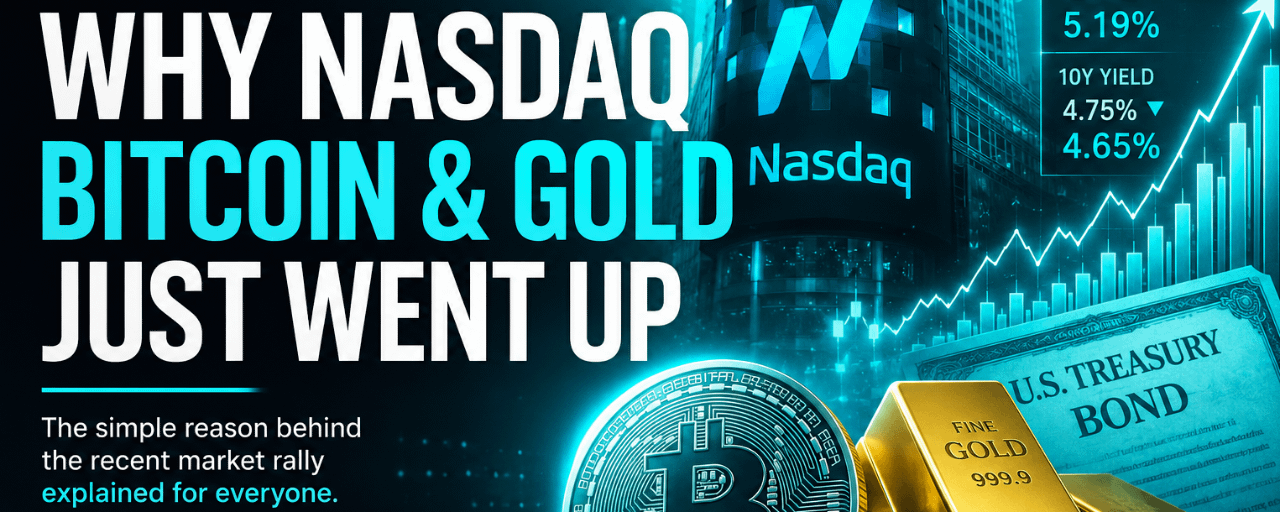
Explaining the rise in a SIMPLE way1. First: what was happening?
Before the selloff, the market was going through a period of pressure in U.S. bonds.
The 30-year Treasury reached about 5.34% per year, one of the highest levels since 2007. The 10-year Treasury had also risen to above 4.75%.
That worries the market because Treasuries are a benchmark for several other rates.
Imagine:
If the U.S. government needs to pay increasingly higher interest to raise money, companies and consumers may also face a more expensive credit environment.
Explaining the rise in a SIMPLE way
1. First: what was happening?
Before the selloff, the market was going through a period of pressure in U.S. bonds.
The 30-year Treasury reached about 5.34% per year, one of the highest levels since 2007. The 10-year Treasury had also risen to above 4.75%.
That worries the market because Treasuries are a benchmark for several other rates.
Imagine:
If the U.S. government needs to pay increasingly higher interest to raise money, companies and consumers may also face a more expensive credit environment.
Before the selloff, the market was going through a period of pressure in U.S. bonds.
The 30-year Treasury reached about 5.34% per year, one of the highest levels since 2007. The 10-year Treasury had also risen to above 4.75%.
That worries the market because Treasuries are a benchmark for several other rates.
Imagine:
If the U.S. government needs to pay increasingly higher interest to raise money, companies and consumers may also face a more expensive credit environment.
2
389

Article
Financial Education - Lesson 16 – Debentures: Lending Money to CompaniesLesson objective
At the end of this lesson, you will understand what debentures are, how they work, what their main risks are, and when they may make sense within an investment portfolio.
What are debentures?
Debentures are debt securities issued by companies.
When you buy a debenture, you are lending money to a company in exchange for a return.
It is similar to a CDB, but with one important difference:
CDB: you lend money to a bank.
Treasury Direct: you lend money to the government.
Financial Education - Lesson 16 – Debentures: Lending Money to Companies
Lesson objective
At the end of this lesson, you will understand what debentures are, how they work, what their main risks are, and when they may make sense within an investment portfolio.
What are debentures?
Debentures are debt securities issued by companies.
When you buy a debenture, you are lending money to a company in exchange for a return.
It is similar to a CDB, but with one important difference:
CDB: you lend money to a bank.
Treasury Direct: you lend money to the government.
At the end of this lesson, you will understand what debentures are, how they work, what their main risks are, and when they may make sense within an investment portfolio.
What are debentures?
Debentures are debt securities issued by companies.
When you buy a debenture, you are lending money to a company in exchange for a return.
It is similar to a CDB, but with one important difference:
CDB: you lend money to a bank.
Treasury Direct: you lend money to the government.
1
1
478
Log in to explore more content
Join global crypto users on Binance Square
⚡️ Get latest and useful information about crypto.
💬 Trusted by the world’s largest crypto exchange.
👍 Discover real insights from verified creators.
Email / Phone number