
AHM Finance Official InterLink Ambassador
29 Posts
AHM Finance Official InterLink Ambassador
InterLink Ambassador - ID: 2324082003.
An influencer from Bangladesh, passionate about advancing Web3 through education and community engagement.
18 Following
1 Followers
0 Liked
Posts
Portfolio
All
Videos
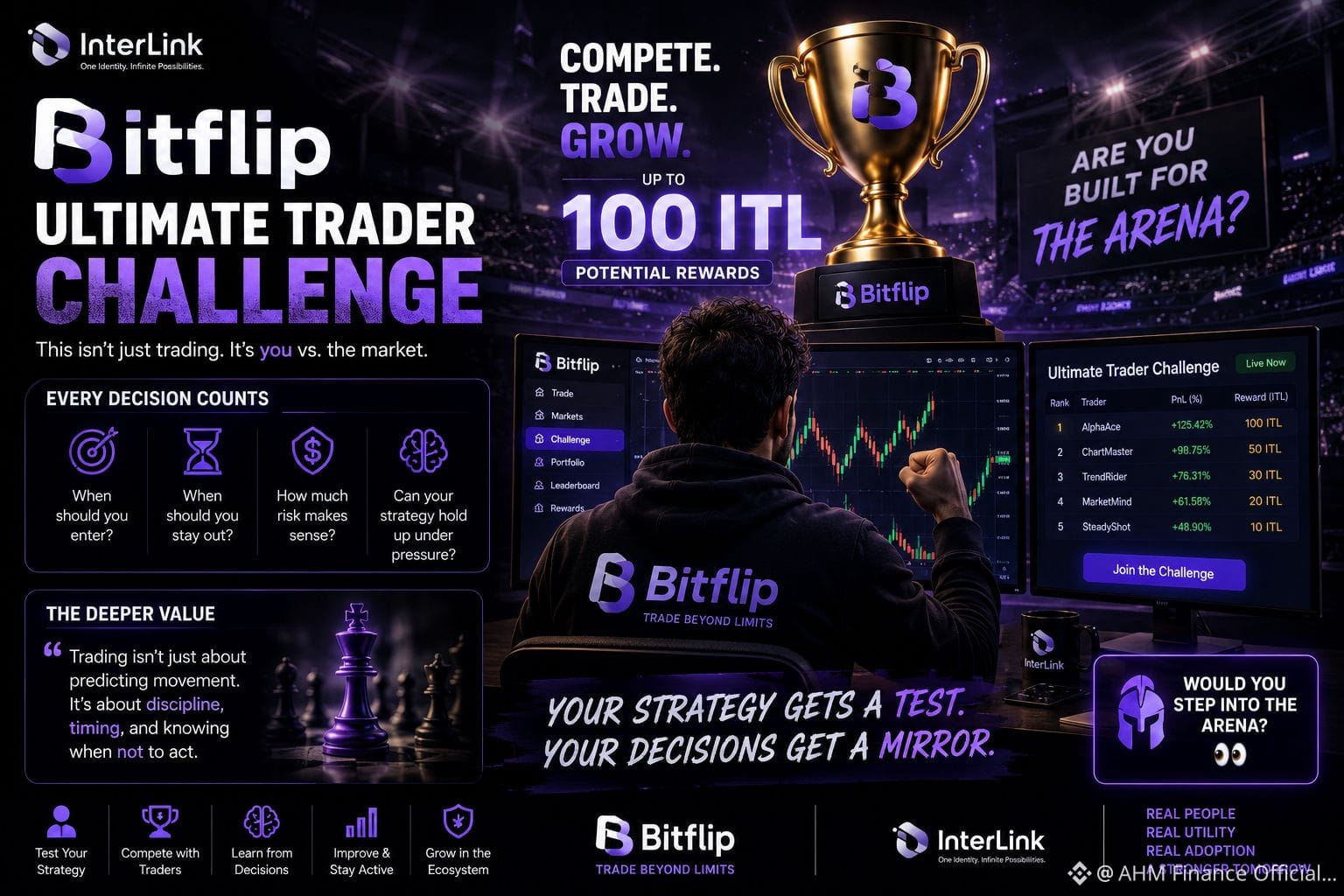
Trade beyond the ordinary. 👀 BitFlip's Ultimate Trader Challenge lets you test your strategy, compete, and learn, with potential rewards of up to 100 ITL. The market gives the challenge.
#InterLink #ITLG #ITL
#InterLink #ITLG #ITL
Assalamu alaikum ❤️
What would it be like if the official InterLink hoodie is brought for the InterLink Community of Bangladesh? 🇧🇩
For those who want to get this hoodie in the upcoming winter, please write “I Want” in the comment box. 💬
If you want, we will also keep size/customization options as per your preference |
If you’re interested, please comment; the decision to bring the hoodies will be made by looking at your responses. ❤️
#InterLink #ITL #ITLG #BangladeshRising
What would it be like if the official InterLink hoodie is brought for the InterLink Community of Bangladesh? 🇧🇩
For those who want to get this hoodie in the upcoming winter, please write “I Want” in the comment box. 💬
If you want, we will also keep size/customization options as per your preference |
If you’re interested, please comment; the decision to bring the hoodies will be made by looking at your responses. ❤️
#InterLink #ITL #ITLG #BangladeshRising
Trade. Test. Learn.👀
BitFlip's Ultimate Trader Challenge turns trading into a test of your own decisions.
When to enter.
When to wait.
How much risk to accept?
When to walk away.
Rewards can reach 100 ITL, but the bigger value may be learning from every result. A market gives you an opportunity. A challenge gives you a test.
#InterLink #ITLG #ITL
BitFlip's Ultimate Trader Challenge turns trading into a test of your own decisions.
When to enter.
When to wait.
How much risk to accept?
When to walk away.
Rewards can reach 100 ITL, but the bigger value may be learning from every result. A market gives you an opportunity. A challenge gives you a test.
#InterLink #ITLG #ITL
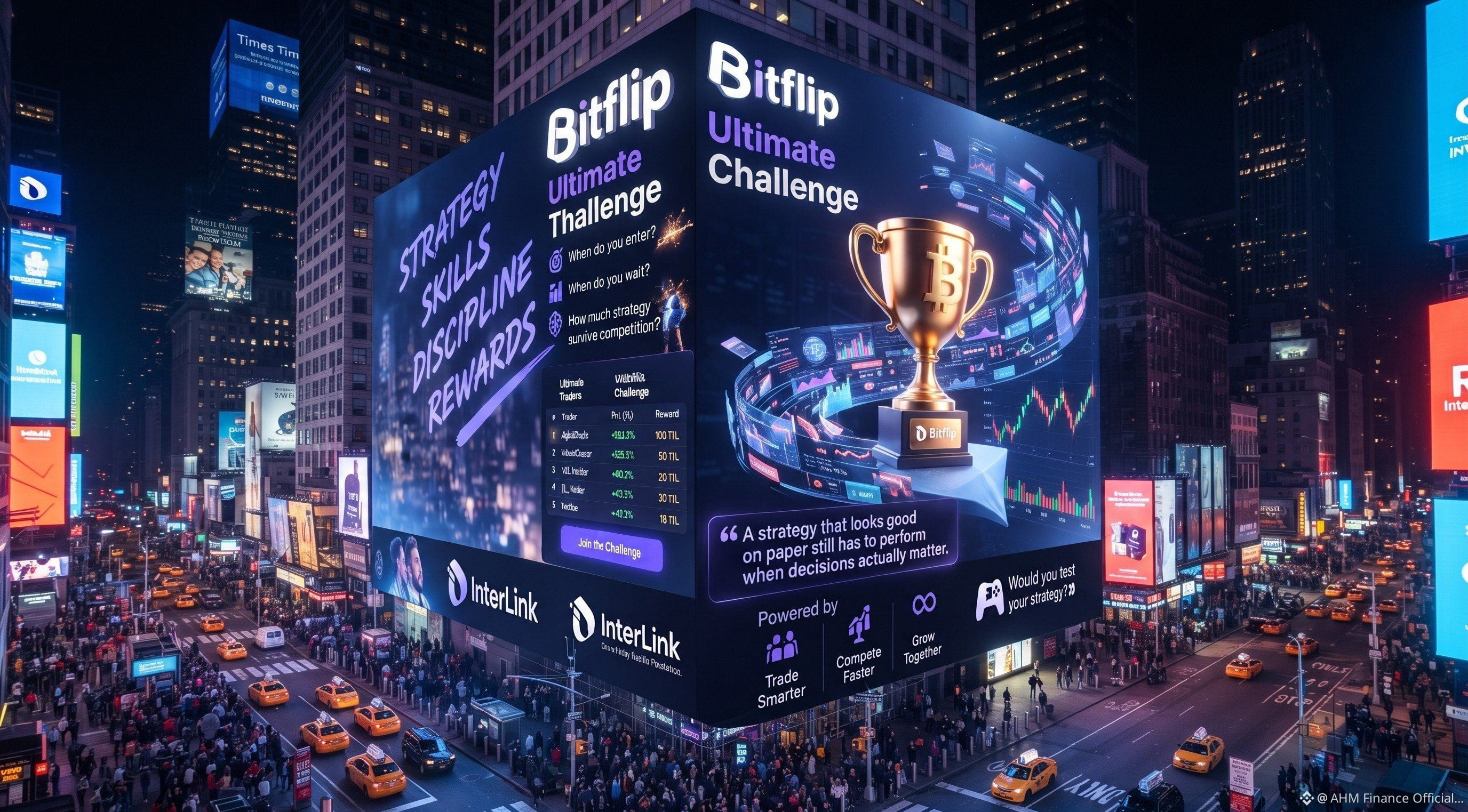
Watching the market is easy. Making the decision is the hard part.
Bitflip’s Ultimate Trader Challenge adds a different dimension to trading.
You’re not simply looking at the market anymore.
You’re putting your own thinking to the test.
When should you enter?
When should you stay out?
How much risk makes sense?
And most importantly, can your strategy hold up when the pressure is real?
The challenge offers potential rewards of up to 100 ITL, but the deeper value is the opportunity to learn from your own decisions.
Because trading isn't just about predicting movement.
It’s about discipline, timing, and knowing when not to act.
That’s what makes a challenge interesting.
Your strategy gets a test. Your decisions get a mirror.
Would you step into the arena?
👀
#InterLink #ITLG #ITL
Bitflip’s Ultimate Trader Challenge adds a different dimension to trading.
You’re not simply looking at the market anymore.
You’re putting your own thinking to the test.
When should you enter?
When should you stay out?
How much risk makes sense?
And most importantly, can your strategy hold up when the pressure is real?
The challenge offers potential rewards of up to 100 ITL, but the deeper value is the opportunity to learn from your own decisions.
Because trading isn't just about predicting movement.
It’s about discipline, timing, and knowing when not to act.
That’s what makes a challenge interesting.
Your strategy gets a test. Your decisions get a mirror.
Would you step into the arena?
👀
#InterLink #ITLG #ITL
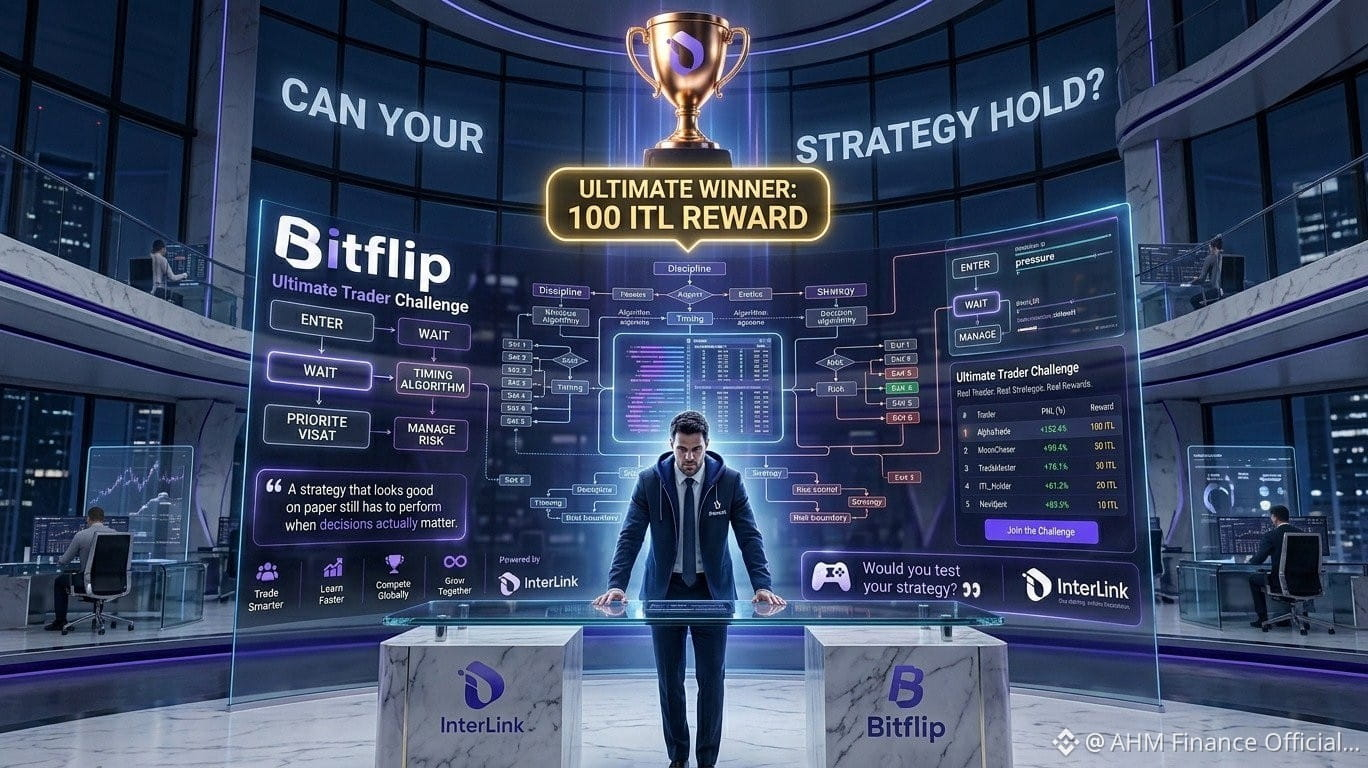
The challenge isn’t about making the most trades; it’s about making better decisions under pressure.
Entry, timing, patience, and risk management are what ultimately test whether a strategy works beyond the theory.
The reward may attract attention, but the lesson is what can make the experience valuable. 💜
#InterLink #ITL #ITLG
Entry, timing, patience, and risk management are what ultimately test whether a strategy works beyond the theory.
The reward may attract attention, but the lesson is what can make the experience valuable. 💜
#InterLink #ITL #ITLG
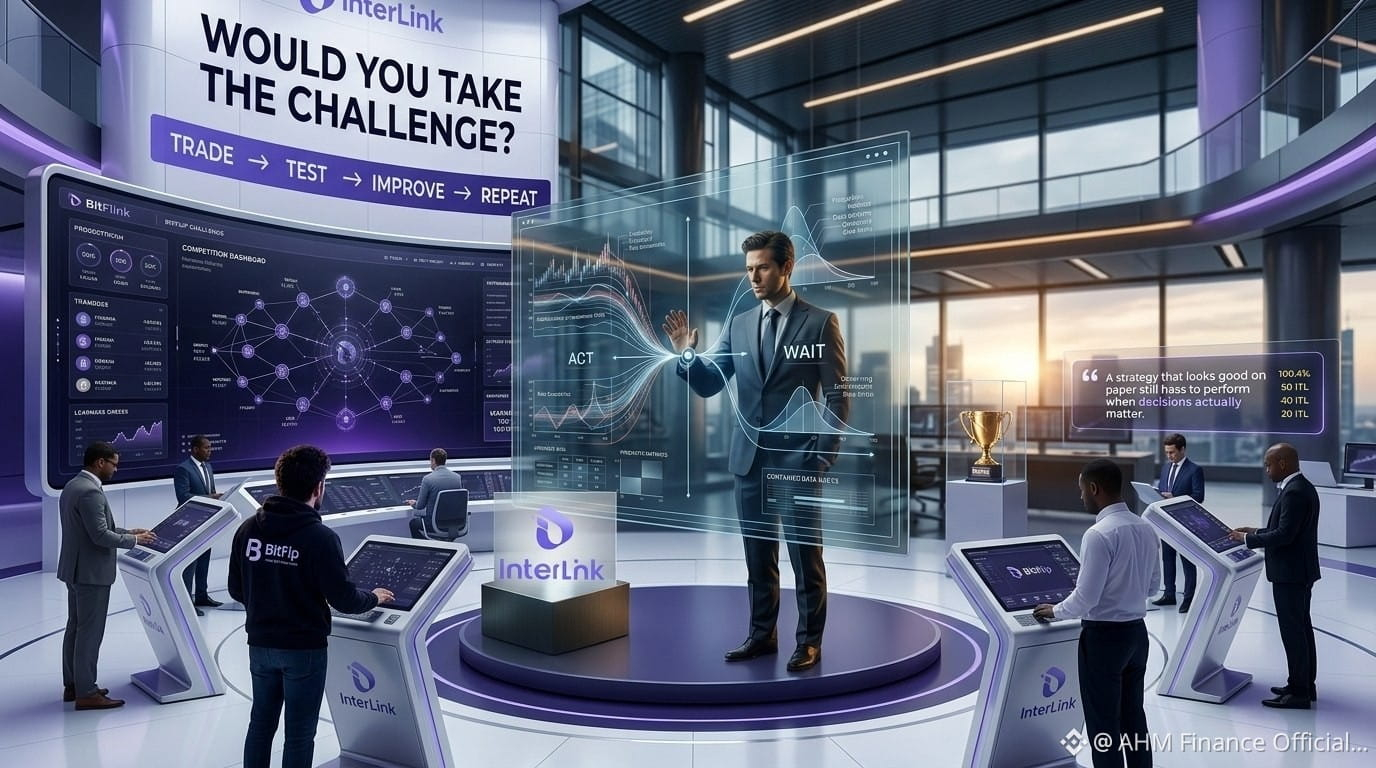
When Trading Becomes a Challenge
Trading doesn’t always have to feel routine.
BitFlipITL has an edge over other exchanges with its Ultimate Trader Challenge, where users can prove their trading skills and battle for prizes of up to 100 ITL.
But the interesting part isn’t only the reward. It’s the experience:
→ Test your strategy
→ Compete with others
→ Learn from your decisions
→ Stay active in the ecosystem
That’s where dApps become interesting to me.
They can be more than tools; they can create experiences that give people a reason to return.
Trade. Test. Improve. Repeat.
Would you take the challenge?👀
#InterLink #ITL #ITLG
Trading doesn’t always have to feel routine.
BitFlipITL has an edge over other exchanges with its Ultimate Trader Challenge, where users can prove their trading skills and battle for prizes of up to 100 ITL.
But the interesting part isn’t only the reward. It’s the experience:
→ Test your strategy
→ Compete with others
→ Learn from your decisions
→ Stay active in the ecosystem
That’s where dApps become interesting to me.
They can be more than tools; they can create experiences that give people a reason to return.
Trade. Test. Improve. Repeat.
Would you take the challenge?👀
#InterLink #ITL #ITLG
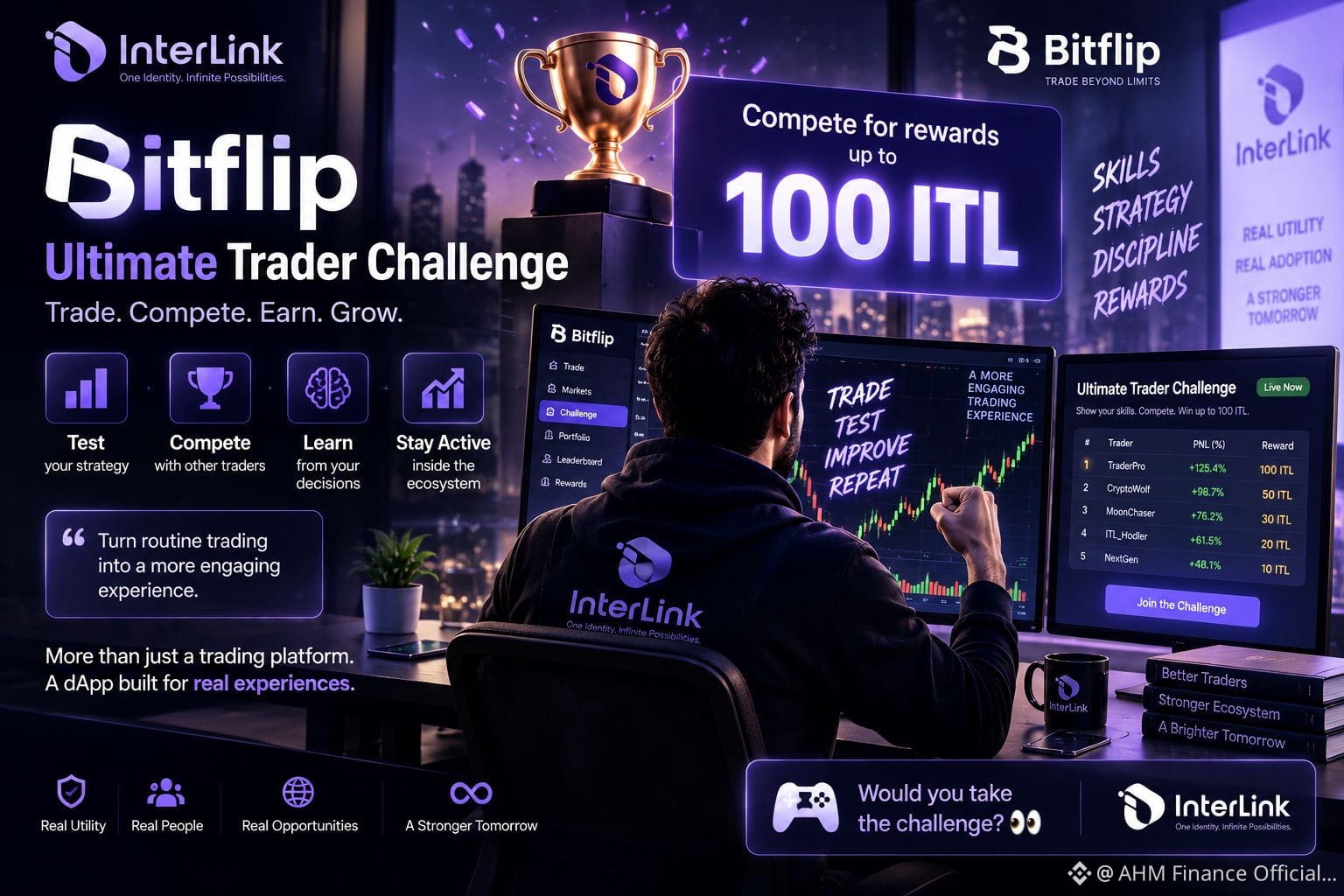
You can build the infrastructure. But who gets to participate?
Web3 was supposed to make digital ownership more accessible. Yet millions of people still face barriers around identity, verification, and trust.
That’s why Interlink's next chapter isn’t only about technology.
It’s also about expanding access.
The long-term direction focuses on improving verification infrastructure so more people can participate in the digital economy and own ITL while maintaining strong identity, anti-fraud, KYC, and compliance standards.
That balance matters.
Because mass adoption shouldn't mean lowering the standard for who participates.
It should mean making trusted participation available to more people.
The bigger vision is simple:
More verified people.
More legitimate participation.
More access to digital ownership.
Technology builds the network.
Verification helps open the door.
#InterLink #ITLG #ITL #WeAreTheFirst10MLinkers
Web3 was supposed to make digital ownership more accessible. Yet millions of people still face barriers around identity, verification, and trust.
That’s why Interlink's next chapter isn’t only about technology.
It’s also about expanding access.
The long-term direction focuses on improving verification infrastructure so more people can participate in the digital economy and own ITL while maintaining strong identity, anti-fraud, KYC, and compliance standards.
That balance matters.
Because mass adoption shouldn't mean lowering the standard for who participates.
It should mean making trusted participation available to more people.
The bigger vision is simple:
More verified people.
More legitimate participation.
More access to digital ownership.
Technology builds the network.
Verification helps open the door.
#InterLink #ITLG #ITL #WeAreTheFirst10MLinkers
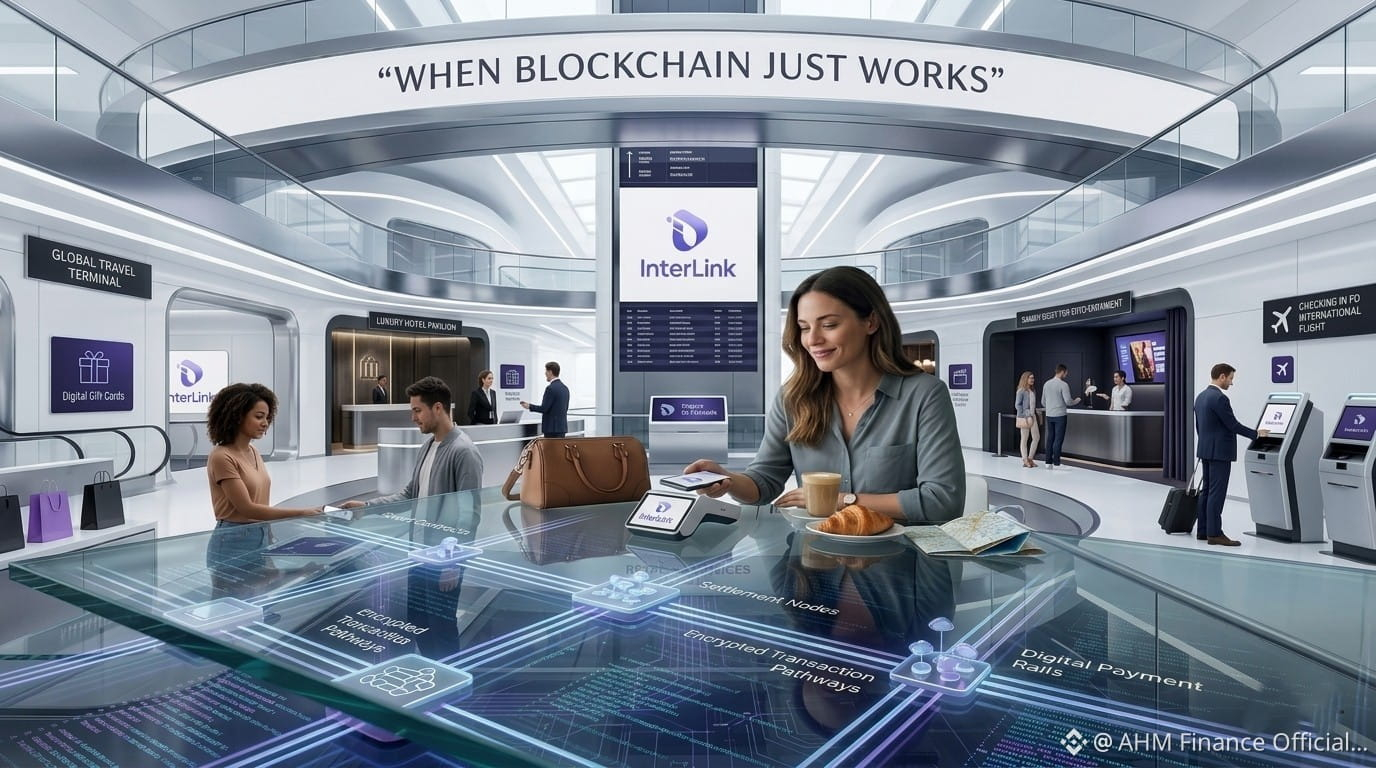
When Blockchain Goes Unseen.
Blockchain becomes powerful when it quietly becomes part of everyday life. That’s why expanding ITL utility matters for InterLink.
Think beyond a wallet:
✈️Travel
🏨Hotels
🛍️Shopping
🍔Food
🎬Entertainment
🎁Gift cards
💻Digital services
The goal isn’t another asset people simply hold.
It’s creating more places where ITL can actually be used. The best payment experiences don’t ask people to “use blockchain.” They simply work. That’s the opportunity:
Complex technology underneath. Simple experience on top.
If ITL can connect with enough everyday use cases, blockchain starts feeling less like a destination and more like infrastructure.
#InterLink #ITL #ITLG #WeAreTheFirst10MillionLinkers
Blockchain becomes powerful when it quietly becomes part of everyday life. That’s why expanding ITL utility matters for InterLink.
Think beyond a wallet:
✈️Travel
🏨Hotels
🛍️Shopping
🍔Food
🎬Entertainment
🎁Gift cards
💻Digital services
The goal isn’t another asset people simply hold.
It’s creating more places where ITL can actually be used. The best payment experiences don’t ask people to “use blockchain.” They simply work. That’s the opportunity:
Complex technology underneath. Simple experience on top.
If ITL can connect with enough everyday use cases, blockchain starts feeling less like a destination and more like infrastructure.
#InterLink #ITL #ITLG #WeAreTheFirst10MillionLinkers
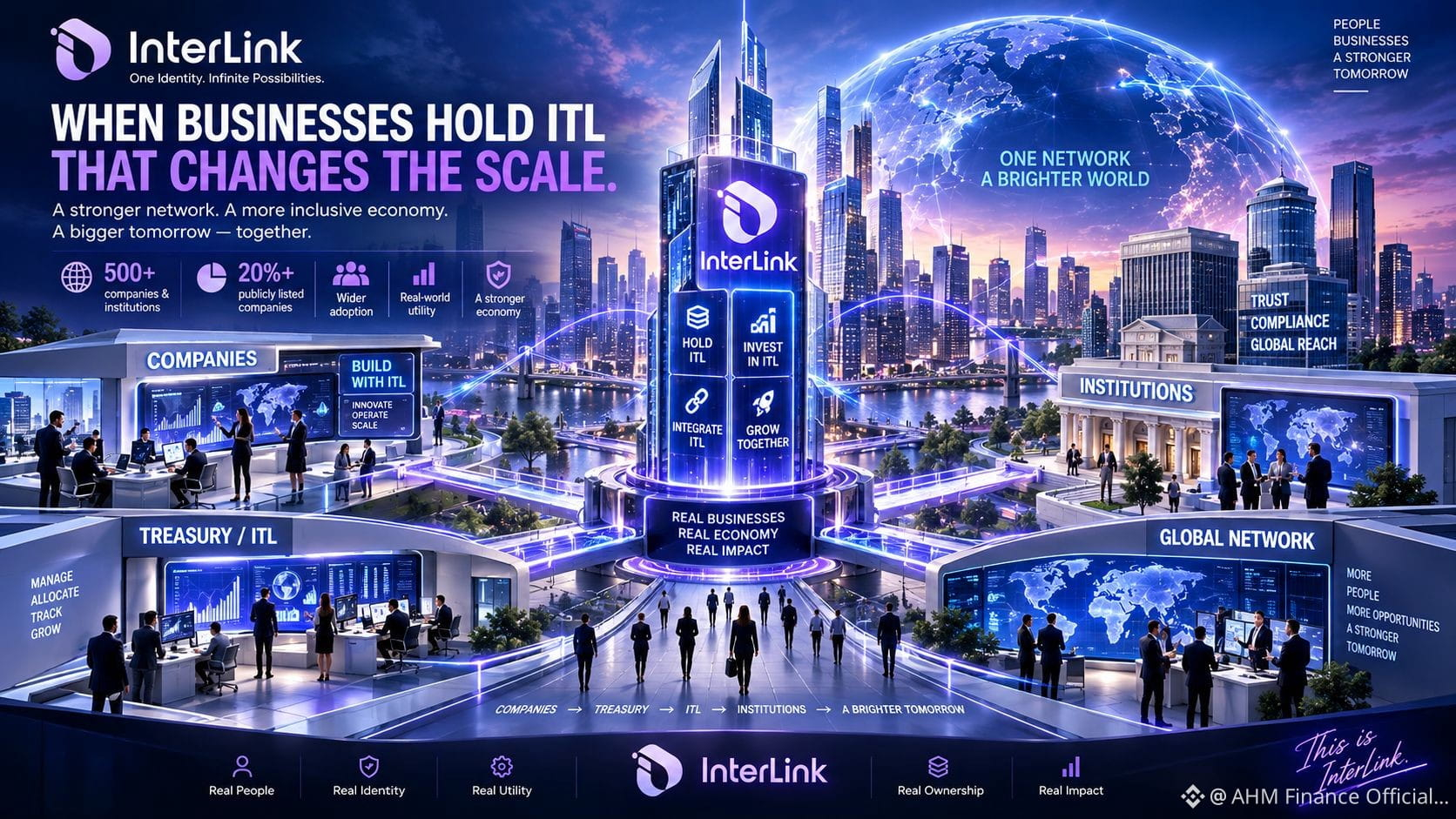
When Companies Start Holding ITL.
That changes the scale of an ecosystem. One of
InterLink’s long-term priorities is expanding its Digital Asset Treasury Network toward
🏢 500+ companies & institutions
📊 20%+ publicly listed companies
Why is that interesting? Companies don’t just build communities.
They operate.
They transact.
They invest.
They manage the treasury.
If more organizations choose to hold ITL as part of their digital-asset strategy, the ecosystem could connect with a much broader economic network. And that raises a bigger question: What happens when companies stop experimenting with blockchain and start holding it strategically?
That’s a future worth watching.👀
#InterLink #ITL #ITLG #WeAreTheFirst10MillionLinkers
That changes the scale of an ecosystem. One of
InterLink’s long-term priorities is expanding its Digital Asset Treasury Network toward
🏢 500+ companies & institutions
📊 20%+ publicly listed companies
Why is that interesting? Companies don’t just build communities.
They operate.
They transact.
They invest.
They manage the treasury.
If more organizations choose to hold ITL as part of their digital-asset strategy, the ecosystem could connect with a much broader economic network. And that raises a bigger question: What happens when companies stop experimenting with blockchain and start holding it strategically?
That’s a future worth watching.👀
#InterLink #ITL #ITLG #WeAreTheFirst10MillionLinkers
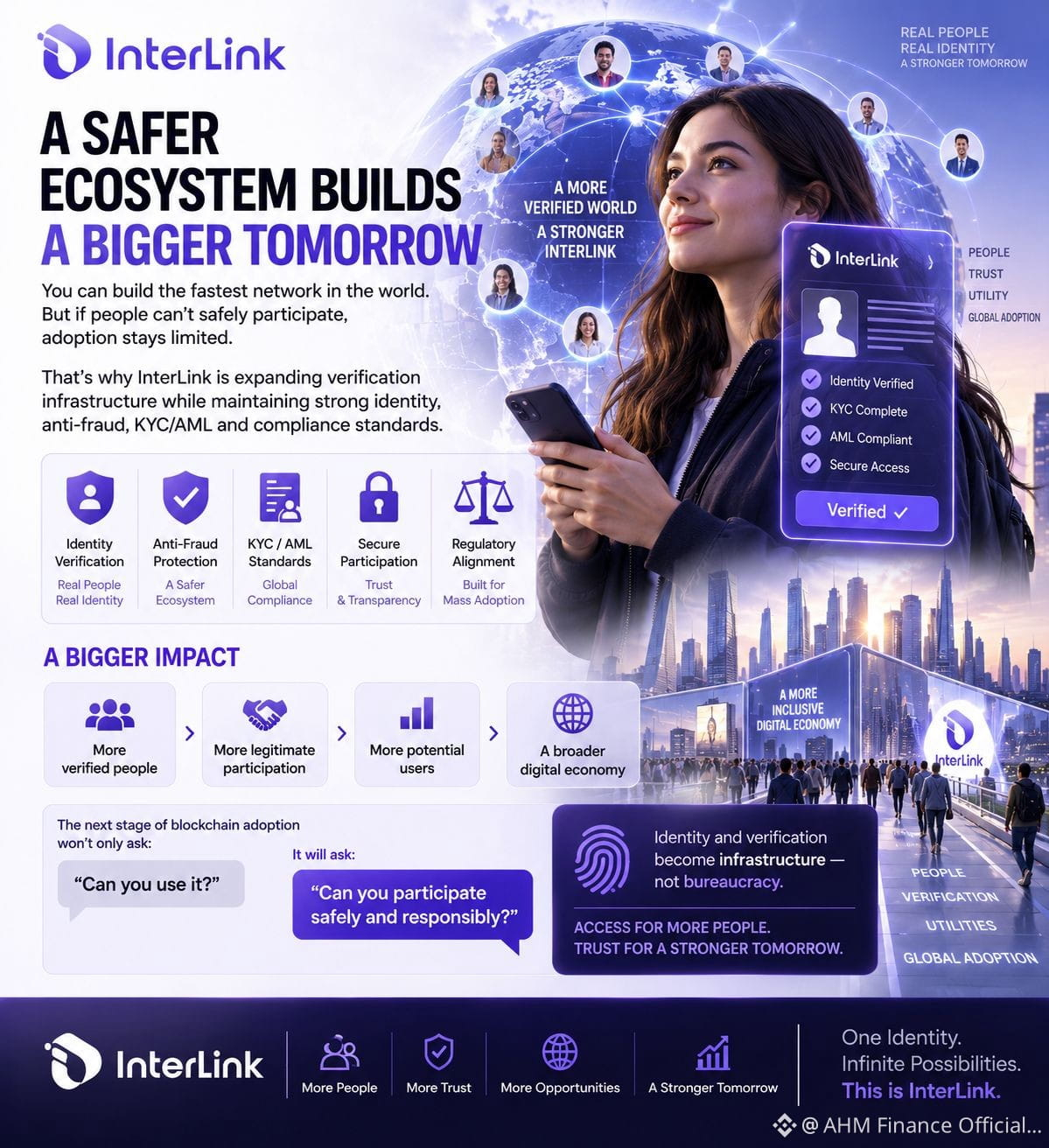
Blockchain adoption has a problem nobody can solve with speed alone: trust.
You can build the fastest network in the world. But if people can’t participate safely, adoption stays limited.
That’s why #InterLink long-term direction includes stronger verification infrastructure alongside identity, anti-fraud, KYC, and compliance standards.
The goal isn’t simply verifying more accounts. It’s creating a safer foundation for broader digital-asset participation.
Think about the chain: More verified people
→ More legitimate participation
→ More potential users
→ A broader digital economy
The next stage of blockchain adoption won’t only ask the following: “Can you use it?”
It will ask: “Can you participate safely?”
That’s when identity becomes infrastructure, not bureaucracy.
#InterLink #ITL #ITLG #WeAreTheFirst10MillionLinkers
You can build the fastest network in the world. But if people can’t participate safely, adoption stays limited.
That’s why #InterLink long-term direction includes stronger verification infrastructure alongside identity, anti-fraud, KYC, and compliance standards.
The goal isn’t simply verifying more accounts. It’s creating a safer foundation for broader digital-asset participation.
Think about the chain: More verified people
→ More legitimate participation
→ More potential users
→ A broader digital economy
The next stage of blockchain adoption won’t only ask the following: “Can you use it?”
It will ask: “Can you participate safely?”
That’s when identity becomes infrastructure, not bureaucracy.
#InterLink #ITL #ITLG #WeAreTheFirst10MillionLinkers
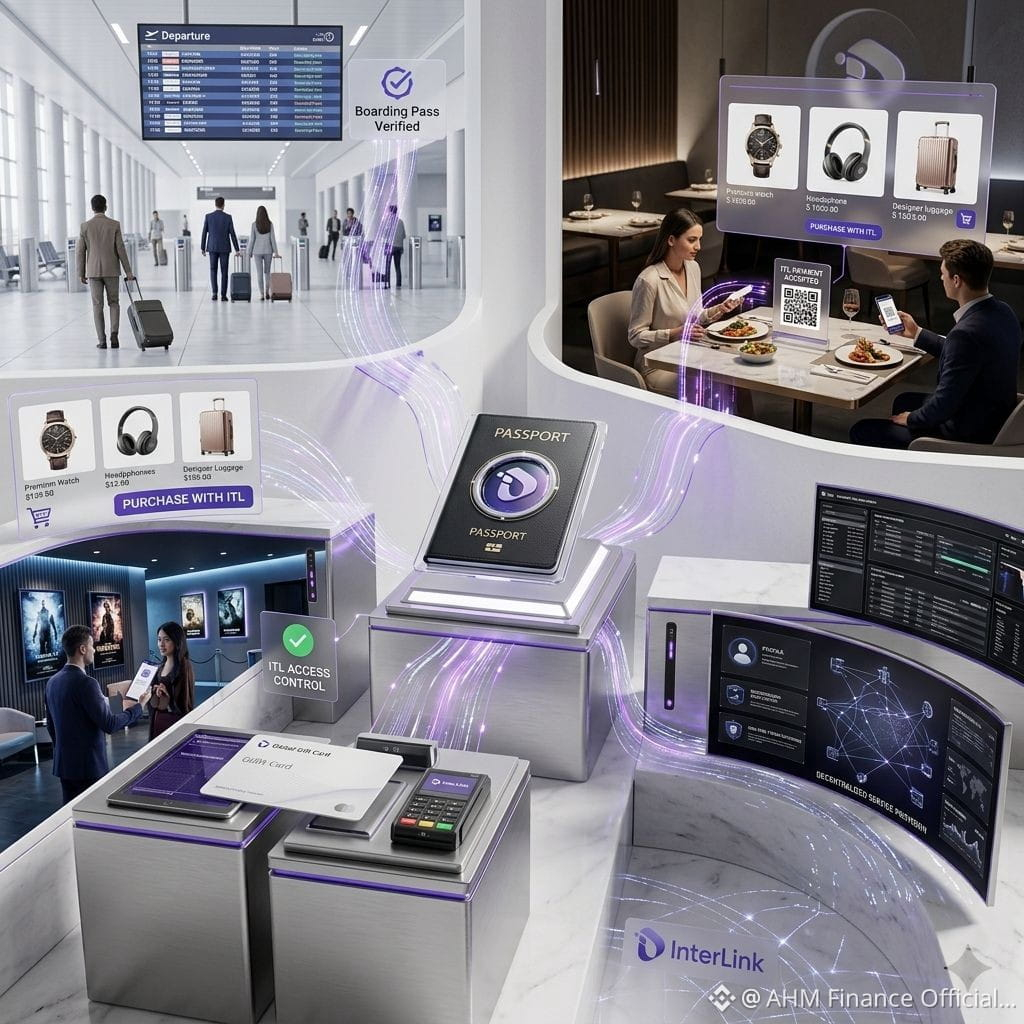
The Real Test of a Token: Utility
A token becomes more meaningful when it moves beyond a wallet.
That’s why expanding $ITL utility is an important part of @inter_link’s long-term direction.
The vision includes:
→ Payments
→ Shopping
→ Travel
→ Food & entertainment
→ Gift cards
→ Digital services
→ dApps & more
Because adoption isn’t only about how many people hold an asset. It’s also about how many real reasons they have to use it. The bigger the utility layer becomes, the closer blockchain gets to everyday life.
And that leads to a simple question:
What will you use ITL for first? 👀
#InterLink #ITL #ITLG #WeAreTheFirst10MillionLinkers #Web3
A token becomes more meaningful when it moves beyond a wallet.
That’s why expanding $ITL utility is an important part of @inter_link’s long-term direction.
The vision includes:
→ Payments
→ Shopping
→ Travel
→ Food & entertainment
→ Gift cards
→ Digital services
→ dApps & more
Because adoption isn’t only about how many people hold an asset. It’s also about how many real reasons they have to use it. The bigger the utility layer becomes, the closer blockchain gets to everyday life.
And that leads to a simple question:
What will you use ITL for first? 👀
#InterLink #ITL #ITLG #WeAreTheFirst10MillionLinkers #Web3
Verified
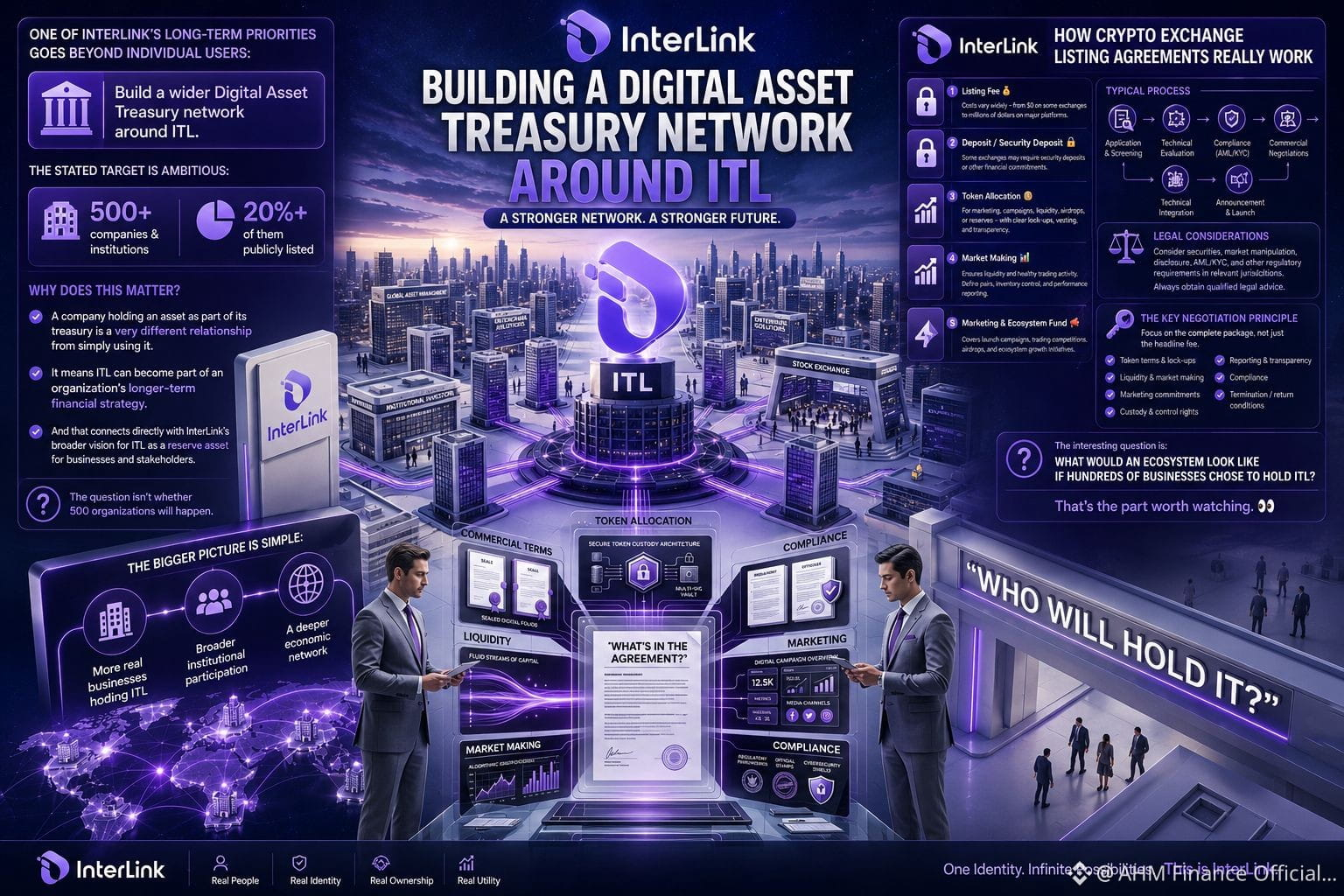
What If Businesses Start Holding ITL?
One of INTERLINK’s long-term priorities goes beyond individual users. It’s about building a wider digital asset treasury network around $ITL.
The stated target:
🏢 500+ companies & institutions
📊 20%+ publicly listed
Why does that matter?
A business holding an asset in its treasury is different from simply using it. It can mean $ITL becomes part of an organization’s longer-term financial strategy. And that connects with INTERLINK's broader vision for $ITL as a potential reserve asset for businesses and stakeholders.
The bigger question isn’t just “500 organizations?”
It's: What would the ITL ecosystem look like if hundreds of businesses chose to hold it? 👀
#InterLink #ITL #ITLG #WeAreTheFirst10MillionLinkers
One of INTERLINK’s long-term priorities goes beyond individual users. It’s about building a wider digital asset treasury network around $ITL.
The stated target:
🏢 500+ companies & institutions
📊 20%+ publicly listed
Why does that matter?
A business holding an asset in its treasury is different from simply using it. It can mean $ITL becomes part of an organization’s longer-term financial strategy. And that connects with INTERLINK's broader vision for $ITL as a potential reserve asset for businesses and stakeholders.
The bigger question isn’t just “500 organizations?”
It's: What would the ITL ecosystem look like if hundreds of businesses chose to hold it? 👀
#InterLink #ITL #ITLG #WeAreTheFirst10MillionLinkers
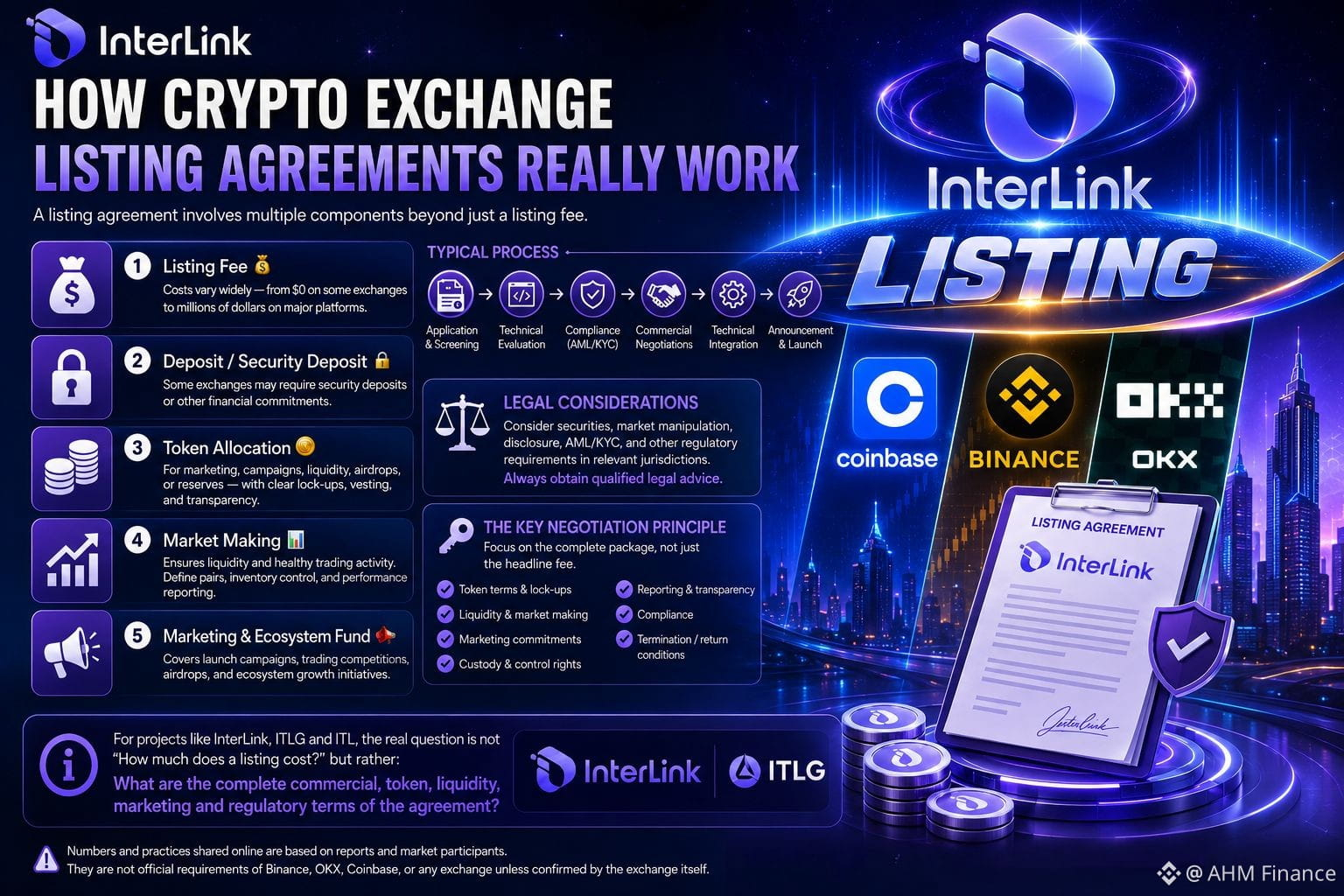
A Crypto Listing Is More Than a Fee
Think a major exchange listing is “pay a fee and get listed”? It’s usually far more complex.
A serious listing agreement can involve:
💰 Commercial/listing terms
🔐 Deposits & security commitments
🪙 Token allocations & lock-ups
📊 Liquidity & market making
📣 Marketing commitments
⚖️ Compliance & legal requirements
The process can include screening → technical evaluation → compliance → negotiations → integration → launch.
That’s why the better question isn't “How much does a listing cost?”
It's “What are the complete terms behind the listing?”
For projects like Interlink, understanding that difference matters.
#InterLink #ITL #ITLG #WeAreTheFirst10MillionLinkers
Think a major exchange listing is “pay a fee and get listed”? It’s usually far more complex.
A serious listing agreement can involve:
💰 Commercial/listing terms
🔐 Deposits & security commitments
🪙 Token allocations & lock-ups
📊 Liquidity & market making
📣 Marketing commitments
⚖️ Compliance & legal requirements
The process can include screening → technical evaluation → compliance → negotiations → integration → launch.
That’s why the better question isn't “How much does a listing cost?”
It's “What are the complete terms behind the listing?”
For projects like Interlink, understanding that difference matters.
#InterLink #ITL #ITLG #WeAreTheFirst10MillionLinkers
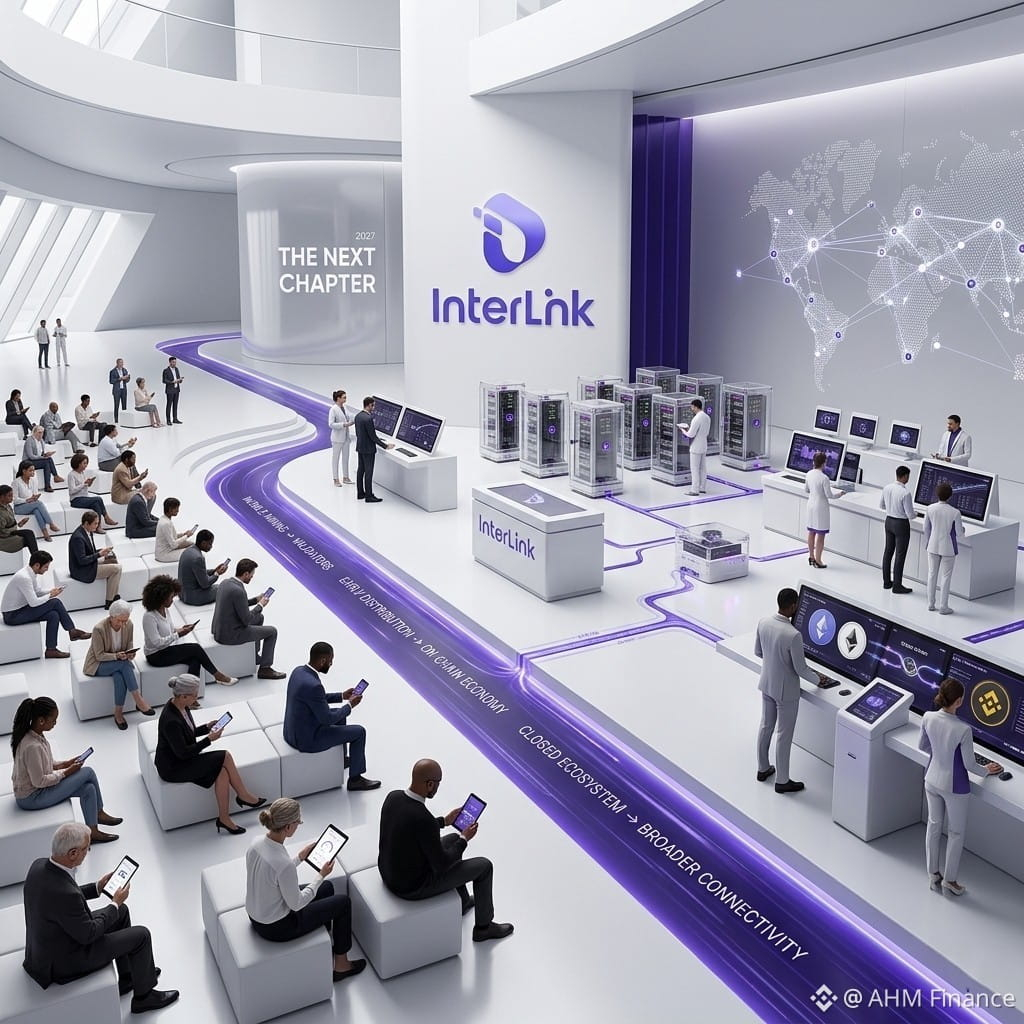
Open Mainnet Changes the Question
Open Mainnet is targeted for 2027. But this isn’t simply another roadmap milestone.
It represents a transition:
Mobile mining → Validators
Early distribution → On-chain economy
Closed ecosystem → Broader blockchain connectivity
After Open Mainnet, mobile mining is planned to end, shifting more attention toward validation, staking, applications, liquidity, and real on-chain activity. So the question changes from
“Who is mining?”
to:
“Who is building and participating?”
10M showed the power of the community. Open Mainnet is where that community can move deeper into the on-chain economy. The next chapter won’t just be about users. It will be about usage.
#InterLink #ITL #ITLG #WeAreTheFirst10MillionLinkers #OpenMainnet
Open Mainnet is targeted for 2027. But this isn’t simply another roadmap milestone.
It represents a transition:
Mobile mining → Validators
Early distribution → On-chain economy
Closed ecosystem → Broader blockchain connectivity
After Open Mainnet, mobile mining is planned to end, shifting more attention toward validation, staking, applications, liquidity, and real on-chain activity. So the question changes from
“Who is mining?”
to:
“Who is building and participating?”
10M showed the power of the community. Open Mainnet is where that community can move deeper into the on-chain economy. The next chapter won’t just be about users. It will be about usage.
#InterLink #ITL #ITLG #WeAreTheFirst10MillionLinkers #OpenMainnet
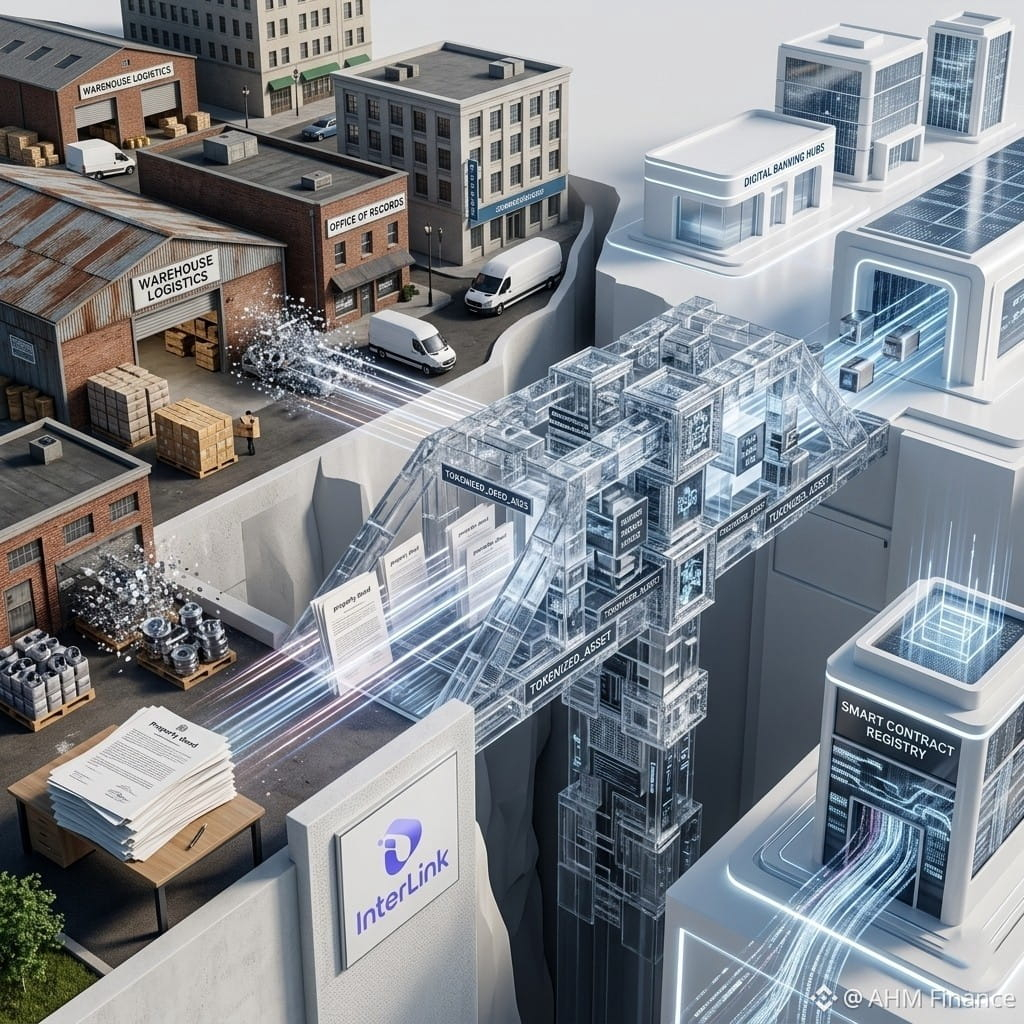
When Real Assets Meet Blockchain
Real-world assets could become one of the strongest bridges between traditional business and blockchain. That’s why RWA infrastructure is part of @inter_link’s long-term direction.
The concept is straightforward:
→ Businesses tokenize real-world assets
→ Assets connect with blockchain infrastructure
→ Economic activity can move on-chain
InterLink is building toward this through infrastructure such as the InterLink Business Token Exchange (IBTE). Because blockchain adoption won’t come from tokens alone, it needs businesses, assets, and real transactions.
The bigger question: What happens when blockchain starts representing more of the real economy?
#InterLink #ITL #ITLG #WeAreTheFirst10MillionLinkers
Real-world assets could become one of the strongest bridges between traditional business and blockchain. That’s why RWA infrastructure is part of @inter_link’s long-term direction.
The concept is straightforward:
→ Businesses tokenize real-world assets
→ Assets connect with blockchain infrastructure
→ Economic activity can move on-chain
InterLink is building toward this through infrastructure such as the InterLink Business Token Exchange (IBTE). Because blockchain adoption won’t come from tokens alone, it needs businesses, assets, and real transactions.
The bigger question: What happens when blockchain starts representing more of the real economy?
#InterLink #ITL #ITLG #WeAreTheFirst10MillionLinkers
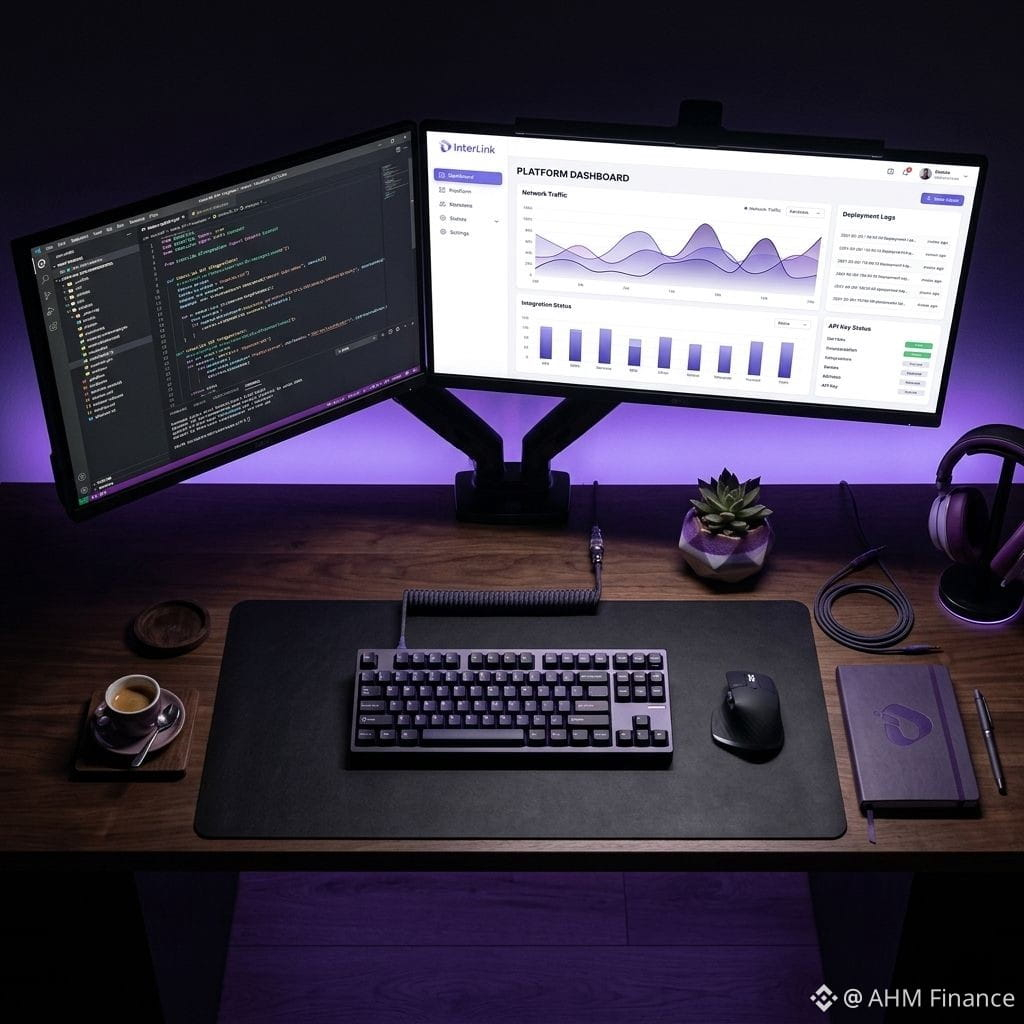
Build Before the Threat Arrives
The next five years won’t only be about building faster.
They’ll be about preparing for threats that haven’t fully arrived yet.
That’s why Post-Quantum Security matters in interlink’s long-term direction.
Quantum computing could eventually challenge cryptographic systems used across today’s digital infrastructure.
Preparing early matters.
InterLink Chain identifies itself as quantum-resistant, while its roadmap includes continued quantum-resistant migration as the network evolves.
The mindset is simple:
Don’t wait for tomorrow’s threat to become today’s emergency.
Build with the future in mind.
🔐
Follow me for more InterLink updates.
#InterLink #ITL #ITLG #WeAreTheFirst10MillionLinkers #QuantumSecurity
The next five years won’t only be about building faster.
They’ll be about preparing for threats that haven’t fully arrived yet.
That’s why Post-Quantum Security matters in interlink’s long-term direction.
Quantum computing could eventually challenge cryptographic systems used across today’s digital infrastructure.
Preparing early matters.
InterLink Chain identifies itself as quantum-resistant, while its roadmap includes continued quantum-resistant migration as the network evolves.
The mindset is simple:
Don’t wait for tomorrow’s threat to become today’s emergency.
Build with the future in mind.
🔐
Follow me for more InterLink updates.
#InterLink #ITL #ITLG #WeAreTheFirst10MillionLinkers #QuantumSecurity
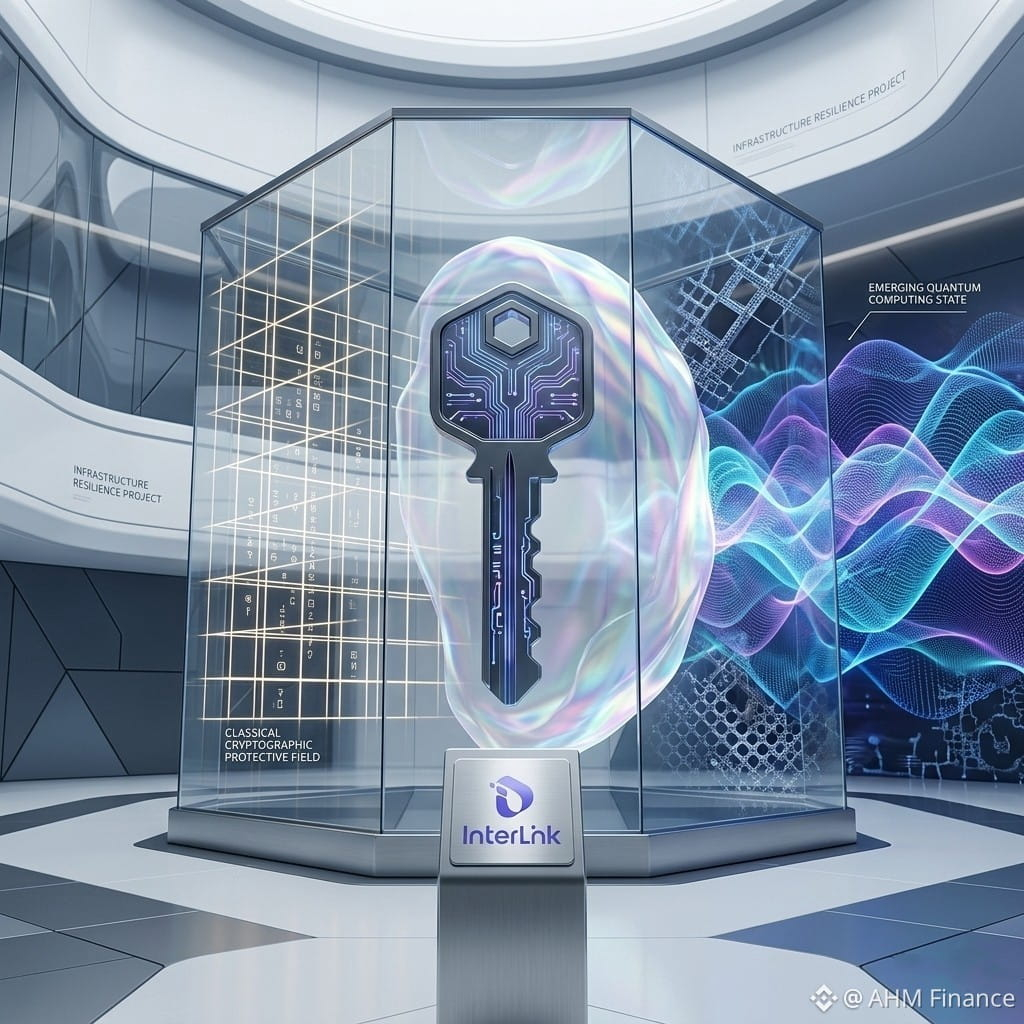
Build Before the Threat Arrives
The next five years won’t only be about building faster. They’ll be about preparing for threats that haven’t fully arrived yet.
The mindset is simple:
Don’t wait for tomorrow’s threat to become today’s emergency.
Build with the future in mind.
#InterLink #ITL #ITLG #WeAreTheFirst10MillionLinkers #QuantumSecurity
The next five years won’t only be about building faster. They’ll be about preparing for threats that haven’t fully arrived yet.
The mindset is simple:
Don’t wait for tomorrow’s threat to become today’s emergency.
Build with the future in mind.
#InterLink #ITL #ITLG #WeAreTheFirst10MillionLinkers #QuantumSecurity
Log in to explore more content