
徐工交易员
1.2k Posts

徐工交易员
Report
Block User
八年资深交易员,专注实战策略与教学指导。不定期分享行情洞见,助你掌握交易逻辑,少走弯路。
0 Following
113 Followers
246 Liked
Posts
All
Videos
PINNED
·
--
Major Update 📢 Binance Chat Room now adds private chat features for more convenient communication!
Deeply engaged in the market, focused on practical analysis—precisely capturing market opportunities and sharing sound profit ideas.
No empty hype or tricks—just real techniques.
If you’re interested in exchanging and learning, and in seizing potential market returns,
welcome to send me a private message in the chat room—I’ll be waiting for everyone’s arrival.
#原油价格下跌 #特朗普称将收中东石油20% #美伊首轮谈判取得积极进展 #Iranian delegation refuses to return to the four-party talks
Major Update 📢 Binance Chat Room now adds private chat features for more convenient communication!
Deeply engaged in the market, focused on practical analysis—precisely capturing market opportunities and sharing sound profit ideas.
No empty hype or tricks—just real techniques.
If you’re interested in exchanging and learning, and in seizing potential market returns,
welcome to send me a private message in the chat room—I’ll be waiting for everyone’s arrival.
#原油价格下跌 #特朗普称将收中东石油20% #美伊首轮谈判取得积极进展 #Iranian delegation refuses to return to the four-party talks
Deeply engaged in the market, focused on practical analysis—precisely capturing market opportunities and sharing sound profit ideas.
No empty hype or tricks—just real techniques.
If you’re interested in exchanging and learning, and in seizing potential market returns,
welcome to send me a private message in the chat room—I’ll be waiting for everyone’s arrival.
#原油价格下跌 #特朗普称将收中东石油20% #美伊首轮谈判取得积极进展 #Iranian delegation refuses to return to the four-party talks

1
2
31
·
--
$THE
After one sleep, it’s the familiar “Trump speech” routine again.
This time, they claim Iran initiated the request for talks externally, but last night at that old address, they quietly moved the $5 million worth of chips to a cold wallet.
Two hours ago, the money just completed its final cross-chain transfer across multiple chains, and all that remains in the account are a bunch of fragmented on-chain interaction traces. Whether this is talk with a laugh or a cover for withdrawal, it’s hard to say. 🤐
#2026足球风潮 #Hyperliquid跌10.28% #亚洲股市连续第二日下跌
$THE
After one sleep, it’s the familiar “Trump speech” routine again.
This time, they claim Iran initiated the request for talks externally, but last night at that old address, they quietly moved the $5 million worth of chips to a cold wallet.
Two hours ago, the money just completed its final cross-chain transfer across multiple chains, and all that remains in the account are a bunch of fragmented on-chain interaction traces. Whether this is talk with a laugh or a cover for withdrawal, it’s hard to say. 🤐
#2026足球风潮 #Hyperliquid跌10.28% #亚洲股市连续第二日下跌
After one sleep, it’s the familiar “Trump speech” routine again.
This time, they claim Iran initiated the request for talks externally, but last night at that old address, they quietly moved the $5 million worth of chips to a cold wallet.
Two hours ago, the money just completed its final cross-chain transfer across multiple chains, and all that remains in the account are a bunch of fragmented on-chain interaction traces. Whether this is talk with a laugh or a cover for withdrawal, it’s hard to say. 🤐
#2026足球风潮 #Hyperliquid跌10.28% #亚洲股市连续第二日下跌

1
145
·
--
Many people ask me: Is there a trading method that works for ordinary people?
Yes, but it isn’t a “get-rich-quick formula.” It’s a path that uses time to create space.
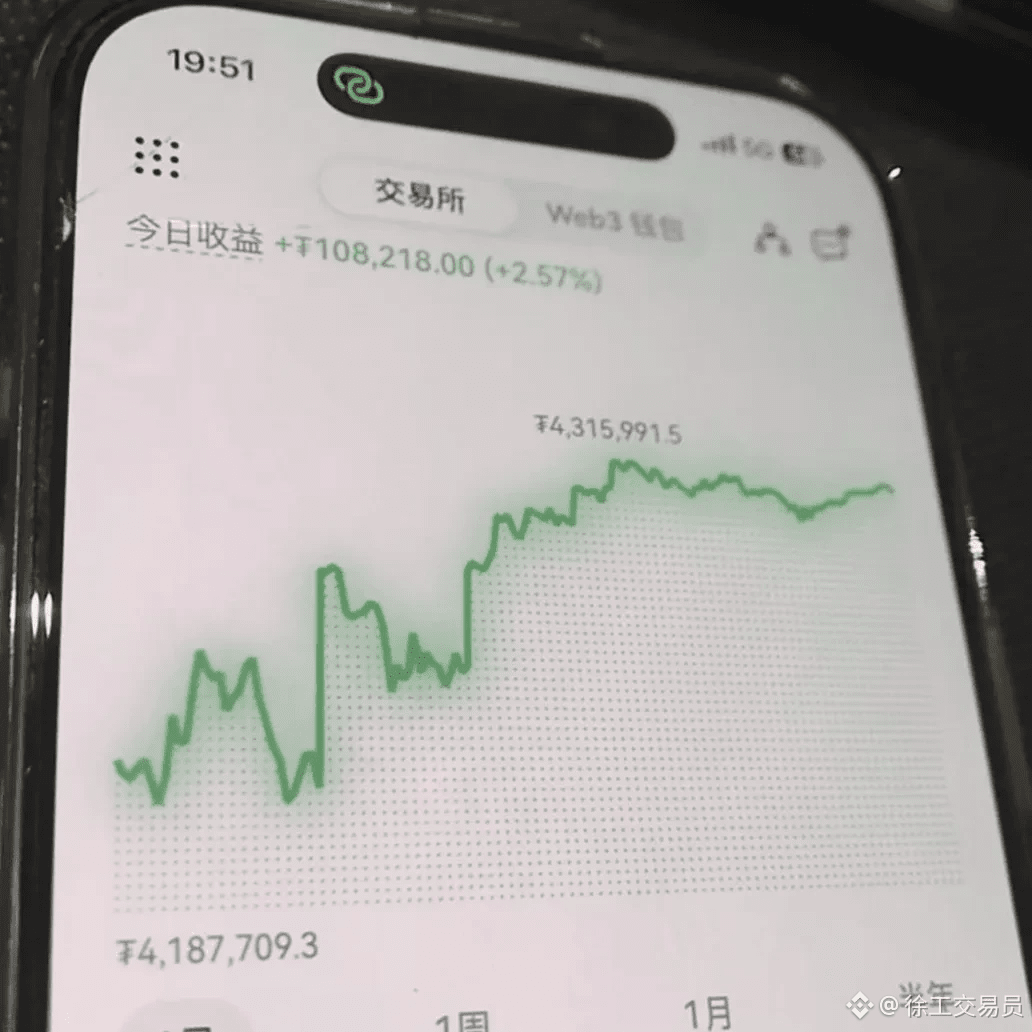
I personally went from 300k to tens of millions of U later on—not with some god-level strategy, but with a three-stage approach.
First stage: 300k → 1m (focus on survival)
The core is DCA plus small swing trades. For example, long-term DCA into BTC: invest a fixed amount every week, and only do short swings in mainstream coins like ETH. The goal is simple—take profit of 3%-10% and exit.
In this stage, the priority isn’t how much you make, but avoiding big losses.
Second stage: 1m → 5m (catch the cycles)
Start doing “event-driven” trading, such as the halving, ecosystem trends, and rotation among mainstream coins. In this stage you can increase your position size somewhat, but you still must control drawdowns. After you make money in a cycle, learn to lock in part of the profits—don’t leave everything sitting in the market.
Third stage: 5m → higher (ride the main uptrend)
Only trade the big trend; don’t bother with small fluctuations. When a bull market comes, ride it and hold accordingly. Take profit in batches, instead of trying to guess the top. Position management matters more than direction.
Many people like to hear about a “90% win rate,” but the reality is that there is no stable high win rate in trading. What you can have is controllable losses plus amplified gains.
I’ve also been through liquidation, drawdowns, and missing opportunities—until I finally understood one thing:
Trading isn’t about who can make money faster; it’s about who can stay in the game longer.
What truly creates the gap isn’t how complicated the strategy is, but whether you can execute the same set of rules consistently over the long term.
#韩国个股杠杆ETF损失8.83万亿韩元 #参议院通过反对赦免SBF决议 #坦桑尼亚央行敲定数字资产监管
Many people ask me: Is there a trading method that works for ordinary people?
Yes, but it isn’t a “get-rich-quick formula.” It’s a path that uses time to create space.
I personally went from 300k to tens of millions of U later on—not with some god-level strategy, but with a three-stage approach.
First stage: 300k → 1m (focus on survival)
The core is DCA plus small swing trades. For example, long-term DCA into BTC: invest a fixed amount every week, and only do short swings in mainstream coins like ETH. The goal is simple—take profit of 3%-10% and exit.
In this stage, the priority isn’t how much you make, but avoiding big losses.
Second stage: 1m → 5m (catch the cycles)
Start doing “event-driven” trading, such as the halving, ecosystem trends, and rotation among mainstream coins. In this stage you can increase your position size somewhat, but you still must control drawdowns. After you make money in a cycle, learn to lock in part of the profits—don’t leave everything sitting in the market.
Third stage: 5m → higher (ride the main uptrend)
Only trade the big trend; don’t bother with small fluctuations. When a bull market comes, ride it and hold accordingly. Take profit in batches, instead of trying to guess the top. Position management matters more than direction.
Many people like to hear about a “90% win rate,” but the reality is that there is no stable high win rate in trading. What you can have is controllable losses plus amplified gains.
I’ve also been through liquidation, drawdowns, and missing opportunities—until I finally understood one thing:
Trading isn’t about who can make money faster; it’s about who can stay in the game longer.
What truly creates the gap isn’t how complicated the strategy is, but whether you can execute the same set of rules consistently over the long term.
#韩国个股杠杆ETF损失8.83万亿韩元 #参议院通过反对赦免SBF决议 #坦桑尼亚央行敲定数字资产监管
Yes, but it isn’t a “get-rich-quick formula.” It’s a path that uses time to create space.
I personally went from 300k to tens of millions of U later on—not with some god-level strategy, but with a three-stage approach.
First stage: 300k → 1m (focus on survival)
The core is DCA plus small swing trades. For example, long-term DCA into BTC: invest a fixed amount every week, and only do short swings in mainstream coins like ETH. The goal is simple—take profit of 3%-10% and exit.
In this stage, the priority isn’t how much you make, but avoiding big losses.
Second stage: 1m → 5m (catch the cycles)
Start doing “event-driven” trading, such as the halving, ecosystem trends, and rotation among mainstream coins. In this stage you can increase your position size somewhat, but you still must control drawdowns. After you make money in a cycle, learn to lock in part of the profits—don’t leave everything sitting in the market.
Third stage: 5m → higher (ride the main uptrend)
Only trade the big trend; don’t bother with small fluctuations. When a bull market comes, ride it and hold accordingly. Take profit in batches, instead of trying to guess the top. Position management matters more than direction.
Many people like to hear about a “90% win rate,” but the reality is that there is no stable high win rate in trading. What you can have is controllable losses plus amplified gains.
I’ve also been through liquidation, drawdowns, and missing opportunities—until I finally understood one thing:
Trading isn’t about who can make money faster; it’s about who can stay in the game longer.
What truly creates the gap isn’t how complicated the strategy is, but whether you can execute the same set of rules consistently over the long term.
#韩国个股杠杆ETF损失8.83万亿韩元 #参议院通过反对赦免SBF决议 #坦桑尼亚央行敲定数字资产监管
1
15
·
--
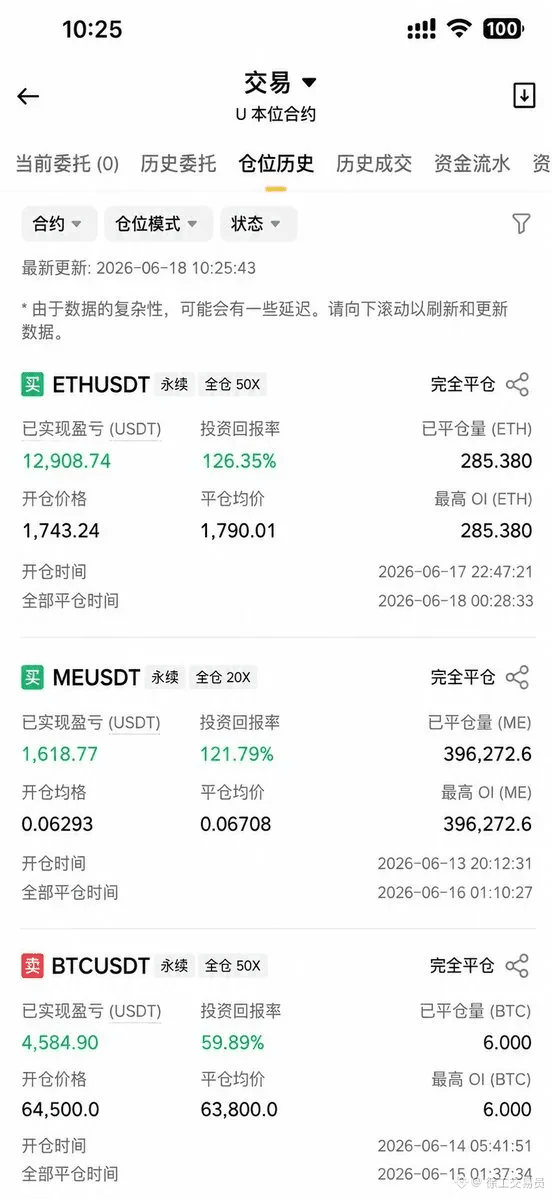
Honestly, Xu Gong had never thought that with a small amount of capital like 800U, one day it could roll up to over 300,000.
It wasn’t luck, and it wasn’t some kind of miracle move—just the result of grinding your position sizing and timing little by little, pulling yourself back hard from the deepest pit.
My worst time was when my account went from 20,000U all the way down to only 300U.
That night I basically didn’t sleep—I just kept staring at the market, one candle after another jumping, my brain was empty. It wasn’t that I didn’t want to trade; it was that I already didn’t know how to trade anymore.
When I woke up the next day, the first thing I did was stop trading, then I reset the rules: no more random moves—only the simplest, most repeatable setup that can keep you alive.
The first phase, from 300U to 3,200U, really wasn’t some “violent turnaround.” On the contrary, it was extremely boring. I did only one thing: only open a trade when the trend is clear, with position size kept light—usually not exceeding 30%, and I wrote the stop-loss in advance, hard and fixed. Many people look down on this phase because it’s slow and not exciting. But for me back then, there was only one goal: don’t die first.
At that time, as long as I had some profit, I would withdraw a portion immediately, so the account didn’t have a chance to give it all back. This stage wasn’t about making money—it was about rebuilding trust in the market.
The second phase, from 3,200U to 28,000U, is when the rhythm slowly came out. I started only doing pullbacks—I didn’t chase after highs. I waited for the trend to play out, and then I entered in batches with small position sizes. And I only added using profits; I didn’t touch the principal. Many people like to chase the first wave. I did the opposite back then, and as a result I avoided a lot of major drawdowns.
Other people chase and sell in panic within emotion—I slowly eat the swings according to rhythm.
The third phase, from 28,000U to 320,000U, the core no longer was “being right about the market,” but “controlling the structure.” My position sizing started to be layered: a base position, a defensive position, and an opportunity position—managed separately. When the market is rising, I don’t chase; only when it pulls back do I move. When profits reach 20% to 30%, I first cut a portion to lock in certainty, and I let the rest keep rolling.
When you get further along, you’ll find that the time when the account grows the fastest is actually when you’re the least agitated.
Many people ask how Xu Gong avoids getting liquidated and keeps rolling upward. I actually only said one very ordinary thing: don’t think about how much you want to make—first make sure you won’t get eliminated by the market.
#韩国个股杠杆ETF损失8.83万亿韩元 #参议院通过反对赦免SBF决议
Honestly, Xu Gong had never thought that with a small amount of capital like 800U, one day it could roll up to over 300,000.
It wasn’t luck, and it wasn’t some kind of miracle move—just the result of grinding your position sizing and timing little by little, pulling yourself back hard from the deepest pit.
My worst time was when my account went from 20,000U all the way down to only 300U.
That night I basically didn’t sleep—I just kept staring at the market, one candle after another jumping, my brain was empty. It wasn’t that I didn’t want to trade; it was that I already didn’t know how to trade anymore.
When I woke up the next day, the first thing I did was stop trading, then I reset the rules: no more random moves—only the simplest, most repeatable setup that can keep you alive.
The first phase, from 300U to 3,200U, really wasn’t some “violent turnaround.” On the contrary, it was extremely boring. I did only one thing: only open a trade when the trend is clear, with position size kept light—usually not exceeding 30%, and I wrote the stop-loss in advance, hard and fixed. Many people look down on this phase because it’s slow and not exciting. But for me back then, there was only one goal: don’t die first.
At that time, as long as I had some profit, I would withdraw a portion immediately, so the account didn’t have a chance to give it all back. This stage wasn’t about making money—it was about rebuilding trust in the market.
The second phase, from 3,200U to 28,000U, is when the rhythm slowly came out. I started only doing pullbacks—I didn’t chase after highs. I waited for the trend to play out, and then I entered in batches with small position sizes. And I only added using profits; I didn’t touch the principal. Many people like to chase the first wave. I did the opposite back then, and as a result I avoided a lot of major drawdowns.
Other people chase and sell in panic within emotion—I slowly eat the swings according to rhythm.
The third phase, from 28,000U to 320,000U, the core no longer was “being right about the market,” but “controlling the structure.” My position sizing started to be layered: a base position, a defensive position, and an opportunity position—managed separately. When the market is rising, I don’t chase; only when it pulls back do I move. When profits reach 20% to 30%, I first cut a portion to lock in certainty, and I let the rest keep rolling.
When you get further along, you’ll find that the time when the account grows the fastest is actually when you’re the least agitated.
Many people ask how Xu Gong avoids getting liquidated and keeps rolling upward. I actually only said one very ordinary thing: don’t think about how much you want to make—first make sure you won’t get eliminated by the market.
#韩国个股杠杆ETF损失8.83万亿韩元 #参议院通过反对赦免SBF决议
It wasn’t luck, and it wasn’t some kind of miracle move—just the result of grinding your position sizing and timing little by little, pulling yourself back hard from the deepest pit.
My worst time was when my account went from 20,000U all the way down to only 300U.
That night I basically didn’t sleep—I just kept staring at the market, one candle after another jumping, my brain was empty. It wasn’t that I didn’t want to trade; it was that I already didn’t know how to trade anymore.
When I woke up the next day, the first thing I did was stop trading, then I reset the rules: no more random moves—only the simplest, most repeatable setup that can keep you alive.
The first phase, from 300U to 3,200U, really wasn’t some “violent turnaround.” On the contrary, it was extremely boring. I did only one thing: only open a trade when the trend is clear, with position size kept light—usually not exceeding 30%, and I wrote the stop-loss in advance, hard and fixed. Many people look down on this phase because it’s slow and not exciting. But for me back then, there was only one goal: don’t die first.
At that time, as long as I had some profit, I would withdraw a portion immediately, so the account didn’t have a chance to give it all back. This stage wasn’t about making money—it was about rebuilding trust in the market.
The second phase, from 3,200U to 28,000U, is when the rhythm slowly came out. I started only doing pullbacks—I didn’t chase after highs. I waited for the trend to play out, and then I entered in batches with small position sizes. And I only added using profits; I didn’t touch the principal. Many people like to chase the first wave. I did the opposite back then, and as a result I avoided a lot of major drawdowns.
Other people chase and sell in panic within emotion—I slowly eat the swings according to rhythm.
The third phase, from 28,000U to 320,000U, the core no longer was “being right about the market,” but “controlling the structure.” My position sizing started to be layered: a base position, a defensive position, and an opportunity position—managed separately. When the market is rising, I don’t chase; only when it pulls back do I move. When profits reach 20% to 30%, I first cut a portion to lock in certainty, and I let the rest keep rolling.
When you get further along, you’ll find that the time when the account grows the fastest is actually when you’re the least agitated.
Many people ask how Xu Gong avoids getting liquidated and keeps rolling upward. I actually only said one very ordinary thing: don’t think about how much you want to make—first make sure you won’t get eliminated by the market.
#韩国个股杠杆ETF损失8.83万亿韩元 #参议院通过反对赦免SBF决议
1
12
·
--
Stop staring at the “100x coin” and dreaming.
Me, Xu Gong, used 5 months to turn an account of less than 3,000 U into 98,000 U.
Not by going all-in, and not by luck—just by steadily capturing 3% compound returns every day.
Yes, you read that right—this is the real “money printer” that’s truly suitable for ordinary people.
I, Xu Gong, was also once a professional liquidator, the kind who got wiped out so badly I even wanted to quit the industry.
Later, after painful reflection, I made a change: I split the account into two halves.
One half locked into a cold wallet—nobody touches it. That’s my capital moat.
The other half is for rolling profits. Even if that half gets wiped out, you only lose profits; the principal is left completely unharmed.
Since that day, I no longer bet my life—I execute a three-step discipline that stays “on-screen”:
First: Ride the trend, don’t bottom-pick.
Only trade long setups that are clearly bullish on the daily timeframe. Wait for the 1-hour candle pullback to a key moving average before entering. As long as the wick doesn’t turn red, I won’t add even a single more cent.
Second: Split profits—let profits roll profits.
Every time I earn, I immediately divide the profits into several parts: one portion withdraws and lands in my pocket, one keeps rolling forward, and one acts as a risk insurance buffer.
At the same time, I continuously raise the stop-loss level to lock in gains.
Third: Sunset shutdown—review, but don’t stay up late.
At most two trades per day. When it’s time, I shut down the software.
In the evening, I take time to write an error log. The same trap—never again.
See? These aren’t based on prediction. It’s mechanical execution built on structure, accelerating volume, and strict discipline.
Don’t underestimate daily steady returns. Calculate compounding—after a while, it becomes an astonishing multiple.
Compared with those “lottery-style” people who shout about 100x coins every day, this steady, disciplined approach is the survival path for most people.
#韩国个股杠杆ETF损失8.83万亿韩元 #参议院通过反对赦免SBF决议 #坦桑尼亚央行敲定数字资产监管
Stop staring at the “100x coin” and dreaming.
Me, Xu Gong, used 5 months to turn an account of less than 3,000 U into 98,000 U.
Not by going all-in, and not by luck—just by steadily capturing 3% compound returns every day.
Yes, you read that right—this is the real “money printer” that’s truly suitable for ordinary people.
I, Xu Gong, was also once a professional liquidator, the kind who got wiped out so badly I even wanted to quit the industry.
Later, after painful reflection, I made a change: I split the account into two halves.
One half locked into a cold wallet—nobody touches it. That’s my capital moat.
The other half is for rolling profits. Even if that half gets wiped out, you only lose profits; the principal is left completely unharmed.
Since that day, I no longer bet my life—I execute a three-step discipline that stays “on-screen”:
First: Ride the trend, don’t bottom-pick.
Only trade long setups that are clearly bullish on the daily timeframe. Wait for the 1-hour candle pullback to a key moving average before entering. As long as the wick doesn’t turn red, I won’t add even a single more cent.
Second: Split profits—let profits roll profits.
Every time I earn, I immediately divide the profits into several parts: one portion withdraws and lands in my pocket, one keeps rolling forward, and one acts as a risk insurance buffer.
At the same time, I continuously raise the stop-loss level to lock in gains.
Third: Sunset shutdown—review, but don’t stay up late.
At most two trades per day. When it’s time, I shut down the software.
In the evening, I take time to write an error log. The same trap—never again.
See? These aren’t based on prediction. It’s mechanical execution built on structure, accelerating volume, and strict discipline.
Don’t underestimate daily steady returns. Calculate compounding—after a while, it becomes an astonishing multiple.
Compared with those “lottery-style” people who shout about 100x coins every day, this steady, disciplined approach is the survival path for most people.
#韩国个股杠杆ETF损失8.83万亿韩元 #参议院通过反对赦免SBF决议 #坦桑尼亚央行敲定数字资产监管
Me, Xu Gong, used 5 months to turn an account of less than 3,000 U into 98,000 U.
Not by going all-in, and not by luck—just by steadily capturing 3% compound returns every day.
Yes, you read that right—this is the real “money printer” that’s truly suitable for ordinary people.
I, Xu Gong, was also once a professional liquidator, the kind who got wiped out so badly I even wanted to quit the industry.
Later, after painful reflection, I made a change: I split the account into two halves.
One half locked into a cold wallet—nobody touches it. That’s my capital moat.
The other half is for rolling profits. Even if that half gets wiped out, you only lose profits; the principal is left completely unharmed.
Since that day, I no longer bet my life—I execute a three-step discipline that stays “on-screen”:
First: Ride the trend, don’t bottom-pick.
Only trade long setups that are clearly bullish on the daily timeframe. Wait for the 1-hour candle pullback to a key moving average before entering. As long as the wick doesn’t turn red, I won’t add even a single more cent.
Second: Split profits—let profits roll profits.
Every time I earn, I immediately divide the profits into several parts: one portion withdraws and lands in my pocket, one keeps rolling forward, and one acts as a risk insurance buffer.
At the same time, I continuously raise the stop-loss level to lock in gains.
Third: Sunset shutdown—review, but don’t stay up late.
At most two trades per day. When it’s time, I shut down the software.
In the evening, I take time to write an error log. The same trap—never again.
See? These aren’t based on prediction. It’s mechanical execution built on structure, accelerating volume, and strict discipline.
Don’t underestimate daily steady returns. Calculate compounding—after a while, it becomes an astonishing multiple.
Compared with those “lottery-style” people who shout about 100x coins every day, this steady, disciplined approach is the survival path for most people.
#韩国个股杠杆ETF损失8.83万亿韩元 #参议院通过反对赦免SBF决议 #坦桑尼亚央行敲定数字资产监管

1
185
·
--
I’ve found that many people who trade in the crypto world spend every day watching how much their balance has grown, but they ignore a more realistic question: can the money actually be transferred safely and become truly yours?
In plain terms, making money is only the process. Only when you can successfully withdraw it and have it land in your hands can you say a trade is truly finished.
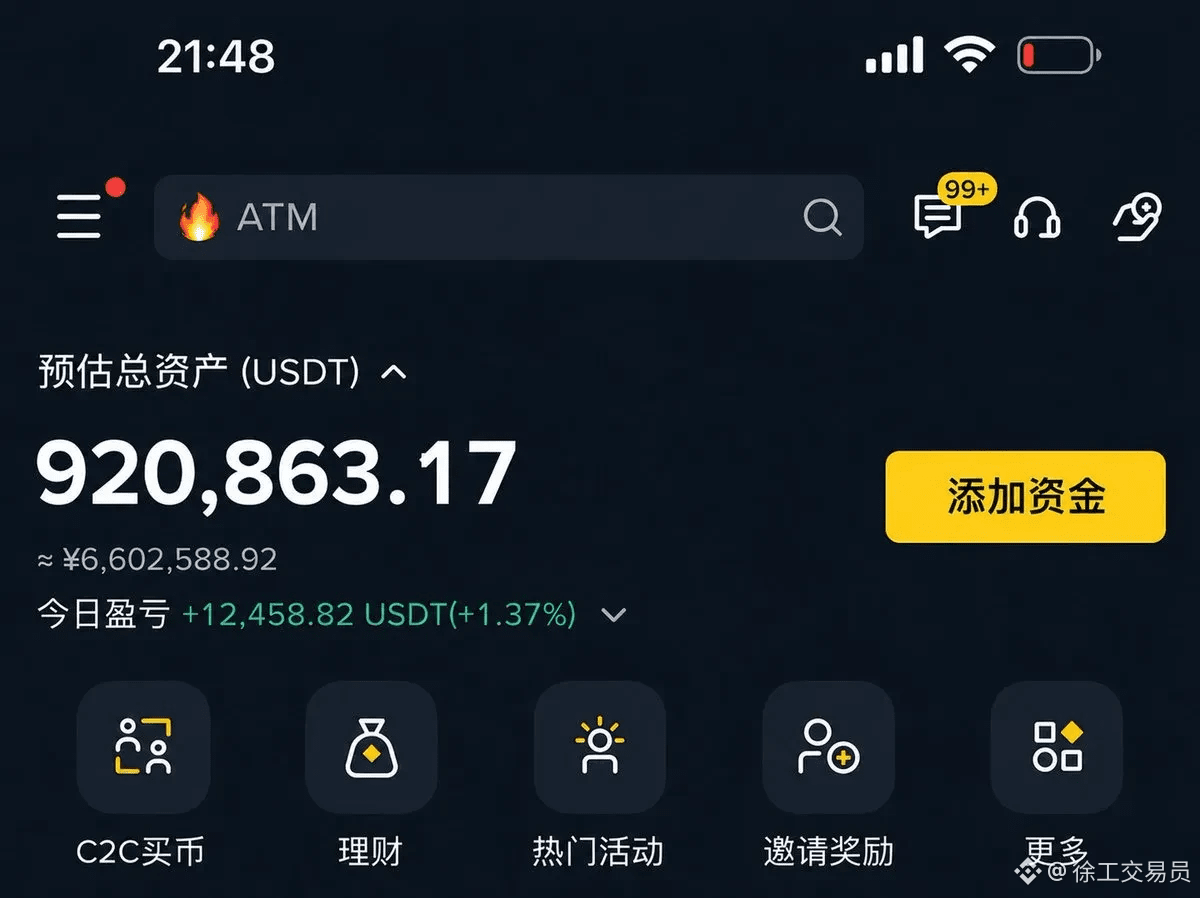
I’ve seen too many cases: accounts reach tens of thousands or even millions of USDT, yet they get stuck at the withdrawal stage. After being hit by risk controls or having funds frozen and everything gets tangled up, the amount you finally receive shrinks by a lot—some cases even take a very long time to resolve.
The issue isn’t the market; it’s the details.
First, bank cards must be kept separate.
Don’t mix your everyday card, salary card, and deposit/withdrawal card. Your deposit/withdrawal card should also have normal transaction activity in everyday use—small purchases and regular transfers. Don’t start out with large deposits and withdrawals right away, because that’s exactly what most easily draws the system’s attention.
Second, don’t make your C2C activity too “fixed.”
Merchants can choose someone reliable, but don’t connect with the same person long-term. Also don’t concentrate the amounts too much. Try to spread, rotate, and vary it— the more natural the rhythm is, the safer it tends to be.
Third, don’t move the money immediately after it arrives.
If you transfer out large sums right after funds land in the card, and you operate frequently, it’s very easy to trigger risk controls. It’s better to do it in batches, with small amounts, and space it out over a few days, so the flow of funds looks more normal.
If you do encounter a freeze, don’t panic. First figure out whether it’s bank risk control or a judicial freeze.
Bank risk control is usually explainable with supporting materials—such as transaction records, account statements, and written explanations. A judicial freeze is handled according to the process. What’s most dangerous is being anxious and looking for so-called “shortcuts,” because those are basically a second round of extraction.
At the end of the day, the one thing in the crypto world that people most often overlook isn’t how to make money, but:
whether the money you earn can be securely, steadily, and completely yours
#韩国个股杠杆ETF损失8.83万亿韩元 #参议院通过反对赦免SBF决议 #坦桑尼亚央行敲定数字资产监管
I’ve found that many people who trade in the crypto world spend every day watching how much their balance has grown, but they ignore a more realistic question: can the money actually be transferred safely and become truly yours?
In plain terms, making money is only the process. Only when you can successfully withdraw it and have it land in your hands can you say a trade is truly finished.
I’ve seen too many cases: accounts reach tens of thousands or even millions of USDT, yet they get stuck at the withdrawal stage. After being hit by risk controls or having funds frozen and everything gets tangled up, the amount you finally receive shrinks by a lot—some cases even take a very long time to resolve.
The issue isn’t the market; it’s the details.
First, bank cards must be kept separate.
Don’t mix your everyday card, salary card, and deposit/withdrawal card. Your deposit/withdrawal card should also have normal transaction activity in everyday use—small purchases and regular transfers. Don’t start out with large deposits and withdrawals right away, because that’s exactly what most easily draws the system’s attention.
Second, don’t make your C2C activity too “fixed.”
Merchants can choose someone reliable, but don’t connect with the same person long-term. Also don’t concentrate the amounts too much. Try to spread, rotate, and vary it— the more natural the rhythm is, the safer it tends to be.
Third, don’t move the money immediately after it arrives.
If you transfer out large sums right after funds land in the card, and you operate frequently, it’s very easy to trigger risk controls. It’s better to do it in batches, with small amounts, and space it out over a few days, so the flow of funds looks more normal.
If you do encounter a freeze, don’t panic. First figure out whether it’s bank risk control or a judicial freeze.
Bank risk control is usually explainable with supporting materials—such as transaction records, account statements, and written explanations. A judicial freeze is handled according to the process. What’s most dangerous is being anxious and looking for so-called “shortcuts,” because those are basically a second round of extraction.
At the end of the day, the one thing in the crypto world that people most often overlook isn’t how to make money, but:
whether the money you earn can be securely, steadily, and completely yours
#韩国个股杠杆ETF损失8.83万亿韩元 #参议院通过反对赦免SBF决议 #坦桑尼亚央行敲定数字资产监管
In plain terms, making money is only the process. Only when you can successfully withdraw it and have it land in your hands can you say a trade is truly finished.
I’ve seen too many cases: accounts reach tens of thousands or even millions of USDT, yet they get stuck at the withdrawal stage. After being hit by risk controls or having funds frozen and everything gets tangled up, the amount you finally receive shrinks by a lot—some cases even take a very long time to resolve.
The issue isn’t the market; it’s the details.
First, bank cards must be kept separate.
Don’t mix your everyday card, salary card, and deposit/withdrawal card. Your deposit/withdrawal card should also have normal transaction activity in everyday use—small purchases and regular transfers. Don’t start out with large deposits and withdrawals right away, because that’s exactly what most easily draws the system’s attention.
Second, don’t make your C2C activity too “fixed.”
Merchants can choose someone reliable, but don’t connect with the same person long-term. Also don’t concentrate the amounts too much. Try to spread, rotate, and vary it— the more natural the rhythm is, the safer it tends to be.
Third, don’t move the money immediately after it arrives.
If you transfer out large sums right after funds land in the card, and you operate frequently, it’s very easy to trigger risk controls. It’s better to do it in batches, with small amounts, and space it out over a few days, so the flow of funds looks more normal.
If you do encounter a freeze, don’t panic. First figure out whether it’s bank risk control or a judicial freeze.
Bank risk control is usually explainable with supporting materials—such as transaction records, account statements, and written explanations. A judicial freeze is handled according to the process. What’s most dangerous is being anxious and looking for so-called “shortcuts,” because those are basically a second round of extraction.
At the end of the day, the one thing in the crypto world that people most often overlook isn’t how to make money, but:
whether the money you earn can be securely, steadily, and completely yours
#韩国个股杠杆ETF损失8.83万亿韩元 #参议院通过反对赦免SBF决议 #坦桑尼亚央行敲定数字资产监管
2
4
3.4k
·
--
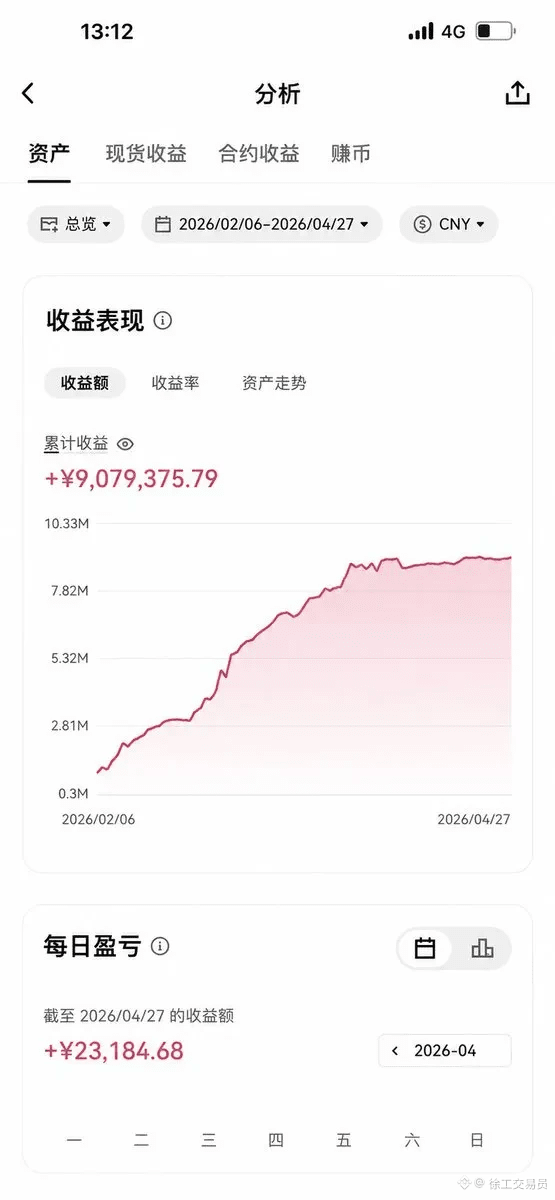
Many people don’t believe it—can 7,000 yuan really be turned into one million?
XCMG doesn’t preach empty motivation. I’ve really walked this path. Back then I only had 7,000 in my pocket. I gritted my teeth and exchanged it all for 1000U. That moment felt like a do-or-die battle. But I wasn’t crazy, and I didn’t go all-in—only took 200U first to test the blade. I only watched the coin that was hottest and had the most intense momentum that day. If it doubled, I got out. If I lost down to 50U, I cut immediately—no hesitation. Repeating a few times while hitting the timing, my principal started climbing like it had been given stimulants. That feeling—if you’ve lived it, you understand.
#韩国个股杠杆ETF损失8.83万亿韩元
The real hard part isn’t the market. It’s you.
The most dangerous thing is getting carried away. Every time I make a round of profit of one or two thousand, I force myself to close the app, stop trading, and rest for a day. I never give greed any chance. By repeating this kind of “cold-blooded operation” again and again, my principal slowly gets thicker. Once my funds are stable, I start using combo plays: part of it for short-term trades—take profit and leave as soon as I see meat; part for trend investing—ignore emotions and only follow direction; and finally keep part of it just waiting for a big breakout, then one fatal strike when the time comes. Before every order, I only write two numbers: take-profit and stop-loss. People without a plan are destined to be swallowed by their emotions.
#参议院通过反对赦免SBF决议
Remember this one line: contracts aren’t a money printer—they’re an amplifier.
#坦桑尼亚央行敲定数字资产监管
They only amplify your correctness, and they can infinitely amplify your foolishness. Over the years, I’ve clung tightly to four iron rules: never go all-in; every trade must have a stop-loss; no more than three trades per day; and once I profit, withdraw. I’ve seen too many people get rich overnight on luck, only to go to zero in an instant because of greed. And the reason I went from 1000U step by step to where I am today isn’t luck—it’s because of one harsh line: be ruthless about the market, and be even more ruthless with yourself.
Many people don’t believe it—can 7,000 yuan really be turned into one million?
XCMG doesn’t preach empty motivation. I’ve really walked this path. Back then I only had 7,000 in my pocket. I gritted my teeth and exchanged it all for 1000U. That moment felt like a do-or-die battle. But I wasn’t crazy, and I didn’t go all-in—only took 200U first to test the blade. I only watched the coin that was hottest and had the most intense momentum that day. If it doubled, I got out. If I lost down to 50U, I cut immediately—no hesitation. Repeating a few times while hitting the timing, my principal started climbing like it had been given stimulants. That feeling—if you’ve lived it, you understand.
#韩国个股杠杆ETF损失8.83万亿韩元
The real hard part isn’t the market. It’s you.
The most dangerous thing is getting carried away. Every time I make a round of profit of one or two thousand, I force myself to close the app, stop trading, and rest for a day. I never give greed any chance. By repeating this kind of “cold-blooded operation” again and again, my principal slowly gets thicker. Once my funds are stable, I start using combo plays: part of it for short-term trades—take profit and leave as soon as I see meat; part for trend investing—ignore emotions and only follow direction; and finally keep part of it just waiting for a big breakout, then one fatal strike when the time comes. Before every order, I only write two numbers: take-profit and stop-loss. People without a plan are destined to be swallowed by their emotions.
#参议院通过反对赦免SBF决议
Remember this one line: contracts aren’t a money printer—they’re an amplifier.
#坦桑尼亚央行敲定数字资产监管
They only amplify your correctness, and they can infinitely amplify your foolishness. Over the years, I’ve clung tightly to four iron rules: never go all-in; every trade must have a stop-loss; no more than three trades per day; and once I profit, withdraw. I’ve seen too many people get rich overnight on luck, only to go to zero in an instant because of greed. And the reason I went from 1000U step by step to where I am today isn’t luck—it’s because of one harsh line: be ruthless about the market, and be even more ruthless with yourself.
XCMG doesn’t preach empty motivation. I’ve really walked this path. Back then I only had 7,000 in my pocket. I gritted my teeth and exchanged it all for 1000U. That moment felt like a do-or-die battle. But I wasn’t crazy, and I didn’t go all-in—only took 200U first to test the blade. I only watched the coin that was hottest and had the most intense momentum that day. If it doubled, I got out. If I lost down to 50U, I cut immediately—no hesitation. Repeating a few times while hitting the timing, my principal started climbing like it had been given stimulants. That feeling—if you’ve lived it, you understand.
#韩国个股杠杆ETF损失8.83万亿韩元
The real hard part isn’t the market. It’s you.
The most dangerous thing is getting carried away. Every time I make a round of profit of one or two thousand, I force myself to close the app, stop trading, and rest for a day. I never give greed any chance. By repeating this kind of “cold-blooded operation” again and again, my principal slowly gets thicker. Once my funds are stable, I start using combo plays: part of it for short-term trades—take profit and leave as soon as I see meat; part for trend investing—ignore emotions and only follow direction; and finally keep part of it just waiting for a big breakout, then one fatal strike when the time comes. Before every order, I only write two numbers: take-profit and stop-loss. People without a plan are destined to be swallowed by their emotions.
#参议院通过反对赦免SBF决议
Remember this one line: contracts aren’t a money printer—they’re an amplifier.
#坦桑尼亚央行敲定数字资产监管
They only amplify your correctness, and they can infinitely amplify your foolishness. Over the years, I’ve clung tightly to four iron rules: never go all-in; every trade must have a stop-loss; no more than three trades per day; and once I profit, withdraw. I’ve seen too many people get rich overnight on luck, only to go to zero in an instant because of greed. And the reason I went from 1000U step by step to where I am today isn’t luck—it’s because of one harsh line: be ruthless about the market, and be even more ruthless with yourself.
1
36
·
--
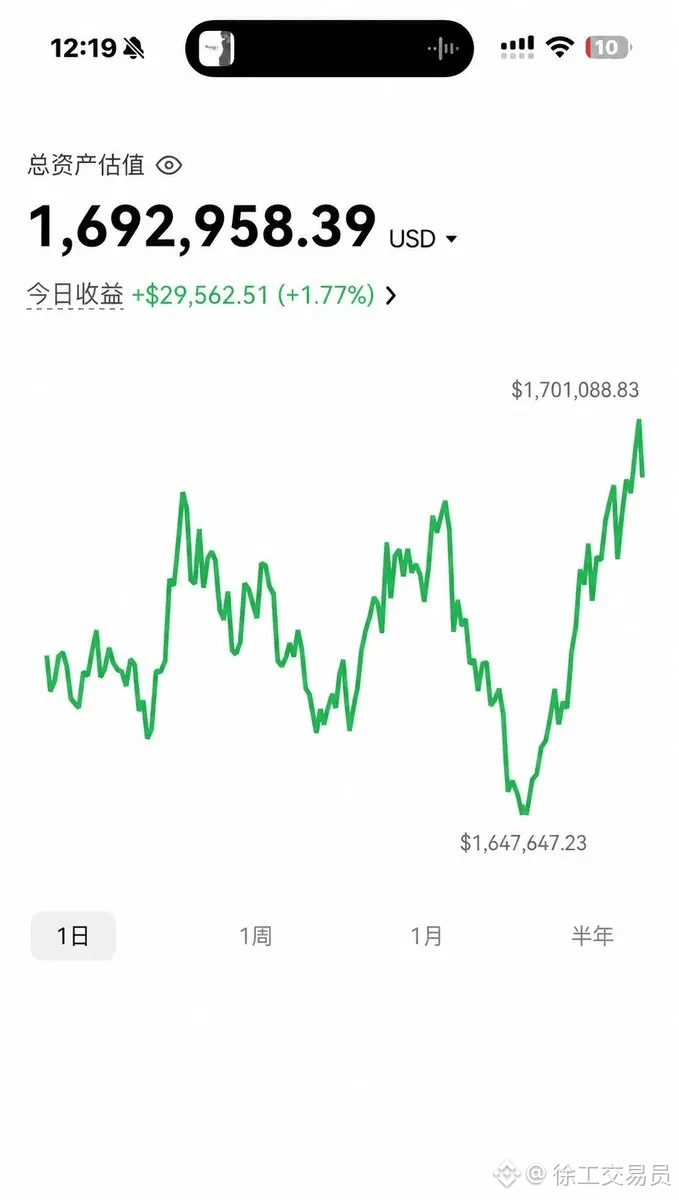
Brothers, want to know how to turn 28,000 in principal into 1.68 million?
Let me make it clear: this result isn’t luck, and it isn’t made by trading every day. At its core, it comes down to one sentence: you only do the key opportunities a few times, and the rest of the time you wait.
Many people can’t make big money—not because they don’t know how, but because they’re too eager to do it.
When the market is good, they don’t dare to enter; when the market is chaotic, they can’t help but rush in—then the market harvests them again and again.
People who truly manage to pull it off have a very simple logic—three things.
First, wait for opportunities, not search for them.
In a year, the number of market moves that are truly worth going heavy on is actually just a handful; most of the time is noise.
Second, scale positions in layers—don’t bet everything in one shot.
For example, start with a small position to test the direction. After you confirm the trend is valid, then gradually add. You don’t go all-in from the start.
Third, once you’ve made money, start reducing risk.
Take some profit after a run, rather than waiting for the absolute top. The goal is to always stay in a state where you’re “already profitable,” so you can take the next step.
Many people’s problem is right here:
make a little profit and run, lose a little and hold on stubbornly—so in the end they never catch the big move.
Real “rolling into the next trade” isn’t about constantly adding; it’s about constantly “staying alive.”
To put it plainly, the hardest part of this isn’t the method—it’s restraint.
There will always be opportunities in the market, but whether you can wait until that wave is the key.
One last sentence, very realistic:
The people who can grow money are never the most aggressive ones—they’re the ones who can wait the most.
#韩国个股杠杆ETF损失8.83万亿韩元 #参议院通过反对赦免SBF决议 #坦桑尼亚央行敲定数字资产监管
Brothers, want to know how to turn 28,000 in principal into 1.68 million?
Let me make it clear: this result isn’t luck, and it isn’t made by trading every day. At its core, it comes down to one sentence: you only do the key opportunities a few times, and the rest of the time you wait.
Many people can’t make big money—not because they don’t know how, but because they’re too eager to do it.
When the market is good, they don’t dare to enter; when the market is chaotic, they can’t help but rush in—then the market harvests them again and again.
People who truly manage to pull it off have a very simple logic—three things.
First, wait for opportunities, not search for them.
In a year, the number of market moves that are truly worth going heavy on is actually just a handful; most of the time is noise.
Second, scale positions in layers—don’t bet everything in one shot.
For example, start with a small position to test the direction. After you confirm the trend is valid, then gradually add. You don’t go all-in from the start.
Third, once you’ve made money, start reducing risk.
Take some profit after a run, rather than waiting for the absolute top. The goal is to always stay in a state where you’re “already profitable,” so you can take the next step.
Many people’s problem is right here:
make a little profit and run, lose a little and hold on stubbornly—so in the end they never catch the big move.
Real “rolling into the next trade” isn’t about constantly adding; it’s about constantly “staying alive.”
To put it plainly, the hardest part of this isn’t the method—it’s restraint.
There will always be opportunities in the market, but whether you can wait until that wave is the key.
One last sentence, very realistic:
The people who can grow money are never the most aggressive ones—they’re the ones who can wait the most.
#韩国个股杠杆ETF损失8.83万亿韩元 #参议院通过反对赦免SBF决议 #坦桑尼亚央行敲定数字资产监管
Let me make it clear: this result isn’t luck, and it isn’t made by trading every day. At its core, it comes down to one sentence: you only do the key opportunities a few times, and the rest of the time you wait.
Many people can’t make big money—not because they don’t know how, but because they’re too eager to do it.
When the market is good, they don’t dare to enter; when the market is chaotic, they can’t help but rush in—then the market harvests them again and again.
People who truly manage to pull it off have a very simple logic—three things.
First, wait for opportunities, not search for them.
In a year, the number of market moves that are truly worth going heavy on is actually just a handful; most of the time is noise.
Second, scale positions in layers—don’t bet everything in one shot.
For example, start with a small position to test the direction. After you confirm the trend is valid, then gradually add. You don’t go all-in from the start.
Third, once you’ve made money, start reducing risk.
Take some profit after a run, rather than waiting for the absolute top. The goal is to always stay in a state where you’re “already profitable,” so you can take the next step.
Many people’s problem is right here:
make a little profit and run, lose a little and hold on stubbornly—so in the end they never catch the big move.
Real “rolling into the next trade” isn’t about constantly adding; it’s about constantly “staying alive.”
To put it plainly, the hardest part of this isn’t the method—it’s restraint.
There will always be opportunities in the market, but whether you can wait until that wave is the key.
One last sentence, very realistic:
The people who can grow money are never the most aggressive ones—they’re the ones who can wait the most.
#韩国个股杠杆ETF损失8.83万亿韩元 #参议院通过反对赦免SBF决议 #坦桑尼亚央行敲定数字资产监管
1
184
·
--
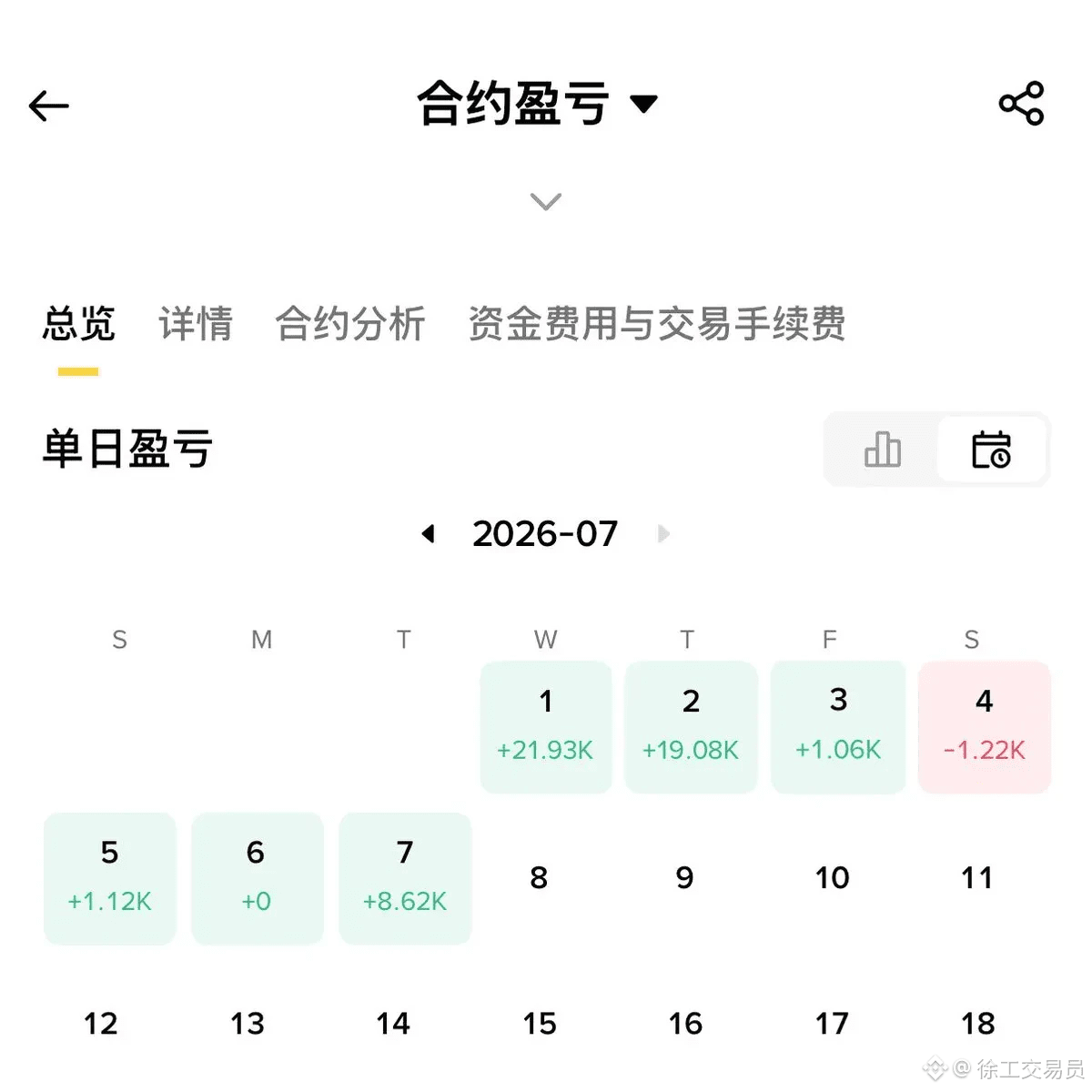
Do small funds always lose? More often than not, it’s not that you can’t do it — it’s that you’re too impatient.
Xugong has seen too many small-cap traders with only 1000U in their accounts, yet they stare every day at those wild coins that surge dozens of points in a single day.
$ETH
When asked why, they say: “My principal is too small. If I don’t take one big shot, how can I turn things around?”
And the result?
$YFI
They chased a few hot trends, kept increasing position sizes, and in the end their principal never doubled — their account disappeared first.
Think about it carefully: even if 1000U doubles, it’s only 2000U.
But to get that double, what you may be taking on is the risk of losing your entire principal.
The truly smart approach is not to dream of getting rich overnight, but to slowly grow your capital first.
For example, with 1000U, instead of touching those incomprehensible wild coins, you trade mainstream coin swings and steadily accumulate 10%-20% a month.
It may seem slow, but over a year, the power of compound interest is far stronger than a one-time gamble.
The biggest mistake small accounts make is thinking that because they have little money, they must bet big.
But what you’re betting on is not opportunity — you’re betting on probability.
Many people hope to turn their lives around with a 10x coin, but in the end they often can’t even protect their principal.
People who can truly grow small funds rely not on courage, but on risk control, patience, and capturing high-probability opportunities.
Don’t rush to prove yourself, and don’t try to swallow everything in one bite.
In the crypto world, only by staying alive do you have the资格 to wait for the next opportunity.
I’m Xugong. I don’t trade with gambling — I only do trades that can last long term.
#韩国个股杠杆ETF损失8.83万亿韩元 #坦桑尼亚央行敲定数字资产监管 #参议院通过反对赦免SBF决议
Do small funds always lose? More often than not, it’s not that you can’t do it — it’s that you’re too impatient.
Xugong has seen too many small-cap traders with only 1000U in their accounts, yet they stare every day at those wild coins that surge dozens of points in a single day.
$ETH
When asked why, they say: “My principal is too small. If I don’t take one big shot, how can I turn things around?”
And the result?
$YFI
They chased a few hot trends, kept increasing position sizes, and in the end their principal never doubled — their account disappeared first.
Think about it carefully: even if 1000U doubles, it’s only 2000U.
But to get that double, what you may be taking on is the risk of losing your entire principal.
The truly smart approach is not to dream of getting rich overnight, but to slowly grow your capital first.
For example, with 1000U, instead of touching those incomprehensible wild coins, you trade mainstream coin swings and steadily accumulate 10%-20% a month.
It may seem slow, but over a year, the power of compound interest is far stronger than a one-time gamble.
The biggest mistake small accounts make is thinking that because they have little money, they must bet big.
But what you’re betting on is not opportunity — you’re betting on probability.
Many people hope to turn their lives around with a 10x coin, but in the end they often can’t even protect their principal.
People who can truly grow small funds rely not on courage, but on risk control, patience, and capturing high-probability opportunities.
Don’t rush to prove yourself, and don’t try to swallow everything in one bite.
In the crypto world, only by staying alive do you have the资格 to wait for the next opportunity.
I’m Xugong. I don’t trade with gambling — I only do trades that can last long term.
#韩国个股杠杆ETF损失8.83万亿韩元 #坦桑尼亚央行敲定数字资产监管 #参议院通过反对赦免SBF决议
Xugong has seen too many small-cap traders with only 1000U in their accounts, yet they stare every day at those wild coins that surge dozens of points in a single day.
$ETH
When asked why, they say: “My principal is too small. If I don’t take one big shot, how can I turn things around?”
And the result?
$YFI
They chased a few hot trends, kept increasing position sizes, and in the end their principal never doubled — their account disappeared first.
Think about it carefully: even if 1000U doubles, it’s only 2000U.
But to get that double, what you may be taking on is the risk of losing your entire principal.
The truly smart approach is not to dream of getting rich overnight, but to slowly grow your capital first.
For example, with 1000U, instead of touching those incomprehensible wild coins, you trade mainstream coin swings and steadily accumulate 10%-20% a month.
It may seem slow, but over a year, the power of compound interest is far stronger than a one-time gamble.
The biggest mistake small accounts make is thinking that because they have little money, they must bet big.
But what you’re betting on is not opportunity — you’re betting on probability.
Many people hope to turn their lives around with a 10x coin, but in the end they often can’t even protect their principal.
People who can truly grow small funds rely not on courage, but on risk control, patience, and capturing high-probability opportunities.
Don’t rush to prove yourself, and don’t try to swallow everything in one bite.
In the crypto world, only by staying alive do you have the资格 to wait for the next opportunity.
I’m Xugong. I don’t trade with gambling — I only do trades that can last long term.
#韩国个股杠杆ETF损失8.83万亿韩元 #坦桑尼亚央行敲定数字资产监管 #参议院通过反对赦免SBF决议
1
90
·
--
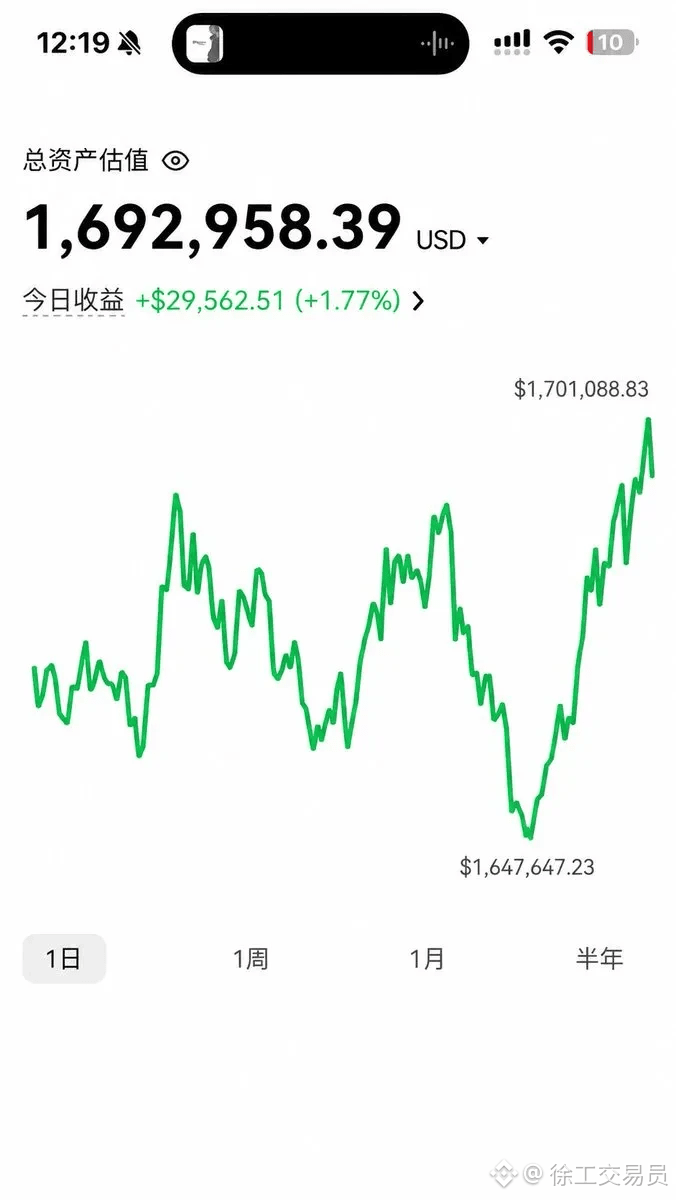
There’s the most stupid way to trade coins—one that keeps you “always profitable.” Make a killing with it—hundreds of thousands of W!
Xugong used it for years, and it helped him go from 1,000 u to 1 million u.
$LAB
I’m not some big shot. Just a regular person. The only difference between me and others is that I execute this method to the letter. It’s not complicated—just four steps—but I rarely see people actually stick to it.
Step 1: Pick coins—only focus on the ones that have surged within the last 11 days.
Pull the coins that are leading in gains into your watchlist, but if they’ve been in decline for three straight days or more, delete them directly—that kind is very likely just seeing money exit. Don’t go catching it. Only the ones left behind are still being chased and bought by capital.
Step 2: Look at the monthly MACD—only do golden cross.
Dead crosses are never touched. Ideally, after the golden cross there’s a first pullback that doesn’t break through—that’s the real “meaty” spot. Don’t rush. Wait for confirmation.
Step 3: Switch to the daily chart—lock onto the 60-day moving average.
When the pullback reaches around this line, don’t rush in. Wait for a high-volume bullish candle or a long lower shadow—something that confirms the main force is back—then enter with a heavy position. No volume, no confirmation: missing it is better. Not losing money is more important than anything.
Step 4: After entering, the 60-day moving average is your life.
Hold as long as price stays above the line. If it breaks below, leave—there is no third option. Three details:
If it rises 30%, cut one-third first—lock in the profit.
If it rises to 50%, cut another one-third, and let the remaining profit run.
If it breaks below the 60-day line unexpectedly the very next day after you buy, exit everything immediately—no hesitation, no fantasies.
This strategy itself is fine; the probability of breaking is not high. But risk control always comes first—selling is not scary. If it returns to the buy point, you can always re-enter.
$ZBT
That’s it. Not complicated. The hard part is whether you can execute it firmly—no shaky hands, no luck-chasing.
Before, I was stumbling around in the dark by myself. Now, all these traps—Xugong has already helped you step around.
Method is all there is—nothing complicated. The hard part is whether you can execute it firmly, without trembling hands, without relying on luck.
Before, I was stumbling around in the dark by myself. Now, all these traps—Xugong has already helped you step around.
#韩国个股杠杆ETF损失8.83万亿韩元 #参议院通过反对赦免SBF决议 #坦桑尼亚央行敲定数字资产监管
There’s the most stupid way to trade coins—one that keeps you “always profitable.” Make a killing with it—hundreds of thousands of W!
Xugong used it for years, and it helped him go from 1,000 u to 1 million u.
$LAB
I’m not some big shot. Just a regular person. The only difference between me and others is that I execute this method to the letter. It’s not complicated—just four steps—but I rarely see people actually stick to it.
Step 1: Pick coins—only focus on the ones that have surged within the last 11 days.
Pull the coins that are leading in gains into your watchlist, but if they’ve been in decline for three straight days or more, delete them directly—that kind is very likely just seeing money exit. Don’t go catching it. Only the ones left behind are still being chased and bought by capital.
Step 2: Look at the monthly MACD—only do golden cross.
Dead crosses are never touched. Ideally, after the golden cross there’s a first pullback that doesn’t break through—that’s the real “meaty” spot. Don’t rush. Wait for confirmation.
Step 3: Switch to the daily chart—lock onto the 60-day moving average.
When the pullback reaches around this line, don’t rush in. Wait for a high-volume bullish candle or a long lower shadow—something that confirms the main force is back—then enter with a heavy position. No volume, no confirmation: missing it is better. Not losing money is more important than anything.
Step 4: After entering, the 60-day moving average is your life.
Hold as long as price stays above the line. If it breaks below, leave—there is no third option. Three details:
If it rises 30%, cut one-third first—lock in the profit.
If it rises to 50%, cut another one-third, and let the remaining profit run.
If it breaks below the 60-day line unexpectedly the very next day after you buy, exit everything immediately—no hesitation, no fantasies.
This strategy itself is fine; the probability of breaking is not high. But risk control always comes first—selling is not scary. If it returns to the buy point, you can always re-enter.
$ZBT
That’s it. Not complicated. The hard part is whether you can execute it firmly—no shaky hands, no luck-chasing.
Before, I was stumbling around in the dark by myself. Now, all these traps—Xugong has already helped you step around.
Method is all there is—nothing complicated. The hard part is whether you can execute it firmly, without trembling hands, without relying on luck.
Before, I was stumbling around in the dark by myself. Now, all these traps—Xugong has already helped you step around.
#韩国个股杠杆ETF损失8.83万亿韩元 #参议院通过反对赦免SBF决议 #坦桑尼亚央行敲定数字资产监管
Xugong used it for years, and it helped him go from 1,000 u to 1 million u.
$LAB
I’m not some big shot. Just a regular person. The only difference between me and others is that I execute this method to the letter. It’s not complicated—just four steps—but I rarely see people actually stick to it.
Step 1: Pick coins—only focus on the ones that have surged within the last 11 days.
Pull the coins that are leading in gains into your watchlist, but if they’ve been in decline for three straight days or more, delete them directly—that kind is very likely just seeing money exit. Don’t go catching it. Only the ones left behind are still being chased and bought by capital.
Step 2: Look at the monthly MACD—only do golden cross.
Dead crosses are never touched. Ideally, after the golden cross there’s a first pullback that doesn’t break through—that’s the real “meaty” spot. Don’t rush. Wait for confirmation.
Step 3: Switch to the daily chart—lock onto the 60-day moving average.
When the pullback reaches around this line, don’t rush in. Wait for a high-volume bullish candle or a long lower shadow—something that confirms the main force is back—then enter with a heavy position. No volume, no confirmation: missing it is better. Not losing money is more important than anything.
Step 4: After entering, the 60-day moving average is your life.
Hold as long as price stays above the line. If it breaks below, leave—there is no third option. Three details:
If it rises 30%, cut one-third first—lock in the profit.
If it rises to 50%, cut another one-third, and let the remaining profit run.
If it breaks below the 60-day line unexpectedly the very next day after you buy, exit everything immediately—no hesitation, no fantasies.
This strategy itself is fine; the probability of breaking is not high. But risk control always comes first—selling is not scary. If it returns to the buy point, you can always re-enter.
$ZBT
That’s it. Not complicated. The hard part is whether you can execute it firmly—no shaky hands, no luck-chasing.
Before, I was stumbling around in the dark by myself. Now, all these traps—Xugong has already helped you step around.
Method is all there is—nothing complicated. The hard part is whether you can execute it firmly, without trembling hands, without relying on luck.
Before, I was stumbling around in the dark by myself. Now, all these traps—Xugong has already helped you step around.
#韩国个股杠杆ETF损失8.83万亿韩元 #参议院通过反对赦免SBF决议 #坦桑尼亚央行敲定数字资产监管
1
101
·
--
Seeing the news of the flood in Guangxi fills me with discomfort. For the displaced people, the supplies that were cut off, and the environment everywhere filled with water—no one would find that easy to bear.
Without thinking too much, I donated 20,000 yuan to the Guangxi Red Cross.
The certificate just arrived, so I blacked out my name to leave a record. It’s not for show—just to remind myself: no matter how much things swing in this circle, the kindness in real life is the “value coin” you hold long-term.
After staying in the crypto circle for a while, it’s easy to focus only on the K-line charts and profit or loss. But honestly, what can truly make people feel secure is being able to earn money and still do something tangible.
When markets rise and fall, goodwill won’t get liquidated.
I hope our brothers and sisters in the disaster area can hold on. Everyone across the country is paying attention to you.
And at the same time, I wish all fans who follow Xugong: may both longs and shorts go smoothly, and may your accounts stay strong. The market has cycles, but people’s hearts have warmth—this is the underlying logic of long-termism.
#韩国个股杠杆ETF损失8.83万亿韩元 #参议院通过反对赦免SBF决议 #坦桑尼亚央行敲定数字资产监管
Seeing the news of the flood in Guangxi fills me with discomfort. For the displaced people, the supplies that were cut off, and the environment everywhere filled with water—no one would find that easy to bear.
Without thinking too much, I donated 20,000 yuan to the Guangxi Red Cross.
The certificate just arrived, so I blacked out my name to leave a record. It’s not for show—just to remind myself: no matter how much things swing in this circle, the kindness in real life is the “value coin” you hold long-term.
After staying in the crypto circle for a while, it’s easy to focus only on the K-line charts and profit or loss. But honestly, what can truly make people feel secure is being able to earn money and still do something tangible.
When markets rise and fall, goodwill won’t get liquidated.
I hope our brothers and sisters in the disaster area can hold on. Everyone across the country is paying attention to you.
And at the same time, I wish all fans who follow Xugong: may both longs and shorts go smoothly, and may your accounts stay strong. The market has cycles, but people’s hearts have warmth—this is the underlying logic of long-termism.
#韩国个股杠杆ETF损失8.83万亿韩元 #参议院通过反对赦免SBF决议 #坦桑尼亚央行敲定数字资产监管
Without thinking too much, I donated 20,000 yuan to the Guangxi Red Cross.
The certificate just arrived, so I blacked out my name to leave a record. It’s not for show—just to remind myself: no matter how much things swing in this circle, the kindness in real life is the “value coin” you hold long-term.
After staying in the crypto circle for a while, it’s easy to focus only on the K-line charts and profit or loss. But honestly, what can truly make people feel secure is being able to earn money and still do something tangible.
When markets rise and fall, goodwill won’t get liquidated.
I hope our brothers and sisters in the disaster area can hold on. Everyone across the country is paying attention to you.
And at the same time, I wish all fans who follow Xugong: may both longs and shorts go smoothly, and may your accounts stay strong. The market has cycles, but people’s hearts have warmth—this is the underlying logic of long-termism.
#韩国个股杠杆ETF损失8.83万亿韩元 #参议院通过反对赦免SBF决议 #坦桑尼亚央行敲定数字资产监管

1
10
·
--
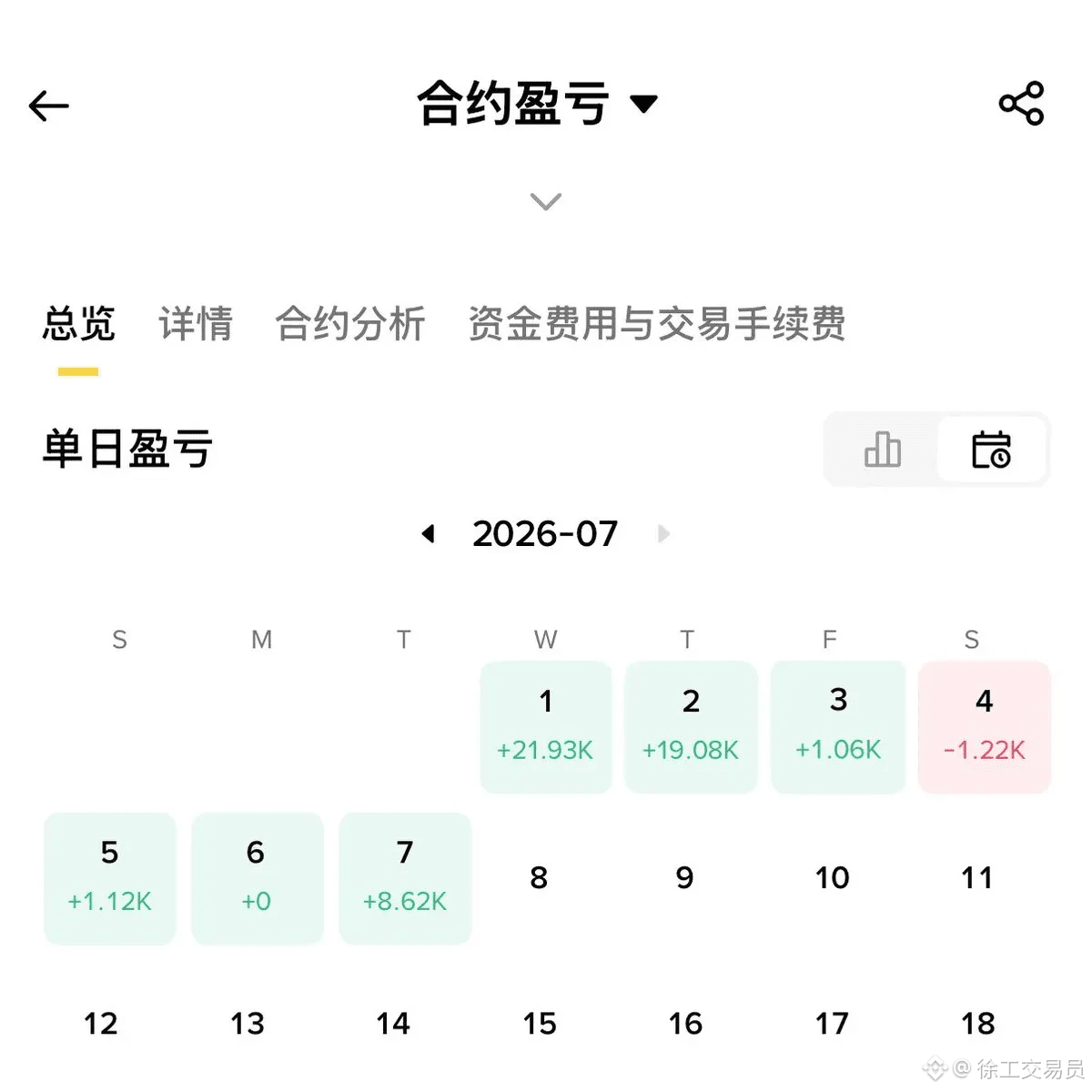
Is there really an opportunity to grow with a small amount of money in the crypto market?
Yes, there is. But don’t start by thinking about how to make quick money. First, figure out how to keep the principal alive.
Many people just entering the market see others double their money in a few days and get anxious—chasing trending coins, going heavy on leveraged positions, and constantly adding leverage. They always feel like the next opportunity must be theirs. In the end, the market doesn’t let them catch the move, and their account shrinks more and more through repeated impulsive actions.
Earlier, a follower found me with 1800 USDT. At that time, they’d already lost several rounds in a row and their confidence was almost gone.
I didn’t have them keep studying all kinds of complicated indicators. Instead, I first adjusted their trading approach and clarified their capital plan:
Part of the funds to take short-term opportunities—only trade setups they’re confident about; part to wait for the trend—don’t act until the position is at a suitable level; and the remaining part as backup capital, so one mistake doesn’t wipe out the entire account.
What matters most in trading isn’t being right every time. It’s having a chance to start over when you’re wrong.
My habit has always been very simple: if there’s no clear trend, wait. Only participate after the direction and entry position are confirmed. Before opening a trade, think through risk. Protect profits promptly after you’re in profit—let the winning trades continue developing, and exit the losing ones in time.
Many people lose money not because they can’t read the market, but because they’re too easily carried away by emotions—up a bit and they fear missing out, down a bit and they want to catch the bottom. After incurring losses, they rush to flip back, and finally end up making things more and more chaotic.
To turn a small account into a bigger one, there’s no shortcut. It depends on position management, disciplined execution, and long-term persistence.
First, make sure you can stay in the market—then the opportunities that come later will actually matter.
If you’re still stuck in a cycle of losing, restarting, and losing again, hit follow and let’s chat. I’ll teach you how to make trading simple.
#参议院通过反对赦免SBF决议 #坦桑尼亚央行敲定数字资产监管 #美国对DRAM设备发起337调查
Is there really an opportunity to grow with a small amount of money in the crypto market?
Yes, there is. But don’t start by thinking about how to make quick money. First, figure out how to keep the principal alive.
Many people just entering the market see others double their money in a few days and get anxious—chasing trending coins, going heavy on leveraged positions, and constantly adding leverage. They always feel like the next opportunity must be theirs. In the end, the market doesn’t let them catch the move, and their account shrinks more and more through repeated impulsive actions.
Earlier, a follower found me with 1800 USDT. At that time, they’d already lost several rounds in a row and their confidence was almost gone.
I didn’t have them keep studying all kinds of complicated indicators. Instead, I first adjusted their trading approach and clarified their capital plan:
Part of the funds to take short-term opportunities—only trade setups they’re confident about; part to wait for the trend—don’t act until the position is at a suitable level; and the remaining part as backup capital, so one mistake doesn’t wipe out the entire account.
What matters most in trading isn’t being right every time. It’s having a chance to start over when you’re wrong.
My habit has always been very simple: if there’s no clear trend, wait. Only participate after the direction and entry position are confirmed. Before opening a trade, think through risk. Protect profits promptly after you’re in profit—let the winning trades continue developing, and exit the losing ones in time.
Many people lose money not because they can’t read the market, but because they’re too easily carried away by emotions—up a bit and they fear missing out, down a bit and they want to catch the bottom. After incurring losses, they rush to flip back, and finally end up making things more and more chaotic.
To turn a small account into a bigger one, there’s no shortcut. It depends on position management, disciplined execution, and long-term persistence.
First, make sure you can stay in the market—then the opportunities that come later will actually matter.
If you’re still stuck in a cycle of losing, restarting, and losing again, hit follow and let’s chat. I’ll teach you how to make trading simple.
#参议院通过反对赦免SBF决议 #坦桑尼亚央行敲定数字资产监管 #美国对DRAM设备发起337调查
Yes, there is. But don’t start by thinking about how to make quick money. First, figure out how to keep the principal alive.
Many people just entering the market see others double their money in a few days and get anxious—chasing trending coins, going heavy on leveraged positions, and constantly adding leverage. They always feel like the next opportunity must be theirs. In the end, the market doesn’t let them catch the move, and their account shrinks more and more through repeated impulsive actions.
Earlier, a follower found me with 1800 USDT. At that time, they’d already lost several rounds in a row and their confidence was almost gone.
I didn’t have them keep studying all kinds of complicated indicators. Instead, I first adjusted their trading approach and clarified their capital plan:
Part of the funds to take short-term opportunities—only trade setups they’re confident about; part to wait for the trend—don’t act until the position is at a suitable level; and the remaining part as backup capital, so one mistake doesn’t wipe out the entire account.
What matters most in trading isn’t being right every time. It’s having a chance to start over when you’re wrong.
My habit has always been very simple: if there’s no clear trend, wait. Only participate after the direction and entry position are confirmed. Before opening a trade, think through risk. Protect profits promptly after you’re in profit—let the winning trades continue developing, and exit the losing ones in time.
Many people lose money not because they can’t read the market, but because they’re too easily carried away by emotions—up a bit and they fear missing out, down a bit and they want to catch the bottom. After incurring losses, they rush to flip back, and finally end up making things more and more chaotic.
To turn a small account into a bigger one, there’s no shortcut. It depends on position management, disciplined execution, and long-term persistence.
First, make sure you can stay in the market—then the opportunities that come later will actually matter.
If you’re still stuck in a cycle of losing, restarting, and losing again, hit follow and let’s chat. I’ll teach you how to make trading simple.
#参议院通过反对赦免SBF决议 #坦桑尼亚央行敲定数字资产监管 #美国对DRAM设备发起337调查
1
15
·
--
Can a small amount of principal keep you from getting ahead? Actually, not necessarily
Many people, when they only have a few hundred U in hand, feel that their capital is too small, and that in the crypto market they can only make it through one big run.
So they go all in right after entering, chasing popular coins. When they see others making money, they panic. In the end, they don’t catch the market move they were aiming for, and the principal is gradually drained away through repeated impulsive trades.
In fact, the biggest advantage of small capital isn’t to make you gamble—it’s to give you more room to adjust and grow.
I had a friend who started trading with 600U. At first, he also wanted to quickly double his money. After several consecutive trades, the account became harder and harder to manage. Later, he changed his approach.
He no longer chased overnight wealth. Instead, he broke the goal down—first reach 1000U, and then consider the next stage.
After completing each stage, he first protected part of the profits, then used the remaining capital to keep looking for opportunities.
What’s truly important in trading has never been how much you can make in a single trade, but whether you can build your account in a long-term, stable way.
Many people misunderstand “rolling over” (滚仓). They think it means constantly adding to the position to amplify leverage. Real rolling over means letting profits drive the account’s growth, not risking the principal.
When your market judgment is correct, let the profits continue to develop. When your judgment is wrong, follow the plan and cut losses, keeping the damage within an acceptable range.
Many people lose money not because they can’t analyze the market, but because they can’t manage position size well, don’t want to exit when they’re losing, and can’t hold onto gains once they make a little.
Having less money isn’t the biggest problem—having no rules is.
Control your position size, keep your own pace, and repeat the right things. Even with small capital, you can gradually roll it up.
Stop thinking about getting rich overnight. First learn to protect your principal, then let time bring you compounding returns.
If you’re still repeating the cycle of losing, restarting, and losing again, tap follow and let’s chat. I’ll show you how to make trading simpler.
#参议院通过反对赦免SBF决议 #坦桑尼亚央行敲定数字资产监管 #美国对DRAM设备发起337调查
Can a small amount of principal keep you from getting ahead? Actually, not necessarily
Many people, when they only have a few hundred U in hand, feel that their capital is too small, and that in the crypto market they can only make it through one big run.
So they go all in right after entering, chasing popular coins. When they see others making money, they panic. In the end, they don’t catch the market move they were aiming for, and the principal is gradually drained away through repeated impulsive trades.
In fact, the biggest advantage of small capital isn’t to make you gamble—it’s to give you more room to adjust and grow.
I had a friend who started trading with 600U. At first, he also wanted to quickly double his money. After several consecutive trades, the account became harder and harder to manage. Later, he changed his approach.
He no longer chased overnight wealth. Instead, he broke the goal down—first reach 1000U, and then consider the next stage.
After completing each stage, he first protected part of the profits, then used the remaining capital to keep looking for opportunities.
What’s truly important in trading has never been how much you can make in a single trade, but whether you can build your account in a long-term, stable way.
Many people misunderstand “rolling over” (滚仓). They think it means constantly adding to the position to amplify leverage. Real rolling over means letting profits drive the account’s growth, not risking the principal.
When your market judgment is correct, let the profits continue to develop. When your judgment is wrong, follow the plan and cut losses, keeping the damage within an acceptable range.
Many people lose money not because they can’t analyze the market, but because they can’t manage position size well, don’t want to exit when they’re losing, and can’t hold onto gains once they make a little.
Having less money isn’t the biggest problem—having no rules is.
Control your position size, keep your own pace, and repeat the right things. Even with small capital, you can gradually roll it up.
Stop thinking about getting rich overnight. First learn to protect your principal, then let time bring you compounding returns.
If you’re still repeating the cycle of losing, restarting, and losing again, tap follow and let’s chat. I’ll show you how to make trading simpler.
#参议院通过反对赦免SBF决议 #坦桑尼亚央行敲定数字资产监管 #美国对DRAM设备发起337调查
Many people, when they only have a few hundred U in hand, feel that their capital is too small, and that in the crypto market they can only make it through one big run.
So they go all in right after entering, chasing popular coins. When they see others making money, they panic. In the end, they don’t catch the market move they were aiming for, and the principal is gradually drained away through repeated impulsive trades.
In fact, the biggest advantage of small capital isn’t to make you gamble—it’s to give you more room to adjust and grow.
I had a friend who started trading with 600U. At first, he also wanted to quickly double his money. After several consecutive trades, the account became harder and harder to manage. Later, he changed his approach.
He no longer chased overnight wealth. Instead, he broke the goal down—first reach 1000U, and then consider the next stage.
After completing each stage, he first protected part of the profits, then used the remaining capital to keep looking for opportunities.
What’s truly important in trading has never been how much you can make in a single trade, but whether you can build your account in a long-term, stable way.
Many people misunderstand “rolling over” (滚仓). They think it means constantly adding to the position to amplify leverage. Real rolling over means letting profits drive the account’s growth, not risking the principal.
When your market judgment is correct, let the profits continue to develop. When your judgment is wrong, follow the plan and cut losses, keeping the damage within an acceptable range.
Many people lose money not because they can’t analyze the market, but because they can’t manage position size well, don’t want to exit when they’re losing, and can’t hold onto gains once they make a little.
Having less money isn’t the biggest problem—having no rules is.
Control your position size, keep your own pace, and repeat the right things. Even with small capital, you can gradually roll it up.
Stop thinking about getting rich overnight. First learn to protect your principal, then let time bring you compounding returns.
If you’re still repeating the cycle of losing, restarting, and losing again, tap follow and let’s chat. I’ll show you how to make trading simpler.
#参议院通过反对赦免SBF决议 #坦桑尼亚央行敲定数字资产监管 #美国对DRAM设备发起337调查
1
76
·
--
People who truly understand trading won’t feel anxious just because the principal is small.
People who truly understand trading won’t be anxious simply because their capital is small. Because they know that funds are only an outcome, not the reason for success or failure. What really widens the gap is cognition, execution ability, and trading habits.
Many people who are just getting into the market have only a few hundred USDT or a few thousand USDT, and they think about doubling quickly. When they see others making money, they get restless, start taking heavy positions, chasing hot spots, and betting on the market.
But the market loves to harvest exactly those who are in a rush to prove themselves.
Those who can truly keep going long-term won’t act recklessly—even if their capital isn’t large. They care more about protecting their principal first, making sure every trade is correct, and repeating good habits consistently.
Trading isn’t about placing orders every day; it’s mostly about waiting—waiting for the trend to become clear and opportunities to be suitable before taking action.
If you don’t understand a行情, don’t touch it. Don’t chase opportunities you’ve missed. Stay calm when others are making money, and don’t let the market throw off your rhythm.
An account growing slowly has never depended on one overnight windfall. It comes from time accumulation, capital management, and long-term execution.
On this trading path, it’s not that you’re afraid of having a low starting point—it’s that you don’t have patience.
If your direction is correct, moving slower can actually make you faster.
If you’re still chasing pumps and panic-selling, or averaging down and adding to losing positions, click follow and let’s chat—so you can take fewer detours.
#坦桑尼亚央行敲定数字资产监管
#美国对DRAM设备发起337调查
#DTCC完成首笔代币化证券实盘交易
People who truly understand trading won’t feel anxious just because the principal is small.
People who truly understand trading won’t be anxious simply because their capital is small. Because they know that funds are only an outcome, not the reason for success or failure. What really widens the gap is cognition, execution ability, and trading habits.
Many people who are just getting into the market have only a few hundred USDT or a few thousand USDT, and they think about doubling quickly. When they see others making money, they get restless, start taking heavy positions, chasing hot spots, and betting on the market.
But the market loves to harvest exactly those who are in a rush to prove themselves.
Those who can truly keep going long-term won’t act recklessly—even if their capital isn’t large. They care more about protecting their principal first, making sure every trade is correct, and repeating good habits consistently.
Trading isn’t about placing orders every day; it’s mostly about waiting—waiting for the trend to become clear and opportunities to be suitable before taking action.
If you don’t understand a行情, don’t touch it. Don’t chase opportunities you’ve missed. Stay calm when others are making money, and don’t let the market throw off your rhythm.
An account growing slowly has never depended on one overnight windfall. It comes from time accumulation, capital management, and long-term execution.
On this trading path, it’s not that you’re afraid of having a low starting point—it’s that you don’t have patience.
If your direction is correct, moving slower can actually make you faster.
If you’re still chasing pumps and panic-selling, or averaging down and adding to losing positions, click follow and let’s chat—so you can take fewer detours.
#坦桑尼亚央行敲定数字资产监管
#美国对DRAM设备发起337调查
#DTCC完成首笔代币化证券实盘交易
People who truly understand trading won’t be anxious simply because their capital is small. Because they know that funds are only an outcome, not the reason for success or failure. What really widens the gap is cognition, execution ability, and trading habits.
Many people who are just getting into the market have only a few hundred USDT or a few thousand USDT, and they think about doubling quickly. When they see others making money, they get restless, start taking heavy positions, chasing hot spots, and betting on the market.
But the market loves to harvest exactly those who are in a rush to prove themselves.
Those who can truly keep going long-term won’t act recklessly—even if their capital isn’t large. They care more about protecting their principal first, making sure every trade is correct, and repeating good habits consistently.
Trading isn’t about placing orders every day; it’s mostly about waiting—waiting for the trend to become clear and opportunities to be suitable before taking action.
If you don’t understand a行情, don’t touch it. Don’t chase opportunities you’ve missed. Stay calm when others are making money, and don’t let the market throw off your rhythm.
An account growing slowly has never depended on one overnight windfall. It comes from time accumulation, capital management, and long-term execution.
On this trading path, it’s not that you’re afraid of having a low starting point—it’s that you don’t have patience.
If your direction is correct, moving slower can actually make you faster.
If you’re still chasing pumps and panic-selling, or averaging down and adding to losing positions, click follow and let’s chat—so you can take fewer detours.
#坦桑尼亚央行敲定数字资产监管
#美国对DRAM设备发起337调查
#DTCC完成首笔代币化证券实盘交易
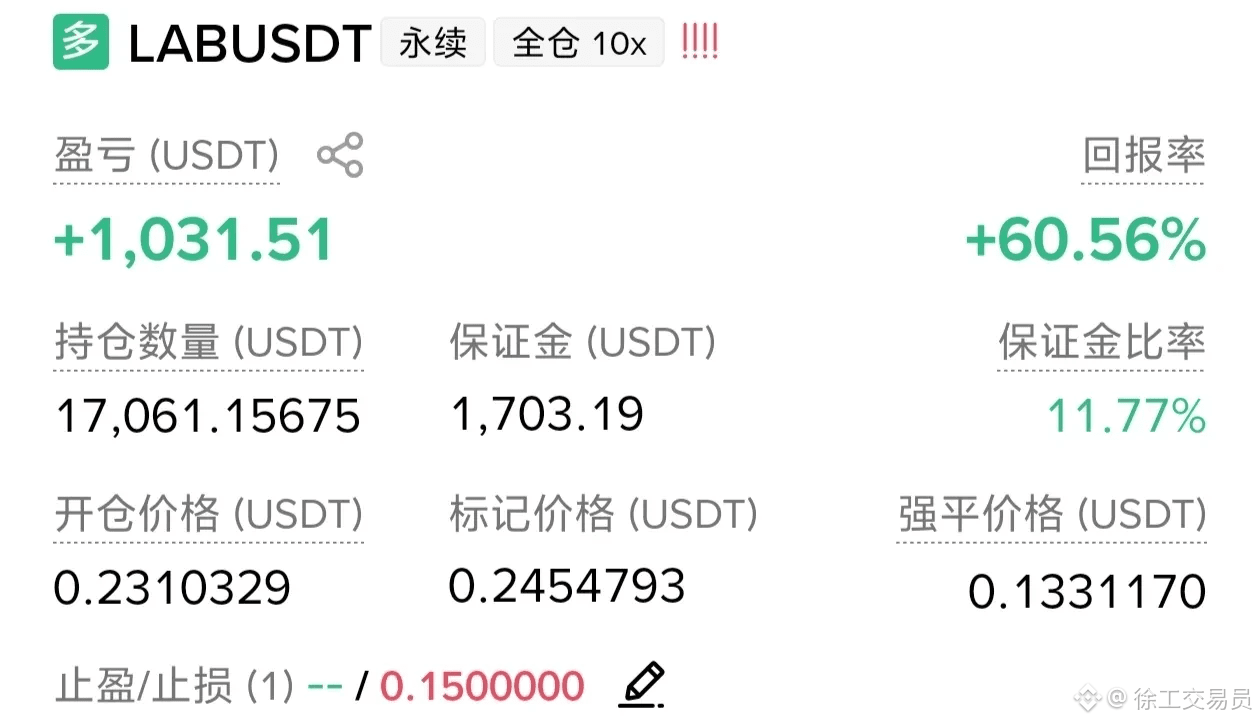
1
129
·
--
When many people only have a few hundred U in their hands, they always feel that the capital is too small and think that to make it in the crypto market, they can only rely on a single big行情 (market move).
So they go in and heavily bet right away—chasing whatever is trending, panicking when they see others making money—only to miss the move. In the end, the principal is gradually drained by one impulsive trade after another.
Actually, the biggest advantage of a small account isn’t to make you gamble—it gives you more room to adjust and grow.
There was a friend of mine who started trading with 600U. At first, he also wanted to double quickly, and after several consecutive trades, the account became harder and harder to manage. Later, he changed his approach. Instead of chasing overnight wealth, he broke the goal into parts—first reach 1000U, then consider the next stage.
After completing each stage, he first protected part of the profits, then used the remaining capital to keep looking for opportunities.
What truly matters in trading has never been how much you can make in one single win, but whether you can build and grow the account in a long-term, stable way.
Many people misunderstand “rolling” (滚仓). They think it means continuously adding to positions to increase leverage. Real rolling means letting profits drive the account growth—not taking the principal to gamble.
If you’re right about the market, let the profits keep compounding; if you’re wrong, cut losses according to the plan and keep the damage within an acceptable range.
Many people lose money not because they can’t analyze the market, but because their position sizing is poor, they refuse to exit when losses happen, and when they make a little, they can’t hold their gains.
Having less capital isn’t the biggest problem—lack of rules is.
Control your position sizing, keep your own pace, and repeatedly do the right things. Even with a small amount of money, you can slowly roll it up.
Stop thinking about getting rich overnight. First learn to protect your principal, then let time bring compounding returns.
If you’re still losing repeatedly and starting over again and again, hit follow and let’s chat—I’ll show you how to make trading feel simple.
#坦桑尼亚央行敲定数字资产监管 #DTCC完成首笔代币化证券实盘交易 #美国对DRAM设备发起337调查
When many people only have a few hundred U in their hands, they always feel that the capital is too small and think that to make it in the crypto market, they can only rely on a single big行情 (market move).
So they go in and heavily bet right away—chasing whatever is trending, panicking when they see others making money—only to miss the move. In the end, the principal is gradually drained by one impulsive trade after another.
Actually, the biggest advantage of a small account isn’t to make you gamble—it gives you more room to adjust and grow.
There was a friend of mine who started trading with 600U. At first, he also wanted to double quickly, and after several consecutive trades, the account became harder and harder to manage. Later, he changed his approach. Instead of chasing overnight wealth, he broke the goal into parts—first reach 1000U, then consider the next stage.
After completing each stage, he first protected part of the profits, then used the remaining capital to keep looking for opportunities.
What truly matters in trading has never been how much you can make in one single win, but whether you can build and grow the account in a long-term, stable way.
Many people misunderstand “rolling” (滚仓). They think it means continuously adding to positions to increase leverage. Real rolling means letting profits drive the account growth—not taking the principal to gamble.
If you’re right about the market, let the profits keep compounding; if you’re wrong, cut losses according to the plan and keep the damage within an acceptable range.
Many people lose money not because they can’t analyze the market, but because their position sizing is poor, they refuse to exit when losses happen, and when they make a little, they can’t hold their gains.
Having less capital isn’t the biggest problem—lack of rules is.
Control your position sizing, keep your own pace, and repeatedly do the right things. Even with a small amount of money, you can slowly roll it up.
Stop thinking about getting rich overnight. First learn to protect your principal, then let time bring compounding returns.
If you’re still losing repeatedly and starting over again and again, hit follow and let’s chat—I’ll show you how to make trading feel simple.
#坦桑尼亚央行敲定数字资产监管 #DTCC完成首笔代币化证券实盘交易 #美国对DRAM设备发起337调查
So they go in and heavily bet right away—chasing whatever is trending, panicking when they see others making money—only to miss the move. In the end, the principal is gradually drained by one impulsive trade after another.
Actually, the biggest advantage of a small account isn’t to make you gamble—it gives you more room to adjust and grow.
There was a friend of mine who started trading with 600U. At first, he also wanted to double quickly, and after several consecutive trades, the account became harder and harder to manage. Later, he changed his approach. Instead of chasing overnight wealth, he broke the goal into parts—first reach 1000U, then consider the next stage.
After completing each stage, he first protected part of the profits, then used the remaining capital to keep looking for opportunities.
What truly matters in trading has never been how much you can make in one single win, but whether you can build and grow the account in a long-term, stable way.
Many people misunderstand “rolling” (滚仓). They think it means continuously adding to positions to increase leverage. Real rolling means letting profits drive the account growth—not taking the principal to gamble.
If you’re right about the market, let the profits keep compounding; if you’re wrong, cut losses according to the plan and keep the damage within an acceptable range.
Many people lose money not because they can’t analyze the market, but because their position sizing is poor, they refuse to exit when losses happen, and when they make a little, they can’t hold their gains.
Having less capital isn’t the biggest problem—lack of rules is.
Control your position sizing, keep your own pace, and repeatedly do the right things. Even with a small amount of money, you can slowly roll it up.
Stop thinking about getting rich overnight. First learn to protect your principal, then let time bring compounding returns.
If you’re still losing repeatedly and starting over again and again, hit follow and let’s chat—I’ll show you how to make trading feel simple.
#坦桑尼亚央行敲定数字资产监管 #DTCC完成首笔代币化证券实盘交易 #美国对DRAM设备发起337调查
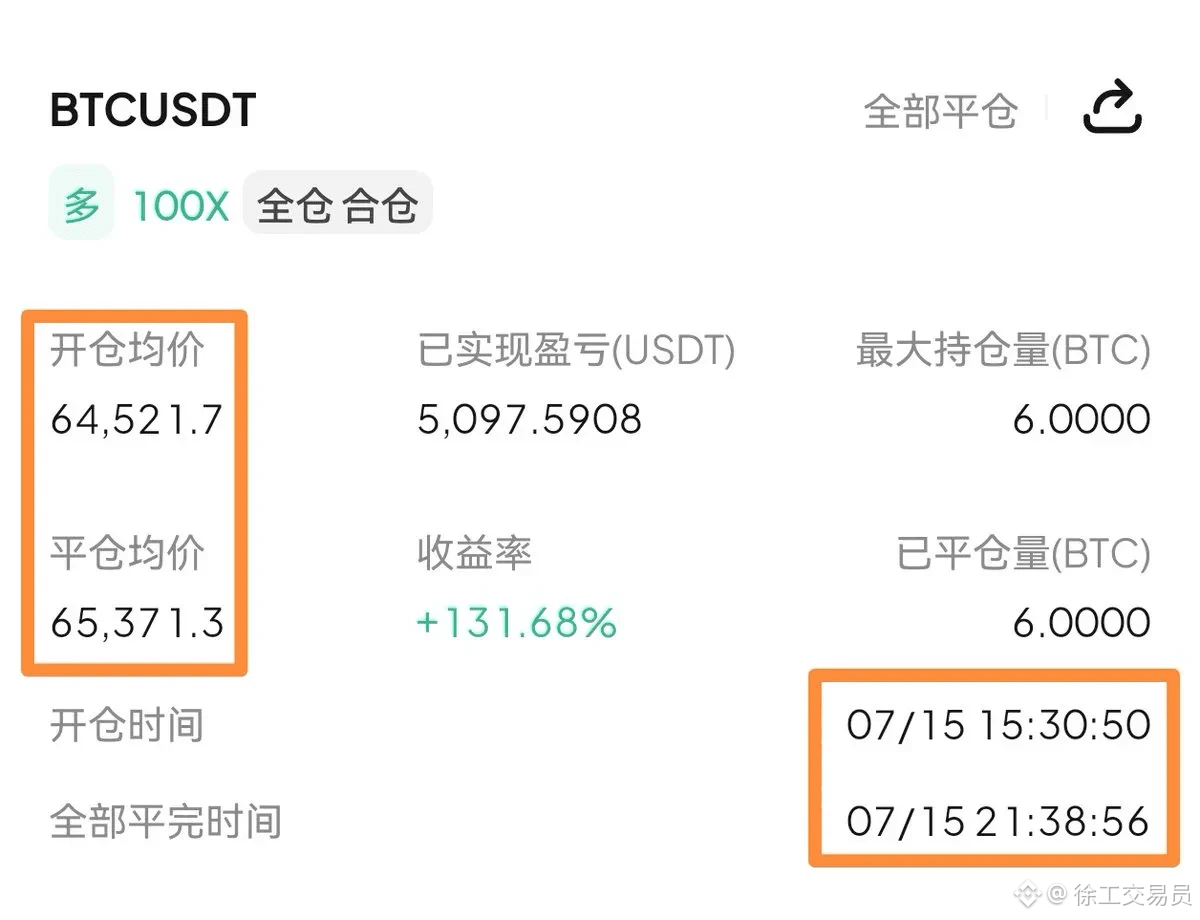
1
47
·
--
How do you roll from 1000U to 3000U and 5000U?
Many people come in thinking about high leverage and going all-in right away. In the end, the money doesn’t grow—their account gets wiped first.
Rolling positions isn’t about betting; it’s about rhythm, position sizing, and execution.
Let’s use 1000U as an example.
Step 1: Start with a light position.
Don’t jump in with full allocation. Take 200–300U to place test trades first. Make sure you’re still in the game, then think about how much you can earn.
Step 2: Only trade opportunities you understand.
Trade only when the trend is clear, the entry location is reasonable, and the risk-reward ratio is worth it. If you don’t understand it, wait.
Step 3: Set your stop loss in advance.
If you’re wrong, admit it immediately. Keep the loss on any single trade to about 5% of the account. A small loss is a cost; a big loss is fatal.
Step 4: Take profit when you’ve made it.
Don’t always try to eat the entire move. People who can consistently lock in gains often end up making more in the end.
Step 5: Build the account up first, then gradually add size.
The strategy for 1000U and 5000U is different. When the capital grows, your position size should scale up accordingly.
Step 6: When you make money, remember to withdraw it.
Numbers on an account are just numbers—the real profit is what ends up in your pocket.
Many people obsess over how many times others can multiply their money. Actually, the truly strong ones focus on their own equity curve.
The crypto market has never been short of opportunities; what it lacks is the ability to stay in the market long enough.
First survive. Then talk about “turning over” your account.
If you’re still losing repeatedly and starting over again and again, hit follow and let’s chat—I’ll show you how to make trading simple.
#2026足球风潮 #长鑫科技IPO定价8.66元估值5791亿元 #特朗普撤销霍尔木兹20%货运费
How do you roll from 1000U to 3000U and 5000U?
Many people come in thinking about high leverage and going all-in right away. In the end, the money doesn’t grow—their account gets wiped first.
Rolling positions isn’t about betting; it’s about rhythm, position sizing, and execution.
Let’s use 1000U as an example.
Step 1: Start with a light position.
Don’t jump in with full allocation. Take 200–300U to place test trades first. Make sure you’re still in the game, then think about how much you can earn.
Step 2: Only trade opportunities you understand.
Trade only when the trend is clear, the entry location is reasonable, and the risk-reward ratio is worth it. If you don’t understand it, wait.
Step 3: Set your stop loss in advance.
If you’re wrong, admit it immediately. Keep the loss on any single trade to about 5% of the account. A small loss is a cost; a big loss is fatal.
Step 4: Take profit when you’ve made it.
Don’t always try to eat the entire move. People who can consistently lock in gains often end up making more in the end.
Step 5: Build the account up first, then gradually add size.
The strategy for 1000U and 5000U is different. When the capital grows, your position size should scale up accordingly.
Step 6: When you make money, remember to withdraw it.
Numbers on an account are just numbers—the real profit is what ends up in your pocket.
Many people obsess over how many times others can multiply their money. Actually, the truly strong ones focus on their own equity curve.
The crypto market has never been short of opportunities; what it lacks is the ability to stay in the market long enough.
First survive. Then talk about “turning over” your account.
If you’re still losing repeatedly and starting over again and again, hit follow and let’s chat—I’ll show you how to make trading simple.
#2026足球风潮 #长鑫科技IPO定价8.66元估值5791亿元 #特朗普撤销霍尔木兹20%货运费
Many people come in thinking about high leverage and going all-in right away. In the end, the money doesn’t grow—their account gets wiped first.
Rolling positions isn’t about betting; it’s about rhythm, position sizing, and execution.
Let’s use 1000U as an example.
Step 1: Start with a light position.
Don’t jump in with full allocation. Take 200–300U to place test trades first. Make sure you’re still in the game, then think about how much you can earn.
Step 2: Only trade opportunities you understand.
Trade only when the trend is clear, the entry location is reasonable, and the risk-reward ratio is worth it. If you don’t understand it, wait.
Step 3: Set your stop loss in advance.
If you’re wrong, admit it immediately. Keep the loss on any single trade to about 5% of the account. A small loss is a cost; a big loss is fatal.
Step 4: Take profit when you’ve made it.
Don’t always try to eat the entire move. People who can consistently lock in gains often end up making more in the end.
Step 5: Build the account up first, then gradually add size.
The strategy for 1000U and 5000U is different. When the capital grows, your position size should scale up accordingly.
Step 6: When you make money, remember to withdraw it.
Numbers on an account are just numbers—the real profit is what ends up in your pocket.
Many people obsess over how many times others can multiply their money. Actually, the truly strong ones focus on their own equity curve.
The crypto market has never been short of opportunities; what it lacks is the ability to stay in the market long enough.
First survive. Then talk about “turning over” your account.
If you’re still losing repeatedly and starting over again and again, hit follow and let’s chat—I’ll show you how to make trading simple.
#2026足球风潮 #长鑫科技IPO定价8.66元估值5791亿元 #特朗普撤销霍尔木兹20%货运费
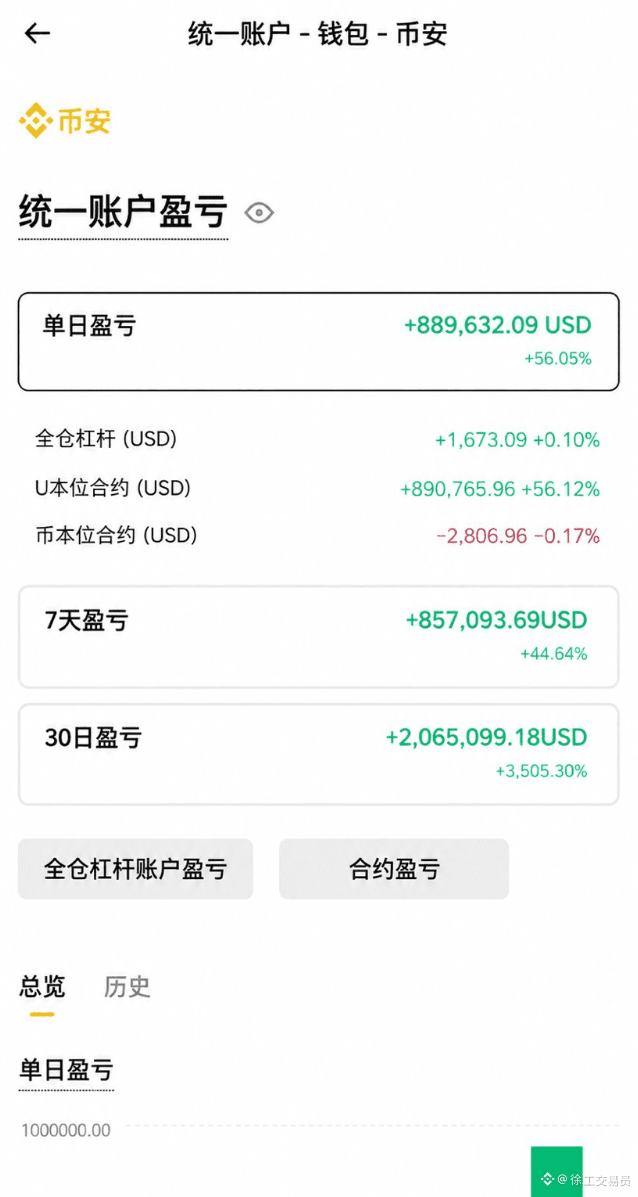
1
10
·
--
With 800U reaching 28,000U, he never blew up even once.
Many people take a few hundred U or a few thousand U and rush into the crypto market. Right out of the gate it’s high leverage and full-position trading. They think since the principal is small, they can only make it fast.
But the results are usually very consistent: you don’t make money faster than you blow up.
Earlier, I guided a new trader with 800U—three months later he reached 28,000U, and he never blew up a single time.
It’s not luck, and it’s not inside information. It’s simply doing straightforward things over and over.
Only open a position when there’s a trend. If there’s no opportunity, wait. Don’t make random moves.
Always separate positions—leave yourself an exit, and don’t bet your fate on a single trade.
If you hit the stop-loss and you’re wrong, leave immediately. Don’t average down, don’t hold on to a losing position, and don’t fight the market.
Many people watch from morning till night, open countless trades, and stay busy all the time—yet in the end their account keeps getting smaller and smaller.
The problem isn’t that they don’t work hard; it’s that they turn trading into gambling.
The biggest advantage of small capital is never that you can double quickly. It’s that you can afford to lose—and still have the next opportunity.
First stay alive, then think about getting big.
In the end, in the crypto market, it’s not about who dares to charge the hardest—it’s about who can stay at the table for the long haul.
If you’re still losing repeatedly and restarting over and over, follow me and let’s chat. I’ll teach you how to make trading simple.
#2026足球风潮 #长鑫科技IPO定价8.66元估值5791亿元 #特朗普撤销霍尔木兹20%货运费
With 800U reaching 28,000U, he never blew up even once.
Many people take a few hundred U or a few thousand U and rush into the crypto market. Right out of the gate it’s high leverage and full-position trading. They think since the principal is small, they can only make it fast.
But the results are usually very consistent: you don’t make money faster than you blow up.
Earlier, I guided a new trader with 800U—three months later he reached 28,000U, and he never blew up a single time.
It’s not luck, and it’s not inside information. It’s simply doing straightforward things over and over.
Only open a position when there’s a trend. If there’s no opportunity, wait. Don’t make random moves.
Always separate positions—leave yourself an exit, and don’t bet your fate on a single trade.
If you hit the stop-loss and you’re wrong, leave immediately. Don’t average down, don’t hold on to a losing position, and don’t fight the market.
Many people watch from morning till night, open countless trades, and stay busy all the time—yet in the end their account keeps getting smaller and smaller.
The problem isn’t that they don’t work hard; it’s that they turn trading into gambling.
The biggest advantage of small capital is never that you can double quickly. It’s that you can afford to lose—and still have the next opportunity.
First stay alive, then think about getting big.
In the end, in the crypto market, it’s not about who dares to charge the hardest—it’s about who can stay at the table for the long haul.
If you’re still losing repeatedly and restarting over and over, follow me and let’s chat. I’ll teach you how to make trading simple.
#2026足球风潮 #长鑫科技IPO定价8.66元估值5791亿元 #特朗普撤销霍尔木兹20%货运费
Many people take a few hundred U or a few thousand U and rush into the crypto market. Right out of the gate it’s high leverage and full-position trading. They think since the principal is small, they can only make it fast.
But the results are usually very consistent: you don’t make money faster than you blow up.
Earlier, I guided a new trader with 800U—three months later he reached 28,000U, and he never blew up a single time.
It’s not luck, and it’s not inside information. It’s simply doing straightforward things over and over.
Only open a position when there’s a trend. If there’s no opportunity, wait. Don’t make random moves.
Always separate positions—leave yourself an exit, and don’t bet your fate on a single trade.
If you hit the stop-loss and you’re wrong, leave immediately. Don’t average down, don’t hold on to a losing position, and don’t fight the market.
Many people watch from morning till night, open countless trades, and stay busy all the time—yet in the end their account keeps getting smaller and smaller.
The problem isn’t that they don’t work hard; it’s that they turn trading into gambling.
The biggest advantage of small capital is never that you can double quickly. It’s that you can afford to lose—and still have the next opportunity.
First stay alive, then think about getting big.
In the end, in the crypto market, it’s not about who dares to charge the hardest—it’s about who can stay at the table for the long haul.
If you’re still losing repeatedly and restarting over and over, follow me and let’s chat. I’ll teach you how to make trading simple.
#2026足球风潮 #长鑫科技IPO定价8.66元估值5791亿元 #特朗普撤销霍尔木兹20%货运费
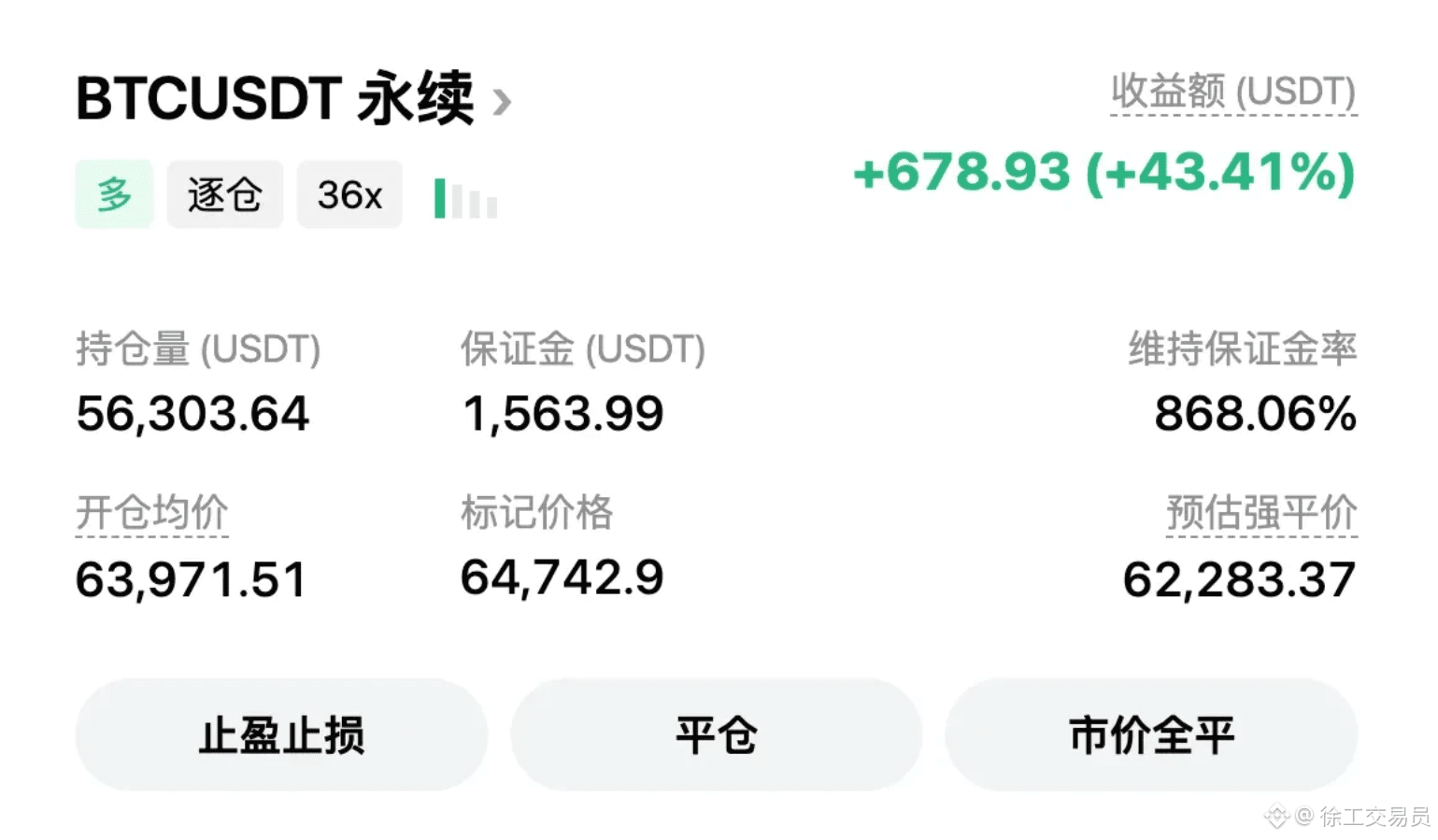
1
105
·
--
800U to 10,000? The faster you try, the easier you get knocked out
Many small-cap players enter the crypto world thinking: 800U turns into 10,000, 10,000 turns into 100,000—go all in and make a comeback in one push.
But the result is often that the money hasn’t doubled yet, and the account is already zeroed out.
For small funds to grow, it’s never about going all-in on a single round—it’s about staying alive.
I’ve seen too many people: a few hundred U to enter, all day thinking about doubling, using full position size, chasing and selling based on short-term moves, and in the end they can’t even protect the principal.
It’s not that the market is bad. It’s that from the moment they enter, they’re already anxious.
I once guided a brother. He started with 1,500U. In three months he got to more than 10,000, and in half a year he reached over 30,000. During the whole time, he never blew up his position, and he didn’t pull any crazy tricks.
What he did right were only three things:
Don’t go all-in, trade less, and follow the rules.
Use money in separate parts—always leave yourself a backup. If there’s no good setup, wait. Don’t trade just to trade. If you need to stop loss, stop loss. If it’s time to lock in gains, lock them in.
Don’t argue with the market, and don’t take it out on your account.
In crypto trading, it’s never about who’s got the biggest nerve—it’s about who can stay in the market long enough.
The more you want to go fast, the easier it is to get eliminated. If you’re willing to slow down, you’re actually more likely to grow your account.
If you’re still repeatedly losing, repeatedly starting over, and repeating the same cycle, tap follow and let’s chat. I’ll show you how to make trading simple.
#2026足球风潮 #长鑫科技IPO定价8.66元估值5791亿元 #特朗普撤销霍尔木兹20%货运费
800U to 10,000? The faster you try, the easier you get knocked out
Many small-cap players enter the crypto world thinking: 800U turns into 10,000, 10,000 turns into 100,000—go all in and make a comeback in one push.
But the result is often that the money hasn’t doubled yet, and the account is already zeroed out.
For small funds to grow, it’s never about going all-in on a single round—it’s about staying alive.
I’ve seen too many people: a few hundred U to enter, all day thinking about doubling, using full position size, chasing and selling based on short-term moves, and in the end they can’t even protect the principal.
It’s not that the market is bad. It’s that from the moment they enter, they’re already anxious.
I once guided a brother. He started with 1,500U. In three months he got to more than 10,000, and in half a year he reached over 30,000. During the whole time, he never blew up his position, and he didn’t pull any crazy tricks.
What he did right were only three things:
Don’t go all-in, trade less, and follow the rules.
Use money in separate parts—always leave yourself a backup. If there’s no good setup, wait. Don’t trade just to trade. If you need to stop loss, stop loss. If it’s time to lock in gains, lock them in.
Don’t argue with the market, and don’t take it out on your account.
In crypto trading, it’s never about who’s got the biggest nerve—it’s about who can stay in the market long enough.
The more you want to go fast, the easier it is to get eliminated. If you’re willing to slow down, you’re actually more likely to grow your account.
If you’re still repeatedly losing, repeatedly starting over, and repeating the same cycle, tap follow and let’s chat. I’ll show you how to make trading simple.
#2026足球风潮 #长鑫科技IPO定价8.66元估值5791亿元 #特朗普撤销霍尔木兹20%货运费
Many small-cap players enter the crypto world thinking: 800U turns into 10,000, 10,000 turns into 100,000—go all in and make a comeback in one push.
But the result is often that the money hasn’t doubled yet, and the account is already zeroed out.
For small funds to grow, it’s never about going all-in on a single round—it’s about staying alive.
I’ve seen too many people: a few hundred U to enter, all day thinking about doubling, using full position size, chasing and selling based on short-term moves, and in the end they can’t even protect the principal.
It’s not that the market is bad. It’s that from the moment they enter, they’re already anxious.
I once guided a brother. He started with 1,500U. In three months he got to more than 10,000, and in half a year he reached over 30,000. During the whole time, he never blew up his position, and he didn’t pull any crazy tricks.
What he did right were only three things:
Don’t go all-in, trade less, and follow the rules.
Use money in separate parts—always leave yourself a backup. If there’s no good setup, wait. Don’t trade just to trade. If you need to stop loss, stop loss. If it’s time to lock in gains, lock them in.
Don’t argue with the market, and don’t take it out on your account.
In crypto trading, it’s never about who’s got the biggest nerve—it’s about who can stay in the market long enough.
The more you want to go fast, the easier it is to get eliminated. If you’re willing to slow down, you’re actually more likely to grow your account.
If you’re still repeatedly losing, repeatedly starting over, and repeating the same cycle, tap follow and let’s chat. I’ll show you how to make trading simple.
#2026足球风潮 #长鑫科技IPO定价8.66元估值5791亿元 #特朗普撤销霍尔木兹20%货运费
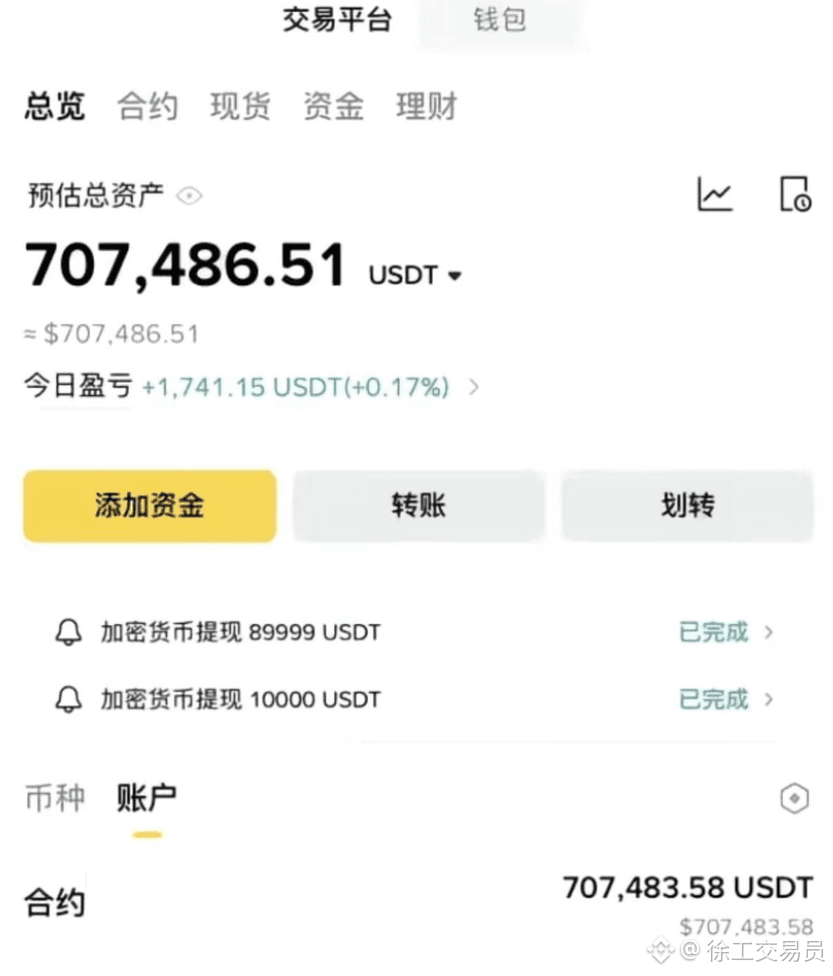
1
8
·
--
People with less than 2000U love doing two things
People with less than 2000U love doing two things:
Searching for hundredfold coins, hoping to get rich overnight.
But the two things that most easily wipe your account to zero are also these.
With a few hundred U in hand, seeing others晒 (share) dozens of times the returns, anyone would be tempted. But what you see is always the people who make money—those who chase hot trends, chase narratives, and constantly switch coins—most of them have already disappeared.
Many people want to turn 1000U into 10,000U. In the end, they miss the chance, and their principal is gone first.
The biggest advantage of small capital is not that you can earn quickly, but that you can afford to lose—and still start over.
Don’t go all-in, don’t make a single bet (no “squeeze”/“all-in”), and don’t gamble with your living expenses. Break 1000U into parts, leave room, and keep an exit. Add only when you’re right; if you’re wrong, admit it.
Don’t always think the next coin will change your fate.
What small-capital traders should train isn’t finding hundredfold coins, but discipline, position sizing, and execution.
Those who truly grow small capital into big money never rely on luck. They rely on the ability to keep themselves on the table.
As long as your account is still there, opportunities are still there. Survive first, then think about doubling.
If you’re still repeatedly losing and repeatedly starting over, click follow and let’s chat—I’ll teach you how to make trading simple.
#2026足球风潮 #长鑫科技IPO定价8.66元估值5791亿元 #特朗普撤销霍尔木兹20%货运费
People with less than 2000U love doing two things
People with less than 2000U love doing two things:
Searching for hundredfold coins, hoping to get rich overnight.
But the two things that most easily wipe your account to zero are also these.
With a few hundred U in hand, seeing others晒 (share) dozens of times the returns, anyone would be tempted. But what you see is always the people who make money—those who chase hot trends, chase narratives, and constantly switch coins—most of them have already disappeared.
Many people want to turn 1000U into 10,000U. In the end, they miss the chance, and their principal is gone first.
The biggest advantage of small capital is not that you can earn quickly, but that you can afford to lose—and still start over.
Don’t go all-in, don’t make a single bet (no “squeeze”/“all-in”), and don’t gamble with your living expenses. Break 1000U into parts, leave room, and keep an exit. Add only when you’re right; if you’re wrong, admit it.
Don’t always think the next coin will change your fate.
What small-capital traders should train isn’t finding hundredfold coins, but discipline, position sizing, and execution.
Those who truly grow small capital into big money never rely on luck. They rely on the ability to keep themselves on the table.
As long as your account is still there, opportunities are still there. Survive first, then think about doubling.
If you’re still repeatedly losing and repeatedly starting over, click follow and let’s chat—I’ll teach you how to make trading simple.
#2026足球风潮 #长鑫科技IPO定价8.66元估值5791亿元 #特朗普撤销霍尔木兹20%货运费
People with less than 2000U love doing two things:
Searching for hundredfold coins, hoping to get rich overnight.
But the two things that most easily wipe your account to zero are also these.
With a few hundred U in hand, seeing others晒 (share) dozens of times the returns, anyone would be tempted. But what you see is always the people who make money—those who chase hot trends, chase narratives, and constantly switch coins—most of them have already disappeared.
Many people want to turn 1000U into 10,000U. In the end, they miss the chance, and their principal is gone first.
The biggest advantage of small capital is not that you can earn quickly, but that you can afford to lose—and still start over.
Don’t go all-in, don’t make a single bet (no “squeeze”/“all-in”), and don’t gamble with your living expenses. Break 1000U into parts, leave room, and keep an exit. Add only when you’re right; if you’re wrong, admit it.
Don’t always think the next coin will change your fate.
What small-capital traders should train isn’t finding hundredfold coins, but discipline, position sizing, and execution.
Those who truly grow small capital into big money never rely on luck. They rely on the ability to keep themselves on the table.
As long as your account is still there, opportunities are still there. Survive first, then think about doubling.
If you’re still repeatedly losing and repeatedly starting over, click follow and let’s chat—I’ll teach you how to make trading simple.
#2026足球风潮 #长鑫科技IPO定价8.66元估值5791亿元 #特朗普撤销霍尔木兹20%货运费
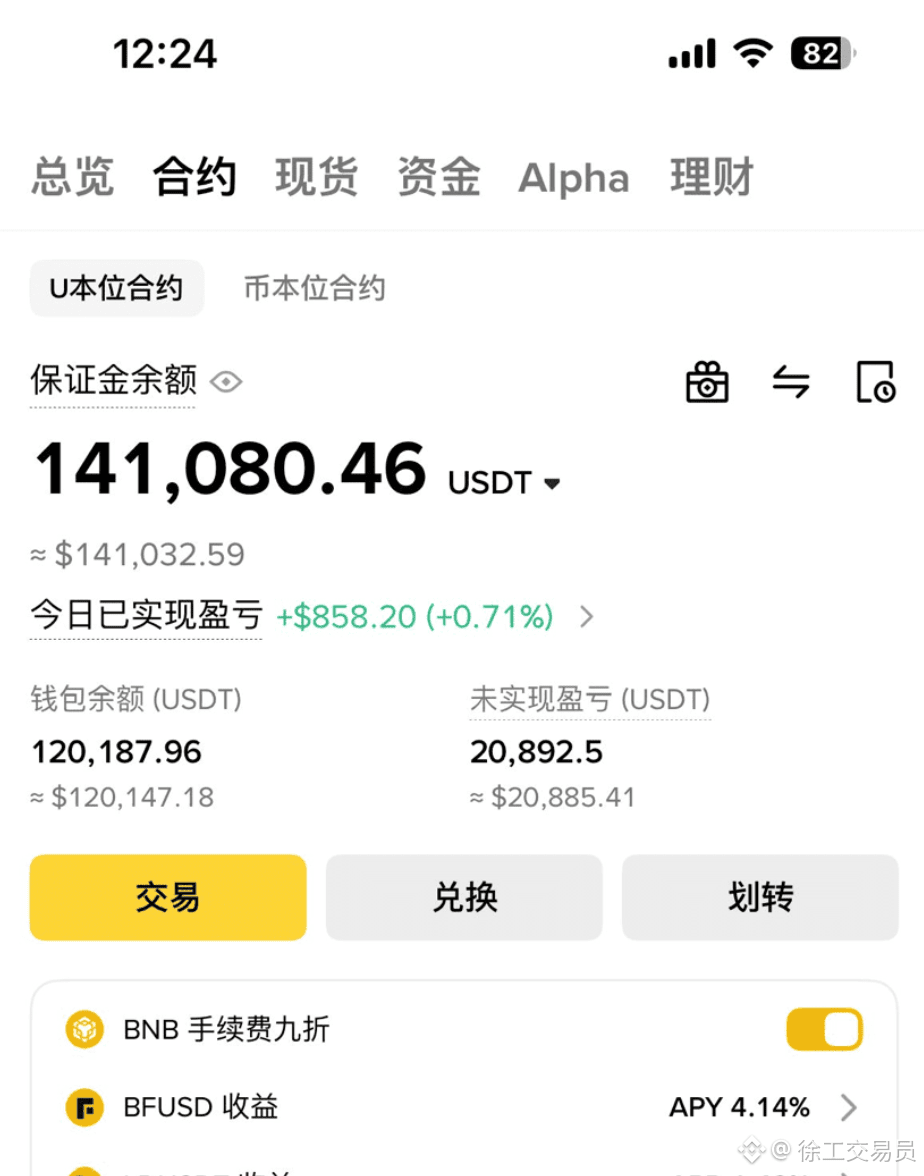
1
12
·
--
To survive in the crypto world, keep these 8 iron rules
Many people can make money in a bull market, but only a few can stay alive in a bear market.
Over the years, the traps I stepped into and the tuition fees I paid—when summed up, it all comes down to these points.
First, a sudden crash reveals whether a coin is truly good.
When the overall market drops messily, but a specific coin is only down a little—or even moving sideways—this coin usually has funds propping it up, and it often becomes easier for it to recover later.
Second, once a trend appears, don’t hesitate.
Hold it when it’s rising; don’t run just because it’s gone up a bit. If you really see a sell-off with heavy volume, cut your position when you need to.
Third, short-term trading most taboo is stubbornly holding on.
If you buy and nothing moves for three days, leave. A small loss is always more comfortable than a big one.
Fourth, when nobody is talking, opportunities often show up.
If a coin has been falling for a long time and the market isn’t paying attention to it, it may be not far from the bottom. But don’t blindly bottom-fish with your eyes closed—you need to check whether capital is returning and whether there are signs that the decline is stopping.
Fifth, always follow the trend.
Don’t think a low price is automatically a chance. Many people like to buy coins that have been cut in half—only to find that after the “halving,” there’s still another leg where the ankle gets cut.
Sixth, don’t get carried away once you’ve made money.
After each profit, ask yourself: did you earn it by skill, or did luck deliver it? If you can’t clearly explain the reason, chances are next time you’ll give it back.
Seventh, if you’re not sure, stay in cash.
Don’t trade just to trade. Real masters know when to wait.
Eighth, stick to your own set of rules.
What’s most terrifying isn’t having too few methods—it’s learning this today and that tomorrow, until you understand a little of everything but can’t do anything well.
In the end, trading is about who can last the longest.
If you’re still repeatedly losing and starting over, tap follow and let’s chat—I’ll teach you how to make trading a simple thing.
#2026足球风潮 #长鑫科技IPO定价8.66元估值5791亿元 #特朗普撤销霍尔木兹20%货运费
To survive in the crypto world, keep these 8 iron rules
Many people can make money in a bull market, but only a few can stay alive in a bear market.
Over the years, the traps I stepped into and the tuition fees I paid—when summed up, it all comes down to these points.
First, a sudden crash reveals whether a coin is truly good.
When the overall market drops messily, but a specific coin is only down a little—or even moving sideways—this coin usually has funds propping it up, and it often becomes easier for it to recover later.
Second, once a trend appears, don’t hesitate.
Hold it when it’s rising; don’t run just because it’s gone up a bit. If you really see a sell-off with heavy volume, cut your position when you need to.
Third, short-term trading most taboo is stubbornly holding on.
If you buy and nothing moves for three days, leave. A small loss is always more comfortable than a big one.
Fourth, when nobody is talking, opportunities often show up.
If a coin has been falling for a long time and the market isn’t paying attention to it, it may be not far from the bottom. But don’t blindly bottom-fish with your eyes closed—you need to check whether capital is returning and whether there are signs that the decline is stopping.
Fifth, always follow the trend.
Don’t think a low price is automatically a chance. Many people like to buy coins that have been cut in half—only to find that after the “halving,” there’s still another leg where the ankle gets cut.
Sixth, don’t get carried away once you’ve made money.
After each profit, ask yourself: did you earn it by skill, or did luck deliver it? If you can’t clearly explain the reason, chances are next time you’ll give it back.
Seventh, if you’re not sure, stay in cash.
Don’t trade just to trade. Real masters know when to wait.
Eighth, stick to your own set of rules.
What’s most terrifying isn’t having too few methods—it’s learning this today and that tomorrow, until you understand a little of everything but can’t do anything well.
In the end, trading is about who can last the longest.
If you’re still repeatedly losing and starting over, tap follow and let’s chat—I’ll teach you how to make trading a simple thing.
#2026足球风潮 #长鑫科技IPO定价8.66元估值5791亿元 #特朗普撤销霍尔木兹20%货运费
Many people can make money in a bull market, but only a few can stay alive in a bear market.
Over the years, the traps I stepped into and the tuition fees I paid—when summed up, it all comes down to these points.
First, a sudden crash reveals whether a coin is truly good.
When the overall market drops messily, but a specific coin is only down a little—or even moving sideways—this coin usually has funds propping it up, and it often becomes easier for it to recover later.
Second, once a trend appears, don’t hesitate.
Hold it when it’s rising; don’t run just because it’s gone up a bit. If you really see a sell-off with heavy volume, cut your position when you need to.
Third, short-term trading most taboo is stubbornly holding on.
If you buy and nothing moves for three days, leave. A small loss is always more comfortable than a big one.
Fourth, when nobody is talking, opportunities often show up.
If a coin has been falling for a long time and the market isn’t paying attention to it, it may be not far from the bottom. But don’t blindly bottom-fish with your eyes closed—you need to check whether capital is returning and whether there are signs that the decline is stopping.
Fifth, always follow the trend.
Don’t think a low price is automatically a chance. Many people like to buy coins that have been cut in half—only to find that after the “halving,” there’s still another leg where the ankle gets cut.
Sixth, don’t get carried away once you’ve made money.
After each profit, ask yourself: did you earn it by skill, or did luck deliver it? If you can’t clearly explain the reason, chances are next time you’ll give it back.
Seventh, if you’re not sure, stay in cash.
Don’t trade just to trade. Real masters know when to wait.
Eighth, stick to your own set of rules.
What’s most terrifying isn’t having too few methods—it’s learning this today and that tomorrow, until you understand a little of everything but can’t do anything well.
In the end, trading is about who can last the longest.
If you’re still repeatedly losing and starting over, tap follow and let’s chat—I’ll teach you how to make trading a simple thing.
#2026足球风潮 #长鑫科技IPO定价8.66元估值5791亿元 #特朗普撤销霍尔木兹20%货运费
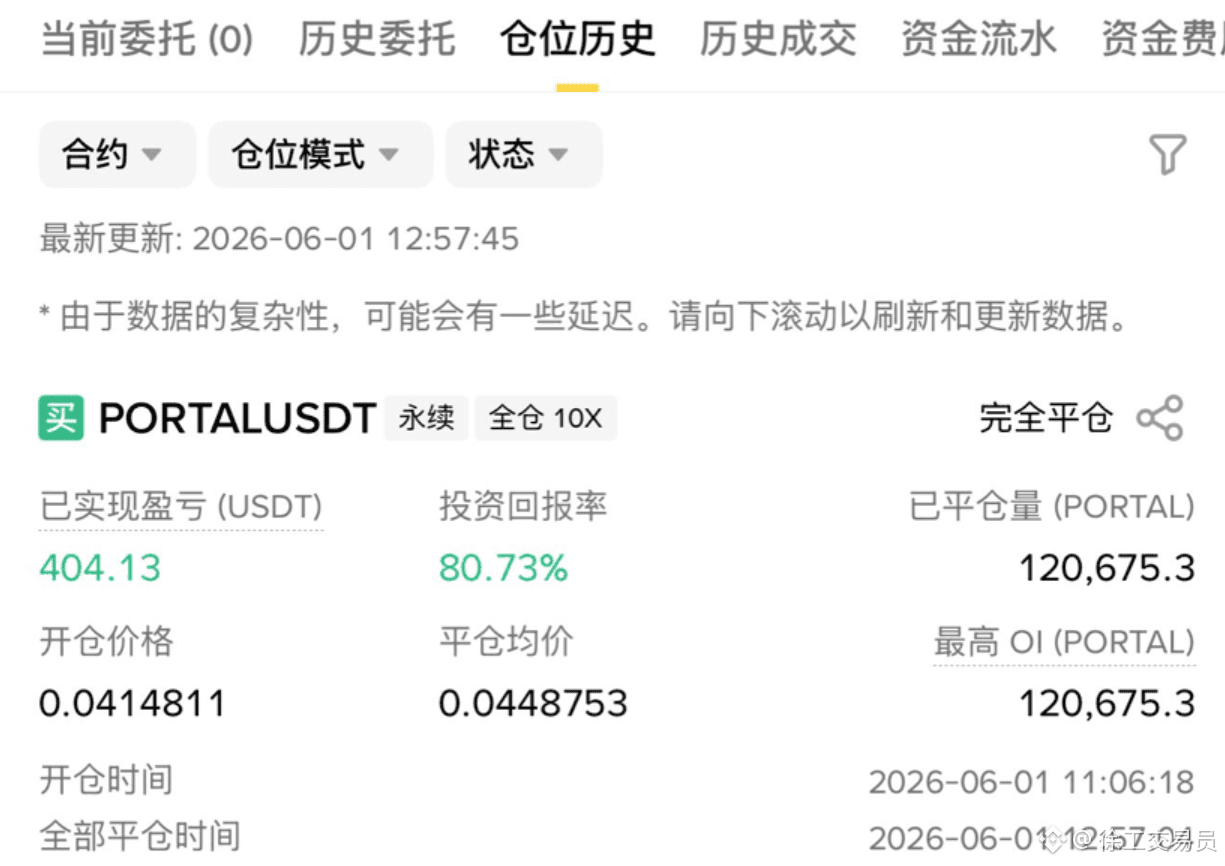
1
4
Log in to explore more content
Join global crypto users on Binance Square
⚡️ Get latest and useful information about crypto.
💬 Trusted by the world’s largest crypto exchange.
👍 Discover real insights from verified creators.
Email / Phone number
Trending Topics
AppleDebutsFoldablePhone
6,739 views
182 Discussing
#appledebutsfoldablephone I Got My Hands on the iPhone Duo, Apple’s First Foldable Phone. Here’s What Stands Out
The palm-size phone is Apple's boldest handset in years, with a 5.4-inch cover screen and a 7.6-inch main display. I spent some time with the Duo before its October launch.It’s finally here: Apple on Wednesday unveiled its first foldable iPhone, called the iPhone Duo.
iPhone Duo design and build
The iPhone Duo is compact, with a passport-size design. It has a 7.6-inch display on the inside and a 5.4-inch outer display. It fits squarely in my palm, with dimensions similar to Samsung’s Galaxy Z Fold 8, which has a 7.6-inch inner display and a 5.5-inch cover display.
Apple says the Duo is the thinnest iPhone ever when open, measuring 5.2mm. It’s 11.3mm thick when closed. A titanium frame keeps it lightweight at 254 grams.
One of the key differences in feel between Apple’s and Samsung’s phones is that the iPhone Duo has a matte, nano-textured finish on the inner display, which reduces the phone’s crease while also curbing reflections. It has a satisfying feel and really makes the crease virtually disappear when the screen is on. I find it even harder to notice than the Z Fold 8’s, which also has an anti-reflective display.$ONG $IMX $TAC
Isabella-I
·4 Likes
·880 views
US10YTreasuryYieldHitsHighestSinceNov2023
10,908 views
223 Discussing
USTreasuryToBuyBackUpTo$6BLongDatedDebt
10,496 views
140 Discussing