

1) Executive summary
Pharaoh, founded in 2023, is an Avalanche-native DEX. In Q3 2025, the project used a concentrated liquidity model (v2), alongside legacy AMM pools (v1), with a ve(3,3) governance model that distributes token incentives based on user votes. Pharaoh saw growth across most key metrics, with TVL, trading volume, fees, and monthly active users all increasing quarter-over-quarter, while token incentives declined. The project has since upgraded to v3 in Q4 2025.
🔑 Key metrics (Q3 2025)
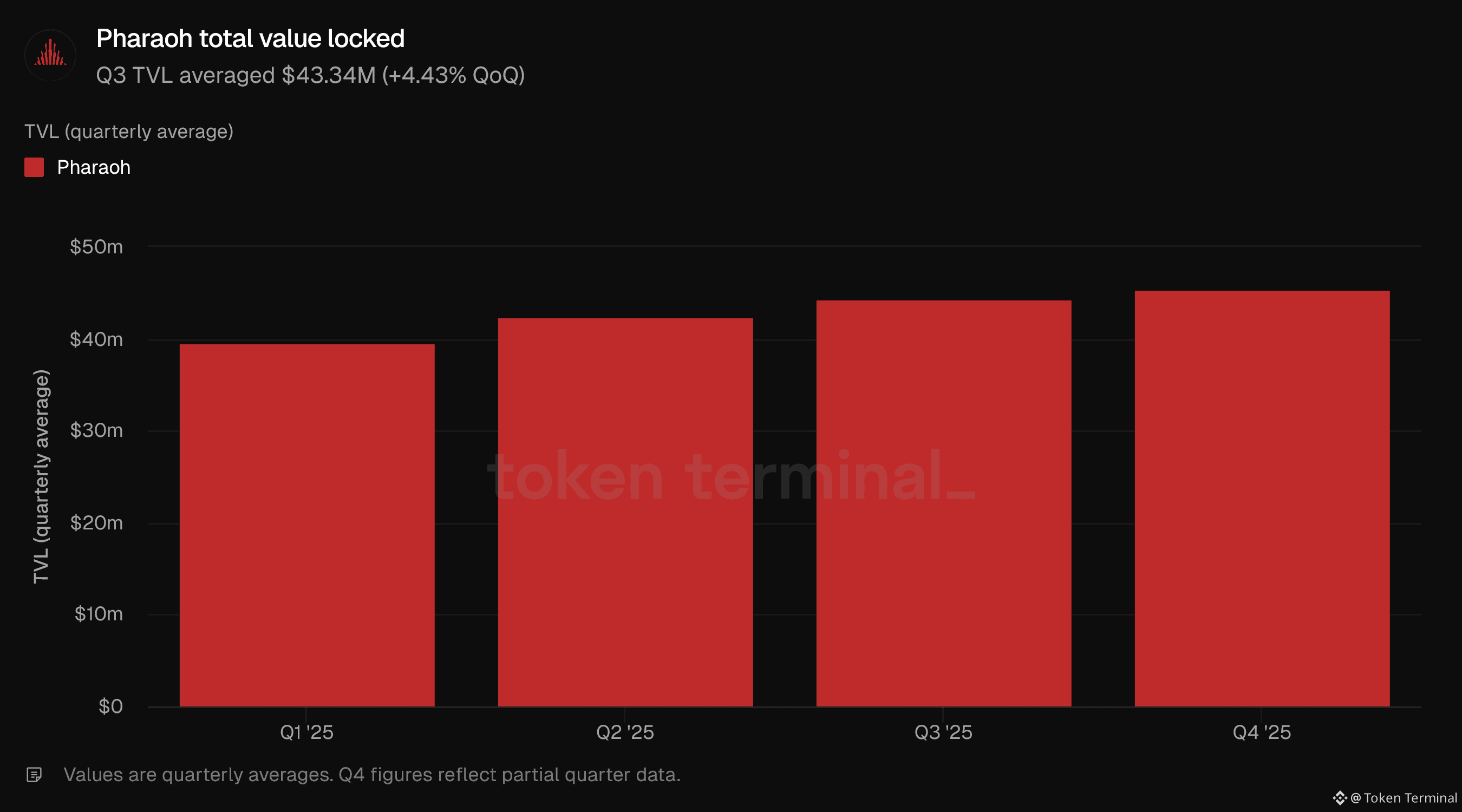
Total value locked: $44.34M (+4.43% QoQ)
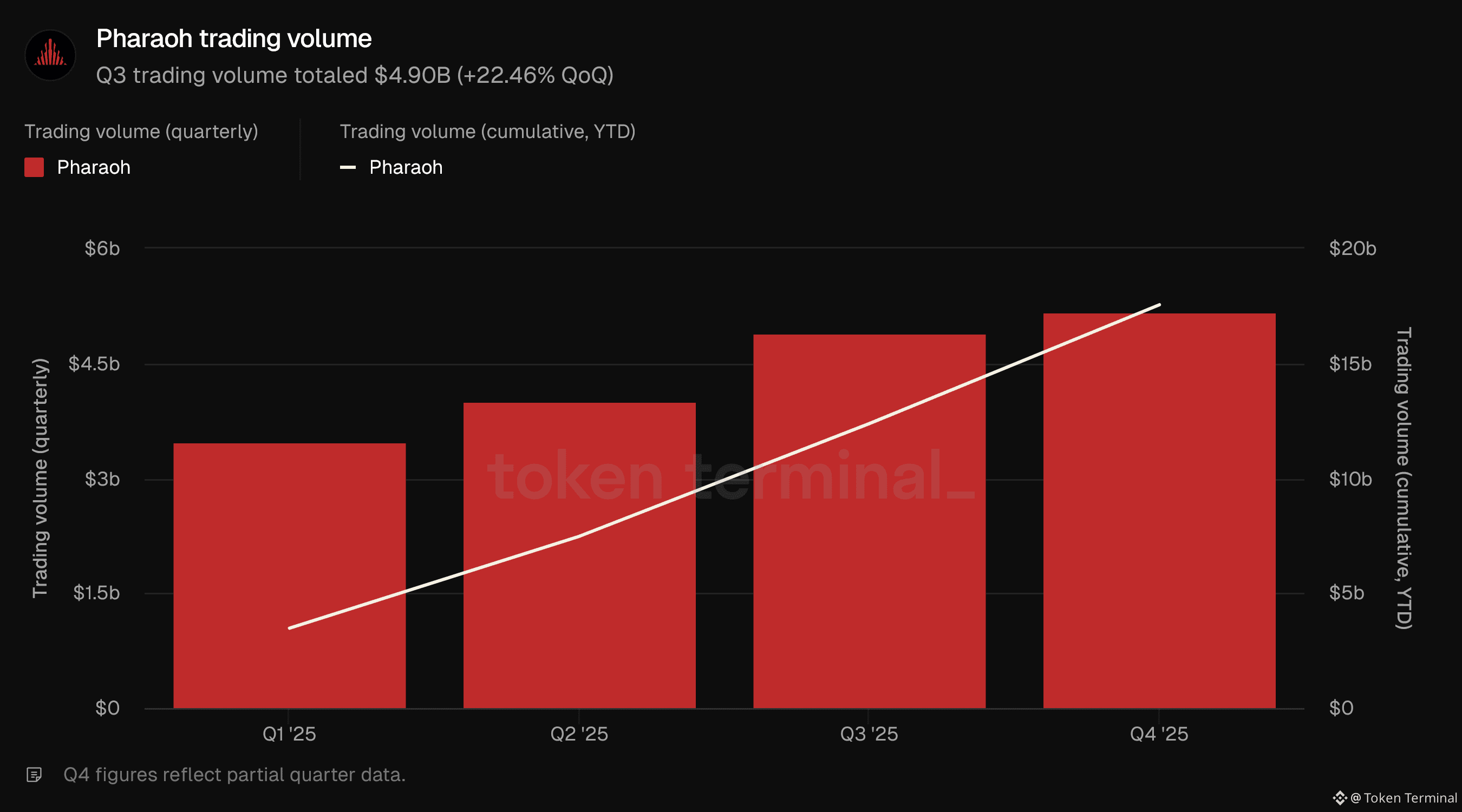
Trading volume: $4.90B (+22.46% QoQ)
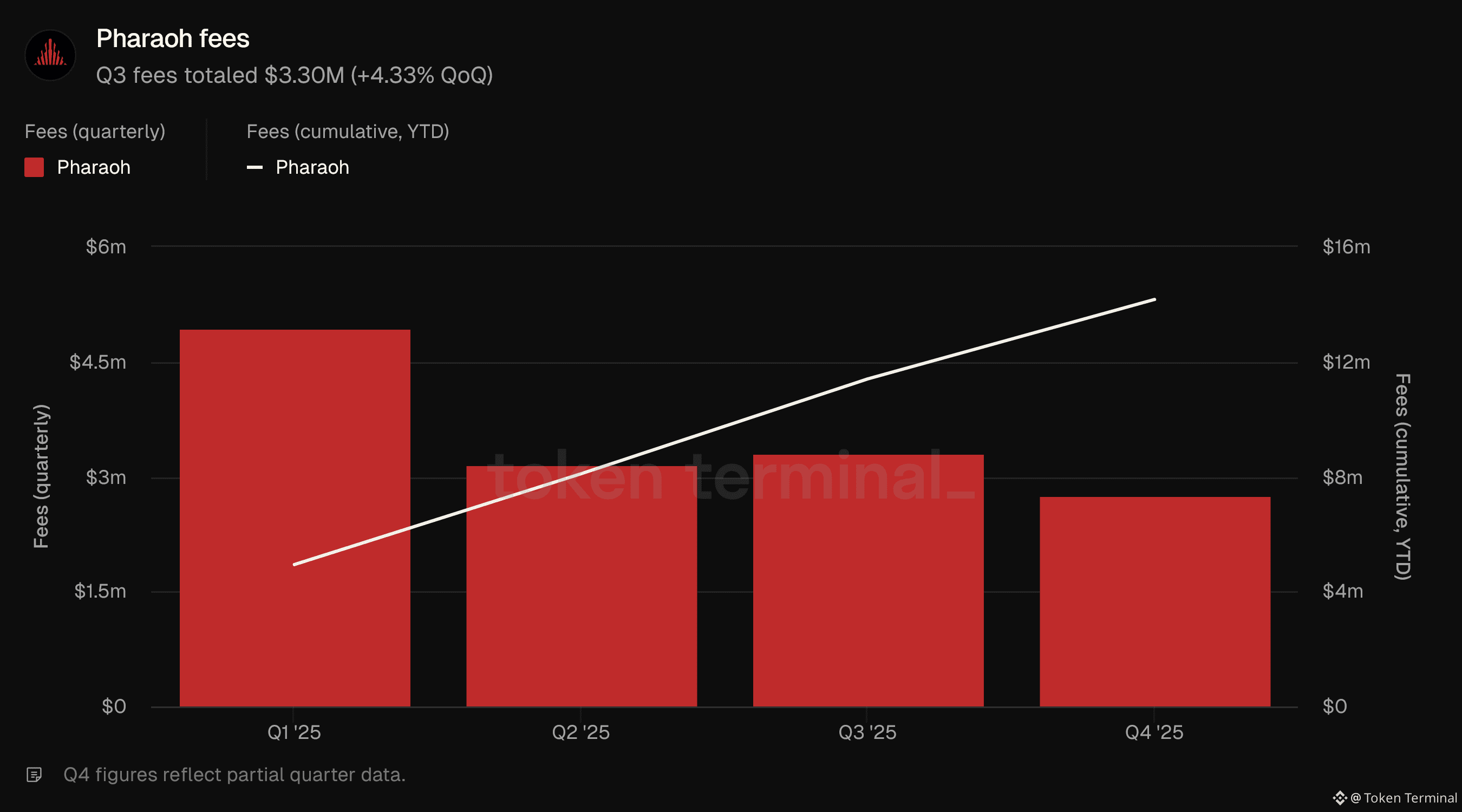
Fees: $3.30M (+4.33% QoQ)
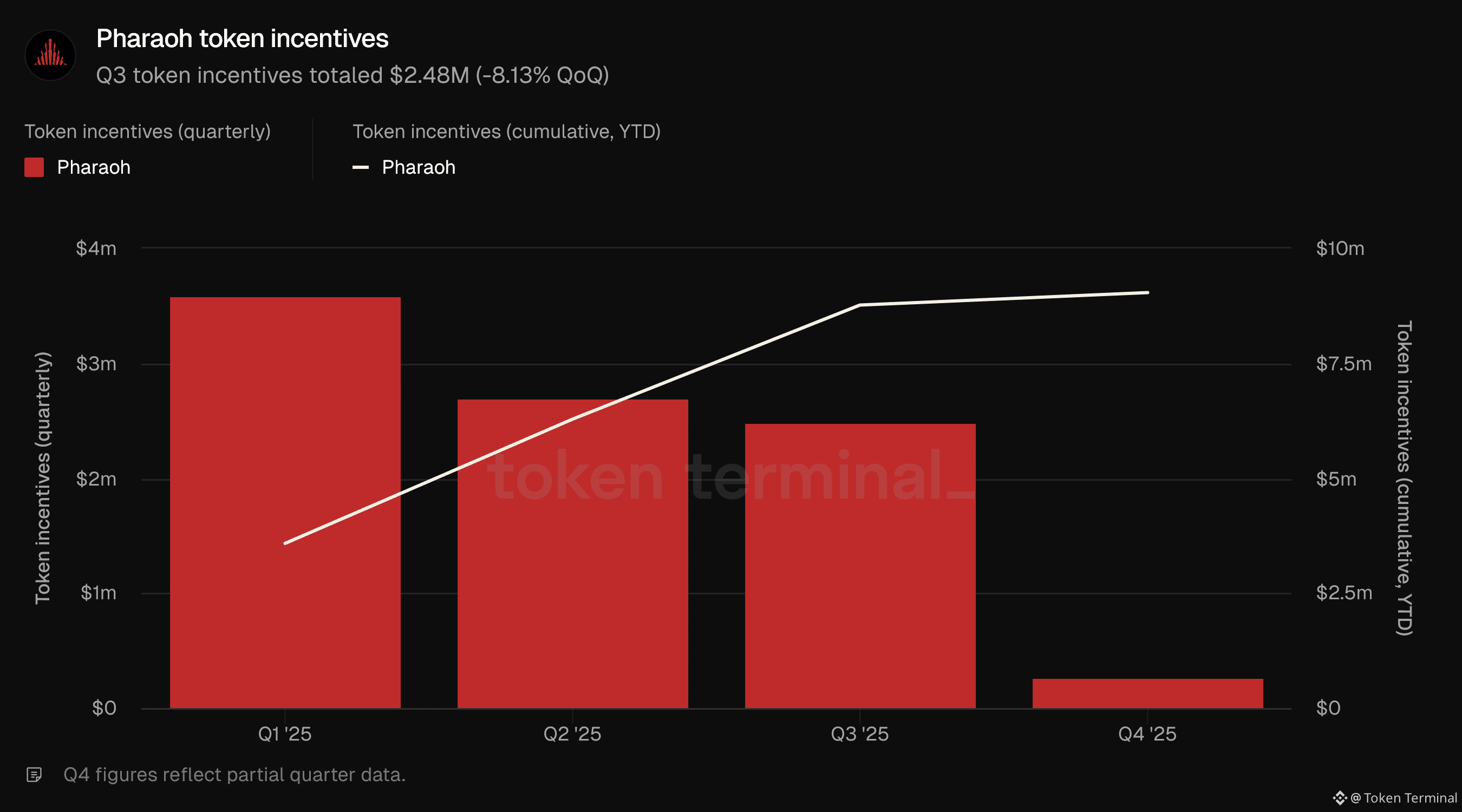
Token incentives: $2.48M (-8.13% QoQ)
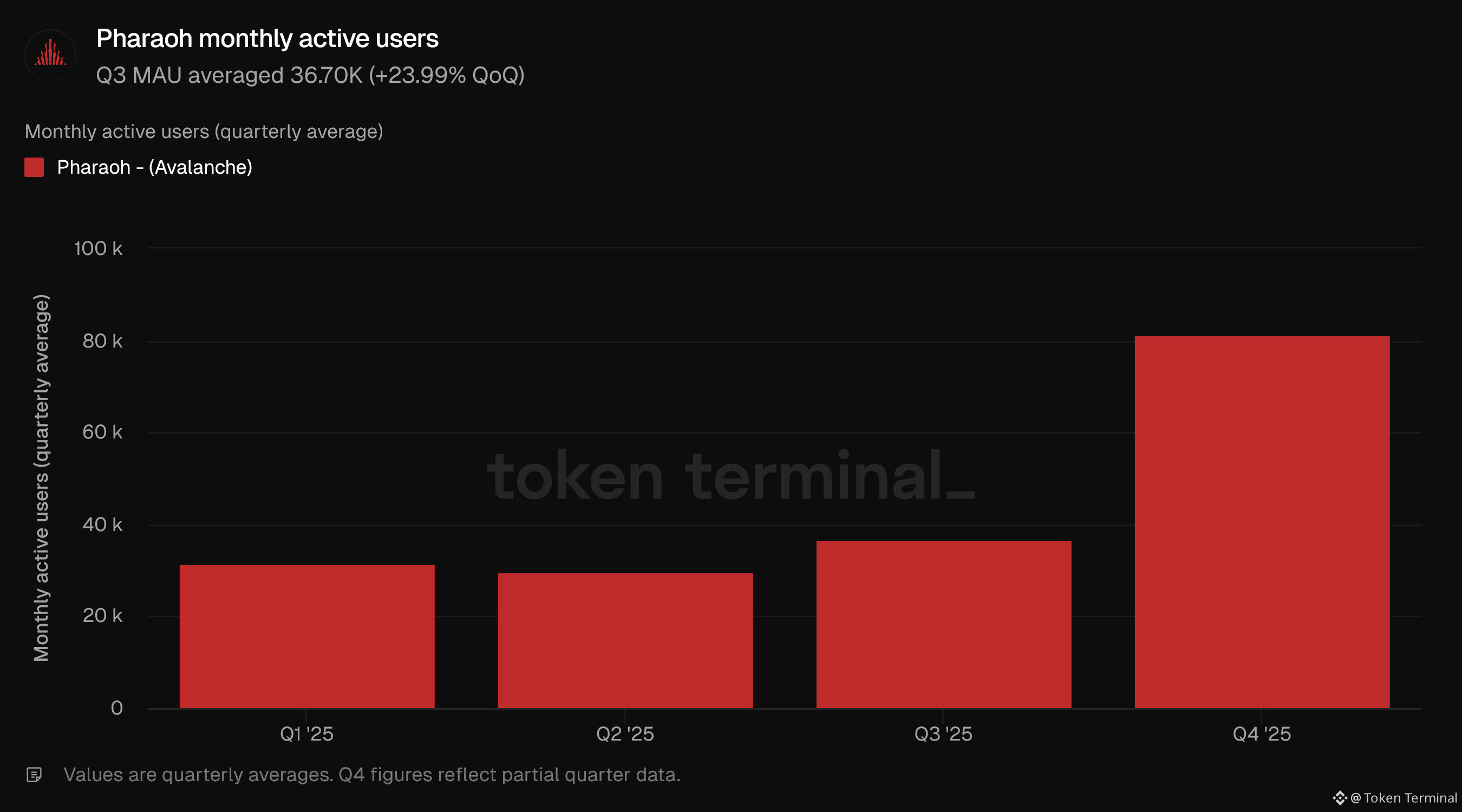
Monthly active users: 36.70K (+23.99% QoQ)
2) Total value locked & trading volume
Total value locked (TVL) measures the total USD value of assets deposited in Pharaoh's liquidity pools on Avalanche. Q3 TVL averaged $44.34M, up from $42.46M in Q2 (+4.43% QoQ).
Trading volume measures the total USD value of all trading activity on Pharaoh's decentralized exchange on Avalanche. Q3 trading volume totaled $4.90B, up from $4.00B in Q2 (+22.46% QoQ).
3) Fees & token incentives
Fees measure the USD value of token rewards distributed to users by Pharaoh on Avalanche. Q3 fees totaled $3.30M, up from $3.16M in Q2 (+4.33% QoQ).
Token incentives measure the USD value of token rewards distributed to users by Pharaoh on Avalanche. Q3 token incentives totaled $2.48M, down from $2.70M in Q2 (-8.13% QoQ).
👥 Pharaoh team commentary
"Pharaoh’s fee revenue is up 4.33% in Q3 while token incentives are down 8.13%. These two metrics together tell a strong story about Pharaoh’s growth as the most efficient liquidity engine on Avalanche.
Fees are obtained from two sources:
Swap fees - dynamic fee on each pool that is paid by the trader at the time of swap
Vote incentives - each epoch, projects can incentives token holders to vote emissions towards their pools by posting vote incentives
Pharaoh is a MetaDEX, similar to Aerodrome. This model is different from other DEXs. Liquidity providers on Pharaoh earn $PHAR emissions each epoch (one epoch is one week long). Token holders “vote” on where to send emissions using a token-weighted vote. These token holder voters earn the swap fees and vote incentives for that pool proportional to the size of their vote. Naturally, the pools that are expected to do the most fees and/or have the highest vote incentives will receive the most votes, and therefore the most emissions.
Fee revenue up with token incentives down simultaneously means that Pharaoh is getting more efficient at driving liquidity and volume. This is a strong signal for the token holders because their stakes are getting diluted less through emissions when token incentives are down, but they are earning more in revenue when fees are up."
4) Monthly active users
Monthly active users (MAU) measure the count of unique users who executed at least one trade on Pharaoh's decentralized exchange within any rolling 30-day period. Q3 MAU averaged 36.70K, up from 29.60K in Q2 (+23.99% QoQ).
5) Outlook
👥 Pharaoh team commentary
"In Q4, Pharaoh began its migration to Pharaoh v3. This unlocks greater efficiency and synergy and will propel Pharaoh to new growth.
What stays the same:
100% of revenue will still go to voting token holders
LP experience will remain the same
Technical updates:
$1M+ in formal audits with a fully modular codebase audited by ConsenSys, Spearbit, and Code4rena
Reformatted calldata structure enables seamless integrations with third-party
Immutability across all core contracts meaning they are locked at deploy. No proxies, no upgrade functions, no surprises
Cleaner contracts, better flexibility upgraded with the latest Solidity version with aggressive gas optimizations baked in. Meaning less gas. Cleaner execution
Foundation for smarter integrations this new architecture makes Pharaoh easier to extend, integrate and build on top of
vePHAR becomes xPHAR:
No more re-locking required with xPHAR
Permanent burns on xPHAR exits will cause deflationary pressure
Introducing p33, the xPHAR liquid staked token:
xPHAR can be converted to p33 and p33 can be redeemed back to xPHAR
p33 has its own liquid market
p33 has auto-compounding and auto-voting - while you hold it votes and compounds revenue behind the scenes
p33 will be leveraged as collateral in other DeFi protocols
Pharaoh will leverage its new and improved mechanisms to capture growth in Q4 and beyond."
6) Definitions
Metrics:
Total value locked: measures the total USD value of assets deposited in Pharaoh's liquidity pools on Avalanche.
Trading volume: measures the total USD value of all trading activity on Pharaoh's decentralized exchange on Avalanche.
Fees: measures the total USD value of fees generated by Pharaoh's decentralized exchange, combining trading fees from AMM operations and voting incentives from governance participation.
Token incentives: measures the USD value of token rewards distributed to users by Pharaoh on Avalanche.
Monthly active users: measures the count of unique users who executed at least one trade on Pharaoh's decentralized exchange within any rolling 30-day period.
7) About this report
This report is published quarterly and produced leveraging Token Terminal’s end-to-end onchain data infrastructure. All metrics are sourced directly from blockchain data. Charts and datasets referenced in this report can be viewed on the corresponding Pharaoh Q3 2025 Report dashboard on Token Terminal.

