
1. The sharp drop after a sudden market surge: the risk of chasing highs is extremely high
Yesterday, Bitcoin experienced a rapid surge in a short period of time. From the one-hour perspective, this was a significant breakout with increased volume. However, this breakout did not continue, and the price quickly fell back to its original position, with a very sudden movement. If one entered the market by chasing highs during the surge, they are likely to be deeply trapped now. Such market conditions are extremely unfavorable for short-term investors chasing price increases, and it serves as a reminder: in a volatile market, prioritize the safety of your position before considering long opportunities.

2. Macroeconomic level: bearish expectations have been fully digested by the market
From a macro perspective, the market's main concerns recently are twofold: first, Japan may raise interest rates, and second, the upcoming inflation data from the United States. These factors will indeed create risk-averse sentiment and trigger market volatility in the short term. However, it is important to note that, unlike in the past, this time the market has already experienced a significant decline, and related expectations are likely to have been priced in advance.
In previous similar situations, it often surged significantly before falling, while this round of market is gradually digesting the negative news during the decline. Meanwhile, the U.S. has recently begun to release some liquidity, which somewhat hedges the macro pressure. Therefore, even if the inflation data is slightly bearish, it is more likely to cause a short-term drop rather than a trend collapse.
In summary, the probability that Bitcoin will directly drop below $74,500 and not return is not high; the market is more likely to oscillate repeatedly in the bottom area, completing the exchange of positions.

Three, Funding Structure: Spot has not exerted force, bottom fishing signals have not yet been fully confirmed
From a funding perspective, the daily level spot CVD has not shown sustained buying, and the funding rate has not significantly dipped, indicating that the current market is still dominated by contract funds. Although some platforms have shown a brief resonance between spot and contract in hourly levels, overall, this resonance is not comprehensive.
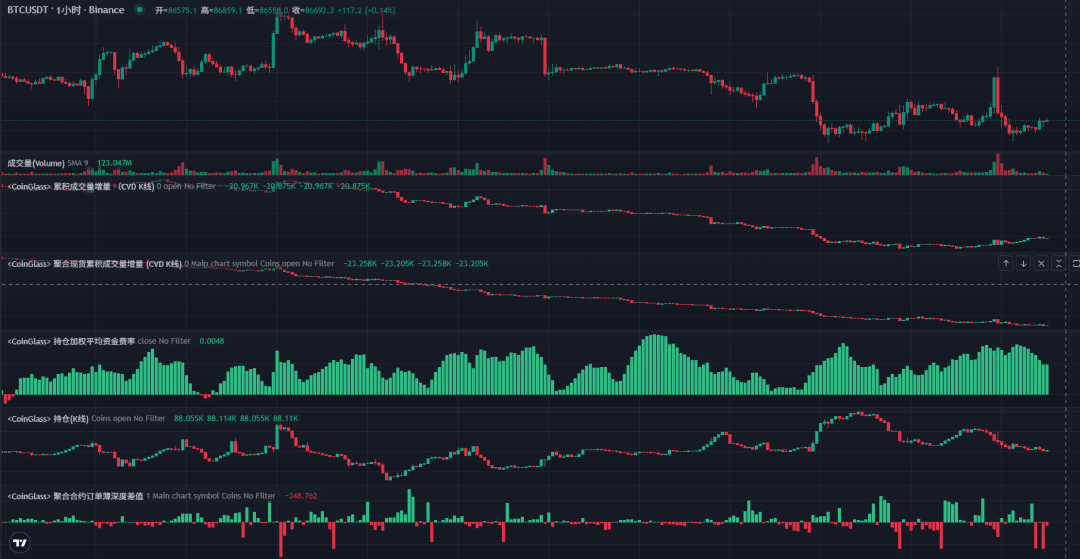
The truly ideal bottom state is usually accompanied by extreme pessimism in the market, a resonance in the fear index, a decline in funding rates, and a significant increase in proactive spot buying. However, these conditions have not yet been fully met, so one must remain highly cautious about 'bottom fishing'.
Four, ETF and Coinbase Premium: Potential support is brewing
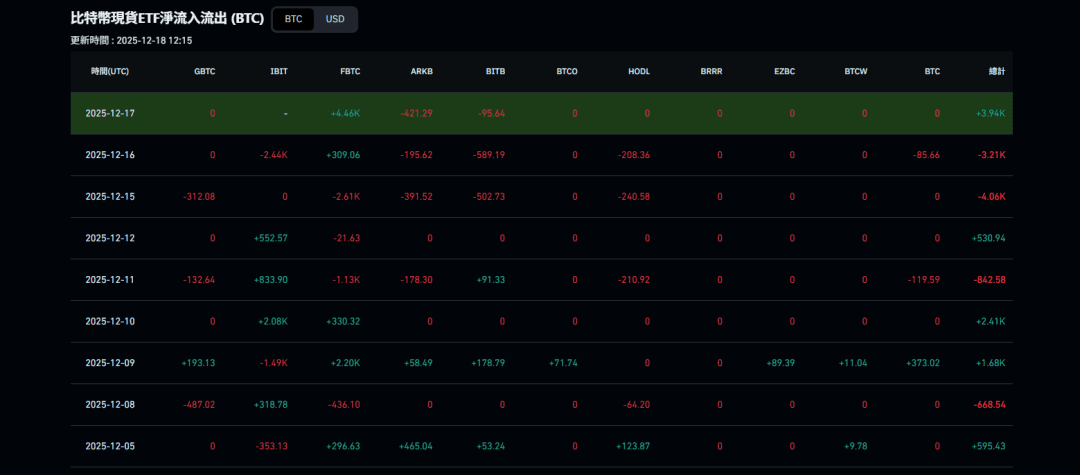
It is noteworthy that against the backdrop of a significant decline in U.S. stocks, Bitcoin ETFs still show a significant net inflow. Based on the data collected, about 3,900 Bitcoins have been purchased, which is a quite important spot support signal.
Moreover, the premium rate of Coinbase remains a key observation indicator. Historically, every true stage bottom has often been accompanied by a gradual change of the premium rate from red to green, experiencing a period of back-and-forth between red and green.
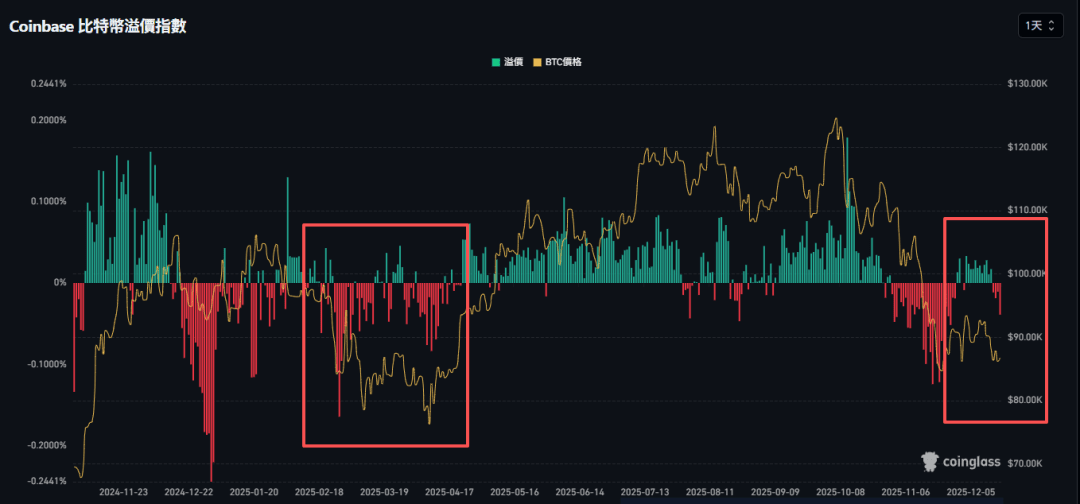
When the spot CVD, ETF net inflow, and premium rate resonate, the reliability of the bottom will significantly increase.
Five, 'Spike Market' under Liquidity Shortage Becomes the Norm
The most notable characteristic of the current market is: extreme liquidity shortage. A large amount of capital is continuously being drawn into core technology stocks in the U.S. stock market, especially the 'seven sisters' like Nvidia, significantly reducing Bitcoin's appeal as a risk asset.
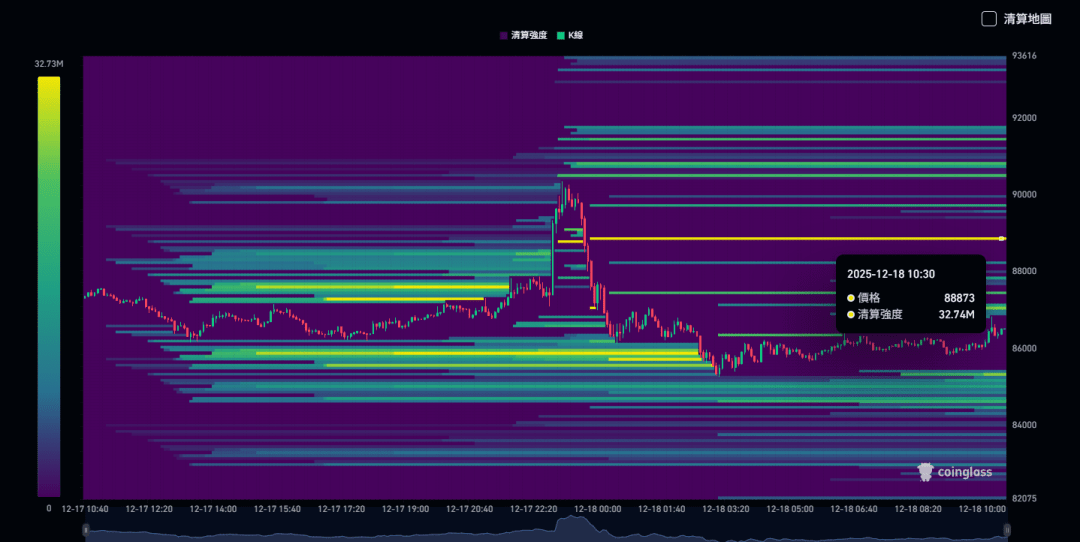
In this context, the market is prone to repeatedly harvest stop-losses and liquidation orders from both long and short positions through up and down spikes. For example, the upper range of $88,000–$88,700 and the lower range of $85,000–$84,000 are areas with relatively concentrated liquidity, so sweeping back and forth is not surprising.
Six, Key Price Range and Operational Strategy
Structurally, if the price drops below $84,000 and quickly recovers, it may actually become a good rebound opportunity; however, until a clear stabilization signal appears, it is not advisable to aggressively go long.
In this environment, a more prudent approach is:
Small position participation
Mainly using spot, avoiding heavy positions in contracts
Gradually layout in the large range of $80,000–$85,000 through DCA/systematic investment
Reserve bullets to cope with extreme dips below $80,000
Seven, Technical Structure: Multi-cycle bullish divergence is forming
From the three-day and four-hour levels, Bitcoin has shown a relatively clear bullish divergence: the price has created lower lows, but indicators like RSI have not weakened in tandem. This structure appeared in March and April of this year, followed by a significant rebound.
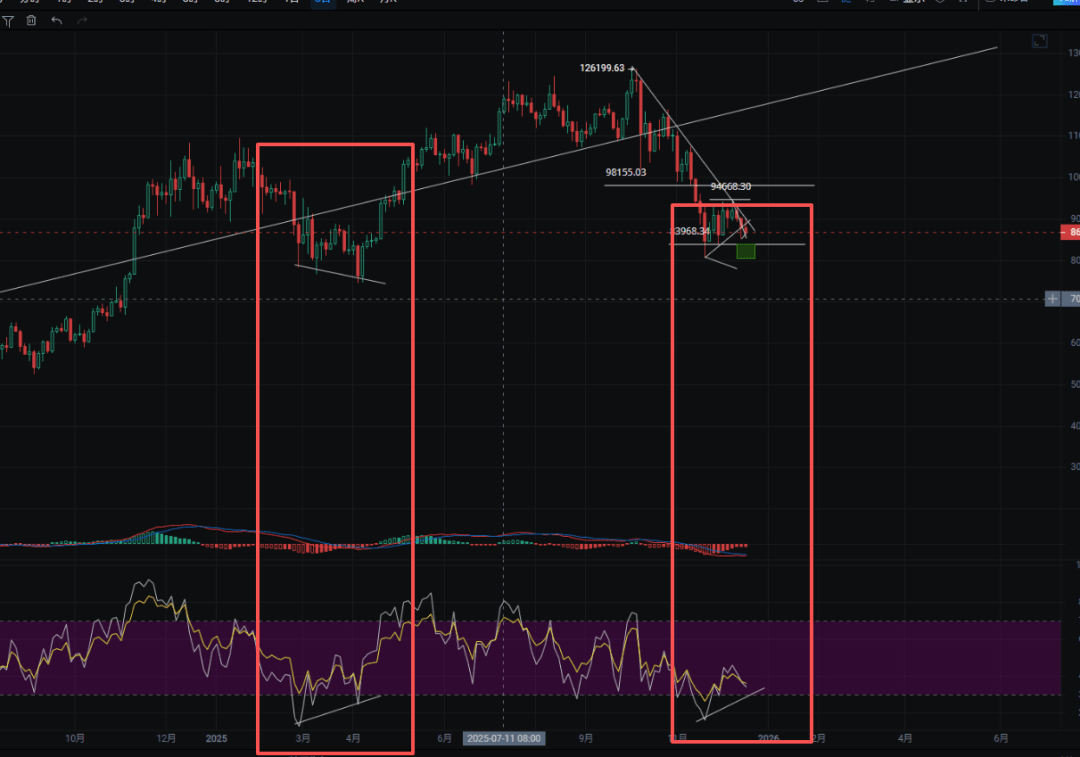
It should be emphasized that this does not mean that the market will immediately reverse, but rather that it is more likely to experience a period of severe volatility, repeated spikes, and washing out positions before establishing a direction.
Eight, Mid-term and Long-term Judgment: Differentiate cycles to avoid misjudgment
From a mid-term perspective, there indeed exists a technical and funding basis for a rebound; however, from a long-term view, due to the overall high valuation of U.S. stocks and the Fed remaining hawkish in the first half of the year, Bitcoin does not have a clear basis for a long-term bull market before 2026.
The truly new bull market is more likely to emerge after the second half of 2026. Therefore, the core strategy at this stage is not to 'heavily bet on direction', but to control risks, patiently layout, and wait for resonance confirmation.
Nine, Ethereum Synchronous Analysis: DCA Range is Clear
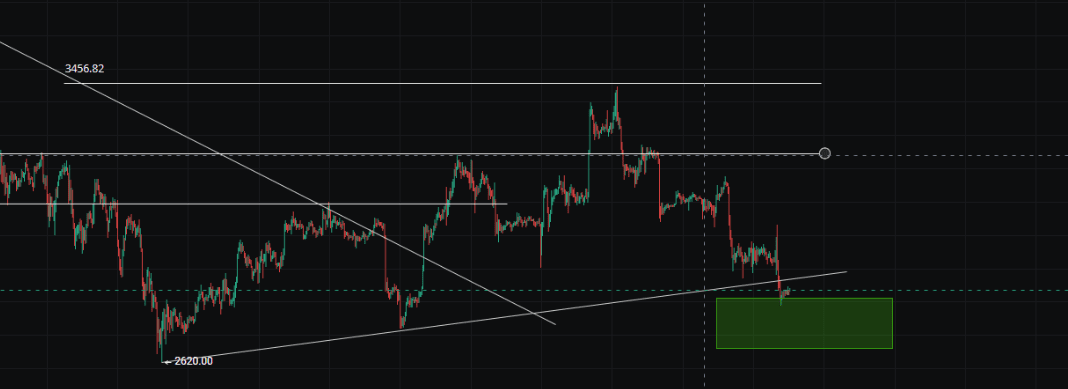
The overall trend of Ethereum is highly consistent with Bitcoin. From a technical assessment, its potential lower target range is roughly in the $2,620–$2,820 range, which coincides with previous important low points and aligns with the Fibonacci retracement structure.
In this area, it is also possible to consider a systematic investment approach to prepare for a medium-term rebound, but the premise remains: not fully invested, not aggressive, and not using leverage.
To summarize in one sentence
The current market is not a 'desperate collapse', but rather a typical consolidation period under liquidity exhaustion.
Opportunities will certainly arise, but they are only available to those who are patient, disciplined, and manage their positions.

