
Over the past period, the macro level has not been 'quiet.'
Inflation data is released in waves, interest rate cut expectations are repeatedly tugged, Federal Reserve officials are speaking intensively, and almost every speech by Powell is dissected word by word. But strangely— the market that should respond is becoming increasingly cold.
It's not a crash, nor a panic sell-off, but a more unsettling state:
Policies are speaking, but the market is not responding.
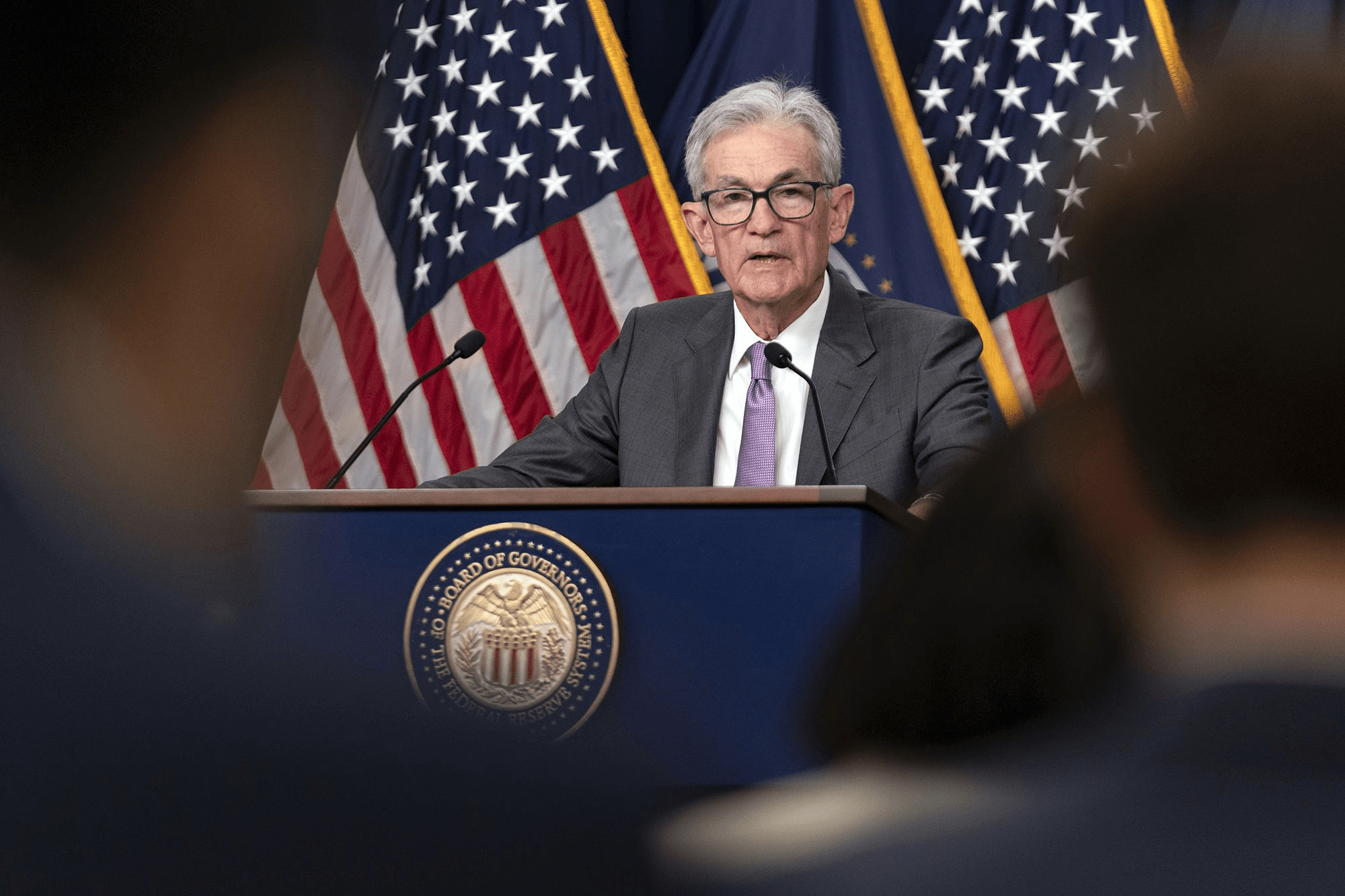
The market hasn't not listened, but has begun to 'distrust.'
If you extend the time frame, you'll notice a significant change:
In the past, the market 'listened' to the Federal Reserve;
Now, the market is more on guard against the Federal Reserve.
Once the interest rate cut signal is out, the market no longer follows; inflation falls, but risk assets are not excited; even 'dovish wording' can be interpreted in reverse.
This is not because the market has become smarter, but because—
The marginal impact of monetary policy is clearly declining.
When everyone knows 'what the next step will likely say', the statement itself loses its impact. Policy has transformed from 'directional guidance' to 'emotional variable', even becoming a new source of uncertainty.
What is cold is not the market, but the expectation system.
What has truly cooled down is not the price, but the expectations.
The panic index has lingered at a low level for a long time, trading volume has shrunk, and market depth has thinned. Funds are no longer positioning themselves around 'the next stimulus' but are repeatedly confirming one question:
If the policy is no longer effective in providing a bottom line, how should risks be priced?
This is also why you see an abnormal phenomenon:
There is no systemic bearishness, yet there has always been no systemic buying, and once a rebound occurs, it is quickly sold off.
The market is not bearish about the future, but is no longer willing to bet early on macro commitments.
When human control fails, funds will instinctively seek 'rules'
Once the credibility of policy signals declines, the behavior of funds will undergo structural changes.
They no longer chase narratives but return to the most fundamental logic:
Can it be settled? Can it be verified? Can it remain controllable under extreme circumstances?
This is also why stablecoins have been brought into the spotlight in this round of environment.
It's not because they are attractive, but because when the macro fails, 'stability' itself has become a scarce resource.
Stablecoins are being re-examined, and this is not accidental.
In this case, USDD must be mentioned
When stablecoins are scrutinized under a microscope, the focus of discussion is no longer 'who uses it more', but rather:
Whose stability relies less on human interpretation.
It is precisely in this discussion framework that USDD is repeatedly mentioned, not for short-term gains, but because it currently adopts the USDD 2.0 model—a decentralized stablecoin structure centered on excess collateral + complete on-chain transparency.
The full name of USDD is Decentralized USD. It does not maintain confidence through statements but lays out key data directly on the chain: the structure of collateral assets is public, trades and statuses can be verified in real time, and it has undergone a total of 5 security audits by CertiK and ChainSecurity.
Such designs are not prominent in a bull market, but in a phase where policy influence declines and the market shifts to defense, they will be repeatedly used for comparison.
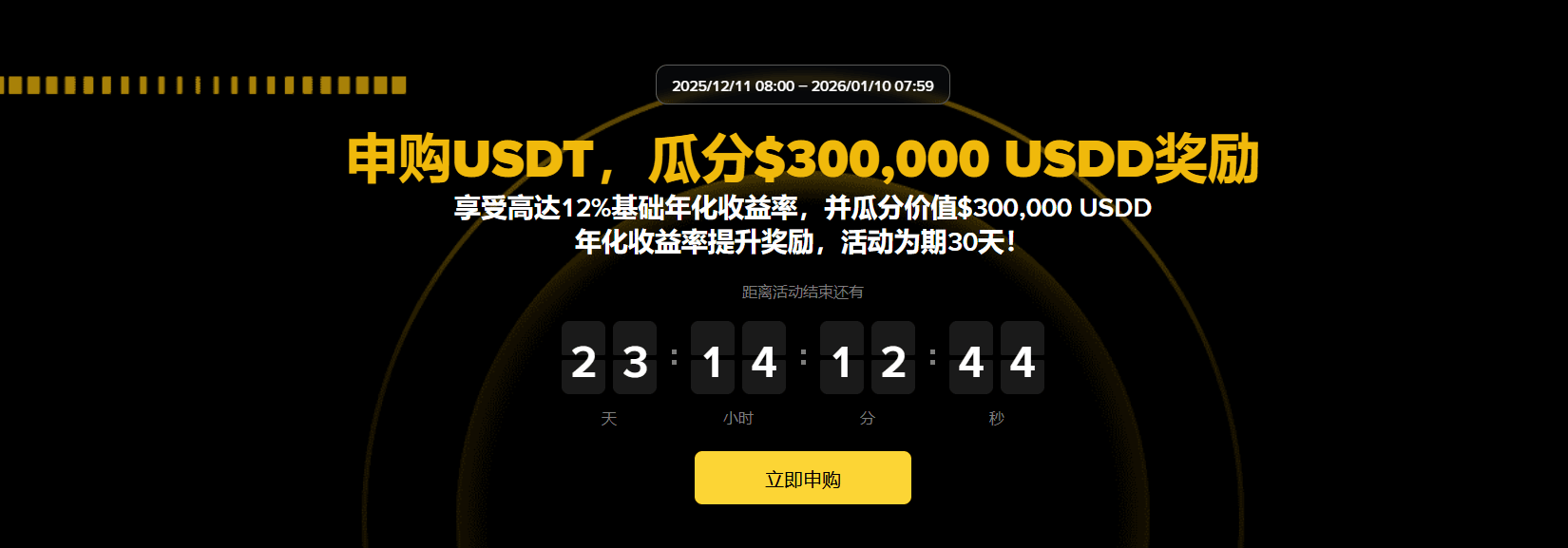
USDD has now launched on Binance Wallet Yield+Click to share a total value of 300,000 USDD
The minimum participation amount is 100 USDT
Daily issuance of 10,000 USDD rewards
No participation TVL cap
sUSDD benchmark APY: 12%
Activity reward: currently 25.82%
Participate in Binance Wallet finance in the Yield+ USDD USDT strategy, and share a total of 300,000 USDD rewards within 30 days.
This is not taking sides, but a change in market behavior.
It should be emphasized that the discussion@USDD - Decentralized USD is not to deny other stablecoins, nor to make a single recommendation.
It is more like a phenomenon:
When macro tools begin to fail, the market will spontaneously seek stability anchors that do not rely on 'people'.
Monetary policy addresses directional issues,
while rule-based stability addresses trust and execution issues.
When the roles of the two begin to misalign, funds will naturally adjust.
The market is giving a clear signal
What is truly worth being vigilant about in this round of market is not the price fluctuations, but a deeper change:
The market is shifting from 'trusting policies' to 'trusting rules'.
When interest rates are lowered, inflation rises, and statements come in turns, yet risk appetite can no longer be ignited, it indicates that the old stability methods are failing. A new stability anchor is being gradually sought.
As for where this road will ultimately lead, no one can provide a definite answer.
But it can be confirmed that—
The market has already begun to act.

