

(GENIUS Act) initial rule proposal, countdown for banks to issue stablecoins
The Federal Deposit Insurance Corporation (FDIC) took the first step in implementing the (GENIUS Act) this Tuesday (12/16). The FDIC Board voted to approve a rule proposal and initiated a 60-day public comment period.
The core of this proposal is to establish a standardized application process that allows banks regulated by the FDIC to apply for the issuance of payment stablecoins through their subsidiaries. This is the first concrete regulatory action since President Trump signed the bill into law in July of this year, symbolizing that stablecoins are officially included in the regulatory framework of the mainstream banking system in the United States.
Currently serving as the acting chair of the FDIC, and also the nominee for the permanent chairperson position by President Trump, Travis Hill stated that the proposal aims to establish a 'tailored' application process.
The FDIC will assess the safety and soundness of the proposed activities of applying institutions based on statutory factors, while striving to minimize the regulatory burden on applicants. According to the proposal, the FDIC will complete the review and make a decision within 120 days after receiving a complete application. If the application is denied, the applying institution will also have the right to appeal, providing a clear and predictable legal pathway for banks to enter the stablecoin market.
Application thresholds and review standards will comprehensively assess financial health and risk management.
For banks interested in issuing stablecoins, this proposal details the thresholds that must be crossed. Applying institutions need to submit a comprehensive business plan that covers the ownership structure, operational strategy, and most critically, the reserve asset management procedures of the stablecoin issuing subsidiary.
Moreover, applicants must also attach a letter of engagement signed with a registered accounting firm to demonstrate their capability to conduct independent audits. The FDIC's review will focus on the institution's financial condition, quality of management, redemption policies, and whether the overall risk control mechanisms meet the requirements of the (GENIUS Act).
Although the FDIC expects that the initial number of applications will not experience explosive growth (estimated at about 10 applications per year), this new regulation undoubtedly opens up a whole new source of income for traditional banks. Compared to traditional payment channels, stablecoins have advantages in settlement speed and low costs, allowing banks to directly compete with crypto-native stablecoin issuers like Circle or Tether.
Major banks such as Citigroup have begun collaborating with crypto companies to test stablecoin payments, demonstrating Wall Street's strong interest in this emerging business.
It is noteworthy that the FDIC emphasizes it will not easily reject applications unless it determines there are 'unsafe or unsound' risks in the stablecoin plan; and if the regulatory agency does not take action within the statutory time frame, the application may be deemed automatically approved, indicating the regulatory agency's proactive attitude towards fostering innovation.
Subsequent regulatory puzzle: Capital and liquidity rules will be released in a few months.
While establishing the application process is an important step, this is merely the starting point of the entire regulatory framework. Hill revealed that the FDIC plans to issue another more substantive rule in the coming months specifically targeting capital, liquidity, and risk management requirements for subsidiaries authorized to issue stablecoins.
This means that after obtaining issuance approval, banks must also comply with strict capital adequacy ratio (Capital Adequacy Ratio, CAR) standards and ensure that the stablecoins they issue have 100% dollar or high-quality liquid assets (such as US Treasuries) as reserve support, to eliminate market concerns about 'decoupling' or bank runs. Additionally, anti-money laundering (AML) and sanctions compliance will be key priorities for subsequent regulations.
(GENIUS Act) is the first major cryptocurrency law passed by the US Congress, and its strategic significance lies not only in regulation but also in consolidating the global status of the dollar.
Some industry perspectives believe that the expansion of regulated stablecoins through digital applications of the US dollar can effectively enhance the liquidity and influence of the dollar within the global payment system. This view has also been endorsed by US Treasury Secretary Scott Bessent.
As the total market value of stablecoins has surpassed $310 billion, and the vast majority are pegged to the US dollar, incorporating this massive market into the federal regulatory system is crucial for maintaining financial stability.
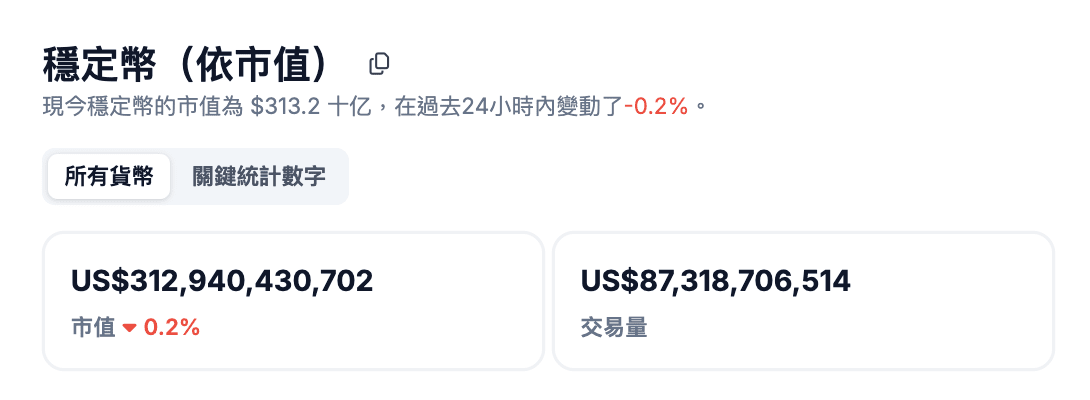 Source: CoinGecko Stablecoin market value has exceeded $310 billion.
Market impact? The new dynamics of competition and cooperation between banks and crypto firms.
The FDIC's actions will undoubtedly accelerate the integration of traditional financial institutions with the cryptocurrency industry. For crypto-native giants like Coinbase and Circle, the entry of bank competitors presents both challenges and opportunities:
On one hand, the entry of banks may divide market share;
On the other hand, the participation of banks will significantly enhance the public's trust and adoption of stablecoins, thereby enlarging the overall market.
Recently, Coinbase has expanded regulated stablecoins such as $RLUSD on its Layer2 blockchain, indicating that market demand for compliant assets is rapidly growing.
As the public consultation period begins, feedback from the banking sector, the crypto industry, and the general public will directly influence the final shape of the rules. Once the entire set of rules is finalized and implemented, the US will establish one of the most comprehensive stablecoin regulatory systems in the world. This will not only provide stronger protections for investors but also help the US gain a competitive edge in the global digital finance arena.
In the future, we may see more banks launching their own 'digital dollars', allowing stablecoins to evolve from a medium of cryptocurrency transactions to a mainstream tool for everyday payments and settlements.
'(GENIUS Act) The first wave of rules is out, paving the way for banks to issue stablecoins' This article was first published in 'Crypto City'
