


This issue's cover: Photo by Debby Hudson on Unsplash
This report is written by Web3Caff Research analyst Rosa, focusing on how BNB Chain constructs the next stage of its foundational system through multi-chain, execution layer technology, and ecological growth. Key points include:
① The multi-chain pattern takes shape, with BSC, opBNB, and Greenfield collaboratively driving performance and cost optimization;
② The execution layer continues to evolve, enhancing overall usability from parallelization, state management to DA upgrades;
③ The ecosystem enters an expansion phase, with AI, RWA, and blockchain gaming scenarios continuing to scale;
④ In a multi-VM and cross-chain competitive environment, BNB Chain maintains long-term potential through performance and ecological matrix.
Attached are the key point structure chart and an overview of the multi-chain collaboration framework, presenting the technical context and ecological path of the BNB Chain.
BNB Chain ecological track 25 years Q4 13,000-word research report: A five-year journey, how does it lay out the next 'billion-user' era? A panoramic breakdown of its development system, technological iteration, ecological layout, competitive challenges, and future outlook.
The launch of the cryptocurrency innovation exemption policy signifies a fundamental change in the U.S. regulatory attitude towards the cryptocurrency industry. From nearly indifferent and vague over the past few years, it has shifted to actively guiding and clearly supporting, aiming to promote the establishment of a clear new rules system. This policy has given the cryptocurrency industry a clear and positive compliance pathway in the U.S. This article by Bibi News will discuss for you, a quick reading.
Countdown to the launch of the cryptocurrency innovation exemption policy
The name Fusaka comes from the combination of the execution layer upgrade Osaka and the consensus layer version Fula Star. This upgrade includes 12 EIPs, covering data availability, gas/block capacity, security optimization, signature compatibility, transaction fee structure, etc. It is a systematic upgrade to achieve L1 expansion, reduce L2 costs, lower node costs, and enhance user experience. lOBC Capital will explore this in this article for you.
What will the Fusaka upgrade bring to Ethereum?
"As long as the code is sufficiently decentralized, there is no legal entity, and regulation cannot take action." This was once a refuge for many on-chain lending entrepreneurs. However, with the penalties imposed in the U.S. Ooki DAO case, this layer of 'depersonalization' is being pierced by regulators. Under stricter 'penetrating regulation' logic, how far can on-chain lending go? This article discusses for you.
Mankiw Research: After the first global DAO case, how long can the 'decentralized cloak' of on-chain lending last?
EIP-7892, the emergence of BPO (Blob Parameter Only), is precisely to extend this elasticity to the data field. It makes the key parameters of Blob configuration-driven and takes effect through BPO's 'only change parameters, not code' lightweight hard fork. From the perspective of client-side development, it is almost like doing a parameter hot update, this article discusses for you.
The 'continuously variable transmission' in the Ethereum Fusaka upgrade: establishing a rapid response mechanism for L2 expansion
On December 4, Caroline D. Pham, acting chair of the U.S. Commodity Futures Trading Commission, announced that listed cryptocurrency spot products will begin trading for the first time on federally regulated CFTC-registered futures exchanges in the U.S. This move is one of the first agendas in the 'cryptocurrency sprint' plan initiated to implement the government's pro-cryptocurrency policy goals, this article discusses for you.
The U.S. CFTC officially releases cryptocurrency spot products, reshaping the regulatory landscape from 'crypto sprint' to 2025.
Currently, L2 costs mainly involve the DA cost of publishing data to L1. Fusaka has reduced L2 costs by more than half through Blob expansion by 8 times and PeerDAS random sampling verification. Simply lowering costs is meaningless, but if we discard the past thinking of generic L2 and view it from the perspective of specific application chains, the significance is completely different, this article discusses for you.
What benefits has the Fusaka upgrade brought to Ethereum?
Currently, dollar stablecoins (mainly Tether's USDT and USDC) hold about $125 billion in U.S. Treasury bonds, close to 2% of the short-term treasury stock market at the end of last year (Kansas City Federal Reserve Bank research in August). According to data from the Bank for International Settlements, these issuing institutions purchased about $40 billion in short-term treasury bonds just last year, this article discusses for you.
Bloomberg: Stablecoins may not help the U.S. escape the debt and deficit quagmire
Although game currency and cryptocurrency are not the same category, in the current judicial system where there is a lack of clear legislative guidance and judgment standards for Web3, virtual assets, and cryptocurrency crimes, case handlers often use virtual property cases in the gaming industry as a basis for analogy to infer the legal attributes of criminal cases in the Web3 field, this article discusses for you.
From game currency to cryptocurrency: the applicability paths of criminal charges and disputes over amount determination in virtual asset cases (Part 1)
To understand OIF, one must first understand the fundamental change occurring in Web3 interaction logic: from 'instructions' to 'intentions'. OIF aims to establish a standardized 'intention framework' for the entire Ethereum ecosystem, providing a universal protocol stack for wallets, bridges, Rollups, and market-making/solvers, this article discusses for you, a quick reading.
When 'intention' becomes the standard: How does OIF end cross-chain fragmentation and bring Web3 back to user intuition?
10 news items worth paying attention to this week
Tether launches AI health platform QVAC Health
 Source: Tether
The stablecoin public chain Tempo has opened for public testing
 Source: tempo
Superstate launches on-chain direct issuance plan
 Source: theblock
Espresso launches cross-chain solution Presto
 Source: paragraph
Gensyn launches an open market Delphi aimed at machine intelligence
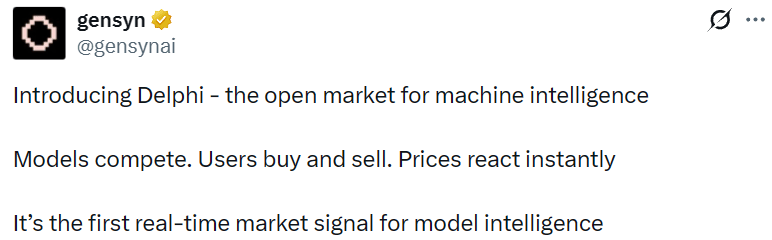 Source: gensyn
The U.S. SEC has concluded its two-year investigation into Ondo without bringing any charges.
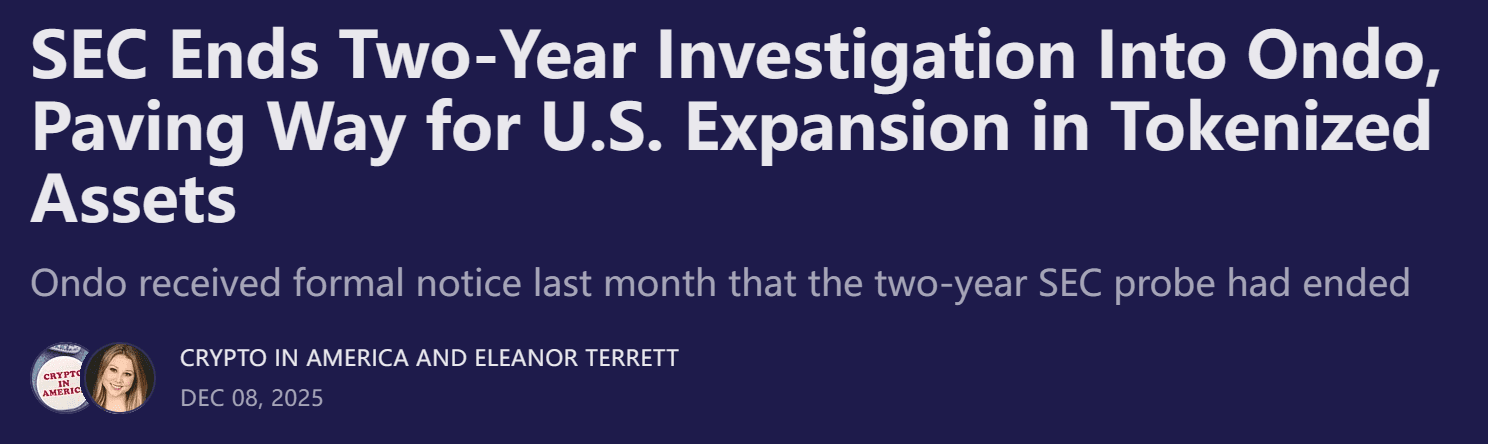 Source: Crypto in America and Eleanor Terrett
USPD announces the post-attack recovery plan for V1 and the reconstruction roadmap for V2
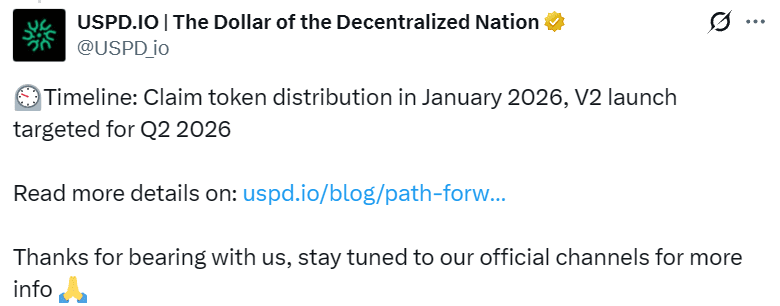 Source: USPD.IO
Virtuals Protocol collaborates with OpenMind
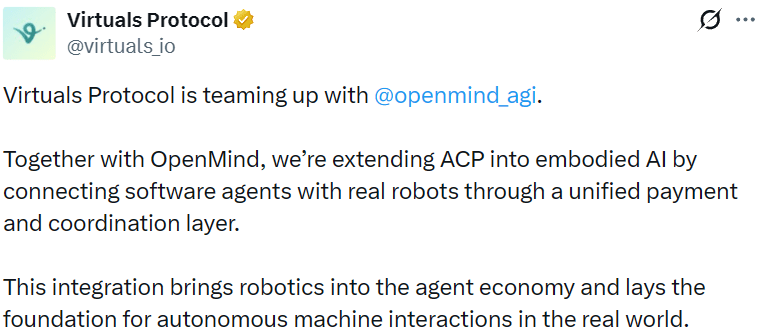 Source: Virtuals Protocol
OKX has migrated X Layer to OP Stack
 Source: optimism
Robot project Generative Bionics completes $80 million financing, with Tether and others participating
 Source: tether
RWA platform Real Finance raised $29 million in a private equity round
 Source: cointelegraph
Singapore licensed stablecoin cross-border payment and asset management service provider MetaComp completes $22 million Pre-A financing
 Source: prnewswire
Disclaimer: As a blockchain information platform, the articles published on this site only represent the personal views of the authors and guests and do not reflect the stance of Web3Caff. The information contained in the articles is for reference only and does not constitute any investment advice or offer, and please comply with the relevant laws and regulations of your country or region.


