

@undefined is a real project building a purpose-built blockchain and identity infrastructure for autonomous agents software systems that can act, transact, and coordinate with minimal human intervention. At its core, Kite aims to solve three intertwined problems that emerge as AI systems become more autonomous: how these agents are identified, how they can operate within controlled guardrails, and how they can transact economic value at machine scale.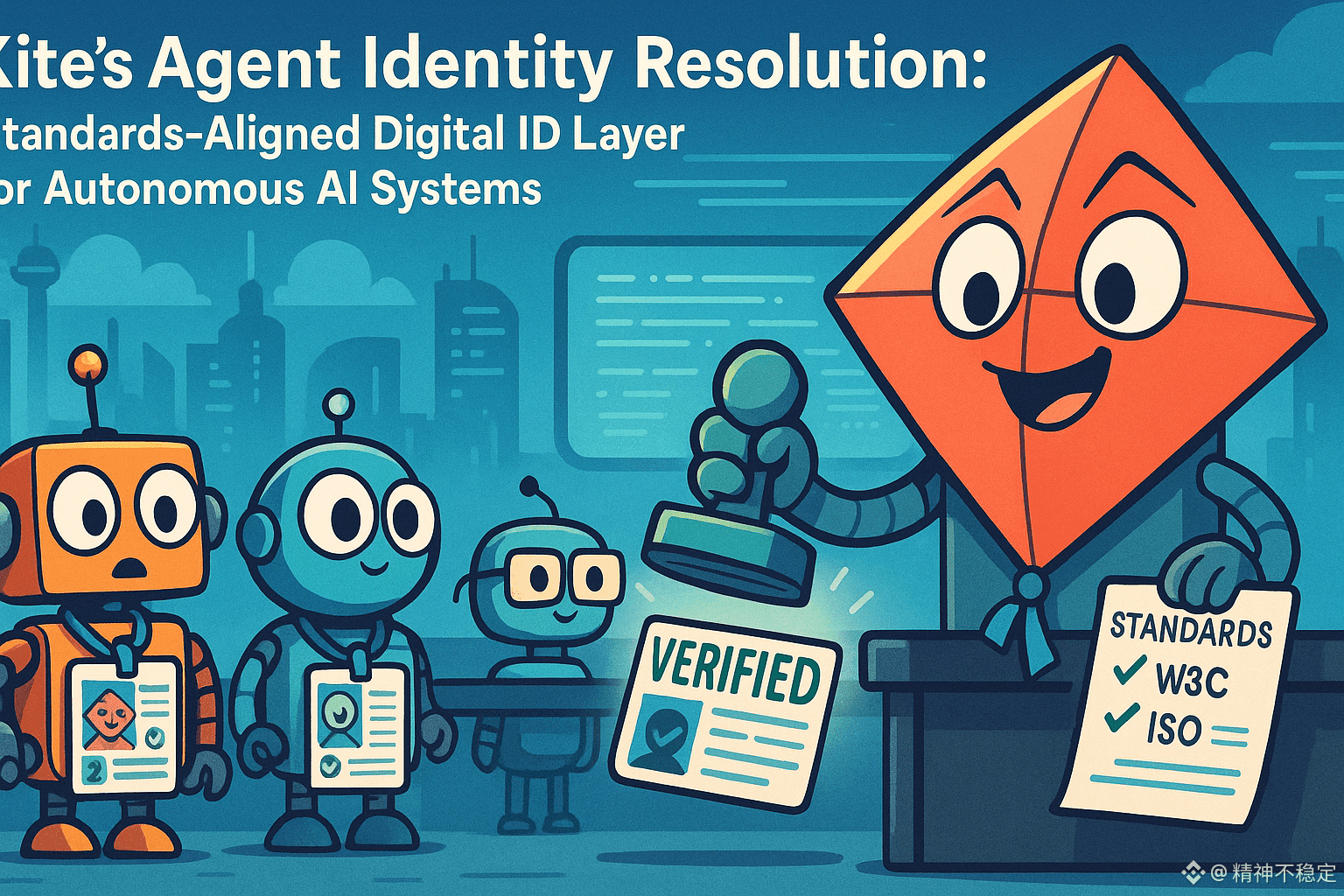
Unlike traditional systems where identity, trust, and transaction control were designed for humans with usernames and passwords or siloed token keys, Kite’s architecture intentionally treats identity as a cryptographically verifiable property tied to each distinct agent or service. These identities are not superficial labels they’re designed to be portable, unique, and traceable across systems and interactions, much like a decentralized identifier (DID) but structured for autonomous AI workflows rather than human user sessions.
At the heart of this infrastructure is Kite AIR (Agent Identity Resolution) and the so-called Agent Passport concept essentially a cryptographically secured identity layer that gives each agent a persistent identifier, governs what it’s permitted to do, and records its activity in a way that can be independently verified. In practice, this means an AI agent isn’t just a blob of code with API keys tucked away — it has a recorded identity, controlled operating parameters, and a trail of authenticated actions on chain.
This is not hype; it’s structural: Kite has publicly documented its approach and built tools and protocols to support this vision. The identity system is one of three foundational components alongside programmable governance — rules and limits that define exactly what an agent may or may not do — and native settlement mechanisms that allow agents to conduct micropayments and commerce autonomously.
One point worth emphasizing is that Kite’s identity model does not exist in isolation. Its documentation notes compatibility with major standards and ecosystems designed to allow autonomous agents to interact with broader infrastructure without bespoke translation layers. For example, Kite’s protocol stack includes interoperability with agent-centric standards such as Google’s A2A protocols, Anthropic’s MCP, and others like OAuth 2.1 and the emerging x402 agent payment format. These standards define how agents request intent authorization and how payments should be communicated securely between systems.
From a practical perspective, this matters because it avoids reinvention of the wheel. Rather than inventing a proprietary identifier format that only works inside Kite, the system can represent identities in formats already gaining adoption or recognition in the broader digital ecosystem. That doesn’t mean mainstream governments or large identity networks (like those governed by eIDAS or ISO federated identity frameworks) have formally certified Kite — far from it. But it does mean the identity constructs Kite uses map more cleanly onto existing standards for decentralized identifiers and OAuth-style authentication than ad hoc token schemes.
To be clear, the term digital ID standard encompasses many things in the real world: from globally recognized decentralized identifiers (DIDs) and W3C specifications to regulatory frameworks like eIDAS2 in the EU, or federated identity and single sign-on methods used by major consumer services. Kite’s public materials do not claim formal adoption of regulatory digital ID frameworks like eIDAS or others, but they do emphasize interoperability with open standards for identity and intent authorization to enable AI agents to operate smoothly across services.
This points to a deeper truth: the future of digital identity in AI-centric systems is not singular or static. Identity here spans two layers — foundational cryptographic identifiers that prove “this agent is uniquely entity X,” and interoperable representations that allow systems built by different teams to recognize and trust those identifiers without bespoke adapters. Kite places its identity work in that second space at least: a practical alignment with existing agent identity and authorization standards rather than inventing an incompatible silo.
Thinking about why that’s important: as autonomous agents move from laboratory experiments into real business use cases — from e-commerce assistants making purchases to data fetching agents negotiating services — identity becomes more than a convenience. It becomes the basis for accountability, governance, and risk mitigation. Identity systems have to ensure agents cannot escalate authority beyond what their human principals intend, they must let systems reject forged credentials, and they have to give auditors and regulators verifiable proofs of what happened where and how. Whether in blockchain environments or traditional enterprise systems, this is identity’s critical function.
In summary, Kite’s identity work is real and grounded in documented protocols and products. Kite uses a cryptographically enabled identity layer for AI agents, aims for interoperability with well-known identity and authorization standards, and embeds these identities within an evolving blockchain ecosystem tailored for autonomous transactions. It’s neither a speculative concept nor a loose marketing promise — it’s described in whitepapers, product docs, and industry research. That said, it’s still an emerging infrastructure and not a universally recognized global digital ID in the same sense as eIDAS or W3C DIDs; rather, it’s an identity ecosystem designed for a particular emerging class of autonomous systems.



