
Executive Summary and Overview
In the fast-paced scene of decentralized finance (DeFi) in 2025, the Falcon Finance protocol and its digital currency (FF) emerged as a pivotal case study during the first ten days of December. This period was not just a fleeting timeframe but represented a critical convergence between technological innovation in the integration of real-world assets (RWA) and the tense macroeconomic dynamics preceding decisions from the U.S. Federal Reserve.
A deep analysis of the financial and operational performance of FF during the period from December 1 to December 10, 2025, shows that the project is undergoing a qualitative transition, evolving from a traditional stablecoin protocol to a global multi-collateral financial infrastructure. The most significant event that characterized this phase strategically was on December 2, when the protocol announced the integration of Mexican treasury bonds (CETES) into the basket of collateral for its stablecoin USDf, marking a first-of-its-kind occurrence for integrating non-U.S. sovereign debts, opening new horizons for cross-border liquidity.
Financially, the token demonstrated remarkable resilience to sharp market fluctuations. Despite the dominance of "extreme fear" sentiment in the cryptocurrency sector overall, FF recorded price movements ranging from a low of $0.1071 to a high of $0.1295, supported by intense institutional activity represented by massive accumulation by whales exceeding $5.49 million in just three days. These movements were not random; they coincided with expectations of interest rate cuts and indicators of the project's economic model maturing.
However, the horizon is not without challenges. The project faces critical time obligations related to the scheduled token unlocks at the end of the month, in addition to regulatory risks and fierce competition in the stablecoin market. This report provides a detailed anatomy of all these aspects, based on financial data, technical analysis, and investigations into on-chain data, to present a comprehensive view for investors and decision-makers.
2. Macroeconomic Context and Geopolitical Environment
The performance of Falcon Finance cannot be analyzed in isolation from the macroeconomic landscape that dominated global markets in early December 2025. The token, like other risk assets, was at the mercy of major economic narratives.
2.1. Impact of the Federal Reserve and Anticipation of the December 10 Meeting
The main driver of investment behavior during the first ten days of December was the cautious anticipation of the Federal Open Market Committee (FOMC) meeting scheduled for December 10, 2025.
Interest Rate Forecast: Market data indicated an 87% probability of a 25 basis point rate cut. This expectation created a dual-impact environment; on one hand, the likelihood of a cut enhanced the appeal of digital assets as a hedge against potential dollar weakness, while on the other hand, the anticipation led to a liquidity crunch as many traders preferred to wait on the sidelines.
Global Liquidity: With the official end of quantitative tightening (QT) in the first week of December, markets began to breathe a sigh of relief, providing fertile ground for the flow of capital into financial infrastructure projects like Falcon Finance, which offer real returns exceeding those of traditional bonds.
2.2. Sentiment Indicators in the Cryptocurrency Market
The studied period saw a stark contrast between the strong fundamentals of the project and the general market sentiment.
Fear and Greed Index: The index settled at 22/100, indicating an "Extreme Fear" state. Historically, these levels are considered ideal accumulation areas for smart investors, which explains the contradiction between the drop in retail trading volumes and the significant activity of major wallets.
Bitcoin Dominance: Bitcoin dominance has risen to 58.7%, the highest level in 12 months. This absorption of liquidity by Bitcoin has presented headwinds for alternative coins (Altcoins) including FF, resulting in price pressure due to capital rotation towards the relative safety of Bitcoin.
3. Structural Shift: Revolution of Real Assets (RWA)
During the period from December 1 to December 10, Falcon Finance was not just a trading platform but established itself as a vital bridge between traditional finance (TradFi) and decentralized finance (DeFi). The most notable transformation was in the collateral strategy.
3.1. Strategic Integration of Mexican Treasury Bonds (CETES)
In a bold move on December 2, 2025, Falcon Finance announced the integration of Mexican CETES bonds as collateral for its stablecoin USDf. This event transcends being just a press release, representing a shift in the risk-return structure of the protocol.
In-depth analysis of integration:
This merger is executed through a partnership with the "Etherfuse" platform, which issues what are called "Stablebonds". These stable bonds are backed 1:1 by physical Mexican treasury bills and are held in a bankruptcy-remote structure. This design ensures that holders of USDf and FF tokens have their collateral safe even in the event of the intermediary company defaulting. This innovation allows users in Mexico and emerging markets to use their local sovereign debts to obtain dollar liquidity without the need to sell their assets, which enhances organic demand for FF as a governance and utility token in this ecosystem.
3.2. Expansion of Corporate Credit (JAAA)
In parallel with sovereign bonds, the protocol integrated "JAAA" assets from the Centrifuge protocol, which are institutional credit tranches rated AAA. Data indicate that real assets (RWAs) now constitute 21% of the total USDf reserves exceeding $2 billion. This diversification gives Falcon Finance a significant competitive advantage over other stablecoins that rely solely on cash deposits or volatile cryptocurrencies, providing a sustainable yield uncorrelated with the cryptocurrency market cycle.
4. Financial Analysis and Price Movement (December 1 - 10, 2025)
FF has experienced price fluctuations that reflect the market's immediate response to substantive news and its interaction with liquidity.
4.1. Timeline of Price Performance
The price performance during this period can be divided into three main phases:
Phase One: Anticipation and Announcement (December 1-3)
The month began with an opening price of $0.115. With the announcement of the integration of CETES on December 2, the price experienced high volatility, dropping to $0.1071 before rebounding strongly. This "sell the news" behavior quickly turned into strategic buying as the market absorbed the significance of the news, pushing the price to record a high of $0.1295 during the period on December 3.
Phase Two: Correction and Accumulation (December 4-7)
After the price peak, the token entered a wave of natural profit-taking, coinciding with a general market decline. The price gradually retreated to test support areas around $0.113 - $0.115. This phase was characterized by daily trading volumes dropping below $20 million on some days (such as December 6), indicating a lack of willing sellers at these low levels.
Phase Three: Whale Entry and Recovery (December 8-10)
Starting from December 8, the dynamics changed completely. Trading volumes began to rise, and the price recorded a significant recovery to trade near $0.118 - $0.120 by December 10, driven by optimistic inflation data regarding the Federal Reserve's decision and intense whale activity.
. On-chain data analysis and whale behavior
On-chain data reveals a deeper story than simple price charts show. The real story in the first ten days of December was a story of institutional accumulation par excellence.
5.1. The Grand Sweep Process
Between December 6 and December 8, 2025, portfolio tracking tools (such as Arkham Intelligence) observed unprecedented activity in accumulating FF tokens.
Accumulation Volume: Major investors (Whales) withdrew a total of 48.43 million FF tokens.
Cash Value: The value of these tokens was estimated at approximately $5.49 million at the time of execution.
Liquidity Sources: These amounts were primarily withdrawn from three major centralized exchanges: Binance, Bitget, and Gate.io.
Strategic analysis of this behavior:
Supply Shock: Withdrawing 48 million tokens from exchanges means removing them from order books. This reduces immediate selling pressure and makes the price more sensitive to any new buy orders, facilitating price pump with the least possible cost.
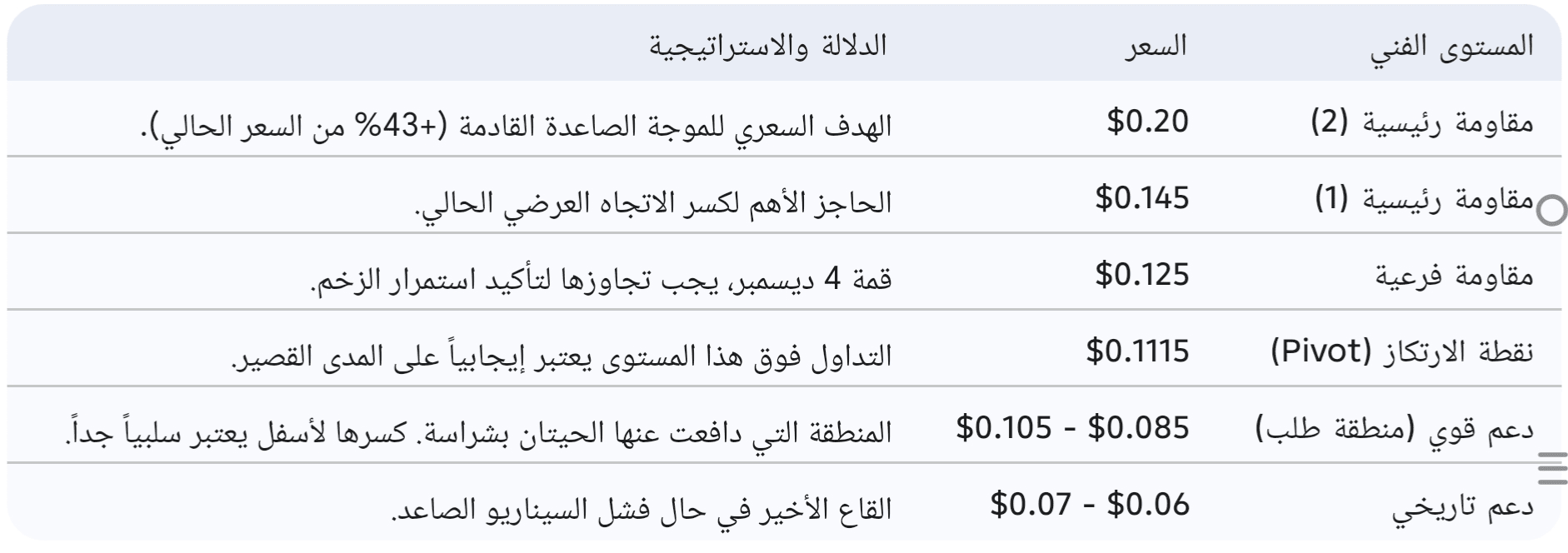
Smart Timing: The buying coincided with the price trading in a "historical demand" zone between $0.085 and $0.105. Whales did not buy at the peak but waited for the correction to buy at support, betting on a market rebound with news from the Federal Reserve.
Confidence Signal: Withdrawal to cold wallets is a strong indicator of long-term holding intent (HODL) rather than quick speculation, reflecting confidence in the project's long-term fundamentals especially with expansions in the RWA sector.
5.2. Liquidity and Trading Volume
Despite large purchases, liquidity indicators showed some warning signs. The turnover ratio for Falcon Finance dropped to 6.3%, a low figure compared to the average for major altcoins, which ranges between 15-20%. This decline in turnover may be interpreted as a liquidity crunch resulting from the reluctance of small investors, or it could be positively viewed as a reluctance to sell by current token holders waiting for higher prices, thus making the market "dry" and ready for rapid movement.
6. Tokenomics: Balancing Incentives and Inflation
The symbolic economy of the FF token faces a delicate equation during December 2025, as the protocol seeks to balance user rewards (through staking) with managing the increased supply (through unlocking).
6.1. Incentive System and 'Falcon Miles' Multiplier
To enhance long-term commitment and reduce selling pressure, the protocol launched a strong incentive campaign for stakers.
Multiplier mechanism: FF token stakers receive a multiplier of up to 160x on "Falcon Miles" (the protocol's loyalty program). This multiplier is designed to decrease over time, dropping to 80x after 7 days, creating a state of "fear of missing out" (FOMO) and driving users to stake early.
Yield Vaults: New vaults have been launched offering an annual yield (APY) of up to 12% in the stable USDf token. This high yield, supported by profits from real assets, acts as a liquidity magnet, as investors prefer stable and high returns over risking daily speculation.
6.2. Challenge of December 28 Unlocks and the Burn Mechanism
December 28, 2025, represents a pivotal date in the token's timeline.
Outstanding Claims: There are approximately 234 million FF tokens available for claim as of this date. This amount represents a massive cash block that could impact the price if sold all at once.
The Burn Mechanism: The key positive point here is that any tokens not claimed by the deadline will be burned (removed from existence permanently). This mechanism transforms the laziness or forgetfulness of some users into a deflationary benefit for the remaining token holders, potentially reducing the total supply and supporting the price.
Ownership Structure: 76.6% of the total supply (10 billion tokens) remains locked, with vesting schedules for investors and the team extending until 2026. This long lock-up reassures the market that the founding team is committed to the project and cannot flood the market with tokens at present.
7. The Ecosystem: Growth of USDf and Stability of the Protocol
The value of the FF token is directly dependent on the success and stability of the stablecoin USDf that governs it. During the first ten days of December, the ecosystem showed strong healthy indicators.
7.1. Growth of Total Value Locked (TVL) and Reserves
Supply Volume: The circulating supply of USDf has surpassed $2 billion. This substantial growth reflects real demand for the stablecoin backed by yields.
Collateralization Ratio: Reports and audits indicate that the token is backed by reserves exceeding its nominal value (Overcollateralized), with a coverage ratio reaching 109%. This means that for every $1 of USDf, there are assets worth $1.09 supporting it, providing a cushion against market fluctuations.
Auditing and Transparency: Falcon Finance has bolstered its credibility by publishing independent quarterly audit reports (from Harris & Trotter LLP) and proof-of-reserve through the Chainlink network, ensuring users that the assets are indeed present and verifiable on-chain.
7.2. Partnerships and Strategic Investment
The growth was not only organic but supported by heavyweight strategic partnerships.
World Liberty Financial: The project received an initial investment of $10 million from "World Liberty Financial". The significance of this investment lies in its timing (after the 2025 U.S. elections) and its association with influential figures, which could open regulatory and political doors for the project in the future.
DWF Labs: The presence of DWF Labs as a market maker and strategic partner ensures liquidity availability on platforms and helps manage price volatility, despite the controversy that may sometimes surround their trading methods.
8. Technical Analysis: Support and Resistance Levels
From a purely technical standpoint, the FF token chart depicts a promising yet risky path.
. Challenges and Risks: The Other Side of the Coin
Despite the positives, the report must be objective and highlight the risks surrounding the project.
Depeg Risks: Despite the high coverage ratio, the specter of depegging (which occurred in July 2025 when the price dropped to $0.978) looms in investors' minds. Relying on volatile crypto collateral (at about 11%) exposes the protocol to cascading liquidation risks in the event of a market collapse.
Regulatory Risks: The integration of real assets (RWAs) puts the protocol in the sights of global financial regulators. Any changes in legislation regarding the tokenization of securities could negatively impact the project's business model.
Smart Contract Risks: Despite security audits by reputable firms such as Zellic, decentralized finance remains susceptible to undiscovered software vulnerabilities, especially with the complexity of the new infrastructure integrating Mexican bonds.
10. Future Outlook: 2026 Roadmap and Beyond
Based on current data and the announced roadmap, Falcon Finance appears to be preparing for a highly ambitious 2026.
Growth Targets: The protocol aims to reach a total value locked (TVL) of $5 billion by 2026.
Sovereign Expansion: The project plans to experiment with tokenizing sovereign bonds with two additional governments by the first quarter of 2026, meaning that the Mexican experiment is just the beginning of a global network of tokenized sovereign debts.
Price Forecast: Predictive models (considering margin of error) indicate relative stability in December around $0.118, with expectations of gradual growth bringing the price to $0.122 - $0.15 in 2026, provided the markets stabilize and interest rate cuts continue.
Conclusion
The performance and strategy of the FF token in the first ten days of December 2025 represent a mature model for second-generation decentralized finance (DeFi 2.0) projects. The project has succeeded in transforming economic challenges into opportunities through innovation in real assets, attracting the trust of major investors at a time when the market is suffering from fear.
While short-term risks (token unlocking, Federal Reserve decision) remain, the long-term fundamentals of diversifying collateral, strategic partnerships, and cash supply growth position FF strongly to compete for leadership in the innovative stablecoin sector next year. For investors, the zone between $0.105 and $0.115 remains a critical watch area, as upcoming moves may determine the token's trajectory for several months ahead.



