
Devis_H23 Crypto Insights
125 Posts

Devis_H23 Crypto Insights
Tracking crypto markets Target 115$ to 1 000$
High-Frequency Trader
4.7 Years
6 Following
354 Followers
2.3K+ Liked
Posts
PINNED
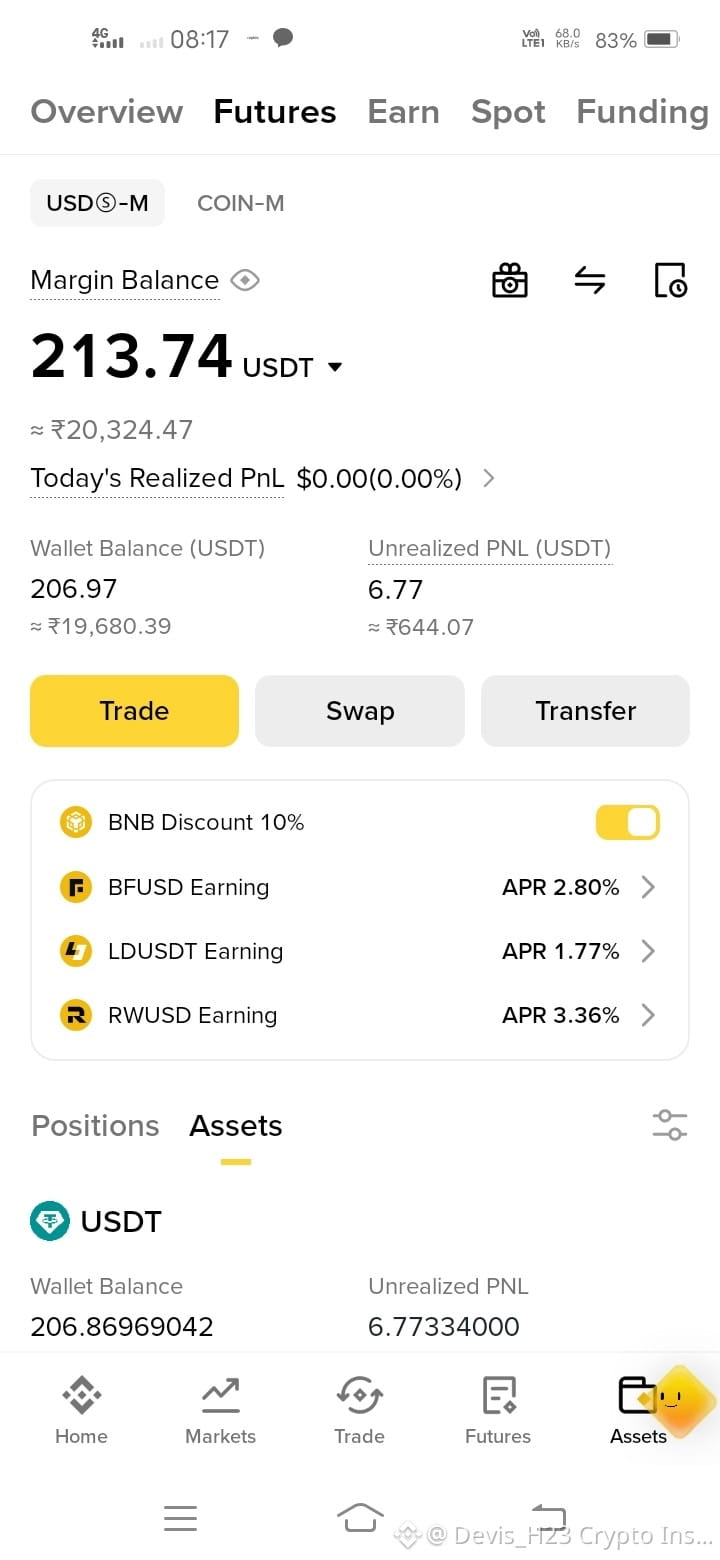
I started this journey with just 115 USDT.
One week later, I'm sitting at 213.74 USDT.
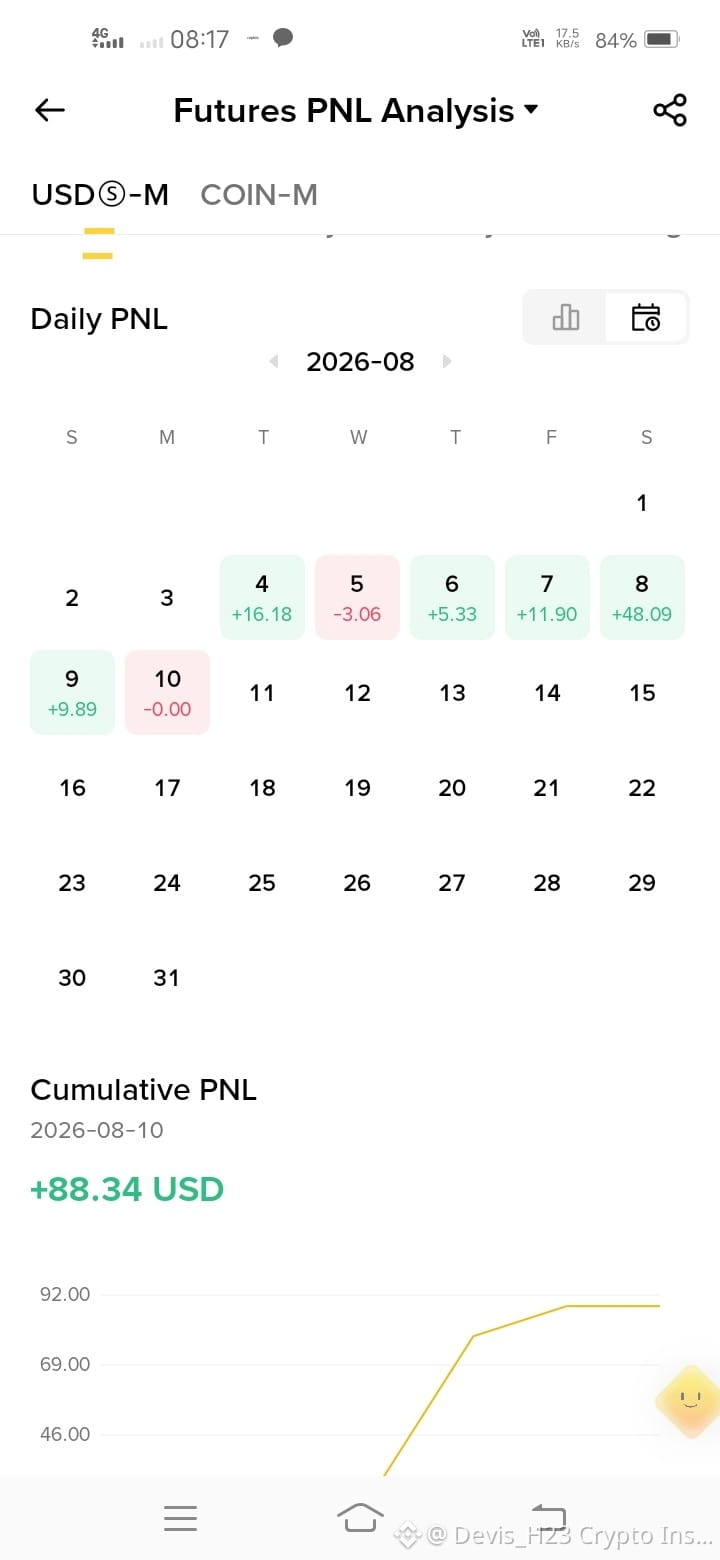
+88.34 USDT cumulative PnL.
Honestly, the number I'm most happy about isn't the profit.
It's the fact that I didn't have a green day every day.
There were losses too.
4 Aug → +16.18
5 Aug → -3.06
6 Aug → +5.33
7 Aug → +11.90
8 Aug → +48.09
9 Aug → +9.89
That's trading.
Some days you win.
Some days the market takes something back.
The important part is what you do after a losing trade.
My target is still 1,000 USDT.
I'm going to keep documenting this journey with real results — good days, bad days, trades and lessons.
No fake screenshots.
No hiding losses.
Just the journey as it happens.
If you're building a small account too, stay with me.
Let's see how far we can take it. 🤝📈
#Devish #pump
One week later, I'm sitting at 213.74 USDT.
+88.34 USDT cumulative PnL.
Honestly, the number I'm most happy about isn't the profit.
It's the fact that I didn't have a green day every day.
There were losses too.
4 Aug → +16.18
5 Aug → -3.06
6 Aug → +5.33
7 Aug → +11.90
8 Aug → +48.09
9 Aug → +9.89
That's trading.
Some days you win.
Some days the market takes something back.
The important part is what you do after a losing trade.
My target is still 1,000 USDT.
I'm going to keep documenting this journey with real results — good days, bad days, trades and lessons.
No fake screenshots.
No hiding losses.
Just the journey as it happens.
If you're building a small account too, stay with me.
Let's see how far we can take it. 🤝📈
#Devish #pump
PINNED
🏆 SEASON 1 REWARDS DISTRIBUTED! PROOF ATTACHED 💸🤝
Real support deserves real rewards! Season 1 is officially over, and I've just sent out the payments to our first set of Champions. 🛡️🔥
A massive CONGRATULATIONS to our Paid Legends:
🔥 TOP 3 (Above 20 Points):
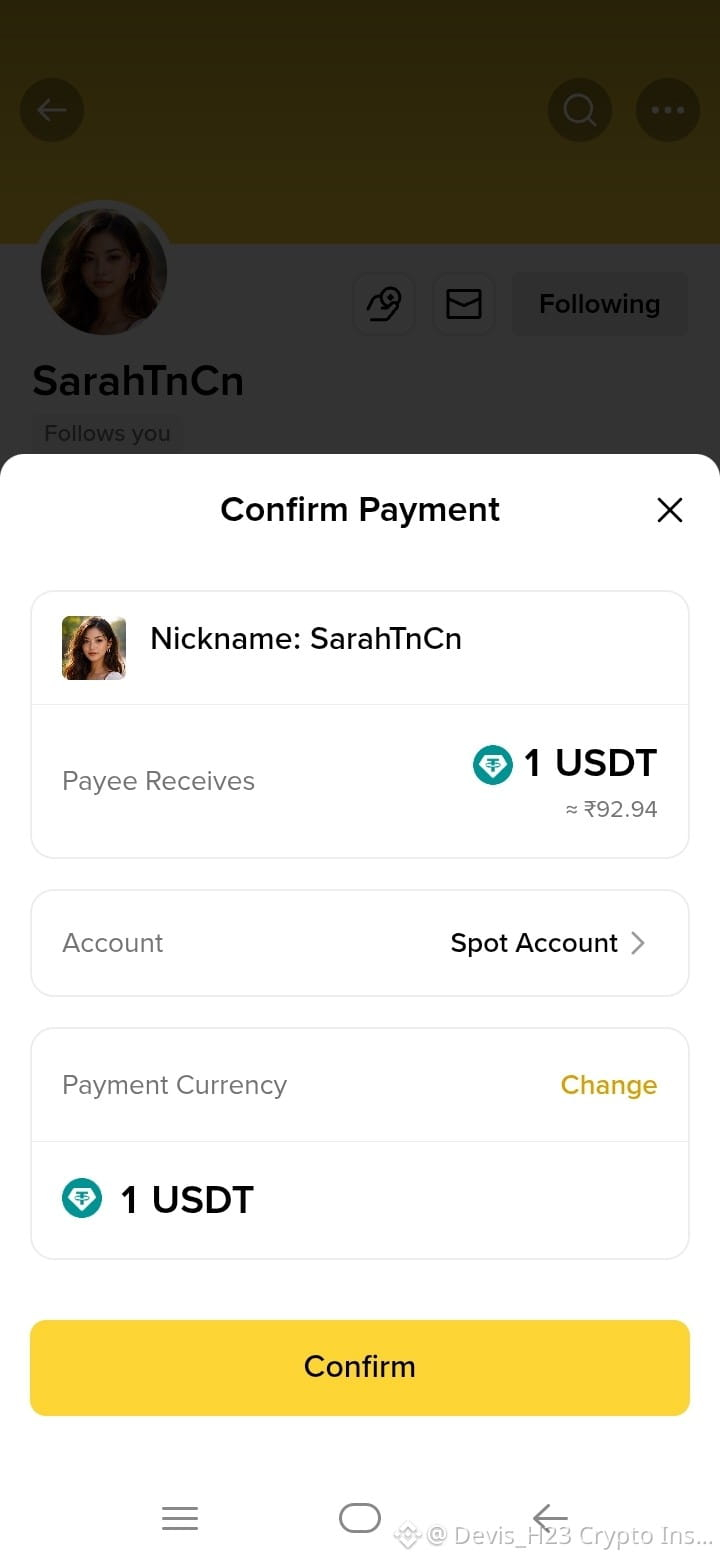
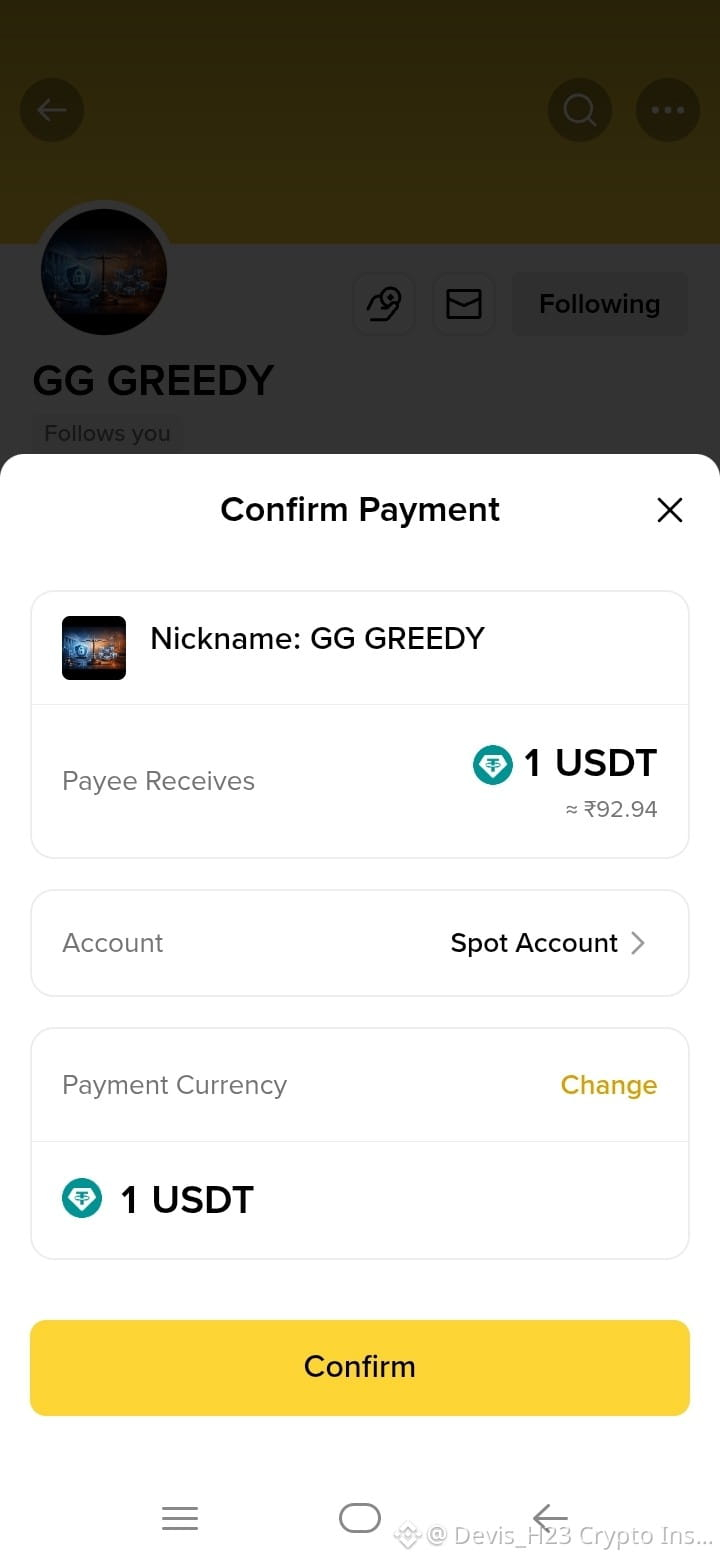
🥇 @GG GREEDY — PAID ✅
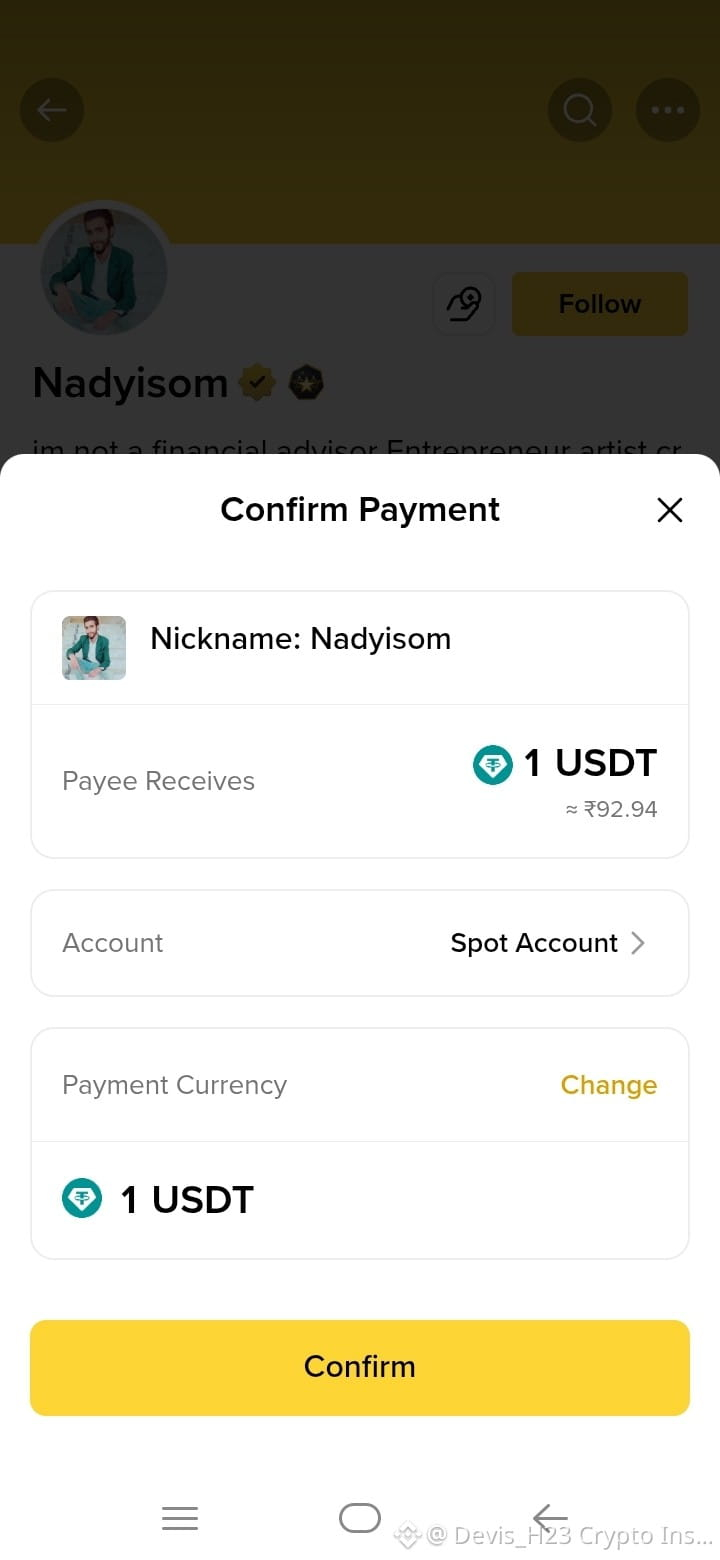
🥈 @Nadyisom — PAID ✅
🥉 @ZarrocBTC — PAID ✅
🌟 SPECIAL SELECTION (Our Real Loyal Supporters):
🙌 @mutual support — PAID ✅
🙌 @Sarah_welcome_summer — PAID ✅
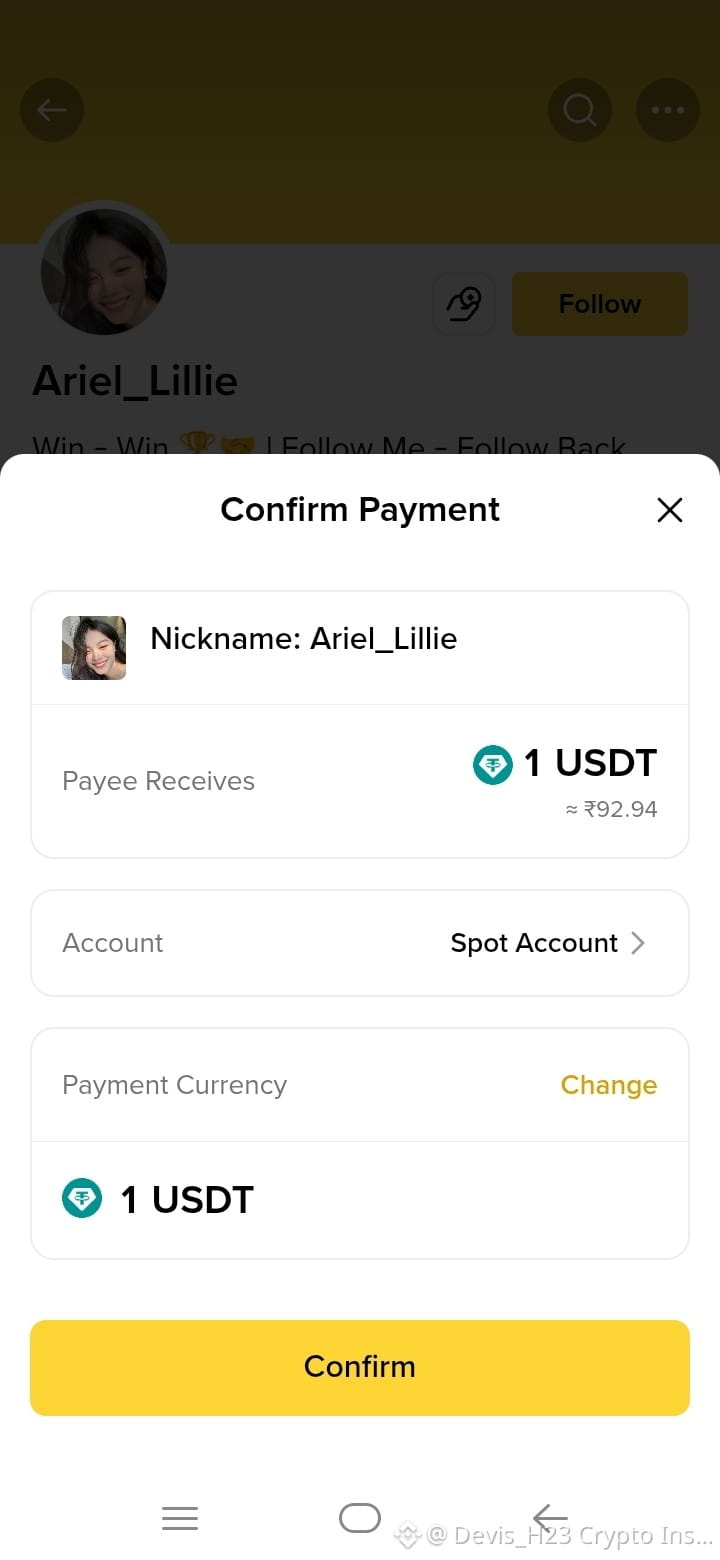
100% Transparency. Check the attached screenshots for payment proof! 💸🤝 We don't just talk, we value our community.
🚀 SEASON 2 UPDATE:
Get ready! I'm currently finalizing the New Point System. It’s going to be BIGGER and FASTER! 📈
Leaderboard reset and Season 2 rules are coming soon. Stay tuned to claim your spot! 🏁💎
#creatorpad #BinanceSquare #CryptoRewards #Write2Earn #GIVEAWAY🎁
Real support deserves real rewards! Season 1 is officially over, and I've just sent out the payments to our first set of Champions. 🛡️🔥
A massive CONGRATULATIONS to our Paid Legends:
🔥 TOP 3 (Above 20 Points):
🥇 @GG GREEDY — PAID ✅
🥈 @Nadyisom — PAID ✅
🥉 @ZarrocBTC — PAID ✅
🌟 SPECIAL SELECTION (Our Real Loyal Supporters):
🙌 @mutual support — PAID ✅
🙌 @Sarah_welcome_summer — PAID ✅
100% Transparency. Check the attached screenshots for payment proof! 💸🤝 We don't just talk, we value our community.
🚀 SEASON 2 UPDATE:
Get ready! I'm currently finalizing the New Point System. It’s going to be BIGGER and FASTER! 📈
Leaderboard reset and Season 2 rules are coming soon. Stay tuned to claim your spot! 🏁💎
#creatorpad #BinanceSquare #CryptoRewards #Write2Earn #GIVEAWAY🎁
━━━━━━━━━━━━━━━━━━
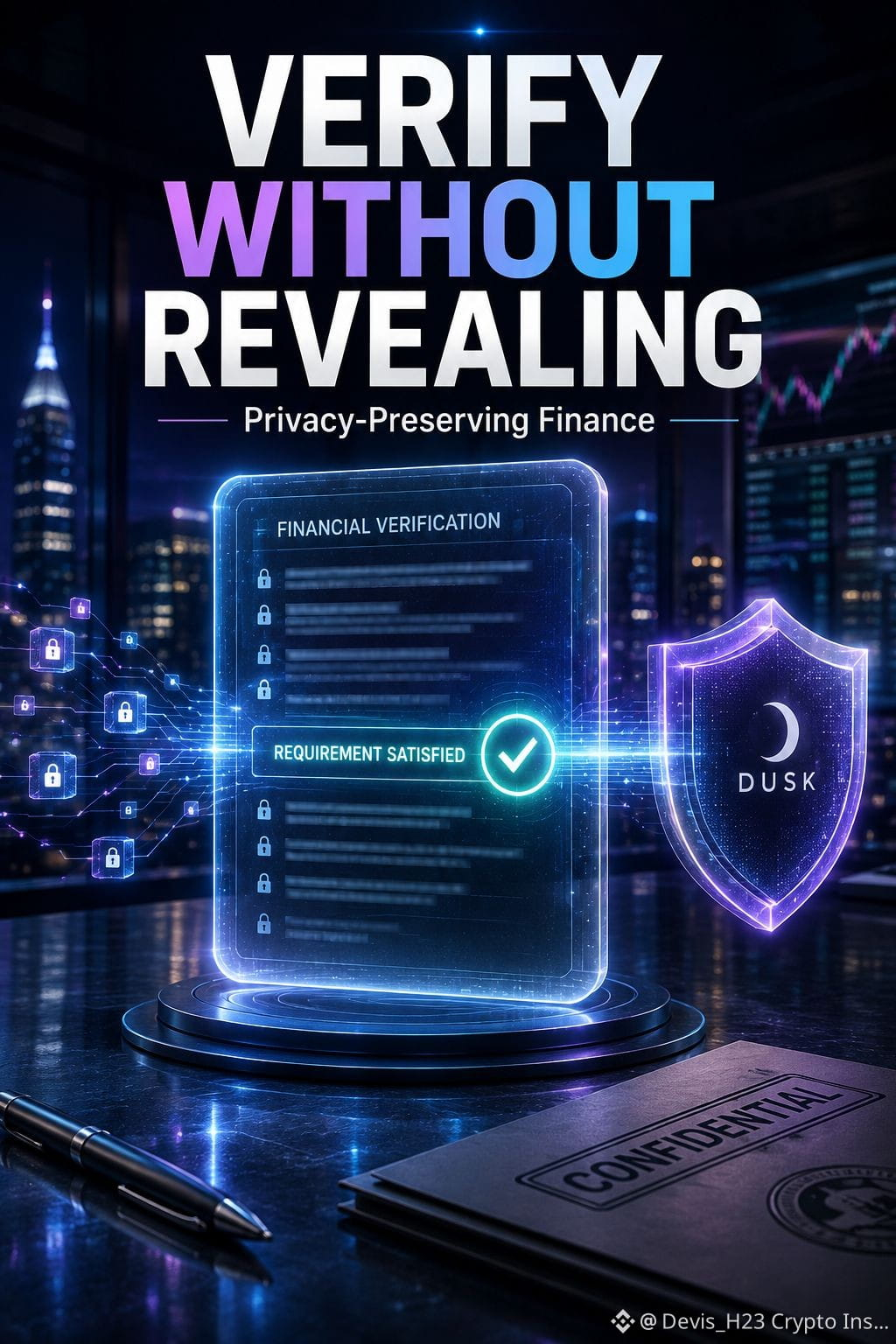
🔎 You don’t need to reveal everything to prove something.
━━━━━━━━━━━━━━━━━━
Think about financial verification.
A business may need to prove that it meets certain requirements without exposing every piece of sensitive information behind that proof.
That’s where privacy-preserving infrastructure becomes interesting.
@Dusk is building confidential smart contracts for financial applications, aiming to make verification possible without unnecessary exposure.
Would you prefer financial systems that reveal only what needs to be verified?
$DUSK
#dusk
━━━━━━━━━━━━━━━━━━
🔎 You don’t need to reveal everything to prove something.
━━━━━━━━━━━━━━━━━━
Think about financial verification.
A business may need to prove that it meets certain requirements without exposing every piece of sensitive information behind that proof.
That’s where privacy-preserving infrastructure becomes interesting.
@Dusk is building confidential smart contracts for financial applications, aiming to make verification possible without unnecessary exposure.
Would you prefer financial systems that reveal only what needs to be verified?
$DUSK
#dusk
━━━━━━━━━━━━━━━━━━
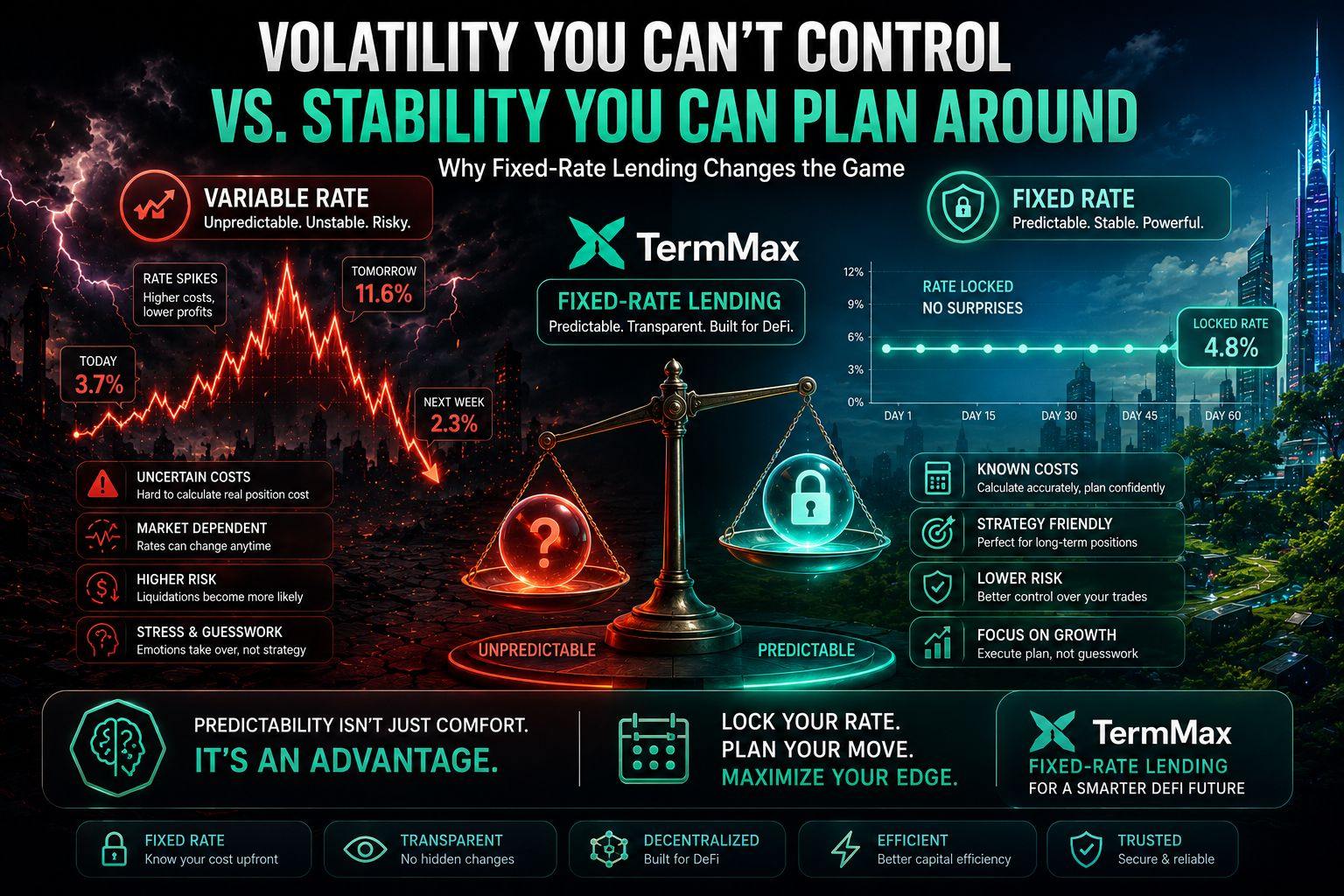
DeFi has made lending and borrowing more accessible, but accessibility alone doesn’t solve the problem of uncertainty.
When rates keep changing, it can be difficult to know the true cost of borrowing or the return you may receive from lending over a longer period.
Fixed-rate markets offer a different approach: more clarity around the rate for a defined period, making it easier to plan ahead.
That’s why @TermMax is an interesting concept for DeFi — bringing fixed-rate lending and borrowing into a decentralized environment.
Do you think predictable rates will become more important as DeFi matures?
#TermMax
When rates keep changing, it can be difficult to know the true cost of borrowing or the return you may receive from lending over a longer period.
Fixed-rate markets offer a different approach: more clarity around the rate for a defined period, making it easier to plan ahead.
That’s why @TermMax is an interesting concept for DeFi — bringing fixed-rate lending and borrowing into a decentralized environment.
Do you think predictable rates will become more important as DeFi matures?
#TermMax
One underrated problem in DeFi is planning.
If your borrowing cost keeps changing, it becomes harder to estimate the real cost of holding a position for weeks or months. A strategy can look profitable at the start but become less attractive if financing costs move against you.
Fixed-rate borrowing can make this calculation much clearer because the rate is known for the agreed period.
That’s why @TermMax is interesting: it brings fixed-rate lending and borrowing into DeFi.
Would knowing your borrowing cost upfront change how you manage a position?
#TermMax
If your borrowing cost keeps changing, it becomes harder to estimate the real cost of holding a position for weeks or months. A strategy can look profitable at the start but become less attractive if financing costs move against you.
Fixed-rate borrowing can make this calculation much clearer because the rate is known for the agreed period.
That’s why @TermMax is interesting: it brings fixed-rate lending and borrowing into DeFi.
Would knowing your borrowing cost upfront change how you manage a position?
#TermMax
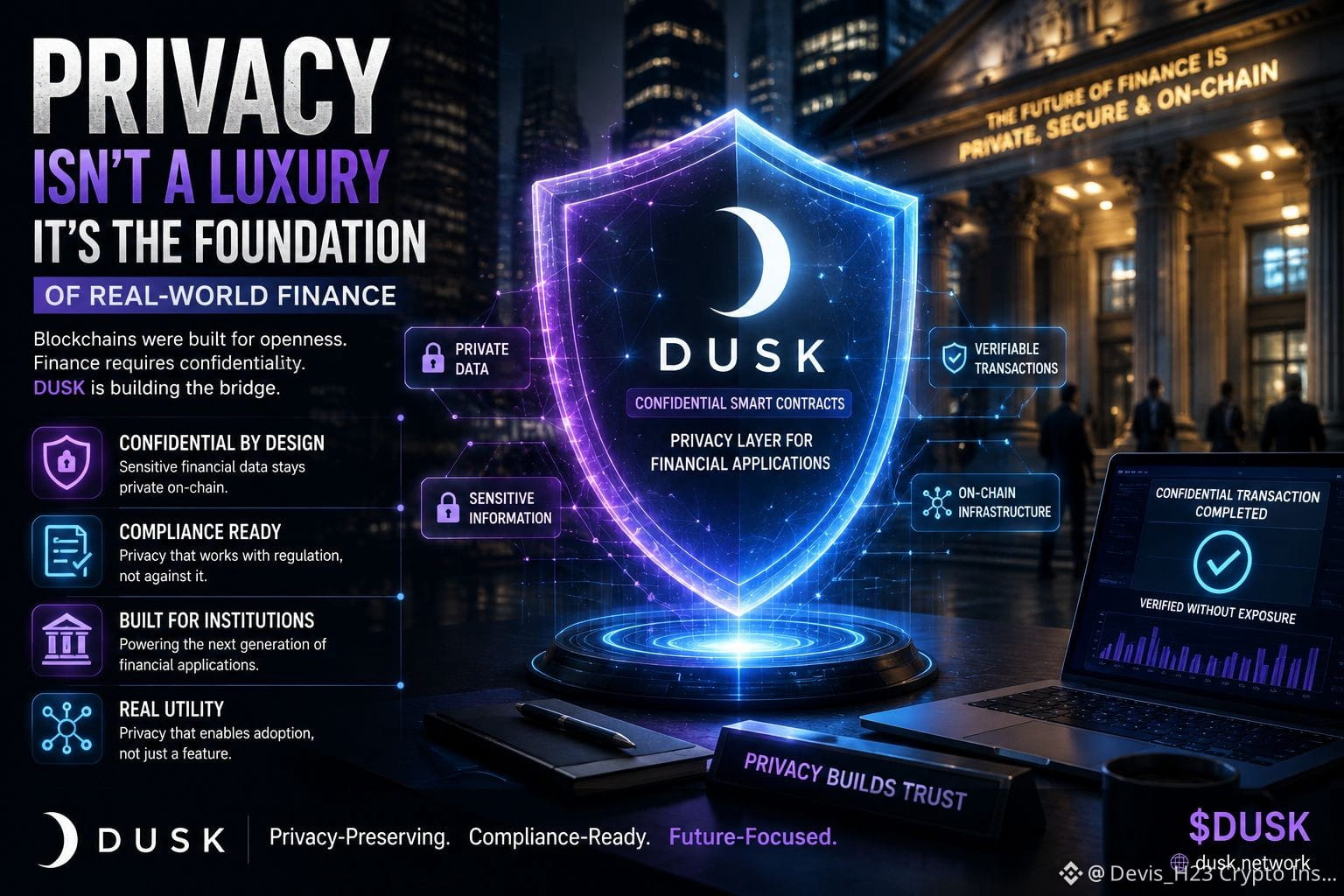
🔐 What if financial privacy was built into the infrastructure — not added later?
@Dusk is working on a privacy-focused Layer-1 for financial applications, with Confidential Smart Contracts designed to protect sensitive information on-chain.
For me, that’s one of the more interesting directions in blockchain finance.
Would you use financial apps on-chain more if privacy was built in?
$DUSK #dusk
@Dusk is working on a privacy-focused Layer-1 for financial applications, with Confidential Smart Contracts designed to protect sensitive information on-chain.
For me, that’s one of the more interesting directions in blockchain finance.
Would you use financial apps on-chain more if privacy was built in?
$DUSK #dusk

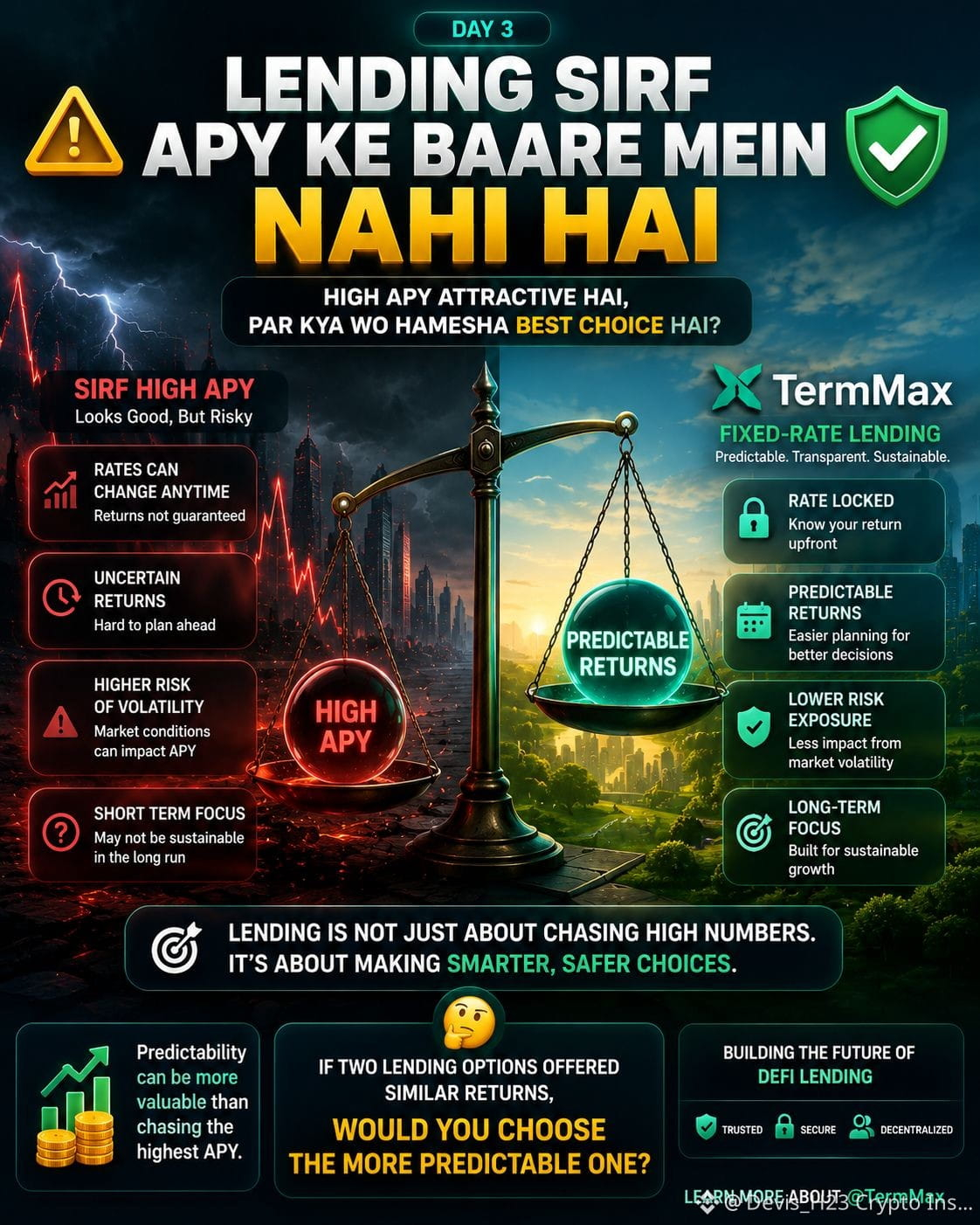
High APY looks attractive, but APY alone doesn’t tell the whole story.
When lending in DeFi, users also need to think about rate changes, how long their capital is committed, and how predictable their returns are.
This is where @TermMax takes an interesting approach with fixed-rate lending markets, making the expected rate easier to understand over a defined period.
Sometimes predictable returns can be more useful than simply chasing the highest number.
If two lending options offered similar returns, would you choose the more predictable one?
#TermMax
When lending in DeFi, users also need to think about rate changes, how long their capital is committed, and how predictable their returns are.
This is where @TermMax takes an interesting approach with fixed-rate lending markets, making the expected rate easier to understand over a defined period.
Sometimes predictable returns can be more useful than simply chasing the highest number.
If two lending options offered similar returns, would you choose the more predictable one?
#TermMax
🔐 Blockchain transparency is valuable.
But when financial applications move on-chain, sensitive information shouldn't automatically become public.
@Dusk is building a privacy-focused Layer-1 with Confidential Smart Contracts designed for financial applications.
Privacy isn't about hiding everything.
It's about controlling what should be visible.
$DUSK #dusk
But when financial applications move on-chain, sensitive information shouldn't automatically become public.
@Dusk is building a privacy-focused Layer-1 with Confidential Smart Contracts designed for financial applications.
Privacy isn't about hiding everything.
It's about controlling what should be visible.
$DUSK #dusk

🔐 Privacy and compliance don't have to compete.
Financial applications need to protect sensitive information while still operating within regulatory frameworks.
@Dusk is building a privacy-focused Layer-1 with confidential smart contracts designed for financial applications.
The interesting question isn't whether finance should be private.
It's how privacy can work alongside compliance.
$DUSK #dusk
Financial applications need to protect sensitive information while still operating within regulatory frameworks.
@Dusk is building a privacy-focused Layer-1 with confidential smart contracts designed for financial applications.
The interesting question isn't whether finance should be private.
It's how privacy can work alongside compliance.
$DUSK #dusk

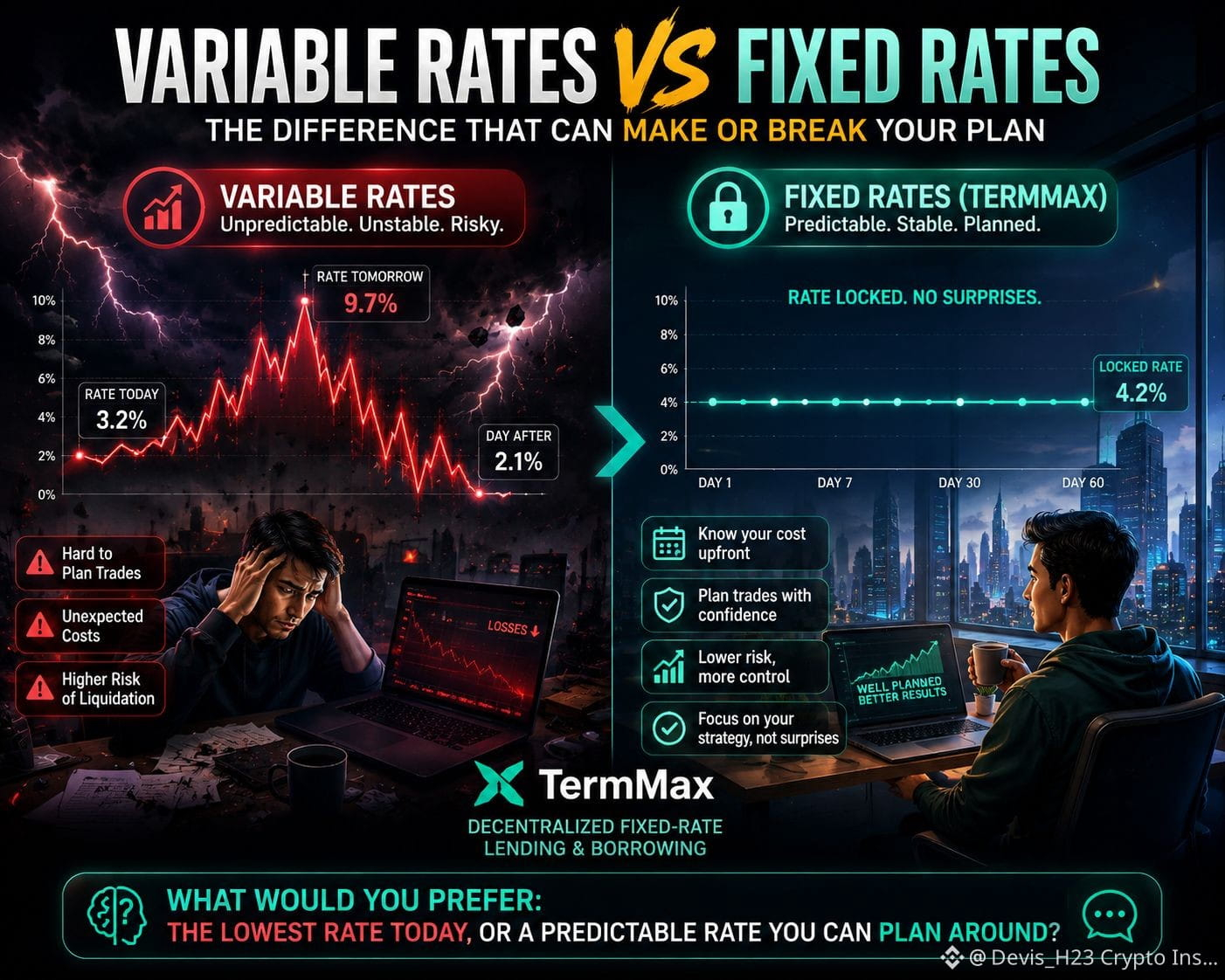
A low borrowing rate today doesn’t always mean a low borrowing cost tomorrow.
Variable rates can change with market conditions. For DeFi users, that uncertainty can make it difficult to plan how much a position will actually cost over time.
A fixed-rate model approaches this problem differently: the borrowing rate can be known upfront for a defined period.
That’s what makes @TermMax interesting to me — it brings more predictability to DeFi lending and borrowing.
What would you prefer: the lowest rate today, or a predictable rate you can plan around?
#TermMax
Variable rates can change with market conditions. For DeFi users, that uncertainty can make it difficult to plan how much a position will actually cost over time.
A fixed-rate model approaches this problem differently: the borrowing rate can be known upfront for a defined period.
That’s what makes @TermMax interesting to me — it brings more predictability to DeFi lending and borrowing.
What would you prefer: the lowest rate today, or a predictable rate you can plan around?
#TermMax
🔐 Privacy becomes more important when blockchain moves closer to real-world finance.
A public ledger can provide transparency, but financial applications often handle information that shouldn’t be visible to everyone.
@Dusk focuses on confidential smart contracts, aiming to give financial applications privacy without giving up the benefits of blockchain infrastructure.
Would you trust on-chain finance more if privacy was built in from the start?
$DUSK #dusk
A public ledger can provide transparency, but financial applications often handle information that shouldn’t be visible to everyone.
@Dusk focuses on confidential smart contracts, aiming to give financial applications privacy without giving up the benefits of blockchain infrastructure.
Would you trust on-chain finance more if privacy was built in from the start?
$DUSK #dusk
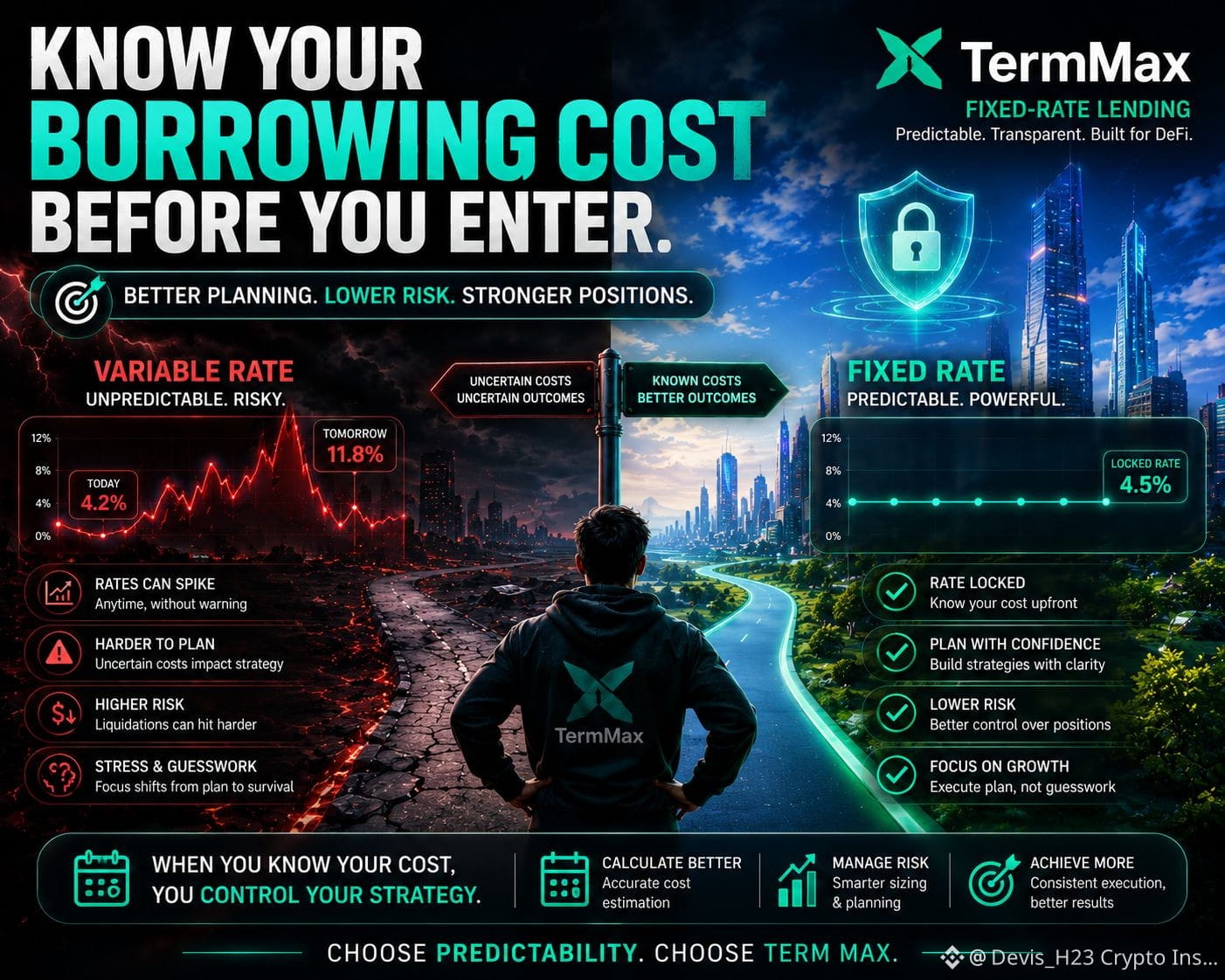
Most people look at the borrowing rate and stop there.
But the bigger problem is uncertainty.
If the rate keeps changing, your borrowing cost can change while your position is still open. That makes it harder to plan risk and calculate the real cost of a position.
This is where fixed-rate lending becomes interesting.
@TermMax focuses on fixed-rate lending and borrowing, giving users more predictability instead of constantly guessing where rates may move next.
Would you choose a predictable borrowing cost over a potentially cheaper but variable rate?
#termmax
But the bigger problem is uncertainty.
If the rate keeps changing, your borrowing cost can change while your position is still open. That makes it harder to plan risk and calculate the real cost of a position.
This is where fixed-rate lending becomes interesting.
@TermMax focuses on fixed-rate lending and borrowing, giving users more predictability instead of constantly guessing where rates may move next.
Would you choose a predictable borrowing cost over a potentially cheaper but variable rate?
#termmax

🔎 Transparency is powerful — but should every financial detail be public?
For everyday finance, people expect sensitive information to stay private. The same principle matters as financial activity moves on-chain.
@Dusk is building a privacy-focused L
ayer-1 for financial applications, using confidential smart contracts to bring privacy into programmable finance.
The future of on-chain finance may not be fully public or fully private — but intelligently private.
$DUSK #dusk
For everyday finance, people expect sensitive information to stay private. The same principle matters as financial activity moves on-chain.
@Dusk is building a privacy-focused L
ayer-1 for financial applications, using confidential smart contracts to bring privacy into programmable finance.
The future of on-chain finance may not be fully public or fully private — but intelligently private.
$DUSK #dusk
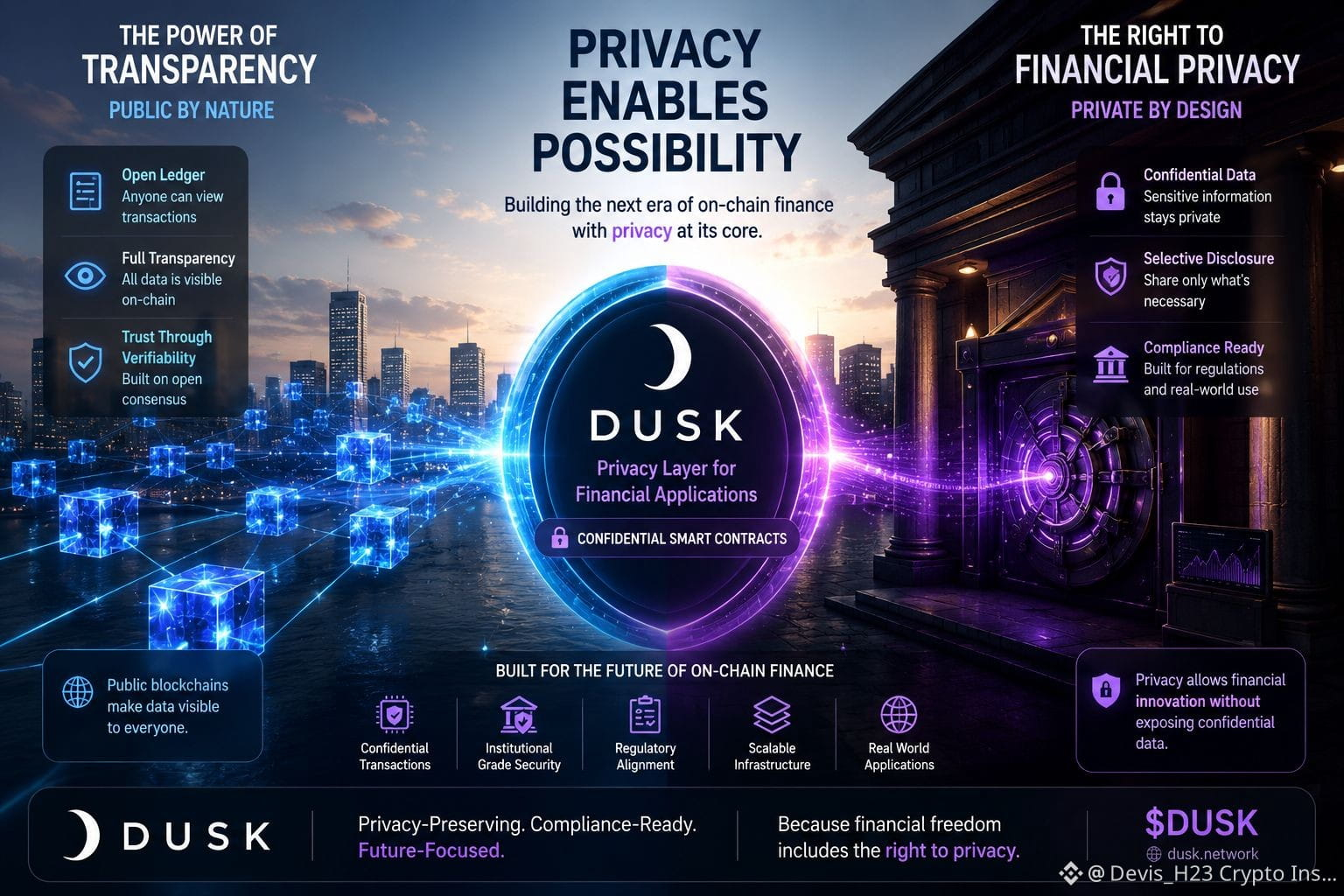
🏦 Financial institutions handle sensitive data every day.
Putting that activity on a completely transparent blockchain creates a difficult trade-off between public verification and financial privacy.
@Dusk is building infrastructure for confidential financial applications, aiming to make privacy practical on-chain.
$DUSK #dusk
Putting that activity on a completely transparent blockchain creates a difficult trade-off between public verification and financial privacy.
@Dusk is building infrastructure for confidential financial applications, aiming to make privacy practical on-chain.
$DUSK #dusk
━━━━━━━━━━━━━━━━━━
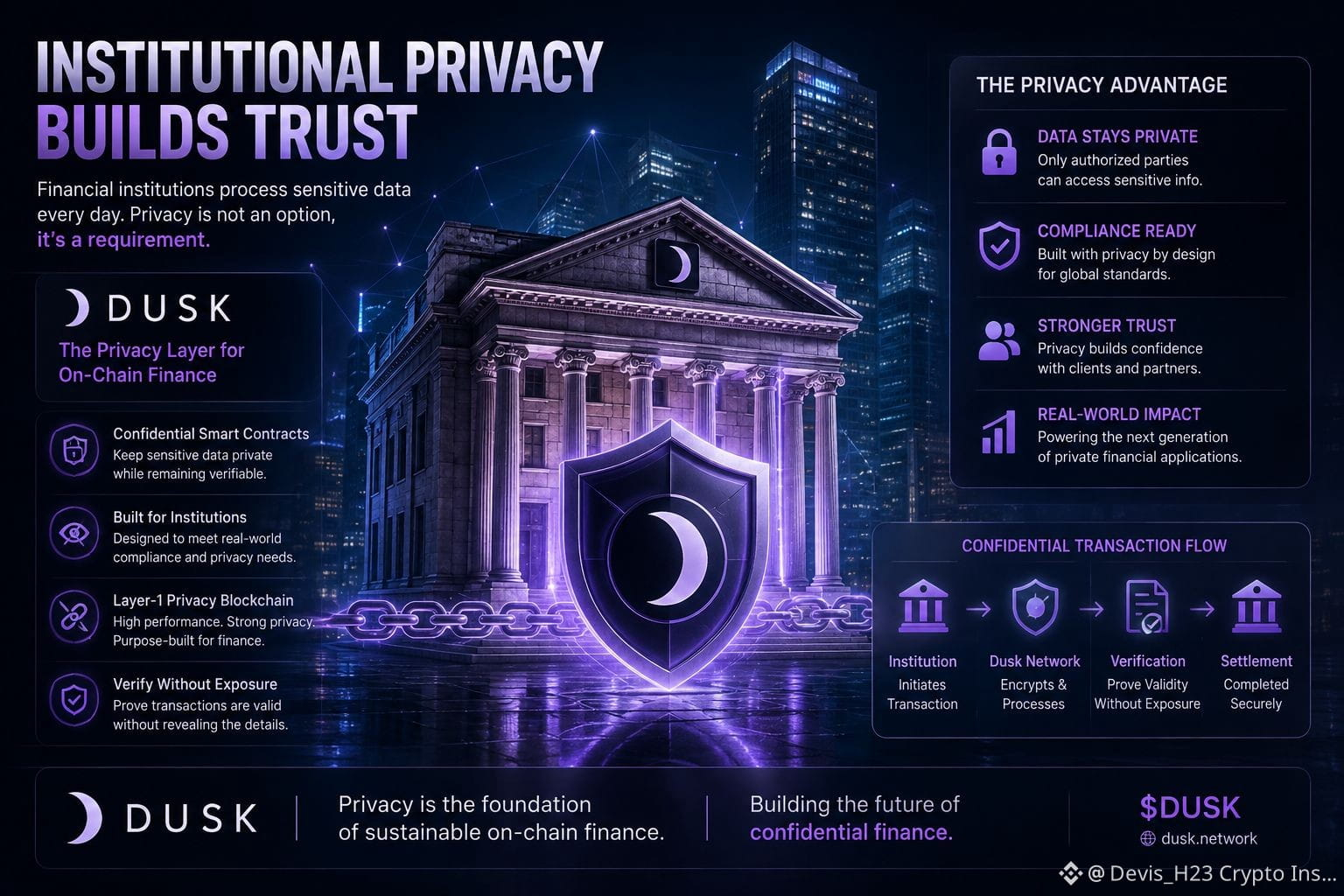
Would you want everyone to see your financial activity?
━━━━━━━━━━━━━━━━━━
Probably not.
We protect our bank statements, payments and balances for a reason. Blockchain finance shouldn't have to sacrifice that privacy.
@Dusk is building confidential smart contracts for financial applications, bringing privacy into on-chain finance while keeping verifiability in focus.
Privacy isn't hiding.
It's control.
$DUSK
#dusk
━━━━━━━━━━━━━━━━━━
Would you want everyone to see your financial activity?
━━━━━━━━━━━━━━━━━━
Probably not.
We protect our bank statements, payments and balances for a reason. Blockchain finance shouldn't have to sacrifice that privacy.
@Dusk is building confidential smart contracts for financial applications, bringing privacy into on-chain finance while keeping verifiability in focus.
Privacy isn't hiding.
It's control.
$DUSK
#dusk
━━━━━━━━━━━━━━━━━━
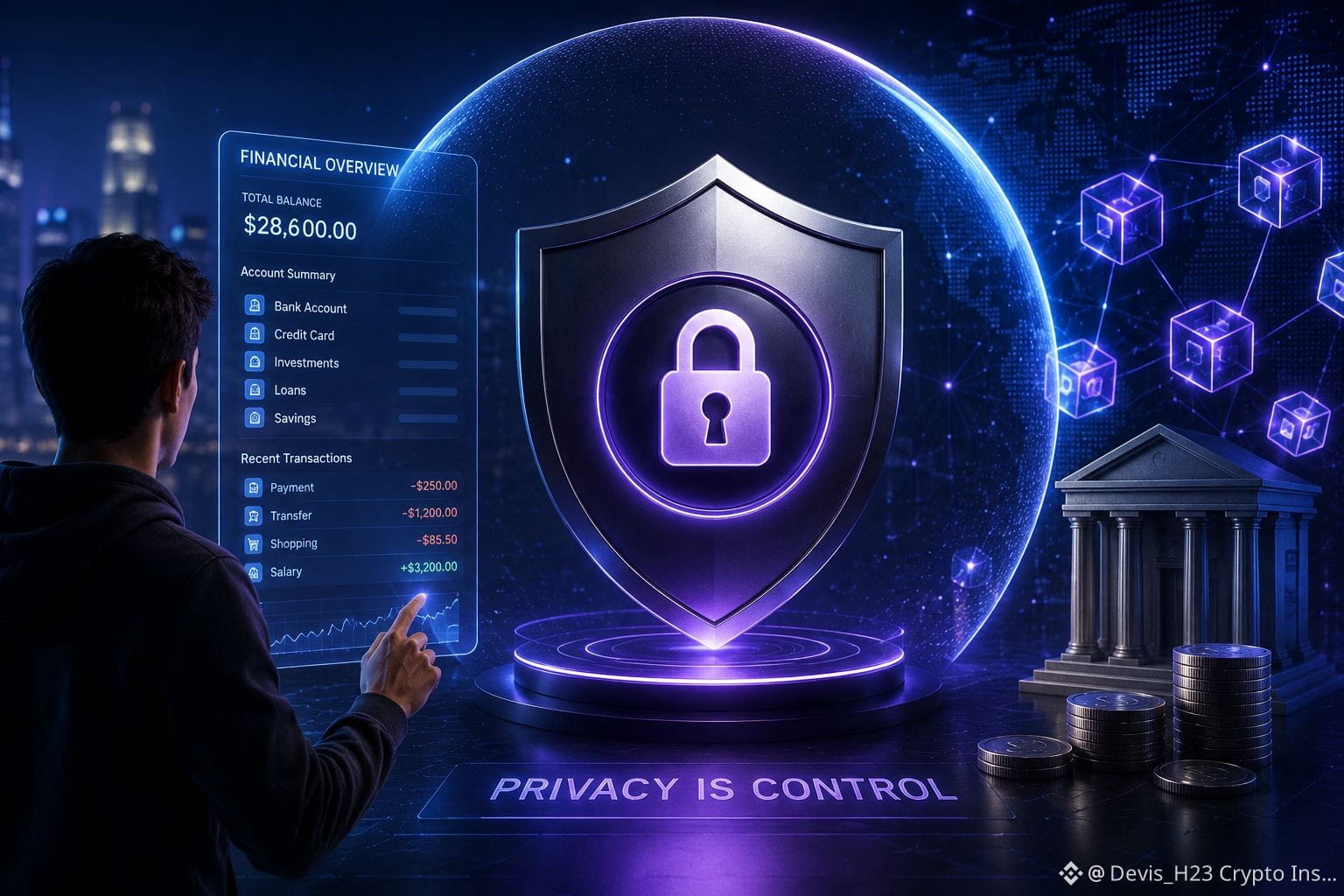
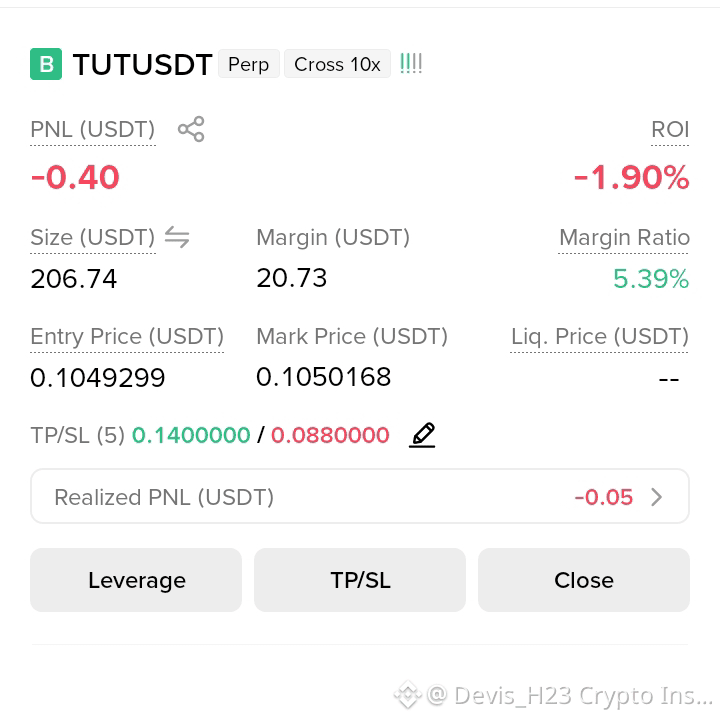
Another day, another update.
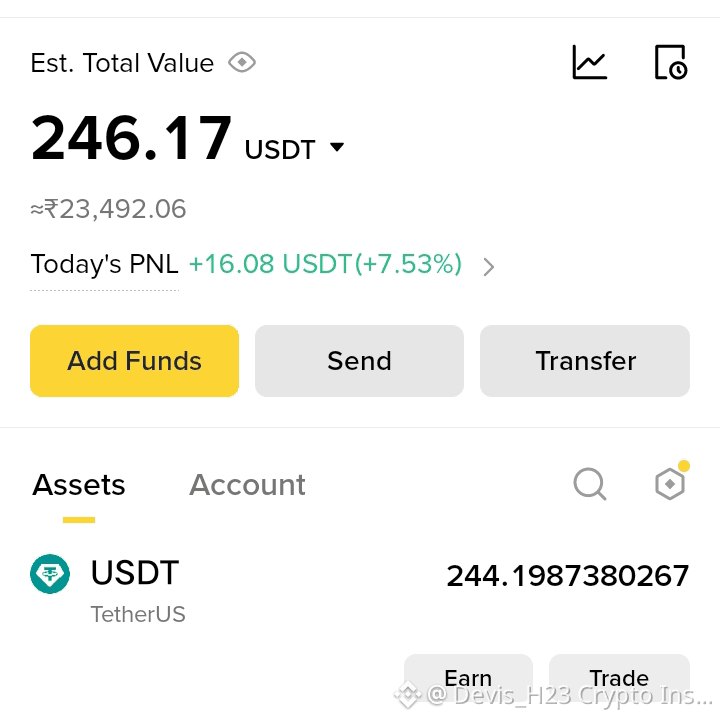
Started this journey with 115 USDT.
Today, the account is at 246.17 USDT. 📈
Today's PnL: +16.08 USDT
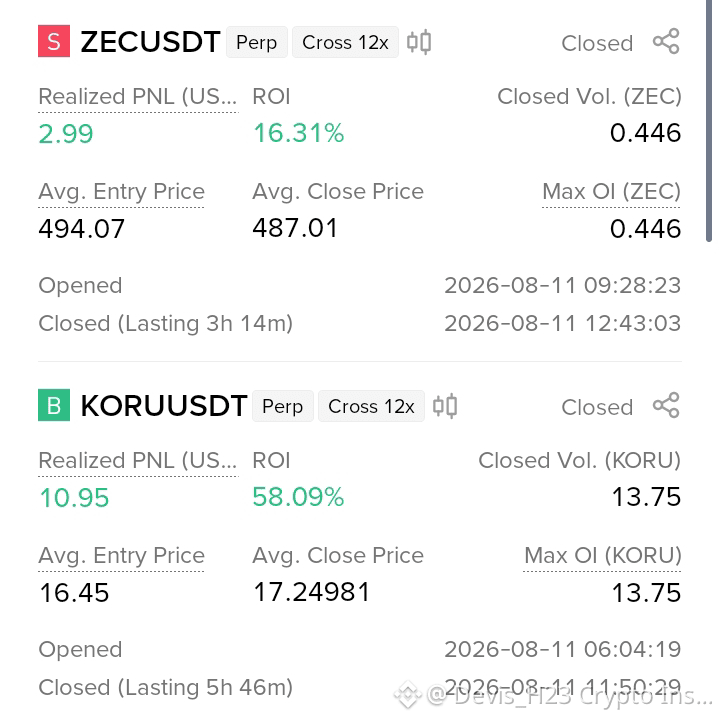
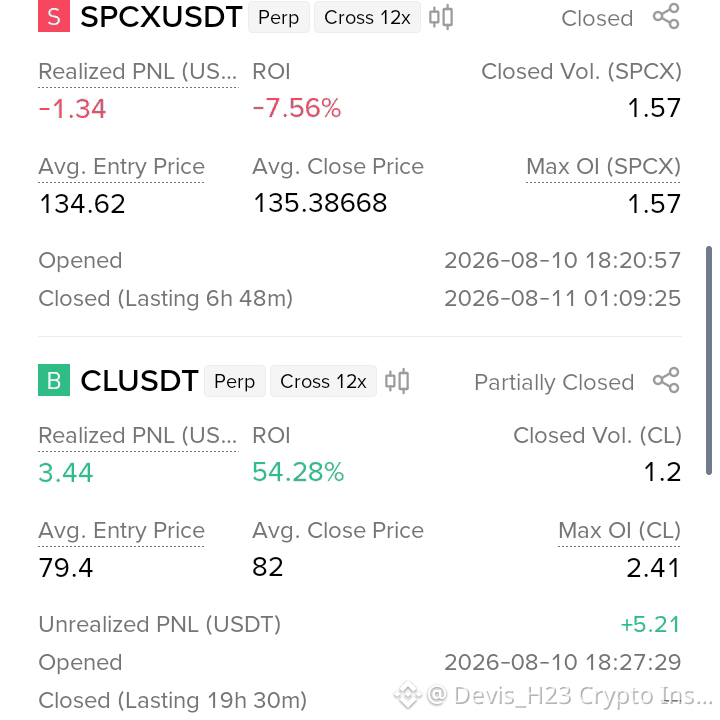
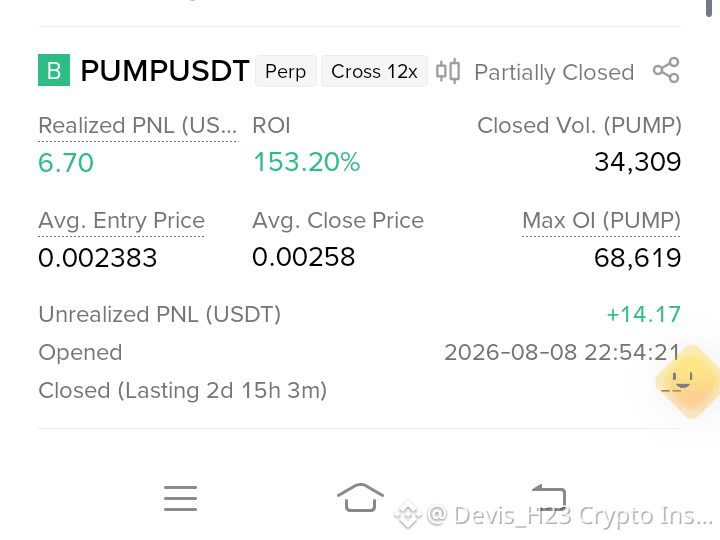
Some of today's trades:
🟢 KORUUSDT: +10.95 USDT
🟢 XAGUSDT: +4.68 USDT
🟢 ZECUSDT: +2.99 USDT
🔴 SPCXUSDT: -1.34 USDT
I also have positions still running, so the numbers can change with the market.
I'm not going to pretend every trade is perfect.
Some work.
Some don't.
That's exactly what I want to show with this journey.
115 → 246.17 USDT
The target is still 1,000 USDT.
One trade at a time.
One lesson at a time.
If you're following this journey, stay with me. 🤝📈
#Devish #BTC #TrendingTopic
Started this journey with 115 USDT.
Today, the account is at 246.17 USDT. 📈
Today's PnL: +16.08 USDT
Some of today's trades:
🟢 KORUUSDT: +10.95 USDT
🟢 XAGUSDT: +4.68 USDT
🟢 ZECUSDT: +2.99 USDT
🔴 SPCXUSDT: -1.34 USDT
I also have positions still running, so the numbers can change with the market.
I'm not going to pretend every trade is perfect.
Some work.
Some don't.
That's exactly what I want to show with this journey.
115 → 246.17 USDT
The target is still 1,000 USDT.
One trade at a time.
One lesson at a time.
If you're following this journey, stay with me. 🤝📈
#Devish #BTC #TrendingTopic
The journey continues. 📈
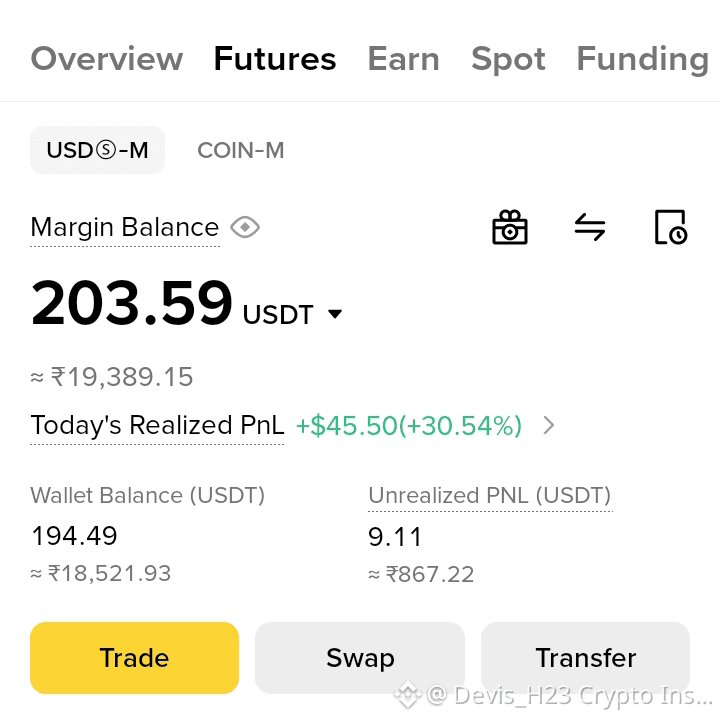
I started this account with 115 USDT.
After another day of trading, it has now reached 203.59 USDT.
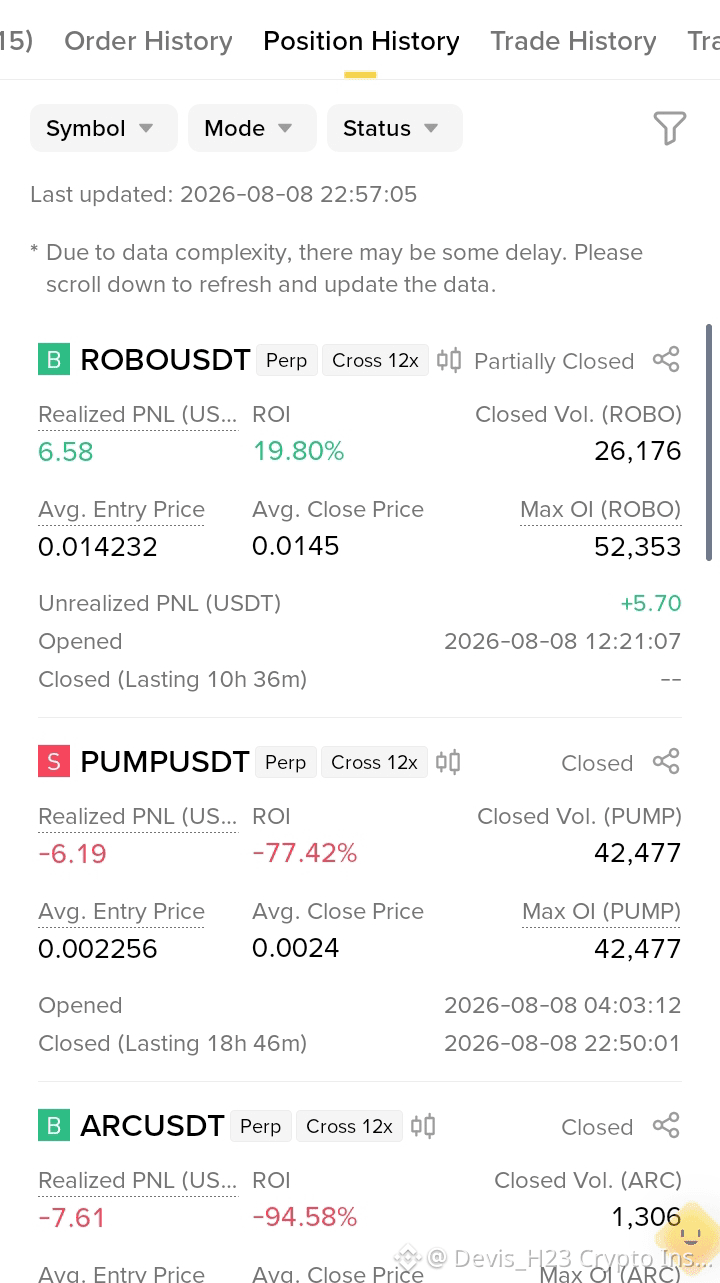
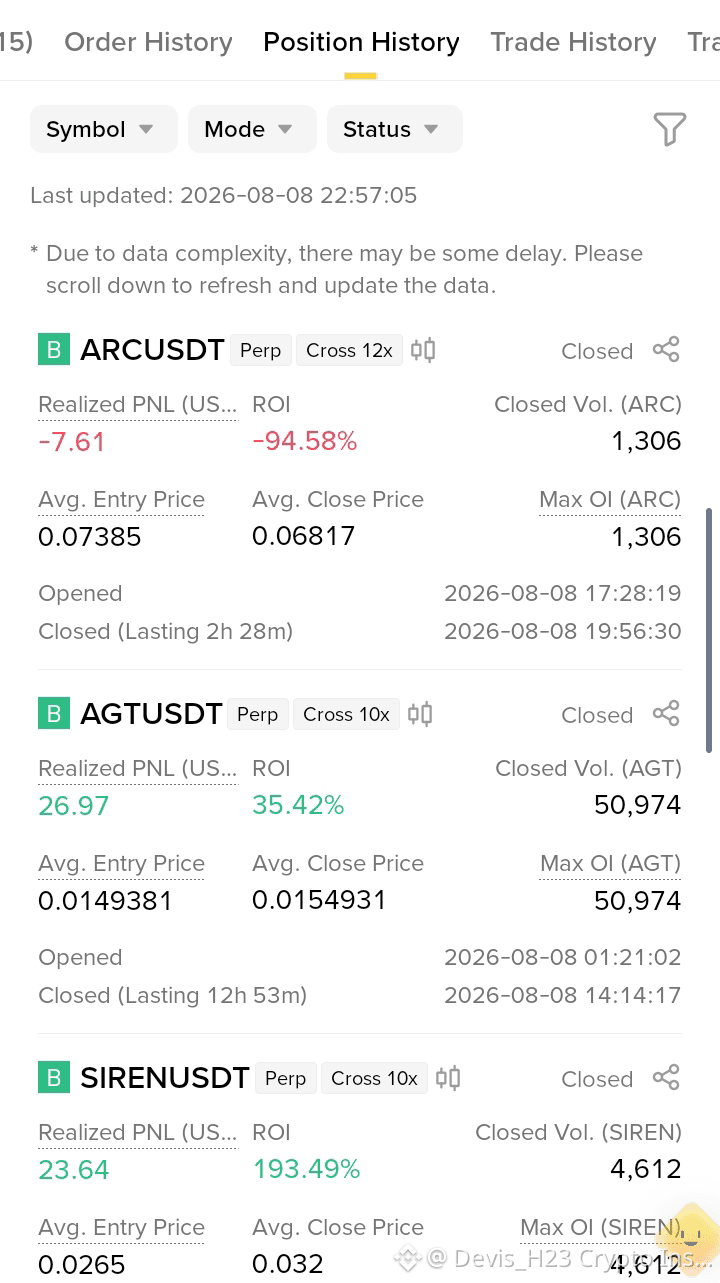
Today's results:
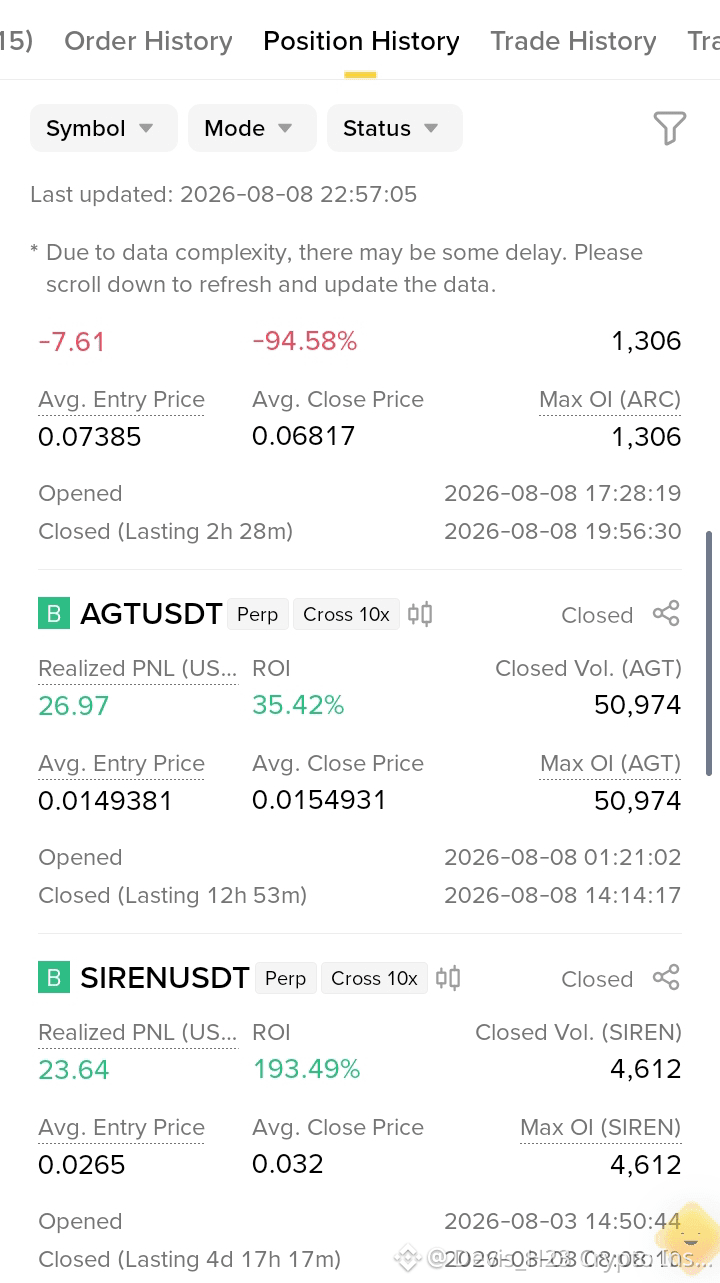
🟢 AGTUSDT: +26.97 USDT
🟢 SIRENUSDT: +23.64 USDT
🟢 ROBOUSDT: +6.58 USDT
🔴 PUMPUSDT: -6.19 USDT
🔴 ARCUSDT: -7.61 USDT
Today's realized PnL: +45.50 USDT
Not every trade will be a winner, and that's completely fine.
I'll share the good trades, the bad trades, the profits, and the losses — everything will be real.
🎯 Target: 1,000 USDT
115 → 203.59 USDT
I'm also going to share the setups and signals I take along the way.
If you want to follow my trades and learn from the journey, follow me and be part of it.
No fake promises.
No guaranteed profits.
Just real trades, real results, and a real journey.
Let's grow together. 🤝📈
#Devish
I started this account with 115 USDT.
After another day of trading, it has now reached 203.59 USDT.
Today's results:
🟢 AGTUSDT: +26.97 USDT
🟢 SIRENUSDT: +23.64 USDT
🟢 ROBOUSDT: +6.58 USDT
🔴 PUMPUSDT: -6.19 USDT
🔴 ARCUSDT: -7.61 USDT
Today's realized PnL: +45.50 USDT
Not every trade will be a winner, and that's completely fine.
I'll share the good trades, the bad trades, the profits, and the losses — everything will be real.
🎯 Target: 1,000 USDT
115 → 203.59 USDT
I'm also going to share the setups and signals I take along the way.
If you want to follow my trades and learn from the journey, follow me and be part of it.
No fake promises.
No guaranteed profits.
Just real trades, real results, and a real journey.
Let's grow together. 🤝📈
#Devish
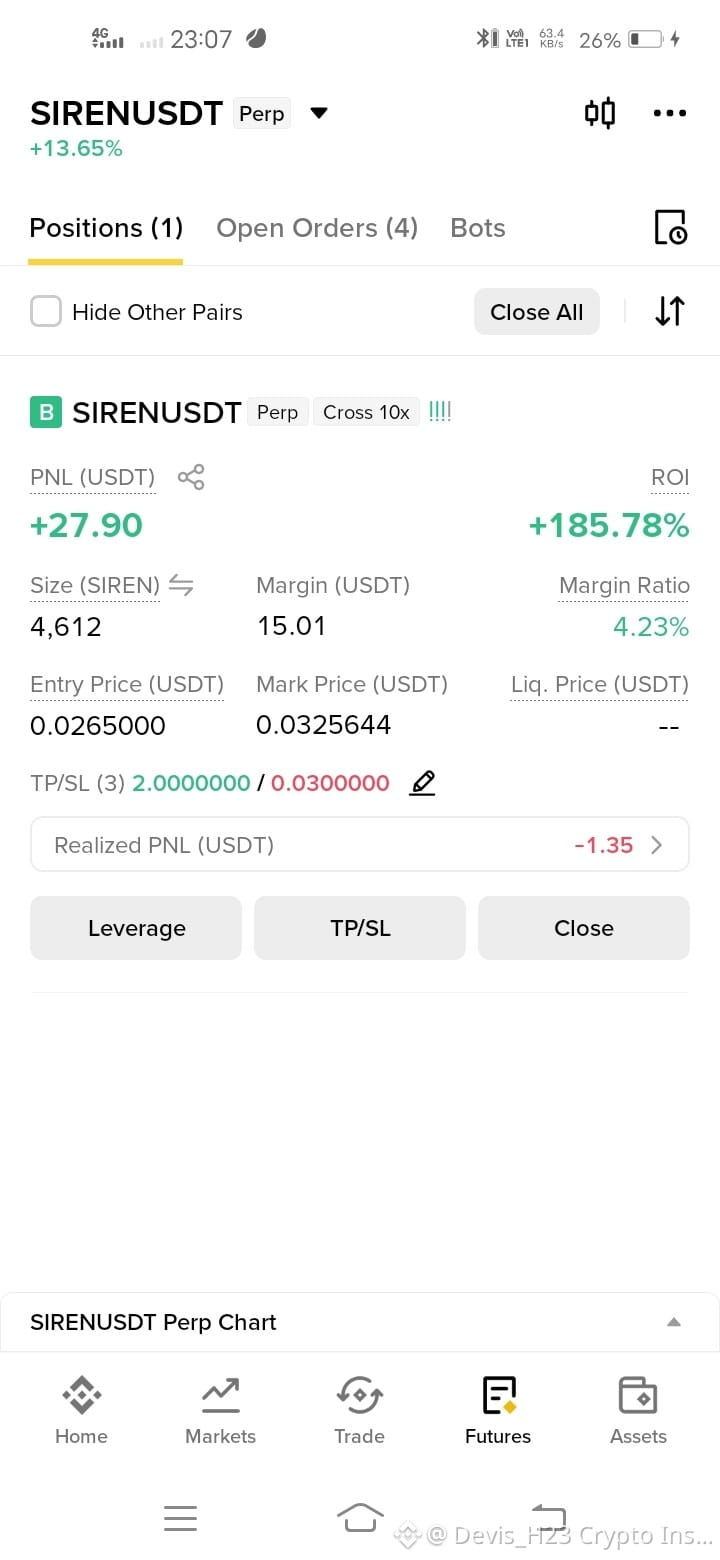
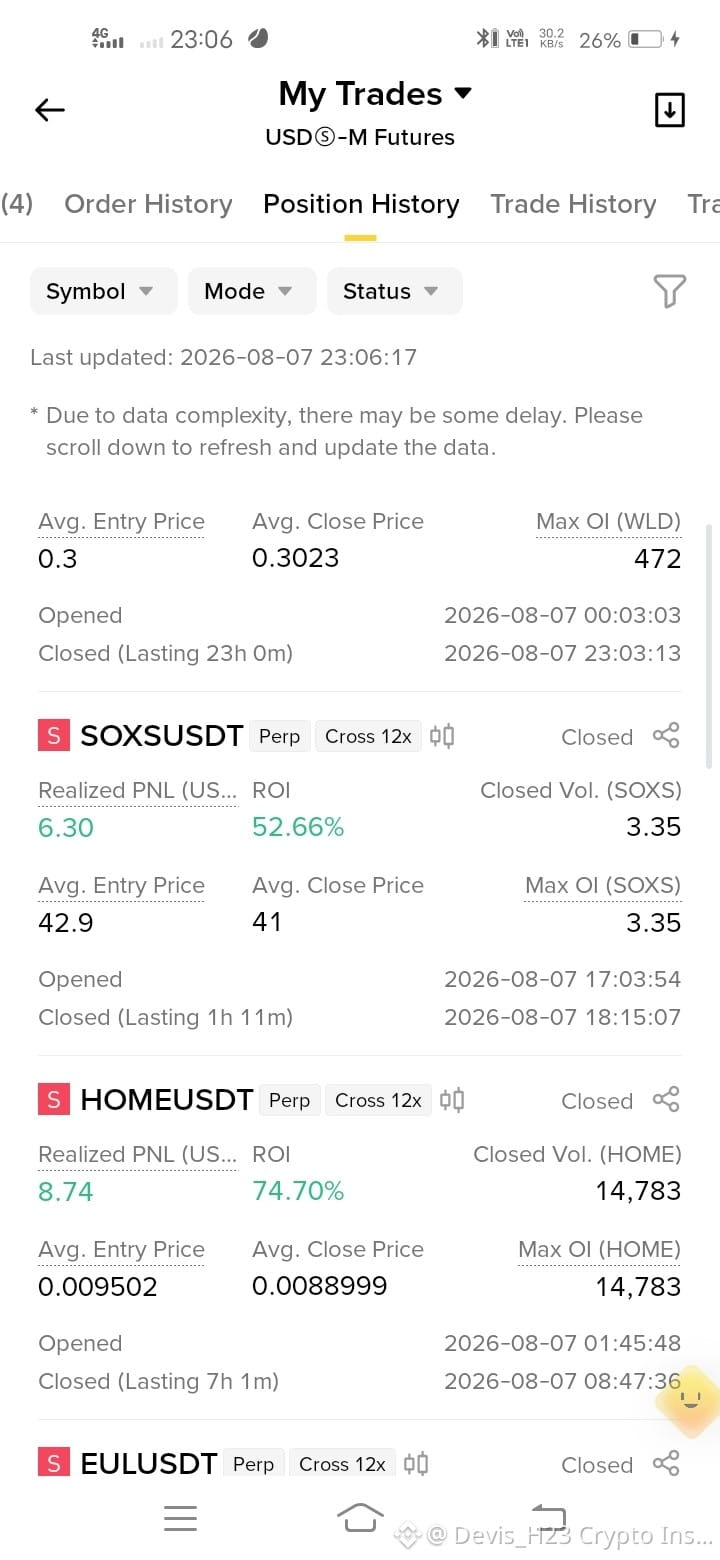
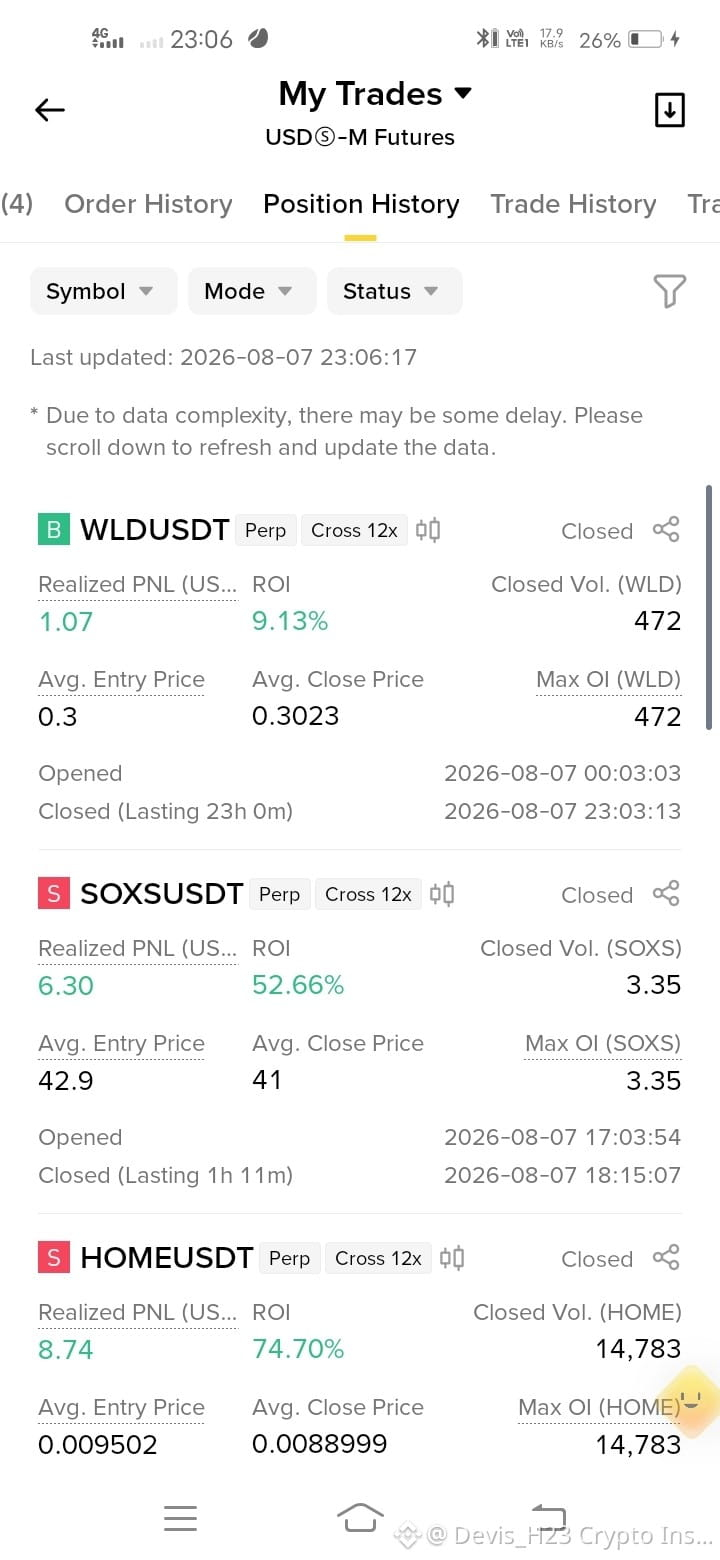
A new journey started with just 115 USDT.
A few days later, the account has already grown to 176.93 USDT.
It's still a long way from my goal of 1,000 USDT, but every journey begins with a single step.
The screenshots below show my current balance and the trades behind this progress.
I'm not here to show only winning trades.
I'll share everything.
🟢 Winning trades.
🔴 Losing trades.
📊 Daily progress.
📸 Real screenshots.
🧠 Lessons learned.
No fake PnL.
No edited results.
No hiding bad days.
Whether the market rewards me or humbles me, you'll see every step of this journey.
The goal isn't just to reach 1,000 USDT.
The goal is to earn it through discipline, patience, and proper risk management.
If you're interested in following a real trading journey, join me.
Let's see where this journey leads.
A few days later, the account has already grown to 176.93 USDT.
It's still a long way from my goal of 1,000 USDT, but every journey begins with a single step.
The screenshots below show my current balance and the trades behind this progress.
I'm not here to show only winning trades.
I'll share everything.
🟢 Winning trades.
🔴 Losing trades.
📊 Daily progress.
📸 Real screenshots.
🧠 Lessons learned.
No fake PnL.
No edited results.
No hiding bad days.
Whether the market rewards me or humbles me, you'll see every step of this journey.
The goal isn't just to reach 1,000 USDT.
The goal is to earn it through discipline, patience, and proper risk management.
If you're interested in following a real trading journey, join me.
Let's see where this journey leads.
Log in to explore more content