
When Shell started accepting Bitcoin: The global monetary system is being rewritten
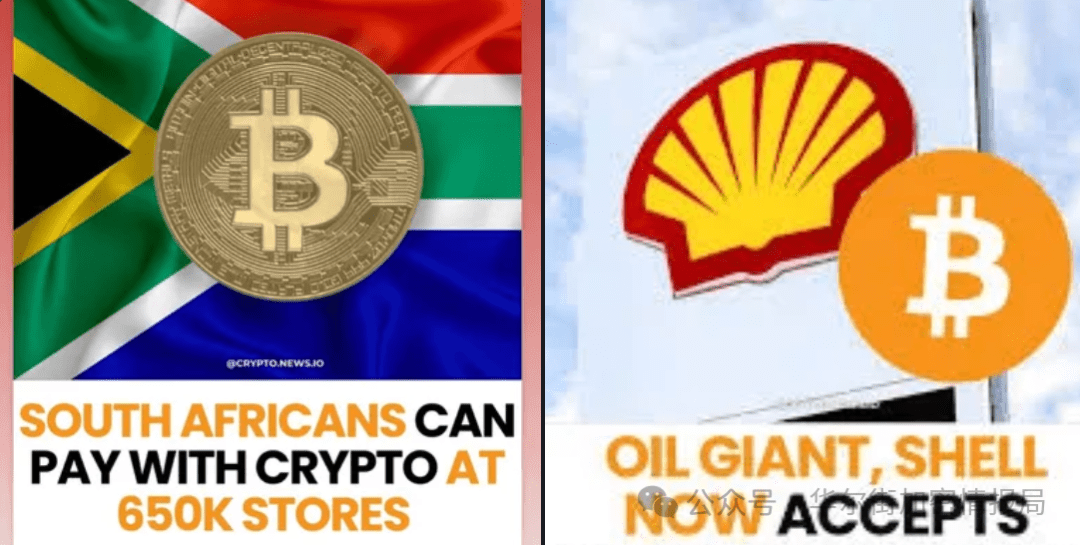
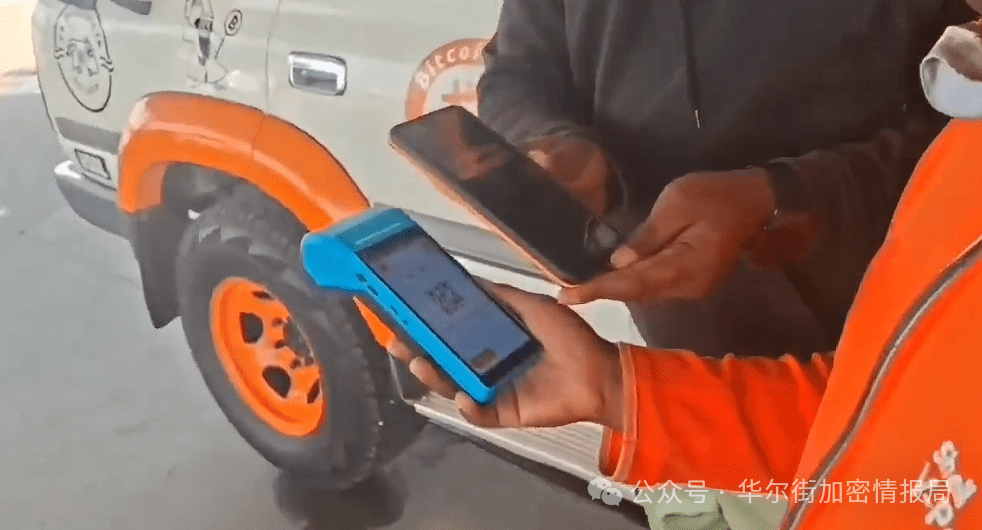
In November 2025, a seemingly inconspicuous piece of news stirred hidden ripples in the crypto world: The global oil giant Shell's authorized site in South Africa began accepting Bitcoin payments.
If this sentence is extended, its true meaning is - Bitcoin has been introduced into the real business scenarios of global energy giants for the first time.
Energy is the 'foundation of foundations' in modern society; and when energy giants begin to integrate Bitcoin into payment, settlement, and business processes, it indicates not just one company 'trying something new', but that Bitcoin is being embedded into the most solid underlying structure of the global trade system.
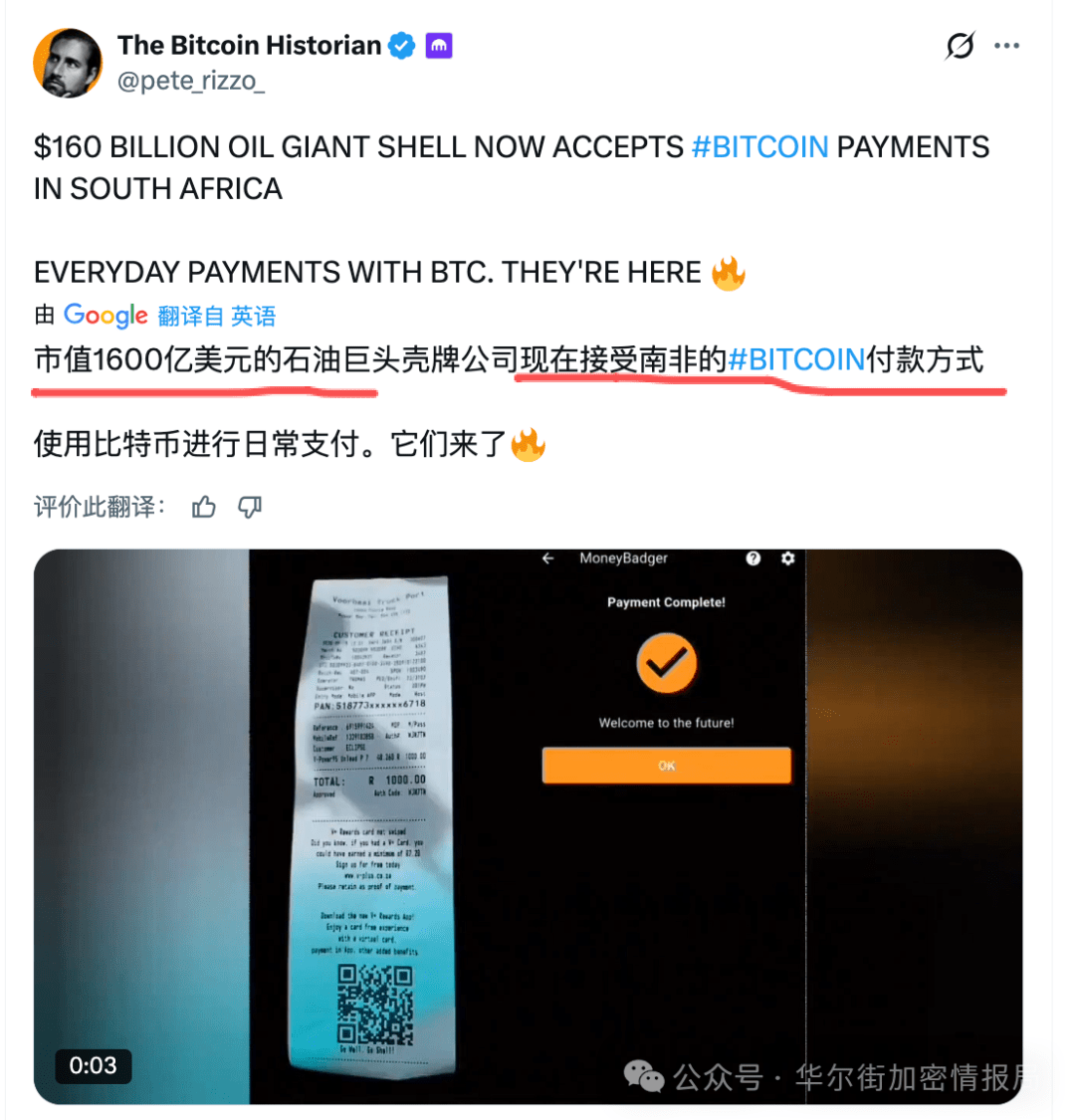
The significance of this event far surpasses the mere fact that "small shops in a certain country accept BTC." In this article, Yongqi will provide a comprehensive analysis of the true depth of this matter from the following perspectives:
The underlying logic of Shell's acceptance of BTC
Why do the actions of energy companies affect the global monetary landscape?
Bitcoin adoption curve: From the internet to nations, and then to industrial systems
The future use cases of BTC will see an accelerated explosion within three years.
Structural changes in crypto asset prices and consensus
The global monetary system is being gradually swallowed up by digitalization.
This is a key article for understanding Bitcoin's trajectory, applications, positioning, and value over the next decade.

Why did Shell become the first company to accept BTC in South Africa?
At first glance, this seems like an "experiment in a third-world country." But upon closer inspection, it represents a key turning point in the global energy system's exposure to cryptocurrencies.
1. South Africa is not random: it is one of the African countries with the highest BTC usage.
South Africa has a high proportion of young people, an underdeveloped financial system but a high digital penetration rate, and Bitcoin is widely used as a cross-border payment tool. The local fiat currency has long faced inflationary pressures.
Shell's acceptance of BTC in the local market follows a very important logic: it caters to the needs of real local users.
When "user demand" drives "giant companies" to adopt BTC, the diffusion model of Bitcoin shifts from speculation-driven to usage-driven.
2. Shell itself is building a digital energy network.
Shell has made large-scale investments in the following areas in recent years: the Internet of Things (IoT) for energy, automated gas stations, digital payment systems, electric vehicle and charging networks, and blockchain-based energy traceability systems.
If future electric vehicle charging, energy purchases, and cross-border settlements all require an "instant, cross-border, and programmable" currency, then BTC is a natural candidate.
3. Shell's acceptance of BTC is essentially a form of risk hedging.
The biggest risks for energy companies in global trade come from: dollar fluctuations, exchange rate losses, time costs of cross-border settlements, high transaction fees, and complex capital controls in various countries.
Bitcoin's characteristics allow Shell to reduce these costs: instant settlement, no reliance on banks, global applicability, non-freezing, and global asset liquidity.
For multinational giants, BTC is a financial tool that can reduce friction in their global operations.
This isn't a South African story; it's the first step for energy giants to test the waters with Bitcoin.

II. Why are energy giants getting involved?
Is it more important than all the institutions buying BTC?
First principles tell us that money was originally used to "purchase energy." In modern society, "energy" is almost synonymous with "economic base," and the energy system has three characteristics:
1. Extremely high degree of globalization: cross-border trade relies on a unified currency.
Energy trade constitutes a significant portion of global trade. The adoption of Bitcoin by energy companies means that Bitcoin can penetrate into: gas stations, city energy networks, LNG transportation, cross-border oil trade, and electricity purchases.
This will have a deeper and more fundamental impact than PayPal accepting BTC, micro-strategies buying BTC, and ETFs holding BTC. This is because energy belongs to the "economic infrastructure layer."
2. The energy sector itself needs a "re-settlement layer" to replace SWIFT.
International energy settlements have long relied on the US dollar and SWIFT. However, SWIFT's problems are becoming increasingly prominent: high costs, lack of scalability, vulnerability to sanctions, and inability to adapt to the digital trade era.
Bitcoin's "Internet of Value" attributes make it naturally suited to serve as an international resettlement layer in the energy era.
3. If the energy system accepts BTC, then BTC will have a "hard demand".
This means that even without speculation, institutional gambling, or a cryptocurrency bull market, as long as energy trade requires Bitcoin, the demand will continue. This is the real force that can push BTC above $500,000.
Not an ETF. Not a halving. Not the Federal Reserve. Rather: Bitcoin becomes the underlying value protocol of the global economy.
III. Bitcoin Consensus Enters the Third Phase:
From speculative consensus → national consensus → industry consensus
Over the past fifteen years, Bitcoin's consensus diffusion has exhibited a "three-stage rocket" growth.
Phase 1: Speculative Consensus (2010–2020)
Retail investors, tech enthusiasts, investors, Crypto Twitter users, and exchange users all view BTC as a "speculative financial asset."
Phase Two: National Consensus (2021–2025)
El Salvador's fiatization, Argentine political parties' support for Bitcoin, the shift in US policy from hostility to construction, the legalization of MICA in Europe, the establishment of regulations in Hong Kong and the UAE, and the purchase of Bitcoin/ETFs by national institutions—Bitcoin has transformed from a "speculative tool" into a "recognized asset."
Phase Three: Industry Consensus (2025–2030) – We are now entering this phase.
The logo includes:
Shell accepts Bitcoin payments (energy sector)
Walmart is piloting Bitcoin (BTC) settlement internally (retail/supply chain).
SpaceX accepts BTC payments for launch services (space).
Airlines accept BTC for ticket purchases (transportation)
AI cloud computing power begins to support BTC settlement (Technology)
OpenAI/Anthropic Research on Bitcoin as a Credit Layer for Cross-Border Micropayments (AI + Finance)
When the "industrial system" begins to adopt BTC, consensus enters the permanent stage.
At this point, Bitcoin's status changes as follows:
From "Financial Assets" to "Global Value Internet Protocol Layer"
From "speculative instrument" to "cross-border settlement standard"
From "Investment Products" to "Global Digital Commodity Currency"
This structural change is being initiated by Shell's actions.
IV. Energy companies adopt BTC.
This will give rise to the five most important new scenarios in the next three years.
The following scenario is not science fiction, but a trend that will naturally emerge after energy companies take action.
1. The global charging network accepts BTC payments (very high probability).
Electric vehicle charging stations require: low-friction payment; rapid offline-to-online synchronization; unified cross-border settlement; and programmable billing.
The Bitcoin Lightning Network has extremely high compatibility. Shell has been developing its electric vehicle network for many years, and its next step is likely to be the full integration of Shell Recharge with Bitcoin.
2. Logistics, shipping, and aviation are gradually adopting Bitcoin as a cross-border settlement layer.
Because: cross-border shipping and aviation costs are extremely high; traditional financial instruments are too inefficient; BTC solves the three major pain points of global trade: speed, cost, and risk of being frozen.
Once the energy industry adopts BTC, the aviation industry will quickly follow suit.
3. Collaboration between miners and energy companies in the global oil supply chain (energy → computing power → Bitcoin)
Oil and gas companies can utilize: spillover energy and low-cost electricity.
They mine Bitcoin. And when they can mine, collect, and use BTC themselves, it means that Bitcoin and energy are merging into a new industry standard.
4. The changing status of sovereign currency systems (especially in emerging markets)
When large corporations begin to openly accept BTC, residents of emerging markets will be more willing to hold BTC, increasing pressure on their currencies to depreciate. Governments may then proactively open up BTC payments to reduce reliance on the US dollar. This is the "user diffusion curve" of BTC.
5. The demand for the "Internet of Value" is exploding in the AI era.
AI requires: massive micro-payments, a global computing network, machine-to-machine (M2M) payments, automated settlement, and borderless asset transfer.
BTC, Lightning Network, RGB, and Taproot Assets are the most standardized "value interfaces" in the AI era. Shell's integration with BTC is just one piece of the puzzle in this larger narrative.
V. What does this mean for the price of Bitcoin?
In conclusion: the demand generated by industrial adoption is far more sustainable and substantial than ETF buying. ETFs are a capital activity; industrial adoption is an economic activity.
1. Industrial adoption stems from "real demand" and is irreversible.
Speculative buying can be sold, and institutional allocations can be adjusted, but: corporate payments require BTC, supply chains need settlements, charging networks need micropayments, the computing power economy needs clearing, and AI services need a value transfer layer. These needs don't have "selling pressure," only "continuous use."
2. From "buying Bitcoin" to "using Bitcoin," the price logic has completely changed.
In the past, the price of BTC has been influenced by: halving cycles, ETF purchases, institutional allocation, and market sentiment.
Future prices will be driven more by: transaction demand, settlement demand, on-chain payment volume driven by economic activity, and BTC usage rate across the global industrial chain.
This means that BTC is entering a trading-driven bull market, rather than a speculation-driven bull market.
3. Long-term target price reassessment for BTC
Traditional narrative: $200,000: Nationally accepted; $500,000: ETF-dominated; $1,000,000: Global reserve asset.
A New Industry Narrative: $2 Million: The Energy System Adopts BTC as a "Value Settlement Layer"
This is not a fantasy, but the most natural evolution in monetary history: the highest value of money is determined by its position in "energy trading".
This is the deeper meaning of the Shell incident.
VI. The Shell incident is a manifestation of the global monetary system.
The first alarm signaling the start of the "rewrite"
We are on the eve of a major transformation: the dollar's hegemony is loosening, AI is driving economic automation, the trade system needs to be frictionless, capital markets are becoming digital, and energy and computing power are becoming the new gold standard.
Bitcoin's role in this structural reorganization is no longer that of a trading instrument, a speculative asset, or digital gold.
Rather, it's something much grander: the underlying value protocol of the global digital economy.
Shell accepting BTC is not news—it signals a new era in monetary history for the next thirty years.
This foreshadows: accelerated industrial adoption, cracks appearing in the monetary systems of multiple countries, global companies following suit, exponential growth in demand for BTC, and a reshaping of the price system driven by usage.
The future of currency will not be fiat currency vs. crypto, but rather: "Internet of Value vs. Traditional Finance".
Yongqi concludes: History never begins in the loudest place.
Instead, they quietly changed direction.
In 2025, Shell's South African gas stations began accepting Bitcoin. People might think this is a "small country's behavior" or "insignificant." But history has already told us:
The end of the Cold War did not begin with a declaration by the great powers.
Yale University's first use of the internet was also not taken seriously.
Nobody took the first electronic payment seriously.
When the first telegram was sent, no one realized that times had changed.
Change always starts in the most inconspicuous places—and then it engulfs the whole world.
Shell's South African sites today will become the common choice for the global energy system tomorrow.
Driven by industry, Bitcoin will evolve from an "asset" to an "infrastructure," from "speculation" to "use," and from an "investment target" to the "value foundation of the human economy."
History is moving. The future is coming. And you are witnessing it with your own eyes.
In-depth observation, independent thinking, and value that goes beyond price.
Star#WallStreetCryptoIntelligenceBureauto never miss great content ⭐
Finally: Many of the views expressed in this article represent my personal understanding and judgment of the market and do not constitute investment advice for you.

