
Some say this is a conspiracy theory; others say this is a script that has been written long ago. Whether you believe it or not, the following 'clues' are enough to alert market participants: IMF, ECB, WEF, BIS, major investment banks, and several central bank experiments are all testing around the same type of infrastructure — and the name XRPL / Ripple appears multiple times.
Christine Lagarde left the IMF to take a position at the ECB, but her connection with Ripple has not been severed; instead, there are intersections at the experimental and advisory levels with multiple international institutions.
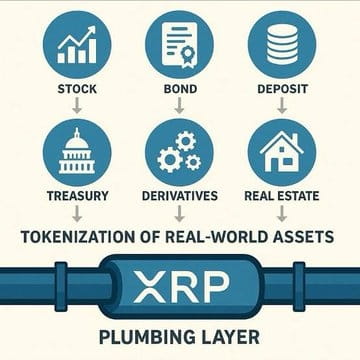
Discussions among the IMF, ECB, BIS, WEF, etc., about 'Digital Special Drawing Rights (Digital SDR), tokenized government bonds, and verifiable identities' align closely with the technology stack of XRPL (XLS-70/XLS-80, asset custody, clearing).
If these fragments ultimately form a complete map, XRP may no longer be just a 'speculative asset' but an important component in some type of cross-border settlement/clearing infrastructure—this is also one of the reasons why there may be suppression, regulation, or competition in the short term.
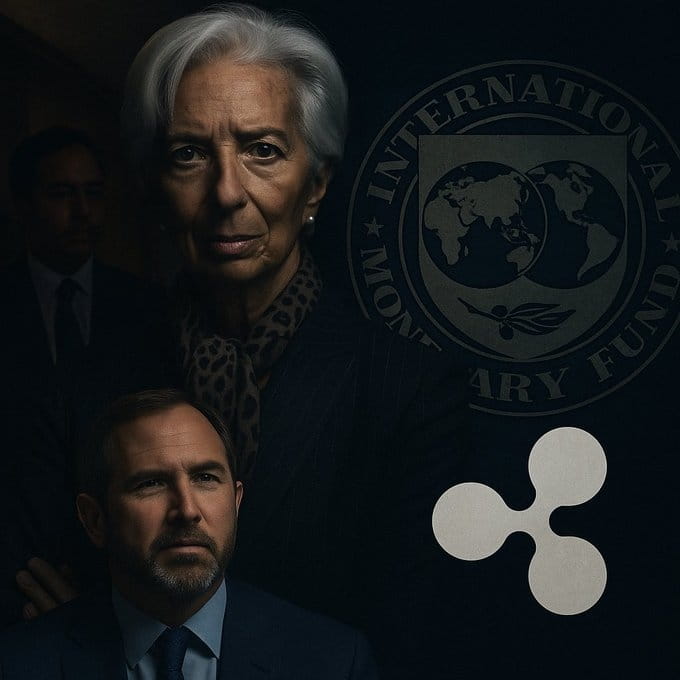
1. Lagarde and that prophecy about 'digital transformation'
In 2011, Christine Lagarde publicly stated that the IMF needs to prepare for digitalization. More than a decade has passed, and she has shifted from the IMF to the ECB—but the path of 'driving change' has not been interrupted; instead, it has spread to more central banks and international organizations' projects. The networks and topics she left in the political and economic circles have been adopted and amplified by subsequent projects.
2. Ripple's shadow: advisory seats and closed-door meetings
There are reports that former Ripple legal or executive officials have appeared on the IMF's senior fintech advisory panel.
Ripple has been continuously appearing in various white papers and trial reports with some international banks and settlement pilots.
These are not ordinary business collaborations but appear at the level of 'policy recommendations' and 'normative standard discussions'—this means that technology and compliance pathways are being discussed and validated together.
3. Digital SDR and 'who will be the settlement layer?'
When the IMF discusses 'digital SDR', the core issue is: how to achieve cross-currency, low-cost, instant settlement?
The design goals of XRPL (speed, low fees, native asset minting and custody capabilities) theoretically meet some demands. The problem is not whether the technology can achieve it, but who will control it, who will regulate it, and how to connect it to the existing banking system.
4. BRICS, ECB, BIS: different camps, same needs
BRICS countries mentioned in documents the need for 'low-cost, high-speed custody and settlement architectures' while studying de-dollarization and alternative settlement systems.
The ECB and BIS have conducted 'asset tokenization' and 'cross-border micro-settlement' trials in multiple reports.
The reports and pilots of different institutions seem scattered, but the focus is consistent:How to digitize and safely settle massive financial assets and sovereign debts. XRPL is frequently cited or tested in these use cases, indicating that it is at least on the 'alternative list'.
5. The key role of XLS-70 / XLS-80 and the identity layer
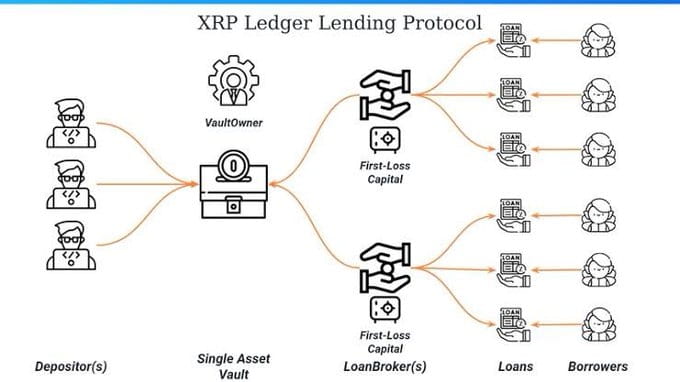
The specifications of XRPL’s XLS-70 (verifiable credentials) and XLS-80 (permission domains) directly correspond to the demand for 'institution-level verifiable identity and permission management'.
When 'verifiable identity + regulated settlement channels' are combined, multinational institutions can conduct compliant transactions and settlements on-chain, which is the part that central bank-level use cases are most concerned about.
The rise of technologies such as DNA Protocol and gene/biometric credentials further pushes the identity layer to the forefront—these happen to be one of the scenarios where XRPL can act as 'underlying support'.
6. A frightening yet realistic choreography
Observing recent events reveals a kind of 'rhythmic' choreography:
Regulatory or legal events (suppress short-term market sentiment) →
Advancement of internal trials and regulations in international organizations/central banks (at the same time) →
Commercial banks and custodians conducting access testing (silent period) →
Once compliance and connection channels are ready, demonstration products such as ETFs and bond tokenization will be launched.
In this process, the short-term 'suppression' of XRP does not necessarily mean it will be ignored forever; on the contrary, at the institutional level, it may be seen as a 'scarce and sensitive' infrastructure asset.
7. Why is this important to the market?
Redefining value positioning: if XRP becomes part of some type of settlement stock, its value is no longer just speculative but related to actual payment/settlement flow and asset custody.
Policy risks and systemic intervention: once a country or international institution views a certain blockchain as infrastructure, regulatory and control rights will follow—this is both beneficial and risky.
Market mismatch opportunities: short-term suppression may become a window for institutions to quietly lay out; in the long term, it could lead to a completely different valuation logic.
8. Conclusion: Do not take the 'story' as a conclusion
This article organizes clues and deductions, not pronouncements. The appearance of documents, pilots, and advisory members is a fact that can be traced, but there is still a long political, legal, and technical path to walk from 'appearance' to 'widespread deployment'.
If you are a trader: this kind of news means information asymmetry can be arbitraged, but the risks are equally huge; if you are a long-term investor: what matters are milestone regulatory developments and institutional access, rather than daily fluctuations.
