
MetaMask is a cryptocurrency wallet that supports the Ethereum blockchain, Layer 2 networks, and standalone EVM-compatible blockchains. It is a non-custodial solution that enables users to interact with decentralized applications and manage their crypto assets. Developed by Consensys, it is widely supported by the Ethereum developer community and has gained significant popularity, with over 30 million monthly active users as of 2023.
One of the key advantages of MetaMask is its flexibility in supporting EVM blockchains. In recent years, there has been a proliferation of EVM-compatible blockchains, each offering improved efficiency and cost-effectiveness over the original Ethereum blockchain. MetaMask's technology allows for easy integration of these new networks, enabling users to switch between them and access decentralized applications on any network. This is particularly useful for investors who are always looking to explore new projects and ecosystems.
Another advantage of MetaMask is the wallet is available for all smart devices, and the interface is designed for basic transactions, making it accessible for even casual investors with minimal knowledge of the technology. Additionally, MetaMask can be used in conjunction with hardware wallets such as Trezor and Ledger, providing users with the option to store their crypto assets in a more secure manner for long-term holding.
One of their popular offerings is the MetaMask swaps, which was processing $3B-$5B of volume per month at its peak and generating close to $0.5B in revenue since its launch in late 2020. MetaMask charges a 0.875% swap fee on top of the 1-30bps DEX fees the user is already paying, which is considered a rather high fee by some.
MetaMask's integrated swap feature operates as a super aggregator, collecting liquidity from a host of sources, including other decentralized exchange (DEX) aggregators. Despite its competition with Coinbase in this domain, it also finds rivals in other super aggregators such as Matcha and DefiLlama.
Snaps
MetaMask Snaps, initially conceptualized in 2019, has materialized into a transformative feature for the MetaMask wallet, analogous to apps on an iPhone or extensions on Google Chrome. In September 2023, MetaMask introduced the Snaps Open Beta, showcasing over 30 third-party audited snaps in three distinct categories: Transaction Insights, Interoperability, and Notifications.
Snaps are JavaScript files that users can install to increase the functionality of MetaMask and add new functionalities. Some potential snaps already being showcased include StarkNet for contract accounts on L2, Web3Auth to turn MetaMask into an MPC wallet, ZK-Nullifier to create pseudonymous apps, smart accounts to access smart contract wallets directly from MetaMask, and more.
Competitive Advantage and Moat
This innovation marks a strategic pivot for MetaMask, enabling it to leverage external development prowess and potentially surpass the feature sets of competitors reliant on in-house development. While rival wallets may attempt to replicate MetaMask's ecosystem approach, they face the formidable challenge of matching MetaMask's brand recognition and user reach.
As the Snaps feature integrates standalone products and wallets, the landscape shifts. Wallet providers that once prided themselves on unique offerings or support for non-EVM chains are now reconsidering their positions. Many are likely to transition their distinguishing features into MetaMask's expanding ecosystem, prioritizing strategic alignment over standalone operations. For the cryptonatives, the situation is not unlike Uniswap v4 and “hooks.” Hooks allow builders to design new trading techniques and strategies into Uniswap that was previously only possible on a competitor.
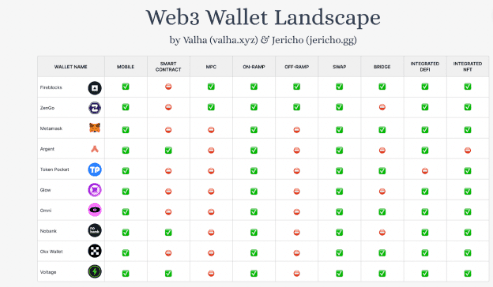
Issues for Snaps to Resolve
The intricacies of blockchain wallets pose a significant hurdle to widespread adoption. For veterans and novices alike, the wallet setup process—managing seed phrases, private and public keys, and ensuring their security—is daunting. In an era where single sign-on (SSO) systems streamline access to multiple services, the blockchain's requirement for discrete credentials for each network is a deterrent.
To initiate a transaction on a blockchain, users must pay a fee, not in fiat currency, but in the blockchain's native token. This necessitates different wallets for different blockchains, along with the secure storage of seed phrases and private keys.
Further complicating matters is the lack of widespread blockchain education. Newcomers often find themselves perplexed by the jargon and complexity of blockchain transactions. The learning curve is steep, with understanding the need for transaction fees and the mechanics of sending assets being non-intuitive for many.
Despite its widespread adoption, MetaMask is not without its shortcomings, one of which is the critical issue of 'blind signing.' This term encapsulates a user experience challenge within the Ethereum ecosystem, where users are prompted to approve transactions while being presented with information that is not readily understandable. This cryptic presentation often compels users to authorize transactions without a clear understanding of the implications, essentially signing off 'blindly.'
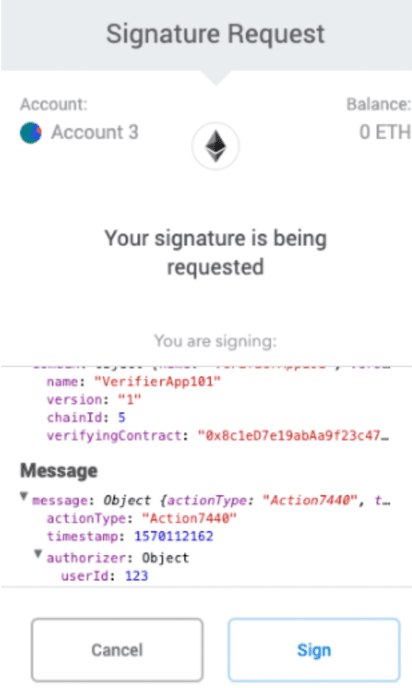
Metamask’s non-user-friendly UI for signing a message.
The implications of blind signing are twofold. From a security standpoint, users may unknowingly enable transactions that could be malicious. On the adoption front, the opacity of transaction information can be overwhelming and off-putting to potential users, thus impeding wider acceptance of the technology. Additionally, due to the manner in which Ethereum handles ERC-20 tokens and transactions, infinite spend approval and having to import tokens and different blockchains manually are two other UX issues associated with MetaMask.
While MetaMask has been a transformative agent in the decentralized space, there is an emerging consensus that enhancing the transparency and readability of transaction details is imperative. Improving this aspect of user interaction with MetaMask could significantly contribute to safer user experiences and foster broader adoption by demystifying the transaction approval process.


