Binance Square

walrus

152,072 views
539 Discussing
Lisa_06
--
How Walrus Helps the Next Generation of AI AgentsAI agents are systems that can work on their own and finish tasks step by step. This article explains how they work and why they need shared data systems to grow. Many people feel frustrated when using normal AI helpers. You may ask an AI to find sales files from last year and compare them with this year. The task sounds easy. But the AI often finds wrong files or misses key details. You still need to read the files check numbers and draw results by yourself. AI agents work in a different way. They do not only search for information. They can read data understand meaning and finish full tasks on their own. They can work across many tools and data sources. They connect steps without asking the user each time. This sounds useful but there is a big problem. AI agents need a lot of data to work well. They need training data memory and past records. If the data is wrong the result will also be wrong. When an agent works alone for many hours bad data can lead to bad decisions. This is why a system like Walrus is important. What Is an AI Agent An AI agent is software that can plan and act without being told every step. You give it a goal and it finds the steps on its own. Normal AI waits for a question and then stops. An agent keeps going until the task is done. Most AI agents share these traits. They can work alone without help. They work toward a clear goal. They learn from past actions and improve over time. These traits allow them to handle long tasks. Real World Uses of AI Agents AI agents are already used in real work. In finance they watch markets and react to changes. They learn from past trades and improve results. In customer support they remember past talks with users. They respond based on history not fixed replies. In content safety they review large amounts of material. They adjust rules based on events and community needs. All these uses depend on data that can be trusted and reached at any time. Why Shared Data Matters Most AI agents today depend on cloud storage run by one company. This creates problems. If the service goes down the agent stops working. Users do not control where data is stored. There is no clear proof that data was not changed. Walrus solves this by spreading data across many nodes. No single group controls it. Data stays available even if some parts fail. Walrus offers three key benefits. Data is always reachable. Data can be checked to prove it was not changed. The system can grow as needs increase. AI Agents Built With Walrus Several platforms already use Walrus. Talus lets AI agents work directly on the Sui network. Agents can read data without delays. elizaOS uses Walrus as memory for many agents working together. Agents share history and work as a group. Zark Lab helps agents organize and search content using normal language. FLock lets communities train AI together without sharing private data. Conclusion AI agents mark a shift from tools that answer questions to systems that do real work. They plan decide learn and act on their own. Their success depends on the data they use. That data must be safe clear and always ready. Walrus provides this base. The future of AI agents will be shaped by systems like it. About Sui Network Sui is a modern public blockchain built for large scale apps. It uses the Move language and supports fast low cost use. It aims to support the next wave of users in web based systems. #walrus @WalrusProtocol $WAL {future}(WALUSDT)

How Walrus Helps the Next Generation of AI Agents

AI agents are systems that can work on their own and finish tasks step by step.
This article explains how they work and why they need shared data systems to grow.
Many people feel frustrated when using normal AI helpers.
You may ask an AI to find sales files from last year and compare them with this year.
The task sounds easy.
But the AI often finds wrong files or misses key details.
You still need to read the files check numbers and draw results by yourself.
AI agents work in a different way.
They do not only search for information.
They can read data understand meaning and finish full tasks on their own.
They can work across many tools and data sources.
They connect steps without asking the user each time.
This sounds useful but there is a big problem.
AI agents need a lot of data to work well.
They need training data memory and past records.
If the data is wrong the result will also be wrong.
When an agent works alone for many hours bad data can lead to bad decisions.
This is why a system like Walrus is important.
What Is an AI Agent
An AI agent is software that can plan and act without being told every step.
You give it a goal and it finds the steps on its own.
Normal AI waits for a question and then stops.
An agent keeps going until the task is done.
Most AI agents share these traits.
They can work alone without help.
They work toward a clear goal.
They learn from past actions and improve over time.
These traits allow them to handle long tasks.
Real World Uses of AI Agents
AI agents are already used in real work.
In finance they watch markets and react to changes.
They learn from past trades and improve results.
In customer support they remember past talks with users.
They respond based on history not fixed replies.
In content safety they review large amounts of material.
They adjust rules based on events and community needs.
All these uses depend on data that can be trusted and reached at any time.
Why Shared Data Matters
Most AI agents today depend on cloud storage run by one company.
This creates problems.
If the service goes down the agent stops working.
Users do not control where data is stored.
There is no clear proof that data was not changed.
Walrus solves this by spreading data across many nodes.
No single group controls it.
Data stays available even if some parts fail.
Walrus offers three key benefits.
Data is always reachable.
Data can be checked to prove it was not changed.
The system can grow as needs increase.
AI Agents Built With Walrus
Several platforms already use Walrus.
Talus lets AI agents work directly on the Sui network.
Agents can read data without delays.
elizaOS uses Walrus as memory for many agents working together.
Agents share history and work as a group.
Zark Lab helps agents organize and search content using normal language.
FLock lets communities train AI together without sharing private data.
Conclusion
AI agents mark a shift from tools that answer questions to systems that do real work.
They plan decide learn and act on their own.
Their success depends on the data they use.
That data must be safe clear and always ready.
Walrus provides this base.
The future of AI agents will be shaped by systems like it.
About Sui Network
Sui is a modern public blockchain built for large scale apps.
It uses the Move language and supports fast low cost use.
It aims to support the next wave of users in web based systems.
#walrus @Walrus 🦭/acc $WAL
Walrus Protocol: The Silent Backbone of Web3 Evolution@WalrusProtocol In the fast-moving world of crypto, attention is often monopolized by the projects that make the loudest headlines. Token pumps, trending narratives, and viral launches dominate discourse, while the foundational work that underpins the ecosystem tends to go unnoticed. Walrus Protocol $WAL exists precisely in this quieter domain. At first glance, it may appear as just another infrastructure token, but its ambition is more subtle and far-reaching: it aims to solve the persistent problem of data availability in decentralized networks, enabling Web3 applications to scale without sacrificing security, verifiability, or persistence. In a sense, Walrus is building the memory of the decentralized world a layer that often goes unseen but is essential to every transaction, contract, and interaction that follows. The challenge Walrus addresses is deceptively simple yet technically profound. Blockchains excel at consensus, transaction validation, and security, but they are inefficient when it comes to storing large amounts of data. Smart contracts, NFTs, DeFi histories, and decentralized social graphs generate volumes of data that need to be persistently accessible. Without a robust solution, developers are forced to rely on centralized storage solutions, compromising the trustless ideals of Web3. Walrus Protocol decouples data availability from execution, providing a network where information can be stored verifiably and retrieved reliably. This approach ensures that as applications grow more complex, their foundation remains dependable solving a problem that is invisible to end-users but critical to the ecosystem’s health. What sets Walrus apart is its focus on long-term, utility-driven adoption. Unlike speculative tokens that thrive on marketing or momentary hype, $WAL is integrated into the network’s economic logic. Nodes are rewarded for maintaining data availability, and token incentives align directly with network reliability. This creates a self-reinforcing ecosystem: the more data is reliably stored and retrieved, the stronger the network becomes, attracting more developers who require predictable infrastructure. In contrast to projects that chase short-term adoption or retail attention, Walrus’ growth strategy is measured, emphasizing durability, stability, and alignment with the needs of developers over flashy narrative wins. The competition in this domain is significant. Modular blockchains, decentralized storage networks, and other data availability layers all seek to address similar challenges. Yet, most emphasize speed, cost, or visibility, whereas Walrus prioritizes verifiability, resilience, and long-term integration. Its approach mirrors the characteristics of top-ranked infrastructure protocols like Arweave, Filecoin, and CreatorPad: reliability, stickiness, and developer trust outweigh transient hype. Adoption is not explosive but cumulative, building quietly as developers integrate the protocol into applications that themselves grow over years. By focusing on fundamentals over marketing, Walrus positions itself as a network whose value compounds over time, rather than one tethered to the volatility of narrative cycles. From an investor’s perspective, $WAL requires a patient, informed lens. Price action in infrastructure tokens often lags real adoption, and short-term volatility can mask long-term utility. The key indicators are developer engagement, integration milestones, and metrics of network stability rather than social media mentions or temporary hype cycles. Walrus is designed for the long game: token value emerges from participation in maintaining the network, and adoption grows incrementally as applications and dApps depend on it. Observers who understand this dynamic can differentiate between speculative noise and meaningful, structural growth. The broader philosophical significance of Walrus lies in its role as a memory layer for Web3. Decentralized systems rely not just on execution, but on persistence. Without reliable data storage and availability, even the most advanced smart contracts or AI-integrated dApps remain fragile. By ensuring that information persists and remains verifiable across time, Walrus enables next-generation applications to function without compromise. In doing so, it quietly lays the groundwork for a more resilient, scalable, and trustless ecosystem one in which decentralization is preserved not only in principle but in practice. Ultimately, Walrus Protocol exemplifies the kind of quiet, deliberate infrastructure work that sustains ecosystems long after the initial hype fades. Its focus on durable design, economic alignment, and verifiable data availability reflects a deep understanding of what truly matters in Web3: a network that can remember, adapt, and support innovation at scale. While attention today may favor flashy protocols and viral launches, the projects that endure are those that quietly solve essential problems. Walrus does not promise instant transformation; it promises a foundation upon which the decentralized future can reliably be built. And in a space as volatile and speculative as crypto, foundations are the true measure of lasting impact. @WalrusProtocol #walrus #WAL #WalrusProtocol

Walrus Protocol: The Silent Backbone of Web3 Evolution

@Walrus 🦭/acc In the fast-moving world of crypto, attention is often monopolized by the projects that make the loudest headlines. Token pumps, trending narratives, and viral launches dominate discourse, while the foundational work that underpins the ecosystem tends to go unnoticed. Walrus Protocol $WAL exists precisely in this quieter domain. At first glance, it may appear as just another infrastructure token, but its ambition is more subtle and far-reaching: it aims to solve the persistent problem of data availability in decentralized networks, enabling Web3 applications to scale without sacrificing security, verifiability, or persistence. In a sense, Walrus is building the memory of the decentralized world a layer that often goes unseen but is essential to every transaction, contract, and interaction that follows.
The challenge Walrus addresses is deceptively simple yet technically profound. Blockchains excel at consensus, transaction validation, and security, but they are inefficient when it comes to storing large amounts of data. Smart contracts, NFTs, DeFi histories, and decentralized social graphs generate volumes of data that need to be persistently accessible. Without a robust solution, developers are forced to rely on centralized storage solutions, compromising the trustless ideals of Web3. Walrus Protocol decouples data availability from execution, providing a network where information can be stored verifiably and retrieved reliably. This approach ensures that as applications grow more complex, their foundation remains dependable solving a problem that is invisible to end-users but critical to the ecosystem’s health.
What sets Walrus apart is its focus on long-term, utility-driven adoption. Unlike speculative tokens that thrive on marketing or momentary hype, $WAL is integrated into the network’s economic logic. Nodes are rewarded for maintaining data availability, and token incentives align directly with network reliability. This creates a self-reinforcing ecosystem: the more data is reliably stored and retrieved, the stronger the network becomes, attracting more developers who require predictable infrastructure. In contrast to projects that chase short-term adoption or retail attention, Walrus’ growth strategy is measured, emphasizing durability, stability, and alignment with the needs of developers over flashy narrative wins.
The competition in this domain is significant. Modular blockchains, decentralized storage networks, and other data availability layers all seek to address similar challenges. Yet, most emphasize speed, cost, or visibility, whereas Walrus prioritizes verifiability, resilience, and long-term integration. Its approach mirrors the characteristics of top-ranked infrastructure protocols like Arweave, Filecoin, and CreatorPad: reliability, stickiness, and developer trust outweigh transient hype. Adoption is not explosive but cumulative, building quietly as developers integrate the protocol into applications that themselves grow over years. By focusing on fundamentals over marketing, Walrus positions itself as a network whose value compounds over time, rather than one tethered to the volatility of narrative cycles.
From an investor’s perspective, $WAL requires a patient, informed lens. Price action in infrastructure tokens often lags real adoption, and short-term volatility can mask long-term utility. The key indicators are developer engagement, integration milestones, and metrics of network stability rather than social media mentions or temporary hype cycles. Walrus is designed for the long game: token value emerges from participation in maintaining the network, and adoption grows incrementally as applications and dApps depend on it. Observers who understand this dynamic can differentiate between speculative noise and meaningful, structural growth.
The broader philosophical significance of Walrus lies in its role as a memory layer for Web3. Decentralized systems rely not just on execution, but on persistence. Without reliable data storage and availability, even the most advanced smart contracts or AI-integrated dApps remain fragile. By ensuring that information persists and remains verifiable across time, Walrus enables next-generation applications to function without compromise. In doing so, it quietly lays the groundwork for a more resilient, scalable, and trustless ecosystem one in which decentralization is preserved not only in principle but in practice.
Ultimately, Walrus Protocol exemplifies the kind of quiet, deliberate infrastructure work that sustains ecosystems long after the initial hype fades. Its focus on durable design, economic alignment, and verifiable data availability reflects a deep understanding of what truly matters in Web3: a network that can remember, adapt, and support innovation at scale. While attention today may favor flashy protocols and viral launches, the projects that endure are those that quietly solve essential problems. Walrus does not promise instant transformation; it promises a foundation upon which the decentralized future can reliably be built. And in a space as volatile and speculative as crypto, foundations are the true measure of lasting impact.
@Walrus 🦭/acc #walrus #WAL
#WalrusProtocol
The winners of the Walrus Haulout Hackathon have been announced. The first edition of the hackathon showcased projects that used Walrus Seal and Nautilus to build decentralized and verifiable data solutions. The 2025 Haulout Hackathon challenged participants to create solutions in four areas: data economy and marketplaces, AI-driven workflows, verifiable authenticity, and data security. Out of hundreds of entries from 27 countries, the winning projects stood out for their innovation, technical execution, and potential to shape the future of data. In the AI and Data category, first place went to Spectra, a content moderation system that filters harmful posts while keeping user data private. Second place was INFINITE HEROES, which transforms selfies into personalized comic books using AI and Walrus storage. Third place was TradeArena, an AI trading competition platform where all decisions and transactions are recorded on Walrus. In the Data Economy and Marketplaces category, first place was Storewave, a marketplace for idle Walrus storage space. Second place went to Krill Tube, a video platform where viewers pay only for what they watch. Third place was Fundsui, a decentralized subscription platform for creators to offer encrypted content. In Data Security and Privacy, first place was Wit With Withub, a decentralized encrypted code storage and collaboration platform. Second place was SuiVerify, which provides reusable identity credentials while keeping personal data safe. Third place was Chronos, a decentralized will release platform that securely transfers encrypted data to designated recipients if the user stops confirming their status. In the Verifiable Authenticity category, first place was perma.ws, creating permanent encrypted web archives. Second place was Aver.Email, which verifies emails without revealing the full content. Third place was Delphi, a decentralized prediction market that fairly settles bets using secure oracle mechanisms. The Best Technical Implementation awards went to Project S.O.N.A.R., a content marketplace focused on privacy; Tusk, an AI-powered recruitment platform that protects user data; and zkDungeon, a high-speed roguelike RPG with on-chain encrypted verification for all actions. These projects highlight innovation in privacy and technology. The common thread among these winning projects is that they are reimagining what data can look like when truly decentralized. From AI-powered content platforms and encrypted collaboration tools to verifiable archives and privacy-protecting marketplaces, using Walrus Seal and Nautilus unlocks endless possibilities. If you are ready to shape the decentralized data future, you are invited to apply for Walrus’s RFP to build your project. About Sui Network Sui is an L1 public blockchain redesigned from first principles to provide creators and developers with a platform capable of supporting the next billion Web3 users. Applications on Sui are built using the Move smart contract language and offer horizontal scalability, enabling developers to deploy applications quickly and at low cost. #walrus @WalrusProtocol $WAL {future}(WALUSDT)

The winners of the Walrus Haulout Hackathon have been announced.

The first edition of the hackathon showcased projects that used Walrus Seal and Nautilus to build decentralized and verifiable data solutions.
The 2025 Haulout Hackathon challenged participants to create solutions in four areas: data economy and marketplaces, AI-driven workflows, verifiable authenticity, and data security. Out of hundreds of entries from 27 countries, the winning projects stood out for their innovation, technical execution, and potential to shape the future of data.
In the AI and Data category, first place went to Spectra, a content moderation system that filters harmful posts while keeping user data private. Second place was INFINITE HEROES, which transforms selfies into personalized comic books using AI and Walrus storage. Third place was TradeArena, an AI trading competition platform where all decisions and transactions are recorded on Walrus.
In the Data Economy and Marketplaces category, first place was Storewave, a marketplace for idle Walrus storage space. Second place went to Krill Tube, a video platform where viewers pay only for what they watch. Third place was Fundsui, a decentralized subscription platform for creators to offer encrypted content.
In Data Security and Privacy, first place was Wit With Withub, a decentralized encrypted code storage and collaboration platform. Second place was SuiVerify, which provides reusable identity credentials while keeping personal data safe. Third place was Chronos, a decentralized will release platform that securely transfers encrypted data to designated recipients if the user stops confirming their status.
In the Verifiable Authenticity category, first place was perma.ws, creating permanent encrypted web archives. Second place was Aver.Email, which verifies emails without revealing the full content. Third place was Delphi, a decentralized prediction market that fairly settles bets using secure oracle mechanisms.
The Best Technical Implementation awards went to Project S.O.N.A.R., a content marketplace focused on privacy; Tusk, an AI-powered recruitment platform that protects user data; and zkDungeon, a high-speed roguelike RPG with on-chain encrypted verification for all actions. These projects highlight innovation in privacy and technology.
The common thread among these winning projects is that they are reimagining what data can look like when truly decentralized. From AI-powered content platforms and encrypted collaboration tools to verifiable archives and privacy-protecting marketplaces, using Walrus Seal and Nautilus unlocks endless possibilities.
If you are ready to shape the decentralized data future, you are invited to apply for Walrus’s RFP to build your project.
About Sui Network
Sui is an L1 public blockchain redesigned from first principles to provide creators and developers with a platform capable of supporting the next billion Web3 users. Applications on Sui are built using the Move smart contract language and offer horizontal scalability, enabling developers to deploy applications quickly and at low cost.
#walrus @Walrus 🦭/acc $WAL
THomas Řeid:
Great ❤️
--
Bullish
🦭💎 WAL Walrus: Strength, Patience, and a Community-First Vision $WAL Walrus is more than just a crypto name — it represents a mindset built on calm strength, patience, and long-term thinking. Inspired by the walrus, an animal known for its power, resilience, and steady nature, WAL Walrus brings a refreshing energy to the fast and often chaotic crypto world 🌊. In a market where many projects rely heavily on hype and short-term attention, WAL Walrus chooses a different path. The focus is on organic growth, trust, and building a strong community that grows together over time 🤝. This approach makes WAL Walrus feel more human and relatable, especially for users who value consistency over noise. Branding plays a big role in $WAL Walrus’s identity. The friendly walrus character creates a sense of fun while still symbolizing strength and stability 🦭💪. It’s a reminder that crypto doesn’t always have to be complicated or stressful — it can be engaging, welcoming, and community-driven. Another key aspect of WAL Walrus is its long-term vision 🚀. Rather than promising overnight success, WAL emphasizes patience and smart progress. This mindset resonates with users who understand that real value is built step by step, not through shortcuts or unrealistic expectations. Overall, $WAL Walrus stands out as a project that combines strong symbolism, positive vibes, and a people-first approach 🌟. In a space full of loud trends and quick flips, WAL Walrus quietly builds its place with confidence, stability, and a clear sense of purpose. Sometimes, the strongest moves are made calmly — and WAL Walrus proves exactly that 🧊✨. #walrus #WAL #USJobsData {future}(WALUSDT)
🦭💎 WAL Walrus: Strength, Patience, and a Community-First Vision

$WAL Walrus is more than just a crypto name — it represents a mindset built on calm strength, patience, and long-term thinking. Inspired by the walrus, an animal known for its power, resilience, and steady nature, WAL Walrus brings a refreshing energy to the fast and often chaotic crypto world 🌊.

In a market where many projects rely heavily on hype and short-term attention, WAL Walrus chooses a different path. The focus is on organic growth, trust, and building a strong community that grows together over time 🤝. This approach makes WAL Walrus feel more human and relatable, especially for users who value consistency over noise.

Branding plays a big role in $WAL Walrus’s identity. The friendly walrus character creates a sense of fun while still symbolizing strength and stability 🦭💪. It’s a reminder that crypto doesn’t always have to be complicated or stressful — it can be engaging, welcoming, and community-driven.

Another key aspect of WAL Walrus is its long-term vision 🚀. Rather than promising overnight success, WAL emphasizes patience and smart progress. This mindset resonates with users who understand that real value is built step by step, not through shortcuts or unrealistic expectations.

Overall, $WAL Walrus stands out as a project that combines strong symbolism, positive vibes, and a people-first approach 🌟. In a space full of loud trends and quick flips, WAL Walrus quietly builds its place with confidence, stability, and a clear sense of purpose. Sometimes, the strongest moves are made calmly — and WAL Walrus proves exactly that 🧊✨.
#walrus #WAL #USJobsData
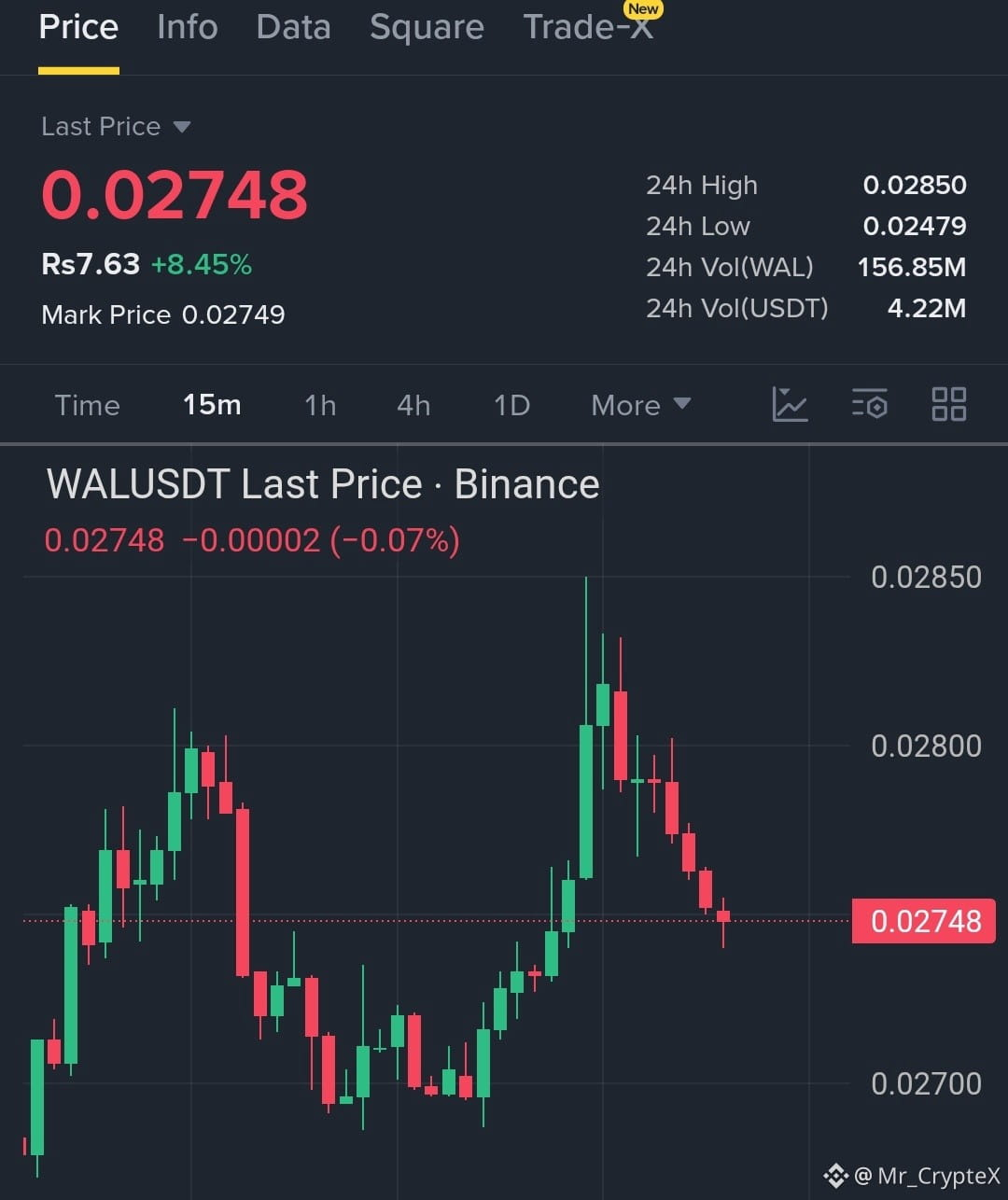
WAL is currently trading against USDT at zero point one two one eight This represents a four point five five percent drop in the last twenty four hours The price has moved between a high of zero point one two eight nine and a low of zero point one two zero nine during this period Trading volume for WAL is two point five two million while the equivalent in USDT is three hundred fifteen thousand one hundred seventy four The data shows that there is active trading and interest in this pair over the past day Technical indicators suggest that WAL is in a bearish trend The moving averages show downward momentum which may continue in the short term Traders are closely watching the support level at zero point one two zero nine to see if it holds or if the price moves lower The chart shows that sellers have been in control over the last twenty four hours The drop in price and the current trend indicate caution for those looking to enter new positions at this time Despite the recent drop there are still opportunities for traders who follow price action and use support and resistance levels to guide decisions Watching the volume can also provide clues about potential reversals or continuation of the current trend Overall WAL is showing weakness against USDT but the market is active The support level at zero point one two zero nine will be important in determining if the price can stabilize or if further declines are possible Traders are advised to monitor price movements and adjust strategies based on what the market shows Keeping an eye on trends volume and key levels is essential for understanding short term movements in the WAL USDT trading pair This information helps traders make informed decisions and plan their next moves in a careful and thoughtful way In summary WAL has seen a decline in value against USDT with the current price at zero point one two one eight The market shows a bearish trend with important support at zero point one two zero nine Monitoring price action and trading volume will be key for traders looking to navigate this market safely and effectively. #walrus @WalrusProtocol $WAL {future}(WALUSDT)

WAL is currently trading against USDT at zero point one two one eight This represents

a four point five five percent drop in the last twenty four hours The price has moved between a high of zero point one two eight nine and a low of zero point one two zero nine during this period
Trading volume for WAL is two point five two million while the equivalent in USDT is three hundred fifteen thousand one hundred seventy four The data shows that there is active trading and interest in this pair over the past day
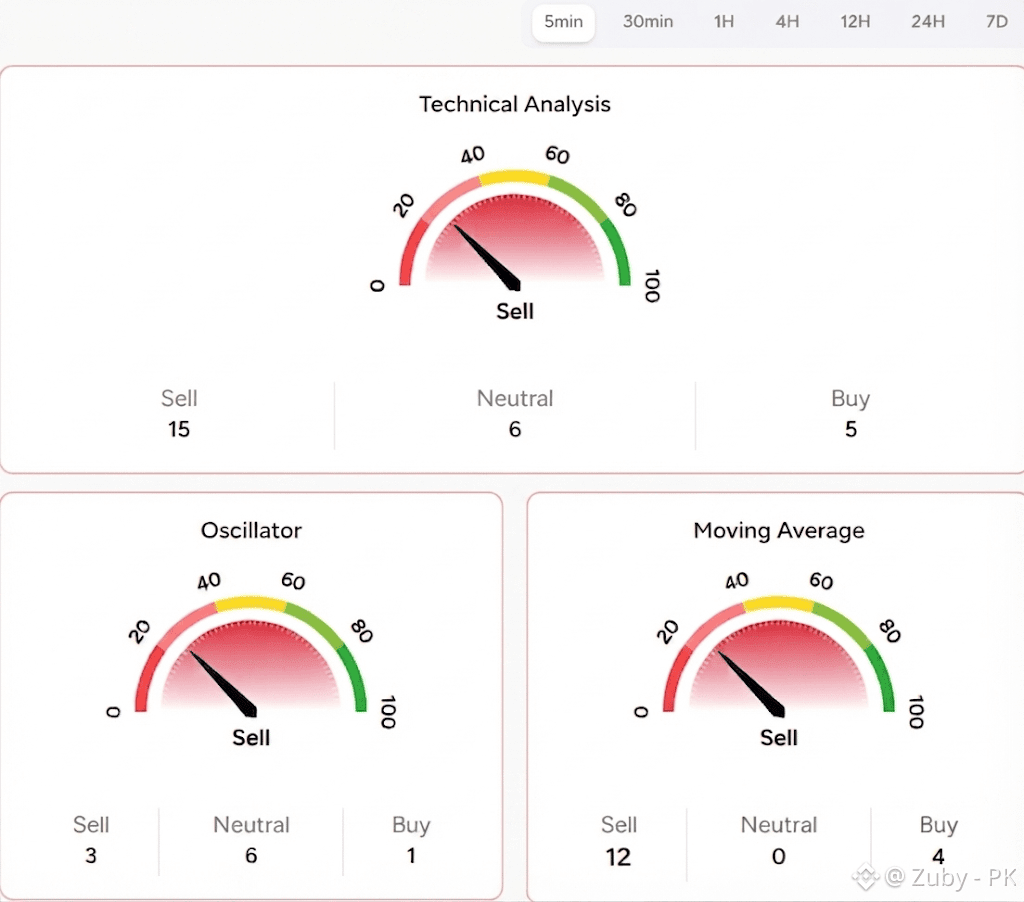
Technical indicators suggest that WAL is in a bearish trend The moving averages show downward momentum which may continue in the short term Traders are closely watching the support level at zero point one two zero nine to see if it holds or if the price moves lower
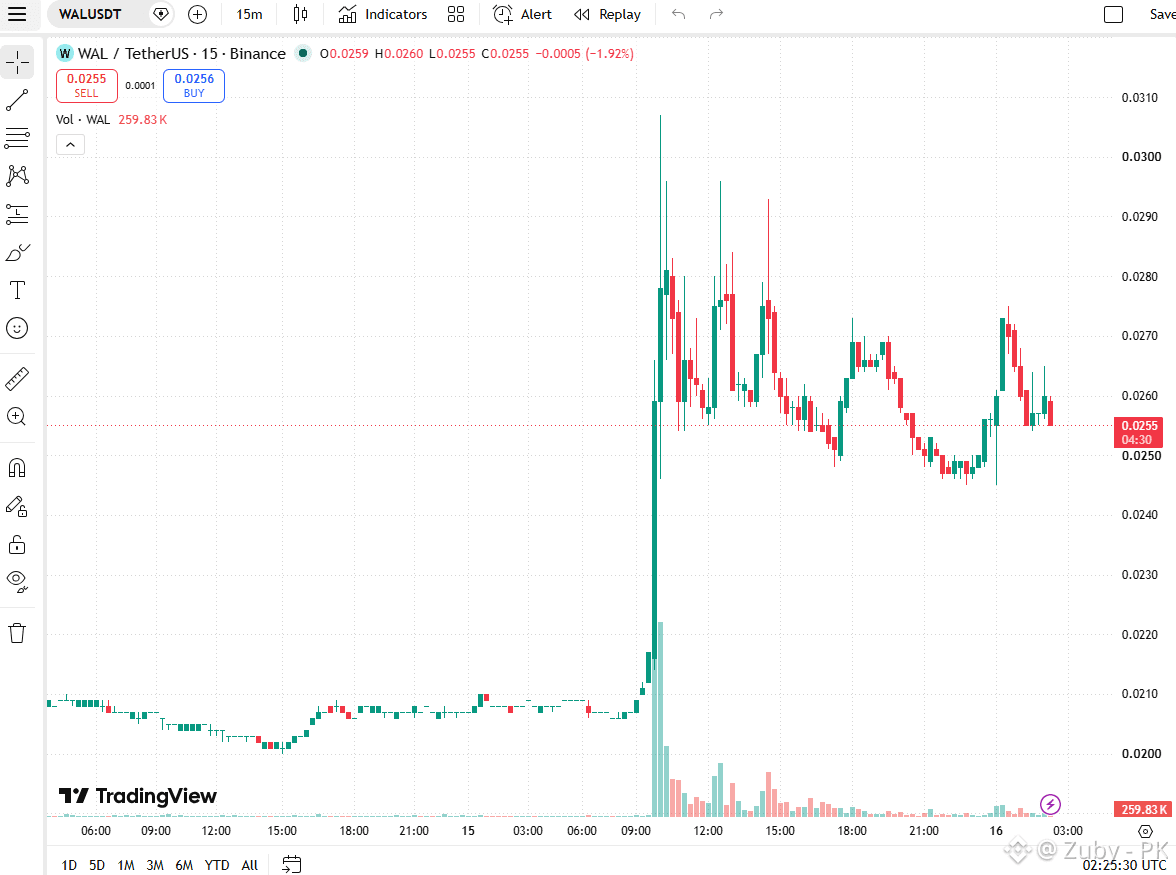
The chart shows that sellers have been in control over the last twenty four hours The drop in price and the current trend indicate caution for those looking to enter new positions at this time
Despite the recent drop there are still opportunities for traders who follow price action and use support and resistance levels to guide decisions Watching the volume can also provide clues about potential reversals or continuation of the current trend
Overall WAL is showing weakness against USDT but the market is active The support level at zero point one two zero nine will be important in determining if the price can stabilize or if further declines are possible Traders are advised to monitor price movements and adjust strategies based on what the market shows
Keeping an eye on trends volume and key levels is essential for understanding short term movements in the WAL USDT trading pair This information helps traders make informed decisions and plan their next moves in a careful and thoughtful way
In summary WAL has seen a decline in value against USDT with the current price at zero point one two one eight The market shows a bearish trend with important support at zero point one two zero nine Monitoring price action and trading volume will be key for traders looking to navigate this market safely and effectively.
#walrus @Walrus 🦭/acc $WAL
Think about travel planning. You ask an AI agent to watch flight prices for you. You give it your budget and dates. At night the price drops to the perfect level. If the agent cannot pay by itself then the chance is lost. By morning the price is higher again. In this case the agent is not very useful. For AI agents to be truly helpful they must act at the right time. That includes making payments. This is where trust becomes very important. Once an agent can spend money it must be safe. Users must know the agent is using real data. They must know the rules are followed. They must know every action can be checked later. Central systems are weak for this job. Logs can be changed. Data can be hidden. Systems can fail in one place and stop everything. When money is involved this risk is too high. Walrus solves this problem by using a decentralized data system. Data stored on Walrus is verifiable. This means anyone can check that the data is real and unchanged. When an AI agent makes a payment every decision is backed by stored proof. You can later see what data the agent used and why it acted. Walrus also makes actions easy to track. Each step taken by the agent is recorded with time proof. Spending limits rules and history are all saved. This creates a clear record of behavior. Even when many agents work together their shared memory can still be checked and trusted. Privacy is also protected. Sensitive payment data is locked. Only approved agents can access it. Smart contracts control who sees what. This keeps user data safe while still allowing the agent to act. Some payment systems already use Walrus as a memory layer. An AI agent can complete many purchases as one action. Either everything works or nothing does. This avoids half finished orders. All needed details like budget preferences and past choices are stored safely. Walrus holds the data and the network handles fast actions. Together they allow safe automatic payments. The future of AI depends on trust. If people cannot trust AI with money then automation will stop. Walrus builds that trust by making data clear safe and provable. When your AI agent pays while you sleep you can later see exactly why it did so. AI is not only about thinking anymore. It is about acting in the real economy. That future is already starting now. #walrus @WalrusProtocol $WAL {spot}(WALUSDT)

Think about travel planning.

You ask an AI agent to watch flight prices for you. You give it your budget and dates. At night the price drops to the perfect level. If the agent cannot pay by itself then the chance is lost. By morning the price is higher again. In this case the agent is not very useful.
For AI agents to be truly helpful they must act at the right time. That includes making payments. This is where trust becomes very important. Once an agent can spend money it must be safe. Users must know the agent is using real data. They must know the rules are followed. They must know every action can be checked later.
Central systems are weak for this job. Logs can be changed. Data can be hidden. Systems can fail in one place and stop everything. When money is involved this risk is too high.
Walrus solves this problem by using a decentralized data system. Data stored on Walrus is verifiable. This means anyone can check that the data is real and unchanged. When an AI agent makes a payment every decision is backed by stored proof. You can later see what data the agent used and why it acted.
Walrus also makes actions easy to track. Each step taken by the agent is recorded with time proof. Spending limits rules and history are all saved. This creates a clear record of behavior. Even when many agents work together their shared memory can still be checked and trusted.
Privacy is also protected. Sensitive payment data is locked. Only approved agents can access it. Smart contracts control who sees what. This keeps user data safe while still allowing the agent to act.
Some payment systems already use Walrus as a memory layer. An AI agent can complete many purchases as one action. Either everything works or nothing does. This avoids half finished orders. All needed details like budget preferences and past choices are stored safely. Walrus holds the data and the network handles fast actions. Together they allow safe automatic payments.
The future of AI depends on trust. If people cannot trust AI with money then automation will stop. Walrus builds that trust by making data clear safe and provable. When your AI agent pays while you sleep you can later see exactly why it did so.
AI is not only about thinking anymore. It is about acting in the real economy. That future is already starting now.
#walrus @Walrus 🦭/acc $WAL
--
Bullish
When structured data meets decentralized storage a new chapter begins.When structured data meets decentralized storage a new chapter begins. The integration of Baselight and Walrus is now live and open for everyone to use. From November thirteen users can store structured data on Walrus and analyze it right away using the AI tools inside Baselight. This step moves decentralized data systems forward in a very real way. You can now go from a raw file to real insight without using old cloud systems and without building your own setup. This partnership brings together two strong ideas. Walrus offers fast trusted and permanent decentralized storage. Baselight turns stored data into something you can explore understand and interact with. Together they help developers researchers and analysts work with the data they already have. You can ask clear questions and get clear answers without extra work. Getting started is simple and friendly for everyday users. You upload a structured file like CSV or Parquet to Baselight. You then change the data setting from private to public if you want to share it with the Baselight community. Once uploaded the file is stored on Walrus by default. Baselight reads the data shape on its own and builds a simple structure that makes analysis easy. You can then ask questions in plain language or create charts to see trends. You can share results build boards or connect the data to agent flows. There is no need for SQL no backend setup and no hard tools to learn. This is the first time users can directly query and visualize structured data stored on Walrus. Static files are no longer stuck in one place. They become searchable usable and ready for analysis at any time. This changes how people think about stored data. It is no longer just saved data. It becomes active data. With this integration many new things are possible. You can explore structured data with AI in a natural way. You can see trends as they happen through live charts. Your data stays decentralized at all times. You can build smarter tools and agents that run on live data. Whether you work on core systems or scientific study this setup opens a new path for working with structured data across decentralized networks. Trying it out is easy. If your data is already on Walrus you can connect it to Baselight and start exploring right away. If you are new to both tools you only need to upload one file to see how it works. The process is simple and the results are clear. Sui Network plays an important role in this space. Sui is a layer one public chain built from first ideas. It is designed to help creators and developers build apps for the next billion users of Web3. Apps on Sui use the Move smart contract language and can scale across systems. This helps teams build fast and low cost apps for many uses. More details can be found through the Sui Asia Pacific pages. This integration shows how decentralized storage and easy AI analysis can work together in daily life. It brings data closer to people and makes insight easier to reach. #walrus @WalrusProtocol $WAL

When structured data meets decentralized storage a new chapter begins.

When structured data meets decentralized storage a new chapter begins. The integration of Baselight and Walrus is now live and open for everyone to use. From November thirteen users can store structured data on Walrus and analyze it right away using the AI tools inside Baselight. This step moves decentralized data systems forward in a very real way. You can now go from a raw file to real insight without using old cloud systems and without building your own setup.
This partnership brings together two strong ideas. Walrus offers fast trusted and permanent decentralized storage. Baselight turns stored data into something you can explore understand and interact with. Together they help developers researchers and analysts work with the data they already have. You can ask clear questions and get clear answers without extra work.
Getting started is simple and friendly for everyday users. You upload a structured file like CSV or Parquet to Baselight. You then change the data setting from private to public if you want to share it with the Baselight community. Once uploaded the file is stored on Walrus by default. Baselight reads the data shape on its own and builds a simple structure that makes analysis easy. You can then ask questions in plain language or create charts to see trends. You can share results build boards or connect the data to agent flows. There is no need for SQL no backend setup and no hard tools to learn.
This is the first time users can directly query and visualize structured data stored on Walrus. Static files are no longer stuck in one place. They become searchable usable and ready for analysis at any time. This changes how people think about stored data. It is no longer just saved data. It becomes active data.
With this integration many new things are possible. You can explore structured data with AI in a natural way. You can see trends as they happen through live charts. Your data stays decentralized at all times. You can build smarter tools and agents that run on live data. Whether you work on core systems or scientific study this setup opens a new path for working with structured data across decentralized networks.
Trying it out is easy. If your data is already on Walrus you can connect it to Baselight and start exploring right away. If you are new to both tools you only need to upload one file to see how it works. The process is simple and the results are clear.
Sui Network plays an important role in this space. Sui is a layer one public chain built from first ideas. It is designed to help creators and developers build apps for the next billion users of Web3. Apps on Sui use the Move smart contract language and can scale across systems. This helps teams build fast and low cost apps for many uses. More details can be found through the Sui Asia Pacific pages.
This integration shows how decentralized storage and easy AI analysis can work together in daily life. It brings data closer to people and makes insight easier to reach.
#walrus @Walrus 🦭/acc $WAL
ImCryptOpus:
Baselight + Walrus supercharge on-chain analytics, next wave of data‑driven bulls is arriving. #walrus.
When structured data meets decentralized storage a new chapter begins. When structured data meets decentralized storage a new chapter begins. The integration of Baselight and Walrus is now live and open for everyone to use. From November thirteen users can store structured data on Walrus and analyze it right away using the AI tools inside Baselight. This step moves decentralized data systems forward in a very real way. You can now go from a raw file to real insight without using old cloud systems and without building your own setup. This partnership brings together two strong ideas. Walrus offers fast trusted and permanent decentralized storage. Baselight turns stored data into something you can explore understand and interact with. Together they help developers researchers and analysts work with the data they already have. You can ask clear questions and get clear answers without extra work. Getting started is simple and friendly for everyday users. You upload a structured file like CSV or Parquet to Baselight. You then change the data setting from private to public if you want to share it with the Baselight community. Once uploaded the file is stored on Walrus by default. Baselight reads the data shape on its own and builds a simple structure that makes analysis easy. You can then ask questions in plain language or create charts to see trends. You can share results build boards or connect the data to agent flows. There is no need for SQL no backend setup and no hard tools to learn. This is the first time users can directly query and visualize structured data stored on Walrus. Static files are no longer stuck in one place. They become searchable usable and ready for analysis at any time. This changes how people think about stored data. It is no longer just saved data. It becomes active data. With this integration many new things are possible. You can explore structured data with AI in a natural way. You can see trends as they happen through live charts. Your data stays decentralized at all times. You can build smarter tools and agents that run on live data. Whether you work on core systems or scientific study this setup opens a new path for working with structured data across decentralized networks. Trying it out is easy. If your data is already on Walrus you can connect it to Baselight and start exploring right away. If you are new to both tools you only need to upload one file to see how it works. The process is simple and the results are clear. Sui Network plays an important role in this space. Sui is a layer one public chain built from first ideas. It is designed to help creators and developers build apps for the next billion users of Web3. Apps on Sui use the Move smart contract language and can scale across systems. This helps teams build fast and low cost apps for many uses. More details can be found through the Sui Asia Pacific pages. This integration shows how decentralized storage and easy AI analysis can work together in daily life. It brings data closer to people and makes insight easier to reach. #walrus @WalrusProtocol $WAL {future}(WALUSDT)

When structured data meets decentralized storage a new chapter begins.

When structured data meets decentralized storage a new chapter begins. The integration of Baselight and Walrus is now live and open for everyone to use. From November thirteen users can store structured data on Walrus and analyze it right away using the AI tools inside Baselight. This step moves decentralized data systems forward in a very real way. You can now go from a raw file to real insight without using old cloud systems and without building your own setup.
This partnership brings together two strong ideas. Walrus offers fast trusted and permanent decentralized storage. Baselight turns stored data into something you can explore understand and interact with. Together they help developers researchers and analysts work with the data they already have. You can ask clear questions and get clear answers without extra work.
Getting started is simple and friendly for everyday users. You upload a structured file like CSV or Parquet to Baselight. You then change the data setting from private to public if you want to share it with the Baselight community. Once uploaded the file is stored on Walrus by default. Baselight reads the data shape on its own and builds a simple structure that makes analysis easy. You can then ask questions in plain language or create charts to see trends. You can share results build boards or connect the data to agent flows. There is no need for SQL no backend setup and no hard tools to learn.
This is the first time users can directly query and visualize structured data stored on Walrus. Static files are no longer stuck in one place. They become searchable usable and ready for analysis at any time. This changes how people think about stored data. It is no longer just saved data. It becomes active data.
With this integration many new things are possible. You can explore structured data with AI in a natural way. You can see trends as they happen through live charts. Your data stays decentralized at all times. You can build smarter tools and agents that run on live data. Whether you work on core systems or scientific study this setup opens a new path for working with structured data across decentralized networks.
Trying it out is easy. If your data is already on Walrus you can connect it to Baselight and start exploring right away. If you are new to both tools you only need to upload one file to see how it works. The process is simple and the results are clear.
Sui Network plays an important role in this space. Sui is a layer one public chain built from first ideas. It is designed to help creators and developers build apps for the next billion users of Web3. Apps on Sui use the Move smart contract language and can scale across systems. This helps teams build fast and low cost apps for many uses. More details can be found through the Sui Asia Pacific pages.
This integration shows how decentralized storage and easy AI analysis can work together in daily life. It brings data closer to people and makes insight easier to reach.
#walrus @Walrus 🦭/acc $WAL
​🦭 Why Walrus Protocol is the Quiet Giant of the AI & Web3 Era @WalrusProtocol $WAL #walrus ​While the market is distracted by meme coin volatility, the real builders are focused on infrastructure. I’ve been diving deep into @Walrus and its native token $WAL, and the potential is hard to ignore. 🌐 ​#WALrus isn't just another storage project; it’s the specialized engine designed for the AI boom. As generative models require massive, reliable datasets, traditional centralized storage remains too expensive, and older decentralized options are too slow. Walrus solves this on the Sui network by offering: ​Programmable Storage: Data is sharded and proven on-chain for instant access. ​AI-Ready Infrastructure: Scalable, tamper-proof, and optimized for high-performance workloads. ​Creator Empowerment: Data becomes a monetizable and secure asset. ​The $WAL Advantage: The tokenomics are built for long-term stability. $WAL powers the network through staking and delegation, rewarding those who secure the infrastructure. With a community-centric allocation, it prioritizes organic growth over VC-driven dumps, fostering a loyal ecosystem. ​As AI and Web3 converge—requiring verifiable datasets and decentralized training—Walrus Protocol will be the essential plumbing for the future. The wal cointag is definitely one to watch as the Sui ecosystem continues to heat up. 📈🔥 ​Don't just follow the hype; look at the foundations.
​🦭 Why Walrus Protocol is the Quiet Giant of the AI & Web3 Era
@Walrus 🦭/acc $WAL #walrus
​While the market is distracted by meme coin volatility, the real builders are focused on infrastructure. I’ve been diving deep into @Walrus and its native token $WAL , and the potential is hard to ignore. 🌐
​#WALrus isn't just another storage project; it’s the specialized engine designed for the AI boom. As generative models require massive, reliable datasets, traditional centralized storage remains too expensive, and older decentralized options are too slow. Walrus solves this on the Sui network by offering:
​Programmable Storage: Data is sharded and proven on-chain for instant access.
​AI-Ready Infrastructure: Scalable, tamper-proof, and optimized for high-performance workloads.
​Creator Empowerment: Data becomes a monetizable and secure asset.
​The $WAL Advantage:
The tokenomics are built for long-term stability. $WAL powers the network through staking and delegation, rewarding those who secure the infrastructure. With a community-centric allocation, it prioritizes organic growth over VC-driven dumps, fostering a loyal ecosystem.
​As AI and Web3 converge—requiring verifiable datasets and decentralized training—Walrus Protocol will be the essential plumbing for the future. The wal cointag is definitely one to watch as the Sui ecosystem continues to heat up. 📈🔥
​Don't just follow the hype; look at the foundations.
--
Bullish
Agent payments need trust. Turning AI agents into real economic actors with Walrus. AI is changing fast. It is no longer just a helper that answers questions. Today AI agents can plan decide and act. They can search compare and choose better than humans in many cases. But one big part is still missing. That part is payments. Think about travel planning. You ask an AI agent to plan a trip to Miami. You give your dates your airport and your budget. You tell it to watch prices and act when the price is right. At two in the morning the ticket price drops to your target. If the agent cannot pay by itself then nothing happens. When you wake up the price is already higher. In that moment the agent fails not because it is not smart but because it cannot act. This is why agent payments matter. When an AI agent can pay it becomes useful in real life. It moves from advice to action. But giving an agent control over money creates a new problem. Trust. You need to know three things. The data the agent uses is real. The rules it follows are correct. The decisions it makes can be checked later. In normal systems logs can be changed or lost. Central servers can fail or be attacked. This is not safe for money decisions. This is where decentralized systems help. Walrus is built to solve this trust problem. It is a decentralized data layer made for proof and safety. Data stored on Walrus can be verified. It cannot be changed quietly. Every action leaves a clear trace. When an AI agent makes a payment at night you can later see why. You can see what data it used. You can see your budget rules. You can see the final choice. Nothing is hidden. Everything is recorded with proof. Walrus also supports full audit trails. Every step the agent takes is linked to data with time proof. Spending limits payment history and service details are all recorded. Even when many agents work together they can share memory in a safe way that can still be checked. Privacy is also protected. Sensitive payment data is encrypted. Access rules are defined by smart contracts. Agents can use private data without showing it to every service they talk to. This adds a strong safety layer. Agent payment systems are already being built with Walrus as the memory layer. In one demo an AI agent completed many purchases across different shops in one single on chain action. All steps succeeded together or failed together. This avoids half finished plans. Walrus stored the user budget preferences travel habits and booking rules. Sui handled fast execution. Together they allowed safe and automatic decisions. In the future AI agents will not just think. They will act in the real economy. For that future to work trust is required. Walrus provides that trust. When your AI books a flight while you sleep you can know exactly why it did so. The data is real. The process is clear. The result is safe. #walrus @WalrusProtocol $WAL {future}(WALUSDT)

Agent payments need trust. Turning AI agents into real economic actors with Walrus.

AI is changing fast. It is no longer just a helper that answers questions. Today AI agents can plan decide and act. They can search compare and choose better than humans in many cases. But one big part is still missing. That part is payments.
Think about travel planning. You ask an AI agent to plan a trip to Miami. You give your dates your airport and your budget. You tell it to watch prices and act when the price is right. At two in the morning the ticket price drops to your target. If the agent cannot pay by itself then nothing happens. When you wake up the price is already higher. In that moment the agent fails not because it is not smart but because it cannot act.
This is why agent payments matter. When an AI agent can pay it becomes useful in real life. It moves from advice to action. But giving an agent control over money creates a new problem. Trust.
You need to know three things. The data the agent uses is real. The rules it follows are correct. The decisions it makes can be checked later. In normal systems logs can be changed or lost. Central servers can fail or be attacked. This is not safe for money decisions.
This is where decentralized systems help.
Walrus is built to solve this trust problem. It is a decentralized data layer made for proof and safety. Data stored on Walrus can be verified. It cannot be changed quietly. Every action leaves a clear trace.
When an AI agent makes a payment at night you can later see why. You can see what data it used. You can see your budget rules. You can see the final choice. Nothing is hidden. Everything is recorded with proof.
Walrus also supports full audit trails. Every step the agent takes is linked to data with time proof. Spending limits payment history and service details are all recorded. Even when many agents work together they can share memory in a safe way that can still be checked.
Privacy is also protected. Sensitive payment data is encrypted. Access rules are defined by smart contracts. Agents can use private data without showing it to every service they talk to. This adds a strong safety layer.
Agent payment systems are already being built with Walrus as the memory layer. In one demo an AI agent completed many purchases across different shops in one single on chain action. All steps succeeded together or failed together. This avoids half finished plans.
Walrus stored the user budget preferences travel habits and booking rules. Sui handled fast execution. Together they allowed safe and automatic decisions.
In the future AI agents will not just think. They will act in the real economy. For that future to work trust is required. Walrus provides that trust.
When your AI books a flight while you sleep you can know exactly why it did so. The data is real. The process is clear. The result is safe.
#walrus @Walrus 🦭/acc $WAL
WAL Is Quietly Doing the Work Not every project needs to be loud to be effective. Some focus on doing the work quietly — improving systems, strengthening foundations, and preparing for real usage. WAL gives that impression. Less noise, more structure. And in the long run, that approach usually speaks for itself. When the focus is on building, attention tends to follow naturally. Just sharing a view. No advice. #WAL #Walrus @WalrusProtocol $WAL

WAL Is Quietly Doing the Work

Not every project needs to be loud to be effective. Some focus on doing the work quietly — improving systems, strengthening foundations, and preparing for real usage.

WAL gives that impression. Less noise, more structure. And in the long run, that approach usually speaks for itself.
When the focus is on building, attention tends to follow naturally.
Just sharing a view. No advice.
#WAL #Walrus @Walrus 🦭/acc $WAL
Walrus began as a practical answer to a familiar problem in Web3 blockchains are great at small, veWalrus began as a practical answer to a familiar problem in Web3: blockchains are great at small, verifiable state changes but lousy at storing the sort of large, unstructured files that power modern apps videos, high-resolution images, game assets, model weights and entire datasets. Rather than treat large data as an afterthought, Walrus treats blobs as first-class citizens and builds an entire stack around making them cheap, verifiable and programmable on top of Sui. The project’s core idea is elegantly simple: split large files into encoded fragments, distribute those fragments across a global set of storage nodes, continuously prove availability, and pay node operators with a native economic token so the system remains decentralized and self-sustaining. walrus.xyz Technically, Walrus does this with erasure coding rather than crude full replication. Instead of storing many full copies of a file, the protocol transforms each blob into a set of shards that can be reassembled even if some shards are missing; that approach reduces raw storage overhead while increasing resilience. Walrus calls its encoding approach Red Stuff in some documentation and popular explainers, and its implementation is designed so that recovery is fast and the redundancy factor is much lower than naive replication. The protocol couples encoded storage with a challenge/response system and epoch-based reconfiguration so that nodes are constantly tested to ensure they actually hold the shards they claim to have. Those proof mechanics feed on-chain metadata stored on Sui, creating an auditable trail of availability checks and node performance. nansen.ai Built on Sui by teams working closely with the Sui ecosystem, Walrus leverages Sui’s parallel execution and object-centric model to make blob operations efficient and low-latency. Using Sui as the coordination layer means Walrus can implement committee formation, staking and on-chain payments without re-inventing consensus — instead it focuses engineering effort on the storage layer itself. That architectural choice is intentional: Sui’s design allows Walrus to offload coordination and proofs to a high-throughput layer while keeping the heavy binary data off the core ledger but still available and provable to on-chain consumers. The result is a storage primitive that feels programmatic to developers — a storage API for Web3 that returns data availability and provenance rather than opaque URLs. mystenlabs.com Economically, Walrus is driven by the WAL token which functions as the medium of payment, the staking instrument for node security, and the governance token for protocol parameters. Participants who operate storage nodes stake WAL to receive allocation of shards; users pay WAL to upload and retrieve blobs; and an epoch system redistributes rewards to nodes based on proof success, uptime and other quality metrics. To discourage short-term gaming of the system there are slashing and burn mechanics tied to misbehavior or abrupt stake shifts, and nodes with larger delegated stake receive proportionally more data because their economic incentives are expected to keep them reliable. Governance over what constitutes acceptable collateral, acceptable node behavior and the parameters governing encoding and challenge logic is also WAL-based, making token holders the ultimate stewards of the network’s risk posture. tusky.io From a cost and performance standpoint Walrus aims to sit in a sweet spot between centralized cloud providers and older decentralized replication schemes. Because erasure coding reduces the redundancy required to reach a given durability target, Walrus claims a storage multiplier that is significantly smaller than naive replication; public docs and explainers point to cost efficiencies that make storing large blobs on Walrus roughly comparable or much cheaper than legacy decentralized options while still maintaining strong fault tolerance. Practically, that means use cases that were previously impractical on-chain — full NFT galleries, playable game worlds, on-chain AI datasets and large media archives — become feasible to host in a censorship-resistant manner without an industrial cloud bill. The tradeoffs remain the usual ones: reconstruction requires some network activity and latency, and custody and legal clarity for tokenized real-world data must be carefully managed for enterprise adoption. docs.wal.app Walrus’s design also explicitly targets autonomous agents and AI workflows. Because large-scale AI models and datasets are a natural fit for blob storage, integrations between Walrus and agent platforms make it possible for agents to fetch, process, and write back data as part of automated pipelines. This is not hypothetical: project literature highlights partnerships and integration stories where Walrus is used to store datasets that fuel model inference, to host assets for agentic commerce, and even to record telemetry for sustainability programs that reward behavior with on-chain tokens. Those examples point toward a future where storage is not merely passive archival but an active component of a data market that agents buy, sell and compose programmatically. walrus.xyz Security and trust remain central to the product story. Walrus emphasizes cryptographic availability proofs, epoch reassignments to limit long-term data capture by any single node, and open auditing for crucial subsystems. The team has published a whitepaper and technical documentation describing the reconfiguration algorithms, tokenomics and the governance framework, and the project has gone through audits and staged testnets before opening live services. Those transparency and audit steps are not optional if the protocol hopes to attract treasury managers, game studios, or AI firms who will judge the system on predictable costs and provable durability rather than marketing claims. mystenlabs.com For everyday users the experience is becoming straightforward: developers can programmatically upload blobs, recipients can fetch content through standardized retrieval APIs, and token holders can opt to stake WAL or delegate it to validators that operate nodes. Over time, Walrus intends for slotting and pricing dynamics to stabilize through market forces — popular nodes command higher delegation and more shards, while users gravitate toward nodes and storage tiers that offer better latency or stronger guarantees. That market layering is meant to enable both hobbyist deployments (small NFT projects, personal archives) and professional consumption (AI datasets, enterprise content distribution) on the same underlying fabric. learn.backpack.exchange Taken together, Walrus reads like a pragmatic engineering play with an eye toward new economic primitives: it packages efficient erasure coding, continuous availability proofs, and tokenized incentives into a developer-friendly storage layer built on Sui. Whether it becomes the de facto data layer for agentic systems, media-heavy dApps and on-chain archives will depend on ongoing metrics — actual durability under stress, long-term cost curves versus centralized providers, and the speed by which developers build data-first experiences that require the guarantees Walrus promises. Early signals — published docs, mainnet milestones and integrations with agent platforms suggest the project has found a useful niche, and the coming quarters will show whether that niche becomes foundational infrastructure or one of many competing approaches to Web3 storage. @WalrusProtocol @undefined #walrus $WAL {spot}(WALUSDT)

Walrus began as a practical answer to a familiar problem in Web3 blockchains are great at small, ve

Walrus began as a practical answer to a familiar problem in Web3: blockchains are great at small, verifiable state changes but lousy at storing the sort of large, unstructured files that power modern apps videos, high-resolution images, game assets, model weights and entire datasets. Rather than treat large data as an afterthought, Walrus treats blobs as first-class citizens and builds an entire stack around making them cheap, verifiable and programmable on top of Sui. The project’s core idea is elegantly simple: split large files into encoded fragments, distribute those fragments across a global set of storage nodes, continuously prove availability, and pay node operators with a native economic token so the system remains decentralized and self-sustaining.
walrus.xyz
Technically, Walrus does this with erasure coding rather than crude full replication. Instead of storing many full copies of a file, the protocol transforms each blob into a set of shards that can be reassembled even if some shards are missing; that approach reduces raw storage overhead while increasing resilience. Walrus calls its encoding approach Red Stuff in some documentation and popular explainers, and its implementation is designed so that recovery is fast and the redundancy factor is much lower than naive replication. The protocol couples encoded storage with a challenge/response system and epoch-based reconfiguration so that nodes are constantly tested to ensure they actually hold the shards they claim to have. Those proof mechanics feed on-chain metadata stored on Sui, creating an auditable trail of availability checks and node performance.
nansen.ai
Built on Sui by teams working closely with the Sui ecosystem, Walrus leverages Sui’s parallel execution and object-centric model to make blob operations efficient and low-latency. Using Sui as the coordination layer means Walrus can implement committee formation, staking and on-chain payments without re-inventing consensus — instead it focuses engineering effort on the storage layer itself. That architectural choice is intentional: Sui’s design allows Walrus to offload coordination and proofs to a high-throughput layer while keeping the heavy binary data off the core ledger but still available and provable to on-chain consumers. The result is a storage primitive that feels programmatic to developers — a storage API for Web3 that returns data availability and provenance rather than opaque URLs.
mystenlabs.com
Economically, Walrus is driven by the WAL token which functions as the medium of payment, the staking instrument for node security, and the governance token for protocol parameters. Participants who operate storage nodes stake WAL to receive allocation of shards; users pay WAL to upload and retrieve blobs; and an epoch system redistributes rewards to nodes based on proof success, uptime and other quality metrics. To discourage short-term gaming of the system there are slashing and burn mechanics tied to misbehavior or abrupt stake shifts, and nodes with larger delegated stake receive proportionally more data because their economic incentives are expected to keep them reliable. Governance over what constitutes acceptable collateral, acceptable node behavior and the parameters governing encoding and challenge logic is also WAL-based, making token holders the ultimate stewards of the network’s risk posture.
tusky.io
From a cost and performance standpoint Walrus aims to sit in a sweet spot between centralized cloud providers and older decentralized replication schemes. Because erasure coding reduces the redundancy required to reach a given durability target, Walrus claims a storage multiplier that is significantly smaller than naive replication; public docs and explainers point to cost efficiencies that make storing large blobs on Walrus roughly comparable or much cheaper than legacy decentralized options while still maintaining strong fault tolerance. Practically, that means use cases that were previously impractical on-chain — full NFT galleries, playable game worlds, on-chain AI datasets and large media archives — become feasible to host in a censorship-resistant manner without an industrial cloud bill. The tradeoffs remain the usual ones: reconstruction requires some network activity and latency, and custody and legal clarity for tokenized real-world data must be carefully managed for enterprise adoption.
docs.wal.app
Walrus’s design also explicitly targets autonomous agents and AI workflows. Because large-scale AI models and datasets are a natural fit for blob storage, integrations between Walrus and agent platforms make it possible for agents to fetch, process, and write back data as part of automated pipelines. This is not hypothetical: project literature highlights partnerships and integration stories where Walrus is used to store datasets that fuel model inference, to host assets for agentic commerce, and even to record telemetry for sustainability programs that reward behavior with on-chain tokens. Those examples point toward a future where storage is not merely passive archival but an active component of a data market that agents buy, sell and compose programmatically.
walrus.xyz
Security and trust remain central to the product story. Walrus emphasizes cryptographic availability proofs, epoch reassignments to limit long-term data capture by any single node, and open auditing for crucial subsystems. The team has published a whitepaper and technical documentation describing the reconfiguration algorithms, tokenomics and the governance framework, and the project has gone through audits and staged testnets before opening live services. Those transparency and audit steps are not optional if the protocol hopes to attract treasury managers, game studios, or AI firms who will judge the system on predictable costs and provable durability rather than marketing claims.
mystenlabs.com
For everyday users the experience is becoming straightforward: developers can programmatically upload blobs, recipients can fetch content through standardized retrieval APIs, and token holders can opt to stake WAL or delegate it to validators that operate nodes. Over time, Walrus intends for slotting and pricing dynamics to stabilize through market forces — popular nodes command higher delegation and more shards, while users gravitate toward nodes and storage tiers that offer better latency or stronger guarantees. That market layering is meant to enable both hobbyist deployments (small NFT projects, personal archives) and professional consumption (AI datasets, enterprise content distribution) on the same underlying fabric.
learn.backpack.exchange
Taken together, Walrus reads like a pragmatic engineering play with an eye toward new economic primitives: it packages efficient erasure coding, continuous availability proofs, and tokenized incentives into a developer-friendly storage layer built on Sui. Whether it becomes the de facto data layer for agentic systems, media-heavy dApps and on-chain archives will depend on ongoing metrics — actual durability under stress, long-term cost curves versus centralized providers, and the speed by which developers build data-first experiences that require the guarantees Walrus promises. Early signals — published docs, mainnet milestones and integrations with agent platforms suggest the project has found a useful niche, and the coming quarters will show whether that niche becomes foundational infrastructure or one of many competing approaches to Web3 storage.
@Walrus 🦭/acc @undefined #walrus $WAL
WAL against USDT is showing a drop in price over the last twenty four hours. The current price is zero point one one seven one down nearly four percent from the previous day. The highest price in the last twenty four hours reached zero point one two three one while the lowest point was zero point one one five seven. The trading volume in USDT is four hundred seventeen thousand showing active participation in the market. The chart shows a bearish trend after reaching the high of zero point one two three one. The seven day moving average is around zero point one one seven zero and the price is currently below it. This suggests that sellers are in control for the moment. If the support at zero point one one five seven breaks the price could fall further. Buyers need to push the price back above zero point one two one four to change the sentiment and bring more strength into the market. Traders should watch the support level at zero point one one five seven closely. This is a key level that could determine whether the price continues to fall or stabilizes. Sudden spikes in trading volume could signal a potential reversal so it is important to monitor how the market reacts. Overall WAL is in a cautious position. The price is sliding below short term averages and the market mood is bearish. Investors and traders should keep an eye on key levels and volume to understand the next possible move. If buyers regain control and push the price above zero point one two one four we could see some recovery. Until then the market may continue to face pressure and testing of lower supports. Watching price action closely and following market signals can help in making informed decisions. WAL is showing signs of weakness but careful observation of support and volume could provide opportunities for those looking for short term movements. The market remains active and volatility is present making it important to stay alert. #walrus MarketUpdate #TechnicalAnalysis #CryptoNews #DigitalAssets $WAL {future}(WALUSDT) @WalrusProtocol

WAL against USDT is showing a drop in price over the last twenty four hours.

The current price is zero point one one seven one down nearly four percent from the previous day. The highest price in the last twenty four hours reached zero point one two three one while the lowest point was zero point one one five seven. The trading volume in USDT is four hundred seventeen thousand showing active participation in the market.
The chart shows a bearish trend after reaching the high of zero point one two three one. The seven day moving average is around zero point one one seven zero and the price is currently below it. This suggests that sellers are in control for the moment. If the support at zero point one one five seven breaks the price could fall further. Buyers need to push the price back above zero point one two one four to change the sentiment and bring more strength into the market.
Traders should watch the support level at zero point one one five seven closely. This is a key level that could determine whether the price continues to fall or stabilizes. Sudden spikes in trading volume could signal a potential reversal so it is important to monitor how the market reacts.
Overall WAL is in a cautious position. The price is sliding below short term averages and the market mood is bearish. Investors and traders should keep an eye on key levels and volume to understand the next possible move. If buyers regain control and push the price above zero point one two one four we could see some recovery. Until then the market may continue to face pressure and testing of lower supports.
Watching price action closely and following market signals can help in making informed decisions. WAL is showing signs of weakness but careful observation of support and volume could provide opportunities for those looking for short term movements. The market remains active and volatility is present making it important to stay alert.
#walrus MarketUpdate #TechnicalAnalysis #CryptoNews #DigitalAssets
$WAL
@Walrus 🦭/acc
Walrus Protocol: The Unsung Guardian of Web3’s Memory@WalrusProtocol I remember the first time I realized the fragility of decentralized applications. A promising DeFi project I was following had just launched, and within days, users began reporting missing data and inconsistent states. The team scrambled, and the lesson was clear: even the most elegant smart contracts and modular chains are only as strong as the data they can rely on. That moment made me look differently at the infrastructure side of Web3. It’s easy to focus on flashy features and tokenomics, but the quiet layers the ones that ensure memory, reliability, and trust are what determine whether an ecosystem truly scales. Walrus Protocol sits squarely in that often-overlooked space. What makes Walrus compelling is how it approaches a deceptively simple problem: who remembers the data, and who guarantees its integrity over time? Many protocols try to do everything at once faster transactions, multi-chain interoperability, flashy DeFi integrations but Walrus chooses focus. It decouples storage from execution, ensuring that applications can store information off-chain without losing verifiability. It’s not trying to be a general-purpose blockchain; it’s the memory layer, the infrastructure that quietly ensures that everything else built on top can function without fragility. In an industry prone to overpromising, that kind of clarity is rare. The elegance of Walrus lies in its practical, measurable design. Nodes are incentivized to store and verify data, creating a self-reinforcing network. Early deployments show consistency in retrieval speeds, efficient storage redundancy, and predictable participation from node operators. For developers, this translates to reliability: an application built with Walrus as its backbone is less likely to fail due to missing or inconsistent data. There’s no glittery hype, just tangible utility a protocol that quietly demonstrates the power of doing one thing exceptionally well. Industry context makes this approach even more relevant. Past attempts at decentralized storage have struggled with trade-offs between speed, decentralization, and security. Systems either sacrificed verifiability for throughput or relied on centralization to reduce costs, undermining the promise of Web3. Walrus doesn’t solve every problem, but it addresses a persistent bottleneck: reliable data availability. By creating a predictable, verifiable layer, it allows other projects to scale more confidently, whether they are AI-driven agents, NFT marketplaces, or DeFi protocols. It’s a subtle fix, but sometimes subtle fixes have the largest ripple effects. Looking forward, adoption is the question that will define Walrus’ impact. Can a narrow-focus protocol gain traction in a market obsessed with multifunctional solutions? Early signs are cautiously optimistic. Several experimental projects have integrated Walrus for off-chain computation, historical state storage, and multi-chain interactions. The feedback is consistent: it works reliably, without introducing new points of failure. It’s a quiet signal that real-world utility measurable, practical, and dependable is gaining recognition, even in an ecosystem dominated by hype. From my experience observing blockchain infrastructure, these subtle adoption signals are often more meaningful than headline-grabbing metrics. GitHub activity, testnet performance, and node engagement tell a story that price charts cannot. Walrus shows signs of sustainable participation and practical adoption. It’s the kind of momentum that compounds over time: developers build, integrations stabilize, and the network becomes a dependable backbone for new applications. In a market obsessed with “fast wins,” slow, steady, dependable growth is often the most undervalued metric. There are, of course, caveats. Stress-testing under extreme usage is ongoing, and incentives will need fine-tuning as adoption scales. Cross-chain interoperability and regulatory clarity remain open questions. Yet acknowledging these limitations doesn’t diminish Walrus’ potential it reinforces its credibility. It is not a protocol promising the moon overnight; it is a protocol ensuring that the moonshot projects of tomorrow have a foundation they can trust. That quiet reliability, more than hype or spectacle, is what makes a protocol enduring. Ultimately, Walrus Protocol exemplifies the kind of infrastructure thinking that rarely makes headlines but quietly shapes the trajectory of Web3. By focusing on verifiable, persistent data storage and aligning incentives to encourage reliability, it provides a foundation upon which complex, resilient applications can be built. Its story is not one of sudden hype or viral adoption; it is the story of a network that quietly earns trust, one stored and verified byte at a time. In the long run, it is protocols like Walrus unassuming, practical, and quietly indispensable that will define the Web3 ecosystems we rely on. @WalrusProtocol #walrus #WAL #WalrusProtocol

Walrus Protocol: The Unsung Guardian of Web3’s Memory

@Walrus 🦭/acc I remember the first time I realized the fragility of decentralized applications. A promising DeFi project I was following had just launched, and within days, users began reporting missing data and inconsistent states. The team scrambled, and the lesson was clear: even the most elegant smart contracts and modular chains are only as strong as the data they can rely on. That moment made me look differently at the infrastructure side of Web3. It’s easy to focus on flashy features and tokenomics, but the quiet layers the ones that ensure memory, reliability, and trust are what determine whether an ecosystem truly scales. Walrus Protocol sits squarely in that often-overlooked space.
What makes Walrus compelling is how it approaches a deceptively simple problem: who remembers the data, and who guarantees its integrity over time? Many protocols try to do everything at once faster transactions, multi-chain interoperability, flashy DeFi integrations but Walrus chooses focus. It decouples storage from execution, ensuring that applications can store information off-chain without losing verifiability. It’s not trying to be a general-purpose blockchain; it’s the memory layer, the infrastructure that quietly ensures that everything else built on top can function without fragility. In an industry prone to overpromising, that kind of clarity is rare.
The elegance of Walrus lies in its practical, measurable design. Nodes are incentivized to store and verify data, creating a self-reinforcing network. Early deployments show consistency in retrieval speeds, efficient storage redundancy, and predictable participation from node operators. For developers, this translates to reliability: an application built with Walrus as its backbone is less likely to fail due to missing or inconsistent data. There’s no glittery hype, just tangible utility a protocol that quietly demonstrates the power of doing one thing exceptionally well.
Industry context makes this approach even more relevant. Past attempts at decentralized storage have struggled with trade-offs between speed, decentralization, and security. Systems either sacrificed verifiability for throughput or relied on centralization to reduce costs, undermining the promise of Web3. Walrus doesn’t solve every problem, but it addresses a persistent bottleneck: reliable data availability. By creating a predictable, verifiable layer, it allows other projects to scale more confidently, whether they are AI-driven agents, NFT marketplaces, or DeFi protocols. It’s a subtle fix, but sometimes subtle fixes have the largest ripple effects.
Looking forward, adoption is the question that will define Walrus’ impact. Can a narrow-focus protocol gain traction in a market obsessed with multifunctional solutions? Early signs are cautiously optimistic. Several experimental projects have integrated Walrus for off-chain computation, historical state storage, and multi-chain interactions. The feedback is consistent: it works reliably, without introducing new points of failure. It’s a quiet signal that real-world utility measurable, practical, and dependable is gaining recognition, even in an ecosystem dominated by hype.
From my experience observing blockchain infrastructure, these subtle adoption signals are often more meaningful than headline-grabbing metrics. GitHub activity, testnet performance, and node engagement tell a story that price charts cannot. Walrus shows signs of sustainable participation and practical adoption. It’s the kind of momentum that compounds over time: developers build, integrations stabilize, and the network becomes a dependable backbone for new applications. In a market obsessed with “fast wins,” slow, steady, dependable growth is often the most undervalued metric.
There are, of course, caveats. Stress-testing under extreme usage is ongoing, and incentives will need fine-tuning as adoption scales. Cross-chain interoperability and regulatory clarity remain open questions. Yet acknowledging these limitations doesn’t diminish Walrus’ potential it reinforces its credibility. It is not a protocol promising the moon overnight; it is a protocol ensuring that the moonshot projects of tomorrow have a foundation they can trust. That quiet reliability, more than hype or spectacle, is what makes a protocol enduring.
Ultimately, Walrus Protocol exemplifies the kind of infrastructure thinking that rarely makes headlines but quietly shapes the trajectory of Web3. By focusing on verifiable, persistent data storage and aligning incentives to encourage reliability, it provides a foundation upon which complex, resilient applications can be built. Its story is not one of sudden hype or viral adoption; it is the story of a network that quietly earns trust, one stored and verified byte at a time. In the long run, it is protocols like Walrus unassuming, practical, and quietly indispensable that will define the Web3 ecosystems we rely on.
@Walrus 🦭/acc #walrus #WAL
#WalrusProtocol
WAL Isn’t About Speed — It’s About Direction Moving fast doesn’t always mean moving forward. In Web3, direction matters more than speed. WAL feels focused on building the right path first, instead of rushing for attention. Strong data foundations make everything else easier to build. And projects that understand this usually age better over time. Sometimes, going slower is how you go further. Just a thought. No advice. #WAL #Walrus $WAL @WalrusProtocol

WAL Isn’t About Speed — It’s About Direction

Moving fast doesn’t always mean moving forward. In Web3, direction matters more than speed. WAL feels focused on building the right path first, instead of rushing for attention.

Strong data foundations make everything else easier to build. And projects that understand this usually age better over time.
Sometimes, going slower is how you go further.
Just a thought. No advice.
#WAL #Walrus $WAL @Walrus 🦭/acc
Walrus and the Rise of Truly Independent AI Agents AI agents represent a new step forward from the assistants most of us use today. Instead of waiting for one question at a time, these systems can operate independently, moving through complex tasks step by step until the goal is reached. To understand why this matters—and why shared data systems like Walrus are critical—it helps to look at where current AI tools fall short. Many users have experienced this frustration. You ask an AI to compare sales files from last year with this year. On paper, it’s simple. In practice, the AI may pull the wrong documents, overlook key numbers, or misunderstand context. You still end up opening files, checking data, and drawing conclusions yourself. The AI assisted, but it didn’t complete the job. AI agents are built differently. They don’t just retrieve information; they interpret it, connect steps across tools, and carry tasks through from start to finish. An agent can move between databases, read documents, analyze results, and act on what it learns—without needing constant human prompts. That autonomy is powerful, but it introduces a serious challenge: data. For an AI agent to function well, it needs reliable information. Training data, long-term memory, logs of past actions—everything depends on data quality. If the data is flawed or incomplete, the agent’s decisions will be too. And when an agent operates for hours or days on its own, small errors can compound into serious mistakes. This is where a system like Walrus becomes essential. What Makes an AI Agent Different An AI agent is software designed to plan and act independently. You define the objective, and the agent determines the steps needed to reach it. Traditional AI models respond and stop. Agents persist until the task is done. Most AI agents share a few defining traits: They operate without constant supervision They pursue clear goals They learn from previous actions and improve over time These qualities allow them to handle extended, multi-stage workflows that would overwhelm simpler tools. How AI Agents Are Used Today AI agents are already active in real-world environments. In finance, they monitor markets, adapt to changing conditions, and refine strategies based on historical trades. In customer support, agents remember past conversations and tailor responses using context rather than scripts. In content moderation, they review massive volumes of material and adjust policies as community behavior evolves. All of these applications rely on data that is accessible, accurate, and dependable at all times. Why Shared Data Infrastructure Is Critical Most AI agents today rely on centralized cloud storage controlled by a single provider. That creates clear risks. If the service fails, the agent fails with it. Users have limited visibility into where data is stored or how it’s handled. And there’s often no straightforward way to verify that stored data hasn’t been altered. Walrus addresses these weaknesses by distributing data across a decentralized network. No single party controls it. Information remains available even if some nodes go offline. And data integrity can be independently verified. Walrus delivers three core advantages: Continuous access to data Verifiable proof that data hasn’t been modified A system that scales smoothly as demand grows AI Agents Already Using Walrus Walrus isn’t theoretical—it’s already being used. Talus enables AI agents to operate directly on the Sui network with low-latency data access. elizaOS uses Walrus as shared memory for multiple agents, allowing them to collaborate and learn together. Zark Lab helps agents organize and search information using natural language. FLock supports community-driven AI training without requiring participants to expose private data. Each of these platforms shows how decentralized data can unlock more capable, cooperative agents. Looking Ahead AI agents mark a shift from tools that simply answer questions to systems that genuinely perform work. They plan, decide, learn, and act independently. Their effectiveness depends entirely on the data they rely on—and that data must be secure, transparent, and always available. Walrus provides the foundation for that future. As AI agents continue to evolve, the infrastructure supporting them will matter as much as the models themselves. About Sui Network Sui is a next-generation public blockchain designed for high-performance applications. Built with the Move programming language, it offers fast execution and low costs, making it well-suited for large-scale, user-facing systems. Its goal is to support the next wave of web-based innovation. #walrus #WAL @WalrusProtocol @SuiNetwork $WAL

Walrus and the Rise of Truly Independent AI Agents

AI agents represent a new step forward from the assistants most of us use today. Instead of waiting for one question at a time, these systems can operate independently, moving through complex tasks step by step until the goal is reached. To understand why this matters—and why shared data systems like Walrus are critical—it helps to look at where current AI tools fall short.

Many users have experienced this frustration. You ask an AI to compare sales files from last year with this year. On paper, it’s simple. In practice, the AI may pull the wrong documents, overlook key numbers, or misunderstand context. You still end up opening files, checking data, and drawing conclusions yourself. The AI assisted, but it didn’t complete the job.

AI agents are built differently. They don’t just retrieve information; they interpret it, connect steps across tools, and carry tasks through from start to finish. An agent can move between databases, read documents, analyze results, and act on what it learns—without needing constant human prompts. That autonomy is powerful, but it introduces a serious challenge: data.

For an AI agent to function well, it needs reliable information. Training data, long-term memory, logs of past actions—everything depends on data quality. If the data is flawed or incomplete, the agent’s decisions will be too. And when an agent operates for hours or days on its own, small errors can compound into serious mistakes. This is where a system like Walrus becomes essential.

What Makes an AI Agent Different

An AI agent is software designed to plan and act independently. You define the objective, and the agent determines the steps needed to reach it. Traditional AI models respond and stop. Agents persist until the task is done.

Most AI agents share a few defining traits:

They operate without constant supervision

They pursue clear goals

They learn from previous actions and improve over time

These qualities allow them to handle extended, multi-stage workflows that would overwhelm simpler tools.

How AI Agents Are Used Today

AI agents are already active in real-world environments. In finance, they monitor markets, adapt to changing conditions, and refine strategies based on historical trades. In customer support, agents remember past conversations and tailor responses using context rather than scripts. In content moderation, they review massive volumes of material and adjust policies as community behavior evolves.

All of these applications rely on data that is accessible, accurate, and dependable at all times.

Why Shared Data Infrastructure Is Critical

Most AI agents today rely on centralized cloud storage controlled by a single provider. That creates clear risks. If the service fails, the agent fails with it. Users have limited visibility into where data is stored or how it’s handled. And there’s often no straightforward way to verify that stored data hasn’t been altered.

Walrus addresses these weaknesses by distributing data across a decentralized network. No single party controls it. Information remains available even if some nodes go offline. And data integrity can be independently verified.

Walrus delivers three core advantages:

Continuous access to data

Verifiable proof that data hasn’t been modified

A system that scales smoothly as demand grows

AI Agents Already Using Walrus

Walrus isn’t theoretical—it’s already being used. Talus enables AI agents to operate directly on the Sui network with low-latency data access. elizaOS uses Walrus as shared memory for multiple agents, allowing them to collaborate and learn together. Zark Lab helps agents organize and search information using natural language. FLock supports community-driven AI training without requiring participants to expose private data.

Each of these platforms shows how decentralized data can unlock more capable, cooperative agents.

Looking Ahead

AI agents mark a shift from tools that simply answer questions to systems that genuinely perform work. They plan, decide, learn, and act independently. Their effectiveness depends entirely on the data they rely on—and that data must be secure, transparent, and always available.

Walrus provides the foundation for that future. As AI agents continue to evolve, the infrastructure supporting them will matter as much as the models themselves.

About Sui Network

Sui is a next-generation public blockchain designed for high-performance applications. Built with the Move programming language, it offers fast execution and low costs, making it well-suited for large-scale, user-facing systems. Its goal is to support the next wave of web-based innovation.

#walrus #WAL @Walrus 🦭/acc @Sui
$WAL
Login to explore more contents
Explore the latest crypto news
⚡️ Be a part of the latests discussions in crypto
💬 Interact with your favorite creators
👍 Enjoy content that interests you
Email / Phone number