
#layer1
layer1
5M views
26,149 Discussing
Hot
Latest


·
--
$APT
{future}(APTUSDT)
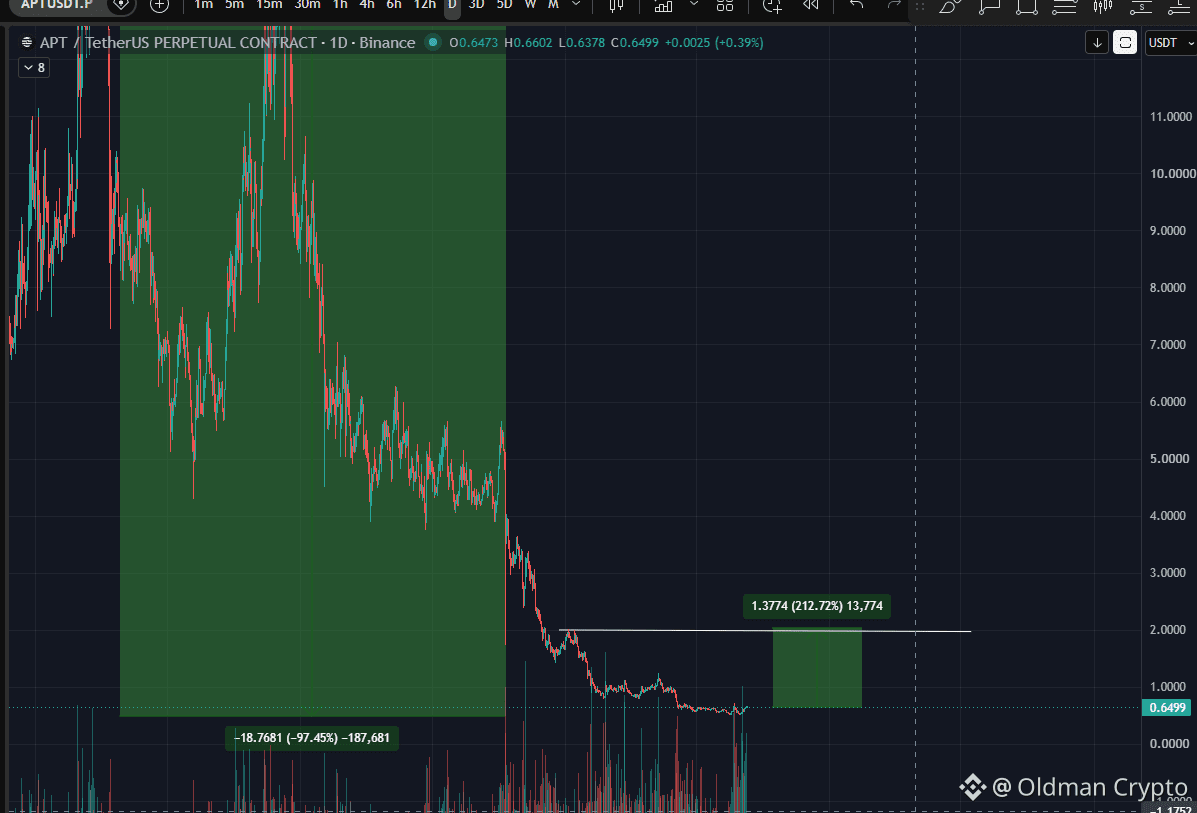
🎯 Top market recovering: #ATOM $DOT #NEAR $ZTX all bouncing, $APT at 0.65 = cleanest setup, target zone $3 🚀
📊 Top caps leading recovery = macro validation, APT chart beautiful at bottom
🧠 When ATOM DOT NEAR recover, APT catches same Layer-1 rotation
🔥 Buy and hold, let recovery wave carry it to $2
🌊 Chart no lie 📊 Layer-1 recovery confirmed by ATOM DOT NEAR ZTX. APT 0.65 sitting at bottom with $3 runway. Buy, forget 30-60 days, slowly but surely 📈
#APT #Layer1 #Hold
📌 Sharing personal opinions only
not financial advice or a recommendation to buy/sell. Crypto is highly risky; DYOR and you are solely responsible. No coin promotion
$APT
🎯 Top market recovering: #ATOM $DOT #NEAR $ZTX all bouncing, $APT at 0.65 = cleanest setup, target zone $3 🚀
📊 Top caps leading recovery = macro validation, APT chart beautiful at bottom
🧠 When ATOM DOT NEAR recover, APT catches same Layer-1 rotation
🔥 Buy and hold, let recovery wave carry it to $2
🌊 Chart no lie 📊 Layer-1 recovery confirmed by ATOM DOT NEAR ZTX. APT 0.65 sitting at bottom with $3 runway. Buy, forget 30-60 days, slowly but surely 📈
#APT #Layer1 #Hold
📌 Sharing personal opinions only
not financial advice or a recommendation to buy/sell. Crypto is highly risky; DYOR and you are solely responsible. No coin promotion
🎯 Top market recovering: #ATOM $DOT #NEAR $ZTX all bouncing, $APT at 0.65 = cleanest setup, target zone $3 🚀
📊 Top caps leading recovery = macro validation, APT chart beautiful at bottom
🧠 When ATOM DOT NEAR recover, APT catches same Layer-1 rotation
🔥 Buy and hold, let recovery wave carry it to $2
🌊 Chart no lie 📊 Layer-1 recovery confirmed by ATOM DOT NEAR ZTX. APT 0.65 sitting at bottom with $3 runway. Buy, forget 30-60 days, slowly but surely 📈
#APT #Layer1 #Hold
📌 Sharing personal opinions only
not financial advice or a recommendation to buy/sell. Crypto is highly risky; DYOR and you are solely responsible. No coin promotion
charitha123:
ur right now going to do that
3
17
7.8k

·
--
ALGO — $ALGO
{future}(ALGOUSDT)
Algorand is a Layer-1 blockchain focused on fast transactions, scalability, and decentralized applications. Its technology gives it a long-standing position in the blockchain sector. Traders are monitoring ALGO as interest rotates across Layer-1 projects.
#ALGO #Algorand #Layer1 #BinanceSquare
ALGO — $ALGO
Algorand is a Layer-1 blockchain focused on fast transactions, scalability, and decentralized applications. Its technology gives it a long-standing position in the blockchain sector. Traders are monitoring ALGO as interest rotates across Layer-1 projects.
#ALGO #Algorand #Layer1 #BinanceSquare
Algorand is a Layer-1 blockchain focused on fast transactions, scalability, and decentralized applications. Its technology gives it a long-standing position in the blockchain sector. Traders are monitoring ALGO as interest rotates across Layer-1 projects.
#ALGO #Algorand #Layer1 #BinanceSquare
14
·
--
Bullish
$S
{future}(SUSDT)
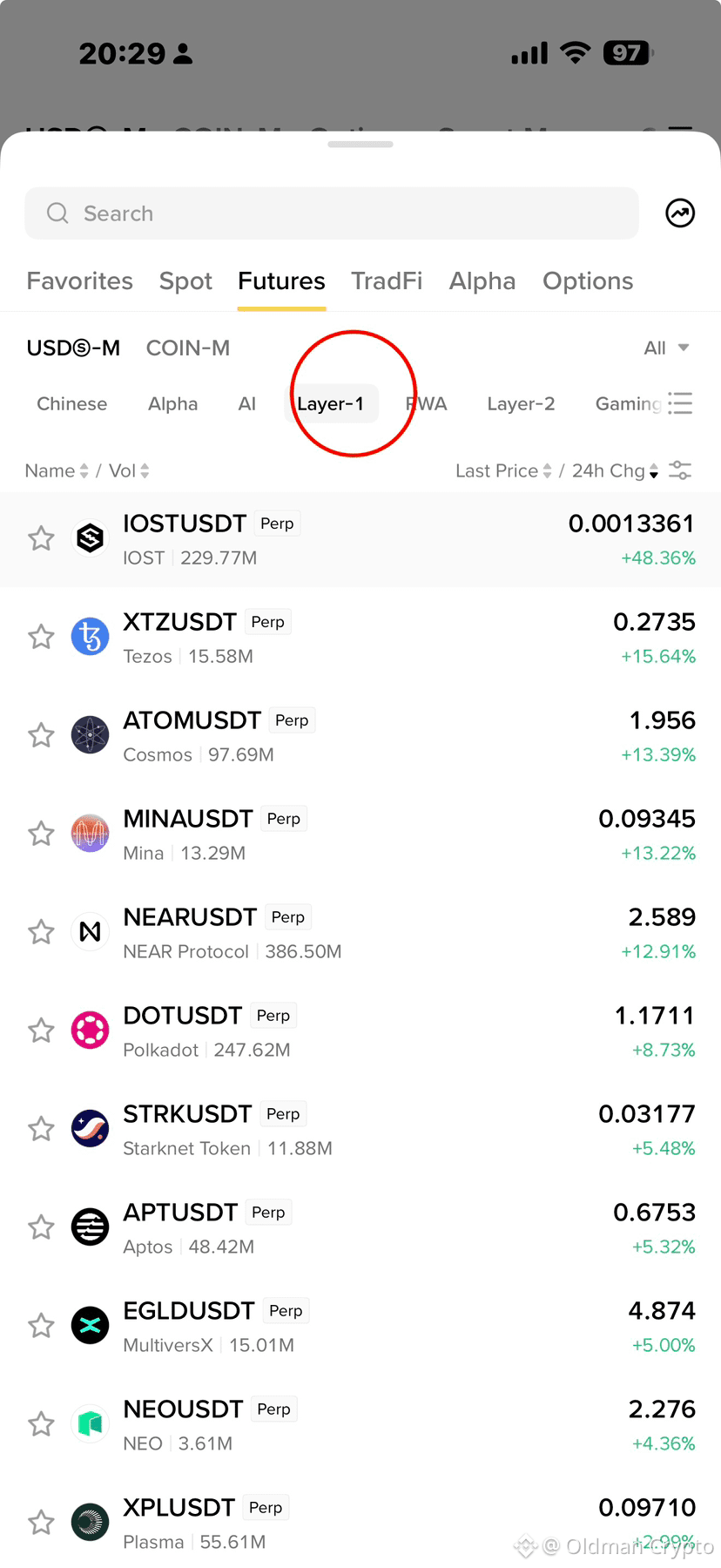
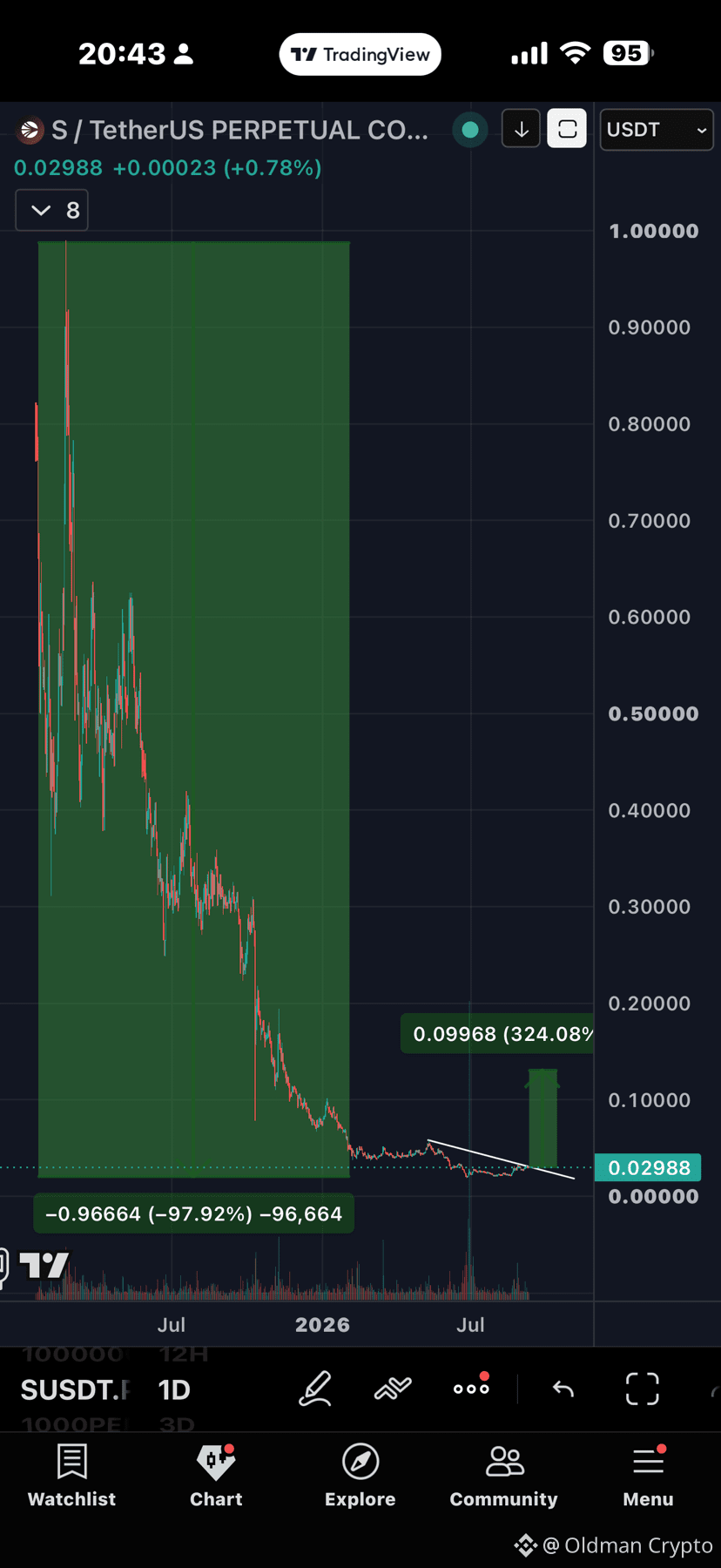
🚀 Layer-1 capital flowing, ATOM DOT NEAR APT up, $S next 🔥
💵 0.02988, down 97%, wick to 0.09968 (+324%)
📊 Trendline break forming, capitulation done
🧠 Top caps lead = laggard S catches up
📈 Bottom entry
⚡ Layer-1 rotation 📊 S turn 🧠
#S #Layer1 #hold
📌 Sharing personal opinions only
not financial advice or a recommendation to buy/sell. Crypto is highly risky; DYOR and you are solely responsible. No coin promotion
$S
🚀 Layer-1 capital flowing, ATOM DOT NEAR APT up, $S next 🔥
💵 0.02988, down 97%, wick to 0.09968 (+324%)
📊 Trendline break forming, capitulation done
🧠 Top caps lead = laggard S catches up
📈 Bottom entry
⚡ Layer-1 rotation 📊 S turn 🧠
#S #Layer1 #hold
📌 Sharing personal opinions only
not financial advice or a recommendation to buy/sell. Crypto is highly risky; DYOR and you are solely responsible. No coin promotion
🚀 Layer-1 capital flowing, ATOM DOT NEAR APT up, $S next 🔥
💵 0.02988, down 97%, wick to 0.09968 (+324%)
📊 Trendline break forming, capitulation done
🧠 Top caps lead = laggard S catches up
📈 Bottom entry
⚡ Layer-1 rotation 📊 S turn 🧠
#S #Layer1 #hold
📌 Sharing personal opinions only
not financial advice or a recommendation to buy/sell. Crypto is highly risky; DYOR and you are solely responsible. No coin promotion
Kato Crypto
·
--
Bullish$S
very bullish
very bullish
Black Arrow Calls:
Alt szn now just getting started. Its time for L1s
2
14
5.6k

·
--
Bullish
🚨 STOP CHASING RANDOM ALTCOINS — WATCH LAYER 1s INSTEAD.
The next major crypto rotation could be hiding in the Layer 1 ecosystem. 👀
Layer 1 blockchains are the base networks where entire crypto ecosystems are built — DeFi, NFTs gaming, stablecoins, and more.
🔥 LAYER 1 TOKENS TO WATCH ON BINANCE:
🟠 $BTC— Store of value & Bitcoin network
🔷 ETH — Smart contracts & the largest ecosystem
🟣 SOL — High-speed ecosystem & strong activity
🔺 $AVAX — Scalable, customizable blockchain
🔵 ADA — Research-driven Layer 1
🟣 $DOT — Cross-chain interoperability
🟢 $NEAR — Scalable and developer-focused ecosystem
💡 What I’m watching:
• Network activity 📊
• TVL & DeFi growth
• Developer activity 👨💻
• Token liquidity & volume
• Ecosystem expansion
• BTC dominance & market rotation
⚠️ Important: A strong Layer 1 doesn't automatically mean its token will pump. Market conditions, valuation, liquidity and adoption matter.
🎯 My strategy: Don't blindly buy the biggest name. Compare the fundamentals, watch the charts, and wait for confirmation.
👇 Which Layer 1 do you think can outperform in the next crypto cycle?
ETH, SOL, AVAX, ADA, DOT, NEAR — or another one?
Drop your pick below 👇
Follow me for more crypto watchlists, market insights & opportunities. 🚀
{future}(ETHUSDT)
{future}(NEARUSDT)
{future}(DOTUSDT)
#Crypto #Layer1 #ALTCOİN s #Ethereum✅ #Solana #Avalanche #Cardano #Polkadot #NEAR #Bitcoin #BinanceSquare #CryptoTrading #CryptoAnalysis #AltcoinSeason #CryptoMarket
🚨 STOP CHASING RANDOM ALTCOINS — WATCH LAYER 1s INSTEAD.
The next major crypto rotation could be hiding in the Layer 1 ecosystem. 👀
Layer 1 blockchains are the base networks where entire crypto ecosystems are built — DeFi, NFTs gaming, stablecoins, and more.
🔥 LAYER 1 TOKENS TO WATCH ON BINANCE:
🟠 $BTC— Store of value & Bitcoin network
🔷 ETH — Smart contracts & the largest ecosystem
🟣 SOL — High-speed ecosystem & strong activity
🔺 $AVAX — Scalable, customizable blockchain
🔵 ADA — Research-driven Layer 1
🟣 $DOT — Cross-chain interoperability
🟢 $NEAR — Scalable and developer-focused ecosystem
💡 What I’m watching:
• Network activity 📊
• TVL & DeFi growth
• Developer activity 👨💻
• Token liquidity & volume
• Ecosystem expansion
• BTC dominance & market rotation
⚠️ Important: A strong Layer 1 doesn't automatically mean its token will pump. Market conditions, valuation, liquidity and adoption matter.
🎯 My strategy: Don't blindly buy the biggest name. Compare the fundamentals, watch the charts, and wait for confirmation.
👇 Which Layer 1 do you think can outperform in the next crypto cycle?
ETH, SOL, AVAX, ADA, DOT, NEAR — or another one?
Drop your pick below 👇
Follow me for more crypto watchlists, market insights & opportunities. 🚀
#Crypto #Layer1 #ALTCOİN s #Ethereum✅ #Solana #Avalanche #Cardano #Polkadot #NEAR #Bitcoin #BinanceSquare #CryptoTrading #CryptoAnalysis #AltcoinSeason #CryptoMarket
The next major crypto rotation could be hiding in the Layer 1 ecosystem. 👀
Layer 1 blockchains are the base networks where entire crypto ecosystems are built — DeFi, NFTs gaming, stablecoins, and more.
🔥 LAYER 1 TOKENS TO WATCH ON BINANCE:
🟠 $BTC— Store of value & Bitcoin network
🔷 ETH — Smart contracts & the largest ecosystem
🟣 SOL — High-speed ecosystem & strong activity
🔺 $AVAX — Scalable, customizable blockchain
🔵 ADA — Research-driven Layer 1
🟣 $DOT — Cross-chain interoperability
🟢 $NEAR — Scalable and developer-focused ecosystem
💡 What I’m watching:
• Network activity 📊
• TVL & DeFi growth
• Developer activity 👨💻
• Token liquidity & volume
• Ecosystem expansion
• BTC dominance & market rotation
⚠️ Important: A strong Layer 1 doesn't automatically mean its token will pump. Market conditions, valuation, liquidity and adoption matter.
🎯 My strategy: Don't blindly buy the biggest name. Compare the fundamentals, watch the charts, and wait for confirmation.
👇 Which Layer 1 do you think can outperform in the next crypto cycle?
ETH, SOL, AVAX, ADA, DOT, NEAR — or another one?
Drop your pick below 👇
Follow me for more crypto watchlists, market insights & opportunities. 🚀
#Crypto #Layer1 #ALTCOİN s #Ethereum✅ #Solana #Avalanche #Cardano #Polkadot #NEAR #Bitcoin #BinanceSquare #CryptoTrading #CryptoAnalysis #AltcoinSeason #CryptoMarket
106
·
--
Bearish
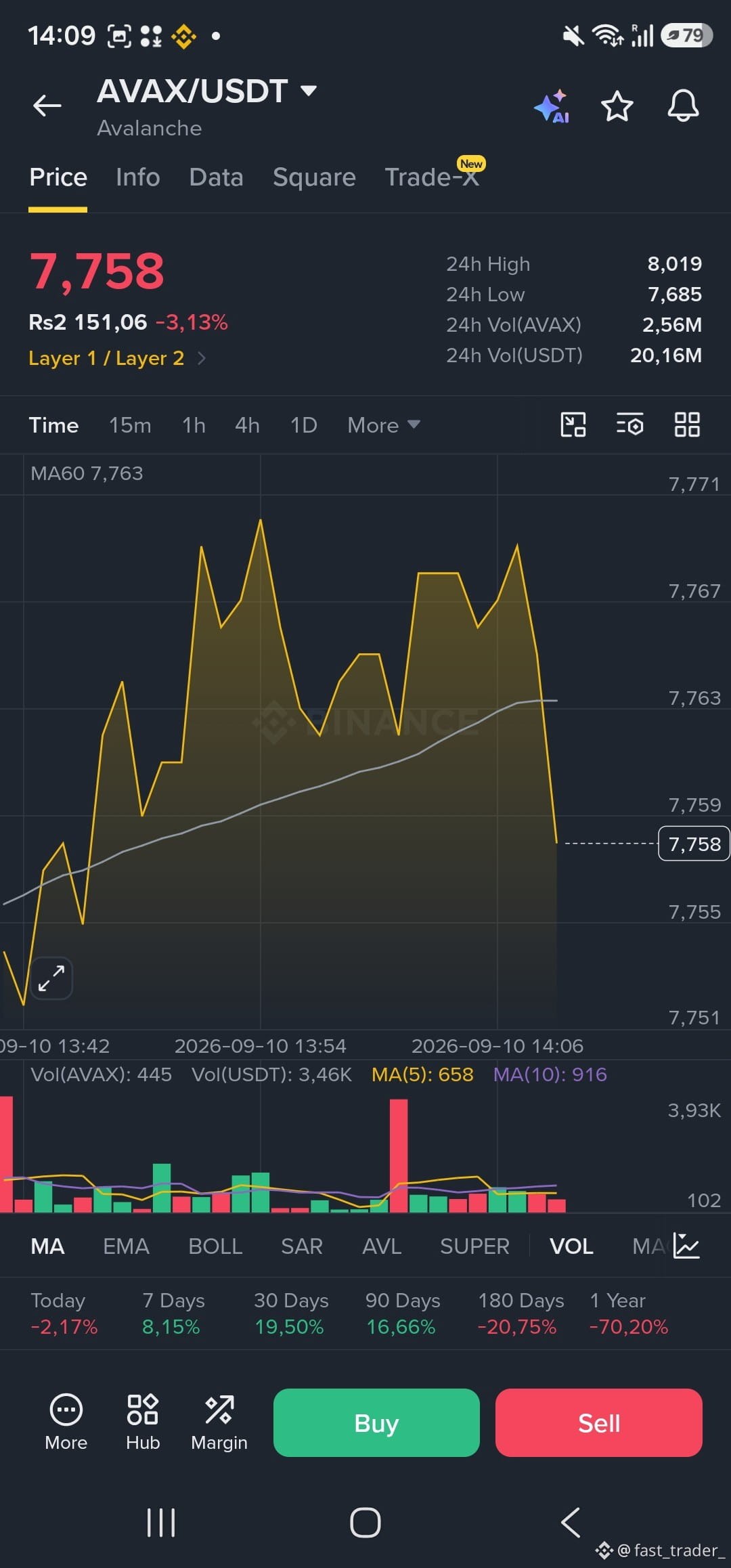
🔺 $AVAX Update — Avalanche cooling off ❄️
AVAX/USDT sitting at 7.758 right now (-3.13% today) 📉
📊 Snapshot:
🔴 24h High: 8.019
🟢 24h Low: 7.685
📦 24h Vol: 2.56M AVAX / 20.16M USDT
⏳ Performance:
Today: -2.17% 🔻
7D: +8.15% 🟢
30D: +19.50% 🟢
90D: +16.66% 🟢
180D: -20.75% 🔻
1Y: -70.20% 💀
Mid-term trend actually looks solid (30D & 90D both green ✅) despite the longer-term bleed 🩸
🤔 Is $AVAX quietly building momentum for a breakout, or just another relief bounce before the next leg down? Let me know your outlook! 👇
#AVAX✅ #Avalanche #Binance #Crypto #Layer1
{future}(AVAXUSDT)
🔺 $AVAX Update — Avalanche cooling off ❄️
AVAX/USDT sitting at 7.758 right now (-3.13% today) 📉
📊 Snapshot:
🔴 24h High: 8.019
🟢 24h Low: 7.685
📦 24h Vol: 2.56M AVAX / 20.16M USDT
⏳ Performance:
Today: -2.17% 🔻
7D: +8.15% 🟢
30D: +19.50% 🟢
90D: +16.66% 🟢
180D: -20.75% 🔻
1Y: -70.20% 💀
Mid-term trend actually looks solid (30D & 90D both green ✅) despite the longer-term bleed 🩸
🤔 Is $AVAX quietly building momentum for a breakout, or just another relief bounce before the next leg down? Let me know your outlook! 👇
#AVAX✅ #Avalanche #Binance #Crypto #Layer1
AVAX/USDT sitting at 7.758 right now (-3.13% today) 📉
📊 Snapshot:
🔴 24h High: 8.019
🟢 24h Low: 7.685
📦 24h Vol: 2.56M AVAX / 20.16M USDT
⏳ Performance:
Today: -2.17% 🔻
7D: +8.15% 🟢
30D: +19.50% 🟢
90D: +16.66% 🟢
180D: -20.75% 🔻
1Y: -70.20% 💀
Mid-term trend actually looks solid (30D & 90D both green ✅) despite the longer-term bleed 🩸
🤔 Is $AVAX quietly building momentum for a breakout, or just another relief bounce before the next leg down? Let me know your outlook! 👇
#AVAX✅ #Avalanche #Binance #Crypto #Layer1
1
54

·
--
The Layer 1 race stopped being about TPS a long time ago. Most people just haven't noticed yet.
Throughput numbers are a marketing exercise. What actually determines which chain wins institutional and developer mindshare is the tooling layer — the debuggers, oracles, SDKs, account abstraction modules, and testing frameworks that make building real applications possible.
$ETH figured this out first. The reason Ethereum dominates DeFi TVL isn't speed — it's that every developer tool you could possibly need already exists, is battle-tested, and has years of audit history behind it. That's a moat you can't replicate with a higher gas limit.
$SOL took a different bet: make the runtime fast enough that tooling constraints matter less. It worked for consumer-facing apps and high-frequency trading, but the developer experience gap is still real. Solana is closing it fast — but closing a gap is different from having one.
$BNB quietly built the most accessible onboarding pipeline in crypto. BNB Chain's developer tooling isn't the most sophisticated, but it's the most frictionless. That matters when you're competing for the next million builders, not the next hundred.
Here's the thesis: the L1 that wins in 2026-2027 won't have the highest TPS. It'll have the best developer experience. Builder gravity is everything.
#Layer1 #CryptoInfrastructure #Web3 #DeveloperTools
The Layer 1 race stopped being about TPS a long time ago. Most people just haven't noticed yet.
Throughput numbers are a marketing exercise. What actually determines which chain wins institutional and developer mindshare is the tooling layer — the debuggers, oracles, SDKs, account abstraction modules, and testing frameworks that make building real applications possible.
$ETH figured this out first. The reason Ethereum dominates DeFi TVL isn't speed — it's that every developer tool you could possibly need already exists, is battle-tested, and has years of audit history behind it. That's a moat you can't replicate with a higher gas limit.
$SOL took a different bet: make the runtime fast enough that tooling constraints matter less. It worked for consumer-facing apps and high-frequency trading, but the developer experience gap is still real. Solana is closing it fast — but closing a gap is different from having one.
$BNB quietly built the most accessible onboarding pipeline in crypto. BNB Chain's developer tooling isn't the most sophisticated, but it's the most frictionless. That matters when you're competing for the next million builders, not the next hundred.
Here's the thesis: the L1 that wins in 2026-2027 won't have the highest TPS. It'll have the best developer experience. Builder gravity is everything.
#Layer1 #CryptoInfrastructure #Web3 #DeveloperTools
Throughput numbers are a marketing exercise. What actually determines which chain wins institutional and developer mindshare is the tooling layer — the debuggers, oracles, SDKs, account abstraction modules, and testing frameworks that make building real applications possible.
$ETH figured this out first. The reason Ethereum dominates DeFi TVL isn't speed — it's that every developer tool you could possibly need already exists, is battle-tested, and has years of audit history behind it. That's a moat you can't replicate with a higher gas limit.
$SOL took a different bet: make the runtime fast enough that tooling constraints matter less. It worked for consumer-facing apps and high-frequency trading, but the developer experience gap is still real. Solana is closing it fast — but closing a gap is different from having one.
$BNB quietly built the most accessible onboarding pipeline in crypto. BNB Chain's developer tooling isn't the most sophisticated, but it's the most frictionless. That matters when you're competing for the next million builders, not the next hundred.
Here's the thesis: the L1 that wins in 2026-2027 won't have the highest TPS. It'll have the best developer experience. Builder gravity is everything.
#Layer1 #CryptoInfrastructure #Web3 #DeveloperTools
57
·
--
$AVAX
{future}(AVAXUSDT)
Avalanche remains a major Layer-1 blockchain focused on scalable decentralized applications. Its ecosystem includes DeFi, gaming, and Web3 infrastructure. Traders are watching AVAX as market attention rotates between different Layer-1 projects.
#AVAX #Avalanche #Layer1 #BinanceSquare
$AVAX
Avalanche remains a major Layer-1 blockchain focused on scalable decentralized applications. Its ecosystem includes DeFi, gaming, and Web3 infrastructure. Traders are watching AVAX as market attention rotates between different Layer-1 projects.
#AVAX #Avalanche #Layer1 #BinanceSquare
Avalanche remains a major Layer-1 blockchain focused on scalable decentralized applications. Its ecosystem includes DeFi, gaming, and Web3 infrastructure. Traders are watching AVAX as market attention rotates between different Layer-1 projects.
#AVAX #Avalanche #Layer1 #BinanceSquare
17
·
--
$ADA
{future}(ADAUSDT)
Cardano remains one of the most recognized Layer-1 blockchain projects. Its development focuses on blockchain infrastructure, smart contracts, and decentralized applications. Traders continue to watch ADA as the wider altcoin market changes.
#ADA #Cardano #Layer1 #BinanceSquare
$ADA
Cardano remains one of the most recognized Layer-1 blockchain projects. Its development focuses on blockchain infrastructure, smart contracts, and decentralized applications. Traders continue to watch ADA as the wider altcoin market changes.
#ADA #Cardano #Layer1 #BinanceSquare
Cardano remains one of the most recognized Layer-1 blockchain projects. Its development focuses on blockchain infrastructure, smart contracts, and decentralized applications. Traders continue to watch ADA as the wider altcoin market changes.
#ADA #Cardano #Layer1 #BinanceSquare
45
·
--
$SUI
{future}(SUIUSDT)
is a Layer-1 blockchain focused on scalable Web3 applications and efficient transactions. Its ecosystem continues to receive attention from crypto users. Traders are watching SUI as Layer-1 projects remain an important part of the market.
#SUI #Sui #Layer1 #BinanceSquare
$SUI
is a Layer-1 blockchain focused on scalable Web3 applications and efficient transactions. Its ecosystem continues to receive attention from crypto users. Traders are watching SUI as Layer-1 projects remain an important part of the market.
#SUI #Sui #Layer1 #BinanceSquare
is a Layer-1 blockchain focused on scalable Web3 applications and efficient transactions. Its ecosystem continues to receive attention from crypto users. Traders are watching SUI as Layer-1 projects remain an important part of the market.
#SUI #Sui #Layer1 #BinanceSquare
38

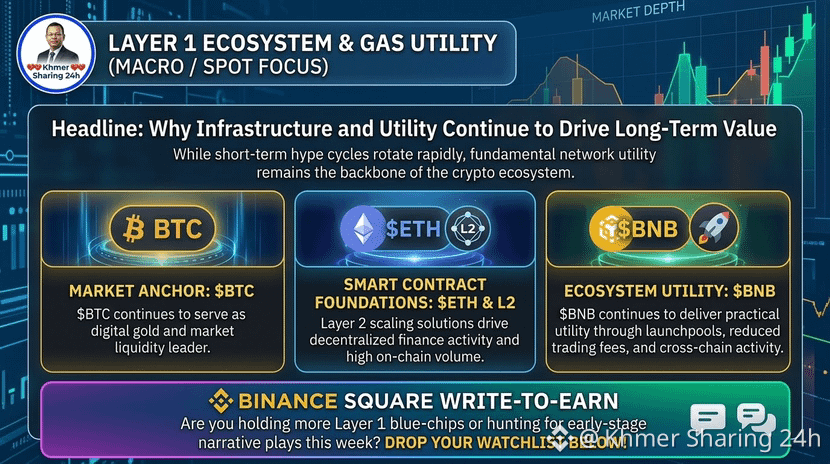
Layer 1 Ecosystem & Gas Utility (Macro / Spot Focus)
Why Infrastructure and Utility Continue to Drive Long-Term Value
While short-term hype cycles rotate rapidly, fundamental network utility remains the backbone of the crypto ecosystem.
Market Anchor: $BTC continues to serve as digital gold and market liquidity leader.
Smart Contract Foundations: $ETH and Layer 2 scaling solutions drive decentralized finance activity and high on-chain volume.
Ecosystem Utility: $BNB continues to deliver practical utility through launchpools, reduced trading fees, and cross-chain activity.
Are you holding more Layer 1 blue-chips or hunting for early-stage narrative plays this week? Drop your watchlist below!
@Binance_Square_Official #Write2Earn #Layer1 #CryptoFundamentals #KhmerSharing24h
Layer 1 Ecosystem & Gas Utility (Macro / Spot Focus)
Why Infrastructure and Utility Continue to Drive Long-Term Value
While short-term hype cycles rotate rapidly, fundamental network utility remains the backbone of the crypto ecosystem.
Market Anchor: $BTC continues to serve as digital gold and market liquidity leader.
Smart Contract Foundations: $ETH and Layer 2 scaling solutions drive decentralized finance activity and high on-chain volume.
Ecosystem Utility: $BNB continues to deliver practical utility through launchpools, reduced trading fees, and cross-chain activity.
Are you holding more Layer 1 blue-chips or hunting for early-stage narrative plays this week? Drop your watchlist below!
@Binance Square Official #Write2Earn #Layer1 #CryptoFundamentals #KhmerSharing24h
Why Infrastructure and Utility Continue to Drive Long-Term Value
While short-term hype cycles rotate rapidly, fundamental network utility remains the backbone of the crypto ecosystem.
Market Anchor: $BTC continues to serve as digital gold and market liquidity leader.
Smart Contract Foundations: $ETH and Layer 2 scaling solutions drive decentralized finance activity and high on-chain volume.
Ecosystem Utility: $BNB continues to deliver practical utility through launchpools, reduced trading fees, and cross-chain activity.
Are you holding more Layer 1 blue-chips or hunting for early-stage narrative plays this week? Drop your watchlist below!
@Binance Square Official #Write2Earn #Layer1 #CryptoFundamentals #KhmerSharing24h
1
58

·
--
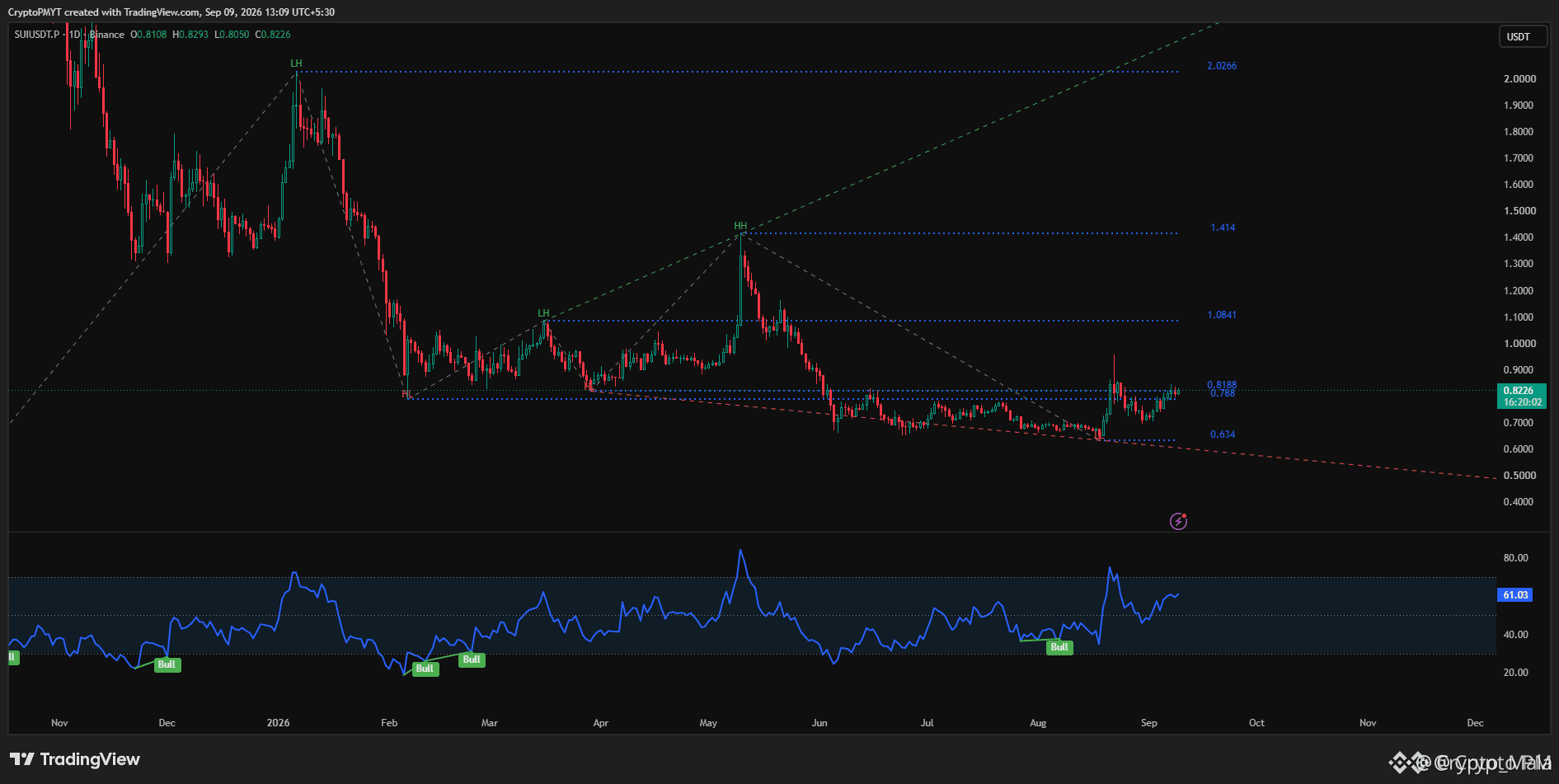
🔥 Why is everyone suddenly talking about $SUI again?
{future}(SUIUSDT)
Many traders are watching the broader trend structure as price continues attracting attention.
Some believe the current setup supports a stronger trend.
Others think patience is still required before the next major move.
👀 What's your outlook on $SUI?
Bullish or bearish?
#SUI #Crypto #Layer1
🔥 Why is everyone suddenly talking about $SUI again?
Many traders are watching the broader trend structure as price continues attracting attention.
Some believe the current setup supports a stronger trend.
Others think patience is still required before the next major move.
👀 What's your outlook on $SUI ?
Bullish or bearish?
#SUI #Crypto #Layer1
Many traders are watching the broader trend structure as price continues attracting attention.
Some believe the current setup supports a stronger trend.
Others think patience is still required before the next major move.
👀 What's your outlook on $SUI ?
Bullish or bearish?
#SUI #Crypto #Layer1
85

·
--
Bullish
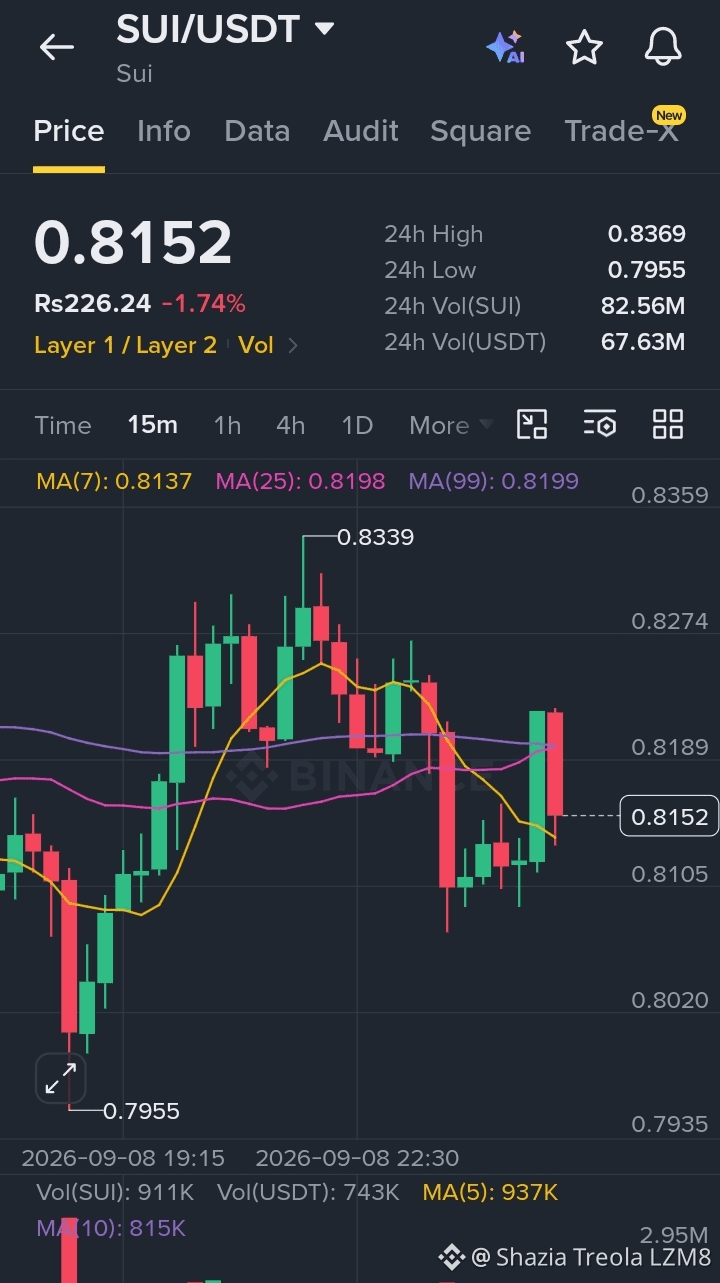
🚀 Is $SUI
{spot}(SUIUSDT)
gearing up for the next massive altcoin breakout?
The broader market is showing strong recovery momentum this September, and Layer-1 protocols are back in the spotlight. $SUI has been closely mirroring global volume shifts, proving that tokens reacting cleanly to Bitcoin's moves offer the best short-term setup.
Key Watch: Keep an eye on volume expansion and key structural resistance zones.
Sentiment: Bullish continuation expected if $BTC holds its ground above key psychological supports.
Are you accumulating or waiting for a deeper dip? Let me know below! 👇
#AEROSurges17%In24Hours #Layer1 #BinanceSquare #cryptotrading
{spot}(BTCUSDT)
🚀 Is $SUI
gearing up for the next massive altcoin breakout?
The broader market is showing strong recovery momentum this September, and Layer-1 protocols are back in the spotlight. $SUI has been closely mirroring global volume shifts, proving that tokens reacting cleanly to Bitcoin's moves offer the best short-term setup.
Key Watch: Keep an eye on volume expansion and key structural resistance zones.
Sentiment: Bullish continuation expected if $BTC holds its ground above key psychological supports.
Are you accumulating or waiting for a deeper dip? Let me know below! 👇
#AEROSurges17%In24Hours #Layer1 #BinanceSquare #cryptotrading
gearing up for the next massive altcoin breakout?
The broader market is showing strong recovery momentum this September, and Layer-1 protocols are back in the spotlight. $SUI has been closely mirroring global volume shifts, proving that tokens reacting cleanly to Bitcoin's moves offer the best short-term setup.
Key Watch: Keep an eye on volume expansion and key structural resistance zones.
Sentiment: Bullish continuation expected if $BTC holds its ground above key psychological supports.
Are you accumulating or waiting for a deeper dip? Let me know below! 👇
#AEROSurges17%In24Hours #Layer1 #BinanceSquare #cryptotrading
106
·
--
Bearish
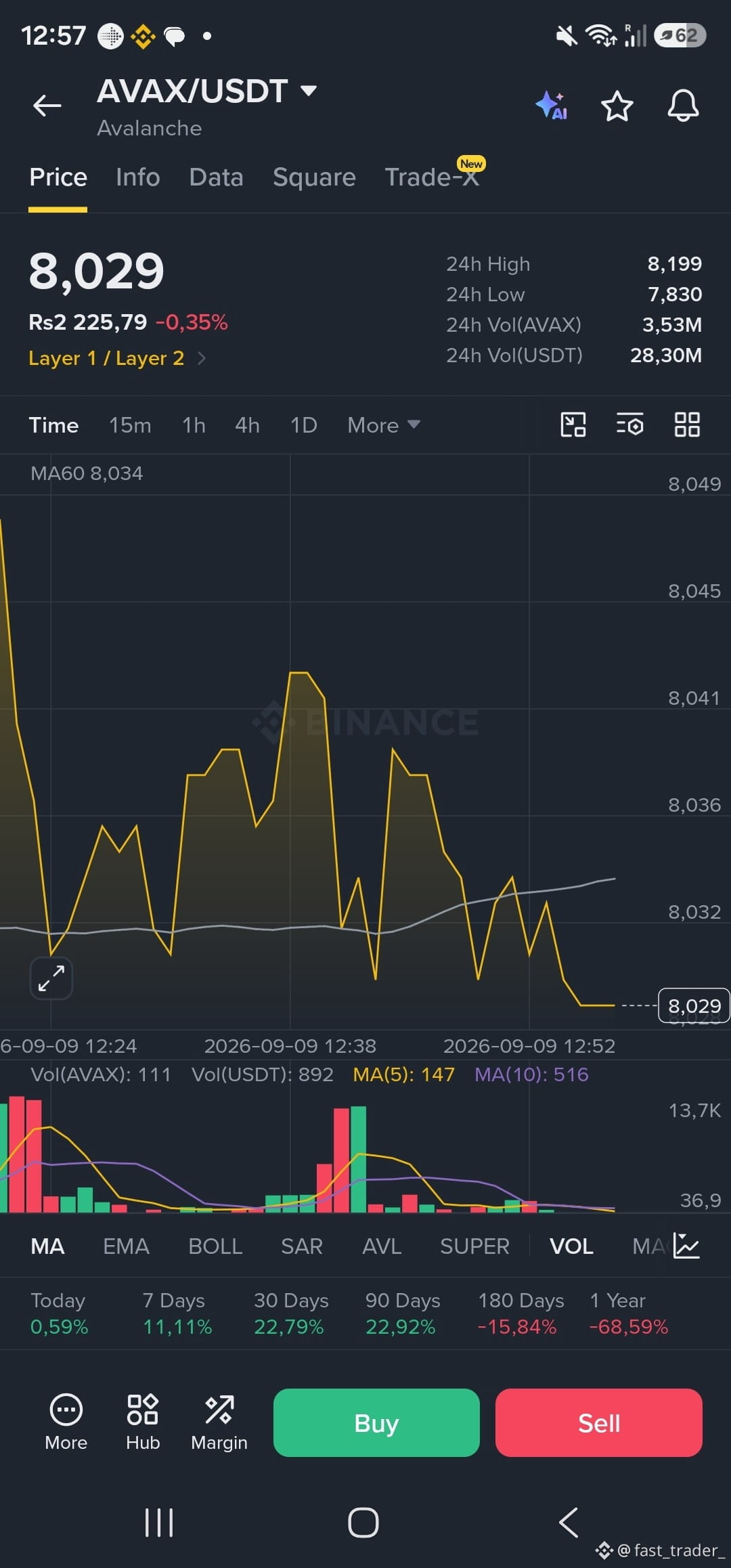
📊 $AVAX /USDT Update
$AVAX sitting at 8,029 USDT (₹225.79) — down -0.35% on the day 🔻
24h Range: 7,830 – 8,199
24h Volume: 28.30M USDT
📈 Performance:
7D: +11.11%
30D: +22.79%
90D: +22.92%
180D: -15.84%
1Y: -68.59%
Short-term pullback after choppy intraday action, but the 30-90 day trend still shows solid recovery momentum for Avalanche 🔺
#AVAX #Avalanche #cryptouniverseofficial #Layer1
{spot}(AVAXUSDT)
📊 $AVAX /USDT Update
$AVAX sitting at 8,029 USDT (₹225.79) — down -0.35% on the day 🔻
24h Range: 7,830 – 8,199
24h Volume: 28.30M USDT
📈 Performance:
7D: +11.11%
30D: +22.79%
90D: +22.92%
180D: -15.84%
1Y: -68.59%
Short-term pullback after choppy intraday action, but the 30-90 day trend still shows solid recovery momentum for Avalanche 🔺
#AVAX #Avalanche #cryptouniverseofficial #Layer1
$AVAX sitting at 8,029 USDT (₹225.79) — down -0.35% on the day 🔻
24h Range: 7,830 – 8,199
24h Volume: 28.30M USDT
📈 Performance:
7D: +11.11%
30D: +22.79%
90D: +22.92%
180D: -15.84%
1Y: -68.59%
Short-term pullback after choppy intraday action, but the 30-90 day trend still shows solid recovery momentum for Avalanche 🔺
#AVAX #Avalanche #cryptouniverseofficial #Layer1
1
84
·
--
Settlement finality is the most underdiscussed Layer 1 differentiator in crypto.
Most L1 comparisons obsess over TPS, fees, and TVL. But when institutional capital evaluates which chain to build on, the first question is often: when is a transaction truly final?
Bitcoin gives probabilistic finality — a transaction becomes increasingly irreversible as blocks stack on top, but there is no single moment of absolute certainty. Six confirmations is convention, not guarantee.
Ethereum provides deterministic finality through Casper FFG — once a checkpoint is finalized, reversal requires one-third of validators to slash their own stake. That is cryptoeconomic certainty, not probability.
Solana PoH + Tower BFT delivers deterministic finality in seconds through a sequence of hashes, though the tradeoff is validator hardware requirements that concentrate the node set.
The difference matters for institutions moving real settlement value. A payments company building on an L1 needs to know when they can release goods or services. Probabilistic finality means waiting. Deterministic finality means programmable release.
The chains that win institutional settlement volume will not be the fastest — they will be the ones with the most credible finality guarantees, the highest cost of reversal, and the clearest proof that a confirmed transaction is permanent.
$BTC $ETH $SOL
#Layer1 #SettlementFinality #InstitutionalAdoption #BlockchainInfrastructure #CryptoMarkets
Settlement finality is the most underdiscussed Layer 1 differentiator in crypto.
Most L1 comparisons obsess over TPS, fees, and TVL. But when institutional capital evaluates which chain to build on, the first question is often: when is a transaction truly final?
Bitcoin gives probabilistic finality — a transaction becomes increasingly irreversible as blocks stack on top, but there is no single moment of absolute certainty. Six confirmations is convention, not guarantee.
Ethereum provides deterministic finality through Casper FFG — once a checkpoint is finalized, reversal requires one-third of validators to slash their own stake. That is cryptoeconomic certainty, not probability.
Solana PoH + Tower BFT delivers deterministic finality in seconds through a sequence of hashes, though the tradeoff is validator hardware requirements that concentrate the node set.
The difference matters for institutions moving real settlement value. A payments company building on an L1 needs to know when they can release goods or services. Probabilistic finality means waiting. Deterministic finality means programmable release.
The chains that win institutional settlement volume will not be the fastest — they will be the ones with the most credible finality guarantees, the highest cost of reversal, and the clearest proof that a confirmed transaction is permanent.
$BTC $ETH $SOL
#Layer1 #SettlementFinality #InstitutionalAdoption #BlockchainInfrastructure #CryptoMarkets
Most L1 comparisons obsess over TPS, fees, and TVL. But when institutional capital evaluates which chain to build on, the first question is often: when is a transaction truly final?
Bitcoin gives probabilistic finality — a transaction becomes increasingly irreversible as blocks stack on top, but there is no single moment of absolute certainty. Six confirmations is convention, not guarantee.
Ethereum provides deterministic finality through Casper FFG — once a checkpoint is finalized, reversal requires one-third of validators to slash their own stake. That is cryptoeconomic certainty, not probability.
Solana PoH + Tower BFT delivers deterministic finality in seconds through a sequence of hashes, though the tradeoff is validator hardware requirements that concentrate the node set.
The difference matters for institutions moving real settlement value. A payments company building on an L1 needs to know when they can release goods or services. Probabilistic finality means waiting. Deterministic finality means programmable release.
The chains that win institutional settlement volume will not be the fastest — they will be the ones with the most credible finality guarantees, the highest cost of reversal, and the clearest proof that a confirmed transaction is permanent.
$BTC $ETH $SOL
#Layer1 #SettlementFinality #InstitutionalAdoption #BlockchainInfrastructure #CryptoMarkets
118

·
--
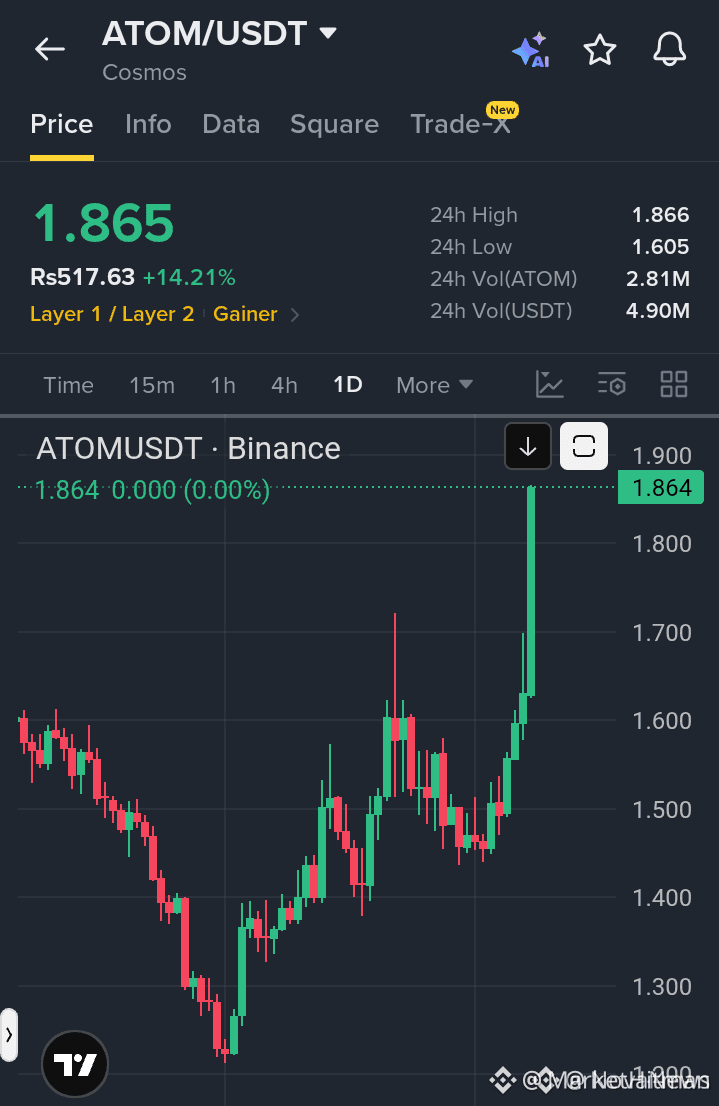
🚀 🟢 $ATOM ROARS WITH 14% GREEN CANDLE – LAYER‑1 ROTATION IGNITES!
Entry: 1.865 ⚡
Target: 2.350 🚀
📊 Volume flood confirms institutional appetite as smart‑money liquidity pools refuel at 1.865. 🌊 The surge aligns with a broader ecosystem shift toward Cosmos, turning the layer‑1 into a magnet for capital inflows. 📌 Expect the next order block to hold near 2.0, providing a clean runway for the continuation rally. 💡
🤔 Is the next leg set to breach 2.350 and cement a new bullish regime? 👇
⚠️ Not financial advice. Always manage your risk. 🛡️
🏷️ #ATOM #LongSetup #Layer1 #Crypto
🔥 💎
🚀 🟢 $ATOM ROARS WITH 14% GREEN CANDLE – LAYER‑1 ROTATION IGNITES!
Entry: 1.865 ⚡
Target: 2.350 🚀
📊 Volume flood confirms institutional appetite as smart‑money liquidity pools refuel at 1.865. 🌊 The surge aligns with a broader ecosystem shift toward Cosmos, turning the layer‑1 into a magnet for capital inflows. 📌 Expect the next order block to hold near 2.0, providing a clean runway for the continuation rally. 💡
🤔 Is the next leg set to breach 2.350 and cement a new bullish regime? 👇
⚠️ Not financial advice. Always manage your risk. 🛡️
🏷️ #ATOM #LongSetup #Layer1 #Crypto
🔥 💎
Entry: 1.865 ⚡
Target: 2.350 🚀
📊 Volume flood confirms institutional appetite as smart‑money liquidity pools refuel at 1.865. 🌊 The surge aligns with a broader ecosystem shift toward Cosmos, turning the layer‑1 into a magnet for capital inflows. 📌 Expect the next order block to hold near 2.0, providing a clean runway for the continuation rally. 💡
🤔 Is the next leg set to breach 2.350 and cement a new bullish regime? 👇
⚠️ Not financial advice. Always manage your risk. 🛡️
🏷️ #ATOM #LongSetup #Layer1 #Crypto
🔥 💎
38
·
--
The Fee Market Is the Hidden Report Card for Every L1
Most investors obsess over price action. Veteran analysts read fee markets.
A blockchain's fee revenue tells you something price never can: are users paying for blockspace, or just speculating on the token?
$BTC earns the bulk of its long-term security thesis from one uncomfortable truth — block rewards will eventually approach zero. What remains is transaction fees. Bitcoin's fee market during inscription waves and ordinals activity proved organic demand for its blockspace exists. That's signal.
$ETH has built the most sophisticated fee market in crypto. EIP-1559's base-fee burn creates a direct link between network usage and supply contraction. When ETH burns more than it issues, the network becomes structurally deflationary — not by design decree, but by user demand.
$SOL charges lower fees by design, betting on volume over unit price. It's a different model: throughput-first, fee-compression intentional. Whether that sustains validator economics long-term is the open question serious analysts are watching.
The takeaway: sustainable blockchains need sustainable fee markets. Price pumps are temporary. Fee revenue is recurring. Follow the blockspace demand, not just the chart.
#CryptoInsights #Layer1 #BlockchainEconomics #FeeMarket #DeFi
The Fee Market Is the Hidden Report Card for Every L1
Most investors obsess over price action. Veteran analysts read fee markets.
A blockchain's fee revenue tells you something price never can: are users paying for blockspace, or just speculating on the token?
$BTC earns the bulk of its long-term security thesis from one uncomfortable truth — block rewards will eventually approach zero. What remains is transaction fees. Bitcoin's fee market during inscription waves and ordinals activity proved organic demand for its blockspace exists. That's signal.
$ETH has built the most sophisticated fee market in crypto. EIP-1559's base-fee burn creates a direct link between network usage and supply contraction. When ETH burns more than it issues, the network becomes structurally deflationary — not by design decree, but by user demand.
$SOL charges lower fees by design, betting on volume over unit price. It's a different model: throughput-first, fee-compression intentional. Whether that sustains validator economics long-term is the open question serious analysts are watching.
The takeaway: sustainable blockchains need sustainable fee markets. Price pumps are temporary. Fee revenue is recurring. Follow the blockspace demand, not just the chart.
#CryptoInsights #Layer1 #BlockchainEconomics #FeeMarket #DeFi
Most investors obsess over price action. Veteran analysts read fee markets.
A blockchain's fee revenue tells you something price never can: are users paying for blockspace, or just speculating on the token?
$BTC earns the bulk of its long-term security thesis from one uncomfortable truth — block rewards will eventually approach zero. What remains is transaction fees. Bitcoin's fee market during inscription waves and ordinals activity proved organic demand for its blockspace exists. That's signal.
$ETH has built the most sophisticated fee market in crypto. EIP-1559's base-fee burn creates a direct link between network usage and supply contraction. When ETH burns more than it issues, the network becomes structurally deflationary — not by design decree, but by user demand.
$SOL charges lower fees by design, betting on volume over unit price. It's a different model: throughput-first, fee-compression intentional. Whether that sustains validator economics long-term is the open question serious analysts are watching.
The takeaway: sustainable blockchains need sustainable fee markets. Price pumps are temporary. Fee revenue is recurring. Follow the blockspace demand, not just the chart.
#CryptoInsights #Layer1 #BlockchainEconomics #FeeMarket #DeFi
36

·
--
$SOL Four hours in a row with five consecutive bearish candles. It was smashed all the way from 104.53 down to 100.19. There hasn’t been a decent bounce.
This old-school L1 chain is weak now. It used to compete for market dominance with Ethereum as a high-performance network, but its price action is showing serious weakness. It’s not the kind of low-volume, drifting-down decline—it’s with volume. 5,008,585 SOL were dumped into the last four-hour candle with heavy volume, directly breaking through the 102 support.
The signals are clear: the bears are in control. In the last 24 hours, the high was 105.19 and the low was 100.19, with a 5% range. It closed at 101.94, down 1.88%. This isn’t a violent collapse—it’s like a dull knife cutting into you: one candle after another, with the longs having no strength left to resist.
Market sentiment is rather cold. The funding rate is -0.0033%, meaning shorts are paying for longs. What does that imply? The people shorting aren’t scared of paying funding—they think it can still go lower. The mark price 101.944 and the index price 102.002 are basically aligned, with no abnormal premium. This isn’t a contract-driven move; spot is also selling.
Watch the large players by volume. That four-hour megadump bearish candle of 5 million SOL is the turning point. Before that, there were 2.87 million and 2.75 million SOL—those weren’t small, but the direction was still oscillating. After the huge volume spike, the whole price center of gravity dropped by a step. The big players sold near 104, and only stopped dumping once the price was below 102. Now price is consolidating with reduced volume between 101 and 102. Trading volume dropped from 5 million to 760,000. Sell pressure has been temporarily released, but nobody is stepping in as buyers.
The volume-price structure isn’t encouraging: down moves with rising volume, and rebounds with shrinking volume. Total traded value over 24 hours is $1.806 billion—not low. But looking at the four-hour level volume distribution: in the down leg, the average is 3 million to 5 million SOL; in the rebound leg, only 1.3 million to 2.3 million. That’s a classic distribution/outflow structure. It’s not that longs don’t want to buy—it’s that they can’t catch the bids.
K-line details are worth noting. The last six four-hour candles: open 104.53 → close 103.02; open 103.02 → close 102.30; open 102.30 → close 101.51; open 101.50 → close 101.78; open 101.78 → close 101.94. With each bearish candle, the real body gets smaller, and the lower wicks get shorter. This isn’t a stop-here signal; it shows bearish momentum is fading, but the bulls also have no power to counterattack. After the probe wick around 100.19, price was pulled back quickly, suggesting someone is defending around 100—but the defense isn’t actively pushing upward.
Support levels: 100.19, 100.42, 101.58. 100 is the psychological line—break it and look for 98.
Resistance levels: 104.79, 105.03, 105.19. Even getting to 103 in the short term looks tough.
My bias is bearish. Solana’s ecosystem is indeed active—Meme coins, DePIN, and DeFi are all running on it, and on-chain data isn’t bad. But price action doesn’t lie. Funds are flowing out, the technical structure has deteriorated, and there’s no reversal signal in the near term.
Nini’s plan: Current price is 101.94. If it bounces up into the 103.5 to 104 zone, short with a light position and set a stop-loss at 105.5. If it directly breaks below 100.19, then wait for a pullback near 100 to go long for a short-term bounce, with a stop-loss at 99. Both directions are possible, but position sizing must be kept within 5% of total capital. In this kind of weak market, staying alive matters more than making money.
If you need a customized strategy, you can find Nini.
#SOL #Layer1 #public chain
$SOL Four hours in a row with five consecutive bearish candles. It was smashed all the way from 104.53 down to 100.19. There hasn’t been a decent bounce.
This old-school L1 chain is weak now. It used to compete for market dominance with Ethereum as a high-performance network, but its price action is showing serious weakness. It’s not the kind of low-volume, drifting-down decline—it’s with volume. 5,008,585 SOL were dumped into the last four-hour candle with heavy volume, directly breaking through the 102 support.
The signals are clear: the bears are in control. In the last 24 hours, the high was 105.19 and the low was 100.19, with a 5% range. It closed at 101.94, down 1.88%. This isn’t a violent collapse—it’s like a dull knife cutting into you: one candle after another, with the longs having no strength left to resist.
Market sentiment is rather cold. The funding rate is -0.0033%, meaning shorts are paying for longs. What does that imply? The people shorting aren’t scared of paying funding—they think it can still go lower. The mark price 101.944 and the index price 102.002 are basically aligned, with no abnormal premium. This isn’t a contract-driven move; spot is also selling.
Watch the large players by volume. That four-hour megadump bearish candle of 5 million SOL is the turning point. Before that, there were 2.87 million and 2.75 million SOL—those weren’t small, but the direction was still oscillating. After the huge volume spike, the whole price center of gravity dropped by a step. The big players sold near 104, and only stopped dumping once the price was below 102. Now price is consolidating with reduced volume between 101 and 102. Trading volume dropped from 5 million to 760,000. Sell pressure has been temporarily released, but nobody is stepping in as buyers.
The volume-price structure isn’t encouraging: down moves with rising volume, and rebounds with shrinking volume. Total traded value over 24 hours is $1.806 billion—not low. But looking at the four-hour level volume distribution: in the down leg, the average is 3 million to 5 million SOL; in the rebound leg, only 1.3 million to 2.3 million. That’s a classic distribution/outflow structure. It’s not that longs don’t want to buy—it’s that they can’t catch the bids.
K-line details are worth noting. The last six four-hour candles: open 104.53 → close 103.02; open 103.02 → close 102.30; open 102.30 → close 101.51; open 101.50 → close 101.78; open 101.78 → close 101.94. With each bearish candle, the real body gets smaller, and the lower wicks get shorter. This isn’t a stop-here signal; it shows bearish momentum is fading, but the bulls also have no power to counterattack. After the probe wick around 100.19, price was pulled back quickly, suggesting someone is defending around 100—but the defense isn’t actively pushing upward.
Support levels: 100.19, 100.42, 101.58. 100 is the psychological line—break it and look for 98.
Resistance levels: 104.79, 105.03, 105.19. Even getting to 103 in the short term looks tough.
My bias is bearish. Solana’s ecosystem is indeed active—Meme coins, DePIN, and DeFi are all running on it, and on-chain data isn’t bad. But price action doesn’t lie. Funds are flowing out, the technical structure has deteriorated, and there’s no reversal signal in the near term.
Nini’s plan: Current price is 101.94. If it bounces up into the 103.5 to 104 zone, short with a light position and set a stop-loss at 105.5. If it directly breaks below 100.19, then wait for a pullback near 100 to go long for a short-term bounce, with a stop-loss at 99. Both directions are possible, but position sizing must be kept within 5% of total capital. In this kind of weak market, staying alive matters more than making money.
If you need a customized strategy, you can find Nini.
#SOL #Layer1 #public chain
This old-school L1 chain is weak now. It used to compete for market dominance with Ethereum as a high-performance network, but its price action is showing serious weakness. It’s not the kind of low-volume, drifting-down decline—it’s with volume. 5,008,585 SOL were dumped into the last four-hour candle with heavy volume, directly breaking through the 102 support.
The signals are clear: the bears are in control. In the last 24 hours, the high was 105.19 and the low was 100.19, with a 5% range. It closed at 101.94, down 1.88%. This isn’t a violent collapse—it’s like a dull knife cutting into you: one candle after another, with the longs having no strength left to resist.
Market sentiment is rather cold. The funding rate is -0.0033%, meaning shorts are paying for longs. What does that imply? The people shorting aren’t scared of paying funding—they think it can still go lower. The mark price 101.944 and the index price 102.002 are basically aligned, with no abnormal premium. This isn’t a contract-driven move; spot is also selling.
Watch the large players by volume. That four-hour megadump bearish candle of 5 million SOL is the turning point. Before that, there were 2.87 million and 2.75 million SOL—those weren’t small, but the direction was still oscillating. After the huge volume spike, the whole price center of gravity dropped by a step. The big players sold near 104, and only stopped dumping once the price was below 102. Now price is consolidating with reduced volume between 101 and 102. Trading volume dropped from 5 million to 760,000. Sell pressure has been temporarily released, but nobody is stepping in as buyers.
The volume-price structure isn’t encouraging: down moves with rising volume, and rebounds with shrinking volume. Total traded value over 24 hours is $1.806 billion—not low. But looking at the four-hour level volume distribution: in the down leg, the average is 3 million to 5 million SOL; in the rebound leg, only 1.3 million to 2.3 million. That’s a classic distribution/outflow structure. It’s not that longs don’t want to buy—it’s that they can’t catch the bids.
K-line details are worth noting. The last six four-hour candles: open 104.53 → close 103.02; open 103.02 → close 102.30; open 102.30 → close 101.51; open 101.50 → close 101.78; open 101.78 → close 101.94. With each bearish candle, the real body gets smaller, and the lower wicks get shorter. This isn’t a stop-here signal; it shows bearish momentum is fading, but the bulls also have no power to counterattack. After the probe wick around 100.19, price was pulled back quickly, suggesting someone is defending around 100—but the defense isn’t actively pushing upward.
Support levels: 100.19, 100.42, 101.58. 100 is the psychological line—break it and look for 98.
Resistance levels: 104.79, 105.03, 105.19. Even getting to 103 in the short term looks tough.
My bias is bearish. Solana’s ecosystem is indeed active—Meme coins, DePIN, and DeFi are all running on it, and on-chain data isn’t bad. But price action doesn’t lie. Funds are flowing out, the technical structure has deteriorated, and there’s no reversal signal in the near term.
Nini’s plan: Current price is 101.94. If it bounces up into the 103.5 to 104 zone, short with a light position and set a stop-loss at 105.5. If it directly breaks below 100.19, then wait for a pullback near 100 to go long for a short-term bounce, with a stop-loss at 99. Both directions are possible, but position sizing must be kept within 5% of total capital. In this kind of weak market, staying alive matters more than making money.
If you need a customized strategy, you can find Nini.
#SOL #Layer1 #public chain
155
·
--
$SOL fell from 107 to 101.64, and a single 4-hour long bearish candle shattered all short-term moving averages. Then what? There is no “then.” It has been ranging around 103 for almost two days—neither continues to drop nor rebounds back.
This kind of trend is called “down but can’t go any lower, yet it also can’t rise.”
I don’t need to introduce this Solana chain too much. It’s a veteran high-performance public chain player, and its ecosystem activity has always been online. But whether the chain is good or not is one thing; whether the coin price goes up is another. The market’s stance on SOL right now is very clear: waiting on the sidelines.
The signals on the chart are very obvious. 107 was the previous high; once it broke down, it turned into resistance. 101.64 was the needle low; it has become short-term support. Both upside and downside space are locked. The 24-hour range is 3%, and trading volume is $1.6 billion. For a coin that ranks among the top by market cap, this volatility is ridiculously low.
Market sentiment is rather cold. Funding rate is 0.0029%, almost zero. Neither longs nor shorts have confidence to open positions. The futures market is completely dead. Spot markets are also waiting for direction. This kind of funding level usually appears on the eve of a breakout—either breaking upward above 107 or breaking downward below 101.
Something interesting about the behavior of the large players. From the candlestick chart, that spike at 101.64 looks like the main force caught it. After pushing it down, price quickly pulled back, and volume surged to 3.89 million lots. There was big money propping up at that level. But propping is propping—there isn’t much intention to push it higher. From 103 to 105, it’s all trapped positions, and the main force doesn’t want to spend energy clearing them.
The volume-price structure is contracting. In the 4-hour chart, volume shrank from 3.89 million lots to 1.18 million lots, and trading value dropped from $400 million to $120 million. A typical converging triangle. This kind of low-volume sideways consolidation won’t last too long. In the next 24 hours, it will most likely break in one direction.
Candlestick details. Over the most recent 6 four-hour candles, the real bodies are getting smaller and smaller, and both the upper and lower wicks are also getting shorter. Volatility is compressed to the extreme. The Bollinger Bands are clearly closing in. The last candle closed at 103.6, exactly around the 5-day moving average. If the next 4-hour candle can hold above 104, there is room for a short-term rebound. If it can’t, then it will keep grinding.
My view is mildly neutral. SOL is currently basically in a “waiting for direction” setup. As long as 101.64 holds, there is support below. As long as 107 isn’t broken through, there is resistance overhead. Ranging within a band.
Nini’s plan: current price is 103.60. If it drops to around 102, consider a small long with a stop loss at 101.5. If it breaks above 105 and then pulls back to confirm, you can chase a long with a target at 107. Don’t chase highs, don’t catch bottoms—wait for signals.
If you need a strategy tailored to your situation, you can find Nini.
#SOL #Layer1 #public chain
$SOL fell from 107 to 101.64, and a single 4-hour long bearish candle shattered all short-term moving averages. Then what? There is no “then.” It has been ranging around 103 for almost two days—neither continues to drop nor rebounds back.
This kind of trend is called “down but can’t go any lower, yet it also can’t rise.”
I don’t need to introduce this Solana chain too much. It’s a veteran high-performance public chain player, and its ecosystem activity has always been online. But whether the chain is good or not is one thing; whether the coin price goes up is another. The market’s stance on SOL right now is very clear: waiting on the sidelines.
The signals on the chart are very obvious. 107 was the previous high; once it broke down, it turned into resistance. 101.64 was the needle low; it has become short-term support. Both upside and downside space are locked. The 24-hour range is 3%, and trading volume is $1.6 billion. For a coin that ranks among the top by market cap, this volatility is ridiculously low.
Market sentiment is rather cold. Funding rate is 0.0029%, almost zero. Neither longs nor shorts have confidence to open positions. The futures market is completely dead. Spot markets are also waiting for direction. This kind of funding level usually appears on the eve of a breakout—either breaking upward above 107 or breaking downward below 101.
Something interesting about the behavior of the large players. From the candlestick chart, that spike at 101.64 looks like the main force caught it. After pushing it down, price quickly pulled back, and volume surged to 3.89 million lots. There was big money propping up at that level. But propping is propping—there isn’t much intention to push it higher. From 103 to 105, it’s all trapped positions, and the main force doesn’t want to spend energy clearing them.
The volume-price structure is contracting. In the 4-hour chart, volume shrank from 3.89 million lots to 1.18 million lots, and trading value dropped from $400 million to $120 million. A typical converging triangle. This kind of low-volume sideways consolidation won’t last too long. In the next 24 hours, it will most likely break in one direction.
Candlestick details. Over the most recent 6 four-hour candles, the real bodies are getting smaller and smaller, and both the upper and lower wicks are also getting shorter. Volatility is compressed to the extreme. The Bollinger Bands are clearly closing in. The last candle closed at 103.6, exactly around the 5-day moving average. If the next 4-hour candle can hold above 104, there is room for a short-term rebound. If it can’t, then it will keep grinding.
My view is mildly neutral. SOL is currently basically in a “waiting for direction” setup. As long as 101.64 holds, there is support below. As long as 107 isn’t broken through, there is resistance overhead. Ranging within a band.
Nini’s plan: current price is 103.60. If it drops to around 102, consider a small long with a stop loss at 101.5. If it breaks above 105 and then pulls back to confirm, you can chase a long with a target at 107. Don’t chase highs, don’t catch bottoms—wait for signals.
If you need a strategy tailored to your situation, you can find Nini.
#SOL #Layer1 #public chain
This kind of trend is called “down but can’t go any lower, yet it also can’t rise.”
I don’t need to introduce this Solana chain too much. It’s a veteran high-performance public chain player, and its ecosystem activity has always been online. But whether the chain is good or not is one thing; whether the coin price goes up is another. The market’s stance on SOL right now is very clear: waiting on the sidelines.
The signals on the chart are very obvious. 107 was the previous high; once it broke down, it turned into resistance. 101.64 was the needle low; it has become short-term support. Both upside and downside space are locked. The 24-hour range is 3%, and trading volume is $1.6 billion. For a coin that ranks among the top by market cap, this volatility is ridiculously low.
Market sentiment is rather cold. Funding rate is 0.0029%, almost zero. Neither longs nor shorts have confidence to open positions. The futures market is completely dead. Spot markets are also waiting for direction. This kind of funding level usually appears on the eve of a breakout—either breaking upward above 107 or breaking downward below 101.
Something interesting about the behavior of the large players. From the candlestick chart, that spike at 101.64 looks like the main force caught it. After pushing it down, price quickly pulled back, and volume surged to 3.89 million lots. There was big money propping up at that level. But propping is propping—there isn’t much intention to push it higher. From 103 to 105, it’s all trapped positions, and the main force doesn’t want to spend energy clearing them.
The volume-price structure is contracting. In the 4-hour chart, volume shrank from 3.89 million lots to 1.18 million lots, and trading value dropped from $400 million to $120 million. A typical converging triangle. This kind of low-volume sideways consolidation won’t last too long. In the next 24 hours, it will most likely break in one direction.
Candlestick details. Over the most recent 6 four-hour candles, the real bodies are getting smaller and smaller, and both the upper and lower wicks are also getting shorter. Volatility is compressed to the extreme. The Bollinger Bands are clearly closing in. The last candle closed at 103.6, exactly around the 5-day moving average. If the next 4-hour candle can hold above 104, there is room for a short-term rebound. If it can’t, then it will keep grinding.
My view is mildly neutral. SOL is currently basically in a “waiting for direction” setup. As long as 101.64 holds, there is support below. As long as 107 isn’t broken through, there is resistance overhead. Ranging within a band.
Nini’s plan: current price is 103.60. If it drops to around 102, consider a small long with a stop loss at 101.5. If it breaks above 105 and then pulls back to confirm, you can chase a long with a target at 107. Don’t chase highs, don’t catch bottoms—wait for signals.
If you need a strategy tailored to your situation, you can find Nini.
#SOL #Layer1 #public chain
1
1
282

Article
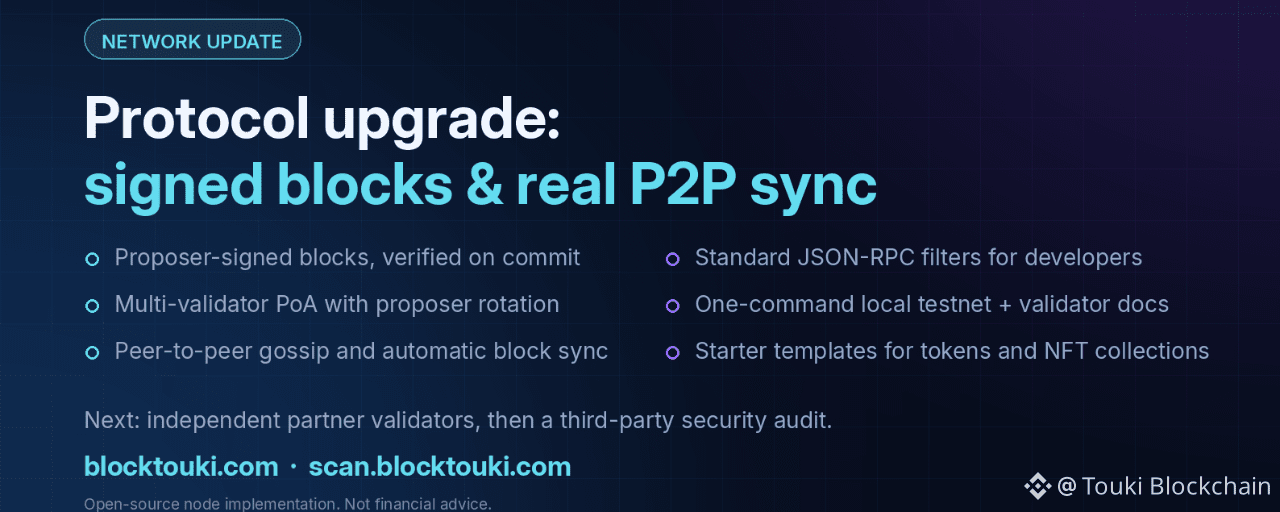
Touki Blockchain ships proposer-signed blocks and peer-to-peer syncTouki Blockchain (TOUKI), an EVM-compatible Layer-1 built for the creator economy, has delivered a core protocol upgrade to its node implementation.
What shipped
Proposer-signed blocks. Every block header is now signed by the validator that produced it. Each node verifies both the signature and that the signing key genuinely maps to that validator's address before the block is accepted. An unsigned or incorrectly signed block is rejected, which closes the door on any node forging blocks in another validator's name.
Peer-to-peer networking. Nodes handshake before exchanging data and refuse peers on a different chain ID or genesis. They gossip transactions and blocks, and a node that falls behind requests the missing range and catches up automatically.
Multi-validator Proof of Authority. The chain supports multiple validators producing blocks in a deterministic rotation, with block intervals driven by the chain's own configuration.
Developer surface. Standard JSON-RPC log filters and subscription-style polling, additional block and transaction methods, and live peer/validator data — so indexers, bots and dApps can integrate with the tools they already use.
Run it yourself. A single command launches a multi-validator Touki testnet locally. Validator operations documentation and starter templates for deploying tokens and NFT collections are published alongside it.
Roadmap — stated plainly
Signing and P2P are the foundation, not the finish line. Next: onboarding independent validators operated by partners, a third-party security audit of the node and creator tooling, and multisig controls on project treasury addresses. We will announce each only when it is verifiably done.
Network facts
Chain ID 2105 · Proof of Authority · fixed supply 73,971,571 TOUKI · no-code token and NFT creation · public RPC and explorer
$TOUKI #Layer1 #Web3 #CreatorEconomy #Blockchain
Touki Blockchain ships proposer-signed blocks and peer-to-peer sync
Touki Blockchain (TOUKI), an EVM-compatible Layer-1 built for the creator economy, has delivered a core protocol upgrade to its node implementation.
What shipped
Proposer-signed blocks. Every block header is now signed by the validator that produced it. Each node verifies both the signature and that the signing key genuinely maps to that validator's address before the block is accepted. An unsigned or incorrectly signed block is rejected, which closes the door on any node forging blocks in another validator's name.
Peer-to-peer networking. Nodes handshake before exchanging data and refuse peers on a different chain ID or genesis. They gossip transactions and blocks, and a node that falls behind requests the missing range and catches up automatically.
Multi-validator Proof of Authority. The chain supports multiple validators producing blocks in a deterministic rotation, with block intervals driven by the chain's own configuration.
Developer surface. Standard JSON-RPC log filters and subscription-style polling, additional block and transaction methods, and live peer/validator data — so indexers, bots and dApps can integrate with the tools they already use.
Run it yourself. A single command launches a multi-validator Touki testnet locally. Validator operations documentation and starter templates for deploying tokens and NFT collections are published alongside it.
Roadmap — stated plainly
Signing and P2P are the foundation, not the finish line. Next: onboarding independent validators operated by partners, a third-party security audit of the node and creator tooling, and multisig controls on project treasury addresses. We will announce each only when it is verifiably done.
Network facts
Chain ID 2105 · Proof of Authority · fixed supply 73,971,571 TOUKI · no-code token and NFT creation · public RPC and explorer
$TOUKI #Layer1 #Web3 #CreatorEconomy #Blockchain
What shipped
Proposer-signed blocks. Every block header is now signed by the validator that produced it. Each node verifies both the signature and that the signing key genuinely maps to that validator's address before the block is accepted. An unsigned or incorrectly signed block is rejected, which closes the door on any node forging blocks in another validator's name.
Peer-to-peer networking. Nodes handshake before exchanging data and refuse peers on a different chain ID or genesis. They gossip transactions and blocks, and a node that falls behind requests the missing range and catches up automatically.
Multi-validator Proof of Authority. The chain supports multiple validators producing blocks in a deterministic rotation, with block intervals driven by the chain's own configuration.
Developer surface. Standard JSON-RPC log filters and subscription-style polling, additional block and transaction methods, and live peer/validator data — so indexers, bots and dApps can integrate with the tools they already use.
Run it yourself. A single command launches a multi-validator Touki testnet locally. Validator operations documentation and starter templates for deploying tokens and NFT collections are published alongside it.
Roadmap — stated plainly
Signing and P2P are the foundation, not the finish line. Next: onboarding independent validators operated by partners, a third-party security audit of the node and creator tooling, and multisig controls on project treasury addresses. We will announce each only when it is verifiably done.
Network facts
Chain ID 2105 · Proof of Authority · fixed supply 73,971,571 TOUKI · no-code token and NFT creation · public RPC and explorer
$TOUKI #Layer1 #Web3 #CreatorEconomy #Blockchain
45

·
--
$US Talus recently sees multiple favorable catalysts stacked together, and the price is expected to gain sustained momentum.
The core catalysts include: the official launch of the v2.0 mainnet, the integration of the Sui Move Registry to improve ecosystem compatibility, the upgrade of Talus Vision into a network surveying tool to enhance transparency, and increased influence through KBW community activities.
The current quote is about $0.01502, with a 24h trading volume of $2.52 million and a market cap of about $33.04 million. With three arrows—mainnet upgrade + ecosystem infrastructure + community operations—it's worth watching the next developments.
#Talus #Layer1
$US Talus recently sees multiple favorable catalysts stacked together, and the price is expected to gain sustained momentum.
The core catalysts include: the official launch of the v2.0 mainnet, the integration of the Sui Move Registry to improve ecosystem compatibility, the upgrade of Talus Vision into a network surveying tool to enhance transparency, and increased influence through KBW community activities.
The current quote is about $0.01502, with a 24h trading volume of $2.52 million and a market cap of about $33.04 million. With three arrows—mainnet upgrade + ecosystem infrastructure + community operations—it's worth watching the next developments.
#Talus #Layer1
The core catalysts include: the official launch of the v2.0 mainnet, the integration of the Sui Move Registry to improve ecosystem compatibility, the upgrade of Talus Vision into a network surveying tool to enhance transparency, and increased influence through KBW community activities.
The current quote is about $0.01502, with a 24h trading volume of $2.52 million and a market cap of about $33.04 million. With three arrows—mainnet upgrade + ecosystem infrastructure + community operations—it's worth watching the next developments.
#Talus #Layer1
19
Log in to explore more content
Join global crypto users on Binance Square
⚡️ Get latest and useful information about crypto.
💬 Trusted by the world’s largest crypto exchange.
👍 Discover real insights from verified creators.
Email / Phone number
Trending Topics
1
#USAugustPPIRisesLessThanExpected
36,267 views
674 Discussing
2
#SECApprovesNasdaqTexasCommodityTrustRule
21,932 views
496 Discussing
3
#ECBRaisesRatesSecondTimeTo2.5%
19,275 views
367 Discussing
4
#USContinuingJoblessClaims1.774M
26,362 views
467 Discussing
5
#USAugustPPIYoYRisesTo5.4%
26,305 views
358 Discussing
6
#AppleDebutsFoldablePhone
101,101 views
1,487 Discussing
7
#TSMCAugustRevenueUp53.3%YoY
24,863 views
540 Discussing
8
#IranSaysReadyToEscalateWarWithUS
36,170 views
531 Discussing
9
#EUExtendsCentralContactPointToCASPs
30,959 views
542 Discussing
10
#US10YTreasuryYieldHitsHighestSinceNov2023
66,270 views
839 Discussing