

#dusk
dusk
22.5M views
427,031 Discussing
Hot
Latest

🎯 SURGICAL ACCURACY ZONE 🎯
Do not rush. Wait for our entry, execute cleanly, and let probability do the heavy lifting.
$DUSK (15m)
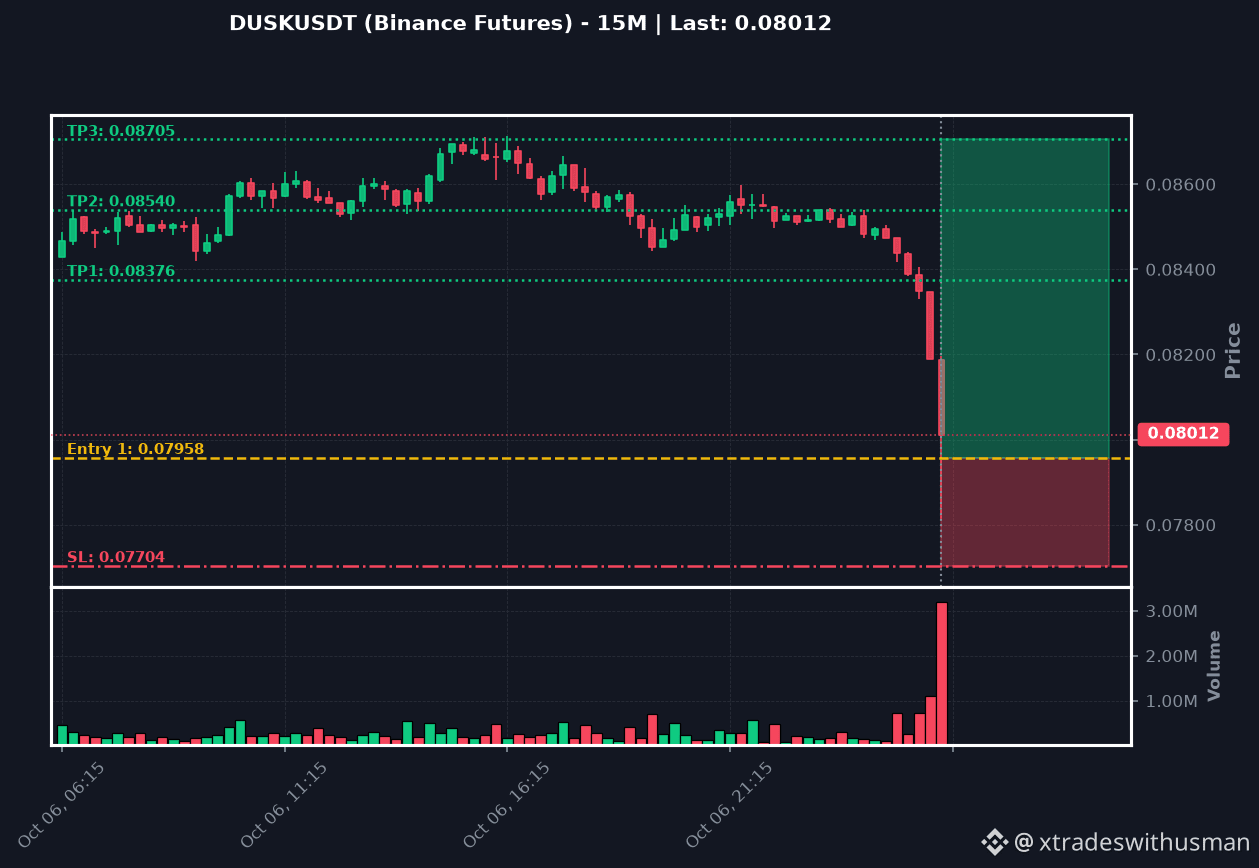
📌 STATUS: LONG 🚀
👉 Entry 1: 0.07958
🎯 TP 1: 0.08376
🎯 TP 2: 0.0854
🎯 TP 3: 0.08705
⛔ Stop Loss: 0.0770406
⚡ Leverage: Cross 20x
⚡ Follow the exact targets—no greed allowed!
🛡️ Zero emotions, pure precision. Lock in your positions and trust our proven track record.
#Write2Earn #Binance #BTC #TrendingTopic #DUSK
🎯 SURGICAL ACCURACY ZONE 🎯
Do not rush. Wait for our entry, execute cleanly, and let probability do the heavy lifting.
$DUSK (15m)
📌 STATUS: LONG 🚀
👉 Entry 1: 0.07958
🎯 TP 1: 0.08376
🎯 TP 2: 0.0854
🎯 TP 3: 0.08705
⛔ Stop Loss: 0.0770406
⚡ Leverage: Cross 20x
⚡ Follow the exact targets—no greed allowed!
🛡️ Zero emotions, pure precision. Lock in your positions and trust our proven track record.
#Write2Earn #Binance #BTC #TrendingTopic #DUSK
Do not rush. Wait for our entry, execute cleanly, and let probability do the heavy lifting.
$DUSK (15m)
📌 STATUS: LONG 🚀
👉 Entry 1: 0.07958
🎯 TP 1: 0.08376
🎯 TP 2: 0.0854
🎯 TP 3: 0.08705
⛔ Stop Loss: 0.0770406
⚡ Leverage: Cross 20x
⚡ Follow the exact targets—no greed allowed!
🛡️ Zero emotions, pure precision. Lock in your positions and trust our proven track record.
#Write2Earn #Binance #BTC #TrendingTopic #DUSK
4

·
--
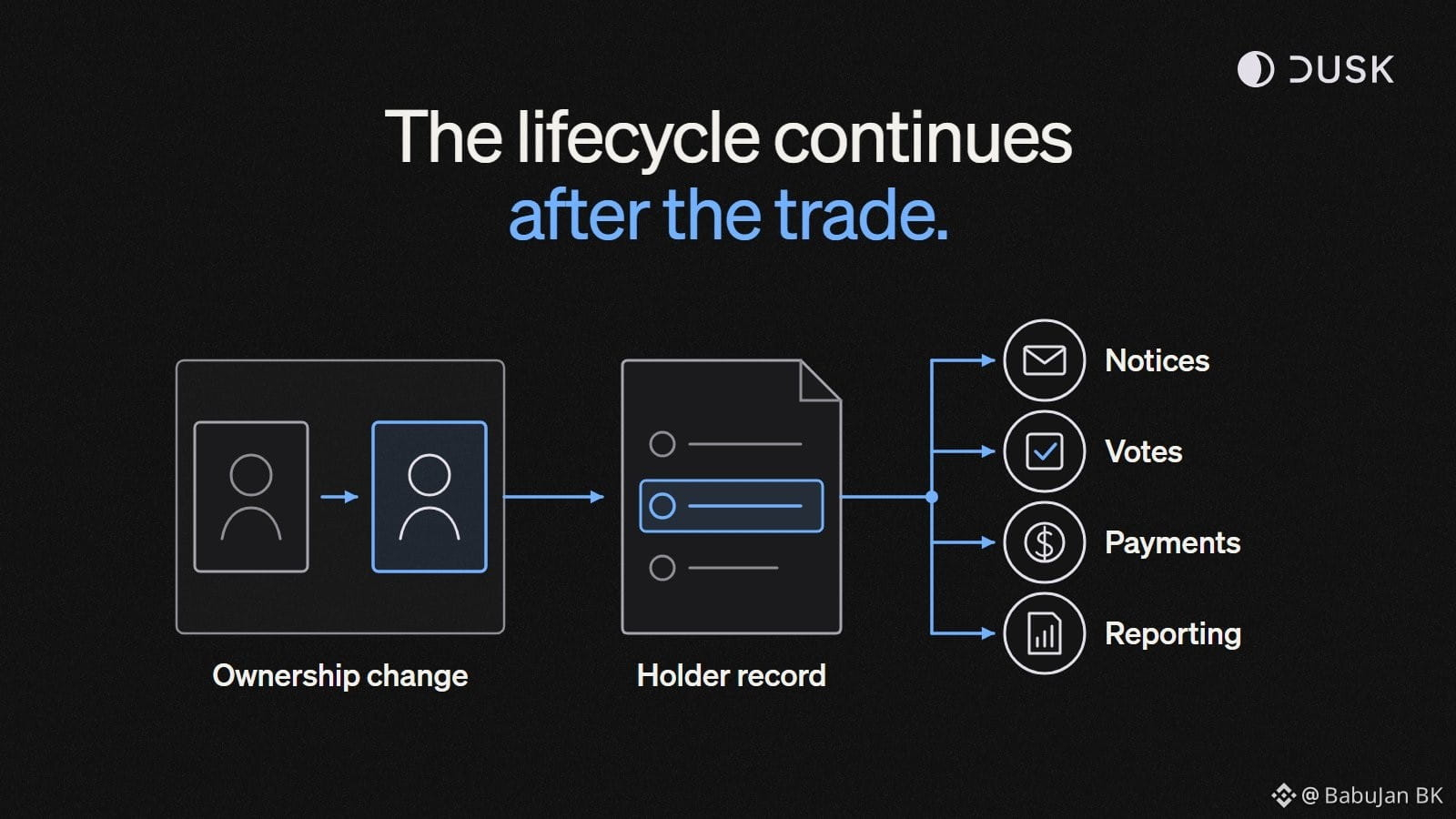
Ownership changes should update everything.
With Dusk, ownership records, investor eligibility, transfers, notices, votes & payments can work from the same shared infrastructure.#dusk $DUSK
{spot}(DUSKUSDT)
Ownership changes should update everything.
With Dusk, ownership records, investor eligibility, transfers, notices, votes & payments can work from the same shared infrastructure.#dusk $DUSK
With Dusk, ownership records, investor eligibility, transfers, notices, votes & payments can work from the same shared infrastructure.#dusk $DUSK
1
169
·
--
🚨 $DUSK DISRUPTS INSTITUTIONAL DEFI WITH NATIVE CONFIDENTIAL EVM COMPUTATION ⚡
Standard EVM leaves institutional positions, trade sizes, and collateral fully visible during execution, creating massive execution leakage for smart money. $DUSK addresses this structural bottleneck via DuskEVM and its underlying Hedger module, using homomorphic encryption to process encrypted state directly on-chain. 🔒
By verifying ZK proofs of output computation without revealing underlying position data, institutional settlement contracts can execute compliant transactions seamlessly. 📊 However, the key variable remains latency overhead under peak volume when handling heavy encrypted state computations. 💡
💬 Will native confidential state execution unlock true institutional liquidity migration into DeFi? 👇
⚠️ Not financial advice. Always manage your risk. 🛡️
🏷️ #DUSK #Privacy #ZeroKnowledge #DeFi #Crypto
🎯 🦈
🚨 $DUSK DISRUPTS INSTITUTIONAL DEFI WITH NATIVE CONFIDENTIAL EVM COMPUTATION ⚡
Standard EVM leaves institutional positions, trade sizes, and collateral fully visible during execution, creating massive execution leakage for smart money. $DUSK addresses this structural bottleneck via DuskEVM and its underlying Hedger module, using homomorphic encryption to process encrypted state directly on-chain. 🔒
By verifying ZK proofs of output computation without revealing underlying position data, institutional settlement contracts can execute compliant transactions seamlessly. 📊 However, the key variable remains latency overhead under peak volume when handling heavy encrypted state computations. 💡
💬 Will native confidential state execution unlock true institutional liquidity migration into DeFi? 👇
⚠️ Not financial advice. Always manage your risk. 🛡️
🏷️ #DUSK #Privacy #ZeroKnowledge #DeFi #Crypto
🎯 🦈
Standard EVM leaves institutional positions, trade sizes, and collateral fully visible during execution, creating massive execution leakage for smart money. $DUSK addresses this structural bottleneck via DuskEVM and its underlying Hedger module, using homomorphic encryption to process encrypted state directly on-chain. 🔒
By verifying ZK proofs of output computation without revealing underlying position data, institutional settlement contracts can execute compliant transactions seamlessly. 📊 However, the key variable remains latency overhead under peak volume when handling heavy encrypted state computations. 💡
💬 Will native confidential state execution unlock true institutional liquidity migration into DeFi? 👇
⚠️ Not financial advice. Always manage your risk. 🛡️
🏷️ #DUSK #Privacy #ZeroKnowledge #DeFi #Crypto
🎯 🦈
54

🚨 $DUSK PROTOCOL GOVERNANCE HIGHLIGHTS THE STRUCTURAL GAP BETWEEN SPECIFICATION AND ACTIVATION 🔍
Protocol evolution isn't defined by written drafts—it requires execution. $DUSK highlights a critical structural dynamic where moving a proposal through staging is only half the battle. 📊 Technical implementation must withstand rigorous consensus and production testing before achieving true protocol activation.
💡 Smart money tracks execution momentum, not just governance promises. The real validation sits where consensus implementation meets live network integrity. 💬 Where do you see the ultimate test of protocol strength: governance design or production execution? 👇
⚠️ Not financial advice. Always manage your risk. 🛡️
🏷️ #DUSK #Crypto #ProtocolGovernance #Layer1 #Web3
🎯 🦈
🚨 $DUSK PROTOCOL GOVERNANCE HIGHLIGHTS THE STRUCTURAL GAP BETWEEN SPECIFICATION AND ACTIVATION 🔍
Protocol evolution isn't defined by written drafts—it requires execution. $DUSK highlights a critical structural dynamic where moving a proposal through staging is only half the battle. 📊 Technical implementation must withstand rigorous consensus and production testing before achieving true protocol activation.
💡 Smart money tracks execution momentum, not just governance promises. The real validation sits where consensus implementation meets live network integrity. 💬 Where do you see the ultimate test of protocol strength: governance design or production execution? 👇
⚠️ Not financial advice. Always manage your risk. 🛡️
🏷️ #DUSK #Crypto #ProtocolGovernance #Layer1 #Web3
🎯 🦈
Protocol evolution isn't defined by written drafts—it requires execution. $DUSK highlights a critical structural dynamic where moving a proposal through staging is only half the battle. 📊 Technical implementation must withstand rigorous consensus and production testing before achieving true protocol activation.
💡 Smart money tracks execution momentum, not just governance promises. The real validation sits where consensus implementation meets live network integrity. 💬 Where do you see the ultimate test of protocol strength: governance design or production execution? 👇
⚠️ Not financial advice. Always manage your risk. 🛡️
🏷️ #DUSK #Crypto #ProtocolGovernance #Layer1 #Web3
🎯 🦈
51

·
--
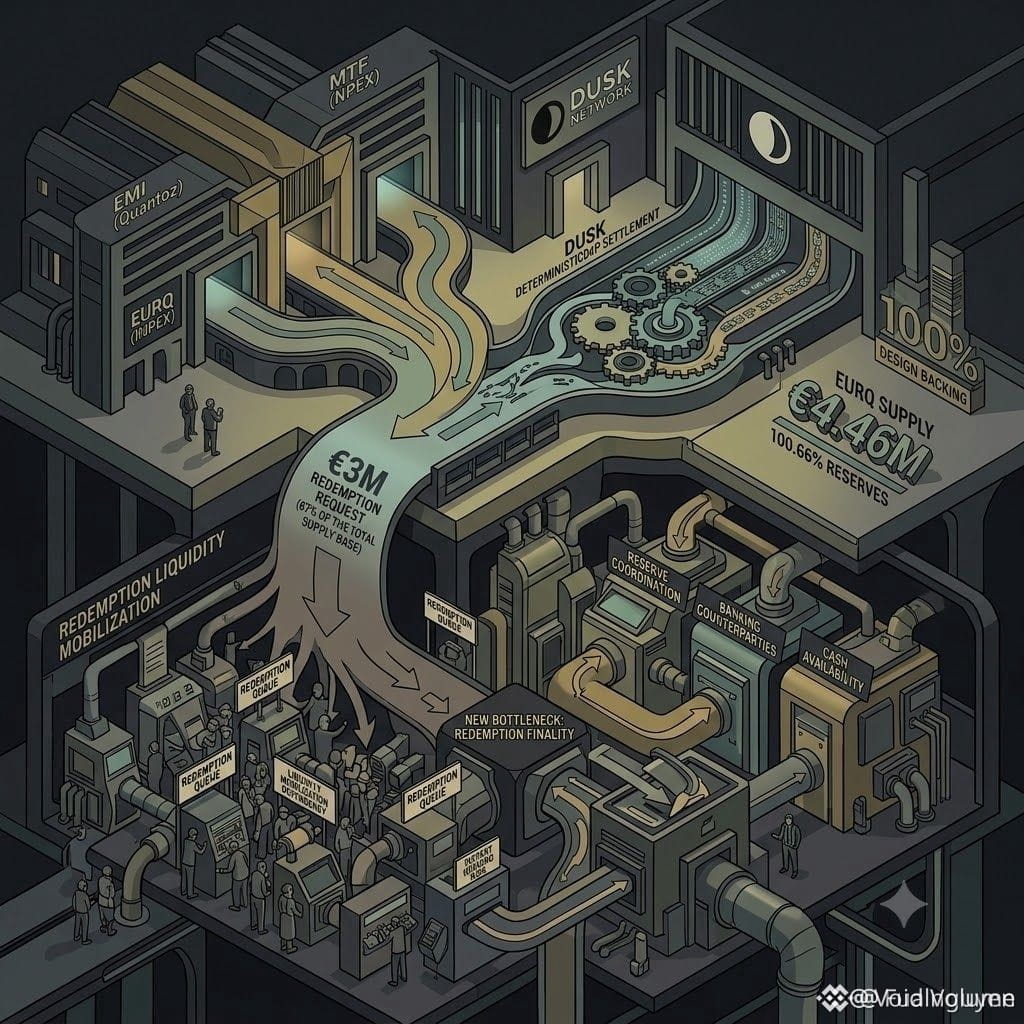
🚨 $DUSK INSTITUTIONAL EURQ SETTLEMENT REVEALS THE REAL LIQUIDITY BOTTLENECK 🔍
The integration of EURQ on $DUSK shifts the narrative from pure execution throughput to institutional liquidity architecture. While $DUSK deterministically processes delivery-versus-payment state transitions instantly, real systemic friction transfers to cash redemption availability during synchronized stress events. 📊
With Quantoz backing EURQ via a 34% cash and 66% bond model, settlement finality on-chain operates flawlessly, but fiat off-ramping relies heavily on traditional banking counterparties. 💡 Smart money tracks these structural dependencies closely as tokenized real-world asset adoption expands. 🔍
💬 Do you believe institutional payment rails on $DUSK will overcome traditional banking liquidity constraints as volume scales? 👇
⚠️ Not financial advice. Always manage your risk. 🛡️
🏷️ #DUSK #RWA #Tokenization #Crypto
🎯 ⚖️
🚨 $DUSK INSTITUTIONAL EURQ SETTLEMENT REVEALS THE REAL LIQUIDITY BOTTLENECK 🔍
The integration of EURQ on $DUSK shifts the narrative from pure execution throughput to institutional liquidity architecture. While $DUSK deterministically processes delivery-versus-payment state transitions instantly, real systemic friction transfers to cash redemption availability during synchronized stress events. 📊
With Quantoz backing EURQ via a 34% cash and 66% bond model, settlement finality on-chain operates flawlessly, but fiat off-ramping relies heavily on traditional banking counterparties. 💡 Smart money tracks these structural dependencies closely as tokenized real-world asset adoption expands. 🔍
💬 Do you believe institutional payment rails on $DUSK will overcome traditional banking liquidity constraints as volume scales? 👇
⚠️ Not financial advice. Always manage your risk. 🛡️
🏷️ #DUSK #RWA #Tokenization #Crypto
🎯 ⚖️
The integration of EURQ on $DUSK shifts the narrative from pure execution throughput to institutional liquidity architecture. While $DUSK deterministically processes delivery-versus-payment state transitions instantly, real systemic friction transfers to cash redemption availability during synchronized stress events. 📊
With Quantoz backing EURQ via a 34% cash and 66% bond model, settlement finality on-chain operates flawlessly, but fiat off-ramping relies heavily on traditional banking counterparties. 💡 Smart money tracks these structural dependencies closely as tokenized real-world asset adoption expands. 🔍
💬 Do you believe institutional payment rails on $DUSK will overcome traditional banking liquidity constraints as volume scales? 👇
⚠️ Not financial advice. Always manage your risk. 🛡️
🏷️ #DUSK #RWA #Tokenization #Crypto
🎯 ⚖️
50

·
--
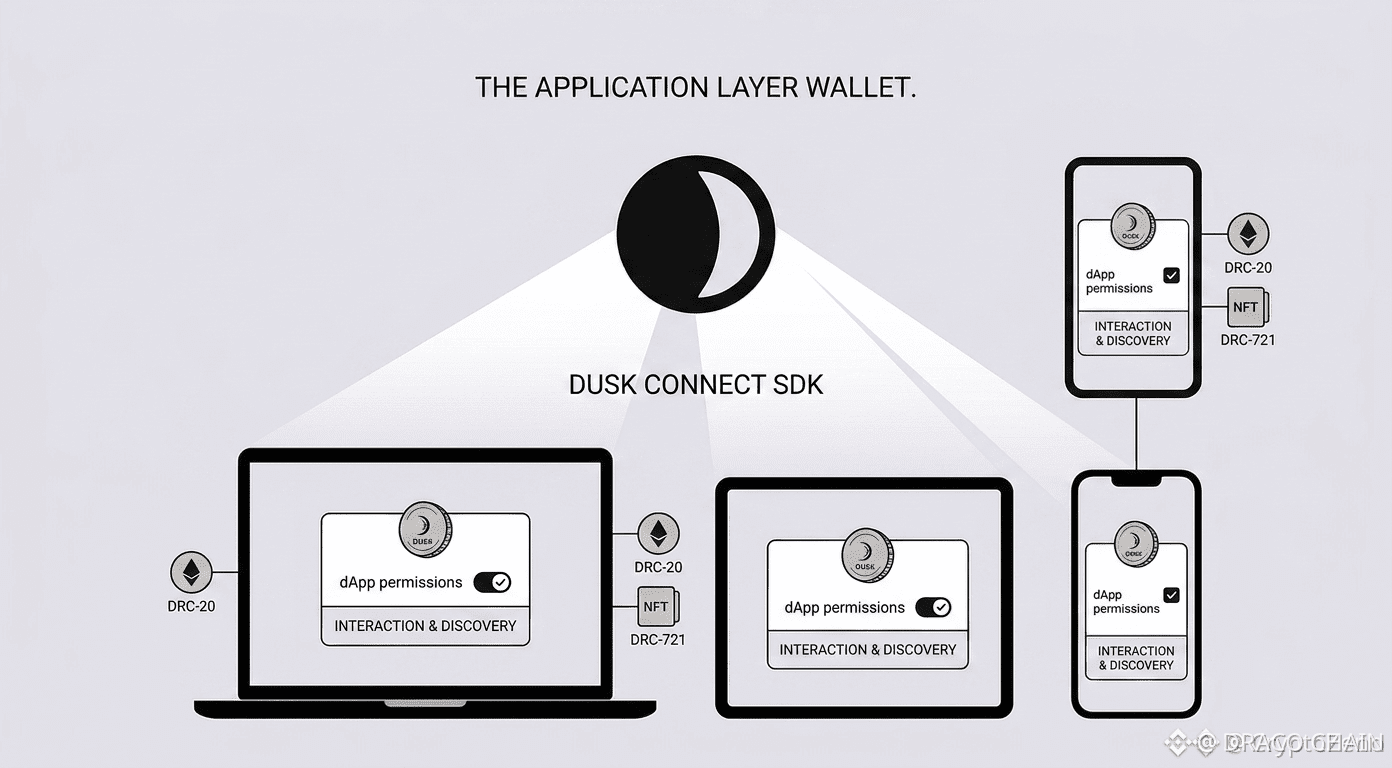
🚨 INSTITUTIONAL INFRASTRUCTURE SHIFT: $DUSK UNLOCKS NATIVE APPLICATION-LAYER WALLET INTEGRATION! 🦈
📌 While retail chases marketing hype, institutional positioning focuses on execution architecture. The new $DUSK wallet stack integrates Dusk Connect and EIP-6963 standards, effectively transforming the wallet into a core application layer for regulated dApps. 🔍
🌊 Supporting native shield and unshield mechanisms, DRC asset standards, and permission management builds the structural friction reduction required for institutional liquidity. Deep infrastructure upgrades like this lay the groundwork for sustained order flow. 💡
💬 Will seamless wallet architecture become the defining metric for financial dApp adoption? 👇
⚠️ Not financial advice. Always manage your risk. 🛡️
🏷️ #DUSK #CryptoInfrastructure #Layer1 #SmartMoney #DeFi
🦈 ⚖️
🚨 INSTITUTIONAL INFRASTRUCTURE SHIFT: $DUSK UNLOCKS NATIVE APPLICATION-LAYER WALLET INTEGRATION! 🦈
📌 While retail chases marketing hype, institutional positioning focuses on execution architecture. The new $DUSK wallet stack integrates Dusk Connect and EIP-6963 standards, effectively transforming the wallet into a core application layer for regulated dApps. 🔍
🌊 Supporting native shield and unshield mechanisms, DRC asset standards, and permission management builds the structural friction reduction required for institutional liquidity. Deep infrastructure upgrades like this lay the groundwork for sustained order flow. 💡
💬 Will seamless wallet architecture become the defining metric for financial dApp adoption? 👇
⚠️ Not financial advice. Always manage your risk. 🛡️
🏷️ #DUSK #CryptoInfrastructure #Layer1 #SmartMoney #DeFi
🦈 ⚖️
📌 While retail chases marketing hype, institutional positioning focuses on execution architecture. The new $DUSK wallet stack integrates Dusk Connect and EIP-6963 standards, effectively transforming the wallet into a core application layer for regulated dApps. 🔍
🌊 Supporting native shield and unshield mechanisms, DRC asset standards, and permission management builds the structural friction reduction required for institutional liquidity. Deep infrastructure upgrades like this lay the groundwork for sustained order flow. 💡
💬 Will seamless wallet architecture become the defining metric for financial dApp adoption? 👇
⚠️ Not financial advice. Always manage your risk. 🛡️
🏷️ #DUSK #CryptoInfrastructure #Layer1 #SmartMoney #DeFi
🦈 ⚖️
52
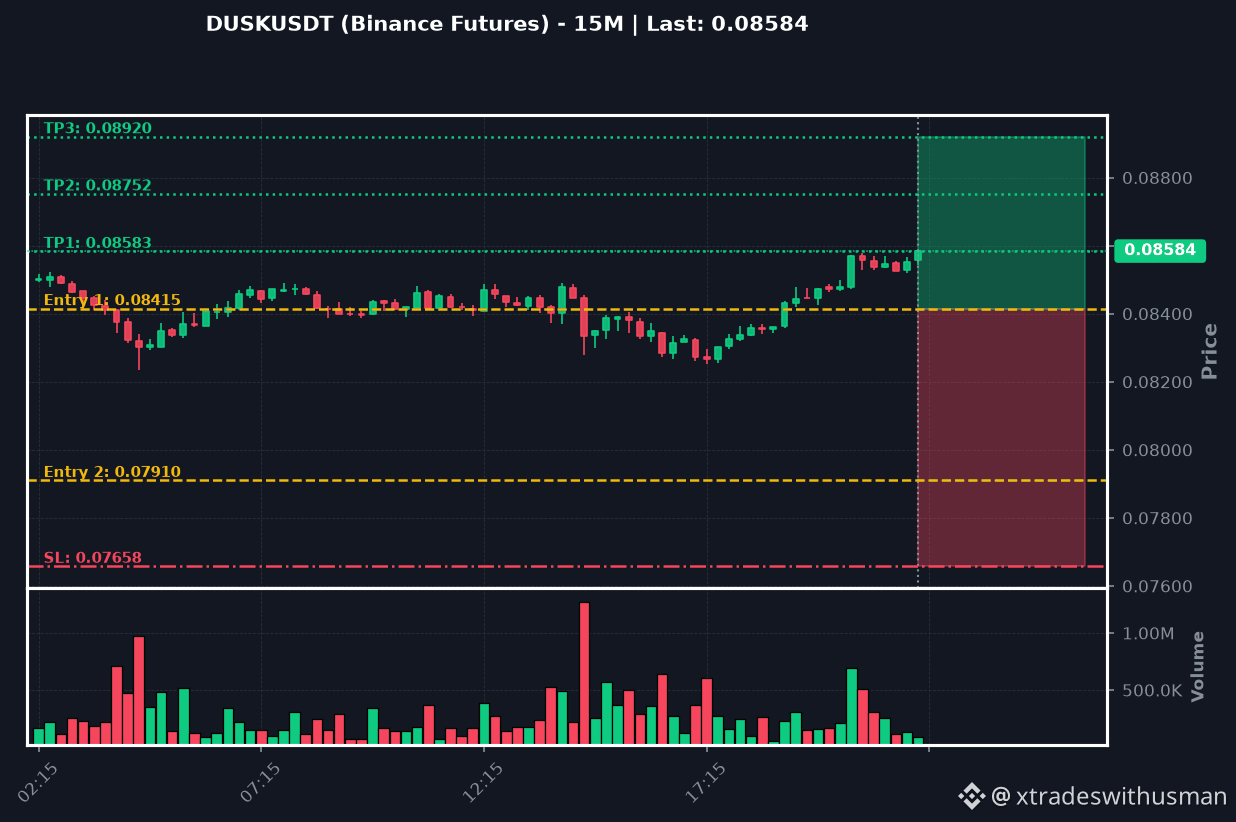
👑 EXCLUSIVE MASTER SIGNAL 👑
Thousands trust this system for a reason. Follow the exact levels and protect your bag.
$DUSK (15m)
📌 STATUS: LONG 🚀
👉 Entry 1: 0.08415
👉 Entry 2: 0.0791
🎯 TP 1: 0.08583
🎯 TP 2: 0.08752
🎯 TP 3: 0.0892
⛔ Stop Loss: 0.0765765
⚡ Leverage: Cross 20x
⚡ Follow the exact targets—no greed allowed!
🔒 Capital protection comes first, massive gains follow naturally. Stay focused with us.
#Write2Earn #Binance #BTC #TrendingTopic #DUSK
👑 EXCLUSIVE MASTER SIGNAL 👑
Thousands trust this system for a reason. Follow the exact levels and protect your bag.
$DUSK (15m)
📌 STATUS: LONG 🚀
👉 Entry 1: 0.08415
👉 Entry 2: 0.0791
🎯 TP 1: 0.08583
🎯 TP 2: 0.08752
🎯 TP 3: 0.0892
⛔ Stop Loss: 0.0765765
⚡ Leverage: Cross 20x
⚡ Follow the exact targets—no greed allowed!
🔒 Capital protection comes first, massive gains follow naturally. Stay focused with us.
#Write2Earn #Binance #BTC #TrendingTopic #DUSK
Thousands trust this system for a reason. Follow the exact levels and protect your bag.
$DUSK (15m)
📌 STATUS: LONG 🚀
👉 Entry 1: 0.08415
👉 Entry 2: 0.0791
🎯 TP 1: 0.08583
🎯 TP 2: 0.08752
🎯 TP 3: 0.0892
⛔ Stop Loss: 0.0765765
⚡ Leverage: Cross 20x
⚡ Follow the exact targets—no greed allowed!
🔒 Capital protection comes first, massive gains follow naturally. Stay focused with us.
#Write2Earn #Binance #BTC #TrendingTopic #DUSK
1
·
--
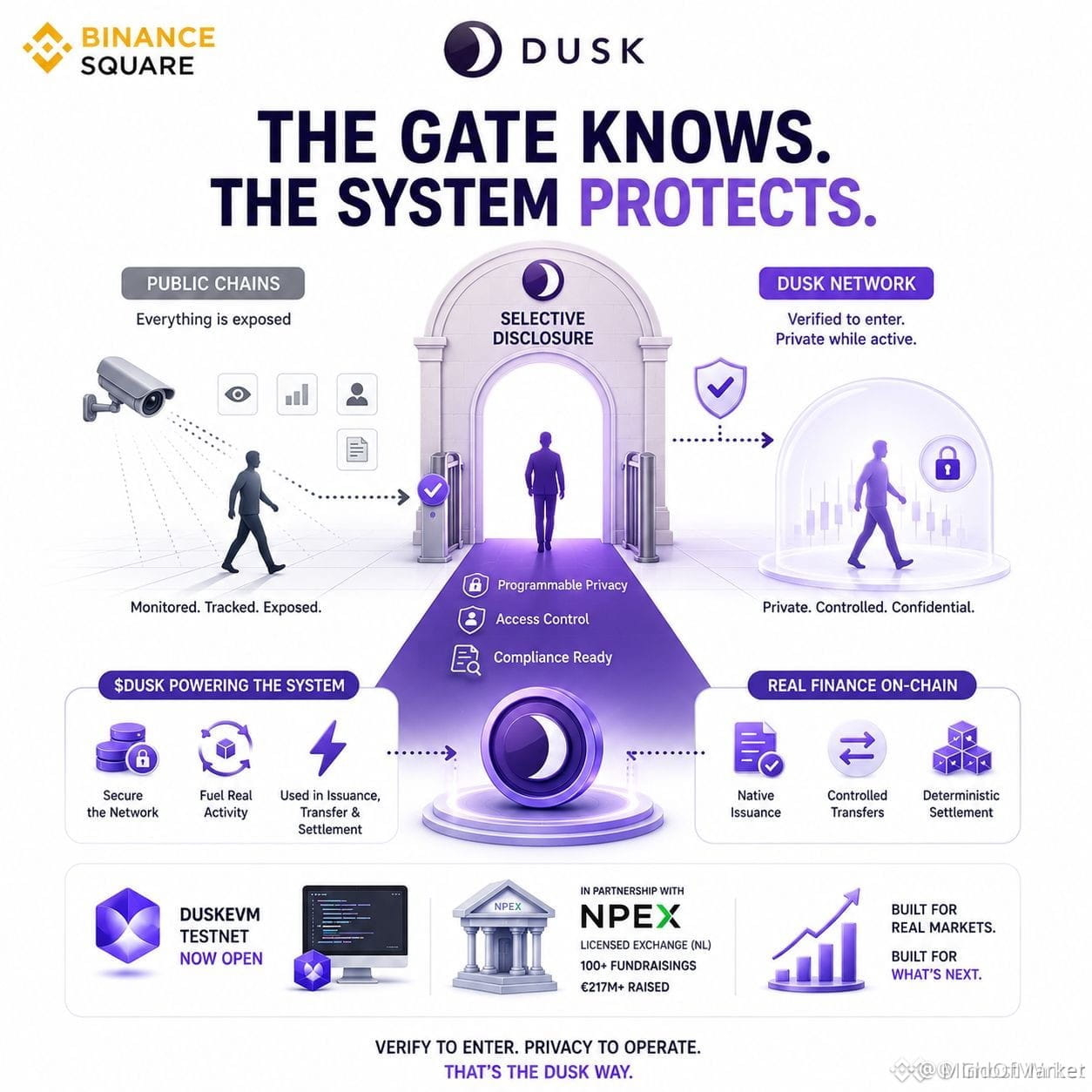
🚨 $DUSK RESTRUCTURES PRIVACY INFRASTRUCTURE WITH SELECTIVE DISCLOSURE AND TESTNET DEPLOYMENT 🦈
Institutional market infrastructure requires qualified gating without exposing strategic positions to public order flow. 🛡️ $DUSK addresses this architecture via selective disclosure and programmable privacy, ensuring compliance while shielding sensitive transaction data.
With the DuskEVM testnet active, protocol utility scales into core settlement fuel and staking consensus. 📊 Smart money recognizes that selective privacy is the prerequisite for institutional capital entering decentralized execution layers. 🔍 Is programmable privacy the missing catalyst for institutional adoption, or will fully public ledgers retain market share? 👇
⚠️ Not financial advice. Always manage your risk. 🛡️
🏷️ #DUSK #DeFi #Privacy #Crypto #DuskEVM
🎯 🦈
🚨 $DUSK RESTRUCTURES PRIVACY INFRASTRUCTURE WITH SELECTIVE DISCLOSURE AND TESTNET DEPLOYMENT 🦈
Institutional market infrastructure requires qualified gating without exposing strategic positions to public order flow. 🛡️ $DUSK addresses this architecture via selective disclosure and programmable privacy, ensuring compliance while shielding sensitive transaction data.
With the DuskEVM testnet active, protocol utility scales into core settlement fuel and staking consensus. 📊 Smart money recognizes that selective privacy is the prerequisite for institutional capital entering decentralized execution layers. 🔍 Is programmable privacy the missing catalyst for institutional adoption, or will fully public ledgers retain market share? 👇
⚠️ Not financial advice. Always manage your risk. 🛡️
🏷️ #DUSK #DeFi #Privacy #Crypto #DuskEVM
🎯 🦈
Institutional market infrastructure requires qualified gating without exposing strategic positions to public order flow. 🛡️ $DUSK addresses this architecture via selective disclosure and programmable privacy, ensuring compliance while shielding sensitive transaction data.
With the DuskEVM testnet active, protocol utility scales into core settlement fuel and staking consensus. 📊 Smart money recognizes that selective privacy is the prerequisite for institutional capital entering decentralized execution layers. 🔍 Is programmable privacy the missing catalyst for institutional adoption, or will fully public ledgers retain market share? 👇
⚠️ Not financial advice. Always manage your risk. 🛡️
🏷️ #DUSK #DeFi #Privacy #Crypto #DuskEVM
🎯 🦈
66


·
--
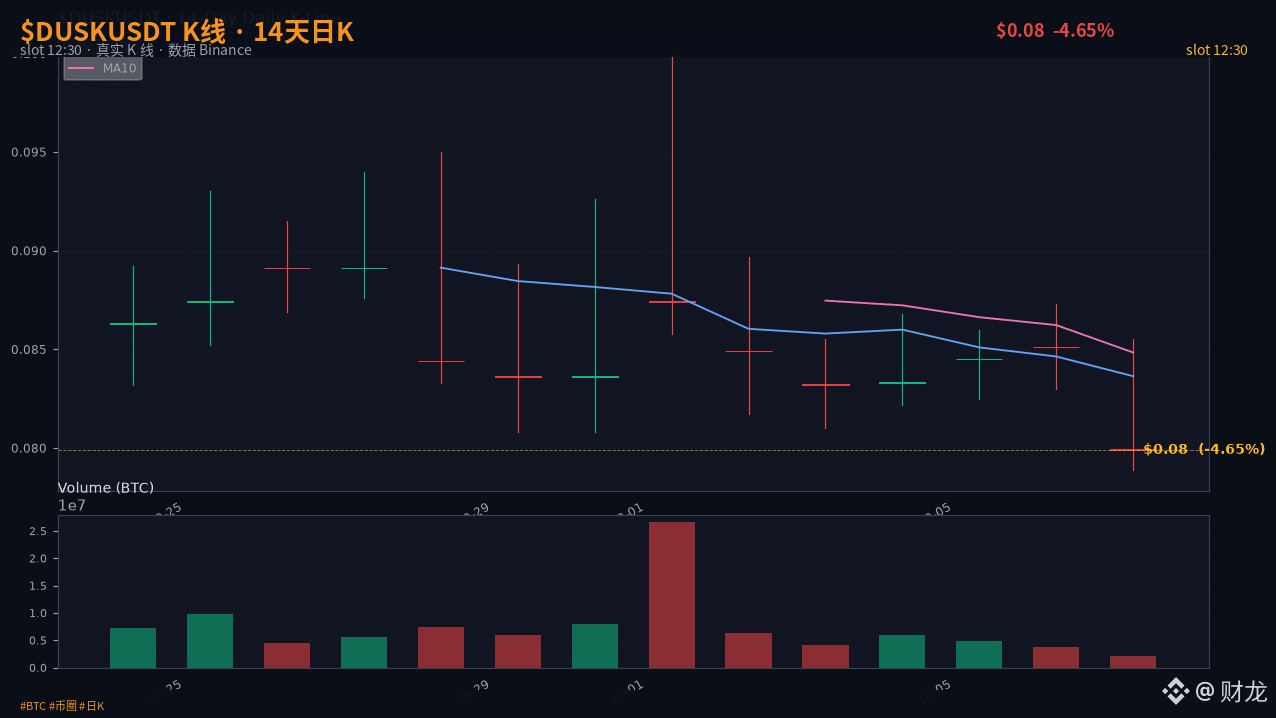
$DUSK 24 Hours down 4.3%, slipping from $0.0839 to $0.0801. Intraday high: $0.0873; low: $0.0789. Trading volume: $440K. The price action is dead.
But this week, @Dusk did something in its documentation that nobody noticed—the team put a “6-step workflow” on the market infrastructure layer page (issuer configuration → investor onboarding → transfer control → matching and distribution → settlement → ongoing disclosures). The final sentence loops right back: “If you want to understand the product layer, start with that application track.”
That sentence is positioning in itself. The application track isn’t a standalone product; it’s the official route from “market infrastructure” to “product entry point” in the documentation system. The first 10 installments discussed these topics separately—the foundational stack, 6 asset classes, user entry points, the simulator, 7 real questions, and the 4-piece foundation—but this week’s documentation connected those separate threads with a single sentence.
The stack view listed on the application track’s details page (settlement layer / contract layer / identity layer / wallet discovery / browser wallet) is the same thing as the “6 capabilities vs. 6 categories of needs” comparison table, just from a different perspective: foundational protocol level vs. application product level. The documentation itself makes that connection clear.
So this time, the point isn’t what else has been added to the application track. It’s that the team has anchored it, at the documentation level, as the executable side of the foundation. The frontend wasn’t added out of nowhere; it’s a product wrapper built out of the 6-step pipeline on the backend.
The official documentation site itself is the project’s biggest product manual.
@Dusk
#dusk #DuskTrade #DocumentationSystem
$DUSK 24 Hours down 4.3%, slipping from $0.0839 to $0.0801. Intraday high: $0.0873; low: $0.0789. Trading volume: $440K. The price action is dead.
But this week, @Dusk did something in its documentation that nobody noticed—the team put a “6-step workflow” on the market infrastructure layer page (issuer configuration → investor onboarding → transfer control → matching and distribution → settlement → ongoing disclosures). The final sentence loops right back: “If you want to understand the product layer, start with that application track.”
That sentence is positioning in itself. The application track isn’t a standalone product; it’s the official route from “market infrastructure” to “product entry point” in the documentation system. The first 10 installments discussed these topics separately—the foundational stack, 6 asset classes, user entry points, the simulator, 7 real questions, and the 4-piece foundation—but this week’s documentation connected those separate threads with a single sentence.
The stack view listed on the application track’s details page (settlement layer / contract layer / identity layer / wallet discovery / browser wallet) is the same thing as the “6 capabilities vs. 6 categories of needs” comparison table, just from a different perspective: foundational protocol level vs. application product level. The documentation itself makes that connection clear.
So this time, the point isn’t what else has been added to the application track. It’s that the team has anchored it, at the documentation level, as the executable side of the foundation. The frontend wasn’t added out of nowhere; it’s a product wrapper built out of the 6-step pipeline on the backend.
The official documentation site itself is the project’s biggest product manual.
@Dusk
#dusk #DuskTrade #DocumentationSystem
But this week, @Dusk did something in its documentation that nobody noticed—the team put a “6-step workflow” on the market infrastructure layer page (issuer configuration → investor onboarding → transfer control → matching and distribution → settlement → ongoing disclosures). The final sentence loops right back: “If you want to understand the product layer, start with that application track.”
That sentence is positioning in itself. The application track isn’t a standalone product; it’s the official route from “market infrastructure” to “product entry point” in the documentation system. The first 10 installments discussed these topics separately—the foundational stack, 6 asset classes, user entry points, the simulator, 7 real questions, and the 4-piece foundation—but this week’s documentation connected those separate threads with a single sentence.
The stack view listed on the application track’s details page (settlement layer / contract layer / identity layer / wallet discovery / browser wallet) is the same thing as the “6 capabilities vs. 6 categories of needs” comparison table, just from a different perspective: foundational protocol level vs. application product level. The documentation itself makes that connection clear.
So this time, the point isn’t what else has been added to the application track. It’s that the team has anchored it, at the documentation level, as the executable side of the foundation. The frontend wasn’t added out of nowhere; it’s a product wrapper built out of the 6-step pipeline on the backend.
The official documentation site itself is the project’s biggest product manual.
@Dusk
#dusk #DuskTrade #DocumentationSystem
222

$DUSK SHORT
1. Sellers are maintaining control over the price, putting pressure on the asset from above and setting the stage for a downward move.
2. The current position of the quotes relative to key levels leaves the initiative with the bears.
3. The risk of renewed selling remains as long as the price action structure stays under pressure.
🏁Entry: 0.08206
✅Take Profit 1: 0.08120357 (+1.04%)
✅Take Profit 2: 0.07972713 (+2.84%)
✅Take Profit 3: 0.07751248 (+5.54%)
❌Stop-loss: 0.08489465 (-3.45%)
⚠️ This is not financial advice. Trade at your own risk. DYOR.
#DUSK #Trade #bStocksCIS 📈
$DUSK
$DUSK SHORT
1. Sellers are maintaining control over the price, putting pressure on the asset from above and setting the stage for a downward move.
2. The current position of the quotes relative to key levels leaves the initiative with the bears.
3. The risk of renewed selling remains as long as the price action structure stays under pressure.
🏁Entry: 0.08206
✅Take Profit 1: 0.08120357 (+1.04%)
✅Take Profit 2: 0.07972713 (+2.84%)
✅Take Profit 3: 0.07751248 (+5.54%)
❌Stop-loss: 0.08489465 (-3.45%)
⚠️ This is not financial advice. Trade at your own risk. DYOR.
#DUSK #Trade #bStocksCIS 📈
$DUSK
1. Sellers are maintaining control over the price, putting pressure on the asset from above and setting the stage for a downward move.
2. The current position of the quotes relative to key levels leaves the initiative with the bears.
3. The risk of renewed selling remains as long as the price action structure stays under pressure.
🏁Entry: 0.08206
✅Take Profit 1: 0.08120357 (+1.04%)
✅Take Profit 2: 0.07972713 (+2.84%)
✅Take Profit 3: 0.07751248 (+5.54%)
❌Stop-loss: 0.08489465 (-3.45%)
⚠️ This is not financial advice. Trade at your own risk. DYOR.
#DUSK #Trade #bStocksCIS 📈
$DUSK
22

·
--
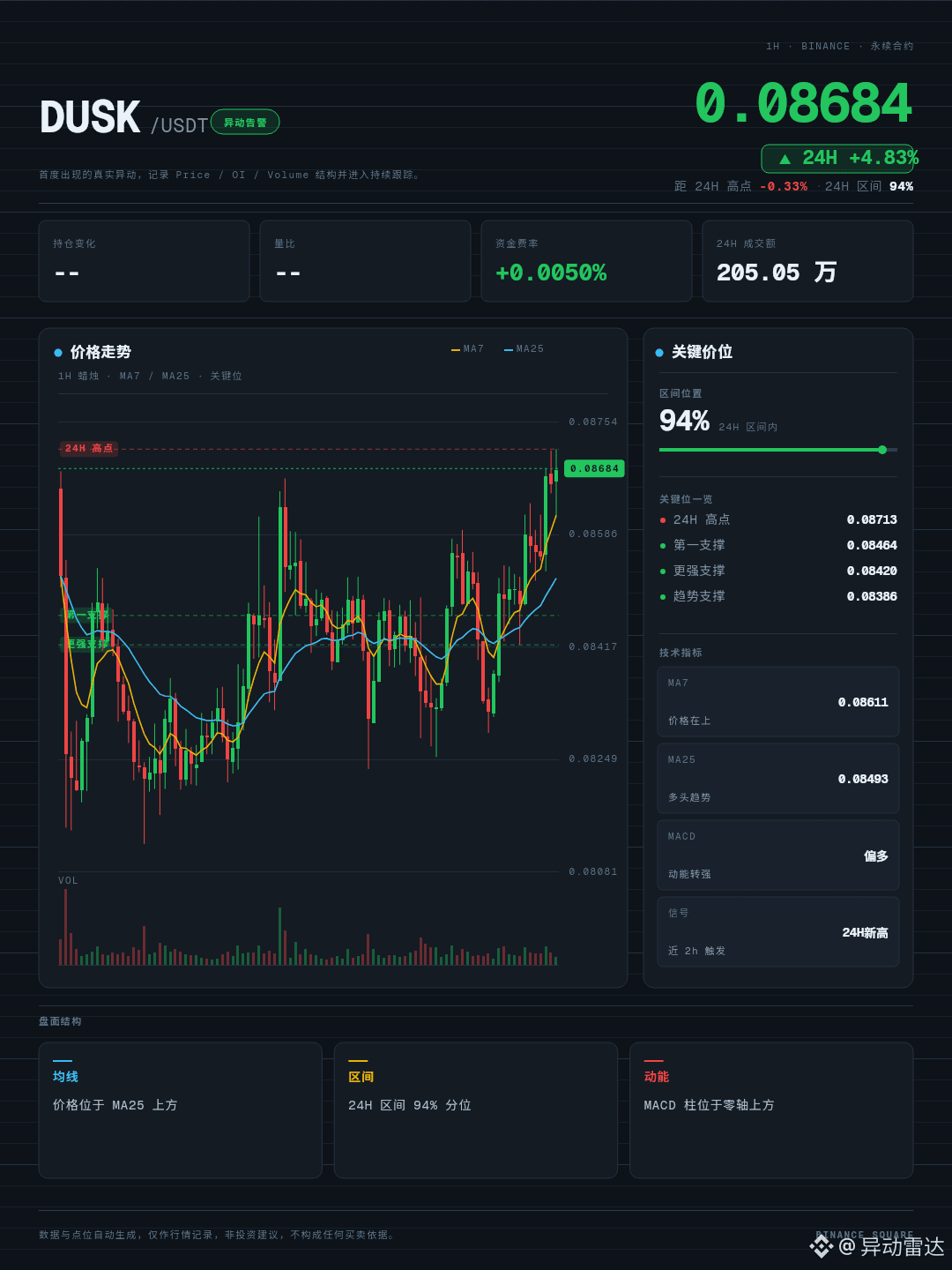
$DUSK strengthened 0.2% today. Despite pressure from an active sell ratio of 0.62, it hit a new 24-hour high of 0.08684, with large-trader long/short ratio at 1.65, favoring longs. Funding rate: +0.0050%; ATR volatility: 1.10%. The ascending channel remains intact; awaiting volume confirmation.
🟢 Hold above 0.08713
Targets: 0.08869 / 0.09025 / 0.09181
Stop-loss: 0.08609
—
Objective data only; not investment advice. Please be aware of the risks.
#DUSK
$DUSK strengthened 0.2% today. Despite pressure from an active sell ratio of 0.62, it hit a new 24-hour high of 0.08684, with large-trader long/short ratio at 1.65, favoring longs. Funding rate: +0.0050%; ATR volatility: 1.10%. The ascending channel remains intact; awaiting volume confirmation.
🟢 Hold above 0.08713
Targets: 0.08869 / 0.09025 / 0.09181
Stop-loss: 0.08609
—
Objective data only; not investment advice. Please be aware of the risks.
#DUSK
🟢 Hold above 0.08713
Targets: 0.08869 / 0.09025 / 0.09181
Stop-loss: 0.08609
—
Objective data only; not investment advice. Please be aware of the risks.
#DUSK
21
·
--
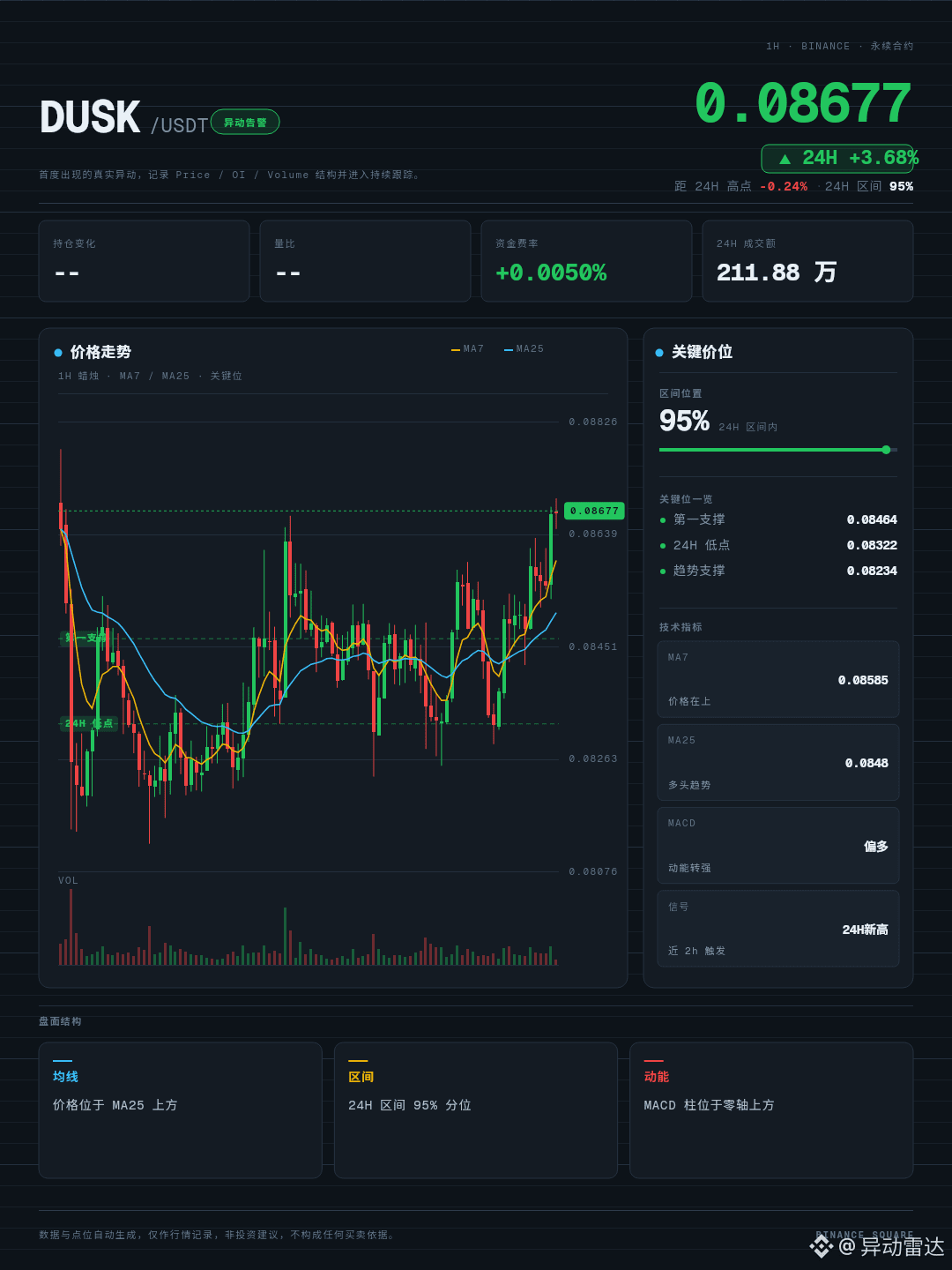
$DUSK The market is currently dominated by bulls, up +4.1% today and +3.7% over 24 hours. The current price is 0.08677, and a new high was reached within the past 24 hours. The funding rate is +0.0050%, with 24-hour trading volume of 2.1188 million. Overall sentiment still leans bullish. The outlook is bullish.
🟢 Hold above 0.08707
Targets: 0.08811 / 0.08914 / 0.09017
Stop loss: 0.08638
The price is currently near its new high and in a price-discovery phase, with relatively active volatility.
—
Objective data only; not investment advice. Please be aware of the risks.
#DUSK
$DUSK The market is currently dominated by bulls, up +4.1% today and +3.7% over 24 hours. The current price is 0.08677, and a new high was reached within the past 24 hours. The funding rate is +0.0050%, with 24-hour trading volume of 2.1188 million. Overall sentiment still leans bullish. The outlook is bullish.
🟢 Hold above 0.08707
Targets: 0.08811 / 0.08914 / 0.09017
Stop loss: 0.08638
The price is currently near its new high and in a price-discovery phase, with relatively active volatility.
—
Objective data only; not investment advice. Please be aware of the risks.
#DUSK
🟢 Hold above 0.08707
Targets: 0.08811 / 0.08914 / 0.09017
Stop loss: 0.08638
The price is currently near its new high and in a price-discovery phase, with relatively active volatility.
—
Objective data only; not investment advice. Please be aware of the risks.
#DUSK
9
·
--
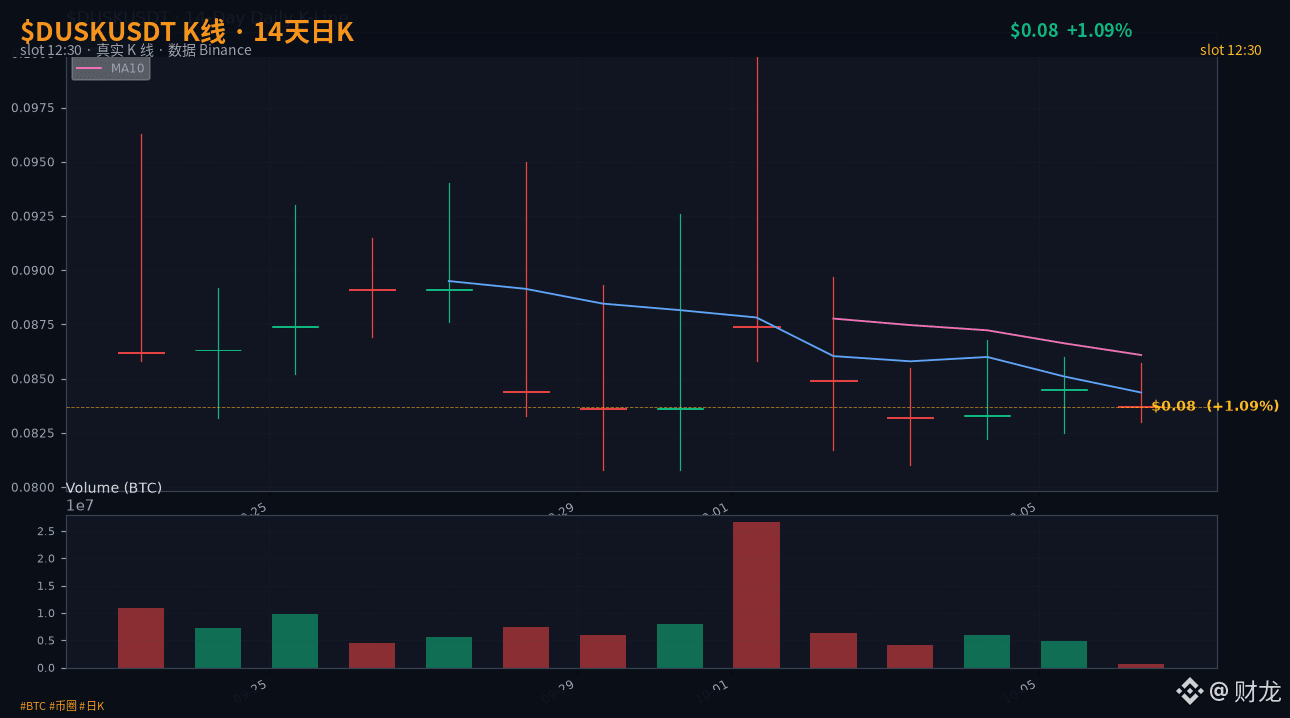
$DUSK is currently trading at $0.0839, up a modest 0.72% over 24 hours. Nothing exciting on the price front. But last week, @Dusk tucked something into its docs that was easy to overlook—the kind of pitfall developers hit the first time they write a contract.
The contract environment has a 4-step lifecycle: submit, enter an L2 block, send the data to the settlement layer, and get finality from the settlement layer. The problem is step 4: getting on-chain and settling are not the same thing. A contract can land on an L2 chain in seconds, but finalizing back on the settlement layer takes a rollback window. During that window, the state may look correct, then a rollback can invalidate everything.
For real-world assets, those few seconds can mean an incident. Incorrect entries on the asset side, mismatched regulatory reports, misaligned compliance-audit timestamps—all happen in that gap. The official guidance is clear: verify against protocol state or wallet state; don’t use time to determine finality.
@Dusk has given developers a rule of thumb: don’t use time to determine finality; verify against the protocol layer or wallet state. The first is for the Ethereum crowd; the second is for the clearing banks in that €300 million pool at a Dutch-licensed exchange.
Two things to remember today: the contract environment runs on testnet, while settlement back to the settlement layer runs on mainnet; the two-stage route has only been in the docs for six months. The privacy vault further tightens the L2 part, combining homomorphic encryption with zero-knowledge proofs in an isomorphic design, so the data layer obscures the on-chain and settlement steps of private contracts from the outset. @Dusk has laid out this playbook, and the people it’s aimed at are already changing how they write contracts.
#dusk #合约环境 #L2Finality
$DUSK is currently trading at $0.0839, up a modest 0.72% over 24 hours. Nothing exciting on the price front. But last week, @Dusk tucked something into its docs that was easy to overlook—the kind of pitfall developers hit the first time they write a contract.
The contract environment has a 4-step lifecycle: submit, enter an L2 block, send the data to the settlement layer, and get finality from the settlement layer. The problem is step 4: getting on-chain and settling are not the same thing. A contract can land on an L2 chain in seconds, but finalizing back on the settlement layer takes a rollback window. During that window, the state may look correct, then a rollback can invalidate everything.
For real-world assets, those few seconds can mean an incident. Incorrect entries on the asset side, mismatched regulatory reports, misaligned compliance-audit timestamps—all happen in that gap. The official guidance is clear: verify against protocol state or wallet state; don’t use time to determine finality.
@Dusk has given developers a rule of thumb: don’t use time to determine finality; verify against the protocol layer or wallet state. The first is for the Ethereum crowd; the second is for the clearing banks in that €300 million pool at a Dutch-licensed exchange.
Two things to remember today: the contract environment runs on testnet, while settlement back to the settlement layer runs on mainnet; the two-stage route has only been in the docs for six months. The privacy vault further tightens the L2 part, combining homomorphic encryption with zero-knowledge proofs in an isomorphic design, so the data layer obscures the on-chain and settlement steps of private contracts from the outset. @Dusk has laid out this playbook, and the people it’s aimed at are already changing how they write contracts.
#dusk #合约环境 #L2Finality
The contract environment has a 4-step lifecycle: submit, enter an L2 block, send the data to the settlement layer, and get finality from the settlement layer. The problem is step 4: getting on-chain and settling are not the same thing. A contract can land on an L2 chain in seconds, but finalizing back on the settlement layer takes a rollback window. During that window, the state may look correct, then a rollback can invalidate everything.
For real-world assets, those few seconds can mean an incident. Incorrect entries on the asset side, mismatched regulatory reports, misaligned compliance-audit timestamps—all happen in that gap. The official guidance is clear: verify against protocol state or wallet state; don’t use time to determine finality.
@Dusk has given developers a rule of thumb: don’t use time to determine finality; verify against the protocol layer or wallet state. The first is for the Ethereum crowd; the second is for the clearing banks in that €300 million pool at a Dutch-licensed exchange.
Two things to remember today: the contract environment runs on testnet, while settlement back to the settlement layer runs on mainnet; the two-stage route has only been in the docs for six months. The privacy vault further tightens the L2 part, combining homomorphic encryption with zero-knowledge proofs in an isomorphic design, so the data layer obscures the on-chain and settlement steps of private contracts from the outset. @Dusk has laid out this playbook, and the people it’s aimed at are already changing how they write contracts.
#dusk #合约环境 #L2Finality
1
445
·
--
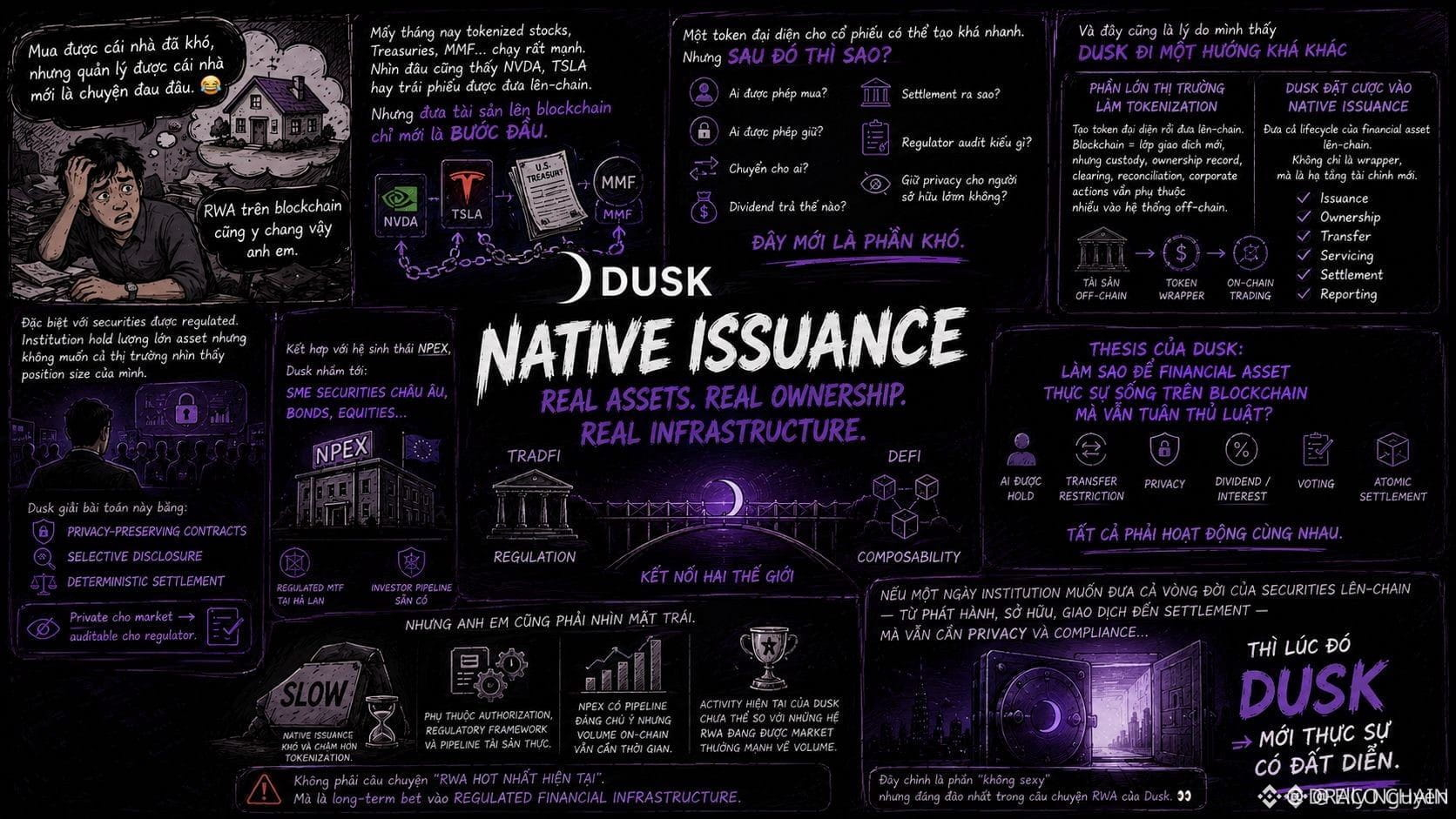
🏛️ $DUSK TARGETS NATIVE RWA ISSUANCE WHILE RETAIL FOCUSES ON SURFACE LEVEL WRAPPERS 🔍
📊 Wrapping equities on-chain creates temporary retail volume, but true institutional integration requires native issuance architecture. $DUSK bypasses surface-level liquidity traps by embedding compliance rules and settlement finality directly into the token layer.
💡 Partnering with regulated European venues like NPEX unlocks actual SME securities and corporate debt markets. Selective disclosure protocols allow smart money to maintain transactional privacy without compromising regulatory verification requirements.
Institutional capital prioritizes compliant financial infrastructure over speculative wrapper velocity. 💬 Will native issuance become the mandatory baseline for real-world asset tokenization? 👇
⚠️ Not financial advice. Always manage your risk. 🛡️
🏷️ #DUSK #RWA #Tokenization #MarketStructure
🏛️ 🔒
🏛️ $DUSK TARGETS NATIVE RWA ISSUANCE WHILE RETAIL FOCUSES ON SURFACE LEVEL WRAPPERS 🔍
📊 Wrapping equities on-chain creates temporary retail volume, but true institutional integration requires native issuance architecture. $DUSK bypasses surface-level liquidity traps by embedding compliance rules and settlement finality directly into the token layer.
💡 Partnering with regulated European venues like NPEX unlocks actual SME securities and corporate debt markets. Selective disclosure protocols allow smart money to maintain transactional privacy without compromising regulatory verification requirements.
Institutional capital prioritizes compliant financial infrastructure over speculative wrapper velocity. 💬 Will native issuance become the mandatory baseline for real-world asset tokenization? 👇
⚠️ Not financial advice. Always manage your risk. 🛡️
🏷️ #DUSK #RWA #Tokenization #MarketStructure
🏛️ 🔒
📊 Wrapping equities on-chain creates temporary retail volume, but true institutional integration requires native issuance architecture. $DUSK bypasses surface-level liquidity traps by embedding compliance rules and settlement finality directly into the token layer.
💡 Partnering with regulated European venues like NPEX unlocks actual SME securities and corporate debt markets. Selective disclosure protocols allow smart money to maintain transactional privacy without compromising regulatory verification requirements.
Institutional capital prioritizes compliant financial infrastructure over speculative wrapper velocity. 💬 Will native issuance become the mandatory baseline for real-world asset tokenization? 👇
⚠️ Not financial advice. Always manage your risk. 🛡️
🏷️ #DUSK #RWA #Tokenization #MarketStructure
🏛️ 🔒
83

·
--
Enabling the atomic and confidential settlement of financial assets is essential to connecting traditional finance with DeFi. @Dusk technology uses Zero-Knowledge cryptography to validate complex transactions while ensuring regulatory compliance at every stage. The use of $DUSK strengthens the infrastructure needed for institutional adoption.
#dusk
Enabling the atomic and confidential settlement of financial assets is essential to connecting traditional finance with DeFi. @Dusk technology uses Zero-Knowledge cryptography to validate complex transactions while ensuring regulatory compliance at every stage. The use of $DUSK strengthens the infrastructure needed for institutional adoption.
#dusk
#dusk
174
·
--
🚨 $DUSK SHIFTS RWA FOCUS FROM FRACTIONALIZATION HYPE TO GENUINE ONCHAIN LIQUIDITY 📊
Smart money understands that fractionalizing assets without compliant infrastructure is merely fragmenting order flow. 🔍 $DUSK is targeting true market depth by integrating authorized venues, accountable operators, and onchain settlement efficiency.
The real test for institutional RWA protocols lies in post-issuance secondary market activity rather than raw tokenized volume metrics. 🌊 Measuring true velocity and active buyer participation will separate functional liquidity pools from static asset representations. 💡
💬 Will active secondary market volume become the ultimate benchmark for institutional RWA adoption over simple issuance figures? 👇
⚠️ Not financial advice. Always manage your risk. 🛡️
🏷️ #DUSK #RWA #MarketStructure #Tokenization #Crypto
🎯 🦈
🚨 $DUSK SHIFTS RWA FOCUS FROM FRACTIONALIZATION HYPE TO GENUINE ONCHAIN LIQUIDITY 📊
Smart money understands that fractionalizing assets without compliant infrastructure is merely fragmenting order flow. 🔍 $DUSK is targeting true market depth by integrating authorized venues, accountable operators, and onchain settlement efficiency.
The real test for institutional RWA protocols lies in post-issuance secondary market activity rather than raw tokenized volume metrics. 🌊 Measuring true velocity and active buyer participation will separate functional liquidity pools from static asset representations. 💡
💬 Will active secondary market volume become the ultimate benchmark for institutional RWA adoption over simple issuance figures? 👇
⚠️ Not financial advice. Always manage your risk. 🛡️
🏷️ #DUSK #RWA #MarketStructure #Tokenization #Crypto
🎯 🦈
Smart money understands that fractionalizing assets without compliant infrastructure is merely fragmenting order flow. 🔍 $DUSK is targeting true market depth by integrating authorized venues, accountable operators, and onchain settlement efficiency.
The real test for institutional RWA protocols lies in post-issuance secondary market activity rather than raw tokenized volume metrics. 🌊 Measuring true velocity and active buyer participation will separate functional liquidity pools from static asset representations. 💡
💬 Will active secondary market volume become the ultimate benchmark for institutional RWA adoption over simple issuance figures? 👇
⚠️ Not financial advice. Always manage your risk. 🛡️
🏷️ #DUSK #RWA #MarketStructure #Tokenization #Crypto
🎯 🦈
92
·
--
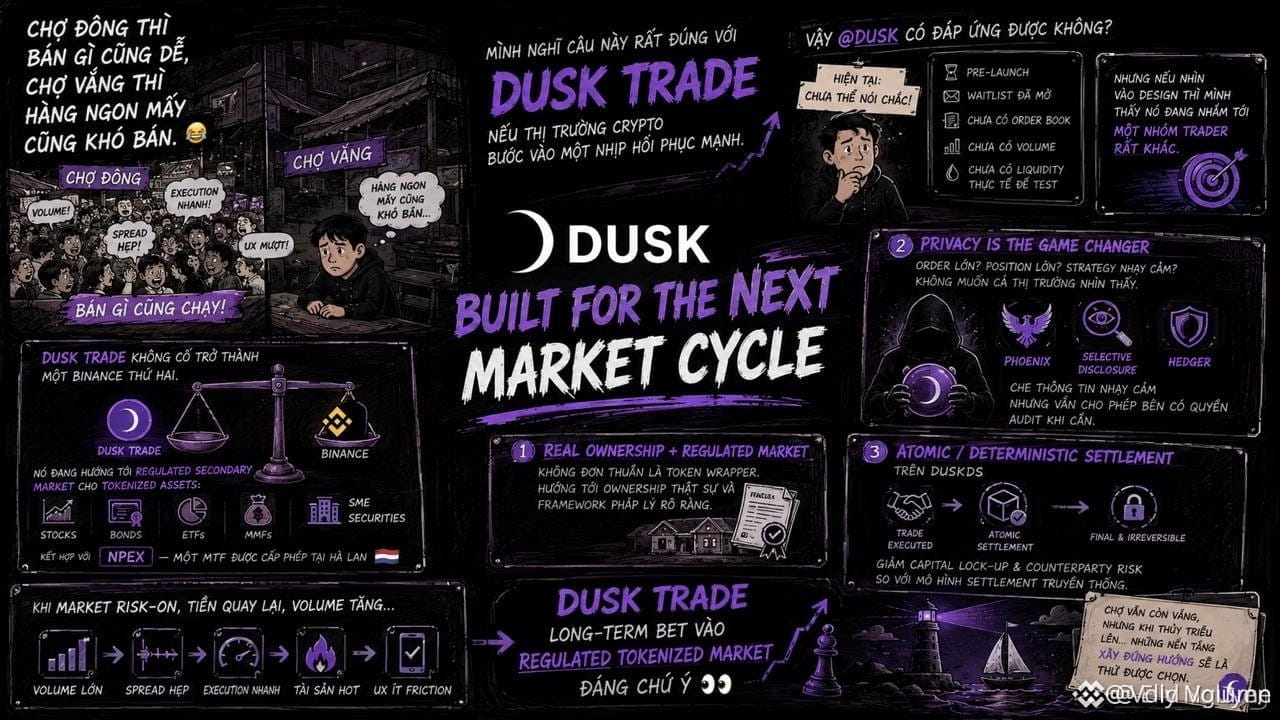
INSTITUTIONAL RWA LIQUIDITY IS SHIFTING TOWARD PRIVATE REGULATED RAILS ON $DUSK 🦈 ⚡
As institutional capital prepares for the next risk-on cycle, execution venue architecture becomes critical. $DUSK is building dedicated rails for regulated tokenized securities via NPEX integration, delivering genuine legal ownership over simple synthetic wrappers. 🔒
Institutional desks require execution privacy to protect position sizing and strategic footprint. Through Phoenix selective disclosure and deterministic settlement via DuskDS, the protocol significantly reduces counterparty risk and front-running exposure. 🔍
This privacy-first structural framework makes $DUSK a notable infrastructure candidate as real-world assets scale. 💬 Will private execution venues capture the bulk of institutional RWA volume, or will public order books maintain their lead? 👇
⚠️ Not financial advice. Always manage your risk. 🛡️
🏷️ #DUSK #RWA #Crypto #Trading #MarketStructure
🎯 🦈
INSTITUTIONAL RWA LIQUIDITY IS SHIFTING TOWARD PRIVATE REGULATED RAILS ON $DUSK 🦈 ⚡
As institutional capital prepares for the next risk-on cycle, execution venue architecture becomes critical. $DUSK is building dedicated rails for regulated tokenized securities via NPEX integration, delivering genuine legal ownership over simple synthetic wrappers. 🔒
Institutional desks require execution privacy to protect position sizing and strategic footprint. Through Phoenix selective disclosure and deterministic settlement via DuskDS, the protocol significantly reduces counterparty risk and front-running exposure. 🔍
This privacy-first structural framework makes $DUSK a notable infrastructure candidate as real-world assets scale. 💬 Will private execution venues capture the bulk of institutional RWA volume, or will public order books maintain their lead? 👇
⚠️ Not financial advice. Always manage your risk. 🛡️
🏷️ #DUSK #RWA #Crypto #Trading #MarketStructure
🎯 🦈
As institutional capital prepares for the next risk-on cycle, execution venue architecture becomes critical. $DUSK is building dedicated rails for regulated tokenized securities via NPEX integration, delivering genuine legal ownership over simple synthetic wrappers. 🔒
Institutional desks require execution privacy to protect position sizing and strategic footprint. Through Phoenix selective disclosure and deterministic settlement via DuskDS, the protocol significantly reduces counterparty risk and front-running exposure. 🔍
This privacy-first structural framework makes $DUSK a notable infrastructure candidate as real-world assets scale. 💬 Will private execution venues capture the bulk of institutional RWA volume, or will public order books maintain their lead? 👇
⚠️ Not financial advice. Always manage your risk. 🛡️
🏷️ #DUSK #RWA #Crypto #Trading #MarketStructure
🎯 🦈
91
·
--
🚨 $DUSK DUAL-LAYER INFRASTRUCTURE SETS NEW STANDARD FOR INSTITUTIONAL PRIVACY! 🏦
Smart money recognizes that institutional adoption requires architectural flexibility, not rigid constraints. $DUSK is executing a dual-stack strategy where the high-performance native ZK layer is live for custom privacy, while DuskEVM on testnet opens the floodgates to familiar Solidity tooling. 📊
This deliberate split gives developers maximum execution control for regulated assets while maintaining unified DUSK gas settlement. 🛡️ As EVM compatibility transitions from testnet to mainnet, real application deployment will reveal where true structural demand concentrates. 🔍
🤔 Will institutional builders flock to familiar EVM rails or leverage native ZK architecture for ultimate asset privacy? 👇
⚠️ Not financial advice. Always manage your risk. 🛡️
🏷️ #DUSK #Altcoins #Crypto #Layer1 #Infrastructure
🎯 🦈
🚨 $DUSK DUAL-LAYER INFRASTRUCTURE SETS NEW STANDARD FOR INSTITUTIONAL PRIVACY! 🏦
Smart money recognizes that institutional adoption requires architectural flexibility, not rigid constraints. $DUSK is executing a dual-stack strategy where the high-performance native ZK layer is live for custom privacy, while DuskEVM on testnet opens the floodgates to familiar Solidity tooling. 📊
This deliberate split gives developers maximum execution control for regulated assets while maintaining unified DUSK gas settlement. 🛡️ As EVM compatibility transitions from testnet to mainnet, real application deployment will reveal where true structural demand concentrates. 🔍
🤔 Will institutional builders flock to familiar EVM rails or leverage native ZK architecture for ultimate asset privacy? 👇
⚠️ Not financial advice. Always manage your risk. 🛡️
🏷️ #DUSK #Altcoins #Crypto #Layer1 #Infrastructure
🎯 🦈
Smart money recognizes that institutional adoption requires architectural flexibility, not rigid constraints. $DUSK is executing a dual-stack strategy where the high-performance native ZK layer is live for custom privacy, while DuskEVM on testnet opens the floodgates to familiar Solidity tooling. 📊
This deliberate split gives developers maximum execution control for regulated assets while maintaining unified DUSK gas settlement. 🛡️ As EVM compatibility transitions from testnet to mainnet, real application deployment will reveal where true structural demand concentrates. 🔍
🤔 Will institutional builders flock to familiar EVM rails or leverage native ZK architecture for ultimate asset privacy? 👇
⚠️ Not financial advice. Always manage your risk. 🛡️
🏷️ #DUSK #Altcoins #Crypto #Layer1 #Infrastructure
🎯 🦈
103
·
--
Protecting the integrity of institutional strategies against MEV (Maximal Extractable Value) is crucial for on-chain trading. @Dusk's architecture uses zero-knowledge proofs to conceal order details before execution, ensuring fairness and regulatory compliance. The $DUSK-powered ecosystem continues to set the standard in Web3.
#dusk
Protecting the integrity of institutional strategies against MEV (Maximal Extractable Value) is crucial for on-chain trading. @Dusk's architecture uses zero-knowledge proofs to conceal order details before execution, ensuring fairness and regulatory compliance. The $DUSK-powered ecosystem continues to set the standard in Web3.
#dusk
#dusk
172
·
--
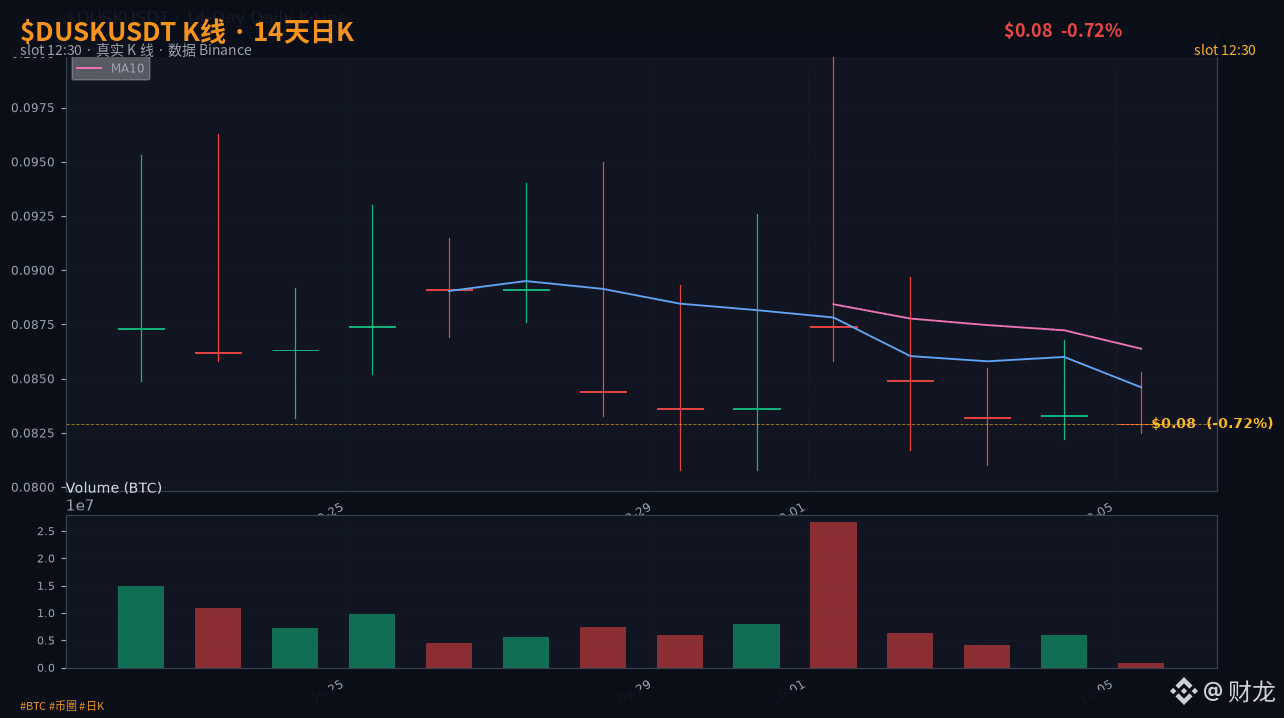
9-28 @Dusk The second half of that article hides a real gritty detail: cross-chain transfers have to pass through two checkpoints. A bond originally issued natively on DuskEVM needs to be moved over to the Ethereum side for use—but merely sending the instruction isn’t enough. On the other end, the counterparty must redo a qualification check as well. You can’t take shortcuts by using the old credentials from the transfer. These are the two lines: ordinary transfers go through one set of checks, while newly issued/ minted flows use another set. Newly minted tokens and transfers aren’t the same code path, so they can’t be mixed and run together.
The concrete cost when you step into this pitfall is specific: on Chain A, 100 units are burned in preparation to mint 100 units on Chain B. If the recipient’s credential has already expired, the minting on Chain B will fail—yet those 100 units on Chain A are already burned. That 100 becomes stuck in limbo until the credential is reactivated or the operator rolls back and resets it. This is why, in Dusk’s architecture, the Citadel layer must be implemented in the native contract—not patched on afterward. Credentials are bound to the asset lifecycle, not checked “live” at the moment of transfer.
From an engineering perspective, you can treat this as plumbing. From a product perspective, what institutions receive today isn’t the number “how much can be saved on-chain,” but three real problems: how many units must be rolled back if it fails once, who signs that rollback, and how the regulator-side records it. The real adversary to natively issued assets isn’t wrapped tokens—it’s that old workflow of reconciling using spreadsheets.
@Dusk This approach isn’t new. The value lies in hooking Citadel and DuskVM directly into the native contract layer. $DUSK isn’t flashy today, but the cost of cross-chain failures in the compliance market is the money institutions truly end up paying.
#dusk #原生发行 #跨链失败案例 $DUSK @Dusk
9-28 @Dusk The second half of that article hides a real gritty detail: cross-chain transfers have to pass through two checkpoints. A bond originally issued natively on DuskEVM needs to be moved over to the Ethereum side for use—but merely sending the instruction isn’t enough. On the other end, the counterparty must redo a qualification check as well. You can’t take shortcuts by using the old credentials from the transfer. These are the two lines: ordinary transfers go through one set of checks, while newly issued/ minted flows use another set. Newly minted tokens and transfers aren’t the same code path, so they can’t be mixed and run together.
The concrete cost when you step into this pitfall is specific: on Chain A, 100 units are burned in preparation to mint 100 units on Chain B. If the recipient’s credential has already expired, the minting on Chain B will fail—yet those 100 units on Chain A are already burned. That 100 becomes stuck in limbo until the credential is reactivated or the operator rolls back and resets it. This is why, in Dusk’s architecture, the Citadel layer must be implemented in the native contract—not patched on afterward. Credentials are bound to the asset lifecycle, not checked “live” at the moment of transfer.
From an engineering perspective, you can treat this as plumbing. From a product perspective, what institutions receive today isn’t the number “how much can be saved on-chain,” but three real problems: how many units must be rolled back if it fails once, who signs that rollback, and how the regulator-side records it. The real adversary to natively issued assets isn’t wrapped tokens—it’s that old workflow of reconciling using spreadsheets.
@Dusk This approach isn’t new. The value lies in hooking Citadel and DuskVM directly into the native contract layer. $DUSK isn’t flashy today, but the cost of cross-chain failures in the compliance market is the money institutions truly end up paying.
#dusk #原生发行 #跨链失败案例 $DUSK @Dusk
The concrete cost when you step into this pitfall is specific: on Chain A, 100 units are burned in preparation to mint 100 units on Chain B. If the recipient’s credential has already expired, the minting on Chain B will fail—yet those 100 units on Chain A are already burned. That 100 becomes stuck in limbo until the credential is reactivated or the operator rolls back and resets it. This is why, in Dusk’s architecture, the Citadel layer must be implemented in the native contract—not patched on afterward. Credentials are bound to the asset lifecycle, not checked “live” at the moment of transfer.
From an engineering perspective, you can treat this as plumbing. From a product perspective, what institutions receive today isn’t the number “how much can be saved on-chain,” but three real problems: how many units must be rolled back if it fails once, who signs that rollback, and how the regulator-side records it. The real adversary to natively issued assets isn’t wrapped tokens—it’s that old workflow of reconciling using spreadsheets.
@Dusk This approach isn’t new. The value lies in hooking Citadel and DuskVM directly into the native contract layer. $DUSK isn’t flashy today, but the cost of cross-chain failures in the compliance market is the money institutions truly end up paying.
#dusk #原生发行 #跨链失败案例 $DUSK @Dusk
333
Log in to explore more content
Join global crypto users on Binance Square
⚡️ Get latest and useful information about crypto.
💬 Trusted by the world’s largest crypto exchange.
👍 Discover real insights from verified creators.
Email / Phone number
Trending Topics
1
#FedMinutesFocusOnOctoberPause
80 views
32 Discussing
2
#BinanceLaunchesBinanceIntelligence
854,776 views
5,279 Discussing
3
#RobinhoodAdds$25MInBitcoinToBalanceSheet
65 views
8 Discussing
4
#SP500AndNasdaqHitRecordHighs
608 views
73 Discussing
5
#USMortgageRatesRiseTo7.49%
430 views
66 Discussing
6
#BTCFallsBelow$84K
57,441 views
161 Discussing
7
#DubaiVARAIssuesReserveAssetAuditCircular
23,398 views
675 Discussing
8
#SECApproves3XBitcoinETF
21,309 views
555 Discussing
9
#WinklevossFilesSpotZcashETFApplication
29,252 views
674 Discussing
10
#SouthKoreaAITradeLiftsWorldcoinTo$7.41B
3,325 views
50 Discussing