
#brasil
brasil
2.1M views
1,873 Discussing
Hot
Latest

Article
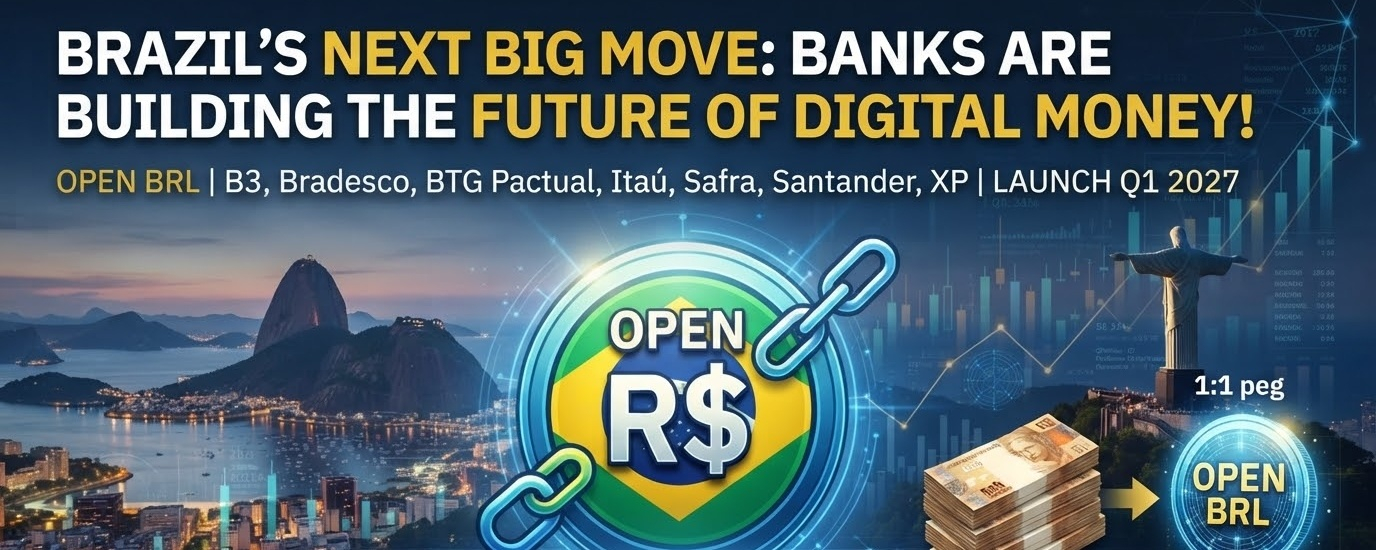
Brazil’s Financial Revolution: The Rise of Open BRL Stablecoin 🚀🇧🇷 BRAZIL'S NEXT BIG MOVE: BANKS ARE BUILDING THE FUTURE OF DIGITAL MONEY!
While the crypto community remains focused on Bitcoin’s price movements, Brazil is quietly taking a major step toward the future of digital finance. 👀
A group of major Brazilian financial institutions, including B3, Bradesco, BTG Pactual, Itaú, Safra, Santander, and XP, are working together on Open BRL — a stablecoin designed to maintain a 1:1 value with the Brazilian real.
The project is expected to launch in Q1 2027.
🚀 Why Could This Be a Game Changer?
Open BRL is not just about creating another digital currency. Its bigger purpose is to build a shared financial infrastructure that could make money transfers between institutions more efficient and support transactions involving tokenized assets.
Here are three important points:
🔹 Real-Backed Value: Designed to maintain a 1:1 peg with the Brazilian real, supported by corresponding reserves.
🔹 Institutional Collaboration: Major financial players are joining forces instead of building separate systems.
🔹 Tokenization Potential: The infrastructure could help support the development and transfer of tokenized financial assets.
🌍 The Bigger Picture
What makes this development particularly interesting is the involvement of traditional banking institutions.
For years, blockchain was mainly associated with cryptocurrencies and speculative trading. Now, major financial players are exploring how this technology could improve the infrastructure of the financial system itself.
This could be an important step toward connecting traditional finance with the digital asset economy.
⚠️ But There Are Still Questions
The real test will be adoption, regulatory clarity, security, and whether the system can operate successfully at scale. A promising announcement does not automatically guarantee success.
💡 My Take
The future of blockchain may be much bigger than Bitcoin price charts.
The real transformation could happen when banks, businesses, and financial institutions start using blockchain technology as part of their everyday operations.
Brazil's Open BRL initiative is worth watching — not because success is guaranteed, but because it shows where institutional interest is heading.
What do you think? Could Brazil become a leading example of how traditional banking and blockchain technology work together?
👇 Share your thoughts in the comments!
#brasil #EvolveAtBinanceBlockchainWeek #ChainflipVaultTheftHaltsProtocol #EthereumGlamsterdamKeepsStorageFeeChange #US
#Blockchain #Stablecoin #Tokenization #Crypto #Bitcoin #DigitalFinance #Brazil
Brazil’s Financial Revolution: The Rise of Open BRL Stablecoin 🚀
🇧🇷 BRAZIL'S NEXT BIG MOVE: BANKS ARE BUILDING THE FUTURE OF DIGITAL MONEY!
While the crypto community remains focused on Bitcoin’s price movements, Brazil is quietly taking a major step toward the future of digital finance. 👀
A group of major Brazilian financial institutions, including B3, Bradesco, BTG Pactual, Itaú, Safra, Santander, and XP, are working together on Open BRL — a stablecoin designed to maintain a 1:1 value with the Brazilian real.
The project is expected to launch in Q1 2027.
🚀 Why Could This Be a Game Changer?
Open BRL is not just about creating another digital currency. Its bigger purpose is to build a shared financial infrastructure that could make money transfers between institutions more efficient and support transactions involving tokenized assets.
Here are three important points:
🔹 Real-Backed Value: Designed to maintain a 1:1 peg with the Brazilian real, supported by corresponding reserves.
🔹 Institutional Collaboration: Major financial players are joining forces instead of building separate systems.
🔹 Tokenization Potential: The infrastructure could help support the development and transfer of tokenized financial assets.
🌍 The Bigger Picture
What makes this development particularly interesting is the involvement of traditional banking institutions.
For years, blockchain was mainly associated with cryptocurrencies and speculative trading. Now, major financial players are exploring how this technology could improve the infrastructure of the financial system itself.
This could be an important step toward connecting traditional finance with the digital asset economy.
⚠️ But There Are Still Questions
The real test will be adoption, regulatory clarity, security, and whether the system can operate successfully at scale. A promising announcement does not automatically guarantee success.
💡 My Take
The future of blockchain may be much bigger than Bitcoin price charts.
The real transformation could happen when banks, businesses, and financial institutions start using blockchain technology as part of their everyday operations.
Brazil's Open BRL initiative is worth watching — not because success is guaranteed, but because it shows where institutional interest is heading.
What do you think? Could Brazil become a leading example of how traditional banking and blockchain technology work together?
👇 Share your thoughts in the comments!
#brasil #EvolveAtBinanceBlockchainWeek #ChainflipVaultTheftHaltsProtocol #EthereumGlamsterdamKeepsStorageFeeChange #US
#Blockchain #Stablecoin #Tokenization #Crypto #Bitcoin #DigitalFinance #Brazil
4
202

·
--
The Central Bank approved Binance Brasil as a foreign exchange broker. 🇧🇷
This is its third license in the country, following those for securities brokerage and electronic money issuance. And it’s the first time a crypto exchange has received this authorization.
In practice, the limit for international transfers is expected to increase about fivefold.
The message is bigger than Binance: crypto in Brazil is coming in through the front door of the financial system, with rules and oversight.
Congratulations, @ThiagoSarandy , and to the entire incredible Binance Brasil team on this achievement!
More regulation brings more responsibility, and also more confidence for those just getting started. Onward.
#Binance #Brasil #BancoCentral #Crypto $BNB
The Central Bank approved Binance Brasil as a foreign exchange broker. 🇧🇷
This is its third license in the country, following those for securities brokerage and electronic money issuance. And it’s the first time a crypto exchange has received this authorization.
In practice, the limit for international transfers is expected to increase about fivefold.
The message is bigger than Binance: crypto in Brazil is coming in through the front door of the financial system, with rules and oversight.
Congratulations, @Thiago Sarandy , and to the entire incredible Binance Brasil team on this achievement!
More regulation brings more responsibility, and also more confidence for those just getting started. Onward.
#Binance #Brasil #BancoCentral #Crypto $BNB
7
2.6k

💥Brazil’s Central Bank grants cryptocurrency exchange platform Binance regulatory authorization to operate as a foreign exchange broker.
Another regulatory milestone for Binance in Brazil. 🇧🇷
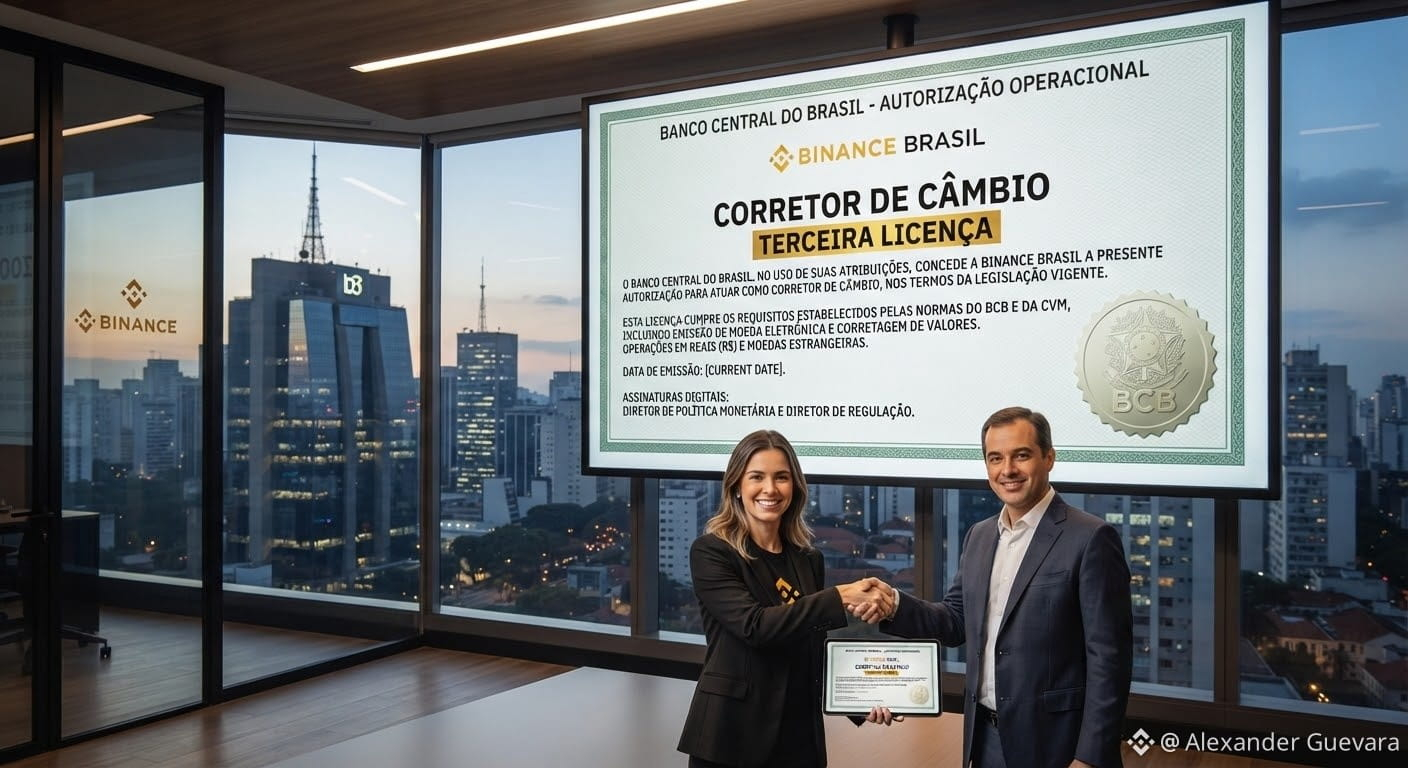
Binance Brazil has received its third license in the country from Brazil’s Central Bank, this time as a foreign exchange broker.
A step forward in our commitment to regulatory compliance and better financial products for local users.
Brazil’s Central Bank granted Binance Brazil its third local authorization, this time to operate as a foreign exchange broker.
This approval adds to its previous authorizations for securities brokerage and electronic money issuance.
The license paves the way for higher-value international transfers, with a potential limit that could increase from $100,000 to $500,000 for qualified users, although it is not yet in effect.
In addition, BBrasil’s VASP license application, submitted under Law 14.478/2022, is still under review, while leveraged products and derivatives require CVM supervision.
#brasil #binancebrasil #Licencia #Brazil #BinanceSquare $BTC $USDBRL
9

·
--
Binance Brazil has just secured its third license from Brazil’s central bank — and its cross-border crypto transfer limit could increase fivefold.
The facts: Brazil’s Central Bank approved Binance Brazil as a foreign exchange broker on Nov. 23, 2026; the decision was published in the Diário Oficial on Nov. 24 and announced by Binance on Friday, Nov. 27 (Crypto Briefing, CoinGape, BSC News, Coin Edition, TokenPost). This is its third license in Brazil, following securities brokerage and electronic money issuer authorizations from its acquisition of Sim;paul. For eligible users, the cross-border virtual asset transfer limit could rise from $100,000 to $500,000 per transaction.
My take: this is about legal certainty in Latin America’s largest market — Binance’s cross-border transfers are entering the central bank’s official channels, rather than operating in a gray area. But be careful how you read the numbers: $500,000 is “possible,” not “already in effect” — the eligibility criteria and start date had not been announced as of Nov. 27. BTC itself is still below $60,000 this morning, at around $59,897.
What I’m watching: when the criteria and date for the new limit will be announced, and the decision on Binance’s virtual asset service provider license application (BBrasil), which is still under review by the central bank.
Do you think a license like this matters more to users in Brazil, or is it a sign that major regulators are increasingly accepting crypto exchanges?
This is my analysis, not financial advice — always DYOR.
#Binance #Brazil
112

·
--
Verified
Brasil Bitcoin removes founder with a 40% stake in the exchange for just causeBrasil Bitcoin approved the removal for just cause of Erick Carlos Castilho Crus, its founder who held a 40% stake in the exchange. The decision deepens a corporate dispute that has already reached the courts and directly involves the company’s application for authorization from the Central Bank.
The meeting convened by Brasil Bitcoin voted to remove Crus for just cause. The exchange’s administrators attribute the removal to alleged obstacles the founder imposed on the authorization process before the Central Bank. The dispute, which is already before the courts, has entered a new chapter with the formalization of his departure from the company.
Brasil Bitcoin removes founder with a 40% stake in the exchange for just cause
Brasil Bitcoin approved the removal for just cause of Erick Carlos Castilho Crus, its founder who held a 40% stake in the exchange. The decision deepens a corporate dispute that has already reached the courts and directly involves the company’s application for authorization from the Central Bank.
The meeting convened by Brasil Bitcoin voted to remove Crus for just cause. The exchange’s administrators attribute the removal to alleged obstacles the founder imposed on the authorization process before the Central Bank. The dispute, which is already before the courts, has entered a new chapter with the formalization of his departure from the company.
The meeting convened by Brasil Bitcoin voted to remove Crus for just cause. The exchange’s administrators attribute the removal to alleged obstacles the founder imposed on the authorization process before the Central Bank. The dispute, which is already before the courts, has entered a new chapter with the formalization of his departure from the company.
Mão_De_Alface:
Uma ligação do Thump para a direção e ele volta…
1
7
8.7k
·
--
Foxbit files crypto license application as DTVM advances at Central BankFoxbit confirmed that it filed its application for authorization with the Central Bank on October 29 to operate as a virtual asset service provider (VASP), and revealed that its Securities Distributor (DTVM) structure is in the final stage of approval by the regulator.
Foxbit’s application is part of a broader industry trend. The Central Bank published an official list of 120 applications for authorization to operate with crypto assets in Brazil, 119 of which are still under review and one of which was denied.
Foxbit files crypto license application as DTVM advances at Central Bank
Foxbit confirmed that it filed its application for authorization with the Central Bank on October 29 to operate as a virtual asset service provider (VASP), and revealed that its Securities Distributor (DTVM) structure is in the final stage of approval by the regulator.
Foxbit’s application is part of a broader industry trend. The Central Bank published an official list of 120 applications for authorization to operate with crypto assets in Brazil, 119 of which are still under review and one of which was denied.
Foxbit’s application is part of a broader industry trend. The Central Bank published an official list of 120 applications for authorization to operate with crypto assets in Brazil, 119 of which are still under review and one of which was denied.
818
·
--
Lumx brings together 100 stablecoin market leaders in São PauloLumx is holding the third edition of Lumx Connference in São Paulo on December 3, a closed-door gathering bringing together 100 decision-makers from the stablecoin market as the sector digests the end of the deadline for submitting authorization applications to the Central Bank.
The deadline for virtual asset companies already operating in Brazil to file an application for authorization with the Central Bank ended on October 30. The framework was established by BCB Resolutions No. 519, 520 and 521, published in November 2025.
Lumx brings together 100 stablecoin market leaders in São Paulo
Lumx is holding the third edition of Lumx Connference in São Paulo on December 3, a closed-door gathering bringing together 100 decision-makers from the stablecoin market as the sector digests the end of the deadline for submitting authorization applications to the Central Bank.
The deadline for virtual asset companies already operating in Brazil to file an application for authorization with the Central Bank ended on October 30. The framework was established by BCB Resolutions No. 519, 520 and 521, published in November 2025.
The deadline for virtual asset companies already operating in Brazil to file an application for authorization with the Central Bank ended on October 30. The framework was established by BCB Resolutions No. 519, 520 and 521, published in November 2025.
2
1.1k
·
--
Federal Police launch three operations targeting R$ 4.3 billion laundered through cryptoassetsOn November 24, 2026, the Federal Police launched three simultaneous operations targeting money laundering schemes that used cryptoassets, online betting and shell companies to move more than R$ 4.3 billion.
The operations were named Narco Azimut III, Narco Oriente and Narco Alicerce. Around 130 federal police officers carried out 72 search and seizure warrants and temporary arrest warrants in São Paulo, Paraná, Pernambuco, Goiás, Rio Grande do Sul and the Federal District, according to the Federal Police’s official statement.
Federal Police launch three operations targeting R$ 4.3 billion laundered through cryptoassets
On November 24, 2026, the Federal Police launched three simultaneous operations targeting money laundering schemes that used cryptoassets, online betting and shell companies to move more than R$ 4.3 billion.
The operations were named Narco Azimut III, Narco Oriente and Narco Alicerce. Around 130 federal police officers carried out 72 search and seizure warrants and temporary arrest warrants in São Paulo, Paraná, Pernambuco, Goiás, Rio Grande do Sul and the Federal District, according to the Federal Police’s official statement.
The operations were named Narco Azimut III, Narco Oriente and Narco Alicerce. Around 130 federal police officers carried out 72 search and seizure warrants and temporary arrest warrants in São Paulo, Paraná, Pernambuco, Goiás, Rio Grande do Sul and the Federal District, according to the Federal Police’s official statement.
1
2.9k
·
--
Binance Brasil receives foreign exchange license from the Central BankBinance Brasil received authorization from the Central Bank of Brazil to operate in the foreign exchange market, becoming the first native virtual asset platform to obtain this type of license in the country.
The license was granted to Binance Brasil Corretora, the company’s legal name, formerly known as Sim;paul. With it, the broker now holds three regulatory authorizations in Brazil: the foreign exchange license, along with the previously obtained licenses as a securities broker and electronic money issuer.
The most immediate practical effect is on international transfer limits. Foreign exchange brokers authorized to provide virtual asset services allow users to make international transfers of up to US$500,000, compared with a US$100,000 limit for clients of institutions without this authorization.
Binance Brasil receives foreign exchange license from the Central Bank
Binance Brasil received authorization from the Central Bank of Brazil to operate in the foreign exchange market, becoming the first native virtual asset platform to obtain this type of license in the country.
The license was granted to Binance Brasil Corretora, the company’s legal name, formerly known as Sim;paul. With it, the broker now holds three regulatory authorizations in Brazil: the foreign exchange license, along with the previously obtained licenses as a securities broker and electronic money issuer.
The most immediate practical effect is on international transfer limits. Foreign exchange brokers authorized to provide virtual asset services allow users to make international transfers of up to US$500,000, compared with a US$100,000 limit for clients of institutions without this authorization.
Priyanshu_01:
Big step for Binance in Brazil 🇧🇷 Does this mean BRL deposits and withdrawals get easier for users there?
1
13
6.4k
·
--
Betting Law bans cryptocurrencies at licensed betting houses in BrazilThe Betting Law excluded cryptocurrencies from all payment methods accepted by licensed betting houses in Brazil, making it illegal for operators, funders, and intermediaries to process deposits or withdrawals in digital assets.
The ban does not stem from an isolated ordinance. The legislation establishing the regulatory framework for sports betting in Brazil classified cryptocurrencies under the broad term “virtual assets,” prohibiting their use as a means of payment on platforms authorized by the Ministry of Finance’s Secretariat of Prizes and Betting.
Betting Law bans cryptocurrencies at licensed betting houses in Brazil
The Betting Law excluded cryptocurrencies from all payment methods accepted by licensed betting houses in Brazil, making it illegal for operators, funders, and intermediaries to process deposits or withdrawals in digital assets.
The ban does not stem from an isolated ordinance. The legislation establishing the regulatory framework for sports betting in Brazil classified cryptocurrencies under the broad term “virtual assets,” prohibiting their use as a means of payment on platforms authorized by the Ministry of Finance’s Secretariat of Prizes and Betting.
The ban does not stem from an isolated ordinance. The legislation establishing the regulatory framework for sports betting in Brazil classified cryptocurrencies under the broad term “virtual assets,” prohibiting their use as a means of payment on platforms authorized by the Ministry of Finance’s Secretariat of Prizes and Betting.
163
Verified
Article
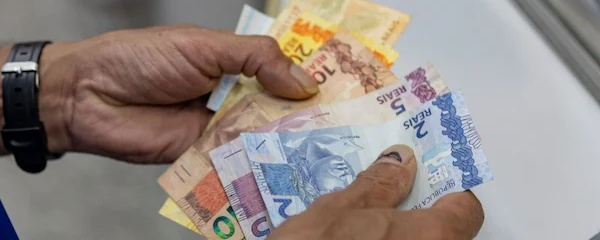
Brazil faces a “confidence shock,” and the real is Latin America’s second-most depreciated currencyBrazil’s central bank had to intervene on Thursday to support the real amid growing expectations of further interest rate hikes in the United States.
Brazil faces a “confidence shock,” and the real is Latin America’s second-most depreciated currency. Brazilian real.
Bloomberg Línea — Brazil faces a “confidence shock” driven by fiscal uncertainty, which has put pressure on the real and caused it to fall 7.84% against the U.S. dollar so far this year.
Brazil faces a “confidence shock,” and the real is Latin America’s second-most depreciated currency
Brazil’s central bank had to intervene on Thursday to support the real amid growing expectations of further interest rate hikes in the United States.
Brazil faces a “confidence shock,” and the real is Latin America’s second-most depreciated currency. Brazilian real.
Bloomberg Línea — Brazil faces a “confidence shock” driven by fiscal uncertainty, which has put pressure on the real and caused it to fall 7.84% against the U.S. dollar so far this year.
2
7.3k
·
--
Crypto Heist Operation arrests suspect accused of concealing R$ 61,000 in crypto in São PauloThe São Paulo Civil Police launched Operation Crypto Heist and arrested a 42-year-old man suspected of taking part in a robbery and concealing R$ 61,000 in cryptoassets in the state capital.
The operation was carried out by the State Department of Criminal Investigations (DEIC), through the 4th Precinct of the Cybercrime Division (DCCiber). The 42-year-old man was arrested on Tuesday, November 17, 2026.
To make the arrest and gather evidence, police simultaneously executed seven search and seizure warrants at three locations: the capital, Cotia, and Taboão da Serra.
Crypto Heist Operation arrests suspect accused of concealing R$ 61,000 in crypto in São Paulo
The São Paulo Civil Police launched Operation Crypto Heist and arrested a 42-year-old man suspected of taking part in a robbery and concealing R$ 61,000 in cryptoassets in the state capital.
The operation was carried out by the State Department of Criminal Investigations (DEIC), through the 4th Precinct of the Cybercrime Division (DCCiber). The 42-year-old man was arrested on Tuesday, November 17, 2026.
To make the arrest and gather evidence, police simultaneously executed seven search and seizure warrants at three locations: the capital, Cotia, and Taboão da Serra.
1
4
4.4k

·
--
Bearish
Verified
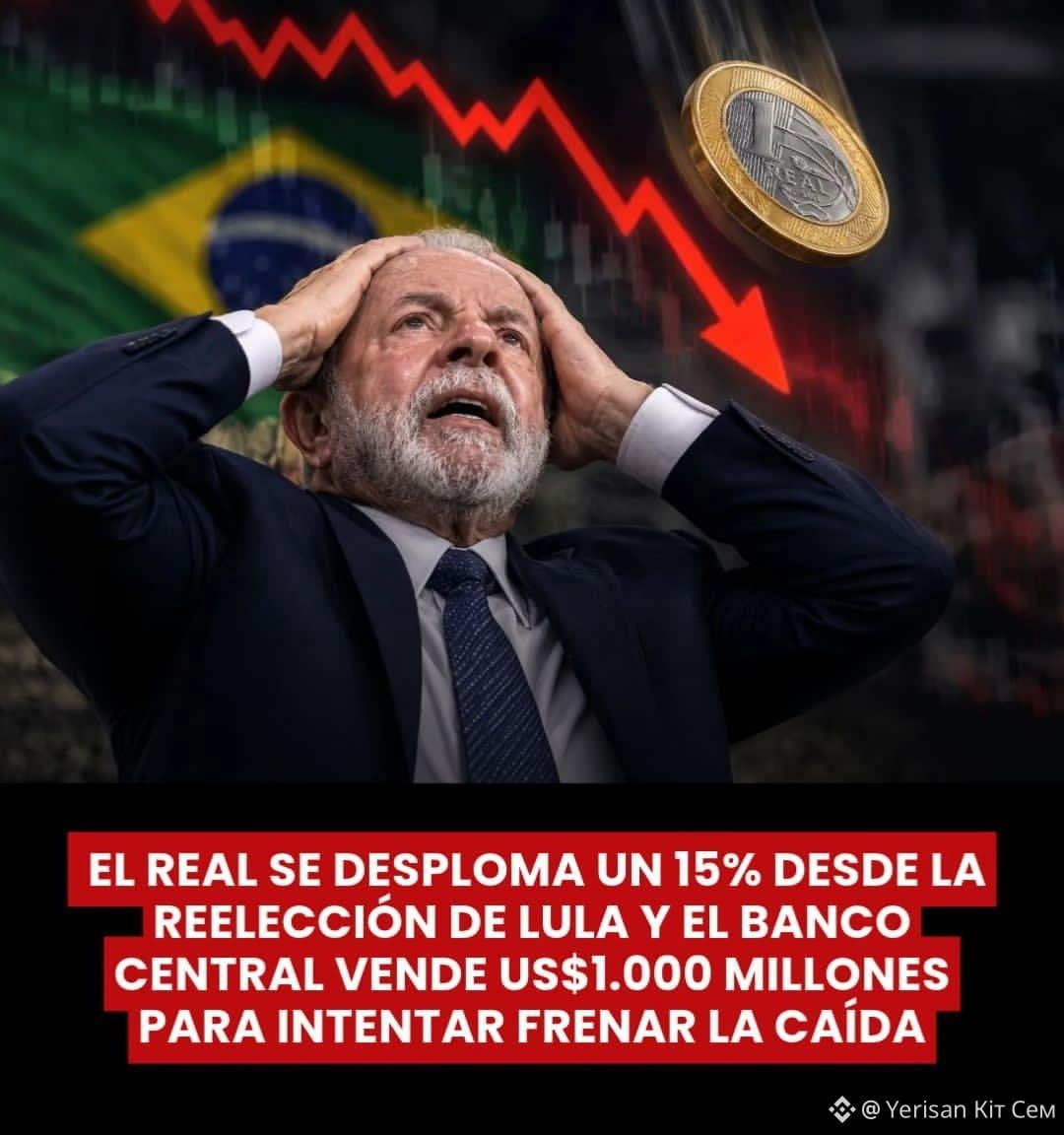
🚨🇧🇷 | Brazil is facing growing currency pressure following the re-election of Luiz Inácio Lula da Silva. The real has depreciated by 15% since October, prompting the Central Bank to intervene in the market and sell US$1 billion in an attempt to curb the currency’s plunge.
🔥
According to today’s exchange rate data, the Brazilian currency closed this Thursday at 5.9323 reais per dollar, down 1.10% for the day and reaching its lowest level since April 2025.
$BR
$SXT
$EVAA
#Brasil
#eeuu
{spot}(BNBUSDT)
{spot}(BTCUSDT)
{spot}(ETHUSDT)
🚨🇧🇷 | Brazil is facing growing currency pressure following the re-election of Luiz Inácio Lula da Silva. The real has depreciated by 15% since October, prompting the Central Bank to intervene in the market and sell US$1 billion in an attempt to curb the currency’s plunge.
🔥
According to today’s exchange rate data, the Brazilian currency closed this Thursday at 5.9323 reais per dollar, down 1.10% for the day and reaching its lowest level since April 2025.
$BR
$SXT
$EVAA
#Brasil
#eeuu
🔥
According to today’s exchange rate data, the Brazilian currency closed this Thursday at 5.9323 reais per dollar, down 1.10% for the day and reaching its lowest level since April 2025.
$BR
$SXT
$EVAA
#Brasil
#eeuu
3
647
·
--
Chainalysis launches AI to track cryptocurrencies and combat money laundering in BrazilChainalysis has made available in Brazil an artificial intelligence platform capable of tracking transactions in Bitcoin, stablecoins, and other digital assets, and automating money laundering investigations without requiring operators to master advanced blockchain analysis tools.
The solution, called Chain, processes a database of more than 450 billion transactions recorded on the Chainalysis network.
Governments, law enforcement agencies, banks, and exchanges can use it to analyze suspicious transaction alerts, map risks associated with wallets, and generate reports required by regulatory authorities, all within a single environment.
Chainalysis launches AI to track cryptocurrencies and combat money laundering in Brazil
Chainalysis has made available in Brazil an artificial intelligence platform capable of tracking transactions in Bitcoin, stablecoins, and other digital assets, and automating money laundering investigations without requiring operators to master advanced blockchain analysis tools.
The solution, called Chain, processes a database of more than 450 billion transactions recorded on the Chainalysis network.
Governments, law enforcement agencies, banks, and exchanges can use it to analyze suspicious transaction alerts, map risks associated with wallets, and generate reports required by regulatory authorities, all within a single environment.
82
·
--
Brazil has the 2nd-largest increase in identity fraud in Latin America, Sumsub report findsBrazil recorded a 58% increase in identity fraud in 2026, ranking second among Latin American countries with the largest growth in this type of crime, according to Sumsub’s Identity Fraud Report 2026–2027. The country is behind only Suriname (77%) and ahead of Haiti (41%) and Nicaragua (4%).
The report was prepared based on an analysis of 5.8 million fraud cases and a comparison of global identity verification data observed between 2025 and 2026. The study also incorporates a survey of more than 1,400 fraud and risk professionals and more than 1,500 consumers across 21 markets, including Brazil.
Brazil has the 2nd-largest increase in identity fraud in Latin America, Sumsub report finds
Brazil recorded a 58% increase in identity fraud in 2026, ranking second among Latin American countries with the largest growth in this type of crime, according to Sumsub’s Identity Fraud Report 2026–2027. The country is behind only Suriname (77%) and ahead of Haiti (41%) and Nicaragua (4%).
The report was prepared based on an analysis of 5.8 million fraud cases and a comparison of global identity verification data observed between 2025 and 2026. The study also incorporates a survey of more than 1,400 fraud and risk professionals and more than 1,500 consumers across 21 markets, including Brazil.
The report was prepared based on an analysis of 5.8 million fraud cases and a comparison of global identity verification data observed between 2025 and 2026. The study also incorporates a survey of more than 1,400 fraud and risk professionals and more than 1,500 consumers across 21 markets, including Brazil.
176

Article
Brazil: What the Central Bank allows and prohibits with stablecoinsBrazil: What the Central Bank allows and prohibits with stablecoins
A Central Bank of Brazil official linked stablecoins to money laundering, according to Livecoins. What Resolution 561 prohibits and what remains allowed.
The essentials
Gerson Romantini, head of the Foreign Exchange Division at the Central Bank of Brazil, said at a closed-door meeting that money moving into stablecoins acquires a “bad money mark,” according to Livecoins; the BCB has not confirmed this.
BCB Resolution 561, in force since October 1, prohibits using crypto assets to settle international payments through the regulated eFX channel, according to CoinDesk; it is not a general ban on stablecoins.
Brazil: What the Central Bank allows and prohibits with stablecoins
Brazil: What the Central Bank allows and prohibits with stablecoins
A Central Bank of Brazil official linked stablecoins to money laundering, according to Livecoins. What Resolution 561 prohibits and what remains allowed.
The essentials
Gerson Romantini, head of the Foreign Exchange Division at the Central Bank of Brazil, said at a closed-door meeting that money moving into stablecoins acquires a “bad money mark,” according to Livecoins; the BCB has not confirmed this.
BCB Resolution 561, in force since October 1, prohibits using crypto assets to settle international payments through the regulated eFX channel, according to CoinDesk; it is not a general ban on stablecoins.
23
·
--
Hashdex launches HYPH11, Brazil’s first Hyperliquid ETFHashdex announced HYPH11, Brazil’s first ETF dedicated to Hyperliquid’s HYPE token. It is set to launch on B3 on November 24, 2026, with a total annual fee of 0.70%.
HYPH11 will allow any investor with an account at a brokerage firm partnered with B3 to gain exposure to HYPE in Brazilian reais, without needing to open an account on a foreign exchange or manage their own digital wallet.
The fund will track the Nasdaq Hyperliquid Settlement Price Index, which reflects the price of HYPE in U.S. dollars, and will be managed by BTG Pactual. The offering is open to all investors and is regulated by the CVM.
Hashdex launches HYPH11, Brazil’s first Hyperliquid ETF
Hashdex announced HYPH11, Brazil’s first ETF dedicated to Hyperliquid’s HYPE token. It is set to launch on B3 on November 24, 2026, with a total annual fee of 0.70%.
HYPH11 will allow any investor with an account at a brokerage firm partnered with B3 to gain exposure to HYPE in Brazilian reais, without needing to open an account on a foreign exchange or manage their own digital wallet.
The fund will track the Nasdaq Hyperliquid Settlement Price Index, which reflects the price of HYPE in U.S. dollars, and will be managed by BTG Pactual. The offering is open to all investors and is regulated by the CVM.
377
·
--
NOVO lawmakers propose allowing Polymarket and Kalshi in BrazilNOVO party lawmakers introduced a bill to repeal the ban on prediction markets Polymarket and Kalshi in Brazil, transferring oversight of the platforms to the Brazilian Securities and Exchange Commission (CVM) and requiring the segregation of client funds in cryptoasset transactions.
The bill, identified as PL 5.811/2026, provides for contracts on elections, weather, and other events with verifiable outcomes. The proposal reverses the current regulatory approach: instead of bringing the platforms under sports betting law, it subjects them to the capital markets framework, under CVM supervision.
NOVO lawmakers propose allowing Polymarket and Kalshi in Brazil
NOVO party lawmakers introduced a bill to repeal the ban on prediction markets Polymarket and Kalshi in Brazil, transferring oversight of the platforms to the Brazilian Securities and Exchange Commission (CVM) and requiring the segregation of client funds in cryptoasset transactions.
The bill, identified as PL 5.811/2026, provides for contracts on elections, weather, and other events with verifiable outcomes. The proposal reverses the current regulatory approach: instead of bringing the platforms under sports betting law, it subjects them to the capital markets framework, under CVM supervision.
The bill, identified as PL 5.811/2026, provides for contracts on elections, weather, and other events with verifiable outcomes. The proposal reverses the current regulatory approach: instead of bringing the platforms under sports betting law, it subjects them to the capital markets framework, under CVM supervision.
2
3
1.3k
·
--
Central Bank identifies problems in 30% of crypto company license applicationsThe Central Bank of Brazil identified inconsistencies related to share capital in approximately 30% of authorization applications submitted by cryptocurrency companies. The situation highlights the challenges exchanges and other virtual asset service providers face in complying with the new rules governing the Brazilian market.
The information became public on Tuesday (10) during ABRACAM Speech 2026 in São Paulo. On the occasion, Ailton de Aquino Santos, the Central Bank’s Director of Supervision, expressed concern about companies that applied for licenses without presenting capital commensurate with regulatory requirements.
Central Bank identifies problems in 30% of crypto company license applications
The Central Bank of Brazil identified inconsistencies related to share capital in approximately 30% of authorization applications submitted by cryptocurrency companies. The situation highlights the challenges exchanges and other virtual asset service providers face in complying with the new rules governing the Brazilian market.
The information became public on Tuesday (10) during ABRACAM Speech 2026 in São Paulo. On the occasion, Ailton de Aquino Santos, the Central Bank’s Director of Supervision, expressed concern about companies that applied for licenses without presenting capital commensurate with regulatory requirements.
The information became public on Tuesday (10) during ABRACAM Speech 2026 in São Paulo. On the occasion, Ailton de Aquino Santos, the Central Bank’s Director of Supervision, expressed concern about companies that applied for licenses without presenting capital commensurate with regulatory requirements.
4
4.7k
·
--
Suplicy proposes blockchain for social currencies in São PauloEduardo Suplicy (PT-SP) introduced a bill in the São Paulo Legislative Assembly on social currencies and blockchain, authorizing the state government to provide financial and technological support to municipalities that create local payment systems backed by reais.
The text, divided into eight chapters, was filed with the São Paulo Legislative Assembly and regulates so-called solidarity finance in the state. The proposal states that nonprofit institutions known as community banks may issue digital assets for strictly local circulation, with each unit fully backed by reais.
Suplicy proposes blockchain for social currencies in São Paulo
Eduardo Suplicy (PT-SP) introduced a bill in the São Paulo Legislative Assembly on social currencies and blockchain, authorizing the state government to provide financial and technological support to municipalities that create local payment systems backed by reais.
The text, divided into eight chapters, was filed with the São Paulo Legislative Assembly and regulates so-called solidarity finance in the state. The proposal states that nonprofit institutions known as community banks may issue digital assets for strictly local circulation, with each unit fully backed by reais.
The text, divided into eight chapters, was filed with the São Paulo Legislative Assembly and regulates so-called solidarity finance in the state. The proposal states that nonprofit institutions known as community banks may issue digital assets for strictly local circulation, with each unit fully backed by reais.
1
1.2k
Log in to explore more content
Join global crypto users on Binance Square
⚡️ Get latest and useful information about crypto.
💬 Trusted by the world’s largest crypto exchange.
👍 Discover real insights from verified creators.
Email / Phone number
Trending Topics
1
#EvolveAtBinanceBlockchainWeek
1.9M views
18,549 Discussing
2
#BitcoinETFsExtendOutflowStreakToEightDays
20,472 views
345 Discussing
3
#ColdcardFlawLeadsToTheftOfAtLeast1789BTC
78,896 views
702 Discussing
4
#FranklinTempletonPlansToAddHYPEToCryptoIndexETF
3,170 views
69 Discussing
5
#EnishPlansToSell5932SOL
13,287 views
105 Discussing
6
#FTSaysRussianInvestorBackedTetherEarly
160 views
7 Discussing
7
#SECIssuesNoActionLetterOnMoleculeModel
19,389 views
250 Discussing
8
#VitalikWantsWalletChipDesignsOpened
75,449 views
668 Discussing
9
#MalaysiaFirstBitcoinETFToListOnDecember2
29,223 views
285 Discussing
10
#EthereumGlamsterdamKeepsStorageFeeChange
76,018 views
686 Discussing