We don’t see reality online—we see what survives compression.
In digital environments, clarity often feels immediate and reliable. Information appears structured, interfaces feel responsive, and signals seem precise enough to act upon. Yet beneath this sense of order lies a quiet limitation: what we are seeing is not the full state of reality, but a compressed version of it. It is selected, refined, and presented in fragments—small units that feel complete in the moment but rarely are.
A “pixel” represents one of these fragments. It is a unit of digital information—a signal, a data point, a visible output. On its own, it carries limited meaning. Yet when displayed within a system, it often appears definitive. This is how modern systems operate: they break down complex, continuous reality into discrete parts that can be processed and delivered efficiently. What we interact with is not reality itself, but a surface constructed from these pieces.
The issue is not fragmentation. It is interpretation.
The human mind is not built to leave things incomplete. When presented with partial information, it fills in the gaps automatically. A single signal becomes a pattern. A moment becomes a narrative. A limited view becomes a conclusion. This process feels like understanding, but it is often assumption operating at speed.
Consider how perception forms on social platforms. A series of carefully selected moments—successes, milestones, expressions of confidence—can create a coherent and compelling image of a person’s life. Each moment is real, but the absence of everything else goes unnoticed. The viewer does not see what is missing; they see what is presented and complete the rest. Comparison begins, judgments follow, and a partial reality becomes a perceived truth.
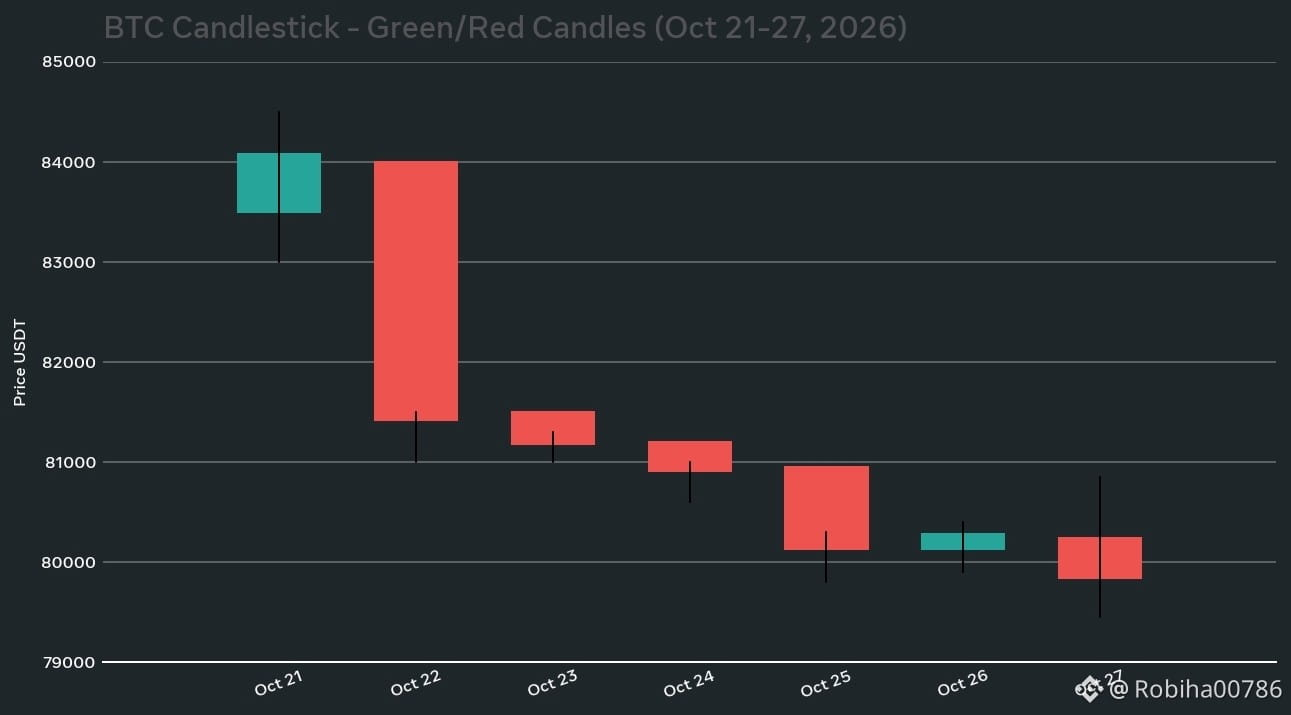
A similar dynamic exists in financial decision-making. A sudden movement in a chart appears clear and actionable. It feels like direction, like momentum, like an opportunity that must be acted on quickly. But that movement is only a fragment of a much larger system influenced by factors that are not immediately visible—liquidity shifts, broader market sentiment, external triggers, and structural constraints. Acting on that single visible signal often leads to reactive decisions. Many who have spent time in markets recognize this pattern not as theory, but as experience.
News consumption follows the same pattern. A headline delivers a concise and confident statement, designed for speed and clarity. Most readers do not move beyond it. The headline becomes the understanding. Context, nuance, and underlying detail remain unexplored. The result is a strong opinion formed on a narrow base of information. The fragment is accurate in isolation, but insufficient as a foundation for certainty.
These examples are not exceptions. They are the default conditions of modern digital life. In each case, the fragment is real, but incomplete. The distortion does not come from falsehood, but from the assumption that what is visible is enough.
What remains largely unseen is the structure that gives these fragments meaning. Digital systems are built on layers of verification, connectivity, and constraint. Data points are not isolated; they exist within networks that define their relationships and significance. Signals are not random; they are shaped by underlying mechanisms that determine how they are produced and displayed.
This structure is where reliability lives.
A system earns trust not by showing more, but by ensuring that what it shows is consistent, verifiable, and connected to a broader context. Without this foundation, visibility becomes fragile. Information may appear clear, but it lacks the depth required to be dependable. Trust, therefore, is not a reaction to what we see. It is a function of how what we see is built.
The shift from reacting to understanding begins with a simple change in perspective. Instead of asking only what is visible, a more grounded approach asks how that visibility is constructed. Where does this signal come from? What does it connect to? What is not being shown? These questions slow down the instinct to conclude and replace it with a process of interpretation that is more aligned with reality.
In practical terms, this shift can be subtle but powerful. It may mean resisting the urge to act on a single market movement, recognizing that one data point does not define a trend. It may mean questioning a widely shared post, understanding that visibility often reflects amplification rather than completeness. It may mean reading beyond a headline, acknowledging that clarity without depth is rarely reliable.
This is not about rejecting fragments. It is about respecting their limits.
When fragments are consistently treated as full representations, the consequences begin to compound. Narratives form quickly but lack stability. Confidence rises but is easily disrupted. Decisions feel informed but are based on incomplete foundations. Over time, perception drifts away from reality, not because the system is inherently misleading, but because its outputs are interpreted without sufficient depth.
Clarity, in its truest form, is not about seeing everything. It is about understanding what can be trusted and why. It requires awareness of the structures that validate, connect, and constrain the information we encounter. Without this awareness, even accurate signals can lead to incorrect conclusions.
Digital systems will continue to present reality through fragments. This is not a flaw, but a necessity of scale. As these fragments become more refined and more convincing, the responsibility shifts to the observer. The ability to distinguish between what is shown and what is true becomes essential.
Pixels shape perception. Structure defines reality.
@Pixels $PIXEL $BR
$BIO #pixel #Market_Update #TrendingTopic #meme板块关注热点 #Megadrop