
#seastock
seastock
14,263 views
269 Discussing
Hot
Latest

·
--
Article
From Crypto to Stocks: Expand Your Investment Journey with Binance@BinanceBurmese
#SEAstock
#SEABstock
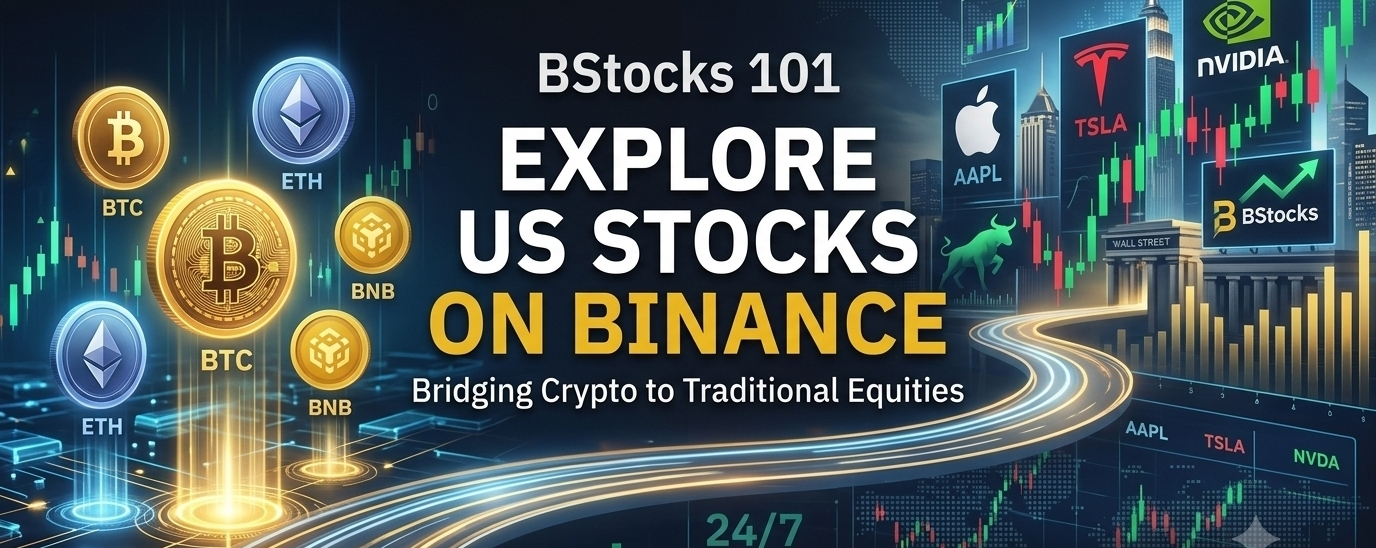
As digital asset ecosystems evolve, cryptocurrency investors are increasingly seeking strategies to diversify their financial holdings and reduce concentrated market volatility. While crypto assets provide innovative financial utilities, high-growth potential, and decentralized mechanics, integrating traditional financial instruments—such as US Stocks—offers a powerful way to stabilize long-term portfolio growth. Binance provides an exceptional platform for global investors to seamlessly bridge the gap between blockchain-based investments and traditional equity markets through resources, trading tools, and educational frameworks like BStocks. Transitioning from crypto to stocks is not merely about spreading risk; it represents a foundational shift toward building comprehensive, resilient, and multi-asset wealth.
Understanding the fundamental mechanics that separate traditional stock markets from cryptocurrency markets is essential for any modern investor seeking a balanced asset structure. The cryptocurrency market operates continuously—24 hours a day, 7 days a week, 365 days a year—leading to intense price volatility over short timeframes. Conversely, traditional US stock markets operate within standard business hours on weekdays. Stocks generally exhibit less extreme intraday price swings compared to lower-cap crypto tokens, providing a calmer investment environment for conservative asset allocators.
Furthermore, crypto assets often derive value from protocol utility, network activity, adoption rates, and general market sentiment. In contrast, corporate stocks reflect direct ownership in established real-world corporations. Their valuations depend on audited revenues, quarterly earnings reports, corporate management strategies, and physical or intellectual property. Additionally, crypto assets generate passive yield through staking, lending, or liquidity provisioning. Traditional stocks provide income through dividend payments—a portion of company profits distributed directly to shareholders on a regular, predictable schedule. By combining both asset classes into a unified investment model, investors can capture the high-growth potential of digital finance while maintaining the steady, audited stability of traditional corporations.
If you are ready to transition your mindset from pure crypto trading to stock market investing, follow a disciplined beginner framework:
Master Fundamental Terminology: Familiarize yourself with key financial metrics such as Market Capitalization, Price-to-Earnings (P/E) Ratio, Dividend Yield, Earnings Per Share (EPS), and Debt-to-Equity ratios.
Monitor Global Macroeconomic News: Keep track of major economic announcements, including Federal Reserve interest rate policy changes, Consumer Price Index (CPI) inflation metrics, and major corporate earnings releases.
Utilize Binance Square Educational Hubs: Explore guided articles, market insights, and community discussions directly on Binance Square to learn how equities, tokenized assets, and broad financial markets interact.
Implement Disciplined Portfolio Sizing: Avoid over-concentrating capital into a single stock or token. Allocate capital across diverse sectors—such as technology, healthcare, energy, and consumer goods—to insulate yourself against sudden sector-specific downturns.
In this context, BStocks serve as a vital link connecting Web3 users with global equity markets directly within the Binance ecosystem. Acquiring full shares of top-tier US corporations like Apple, Microsoft, or Nvidia can require substantial upfront capital. BStocks frameworks enable fractional share exposure, allowing investors to purchase small fractions of high-value stock shares according to their budget limits starting from small amounts. Rather than managing disparate accounts across traditional brokers, users can analyze, track, and manage their multi-asset trajectory directly within the Binance interface. This integration provides enhanced liquidity and convenience, making it easy for Web3 users to reallocate profits between crypto assets and traditional equity markets in just a few clicks. However, thorough fundamental analysis (DYOR) is just as necessary in stock markets as it is in crypto. Always review corporate debt levels, quarterly guidance, competitive moat, and market positioning before committing capital.
Beginning a financial journey in cryptocurrency teaches valuable lessons in chart reading, risk assessment, and market timing. However, learning about stock market fundamentals through Binance opens up a deeper perspective on global macroeconomic cycles. Allocating capital across both digital assets and equities balances overall portfolio volatility while building lasting financial discipline. Combining tech-forward crypto exposure with time-tested equity investments creates a robust financial foundation for long-term wealth accumulation. Expanding your investment perspective from cryptocurrency to US Stocks represents a meaningful milestone in financial maturity. Leverage the power of Binance Square to access high-quality educational content, stay informed on market updates, and take calculated steps toward multi-asset investment success today.Thank You.
$TSMB
From Crypto to Stocks: Expand Your Investment Journey with Binance
@Binance Burmese
#SEAstock
#SEABstock
As digital asset ecosystems evolve, cryptocurrency investors are increasingly seeking strategies to diversify their financial holdings and reduce concentrated market volatility. While crypto assets provide innovative financial utilities, high-growth potential, and decentralized mechanics, integrating traditional financial instruments—such as US Stocks—offers a powerful way to stabilize long-term portfolio growth. Binance provides an exceptional platform for global investors to seamlessly bridge the gap between blockchain-based investments and traditional equity markets through resources, trading tools, and educational frameworks like BStocks. Transitioning from crypto to stocks is not merely about spreading risk; it represents a foundational shift toward building comprehensive, resilient, and multi-asset wealth.
Understanding the fundamental mechanics that separate traditional stock markets from cryptocurrency markets is essential for any modern investor seeking a balanced asset structure. The cryptocurrency market operates continuously—24 hours a day, 7 days a week, 365 days a year—leading to intense price volatility over short timeframes. Conversely, traditional US stock markets operate within standard business hours on weekdays. Stocks generally exhibit less extreme intraday price swings compared to lower-cap crypto tokens, providing a calmer investment environment for conservative asset allocators.
Furthermore, crypto assets often derive value from protocol utility, network activity, adoption rates, and general market sentiment. In contrast, corporate stocks reflect direct ownership in established real-world corporations. Their valuations depend on audited revenues, quarterly earnings reports, corporate management strategies, and physical or intellectual property. Additionally, crypto assets generate passive yield through staking, lending, or liquidity provisioning. Traditional stocks provide income through dividend payments—a portion of company profits distributed directly to shareholders on a regular, predictable schedule. By combining both asset classes into a unified investment model, investors can capture the high-growth potential of digital finance while maintaining the steady, audited stability of traditional corporations.
If you are ready to transition your mindset from pure crypto trading to stock market investing, follow a disciplined beginner framework:
Master Fundamental Terminology: Familiarize yourself with key financial metrics such as Market Capitalization, Price-to-Earnings (P/E) Ratio, Dividend Yield, Earnings Per Share (EPS), and Debt-to-Equity ratios.
Monitor Global Macroeconomic News: Keep track of major economic announcements, including Federal Reserve interest rate policy changes, Consumer Price Index (CPI) inflation metrics, and major corporate earnings releases.
Utilize Binance Square Educational Hubs: Explore guided articles, market insights, and community discussions directly on Binance Square to learn how equities, tokenized assets, and broad financial markets interact.
Implement Disciplined Portfolio Sizing: Avoid over-concentrating capital into a single stock or token. Allocate capital across diverse sectors—such as technology, healthcare, energy, and consumer goods—to insulate yourself against sudden sector-specific downturns.
In this context, BStocks serve as a vital link connecting Web3 users with global equity markets directly within the Binance ecosystem. Acquiring full shares of top-tier US corporations like Apple, Microsoft, or Nvidia can require substantial upfront capital. BStocks frameworks enable fractional share exposure, allowing investors to purchase small fractions of high-value stock shares according to their budget limits starting from small amounts. Rather than managing disparate accounts across traditional brokers, users can analyze, track, and manage their multi-asset trajectory directly within the Binance interface. This integration provides enhanced liquidity and convenience, making it easy for Web3 users to reallocate profits between crypto assets and traditional equity markets in just a few clicks. However, thorough fundamental analysis (DYOR) is just as necessary in stock markets as it is in crypto. Always review corporate debt levels, quarterly guidance, competitive moat, and market positioning before committing capital.
Beginning a financial journey in cryptocurrency teaches valuable lessons in chart reading, risk assessment, and market timing. However, learning about stock market fundamentals through Binance opens up a deeper perspective on global macroeconomic cycles. Allocating capital across both digital assets and equities balances overall portfolio volatility while building lasting financial discipline. Combining tech-forward crypto exposure with time-tested equity investments creates a robust financial foundation for long-term wealth accumulation. Expanding your investment perspective from cryptocurrency to US Stocks represents a meaningful milestone in financial maturity. Leverage the power of Binance Square to access high-quality educational content, stay informed on market updates, and take calculated steps toward multi-asset investment success today.Thank You.
$TSMB
7
1
6
224

·
--
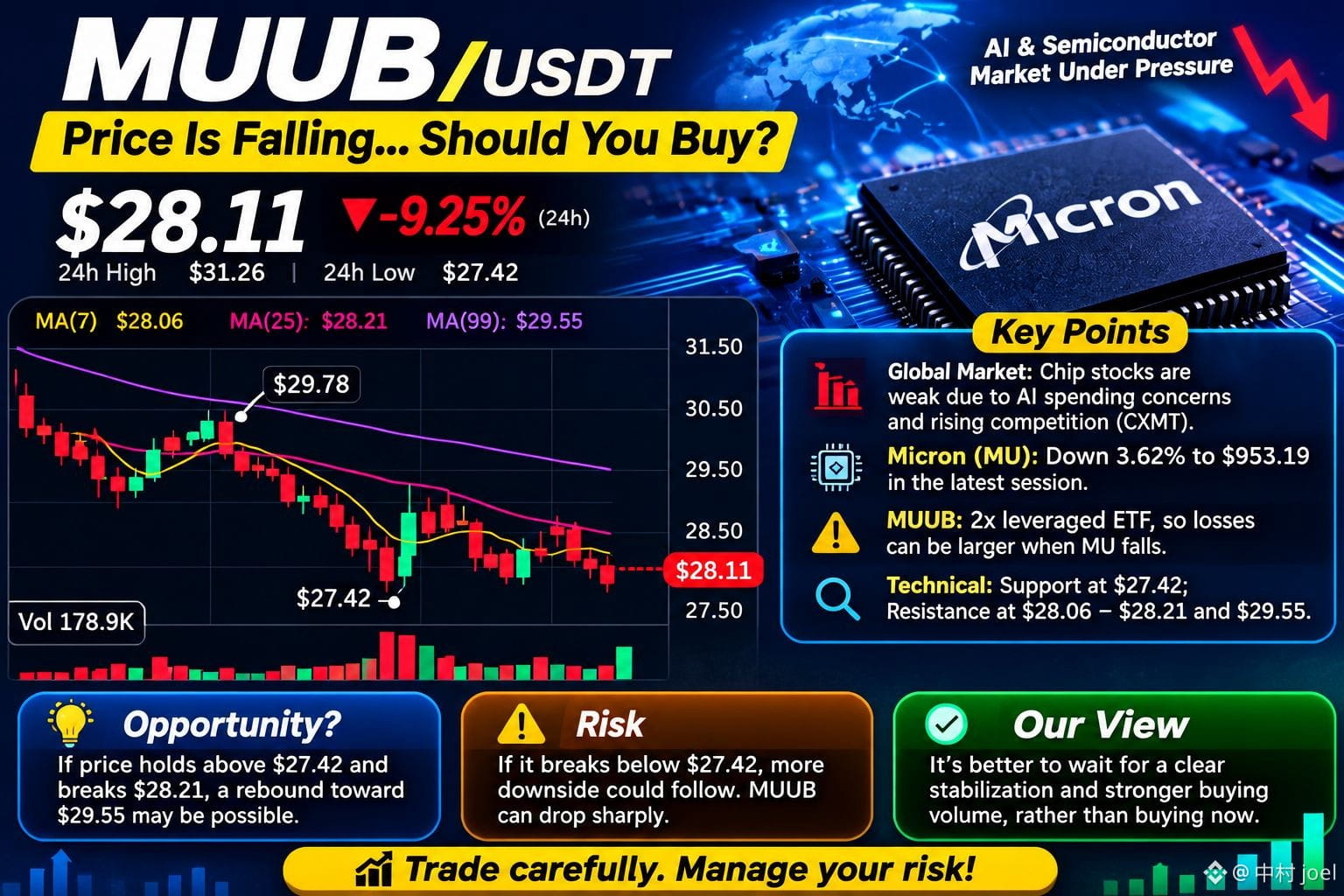
The global market is seeing growing investor concerns about the technology and AI sectors. In particular, reports about Chinese company CXMT’s advances in memory-chip technology have raised concerns about intensifying competition in the industry. This pressure is affecting semiconductor stocks, including Micron (MU).
On Binance, MUUB represents the Direxion MU Bull 2X ETF (bStocks). It is designed to target twice Micron’s daily stock-price performance. This means that when Micron’s stock falls, MUUB could experience even sharper losses. However, holding MUUB for the long term does not guarantee twice Micron’s returns because daily rebalancing can affect its performance over time.
Based on the latest available market data, MUUB is facing selling pressure, so it may be too early to assume that a rebound is coming. A falling price alone does not necessarily mean it is a good buying opportunity. It is important to watch for signs that selling pressure is easing, the price is stabilizing near support, and buying momentum is returning.
In my view, rather than buying immediately just because the price has dropped, it may be wiser to wait for clearer signs of stabilization and recovery. If you decide to trade, always determine how much you can afford to lose and manage your risk carefully.
What do you think about MUUB? 🤔 Do you expect a rebound, or could the price fall even further?
$MUU
$MUUB
@BinanceBurmese
#SEAstock
#BStocks
#Stocks
#Binance
The global market is seeing growing investor concerns about the technology and AI sectors. In particular, reports about Chinese company CXMT’s advances in memory-chip technology have raised concerns about intensifying competition in the industry. This pressure is affecting semiconductor stocks, including Micron (MU).
On Binance, MUUB represents the Direxion MU Bull 2X ETF (bStocks). It is designed to target twice Micron’s daily stock-price performance. This means that when Micron’s stock falls, MUUB could experience even sharper losses. However, holding MUUB for the long term does not guarantee twice Micron’s returns because daily rebalancing can affect its performance over time.
Based on the latest available market data, MUUB is facing selling pressure, so it may be too early to assume that a rebound is coming. A falling price alone does not necessarily mean it is a good buying opportunity. It is important to watch for signs that selling pressure is easing, the price is stabilizing near support, and buying momentum is returning.
In my view, rather than buying immediately just because the price has dropped, it may be wiser to wait for clearer signs of stabilization and recovery. If you decide to trade, always determine how much you can afford to lose and manage your risk carefully.
What do you think about MUUB? 🤔 Do you expect a rebound, or could the price fall even further?
$MUU
$MUUB
@Binance Burmese
#SEAstock
#BStocks
#Stocks
#Binance
1
311

·
--
Article
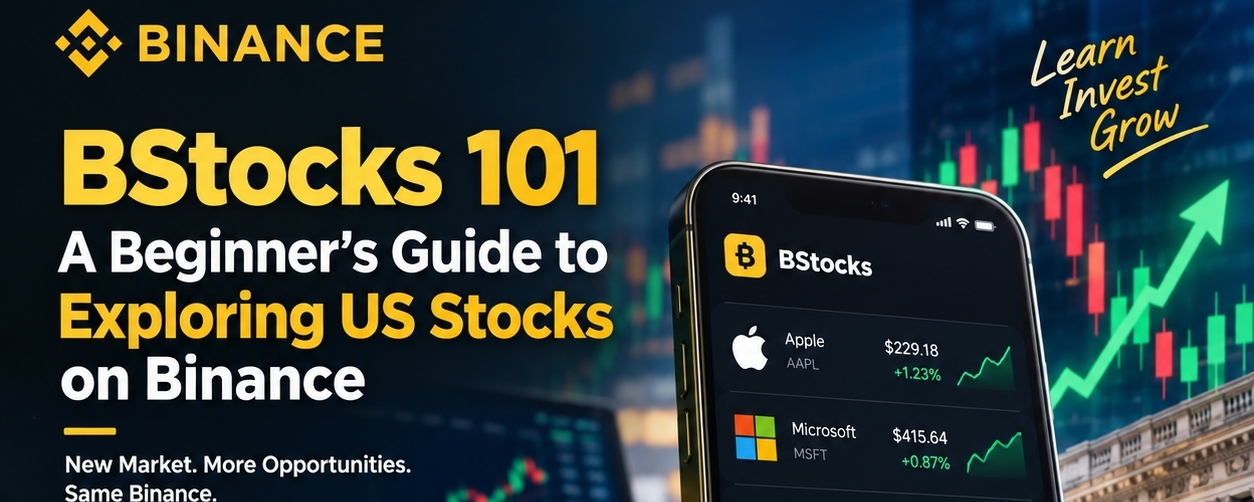
BStocks 101: A Beginners Guide to Exploring US Stocks on BinanceFor many crypto users, the world of traditional stocks can feel unfamiliar at first. We are used to seeing crypto prices move 24/7, but the stock market works differently. With Binance introducing ways for users to explore Stocks and BStocks, this can be an interesting opportunity to learn about another major part of the financial market.
In this article, I want to explain some basic concepts about US Stocks and BStocks in a simple way for beginners.
What Are Stocks?
A stock represents an ownership intest in a company. When you buy shares of a public company, you are purchasing an investment linked to that company’s value and performance.
For example, companies such as Apple, Microsoft, Amazon, and other publicly traded businesses have shares that can be bought and sold in financial markets.
Stock prices can move because of many factors, including company earnings, economic data, interest rates, industry developments, investor expectations, and market sentiment.
This is one reason why learning the basics is important before putting money into any investment.
What Are BStocks?
BStocks are designed to provide users with access to stock-related products through the Binance ecosystem. For someone who is already familiar with Binance and crypto, having stock-related products available in a familiar environment may make it easier to begin learning about traditional markets.
However, beginners should still understand that Stocks and BStocks are not the same thing as buying cryptocurrency.
The underlying structure, trading hours, market behavior, risks, and product terms can be different. Before trading, users should always check the specific product information and eligibility available in their region.
Stocks vs Crypto: What Is Different?
One of the biggest differences is market hours.
Crypto markets generally operate 24 hours a day, seven days a week. Traditional US stock markets operate according to scheduled market hours, with holidays and other closures.
Another important difference is what drives the market.
Crypto prices can be strongly affected by market sentiment, liquidity, adoption, regulations, and developments within the crypto ecosystem. Stock prices are also influenced by sentiment, but company earnings, revenue, business growth, economic conditions, interest rates, and industry performance can play major roles.
Neither market should simply be considered “easy money.” Both involve risk.
What Should Beginners Learn First?
If you are a crypto user interested in exploring Stocks, I think a good starting point is education rather than immediately focusing on making profits.
Here are some useful things to learn:
Understand what a stock represents.Learn how stock prices move.Understand market orders and limit orders.Learn about market hours.Understand basic company financial information.Learn how earnings reports can affect prices.Understand the risks of volatility.Check fees, product terms, and eligibility before trading.Never use money you cannot afford to lose.Keep learning from reliable sources.
From Crypto to Stocks
Crypto users already have experience watching charts, understanding volatility, and following market news. Some of these skills can be useful when learning about Stocks, but they should not be applied blindly.
For example, a crypto trader may be comfortable watching support and resistance or studying price action. However, stock investors may also need to pay attention to company fundamentals, earnings, revenue, valuation, economic data, and sector performance.
This makes learning Stocks an opportunity to expand your financial knowledge rather than simply replacing one market with another.
My Takeaway
The most important lesson for me is that understanding an investment product should come before taking unnecessary risks. Whether someone is interested in Crypto, Stocks, or BStocks, learning how the product works is an important first step.
For beginners, the goal should not be to find a shortcut to profit. A better approach is to understand the market, learn how risks work, start carefully, and continue improving your knowledge.
If you are already a Binance user and curious about US Stocks, exploring educational resources about Stocks and BStocks can be a useful way to broaden your understanding of different financial markets.
Always do your own research and carefully review the specific product information before making any investment decision.
What do you think—would you be interested in learning about US Stocks alongside Crypto? 📈
@BinanceBurmese
#SEAstock #Binance #BStocks #Investing #FinancialEducation
BStocks 101: A Beginners Guide to Exploring US Stocks on Binance
For many crypto users, the world of traditional stocks can feel unfamiliar at first. We are used to seeing crypto prices move 24/7, but the stock market works differently. With Binance introducing ways for users to explore Stocks and BStocks, this can be an interesting opportunity to learn about another major part of the financial market.
In this article, I want to explain some basic concepts about US Stocks and BStocks in a simple way for beginners.
What Are Stocks?
A stock represents an ownership intest in a company. When you buy shares of a public company, you are purchasing an investment linked to that company’s value and performance.
For example, companies such as Apple, Microsoft, Amazon, and other publicly traded businesses have shares that can be bought and sold in financial markets.
Stock prices can move because of many factors, including company earnings, economic data, interest rates, industry developments, investor expectations, and market sentiment.
This is one reason why learning the basics is important before putting money into any investment.
What Are BStocks?
BStocks are designed to provide users with access to stock-related products through the Binance ecosystem. For someone who is already familiar with Binance and crypto, having stock-related products available in a familiar environment may make it easier to begin learning about traditional markets.
However, beginners should still understand that Stocks and BStocks are not the same thing as buying cryptocurrency.
The underlying structure, trading hours, market behavior, risks, and product terms can be different. Before trading, users should always check the specific product information and eligibility available in their region.
Stocks vs Crypto: What Is Different?
One of the biggest differences is market hours.
Crypto markets generally operate 24 hours a day, seven days a week. Traditional US stock markets operate according to scheduled market hours, with holidays and other closures.
Another important difference is what drives the market.
Crypto prices can be strongly affected by market sentiment, liquidity, adoption, regulations, and developments within the crypto ecosystem. Stock prices are also influenced by sentiment, but company earnings, revenue, business growth, economic conditions, interest rates, and industry performance can play major roles.
Neither market should simply be considered “easy money.” Both involve risk.
What Should Beginners Learn First?
If you are a crypto user interested in exploring Stocks, I think a good starting point is education rather than immediately focusing on making profits.
Here are some useful things to learn:
Understand what a stock represents.Learn how stock prices move.Understand market orders and limit orders.Learn about market hours.Understand basic company financial information.Learn how earnings reports can affect prices.Understand the risks of volatility.Check fees, product terms, and eligibility before trading.Never use money you cannot afford to lose.Keep learning from reliable sources.
From Crypto to Stocks
Crypto users already have experience watching charts, understanding volatility, and following market news. Some of these skills can be useful when learning about Stocks, but they should not be applied blindly.
For example, a crypto trader may be comfortable watching support and resistance or studying price action. However, stock investors may also need to pay attention to company fundamentals, earnings, revenue, valuation, economic data, and sector performance.
This makes learning Stocks an opportunity to expand your financial knowledge rather than simply replacing one market with another.
My Takeaway
The most important lesson for me is that understanding an investment product should come before taking unnecessary risks. Whether someone is interested in Crypto, Stocks, or BStocks, learning how the product works is an important first step.
For beginners, the goal should not be to find a shortcut to profit. A better approach is to understand the market, learn how risks work, start carefully, and continue improving your knowledge.
If you are already a Binance user and curious about US Stocks, exploring educational resources about Stocks and BStocks can be a useful way to broaden your understanding of different financial markets.
Always do your own research and carefully review the specific product information before making any investment decision.
What do you think—would you be interested in learning about US Stocks alongside Crypto? 📈
@Binance Burmese
#SEAstock #Binance #BStocks #Investing #FinancialEducation
1
87

·
--
Article
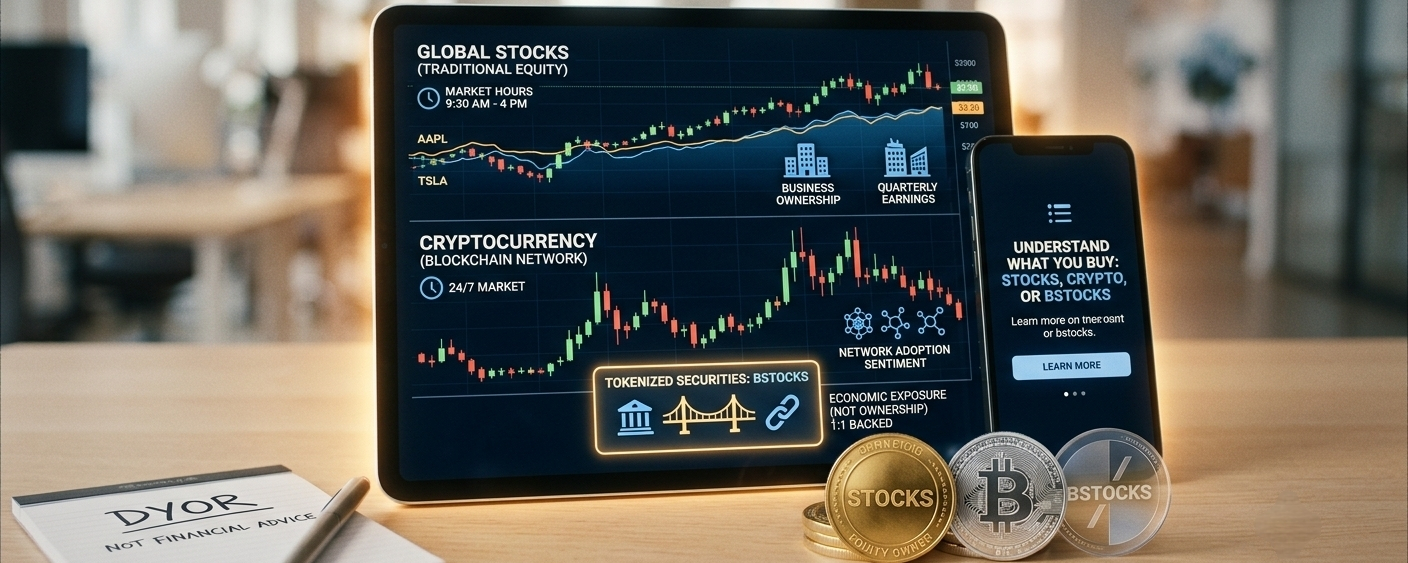
How are Stocks different from Crypto? Differences, risks, and opportunities 📈🪙If you already use crypto, you’ve probably noticed that stocks are becoming much easier to access through platforms like Binance. And honestly, at first glance, stocks and crypto can look very similar.
You see a price chart.
You choose an asset.
You buy it.
The price goes up or down.
So… are they really that different?
Yes. Quite a lot, actually.
But I don’t think the useful way to look at it is simply “Stocks are safe and crypto is risky.” Both can lose money, and both require you to understand what you’re buying.
The bigger difference is what the asset represents, how the market works, and what kind of risks you are taking.
🏢 First: What is a Stock?
A stock represents an ownership interest in a publicly traded company.
If you buy shares of a company through a traditional stock-market structure, your investment is connected to that company’s equity. Depending on the type of security and the arrangement, shareholders can have rights such as voting rights and rights related to dividends.
Stock prices are influenced by things that happen to the company and the wider economy.
For example:
• Company earnings
• Revenue growth
• New products
• Competition
• Interest rates
• Economic conditions
• Investor expectations
• Industry trends
That means when you buy a stock, you are essentially investing in the future performance of a business.
Of course, that doesn't mean a good company automatically means a good investment at every price. The market can change its expectations very quickly.
🪙 So how is Crypto different?
Crypto assets don't generally represent ownership in a traditional company.
Bitcoin, for example, isn't a share of a company. Its value isn't based on quarterly company earnings or ownership of a business.
Different crypto assets have different purposes and structures. Some are designed as networks, some as digital assets, some provide utility within an ecosystem, and some are connected to other applications.
The crypto market also operates differently from traditional stock markets.
Crypto markets are generally available 24/7, which is one reason crypto can feel so fast-moving. There is always another price movement, another piece of news, another token trending.
And this is where I think crypto users need to be careful.
Just because you can trade something 24/7 doesn't mean you need to trade it 24/7.
📊 The biggest difference: what moves the price?
This is probably one of the most useful things for someone moving from crypto into stocks to understand.
A stock's price is strongly connected to expectations about a company's future business performance.
Crypto prices can be influenced by many different factors, including network adoption, market liquidity, regulation, technology, sentiment, and supply and demand.
Both markets have speculation.
Both markets have volatility.
But the underlying structures are different.
That's why I wouldn't automatically apply the same thinking to a stock that I would use when looking at a crypto token.
⚠️ What about the risks?
This is where things become interesting.
Stocks have risks such as company-specific risk, economic risk, interest-rate risk and market risk. A company can report disappointing results, lose market share, face stronger competition, or simply become less attractive to investors.
Crypto has market volatility too, but there can also be additional risks connected to technology, custody, cybersecurity, regulation, liquidity and the particular design of an individual digital asset.
And there is another lesson I learned from using crypto:
The fact that something is available on an exchange doesn't automatically mean that I understand it.
That's true for both stocks and crypto.
Before buying something, I want to know what the asset actually represents.
🔗 Where do bStocks fit into this?
This is the part that I find particularly interesting.
Binance's bStocks are tokenized securities that provide exposure to selected underlying US equities. Binance says each bStock is backed 1:1 by the corresponding underlying US share held with a regulated custodian.
But there is an important detail here:
A bStock is not the same thing as directly owning the underlying company's stock.
Binance explicitly states that bStocks are not stocks or shares and don't give holders direct ownership or shareholder rights in the underlying company. Instead, they provide economic exposure to the underlying security.
So I think of bStocks as an interesting bridge between two worlds.
You have an underlying traditional financial asset, but its representation uses blockchain technology.
According to Binance, bStocks can also trade on Binance Spot 24/7 and can be withdrawn to compatible BNB Smart Chain wallets. Binance says fractional exposure can start from $5 for supported bStocks.
For someone who is already familiar with crypto wallets and blockchain transactions, this structure may feel more familiar than traditional stock infrastructure.
But familiar does not mean risk-free.
🧩 Stocks, Crypto and bStocks aren't interchangeable
This is probably the most important takeaway.
A traditional stock is not the same as a cryptocurrency.
A bStock is not the same as directly owning the underlying stock.
And a crypto user shouldn't assume that because an asset is traded on Binance, all three products work in the same way.
They don't.
They have different structures, different risks and potentially different rights.
For example, Binance notes that bStocks can have market, liquidity, issuer/custody, regulatory, technology and operational risks. Availability also depends on jurisdiction and user eligibility.
That's why reading the product information matters.
🌱 But there are opportunities too
The differences aren't only about risks.
Stocks give people a way to participate in the growth of publicly traded businesses.
Crypto gives users access to blockchain-based financial ecosystems that work differently from traditional markets.
And tokenized securities such as bStocks are an interesting development because they attempt to connect traditional financial exposure with blockchain infrastructure.
For crypto users, that creates an opportunity to learn about another asset class without completely leaving the environment they're already familiar with.
But I don't think the goal should be to choose between “Stocks vs Crypto” as if one has to replace the other.
The better question is:
Do I understand what I'm buying, and do I understand the risks involved?
💭 My biggest takeaway
When I first started learning about different financial markets, it was tempting to focus mainly on the price chart.
Green candle = good.
Red candle = bad.
But the more useful question is actually:
What is behind this price?
With a stock, look at the business.
With crypto, understand the asset, network and ecosystem.
With a tokenized security such as a bStock, understand both the underlying asset and the tokenized structure.
The chart only tells you what the market price is doing. It doesn't tell you everything about what you own.
That's why I think learning the differences between Stocks, Crypto and bStocks is more useful than simply asking which one will make more money.
Markets will always move.
The important part is knowing what you're actually holding when they do.
Not financial advice. Always do your own research and check the latest official product information, availability and applicable rules before making any financial decision.
@BinanceBurmese
#SEAstock
How are Stocks different from Crypto? Differences, risks, and opportunities 📈🪙
If you already use crypto, you’ve probably noticed that stocks are becoming much easier to access through platforms like Binance. And honestly, at first glance, stocks and crypto can look very similar.
You see a price chart.
You choose an asset.
You buy it.
The price goes up or down.
So… are they really that different?
Yes. Quite a lot, actually.
But I don’t think the useful way to look at it is simply “Stocks are safe and crypto is risky.” Both can lose money, and both require you to understand what you’re buying.
The bigger difference is what the asset represents, how the market works, and what kind of risks you are taking.
🏢 First: What is a Stock?
A stock represents an ownership interest in a publicly traded company.
If you buy shares of a company through a traditional stock-market structure, your investment is connected to that company’s equity. Depending on the type of security and the arrangement, shareholders can have rights such as voting rights and rights related to dividends.
Stock prices are influenced by things that happen to the company and the wider economy.
For example:
• Company earnings
• Revenue growth
• New products
• Competition
• Interest rates
• Economic conditions
• Investor expectations
• Industry trends
That means when you buy a stock, you are essentially investing in the future performance of a business.
Of course, that doesn't mean a good company automatically means a good investment at every price. The market can change its expectations very quickly.
🪙 So how is Crypto different?
Crypto assets don't generally represent ownership in a traditional company.
Bitcoin, for example, isn't a share of a company. Its value isn't based on quarterly company earnings or ownership of a business.
Different crypto assets have different purposes and structures. Some are designed as networks, some as digital assets, some provide utility within an ecosystem, and some are connected to other applications.
The crypto market also operates differently from traditional stock markets.
Crypto markets are generally available 24/7, which is one reason crypto can feel so fast-moving. There is always another price movement, another piece of news, another token trending.
And this is where I think crypto users need to be careful.
Just because you can trade something 24/7 doesn't mean you need to trade it 24/7.
📊 The biggest difference: what moves the price?
This is probably one of the most useful things for someone moving from crypto into stocks to understand.
A stock's price is strongly connected to expectations about a company's future business performance.
Crypto prices can be influenced by many different factors, including network adoption, market liquidity, regulation, technology, sentiment, and supply and demand.
Both markets have speculation.
Both markets have volatility.
But the underlying structures are different.
That's why I wouldn't automatically apply the same thinking to a stock that I would use when looking at a crypto token.
⚠️ What about the risks?
This is where things become interesting.
Stocks have risks such as company-specific risk, economic risk, interest-rate risk and market risk. A company can report disappointing results, lose market share, face stronger competition, or simply become less attractive to investors.
Crypto has market volatility too, but there can also be additional risks connected to technology, custody, cybersecurity, regulation, liquidity and the particular design of an individual digital asset.
And there is another lesson I learned from using crypto:
The fact that something is available on an exchange doesn't automatically mean that I understand it.
That's true for both stocks and crypto.
Before buying something, I want to know what the asset actually represents.
🔗 Where do bStocks fit into this?
This is the part that I find particularly interesting.
Binance's bStocks are tokenized securities that provide exposure to selected underlying US equities. Binance says each bStock is backed 1:1 by the corresponding underlying US share held with a regulated custodian.
But there is an important detail here:
A bStock is not the same thing as directly owning the underlying company's stock.
Binance explicitly states that bStocks are not stocks or shares and don't give holders direct ownership or shareholder rights in the underlying company. Instead, they provide economic exposure to the underlying security.
So I think of bStocks as an interesting bridge between two worlds.
You have an underlying traditional financial asset, but its representation uses blockchain technology.
According to Binance, bStocks can also trade on Binance Spot 24/7 and can be withdrawn to compatible BNB Smart Chain wallets. Binance says fractional exposure can start from $5 for supported bStocks.
For someone who is already familiar with crypto wallets and blockchain transactions, this structure may feel more familiar than traditional stock infrastructure.
But familiar does not mean risk-free.
🧩 Stocks, Crypto and bStocks aren't interchangeable
This is probably the most important takeaway.
A traditional stock is not the same as a cryptocurrency.
A bStock is not the same as directly owning the underlying stock.
And a crypto user shouldn't assume that because an asset is traded on Binance, all three products work in the same way.
They don't.
They have different structures, different risks and potentially different rights.
For example, Binance notes that bStocks can have market, liquidity, issuer/custody, regulatory, technology and operational risks. Availability also depends on jurisdiction and user eligibility.
That's why reading the product information matters.
🌱 But there are opportunities too
The differences aren't only about risks.
Stocks give people a way to participate in the growth of publicly traded businesses.
Crypto gives users access to blockchain-based financial ecosystems that work differently from traditional markets.
And tokenized securities such as bStocks are an interesting development because they attempt to connect traditional financial exposure with blockchain infrastructure.
For crypto users, that creates an opportunity to learn about another asset class without completely leaving the environment they're already familiar with.
But I don't think the goal should be to choose between “Stocks vs Crypto” as if one has to replace the other.
The better question is:
Do I understand what I'm buying, and do I understand the risks involved?
💭 My biggest takeaway
When I first started learning about different financial markets, it was tempting to focus mainly on the price chart.
Green candle = good.
Red candle = bad.
But the more useful question is actually:
What is behind this price?
With a stock, look at the business.
With crypto, understand the asset, network and ecosystem.
With a tokenized security such as a bStock, understand both the underlying asset and the tokenized structure.
The chart only tells you what the market price is doing. It doesn't tell you everything about what you own.
That's why I think learning the differences between Stocks, Crypto and bStocks is more useful than simply asking which one will make more money.
Markets will always move.
The important part is knowing what you're actually holding when they do.
Not financial advice. Always do your own research and check the latest official product information, availability and applicable rules before making any financial decision.
@Binance Burmese
#SEAstock
148

·
--
How bStocks Works and What Beginners Should KnowFor many Crypto users, getting started with stocks can feel like stepping into another world of finance. Traditional stocks are generally traded through stock exchanges and brokerage accounts, while Crypto runs on Blockchain networks and can be traded 24/7.
How bStocks Works and What Beginners Should Know
For many Crypto users, getting started with stocks can feel like stepping into another world of finance. Traditional stocks are generally traded through stock exchanges and brokerage accounts, while Crypto runs on Blockchain networks and can be traded 24/7.
12


Article
📈 You Know Binance for Crypto. But What If Your Next Investment Lesson Starts With US Stocks?You know Binance for Crypto. But what if your next investment lesson starts with US Stocks? 📈👀
If you already understand Bitcoin and other digital assets, exploring the stock market can be a completely different learning experience. And for eligible Binance users, BStocks can be another way to explore exposure to US Stocks within the Binance ecosystem.
But before jumping in, there are a few important things to understand.
🔹 1. Stocks are different from Crypto
Crypto markets can trade 24/7, while traditional US stock markets operate during specific market hours. Stock prices are also heavily influenced by company earnings, economic data, interest rates, and major business news.
🔹 2. Know what you are buying
Seeing a famous company everywhere doesn’t automatically make its stock a good investment. Before investing, learn about the company, its business model, financial performance, valuation, and future growth potential.
🔹 3. Understand risk
Stocks can rise, but they can also fall. Even large and well-known companies can experience significant price drops. Never assume that a familiar company means a risk-free investment.
🔹 4. Think about diversification
Putting all your money into one company means your portfolio depends heavily on that company. Learning about different companies, sectors, and diversification can help you understand how investors manage risk.
🔹 5. BStocks can be another learning opportunity
For Binance users interested in US Stocks, BStocks can provide another way to explore the stock market. However, availability, product structure, fees, and risks can vary by region and product, so always check the details before participating.
The most important lesson is simple:
Don’t invest in something just because it’s popular. Understand it first. 🧠📊
Crypto and Stocks are different markets, but learning about both can help you become a more informed market participant.
Would you explore US Stocks after learning about Crypto? 👀
@BinanceKhmer
#SEAstock #Binance #bstock
📈 You Know Binance for Crypto. But What If Your Next Investment Lesson Starts With US Stocks?
You know Binance for Crypto. But what if your next investment lesson starts with US Stocks? 📈👀
If you already understand Bitcoin and other digital assets, exploring the stock market can be a completely different learning experience. And for eligible Binance users, BStocks can be another way to explore exposure to US Stocks within the Binance ecosystem.
But before jumping in, there are a few important things to understand.
🔹 1. Stocks are different from Crypto
Crypto markets can trade 24/7, while traditional US stock markets operate during specific market hours. Stock prices are also heavily influenced by company earnings, economic data, interest rates, and major business news.
🔹 2. Know what you are buying
Seeing a famous company everywhere doesn’t automatically make its stock a good investment. Before investing, learn about the company, its business model, financial performance, valuation, and future growth potential.
🔹 3. Understand risk
Stocks can rise, but they can also fall. Even large and well-known companies can experience significant price drops. Never assume that a familiar company means a risk-free investment.
🔹 4. Think about diversification
Putting all your money into one company means your portfolio depends heavily on that company. Learning about different companies, sectors, and diversification can help you understand how investors manage risk.
🔹 5. BStocks can be another learning opportunity
For Binance users interested in US Stocks, BStocks can provide another way to explore the stock market. However, availability, product structure, fees, and risks can vary by region and product, so always check the details before participating.
The most important lesson is simple:
Don’t invest in something just because it’s popular. Understand it first. 🧠📊
Crypto and Stocks are different markets, but learning about both can help you become a more informed market participant.
Would you explore US Stocks after learning about Crypto? 👀
@Binance Khmer
#SEAstock #Binance #bstock
88

·
--

Article
Bstock market🚀 BStocks 101: How to Get Started with US Stocks on Binance
If you’ve ever wanted to invest in US stocks but didn’t know where to begin, BStocks on Binance make it easier than ever! 📈 Through Binance’s ecosystem, you can gain exposure to major US companies without needing a traditional brokerage account.
🔹 What are BStocks?
BStocks (Blockchain Stocks) are tokenized representations of real-world stocks. They allow you to trade popular US equities in a crypto-friendly environment, combining the flexibility of blockchain with the value of traditional markets.
🔹 How to get started:
Create and verify your Binance accountDeposit funds (USDT or other supported assets)Explore available BStocks pairsStart small and learn market movementsUse charts, news, and risk management tools
🔹 Why learn US stocks through Binance?
Easy access for global users 🌍Trade anytime with crypto convenience ⏱️Diversify beyond crypto into traditional marketsGreat for beginners learning price action and fundamentals
💡 Tip: Start by following big names like tech or energy stocks and observe how global news impacts prices. Learning this connection will level up your trading skills fast. Trading BStocks is not just about profit—it’s about understanding how global markets work. Start your journey today and grow step by step!
@BinanceKhmer
#Bstock #BStock
#SEAstock
Bstock market
🚀 BStocks 101: How to Get Started with US Stocks on Binance
If you’ve ever wanted to invest in US stocks but didn’t know where to begin, BStocks on Binance make it easier than ever! 📈 Through Binance’s ecosystem, you can gain exposure to major US companies without needing a traditional brokerage account.
🔹 What are BStocks?
BStocks (Blockchain Stocks) are tokenized representations of real-world stocks. They allow you to trade popular US equities in a crypto-friendly environment, combining the flexibility of blockchain with the value of traditional markets.
🔹 How to get started:
Create and verify your Binance accountDeposit funds (USDT or other supported assets)Explore available BStocks pairsStart small and learn market movementsUse charts, news, and risk management tools
🔹 Why learn US stocks through Binance?
Easy access for global users 🌍Trade anytime with crypto convenience ⏱️Diversify beyond crypto into traditional marketsGreat for beginners learning price action and fundamentals
💡 Tip: Start by following big names like tech or energy stocks and observe how global news impacts prices. Learning this connection will level up your trading skills fast. Trading BStocks is not just about profit—it’s about understanding how global markets work. Start your journey today and grow step by step!
@Binance Khmer
#Bstock #BStock
#SEAstock
97
·
--

Article
BStocks 101: How to get started and learn about US Stocks through Binance 📈If you are familiar with crypto but curious about US Stocks, BStocks can be a useful starting point to explore a different type of market through Binance. Before getting started, beginners should first learn the basics: what stocks are, how stock prices move, and what factors can affect a company’s value. It is also important to understand the risks, do your own research, and avoid making decisions based only on hype. Start small, learn consistently, and build your knowledge step by step. Investing is not about getting rich quickly—it is about understanding what you are doing before taking a risk. @BinanceKhmer #SEAstock
BStocks 101: How to get started and learn about US Stocks through Binance 📈
If you are familiar with crypto but curious about US Stocks, BStocks can be a useful starting point to explore a different type of market through Binance. Before getting started, beginners should first learn the basics: what stocks are, how stock prices move, and what factors can affect a company’s value. It is also important to understand the risks, do your own research, and avoid making decisions based only on hype. Start small, learn consistently, and build your knowledge step by step. Investing is not about getting rich quickly—it is about understanding what you are doing before taking a risk. @Binance Khmer #SEAstock
2
92

·
--
Crypto vs. Stocks: How BStocks on Binance Bridge the Gap for Modern InvestorsFor years, the financial world has felt divided into two separate camps: the fast-paced, 24/7 digital asset ecosystem of Cryptocurrency, and the battle-tested, foundational wealth-building engine of the Traditional Stock Market.
If you are a crypto-native investor, venturing into Wall Street often meant navigating complex traditional brokerage accounts, currency conversions, and cumbersome onboarding processes. Conversely, if you came from traditional finance, crypto volatility might have felt unfamiliar.
However, the investment landscape is evolving rapidly. With the introduction of BStocks on Binance, the boundary between traditional finance and Web3 is disappearing. Investors can now gain exposure to top-performing US Stocks directly within the crypto ecosystem they already know and trust.
In this guide, we will explore the fundamental differences between Crypto and Stocks, how BStocks work, and why bridging these two asset classes is a game-changer for your portfolio.
1️⃣ Crypto vs. Traditional Stocks: Understanding the Core Differences
To build a resilient portfolio, it is essential to understand how these two asset classes behave, what drives their value, and where their unique risks and opportunities lie:
Underlying Value:Cryptocurrency: Driven by decentralized networks, protocol utility, and supply/demand dynamics.Traditional US Stocks: Backed by corporate equity, revenue, earnings reports, and physical/intellectual assets.Market Hours:Cryptocurrency: Operating 24/7/365 continuous trading globally.Traditional US Stocks: Bound by standard market exchange hours (e.g., NYSE/NASDAQ opening and closing bells).Volatility & Risk:Cryptocurrency: High volatility with potential for rapid price discovery.Traditional US Stocks: Moderate to lower volatility, backed by historical corporate performance.Regulation:Cryptocurrency: Operating within evolving global regulatory frameworks.Traditional US Stocks: Strictly regulated by government bodies (e.g., US SEC).
💡 The Opportunity in Diversification:Crypto offers high growth potential, innovation, and continuous market access. Meanwhile, traditional US stocks offer historical stability, dividend opportunities, and exposure to battle-tested global giants like Apple, Microsoft, and Tesla. Holding both asset classes allows you to balance high-risk, high-reward innovation with steady, proven corporate equity.
2️⃣ What are BStocks and How Do They Work?
BStocks represent a revolutionary bridge between traditional equities and digital asset flexibility. They allow users to access the price performance of leading US stocks directly through Binance.
Instead of liquidating your crypto into fiat, withdrawing to a local bank, opening a foreign brokerage account, and wiring funds to trade US equities, BStocks streamline the entire process:
⚡ Seamless Access: Trade exposure to top US stocks using your existing Binance wallet balance.🧩 Fractional Ownership Mindset: You don't need thousands of dollars to invest in high-value companies. Access fractional exposure according to your available capital.📊 Unified Portfolio Management: Track your Bitcoin, Altcoins, Stablecoins, and Stock exposure in one single dashboard.💸 Efficiency: Avoid multiple intermediary fees, foreign exchange overheads, and long banking delay periods.
3️⃣ Getting Started with US Stocks via Binance: A Beginner’s Checklist
If you are transitioning from pure crypto trading to exploring US equities via Binance, follow this simple checklist to ensure a smooth start:
[x] Step 1: Complete Verification (KYC)Ensure your Binance account is fully verified. Compliance and security are essential for accessing advanced product suites.[ ] Step 2: Understand Market Hours vs. Crypto TradingRemember that traditional stock movements are tied to real-world exchange hours. Pay attention to pre-market and post-market news events in the US.[ ] Step 3: Research Fundamental Earnings & NewsUnlike crypto, which relies heavily on tokenomics, GitHub commits, and on-chain metrics, stocks move on quarterly earnings reports (EPS), revenue growth, macro interest rates, and sector health.[ ] Step 4: Define Your Risk Management StrategyAllocate your capital wisely. Use stablecoins or existing balances to diversify into stocks to hedge against crypto-market drawdown cycles.
4️⃣ Expanding Your Investment Journey: Why Blending Crypto & Stocks Makes Sense
The modern investor no longer needs to choose between being "100% Crypto" or "100% TradFi." The real power lies in portfolio asset allocation.
When crypto markets experience consolidation or bear cycles, capital often flows into traditional safe havens or high-performing tech stocks. By keeping your capital within the Binance ecosystem through BStocks, you retain full flexibility:
Reallocate gains from crypto bull runs into stable US tech equities to lock in long-term value.Pivot back into digital assets effortlessly when strategic crypto entry points emerge.Enjoy smooth liquidity management without leaving your primary exchange platform.
🎯 Conclusion: The Future of Unified Wealth Management
The integration of US Stocks into Binance via BStocks marks a major milestone in financial access. It empowers global users to learn, invest, and build a truly diversified wealth portfolio using a single, secure interface.
Whether you are a seasoned trader looking to hedge your crypto portfolio or a beginner taking your first steps into global equity markets, the tools are now at your fingertips. Take control of your financial journey, explore BStocks on Binance today, and build a portfolio designed for all market conditions!
@BinanceBurmese
#SEABstock #SEAstock
Crypto vs. Stocks: How BStocks on Binance Bridge the Gap for Modern Investors
For years, the financial world has felt divided into two separate camps: the fast-paced, 24/7 digital asset ecosystem of Cryptocurrency, and the battle-tested, foundational wealth-building engine of the Traditional Stock Market.
If you are a crypto-native investor, venturing into Wall Street often meant navigating complex traditional brokerage accounts, currency conversions, and cumbersome onboarding processes. Conversely, if you came from traditional finance, crypto volatility might have felt unfamiliar.
However, the investment landscape is evolving rapidly. With the introduction of BStocks on Binance, the boundary between traditional finance and Web3 is disappearing. Investors can now gain exposure to top-performing US Stocks directly within the crypto ecosystem they already know and trust.
In this guide, we will explore the fundamental differences between Crypto and Stocks, how BStocks work, and why bridging these two asset classes is a game-changer for your portfolio.
1️⃣ Crypto vs. Traditional Stocks: Understanding the Core Differences
To build a resilient portfolio, it is essential to understand how these two asset classes behave, what drives their value, and where their unique risks and opportunities lie:
Underlying Value:Cryptocurrency: Driven by decentralized networks, protocol utility, and supply/demand dynamics.Traditional US Stocks: Backed by corporate equity, revenue, earnings reports, and physical/intellectual assets.Market Hours:Cryptocurrency: Operating 24/7/365 continuous trading globally.Traditional US Stocks: Bound by standard market exchange hours (e.g., NYSE/NASDAQ opening and closing bells).Volatility & Risk:Cryptocurrency: High volatility with potential for rapid price discovery.Traditional US Stocks: Moderate to lower volatility, backed by historical corporate performance.Regulation:Cryptocurrency: Operating within evolving global regulatory frameworks.Traditional US Stocks: Strictly regulated by government bodies (e.g., US SEC).
💡 The Opportunity in Diversification:Crypto offers high growth potential, innovation, and continuous market access. Meanwhile, traditional US stocks offer historical stability, dividend opportunities, and exposure to battle-tested global giants like Apple, Microsoft, and Tesla. Holding both asset classes allows you to balance high-risk, high-reward innovation with steady, proven corporate equity.
2️⃣ What are BStocks and How Do They Work?
BStocks represent a revolutionary bridge between traditional equities and digital asset flexibility. They allow users to access the price performance of leading US stocks directly through Binance.
Instead of liquidating your crypto into fiat, withdrawing to a local bank, opening a foreign brokerage account, and wiring funds to trade US equities, BStocks streamline the entire process:
⚡ Seamless Access: Trade exposure to top US stocks using your existing Binance wallet balance.🧩 Fractional Ownership Mindset: You don't need thousands of dollars to invest in high-value companies. Access fractional exposure according to your available capital.📊 Unified Portfolio Management: Track your Bitcoin, Altcoins, Stablecoins, and Stock exposure in one single dashboard.💸 Efficiency: Avoid multiple intermediary fees, foreign exchange overheads, and long banking delay periods.
3️⃣ Getting Started with US Stocks via Binance: A Beginner’s Checklist
If you are transitioning from pure crypto trading to exploring US equities via Binance, follow this simple checklist to ensure a smooth start:
[x] Step 1: Complete Verification (KYC)Ensure your Binance account is fully verified. Compliance and security are essential for accessing advanced product suites.[ ] Step 2: Understand Market Hours vs. Crypto TradingRemember that traditional stock movements are tied to real-world exchange hours. Pay attention to pre-market and post-market news events in the US.[ ] Step 3: Research Fundamental Earnings & NewsUnlike crypto, which relies heavily on tokenomics, GitHub commits, and on-chain metrics, stocks move on quarterly earnings reports (EPS), revenue growth, macro interest rates, and sector health.[ ] Step 4: Define Your Risk Management StrategyAllocate your capital wisely. Use stablecoins or existing balances to diversify into stocks to hedge against crypto-market drawdown cycles.
4️⃣ Expanding Your Investment Journey: Why Blending Crypto & Stocks Makes Sense
The modern investor no longer needs to choose between being "100% Crypto" or "100% TradFi." The real power lies in portfolio asset allocation.
When crypto markets experience consolidation or bear cycles, capital often flows into traditional safe havens or high-performing tech stocks. By keeping your capital within the Binance ecosystem through BStocks, you retain full flexibility:
Reallocate gains from crypto bull runs into stable US tech equities to lock in long-term value.Pivot back into digital assets effortlessly when strategic crypto entry points emerge.Enjoy smooth liquidity management without leaving your primary exchange platform.
🎯 Conclusion: The Future of Unified Wealth Management
The integration of US Stocks into Binance via BStocks marks a major milestone in financial access. It empowers global users to learn, invest, and build a truly diversified wealth portfolio using a single, secure interface.
Whether you are a seasoned trader looking to hedge your crypto portfolio or a beginner taking your first steps into global equity markets, the tools are now at your fingertips. Take control of your financial journey, explore BStocks on Binance today, and build a portfolio designed for all market conditions!
@Binance Burmese
#SEABstock #SEAstock
1
71

·
--
Stocks & BStocks: Bridging Traditional and Digital Markets
The financial world is entering a new digital chapter. Stocks & BStocks bring together familiar market concepts and blockchain-based innovation, creating a new way to explore modern financial products.
Stocks provide exposure to established companies, while BStocks represent a digital approach to stock-related products. This connection between traditional finance and blockchain technology highlights how market infrastructure continues to evolve.
For anyone exploring this space, understanding product structure, fees, risks, and availability is essential. Research first, stay informed, and make decisions carefully.
How do you see the future of Stocks & BStocks? #SEAstock @BinanceBurmese
Stocks & BStocks: Bridging Traditional and Digital Markets
The financial world is entering a new digital chapter. Stocks & BStocks bring together familiar market concepts and blockchain-based innovation, creating a new way to explore modern financial products.
Stocks provide exposure to established companies, while BStocks represent a digital approach to stock-related products. This connection between traditional finance and blockchain technology highlights how market infrastructure continues to evolve.
For anyone exploring this space, understanding product structure, fees, risks, and availability is essential. Research first, stay informed, and make decisions carefully.
How do you see the future of Stocks & BStocks? #SEAstock @Binance Burmese

6
8
215

·
--
Stocks & BStocks
Exploring the Future of Digital Markets
Financial markets are evolving as technology creates new ways to explore global opportunities. Binance Stocks & BStocks bring traditional market concepts closer to the digital asset experience.
Stocks can connect users with established companies, while BStocks introduce a blockchain-based approach to stock exposure. Understanding product structure, fees, risks, and availability is essential.
Stay informed and discover new perspectives as digital finance evolves.
What role could Stocks & BStocks play in the future of finance in 2026?
#SEAstock
@BinanceBurmese
Stocks & BStocks
Exploring the Future of Digital Markets
Financial markets are evolving as technology creates new ways to explore global opportunities. Binance Stocks & BStocks bring traditional market concepts closer to the digital asset experience.
Stocks can connect users with established companies, while BStocks introduce a blockchain-based approach to stock exposure. Understanding product structure, fees, risks, and availability is essential.
Stay informed and discover new perspectives as digital finance evolves.
What role could Stocks & BStocks play in the future of finance in 2026?
#SEAstock
@Binance Burmese

13
2
18
391

·
--
A Beginner’s Guide to US Stocks on Binance: Transitioning from Crypto to BStocksIf you are already familiar with the crypto market, you know how exciting, fast-paced, and dynamic digital assets can be. However, every smart investor knows the golden rule of wealth building: diversification. Expanding your portfolio beyond cryptocurrencies into traditional assets like US stocks is one of the best ways to manage risk while continuing to grow your capital. Thanksks to Binance, accessing traditional markets is no longer a complex process involving traditional brokers and endless paperwork. Through BStocks on Binance, crypto users can now bridge the gap between traditional finance and blockchain tech effortlessly. In this guide, we will explore how BStocks work, how they differ from crypto, and how beginners can get started today.
---
### What are BStocks and How Do They Work?
BStocks represent traditional equity markets brought closer to the crypto ecosystem. Traditionally, buying US stocks required navigating international brokerage accounts, dealing with high wire transfer fees, and waiting days for settlements.
Binance simplifies this entire journey. By introducing stock-related products and seamless integration within the Binance ecosystem, users can easily monitor, learn about, and gain exposure to popular global stocks right alongside their favorite crypto assets.
---
### Key Differences: Stocks vs. Cryptocurrencies
Before diving into trading or investing in BStocks, it is essential to understand how the stock market differs from the cryptocurrency market:
1. Volatility and Risk Profile: Cryptocurrencies are famous for extreme price swings in short periods. US Stocks, particularly established large-cap companies, generally exhibit lower short-term volatility, making them a steady balancing factor for a high-risk crypto portfolio.
2. Market Hours: While the crypto market operates 24/7/365, traditional US stock markets have specific trading hours (standard US Eastern Time). Knowing when the market opens and closes is crucial for executing your strategy.
3. Fundamental Drivers: Crypto prices are often driven by network adoption, tokenomics, community sentiment, and technological upgrades. In contrast, US stock prices heavily depend on corporate earnings reports, quarterly revenue, interest rates, and macro-economic factors.
---
### Why Should Crypto Investors Explore BStocks?
1. Easy Portfolio Diversification: Instead of keeping all your capital in digital tokens, you can allocate a percentage into world-leading equity markets, reducing overall portfolio risk.
2. Unified Ecosystem Experience: You do not need to sign up for multiple traditional stock trading platforms. Binance provides a single, convenient hub to learn, track, and manage your financial interests.
3. Hedge Against Market Cycles: When the crypto market enters a consolidation phase or bear cycle, traditional equity markets might offer alternative growth opportunities.
---
### A Step-by-Step Beginner Checklist
If you are ready to expand your investment journey from crypto to stocks, follow this quick checklist:
* Educate Yourself First: Start by tracking top global companies (like tech giants or index-tracking equities) to understand how news affects their valuation.
* Follow Official Local Channels: Stay updated with market commentary and regional guides by following your local Binance community accounts like @Binance Burmese.
* Start Small: Just as with crypto, never risk more than you can afford to lose. Begin with small allocations as you learn how stock markets respond to global events.
* Engage with the Community: Use Binance Square to share insights, read market analyses from other creators, and ask questions.
---
### Final Thoughts
Transitioning from crypto to US stocks through Binance BStocks is an empowering step for any modern investor. By combining the flexibility of the Binance ecosystem with the stability of global equity markets, you can build a more resilient and well-rounded portfolio.
Start exploring BStocks today, educate yourself through Binance Square, and take control of your financial future!
---
Written by: [Maxkale]
#SEABstock #SEAstock @BinanceBurmese
A Beginner’s Guide to US Stocks on Binance: Transitioning from Crypto to BStocks
If you are already familiar with the crypto market, you know how exciting, fast-paced, and dynamic digital assets can be. However, every smart investor knows the golden rule of wealth building: diversification. Expanding your portfolio beyond cryptocurrencies into traditional assets like US stocks is one of the best ways to manage risk while continuing to grow your capital. Thanksks to Binance, accessing traditional markets is no longer a complex process involving traditional brokers and endless paperwork. Through BStocks on Binance, crypto users can now bridge the gap between traditional finance and blockchain tech effortlessly. In this guide, we will explore how BStocks work, how they differ from crypto, and how beginners can get started today.
---
### What are BStocks and How Do They Work?
BStocks represent traditional equity markets brought closer to the crypto ecosystem. Traditionally, buying US stocks required navigating international brokerage accounts, dealing with high wire transfer fees, and waiting days for settlements.
Binance simplifies this entire journey. By introducing stock-related products and seamless integration within the Binance ecosystem, users can easily monitor, learn about, and gain exposure to popular global stocks right alongside their favorite crypto assets.
---
### Key Differences: Stocks vs. Cryptocurrencies
Before diving into trading or investing in BStocks, it is essential to understand how the stock market differs from the cryptocurrency market:
1. Volatility and Risk Profile: Cryptocurrencies are famous for extreme price swings in short periods. US Stocks, particularly established large-cap companies, generally exhibit lower short-term volatility, making them a steady balancing factor for a high-risk crypto portfolio.
2. Market Hours: While the crypto market operates 24/7/365, traditional US stock markets have specific trading hours (standard US Eastern Time). Knowing when the market opens and closes is crucial for executing your strategy.
3. Fundamental Drivers: Crypto prices are often driven by network adoption, tokenomics, community sentiment, and technological upgrades. In contrast, US stock prices heavily depend on corporate earnings reports, quarterly revenue, interest rates, and macro-economic factors.
---
### Why Should Crypto Investors Explore BStocks?
1. Easy Portfolio Diversification: Instead of keeping all your capital in digital tokens, you can allocate a percentage into world-leading equity markets, reducing overall portfolio risk.
2. Unified Ecosystem Experience: You do not need to sign up for multiple traditional stock trading platforms. Binance provides a single, convenient hub to learn, track, and manage your financial interests.
3. Hedge Against Market Cycles: When the crypto market enters a consolidation phase or bear cycle, traditional equity markets might offer alternative growth opportunities.
---
### A Step-by-Step Beginner Checklist
If you are ready to expand your investment journey from crypto to stocks, follow this quick checklist:
* Educate Yourself First: Start by tracking top global companies (like tech giants or index-tracking equities) to understand how news affects their valuation.
* Follow Official Local Channels: Stay updated with market commentary and regional guides by following your local Binance community accounts like @Binance Burmese.
* Start Small: Just as with crypto, never risk more than you can afford to lose. Begin with small allocations as you learn how stock markets respond to global events.
* Engage with the Community: Use Binance Square to share insights, read market analyses from other creators, and ask questions.
---
### Final Thoughts
Transitioning from crypto to US stocks through Binance BStocks is an empowering step for any modern investor. By combining the flexibility of the Binance ecosystem with the stability of global equity markets, you can build a more resilient and well-rounded portfolio.
Start exploring BStocks today, educate yourself through Binance Square, and take control of your financial future!
---
Written by: [Maxkale]
#SEABstock #SEAstock @Binance Burmese
---
### What are BStocks and How Do They Work?
BStocks represent traditional equity markets brought closer to the crypto ecosystem. Traditionally, buying US stocks required navigating international brokerage accounts, dealing with high wire transfer fees, and waiting days for settlements.
Binance simplifies this entire journey. By introducing stock-related products and seamless integration within the Binance ecosystem, users can easily monitor, learn about, and gain exposure to popular global stocks right alongside their favorite crypto assets.
---
### Key Differences: Stocks vs. Cryptocurrencies
Before diving into trading or investing in BStocks, it is essential to understand how the stock market differs from the cryptocurrency market:
1. Volatility and Risk Profile: Cryptocurrencies are famous for extreme price swings in short periods. US Stocks, particularly established large-cap companies, generally exhibit lower short-term volatility, making them a steady balancing factor for a high-risk crypto portfolio.
2. Market Hours: While the crypto market operates 24/7/365, traditional US stock markets have specific trading hours (standard US Eastern Time). Knowing when the market opens and closes is crucial for executing your strategy.
3. Fundamental Drivers: Crypto prices are often driven by network adoption, tokenomics, community sentiment, and technological upgrades. In contrast, US stock prices heavily depend on corporate earnings reports, quarterly revenue, interest rates, and macro-economic factors.
---
### Why Should Crypto Investors Explore BStocks?
1. Easy Portfolio Diversification: Instead of keeping all your capital in digital tokens, you can allocate a percentage into world-leading equity markets, reducing overall portfolio risk.
2. Unified Ecosystem Experience: You do not need to sign up for multiple traditional stock trading platforms. Binance provides a single, convenient hub to learn, track, and manage your financial interests.
3. Hedge Against Market Cycles: When the crypto market enters a consolidation phase or bear cycle, traditional equity markets might offer alternative growth opportunities.
---
### A Step-by-Step Beginner Checklist
If you are ready to expand your investment journey from crypto to stocks, follow this quick checklist:
* Educate Yourself First: Start by tracking top global companies (like tech giants or index-tracking equities) to understand how news affects their valuation.
* Follow Official Local Channels: Stay updated with market commentary and regional guides by following your local Binance community accounts like @Binance Burmese.
* Start Small: Just as with crypto, never risk more than you can afford to lose. Begin with small allocations as you learn how stock markets respond to global events.
* Engage with the Community: Use Binance Square to share insights, read market analyses from other creators, and ask questions.
---
### Final Thoughts
Transitioning from crypto to US stocks through Binance BStocks is an empowering step for any modern investor. By combining the flexibility of the Binance ecosystem with the stability of global equity markets, you can build a more resilient and well-rounded portfolio.
Start exploring BStocks today, educate yourself through Binance Square, and take control of your financial future!
---
Written by: [Maxkale]
#SEABstock #SEAstock @Binance Burmese
90

·
--
How Can Beginners Build Wealth with US Stocks? A Simple Guide to Getting StartedMany people want to build an additional source of income, but they may not know where to start. US Stocks can be one option to explore, especially for people who want to learn about investing and potentially build long-term wealth.
For beginners, the most important thing is not trying to make money quickly. It is understanding how the stock market works, choosing an approach that matches your goals, and managing risk carefully.
1. What does “making money from Stocks” mean?
There are generally two ways investors can potentially benefit from stocks:
Capital appreciation: You buy a stock and its market price increases. If you later sell it at a higher price, you may make a profit.
Dividends: Some companies distribute part of their profits to shareholders through dividends. However, not every company pays dividends, and dividend payments can change.
For example, if you invest $500 in a stock and its value later increases to $550, the unrealized gain would be $50 before considering fees, taxes, and other costs. But the price can also fall, meaning you could lose money.
2. Start with Knowledge, Not Money
Before putting money into the market, beginners should understand some basic concepts:
• What is a stock?
• How does a company make money?
• What is market capitalization?
• What are earnings and revenue?
• What is a dividend?
• Why do stock prices move?
• What are the risks of investing?
Learning these basics can help investors make decisions based on information rather than emotions.
3. Think Long Term
One common mistake beginners make is focusing only on short-term price movements.
The stock market can move up and down because of company results, economic conditions, interest rates, market sentiment, and global events.
A long-term approach means focusing on the underlying business and your investment objective instead of reacting emotionally to every daily price change.
4. Don't Put Everything Into One Stock
Diversification is another important concept.
Instead of putting all your available money into one company, investors can learn about different companies, sectors, and asset classes. Diversification does not eliminate risk, but it can help reduce the impact of one investment performing poorly.
5. How Can BStocks Help Beginners Explore Stocks?
For people who already use Binance and are interested in learning about traditional markets, BStocks can provide another way to explore US Stocks through the Binance ecosystem, where available.
However, availability, products, fees, eligibility, and other conditions can vary by location and product. Always check the latest information available on Binance before making any investment decision.
6. My Beginner Checklist
Before buying a stock, I would ask myself:
☑ Do I understand what the company does?
☑ Have I researched the company?
☑ Am I investing or simply chasing a price increase?
☑ How much money can I afford to risk?
☑ Do I have a clear investment goal?
☑ Have I considered diversification?
☑ Do I understand the risks?
☑ Am I prepared for the possibility of losing money?
Final Thoughts
Building wealth through Stocks is not a shortcut to getting rich. It is a process of learning, researching, managing risk, and making decisions based on your own financial situation.
For beginners, the goal should be to understand the market first and invest responsibly rather than chasing quick profits.
I am also continuing to learn about US Stocks and BStocks, and I hope this guide can help other beginners in the community start their learning journey.
Always do your own research and understand the risks before investing.
@BinanceLaotian
#SEABstock
#SEAstock #BStocks #USStocks #Investing
How Can Beginners Build Wealth with US Stocks? A Simple Guide to Getting Started
Many people want to build an additional source of income, but they may not know where to start. US Stocks can be one option to explore, especially for people who want to learn about investing and potentially build long-term wealth.
For beginners, the most important thing is not trying to make money quickly. It is understanding how the stock market works, choosing an approach that matches your goals, and managing risk carefully.
1. What does “making money from Stocks” mean?
There are generally two ways investors can potentially benefit from stocks:
Capital appreciation: You buy a stock and its market price increases. If you later sell it at a higher price, you may make a profit.
Dividends: Some companies distribute part of their profits to shareholders through dividends. However, not every company pays dividends, and dividend payments can change.
For example, if you invest $500 in a stock and its value later increases to $550, the unrealized gain would be $50 before considering fees, taxes, and other costs. But the price can also fall, meaning you could lose money.
2. Start with Knowledge, Not Money
Before putting money into the market, beginners should understand some basic concepts:
• What is a stock?
• How does a company make money?
• What is market capitalization?
• What are earnings and revenue?
• What is a dividend?
• Why do stock prices move?
• What are the risks of investing?
Learning these basics can help investors make decisions based on information rather than emotions.
3. Think Long Term
One common mistake beginners make is focusing only on short-term price movements.
The stock market can move up and down because of company results, economic conditions, interest rates, market sentiment, and global events.
A long-term approach means focusing on the underlying business and your investment objective instead of reacting emotionally to every daily price change.
4. Don't Put Everything Into One Stock
Diversification is another important concept.
Instead of putting all your available money into one company, investors can learn about different companies, sectors, and asset classes. Diversification does not eliminate risk, but it can help reduce the impact of one investment performing poorly.
5. How Can BStocks Help Beginners Explore Stocks?
For people who already use Binance and are interested in learning about traditional markets, BStocks can provide another way to explore US Stocks through the Binance ecosystem, where available.
However, availability, products, fees, eligibility, and other conditions can vary by location and product. Always check the latest information available on Binance before making any investment decision.
6. My Beginner Checklist
Before buying a stock, I would ask myself:
☑ Do I understand what the company does?
☑ Have I researched the company?
☑ Am I investing or simply chasing a price increase?
☑ How much money can I afford to risk?
☑ Do I have a clear investment goal?
☑ Have I considered diversification?
☑ Do I understand the risks?
☑ Am I prepared for the possibility of losing money?
Final Thoughts
Building wealth through Stocks is not a shortcut to getting rich. It is a process of learning, researching, managing risk, and making decisions based on your own financial situation.
For beginners, the goal should be to understand the market first and invest responsibly rather than chasing quick profits.
I am also continuing to learn about US Stocks and BStocks, and I hope this guide can help other beginners in the community start their learning journey.
Always do your own research and understand the risks before investing.
@Binance Laotian
#SEABstock
#SEAstock #BStocks #USStocks #Investing
227

·
--
Here is an original, long-form post written specifically for the Binance Square ArticleBeyond the Hype: Building a Sustainable Crypto Portfolio with Effective Risk ManagementHere is an original, long-form post written specifically for the Binance Square Article Editor:@BinanceLaotian
**Title:** Beyond the Hype: Building a Sustainable Crypto Portfolio with Effective Risk Management
Navigating the cryptocurrency market can often feel like riding a rollercoaster blindfolded. With market sentiment shifting rapidly between extreme greed and intense fear, many traders focus solely on potential gains while completely ignoring downside risk. However, long-term success in Web3 isn’t determined by how much you make during a bull run—it’s defined by how much capital you preserve during market downturns.
**1. The Foundation: Capital Preservation First**
Before chasing 10x returns on low-cap altcoins, ensure your core portfolio rests on strong foundations. Allocating a significant portion of your capital to major assets like Bitcoin (BTC) and Ethereum (ETH) provides stability. These assets generally experience lower volatility compared to micro-cap tokens, helping buffer your total portfolio during sudden market sell-offs.
**2. Smart Diversification vs. Over-Diversification**
Holding 50 different tokens isn't effective diversification; it’s manageable chaos. Focus on strategic sector allocation across distinct narratives:
* **Layer 1 / Layer 2 Infrastructure:** The core settlement and scaling layers.
* **DeFi Protocols:** Yield, lending, and decentralized exchange liquidity providers.
* **Real-World Assets (RWA) & Privacy:** Emerging sectors bridging traditional finance and blockchain compliance.
**3. Implement Rigid Risk Parameters**
Never enter a trade or position without a predetermined exit plan:
* **Position Sizing:** Never risk more than 1–2% of your total portfolio on a single high-risk altcoin trade.
* **Use Stop-Losses:** Take emotion out of trading. Set mechanical stop-loss orders to automatically invalidate a trade setup if the market turns against you.
* **Take-Profit Discipline:** Taking profits incrementally on the way up (Dollar-Cost Selling) secures realized gains and prevents turning winning trades into losses.
**4. Beware of Common Pitfalls**
The most dangerous risks in crypto aren't just technical—they are psychological and operational. Beware of social engineering tactics, phishing links, and deceptive high-yield farm schemes. Always verify smart contract audits, test new protocols with small amounts first, and revoke unused token allowances regularly using security tools.
Market conditions will always fluctuate, but a disciplined strategy rooted in risk management, sector diversification, and continuous learning will keep you in the game for the long haul.
#SEABstock #SEAstock
Here is an original, long-form post written specifically for the Binance Square Article
Beyond the Hype: Building a Sustainable Crypto Portfolio with Effective Risk ManagementHere is an original, long-form post written specifically for the Binance Square Article Editor:@Binance Laotian
**Title:** Beyond the Hype: Building a Sustainable Crypto Portfolio with Effective Risk Management
Navigating the cryptocurrency market can often feel like riding a rollercoaster blindfolded. With market sentiment shifting rapidly between extreme greed and intense fear, many traders focus solely on potential gains while completely ignoring downside risk. However, long-term success in Web3 isn’t determined by how much you make during a bull run—it’s defined by how much capital you preserve during market downturns.
**1. The Foundation: Capital Preservation First**
Before chasing 10x returns on low-cap altcoins, ensure your core portfolio rests on strong foundations. Allocating a significant portion of your capital to major assets like Bitcoin (BTC) and Ethereum (ETH) provides stability. These assets generally experience lower volatility compared to micro-cap tokens, helping buffer your total portfolio during sudden market sell-offs.
**2. Smart Diversification vs. Over-Diversification**
Holding 50 different tokens isn't effective diversification; it’s manageable chaos. Focus on strategic sector allocation across distinct narratives:
* **Layer 1 / Layer 2 Infrastructure:** The core settlement and scaling layers.
* **DeFi Protocols:** Yield, lending, and decentralized exchange liquidity providers.
* **Real-World Assets (RWA) & Privacy:** Emerging sectors bridging traditional finance and blockchain compliance.
**3. Implement Rigid Risk Parameters**
Never enter a trade or position without a predetermined exit plan:
* **Position Sizing:** Never risk more than 1–2% of your total portfolio on a single high-risk altcoin trade.
* **Use Stop-Losses:** Take emotion out of trading. Set mechanical stop-loss orders to automatically invalidate a trade setup if the market turns against you.
* **Take-Profit Discipline:** Taking profits incrementally on the way up (Dollar-Cost Selling) secures realized gains and prevents turning winning trades into losses.
**4. Beware of Common Pitfalls**
The most dangerous risks in crypto aren't just technical—they are psychological and operational. Beware of social engineering tactics, phishing links, and deceptive high-yield farm schemes. Always verify smart contract audits, test new protocols with small amounts first, and revoke unused token allowances regularly using security tools.
Market conditions will always fluctuate, but a disciplined strategy rooted in risk management, sector diversification, and continuous learning will keep you in the game for the long haul.
#SEABstock #SEAstock
90

·
--
Verified
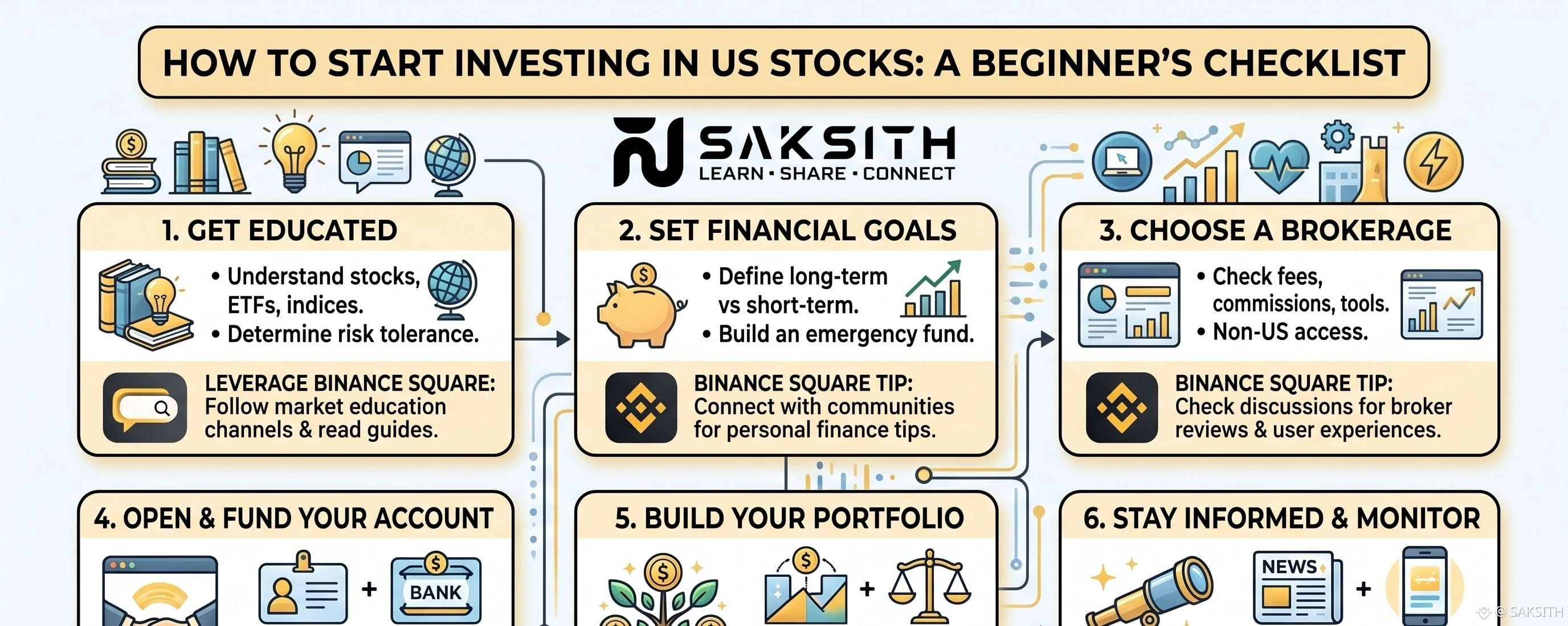
Article
🔶 📝 How to start investing in US Stocks: A checklist for beginners🔶 📝 To start investing in US Stocks as a beginner, focus on financial basics first, then find and open a brokerage account and learn the essentials of stocks, funds and risks.
👉 📝 Build Financial Foundation:
✅ Save at least 6 months to a year of living expenses before investing.
✅ Don't have debt or personal loans.
✅ Investing without affecting daily needs.
👉 📝 Choose a Brokerage or Exchange:
✅ Selecting a good, trustworthy broker.
✅ Now you can use Binance Stocks & bStocks Trading: 1:1 Trade tokenized stocks (bStocks) on Binance 24/7 on the spot market, zero commission, 100% FPSL yield, fully backed by real shares & publicly verifiable.
👉 📝 Understand what to buy Stocks:
✅ Finding a good company with future growth potential. 📈
✅ Learning and understand about Index funds/ETFs and S&P 500
✅ Dividends: Some companies pay regular cash to shareholders.
✅ Start investing small: Binance bStocks can start with as little as $5 using fractional shares.
✅ Making DCA (Dollar-Cost Averaging in Finance)
✅ Know the Rules and Risks
✅ Keep Learning and Researching on the internet, Binance Square Official and Binance Khmer. 🔶 ⬜
Thanks you for visiting article SAKSITH: Learn • Share • Connect
👉 Learn more: Follow Binance Khmer 🇰🇭
@Binance_Square_Official @BinanceKhmer #SEABstock #SEAstock
$NVDAB $AAPLB $GOOGL.US
🔶 📝 How to start investing in US Stocks: A checklist for beginners
🔶 📝 To start investing in US Stocks as a beginner, focus on financial basics first, then find and open a brokerage account and learn the essentials of stocks, funds and risks.
👉 📝 Build Financial Foundation:
✅ Save at least 6 months to a year of living expenses before investing.
✅ Don't have debt or personal loans.
✅ Investing without affecting daily needs.
👉 📝 Choose a Brokerage or Exchange:
✅ Selecting a good, trustworthy broker.
✅ Now you can use Binance Stocks & bStocks Trading: 1:1 Trade tokenized stocks (bStocks) on Binance 24/7 on the spot market, zero commission, 100% FPSL yield, fully backed by real shares & publicly verifiable.
👉 📝 Understand what to buy Stocks:
✅ Finding a good company with future growth potential. 📈
✅ Learning and understand about Index funds/ETFs and S&P 500
✅ Dividends: Some companies pay regular cash to shareholders.
✅ Start investing small: Binance bStocks can start with as little as $5 using fractional shares.
✅ Making DCA (Dollar-Cost Averaging in Finance)
✅ Know the Rules and Risks
✅ Keep Learning and Researching on the internet, Binance Square Official and Binance Khmer. 🔶 ⬜
Thanks you for visiting article SAKSITH: Learn • Share • Connect
👉 Learn more: Follow Binance Khmer 🇰🇭
@Binance Square Official @Binance Khmer #SEABstock #SEAstock
$NVDAB $AAPLB $GOOGL.US
1
176

·
--
Stocks vs Crypto: What Beginners Should Understand Before TradingWhen someone starts with crypto and later discovers U.S. stocks, one of the first questions is usually simple: “Aren’t they both just things that go up and down on a chart?”
They may look similar on a trading screen, but Stocks and Crypto are actually very different types of assets. Understanding those differences can help beginners avoid treating every market in exactly the same way.
Let’s start with Stocks.
When you buy a traditional stock, you are generally buying an ownership interest in a company. The value of that investment can be influenced by how the company performs, its future prospects, earnings, competition, economic conditions, interest rates and many other factors.
For example, if a company reports stronger-than-expected earnings, investors may react positively. On the other hand, disappointing financial results, regulatory problems or changing expectations about the company's future can affect its share price.
Crypto works differently.
Cryptocurrencies are digital assets that operate through blockchain networks. Their prices can be influenced by many things, including market sentiment, adoption, network activity, token supply, liquidity, technological developments and broader crypto-market conditions.
This is one reason why someone moving from crypto into Stocks should not assume that the same trading approach will always work.
Another major difference is market structure.
Traditional stock markets have established trading sessions and financial-market infrastructure. Crypto markets are generally available 24 hours a day, seven days a week.
For crypto users, this makes the market feel very familiar because price movements can happen at any time. However, the availability of a market does not mean that every moment needs to become a trading opportunity.
Binance also provides eligible users with access to Stocks and tokenized stock products such as bStocks. This creates another interesting bridge between the traditional financial world and the crypto ecosystem.
bStocks are tokenized securities designed to provide exposure to corresponding U.S.-listed stocks. They can bring some blockchain-based features into the experience, while their value remains connected to the underlying stock.
For beginners, this distinction is important.
A bStock should not simply be thought of as “another cryptocurrency.” Its underlying reference is a stock, so investors still need to understand the company and the risks associated with the product.
There can also be differences in availability, trading conditions, custody arrangements, liquidity, regulatory considerations and product eligibility. These details can vary depending on the product and the user's location.
So what should someone coming from crypto learn first?
I would start with the purpose of the investment.
Instead of asking only, “How much can this go up?”, ask, “What am I buying, and why?”
If it is a stock, learn about the company behind it. Look at its business, financial performance, industry and important news.
If it is a bStock, learn how the tokenized product works and what it represents before trading it.
Risk management is another important part of the transition.
Crypto can move very quickly, and some traders become comfortable with large price swings. That does not mean every investment should be made with high leverage or a large position.
A beginner can separate money into different purposes. Money needed for daily expenses should not be treated as trading capital. An emergency reserve should remain available instead of being exposed to market movements.
This is also where Stocks and Crypto can be viewed differently from a portfolio perspective.
Someone might use stocks as part of a longer-term investment strategy while using crypto for a different purpose. There is no universal allocation that works for everyone because financial goals, time horizons and risk tolerance are different.
Another thing I learned from exploring different markets is that diversification does not mean buying everything.
Owning ten different assets does not automatically create a balanced portfolio if all ten are highly correlated or exposed to the same type of risk.
The better starting point is understanding what each asset actually does.
For beginners interested in U.S. stocks through Binance, the learning process can therefore be quite simple:
First, understand the difference between traditional Stocks, Crypto and tokenized stock products.
Second, learn how the specific product works before placing an order.
Third, research the asset rather than buying simply because it is trending.
Fourth, decide how much capital is appropriate for your own situation.
Finally, accept that losses are possible and avoid using money that would affect your everyday life if the market moved against you.
The biggest lesson is that a different market does not automatically mean an easier market.
Stocks have their own risks. Crypto has its own risks. Tokenized stock products have their own structure and considerations.
For someone coming from crypto, exploring Stocks and bStocks can be a useful way to learn about another part of the financial market. But the first goal should be understanding, not chasing the next big move.
The more clearly we understand what we are buying, the easier it becomes to make decisions based on a plan instead of emotion.
Do your own research, understand the product, and always consider your own risk tolerance before investing.
@BinanceBurmese
#SEABstock
#SEAstock
Stocks vs Crypto: What Beginners Should Understand Before Trading
When someone starts with crypto and later discovers U.S. stocks, one of the first questions is usually simple: “Aren’t they both just things that go up and down on a chart?”
They may look similar on a trading screen, but Stocks and Crypto are actually very different types of assets. Understanding those differences can help beginners avoid treating every market in exactly the same way.
Let’s start with Stocks.
When you buy a traditional stock, you are generally buying an ownership interest in a company. The value of that investment can be influenced by how the company performs, its future prospects, earnings, competition, economic conditions, interest rates and many other factors.
For example, if a company reports stronger-than-expected earnings, investors may react positively. On the other hand, disappointing financial results, regulatory problems or changing expectations about the company's future can affect its share price.
Crypto works differently.
Cryptocurrencies are digital assets that operate through blockchain networks. Their prices can be influenced by many things, including market sentiment, adoption, network activity, token supply, liquidity, technological developments and broader crypto-market conditions.
This is one reason why someone moving from crypto into Stocks should not assume that the same trading approach will always work.
Another major difference is market structure.
Traditional stock markets have established trading sessions and financial-market infrastructure. Crypto markets are generally available 24 hours a day, seven days a week.
For crypto users, this makes the market feel very familiar because price movements can happen at any time. However, the availability of a market does not mean that every moment needs to become a trading opportunity.
Binance also provides eligible users with access to Stocks and tokenized stock products such as bStocks. This creates another interesting bridge between the traditional financial world and the crypto ecosystem.
bStocks are tokenized securities designed to provide exposure to corresponding U.S.-listed stocks. They can bring some blockchain-based features into the experience, while their value remains connected to the underlying stock.
For beginners, this distinction is important.
A bStock should not simply be thought of as “another cryptocurrency.” Its underlying reference is a stock, so investors still need to understand the company and the risks associated with the product.
There can also be differences in availability, trading conditions, custody arrangements, liquidity, regulatory considerations and product eligibility. These details can vary depending on the product and the user's location.
So what should someone coming from crypto learn first?
I would start with the purpose of the investment.
Instead of asking only, “How much can this go up?”, ask, “What am I buying, and why?”
If it is a stock, learn about the company behind it. Look at its business, financial performance, industry and important news.
If it is a bStock, learn how the tokenized product works and what it represents before trading it.
Risk management is another important part of the transition.
Crypto can move very quickly, and some traders become comfortable with large price swings. That does not mean every investment should be made with high leverage or a large position.
A beginner can separate money into different purposes. Money needed for daily expenses should not be treated as trading capital. An emergency reserve should remain available instead of being exposed to market movements.
This is also where Stocks and Crypto can be viewed differently from a portfolio perspective.
Someone might use stocks as part of a longer-term investment strategy while using crypto for a different purpose. There is no universal allocation that works for everyone because financial goals, time horizons and risk tolerance are different.
Another thing I learned from exploring different markets is that diversification does not mean buying everything.
Owning ten different assets does not automatically create a balanced portfolio if all ten are highly correlated or exposed to the same type of risk.
The better starting point is understanding what each asset actually does.
For beginners interested in U.S. stocks through Binance, the learning process can therefore be quite simple:
First, understand the difference between traditional Stocks, Crypto and tokenized stock products.
Second, learn how the specific product works before placing an order.
Third, research the asset rather than buying simply because it is trending.
Fourth, decide how much capital is appropriate for your own situation.
Finally, accept that losses are possible and avoid using money that would affect your everyday life if the market moved against you.
The biggest lesson is that a different market does not automatically mean an easier market.
Stocks have their own risks. Crypto has its own risks. Tokenized stock products have their own structure and considerations.
For someone coming from crypto, exploring Stocks and bStocks can be a useful way to learn about another part of the financial market. But the first goal should be understanding, not chasing the next big move.
The more clearly we understand what we are buying, the easier it becomes to make decisions based on a plan instead of emotion.
Do your own research, understand the product, and always consider your own risk tolerance before investing.
@Binance Burmese
#SEABstock
#SEAstock
106

·
--

Article
Preparation Notes for a Crypto Trader’s Journey into Stocks 📝“How high can it go?” is less important than “What am I trading?”
As a Trader who has been watching the crypto market for a long time, the first thing I noticed when I started studying stocks is that while there are similar things in charts and price action, the underlying market structure is different.
Preparation Notes for a Crypto Trader’s Journey into Stocks 📝
“How high can it go?” is less important than “What am I trading?”
As a Trader who has been watching the crypto market for a long time, the first thing I noticed when I started studying stocks is that while there are similar things in charts and price action, the underlying market structure is different.
As a Trader who has been watching the crypto market for a long time, the first thing I noticed when I started studying stocks is that while there are similar things in charts and price action, the underlying market structure is different.
114


Article
Crypto to Stocks: How to Successfully Expand Your Investment Portfolio with Binance BStocksIn today’s digital financial world, many new opportunities are emerging for investors. Previously, the traditional stock market and the crypto market existed completely separately from each other; however, thanks to Binance’s BStocks products, crypto users can now easily access and invest in the world’s largest US stocks directly from within the crypto ecosystem.
Crypto to Stocks: How to Successfully Expand Your Investment Portfolio with Binance BStocks
In today’s digital financial world, many new opportunities are emerging for investors. Previously, the traditional stock market and the crypto market existed completely separately from each other; however, thanks to Binance’s BStocks products, crypto users can now easily access and invest in the world’s largest US stocks directly from within the crypto ecosystem.
166

·
--
Verified
Article
📊 What is the difference between Stocks and Crypto? How to invest with Binance BStocks?As an investor entering the market, it is essential to clearly understand the core differences between Stocks and Cryptocurrency. Crypto is a digital asset class well-known for its high volatility, rapid price movements, and the unique ability to be traded 24/7 without market closures. On the other hand, Stocks represent fractional ownership of established, real-world companies (such as Apple, Tesla, or Microsoft). They generally offer more long-term stability and operate within traditional stock market hours.
So, how can crypto enthusiasts seamlessly buy US Stocks? Now, through Binance, you can easily invest using their innovative product called BStocks (Binance Stocks). BStocks is highly suitable for beginners, allowing you to step directly into the US Stock Market right from your existing Binance account without going through any complicated external procedures.
Here is a quick checklist for beginners before starting your investment journey in BStocks:
Always research the company's background, fundamental value, and recent earnings reports.Clearly define your personal Risk Tolerance and invest accordingly.Establish a solid Investment Plan—decide early on whether you are aiming for short-term trades or a long-term holding strategy.Diversifying your overall portfolio by investing in both traditional Stocks and Cryptocurrency is an excellent way to balance potential risks and rewards. Wishing everyone a highly profitable and successful investment journey ahead!
@BinanceBurmese
#SEAStock #SEABStock
📊 What is the difference between Stocks and Crypto? How to invest with Binance BStocks?
As an investor entering the market, it is essential to clearly understand the core differences between Stocks and Cryptocurrency. Crypto is a digital asset class well-known for its high volatility, rapid price movements, and the unique ability to be traded 24/7 without market closures. On the other hand, Stocks represent fractional ownership of established, real-world companies (such as Apple, Tesla, or Microsoft). They generally offer more long-term stability and operate within traditional stock market hours.
So, how can crypto enthusiasts seamlessly buy US Stocks? Now, through Binance, you can easily invest using their innovative product called BStocks (Binance Stocks). BStocks is highly suitable for beginners, allowing you to step directly into the US Stock Market right from your existing Binance account without going through any complicated external procedures.
Here is a quick checklist for beginners before starting your investment journey in BStocks:
Always research the company's background, fundamental value, and recent earnings reports.Clearly define your personal Risk Tolerance and invest accordingly.Establish a solid Investment Plan—decide early on whether you are aiming for short-term trades or a long-term holding strategy.Diversifying your overall portfolio by investing in both traditional Stocks and Cryptocurrency is an excellent way to balance potential risks and rewards. Wishing everyone a highly profitable and successful investment journey ahead!
@Binance Burmese
#SEAStock #SEABStock
1
91

·
--
Traditional Stock Trading vs. Crypto Trading: A Professional Trader’s Perspective📊 Traditional Stock Trading vs. Crypto Trading: A Professional Trader’s Perspective
Stock trading and crypto trading may look similar because both involve analyzing charts, identifying opportunities, managing positions, and controlling risk. However, their market structures, volatility, liquidity, trading hours, and risk characteristics are quite different.
🏦 Traditional Stock Trading
Stocks represent ownership in publicly traded companies and operate through established financial-market infrastructure. Exchanges, brokers, clearing systems, and regulatory frameworks all play important roles.
Traditional stock markets generally operate within defined trading sessions, although extended-hours trading is also available in many markets. During extended sessions, traders may face lower liquidity, wider spreads, and increased execution risk.
Stock traders often focus on company earnings, financial statements, valuation, interest rates, economic data, sector performance, and overall market sentiment.
₿ Crypto Trading
Crypto markets operate on blockchain-based infrastructure and provide global access to digital assets. One major difference is that crypto trading is generally available 24/7, including weekends.
This creates more opportunities, but it also means the market can move sharply at any time. News events, liquidations, leverage, whale activity, macroeconomic developments, and changes in sentiment can trigger rapid price movements.
⚡ Volatility & Liquidity
Volatility is one of the most important differences. Many crypto assets can experience much larger short-term price movements than established stocks. Higher volatility can provide more trading opportunities, but it also increases potential losses.
Liquidity is equally important. Higher liquidity generally allows traders to enter and exit positions more efficiently, while lower liquidity can increase slippage and execution risk.
🔐 Regulation & Market Structure
Traditional stock markets generally operate under mature securities regulations and established investor-protection frameworks. Crypto regulation can vary significantly depending on the asset, exchange, and jurisdiction.
Therefore, traders should understand the specific market structure and regulatory environment before deploying capital.
📈 Professional Trader’s Perspective
A professional trader should not focus only on the question: “Stocks or Crypto—which is better?”
The more important questions are: What is the current market structure? How much volatility is present? Where is liquidity concentrated? What is the risk-to-reward ratio? How large should the position be?
For stocks, fundamental analysis, earnings, valuation, and macroeconomic factors can be important. For crypto, traders may also monitor funding rates, open interest, liquidation levels, Bitcoin dominance, on-chain activity, and market sentiment.
Ultimately, successful trading is less about choosing the most exciting market and more about understanding the market you trade.
Stock vs. Crypto is not the real battle.
Risk Management vs. No Risk Management is. 🎯
#StockTrading #CryptoTrading #Bitcoin #TradingStrategy #MarketAnalysis #RiskManagement #BinanceSquare#SEABstock #SEAstock
Traditional Stock Trading vs. Crypto Trading: A Professional Trader’s Perspective
📊 Traditional Stock Trading vs. Crypto Trading: A Professional Trader’s Perspective
Stock trading and crypto trading may look similar because both involve analyzing charts, identifying opportunities, managing positions, and controlling risk. However, their market structures, volatility, liquidity, trading hours, and risk characteristics are quite different.
🏦 Traditional Stock Trading
Stocks represent ownership in publicly traded companies and operate through established financial-market infrastructure. Exchanges, brokers, clearing systems, and regulatory frameworks all play important roles.
Traditional stock markets generally operate within defined trading sessions, although extended-hours trading is also available in many markets. During extended sessions, traders may face lower liquidity, wider spreads, and increased execution risk.
Stock traders often focus on company earnings, financial statements, valuation, interest rates, economic data, sector performance, and overall market sentiment.
₿ Crypto Trading
Crypto markets operate on blockchain-based infrastructure and provide global access to digital assets. One major difference is that crypto trading is generally available 24/7, including weekends.
This creates more opportunities, but it also means the market can move sharply at any time. News events, liquidations, leverage, whale activity, macroeconomic developments, and changes in sentiment can trigger rapid price movements.
⚡ Volatility & Liquidity
Volatility is one of the most important differences. Many crypto assets can experience much larger short-term price movements than established stocks. Higher volatility can provide more trading opportunities, but it also increases potential losses.
Liquidity is equally important. Higher liquidity generally allows traders to enter and exit positions more efficiently, while lower liquidity can increase slippage and execution risk.
🔐 Regulation & Market Structure
Traditional stock markets generally operate under mature securities regulations and established investor-protection frameworks. Crypto regulation can vary significantly depending on the asset, exchange, and jurisdiction.
Therefore, traders should understand the specific market structure and regulatory environment before deploying capital.
📈 Professional Trader’s Perspective
A professional trader should not focus only on the question: “Stocks or Crypto—which is better?”
The more important questions are: What is the current market structure? How much volatility is present? Where is liquidity concentrated? What is the risk-to-reward ratio? How large should the position be?
For stocks, fundamental analysis, earnings, valuation, and macroeconomic factors can be important. For crypto, traders may also monitor funding rates, open interest, liquidation levels, Bitcoin dominance, on-chain activity, and market sentiment.
Ultimately, successful trading is less about choosing the most exciting market and more about understanding the market you trade.
Stock vs. Crypto is not the real battle.
Risk Management vs. No Risk Management is. 🎯
#StockTrading #CryptoTrading #Bitcoin #TradingStrategy #MarketAnalysis #RiskManagement #BinanceSquare#SEABstock #SEAstock
1
152
Log in to explore more content
Join global crypto users on Binance Square
⚡️ Get latest and useful information about crypto.
💬 Trusted by the world’s largest crypto exchange.
👍 Discover real insights from verified creators.
Email / Phone number
Trending Topics
1
#HotCPIDecemberHikePriced
3 views
39 Discussing
2
#AnthropicRejectsIPODelayValuationinQuestion
119,547 views
1,128 Discussing
3
#NvidiaInvestigatesAfterHuang’sAffairApology
359,272 views
2,613 Discussing
4
#CanNvidiaEarningsEaseMarketConcerns?
7,440 views
188 Discussing
5
#ADPWeeklyEstimateShowsUSPrivatePayrollsUp19750
0 views
8 Discussing
6
#US-IranTalksFuelStrongStockMarketRebound
47,474 views
424 Discussing
7
#BitcoinFiveWeeklyLosses
383,282 views
2,911 Discussing
8
#AIChipSlumpNasdaq
216,114 views
1,682 Discussing
9
#BitcoinSpotETFsPost$201MNetOutflowForThirdStraightDay
914 views
15 Discussing
10
#CryptoLiquidationsReach$1.16BIn24Hours
47,030 views
70 Discussing